


John 2:2
- ἐκλήθηeklēthēWas invitedG2564V-API-3SVerb Aorist Passive Indicative 3rd Singular
- δὲdethenG1161CONJConjunction
- καὶkaialsoG2532CONJConjunction
- ὁho<the>G3588T-NSMDefinite article Nominative Singular Masculine
- ἸησοῦςIēsousJesusG2424N-NSM-PNoun Nominative Singular Masculine Individual
- καὶkaiandG2532CONJConjunction
- οἱhoitheG3588T-NPMDefinite article Nominative Plural Masculine
- μαθηταὶmathētaidisciplesG3101N-NPMNoun Nominative Plural Masculine
- αὐτοῦautouof HimG846P-GSMPersonal pronoun Genitive Singular Masculine
- εἰςeistoG1519PREPPreposition
- τὸνtontheG3588T-ASMDefinite article Accusative Singular Masculine
- γάμονgamonweddingG1062N-ASMNoun Accusative Singular Masculine
English is a literal word-by-word gloss of the Greek, not the KJV's wording. Why?
This is the original text the KJV's translators worked from — each Greek word with its own literal English meaning in this verse, prepared by scholars at Tyndale House, Cambridge. The KJV translates whole sentences, not word by word, so its wording differs: one Greek word can become several English words, and the KJV may choose “charity” where the gloss reads “love”. Both are faithful — they answer different questions. For the KJV's own rendering, switch to the KJV text.
Details
See on the biblical-era map
Study this verse
Public-domain commentary
Matthew Henry
From his Commentary on the Whole Bible. Henry comments on passages, not single verses — this entry covers John 2:1–11. His four-level outline is real structure in the source text, so it is rendered as structure.
We have here the story of Christ's miraculous conversion of water into wine at a marriage in Cana of Galilee. There were some few so well disposed as to believe in Christ, and to follow him, when he did no miracle; yet it was not likely that many should be wrought upon till he had something wherewith to answer those that asked, What sign showest thou? He could have wrought miracles before, could have made them the common actions of his life and the common entertainments of his friends; but, miracles being designed for the sacred and solemn seals of his doctrine, he began not to work any till he began to preach his doctrine. Now observe,
I.The occasion of this miracle.
Maimonides observes it to be to the honour of Moses that all the signs he did in the wilderness he did upon necessity; we needed food, he brought us manna, and so did Christ. Observe,
1.The time: the third day after he came into Galilee. The evangelist keeps a journal of occurrences, for no day passed without something extraordinary done or said. Our Master filled up his time better than his servants do, and never lay down at night complaining, as the Roman emperor did, that he had lost a day.
2.The place: it was at Cana in Galilee, in the tribe of Asher (Jos 19:28), of which, before, it was said that he shall yield royal dainties, Gen 49:20. Christ began to work miracles in an obscure corner of the country, remote from Jerusalem, which was the public scene of action, to show that he sought not honour from men (Joh 5:41), but would put honour upon the lowly. His doctrine and miracles would not be so much opposed by the plain and honest Galileans as they would be by the proud and prejudiced rabbies, politicians, and grandees, at Jerusalem.
3.The occasion itself was a marriage; probably one or both of the parties were akin to our Lord Jesus. The mother of Jesus is said to be there, and not to be called, as Jesus and his disciples were, which intimates that she was there as one at home. Observe the honour which Christ hereby put upon the ordinance of marriage, that he graced the solemnity of it, not only with his presence, but with his first miracle; because it was instituted and blessed in innocency, because by it he would still seek a godly seed, because it resembles the mystical union between him and his church, and because he foresaw that in the papal kingdom, while the marriage ceremony would be unduly dignified and advanced into a sacrament, the married state would be unduly vilified, as inconsistent with any sacred function. There was a marriage - gamos, a marriage-feast, to grace the solemnity. Marriages were usually celebrated with festivals (Gen 29:22; Jdg 14:10), in token of joy and friendly respect, and for the confirming of love.
4.Christ and his mother and disciples were principal guests at this entertainment. The mother of Jesus (that was her most honourable title) was there; no mention being made of Joseph, we conclude him dead before this. Jesus was called, and he came, accepted the invitation, and feasted with them, to teach us to be respectful to our relations, and sociable with them, though they be mean. Christ was to come in a way different from that of John Baptist, who came neither eating nor drinking, Mat 11:18, Mat 11:19. It is the wisdom of the prudent to study how to improve conversation rather than how to decline it.
(1.)There was a marriage, and Jesus was called. Note,
[1.]It is very desirable, when there is a marriage, to have Jesus Christ present at it; to have his spiritual gracious presence, to have the marriage owned and blessed by him: the marriage is then honourable indeed; and they that marry in the Lord (Co1 7:39) do not marry without him.
[2.]They that would have Christ with them at their marriage must invite him by prayer; that is the messenger that must be sent to heaven for him; and he will come: Thou shalt call, and I will answer. And he will turn the water into wine.
(2.)The disciples also were invited, those five whom he had called (ch. 1), for as yet he had no more; they were his family, and were invited with him. They had thrown themselves upon his care, and they soon found that, though he had no wealth, he had good friends. Note,
[1.]Those that follow Christ shall feast with him, they shall fare as he fares, so he has bespoken for them (Joh 12:26): Where I am, there shall my servant be also.
[2.]Love to Christ is testified by a love to those that are his, for his sake; our goodness extendeth not to him, but to the saints. Calvin observes how generous the maker of the feast was, though he seems to have been but of small substance, to invite four or five strangers more than he thought of, because they were followers of Christ, which shows, saith he, that there is more of freedom, and liberality, and true friendship, in the conversation of some meaner persons than among many of higher rank.
II.The miracle itself. In which observe,
1.They wanted wine, Joh 2:3.
(1.)There was want at a feast; though much was provided, yet all was spent. While we are in this world we sometimes find ourselves in straits, even then when we think ourselves in the fulness of our sufficiency. If always spending, perhaps all is spent ere we are aware.
(2.)There was want at a marriage feast. Note, They who, being married, are come to care for the things of the world must expect trouble in the flesh, and count upon disappointment.
(3.)It should seem, Christ and his disciples were the occasion of this want, because there was more company than was expected when the provision was made; but they who straiten themselves for Christ shall not lose by him.
2.The mother of Jesus solicited him to assist her friends in this strait. We are told (Joh 2:3-5) what passed between Christ and his mother upon this occasion.
(1.)She acquaints him with the difficulty they were in (Joh 2:3): She saith unto him, They have no wine. Some think that she did not expect from him any miraculous supply (he having as yet wrought no miracle), but that she would have him make some decent excuse to the company, and make the best of it, to save the bridegroom's reputation, and keep him in countenance; or (as Calvin suggests) would have him make up the want of wine with some holy profitable discourse. But, most probably, she looked for a miracle; for she knew he was now appearing as the great prophet, like unto Moses, who so often seasonably supplied the wants of Israel; and, though this was his first public miracle, perhaps he had sometimes relieved her and her husband in their low estate. The bridegroom might have sent out for more wine, but she was for going to the fountain-head. Note,
[1.]We ought to be concerned for the wants and straits of our friends, and not seek our own things only.
[2.]In our own and our friends' straits it is our wisdom and duty to apply ourselves to Christ by prayer.
[3.]In our addresses to Christ, we must not prescribe to him, but humbly spread our case before him, and then refer ourselves to him to do as he pleases.
(2.)He gave her a reprimand for it, for he saw more amiss in it than we do, else he had not treated it thus. - Here is,
[1.]The rebuke itself: Woman, what have I to do with thee? As many as Christ loves, he rebukes and chastens. He calls her woman, not mother. When we begin to be assuming, we should be reminded what we are, men and women, frail, foolish, and corrupt. The question, ti emoi kai soi, might be read, What is that to me and thee? What is it to us if they do want? But it is always as we render it, What have I to do with thee? as Jdg 11:12; Sa2 16:10; Ezr 4:3; Mat 8:29. It therefore bespeaks a resentment, yet not at all inconsistent with the reverence and subjection which he paid to his mother, according to the fifth commandment (Luk 2:51); for there was a time when it was Levi's praise that he said to his father, I have not known him, Deu 33:9. Now this was intended to be, First, A check to his mother for interposing in a matter which was the act of his Godhead, which had no dependence on her, and which she was not the mother of. Though, as man, he was David's Son and hers; yet, as God, he was David's Lord and hers, and he would have her know it. The greatest advancements must not make us forget ourselves and our place, nor the familiarity to which the covenant of grace admits us breed contempt. irreverence, or any kind or degree of presumption. Secondly, It was an instruction to others of his relations (many of whom were present here) that they must never expect him to have any regard to his kindred according to the flesh, in his working miracles, or that therein he should gratify them, who in this matter were no more to him than other people. In the things of God we must not know faces. Thirdly, It is a standing testimony against that idolatry which he foresaw his church would in after-ages sink into, in giving undue honours to the virgin Mary, a crime which the Roman catholics, as they call themselves, are notoriously guilty of, when they call her the queen of heaven, the salvation of the world, their mediatrix, their life and hope; not only depending upon her merit and intercession, but beseeching her to command her Son to do them good: Monstra te esse matrem - Show that thou art his mother. Jussu matris impera salvatori - Lay thy maternal commands on the Saviour. Does he not here expressly say, when a miracle was to be wrought, even in the days of his humiliation, and his mother did but tacitly hint an intercession, Woman, what have I to do with thee? This was plainly designed either to prevent or aggravate such gross idolatry, such horrid blasphemy. The Son of God is appointed our Advocate with the Father; but the mother of our Lord was never designed to be our advocate with the Son.
[2.]The reason of this rebuke: Mine hour is not yet come. For every thing Christ did, and that was done to him, he had his hour, the fixed time and the fittest time, which was punctually observed. First, "Mine hour for working miracles is not yet come." Yet afterwards he wrought this, before the hour, because he foresaw it would confirm the faith of his infant disciples (Joh 2:11), which was the end of all his miracles: so that this was an earnest of the many miracles he would work when his hour was come. Secondly, "Mine hour of working miracles openly is not yet come; therefore do not talk of it thus publicly." Thirdly, "It not the hour of my exemption from thy authority yet come, now that I have begun to act as a prophet?" So Gregory Nyssen. Fourthly, "Mine hour for working this miracle is not yet come." His mother moved him to help them when the wine began to fail (so it may be read, Joh 2:3), but his hour was not yet come till it was quite spent, and there was a total want; not only to prevent any suspicion of mixing some of the wine that was left with the water, but to teach us that man's extremity is God's opportunity to appear for the help and relief of his people. Then his hour is come when we are reduced to the utmost strait, and know not what to do. This encouraged those that waited for him to believe that though his hour was not yet come it would come. Note, The delays of mercy are not to be construed the denials of prayer. At the end it shall speak.
(3.)Notwithstanding this, she encouraged herself with expectations that he would help her friends in this strait, for she bade the servants observe his orders, Joh 2:5.
[1.]She took the reproof very submissively, and did not reply to it. It is best not to deserve reproof from Christ, but next best to be meek and quiet under it, and to count it a kindness, Psa 141:5.
[2.]She kept her hope in Christ's mercy, that he would yet grant her desire. When we come to God in Christ for any mercy, two things discourage us: - First, Sense of our own follies and infirmities "Surely such imperfect prayers as ours cannot speed." Secondly, Sense of our Lord's frowns and rebukes. Afflictions are continued, deliverances delayed, and God seems angry at our prayers. This was the case of the mother of our Lord here, and yet she encourages herself with hope that he will at length give in an answer of peace, to teach us to wrestle with God by faith and fervency in prayer, even when he seems in his providence to walk contrary to us. We must against hope believe in hope, Rom 4:18.
[3.]She directed the servants to have an eye to him immediately, and not to make their applications to her, as it is probable they had done. She quits all pretensions to an influence upon him, or intercession with him; let their souls wait only on him, Psa 62:5.
[4.]She directed them punctually to observe his orders, without disputing, or asking questions. Being conscious to herself of a fault in prescribing to him, she cautions the servants to take heed of the same fault, and to attend both his time and his way for supply: "Whatsoever he saith unto you, do it, though you may think it ever so improper. If he saith, Give the guests water, when they call for wine, do it. If he saith, Pour out from the bottoms of the vessels that are spent, do it. He can make a few drops of wine multiply to so many draughts." Note, Those that expect Christ's favours must with an implicit obedience observe his orders. The way of duty is the way to mercy; and Christ's methods must not be objected against.
(4.)Christ did at length miraculously supply them; for he is often better than his word, but never worse.
[1.]The miracle itself was turning water into wine; the substance of water acquiring a new form, and having all the accidents and qualities of wine. Such a transformation is a miracle; but the popish transubstantiation, the substance changed, the accidents remaining the same, is a monster. By this Christ showed himself to be the God of nature, who maketh the earth to bring forth wine, Psa 109:14, Psa 109:15. The extracting of the blood of the grape every year from the moisture of the earth is no less a work of power, though, being according to the common law of nature, it is not such a work of wonder, as this. The beginning of Moses's miracles was turning water into blood (Exo 4:9; Exo 7:20), the beginning of Christ's miracles was turning water into wine; which intimates the difference between the law of Moses and the gospel of Christ. The curse of the law turns water into blood, common comforts into bitterness and terror; the blessing of the gospel turns water into wine. Christ hereby showed that his errand into the world was to heighten and improve creature-comforts to all believers, and make them comforts indeed. Shiloh is said to wash his garments in wine (Gen 49:11), the water for washing being turned into wine. And the gospel call is, Come ye to the waters, and buy wine, Isa 55:1.
[2.]The circumstances of it magnified it and freed it from all suspicion of cheat or collusion; for,
First, It was done in water-pots (Joh 2:6): There were set there six water-pots of stone. Observe, 1. For what use these water-pots were intended: for the legal purifications from ceremonial pollutions enjoined by the law of God, and many more by the tradition of the elders. The Jews eat not, except they wash often (Mar 7:3), and they used much water in their washing, for which reason here were six large water-pots provided. It was a saying among them, Qui mult utitur aqu in lavando, multas consequetur in hoc mundo divitias - He who uses much water in washing will gain much wealth in this world. 2. To what use Christ put them, quite different from what they were intended for; to be the receptacles of the miraculous wine. Thus Christ came to bring in the grace of the gospel, which is as wine, that cheereth God and man (Jdg 9:13), instead of the shadows of the law, which were as water, weak and beggarly elements. These were water-pots, that had never been used to have wine in them; and of stone, which is not apt to retain the scent of former liquors, if ever they had had wine in them. They contained two or three firkins apiece; two or three measures, baths, or ephahs; the quantity is uncertain, but very considerable. We may be sure that it was not intended to be all drank at this feast, but for a further kindness to the new-married couple, as the multiplied oil was to the poor widow, out of which she might pay her debt, and live of the rest, Kg2 4:7. Christ gives like himself, gives abundantly, according to his riches in glory. It is the penman's language to say, They contained two or three firkins, for the Holy Spirit could have ascertained just how much; thus (as Joh 6:19) teaching us to speak cautiously, and not confidently, of those things of which we have not good assurance.
Secondly, The water-pots were filled up to the brim by the servants at Christ's word, Joh 2:7. As Moses, the servant of the Lord, when God bade him, went to the rock, to draw water; so these servants, when Christ bade them, went to the water, to fetch wine. Note, Since no difficulties can be opposed to the arm of God's power, no improbabilities are to be objected against the word of his command.
Thirdly, The miracle was wrought suddenly, and in such a manner as greatly magnified it.
a.As soon as they had filled the water-pots, presently he said, Draw out now (Joh 2:8), and it was done, (a.) Without any ceremony, in the eye of the spectators. One would have thought, as Naaman, he should have come out, and stood, and called on the name of God, Kg2 5:11. No, he sits still in his place, says not a word, but wills the thing, and so works it. Note, Christ does great things and marvellous without noise, works manifest changes in a hidden way. Sometimes Christ, in working miracles, used words and signs, but it was for their sakes that stood by, Joh 11:42. (b.) Without any hesitation or uncertainty in his own breast. He did not say, Draw out now, and let me taste it, questioning whether the thing were done as he willed it or no; but with the greatest assurance imaginable, though it was his first miracle, he recommends it to the master of the feast first. As he knew what he would do, so he knew what he could do, and made no essay in his work; but all was good, very good, even in the beginning.
b.Our Lord Jesus directed the servants, (a.) To draw it out; not to let it alone in the vessel, to be admired, but to draw it out, to be drank. Note, [a.] Christ's works are all for use; he gives no man a talent to be buried, but to be traded with. Has he turned thy water into wine, given thee knowledge and grace? It is to profit withal; and therefore draw out now. [b.] Those that would know Christ must make trial of him, must attend upon him in the use of ordinary means, and then may expect extraordinary influence. That which is laid up for all that fear God is wrought for those that trust in him (Psa 31:19), that by the exercise of faith draw out what is laid up. (b.) To present it to the governor of the feast. Some think that this governor of the feast was only the chief guest, that sat at the upper end of the table; but, if so, surely our Lord Jesus should have had that place, for he was, upon all accounts, the principal guest; but it seems another had the uppermost room, probably one that loved it (Mat 23:6), and chose it, Luk 14:7. And Christ, according to his own rule, sat down in the lowest room; but, though he was not treated as the Master of the feast, he kindly approved himself a friend to the feast, and, if not its founder, yet its best benefactor. Others think that this governor was the inspector and monitor of the feast: the same with Plutarch's symposiarcha, whose office it was to see that each had enough, and none did exceed, and that there were no indecencies or disorders. Note, Feasts have need of governors, because too many, when they are at feasts, have not the government of themselves. Some think that this governor was the chaplain, some priest or Levite that craved a blessing and gave thanks, and Christ would have the cup brought to him, that he might bless it, and bless God for it; for the extraordinary tokens of Christ's presence and power were not to supersede, or jostle out, the ordinary rules and methods of piety and devotion.
Fourthly, The wine which was thus miraculously provided was of the best and richest kind, which was acknowledged by the governor of the feast; and that it was really so, and not his fancy, is certain, because he knew not whence it was, Joh 2:9, Joh 2:10. 1. It was certain that this was wine. The governor knew this when he drank it, though he knew not whence it was; the servants knew whence it was, but had not yet tasted it. if the taster had seen the drawing of it, or the drawers had had the tasting of it, something might have been imputed to fancy; but now no room is left for suspicion. 2. That it was the best wine. Note, Christ's works commend themselves even to those that know not their author. The products of miracles were always the best in their kind. This wine had a stronger body, and better flavour, than ordinary. This the governor of the feast takes notice of to the bridegroom, with an air of pleasantness, as uncommon. (1.) The common method was otherwise. Good wine is brought out to the best advantage at the beginning of a feast, when the guests have their heads clear and their appetites fresh, and can relish it, and will commend it; but when they have well drank, when their heads are confused, and their appetites palled, good wine is but thrown away upon them, worse will serve then. See the vanity of all the pleasures of sense; they soon surfeit, but never satisfy; the longer they are enjoyed, the less pleasant they grow. (2.) This bridegroom obliged his friends with a reserve of the best wine for the grace-cup: Thou hast kept the good wine until now; not knowing to whom they were indebted for this good wine, he returns the thanks of the table to the bridegroom. She did not know that I gave her corn and wine, Hos 2:8. Now, [1.] Christ, in providing thus plentifully for the guests, though he hereby allows a sober cheerful use of wine, especially in times of rejoicing (Neh 8:10), yet he does not invalidate his own caution, nor invade it, in the least, which is, that our hearts be not at any time, no not at a marriage feast, overcharged with surfeiting and drunkenness, Luk 21:34. When Christ provided so much good wine for them that had well drunk, he intended to try their sobriety, and to teach them how to abound, as well as how to want. Temperance per force is a thankless virtue; but if divine providence gives us abundance of the delights of sense, and divine grace enables us to use them moderately, this is self-denial that is praiseworthy. He also intended that some should be left for the confirmation of the truth of the miracle to the faith of others. And we have reason to think that the guests at this table were so well taught, or at least were now so well awed by the presence of Christ, that none of them abused this wine to excess. Theses two considerations, drawn from this story, may be sufficient at any time to fortify us against temptations to intemperance: First, That our meat and drink are the gifts of God's bounty to us, and we owe our liberty to use them, and our comfort in the use of them, to the mediation of Christ; it is therefore ungrateful and impious to abuse them. Secondly, That, wherever we are, Christ has his eye upon us; we should eat bread before God (Exo 18:12), and then we should not feed ourselves without fear. [2.] He has given us a specimen of the method he takes in dealing with those that deal with him, which is, to reserve the best for the last, and therefore they must deal upon trust. The recompence of their services and sufferings is reserved for the other world; it is a glory to be revealed. The pleasures of sin give their colour in the cup, but at the last bite; but the pleasures of religion will be pleasures for evermore.
III.In the conclusion of this story (Joh 2:11) we are told,
1.That this was the beginning of miracles which Jesus did. Many miracles had been wrought concerning him at his birth and baptism, and he himself was the greatest miracle of all; but this was the first that was wrought by him. He could have wrought miracles when he disputed with the doctors, but his hour was not come. He had power, but there was a time of the hiding of his power.
2.That herein he manifested his glory; hereby he proved himself to be the Son of God, and his glory to be that of the only-begotten of the Father. He also discovered the nature and end of his office; the power of a God, and the grace of a Saviour, appearing in all his miracles, and particularly in this, manifested the glory of the long-expected Messiah.
3.That his disciples believed on him. Those whom he had called (ch. 1), who had seen no miracle, and yet followed him, now saw this, shared in it, and had their faith strengthened by it. Note,
(1.)Even the faith that is true is at first but weak. The strongest men were once babes, so were the strongest Christians.
(2.)The manifesting of the glory of Christ is the great confirmation of the faith of Christians.
Historical interpretation
Seventeen Centuries of Reception
9 surviving comments on this verse. Each one is dated, so this reads as a timeline rather than a list.
Select a marker to jump to its quote. Markers stagger vertically where authors wrote within a few decades of each other.
The third day was now come from Jesus’ baptism, and there was a marriage taking place in Cana of Galilee. Jesus’ mother was there when, on the failure of the wine, he made wine out of water.… Jesus being Maker of man and woman does not refuse to be called to a marriage; it was he who after forming Eve brought her to Adam. Therefore in the Gospel he says about this union, “What God has joined together let no man put asunder.” Let the heretics therefore be put to shame who reject marriage, since Jesus was called to a marriage and his mother was there.
(Hom. xxi. [al. xx.] 1) Our Lord being known in Galilee, they invite Him to a marriage: And the third day there was a marriage in Cana of Galilee.
(Hom. xxi. 1) They invite our Lord to the marriage, not as a great person, but merely as one they knew, one of the many; for which reason the Evangelist says, And the mother of Jesus was there. As they invited the mother, so they invited the Son: and therefore, Jesus was called, and His disciples to the marriage: and He came, as caring more for our good, than His own dignity. He who disdained not to take upon Him the form of a servant, disdained not to come to the marriage of servants.
I said before that He was best known in Galilee; therefore they invite Him to the marriage, and He comes; for He looked not to His own honor, but to our benefit. He who disdained not to "take upon Him the form of a servant" (Phil. ii. 7), would much less disdain to be present at the marriage of servants; He who sat down "with publicans and sinners" (Matt. ix. 13), would much less refuse to sit down with those present at the marriage. Assuredly they who invited Him had not formed a proper judgment of Him, nor did they invite Him as some great one, but merely as an ordinary acquaintance; and this the Evangelist has hinted at, when he says, "The mother of Jesus was there, and His brethren." Just as they invited her and His brethren, they invited Jesus.
In the ancient times there was prophecy, and no times were left without the dispensation of prophecy. But the prophecy, since Christ was not understood therein, was water. For in water wine is in some manner latent. The apostle tells us what we are to understand by this water: "Even unto this day," saith he, "whilst Moses is read, that same veil is upon their heart; that it is not unveiled because it is done away in Christ. And when thou shalt have passed over," saith he, "to the Lord, the veil shall be taken away." By the veil he means the covering over of prophecy, so that it was not understood. When thou hast passed over to the Lord, the veil is taken away; so likewise is tastelessness taken away when thou hast passed over to the Lord; and what was water now becomes wine to thee. Read all the prophetic books; and if Christ be not understood therein, what canst thou find so insipid and silly? Understand Christ in them, and what thou readest not only has a taste, but even inebriates thee; transporting the mind from the body, so that forgetting the things that are past, thou reachest forth to the things that are before.
Wherefore, prophecy from ancient times, even from the time when the series of human births began to run onwards, was not silent concerning Christ; but the import of the prophecy was concealed therein, for as yet it was water.
When these words of the Gospel are understood, and they are certainly clear, all the mysteries which are latent in this miracle of the Lord will be laid open. Observe what He says, that it behoved the things to be fulfilled in Christ that were written of Him. Where were they written? "In the law," saith He, "and in the prophets, and in the Psalms." He omitted no part of the Old Scriptures. These were water; and hence the disciples were called irrational by the Lord, because as yet they tasted to them as water, not as wine. And how did He make of the water wine? When He opened their understanding, and expounded to them the Scriptures, beginning from Moses, through all the prophets; with which being now inebriated, they said, "Did not our hearts burn within us in the way, when He opened to us the Scriptures?" For they understood Christ in those books in which they knew Him not before. Thus our Lord Jesus Christ changed the water into wine, and that has now taste which before had not, that now inebriates which before did not. For if He had commanded the water to be poured out of the water-pots, and so Himself had put in the wine from the secret repositories of the creature, whence He made bread when He satisfied so many thousands; for five loaves were not in themselves sufficient to satisfy five thousand men, nor even to fill twelve baskets, but the omnipotence of the Lord was, as it were, a fountain of bread; so likewise He might, on the water being poured out, have poured in wine: but had He done this, He would appear to have rejected the Old Scriptures. When, however, He turns the water itself into wine, He shows us that the Old Scripture also is from Himself, for at His own command were the water-pots filled. It is from the Lord, indeed, that the Old Scripture also is; but it has no taste unless Christ is understood therein.
The Lord, in that He came to the marriage to which He was invited, wished, apart from the mystical signification, to assure us that marriage was His own institution. For there were to be those of whom the apostle spoke, "forbidding to marry," and asserting that marriage was an evil, and of the devil's institution: notwithstanding the same Lord declares in the Gospel, on being asked whether it be lawful for a man to put away his wife for any cause, that it is not lawful save for the cause of fornication. In His answer, if you remember, He said, "What God hath joined together let not man put asunder." And they that are well instructed in the catholic faith know that God instituted marriage; and as the union of man and wife is from God, so divorce is from the devil. But in the case of fornication it is lawful for a man to put away his wife, because she first chose to be no longer wife in not preserving conjugal fidelity to her husband. Nor are those women who vow virginity to God, although they hold a higher place of honor and sanctity in the Church, without marriage. For they too, together with the whole Church, attain to a marriage, a marriage in which Christ is the Bridegroom. And for this cause, therefore, did the Lord, on being invited, come to the marriage, to confirm conjugal chastity, and to show forth the sacrament of marriage. For the bridegroom in that marriage, to whom it was said, "Thou hast kept the good wine until now," represented the person of the Lord. For the good wine-namely, the gospel-Christ has kept until now.
As one who was renewing and refashioning the very nature of humanity for the better, Christ not only imparts his blessing to those already called into being but also prepares grace in advance for those soon to be born and sanctifies their entrance into existence. And yet, there is still another reason why Jesus was at this wedding. God had said to the woman. “in pain you shall bring forth children.” How else could we escape a condemned marriage unless this curse was annulled? This curse too the Savior removes because of his love for humankind. For he who is the delight and joy of all honored marriage with his presence so that he might expel the ancient sadness of childbearing.
The Son of God went to the wedding so that marriage, which had been instituted by his own authority, might be sanctified by his blessed presence. He went to a wedding of the old order when he was about to take a new bride for himself through the conversion of the Gentiles, a bride who would forever remain a virgin. He went to a wedding even though he himself was not born of human wedlock. He went to the wedding not, certainly, to enjoy a banquet but rather to make himself known by miracles. He went to the wedding not to drink wine but to give it.
(Hom. 2d Sund. after Epiph.) His condescension in coming to the marriage, and the miracle He wrought there, are, even considering them in the letter only, a strong confirmation of the faith. Therein too are condemned the errors of Tatian, Marcion, and others who detract from the honour of marriage. For if the undefiled bed, and the marriage celebrated with due chastity, partook at all of sin, our Lord would never have come to one. Whereas now, conjugal chastity being good, the continence of widows better, the perfection of the virgin state best, to sanction all these degrees, but distinguish the merit of each, He deigned to be born of the pure womb of the Virgin; was blessed after birth by the prophetic voice of the widow Anna; and now invited in manhood to attend the celebration of a marriage, honours that also by the presence of His goodness.
(in loc.) Nor is it without some mysterious allusion, that the marriage is related as taking-place on the third day. The first age of the world, before the giving of the Law, was enlightened by the example of the Patriarchs; the second, under the Law, by the writings of the Prophets; the third, under grace, by the preaching of the Evangelists, as if by the light of the third day; for our Lord had now appeared in the flesh. The name of the place too where the marriage was held, Cana of Galilee, which means, desire of migrating, has a typical signification, viz. that those are most worthy of Christ, who burn with devotional desires, and have known the passage from vice to virtue, from earthly to eternal things.
There is an activity of God displayed throughout creation, a wholesale activity let us say which men refuse to recognize. The miracles done by God incarnate, living as a man in Palestine, perform the very same things as this wholesale activity, but at a different speed and on a smaller scale. One of their chief purposes is that men, having seen a thing done by personal power on the small scale, may recognize, when they see the same thing done on the large scale, that the power behind it is also personal – is indeed the very same person who lived among us two thousand years ago. The miracles in fact are a retelling in small letters of the very same story which is written across the whole world in letters too large for some of us to see...
God creates the vine and teaches it to draw up water by its roots and, with the aid of the sun, to turn water into a juice which will ferment and take on certain qualities. Thus every year, from Noah’s time till ours, God turns water into wine. That, men fail to see. Either like the Pagans they refer the process to some finite spirit, Bacchus or Dionysus: or else, like the moderns, they attribute real and ultimate causality to the chemical and other material phenomena which are all that our senses can discover in it. But when Christ at Cana makes water into wine, the mask is off. The miracle has only half its effect if it only convinces us that Christ is God: it will have its full effect if whenever we see a vineyard or drink a glass of wine we remember that here works He who sat at a wedding party in Cana.
Continue studying John 2:2 across the web’s major study libraries — every link below opens this exact verse, chapter, or book on the destination site.
Read & Compare
 BibleGatewayThis verse in more than 200 translations and 70 languages.
 Bible.comThe YouVersion reader — hundreds of translations, reading plans, and highlights.
 ESV.orgCrossway's official English Standard Version reader.
 NET BibleThe NET translation with 60,000+ translators' notes on every rendering decision.
 STEP BibleTyndale House's free study tool — original text, vocabulary, and scholarly resources.
 BibliaLogos Bible Software's free web reader.
 USCCBThe New American Bible (Revised Edition) with the U.S. bishops' study notes.
Commentaries
 BibleHub CommentariesDozens of classic commentaries on this verse, gathered on one page.
 StudyLightMore than 100 commentary sets — the largest collection on the web.
 BibleRefPlain-English commentary on what this verse means, verse by verse.
 Enduring WordDavid Guzik's free commentary on this chapter, widely used by Bible teachers.
 Bible Study ToolsVerse commentary alongside Greek and Hebrew study aids.
Original Language & Research
- BibleHub InterlinearThe verse word by word — original language, transliteration, and English.
- BibleHub LexiconEvery word's original-language definition and Strong's entry.
 Blue Letter BibleDeep-study tools — Strong's numbers, concordance, and word studies.
 CNTR CollationThe earliest Greek manuscripts of this verse, collated letter by letter.
Sermons, Hymns & Audio


TrulyRandomVerse is not affiliated with these sites and doesn’t control their content. They’re linked because they’re genuinely useful.
Summary
John 2:2 succinctly establishes the setting for Jesus' first public miracle, noting His presence, along with His newly called disciples, at a wedding celebration in Cana of Galilee. This seemingly simple detail is profoundly significant, highlighting Jesus' full participation in human life and social customs, His humble engagement with ordinary events, and the early stages of His disciples' journey with Him, all before the dramatic revelation of His divine power.
Context
ShowHideLiterary Context
John 2:2 follows immediately after the conclusion of John 1, which details the calling of Jesus' first disciples, including Andrew, Peter, Philip, and Nathanael (John 1:35-51). The verse thus marks a transition from the initial gathering of followers to the beginning of Jesus' public ministry, signified by His first "sign" or miracle (John 2:11). The wedding at Cana serves as the initial backdrop for Jesus' revelatory actions, setting the stage for the unfolding of His identity and mission through a series of signs that demonstrate His glory and invite belief (John 2:11).
Historical & Cultural Context
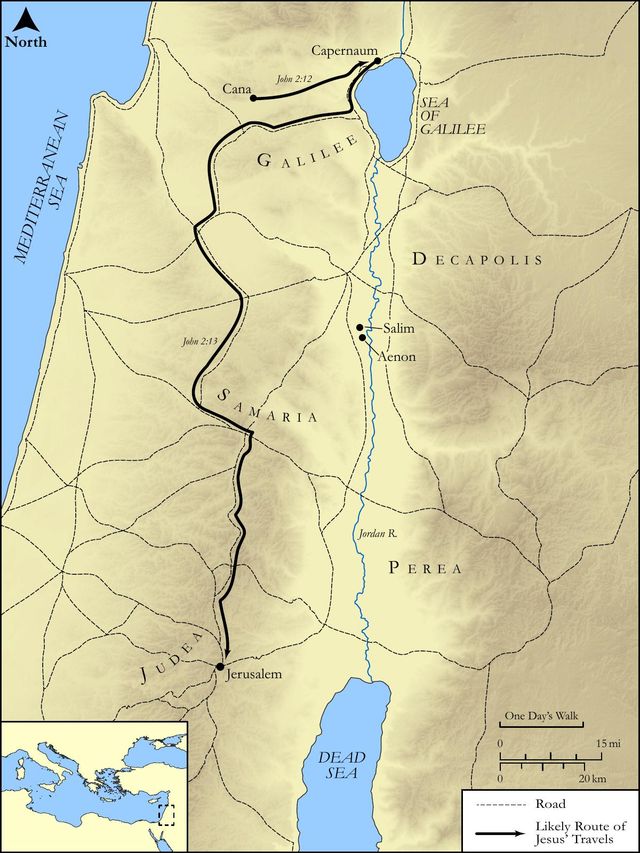
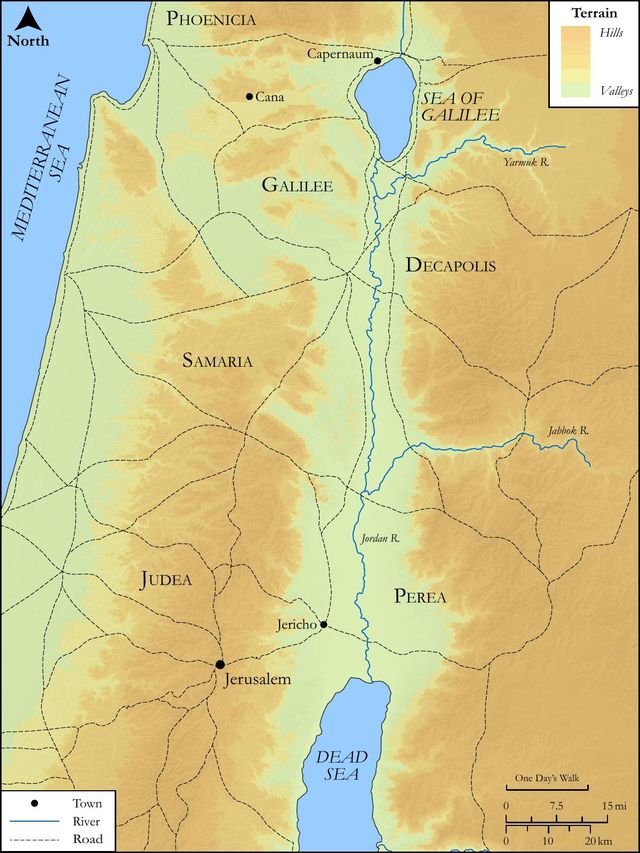
Weddings in ancient Israel were not mere ceremonies but multi-day community celebrations, often lasting a week or more, characterized by feasting, music, and great joy. They were central to Jewish social and family life, symbolizing new beginnings and the continuity of the family line. To be invited was an honor, and attendance was a social expectation, especially for family and close friends. Cana of Galilee was a small village, likely close to Nazareth, indicating Jesus' ministry began not in a major religious center but in the humble, everyday life of the Galilean countryside, consistent with the themes of His incarnation and accessibility.
Key Themes
ShowHideThis verse contributes to several foundational themes in John's Gospel. It underscores Jesus' Humanity and Incarnation, showing Him participating in a common human celebration, not aloof from the world He came to save (Philippians 2:7). It subtly introduces the theme of Divine Presence in the Mundane, as the Son of God engages with ordinary life, hinting that His glory can be revealed even in unexpected settings. Furthermore, the inclusion of "his disciples" highlights the Early Stages of Discipleship, emphasizing that Jesus' followers were immediately integrated into His life and ministry, learning by observation and participation from the very beginning of His public work (Luke 6:40). Finally, Jesus' attendance at a wedding implicitly blesses the institution of Marriage, affirming its place within God's good creation and design.
Exposition and Analysis
ShowHideKey Word Analysis
ShowHideThis is the Greek transliteration of the Hebrew name "Joshua" or "Yehoshua," meaning "Yahweh is salvation." Its inclusion here is foundational, as it identifies the central figure of the narrative and foreshadows His ultimate mission of bringing salvation.
Meaning "to call" or "to bid," this word implies a formal invitation. It signifies that Jesus and His disciples were welcomed guests, underscoring the hospitality of the hosts and Jesus' willingness to accept such an invitation, demonstrating His humility and social grace.
Referring to "nuptials" or "wedding," this term denotes the celebratory event itself. Its presence highlights the social context of Jesus' first miracle, emphasizing a setting of joy, community, and new beginnings, which will be profoundly transformed by His divine intervention.
Verse Breakdown
ShowHide"And both Jesus was called"
This clause establishes Jesus' direct invitation to the wedding. It signifies His personal engagement with the social fabric of His time and His accessibility to ordinary people, setting a precedent for His ministry that would often occur within the context of everyday life.
"and his disciples"
The inclusion of the disciples indicates that they were not merely observers but active participants in Jesus' life from the outset of His public ministry. This highlights the communal aspect of discipleship and suggests that Jesus desired His followers to witness His actions and learn from His interactions.
"to the marriage"
This phrase specifies the destination and purpose of their invitation. It grounds the subsequent miracle in a common, relatable human event, emphasizing that Jesus' divine power was not reserved for temple rituals or formal religious settings but could manifest in the midst of human celebration and need.
Literary Devices
ShowHideThe verse employs Simplicity and Understatement, presenting a profound truth in a straightforward manner. The seemingly mundane detail of an invitation to a wedding belies the extraordinary significance of the guest. This simplicity creates a powerful Contrast with the miraculous event that immediately follows, highlighting the divine breaking into the ordinary. The presence of Jesus and His disciples at a wedding also serves as Foreshadowing, hinting at the new covenant that Jesus would inaugurate, often depicted in Scripture as a wedding feast (e.g., the marriage supper of the Lamb). The inclusion of "his disciples" also functions as Metonymy, where the presence of the disciples implies the nascent community forming around Jesus, a community that will grow and be transformed by His teachings and signs.
Theological and Thematic Connections
ShowHideJohn 2:2, though brief, is rich in theological implications, setting the stage for a deeper understanding of Jesus' identity and mission. His presence at a wedding, a symbol of covenant and union, foreshadows His role as the bridegroom of the church, establishing a new covenant relationship with humanity. It underscores the truth that God is not distant from human experience but intimately involved in the joys and challenges of daily life, sanctifying the ordinary through His presence. This verse also subtly introduces the theme of divine provision and transformation, which will be overtly demonstrated in the turning of water into wine, pointing to the abundance and newness that Jesus brings.
Reflection and Application
ShowHideJohn 2:2 invites us to consider the profound implications of Jesus' willingness to step into the ordinary fabric of human life. His presence at the wedding in Cana reminds us that faith is not meant to be confined to religious services or isolated spiritual moments but is intended to permeate every aspect of our existence. Just as Jesus was invited to the marriage, we are called to invite Him into all our celebrations, our relationships, our work, and our challenges. This verse encourages us to recognize that the sacred can be found in the secular, and that God's glory can be revealed in the most mundane of circumstances when Christ is present. It challenges us to live integrated lives where our faith informs our daily interactions, transforming ordinary moments into opportunities for divine encounter and witness.
Questions for Reflection
ShowHideFAQ
ShowHideWhy is it significant that Jesus' first miracle occurred at a wedding?
ShowHideThe choice of a wedding for Jesus' first miracle is highly significant for several reasons. Culturally, weddings were symbols of great joy, community, and new beginnings. By performing His first "sign" here, Jesus implicitly blesses the institution of marriage and demonstrates His willingness to engage with and sanctify ordinary human life. Theologically, it foreshadows the new covenant Jesus would establish with humanity, often depicted in Scripture as a marriage between Christ and His church (Ephesians 5:25-27). The transformation of water into wine also symbolizes the spiritual transformation and abundant joy that Jesus brings, replacing the old order with something new and superior (John 2:9-10).
What does the inclusion of "his disciples" tell us about early discipleship?
ShowHideThe mention of "his disciples" being called alongside Jesus indicates that from the very beginning of His public ministry, Jesus intended for His followers to be intimately involved in His life and work. This highlights the communal nature of discipleship; learning from Jesus was not a solitary academic pursuit but an immersive experience of living and interacting with Him. They were witnesses to His actions, including His first miracle, which served to strengthen their nascent faith (John 2:11). This early inclusion emphasizes that discipleship involves not just hearing teachings but observing, participating, and sharing in the Master's life.
Christ-Centered Fulfillment
ShowHideJohn 2:2, by placing Jesus at a wedding, subtly yet profoundly points to His ultimate role as the divine Bridegroom and the inaugurator of the new covenant. The joyous occasion of a human marriage, a symbol of covenant and union, serves as a earthly shadow of the heavenly reality Jesus came to establish. Just as a groom provides for his bride, Jesus, the true Bridegroom, provides abundantly for His people, transforming the ordinary into the extraordinary, as seen in the subsequent miracle of water into wine (John 2:7-10). This act foreshadows the spiritual transformation He offers, replacing the old covenant of law with the new covenant of grace and truth (John 1:17). Ultimately, Jesus' presence at this wedding anticipates the grand eschatological wedding feast, the "marriage supper of the Lamb," where Christ and His redeemed church will be eternally united in perfect joy and communion (Revelation 19:7-9). Thus, John 2:2 is not merely a historical detail but a Christ-centered invitation to understand the depth of God's redemptive plan, culminating in the joyous union between Christ and His beloved.