


Exodus 13:2
- קַדֶּשׁka·deshconsecrateH6942V-Piel-Imp-2msVerb Piel Imperative 2nd Singular Masculine
- לִיlito mePrep-l ¦ 1csSuffix Personal 1st Singular common genderלִtoיme
- כָלkholeveryH3605N-mscNoun Singular Masculine Construct
- בְּכוֹרbe·KhorfirstbornH1060N-msNoun Singular Masculine Absolute
- פֶּטֶרPe·ter[the] firstborn ofH6363N-mscNoun Singular Masculine Construct
- כָּלkoleveryH3605N-mscNoun Singular Masculine Construct
- רֶחֶםre·chemwombH7358N-msNoun Singular Masculine Absolute
- בִּבְנֵיbiv·Neiamong [the] people ofH1121Prep-b ¦ N-mpcNoun Plural Masculine Constructבִּamongבְנֵי[the] people of
- יִשְׂרָאֵלYis·ra·'ElIsraelH3478N-properNoun Proper Location
- בָּאָדָםba·'a·Damamong <the> humankindH120Prep-b ¦ N-msNoun Singular Masculine Absoluteבָּamong <the>אָדָםhumankind
- וּבַבְּהֵמָהu·va·be·he·Mahand among the livestockH929Conj-w ¦ Prep-b ¦ N-fsNoun Singular Feminine Absoluteוּandבַamong theבְּהֵמָהlivestock
- לִיli[belongs] to mePrep-l ¦ 1csSuffix Personal 1st Singular common genderלִ[belongs] toיme
- הוּאHu'itH1931Pro-3msPronoun Personal 3rd Singular Masculine
English is a literal word-by-word gloss of the Hebrew, not the KJV's wording. Why?
This is the original text the KJV's translators worked from — each Hebrew word with its own literal English meaning in this verse, prepared by scholars at Tyndale House, Cambridge. The KJV translates whole sentences, not word by word, so its wording differs: one Hebrew word can become several English words, and the KJV may choose “the LORD” where the gloss reads “Yahweh”. Both are faithful — they answer different questions. For the KJV's own rendering, switch to the KJV text.
Details
See on the biblical-era map

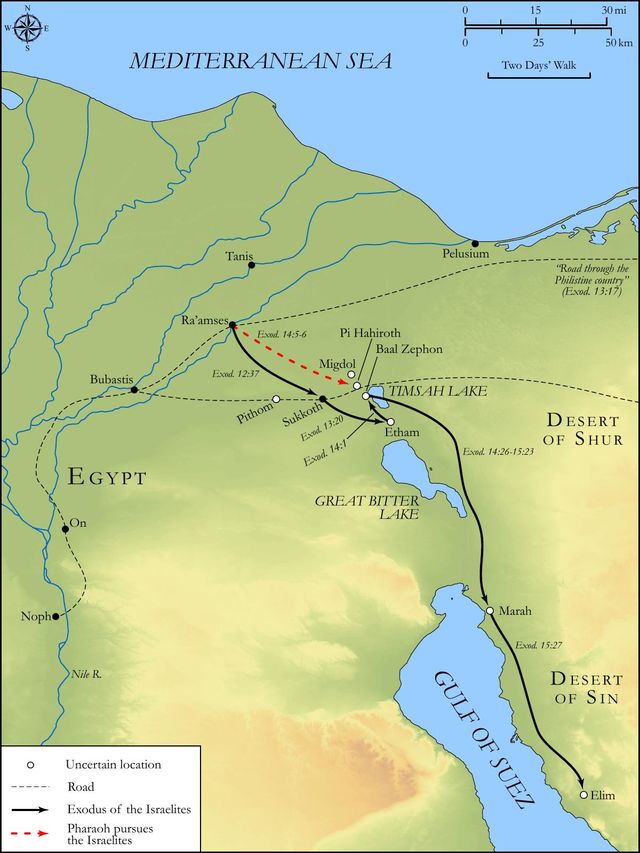
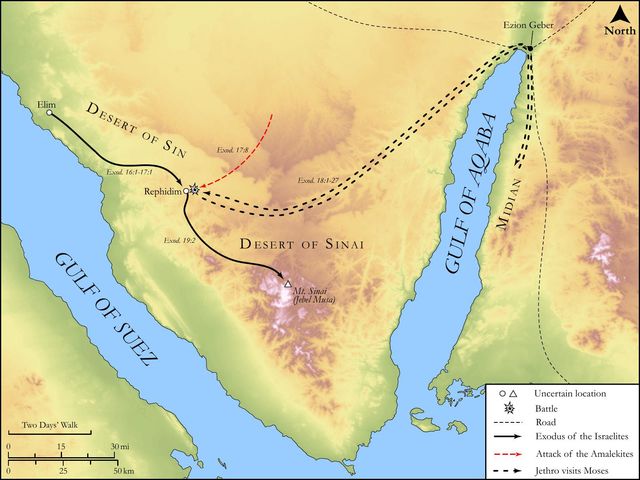
Study this verse
Public-domain commentary
Matthew Henry
From his Commentary on the Whole Bible. Henry comments on passages, not single verses — this entry covers Exodus 13:1–10. His three-level outline is real structure in the source text, so it is rendered as structure.
Care is here taken to perpetuate the remembrance,
I.Of the preservation of Israel's firstborn, when the firstborn of the Egyptians were slain.
In memory of that distinguishing favour, and in gratitude for it, the firstborn, in all ages, were to be consecrated to God, as his peculiars (Exo 13:2), and to be redeemed, Exo 13:13. God, who by the right of creation is proprietor and sovereign of all the creatures, here lays claim in particular to the firstborn of the Israelites, by right of protection: Sanctify to me all the firstborn. The parents were not to look upon themselves as interested in their firstborn, till they had first solemnly presented them to God, recognized his title to them, and received them back, at a certain rate, from him again. Note,
1.That which is by special distinguishing mercy spared to us should be in a peculiar manner dedicated to God's honour; at least some grateful acknowledgment, in works of piety and charity, should be made, when our lives, or the lives of our children, have been given us for a prey.
2.God, who is the first and best, should have the first and best, and to him we should resign that which is most dear to us, and most valuable. The firstborn were the joy and hope of their families. Therefore they shall be mine, says God. By this is will appear that we love God best (as we ought) if we are willing to part with that to him which we love best in this world.
3.It is the church of the firstborn that is sanctified to God, Heb 12:23. Christ it the firstborn among many brethren (Rom 8:29), and, by virtue of their union with him, all that are born again, and born from above, are accounted as firstborn. There is an excellency of dignity and power belonging to them; and, if children, then heirs.
II.The remembrance of their coming out of Egypt must also be perpetuated:
"Remember this day, Exo 13:3. Remember it by a good token, as the most remarkable day of your lives, the birthday of your nation, or the day of its coming of age, to be no longer under the rod." Thus the day of Christ's resurrection is to be remembered, for in it we were raised up with Christ out of death's house of bondage. The scripture tells us not expressly what day of the year Christ rose (as Moses told the Israelites what day of the year they were brought out of Egypt, that they might remember it yearly), but very particularly what day of the week it was, plainly intimating that, as the more valuable deliverance, and of greater importance, it should be remembered weekly. Remember it, for by strength of hand the Lord brought you out. Note, The more of God and his power appears in any deliverance, the more memorable it is. Now, that it might be remembered,
1.They must be sure to keep the feast of unleavened bread, Exo 13:5-7. It was not enough that they remembered it, but they must celebrate the memorial of it in that way which God had appointed, and use the instituted means of preserving the remembrance of it. So, under the gospel, we must not only remember Christ, but do this in remembrance of him. Observe, How strict the prohibition of leaven is (Exo 13:7); not only no leaven must be eaten, but none must be seen, no, not in all their quarters. Accordingly, the Jews' usage was, before the feast of the passover, to cast all the leavened bread out of their houses: they burnt it, or buried it, or broke it small and scattered it in the wind; they searched diligently with lighted candles in all the corners of their houses, lest any leaven should remain. The care and strictness enjoined in this matter were designed, (1.) To make the feast the more solemn, and consequently the more taken notice of by their children, who would ask, "Why is so much ado made?" (2.) To teach us how solicitous we should be to put away from us all sin, Co1 5:7.
2.They must instruct their children in the meaning of it, and relate to them the story of their deliverance out of Egypt, Exo 13:8. Note,
(1.)Care must be taken betimes to instruct children in the knowledge of God. Here is an ancient law for catechising.
(2.)It is particularly of great use to acquaint children betimes with the stories of the scripture, and to make them familiar to them.
(3.)It is a debt we owe to the honour of God, and to the benefit of our children's souls, to tell them of the great works God has done for his church, both those which we have seen with our eyes done in our day and which we have heard with our ears and our fathers have told us: Thou shalt show thy son in that day (the day of the feast) these things. When they were celebrating the ordinance, they must explain it. Every thing is beautiful in its season. The passover is appointed for a sign, and for a memorial, that the Lord's law may be in thy mouth. Note, We must retain the remembrance of God's works, that we may remain under the influence of God's law. And those that have God's law in their heart should have it in their mouth, and be often speaking of it, the more to affect themselves and to instruct others.
Historical interpretation
Seventeen Centuries of Reception
5 surviving comments on this verse. Each one is dated, so this reads as a timeline rather than a list.
Select a marker to jump to its quote. Markers stagger vertically where authors wrote within a few decades of each other.
And when eight days were accomplished for the circumcising of the child, his name was called JESUS, which was so named of the angel before he was conceived in the womb. And when the days of her purification according to the law of Moses were accomplished, they brought him to Jerusalem, to present him to the Lord; (As it is written in the law of the Lord, Every male that openeth the womb shall be called holy to the Lord) [Exodus 13:2] And to offer a sacrifice according to that which is said in the law of the Lord, A pair of turtledoves, or two young pigeons.
For who is really holy but the Son of God? Who properly opened the womb but he who opened a closed one? But it is marriage which opens the womb in all cases. The Virgin’s womb, therefore, was especially opened, because it was especially closed.
Therefore let us draw together from the divine Scriptures instances in which we find “holy” used, and discover not only persons but also mute animals that are called “holy,” and also find both “the vessels” of the ministry that are called “holy,” and the garments which are said to be “holy,” and even the places which were located in cities and suburbs and counted as priestly. Indeed, among the brute animals it is commanded through the law that “the firstborn” of calves or cattle be sacrificed to the Lord, and it says, You will not do any work with them because they have been consecrated to the Lord.
Males were sacred because they opened their mothers’ wombs. They were offered before the altar of the Lord. Scripture says, “Every male that opens the womb.…” This phrase has a spiritual meaning. For you might say that “every male is brought forth from the womb” but does not open the womb of his mother in the way that the Lord Jesus did. In the case of every other woman, it is not the birth of an infant but intercourse with a man that opens the womb. But the womb of the Lord’s mother was opened at the time when her offspring was brought forth, because before the birth of Christ a male did not even touch her womb, holy as it was and deserving of all respect.
Sanctify unto me every firstborn: Sanctification in this place means that the firstborn males of the Hebrews should be deputed to the ministry in the divine worship; and the firstborn of beasts to be given for a sacrifice.
Continue studying Exodus 13:2 across the web’s major study libraries — every link below opens this exact verse, chapter, or book on the destination site.
Read & Compare
 BibleGatewayThis verse in more than 200 translations and 70 languages.
 Bible.comThe YouVersion reader — hundreds of translations, reading plans, and highlights.
 ESV.orgCrossway's official English Standard Version reader.
 NET BibleThe NET translation with 60,000+ translators' notes on every rendering decision.
 STEP BibleTyndale House's free study tool — original text, vocabulary, and scholarly resources.
 BibliaLogos Bible Software's free web reader.
 USCCBThe New American Bible (Revised Edition) with the U.S. bishops' study notes.
Commentaries
 BibleHub CommentariesDozens of classic commentaries on this verse, gathered on one page.
 StudyLightMore than 100 commentary sets — the largest collection on the web.
 BibleRefPlain-English commentary on what this verse means, verse by verse.
 Enduring WordDavid Guzik's free commentary on this chapter, widely used by Bible teachers.
 Bible Study ToolsVerse commentary alongside Greek and Hebrew study aids.
Original Language & Research
- BibleHub InterlinearThe verse word by word — original language, transliteration, and English.
- BibleHub LexiconEvery word's original-language definition and Strong's entry.
 Blue Letter BibleDeep-study tools — Strong's numbers, concordance, and word studies.
 SefariaThe Hebrew text with Rashi and centuries of Jewish commentary.
Sermons, Hymns & Audio


TrulyRandomVerse is not affiliated with these sites and doesn’t control their content. They’re linked because they’re genuinely useful.
Summary
Exodus 13:2 records God's foundational command to the newly liberated Israelites to consecrate all their firstborn, both human and animal, to Him. This divine injunction, issued immediately after the climactic Passover and Exodus from Egypt, establishes God's perpetual claim of ownership over the firstborn as a direct consequence and enduring memorial of His decisive act of redemption, where He spared Israel's firstborn while striking Egypt's. It underscores God's absolute sovereignty over life and His redeemed people, demanding their exclusive dedication as a response to His gracious deliverance.
Context
ShowHideLiterary Context
This command is strategically placed by God to Moses immediately following the climactic events of the Passover and the Exodus from Egypt. Exodus 12 details the institution of the Passover, culminating in the death of the firstborn in Egypt and Israel's subsequent miraculous release from bondage. Exodus 13:1 introduces the general principle of consecrating the firstborn, with verse 2 providing the specific scope and theological basis. The verses immediately following, Exodus 13:3-16, elaborate on the practical implications of this command, linking it intrinsically to the Feast of Unleavened Bread and emphasizing the vital importance of teaching future generations about God's mighty deliverance. The entire chapter functions as a perpetual memorial, ensuring that the memory of the Exodus and God's redemptive power remains central to Israel's identity and worship.
Historical & Cultural Context
In the ancient Near East, the firstborn male held a position of immense significance, often inheriting a double portion of the family's wealth, leadership, and even priestly responsibilities. The "opening of the womb" was universally seen as a blessing, and the firstborn represented the strength, virility, and future of the family or flock. Many cultures practiced dedicating firstfruits or firstborn animals to their deities as an act of worship, appeasement, or acknowledgment of divine favor. However, God's claim on Israel's firstborn in Exodus 13:2 is distinct from these pagan practices. It is not merely a general religious custom but a direct, perpetual consequence and solemn memorial of the tenth plague, where God "passed over" the firstborn of Israel while justly striking down Egypt's firstborn. This act established God's unique ownership over Israel, not solely by creation, but by a specific, historical act of redemption, making their firstborn a special possession, set apart by grace and the blood of the Passover lamb.
Key Themes
ShowHideThis verse powerfully contributes to several overarching themes within Exodus and the Pentateuch. Foremost among these is the theme of Divine Sovereignty and Ownership, asserting God's absolute claim over all life, especially those He has redeemed. It also reinforces the theme of Redemption and Deliverance, serving as a constant reminder of the miraculous Exodus and God's powerful intervention on behalf of His people. The command to "sanctify" introduces the crucial theme of Holiness and Consecration, emphasizing that Israel, as God's redeemed people, is to be set apart for His exclusive purposes, a concept further developed throughout Leviticus. Furthermore, the subsequent provisions for the redemption of the firstborn (e.g., the Levites in Numbers 3:12-13) introduce the profound biblical theme of Substitutionary Redemption, foreshadowing a greater act of deliverance yet to come. The command also emphasizes Memory and Instruction, as the dedication of the firstborn was to be a perpetual sign and a story to be told to future generations, as seen in Exodus 13:8.
Exposition and Analysis
ShowHideKey Word Analysis
ShowHideA primitive root meaning "to be (causatively, make, pronounce or observe as) clean (ceremonially or morally)." In this context, it means "to set apart as holy," "to consecrate," or "to dedicate for sacred use." The command to "sanctify unto me" highlights that the firstborn are not merely special; they are uniquely claimed by God as His own, designated for an exclusive, holy relationship and service. It implies a separation from common or profane use and an exclusive dedication to God's purposes.
Meaning "firstborn; hence, chief; eldest (son), firstborn(-ling)." This term refers specifically to the first male offspring, whether of humans or animals. As noted in the context, the firstborn held a privileged status in ancient societies, representing the strength and future of the family or flock. God's claim on the bekhor underscores His sovereignty over the very principle of life, inheritance, and the future of His chosen people, particularly in light of the Passover judgment.
Meaning "a fissure, i.e., (concretely) firstling (as opening the matrix); firstling, openeth, such as open." This word, often paired with "womb" (rechem), emphasizes the inaugural birth, the very first life to emerge from the mother's womb. It highlights the miraculous nature of this initial life and God's sovereign hand in initiating and sustaining it. The inclusion of "both of man and of beast" demonstrates the comprehensive nature of God's claim over all first life within Israel's dominion, underscoring His universal authority.
Verse Breakdown
ShowHide"Sanctify unto me all the firstborn,"
This is a direct, imperative divine command, emphasizing God's initiative and the ultimate purpose of the action—for Him. The verb "sanctify" (qâdash) means to set apart as holy, indicating that these firstborn are to be treated differently, as belonging exclusively to the Lord. It is an act of dedication, consecration, and recognition of divine ownership.
"whatsoever openeth the womb among the children of Israel,"
This clause precisely specifies the scope of the command. It applies to every first birth, highlighting the principle of "firstfruits"—the initial, and often considered the best, portion. The phrase "among the children of Israel" restricts this command to God's covenant people, distinguishing them from all other nations and emphasizing their unique relationship with Him.
"[both] of man and of beast:"
The command is comprehensive, covering both human and animal firstborn. This reinforces the idea that God's ownership extends to all aspects of life and property within Israel's sphere. While the manner of dedication would differ (human firstborn were later redeemed by Levites or a payment, while animals were sacrificed or redeemed), the underlying principle of divine ownership and consecration remained universally applicable across their possessions.
"it is mine."
This concise, powerful, and definitive declaration provides the ultimate theological basis for the entire command. God's ownership is absolute, non-negotiable, and eternally established. This claim is fundamentally rooted in His decisive act of redemption during the Passover, where He spared Israel's firstborn while claiming Egypt's. It signifies a profound covenantal relationship where Israel, having been miraculously redeemed from death and slavery, now belongs entirely to God.
Literary Devices
ShowHideThe verse employs a powerful declarative statement at its conclusion, "it is mine," which serves as an emphatic assertion of divine ownership and provides the ultimate theological rationale for the command. This gives the entire injunction an authoritative and non-negotiable tone. The parallelism between "man and of beast" highlights the comprehensive and all-encompassing nature of God's claim, leaving no ambiguity about the extent of His sovereignty over all life within Israel's dominion. Furthermore, the use of the verb "sanctify" and the possessive pronoun "mine" creates a direct and profound link between the commanded act of setting apart and the underlying reason for it: divine possession and ultimate authority.
Theological and Thematic Connections
ShowHideThis verse reveals several profound theological truths that resonate throughout biblical theology. Primarily, it asserts God's absolute sovereignty and ownership over all life, particularly those He has redeemed. The firstborn are claimed by God as a perpetual memorial of His power, justice, and grace in delivering Israel from slavery, serving as a constant reminder that their very existence, freedom, and future are entirely gifts from Him. This establishes a foundational principle of consecration and dedication, where the "first" and "best" are to be set apart for God, signifying His preeminence and Israel's profound gratitude and devotion. This is not merely a ritualistic observance but a deep theological statement about the redemptive work of God and the immense cost of their freedom. The subsequent provisions for the redemption of the human firstborn (e.g., the Levites in place of human firstborn, or substitutionary sacrifice for animals) also introduce the profound biblical theme of substitutionary redemption, foreshadowing a greater act of deliverance through a perfect substitute.
This theme of divine ownership and consecration resonates throughout the biblical narrative:
Reflection and Application
ShowHideExodus 13:2, though rooted in an ancient covenantal context, carries profound and timeless implications for believers today, transcending its literal application to the firstborn of Israel. It teaches us that our lives, having been redeemed by God's grace through Christ, are not our own but belong entirely to Him. This foundational truth calls us to a life of consecration, where we intentionally set ourselves apart for God's purposes, seeking His will, and living in a manner that honors His ownership. The principle of dedicating the "firstborn" extends to offering God our "firstfruits"—our best time, our primary talents, our initial resources, and our freshest energy, rather than merely the leftovers or what we have in abundance. Remembering God's mighty acts of deliverance in our own lives, just as Israel was commanded to remember the Exodus, cultivates deep gratitude and fuels our unwavering devotion. It fundamentally shifts our perspective from self-ownership to divine stewardship, recognizing that everything we have and are is a precious gift to be used for His glory and the advancement of His kingdom.
Questions for Reflection
ShowHideFAQ
ShowHideDoes this command imply God condones child sacrifice?
ShowHideWhile the command claims "all the firstborn" of man and beast, the subsequent verses and later Mosaic Law make it abundantly clear that human firstborn were not to be sacrificed. Instead, they were to be "redeemed" or bought back. This redemption could be through a monetary payment or, most significantly, through the dedication of the Levites in place of the firstborn sons of Israel (Numbers 3:12-13). This provision highlights God's abhorrence of child sacrifice, a practice common among pagan nations, and underscores His desire for life and redemption, not death. God consistently condemns child sacrifice throughout the Old Testament (e.g., Deuteronomy 18:10).
Why did God specifically claim the 'firstborn'?
ShowHideGod claimed the firstborn for several interconnected reasons, all rooted in the Exodus event. Firstly, it served as a perpetual memorial of the tenth plague, where God struck down the firstborn of Egypt while sparing Israel's firstborn by the blood of the Passover lamb (Exodus 12:29-30). This act powerfully demonstrated His divine power, righteous judgment, and redemptive grace. Secondly, in ancient cultures, the firstborn represented the strength, future, and prime of a family or flock. By claiming the firstborn, God asserted His ultimate ownership and sovereignty over all life and Israel's future. It was a symbolic and tangible way for Israel to acknowledge that their very existence and freedom were gifts from God, demanding their special dedication to Him.
How does this ancient command apply to all believers today, not just literal firstborn?
ShowHideWhile the literal command applied to the firstborn of Israel, the underlying theological principles are universal for all who are redeemed by God. The core message is that because God has delivered us from spiritual slavery (sin) through the ultimate sacrifice of Christ, our lives belong to Him. We are called to be "sanctified" or set apart for His purposes, living lives of holiness and dedication, as exhorted in 1 Peter 1:15-16. The concept of offering God our "firsts"—our best time, talents, and resources—is a practical outworking of this principle, demonstrating our gratitude and acknowledging His ownership over all aspects of our lives, not just a portion. This command serves as a powerful reminder of our redeemed status and the call to live lives of grateful consecration to our Redeemer.
Christ-Centered Fulfillment
ShowHideThe command to sanctify the firstborn in Exodus 13:2 finds its profound fulfillment and ultimate meaning in the person and work of Jesus Christ. Just as the firstborn of Israel were claimed by God as His own through redemption from death, Jesus Christ is presented in the New Testament as the ultimate "Firstborn" in multiple, significant senses. He is the "firstborn over all creation" (Colossians 1:15), signifying His preeminence, unique relationship with the Father, and His role as the agent of creation. More critically, He is the "firstborn from the dead" (Colossians 1:18; Revelation 1:5), being the first to rise to an indestructible, glorified life, thereby guaranteeing the resurrection of all who believe in Him.
The redemption of Israel's firstborn through substitution (the Levites or a payment) powerfully foreshadowed the perfect, once-for-all substitutionary sacrifice of Jesus. He is God's ultimate "firstborn" offering, the Lamb of God whose blood provides the true Passover (1 Corinthians 5:7), through whom all humanity can be redeemed from the penalty and power of sin and death. Through His life, death, and resurrection, Jesus perfectly fulfills the principle of consecration, perfectly setting Himself apart for God's will and accomplishing the Father's redemptive plan (John 17:19). Moreover, through faith in Christ, believers become "firstfruits" themselves—a new creation, set apart for God's glory and destined for resurrection life (James 1:18; Romans 8:23). Thus, the ancient command points forward to the gospel, where God claims us, not by a legal decree for a specific lineage, but by grace through the precious blood of His own Firstborn Son, Jesus Christ, making us His own treasured possession.