


Matthew 12:36
- ΛέγωLegōI sayG3004V-PAI-1SVerb Present Active Indicative 1st Singular
- δὲdenowG1161CONJConjunction
- ὑμῖνhuminto youG4771P-2DPPersonal pronoun Dative 2nd Plural
- ὅτιhotithatG3754CONJConjunction
- πᾶνpaneveryG3956A-ASNAdjective Accusative Singular Neuter
- ῥῆμαrhēmadeclarationG4487N-ASNNoun Accusative Singular Neuter
- ἀργὸνargoncarelessG692A-ASNAdjective Accusative Singular Neuter
- ὃhothatG3739R-ASNRelative pronoun Accusative Singular Neuter
- ἐὰνeanifG1437CONDConjunction
- λαλήσουσινlalēsousinwill speakG2980V-FAI-3PVerb Future Active Indicative 3rd Plural
- οἱhoi<the>G3588T-NPMDefinite article Nominative Plural Masculine
- ἄνθρωποιanthrōpoimenG444N-NPMNoun Nominative Plural Masculine
- ἀποδώσουσινapodōsousinthey will giveG591V-FAI-3PVerb Future Active Indicative 3rd Plural
- περὶperiofG4012PREPPreposition
- αὐτοῦautouitG846P-GSNPersonal pronoun Genitive Singular Neuter
- λόγονlogonan accountG3056N-ASMNoun Accusative Singular Masculine
- ἐνeninG1722PREPPreposition
- ἡμέρᾳhēmeradayG2250N-DSFNoun Dative Singular Feminine
- κρίσεωςkriseōsof judgmentG2920N-GSFNoun Genitive Singular Feminine
English is a literal word-by-word gloss of the Greek, not the KJV's wording. Why?
This is the original text the KJV's translators worked from — each Greek word with its own literal English meaning in this verse, prepared by scholars at Tyndale House, Cambridge. The KJV translates whole sentences, not word by word, so its wording differs: one Greek word can become several English words, and the KJV may choose “charity” where the gloss reads “love”. Both are faithful — they answer different questions. For the KJV's own rendering, switch to the KJV text.
Details
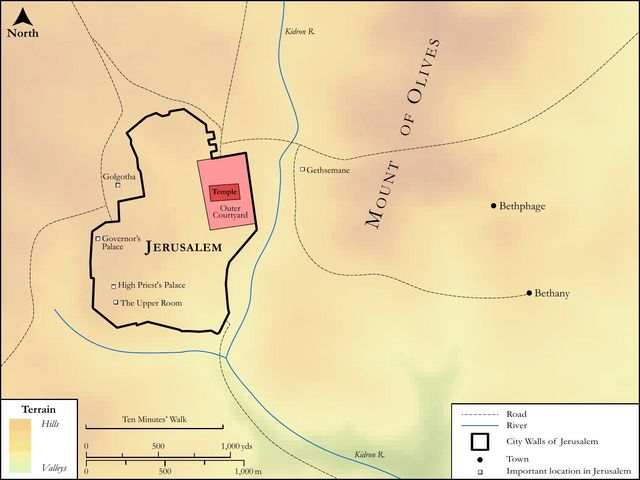
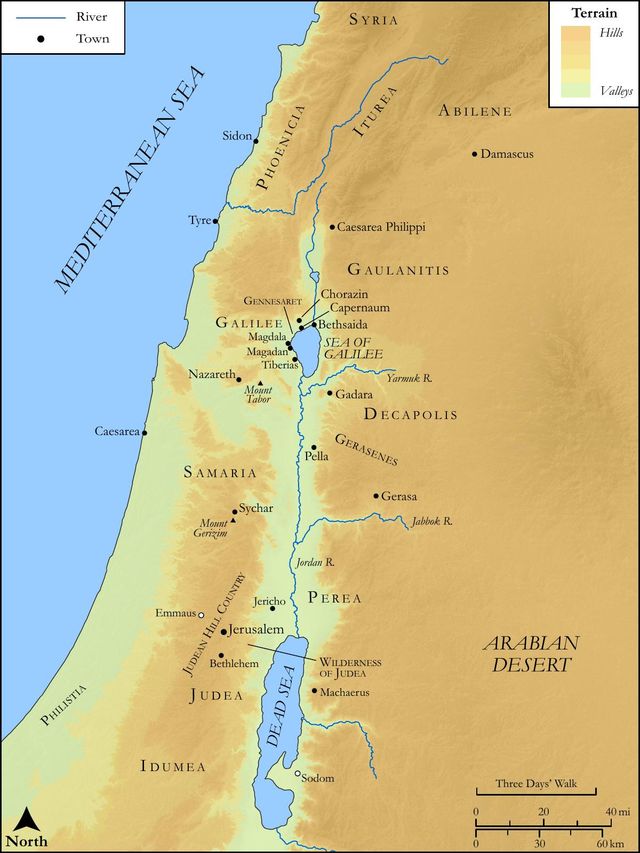
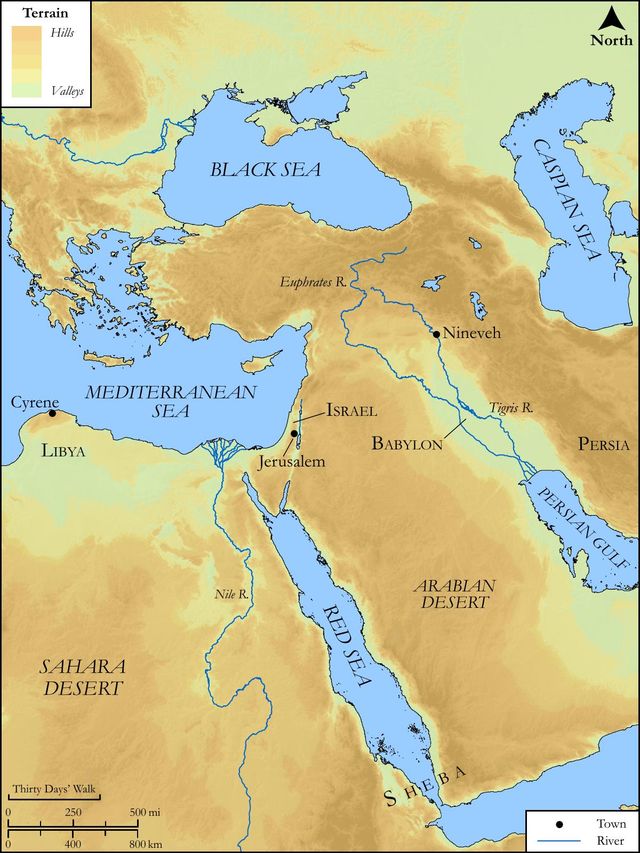
See on the biblical-era map
Study this verse
Public-domain commentary
Matthew Henry
From his Commentary on the Whole Bible. Henry comments on passages, not single verses — this entry covers Matthew 12:22–37. His four-level outline is real structure in the source text, so it is rendered as structure.
In these verses we have,
I.Christ's glorious conquest of Satan, in the gracious cure of one who, by the divine permission, was under his power, and in his possession, Mat 12:22. Here observe,
1.The man's case was very sad; he was possessed with a devil. More cases of this kind occurred in Christ's time than usual, that Christ's power might be the more magnified, and his purpose the more manifested, in opposing and dispossessing Satan; and that it might the more evidently appear, that he came to destroy the works of the devil. This poor man that was possessed was blind and dumb; a miserable case! he could neither see to help himself, nor speak to others to help him. A soul under Satan's power, and led captive by him, is blind in the things of God, and dumb at the throne of grace; sees nothing, and says nothing to the purpose. Satan blinds the eye of faith, and seals up the lips of prayer.
2.His cure was very strange, and the more so, because sudden; he healed him. Note, The conquering and dispossessing of Satan is the healing of souls. And the cause being removed, immediately the effect ceased; the blind and dumb both spake and saw. Note, Christ's mercy is directly opposite to Satan's malice; his favours, to the devil's mischiefs. When Satan's power is broken in the soul, the eyes are opened to see God's glory, and the lips opened to speak his praise.
II.The conviction which this gave to the people to all the people:
they were amazed. Christ had wrought divers miracles of this kind before; but his works are not the less wonderful, nor the less to be wondered at, for their being often repeated. They inferred from it, "Is not this the Son of David? The Messiah promised, that was to spring from the loins of David? Is not this he that should come?" We may take this, 1. As an enquiring question; they asked, Is not this the Son of David? But they did not stay for an answer: the impressions were cogent, but they were transient. It was a good question that they started; but, it should seem, it was soon lost, and was not prosecuted. Such convictions as these should be brought to a head, and then they are likely to be brought to the heart. Or, 2. as an affirming question; Is not this the Son of David? "Yes, certainly it is, it can be no other; such miracles as these plainly evince that the kingdom of the Messiah is now setting up." And they were the people, the vulgar sort of the spectators, that drew this inference from Christ's miracles. Atheists will say, "That was because they were less prying than the Pharisees;" no, the matter of fact was obvious, and required not much search: but it was because they were less prejudiced and biassed by worldly interest. So plain and easy was the way made to this great truth of Christ being the Messiah and Saviour of the world, that the common people could not miss it; the wayfaring men, though fools, could not err therein. See Isa 35:8. It was found of them that sought it. It is an instance of the condescensions of divine grace, that the things that were hid from the wise and prudent were revealed unto babes. The world by wisdom knew not God, and by the foolish things the wise were confounded.
III.The blasphemous cavil of the Pharisees, v.
24. The Pharisees were a sort of men that pretended to more knowledge in, and zeal for, the divine law, than other people; yet they were the most inveterate enemies to Christ and his doctrine. They were proud of the reputation they had among the people; that fed their pride, supported their power, and filled their purses; and when they heard the people say, Is not this the Son of David? they were extremely irritated, more at that than at the miracle itself; this made them jealous of our Lord Jesus, and apprehensive, that as his interest in the people's esteem increased, theirs must of course be eclipsed and diminished; therefore they envied him, as Saul did his father David, because of what the women sang of him, Sa1 18:7, Sa1 18:8. Note, Those who bind up their happiness in the praise and applause of men, expose themselves to a perpetual uneasiness upon every favourable word that they hear said of any other. The shadow of honour followed Christ, who fled from it, and fled from the Pharisees, who were eager in the pursuit of it. They said, "This fellow does not cast out devils, but by Beelzebub the prince of the devils, and therefore is not the Son of David." Observe,
1.How scornfully they speak of Christ, this fellow; as if that precious name of his, which is as ointment poured forth, were not worthy to be taken into their lips. It is an instance of their pride and superciliousness, and their diabolical envy, that the more people magnified Christ, the more industrious they were to vilify him. It is a bad thing to speak of good men with disdain because they are poor.
2.How blasphemously they speak of his miracles; they could not deny the matter of fact; it was as plain as the sun, that devils were cast out by the word of Christ; nor could they deny that it was an extraordinary thing, and supernatural. Being thus forced to grant the premises, they had no other way to avoid the conclusion, that this is the Son of David, than by suggesting that Christ cast out devils by Beelzebub; that there was a compact between Christ and the devil; pursuant to that, the devil was not cast out, but did voluntarily retire, and give back by consent and with design: or as if, by an agreement with the ruling devil, he had power to cast out the inferior devils. No surmise could be more palpably false and vile than this; that he, who is Truth itself, should be in combination with the father of lies, to cheat the world. This was the last refuge, or subterfuge rather, or an obstinate infidelity, that was resolved to stand it out against the clearest conviction. Observe, Among the devils there is a prince, the ringleader of the apostasy from God and rebellion against him; but this prince is Beelzebub - the god of a fly, or a dunghill god. How art thou fallen, O Lucifer! from an anger of light, to be a lord of flies! Yet this is the prince of the devils too, the chief of the gang of infernal spirits.
IV.Christ's reply to this base insinuation, Mat 12:25-30.
Jesus knew their thoughts. Note, Jesus Christ knows what we are thinking at any time, knows what is in man; he understands our thoughts afar off. It should seem that the Pharisees could not for shame speak it out, but kept it in their minds; they could not expect to satisfy the people with it; they therefore reserved it for the silencing of the convictions of their own consciences. Note, Many are kept off from their duty by that which they are ashamed to own, but which they cannot hide from Jesus Christ: yet it is probable that the Pharisees had whispered what they thought among themselves, to help to harden one another; but Christ's reply is said to be to their thoughts, because he knew with what mind, and from what principle, they said it; that they did not say it in their haste, but that it was the product of a rooted malignity.
Christ's reply to this imputation is copious and cogent, that every mouth may be stopped with sense and reason, before it be stopped with fire and brimstone. Here are three arguments by which he demonstrates the unreasonableness of this suggestion.
1.It would be very strange, and highly improbably, that Satan should be cast out by such a compact, because then Satan's kingdom would be divided against itself; which, considering his subtlety, is not a thing to be imagined, Mat 12:25, Mat 12:26.
(1.)Here is a known rule laid down, that in all societies a common ruin is the consequence of mutual quarrels: Every kingdom divided against itself is brought to desolation; and every family too: Quae enim domus tam stabilis est, quae tam firma civitas, quae non odiis atque dissidiis funditus everti possit? - For what family is so strong, what community so firm, as not to be overturned by enmity and dissension? Cic. Lael. 7. Divisions commonly end in desolations; if we clash, we break; if we divide one from another, we become an easy prey to a common enemy; much more if we bite and devour one another, shall we be consumed one of another, Gal 5:15. Churches and nations have known this by sad experience.
(2.)The application of it to the case in hand (Mat 12:26), If Satan cast out Satan; if the prince of the devils should be at variance with the inferior devils, the whole kingdom and interest would soon be broken; nay, if Satan should come into a compact with Christ, it must be to his own ruin; for the manifest design and tendency of Christ's preaching and miracles was to overthrow the kingdom of Satan, as a kingdom of darkness, wickedness, and enmity to God; and to set up, upon the ruins of it, a kingdom of light, holiness, and love. The works of the devil, as a rebel against God, and a tyrant over the souls of men, were destroyed by Christ; and therefore it was the most absurd thing imaginable, to think that Beelzebub should at all countenance such a design, or come into it: if he should fall in with Christ, how should then his kingdom stand? He would himself contribute to the overthrow of it. Note, The devil has a kingdom, a common interest, in opposition to God and Christ, which, to the utmost of his power, he will make to stand, and he will never come into Christ's interests; he must be conquered and broken by Christ, and therefore cannot submit and bend to him. What concord or communion can there be between light and darkness, Christ and Belial, Christ and Beelzebub? Christ will destroy the devil's kingdom, but he needs not do it by any such little arts and projects as that of a secret compact with Beelzebub; no, this victory must be obtained by nobler methods. Let the prince of the devils muster up all his forces, let him make use of all his powers and politics, and keep his interests in the closest confederacy, yet Christ will be too hard for his united force, and his kingdom shall not stand.
2.It was not at all strange, or improbable, that devils should be cast out by the Spirit of God; for,
(1.)How otherwise do your children cast them out? There were those among the Jews who, by invocation of the name of the most high God, or the God of Abraham, Isaac, and Jacob, did sometimes cast out devils. Josephus speaks of some in his time that did it; we read of Jewish exorcists (Act 19:13), and of some that in Christ's name cast out devils, though they did not follow him (Mar 9:38), or were not faithful to him, Mat 7:22. These the Pharisees condemned not, but imputed what they did to the Spirit of God, and valued themselves and their nation upon it. It was therefore merely from spite and envy to Christ, that they would own that others cast out devils by the Spirit of God, but suggest that he did it by compact with Beelzebub. Note, It is the way of malicious people, especially the malicious persecutors of Christ and Christianity, to condemn the same thing in those they hate, which they approve of and applaud in those they have a kindness for: the judgments of envy are made, not by things, but persons; not by reason, but prejudice. But those were very unfit to sit in Moses's seat, who knew faces, and knew nothing else in judgment: Therefore they shall be your judges; "This contradicting of yourselves will rise up in judgment against you at the last great day, and will condemn you." Note, In the last judgment, not only every sin, but every aggravation of it, will be brought into the account, and some of our notions that were right and good will be brought in evidence against us, to convict us of partiality.
(2.)This casting out of devils was a certain token and indication of the approach and appearance of the kingdom of God (Mat 7:28); "But if it be indeed that I cast out devils by the Spirit of God, as certainly I do, then you must conclude, that though you are unwilling to receive it, yet the kingdom of the Messiah is now about to be set up among you." Other miracles that Christ wrought proved him sent of God, but this proved him sent of God to destroy the devil's kingdom and his works. Now that great promise was evidently fulfilled, that the seed of the woman should break the serpent's head, Gen 3:15. "Therefore that glorious dispensation of the kingdom of God, which has been long expected, is now commenced; slight it at your peril." Note,
[1.]The destruction of the devil's power is wrought by the Spirit of God; that Spirit who works to the obedience of faith, overthrows the interest of that spirit who works in the children of unbelief and disobedience.
[2.]The casting out of devils is a certain introduction to the kingdom of God. If the devil's interest in a soul be not only checked by custom or external restraints, but sunk and broken by the Spirit of God, as a Sanctifier, no doubt but the kingdom of God is come to that soul, the kingdom of grace, a blessed earnest of the kingdom of the glory.
3.The comparing of Christ's miracles, particularly this of casting out devils, with his doctrine, and the design and tendency of his holy religion, evidenced that he was so far from being in league with Satan, that he was at open enmity and hostility against him (Mat 12:29); How can one enter into a strong man's house, and plunder his goods, and carry them away, except he first bind the strong man? And then he may do what he pleases with his goods. The world, that sat in darkness, and lay in wickedness, was in Satan's possession, and under his power, as a house in the possession and under the power of a strong man; so is every unregenerate soul; there Satan resides, there he rules. Now,
(1.)The design of Christ's gospel was to spoil the devil's house, which, as a strong man, he kept in the world; to turn the people from darkness to light, from sin to holiness, from this world to a better, from the power of Satan unto God (Act 26:18); to alter the property of souls.
(2.)Pursuant to this design, he bound the strong man, when he cast out unclean spirits by his word: thus he wrested the sword out of the devil's hand, that he might wrest the sceptre out of it. The doctrine of Christ teaches us how to construe his miracles, and when he showed how easily and effectually he could cast the devil out of people's bodies, he encouraged all believers to hope that, whatever power Satan might usurp and exercise in the souls of men, Christ by his grace would break it: he will spoil him, for it appears that he can bind him. When nations were turned from the service of idols to serve the living God, when some of the worst of sinners were sanctified and justified, and became the best of saints, then Christ spoiled the devil's house, and will spoil it more and more.
4.It is here intimated, that this holy war, which Christ was carrying on with vigour against the devil and his kingdom, was such as would not admit of a neutrality (Mat 12:30), He that is not with me is against me. In the little differences that may arise between the disciples of Christ among themselves, we are taught to lessen the matters in variance, and to seek peace, by accounting those who are not against us, to be with us (Luk 9:50); but in the great quarrel between Christ and the devil, no peace is to be sought, nor any such favourable construction to be made of any indifference in the matter; he that is not hearty for Christ, will be reckoned with as really against him: he that is cold in the cause, is looked upon as an enemy. When the dispute is between God and Baal, there is no halting between two (Kg1 18:21), there is no trimming between Christ and Belial; for the kingdom of Christ, as it is eternally opposite to, so it will be eternally victorious over, the devil's kingdom; and therefore in this cause there is no sitting still with Gilead beyond Jordan, or Asher on the sea-shore, (Jdg 4:16, Jdg 4:17), we must be entirely, faithfully, and immovably, on Christ's side; it is the right side, and will at last be the rising side. See Exo 32:26.
The latter clause is to the same purport: He that gathereth not with me scattereth. Note, (1.) Christ's errand into the world was to gather, to gather in his harvest, to gather in those whom the Father had given him, Joh 11:52; Eph 1:10. (2.) Christ expects and requires from those who are with him, that they gather with him; that they not only gather to him themselves, but do all they can in their places to gather others to him, and so to strengthen his interest. (3.) Those who will not appear, and act, as furtherers of Christ's kingdom, will be looked upon, and dealt with, as hinderers of it; if we gather not with Christ, we scatter; it is not enough, not to do hurt, but we must do good. Thus is the breach widened between Christ and Satan, to show that there was no such compact between them as the Pharisees whispered.
V.Here is a discourse of Christ's upon this occasion, concerning tongue-sins; Wherefore I say unto you.
He seems to turn from the Pharisees to the people, from disputing to instructing; and from the sin of the Pharisees he warns the people concerning three sorts of tongue-sins; for others' harms are admonitions to us.
1.Blasphemous words against the Holy Ghost are the worst kind of tongue-sins, and unpardonable, Mat 12:31, Mat 12:32.
(1.)Here is a gracious assurance of the pardon of all sin upon gospel terms: this Christ says to us, and it is a comfortable saying, that the greatness of sin shall be no bar to our acceptance with God, if we truly repent and believe the gospel: All manner of sin and blasphemy shall be forgiven unto men. Though the sin has been as scarlet and crimson (Isa 1:18), though ever so heinous in its nature, ever so much aggravated by its circumstances, and ever so often repeated, though it reach up to the heavens, yet with the Lord there is mercy, that reacheth beyond the heavens; mercy will be extended even to blasphemy, a sin immediately touching God's name and honour. Paul obtained mercy, who had been a blasphemer, Ti1 1:13. Well may we say, Who is a God like unto thee, pardoning iniquity? Mic 7:18. Even words spoken against the Son of man shall be forgiven; as theirs were who reviled him at his death, many of whom repented and found mercy. Christ herein has set an example to all the sons of men, to be ready to forgive words spoken against them: I, as a deaf man, heard not. Observe, They shall be forgiven unto men, not to devils; this is love to the whole world of mankind, above the world of fallen angels, that all sin is pardonable to them.
(2.)Here is an exception of the blasphemy against the Holy Ghost, which is here declared to be the only unpardonable sin. See here,
[1.]What this sin; it is speaking against the Holy Ghost. See what malignity there is in tongue-sins, when the only unpardonable sin is so. But Jesus knew their thoughts, Mat 12:25. It is not all speaking against the person or essence of the Holy Ghost, or some of his more private operations, or merely the resisting of his internal working in the sinner himself, that is here meant; for who then should be saved? It is adjudged in our law, that an act of indemnity shall always be construed in favour of that grace and clemency which is the intention of the act; and therefore the exceptions in the act are not to be extended further than needs must. The gospel is an act of indemnity; none are excepted by name, nor any by description, but those only that blaspheme the Holy Ghost; which therefore must be construed in the narrowest sense: all presuming sinners are effectually cut off by the conditions of the indemnity, faith and repentance; and therefore the other exceptions must not be stretched far: and this blasphemy is excepted, not for any defect of mercy in God or merit in Christ, but because it inevitably leaves the sinner in infidelity and impenitency. We have reason to think that none are guilty of this sin, who believe that Christ is the Son of God, and sincerely desire to have part in his merit and mercy: and those who fear they have committed this sin, give a good sign that they have not. The learned Dr. Whitby very well observes, that Christ speaks not of what should be (Mar 3:28; Luk 12:10); Whosoever shall blaspheme. As for those who blasphemed Christ when he was here upon earth, and called him a Winebibber, a Deceiver, a Blasphemer, and the like, they had some colour of excuse, because of the meanness of his appearance, and the prejudices of the nation against him; and the proof of his divine mission was not perfected till after his ascension; and therefore, upon their repentance, they shall be pardoned: and it is hoped that they may be convinced by the pouring out of the Spirit, as many of them were, who had been his betrayers and murderers. But if, when the Holy Ghost is given, in his inward gifts of revelation, speaking with tongues, and the like, such as were the distributions of the Spirit among the apostles, if they continue to blaspheme the Spirit likewise, as an evil spirit, there is no hope of them that they will ever be brought to believe in Christ; for First, Those gifts of the Holy Ghost in the apostles were the last proof that God designed to make use of for the confirming of the gospel, and were still kept in reserve, when other methods preceded. Secondly, This was the most powerful evidence, and more apt to convince than miracles themselves. Thirdly, Those therefore who blaspheme this dispensation of the Spirit, cannot possibly be brought to believe in Christ; those who shall impute them to a collusion with Satan, as the Pharisees did the miracles, what can convince them? This is such a strong hold of infidelity as a man can never be beaten out of, and is therefore unpardonable, because hereby repentance is hid from the sinner's eyes.
[2.]What the sentence is that is passed upon it; It shall not be forgiven, neither in this world, nor in the world to come. As in the then present state of the Jewish church, there was no sacrifice of expiation for the soul that sinned presumptuously; so neither under the dispensation of gospel grace, which is often in scripture called the world to come, shall there be any pardon to such as tread underfoot the blood of the covenant, and do despite to the Spirit of grace: there is no cure for a sin so directly against the remedy. It was a rule in our old law, No sanctuary for sacrilege. Or, It shall be forgiven neither now, in the sinner's own conscience, nor in the great day, when the pardon shall be published. Or, this is a sin that exposes the sinner both to temporal and eternal punishment, both to present wrath and the wrath to come.
2.Christ speaks here concerning other wicked words, the products of corruption reigning in the heart, and breaking out thence, Mat 12:33-35. It was said (Mat 12:25) that Jesus knew their thoughts, and here he spoke with an eye to them, showing that it was not strange that they should speak so ill, when their hearts were so full of enmity and malice; which yet they often endeavoured to cloak and cover, by feigning themselves just men. Our Lord Jesus therefore points to the springs and heals them; let the heart be sanctified and it will appear in our words.
(1.)The heart is the root, the language is the fruit (Mat 12:33); if the nature of the tree be good, it will bring forth fruit accordingly. Where grace is the reigning principle in the heart, the language will be the language of Canaan; and, on the contrary, whatever lust reigns in the heart it will break out; diseased lungs make an offensive breath: men's language discovers what country they are of, so likewise what manner of spirit they are of: "Either make the tree good, and then the fruit will be good; get pure hearts and then you will have pure lips and pure lives; or else the tree will be corrupt, and the fruit accordingly. you may make a crab-stock to become a good tree, by grafting into it a shoot from a good tree, and then the fruit will be good; but if the tree be still the same, plant it where you will, and water it how you will, the fruit will be still corrupt." Note, Unless the heart be transformed, the life will never be thoroughly reformed. These Pharisees were shy of speaking out their wicked thoughts of Jesus Christ; but Christ here intimates, how vain it was for them to seek to hide that root of bitterness in them, that bore this gall and wormwood, when they never sought to mortify it. Note, It should be more our care to be good really, than to seem good outwardly.
(2.)The heart is the fountain, the words are the streams (Mat 12:34); Out of the abundance of the heart the mouth speaks, as the streams are the overflowings of the spring. A wicked heart is said to send forth wickedness, as a fountain casts forth her waters, Jer 6:7. A troubled fountain, and a corrupt spring, such as Solomon speaks of (Pro 25:26), must needs send forth muddy and unpleasant streams. Evil words are the natural, genuine product of an evil heart. Nothing but the salt of grace, cast into the spring, will heal the waters, season the speech, and purify the corrupt communications. This they wanted, they were evil; and how can ye, being evil, speak good things? They were a generation of vipers; John Baptist had called them so (Mat 3:7), and they were still the same; for can the Ethiopian change his skin? The people looked upon the Pharisees as a generation of saints, but Christ calls them a generation of vipers, the seed of the serpent, that had an enmity to Christ and his gospel. Now what could be expected from a generation of vipers, but that which is poisonous and malignant? Can the viper be otherwise than venomous? Note, Bad things may be expected from bad people, as said the proverb of the ancients, Wickedness proceedeth from the wicked, Sa1 24:13. The vile person will speak villany, Isa 32:6. Those who are themselves evil, have neither skill nor will to speak good things, as they should be spoken. Christ would have his disciples know what sort of men they were to live among, that they might know what to look for. They are as Ezekiel among scorpions (Eze 2:6), and must not think it strange if they be stung and bitten.
(3.)The heart is the treasury, the words are the things brought out of that treasury (Mat 12:35); and from hence men's characters may be drawn, and may be judged of.
[1.]It is the character of a good man, that he has a good treasure in his heart, and from thence brings forth good things, as there is occasion. Graces, comforts, experiences, good knowledge, good affections, good resolutions, these are a good treasure in the heart; the word of God hidden there, the law of God written there, divine truths dwelling and ruling thee, are a treasure there, valuable and suitable, kept safe and kept secret, as the stores of the good householder, but ready for use upon all occasions. A good man, thus furnished, will bring forth, as Joseph out of his stores; will be speaking and doing that which is good, for God's glory, and the edification of others. See Pro 10:11, Pro 10:13, Pro 10:14, Pro 10:20, Pro 10:21, Pro 10:31, Pro 10:32. This is bringing forth good things. Some pretend to good expenses that have not a good treasure - such will soon be bankrupts: some pretend to have a good treasure within, but give no proof of it: they hope they have it in them, and thank God, whatever their words and actions are, they have good hearts; but faith without works is dead: and some have a good treasure of wisdom and knowledge, but they are not communicative, they do not bring forth out of it: they have a talent, but know not how to trade with it. The complete Christian in this bears the image of God, that he both is good, and does good.
[2.]It is the character of an evil man, that he has an evil treasure in his heart, and out of it bringeth forth evil things. Lusts and corruptions dwelling and reigning in the heart are an evil treasure, out of which the sinner brings forth bad words and actions, to the dishonour of God, and the hurt of others. See Gen 6:5, Gen 6:12; Mat 15:18-20; Jam 1:15. But treasures of wickedness (Pro 10:2) will be treasures of wrath.
3.Christ speaks here concerning idle words, and shows what evil there is in them (Mat 12:36, Mat 12:37); much more is there in such wicked words as the Pharisees spoke. It concerns us to think much of the day of judgment, that that may be a check upon our tongues; and let us consider,
(1.)How particular the account will be of tongue-sins in that day: even for every idle words, or discourse, that men speak, they shall give account. This intimates,
[1.]That God takes notice of every word we say, even that which we ourselves do not notice. See Psa 139:4. Not a word in my tongue but thou knowest it: though spoken without regard or design, God takes cognizance of it.
[2.]That vain, idle, impertinent talk is displeasing to God, which tends not to any good purpose, is not good to any use of edifying; it is the product of a vain and trifling heart. These idle words are the same with that foolish talking and jesting which is forbidden, Eph 5:4. This is that sin which is seldom wanting in the multitude of words, unprofitable talk, Job 15:3.
[3.]We must shortly account for these idle words; they will be produced in evidence against us, to prove us unprofitable servants, that have not improved the faculties of reason and speech, which are part of the talents we are entrusted with. If we repent not of our idle words, and our account for them be not balanced by the blood of Christ, we are undone.
(2.)How strict the judgment will be upon that account (Mat 12:37); By thy words thou shall be justified or condemned; a common rule in men's judgments, and here applied to God's. Note, The constant tenour of our discourse, according as it is gracious or not gracious, will be an evidence for us, or against us, at the great day. Those who seemed to be religious, but bridled not their tongue, will then be found to have put a cheat upon themselves with a vain religion, Jam 1:26. Some think that Christ here refers to that of Eliphaz (Job 15:6), Thine own mouth condemneth thee, and not I; or, rather, to that of Solomon (Pro 18:21), Death and life are in the power of the tongue.
Historical interpretation
Four Centuries of Reception
9 surviving comments on this verse. Each one is dated, so this reads as a timeline rather than a list.
Select a marker to jump to its quote. Markers stagger vertically where authors wrote within a few decades of each other.
Again, it is said that "impeachment awaits us for every vain and needless word." It follows that, from whatever the Lord keeps us, the same He admonishes us to bear patiently from another.
Then again He fences them in with great terror. For think not at all, saith He, that the thing stops at this, that is, at the condemnation of the multitude; nay, for all that do wickedly in such things shall suffer the utmost punishment. And He said not, "ye," partly in order to instruct our whole race, partly to make His saying the less burdensome. "But I say unto you," this is His word, "that every idle word that men shall speak, they shall give account thereof in the day of judgment."
And that is idle, which is not according to the fact, which is false, which hath in it unjust accusation; and some say, that which is vain also, for instance, provoking inordinate laughter, or what is filthy, and immodest, and coarse.
"For by thy words thou shall be justified, and by thy words thou shall be condemned."
Seest thou how far the tribunal is from invidiousness? how favorable the account required? For not upon what another hath said of thee, but from what thou hast thyself spoken, will the Judge give His sentence; which is of all things the very fairest: since surely with thee it rests, either to speak, or not to speak.
Wherefore not those that are slandered, but the slanderers, have need to be anxious and to tremble. For the former are not constrained to answer for themselves touching the evil things which are said of them, but the latter will, for the evil they have spoken; and over these impends the whole danger. So that the persons censured should be without anxiety, not being to give account of the evil that others have said; but the censurers have cause to be in anxiety, and to tremble, as being themselves to be dragged before the judgment-seat in that behalf. For this is indeed a diabolical snare, and a sin having in it no pleasure, but harm only. Yea, and such an one is laying up an evil treasure in his soul. And if he that hath an evil humor in him doth himself first reap the fruits of the malady, much more he that is treasuring up in himself what is more bitter than any bile, I mean, wickedness, will suffer the utmost evils, gathering unto himself a grievous disease. And it is evident from the things that He vomits out. For if they pain others so much, far more the soul that gives them birth.
The Lord follows up what He had said before by moving their fears, showing that they that have thus sinned shall receive the most extreme punishment, I say unto you, that every idle word that men shall speak, they shall give an account thereof in the day of judgment.
He said not 'which ye have spoken,' but makes His teaching of universal application to the whole race of mankind, and at the same time His words less grievous to them that heard them. By an idle word is meant one that is false, that accuses any falsely. Some indeed say that it includes all light talk, all such as stirs immoderate laughter, or shameful and immodest words.
See that this sentence is not a burdensome one. The Judge will pass sentence not according to what any other has said concerning you, but according to what you have yourself spoken. They that are accused then have no need to fear, but they that accuse; for those are not charged of those evil things that have been spoken of them, but these of those evil things that they have spoken.
Then again He fences them in with great terror. For think not at all, saith He, that the thing stops at this, that is, at the condemnation of the multitude; nay, for all that do wickedly in such things shall suffer the utmost punishment. And He said not, "ye," partly in order to instruct our whole race, partly to make His saying the less burdensome. "But I say unto you," this is His word, "that every idle word that men shall speak, they shall give account thereof in the day of judgment."
And that is idle, which is not according to the fact, which is false, which hath in it unjust accusation; and some say, that which is vain also, for instance, provoking inordinate laughter, or what is filthy, and immodest, and coarse.
What He says, The good man out of the good treasure of his heart, & c. is either pointed against the Jews, that seeing they blasphemed God, what treasure in their heart must that be out of which such blasphemy proceeded; or it is connected with what had gone before, that like as a good man cannot bring forth evil things, nor an evil man good things, so Christ cannot do evil works, nor the Devil good works.
And the meaning is; If every idle word which does not edify the hearers is not without danger to him that speaks it, and if each man shall render an account of his words in the day of judgment, how much more shall you, who have spoken falsely against the works of the Holy Spirit, saying that I cast out dæmons through Beelzebub, render an account of your false charge?
being spoken without the profit of either the speaker or hearer; as if laying aside weighty matters we should speak of frivolous trifles, or relate old fables. For he that deals in buffoon jests to create laughter, or brings forth any thing shameful, he will be held guilty not of an idle, but of a sinful word.
This, too, goes with what was said before, and the meaning is that on the day of judgment each person must render an account of his or her words. If an idle word which by no means edifies the listeners is not without harm to the speaker, how much more will you Pharisees, who criticize the works of the Holy Spirit and say that I cast out devils by Beelzebub the prince of devils, have to render an account of your criticism? An idle word is what is spoken without benefit to the speaker and the listener. We overlook serious things and utter frivolous things and tell old wives’ tales. One who acts like a buffoon and makes mouths drop with boisterous laughter and who utters disgraceful things—that person shall be held to account, not for an idle word but a slanderous word.
(Verse 36, 37.) But I tell you that every idle word that men speak, they shall give an account thereof in the day of judgment. For by your words you shall be justified, and by your words you shall be condemned. This also aligns with what was said before. And the meaning is this: If an idle word, which does not edify the listeners, is not without danger for the one who speaks it, and each person will have to give an account for their own words on the day of judgment, how much more will you, who revile the works of the Holy Spirit and say that I cast out demons by Beelzebub, the prince of demons, have to give an account for your slander! Idle speech is that which is spoken by the speaker and heard by the listener without any usefulness: if we omit serious matters and talk about frivolous things, and tell old stories. However, whoever responds with jests and breaks out in laughter and utters something shameful, they will be held guilty not of idle speech, but of a crime.
The words which here follow depend on those that went before; By thy words thou shat be justified, and by thy words thou shalt be condemned. There is no doubt but that every man shall be condemned for his evil words which he speaks; but none shall be justified for his good words, unless they proceed from his inmost heart, and from a entire purpose.
(Hom. in Ev. vi.) Or such as lacks either rightness in itself, or reasons of just necessity;
Continue studying Matthew 12:36 across the web’s major study libraries — every link below opens this exact verse, chapter, or book on the destination site.
Read & Compare
 BibleGatewayThis verse in more than 200 translations and 70 languages.
 Bible.comThe YouVersion reader — hundreds of translations, reading plans, and highlights.
 ESV.orgCrossway's official English Standard Version reader.
 NET BibleThe NET translation with 60,000+ translators' notes on every rendering decision.
 STEP BibleTyndale House's free study tool — original text, vocabulary, and scholarly resources.
 BibliaLogos Bible Software's free web reader.
 USCCBThe New American Bible (Revised Edition) with the U.S. bishops' study notes.
Commentaries
 BibleHub CommentariesDozens of classic commentaries on this verse, gathered on one page.
 StudyLightMore than 100 commentary sets — the largest collection on the web.
 BibleRefPlain-English commentary on what this verse means, verse by verse.
 Enduring WordDavid Guzik's free commentary on this chapter, widely used by Bible teachers.
 Bible Study ToolsVerse commentary alongside Greek and Hebrew study aids.
Original Language & Research
- BibleHub InterlinearThe verse word by word — original language, transliteration, and English.
- BibleHub LexiconEvery word's original-language definition and Strong's entry.
 Blue Letter BibleDeep-study tools — Strong's numbers, concordance, and word studies.
 CNTR CollationThe earliest Greek manuscripts of this verse, collated letter by letter.
Sermons, Hymns & Audio


TrulyRandomVerse is not affiliated with these sites and doesn’t control their content. They’re linked because they’re genuinely useful.
Summary
Matthew 12:36 presents a profound and sobering declaration from Jesus Christ concerning the eternal weight of human speech. Following a sharp rebuke of the Pharisees for their blasphemous accusations, Jesus extends His teaching on the direct link between the heart's condition and the words spoken, emphasizing that every utterance, even those deemed insignificant or careless, will be subject to divine scrutiny and accountability on the Day of Judgment. This verse serves as a powerful reminder of the deep spiritual implications inherent in our daily communication.
Context
ShowHideLiterary Context
This verse immediately follows a pivotal confrontation between Jesus and the Pharisees, who had accused Him of casting out demons by the power of Beelzebub, the prince of devils. Jesus vehemently refutes their accusation, warning them about the unforgivable sin of blasphemy against the Holy Spirit. He then transitions into a teaching about the intrinsic connection between a tree and its fruit, stating that "out of the abundance of the heart the mouth speaks" (Matthew 12:34). Therefore, Matthew 12:36 is not an isolated statement but the culmination and extension of this discourse, underscoring that if malicious, Spirit-blaspheming words are condemned, then even seemingly unproductive or careless words are not exempt from divine scrutiny, as they too reveal the true nature of the heart.
Historical & Cultural Context
In ancient Jewish culture, spoken words held immense power and significance. Oaths, blessings, and curses were believed to carry tangible spiritual weight. The act of speaking was not viewed as a casual or trivial activity but as an outflow of one's inner being, often reflecting one's character, wisdom, or folly. The concept of a "day of judgment" was a well-established theological tenet within Judaism, referring to a future time when God would righteously assess the deeds and lives of all humanity. Jesus' statement would have resonated deeply with this cultural understanding, elevating the accountability for speech to an unprecedented level, even for words that might appear minor or unintentional by human standards.
Key Themes
ShowHideMatthew 12:36 contributes significantly to several key themes within the Gospel of Matthew and broader biblical theology. The primary theme is Accountability for Words, emphasizing that every spoken word, regardless of its perceived importance, will be subject to divine scrutiny. This highlights a profound level of personal responsibility for our communication, echoing sentiments found in Proverbs 18:21. Closely related is the theme of The Seriousness of Speech, as Jesus elevates the act of speaking from a casual human activity to one with eternal consequences, revealing that words are not mere sounds but direct expressions of the heart that reflect one's true character, as also taught in Luke 6:45. Finally, the mention of The Day of Judgment points to a future eschatological event when all humanity will stand before God to give an account of their lives, including their words, serving as a powerful motivator for careful speech and righteous living, a concept also reinforced in Romans 14:12.
Exposition and Analysis
ShowHideKey Word Analysis
ShowHideFrom the provided Strong's data (G692), this word literally means "inactive" or "unemployed." By implication, it conveys the sense of being lazy, useless, barren, or slow. In the context of speech, an "idle word" is not necessarily malicious or blasphemous, but rather unproductive, unprofitable, or spoken thoughtlessly without consideration for its impact or truthfulness. It refers to speech that lacks purpose, spiritual benefit, or edifying quality, contrasting sharply with words that build up or glorify God.
Based on Strong's G4487, rhēma refers to an "utterance," whether individually or collectively. It can also imply a "matter" or "topic," especially in narration, command, or dispute. Unlike logos (which can encompass the underlying thought or reason), rhēma specifically denotes the spoken word, the actual vocalized expression. Thus, Jesus is referring to every single, distinct utterance that proceeds from a person's mouth.
According to Strong's G3056, lógos is something said, including the thought behind it. It can also mean reasoning, a computation, or a reckoning. In this context, "give account" implies providing a justification, explanation, or reckoning for one's words. It suggests a meticulous divine audit where every utterance will be weighed and evaluated, not merely for its content but for the heart condition it reveals.
Verse Breakdown
ShowHide"But I say unto you"
This emphatic opening signals a solemn, authoritative declaration from Jesus, setting it apart as a weighty and undeniable truth. It underscores His divine authority to pronounce judgment and reveal spiritual realities.
"That every idle word that men shall speak"
This clause highlights the comprehensive scope of accountability. "Every" (Greek, pâs) signifies universality, leaving no exception. The term "idle word" (Greek, argos rhēma) refers to speech that is useless, unproductive, careless, or unprofitable—not necessarily evil, but devoid of positive purpose or benefit. It encompasses thoughtless chatter, empty promises, or words that tear down rather than build up.
"they shall give account thereof"
This phrase emphasizes the certainty of future reckoning. The Greek word for "give account" (Greek, apodídōmi lógos) implies a rendering of what is due, a repayment, or a full disclosure. It conveys the idea of a meticulous examination where one must justify or explain their words before a divine judge.
"in the day of judgment"
This specifies the time and context for this ultimate reckoning. "The day of judgment" (Greek, hēméra krísis) refers to the eschatological event when God will justly evaluate the deeds and words of all humanity, bringing all things into the light. It underscores the eternal consequences of our speech.
Literary Devices
ShowHideMatthew 12:36 employs several literary devices to convey its profound message. The phrase "every idle word" can be seen as a form of Hyperbole, an exaggeration used not to mislead, but to emphasize the extreme seriousness and comprehensive nature of divine scrutiny over human speech. While not a direct statement within this verse, it functions as a Climax to Jesus' preceding discourse on the heart and speech, escalating the implications from blasphemy to even seemingly trivial utterances. The mention of "the day of judgment" serves as Foreshadowing, pointing to a future eschatological event and imbuing the present moment with eternal significance. There is also an implicit Contrast between words that are "idle" (useless, unproductive) and those that are purposeful, edifying, and reflective of a righteous heart, thereby encouraging listeners to align their speech with divine standards.
Theological and Thematic Connections
ShowHideMatthew 12:36 profoundly connects to the broader biblical teaching on the power of the tongue and the intrinsic link between one's words and the condition of one's heart. The Bible consistently teaches that speech is not merely a neutral act but a potent force, capable of immense good or destructive harm. Our words are not just sounds; they are external manifestations of our inner spiritual state, revealing our true character, beliefs, and motives. This verse underscores divine justice and the comprehensive nature of God's judgment, extending accountability beyond overt actions to the very fabric of our verbal communication. It compels believers to cultivate an inner purity that naturally leads to edifying and God-honoring speech, recognizing that every utterance reflects upon the Lord we serve.
Reflection and Application
ShowHideMatthew 12:36 serves as a powerful and convicting call to profound self-examination regarding our daily speech. It challenges us to move beyond a superficial understanding of sin, recognizing that even seemingly trivial or thoughtless words carry spiritual weight and will be accounted for. This verse compels us to cultivate a mindful approach to communication, understanding that every utterance is a reflection of our heart's condition. It urges us to consider whether our words are consistently building up, encouraging, speaking truth in love, and glorifying God, or if they are frequently idle, critical, gossipy, or unproductive. Living in light of this truth fosters a greater reverence for God and a deeper commitment to personal integrity, reminding us that our words are not just heard by others, but also by the One to whom we will ultimately give account.
Questions for Reflection
ShowHideFAQ
ShowHideWhat exactly does "idle word" mean in Matthew 12:36?
ShowHideThe Greek word translated "idle" is argos (G692), which literally means "inactive" or "unemployed." In this context, it refers to words that are useless, unproductive, unprofitable, or carelessly spoken. It does not necessarily imply malicious or blasphemous words, but rather those that serve no good purpose, contribute nothing positive, or are simply empty and thoughtless. These are words that lack spiritual or moral benefit, contrasting with speech that builds up, encourages, or glorifies God. The emphasis is on the lack of positive purpose or the absence of beneficial intent behind the words.
Does this mean God judges every single word I say?
ShowHideYes, in a profound sense, Jesus states that "every idle word" will be accounted for. This does not necessarily imply a legalistic tally of each individual utterance, but rather emphasizes the pervasive seriousness of our communication as a whole. Our words are a direct outflow of our heart's condition, as Jesus explains in Matthew 12:34. Therefore, the judgment is not just on isolated words, but on the character of our speech as a revelation of our inner spiritual state. It underscores the comprehensive nature of divine accountability, reminding us that our words are not trivial but carry eternal weight, reflecting who we truly are before God.
Christ-Centered Fulfillment
ShowHideMatthew 12:36 finds its ultimate fulfillment and resolution in the person and work of Jesus Christ. As the eternal Word (John 1:1), Jesus perfectly embodied righteous speech. His every utterance was purposeful, truthful, life-giving, and perfectly aligned with the will of the Father. He never spoke an "idle word," but rather words of grace and truth that brought healing, conviction, and eternal life (John 6:68). For humanity, burdened by the weight of our own idle and sinful words, Christ offers redemption. His sacrifice on the cross atones for every sin, including the sins of our tongue (1 Peter 2:24). While accountability for our words remains, for those who are in Christ, the "day of judgment" is transformed from a day of condemnation into a day of vindication, as their sins are covered by His blood (Romans 8:1). Furthermore, through the indwelling Holy Spirit, believers are empowered to put off unwholesome talk and speak only what is helpful for building others up according to their needs (Ephesians 4:29), thereby fulfilling the positive command implicit in Jesus' warning about idle words.