


Ezekiel 2:6
- וְאַתָּהve·'a·Tahand youH859Conj-w ¦ Pro-2msPronoun Personal 2nd Singular Masculineוְandאַתָּהyou
- בֶןvenO son ofH1121N-mscNoun Singular Masculine Construct
- אָדָם'A·domhumankindH120N-msNoun Singular Masculine Absolute
- אַל'almay notH408NegParticle Negative
- תִּירָאti·Ra'you be afraidH3372V-Qal-Imperf-2msVerb Qal Imperfect 2nd Singular Masculine
- מֵהֶםme·Hemfrom themPrep-m ¦ 3mpSuffix Personal 3rd Plural Masculineמֵfromהֶםthem
- וּמִדִּבְרֵיהֶםu·mi·div·rei·Hemand from their wordsH1697Conj-w ¦ Prep-m ¦ N-mpc ¦ 3mpNoun Plural Masculine Constructוּandמִfromדִּבְרֵיwordsהֶםtheir
- אַל'almay notH408NegParticle Negative
- תִּירָאti·Ra'you be afraidH3372V-Qal-Imperf-2msVerb Qal Imperfect 2nd Singular Masculine
- כִּיkiforH3588PrtParticle Conditional
- סָרָבִיםsa·ra·VimnettlesH5621Adj-mpAdjective Plural Masculine Absolute
- וְסַלּוֹנִיםve·sa·lo·Nimand thornsH5544Conj-w ¦ N-mpNoun Plural Masculine Absoluteוְandסַלּוֹנִיםthorns
- אוֹתָךְ'o·Takhwith youH854Prep ¦ 2msPrepositionאוֹתָwithךְyou
- וְאֶלve·'eland toH413Conj-w ¦ PrepPrepositionוְandאֶלto
- עַקְרַבִּים'ak·ra·BimscorpionsH6137N-mpNoun Plural Masculine Absolute
- אַתָּה'a·TahyouH859Pro-2msPronoun Personal 2nd Singular Masculine
- יוֹשֵׁבyo·Shev[are] dwellingH3427V-Qal-Prtcpl-msVerb Qal Participle Singular Masculine Absolute
- מִדִּבְרֵיהֶםmi·div·rei·Hemfrom their wordsH1697Prep-m ¦ N-mpc ¦ 3mpNoun Plural Masculine Constructמִfromדִּבְרֵיwordsהֶםtheir
- אַל'almay notH408NegParticle Negative
- תִּירָאti·Ra'you be afraidH3372V-Qal-Imperf-2msVerb Qal Imperfect 2nd Singular Masculine
- וּמִפְּנֵיהֶםu·mi·pe·nei·Hemand from their facesH6440Conj-w ¦ Prep-m ¦ N-mpc ¦ 3mpNoun Plural Masculine Constructוּandמִfromפְּנֵיfacesהֶםtheir
- אַל'almay notH408NegParticle Negative
- תֵּחָתte·Chatyou be dismayedH2865V-Niphal-Imperf-2msVerb Niphal Imperfect 2nd Singular Masculine
- כִּיkiforH3588PrtParticle Conditional
- בֵּיתbeit[are] a house ofH1004N-mscNoun Singular Masculine Construct
- מְרִיme·RirebellionH4805N-msNoun Singular Masculine Absolute
- הֵמָּהHe·mahtheyH1992Pro-3mpPronoun Personal 3rd Plural Masculine
English is a literal word-by-word gloss of the Hebrew, not the KJV's wording. Why?
This is the original text the KJV's translators worked from — each Hebrew word with its own literal English meaning in this verse, prepared by scholars at Tyndale House, Cambridge. The KJV translates whole sentences, not word by word, so its wording differs: one Hebrew word can become several English words, and the KJV may choose “the LORD” where the gloss reads “Yahweh”. Both are faithful — they answer different questions. For the KJV's own rendering, switch to the KJV text.
Details
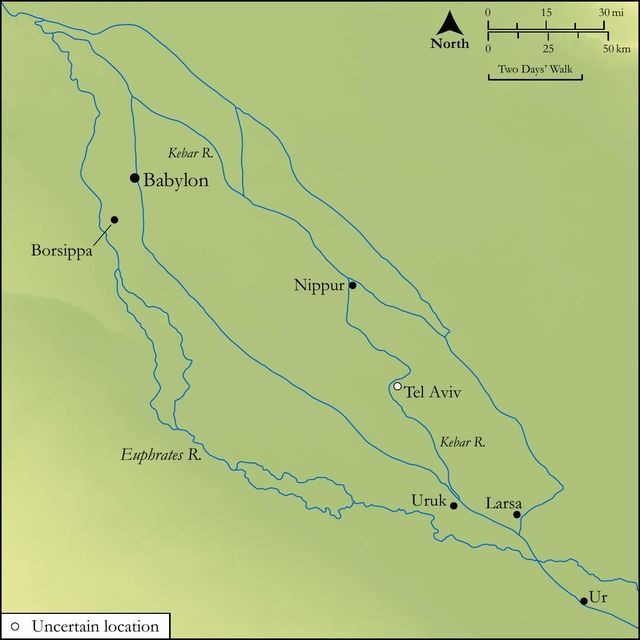
See on the biblical-era map
Study this verse
Public-domain commentary
Matthew Henry
From his Commentary on the Whole Bible. Henry comments on passages, not single verses — this entry covers Ezekiel 2:6–10. His three-level outline is real structure in the source text, so it is rendered as structure.
The prophet, having received his commission, here receives a charge with it. It is a post of honour to which he is advanced, but withal it is a post of service and work, and it is here required of him,
I.That he be bold.
He must act in the discharge of this trust with an undaunted courage and resolution, and not be either driven off from his work or made to drive on heavily, by the difficulties and oppositions that he would be likely to meet with in it: Son of man, be not afraid of them, Eze 2:6. Note, Those that will do any thing to purpose in the service of God must not be afraid of the face of man; for the fear of men will bring a snare, which will be very entangling to us in the work of God.
1.God tells the prophet what was the character of those to whom he sent him, as before, Eze 2:3, Eze 2:4. They are briers and thorns, scratching, and tearing, and vexing a man, which way soever he turns. They are continually teazing God's prophets and entangling them in their talk (Mat 22:15); they are pricking briers and grieving thorns. The best of them is as a brier, and the most upright sharper than a thorn-hedge, Mic 7:4. Thorns and briers are the fruit of sin and the curse, and of equal date with the enmity between the seed of the woman and the seed of the serpent. Note, Wicked men, especially the persecutors of God's prophets and people, are as briers and thorns, which are hurtful to the ground, choke the good seed, hinder God's husbandry, are vexatious to his husbandmen; but they are nigh unto cursing and their end is to be burned. Yet God makes use of them sometimes for the correction and instruction of his people, as Gideon taught the men of Succoth with thorns and briers, Jdg 8:16. Yet this is not the worst of their character: they are scorpions, venomous and malignant. The sting of a scorpion is a thousand times more hurtful than the scratch of a brier. persecutors are a generation of vipers, are of the serpent's seed, and the poison of asps is under their tongue; and they are more subtle than any beast of the field. And, which makes the prophet's case the more grievous, he dwells among these scorpions; they are continually about him, so that he cannot be safe nor quiet in his own house; these bad men are his bad neighbours, who thereby have many opportunities, and will let slip none, to do him a mischief. God takes notice of this to the prophet, as Christ to the angel of one of the churches, Rev 2:13. I know thy works, and where thou dwellest, even where Satan's seat is. Ezekiel had been, in vision, conversing with angels, but when he comes down from this mount he finds he dwells with scorpions.
2.He tells him what would be their conduct towards him, that they would do what they could to frighten him with their looks and their words; they would hector him and threaten him, would look scornfully and spitefully at him, and do their utmost to face him down and put him our of countenance, that they might drive him off from being a prophet, or at least from telling them of their faults and threatening them with the judgments of God; or, if they could not prevail in this, that they might vex and perplex him, and disturb the repose of his mind. They were now themselves in subjection, divested of all power, so that they had no other way of persecuting the prophet than with their looks and their words; and so they did persecute him. Behold, thou hast spoken and done evil things as thou couldest, Jer 3:5. If they had had more power, they would have done more mischief. They were now in captivity, smarting for their rebellion, and particularly their misusing God's prophets; and yet they are as bad as ever. Though thou brag a fool in a mortar, yet will not his foolishness depart from him; no providences will of themselves humble and reform men, unless the grace of God work with them. But, how malicious soever they were, Ezekiel must not be afraid of them nor dismayed, he must not be deterred from his work, or any part of it, nor be disheartened or dispirited in it by all their menaces, but go on in it with resolution and cheerfulness, assuring himself of safety under the divine protection.
II.It is required that he be faithful, Eze 2:7.
1. he must be faithful to Christ who sent him: Thou shalt speak my words unto them. Note, As it is the honour of prophets that they are entrusted to speak God's words, so it is their duty to cleave closely to them and to speak nothing but what is agreeable to the words of God. Ministers must always speak according to that rule. 2. He must be faithful to the souls of those to whom he was sent: Whether they will hear of whether they will forbear, he must deliver his message to them as he received it. He must bring them to comply with the word, and not study to accommodate the word to their humours. "It is true they are most rebellious, they are rebellion itself; but, however, speak my words to them, whether they are pleasing or unpleasing." Note, The untractableness and unprofitableness of people under the word are no good reason why ministers should leave off preaching to them; nor must we decline an opportunity by which good may be done, though we have a great deal of reason to think no good will be done.
III.It is required that he be observant of his instructions.
1.Here is a general intimation what the instructions were that were given him, in the contents of the book which was spread before him, Eze 2:10.
(1.)His instructions were large; for the roll was written within and without, on the inside and on the outside of the roll. It was as a sheet of paper written on all the four sides. One side contained their sins; the other side contained the judgments of God coming upon them for those sins. Note, God has a great deal to say to his people when they have degenerated and become rebellious.
(2.)His instructions were melancholy. He was sent on a sad errand; the matter contained in the book was, lamentations, and mourning, and woe. The idea of his message is taken from the impression it would make upon the minds of those that carefully attended to it; it would set them a weeping and crying out, Woe! and, Alas! Both the discoveries of sin and the denunciations of wrath would be matter of lamentation. What could be more lamentable, more mournful, more woeful, than to see a holy happy people sunk into such a state of sin and misery as it appears by the prophecy of this book the Jews were at this time? Ezekiel echoes to Jeremiah's lamentations. Note, Though God is rich in mercy, yet impenitent sinners will find there are even among his words lamentations and woe.
2.Here is an express charge given to the prophet to observe his instructions, both in receiving his message and delivering it. he is now to receive it and is here commanded,
(1.)To attend diligently to it: son of man, hear what I say unto thee, Eze 2:8. Note, Those that speak from God to others must be sure to hear from God themselves and be obedient to his voice: "Be not thou rebellious; do not refuse to go on this errand, or to deliver it; do not fly off, as Jonah did, for fear of disobliging thy countrymen. They are a rebellious house, among whom thou livest; but be not thou like them, do not comply with them in any thing that is evil." If ministers, who are reprovers by office, connive at sin and indulge sinners, either show them not their wickedness or show them not the fatal consequences of it, for fear of displeasing them and getting their ill-will, they hereby make themselves partakers of their guilt and are rebellious like them. If people will not do their duty in reforming, yet let ministers do theirs in reproving, and they will have the comfort of it in the reflection, whatever the success be, as that prophet had, Isa 50:5. The Lord God has opened my ear, and I was not rebellious. Even the best of men, when their lot is cast in bad times and places, have need to be cautioned against the worst of crimes.
(2.)To digest it in his own mind by an experience of the favour and power of it: "Do not only hear what I say unto thee, but open thy mouth, and eat that which I give thee. Prepare to eat it and eat it willingly and with an appetite." All God's children are content to be at their heavenly father's finding, and to eat whatever he gives them. That which God's hand reached out to Ezekiel was a roll of a book, or the volume of a book, a book or scroll of paper or parchment fully written and rolled up. Divine revelation comes to us from the hand of Christ; he gave it to the prophets, Rev 1:1. When we look at the roll of thy book we must have an eye to the hand by which it is sent to us. He that brought it to the prophet spread it before him, that he might now swallow it with an implicit faith, but might fully understand the contents of it, and then receive it and make it his own. Be not rebellious, says Christ, but eat what I give thee. If we receive not what Christ in his ordinances and providences allots for us, if we submit not to his word and rod, and reconcile not ourselves to both, we shall be accounted rebellious.
Historical interpretation
Four Centuries of Reception
23 surviving comments on this verse. Each one is dated, so this reads as a timeline rather than a list.
Select a marker to jump to its quote. Markers stagger vertically where authors wrote within a few decades of each other.
Are there not revilings in Ezekiel directed against the people, when the Lord says, “you dwell among scorpions”?
The soul that enjoys the watering that comes from the words of God produces in abundance, flourishes and teems with the fruit of the Spirit. But when a soul has become dry, is left uncared for and needs such watering, it becomes desert, its vines grow wild, it produces an abundance of thorns. And these thorns have the natural characteristics of sin. For where there are thorns, there will you find snakes, serpents, scorpions and every power of the devil.
Verse 6: Therefore, son of man, do not fear them, nor be afraid of their words, because they are unbelievers and destroyers with you. LXX: And you, son of man, do not fear them, nor be afraid of their presence: because they are insane, and they will gather against you in a circle. Though they may have hard necks and stubborn hearts, my commandments are stronger. And do not think yourself deceived if you are sent to those who do not listen to you. Behold, I foretell to you that they will go mad, and gather together against you, and surround you, leaving you no escape. And they will do this because they are unbelievers and despise the commands of God.
And you live with scorpions. Do not fear their words, and do not fear their faces, for their house is unsettling. They are capable of striking with a curved wound, and with a stinging sting, so that the same blow may open both skin and spread venom. Each one is called by their own behavior. And to the scribes, it is said: Generation of vipers (Matthew 23:33). And of Herod, who was a fox, it is said: Go and tell that fox (Luke 13:32). And false prophets are compared to foxes in this same Prophet. And now they are said to be scorpions with an untameable heart. Hence, we read in the Gospel: All who came before me were thieves and robbers, and the sheep did not hear them (John 10:8). And how did the lost sheep of the house of Israel hear their adversaries? From this it is shown that those who hear thieves and robbers have lost the name of sheep and have taken on other names, so that they have not perished like sheep, but like vipers, foxes, and scorpions.
Do not think yourselves to be deceived if you are sent to those who do not hear what you are saying. You must understand that I am preaching to you because they are of unsound mind and they gather together against you and they surround you, leaving no escape to you. For they do this because they are faithless and spurn the commands of God.
Perhaps you fear the looks of your relatives sitting around and are afraid to offend them as they press and crowd around your beds. The Lord says through the prophet, “Be not afraid of them, be not dismayed at their looks, for they are a rebellious house.” You must also be unafraid and constant; do not fear their faces or be broken by their display.
As if he openly says: Consider how much I love You, since I do not fear to arouse against myself the enmities of Your enemies. Hence indeed he says: "Those who render evil for good detracted from me, because I followed after justice." Very good is what the just man renders, when he contradicts with free voice those who act wickedly. But the perverse render evil for good when they detract from the just, because they maintain a defense of justice against them. For the just do not look to human judgments, but to the examination of the eternal Judge, and therefore they despise the words of detractors. Hence indeed Paul said to the detracting Corinthians: "But to me it is a very small thing to be judged by you or by a human day." Who, not finding even in his own heart anything for which he could reprove himself, adds: "But neither do I judge myself." But seeing that not even his own judgment would suffice for him toward the perfection of holiness, he added: "But I am not justified in this." Why indeed he did not trust even himself concerning himself, he rendered the reason when he subjoins: "But He who judges me is the Lord." As if he openly says: I do not think my own judgment about myself should be trusted, because He judges me whose judgment I do not comprehend.
Often indeed when we complain about the life of our neighbors, we try to change our place, to choose the seclusion of a more remote life; evidently not knowing that if the spirit is lacking, the place does not help. For that same Lot of whom we speak stood holy in Sodom, yet sinned on the mountain. Moreover, that places do not fortify the mind, the first parent of the human race himself testifies, who fell even in paradise. But all these things we speak from earth are less significant. For if a place could have saved, Satan would not have fallen from heaven. Whence the Psalmist, seeing that there are temptations everywhere in this world, sought a place where he might flee, but could not find one fortified without God. For which reason he asked that God himself become his place, on account of which place he sought, saying: "Be to me a God of protection and a fortified place, that you may make me safe." Therefore neighbors must be tolerated everywhere, because one cannot become Abel whom the malice of Cain does not exercise.
Concerning these matters, however, it should be known that they never reveal their good deeds unless, as I said, either the benefit of their neighbors or certainly extreme necessity compels them. Hence the Apostle Paul, when he had enumerated his virtues to the Corinthians, added: "I have become foolish; you compelled me." But it sometimes happens that when compelled by necessity, in the good things they report about themselves, they seek not the benefit of others but their own, just as blessed Job enumerates his deeds, saying: "I was an eye to the blind and a foot to the lame; I was a father to the poor, and the case I did not know I investigated most diligently." And many other things which he recalls having often done. But because, placed in the wound of his suffering, he was said by his reproaching friends to have acted impiously and to have been violent toward his neighbors and an oppressor of the poor, the holy man, caught between the scourges of God and the words of human reproach, saw his mind severely shaken and driven toward the pit of despair; he could have fallen at any moment had he not recalled to memory his good deeds, so that his spirit might be led back to hope, lest, overwhelmed by words and wounds, he perish in despair. Therefore, when he enumerates his good deeds, he does not desire to become known to others as if seeking praise, but he restores his spirit to hope.
"Therefore you, son of man, do not fear them, nor be afraid of their words, because unbelievers and subverters are with you, and you dwell among scorpions." It is clear to what perverse people he is sent to preach, who is admonished not to fear. And because all wicked people both do other iniquitous things to those who speak good things to them, and still threaten other things, on account of those things which they do it is said: "Do not fear them"; and on account of what they threaten, it is added: "Neither fear their words." Or certainly because the reprobate both inflict evils upon the good and always disparage their actions, the prophet who is sent is admonished neither to fear their cruelty nor to dread their words. In this therefore that is said: "Do not fear," the authority of preaching is given to the prophet. And because all of us who live in God are instruments of truth, so that often He speaks to me through another, and often indeed to others through me; thus the authority of the good word ought to be present in us, so that both he who presides may speak right things freely, and he who is subject may not refuse to offer good things humbly. For the good that is said to a greater by a lesser is then truly good if it is said humbly. For if the rightness of thinking loses the humility of speaking, it has corrupted the root of understanding in the branch of the tongue. Which defect, evidently, is no longer from the branch but from the root, because unless the heart swelled up, the tongue would by no means be proud. Therefore humble authority ought to be present in the superior for speaking, but free humility ought to be present in the lesser.
Hence blessed Job, when through the tongues of detracting friends he suffered the darts of words amid the pains of his wounds, immediately ran back in thought to his conscience, and looked to where he might have a firm mind, saying: "Behold, for my witness is in heaven, and my advocate is on high." Who also added: "My friends are full of words; my eye drips tears to God." For in everything that is said about us, we must always silently return to the mind, seeking the inner witness and judge. For what does it profit if all praise when conscience accuses? Or what can it harm if all disparage us, and conscience alone defends us? Blessed Job therefore, persisting with unbending mind amid the tongues of detractors, because he saw himself attacked on earth by false speeches, sought a witness in heaven. Hence Isaiah says: "My people, those who call you blessed deceive you, and destroy the way of your steps." Lest this people attend to the words of their own praise and perish more deeply in faults, it is immediately said whom he should look upon, whose judgment he should fear, when it is added: "The Lord stands to judge, he stands to judge the peoples." As if it were openly said: Why do you follow human judgments, you who know that the heavenly judge stands above you?
"Do not fear their words, and do not dread their faces, because it is a rebellious house." The good are to be feared lest they be offended, lest perchance through them He who always dwells in their hearts be provoked to wrath. For, as was said above, if we offend the wicked, we ought not to fear at all, since our action displeases those whom the justice of the Creator does not please either. What then is to be feared if those are ungrateful to us who are not lovable to God? Hence it is rightly said now: "Fear not their words, and dread not their faces, because it is a provoking house." As if it were openly said: They would be to be feared, unless they provoked me by their actions.
But if perhaps they find someone righteous of such great virtue that they do not presume to speak contrary things to him, since they cannot be subverters, they immediately become scorpions. For the scorpion advances by caressing, but strikes with its tail; it does not bite from the front, but harms from behind. Therefore all who are flattering and malicious are scorpions, who do not resist the good to their face, but as soon as they have departed they disparage them, they inflame others whom they can, they send forth whatever harm they can, and they do not cease to inflict deadly wounds secretly. Scorpions therefore are those who appear flattering and harmless to the face, but carry behind their back that from which they pour forth poison. For those who strike in secret, as it were, draw death stealthily. Hence it is also said through the Psalmist: "They surrounded me like bees, and they blazed like fire among thorns." For bees have honey in their mouth, but a wound in the sting of their tail. And all who flatter with their tongue but secretly strike from malice are bees, because by speaking they offer the sweetness of honey, but by striking secretly they inflict a wound. But those doing these things blaze like fire among thorns, because through the flames of detractors it is not the life of the righteous that is burned, but if there were any thorns of sins in them, they are consumed. Therefore let it be said: "The unbelieving and subverters are with you, and you dwell among scorpions." Unbelieving toward God, subverters toward their weak neighbors, but scorpions even toward the strong and robust. Though they do not presume to contradict these to their face, yet they secretly inflict the wound of disparagement. For they are at once unbelieving and subverters and scorpions, because they do not believe the things of God when they hear them, and they subvert from good morals those whom they can prevail upon, and those whom they cannot bend they strike with hidden machinations.
Hence it is that Truth denies that John the Baptist was a reed shaken by the wind, saying: "What did you go out into the desert to see? A reed shaken by the wind?" That he said this by way of denial, not affirmation, the following words testify. For he says: "But what did you go out into the desert to see? A man clothed in soft garments? Behold, those who are clothed in soft garments are in the houses of kings." Now a reed shaken by the wind is at one moment raised up by the blasts, at another moment bent down by the blasts. But every weak soul that is either cast down by disparagement or exalted by praises is a reed shaken by the wind. This John was not, because he maintained an unbending summit of mind amid both the praises and the disparagement of men.
Thus the righteous, just as they sometimes speak of the good things they do without arrogance, so too without zeal for private glory they refute the tongues of those who detract from them, because they speak harmful things. But when the tongues of detractors cannot be corrected, they must be tolerated with equanimity in all things. Nor should the speech of disparagement be feared, lest while the criticism of the perverse is dreaded, the path of right action be abandoned. Hence it is now said to the prophet Ezekiel: "Do not fear their words, because the unbelieving and the subversive are with you."
There can be no bad without good, no good without bad in the church. My friends, before your time on earth is over, recall these examples. Strengthen yourselves to bear with the bad. If we are the offspring of God's chosen ones, we must live according to their example. The good have never refused to bear with the bad.
But why he ought not to fear the tongues of detractors, the reason is also added, when it is immediately subjoined: "Because the unbelieving and subverters are with you, and you dwell among scorpions." For those to whom he was sent to speak would need to be feared if they had pleased Almighty God in faith and work. But because they are unbelieving and subverters, detracting in their words, they are not to be feared, because it is very foolish if we seek to please those whom we know do not please the Lord. But the judgments of the just ought to be held in fear and reverence, because they are members of Almighty God, and they reprove on earth that which the Lord rebukes from heaven. For the detraction of the perverse is the approbation of our life, because it is already shown that we have something of justice if we begin to displease those who do not please God. For no one can be pleasing in one and the same matter to the Almighty Lord and to His enemies. For he denies himself a friend to God who pleases His enemy. And he will be opposed to the enemies of truth who is subjected to that same truth in his mind. Whence holy men, inflamed in the rebuke of free speech, do not fear to arouse against themselves the hatred of those whom they know do not love God. Which the Prophet ardently displaying, offered to the Creator of all as if in a gift, saying: "Did I not hate those who hate You, O God, and waste away over Your enemies? With perfect hatred I hated them, and they have become enemies to me."
But the matter requires great inquiry: when we hold to the path of right action, whether we should always despise the words of detractors, or certainly sometimes restrain them. On this matter it must be known that we ought not to stir up the tongues of detractors by our own effort, lest they themselves perish; yet when they are stirred up through their own malice, we ought to bear them with equanimity, so that our merit may increase. Sometimes, however, we should also restrain them, lest while they spread evil things about us, they corrupt the hearts of the innocent who could have heard us unto good. For this is why John rebuked the tongue of his detractor, saying: "Diotrephes, who loves to have the preeminence among them, does not receive us; therefore, if I come, I will call attention to his works which he does, prating against us with malicious words." Hence Paul likewise speaks of the detracting Corinthians, saying: "'His letters,' they say, 'are weighty and powerful, but his bodily presence is weak, and his speech contemptible.' Let such a person consider this: that what we are in word through letters when absent, such we will be also in deed when present." Those whose life is set forth as an example for imitation ought, if they can, to restrain the words of detractors against themselves, lest those who could have heard should not hear their preaching, and, remaining in wicked ways, should despise living well.
But often in people this very order of speaking is confused. For sometimes someone speaks through the swelling of pride, and thinks that he speaks through the authority of freedom; and sometimes another keeps silent through foolish fear, and thinks that he keeps silent through humility. The former, attending to the position of his governance, does not measure the feeling of his pride; the latter, considering the position of his subjection, fears to say the good things which he perceives, and does not know how guilty he becomes against charity by keeping silent. Thus indeed pride cloaks itself under the guise of authority, and human fear cloaks itself under the guise of humility, so that often neither the one is able to consider what he owes to God, nor the other what he owes to his neighbor. For the one, while he looks upon those who are subject to him and does not attend to Him to whom all are subject, is lifted up in elation and glories in his elation as though it were authority. The other, however, sometimes fearing lest he lose the favor of a superior and thereby suffer some temporal loss, conceals the right things he understands, and silently within himself calls the very fear by which he is constrained humility. But the one to whom he is unwilling to say anything, he judges in his thoughts by remaining silent; and it happens that from the very thing by which he considers himself humble, he is more gravely proud. Therefore freedom and pride must always be distinguished, as must humility and fear, lest either fear pretend to be humility, or pride pretend to be freedom. And so Ezekiel, because he was being sent to speak not only to the people but also to the elders, lest he believe imprudent fear to be humility, is admonished that he ought not to fear, when it is said: "Do not fear them." And lest perhaps he dread the words of their disparagement, it is added: "Neither be afraid of their words."
In this matter it should also be noted that when it is said to the prophet: "The unbelieving and the subverters are with you, and you dwell among scorpions," a remedy of consolation is offered to us, whom it often wearies to live when we do not wish to dwell with the wicked. For we complain why all who live with us are not good. We do not wish to bear the evils of our neighbors; we decree that all ought already to be saints, while we do not wish to be what we must bear from our neighbors. But in this matter it is clearer than light that, while we refuse to bear the wicked, how much we ourselves still lack of goodness. For no one is perfectly good unless he has also been good among the wicked. Hence blessed Job declares of himself, saying: "I was a brother of dragons and a companion of ostriches." Hence the apostle Paul says to his disciples: "In the midst of a crooked and perverse nation, among whom you shine as lights in the world." Hence Peter, the pastor of the Lord's flock, says: "He rescued righteous Lot, oppressed by the injurious conduct of the wicked. For he was righteous in sight and hearing, dwelling among those who from day to day tormented the soul of the righteous man with their lawless deeds."
They would be less evil if those who are unbelieving had not also been subverters. For since they themselves do not believe that there are rewards of the heavenly kingdom or punishments of hell, abandoned to their own depravities, they subvert others as well from faith and good works, so that the kingdom which they themselves refuse to seek, another might not attain either. For when they perceive that certain tender souls are beginning good things and now avoiding evil, by mocking what is promised in heaven, by despising what almighty God threatens concerning the punishments of hell, by praising temporal goods, and by promising with cunning persuasion the pleasures of the present age, they turn aside the minds of the innocent and pervert their paths. They rejoice if they can call anyone back from life and drag them to death; they take delight in their own depravities and exult in those of others as well. Their own punishment is certainly not enough for those who act so as not to die alone.
But in this matter, it is necessary that the mind investigate itself with subtle inquiry, lest perhaps it seek the glory of its own praise, and our thought pretend that it seeks the gain of souls. For often the mind is fed by praise of its own name, and as if under the pretext of spiritual gains, it rejoices when it learns that good things are said about it. And often it grows angry against detractors in defense of its own glory, and pretends to itself that it does this out of zeal for those whose hearts the word of the detractor disturbs from the good path. Therefore, those who, examining their conscience subtly, find in themselves nothing of the love of private glory, ought greatly to take care that the words of detractors do not prevail against their reputation.
For this is why the just and perfect sometimes proclaim their virtues and narrate the good things they have received from God—not so that they themselves might advance by displaying them before men, but so that they might draw those to whom they preach toward life by their own example. Hence the apostle Paul narrates to the Corinthians how many times he was beaten with rods, how many times stoned, how many times he endured shipwreck, how much he suffered for the truth, that he was caught up to the third heaven, that he was led into paradise—so that he might turn their minds away from false preachers, so that while he made known what sort of man he was, those whom he knew they wrongly venerated might become worthless in their eyes. When the perfect do this—that is, when they speak of their own virtues—in this too they are imitators of almighty God, who speaks His own praises to men so that He might be known by men. For when He commands through His Scripture, saying, "Let another praise you, and not your own mouth," how does He Himself do what He forbids? But if almighty God were silent about His virtues, no one would recognize Him; if no one recognized Him, no one would love Him; if no one loved Him, no one would return to life. Hence it is also said of Him through the Psalmist: "He will announce the power of His works to His people, that He may give them the inheritance of the nations." Therefore He announces His virtues not so that He Himself might advance by His own praises, but so that those who have come to know Him from His praise might come to the perpetual inheritance. Thus the just and perfect are not blameworthy not only when they rebuke words of reproach against themselves, but also when they speak to the weak about the virtues they possess, because through their own life which they recount they seek to bring the souls of others to life.
There is, however, one reason why the society of the wicked must be avoided: lest, if by chance they cannot be corrected, they draw others to imitation; and since they themselves are not changed from their wickedness, they may pervert those who have been joined to them. Hence Paul says: "Evil communications corrupt good manners." And as it is said through Solomon: "Do not be a friend to an angry man, nor walk with a furious man, lest perhaps you learn his ways and take a stumbling block to your soul." Therefore, just as perfect men ought not to flee from perverse neighbors, because they often draw them to righteousness and are themselves never drawn to perversity, so all who are weak ought to avoid the society of the wicked, lest they be delighted to imitate the evils which they frequently observe and cannot correct. For in this way, by hearing the words of our neighbors daily, we take them into our mind, just as by breathing in and out we draw air into our body. And just as bad air drawn in by constant breathing infects the body, so perverse speech constantly heard infects the mind of the weak, so that it wastes away with delight in wicked work and the iniquity of continual discourse.
Continue studying Ezekiel 2:6 across the web’s major study libraries — every link below opens this exact verse, chapter, or book on the destination site.
Read & Compare
 BibleGatewayThis verse in more than 200 translations and 70 languages.
 Bible.comThe YouVersion reader — hundreds of translations, reading plans, and highlights.
 ESV.orgCrossway's official English Standard Version reader.
 NET BibleThe NET translation with 60,000+ translators' notes on every rendering decision.
 STEP BibleTyndale House's free study tool — original text, vocabulary, and scholarly resources.
 BibliaLogos Bible Software's free web reader.
 USCCBThe New American Bible (Revised Edition) with the U.S. bishops' study notes.
Commentaries
 BibleHub CommentariesDozens of classic commentaries on this verse, gathered on one page.
 StudyLightMore than 100 commentary sets — the largest collection on the web.
 BibleRefPlain-English commentary on what this verse means, verse by verse.
 Enduring WordDavid Guzik's free commentary on this chapter, widely used by Bible teachers.
 Bible Study ToolsVerse commentary alongside Greek and Hebrew study aids.
Original Language & Research
- BibleHub InterlinearThe verse word by word — original language, transliteration, and English.
- BibleHub LexiconEvery word's original-language definition and Strong's entry.
 Blue Letter BibleDeep-study tools — Strong's numbers, concordance, and word studies.
 SefariaThe Hebrew text with Rashi and centuries of Jewish commentary.
Sermons, Hymns & Audio


TrulyRandomVerse is not affiliated with these sites and doesn’t control their content. They’re linked because they’re genuinely useful.
Summary
Ezekiel 2:6 delivers a crucial divine mandate to the newly commissioned prophet Ezekiel. God explicitly commands him to overcome fear of the rebellious house of Israel, despite their anticipated hostility, which is vividly depicted as painful "briers and thorns" and venomous "scorpions." This verse not only highlights God's perfect foreknowledge of the profound opposition Ezekiel would encounter but also serves as a powerful divine assurance, emphasizing the prophet's indispensable need for unwavering courage and steadfast faithfulness in proclaiming God's challenging message to a hardened and resistant people.
Context
ShowHideLiterary Context
This verse immediately follows the profound and awe-inspiring account of Ezekiel's divine call and commissioning, detailed in Ezekiel chapter 1. Having been overwhelmed by the glorious vision of God's throne-chariot (Ezekiel 1:28), Ezekiel is now being prepared for the arduous realities of his prophetic ministry. The preceding verses (Ezekiel 2:3-5) establish the character of the audience to whom Ezekiel is sent: "a rebellious nation," "impudent children and stiffhearted." God explicitly states that regardless of their response—whether they listen or refuse—they will undeniably "know that there hath been a prophet among them." Therefore, Ezekiel 2:6 directly addresses the inevitable opposition, providing a divine antidote to fear, reinforcing the absolute necessity of delivering the message irrespective of its reception. It sets the tone for Ezekiel's entire ministry, which is characterized by God's unwavering word delivered to an unyielding audience.
Historical & Cultural Context
Ezekiel was called to prophesy to the Jewish exiles in Babylon, specifically those who had been deported with King Jehoiachin in 597 BC (2 Kings 24:10-16). These exiles, though displaced from their homeland, often harbored false hopes of a swift return to Jerusalem and clung to a superficial religiosity, frequently rejecting the true prophetic word that called for genuine repentance and submission to God's judgment. The vivid imagery of "briers and thorns" and "scorpions" reflects the harsh, often dangerous, environment of the ancient Near East, where such elements were common threats to travelers, shepherds, and those navigating untamed lands. Spiritually, these metaphors aptly describe the "stiff-necked" and "rebellious" nature of the Israelite people, a characteristic noted throughout their historical interactions with God (e.g., Deuteronomy 9:7). The "house" (H1004, bayith) refers to the entire nation or lineage of Israel, emphasizing their collective and ingrained rebellion against God's covenant.
Key Themes
ShowHideThe central theme in Ezekiel 2:6 is Divine Commission and Assurance in the Face of Opposition. God's repeated command, "be not afraid," underscores that the prophet's courage is divinely empowered, not self-generated. This theme is crucial, as Ezekiel is sent to a "rebellious house" (H1004, bayith; H4805, mᵉrîy), highlighting the pervasive theme of Israel's Persistent Rebellion. The vivid imagery of "briers and thorns" (H5621, çârâb; H5544, çillôwn) and "scorpions" (H6137, ʻaqrâb) powerfully conveys the Hostile Nature of the Audience, emphasizing the spiritual danger and discomfort Ezekiel would experience. Despite this formidable challenge, the verse implicitly teaches Faithfulness Over Results, as Ezekiel's success is defined by his obedience in delivering the message, not by the people's positive response. This aligns perfectly with God's earlier statement in Ezekiel 2:5.
Exposition and Analysis
ShowHideKey Word Analysis
ShowHideA primitive root meaning "to fear," but also "to revere" or "to be dreadful." In this context, it is a direct and emphatic command not to be terrified or intimidated by the people. The repetition of this command ("be not afraid of them," "neither be afraid of their words," "be not afraid of their words") underscores the intensity of the expected opposition and the absolute necessity of divine courage, implying that human fear is a natural, yet surmountable, obstacle.
Derived from a root meaning "bitterness," this word signifies active, persistent, and ingrained rebellion or disobedience. It describes the deep-seated spiritual condition of the "house" of Israel, indicating not merely ignorance but a stubborn, defiant, and bitter opposition to God's will and word. This term highlights the moral culpability of the people.
"Son" (bên) comes from a root meaning "to build," referring to a son as a builder of the family name. "Man" (ʼâdâm) means "ruddy," referring to a human being, an individual, or the species. Together, "son of man" (ben adam) is a humble address used frequently for Ezekiel, emphasizing his humanity, mortality, and frailty in contrast to the divine majesty of God who commissions him. It grounds him as one of the very people he is sent to address, yet set apart and empowered by divine appointment, making God's empowerment all the more significant.
Verse Breakdown
ShowHide"And thou, son of man,"
This is God's characteristic address to Ezekiel throughout the book, consistently emphasizing his humanity and mortality in stark contrast to the divine speaker. It establishes a humble yet divinely appointed identity for the prophet.
"be not afraid of them, neither be afraid of their words,"
This foundational command is repeated for profound emphasis. It directly confronts the natural human inclination to fear rejection, hostility, and verbal abuse that Ezekiel would inevitably encounter from his unyielding audience.
"though briers and thorns [be] with thee, and thou dost dwell among scorpions:"
This powerful metaphorical language vividly describes the hostile and dangerous nature of the people. "Briers and thorns" symbolize irritating, painful, and obstructive elements, representing the people's stubbornness and capacity to cause distress. "Scorpions" represent venomous, life-threatening danger, indicating the profound spiritual, emotional, and potentially physical harm the people could inflict upon the prophet.
"be not afraid of their words, nor be dismayed at their looks,"
A reiteration and expansion of the initial command to "be not afraid." "Dismayed" (H2865, châthath) means to be broken down, terrified, or discouraged. This extends the warning beyond their spoken opposition to their non-verbal cues—their hostile gazes, defiant expressions, or contemptuous looks (H6440, pânîym, "faces" or "looks")—which could also be profoundly intimidating.
"though they [be] a rebellious house."
This final clause provides the ultimate reason for the intense warnings and repeated commands. The people are not merely ignorant or mistaken but are intrinsically "rebellious" (H4805, mᵉrîy)—stubborn, defiant, and deeply resistant to God's authority and message. This defines the formidable spiritual landscape of Ezekiel's demanding ministry.
Literary Devices
ShowHideEzekiel 2:6 is rich in Metaphor and Symbolism, vividly portraying the challenging nature of Ezekiel's audience. The people are not literally "briers and thorns" or "scorpions," but these images powerfully symbolize their capacity to irritate, obstruct, inflict pain, and even spiritually poison the prophet with their hostility and defiance. The striking Repetition of the command "be not afraid" (Hebrew, yârêʼ) underscores the divine imperative for courage and highlights the severity of the opposition Ezekiel is about to face, reinforcing the message through emphatic reiteration. There is also a strong element of Parallelism in the structure, particularly in the phrases "be not afraid of their words, nor be dismayed at their looks," which presents a similar concept (fear of human opposition) through two distinct but related expressions of human resistance. Finally, the direct address "son of man" is a form of Apostrophe, drawing the reader into the intimate, personal, and profoundly significant nature of God's commissioning of Ezekiel.
Theological and Thematic Connections
ShowHideEzekiel 2:6 profoundly illustrates the nature of authentic prophetic ministry and God's sovereign equipping of His chosen messengers. It reveals that true faithfulness in service to God often involves confronting deep-seated human rebellion, and that divine courage is not the absence of fear, but rather obedience in its very presence. The verse highlights God's omniscience, as He perfectly understands the spiritual state of His people and the formidable challenges His prophet will face, yet still sends him with a clear and unwavering mandate. This divine foresight and provision of courage are foundational for all who are called to speak God's truth, reminding us that the power to overcome opposition comes from God alone, not from human strength or cleverness.
Reflection and Application
ShowHideEzekiel 2:6 offers profound and enduring lessons for contemporary believers navigating a world often resistant or hostile to divine truth. It reminds us that God's call to ministry, whether in formal leadership roles or through daily witness in our spheres of influence, frequently involves stepping into environments marked by spiritual indifference, overt hostility, or outright rebellion. Just as Ezekiel was sent to a "rebellious house," we too are called to be salt and light in a fallen world that often rejects the light. The repeated command "be not afraid" is not a mere suggestion but a divine imperative, challenging us to rely on God's strength and presence rather than our own limited resolve or the fleeting approval of others. Our faithfulness is ultimately measured by our willingness to speak God's truth, even when it is uncomfortable, unpopular, or met with derision, knowing that the ultimate outcome rests solely with Him. This verse powerfully encourages us to cultivate a steadfast spirit, unyielding to intimidation, and rooted in the profound conviction that God is with us, empowering us to stand firm amidst the "briers and thorns" and "scorpions" of our own challenging contexts.
Questions for Reflection
ShowHideFAQ
ShowHideWhy is Ezekiel repeatedly called "son of man" in this book?
ShowHideThe address "son of man" (Hebrew: ben adam, combining H1121 and H120) is used over 90 times in the Book of Ezekiel. It serves to emphasize Ezekiel's humanity and frailty in stark contrast to the awesome, transcendent glory of God who commissions him. It grounds him as a mortal being, one of the very people he is sent to, highlighting that his prophetic authority and power come solely from God, not from his own inherent greatness or status. This humble title also foreshadows its later use by Daniel in Daniel 7:13 and, most significantly, by Jesus Christ as His preferred self-designation, underscoring both His true humanity and His unique divine authority.
What do "briers and thorns" and "scorpions" symbolize in this verse?
ShowHideThese terms are powerful metaphors for the hostile and dangerous nature of the people Ezekiel is sent to. "Briers and thorns" (H5621, çârâb; H5544, çillôwn) symbolize irritating, painful, and obstructive elements that cause discomfort and hinder progress. They represent the people's stubbornness, their capacity to cause distress, and their active resistance to God's word. "Scorpions" (H6137, ʻaqrâb) are a potent symbol of venomous danger and hostility, representing the severe spiritual and emotional harm, and even potential physical threat, that the people could inflict upon the prophet. Together, they paint a vivid and alarming picture of the challenging and perilous spiritual environment in which Ezekiel was to minister.
How does Ezekiel 2:6 apply to Christians today?
ShowHideEzekiel 2:6 offers timeless principles for believers across generations. Just as Ezekiel was sent to a difficult and rebellious audience, Christians are called to share the Gospel and live out their faith in a world that is often indifferent, critical, or outright hostile to divine truth (John 15:18-19). The verse reminds us not to be surprised by opposition, but rather to expect it as a natural consequence of proclaiming God's truth in a fallen world. Crucially, it commands us "be not afraid" (H3372, yârêʼ), emphasizing that our courage and strength come from God's empowering presence and our divine commission, not from human approval or our own limited abilities. Our primary call is to faithfulness in delivering God's message and living according to His will, regardless of the reception or the "looks" of those who oppose us.
Christ-Centered Fulfillment
ShowHideEzekiel 2:6, with its vivid portrayal of a prophet sent to a "rebellious house" despite intense opposition, finds its ultimate and most profound fulfillment in the person and work of Jesus Christ. While Ezekiel was a "son of man" in his humanity, Jesus is the quintessential "Son of Man" (Mark 14:62), fully human yet also fully divine, who came to a world even more deeply entrenched in rebellion against God. Like Ezekiel, Jesus faced relentless opposition—not just hostile words and contemptuous looks, but insidious plots, false accusations, and ultimately, a brutal crucifixion (John 19:15). He was truly among "briers and thorns" as He endured the mocking crown of thorns (Matthew 27:29) and the venomous "scorpions" of sin and evil, taking their full sting upon Himself. Yet, unlike Ezekiel, who was commanded not to fear, Jesus, in His perfect obedience and divine resolve, willingly embraced the suffering and rejection, demonstrating the ultimate fearlessness born of perfect love and submission to His Father's will (Hebrews 12:2). His ministry was not merely to deliver a message to a rebellious house, but to redeem that house through His own perfect sacrifice, overcoming the very rebellion that threatened to consume humanity (Romans 5:8). Thus, Ezekiel's commission foreshadows the greater commission of Christ, who, as the true Prophet, Priest, and King, fully confronted and triumphed over the world's rebellion, offering reconciliation and eternal life to all who believe (2 Corinthians 5:19).