


Ezekiel 2:3
- וַיֹּאמֶרvai·Yo·merand he saidH559Conj-w ¦ V-Qal-ConsecImperf-3msVerb Qal Consecutive Imperfect 3rd Singular Masculineוַandיֹּאמֶרhe said
- אֵלַי'e·Laito meH413Prep ¦ 1csPrepositionאֵלַtoיme
- בֶּןbenO son ofH1121N-mscNoun Singular Masculine Construct
- אָדָם'a·DamhumankindH120N-msNoun Singular Masculine Absolute
- שׁוֹלֵחַsho·Le·ach[am] sendingH7971V-Qal-Prtcpl-msVerb Qal Participle Singular Masculine Absolute
- אֲנִי'a·NiIH589Pro-1csPronoun Personal 1st Singular common gender
- אוֹתְךָ'ot·Kha<obj.> youH853DirObjM ¦ 2msParticle Object Indicatorאוֹתְ<obj.>ךָyou
- אֶל'eltoH413PrepPreposition
- בְּנֵיbe·Nei[the] people ofH1121N-mpcNoun Plural Masculine Construct
- יִשְׂרָאֵלYis·ra·'ElIsraelH3478N-properNoun Proper Location
- אֶל'eltoH413PrepPreposition
- גּוֹיִםgo·YimnationsH1471N-mpNoun Plural Masculine Absolute
- הַמּוֹרְדִיםha·mor·Dim<the> rebelliousH4775Art ¦ V-Qal-Prtcpl-mpVerb Qal Participle Plural Masculine Absoluteהַ<the>מּוֹרְדִיםrebellious
- אֲשֶׁר'a·SherwhichH834RelParticle Relative
- מָרְדוּma·re·duthey have rebelledH4775V-Qal-Perf-3cpVerb Qal Perfect 3rd Plural common gender
- בִיViagainst mePrep-b ¦ 1csSuffix Personal 1st Singular common genderבִagainstיme
- הֵמָּהHe·mahtheyH1992Pro-3mpPronoun Personal 3rd Plural Masculine
- וַאֲבוֹתָםva·'a·vo·Tamand their ancestorsH1Conj-w ¦ N-fpc ¦ 3mpNoun Plural Feminine Constructוַandאֲבוֹתָancestorsםtheir
- פָּשְׁעוּPa·she·'uthey have transgressedH6586V-Qal-Perf-3cpVerb Qal Perfect 3rd Plural common gender
- בִיViagainst mePrep-b ¦ 1csSuffix Personal 1st Singular common genderבִagainstיme
- עַד'aduntilH5704PrepPreposition
- עֶצֶם'E·tzem[the] substance ofH6106N-fscNoun Singular Feminine Construct
- הַיּוֹםhai·Yomthe dayH3117Art ¦ N-msNoun Singular Masculine Absoluteהַtheיּוֹםday
- הַזֶּהha·Zeh<the> thisH2088Art ¦ PrtParticle Demonstrativeהַ<the>זֶּהthis
English is a literal word-by-word gloss of the Hebrew, not the KJV's wording. Why?
This is the original text the KJV's translators worked from — each Hebrew word with its own literal English meaning in this verse, prepared by scholars at Tyndale House, Cambridge. The KJV translates whole sentences, not word by word, so its wording differs: one Hebrew word can become several English words, and the KJV may choose “the LORD” where the gloss reads “Yahweh”. Both are faithful — they answer different questions. For the KJV's own rendering, switch to the KJV text.
Details
See on the biblical-era map
Study this verse
Public-domain commentary
Matthew Henry
From his Commentary on the Whole Bible. Henry comments on passages, not single verses — this entry covers Ezekiel 2:1–5. His four-level outline is real structure in the source text, so it is rendered as structure.
The title here given to Ezekiel, as often afterwards, is very observable. God, when he speaks to him, calls him, Son of man (Eze 2:1, Eze 2:3), Son of Adam, Son of the earth. Daniel is once called so (Dan 8:17) and but once; the compellation is used to no other of the prophets but to Ezekiel all along. We may take it, 1. As a humble diminishing title. Lest Ezekiel should be lifted up with the abundance of the revelations, he is put in mind of this, that sill he is a son of man, a mean, weak, mortal creature. Among other things made known to him, it was necessary he should be made to know this, that he was a son of man, and therefore that it was wonderful condescension in God that he was pleased thus to manifest himself to him. Now he is among the living creatures, the angels; yet he must remember that he is himself a man, a dying creature. What is man, or the son of man, that he should be thus visited, thus dignified? Though God had here a splendid retinue of holy angles about his throne, who were ready to go on his errands, yet he passes them all by, and pitches on Ezekiel, a son of man, to be his messenger to the house of Israel; for we have this treasure in earthen vessels, and God's messages sent us by men like ourselves, whose terror shall not make us afraid nor their hand be heavy upon us. Ezekiel was a priest, but the priesthood was brought low and the honour of it laid in the dust. It therefore became him, and all of his order, to humble themselves, and to lie low, as sons of men, common men. he was now to be employed as a prophet, God's ambassador, and a ruler over the kingdoms (Jer 1:10), a post of great honour, but he must remember that he is a son of man, and, whatever good he did, it was not by any might of his own, for he was a son of man, but in the strength of divine grace, which must therefore have all the glory. Or, 2. We may take it as an honourable dignifying title; for it is one of the titles of the Messiah in the Old Testament (Dan 7:13, I saw one like the Son of man come with the clouds of heaven), whence Christ borrows the title he often calls himself by, The Son of man. The prophets were types of him, as they had near access to God and great authority among men; and therefore as David the king is called the Lord's anointed, or Christ, so Ezekiel the prophet is called son of man.
I.Ezekiel is here set up, and made to stand, that he might receive his commission, Eze 2:1, Eze 2:2. He is set up,
1.By a divine command: Son of man, stand upon thy feet. His lying prostrate was a posture of greater reverence, but his standing up would be a posture of greater readiness and fitness for business. Our adorings of God must not hinder, but rather quicken and excite, our actings for God. He fell on his face in a holy fear and awe of God, but he was quickly raised up again; for those that humble themselves shall be exalted. God delights no in the dejections of his servants, but the same that brings them low will raise them up; the same that is a Spirit of bondage will be a Spirit of adoption. Stand, and I will speak to thee. Note, We may expect that God will speak to us when we stand ready to do what he commands us.
2.By a divine power going along with that command, Eze 2:2. God bade him stand up; but, because he had not strength of his own to recover his feet nor courage to face the vision, the Spirit entered into him and set him upon his feet. Note, God is graciously pleased to work that in us which he requires of us and raises those whom he bids rise. We must stir up ourselves, and then God will put strength into us; we must work out our salvation, and then God will work in us. He observed that the Spirit entered into him when Christ spoke to him; for Christ conveys his Spirit by his word as the ordinary means and makes the word effectual by the Spirit. The Spirit set the prophet upon his feet, to raise him up from his dejections, for he is the Comforter. Thus, in a similar case, Daniel was strengthened by a divine touch (Dan 10:18) and John was raised by the right hand of Christ laid upon him, Rev 1:17. The Spirit set him upon his feet, made him willing and forward to do as he was bidden, and then he heard him that spoke to him. He heard the voice before (Eze 1:28), but now he heard it more distinctly and clearly, heard it and submitted to it. The Spirit sets us upon our feet by inclining our will to our duty, and thereby disposes the understanding to receive the knowledge of it.
II.Ezekiel is here sent, and made to go, with a message to the children of Israel (Eze 2:3):
I send thee to the children of Israel. God had for many ages been sending to them his servants the prophets, rising up betimes and sending them, but to little purpose; they were now sent into captivity for abusing God's messengers, and yet even there God sends this prophet among them, to try if their ears were open to discipline, now that they were holden in the cords of affliction. As the supports of life, so the means of grace, are continued to us after they have been a thousand times forfeited. Now observe,
1.The rebellion of the people to whom this ambassador is sent; he is sent to reduce them to their allegiance, to bring back the children of Israel to the Lord their God. let the prophet know that there is occasion for his going on this errand, for they are a rebellious nation (Eze 2:3), a rebellious house, Eze 2:5. They are called children of Israel; they retain the name of their pious ancestors, but they have wretchedly degenerated, they have become Goim - nations, the word commonly used for the Gentiles. The children of Israel have become as the children of the Ethiopian (Amo 9:7), for they are rebellious; and rebels at home are much more provoking to a prince than enemies abroad. Their idolatries and false worships were the sins which, more than any thing, denominated them a rebellious nation; for thereby they set up another prince in opposition to their rightful Sovereign, and did homage and paid tribute to the usurper, which is the highest degree of rebellion that can be.
(1.)They had been all along a rebellious generation and had persisted in their rebellion: They and their fathers have transgressed against me. Note, Those are not always in the right that have antiquity and the fathers on their side; for there are errors and corruptions of long standing: and it is so far from being an excuse for walking in a bad way that our fathers walked in it that it is really an aggravation, for it is justifying the sin of those that have gone before us. They have continued in their rebellion even unto this very day; notwithstanding the various means and methods that have been made use of to reclaim them, to this day, when they are under divine rebukes for their rebellion, they continue rebellious; many among them, like Ahaz, even in their distress, trespass yet more; they are not the better for all the changes that have befallen them, but still remain unchanged.
(2.)They were now hardened in their rebellion. They are impudent children, brazen-faced, and cannot blush; they are still-hearted, self-willed, and cannot bend, cannot stoop, neither ashamed nor afraid to sin; they will not be wrought upon by the sense either of honour or duty. We are willing to hope this was not the character of all, but of many, and those perhaps the leading men. Observe,
[1.]God knew this concerning them, how inflexible, how incorrigible, they were. Note, God is perfectly acquainted with every man's true character, whatever his pretensions and professions may be.
[2.]He told the prophet this, that he might know the better how to deal with them and what handle to take them by. He must rebuke such men as those sharply, cuttingly, must deal plainly with them, though they call it dealing roughly. God tells him this, that it might be no surprise or stumbling-block to him if he found that his preaching should not make that impression upon them, which he had reason to think it would.
2.The dominion of the prince by whom this ambassador is sent.
(1.)He has authority to command him whom he sends: "I do send thee unto them, and therefore thou shalt say thus and thus unto them," Eze 2:4. Note, it is the prerogative of Christ to send prophets and ministers and to enjoin them their work. St. Paul thanked Christ Jesus who put him into the ministry (Ti1 1:12); for, as he was sent of the Father, ministers are sent by him; and as he received the Spirit without measure he gives the Spirit by measure, saying, Receive you the Holy Ghost. They are impudent and rebellious, and yet I send thee unto them. Note, Christ gives the means of grace to many who he knows will not make a good use of those means, puts many a price into the hand of fools to get wisdom, who not only have no heart to it, but have their hearts turned against it. Thus he will magnify his own grace, justify his own judgment, leave them inexcusable, and make their condemnation more intolerable.
(2.)He has authority by him to command those to whom he sends him: Thou shalt say unto them, Thus saith the Lord God. All he said to them must be spoken in God's name, enforced by his authority, and delivered as from him. Christ delivered his doctrines as a Son - Verily, verily, I say unto you; the prophets as servants - Thus saith the Lord God, our Master and yours. Note, The writings of the prophets are the word of God, and so are to be regarded by every one of us.
(3.)He has authority to call those to an account to whom he sends his ambassadors. Whether they will hear or whether they will forbear, whether they will attend to the word or turn their backs upon it, they shall know that there has been a prophet among them, shall know by experience.
[1.]If they hear and obey, they will know by comfortable experience that the word which did them good was brought to them by one that had a commission from God and a divine power going along with him in the execution of it. Thus those who were converted by St. Paul's preaching are said to be the seals of his apostleship, Co1 9:2. When men's hearts are made to burn under the word, and their wills to bow to it, then they know and bear the witness in themselves that it is not the word of men, but of God.
[2.]If they forbear, if they turn a deaf ear to the word (as it is to be feared they will, for they are a rebellious house), yet they shall be made to know that he whom they slighted was indeed a prophet, by the reproaches of their own consciences and the just judgments of God upon them for refusing him; they shall know it to their cost, know it to their confusion, know it by sad experience, what a pernicious dangerous thing it is to despise God's messengers. They shall know by the accomplishment of the threatenings that the prophet who denounced them was sent of God; thus the word will take hold of men, Zac 1:6. Note, First, Those to whom the word of God is sent are upon their trial whether they will hear or whether they will forbear, and accordingly will their doom be. Secondly, Whether we be edified by the word or no, it is certain that God will be glorified and his word magnified and made honourable. Whether it be a savour of life unto life or of death unto death, either way it will appear to be of divine original.
Historical interpretation
Two Centuries of Reception
2 surviving comments on this verse. Each one is dated, so this reads as a timeline rather than a list.
Select a marker to jump to its quote. Markers stagger vertically where authors wrote within a few decades of each other.
(Verse 3.) I send you to the children of Israel, to the apostate nations, who have turned away from me. They and their fathers have violated my covenant until this day. They are no longer called the people of God Israel, but rather the apostate nations, those who have turned away from the Lord, not only the fathers, but also the sons. It is not that the sons are guilty because of the sins of their fathers, but rather that the wickedness of both fathers and sons is equal. Furthermore, what the Septuagint translated as 'irritating me' or 'turning into bitterness' signifies that our kind and sweet God is changed into bitterness by our vices. For as it is said to the holy ones: Taste and see that the Lord is sweet (Psalm 33:9); so sinners perceive him as bitter. Therefore the Apostle refers to the goodness and severity of God towards the holy ones and sinners (Romans 21). And concerning the sinners who were lying down, it is written: The Lord raises up the fallen, the Lord loves the just, the Lord loosens the bound (Psalm 145:8). But to the holy ones who stand, he promises rewards.
"I send you to the sons of Israel, to apostate nations, who have departed from me." It should be noted that it is said: "I send you to the sons of Israel, to apostate nations, who have departed from me." For just as one departs from God in two ways, so in two ways men become apostates from God. For everyone departs from his Creator either by faith or by works. Therefore, just as one who departs from the faith is an apostate, so one who returns to the perverse work which he had abandoned is without any doubt reckoned an apostate from Almighty God, even if he seems to hold the faith. For one without the other avails nothing, because neither does faith help without works, nor works without faith, unless perhaps they are done for the sake of receiving faith; just as Cornelius deserved to be heard for his good works before he became a believer. From this it is gathered that he was doing good works for the sake of receiving faith. For when the angel says to him: "Your prayers and your alms have ascended as a memorial in the sight of God," and immediately on account of that same ascent he is instructed to send for Simon, who should come and preach to him, it is clear that he sought that for which he deserved to be heard.
Continue studying Ezekiel 2:3 across the web’s major study libraries — every link below opens this exact verse, chapter, or book on the destination site.
Read & Compare
 BibleGatewayThis verse in more than 200 translations and 70 languages.
 Bible.comThe YouVersion reader — hundreds of translations, reading plans, and highlights.
 ESV.orgCrossway's official English Standard Version reader.
 NET BibleThe NET translation with 60,000+ translators' notes on every rendering decision.
 STEP BibleTyndale House's free study tool — original text, vocabulary, and scholarly resources.
 BibliaLogos Bible Software's free web reader.
 USCCBThe New American Bible (Revised Edition) with the U.S. bishops' study notes.
Commentaries
 BibleHub CommentariesDozens of classic commentaries on this verse, gathered on one page.
 StudyLightMore than 100 commentary sets — the largest collection on the web.
 BibleRefPlain-English commentary on what this verse means, verse by verse.
 Enduring WordDavid Guzik's free commentary on this chapter, widely used by Bible teachers.
 Bible Study ToolsVerse commentary alongside Greek and Hebrew study aids.
Original Language & Research
- BibleHub InterlinearThe verse word by word — original language, transliteration, and English.
- BibleHub LexiconEvery word's original-language definition and Strong's entry.
 Blue Letter BibleDeep-study tools — Strong's numbers, concordance, and word studies.
 SefariaThe Hebrew text with Rashi and centuries of Jewish commentary.
Sermons, Hymns & Audio


TrulyRandomVerse is not affiliated with these sites and doesn’t control their content. They’re linked because they’re genuinely useful.
Summary
Ezekiel 2:3 marks a profound moment in the prophet Ezekiel's divine commission, as God explicitly sends him to the exiled "children of Israel," a people unequivocally characterized by deep-seated and generational rebellion against their divine covenant partner. This verse immediately follows God's awe-inspiring appearance and the command for Ezekiel to stand, signifying his readiness for a challenging ministry to a nation whose disobedience has persisted without abatement "unto this very day." It sets the daunting stage for a prophetic ministry rooted in confronting chronic unfaithfulness.
Context
ShowHideLiterary Context
This verse serves as the direct articulation of Ezekiel's prophetic mandate, immediately following the overwhelming vision of God's glory in Ezekiel 1 and the subsequent command for the prophet to stand. After falling prostrate in awe at the divine manifestation (implied by the Spirit's entry in Ezekiel 2:1), Ezekiel is empowered by the Spirit to receive and deliver God's word. Ezekiel 2:3 is thus the inaugural statement of his specific mission and the nature of his audience, transitioning abruptly from the sublime encounter with divine majesty to the harsh reality of human sin and the arduous task awaiting the prophet. It establishes the immediate context for the difficult messages that will follow throughout the book, highlighting the divine initiative behind the prophetic office.
Historical & Cultural Context
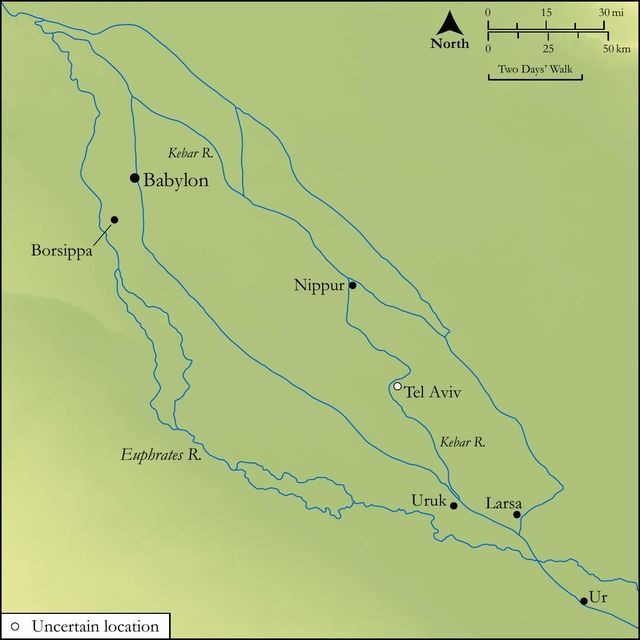
Ezekiel's prophetic ministry unfolds among the Jewish exiles in Babylon, specifically by the Chebar Canal, following the first deportation from Jerusalem in 597 BC. The "children of Israel" to whom he is sent are not the entire nation, but the captive community who, despite experiencing the initial consequences of national sin, largely remained unrepentant and resistant to God's warnings. Culturally, this was a people who had a long history of covenant disobedience, frequently adopting pagan practices and rejecting the admonitions of previous prophets. This historical backdrop of persistent rebellion, culminating in the current state of exile, profoundly underscores the gravity of God's assessment of them as a "rebellious nation." Their suffering was presented as a direct, deserved consequence of their continued defiance, not an arbitrary act, highlighting a deep-seated spiritual malaise that even national catastrophe had not cured.
Key Themes
ShowHideEzekiel 2:3 introduces and reinforces several critical themes that permeate the entire book of Ezekiel and broader prophetic literature. Firstly, the theme of Divine Commission and Authority is paramount, as God sovereignly chooses and "sends" Ezekiel, underscoring the divine origin and inherent authority of the prophetic message, irrespective of the messenger's human frailty or the audience's reception. Secondly, the verse starkly establishes the pervasive theme of Israel's Persistent Rebellion and Transgression, describing them as a "rebellious nation" whose defiance has continued "unto this very day." This deep-seated spiritual stubbornness is a recurring motif throughout the Old Testament, also powerfully articulated in passages like Jeremiah 7:25-26 and Isaiah 1:2-4, underscoring their chronic unfaithfulness to the covenant. Finally, the verse subtly introduces the theme of The Prophet's Burden and Rejection, foreshadowing the immense difficulty and spiritual resistance Ezekiel will face. He is sent not to an ignorant people, but to an actively defiant one, setting the stage for a ministry marked by confrontation and spiritual opposition, as further detailed in Ezekiel 3:7.
Exposition and Analysis
ShowHideKey Word Analysis
ShowHideThis recurring address (H1121, H120) for Ezekiel throughout the book emphatically highlights his humanity and mortality in stark contrast to the divine majesty of the God who speaks to him. "Ben" (H1121) denotes a son, often in relation to a builder or family lineage, while "adam" (H120) refers to a human being, individual, or mankind. Thus, "son of man" underscores Ezekiel's creaturely status, his frailty, and his representative role as a human messenger delivering a divine word to fellow humans. It serves to humble the prophet while simultaneously affirming his identity as one who shares the common human condition of those he is sent to address, making him relatable yet distinct from his divine caller.
This primitive root (H4775) signifies a breaking away from just authority, an act of trespass, apostasy, or quarrel. When applied to Israel, it conveys a profound sense of obstinacy, defiance, and open revolt against God's covenant and commands. It is not merely a passive state of error or ignorance, but an active, willful resistance, painting a vivid picture of Israel's spiritual posture as one of deliberate insubordination against their divine King. The powerful repetition of this root in the verse ("rebellious nation that hath rebelled") intensifies the description of their deep-seated and persistent defiance, emphasizing its ingrained nature.
This primitive root (H6586) carries the sense of breaking away from rightful authority, specifically in a moral or legal sense. It denotes an act of rebellion, revolt, or trespass against a superior. In the context of the covenant, "transgressed" implies a deliberate violation of the terms and laws established by God, highlighting a breach of trust and a crossing of boundaries. The combination with "rebellious" underscores the severity and intentionality of Israel's sin, indicating a pattern of active defiance rather than accidental misstep. It speaks to a profound and intentional breach of relationship and obligation.
Verse Breakdown
ShowHide"And he said unto me, Son of man"
This opening clause immediately establishes the divine speaker, Yahweh, and the recipient of the message, Ezekiel, addressed by his distinctive and humbling title. The address "Son of man" serves as a constant reminder of Ezekiel's human limitations and mortality in the face of God's overwhelming glory and authority, emphasizing that he is a mere mortal chosen to convey a divine message, thereby highlighting the message's divine origin rather than the messenger's power.
"I send thee to the children of Israel, to a rebellious nation that hath rebelled against me"
This segment precisely defines Ezekiel's mission and characterizes his challenging audience. God explicitly states His sovereign initiative ("I send thee"), underscoring that the prophetic ministry is a divine appointment, not a human endeavor. The destination is "the children of Israel," God's chosen people, but they are immediately qualified by a damning description: "a rebellious nation that hath rebelled against me." This highlights their consistent and active defiance against the very God who called them and entered into covenant with them, emphasizing the deep spiritual decay and active insubordination within the nation.
"they and their fathers have transgressed against me, [even] unto this very day"
This final clause powerfully underscores the generational and persistent nature of Israel's sin. Their current rebellion is not an isolated incident but a continuation of a deeply ingrained pattern of transgression inherited from and perpetuated by their ancestors. The phrase "unto this very day" emphasizes the unbroken continuity and pervasive nature of their disobedience, indicating that despite past judgments and their present state of exile, their hearts remain hardened and unrepentant, making Ezekiel's prophetic task all the more daunting and seemingly futile from a human perspective.
Literary Devices
ShowHideEzekiel 2:3 employs several powerful literary devices to convey its message with striking impact. The most prominent is Repetition, specifically of the Hebrew root for "rebel" (mârad). The phrase "rebellious nation that hath rebelled against me" (H4775) intensifies the description of Israel's spiritual state, emphasizing not just a characteristic but an active, ongoing, and deeply ingrained process of defiance. This repetition serves to underscore the pervasive and stubborn nature of their disobedience, leaving no doubt as to their culpability. Apostrophe is evident in God's direct address to Ezekiel, "Son of man," which not only identifies the prophet but also constantly reminds him of his human frailty and mortality in stark contrast to the divine power and majesty of the speaker. Furthermore, the use of Hyperbole or strong emphasis in "unto this very day" highlights the pervasive and persistent nature of Israel's transgression, suggesting a continuous, unbroken chain of rebellion across generations. This paints a stark and almost overwhelming picture of the spiritual landscape Ezekiel is entering, emphasizing the depth of the nation's spiritual sickness.
Theological and Thematic Connections
ShowHideEzekiel 2:3 stands as a profound theological statement on the nature of God's relationship with His covenant people and the enduring reality of human sin. It reveals God's unwavering commitment to His word, even when delivered to a deeply resistant audience, and His sovereign choice of a messenger. The persistent rebellion of Israel, spanning generations and described with such intensity, underscores the deep-seated fallenness of humanity and the absolute necessity of divine intervention beyond mere human effort or prophetic warnings. It powerfully highlights the inherent tension between God's perfect faithfulness to His covenant promises and Israel's chronic unfaithfulness, setting the stage for themes of inevitable judgment, the necessity of radical restoration, and the ultimate need for a new heart, a transformation beyond human capability. This verse implicitly sets the stage for the New Covenant, where God promises to write His law on hearts of flesh, directly addressing the very problem of generational rebellion and hardened hearts.
Reflection and Application
ShowHideEzekiel 2:3 offers profound and sobering insights for contemporary believers, reminding us that God's truth often confronts deep-seated resistance, even within the community of faith. Just as Ezekiel was sent to a "rebellious nation," we are called to live and speak truth in a world, and sometimes within our own spiritual communities, that may be resistant to God's ways. This verse challenges us to engage in honest self-examination: are we truly responsive to God's word, or do we, perhaps subtly, carry on a legacy of generational rebellion through apathy, pride, selective obedience, or a persistent clinging to self-will? It underscores the enduring patience and faithfulness of God, who continues to send messengers, warnings, and opportunities for repentance, even when met with profound defiance. Our call is not to achieve humanly defined success, but to be faithful in delivering God's message, trusting Him with the outcome. It also reminds us that genuine repentance involves a radical breaking from inherited patterns of sin and actively turning towards God with a humble, contrite, and obedient heart, acknowledging that true transformation is a divine work.
Questions for Reflection
ShowHideFAQ
ShowHideWhy does God repeatedly call Israel a "rebellious nation" and emphasize their generational transgression?
ShowHideGod's repeated description of Israel as a "rebellious nation" in Ezekiel 2:3 and elsewhere is not merely an insult but a precise theological diagnosis of their spiritual condition. It highlights their consistent and willful defiance against the covenant relationship they had with Him. This was not accidental sin or ignorance, but a deliberate turning away from His commands and a rejection of His authority, often manifested through idolatry, oppression, and spiritual apathy. Emphasizing that "they and their fathers have transgressed" underscores the deep, ingrained nature of this rebellion, showing it was a pervasive national characteristic, passed down through generations, rather than an isolated incident. This context is crucial for understanding why severe judgment, like the Babylonian exile, was necessary, as it was a direct consequence of their persistent unfaithfulness, as warned in passages like Deuteronomy 28.
What is the significance of God addressing Ezekiel as "Son of man"?
ShowHideThe title "Son of man" (Hebrew: ben-adam) is God's primary address to Ezekiel throughout the book, appearing over 90 times. Its significance in Ezekiel 2:3 is multifaceted. Firstly, it profoundly emphasizes Ezekiel's humanity and mortality, contrasting him sharply with the glorious, transcendent God who speaks to him. This serves to humble the prophet and remind him that he is a mere mortal delivering an eternal, divine message. Secondly, it highlights his solidarity with the people he is sent to; he is one of them, a human being speaking to other human beings, making him relatable to his audience despite their rebellion. Thirdly, it underscores his role as a representative of humanity, a mortal chosen by God to stand before Him and convey His word. While later famously used by Jesus as a messianic title (e.g., Mark 10:45), in Ezekiel, it primarily grounds the prophet in his human identity and limitations, making the divine call all the more remarkable.
Christ-Centered Fulfillment
ShowHideEzekiel 2:3, with its stark portrayal of Israel's generational rebellion and the divine commission of a prophet to confront it, powerfully anticipates the ultimate "Son of Man" and the transformative nature of His ministry. Jesus Christ is the quintessential Son of Man, not merely in His humanity, but as the one who perfectly fulfills the role of God's commissioned messenger, sent to a people who, like their ancestors, were often deeply rebellious and resistant to divine truth (Matthew 23:37). Unlike Ezekiel, who faced profound rejection and spiritual hardness, Jesus, through His perfect obedience and sinless life, lived out the very righteousness Israel failed to embody. He confronted the deep-seated sin and spiritual blindness of His generation, not just with words, but ultimately through His atoning sacrifice on the cross. The persistent "transgression" and "rebellion" described in Ezekiel 2:3 find their ultimate and complete remedy in Christ, who, as the Lamb of God who takes away the sin of the world, offers a new covenant. Under this new covenant, God promises to write His law on hearts of flesh, transforming rebellious wills into obedient ones (Jeremiah 31:33 and Hebrews 8:10). Thus, Ezekiel's daunting commission to a rebellious people foreshadows Christ's mission to reconcile a fallen humanity to God, offering true freedom from the very rebellion that plagued Israel "unto this very day."