


Ezekiel 2:5
- וְהֵמָּהve·He·mahand theyH1992Conj-w ¦ Pro-3mpPronoun Personal 3rd Plural Masculineוְandהֵמָּהthey
- אִם'imwhetherH518PrtParticle Conditional
- יִשְׁמְעוּyish·me·'Uthey will listenH8085V-Qal-Imperf-3mpVerb Qal Imperfect 3rd Plural Masculine
- וְאִםve·'imand orH518Conj-w ¦ PrtParticle Conditionalוְandאִםor
- יֶחְדָּלוּyech·Da·luthey will refrainH2308V-Qal-Imperf-3mpVerb Qal Imperfect 3rd Plural Masculine
- כִּיkiforH3588PrtParticle Conditional
- בֵּיתbeit[are] a house ofH1004N-mscNoun Singular Masculine Construct
- מְרִיme·RirebellionH4805N-msNoun Singular Masculine Absolute
- הֵמָּהHe·mahtheyH1992Pro-3mpPronoun Personal 3rd Plural Masculine
- וְיָדְעוּve·Ya·de·'Uand they will knowH3045Conj-w ¦ V-Qal-ConsecPerf-3cpVerb Qal Consecutive Perfect 3rd Plural common genderוְandיָדְעוּthey will know
- כִּיkithatH3588PrtParticle Conditional
- נָבִיאna·Vi'a prophetH5030N-msNoun Singular Masculine Absolute
- הָיָהha·Yahhe has beenH1961V-Qal-Perf-3msVerb Qal Perfect 3rd Singular Masculine
- בְתוֹכָםve·to·Khamin midst of themH8432Prep-b ¦ N-msc ¦ 3mpNoun Singular Masculine Constructבְinתוֹכָmidst ofםthem
English is a literal word-by-word gloss of the Hebrew, not the KJV's wording. Why?
This is the original text the KJV's translators worked from — each Hebrew word with its own literal English meaning in this verse, prepared by scholars at Tyndale House, Cambridge. The KJV translates whole sentences, not word by word, so its wording differs: one Hebrew word can become several English words, and the KJV may choose “the LORD” where the gloss reads “Yahweh”. Both are faithful — they answer different questions. For the KJV's own rendering, switch to the KJV text.
Details
See on the biblical-era map
Study this verse
Public-domain commentary
Matthew Henry
From his Commentary on the Whole Bible. Henry comments on passages, not single verses — this entry covers Ezekiel 2:1–5. His four-level outline is real structure in the source text, so it is rendered as structure.
The title here given to Ezekiel, as often afterwards, is very observable. God, when he speaks to him, calls him, Son of man (Eze 2:1, Eze 2:3), Son of Adam, Son of the earth. Daniel is once called so (Dan 8:17) and but once; the compellation is used to no other of the prophets but to Ezekiel all along. We may take it, 1. As a humble diminishing title. Lest Ezekiel should be lifted up with the abundance of the revelations, he is put in mind of this, that sill he is a son of man, a mean, weak, mortal creature. Among other things made known to him, it was necessary he should be made to know this, that he was a son of man, and therefore that it was wonderful condescension in God that he was pleased thus to manifest himself to him. Now he is among the living creatures, the angels; yet he must remember that he is himself a man, a dying creature. What is man, or the son of man, that he should be thus visited, thus dignified? Though God had here a splendid retinue of holy angles about his throne, who were ready to go on his errands, yet he passes them all by, and pitches on Ezekiel, a son of man, to be his messenger to the house of Israel; for we have this treasure in earthen vessels, and God's messages sent us by men like ourselves, whose terror shall not make us afraid nor their hand be heavy upon us. Ezekiel was a priest, but the priesthood was brought low and the honour of it laid in the dust. It therefore became him, and all of his order, to humble themselves, and to lie low, as sons of men, common men. he was now to be employed as a prophet, God's ambassador, and a ruler over the kingdoms (Jer 1:10), a post of great honour, but he must remember that he is a son of man, and, whatever good he did, it was not by any might of his own, for he was a son of man, but in the strength of divine grace, which must therefore have all the glory. Or, 2. We may take it as an honourable dignifying title; for it is one of the titles of the Messiah in the Old Testament (Dan 7:13, I saw one like the Son of man come with the clouds of heaven), whence Christ borrows the title he often calls himself by, The Son of man. The prophets were types of him, as they had near access to God and great authority among men; and therefore as David the king is called the Lord's anointed, or Christ, so Ezekiel the prophet is called son of man.
I.Ezekiel is here set up, and made to stand, that he might receive his commission, Eze 2:1, Eze 2:2. He is set up,
1.By a divine command: Son of man, stand upon thy feet. His lying prostrate was a posture of greater reverence, but his standing up would be a posture of greater readiness and fitness for business. Our adorings of God must not hinder, but rather quicken and excite, our actings for God. He fell on his face in a holy fear and awe of God, but he was quickly raised up again; for those that humble themselves shall be exalted. God delights no in the dejections of his servants, but the same that brings them low will raise them up; the same that is a Spirit of bondage will be a Spirit of adoption. Stand, and I will speak to thee. Note, We may expect that God will speak to us when we stand ready to do what he commands us.
2.By a divine power going along with that command, Eze 2:2. God bade him stand up; but, because he had not strength of his own to recover his feet nor courage to face the vision, the Spirit entered into him and set him upon his feet. Note, God is graciously pleased to work that in us which he requires of us and raises those whom he bids rise. We must stir up ourselves, and then God will put strength into us; we must work out our salvation, and then God will work in us. He observed that the Spirit entered into him when Christ spoke to him; for Christ conveys his Spirit by his word as the ordinary means and makes the word effectual by the Spirit. The Spirit set the prophet upon his feet, to raise him up from his dejections, for he is the Comforter. Thus, in a similar case, Daniel was strengthened by a divine touch (Dan 10:18) and John was raised by the right hand of Christ laid upon him, Rev 1:17. The Spirit set him upon his feet, made him willing and forward to do as he was bidden, and then he heard him that spoke to him. He heard the voice before (Eze 1:28), but now he heard it more distinctly and clearly, heard it and submitted to it. The Spirit sets us upon our feet by inclining our will to our duty, and thereby disposes the understanding to receive the knowledge of it.
II.Ezekiel is here sent, and made to go, with a message to the children of Israel (Eze 2:3):
I send thee to the children of Israel. God had for many ages been sending to them his servants the prophets, rising up betimes and sending them, but to little purpose; they were now sent into captivity for abusing God's messengers, and yet even there God sends this prophet among them, to try if their ears were open to discipline, now that they were holden in the cords of affliction. As the supports of life, so the means of grace, are continued to us after they have been a thousand times forfeited. Now observe,
1.The rebellion of the people to whom this ambassador is sent; he is sent to reduce them to their allegiance, to bring back the children of Israel to the Lord their God. let the prophet know that there is occasion for his going on this errand, for they are a rebellious nation (Eze 2:3), a rebellious house, Eze 2:5. They are called children of Israel; they retain the name of their pious ancestors, but they have wretchedly degenerated, they have become Goim - nations, the word commonly used for the Gentiles. The children of Israel have become as the children of the Ethiopian (Amo 9:7), for they are rebellious; and rebels at home are much more provoking to a prince than enemies abroad. Their idolatries and false worships were the sins which, more than any thing, denominated them a rebellious nation; for thereby they set up another prince in opposition to their rightful Sovereign, and did homage and paid tribute to the usurper, which is the highest degree of rebellion that can be.
(1.)They had been all along a rebellious generation and had persisted in their rebellion: They and their fathers have transgressed against me. Note, Those are not always in the right that have antiquity and the fathers on their side; for there are errors and corruptions of long standing: and it is so far from being an excuse for walking in a bad way that our fathers walked in it that it is really an aggravation, for it is justifying the sin of those that have gone before us. They have continued in their rebellion even unto this very day; notwithstanding the various means and methods that have been made use of to reclaim them, to this day, when they are under divine rebukes for their rebellion, they continue rebellious; many among them, like Ahaz, even in their distress, trespass yet more; they are not the better for all the changes that have befallen them, but still remain unchanged.
(2.)They were now hardened in their rebellion. They are impudent children, brazen-faced, and cannot blush; they are still-hearted, self-willed, and cannot bend, cannot stoop, neither ashamed nor afraid to sin; they will not be wrought upon by the sense either of honour or duty. We are willing to hope this was not the character of all, but of many, and those perhaps the leading men. Observe,
[1.]God knew this concerning them, how inflexible, how incorrigible, they were. Note, God is perfectly acquainted with every man's true character, whatever his pretensions and professions may be.
[2.]He told the prophet this, that he might know the better how to deal with them and what handle to take them by. He must rebuke such men as those sharply, cuttingly, must deal plainly with them, though they call it dealing roughly. God tells him this, that it might be no surprise or stumbling-block to him if he found that his preaching should not make that impression upon them, which he had reason to think it would.
2.The dominion of the prince by whom this ambassador is sent.
(1.)He has authority to command him whom he sends: "I do send thee unto them, and therefore thou shalt say thus and thus unto them," Eze 2:4. Note, it is the prerogative of Christ to send prophets and ministers and to enjoin them their work. St. Paul thanked Christ Jesus who put him into the ministry (Ti1 1:12); for, as he was sent of the Father, ministers are sent by him; and as he received the Spirit without measure he gives the Spirit by measure, saying, Receive you the Holy Ghost. They are impudent and rebellious, and yet I send thee unto them. Note, Christ gives the means of grace to many who he knows will not make a good use of those means, puts many a price into the hand of fools to get wisdom, who not only have no heart to it, but have their hearts turned against it. Thus he will magnify his own grace, justify his own judgment, leave them inexcusable, and make their condemnation more intolerable.
(2.)He has authority by him to command those to whom he sends him: Thou shalt say unto them, Thus saith the Lord God. All he said to them must be spoken in God's name, enforced by his authority, and delivered as from him. Christ delivered his doctrines as a Son - Verily, verily, I say unto you; the prophets as servants - Thus saith the Lord God, our Master and yours. Note, The writings of the prophets are the word of God, and so are to be regarded by every one of us.
(3.)He has authority to call those to an account to whom he sends his ambassadors. Whether they will hear or whether they will forbear, whether they will attend to the word or turn their backs upon it, they shall know that there has been a prophet among them, shall know by experience.
[1.]If they hear and obey, they will know by comfortable experience that the word which did them good was brought to them by one that had a commission from God and a divine power going along with him in the execution of it. Thus those who were converted by St. Paul's preaching are said to be the seals of his apostleship, Co1 9:2. When men's hearts are made to burn under the word, and their wills to bow to it, then they know and bear the witness in themselves that it is not the word of men, but of God.
[2.]If they forbear, if they turn a deaf ear to the word (as it is to be feared they will, for they are a rebellious house), yet they shall be made to know that he whom they slighted was indeed a prophet, by the reproaches of their own consciences and the just judgments of God upon them for refusing him; they shall know it to their cost, know it to their confusion, know it by sad experience, what a pernicious dangerous thing it is to despise God's messengers. They shall know by the accomplishment of the threatenings that the prophet who denounced them was sent of God; thus the word will take hold of men, Zac 1:6. Note, First, Those to whom the word of God is sent are upon their trial whether they will hear or whether they will forbear, and accordingly will their doom be. Secondly, Whether we be edified by the word or no, it is certain that God will be glorified and his word magnified and made honourable. Whether it be a savour of life unto life or of death unto death, either way it will appear to be of divine original.
Historical interpretation
Two Centuries of Reception
6 surviving comments on this verse. Each one is dated, so this reads as a timeline rather than a list.
Select a marker to jump to its quote. Markers stagger vertically where authors wrote within a few decades of each other.
He says “whether they hear or refuse,” not out of ignorance but in case any of the obstinate should say that the prediction was what made them disobedient in the first place. He therefore expresses himself in terms of “whether they will” and “it may be.” For though they had been obstinate towards his servants, they ought to have shown reverence to the dignity of the Son.
(Verse 5.) And you shall say to them: Thus says the Lord God: If perhaps they will listen, and if perhaps they will be quiet, for the house is provoking, and they will know that there was a prophet among them. Something similar is written in Jeremiah: If perhaps they will listen and do penance. (Jer. XXVI, 3). And in the Gospel: Perhaps they will fear my son. (Matth. XXI, 37). However, God speaks these things with a doubtful emotion, to demonstrate the free will of man, so that the foreknowledge of future evil or good does not make immutable what God knows will happen. For not because he knows what is about to happen, it is necessary for us to do what he predicted: but because we are going to do it of our own free will, he knows the future like God.
Every soul, even after receiving faith, either persisting in or returning to its perversity, is called a rebellious house, because it repels by wicked conduct God as dweller, whom it had received through faith. For a house is inhabited by its lord. If therefore a house, why rebellious? But if rebellious, why a house, which certainly is no longer inhabited? But it is a house because God had begun to dwell in it through faith; yet it is rebellious because, repelled from it by wicked conduct, he departed, so that it remains empty which the heavenly inhabitant had previously filled. Hence also, as we have learned from the voice of Truth, the most wicked spirit returning with seven others finds the house swept clean, because he fills the mind alienated from virtues.
"If perhaps they themselves may hear, and if perhaps they may be still, because it is a provoking house." While it is established that almighty God knows all things, it is greatly to be wondered why it is said: "If perhaps they will hear, and if perhaps they will be still." Therefore we must know that this doubt in God's speech descends not from ignorance, but from some signification. For who does not know that He who made and sees all things knows all things? And Truth itself says in the Gospel concerning the preachers of Antichrist: "They will give great signs and wonders, so as to lead into error, if it be possible, even the elect." Why is this said under doubt, when what will be is foreknown by the Lord? Truly it is one of two things: for if they are elect, it cannot happen; but if it can happen, they are not elect. And yet it is said: "So as to lead into error, if it be possible, even the elect." Therefore this doubt in the Lord's speech was a designation of temptation from the hearts of the elect, because those who are elect unto persisting will be tempted unto falling through the signs of Antichrist's preachers. Therefore by what is said, "If it be possible," this is expressed: that the elect will be tempted in heart. For they waver, but they do not fall. Therefore it is said, "If it be possible," because they will tremble; and yet they are called elect, because they will not fall. Thus the doubt of speech by the Lord expresses in the elect the trepidation of mind. He also calls them elect because He discerns that they persist in faith and good work. Hence here also it is said: "If perhaps they will hear, and if perhaps they will be still." For by what is said, "If perhaps," it is shown that from a great multitude few will hear. Therefore by the doubt in God's words, what else is signified but the fewness of hearers?
"And they shall know that a prophet has been in their midst." The knowledge of good things tends to benefit the wicked either as an aid to salvation or as a testimony to their condemnation. Therefore let them know that a prophet has been among them, so that having heard the preaching they may either be helped to rise up, or be condemned in such a way that they lack any excuse.
It should be noted that after he had spoken of the evils of the deceased parents, sending the prophet to the children he says: "If perhaps even they themselves may hear, and if perhaps they may be still." What does it mean to say "even they themselves," unless because their fathers who died in sin refused to hear? Let us consider, I ask, what power lies in this deficiency of the Lord's discourse, that he says: "If perhaps even they themselves may hear." This is said openly to us, to us who are afflicted, besieged, shut in, who have lost all the good things we had in this world. We see cities torn down, fortresses overthrown, fields laid waste, churches undermined; and yet we still follow our parents into iniquities, we are not changed from their pride which we have witnessed. And indeed they sinned amid joys, but we—what is more grievous—sin even amid scourges. But behold, almighty God, judging iniquities, has already taken away our predecessors, has already called them to judgment. He still waits for us to repent, he still endures us to return. And he who has already exercised judgment upon them extends to us the long-suffering of his patience, lest he destroy us along with our predecessors, saying: "If perhaps even they themselves may hear, and if perhaps they may be still, for they are a rebellious house."
Continue studying Ezekiel 2:5 across the web’s major study libraries — every link below opens this exact verse, chapter, or book on the destination site.
Read & Compare
 BibleGatewayThis verse in more than 200 translations and 70 languages.
 Bible.comThe YouVersion reader — hundreds of translations, reading plans, and highlights.
 ESV.orgCrossway's official English Standard Version reader.
 NET BibleThe NET translation with 60,000+ translators' notes on every rendering decision.
 STEP BibleTyndale House's free study tool — original text, vocabulary, and scholarly resources.
 BibliaLogos Bible Software's free web reader.
 USCCBThe New American Bible (Revised Edition) with the U.S. bishops' study notes.
Commentaries
 BibleHub CommentariesDozens of classic commentaries on this verse, gathered on one page.
 StudyLightMore than 100 commentary sets — the largest collection on the web.
 BibleRefPlain-English commentary on what this verse means, verse by verse.
 Enduring WordDavid Guzik's free commentary on this chapter, widely used by Bible teachers.
 Bible Study ToolsVerse commentary alongside Greek and Hebrew study aids.
Original Language & Research
- BibleHub InterlinearThe verse word by word — original language, transliteration, and English.
- BibleHub LexiconEvery word's original-language definition and Strong's entry.
 Blue Letter BibleDeep-study tools — Strong's numbers, concordance, and word studies.
 SefariaThe Hebrew text with Rashi and centuries of Jewish commentary.
Sermons, Hymns & Audio


TrulyRandomVerse is not affiliated with these sites and doesn’t control their content. They’re linked because they’re genuinely useful.
Summary
Ezekiel 2:5 serves as a foundational declaration in the prophet Ezekiel's divine commissioning, powerfully articulating God's unwavering purpose in delivering His word despite His foreknowledge of Israel's deep-seated rebellion. This verse encapsulates the profound challenge of Ezekiel's ministry, asserting that whether the exiles choose to heed or reject the divine message, they will ultimately be compelled to acknowledge the undeniable presence of a true prophet among them, thereby vindicating God's righteous dealings and the efficacy of His truth. It establishes that the success of God's word is not contingent upon immediate human repentance but upon its faithful proclamation and the ultimate revelation of divine reality.
Context
ShowHideLiterary Context
This pivotal verse immediately follows Ezekiel's awe-inspiring vision of God's glory and holiness in Ezekiel 1, which culminates in his call to prophetic ministry. After being commanded to stand and receive God's message in Ezekiel 2:1-2, the Lord explicitly describes the nature of the audience to whom Ezekiel is being sent. Verses Ezekiel 2:3-4 characterize them as "impudent children and stiffhearted," a "rebellious house." Therefore, verse 5 functions as a crucial divine clarification regarding the anticipated reception of Ezekiel's message. It emphasizes that Ezekiel's faithfulness in delivering the word, rather than the people's immediate obedience, is the measure of his success, ensuring that God's truth is proclaimed and ultimately acknowledged, regardless of their response. This sets the challenging tone for the entire book, foreshadowing the resistance Ezekiel will face throughout his ministry.
Historical & Cultural Context
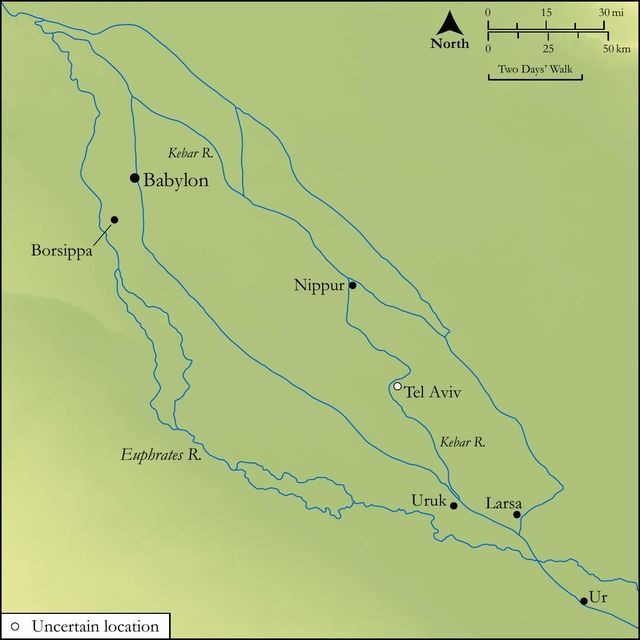
Ezekiel's prophetic ministry unfolded during the Babylonian exile, specifically among the Jewish captives settled by the Chebar Canal, following Nebuchadnezzar's initial deportation of Jerusalem's elite in 597 BC. Culturally, these exiles, despite experiencing divine judgment through the loss of their homeland and temple, often clung to false hopes of a swift return, fueled by deceptive messages from false prophets. They remained largely unrepentant, their hearts hardened against the very God who had delivered them from Egypt and established a covenant with them. The phrase "rebellious house" is not an overstatement but an accurate divine assessment of their persistent spiritual obstinacy and defiance, rooted in generations of covenant unfaithfulness. Their geographical displacement did not translate into spiritual transformation; instead, their rebellion continued even in captivity, making Ezekiel's task exceptionally difficult and underscoring the depth of their need for a divine word.
Key Themes
ShowHideEzekiel 2:5 significantly contributes to several profound themes central to the book of Ezekiel and broader biblical theology. Firstly, it highlights Divine Sovereignty and Foreknowledge, demonstrating that God sends His prophet fully aware of the likely rejection of His message. His divine plan is not thwarted by human obstinacy; rather, it incorporates it, ensuring His ultimate purposes are achieved, a truth echoed in passages like Romans 9:18. Secondly, the verse underscores the Unwavering Nature of Prophetic Witness. Ezekiel's primary duty is to faithfully speak God's word, irrespective of the audience's response. This principle defines the true prophet's role, where success is measured by obedience to the divine commission, not by immediate human results, a concept powerfully articulated in Isaiah 55:11. Thirdly, the declaration "yet shall know that there hath been a prophet among them" points to Accountability and the Justification of God. Even in their rebellion, the people will be left without excuse; when God's judgments or promises come to pass, they will be compelled to acknowledge the undeniable presence of a genuine messenger of God, thereby validating God's righteous dealings with them. Finally, the parenthetical "for they are a rebellious house" reinforces the pervasive theme of Israel's Deep-Seated Rebellion, a characteristic that necessitates God's severe judgments and the eventual promise of a new heart in Ezekiel 36:26.
Exposition and Analysis
ShowHideKey Word Analysis
ShowHideThis primitive root signifies more than just auditory perception; it implies intelligent listening, often with the implication of attention, comprehension, and, crucially, obedience. In the context of prophetic address, to "hear" God's word means to receive it with an open heart and to act upon it in submission to divine authority.
Derived from a root meaning "to be flabby" or "desist," this term indicates a cessation of action, an abstaining, or a holding back. In this verse, it refers to the act of refusing to listen or obey, to desist from heeding the divine message, implying stubborn resistance and a deliberate choice to remain idle or unresponsive to God's call.
From a root signifying "bitterness," this term metaphorically describes a state of deep-seated defiance, stubbornness, or obstinacy against authority, specifically divine authority. It characterizes Israel not as occasionally disobedient, but as habitually and fundamentally resistant to God's will and covenant demands. Its use here emphasizes the ingrained spiritual condition of the exiles, whose rebellion persisted even after experiencing the consequences of their past unfaithfulness.
While literally meaning a physical dwelling, bayith is often used metaphorically to refer to a family, household, or even a nation, emphasizing a collective identity and lineage. In "rebellious house," it signifies the entire nation of Israel, particularly the exiles, as a collective entity characterized by pervasive and generational defiance against God.
This primitive root encompasses a wide range of meanings, from simple factual awareness to intimate, experiential knowledge, and even recognition or acknowledgment. In this context, it signifies a forced recognition or an undeniable understanding. Even if they refuse to "hear" or "forbear" (obey), the people will be compelled to acknowledge the undeniable reality that a true prophet of God was among them, validating God's message and His just dealings with them, whether through judgment or eventual restoration.
This term refers to one who is inspired by God, acting as His spokesperson. The prophet is not merely a foreteller of future events but primarily a forth-teller of God's word, delivering divine messages, warnings, and promises. The presence of a "prophet" among them means that God's direct communication and intervention were undeniably present, leaving the people without excuse for their continued rebellion.
Derived from a root meaning "to sever" or "bisection," this word literally means "middle" or "midst." Its use here emphasizes the physical presence of the prophet within the community of exiles, signifying that God's messenger was tangibly present and accessible, delivering the divine word directly to them.
Verse Breakdown
ShowHide"And they, whether they will hear, or whether they will forbear,"
This opening clause establishes the two possible human responses to God's message delivered through Ezekiel: active listening and obedient reception ("hear") or stubborn refusal and resistant inaction ("forbear"). It highlights the freedom of human will, yet sets up the divine foreknowledge that the latter is the more likely outcome for this particular audience. This framing immediately underscores the challenging nature of Ezekiel's commission.
"(for they [are] a rebellious house,)"
This parenthetical statement provides the divine rationale for the preceding clause. It is not merely a descriptive aside but a definitive, God-given characterization of the people. Their "rebellious" nature is presented as an inherent, pervasive condition of the nation, explaining why God anticipates their rejection of the prophetic word. This phrase is a recurring motif in Ezekiel, emphasizing the depth and stubbornness of Israel's spiritual malady.
"yet shall know that there hath been a prophet among them."
Despite their anticipated rebellion, God declares an undeniable, ultimate outcome: they will be compelled to "know" or acknowledge the presence of a legitimate divine messenger. This "knowing" may come through the fulfillment of the prophet's words (whether prophecies of judgment or restoration), or through the sheer undeniable force of God's presence and intervention in their midst. It ensures divine accountability, leaves no room for ignorance regarding God's persistent efforts to communicate with His people, and ultimately vindicates God's righteousness.
Literary Devices
ShowHideEzekiel 2:5 masterfully employs several literary devices to convey its powerful and resolute message. The most prominent is Antithesis or Parallelism, vividly displayed in the contrasting phrases "whether they will hear, or whether they will forbear." This stark juxtaposition highlights the two mutually exclusive responses to divine revelation, emphasizing the choice presented to the people and God's foreknowledge of their likely rejection. The phrase "(for they are a rebellious house,)" functions as a crucial Parenthesis, providing an immediate, divine commentary that explains the anticipated negative response. This parenthetical insertion is a powerful rhetorical device, revealing God's profound understanding of His people's spiritual condition and serving as a divine justification for their future judgment. Furthermore, there is a subtle but profound Irony at play: although the people may actively refuse to listen to or obey the prophet, their very obstinacy will ultimately lead to a deeper, albeit painful, "knowing" that God's messenger was indeed among them. This ensures that God's word, even when rejected, still accomplishes its purpose of establishing truth and accountability. The recurring descriptor "rebellious house" throughout Ezekiel's prophecy also serves as a form of Emphasis and Repetition, underscoring the pervasive and ingrained nature of Israel's spiritual state.
Theological and Thematic Connections
ShowHideEzekiel 2:5 profoundly articulates God's unwavering commitment to revealing Himself and His will, even to a people resolutely set against Him. It underscores the divine prerogative in choosing and sending messengers, irrespective of the audience's receptivity. This verse highlights the crucial theological principle that God's word, once spoken, carries an inherent authority and purpose that transcends human response. It will not return void, but will accomplish what God intends, whether that is conviction, judgment, or salvation. The ultimate "knowing" ensures that no one can claim ignorance of God's truth, thus establishing a basis for divine justice and accountability. It affirms God's perfect foreknowledge and His sovereign plan, which unfolds even through human rebellion, ultimately leading to His vindication and the demonstration of His righteous character.
Reflection and Application
ShowHideEzekiel 2:5 offers profound and timeless lessons for believers today, particularly concerning the nature of ministry and the reception of God's truth in a resistant world. It liberates us from the burden of measuring our faithfulness by the immediate responses of others, shifting our focus to the unwavering commitment of proclaiming God's word with integrity and courage. Our primary responsibility is to be faithful messengers, delivering the divine truth, regardless of whether it is met with open hearts or hardened resistance. This verse reminds us that God's patience is immense, as He continually sends His word, even to the most rebellious. Yet, it also underscores the ultimate accountability of all humanity. No one can claim ignorance of God's truth if it has been clearly presented, for God ensures that His presence and His message will ultimately be known, leading either to repentance and salvation or to justified judgment. This calls us to a deeper trust in God's sovereignty over outcomes and a renewed dedication to our prophetic calling in a world that often resists divine truth, knowing that God's word will accomplish its purpose.
Questions for Reflection
ShowHideFAQ
ShowHideWhy would God send a prophet if He knew the people wouldn't listen?
ShowHideGod sends prophets, even to a "rebellious house," for several crucial reasons that demonstrate His character and ensure His purposes. Firstly, it demonstrates His persistent love, patience, and grace, offering repeated opportunities for repentance and restoration, even when He foresees rejection. God desires that none should perish (2 Peter 3:9). Secondly, it ensures accountability. By sending a clear message through a true prophet, God leaves the people without excuse for their continued sin. When judgment eventually comes, they cannot claim ignorance, for they "shall know that there hath been a prophet among them." This vindicates God's righteousness and justice. Thirdly, God's word always accomplishes its purpose, as seen in Isaiah 55:11. Even if it doesn't bring immediate repentance, it establishes truth, reveals hearts, and prepares the way for God's ultimate plan, whether that involves judgment or a future work of grace.
What does it mean that they "shall know" that there hath been a prophet among them?
ShowHideThe "knowing" here is not necessarily a willing or immediate acceptance, but a forced, undeniable recognition that will come to pass. It implies that through the unfolding of events—primarily the fulfillment of the prophet's words (both of judgment and eventual restoration), the undeniable power of God's presence, or the sheer weight of historical reality—the people will be compelled to acknowledge that a genuine messenger of God was indeed among them. This "knowing" serves to validate God's word and His dealings with humanity, leaving no room for doubt about His communication or His justice. It underscores the principle that God will ultimately be glorified and His truth acknowledged, even by those who initially resist it, fulfilling His purposes despite human rebellion.
How does this verse relate to evangelism and Christian witness today?
ShowHideEzekiel 2:5 provides a powerful paradigm for Christian witness and evangelism. It reminds us that our primary call is to faithfully proclaim God's truth, the Gospel of Jesus Christ, regardless of the immediate response of our audience. Like Ezekiel, we are sent to a world that is often "rebellious" and resistant to divine authority (John 15:18-19). Our success is not measured by the number of conversions, but by our obedience and faithfulness in delivering the message. This verse liberates us from the pressure of manipulating outcomes and instead focuses on the integrity of our witness. It also assures us that God's word, though rejected by some, will ultimately achieve its purpose, and people will eventually "know" the truth of God's presence and His saving work in Christ, either through conviction and repentance or through the undeniable reality of His coming judgment. We are called to be faithful sowers, trusting God for the harvest, as seen in 1 Corinthians 3:6-7.
Christ-Centered Fulfillment
ShowHideEzekiel 2:5 finds its ultimate and profound fulfillment in the person and ministry of Jesus Christ. Just as Ezekiel was sent as a prophet to a "rebellious house" of Israel, so too was Jesus, the Prophet like Moses promised by God, sent to His own people, who were often characterized by spiritual blindness and stubborn resistance, as lamented in Matthew 23:37. Despite His perfect life, miraculous signs, and unparalleled teachings, many rejected Him, refusing to "hear" His words and choosing to "forbear" His call to repentance and faith. Yet, precisely because of their rebellion and rejection, the ultimate purpose of God was fulfilled through His crucifixion and resurrection, ensuring that all would "know that there hath been a prophet among them"—indeed, the very Son of God, the Word made flesh (John 1:14). The resurrection of Christ, His ascension, and the outpouring of the Holy Spirit on Pentecost (Acts 2:36) served as undeniable proof that God's ultimate Prophet had been among them, leaving no room for doubt about His divine identity and mission. Through Christ, God's word, though rejected by many, established the new covenant and secured salvation for all who believe, demonstrating that God's message, even in the face of the greatest human rebellion, perfectly accomplishes His sovereign will, leading to the ultimate vindication of His truth and the revelation of His glory.