


Ezekiel 3:27
Bible text: King James Version (1769 Blayney text) · Public domain
Bible text: King James Version with Strong's numbers · Public domain
Bible text: Berean Standard Bible · Public domain
Bible text: American Standard Version (1901) · Public domain
Bible text: World English Bible, Messianic edition · Public domain
Bible text: Geneva Bible (1599) · Public domain
Bible text: Young's Literal Translation · Public domain
- וּבְדַבְּרִיu·ve·da·be·Riand when I speakH1696Conj-w ¦ Prep-b ¦ V-Piel-Inf ¦ 1csVerb Piel Infinitive ConstructוּandבְwhenדַבְּרִspeakיI
- אוֹתְךָ'ot·Khawith youH854Prep ¦ 2msPrepositionאוֹתְwithךָyou
- אֶפְתַּח'ef·TachI will openH6605V-Qal-Imperf-1csVerb Qal Imperfect 1st Singular common gender
- אֶת'et<obj.>H853DirObjMParticle Object Indicator
- פִּיךָPi·khayour mouthH6310N-msc ¦ 2msNoun Singular Masculine Constructפִּיmouthךָyour
- וְאָמַרְתָּve·'a·mar·Taand you will sayH559Conj-w ¦ V-Qal-ConsecPerf-2msVerb Qal Consecutive Perfect 2nd Singular Masculineוְandאָמַרְתָּyou will say
- אֲלֵיהֶם'a·lei·Hemto themH413Prep ¦ 3mpPrepositionאֲלֵיtoהֶםthem
- כֹּהkohthusH3541AdvAdverb
- אָמַר'a·Marhe saysH559V-Qal-Perf-3msVerb Qal Perfect 3rd Singular Masculine
- אֲדֹנָי'a·do·Nai[the] LordH136N-properNoun Proper Title
- יְהֹוִהYah·wehYahwehH3069N-properNoun Proper Title
- הַשֹּׁמֵעַha·sho·Me·a'the [one who] hearsH8085Art ¦ V-Qal-Prtcpl-msVerb Qal Participle Singular Masculine Absoluteהַtheשֹּׁמֵעַ[one who] hears
- יִשְׁמָעyish·Ma'let him hearH8085V-Qal-Imperf-3msVerb Qal Imperfect 3rd Singular Masculine
- וְהֶחָדֵלve·he·cha·Deland the [person] who refrainsH2310Conj-w ¦ Art ¦ Adj-msAdjective Singular Masculine Absoluteוְandהֶtheחָדֵל[person] who refrains
- יֶחְדָּלyech·Dallet him refrainH2308V-Qal-Imperf-3msVerb Qal Imperfect 3rd Singular Masculine
- כִּיkiforH3588PrtParticle Conditional
- בֵּיתbeit[are] a house ofH1004N-mscNoun Singular Masculine Construct
- מְרִיme·RirebellionH4805N-msNoun Singular Masculine Absolute
- הֵמָּהHe·mahtheyH1992Pro-3mpPronoun Personal 3rd Plural Masculine
English is a literal word-by-word gloss of the Hebrew, not the KJV's wording. Why?
This is the original text the KJV's translators worked from — each Hebrew word with its own literal English meaning in this verse, prepared by scholars at Tyndale House, Cambridge. The KJV translates whole sentences, not word by word, so its wording differs: one Hebrew word can become several English words, and the KJV may choose “the LORD” where the gloss reads “Yahweh”. Both are faithful — they answer different questions. For the KJV's own rendering, switch to the KJV text.
Details
See on the biblical-era map
Study this verse
Public-domain commentary
Matthew Henry
From his Commentary on the Whole Bible. Henry comments on passages, not single verses — this entry covers Ezekiel 3:22–27. His two-level outline is real structure in the source text, so it is rendered as structure.
After all this large and magnificent discovery which God had made of himself to the prophet, and the full instructions he had given him how to deal with those to whom he sent him with an ample commission, we should have expected presently to see him preaching the word of God to a great congregation of Israel; but here we find it quite otherwise. his work here, at first, seems not at all proportionable to the pomp of his call.
I.We have him here retired for further learning.
By his unwillingness to go it should seem as if he were not so thoroughly convinced as he might have been of the ability of him that sent him to bear him out; and therefore, to encourage him against the difficulties he foresaw, God will favour him with another vision of his glory, which (if any thing) would put life into him and animate him for his work. In order for this, God calls him out to the plain (Eze 3:22) and there he will have some talk with him. See and admire the condescension of God in conversing thus familiarly with a man, a son of man, a poor captive, nay, with a sinful man, who, when God sent him went in bitterness of spirit, and was at this time out of humour with his work. And let us own ourselves for ever indebted to the mediation of Christ for this blessed intercourse and communion between God and man, between heaven and earth. See here the benefit of solitude, and how much it befriends contemplation. It is very comfortable to be alone with God, withdrawn from the word for converse with him, to hear from him, to speak to him; and a good man will say that he is never less along than when thus alone. Ezekiel went forth into the plain more willingly than he went among those of the captivity (Eze 3:15); for those that know what it is to have communion with God cannot but prefer that before any converse with this world, especially such as is commonly met with. He went out into the plain, and there he saw the same vision that he had seen by the river of Chebar; for God is not tied to places. Note, Those who follow God shall meet with his consolations, wherever they go. God called him out to talk with him, but did more than that: he showed him his glory, Eze 3:23. We are not now to expect such visions, but we must own that we have a favour done us no way inferior if we so by faith behold the glory of the Lord as to be changed into the same image, by the Spirit of the Lord; and this honour have all his saints. Praise you the Lord, Co2 3:18.
II.We have him here restrained from further teaching for the present.
When he saw he fell on his face, being struck with an awe of God's majesty and a dread of his displeasure; but the Spirit entered into him to raise him up, and then he recovered himself and got upon his feet and heard what the Spirit whispered to him, which is very surprising. One would have expected now that God would send him directly to the chief place of concourse, would give him favour in the eyes of his brethren, and make him and his message acceptable to them, that he would have a wider door of opportunity opened to him and that God would give him a door of utterance to open his mouth boldly; but what is here said to him is the reverse of all this.
1.Instead of sending him to a public assembly, he orders him to confine himself to his own lodgings: Go, shut thyself within thy house, Eze 3:24. He was not willing to appear in public, and, when he did, the people did not regard him, nor show him the respect he deserved, and as a just rebuke both to him and them, to him for his shyness of them and to them for their coldness towards him, God forbids him to appear in public. Note, Our choice is often made our punishment; and it is a righteous thing with God to remove teachers into corners when they, or their people, or both, grow indifferent to solemn assemblies. Ezekiel must shut up himself, some think, to give a sign of the besieging of Jerusalem, in which the people should be closely shut up as he was in his house, and which he speaks of in the next chapter. He must shut himself within his house, that he might receive further discoveries of the mind of God and might abundantly furnish himself with something to say to the people when he went abroad. We find that the elders of Judah visited him and sat before him sometimes in his house (Eze 8:1), to be witnesses of his ecstasies; but it was not till Eze 11:25 that he spoke to those of the captivity all the things that the Lord had shown him. Note, Those that are called to preach must find time to study, and a great deal of time too, must often shut themselves up in their houses, that they may give attendance to reading and meditation, and so their profiting may appear to all.
2.Instead of securing him an interest in the esteem and affections of those to whom he sent him he tells him that they shall put bands upon him and bind him (Eze 3:25), either (1.) As a criminal. They shall bind him in order to the further punishing of him as a disturber of the peace; though they were themselves sent into bondage in Babylon for persecuting the prophets, yet there they continue to persecute them. Or, rather, (2.) As a distracted man. They would go about to bind him as one beside himself; for to that they imputed his violent motions in his raptures. The captains asked Jehu, Wherefore came this mad fellow unto thee? Festus said to Paul, Thou art beside thyself; and so the Jews said of our Lord Jesus, Mar 3:21. Perhaps this was the reason why he must keep within doors, because otherwise they would bind him, under pretence of his being mad, and therefore he must not go out among them. Justly are prophets forbidden to go to those that will abuse them.
3.Instead of opening his lips that his mouth might show forth God's praise, God silence him, made his tongue cleave to the roof of his mouth, so that he was dumb for a considerable time, Eze 3:26. The pious captives in Babylon used this imprecation upon themselves, that, if they should forget Jerusalem, there tongue might cleave to the roof of their mouth, Psa 137:6. Ezekiel remembers Jerusalem more than any of them, and yet his tongue cleaves to the roof of his mouth, and he that can speak best is forbidden to speak at all; and the reason given is because they are a rebellious house to whom he is sent, and they are not worthy to have him for a reprover. He shall not give them instructions and admonitions, for they are lost and thrown away upon them. he is before commanded to speak boldly to them because they are most rebellious (Eze 2:7); but, since that proves to no purpose, he is now for that reason enjoined silence and shall not speak at all to them. Note, Those whose hearts are hardened against conviction are justly deprived of the mans of conviction. Why should not the reprovers be dumb, if, after long trials, it be found that the reproved resolve to be deaf? If Ephraim be joined to idols, let him alone. Thou shalt be dumb, and not be a reprover, implying that unless he were dumb he would be reproving; if he could speak at all, he would witness against the wickedness of the wicked. But when God speaks with him, and designs to speak by him, he will open his mouth, Eze 3:27. Note, Though God's prophets may be silenced awhile, there will come a time when God will give them the opening of the mouth again. And, when God speaks to his ministers, he not only opens their ears to hear what he says, but opens their mouth to return an answer. Moses, who had a veil on his face when he went down to the people, took it off when he went up again to God, Exo 34:34.
4.Instead of giving him assurance of success when he should at any time speak to the people, he here leaves the matter very doubtful, and Ezekiel must not perplex and disquiet himself about it, but let it be as it will. He that hears, let him hear, and he is welcome to the comfort of it; let him hear, and his soul shall live; but he that forbears, let him forbear at his peril, and take what comes. If thou scornest, thou alone shalt bear it; neither God nor his prophet shall be any losers by it; but the prophet shall be rewarded for his faithfulness in reproving the sinner, and God will have the glory of his justice in condemning him for not taking the reproof.
Historical interpretation
Two Centuries of Reception
2 surviving comments on this verse. Each one is dated, so this reads as a timeline rather than a list.
Select a marker to jump to its quote. Markers stagger vertically where authors wrote within a few decades of each other.
(Verse 27.) But when I speak to you, I will open your mouth, and you shall say to them: Thus says the Lord God: Let him who hears, hear; and let him who remains quiet, remain quiet; for the house is rebellious. What we read in Ecclesiastes: A time to be silent, and a time to speak (Ecclesiastes 3), is also supported in prophetic speech: that it is wise to both be silent and speak in due time, and to give food to our fellow servants at the appointed time. Therefore, Isaiah also said to the unbelieving people: I kept silent, will I always be silent? says the Lord (Isaiah 65). Therefore, he who kept his mouth closed for a long time due to the multitude of sins, because he saw that some could be converted, about whom it was said: Let him who has ears to hear, hear; and let him who is at peace with evil, be at peace; and let him cease: therefore, speaking with an open mouth, not by his own will, but by the command of the Lord, he speaks to the people. However, this is what we have set forth: Let him who has ears to hear, hear; and let him who is at peace, be at peace; for which the Septuagint translates: Let him who has ears to hear, hear; and let him who is unbelieving, be unbelieving; the second edition by Aquila translated it as follows: Let him who has ears to hear, be heard; and let him who leaves, be left. And he said: To you it is given to know the mystery of the kingdom of God; but to them that are without, all things are done in parables. (Mark 4:11)
"But when I shall have spoken to you, I will open your mouth, and you shall say to them: Thus says the Lord God: He who hears, let him hear; and he who is silent, let him be silent, for it is a provoking house."
Then, as it were at the end, the mouth of the prophet is opened, when through the preaching of Enoch and Elijah, as the Jews return to the faith, the prophecy of sacred scripture is recognized to have been about Christ. But since we have spoken these things typologically, let us now discuss the same words to your charity in a moral sense.
Whence it is added here: But when I shall have spoken to you, you shall open your mouth, and you shall say to them: Thus says the Lord God.
Often some desire to hear the word of God, but when they observe others turning away their ear, they themselves also deviate from hearing salvation; and frequently many desire to rest and to be free from all the activities of this world, to succumb no longer to any earthly desires, but when they see others advancing by acting restlessly and being exalted in this world by riches and honors, because they are not yet firm in the way of righteousness, they slip into wicked works by the example of others. For hence it is that the Psalmist, speaking in the figure of the weak, said: "But my feet were almost moved, my steps were nearly poured out, because I was zealous concerning sinners, seeing the peace of sinners." Hence again he says: "While the impious man is proud, the poor man is set on fire." Hence to the prophet Jeremiah it is said by the Lord's voice concerning Judah and Israel: "Have you seen what the turning away Israel has done? She went off by herself upon every high mountain and under every leafy tree, and committed fornication there. And I said when she had done all these things: Return to me, and she did not return." Where it is immediately added how Judah, who seemed to stand, also fell through emulation of her. For he says: "And her treacherous sister Judah saw that because the turning away Israel had committed adultery, I had dismissed her and given her a bill of divorce; and her treacherous sister Judah did not fear, but went off and committed fornication herself also." Behold, the merciful God is despised and calls out, to those turning away from him he opens a sign of mercy, because he says to the one sinning: "Return to me," and yet she did not return. But because the Israelite people deserted the almighty God, not wishing to return, she received a bill of divorce. She deserted, that is, by sinning, but she received a bill of divorce by remaining in her iniquities without the scourge. For the soul that sins departs. But if prosperity follows her after sin, no discipline, no rebuke of severity recalls her to heart; in the division she made between herself and the Lord, she also received a bill of divorce, so that now, as if abandoned as a stranger, she may do the evil things she wishes, may not feel the scourges of God's zeal, in order that she may descend more deeply to eternal punishments. But her sister Judah, because she saw the Israelite people dismissed in their pleasures, herself also burned into the uncleanness of fornication. For because she observed the adulteress flourishing in her perversity, she herself also did not fear to sin more grievously and to withdraw from union with the Lord, as if from the bed of a lawful husband. Hence it is necessary that we consider all those sinning to be more wretched when we observe them abandoned in their fault without the scourge. For hence it is said through Solomon: "The turning away of the little ones will kill them, and the prosperity of fools will destroy them." For he who is turned away from God and prospers becomes so much nearer to perdition as he is found more estranged from the zeal of discipline. Let it therefore be said: "Let him who hears hear, and let him who rests rest, because it is a provoking house." As if it were openly said: You who have already begun both to hear the words of truth and to rest from wicked action, do not imitate those by whose conduct you see me provoked.
However, we can also understand this in another way. For some who hear the word do not truly hear, because they lend their ear to sacred speech but do not tear their heart away from worldly desires. And there are some who, while resting, do not rest at all, because though they are idle from wicked deeds in body, they turn over perverse works in their mind out of love for them. For this is why it is written concerning Judah coming into captivity: Her enemies saw her and mocked her Sabbaths. Indeed, enemies mock the Sabbaths when malign spirits cast wicked thoughts into an idle mind, so that even if it rests from work, it does not rest from delight in evil works. Rightly therefore it is now said: Let him who hears, hear—so that the word may sound in the ear of the body in such a way that it resounds in the ear of the heart. And let him who rests, rest—so that desires for wickedness may be driven from thought, since they are now seen to be driven from action. And lest we follow the examples of the wicked, as we have said, it is added: For it is a rebellious house. But though the wicked are tolerated for a long time, they suddenly fall, and the weak behold their punishments, lest they imitate those whose sins they think go unpunished. Hence here too the desolation of that same Judah is added, which is called a rebellious house, when the Lord immediately says to His prophet: And you, son of man, take a brick for yourself, and place it before you, and draw upon it the city of Jerusalem, and arrange a siege against it.
Continue studying Ezekiel 3:27 across the web’s major study libraries — every link below opens this exact verse, chapter, or book on the destination site.
Read & Compare
 BibleGatewayThis verse in more than 200 translations and 70 languages.
 Bible.comThe YouVersion reader — hundreds of translations, reading plans, and highlights.
 ESV.orgCrossway's official English Standard Version reader.
 NET BibleThe NET translation with 60,000+ translators' notes on every rendering decision.
 STEP BibleTyndale House's free study tool — original text, vocabulary, and scholarly resources.
 BibliaLogos Bible Software's free web reader.
 USCCBThe New American Bible (Revised Edition) with the U.S. bishops' study notes.
Commentaries
 BibleHub CommentariesDozens of classic commentaries on this verse, gathered on one page.
 StudyLightMore than 100 commentary sets — the largest collection on the web.
 BibleRefPlain-English commentary on what this verse means, verse by verse.
 Enduring WordDavid Guzik's free commentary on this chapter, widely used by Bible teachers.
 Bible Study ToolsVerse commentary alongside Greek and Hebrew study aids.
Original Language & Research
- BibleHub InterlinearThe verse word by word — original language, transliteration, and English.
- BibleHub LexiconEvery word's original-language definition and Strong's entry.
 Blue Letter BibleDeep-study tools — Strong's numbers, concordance, and word studies.
 SefariaThe Hebrew text with Rashi and centuries of Jewish commentary.
Sermons, Hymns & Audio


TrulyRandomVerse is not affiliated with these sites and doesn’t control their content. They’re linked because they’re genuinely useful.
Summary
Ezekiel 3:27 marks a pivotal moment in the prophet Ezekiel's ministry, signifying the divine lifting of his enforced silence and the renewed commission to speak God's authoritative word to a persistently rebellious people. This verse underscores God's sovereign control over prophetic utterance, the non-negotiable responsibility of the hearer to respond to divine truth, and the enduring spiritual stubbornness of the house of Israel, setting the stage for Ezekiel's continued role as God's watchman.
Context
ShowHideLiterary Context
This verse immediately follows a period of God-imposed silence upon Ezekiel, described in Ezekiel 3:26, where God declared, "I will make thy tongue cleave to the roof of thy mouth, that thou shalt be dumb, and shalt not be to them a reprover: for they are a rebellious house." This silence served a crucial purpose: to impress upon Ezekiel and the exiles that his words were not his own, but solely God's, spoken only when God willed. The opening of Ezekiel's mouth in Ezekiel 3:27 therefore represents a divine enablement and a renewed, specific commission to deliver God's message. It transitions Ezekiel from a state of passive observation and internal preparation to active prophetic proclamation, emphasizing that the timing and content of his message are entirely under divine control. The preceding chapters (Ezekiel 1 and Ezekiel 2) detail Ezekiel's initial call and the overwhelming nature of his task to a "rebellious house," a phrase that recurs throughout the book, notably in Ezekiel 2:3.
Historical & Cultural Context
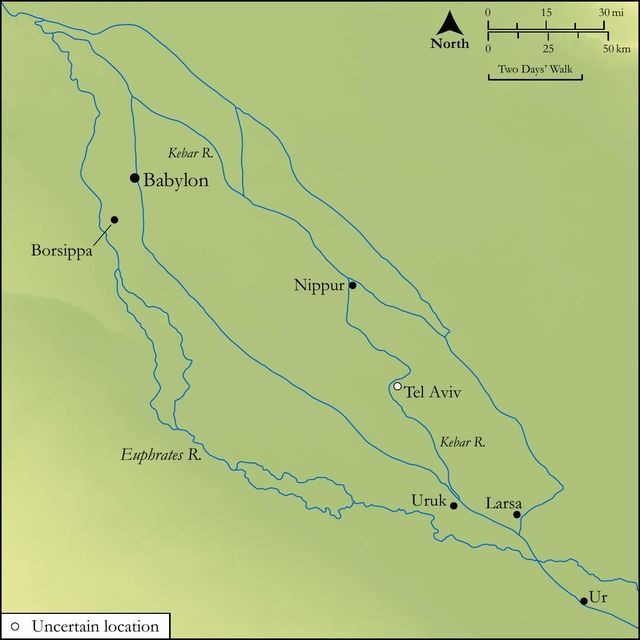
Ezekiel ministered during the Babylonian exile, specifically among the Jewish captives in Tel Abib by the Chebar Canal, around 593-571 BC. These exiles, though displaced from their homeland, harbored false hopes of a swift return and resisted the reality of God's judgment that had brought them to Babylon. They often sought comfort in false prophets who promised peace and restoration, rather than confronting their sin. In this cultural milieu, the true prophet, like Ezekiel, served as God's watchman, a figure responsible for warning the people of impending danger and calling them to repentance (Ezekiel 3:17). The phrase "rebellious house" reflects the deep-seated spiritual apostasy and stubborn refusal of the Israelites to heed God's covenant demands, a pattern of disobedience that had led to their current predicament. Their rebellion was not merely political but profoundly spiritual, characterized by idolatry, injustice, and a rejection of divine instruction, which is a consistent theme from the time of the Exodus through the monarchy, as seen in books like Judges and 1 Kings.
Key Themes
ShowHideEzekiel 3:27 contributes significantly to several key themes within the book of Ezekiel and broader biblical theology. Firstly, it powerfully asserts the Divine Sovereignty over Prophecy. God alone controls the prophet's voice, dictating when and what is spoken, ensuring the message's purity and authority. This highlights that prophecy is not human invention but divine revelation, a concept echoed in 2 Peter 1:21. Secondly, the verse emphasizes Human Accountability to God's word. The stark declaration, "He that heareth, let him hear; and he that forbeareth, let him forbear," places the burden of response squarely on the individual. It underscores the freedom of choice and the inevitable consequences of either obedience or rejection, a principle echoed throughout scripture, such as in Jesus' parables of hearing and doing (Matthew 7:24-27). Finally, the recurring theme of Israel's Persistent Rebellion is central. Despite God's clear warnings and the severity of their circumstances, the people remained hardened, illustrating the depth of human sin and the challenging nature of the prophet's calling to a stiff-necked generation, a characteristic seen from the wilderness wanderings (Numbers 14:11) to the time of the prophets.
Exposition and Analysis
ShowHideKey Word Analysis
ShowHideThis word (H6605) signifies "to open wide" literally or figuratively, "to loosen," or "to begin." In the context of Ezekiel's mouth, it denotes a divine act of enablement, releasing him from his previous state of enforced silence. It implies a loosening of the tongue, a breaking forth of speech, and the initiation of prophetic utterance, emphasizing that Ezekiel's ability to speak is entirely dependent on God's will and timing.
This term (H8085) means "to hear intelligently," often carrying the implication of "attention," "obedience," or "understanding." It is not merely a physical act of perceiving sound but a spiritual act of listening with a view to respond and obey. The repetition "He that heareth, let him hear" intensifies this meaning, calling for a deliberate, discerning, and obedient reception of God's message, acknowledging the moral responsibility inherent in hearing divine truth.
Derived from a root meaning "bitterness," this word (H4805) figuratively denotes "rebellion," "bitter," or "rebellious." When paired with "house" (H1004, bayith'), it describes the deep-seated, persistent, and stubborn disobedience of the people of Israel. It characterizes their spiritual state as one of active resistance and defiance against God's commands and warnings, highlighting their unyielding nature despite divine intervention and judgment.
Verse Breakdown
ShowHide"But when I speak with thee, I will open thy mouth"
This clause signifies a divine initiative and a conditional promise, asserting God's absolute control over Ezekiel's prophetic ministry. The "opening" of the mouth is not a natural occurrence but a supernatural act, reversing the previous divine "shutting" of his mouth (Ezekiel 3:26). It implies that Ezekiel will speak only when God gives the word, ensuring that the message is purely divine and not of human origin, thereby safeguarding its authority and purity.
"and thou shalt say unto them, Thus saith the Lord GOD;"
This phrase emphasizes the prophet's role as a direct conduit for God's message. Ezekiel is commanded to speak directly to the exiles, delivering the exact words given to him. The formula "Thus saith the Lord GOD" (Hebrew: Adonai Yahweh) is a powerful declaration of divine authority, indicating that the words are not Ezekiel's opinions or interpretations but the direct, unadulterated revelation from the sovereign God of Israel, demanding immediate attention and submission.
"He that heareth, let him hear; and he that forbeareth, let him forbear"
This is a profound statement on human responsibility and free will in the face of divine truth. It is an imperative call to decision. "He that heareth" refers to those who listen attentively and with understanding, implying a call to obedience and a willingness to act on the message. "He that forbeareth" (or "refuses to hear") refers to those who choose to ignore, reject, or resist the message, implying a deliberate act of non-compliance. The repetition underscores the stark choice and the individual accountability for one's response, acknowledging that God's word, though authoritative, does not coerce belief but demands a conscious decision.
"for they are a rebellious house."
This concluding clause provides the rationale for the preceding imperative. It explains the inherent spiritual condition of the audience. The "house of Israel" is characterized by deep-seated rebellion against God, a stubborn refusal to obey His commands or acknowledge His authority, a pattern of behavior that has persisted despite divine warnings and judgments. This description highlights the immense challenge of Ezekiel's ministry and the reason why God's word, though clearly spoken, will be met with resistance by many, underscoring the necessity of divine judgment and the profound need for spiritual transformation.
Literary Devices
ShowHideEzekiel 3:27 effectively employs several literary devices to convey its powerful message. Repetition is evident in the phrase "He that heareth, let him hear; and he that forbeareth, let him forbear." This rhetorical device emphasizes the critical nature of the choice presented to the audience and underscores the individual's inescapable responsibility to respond to God's word. The phrase "rebellious house" functions as a recurring motif throughout the book of Ezekiel, serving as a constant reminder of the spiritual state of Israel and the challenging context of Ezekiel's ministry. This motif provides a consistent backdrop against which God's persistent warnings and judgments are understood. The entire verse also embodies Divine Fiat, where God's spoken word directly brings about a change in reality (Ezekiel's mouth opening) and issues an authoritative decree. Furthermore, the contrast between "open thy mouth" and the implied previous "shut mouth" (Ezekiel 3:26) creates a powerful juxtaposition, highlighting God's absolute control over prophetic utterance and the prophet's complete dependence on divine enablement.
Theological and Thematic Connections
ShowHideEzekiel 3:27 stands as a powerful declaration of God's sovereign control over His word and the non-negotiable demand for human response. It affirms that true prophecy originates solely from God, not from human will or wisdom, making the prophet a mere vessel. This divine authority inherent in the prophetic message places a profound responsibility on the hearer, compelling a decision of obedience or rejection. The verse underscores the consistent biblical theme that God's revelation is always accompanied by an expectation of response, and that accountability for hearing the truth is universal. It also highlights the tragic reality of human rebellion, which often leads to the rejection of divine grace and truth, necessitating both judgment and the continued, patient proclamation of God's word.
Reflection and Application
ShowHideEzekiel 3:27 offers profound lessons for believers today, particularly concerning our role as bearers of God's truth and our posture as hearers of His word. First, it reminds us that the authority of the message we proclaim comes not from our eloquence or wisdom, but from God Himself. Like Ezekiel, we are called to be faithful conduits of "Thus saith the Lord GOD," speaking His truth clearly and without compromise, trusting that He will empower our witness. This calls for humility and dependence on the Holy Spirit, recognizing that our words are merely echoes of His divine voice. Second, the declaration "He that heareth, let him hear; and he that forbeareth, let him forbear" is a stark reminder of personal accountability. We cannot force belief or repentance, but we are responsible for delivering the message with clarity and conviction. The ultimate response rests with the individual, who must choose to either embrace or reject God's truth. This frees us from the burden of results and focuses us on faithfulness in proclamation, even when faced with indifference or outright rebellion. Finally, the verse encourages perseverance in ministry, even to those who are a "rebellious house." God knew the hardness of Israel's heart, yet He commanded Ezekiel to speak. Our call is to continue sharing the Gospel, sowing the seed of the Word, knowing that God's purposes will ultimately prevail, regardless of immediate human reception, and that our faithfulness honors Him.
Questions for Reflection
ShowHideFAQ
ShowHideWhat does it mean that God will "open thy mouth" for Ezekiel?
ShowHideThis phrase in Ezekiel 3:27 signifies a divine act of enablement and a reversal of the previous state where God had "shut" Ezekiel's mouth (Ezekiel 3:26). It means that God would supernaturally empower Ezekiel to speak His prophetic words, indicating that the timing and content of his message were entirely under divine control. It underscores that Ezekiel was not speaking his own thoughts but was a direct conduit for God's authoritative revelation, ensuring the purity and divine origin of the message he delivered to the exiles.
Why does the verse say, "He that heareth, let him hear; and he that forbeareth, let him forbear"?
ShowHideThis powerful declaration highlights the principle of individual accountability and free will in response to God's word. It is an imperative call to decision. "He that heareth" refers to those who listen attentively and with a willingness to obey, while "he that forbeareth" refers to those who choose to ignore or reject the divine message. The repetition emphasizes the gravity of the choice and the inescapable responsibility each person has for their response to God's truth. It shows that while God's word is authoritative, it does not coerce belief but demands a conscious, personal decision, with consequences for either acceptance or rejection. This concept is seen throughout scripture, such as in Jesus' frequent call, "He who has ears to hear, let him hear" (Matthew 11:15), underscoring the moral imperative to respond to divine revelation.
What is the significance of calling Israel a "rebellious house"?
ShowHideThe phrase "rebellious house" (Hebrew: beit meriy) is a recurring motif throughout the book of Ezekiel, emphasizing the deep-seated spiritual stubbornness and disobedience of the nation of Israel. It signifies their active resistance and defiance against God's covenant commands and prophetic warnings, despite His persistent grace and judgment. This characterization explains the necessity of Ezekiel's difficult ministry and the reason why God's word, though clearly spoken, would often be met with indifference or outright rejection by the people. It underscores the profound spiritual condition that led to their exile and the ongoing challenge of bringing them to repentance, a theme that also resonates with Israel's history of disobedience documented in books like Jeremiah and Isaiah.
Christ-Centered Fulfillment
ShowHideEzekiel 3:27, with its emphasis on God's sovereign control over His word and the demand for human response, finds its ultimate fulfillment and deepest meaning in Jesus Christ. Jesus is the Word made flesh (John 1:14), the supreme Prophet through whom God has spoken His final and most complete revelation (Hebrews 1:1-2). Unlike Ezekiel, whose mouth was opened by God to speak, Jesus is the living Word, perfectly embodying and delivering God's message without any prior period of silence or external enablement. He is the one who perfectly hears the Father and perfectly speaks the Father's will (John 8:28). The imperative "He that heareth, let him hear" becomes most urgent and profound in light of Christ, for to hear Jesus is to hear God Himself (John 10:27). The "rebellious house" of Israel, which resisted Ezekiel's prophetic word, ultimately rejected the very Son of God, leading to the cross. Yet, through His atoning sacrifice, Jesus provides the means for even the most rebellious heart to be transformed and to truly hear and obey God's voice, fulfilling the prophetic call for a new heart and a new spirit (Ezekiel 36:26-27). Thus, Ezekiel's commission foreshadows the ultimate prophetic ministry of Christ, who not only speaks God's word but is God's saving word to a world in rebellion, offering grace and truth to all who will hear and believe (John 1:17).