


Ezekiel 3:17
Bible text: King James Version (1769 Blayney text) · Public domain
Bible text: Berean Standard Bible · Public domain
Bible text: American Standard Version (1901) · Public domain
Bible text: World English Bible, Messianic edition · Public domain
Bible text: Geneva Bible (1599) · Public domain
Bible text: Young's Literal Translation · Public domain
- בֶּןbenO son ofH1121N-mscNoun Singular Masculine Construct
- אָדָם'a·DamhumankindH120N-msNoun Singular Masculine Absolute
- צֹפֶהtzo·Peha watchmanH6822V-Qal-Prtcpl-msVerb Qal Participle Singular Masculine Absolute
- נְתַתִּיךָne·ta·Ti·khaI appoint youH5414V-Qal-Perf-1cs ¦ 2msVerb Qal Perfect 1st Singular common genderנְתַתִּיI appointךָyou
- לְבֵיתle·Veitfor [the] house ofH1004Prep-l ¦ N-mscNoun Singular Masculine Constructלְforבֵית[the] house of
- יִשְׂרָאֵלYis·ra·'ElIsraelH3478N-properNoun Proper Location
- וְשָׁמַעְתָּve·sha·ma'·Taand you will hearH8085Conj-w ¦ V-Qal-ConsecPerf-2msVerb Qal Consecutive Perfect 2nd Singular Masculineוְandשָׁמַעְתָּyou will hear
- מִפִּיmi·Pifrom my mouthH6310Prep-m ¦ N-msc ¦ 1csNoun Singular Masculine Constructמִfromפִּmouthיmy
- דָּבָרda·Vara wordH1697N-msNoun Singular Masculine Absolute
- וְהִזְהַרְתָּve·hiz·har·Taand you will warnH2094Conj-w ¦ V-Hiphil-ConsecPerf-2msVerb Hiphil Consecutive Perfect 2nd Singular Masculineוְandהִזְהַרְתָּyou will warn
- אוֹתָם'o·Tam<obj.> themH853DirObjM ¦ 3mpParticle Object Indicatorאוֹתָ<obj.>םthem
- מִמֶּנִּיmi·Me·nifrom meH4480Prep ¦ 1csPreposition Definiteמִמֶּfromנִּיme
English is a literal word-by-word gloss of the Hebrew, not the KJV's wording. Why?
This is the original text the KJV's translators worked from — each Hebrew word with its own literal English meaning in this verse, prepared by scholars at Tyndale House, Cambridge. The KJV translates whole sentences, not word by word, so its wording differs: one Hebrew word can become several English words, and the KJV may choose “the LORD” where the gloss reads “Yahweh”. Both are faithful — they answer different questions. For the KJV's own rendering, switch to the KJV text.
Details
See on the biblical-era map
Study this verse
Public-domain commentary
Matthew Henry
From his Commentary on the Whole Bible. Henry comments on passages, not single verses — this entry covers Ezekiel 3:16–21. His four-level outline is real structure in the source text, so it is rendered as structure.
These further instructions God gave to the prophet at the end of seven days, that is, on the seventh day after the vision he had; and it is very probably that both that and this were on the sabbath day, which the house of Israel, even in their captivity, observed as well as they could in those circumstances. We do not find that their conquerors and oppressors tied them to any constant service, as their Egyptian task-masters had formerly done, but that they might observe the sabbath-rest for a sign to distinguish between them and their neighbours; but for the sabbath-work they had not the convenience of temple or synagogue, only it should seem they had a place by the river side where prayer was wont to be made (as Act 16:13); there they met on the sabbath day; there their enemies upbraided them with the songs of Zion (Psa 137:1, Psa 137:3); there Ezekiel met them, and the word of the Lord then and there came to him. He that had been musing and meditating on the things of God all the week was fit to speak to the people in God's name on the sabbath day, and disposed to hear God speak to him. This sabbath day Ezekiel was not so honoured with visions of the glory of God as he had been the sabbath before; but he is plainly, and by a very common similitude, told his duty, which he is to communicate to the people. Note, Raptures and transports of joy are not the daily bread of God's children, however they may upon special occasions be feasted with them. We must not deny but that we have truly communion with God (Jo1 1:3) though we have it not always so sensibly as at some times. And, though the mysteries of the kingdom of heaven may sometimes be looked into, yet ordinarily it is plain preaching that is most for edification. God here tells the prophet what his office was, and what the duty of that office; and this (we may suppose) he was to tell the people, that they might attend to what he said and improve it accordingly. Note, It is good for people to know and consider what a charge their ministers have of them and what an account they must shortly give of that charge. Observe,
I.What the office is to which the prophet is called:
Son of man, I have made thee a watchman to the house of Israel, Eze 3:17. The vision he saw astonished him: he knew not what to make of that, and therefore God used this plain comparison, which served better to lead him to the understanding of his work and so to reconcile him to it. he sat among the captives, and said little, but God comes to him, and tells him that will not do; he is a watchman, and has something to say to them; he is appointed to be as a watchman in the city, to guard against fire, robbers, and disturbers of the peace, as a watchman over the flock, to guard against thieves and beasts of prey, but especially as a watchman in the camp, in an invaded country or a besieged town, that is to watch the motions of the enemy, and to sound an alarm upon the approach, nay, upon the first appearance, of danger. This supposes the house of Israel to be in a military state, and exposed to enemies, who are subtle and restless in their attempts upon it; yea, and each of the particular members of that house to be in danger and concerned to stand upon their guard. Note, Ministers are watchmen on the church's walls (Isa 62:6), watchmen that go about the city, Sol 3:3. It is a toilsome office. Watchmen must keep awake, be they ever so sleepy, and keep abroad, be it ever so cold; they must stand all weathers upon the watch-tower, Isa 21:8; Gen 31:40. It is a dangerous office. Sometimes they cannot keep their post, but are in peril of death from the enemy, who gain their point if they kill the sentinel; and yet they dare not quit their post upon pain of death from their general. Such a dilemma are the church's watchmen in; men will curse them if they be faithful, and God will curse them if they be false. But it is a needful office; the house of Israel cannot be safe without watchmen, and yet, except the Lord keep it, the watchman waketh but in vain, Psa 127:1, Psa 127:2.
II.What is the duty of this office. The work of a watchman is to take notice and to give notice.
1.The prophet, as a watchman, must take notice of what God said concerning this people, not only concerning the body of the people, to which the prophecies of Jeremiah and other prophets had most commonly reference, but concerning particular persons, according as their character was. He must not, as other watchmen, look round to spy danger and gain intelligence, but he must look up to God, and further he need not look: Hear the word at my mouth, Eze 3:17. Note, Those that are to preach must first hear; for how can those teach others who have not first learned themselves?
2.He must give notice of what he heard. As a watchman must have eyes in his head, so he must have a tongue in his head; if he be dumb, it is as bad as if he were blind, Isa 56:10. Thou shalt give them warning from me, sound an alarm in the holy mountain; not in his own name, or as from himself, but in God's name, and from him. Ministers are God's mouth to the children of men. The scriptures are written for our admonition. By them is thy servant warned, Psa 19:11. But, because that which is delivered viv voce - by the living voice, commonly makes the deepest impression, God is pleased, by men like ourselves, who are equally concerned, to enforce upon us the warnings of the written word. Now the prophet, in his preaching, must distinguish between the wicked and the righteous, the precious and the vile, and in his applications must suit his alarms to each, giving every one his portion; and, if he did this, he should have the comfort of it, whatever the success was, but, if not, he was accountable.
(1.)Some of those he had to do with were wicked, and he must warn them not to go on in their wickedness, but to turn from it, Eze 3:18, Eze 3:19. We may observe here,
[1.]That the God of heaven has said, and does say, to every wicked man, that if he go on still in his trespasses he shall surely die. His iniquity shall undoubtedly be his ruin; it tends to ruin and will end in ruin. Dying thou shalt die, thou shalt die so great a death, shalt die eternally, be ever dying, but never dead. The wicked man shall die in his iniquity, shall fie under the guilt of it, die under the dominion of it.
[2.]That if a wicked man turn from his wickedness, and from his wicked way, he shall live, and the ruin he is threatened with shall be prevented; and, that he may do so, he is warned of the danger he is in. The wicked man shall die if he go on, but shall live if he repent. Observe, he is to turn from his wickedness and from his wicked way. It is not enough for a man to turn from his wicked way by an outward reformation, which may be the effect of his sins leaving him rather than of his leaving his sins, but he must turn from his wickedness, from the love of it and the inclination to it, by an inward regeneration; if he do not so much as turn from his wicked way, there is little hope that he will turn from his wickedness.
[3.]That it is the duty of ministers both to warn sinners of the danger of sin and to assure them of the benefit of repentance, to set before them how miserable they are if they go on in sin, and how happy they may be if they will but repent and reform. Note, The ministry of the word is concerning matters of life and death, for those are the things it sets before us, the blessing and the curse, that we may escape the curse and inherit the blessing.
[4.]That, though ministers do not warn wicked people as they ought of their misery and danger, yet that shall not be admitted as an excuse for those that go on still in their trespasses; for, though the watchman did not give them warning, yet they shall die in their iniquity, for they had sufficient warning given them by the providence of God and their own consciences; and, if they would have taken it, they might have saved their lives.
[5.]That if ministers be not faithful to their trust, if they do not warn sinners of the fatal consequences of sin, but suffer them to go on unreproved, the blood of those that perish through their carelessness will be required at their hand. It shall be charged upon them in the day of account that it was owing to their unfaithfulness that such and such precious souls perished in sin; for who knows but if they had had fair warning given them they might have fled in time from the wrath to come? And, if it contract so heinous a guilt as it does to be accessory to the murder of a dying body, what is it to be accessory to the ruin of an immortal soul?
[6.]That if ministers do their duty in giving warning to sinners, though the warning be not taken, yet they may have this satisfaction, that they are clear from their blood, and have delivered their own souls, though they cannot prevail to deliver theirs. Those that are faithful shall have their reward, though they be not successful.
(2.)Some of those he had to deal with were righteous, at least he had reason to think, in a judgment of charity, that they were so; and he must warn them not to apostatize and turn away from their righteousness, Eze 3:20, Eze 3:21. We may observe here,
[1.]That the best men in the world have need to be warned against apostasy, and to be told of the danger they are in of it and the danger they are in by it. God's servants must be warned (Psa 19:11) that they do not neglect his work and quit his service. One good means to keep us from falling is to keep up a holy fear of falling, Heb 4:1. Let us therefore fear; and (Rom 11:20) even those that stand by faith must not be high-minded, but fear, and must therefore be warned.
[2.]There is a righteousness which a man may turn from, a seeming righteousness, and, if men turn from this, it thereby appears that it was never sincere, how passable, nay, how plausible soever it was; for, if they had been of us, they would no doubt have continued with us, Jo1 2:19. There are many that begin in the spirit, but end in the flesh, that set their faces heavenward, but look back; that had a first love, but have lost it, and turned from the holy commandment.
[3.]When men turn from their righteousness they soon learn to commit iniquity. When they grow careless and remiss in the duties of God's worship, neglect them, or a re negligent in them, they become an easy prey to the tempter. Omissions make way for commissions.
[4.]When men turn from their righteousness, and commit iniquity, it is just with God to lay stumbling-blocks before them, that they may grow worse and worse, till they are ripened for destruction. When Pharaoh hardened his heart God hardened it. When sinners turn their back upon God, desert his service, and so cast a reproach upon it, he does, in a way of righteous judgment, not only withdraw his restraining grace and give them up to their own hearts' lusts, but order them by his providence into such circumstances as occasion their sin and hasten their ruin. There are those to whom Christ himself is a stone of stumbling and a rock of offence, Pe1 2:8.
[5.]The righteousness which men relinquish shall never be remembered to their honour or comfort; it will stand them in no stead in this world or the other. Apostates lose all that they have wrought; their services and sufferings are all in vain, and shall never be brought to an account, because not continued in. It is a rule in the law, Factum non dicitur, quod non perseverat - We are said to do only that which we do perseveringly, Gal 3:3, Gal 3:4.
[6.]If ministers do no give fair warning, as they ought, of the weakness of the best, their aptness to stumble and fall, the particular temptations they are in and the fatal consequences of apostasy, the ruin of those that do apostatize will be laid at their door, and they shall answer for it. Not but that there are those who are warned against it, and yet turn from their righteousness; but that case is not put here, as was concerning the wicked man, but, on the contrary, that a righteous man, being warned, takes the warning and does not sin (Eze 3:21); for, if you give instruction to a wise man, he will be yet wiser. We must not only not flatter the wicked, but not flatter even the righteous as if they were perfectly safe any where on this side heaven.
[7.]If ministers give warning, and people take it, it is well for both. Nothing is more beautiful than a wise reprover upon an obedient ear; the one shall live because he is warned and the other has delivered his soul. What can a good minister desire more than to save himself and those that hear him? Ti1 4:16.
Historical interpretation
Four Centuries of Reception
11 surviving comments on this verse. Each one is dated, so this reads as a timeline rather than a list.
Select a marker to jump to its quote. Markers stagger vertically where authors wrote within a few decades of each other.
Therefore we are most anxious that you be persuaded not to be misled by such persons, since we know that every one who can speak the truth, and yet speaks it not, shall be judged by God, as God testified by Ezekiel, when He said, "I have made thee a watchman to the house of Judah. If the sinner sin, and thou warn him not, he himself shall die in his sin; but his blood will I require at thine hand. But if thou warn him, thou shalt be innocent." And on this account we are, through fear, very earnest in desiring to converse [with men] according to the Scriptures, but not from love of money, or of glory, or of pleasure.
“Son of man, I have appointed you as a watchman for the members of the house of Israel, so that you may hear from my mouth and warn them.” That means, “Look, I have made you a warning and a caution, so that you may say what I command to the just and to sinners, that the just may grow in discretion and the sinners in penitence.”
An emperor ought not to deny freedom of speech, and a bishop ought not to conceal his opinions. Nothing so much commends an emperor to the love of his people as the encouragement of liberty in those who are subject to him by the obligation of public service. Indeed, the love of liberty or of slavery is what distinguishes good emperors from bad, while in a bishop there is nothing so perilous before God or so disgraceful before people as not to speak his thoughts freely. For it is written, “I spoke of your testimonies before kings and was not ashamed,” and in another place, “Son of man, if I have made you a watchman for the house of Israel, to the intent (it says) that if a righteous person turns from his righteousness and commits iniquity because you have not given him warning (that is, not told him what to guard against), his righteousness shall not be remembered, and I will require his blood at your hand. Nevertheless, if you warn the righteous person not to sin and he does not, then the righteous shall surely live because you have warned him, and you shall deliver your soul.”
(Verse 16, 17.) But after seven days, the word of the Lord came to me, saying: Son of man, I have made you a watchman for the house of Israel, and you will hear a word from my mouth and will declare it to them from me. The watchman, who is to be the messenger of God's words to the people, must rest for a long time and be sorrowful for the things he sees. And he must have no personal guilt for the sins he will rebuke in others.
“You must be,” he says, “like a watchman, who is placed on top of some hill, with orders to announce for himself beforehand any invasions by barbarians. And you must be set up as if on a watchtower, on the highest point of prophecy, and what you foresee, you must tell out to the people.”
Just as the well-being of the churches causes us gratification, so we are deeply saddened whenever we learn of any liberties taken with, or acts committed against, canon law and ecclesiastical discipline. We cannot excuse ourselves to him who wished us to be on the watch if we do not repress such practices with the vigilance we should. We cannot excuse ourselves if we permit the unsullied body of the church (which we are bound to keep clean from all dirt) to be defiled by contact with those who pursue evil ends. For the very union of the members gets inharmonious elements in it through carelessness.
Sometimes when we preach, our sermons seem rather harsh to many, and what we speak about as a rule is taken by some as if it were produced from a hard attitude. For they say, “how severely and bitterly the bishop has preached!” not knowing that for bishops speaking is more a matter of obligation than of desire. Speaking, I say, is more a matter of obligation—not because the desire to preach the truth is lacking but because the silence that comes from not speaking is driven away by the punishment of the law.… This, then, is the preacher’s situation—that he should not be silent with respect to the sins of another if he wishes to avoid sinning himself, and that he should correct his brother by reproving him so that he may not destroy what is priestly in himself.… Consequently it is better to correct the sinner by rebuking him than to accept the sinner’s misdeed by keeping quiet. This is the position in which we have been placed: if we told sinners that their crimes were not their own, the guilt of their crimes would also implicate us. For this is in fact what the Lord says through the prophet: “And you, son of man, I have given you as a watchman to the house of Israel, and you shall hear the word from my mouth. When I say to the sinner, ‘You shall die the death, and you do not speak so that the impious may beware of his way, the wicked himself shall die in his own wickedness, but I will require his blood from your hand,’ ” and so forth. Clearly these words are plain and obvious. They soil the watchmen with criminal blood when he keeps silence, and they are not satisfied that the evildoers’ own evil doing condemns him unless they also incriminate the one who was unwilling to rebuke the evil in question. So, then, how great the iniquity of the sinner is! The sinner sins, and the bishop is convicted; he kills himself by his own sins, and his blood is required from the hand of the bishop.… What is a watchman? A watchman is one who, while standing (as it were) on a lofty pinnacle, looks out on the people around him so that no enemy falls unexpectedly on them but so that, as he keeps careful watch, the populace live in harmony and peace.
The words are addressed to the Jews, since it was to them that the prophet Ezekiel had been sent at that time; and today, too, after the coming of our Savior, the words apply to pagans and to Jews and to those who once believed but then denied their faith. The prophet’s words are applicable to those who sin without perceiving their sin, since a sinner who has received baptism, even though he may be dead toward his soul, because he does not perceive his sin, yet he is alive to God because of the grace of baptism that he possesses.
If we carefully heed the lessons that are read at the consecration of bishops, we have a means of rousing ourselves to the greatest compunction. What Gospel text is it, except the one I mentioned a little while ago? “Peter, Peter, tend my sheep,” and again, “feed my sheep.” Did Christ say, cultivate the vineyards by your presence, arrange the country estates yourself, exercise the cultivation of land? He did not say this, but “feed my sheep.” Now what kind of a prophetic text is read at the consecration of a bishop? It is this: “I have made you a watchman for the house of Israel.” It did not say a steward of vineyards or country estates or the manager of fields; doubtless it is a watchman of souls.
The office of bishop is the highest order in the church. Episcopos means overseer, because with the help of divine grace he guards the Lord’s flock from his high seat like a most careful shepherd. As the prophet Ezekiel says, “I have made you a watchman over the house of Israel.”
It should be noted that He whom the Lord sends to preach, He declares to be a watchman. For he to whom the care of others is committed is called a watchman, so that he may sit in the height of the mind and draw the meaning of his name from the power of his action. For he is not a watchman who is in the lowest place. Indeed, a watchman always stands in a high place, so that he may see from afar whatever is to come. And whoever is appointed as a watchman of the people ought to stand on high through his life, so that he may be able to benefit them through his foresight. Hence another prophet admonishes the watchman, saying: "Get up onto a high mountain, you who bring good tidings to Zion." So that evidently he who has undertaken the office of preaching may ascend to the height of good action; may pass over to lofty things and transcend the works of those who have been committed to him; so that he may see the life of his subjects all the more keenly, inasmuch as he does not subject his mind to the earthly things which he looks down upon.
Oh how harsh to me are these words that I speak, because in speaking I strike myself, whose tongue neither maintains preaching as is worthy, nor does my life follow my tongue to the extent that it is able to maintain it. I am often entangled in idle words, and I cease from exhortation and the edification of my neighbors, being sluggish and negligent. I have become mute and verbose in the sight of God—mute in necessary things, verbose in idle ones. But behold, the word of God concerning the life of a watchman compels me to speak. I cannot be silent, and yet I fear to strike myself by speaking. I will speak, I will speak, so that the sword of God's word may pass even through me to pierce the heart of my neighbor. I will speak, I will speak, so that the word of God may sound against me even through me. I do not deny that I am guilty; I see my sluggishness and negligence. Perhaps before the merciful Judge the very recognition of fault will be an obtaining of pardon.
And indeed while I was stationed in a monastery, I was able both to restrain my tongue from idle words and to keep my mind almost continuously fixed on the intention of prayer. But after I placed the shoulder of my heart beneath the pastoral burden, my mind cannot collect itself upon itself regularly, because it is divided among many things. For I am compelled now to examine the affairs of churches, now of monasteries, often to weigh the lives and deeds of individuals; now to bear certain business matters of citizens, now to groan over the attacking swords of barbarians, and to fear wolves lying in wait for the flock entrusted to me; now to take care of material concerns, lest resources fail those very ones who are held by the rule of discipline, now to endure certain plunderers with equanimity, now to oppose them while striving to preserve charity. Therefore, when my mind is led torn and mangled to think upon so many and such great matters, when does it return to itself, so that it might gather itself wholly for preaching and not withdraw from the ministry of speaking the word? Moreover, because by the necessity of my position I am often joined with secular men, sometimes I relax the discipline of my tongue. For if I keep myself in the constant rigor of my strictness, I know that I am avoided by the weaker ones, and I never draw them to what I desire. Hence it happens that often I patiently hear even their idle talk. But because I myself am also weak, being drawn along a little in idle conversations, I now begin to speak willingly those things which I had begun to hear unwillingly; and where it was wearisome to fall, it becomes pleasant to lie there. Who then or what manner of watchman am I, who do not stand on the mountain of action, but still lie in the valley of weakness? Yet the creator and redeemer of the human race is powerful to grant to unworthy me both the height of life and the efficacy of speech, for whose love I do not spare even myself in speaking his word.
The life of a watchman, therefore, must always be both lofty and circumspect. Lest he succumb to the love of earthly things, let it be lofty; lest he be struck by the darts of the hidden enemy, let it be circumspect on every side. Nor is it sufficient for a watchman to live loftily, unless he also continually draws his hearers to lofty things by speaking, and kindles their minds by speaking to the love of the heavenly homeland. But he does these things rightly when his tongue blazes forth from his life. For a lamp that does not burn in itself does not ignite the thing beneath which it is placed. Hence Truth says of John: He was a burning and shining lamp. Burning, that is, through heavenly desire, shining through the word. Therefore, that the truth of preaching may be preserved, the loftiness of living must necessarily be maintained. Hence it is also rightly said in the voice of the Bridegroom of holy Church in the Song of Songs: Your nose is like a tower of Lebanon. What kind of praise is it, my brothers, that the bride's nose should be compared to a tower? But since we always distinguish pleasant and foul odors through the nose, what is designated by the nose except the discernment of watchmen? This nose is said to be both like a tower and of Lebanon, because indeed the discernment of overseers must always be fortified with circumspection and established in loftiness of life—that is, not lie prostrate in the valley of feeble work. For just as a tower is placed on a mountain for watching so that enemies who approach may be seen from afar, so the life of a preacher must always remain fixed on high, so that in the manner of nostrils he may distinguish the stench of vices and the fragrance of virtues. Let him look far ahead at the assaults of malignant spirits, and render the souls committed to him cautious through his foresight.
Behold, again the prophet is warned not to presume to speak what he has not heard, but first to open the ear of his heart to the voice of the Creator, and afterward to open the mouth of his body to the ears of the people. Hence another prophet says: I will incline my ear to a parable, I will open my proposition on the psaltery. For he who preaches rightly first, as has been said, inclines the ear of his heart to the inward speaking, so that afterward he may open the mouth of his body in the proposition of admonition.
Continue studying Ezekiel 3:17 across the web’s major study libraries — every link below opens this exact verse, chapter, or book on the destination site.
Read & Compare
 BibleGatewayThis verse in more than 200 translations and 70 languages.
 Bible.comThe YouVersion reader — hundreds of translations, reading plans, and highlights.
 ESV.orgCrossway's official English Standard Version reader.
 NET BibleThe NET translation with 60,000+ translators' notes on every rendering decision.
 STEP BibleTyndale House's free study tool — original text, vocabulary, and scholarly resources.
 BibliaLogos Bible Software's free web reader.
 USCCBThe New American Bible (Revised Edition) with the U.S. bishops' study notes.
Commentaries
 BibleHub CommentariesDozens of classic commentaries on this verse, gathered on one page.
 StudyLightMore than 100 commentary sets — the largest collection on the web.
 BibleRefPlain-English commentary on what this verse means, verse by verse.
 Enduring WordDavid Guzik's free commentary on this chapter, widely used by Bible teachers.
 Bible Study ToolsVerse commentary alongside Greek and Hebrew study aids.
Original Language & Research
- BibleHub InterlinearThe verse word by word — original language, transliteration, and English.
- BibleHub LexiconEvery word's original-language definition and Strong's entry.
 Blue Letter BibleDeep-study tools — Strong's numbers, concordance, and word studies.
 SefariaThe Hebrew text with Rashi and centuries of Jewish commentary.
Sermons, Hymns & Audio


TrulyRandomVerse is not affiliated with these sites and doesn’t control their content. They’re linked because they’re genuinely useful.
Summary
Ezekiel 3:17 marks a profound moment in the prophetic ministry of Ezekiel, as the Lord God formally commissions him as a "watchman" to the exiled house of Israel. This divine appointment bestows upon Ezekiel the solemn and weighty responsibility of receiving God's precise words directly from His mouth and faithfully delivering them as an urgent warning to a rebellious and spiritually dull people. The verse encapsulates the essence of true prophetic ministry: divine initiative, human reception, and urgent, authoritative proclamation, underscoring the prophet's profound accountability for delivering God's message of judgment and hope.
Context
ShowHideLiterary Context
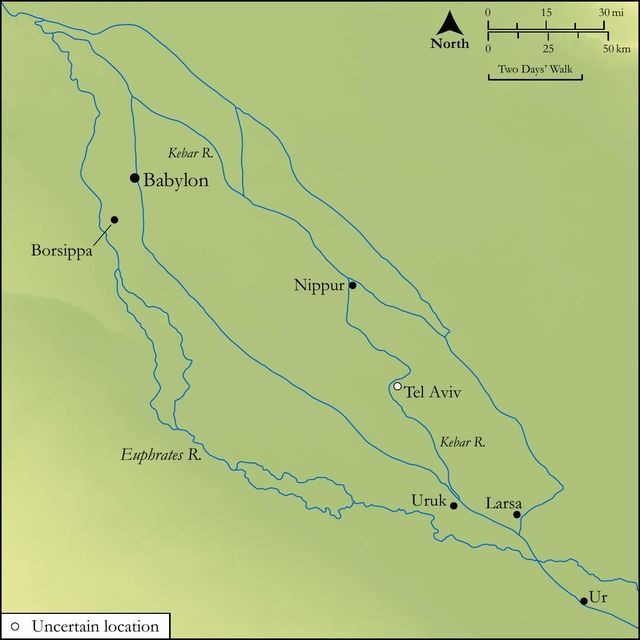
This pivotal verse is situated within the initial chapters of Ezekiel, immediately following the prophet's awe-inspiring vision of God's glory by the Chebar Canal in Babylon, which profoundly established the divine authority behind his call. Having been overwhelmed by this encounter, Ezekiel is then given a specific and challenging mandate. Chapters 2 and 3 meticulously detail the nature of his prophetic commission: he is sent to a "rebellious house" whose hearts are hardened against God's word, as highlighted in passages like Ezekiel 2:3-7. The declaration in verse 17 is part of a larger divine charge extending through Ezekiel 3:16-21 that not only outlines the prophet's duty but also explicitly states the severe consequences for both the watchman and the people if the warning is not issued or heeded. This immediate literary context emphasizes the gravity of Ezekiel's role and the life-or-death implications of his faithfulness.
Historical & Cultural Context
Ezekiel was a priest living among the Jewish exiles in Babylon, deported after Nebuchadnezzar's first siege of Jerusalem in 597 BC. The people were far from their homeland, struggling with their identity and often clinging to false hopes of a swift return, while simultaneously engaging in widespread idolatry and moral corruption. In the cities of Israel, a "watchman" (Hebrew: tsopheh) was an absolutely crucial figure, stationed on city walls or elevated towers. Their primary duty was to maintain constant vigilance, scanning the horizon for approaching danger—whether invading armies, raiding parties, or even natural disasters. Upon spotting a threat, the watchman was obligated to sound an alarm, typically with a trumpet, to warn the inhabitants, allowing them to prepare or take refuge. Failure to warn could result in the destruction of the city and the watchman being held directly accountable for the loss of life. This profound cultural understanding of a watchman's role provides a powerful and immediate metaphor for Ezekiel's spiritual task: to alert a complacent and sinful Israel to the impending divine judgment and the path to repentance.
Key Themes
ShowHideEzekiel 3:17 contributes significantly to several overarching themes within the book of Ezekiel. Firstly, it underscores the theme of Divine Appointment and Authority. God explicitly states, "I have made thee a watchman," emphasizing that Ezekiel's role is not self-chosen or earned, but divinely ordained, granting him immense authority as God's spokesperson to a defiant people. This echoes other prophetic calls, such as that of Jeremiah in Jeremiah 1:4-10. Secondly, the verse introduces the crucial theme of The Role of a Watchman, which is central to Ezekiel's ministry and is powerfully reiterated and expanded upon later in the book, particularly in Ezekiel 33:1-9. This theme highlights the prophet's solemn responsibility to warn the people of spiritual peril, impending judgment for their sins, and the dire consequences of disobedience. Thirdly, the command "therefore hear the word at my mouth, and give them warning from me" illuminates the theme of Hearing and Delivering God's Word. It stresses the prophet's dual responsibility: first, to faithfully receive God's message without distortion or personal interpretation, and second, to faithfully deliver it without alteration, compromise, or fear. Ezekiel is presented as a direct, uncorrupted conduit for divine truth, highlighting the sanctity and transformative power of God's spoken word.
Exposition and Analysis
ShowHideKey Word Analysis
ShowHideFrom בָּנָה, meaning "a son (as a builder of the family name), in the widest sense (of literal and figurative relationship, including grandson, subject, nation, quality or condition, etc., (like father or brother), etc.)". In the phrase "Son of man" (Hebrew: ben adam), "son" emphasizes Ezekiel's human nature and mortality. It serves as a constant reminder that despite his extraordinary calling and direct divine encounters, he remains a fragile, dependent mortal, contrasting his frailty with the awesome majesty and power of the God who commissions him.
From אָדָם, meaning "ruddy i.e. a human being (an individual or the species, mankind, etc.)". When combined with "son" (ben), the full phrase "Son of man" (or "son of Adam") serves as a humble, yet consistent, address from God to Ezekiel. It distinguishes Ezekiel as a mere mortal in the presence of the divine, yet simultaneously affirms his identity as a representative of humanity to whom God chooses to speak, bridging the gap between the divine and the human.
A primitive root, properly meaning "to lean forward, i.e. to peer into the distance; by implication, to observe, await; behold, espy, look up (well), wait for, (keep the) watch(-man)". This term vividly portrays the prophet's role as one who is vigilant, constantly looking out for God's message and for the spiritual state of the people, ready to sound the alarm. It implies a position of elevated perspective, diligent observation, and active intercession, all in preparation for urgent proclamation.
From דָבַר, meaning "a word; by implication, a matter (as spoken of) or thing; adverbially, a cause". This term refers to the divine revelation, the specific, authoritative message that God intends for Ezekiel to convey. It emphasizes that the content of Ezekiel's prophecy is not his own opinion, wisdom, or interpretation, but the direct, unadulterated utterance of God Himself, encompassing both pronouncements of judgment and promises of restoration.
Verse Breakdown
ShowHide"Son of man,"
This is God's consistent and unique address to Ezekiel throughout the entire book (used over 90 times). It emphasizes Ezekiel's humanity, mortality, and dependence, setting him apart from the divine majesty of the one who speaks to him, yet also highlighting his representative role as a human recipient of divine revelation for the benefit of other human beings.
"I have made thee a watchman unto the house of Israel:"
This clause declares God's sovereign and unilateral appointment of Ezekiel to a specific, vital, and non-negotiable role. The powerful metaphor of a "watchman" underscores the prophet's responsibility to be vigilant, to observe the spiritual dangers facing Israel (their idolatry, rebellion, and the impending divine judgment), and to sound a clear, unequivocal warning. This is not a self-chosen task but a divine mandate, a sacred trust. The "house of Israel" refers to the entire covenant community, particularly the exiles to whom Ezekiel was sent, emphasizing the breadth of his commission.
"therefore hear the word at my mouth,"
This is the first of two imperative commands, highlighting the prophet's primary and foundational duty: to listen attentively, precisely, and obediently to God's direct communication. It emphasizes that Ezekiel is a conduit, a messenger, not the originator, of the message. His message must be derived solely and directly from God's own utterance, ensuring its purity, authority, and divine origin. This implies a deep, intimate communion with God.
"and give them warning from me."
This is the second imperative, outlining the active and urgent component of Ezekiel's commission. Having received the word, he is now commanded to deliver it as a "warning." This warning is not merely information or a suggestion, but an urgent admonition, intended to awaken the people to their sin, the impending consequences, and to call them to repentance and a change of course. The crucial phrase "from me" reiterates the divine origin and absolute authority of the warning, making it unequivocally clear that Ezekiel is God's mouthpiece, speaking on behalf of the Almighty.
Literary Devices
ShowHideEzekiel 3:17 employs several potent literary devices to convey its profound message and underscore the gravity of Ezekiel's commission. The most prominent is Metaphor, specifically the Watchman Metaphor. By likening Ezekiel to a watchman on a city wall, God immediately communicates the urgency, vigilance, and life-or-death stakes of the prophet's role. Just as a physical watchman warns of impending danger, Ezekiel is to warn Israel of spiritual peril and divine judgment. This metaphor is deeply ingrained in Israel's life, making its meaning immediately accessible and impactful to the audience. Another significant device is Divine Address or Apostrophe, as God directly addresses Ezekiel as "Son of man." This repeated address throughout the book emphasizes Ezekiel's humanity in contrast to God's divinity, creating a sense of awe, humility, and profound dependence, yet also highlighting the intimate, personal nature of God's communication with His chosen servant. Furthermore, the verse powerfully utilizes Imperative Mood ("hear... and give warning"), underscoring the non-negotiable nature of Ezekiel's commission and the direct, authoritative commands issued by God. The structure also exhibits a clear Cause and Effect relationship ("I have made thee a watchman... therefore hear... and give warning"), directly linking the divine appointment to the prophetic responsibility and its inherent obligations.
Theological and Thematic Connections
ShowHideEzekiel 3:17 is a foundational text for understanding the nature of prophetic ministry and the dynamics of divine communication. It establishes God's sovereign right to appoint His messengers and His absolute expectation of their faithful obedience. The theological weight of this verse lies in the concept that God actively intervenes in human history by revealing His will, His judgments, and His path to restoration through chosen individuals. This verse underscores the immense responsibility of those entrusted with God's truth, implying severe consequences for unfaithfulness in delivery or reception. It also highlights God's justice and long-suffering character in providing ample warning before judgment, demonstrating His desire for repentance even in the face of persistent rebellion. The theme of accountability, for both the messenger and the hearer, is paramount, emphasizing that divine revelation demands a response.
Reflection and Application
ShowHideEzekiel 3:17 offers profound and timeless insights for believers today, even though we are not prophets in the same unique, revelatory sense as Ezekiel. Firstly, it calls us to a posture of deep and diligent listening to God's Word. Just as Ezekiel was commanded to "hear the word at my mouth," so too must we diligently immerse ourselves in Scripture, allowing God's truth to shape our understanding, convictions, and actions. This requires intentional engagement, not just passive reception, recognizing the Bible as God's authoritative voice to us. Secondly, the powerful watchman imagery challenges us to recognize our spiritual responsibility to those around us. While we may not prophecy new revelation, we are called to share the timeless truths of the Gospel—the warning against sin, the call to repentance, and the glorious hope found in Jesus Christ. This involves speaking truth in love, sharing the good news, and living lives that bear witness to God's transforming power. Finally, the verse reminds us of the serious accountability that accompanies divine revelation. Knowing God's truth comes with the responsibility to live by it and to share it. Our faithfulness in this spiritual watchman role has eternal implications, both for ourselves and for those to whom we are called to speak.
Questions for Reflection
ShowHideFAQ
ShowHideWhat does "Son of man" mean when God addresses Ezekiel?
ShowHideThe title "Son of man" (Hebrew: ben adam) is used by God over 90 times in the book of Ezekiel to address the prophet. It primarily serves to emphasize Ezekiel's humanity and mortality, contrasting his frail, earthly nature with the awesome power and majesty of the divine God who commissions him. It reminds Ezekiel, and the reader, that despite his extraordinary calling and direct communication with God, he remains a mortal man, dependent on God for every word and action. This humble address also highlights his representative role as a human being through whom God communicates to other human beings, making the divine message accessible to humanity.
What was the primary duty of a "watchman" in ancient times, and how does it apply to Ezekiel?
ShowHideIn the cities of Israel, a watchman was stationed on city walls or towers to be constantly vigilant for approaching dangers, such as enemy armies or raiders. Their primary duty was to sound an alarm, often with a trumpet, to warn the city's inhabitants so they could prepare or take refuge. Failure to warn meant the watchman was held accountable for any resulting loss of life or destruction. For Ezekiel, God appointed him as a spiritual watchman to the house of Israel. His duty was to observe the spiritual dangers (idolatry, rebellion, impending judgment) that threatened God's people and to faithfully deliver God's warning message. Just as a physical watchman's warning could save lives, Ezekiel's prophetic warning was intended to call Israel to repentance and avert divine judgment, or at least ensure they were without excuse. This duty is further elaborated and the accountability emphasized in Ezekiel 33:1-9.
Christ-Centered Fulfillment
ShowHideEzekiel's commission as a watchman, faithfully receiving and delivering God's word of warning, finds its ultimate and perfect fulfillment in Jesus Christ. While Ezekiel was a human prophet, a "son of man" in his frailty, Jesus is the archetypal "Son of Man," not merely a human being, but the divine-human Messiah who perfectly embodies both humanity and deity. He is the ultimate Watchman and Shepherd of His people, who not only warns of impending judgment but also provides the means of escape. Unlike Ezekiel, who received words from God's mouth, Jesus is the living Word of God (John 1:1), the full and final revelation of God Himself (Hebrews 1:1-2). He came not only to warn of sin's consequences but to bear them on the cross, offering salvation to all who would hear His voice and believe (John 5:24). Jesus lamented over Jerusalem, desiring to gather them like a hen gathers her chicks, but they would not listen to His warning (Matthew 23:37). He is the Good Shepherd who lays down His life for the sheep and calls them by name, ensuring that those who truly hear His voice will follow Him to eternal life (John 10:11 and John 10:27-28). Thus, Ezekiel's watchman role powerfully foreshadows Christ's perfect ministry of warning, salvation, and ultimate judgment, making Him the one true and faithful Watchman who perfectly fulfilled the divine commission.