


Ezekiel 3:18
Bible text: King James Version (1769 Blayney text) · Public domain
Bible text: King James Version with Strong's numbers · Public domain
Bible text: Berean Standard Bible · Public domain
Bible text: American Standard Version (1901) · Public domain
Bible text: World English Bible, Messianic edition · Public domain
Bible text: Geneva Bible (1599) · Public domain
Bible text: Young's Literal Translation · Public domain
- בְּאָמְרִיbe·'a·me·Riwhen I sayH559Prep-b ¦ V-Qal-Inf ¦ 1csVerb Qal Infinitive ConstructבְּwhenאָמְרִsayיI
- לָרָשָׁעla·ra·Sha'to <the> wicked [person]H7563Prep-l ¦ N-msNoun Singular Masculine Absoluteלָto <the>רָשָׁעwicked [person]
- מוֹתMotsurely <die>H4191V-Qal-InfAbsVerb Qal Infinitive Absolute
- תָּמוּתta·Mutyou will dieH4191V-Qal-Imperf-2msVerb Qal Imperfect 2nd Singular Masculine
- וְלֹאve·Lo'and notH3808Conj-w ¦ NegParticle Negativeוְandלֹאnot
- הִזְהַרְתּוֹhiz·har·Toyou have warned himH2094V-Hiphil-Perf-2ms ¦ 3msVerb Hiphil Perfect 2nd Singular Masculineהִזְהַרְתּyou have warnedוֹhim
- וְלֹאve·Lo'and notH3808Conj-w ¦ NegParticle Negativeוְandלֹאnot
- דִבַּרְתָּdi·Bar·tayou have spokenH1696V-Piel-Perf-2msVerb Piel Perfect 2nd Singular Masculine
- לְהַזְהִירle·haz·Hirto warnH2094Prep-l ¦ V-Hiphil-InfVerb Hiphil Infinitive Constructלְtoהַזְהִירwarn
- רָשָׁעra·Sha'a wicked [person]H7563N-msNoun Singular Masculine Absolute
- מִדַּרְכּוֹmi·dar·Kofrom his wayH1870Prep-m ¦ N-csc ¦ 3msNoun Singular common gender Constructמִfromדַּרְכּwayוֹhis
- הָרְשָׁעָהha·re·sha·'Ah<the> wickedH7563Art ¦ N-fsNoun Singular Feminine Absoluteהָ<the>רְשָׁעָהwicked
- לְחַיֹּתוֹle·chai·yo·Toto preserve alive himH2421Prep-l ¦ V-Piel-Inf ¦ 3msVerb Piel Infinitive Constructלְtoחַיֹּתpreserve aliveוֹhim
- הוּאhu'thatH1931Pro-3msPronoun Personal 3rd Singular Masculine
- רָשָׁעra·Sha'wicked [person]H7563N-msNoun Singular Masculine Absolute
- בַּעֲוֹנוֹba·'a·vo·Nofor his iniquityH5771Prep-b ¦ N-msc ¦ 3msNoun Singular Masculine Constructבַּforעֲוֹנiniquityוֹhis
- יָמוּתya·Muthe will dieH4191V-Qal-Imperf-3msVerb Qal Imperfect 3rd Singular Masculine
- וְדָמוֹve·da·Moand his bloodH1818Conj-w ¦ N-msc ¦ 3msNoun Singular Masculine Constructוְandדָמbloodוֹhis
- מִיָּדְךָmi·ya·de·Khafrom your handH3027Prep-m ¦ N-csc ¦ 2msNoun Singular common gender Constructמִfromיָּדְhandךָyour
- אֲבַקֵּשׁ'a·va·KeshI will requireH1245V-Piel-Imperf-1csVerb Piel Imperfect 1st Singular common gender
English is a literal word-by-word gloss of the Hebrew, not the KJV's wording. Why?
This is the original text the KJV's translators worked from — each Hebrew word with its own literal English meaning in this verse, prepared by scholars at Tyndale House, Cambridge. The KJV translates whole sentences, not word by word, so its wording differs: one Hebrew word can become several English words, and the KJV may choose “the LORD” where the gloss reads “Yahweh”. Both are faithful — they answer different questions. For the KJV's own rendering, switch to the KJV text.
Details
See on the biblical-era map
Study this verse
Public-domain commentary
Matthew Henry
From his Commentary on the Whole Bible. Henry comments on passages, not single verses — this entry covers Ezekiel 3:16–21. His four-level outline is real structure in the source text, so it is rendered as structure.
These further instructions God gave to the prophet at the end of seven days, that is, on the seventh day after the vision he had; and it is very probably that both that and this were on the sabbath day, which the house of Israel, even in their captivity, observed as well as they could in those circumstances. We do not find that their conquerors and oppressors tied them to any constant service, as their Egyptian task-masters had formerly done, but that they might observe the sabbath-rest for a sign to distinguish between them and their neighbours; but for the sabbath-work they had not the convenience of temple or synagogue, only it should seem they had a place by the river side where prayer was wont to be made (as Act 16:13); there they met on the sabbath day; there their enemies upbraided them with the songs of Zion (Psa 137:1, Psa 137:3); there Ezekiel met them, and the word of the Lord then and there came to him. He that had been musing and meditating on the things of God all the week was fit to speak to the people in God's name on the sabbath day, and disposed to hear God speak to him. This sabbath day Ezekiel was not so honoured with visions of the glory of God as he had been the sabbath before; but he is plainly, and by a very common similitude, told his duty, which he is to communicate to the people. Note, Raptures and transports of joy are not the daily bread of God's children, however they may upon special occasions be feasted with them. We must not deny but that we have truly communion with God (Jo1 1:3) though we have it not always so sensibly as at some times. And, though the mysteries of the kingdom of heaven may sometimes be looked into, yet ordinarily it is plain preaching that is most for edification. God here tells the prophet what his office was, and what the duty of that office; and this (we may suppose) he was to tell the people, that they might attend to what he said and improve it accordingly. Note, It is good for people to know and consider what a charge their ministers have of them and what an account they must shortly give of that charge. Observe,
I.What the office is to which the prophet is called:
Son of man, I have made thee a watchman to the house of Israel, Eze 3:17. The vision he saw astonished him: he knew not what to make of that, and therefore God used this plain comparison, which served better to lead him to the understanding of his work and so to reconcile him to it. he sat among the captives, and said little, but God comes to him, and tells him that will not do; he is a watchman, and has something to say to them; he is appointed to be as a watchman in the city, to guard against fire, robbers, and disturbers of the peace, as a watchman over the flock, to guard against thieves and beasts of prey, but especially as a watchman in the camp, in an invaded country or a besieged town, that is to watch the motions of the enemy, and to sound an alarm upon the approach, nay, upon the first appearance, of danger. This supposes the house of Israel to be in a military state, and exposed to enemies, who are subtle and restless in their attempts upon it; yea, and each of the particular members of that house to be in danger and concerned to stand upon their guard. Note, Ministers are watchmen on the church's walls (Isa 62:6), watchmen that go about the city, Sol 3:3. It is a toilsome office. Watchmen must keep awake, be they ever so sleepy, and keep abroad, be it ever so cold; they must stand all weathers upon the watch-tower, Isa 21:8; Gen 31:40. It is a dangerous office. Sometimes they cannot keep their post, but are in peril of death from the enemy, who gain their point if they kill the sentinel; and yet they dare not quit their post upon pain of death from their general. Such a dilemma are the church's watchmen in; men will curse them if they be faithful, and God will curse them if they be false. But it is a needful office; the house of Israel cannot be safe without watchmen, and yet, except the Lord keep it, the watchman waketh but in vain, Psa 127:1, Psa 127:2.
II.What is the duty of this office. The work of a watchman is to take notice and to give notice.
1.The prophet, as a watchman, must take notice of what God said concerning this people, not only concerning the body of the people, to which the prophecies of Jeremiah and other prophets had most commonly reference, but concerning particular persons, according as their character was. He must not, as other watchmen, look round to spy danger and gain intelligence, but he must look up to God, and further he need not look: Hear the word at my mouth, Eze 3:17. Note, Those that are to preach must first hear; for how can those teach others who have not first learned themselves?
2.He must give notice of what he heard. As a watchman must have eyes in his head, so he must have a tongue in his head; if he be dumb, it is as bad as if he were blind, Isa 56:10. Thou shalt give them warning from me, sound an alarm in the holy mountain; not in his own name, or as from himself, but in God's name, and from him. Ministers are God's mouth to the children of men. The scriptures are written for our admonition. By them is thy servant warned, Psa 19:11. But, because that which is delivered viv voce - by the living voice, commonly makes the deepest impression, God is pleased, by men like ourselves, who are equally concerned, to enforce upon us the warnings of the written word. Now the prophet, in his preaching, must distinguish between the wicked and the righteous, the precious and the vile, and in his applications must suit his alarms to each, giving every one his portion; and, if he did this, he should have the comfort of it, whatever the success was, but, if not, he was accountable.
(1.)Some of those he had to do with were wicked, and he must warn them not to go on in their wickedness, but to turn from it, Eze 3:18, Eze 3:19. We may observe here,
[1.]That the God of heaven has said, and does say, to every wicked man, that if he go on still in his trespasses he shall surely die. His iniquity shall undoubtedly be his ruin; it tends to ruin and will end in ruin. Dying thou shalt die, thou shalt die so great a death, shalt die eternally, be ever dying, but never dead. The wicked man shall die in his iniquity, shall fie under the guilt of it, die under the dominion of it.
[2.]That if a wicked man turn from his wickedness, and from his wicked way, he shall live, and the ruin he is threatened with shall be prevented; and, that he may do so, he is warned of the danger he is in. The wicked man shall die if he go on, but shall live if he repent. Observe, he is to turn from his wickedness and from his wicked way. It is not enough for a man to turn from his wicked way by an outward reformation, which may be the effect of his sins leaving him rather than of his leaving his sins, but he must turn from his wickedness, from the love of it and the inclination to it, by an inward regeneration; if he do not so much as turn from his wicked way, there is little hope that he will turn from his wickedness.
[3.]That it is the duty of ministers both to warn sinners of the danger of sin and to assure them of the benefit of repentance, to set before them how miserable they are if they go on in sin, and how happy they may be if they will but repent and reform. Note, The ministry of the word is concerning matters of life and death, for those are the things it sets before us, the blessing and the curse, that we may escape the curse and inherit the blessing.
[4.]That, though ministers do not warn wicked people as they ought of their misery and danger, yet that shall not be admitted as an excuse for those that go on still in their trespasses; for, though the watchman did not give them warning, yet they shall die in their iniquity, for they had sufficient warning given them by the providence of God and their own consciences; and, if they would have taken it, they might have saved their lives.
[5.]That if ministers be not faithful to their trust, if they do not warn sinners of the fatal consequences of sin, but suffer them to go on unreproved, the blood of those that perish through their carelessness will be required at their hand. It shall be charged upon them in the day of account that it was owing to their unfaithfulness that such and such precious souls perished in sin; for who knows but if they had had fair warning given them they might have fled in time from the wrath to come? And, if it contract so heinous a guilt as it does to be accessory to the murder of a dying body, what is it to be accessory to the ruin of an immortal soul?
[6.]That if ministers do their duty in giving warning to sinners, though the warning be not taken, yet they may have this satisfaction, that they are clear from their blood, and have delivered their own souls, though they cannot prevail to deliver theirs. Those that are faithful shall have their reward, though they be not successful.
(2.)Some of those he had to deal with were righteous, at least he had reason to think, in a judgment of charity, that they were so; and he must warn them not to apostatize and turn away from their righteousness, Eze 3:20, Eze 3:21. We may observe here,
[1.]That the best men in the world have need to be warned against apostasy, and to be told of the danger they are in of it and the danger they are in by it. God's servants must be warned (Psa 19:11) that they do not neglect his work and quit his service. One good means to keep us from falling is to keep up a holy fear of falling, Heb 4:1. Let us therefore fear; and (Rom 11:20) even those that stand by faith must not be high-minded, but fear, and must therefore be warned.
[2.]There is a righteousness which a man may turn from, a seeming righteousness, and, if men turn from this, it thereby appears that it was never sincere, how passable, nay, how plausible soever it was; for, if they had been of us, they would no doubt have continued with us, Jo1 2:19. There are many that begin in the spirit, but end in the flesh, that set their faces heavenward, but look back; that had a first love, but have lost it, and turned from the holy commandment.
[3.]When men turn from their righteousness they soon learn to commit iniquity. When they grow careless and remiss in the duties of God's worship, neglect them, or a re negligent in them, they become an easy prey to the tempter. Omissions make way for commissions.
[4.]When men turn from their righteousness, and commit iniquity, it is just with God to lay stumbling-blocks before them, that they may grow worse and worse, till they are ripened for destruction. When Pharaoh hardened his heart God hardened it. When sinners turn their back upon God, desert his service, and so cast a reproach upon it, he does, in a way of righteous judgment, not only withdraw his restraining grace and give them up to their own hearts' lusts, but order them by his providence into such circumstances as occasion their sin and hasten their ruin. There are those to whom Christ himself is a stone of stumbling and a rock of offence, Pe1 2:8.
[5.]The righteousness which men relinquish shall never be remembered to their honour or comfort; it will stand them in no stead in this world or the other. Apostates lose all that they have wrought; their services and sufferings are all in vain, and shall never be brought to an account, because not continued in. It is a rule in the law, Factum non dicitur, quod non perseverat - We are said to do only that which we do perseveringly, Gal 3:3, Gal 3:4.
[6.]If ministers do no give fair warning, as they ought, of the weakness of the best, their aptness to stumble and fall, the particular temptations they are in and the fatal consequences of apostasy, the ruin of those that do apostatize will be laid at their door, and they shall answer for it. Not but that there are those who are warned against it, and yet turn from their righteousness; but that case is not put here, as was concerning the wicked man, but, on the contrary, that a righteous man, being warned, takes the warning and does not sin (Eze 3:21); for, if you give instruction to a wise man, he will be yet wiser. We must not only not flatter the wicked, but not flatter even the righteous as if they were perfectly safe any where on this side heaven.
[7.]If ministers give warning, and people take it, it is well for both. Nothing is more beautiful than a wise reprover upon an obedient ear; the one shall live because he is warned and the other has delivered his soul. What can a good minister desire more than to save himself and those that hear him? Ti1 4:16.
Historical interpretation
Two Centuries of Reception
7 surviving comments on this verse. Each one is dated, so this reads as a timeline rather than a list.
Select a marker to jump to its quote. Markers stagger vertically where authors wrote within a few decades of each other.
It is of the greatest importance that the superior [in a religious community] be convinced that if he fails to offer his brother the proper guidance, he will draw on himself heavy and inescapable wrath, for his blood will be required at his hands.
A threat is not made against people but against sins, nor is it made against those who are converted from their imperfections but against those who remain in their sin.
(Verse 18, 19.) If I say to the wicked, 'You will surely die,' and you do not warn him or speak out to warn him from his wicked way that he may live, that wicked person shall die for his iniquity, but his blood I will require at your hand. But if you warn the wicked, and he does not turn from his wickedness or from his wicked way, he shall die for his iniquity, but you will have delivered your soul. There are two wicked or iniquitous persons, as the Septuagint has translated. One who hears nothing as a viewer, and dies in his impiety; whose blood is sought by the hands of the viewer. Another, to whom the viewer announces, and he, despising to hear, dies due to his own fault: in such a way that the viewer is innocent of the fault. From which we understand that the Lord threatens the impious one, and says: 'You will die by death', so that he may turn away from his impious way, and live. For the threat is not against humans, but against sins, and not against those who turn away from vices, but against those who persist in sin. And there is a great danger in keeping silent on the words of God for three reasons: either out of fear, or out of laziness, or out of flattery. Hence Isaiah says: Woe is me, for I have kept silent (Isaiah 6:5). And what follows, You have freed your soul, signifies the same as the saying of the Apostle: If anyone's work burns, he will suffer loss, but he himself will be saved, but as through fire (1 Corinthians 3:14), so as to prove whether an external observer was the cause of his death or whether he was guilty. For the work of the master is the well-being of the disciple.
You have frequently heard in the holy Scriptures in what great danger bishops are placed, if they are unwilling to carry out what the apostle urges on them.… But when we reprove someone, if the person we reprove is bad, he fixes his attention on the one he is being reproved by and happily and more readily acknowledges what has to be put right in his reprover than in himself. And if he can find something true to say against the one who is reproving him, he is delighted. How much better to rejoice about his own healthy condition when he has been put right than about another person’s illness when he is rebuked!
Whenever we preach something hard, we do not do so because we believe that you have done something of the sort, but we denounce things that you have not done, in order to be able to cure those matters in which you may have been overcome. It often happens that we fear to do great wrongs but more quickly fail to guard against slight ones.
It is necessary for us to rebuke, either in secret or in public, those who are careless. Now if the one whom we reprove is wicked, when we do so he will notice by whom he is rebuked, and he will more readily recognize what is being corrected in the one who is reproving him than in himself.
In these words, what should we note, what should we carefully consider, except that the subject does not die because of the fault of the superior, nor is the superior without fault when, not hearing the words of life, the subject dies by his own fault? For death is owed to the impious, but the way of life must be announced to him by the watchman, and his impiety must be rebuked. But if the watchman is silent, the impious man himself will die in his iniquity, because it was the merit of his impiety that he was not worthy for the watchman's word to reach him. But the Lord requires his blood from the hand of the watchman, because he himself killed him, because by remaining silent he betrayed him to death. In both of these cases, we must weigh how closely connected are the sins of subjects and superiors, because where the subject dies by his own fault, there the one who is in charge, because he was silent, is held guilty of death. Consider therefore, dearest brothers, consider, because the fact that we are not worthy pastors is also due to your fault, over whom we have been placed as prelates. And if at times you slide into iniquity, this is also due to our guilt, since you do not have us resisting and crying out against your wicked desires. Therefore you spare both yourselves and us if you cease from wicked work. We spare both you and ourselves when we do not keep silent about what displeases. Oh how free from the blood of those committed to him was that excellent preacher who said: I am clean from the blood of all; for I did not shrink from announcing to you the whole counsel of God. For if he had not announced it, he would not be clean from blood. But because he strove to announce the whole counsel of God to them, he was clean from their blood. By this voice we are summoned, we are bound, we are shown to be guilty, we who are called priests, who on top of the evils that are our own also add the deaths of others, because we kill as many as we see going to death daily while we remain lukewarm and silent.
But when it is said: "His blood I will require at your hand," if by the name of blood in this passage the death of the body is designated, our fear regarding our silence is greatly increased, because if he who is set over others as a watchman is held so gravely guilty even for the bodily death of those who will someday die anyway, by what guilt is he bound for the death of the soul of his subjects, which could have lived forever if it had heard words of correction? But sins can better be signified by the name of blood. Whence a certain one, when he was lamenting the sins of the flesh, said: "Deliver me from bloodguilt, O God, God of my salvation." Therefore the blood of the dying is required at the hand of the watchman, because the sin of the subject is imputed to the fault of the superior if he has remained silent. There is therefore something he can do, so that even when his subject dies he may render himself free. Let him rise up, keep watch, oppose evil deeds, as it is written: "Run about, make haste, rouse your friend; give no sleep to your eyes, nor let your eyelids slumber."
Continue studying Ezekiel 3:18 across the web’s major study libraries — every link below opens this exact verse, chapter, or book on the destination site.
Read & Compare
 BibleGatewayThis verse in more than 200 translations and 70 languages.
 Bible.comThe YouVersion reader — hundreds of translations, reading plans, and highlights.
 ESV.orgCrossway's official English Standard Version reader.
 NET BibleThe NET translation with 60,000+ translators' notes on every rendering decision.
 STEP BibleTyndale House's free study tool — original text, vocabulary, and scholarly resources.
 BibliaLogos Bible Software's free web reader.
 USCCBThe New American Bible (Revised Edition) with the U.S. bishops' study notes.
Commentaries
 BibleHub CommentariesDozens of classic commentaries on this verse, gathered on one page.
 StudyLightMore than 100 commentary sets — the largest collection on the web.
 BibleRefPlain-English commentary on what this verse means, verse by verse.
 Enduring WordDavid Guzik's free commentary on this chapter, widely used by Bible teachers.
 Bible Study ToolsVerse commentary alongside Greek and Hebrew study aids.
Original Language & Research
- BibleHub InterlinearThe verse word by word — original language, transliteration, and English.
- BibleHub LexiconEvery word's original-language definition and Strong's entry.
 Blue Letter BibleDeep-study tools — Strong's numbers, concordance, and word studies.
 SefariaThe Hebrew text with Rashi and centuries of Jewish commentary.
Sermons, Hymns & Audio


TrulyRandomVerse is not affiliated with these sites and doesn’t control their content. They’re linked because they’re genuinely useful.
Summary
Ezekiel 3:18 presents a solemn and weighty declaration of the prophet's non-negotiable duty as God's appointed watchman. It unequivocally states that if the Lord decrees death upon the wicked due to their unrepentant sin, and His messenger, Ezekiel, fails to issue a warning that could lead to their turning and preservation of life, then the wicked individual will indeed perish in their iniquity. However, the prophet will be held directly accountable for their demise, with their "blood" being required at his hand, thereby profoundly emphasizing the immense gravity of prophetic silence and the sacredness of God's call to faithful proclamation.
Context
ShowHideLiterary Context
This pivotal verse is strategically placed early in the book of Ezekiel, immediately following the Lord's explicit commission of Ezekiel as a "watchman" for the house of Israel in Ezekiel 3:17. The preceding chapters (Ezekiel 1-2) detail Ezekiel's awe-inspiring call and the dramatic vision of God's glory, firmly establishing his divine authority and the overwhelming nature of his prophetic burden. Chapters 2 and 3 specifically delineate the challenging nature of his ministry, acknowledging Israel's stubborn rebellion but underscoring the absolute necessity of delivering God's message. Verse 18, alongside the subsequent verses (Ezekiel 3:19-21), meticulously outlines a dual accountability: that of the wicked for their persistent sin, and that of the prophet for his unwavering faithfulness in delivering the divine warning. This passage serves as a foundational statement, setting the moral and theological framework for Ezekiel's entire ministry of warning, judgment, and eventual restoration.
Historical & Cultural Context
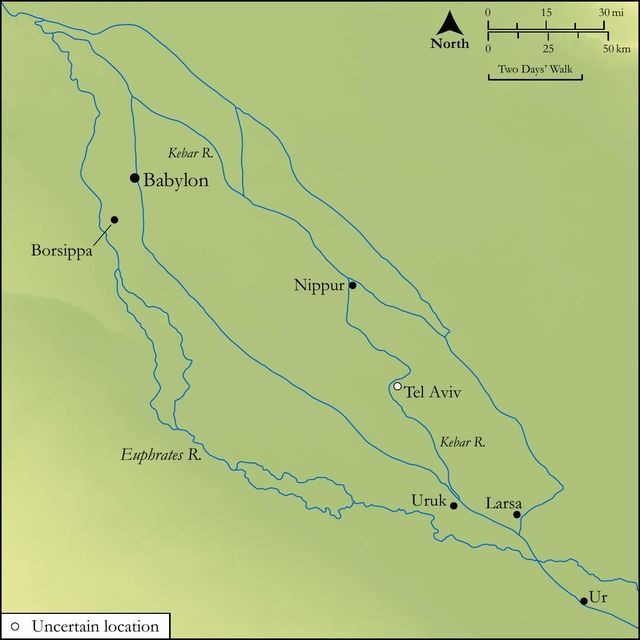
Ezekiel prophesied during one of the most tumultuous periods in Judah's history: the Babylonian exile. He was part of the initial wave of exiles deported to Babylon in 597 BC, where he ministered to the dislocated Jewish community settled by the Chebar Canal. At this time, the exiles largely remained unrepentant, clinging to false hopes of a swift return to Jerusalem and resisting the harsh reality of God's judgment upon their nation. The concept of a "watchman" was deeply embedded and well-understood in Israel. Such an individual was typically stationed on city walls or watchtowers to scan the horizon for approaching danger, whether military threats or natural disasters, and to sound an alarm (e.g., 2 Samuel 18:24-27). God masterfully appropriates this familiar civil role to describe Ezekiel's profound spiritual duty: to warn the people of impending divine judgment due to their pervasive idolatry, injustice, and unrighteousness, thereby offering them a crucial opportunity to turn from their "wicked way" and embrace life.
Key Themes
ShowHideEzekiel 3:18 powerfully contributes to several overarching themes that permeate the book of Ezekiel and resonate throughout biblical theology. The most prominent theme is the Watchman's Responsibility, which highlights the solemn and non-negotiable duty of God's chosen messenger to faithfully proclaim His word, irrespective of the people's reception or the personal cost. This commission is so central that it is reiterated and further expounded upon in Ezekiel 33. Another crucial theme is Individual Accountability, emphasizing that while the prophet bears the weighty responsibility of delivering the warning, each wicked person remains ultimately accountable for their "iniquity" and the choices they make in response to the divine truth. This aligns perfectly with the broader biblical principle that "the wages of sin is death" (Romans 6:23). Finally, the verse profoundly underscores the theme of Divine Justice and Mercy. God's unwavering justice is evident in the certain consequence for unrepentant sin, yet His boundless mercy is equally manifest in His provision of a warning through the prophet, offering a clear path to "save his life" from certain spiritual and physical demise.
Exposition and Analysis
ShowHideKey Word Analysis
ShowHideThis term describes someone who is morally wrong, an actively bad person, often used in a legal context to mean "guilty" or "condemned." In Ezekiel 3:18, it refers to individuals whose lifestyle and choices are characterized by deliberate rebellion against God's righteous standards, leading them down a path that results in spiritual and physical death. Their "wicked way" is a conscious and persistent course of action contrary to God's revealed will.
This primitive root means "to gleam" or "to enlighten," and figuratively, "to caution" or "admonish." It implies providing clear, illuminating instruction or warning to prevent harm. Ezekiel's duty is not merely to speak, but to "warn" in a way that brings understanding of the danger and the path to safety, aiming to enlighten the wicked to their perilous spiritual state and the available means of escape.
This word, derived from a root that can mean "to be silent" or "to cease," refers literally to that which, when shed, causes death. Figuratively, and especially in the context of "requiring blood," it signifies responsibility for bloodshed or death. In this verse, "his blood will I require at thine hand" means God will hold Ezekiel directly accountable for the wicked person's death if he fails to issue the warning, implying a severe judgment for dereliction of duty and complicity in their demise.
Verse Breakdown
ShowHide"When I say unto the wicked, Thou shalt surely die;"
This initial clause establishes the divine decree of judgment. God, in His absolute sovereignty and perfect justice, determines that a wicked person's unrepentant sin warrants death. The emphatic Hebrew idiom "mûwth tāmûth" (surely die) underscores the absolute certainty and inevitability of this judgment if the individual persists in their "wicked way." It is a declaration of God's righteous judgment against sin, not a mere possibility but a guaranteed outcome.
"and thou givest him not warning, nor speakest to warn the wicked from his wicked way, to save his life;"
This is the crucial condition placed upon the prophet, highlighting his specific failure. Ezekiel's dereliction is presented as twofold: he does not "give warning" (a general act of cautioning or making aware) and he does not "speak to warn" (a more active, verbal, and explicit proclamation). The explicit purpose of this warning is "to save his life," indicating that the divine judgment is not irreversible if the wicked person repents and turns from their destructive path. The prophet's silence or inaction, therefore, directly hinders the opportunity for the wicked to find salvation and life.
"the same wicked [man] shall die in his iniquity;"
This clause reiterates the ultimate fate of the wicked, regardless of the prophet's action. Even if the prophet fails to warn, the wicked person still dies, not because of the prophet's silence, but "in his iniquity." This powerfully emphasizes the individual's ultimate responsibility for their own sin and the inherent, just consequence of persistent rebellion against God. The death is a direct and unavoidable result of their unrepentant "wicked way."
"but his blood will I require at thine hand."
This is the chilling and severe consequence for the unfaithful watchman. "His blood" symbolizes the life lost due to an unheeded warning, and "at thine hand" signifies direct accountability and culpability. God will hold Ezekiel personally responsible for the spiritual and physical demise of the wicked if he neglects his prophetic duty. It is a profound statement about the immense weight of God's call, the sacredness of human life, and the severe repercussions for disobedience or negligence in ministry.
Literary Devices
ShowHideEzekiel 3:18 masterfully employs several potent literary devices to convey its urgent and profound message. Repetition is a prominent feature, particularly with the word "wicked" (râshâʻ), which appears four times, emphatically underscoring the character of those needing warning and the nature of their destructive path. The phrase "Thou shalt surely die" (mûwth tāmûth) is a classic example of a cognate accusative or emphatic infinitive, a Hebrew idiom that intensifies the verb, thereby underscoring the absolute certainty and inevitability of death as a consequence of unrepentant sin. The entire verse functions as a powerful Conditional Statement, setting up a clear "if-then" scenario: if the prophet fails to warn, then the wicked will die in their sin, and their blood will be required of the prophet. This structure creates a compelling sense of immediate consequence and moral imperative. Furthermore, the phrase "his blood will I require at thine hand" serves as a potent Metaphor and Symbolism. "Blood" here symbolizes life, and its "requirement" at the prophet's "hand" (a synecdoche representing his agency, responsibility, or personal involvement) metaphorically represents the prophet being held accountable for the loss of that life due to his inaction. This vivid and visceral imagery powerfully communicates the gravity of the watchman's dereliction of duty.
Theological and Thematic Connections
ShowHideEzekiel 3:18 stands as a stark and enduring reminder of the profound responsibility entrusted to those who bear God's message. It underscores that divine judgment is a real and inevitable consequence for unrepentant sin, but also that God, in His boundless mercy, provides a clear means of escape through a timely warning. The prophet's role is not merely to observe or passively witness, but to actively and courageously intervene by proclaiming divine truth, thereby offering a path to life. This passage highlights the intricate interconnectedness of divine sovereignty, human responsibility, and the messenger's faithfulness. It teaches that silence in the face of spiritual danger is never neutral; it carries severe spiritual consequences for the messenger, potentially rendering them complicit in the spiritual demise of those they were specifically called to warn. The weight of this passage is immense, calling all who know God's truth to sober reflection on their stewardship.
Reflection and Application
ShowHideEzekiel 3:18 resonates deeply with believers today, extending beyond the specific prophetic office to encompass the responsibility of all who have been entrusted with the truth of God's saving grace. We are called to be salt and light in a world adrift in sin, bearing witness not only to the dire consequences of rebellion against God but, more importantly, to the glorious hope offered through repentance and faith in Jesus Christ. This verse profoundly challenges us to examine our own faithfulness in sharing the gospel and speaking truth in love. Are we silent when we should speak? Do we prioritize personal comfort or fear of rejection over the urgent conviction to warn others? While the "blood" of those perishing in their iniquity is not literally required of us as it was of Ezekiel, the spiritual principle remains: our apathy, fear, or negligence can tragically hinder others from hearing the life-saving message. This passage compels us to courageously and compassionately proclaim God's warnings and His offer of salvation, understanding the eternal stakes involved for both ourselves and those around us. It is a call to active, loving obedience in evangelism and discipleship.
Questions for Reflection
ShowHideFAQ
ShowHideDoes Ezekiel 3:18 mean that if I don't tell someone about Jesus, I'm responsible for their eternal damnation?
ShowHideEzekiel 3:18 applies directly to Ezekiel's specific prophetic commission as a watchman for the nation of Israel, where God explicitly states He will "require their blood" from his hand if he fails to warn. While the principle of accountability for sharing divine truth is universal, it's crucial not to misapply this verse to suggest that an individual believer is solely responsible for another's eternal damnation. Salvation is ultimately a matter of an individual's response to God's grace and their personal accountability for their "iniquity" (Ezekiel 3:18). God is sovereign, and His justice is perfect. However, the passage does powerfully underscore the serious responsibility of those who know the truth to share it, as it is God's appointed means for people to hear and respond (Romans 10:14-15). Our role is to be faithful messengers, sowing the seed of the Word, not to determine another's eternal destiny, which rests with God.
What does "his blood will I require at thine hand" mean in a modern context?
ShowHideIn a modern context, "his blood will I require at thine hand" means that God holds His people, particularly those in positions of spiritual leadership or those who have been given clear divine truth, accountable for their faithfulness in proclaiming His message. It's a powerful metaphor for spiritual culpability and the gravity of negligence. For Ezekiel, it meant he would be held responsible for the physical and spiritual demise of the wicked if he failed to deliver God's specific warning. For believers today, it serves as a sobering reminder that our silence or inaction in sharing the gospel or speaking truth to spiritual danger has serious spiritual implications. While we don't literally bear the "blood guilt" for another's eternal state (as salvation is by grace through faith, not by our perfect evangelism), we are certainly accountable for our stewardship of the truth and our obedience to the Great Commission (Matthew 28:19-20). It emphasizes the immense gravity of our calling to be faithful witnesses for Christ and to love our neighbor enough to speak the truth in love.
Christ-Centered Fulfillment
ShowHideEzekiel 3:18, with its solemn declaration of the watchman's accountability and the dire consequences of unheeded warning, finds its ultimate and most profound fulfillment in the person and redemptive work of Jesus Christ. He is the quintessential Watchman, the true Prophet of God who perfectly fulfilled the divine mandate to warn humanity of its "wicked way" and the impending judgment of sin. Unlike Ezekiel, who was commanded to warn of physical death and national exile, Jesus came to warn of eternal spiritual death and permanent separation from God, proclaiming with divine authority, "Unless you repent, you will all likewise perish" (Luke 13:3). Yet, His mission was not merely to warn, but fundamentally "to save his life." Jesus did not merely speak the warning; He embodied both the warning and the salvation. He is the Lamb of God who takes away the sin of the world, offering His own "blood" (life) as the ultimate, atoning sacrifice for humanity's iniquity. Through His death and glorious resurrection, He provided the only way for the "wicked" to turn from their "wicked way" and truly live, thereby fulfilling the very purpose of the watchman's warning in a way no human prophet ever could. Thus, the accountability for "blood" is removed from those who believe, as Christ's perfect blood covers their sin, and the call to warn now transforms into a joyful proclamation of the Good News, empowered by the Holy Spirit, for all who would turn to Him in faith (Acts 2:38-40).