


Luke 11:20
- εἰeiIfG1487CONDConjunction
- δὲdehoweverG1161CONJConjunction
- ἐνenbyG1722PREPPreposition
- δακτύλῳdaktulō[the] fingerG1147N-DSMNoun Dative Singular Masculine
- θεοῦtheouof GodG2316N-GSM-TNoun Genitive Singular Masculine Title
- ἐκβάλλωekballōcast outG1544V-PAI-1SVerb Present Active Indicative 1st Singular
- τὰtatheG3588T-APNDefinite article Accusative Plural Neuter
- δαιμόνιαdaimoniademonsG1140N-APNNoun Accusative Plural Neuter
- ἄραarathenG686CONJConjunction
- ἔφθασενephthasenhas comeG5348V-AAI-3SVerb Aorist Active Indicative 3rd Singular
- ἐφ᾽eph᾽uponG1909PREPPreposition
- ὑμᾶςhumasyouG4771P-2APPersonal pronoun Accusative 2nd Plural
- ἡhētheG3588T-NSFDefinite article Nominative Singular Feminine
- βασιλείαbasileiakingdomG932N-NSFNoun Nominative Singular Feminine
- τοῦtou<the>G3588T-GSMDefinite article Genitive Singular Masculine
- θεοῦtheouof GodG2316N-GSM-TNoun Genitive Singular Masculine Title
English is a literal word-by-word gloss of the Greek, not the KJV's wording. Why?
This is the original text the KJV's translators worked from — each Greek word with its own literal English meaning in this verse, prepared by scholars at Tyndale House, Cambridge. The KJV translates whole sentences, not word by word, so its wording differs: one Greek word can become several English words, and the KJV may choose “charity” where the gloss reads “love”. Both are faithful — they answer different questions. For the KJV's own rendering, switch to the KJV text.
Details
See on the biblical-era map

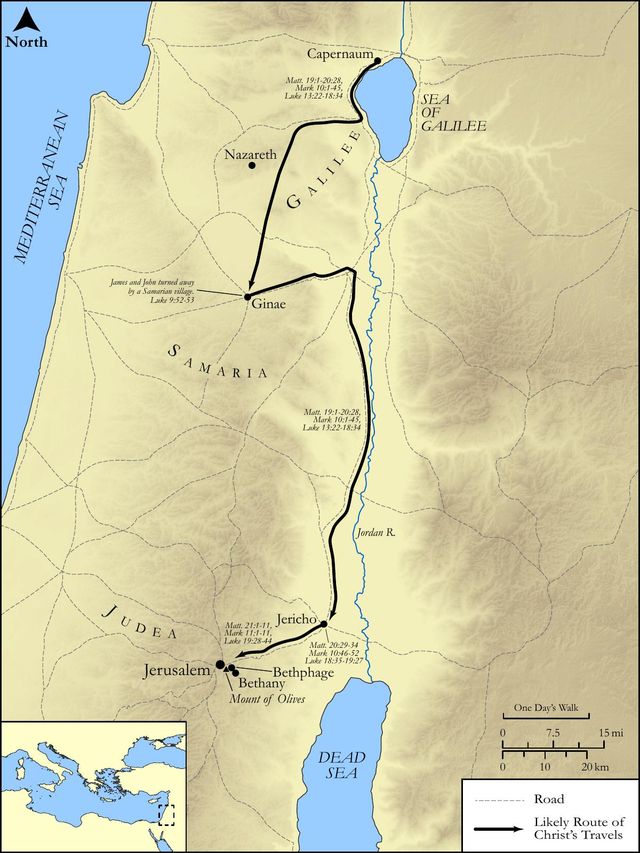
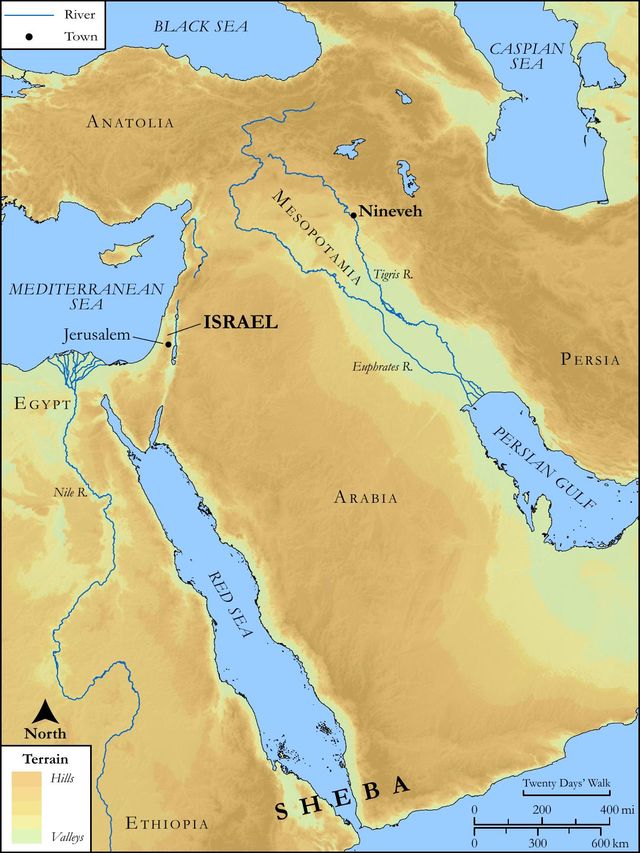
Study this verse
Public-domain commentary
Matthew Henry
From his Commentary on the Whole Bible. Henry comments on passages, not single verses — this entry covers Luke 11:14–26. His four-level outline is real structure in the source text, so it is rendered as structure.
The substance of these verses we had in Mat 12:22, etc. Christ is here giving a general proof of his divine mission, by a particular proof of his power over Satan, his conquest of whom was an indication of his great design in coming into the world, which was, to destroy the works of the devil. Here too he gives an earnest of the success of that undertaking. He is here casting out a devil that made the poor possessed man dumb: in Matthew we are told that he was blind and dumb. When the devil was forced out by the word of Christ, the dumb spoke immediately, echoed to Christ's word, and the lips were opened to show forth his praise. Now,
I.Some were affected with this miracle.
The people wondered; they admired the power of God, and especially that it should be exerted by the hand of one who made so small a figure, that one who did the work of the Messiah should have so little of that pomp of the Messiah which they expected.
II.Others were offended at it, and, to justify their infidelity, suggested that it was by virtue of a league with Beelzebub, the prince of the devils, that he did this, Luk 11:15. It seems, in the devil's kingdom there are chiefs, which supposes that there are subalterns. Now they would have it thought, or said at least, that there was a correspondence settled between Christ and the devil, that the devil should have the advantage in the main and be victorious at last, but that in order hereto, in particular instances, he should yield Christ the advantage and retire by consent. Some, to corroborate this suggestion, and confront the evidence of Christ's miraculous power, challenged him to give them a sign from heaven (Luk 11:16), to confirm his doctrine by some appearance in the clouds, such as was upon mount Sinai when the law was given; as if a sign from heaven, not disprovable by any sagacity of theirs, could not have been given them as well by a compact and collusion with the prince of the power of the air, who works with power and lying wonders, as the casting out of a devil; nay, that would not have been any present prejudice to his interest, which this manifestly was. Note, Obstinate infidelity will never be at a loss for something to say in its own excuse, though ever so frivolous and absurd. Now Christ here returns a full and direct answer to this cavil of theirs; in which he shows,
1.That it can by no means be imagined that such a subtle prince as Satan is should ever agree to measures that had such a direct tendency to his own overthrow, and the undermining of his own kingdom, Luk 11:17, Luk 11:18. What they objected they kept to themselves, afraid to speak it, lest it should be answered and baffled; but Jesus knew their thoughts, even when they industriously thought to conceal them, and he said, "You yourselves cannot but see the groundlessness, and consequently the spitefulness, of this charge; for it is an allowed maxim, confirmed by every day's experience, that no interest can stand that is divided against itself; not the more public interest of a kingdom, nor the private interest of a house or family; if either the one or the other be divided against itself, it cannot stand. Satan would herein act against himself; not only by the miracle which turned him out of possession of the bodies of people, but much more in the doctrine for the explication and confirmation of which the miracle was wrought, which had a direct tendency to the ruin of Satan's interest in the minds of men, by mortifying sin, and turning men to the service of God. Now, if Satan should thus be divided against himself, he would hasten his own overthrow, which you cannot suppose an enemy to do that acts so subtlely for his own establishment, and is so solicitous to have his kingdom stand."
2.That was a very partial ill-natured thing for them to impute that in him to a compact with Satan which yet they applauded and admired in others that were of their own nation (Luk 11:19): "By whom do your sons cast them out? Some of your own kindred, as Jews, nay, and some of your own followers, as Pharisees, have undertaken, in the name of the God of Israel, to cast out devils, and they were never charged with such a hellish combination as I am charged with." Note, It is gross hypocrisy to condemn that in those who reprove us which yet we allow in those that flatter us.
3.That, in opposing the conviction of this miracle, they were enemies to themselves, stood in their own light, and put a bar in their own door, for they thrust from them the kingdom of God (Luk 11:20): "If I with the finger of God cast out devils, as you may assure yourselves I do, no doubt the kingdom of God is come upon you, the kingdom of the Messiah offers itself and all its advantages to you, and, if you receive it not, it is at your peril." In Matthew it is by the Spirit of God, here by the finger of God; the Spirit is the arm of the Lord, Isa 53:1. His greatest and most mighty works were wrought by his Spirit; but, if the Spirit in this work is said to be the finger of the Lord, it perhaps may intimate how easily Christ did and could conquer Satan, even with the finger of God, the exerting of the divine power in a less and lower degree than in many other instances. He needed not make bare his everlasting arm; that roaring lion, when he pleases, is crushed, like a moth, with a touch of a finger. Perhaps here is an allusion to the acknowledgment of Pharaoh's magicians, when they were run aground (Exo 8:19): This is the finger of God. "Now if the kingdom of God be herein come to you, and you be found by those cavils and blasphemies fighting against it, it will come upon you as a victorious force which you cannot stand before."
4.That his casting out devils was really the destroying of them and their power, for it confirmed a doctrine which had a direct tendency to the ruining of his kingdom, Luk 11:21, Luk 11:22. Perhaps there had been some who had cast out the inferior devils by compact with Beelzebub their chief, but that was without any real damage or prejudice to Satan and his kingdom, what he lost one way he gained another. The devil and such exorcists played booty, as we say, and, while the forlorn hope of his army gave ground, the main body thereby gained ground; the interest of Satan in the souls of men was not weakened by it in the least. But, when Christ cast out devils, he needed not do it by any compact with them, for he was stronger than they, and could do it by force, and did it so as to ruin Satan's power and blast his great design by that doctrine and that grace which break the power of sin, and so rout Satan's main body, take from him all his armour, and divide his spoils, which no one devil ever did to another or ever will. Now this is applicable to Christ's victories over Satan both in the world and in the hearts of particular persons, by that power which went along with the preaching of his gospel, and does still. And so we may observe here,
(1.)The miserable condition of an unconverted sinner. In his heart, which was fitted to be a habitation of God, the devil has his palace; and all the powers and the faculties of the soul, being employed by him in the service of sin, are his goods. Note,
[1.]The heart of every unconverted sinner is the devil's palace, where he resides and where he rules; he works in the children of disobedience. The heart is a palace, a noble dwelling; but the unsanctified heart is the devil's palace. His will is obeyed, his interests are served, and the militia is in his hands; he usurps the throne in the soul.
[2.]The devil, as a strong man armed, keeps this palace, does all he can to secure it to himself, and to fortify it against Christ. All the prejudices with which he hardens men's hearts against truth and holiness are the strong-holds which he erects for the keeping of his palace; this palace is his garrison.
[3.]There is a kind of peace in the palace of an unconverted soul, while the devil, as a strong man armed, keeps it. The sinner has a good opinion of himself, is very secure and merry, has no doubt concerning the goodness of his state nor any dread of the judgment to come; he flatters himself in his own eyes, and cries peace to himself. Before Christ appeared, all was quiet, because all went one way; but the preaching of the gospel disturbed the peace of the devil's palace.
(2.)The wonderful change that is made in conversion, which is Christ's victory over this usurper. Satan is a strong man armed; but our Lord Jesus is stronger than he, as God, as Mediator. If we speak of strength, he is strong: more are with us than against us. Observe,
[1.]The manner of this victory: He comes upon him by surprise, when his goods are in peace and the devil thinks it is all his own for ever, and overcomes him. Note, The conversion of a soul to God is Christ's victory over the devil and his power in that soul, restoring the soul to its liberty, and recovering his own interest in it and dominion over it.
[2.]The evidences of this victory. First, He takes from him all his armour wherein he trusted. The devil is a confident adversary; he trusts to his armour, as Pharaoh to his rivers (Eze 29:3): but Christ disarms him. When the power of sin and corruption in the soul is broken, when the mistakes are rectified, the eyes opened, the heart humbled and changed, and made serious and spiritual, then Satan's armour is taken away. Secondly, He divides the spoils; he takes possession of them for himself. All the endowments of mind and body, the estate, power, interest, which before were made use of in the service of sin and Satan, are now converted to Christ's service and employed for him; yet this is not all; he makes a distribution of them among his followers, and, and having conquered Satan, gives to all believers the benefit of that victory. Hence Christ infers that, since the whole drift of his doctrine and miracles was to break the power of the devil, that great enemy of mankind, it was the duty of all to join with him and to follow his guidance, to receive his gospel and come heartily into the interests of it; for otherwise they would justly be reckoned as siding with the enemy (Luk 11:23): He that is not with me is against me. Those therefore who rejected the doctrine of Christ, and slighted his miracles, were looked upon as adversaries to him, and in the devil's interest.
5.That there was a vast difference between the devil's going out by compact and his being cast out by compulsion. Those out of whom Christ cast him he never entered into again, for so was Christ's charge (Mar 9:25); whereas, if he had gone out, whenever he saw fit he would have made a re-entry, for that is the way of the unclean spirit, when he voluntarily and with design goes out of a man, Luk 11:24-26. The prince of the devils may give leave, nay, may give order, to his forces to retreat, or make a feint, to draw the poor deluded soul into an ambush; but Christ, as he gives a total, so he gives a final, defeat to the enemy. In this part of the argument he has a further intention, which is to represent the state of those who have had fair offers made them, - among whom, and in whom, God has begun to break the devil's power and overthrow his kingdom, - but they reject his counsel against themselves, and relapse into a state of subjection to Satan. Here we have,
(1.)The condition of a formal hypocrite, his bright side and his dark side. His heart still remains the devil's house; he calls it his own, and he retains his interest in it; and yet,
[1.]The unclean spirit is gone out. He was not driven out by the power of converting grace; there was none of that violence which the kingdom of heaven suffers; but he went out, withdrew for a time, so that the man seemed not to be under the power of Satan as formerly, nor so followed with his temptations. Satan is gone, or has turned himself into an angel of light.
[2.]The house is swept from common pollutions, by a forced confession of sin, as Pharaoh's - a feigned contrition for it, as Ahab's, - and a partial reformation, as Herod's. There are those that have escaped the pollutions of the world, and yet are still under the power of the god of this world, Pe2 2:20. The house is swept, but it is not washed; and Christ hath said, If I wash thee not, thou hast no part with me; the house must be washed, or it is none of his. Sweeping takes off only the loose dirt, while the sin that besets the sinner, the beloved sin, is untouched. It is swept from the filth that lies open to the eye of the world, but it is not searched and ransacked for secret filthiness, Mat 23:25. It is swept, but the leprosy is in the wall, and will be till something more be done.
[3.]The house is garnished with common gifts and graces. It is not furnished with any true grace, but garnished with the pictures of all graces. Simon Magus was garnished with faith, Balaam with good desires, Herod with a respect for John, the Pharisees with many external performances. It is garnished, but it is like a potsherd covered with silver dross, it is all paint and varnish, not real, not lasting. The house is garnished, but the property is not altered; it was never surrendered to Christ, nor inhabited by the Spirit. Let us therefore take heed of resting in that which a man may have and yet come short.
(2.)Here is the condition of a final apostate, into whom the devil returns after he had gone out: Then goes he, and takes seven other spirits more wicked than himself (Luk 11:26); a certain number for an uncertain, as seven devils are said to be cast out of Mary Magdalene. Seven wicked spirits are opposed to the seven spirits of God, Rev 3:1. These are said to be more wicked than himself. It seems, even devils are not all alike wicked; probably, the degrees of their wickedness, now that they are fallen, are as the degrees of their holiness were while they stood. When the devil would do mischief most effectually, he employs those that are more mischievous than himself. These enter in without any difficulty or opposition; they are welcomed, and they dwell there; there they work, there they rule; and the last state of that man is worse than the first. Note,
[1.]Hypocrisy is the high road to apostasy. If the heart remains in the interest of sin and Satan, the shows and shadows will come to nothing; those that have not set that right will not long be stedfast. Where secret haunts of sin are kept up, under the cloak of a visible profession, conscience is debauched, God is provoked to withdraw his restraining grace, and the close hypocrite commonly proves an open apostate,
[2.]The last state of such is worse than the first, in respect both of sin and punishment. Apostates are usually the worst of men, the most vain and profligate, the most bold and daring; their consciences are seared, and their sins of all others the most aggravated. God often sets marks of his displeasure upon them in this world, and in the other world they will receive the greater damnation. Let us therefore hear, and fear, and hold fast our integrity.
Historical interpretation
Five Centuries of Reception
12 surviving comments on this verse. Each one is dated, so this reads as a timeline rather than a list.
Select a marker to jump to its quote. Markers stagger vertically where authors wrote within a few decades of each other.
So that it was not by Beelzebub that even they were casting out demons, but (as we have said) by the power of the Creator; and that He might make this understood, He adds: "But if I with the finger of God cast out demons, is not the kingdom of God come near unto you? " For the magicians who stood before Pharaoh and resisted Moses called the power of the Creator"the finger of God.
This much about an infant, which was not yet of an age to speak of the crime committed by others in respect of herself. But the woman who in advanced life and of more mature age secretly crept in among us when we were sacrificing, received not food, but a sword for herself; and as if taking some deadly poison into her jaws and body, began presently to be tortured, and to become stiffened with frenzy; and suffering the misery no longer of persecution, but of her crime, shivering and trembling, she fell down. The crime of her dissimulated conscience was not long unpunished or concealed. She who had deceived man, felt that God was taking vengeance. And another woman, when she tried with unworthy hands to open her box, in which was the holy (body) of the Lord, was deterred by fire rising from it from daring to touch it. And when one, who himself was defiled, dared with the rest to receive secretly a part of the sacrifice celebrated by the priest; he could not eat nor handle the holy of the Lord, but found in his hands when opened that he had a cinder. Thus by the experience of one it was shown that the Lord withdraws when He is denied; nor does that which is received benefit the undeserving for salvation, since saving grace is changed by the departure of the sanctity into a cinder. How many there are daily who do not repent nor make confession of the consciousness of their crime, who are filled with unclean spirits! How many are shaken even to unsoundness of mind and idiotcy by the raging of madness! Nor is there any need to go through the deaths of individuals, since through the manifold lapses occurring in the world the punishment of their sins is as varied as the multitude, of sinners is abundant. Let each one consider not what another has suffered, but what he himself deserves to suffer; nor think that he has escaped if his punishment delay for a time, since he ought to fear it the more that the wrath of God the judge has reserved it for Himself.
(Orat. 2. con. Arian.) But at this time our Lord does not hesitate because of His humanity to speak of Himself as inferior to the Holy Spirit, saying, that He cast out devils by Him, as though the human nature was not sufficient for the casting out of devils without the power of the Holy Spirit.
(in Matt.) Or He says, The kingdom of God is come upon you, signifying, "is come against you, not for you." For dreadful is the second coming of Christ to faithless Christians.
Nor would you think in the compacting together of our limbs any division of power to be made, for there can be no division in an undivided thing. And therefore the appellation of finger must be referred to the form of unity, not to the distinction of power.
At the same time He shows that it is a regal power which the Holy Spirit possesses, in whom is the kingdom of God, and that we in whom the Spirit dwells are a royal house.
(Hom. 41. in Matt.) The suspicion of the Pharisees being utterly without reason, they dared not divulge it for fear of the multitude, but pondered it in their minds. Hence it is said, But he, knowing their thoughts, said unto them, Every kingdom divided against itself will be brought to desolation.
(ubi sup.) He did not answer them from the Scriptures, since they gave no heed to them, explaining them away falsely; but he answers them from things of every day occurrence. For a house and a city if it be divided is quickly scattered to nothing; and likewise a kingdom, than which nothing is stronger. For the harmony of the inhabitants maintains houses and kingdoms. If then, says He, I cast out devils by means of a devil, there is dissension among them, and their power perishes. Hence He adds, But if Satan be divided against himself, how shall he stand? For Satan resists not himself, nor hurts his soldiers, but rather strengthens his kingdom. It is then by Divine power alone that I crush Satan under my feet.
(Hom. 23. in Matt) This then is the first answer; the second which relates to His disciples He gives as follows, And if I by Beelzebub cast out devils, by whom do your sons cast them out? He says not, "My disciples," but your sons, wishing to soothe their wrath.
(ut sup.) For since they who come forth from you are obedient unto Me, it is plain that they will condemn those who do the contrary.
(Hom. 41. ut sup.) But it is said, upon you, that He might draw them to Him; as if He said, If prosperity comes to you, why do you despise your good things?
(de cons. Ev. l. ii. c. 38.) That Luke speaks of the finger of God, where Matthew has said, the Spirit, does not take away from their agreement in sense, but it rather teaches us a lesson, that we may know what meaning to give to the finger of God, whenever we read it in the Scriptures.
(de Quæst. Ev. l. ii. qu. 17.) Now the Holy Spirit is called the finger of God, because of the distribution of gifts which are given through Him, to every one his own gift, whether he be of men or angels. For in none of our members is division more apparent than in our fingers.
By the finger of God, he means the Holy Spirit. The Son is called the hand and arm of God the Father because he does all things by the Son, and the Son in a similar way works by the Spirit. Just as the finger is attached to the hand as something not foreign from it but belonging to it by nature, so also the Holy Spirit, by reason of his being equal in substance, is joined in oneness to the Son, although he proceeds from God the Father. The Son does every thing by the consubstantial Spirit. Here he purposely says that by the finger of God he casts out devils, speaking as a man. The Jews in the infirmity and folly of their mind would not have endured it if he said, "by my own Spirit I cast out devils."
Although he is by nature God and the Giver of the Spirit from God the Father to those who are worthy and employs as his own that power which is from him, he spoke as a man. He is consubstantial with him, and whatever is said to be done by God the Father, this necessarily is by the Son in the Spirit. He says, "If I, being a man, and having become like you, cast out devils in the Spirit of God, human nature has in me first attained to a godlike kingdom." For it has become glorious by breaking the power of Satan and rebuking the impure and abominable spirits. This is the meaning of the words "the kingdom of God has come upon you."
But others by similar darts of envy sought of him a sign from heaven. As it follows, And others, tempting him, sought of him a sign from heaven. As if they said, "Although thou hast cast out a devil from the man, this is no proof however of Divine power. For we have not yet seen any thing like to the miracles of former times. Moses led the people through the midst of the sea, (Exod. 14) and Joshua his successor stayed the sun in Gibeon. (Josh. 10:13.) But thou hast shown us none of these things." For to seek signs from heaven showed that the speaker was at that time influenced by some feeling of this kind towards Christ.
For the disciples of Christ were Jews, and sprung from Jews according to the flesh, and they had obtained from Christ power over unclean spirits, and delivered those who were oppressed by them in Christ's name. Seeing then that your sons subdue Satan in My name, is it not very madness to say that I have My power from Beelzebub? Ye are then condemned by the faith of your children. Hence He adds, Therefore shall they be your judges.
Since then what you say bears upon it the mark of calumny, it is plain that by the Spirit of God I cast out devils. Hence He adds, But if I by the finger of God cast out devils, no doubt the kingdom of God is come upon you.
Or the Holy Spirit is called the finger of God for this reason. The Son was said to be the hand and arm of the Father, (Ps. 98:1.) for the Father worketh all things by Him. As then the finger is not separate from the hand, but by nature a part of it; so the Holy Spirit is consubstantially united to the Son, and through Him the Son does all things.
And therefore it is justly said, The kingdom of God is come upon you, that is, "If I as a man cast out devils by the Spirit of God, human nature is enriched through Me, and the kingdom of God is come."
Moreover, if I cast out demons by the finger of God, indeed the kingdom of God has come upon you. This is the finger which even the magicians who opposed Moses and Aaron confessed, saying: This is the finger of God (Exod. VIII), by which also the stone tablets were written on Mount Sinai. Therefore, the Son is the hand and arm of God, and the Holy Spirit is His finger. The substance of the Father, the Son, and the Holy Spirit is one. Do not let the inequality of the members scandalize you, while the unity of the body builds you up. Alternatively: The Holy Spirit is called the finger of God because of the distribution of gifts which are given in it to each one individually, whether of men or angels. For there is no greater display of distribution in our members than in the fingers. But what he said, The kingdom of God has come upon you, means now the kingdom of God by which the impious are condemned, and are now separated from the faithful who are repenting of their sins.
He answered not their words but their thoughts, that so at least they might be compelled to believe in His power, who saw into the secrets of the heart.
The kingdom also of the Father, Son, and Holy Spirit, is not divided, because it is sealed with an eternal stability. Let then the Arians cease to say that the Son is inferior to the Father, but the Holy Spirit inferior to the Son, since whose kingdom is one, their power is one also.
Or else, By the sons of the Jews He means the exorcists of that nation, who cast out devils by the invocation of God. As if He says, If the casting out of devils by your sons is ascribed to God, not to devils, why in My case has not the same work the same cause? Therefore shall they be your judges, not in authority to exercise judgment, but in act, since they assign to God the casting out of devils, you to Beelzebub, the chief of the devils.
Continue studying Luke 11:20 across the web’s major study libraries — every link below opens this exact verse, chapter, or book on the destination site.
Read & Compare
 BibleGatewayThis verse in more than 200 translations and 70 languages.
 Bible.comThe YouVersion reader — hundreds of translations, reading plans, and highlights.
 ESV.orgCrossway's official English Standard Version reader.
 NET BibleThe NET translation with 60,000+ translators' notes on every rendering decision.
 STEP BibleTyndale House's free study tool — original text, vocabulary, and scholarly resources.
 BibliaLogos Bible Software's free web reader.
 USCCBThe New American Bible (Revised Edition) with the U.S. bishops' study notes.
Commentaries
 BibleHub CommentariesDozens of classic commentaries on this verse, gathered on one page.
 StudyLightMore than 100 commentary sets — the largest collection on the web.
 BibleRefPlain-English commentary on what this verse means, verse by verse.
 Enduring WordDavid Guzik's free commentary on this chapter, widely used by Bible teachers.
 Bible Study ToolsVerse commentary alongside Greek and Hebrew study aids.
Original Language & Research
- BibleHub InterlinearThe verse word by word — original language, transliteration, and English.
- BibleHub LexiconEvery word's original-language definition and Strong's entry.
 Blue Letter BibleDeep-study tools — Strong's numbers, concordance, and word studies.
 CNTR CollationThe earliest Greek manuscripts of this verse, collated letter by letter.
Sermons, Hymns & Audio


TrulyRandomVerse is not affiliated with these sites and doesn’t control their content. They’re linked because they’re genuinely useful.
Summary
Luke 11:20 captures Jesus's definitive counter-argument to the accusation that He casts out demons by the power of Beelzebub. By asserting that His exorcisms are accomplished "with the finger of God," Jesus unequivocally declares that His miraculous power originates from God Himself, thereby demonstrating that the long-awaited Kingdom of God has not merely drawn near, but has decisively arrived and is actively breaking into human history through His ministry.
Context
ShowHideLiterary Context
This verse is embedded within a critical exchange following Jesus's powerful exorcism of a mute demoniac in Luke 11:14. The immediate reaction from some in the crowd is skepticism and outright accusation, claiming Jesus casts out demons by Beelzebub, the ruler of demons (Luke 11:15). Jesus systematically dismantles their illogical premise, first by pointing out the absurdity of a kingdom divided against itself (Luke 11:17-18) and then by challenging them with the example of their own exorcists (Luke 11:19). Luke 11:20 serves as the climactic logical conclusion to His argument: if His power is divine, then the Kingdom's arrival is undeniable.
Historical & Cultural Context
In first-century Judaism, the concept of exorcism was not uncommon, though successful ones were often attributed to divine power or special spiritual insight. The accusation of using Beelzebub's power was a grave charge, implying Jesus was an agent of Satan, deliberately twisting good into evil. This reflected a deep-seated spiritual conflict between the established religious authorities and Jesus, who challenged their interpretations of God's law and their understanding of the Messiah's coming. The Jewish people eagerly anticipated the "Kingdom of God" or "Kingdom of Heaven," often envisioning a future, political reign that would liberate them from Roman oppression and restore Israel's glory. Jesus's ministry, however, introduced the radical idea that this Kingdom was already present and active, not merely a future hope.
Key Themes
ShowHideLuke 11:20 powerfully contributes to several overarching themes in Luke's Gospel. Firstly, it underscores the Divine Authority and Power of Jesus, demonstrating that His works are not merely human but are direct manifestations of God's intervention. The phrase "finger of God" is a potent Old Testament idiom signifying God's unmistakable, direct action, as seen when the magicians of Pharaoh declared, "This is the finger of God" after witnessing a plague. Secondly, the verse highlights the Inbreaking of the Kingdom of God. Jesus's ability to subdue demonic forces is presented as irrefutable evidence that God's sovereign reign is not just a future promise but a present reality that has "come upon" them, inaugurating a new era. This aligns with Jesus's consistent message that "the kingdom of God is in the midst of you" (Luke 17:21). Lastly, it emphasizes the Confrontation with Evil, portraying Jesus's ministry as a direct assault on the kingdom of darkness, confirming His identity as the Messiah who triumphs over spiritual adversaries.
Exposition and Analysis
ShowHideKey Word Analysis
ShowHideThis word, referring to a digit of the hand, carries profound symbolic weight in this context. In the Old Testament, "the finger of God" refers to God's direct, unmistakable, and miraculous power, as seen in the plagues of Egypt (Exodus 8:19) and the inscription of the Ten Commandments on stone tablets (Exodus 31:18). By using this phrase, Jesus implicitly claims His power is not merely human or demonic, but divine, elevating His exorcisms to the level of God's own direct intervention.
Derived from "out" and "to throw," this verb signifies a forceful expulsion or ejection. It implies a decisive and authoritative action, not a gentle persuasion. In the context of exorcism, it emphasizes Jesus's complete dominion and power over the demonic realm, demonstrating His ability to forcefully drive out evil spirits, leaving no doubt about His superior authority.
This term denotes royalty, rule, or a realm. It refers to God's active reign and sovereign rule, which is both a present spiritual reality and a future consummated state. In this verse, Jesus's actions are presented as tangible proof that this divine reign is not merely conceptual or distant, but is actively breaking into the world through His ministry, bringing God's will and authority to bear on human affairs.
Verse Breakdown
ShowHide"But if I with the finger of God cast out devils"
This clause presents a conditional statement, yet it functions as a rhetorical premise that Jesus assumes to be true and undeniable. The phrase "with the finger of God" is the crux, directly attributing His power to God's own immediate and powerful action, rather than to Beelzebub as His accusers claimed. The casting out of "devils" (demons) is the visible evidence of this divine power at work, setting up the irrefutable conclusion that follows.
"no doubt the kingdom of God is come upon you."
This is the logical and theological conclusion to Jesus's premise. The Greek particle ára (translated "no doubt" or "therefore") indicates a decisive inference. If Jesus's power is indeed from God, then the only possible conclusion is that the "kingdom of God" – God's active, sovereign reign – has not merely approached but has "come upon" them. The verb phthánō ("is come upon") signifies a sudden, decisive, and even anticipatory arrival, emphasizing that the Kingdom is not just a future hope but an immediate, present reality that has decisively reached them.
Literary Devices
ShowHideLuke 11:20 masterfully employs several literary devices to convey its profound theological message. The central device is Metaphor, specifically the powerful image of "the finger of God." This phrase is not meant literally but serves as a vivid representation of God's direct, unmistakable, and overwhelming power. It evokes Old Testament precedents where God's "finger" signified His miraculous intervention (e.g., the plagues, the giving of the Law), thereby elevating Jesus's exorcisms to the level of divine action. Furthermore, the verse functions as a Rhetorical Argument or an Argument from the Lesser to the Greater. Jesus's opponents accuse Him of using demonic power; Jesus counters by showing that His actions are consistent only with divine power, leading to the undeniable conclusion that the Kingdom of God has arrived. This creates a stark Contrast between the kingdom of darkness (represented by Beelzebub) and the Kingdom of God, highlighting Jesus's position as the one who invades and triumphs over the forces of evil.
Theological and Thematic Connections
ShowHideLuke 11:20 is a foundational statement about the nature of Jesus's ministry and the Kingdom of God. It asserts that Jesus's power over demonic forces is not merely a display of supernatural ability, but the very manifestation of God's active reign breaking into human history. The "finger of God" signifies that God Himself is present and at work through Jesus, initiating His redemptive plan. This verse shifts the understanding of the Kingdom from a solely future, political entity to a present, spiritual reality that confronts and overcomes the kingdom of darkness. It implies that wherever Jesus is, and wherever His power is manifested, the Kingdom of God is tangibly present, demanding a response of faith and allegiance.
Reflection and Application
ShowHideLuke 11:20 invites us to recognize the ongoing reality of God's Kingdom at work in the world and in our lives today. Just as Jesus's exorcisms were undeniable signs of God's active reign, so too are the transformations, deliverances, and spiritual victories experienced by believers through the power of the Holy Spirit. This verse challenges us to move beyond a passive expectation of a future Kingdom and to actively engage with its present reality. It reminds us that we are not fighting a losing battle against evil, but are participants in a Kingdom that has already decisively triumphed over the forces of darkness through Christ. Our lives, empowered by God's Spirit, become extensions of His "finger," bringing His light and authority into a world still grappling with darkness. We are called to discern God's active presence, embrace His reign, and participate in His ongoing work of liberation and transformation, confident that His Kingdom has indeed "come upon" us and continues to advance.
Questions for Reflection
ShowHideFAQ
ShowHideWhat is the significance of the phrase "the finger of God" in this verse?
ShowHideThe phrase "the finger of God" (Greek: daktylos Theou) is a powerful biblical idiom rooted in the Old Testament. It signifies God's direct, unmistakable, and miraculous intervention and power. For instance, in Exodus 8:19, Pharaoh's own magicians, unable to replicate a plague, declared, "This is the finger of God!" Similarly, God's "finger" is said to have inscribed the Ten Commandments on stone tablets (Exodus 31:18). By using this phrase, Jesus is not merely claiming supernatural ability but asserting that His power to cast out demons comes directly from God Himself, making His actions undeniable proof of divine presence.
How does Jesus's casting out of demons relate to the Kingdom of God?
ShowHideJesus's exorcisms are presented as tangible evidence of the Kingdom of God's inbreaking. In the Jewish worldview, the coming of the Messiah and the Kingdom of God would involve a decisive victory over evil and the forces of darkness. By casting out demons, Jesus was directly confronting and defeating the agents of Satan, thereby demonstrating that God's sovereign reign was actively breaking into the world. His power over evil spirits signaled that the long-awaited Kingdom was not just a future hope but a present reality that had "come upon" them, inaugurating a new era of God's rule and liberation (Matthew 12:28).
Christ-Centered Fulfillment
ShowHideLuke 11:20 finds its ultimate Christ-centered fulfillment in Jesus Himself as the embodiment and inaugurator of the Kingdom of God. The "finger of God" is not merely a detached divine power but is supremely manifested in the person and work of Christ. His miraculous power over demons is a direct testament to His divine nature and His mission to dismantle the kingdom of darkness. Jesus, the Son of God, came precisely to "destroy the works of the devil" (1 John 3:8), and His exorcisms are vivid demonstrations of this triumph. Through His life, death, and resurrection, Jesus decisively defeated sin, death, and the devil, establishing His eternal reign. The Kingdom of God, which "is come upon you" in Luke 11:20, is now extended to all who believe in Him, as He has "delivered us from the domain of darkness and transferred us to the kingdom of his beloved Son" (Colossians 1:13). Thus, Jesus is not just the one who brings the Kingdom, but He is the King, and His victory over evil ensures the ultimate triumph of God's reign.