


Luke 10:9
- καὶkaiAndG2532CONJConjunction
- θεραπεύετεtherapeuetedo healG2323V-PAM-2PVerb Present Active Imperative 2nd Plural
- τοὺςtous<the>G3588T-APMDefinite article Accusative Plural Masculine
- ἐνeninG1722PREPPreposition
- αὐτῇautēaitG846P-DSFPersonal pronoun Dative Singular Feminine
- ἀσθενεῖςastheneis[the] sickG772A-APMAdjective Accusative Plural Masculine
- καὶkaiandG2532CONJConjunction
- λέγετεlegetedo sayG3004V-PAM-2PVerb Present Active Imperative 2nd Plural
- αὐτοῖς·autoisto themG846P-DPMPersonal pronoun Dative Plural Masculine
- ἤγγικενēngikenHas drawn nearG1448V-RAI-3SVerb Perfect Active Indicative 3rd Singular
- ἐφ᾽eph᾽toG1909PREPPreposition
- ὑμᾶςhumasyouG4771P-2APPersonal pronoun Accusative 2nd Plural
- ἡhētheG3588T-NSFDefinite article Nominative Singular Feminine
- βασιλείαbasileiakingdomG932N-NSFNoun Nominative Singular Feminine
- τοῦtou<the>G3588T-GSMDefinite article Genitive Singular Masculine
- θεοῦtheouof GodG2316N-GSM-TNoun Genitive Singular Masculine Title
English is a literal word-by-word gloss of the Greek, not the KJV's wording. Why?
This is the original text the KJV's translators worked from — each Greek word with its own literal English meaning in this verse, prepared by scholars at Tyndale House, Cambridge. The KJV translates whole sentences, not word by word, so its wording differs: one Greek word can become several English words, and the KJV may choose “charity” where the gloss reads “love”. Both are faithful — they answer different questions. For the KJV's own rendering, switch to the KJV text.
Details
See on the biblical-era map

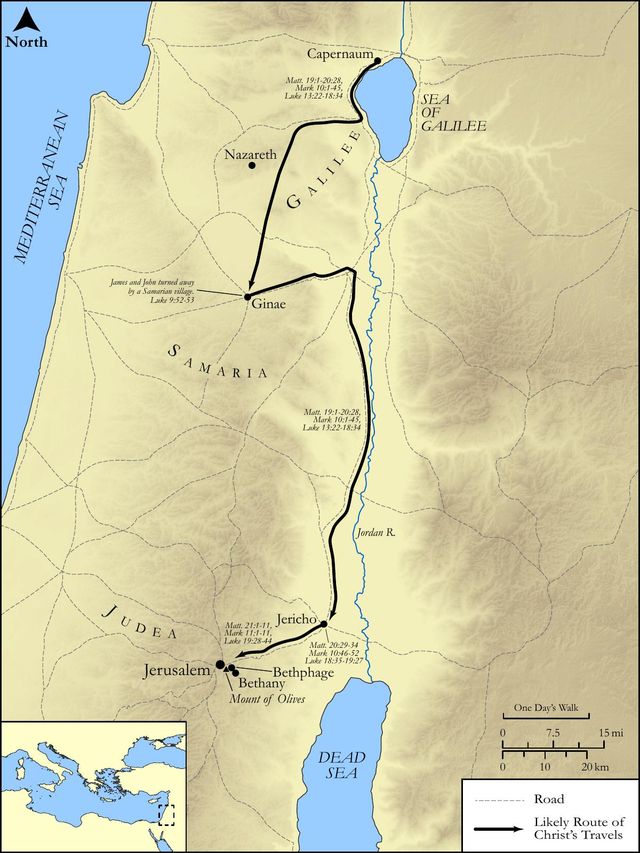
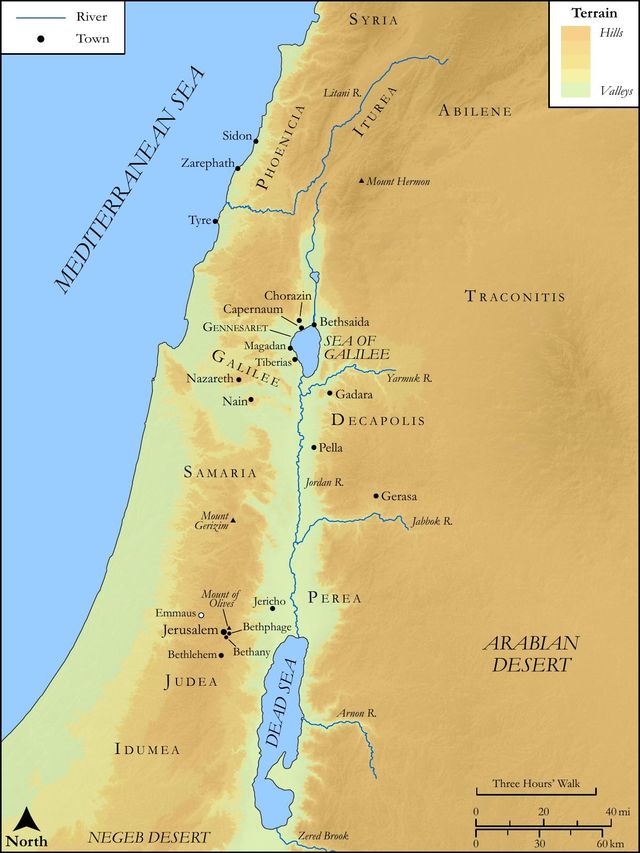
Study this verse
Public-domain commentary
Matthew Henry
From his Commentary on the Whole Bible. Henry comments on passages, not single verses — this entry covers Luke 10:1–16. His four-level outline is real structure in the source text, so it is rendered as structure.
We have here the sending forth of seventy disciples, two and two, into divers parts of the country, to preach the gospel, and to work miracles in those places which Christ himself designed to visit, to make way for his entertainment. This is not taken notice of by the other evangelists: but the instructions here given them are much the same with those given to the twelve. Observe,
I.Their number:
they were seventy. As in the choice of twelve apostles Christ had an eye to the twelve patriarchs, the twelve tribes, and the twelve princes of those tribes, so here he seems to have an eye to the seventy elders of Israel. So many went up with Moses and Aaron to the mount, and saw the glory of the God of Israel (Exo 24:1, Exo 24:9), and so many were afterwards chosen to assist Moses in the government, in order to which the Spirit of prophecy came unto them, Num 11:24, Num 11:25. The twelve wells of water and the seventy palm-trees that were at Elim were a figure of the twelve apostles and the seventy disciples, Exo 15:27. They were seventy elders of the Jews that were employed by Ptolemy king of Egypt in turning the Old Testament into Greek, whose translation is thence called the Septuagint. The great sanhedrim consisted of this number. Now,
1.We are glad to find that Christ had so many followers fit to be sent forth; his labour was not altogether in vain, though he met with much opposition. Note, Christ's interest is a growing interest, and his followers, like Israel in Egypt, though afflicted shall multiply. These seventy, though they did not attend him so closely and constantly as the twelve did, were nevertheless the constant hearers of his doctrine, and witnesses of his miracles, and believed in him. Those three mentioned in the close of the foregoing chapter might have been of these seventy, if they would have applied themselves in good earnest to their business. These seventy are those of whom Peter speaks as "the men who companied with us all the time that the Lord Jesus went in and out among us," and were part of the one hundred and twenty there spoken of, Act 1:15, Act 1:21. Many of those that were the companions of the apostles, whom we read of in the Acts and the Epistles, we may suppose, were of these seventy disciples.
2.We are glad to find there was work for so many ministers, hearers for so many preachers: thus the grain of mustard-seed began to grow, and the savour of the leaven to diffuse itself in the meal, in order to the leavening of the whole.
II.Their work and business:
He sent them two and two, that they might strengthen and encourage one another. If one fall, the other will help to raise him up. He sent them, not to all the cities of Israel, as he did the twelve, but only to every city and place whither he himself would come (Luk 10:1), as his harbingers; and we must suppose, though it is not recorded, that Christ soon after went to all those places whither he now sent them, though he could stay but a little while in a place. Two things they were ordered to do, the same that Christ did wherever he came: - 1. They must heal the sick (Luk 10:9), heal them in the name of Jesus, which would make people long to see this Jesus, and ready to entertain him whose name was so powerful. 2. They must publish the approach of the kingdom of God, its approach to them: "Tell them this, The kingdom of God is come nigh to you, and you now stand fair for an admission into it, if you will but look about you. Now is the day of your visitation, know and understand it." It is good to be made sensible of our advantages and opportunities, that we may lay hold of them. When the kingdom of God comes nigh us, it concerns us to go forth to meet it.
III.The instructions he gives them.
1.They must set out with prayer (Luk 10:2); and, in prayer,
(1.)They must be duly affected with the necessities of the souls of men, which called for their help. They must look about, and see how great the harvest was, what abundance of people there were that wanted to have the gospel preached to them and were willing to receive it, nay, that had at this time their expectations raised of the coming of the Messiah and of his kingdom. There was corn ready to shed and be lost for want of hands to gather it in. Note, Ministers should apply themselves to their work under a deep concern for precious souls, looking upon them as the riches of this world, which ought to be secured for Christ. They must likewise be concerned that the labourers were so few. The Jewish teachers were indeed many, but they were not labourers; they did not gather in souls to God's kingdom, but to their own interest and party. Note, Those that are good ministers themselves wish that there were more good ministers, for there is work for more. It is common for tradesmen not to care how few there are of their own trade; but Christ would have the labourers in his vineyard reckon it a matter of complaint when the labourers are few.
(2.)They must earnestly desire to receive their mission from God, that he would send them forth as labourers into his harvest who is the Lord of the harvest, and that he would send others forth; for, if God send them forth, they may hope he will go along with them and give them success. Let them therefore say, as the prophet (Isa 6:8), Here I am, send me. It is desirable to receive our commission from God, and then we may go on boldly.
2.They must set out with an expectation of trouble and persecution: "Behold, I send you forth as lambs among wolves; but go your ways, and resolve to make the best of it. Your enemies will be as wolves, bloody and cruel, and ready to pull you to pieces; in their threatenings and revilings, they will be as howling wolves to terrify you; in their persecutions of you, they will be as ravening wolves to tear you. But you must be as lambs, peaceable and patient, though made an easy prey of." It would have been very hard thus to be sent forth as sheep among wolves, if he had not endued them with his spirit and courage.
3.They must not encumber themselves with a load of provisions, as if they were going a long voyage, but depend upon God and their friends to provide what was convenient for them: "Carry neither a purse for money, nor a scrip or knapsack for clothes or victuals, nor new shoes (as before to the twelve, Luk 9:3); and salute no man by the way." This command Elisha gave to his servant, when he sent him to see the Shunamite's dead child, Kg2 4:29. Not that Christ would have his ministers to be rude, morose, and unmannerly; but,
(1.)They must go as men in haste, that had their particular places assigned them, where they must deliver their message, and in their way directly to those places must not hinder or retard themselves with needless ceremonies or compliments.
(2.)They must go as men of business, business that relates to another world, which they must be intent in, and intent upon, and therefore must not entangle themselves with conversation about secular affairs. Minister verbi est; hoc age - You are a minister of the word; attend to your office.
(3.)They must go as serious men, and men in sorrow. It was the custom of mourners, during the first seven days of their mourning, not to salute any, Job 2:13. Christ was a man of sorrows and acquainted with grief; and it was fit that by this and other signs his messengers should resemble him, and likewise show themselves affected with the calamities of mankind which they came to relieve, and touched with a feeling of them.
4.They must show, not only their goodwill, but God's good-will, to all to whom they came, and leave the issue and success to him that knows the heart, Luk 10:5, Luk 10:6.
(1.)The charge given them was, Whatsoever house they entered into, they must say, Peace be to this house. Here,
[1.]They are supposed to enter into private houses; for, being not admitted into the synagogues, they were forced to preach where they could have liberty. And, as their public preaching was driven into houses, so thither they carried it. Like their Master, wherever they visited, they preached from house to house, Act 5:42; Act 20:20. Christ's church was at first very much a church in the house.
[2.]They are instructed to say, "Peace be to this house, to all under this roof, to this family, and to all that belong to it." Peace be to you was the common form of salutation among the Jews. They must not use it in formality, according to custom, to those they met on the way, because they must use it with solemnity to those whose houses they entered into: "Salute no man by the way in compliment, but to those into whose house ye enter, say, Peace be to you, with seriousness and in reality; for this is intended to be more than a compliment." Christ's ministers go into all the world, to say, in Christ's name, Peace be to you. First, We are to propose peace to all, to preach peace by Jesus Christ, to proclaim the gospel of peace, the covenant of peace, peace on earth, and to invite the children of men to come and take the benefit of it. Secondly, We are to pray for peace to all. We must earnestly desire the salvation of the souls of those we preach to, and offer up those desires to God in prayer; and it may be well to let them know that we do thus pray for them, and bless them in the name of the Lord.
(2.)The success was to be different, according to the different dispositions of those whom they preached to and prayed for. According as the inhabitants were sons of peace or not, so their peace should or should not rest upon the house. Recipitur ad modum recipientis - The quality of the receiver determines the nature of the reception. [1.] "You will meet with some that are the sons of peace, that by the operations of divine grace, pursuant to the designations of the divine counsel, are ready to admit the word of the gospel in the light and love of it, and have their hearts made as soft wax to receive the impressions of it. Those are qualified to receive the comforts of the gospel in whom there is a good work of grace wrought. And, as to those, your peace shall find them out and rest upon them; your prayers for them shall be heard, the promises of the gospel shall be confirmed to them, the privileges of it conferred on them, and the fruit of both shall remain and continue with them - a good part that shall not be taken away." [2.] "You will meet with others that are no ways disposed to hear or heed your message, whole houses that have not one son of peace in them." Now it is certain that our peace shall not come upon them, they have no part nor lot in the matter; the blessing that rests upon the sons of peace shall never come upon the sons of Belial, nor can any expect the blessings of the covenant that will not come under the bonds of it. But it shall return to us again; that is, we shall have the comfort of having done our duty to God and discharged our trust. Our prayers like David's shall return into our own bosom (Psa 35:13) and we shall have commission to go on in the work. Our peace shall return to us again, not only to be enjoyed by ourselves, but to be communicated to others, to the next we meet with, them that are sons of peace.
5.They must receive the kindnesses of those that should entertain them and bid them welcome, Luk 10:7, Luk 10:8. "Those that receive the gospel will receive you that preach it, and give you entertainment; you must not think to raise estates, but you may depend upon a subsistence; and," (1.) "Be not shy; do not suspect our welcome, nor be afraid of being troublesome, but eat and drink heartily such things as they give; for, whatever kindness they show you, it is but a small return for the kindness you do them in bringing the glad tidings of peace. You will deserve it, for the labourer is worthy of his hire, the labourer in the work of the ministry is so, if he be indeed a labourer; and it is not an act of charity, but of justice, in those who are taught in the word to communicate to those that teach them" (2.) "Be not nice and curious in your diet: Eat and drink such things as they give (Luk 10:7), such things as are set before you, Luk 10:8. Be thankful for plain food, and do not find fault, though it be not dressed according to art." It ill becomes Christ's disciples to be desirous of dainties. As he has not tied them up to the Pharisees' superstitious fasts, so he has not allowed the luxurious feasts of the Epicureans. Probably, Christ here refers to the traditions of the elders about their meat which were so many that those who observed them were extremely critical, you could hardly set a dish of meat before them, but there was some scruple or other concerning it; but Christ would not have them to regard those things, but eat what was given them, asking no question for conscience' sake.
6.They must denounce the judgments of God against those who should reject them and their message: "If you enter into a city, and they do not receive you, if there be none there disposed to hearken to your doctrine, leave them, Luk 10:10. If they will not give you welcome into their houses, do you give them warning in their streets." He orders them to (Luk 9:5) do as he had ordered the apostles to do: "Say to them, not with rage, or scorn, or resentment, but with compassion to their poor perishing souls, and a holy dread of the ruin which they are bringing upon themselves, Even the dust of your city, which cleaveth on us, we do wipe off against you, Luk 10:11. From them do not receive any kindnesses at all, be not beholden to them. It cost that prophet of the Lord dear who accepted a meal's meat with a prophet in Bethel, Kg1 13:21, Kg1 13:22. Tell them that you will not carry with you the dust of their city; let them take it to themselves, for dust they are." It shall be a witness for Christ's messengers that they had been there according to their Master's order; tender and refusal were a discharge of their trust. But it shall be a witness against the recusants that they would not give Christ's messengers any entertainment, no, not so much as water to wash their feet with, but they were forced to wipe off the dust. "But tell them plainly, and bid them be sure of it, The kingdom of God is come nigh to you. Here is a fair offer made you; if you have not the benefit of it, it is your own fault. The gospel is brought to your doors; if you shut your doors against it, your blood is upon your own head. Now that the kingdom of God is come nigh to you, if you will not come up to it, and come into it, your sin will be inexcusable, and your condemnation intolerable." Note, The fairer offers we have of grace and life by Christ, the more we shall have to answer for another day, if we slight these offers: It shall be more tolerable for Sodom than for that city, Luk 10:12. The Sodomites indeed rejected the warning given them by Lot; but rejecting the gospel is a more heinous crime, and will be punished accordingly in that day. He means the day of judgment (Luk 10:14), but calls it, by way of emphasis, that day, because it is the last and great day, the day when we must account for all the days of time, and have our state determined for the days of eternity.
Upon this occasion, the evangelist repeats,
(1.)The particular doom of those cities wherein most of Christ's mighty works were done, which we had, Mat 11:20, etc. Chorazin, Bethsaida, and Capernaum, all bordering upon the sea of Galilee, where Christ was most conversant, are the places here mentioned.
[1.]They enjoyed greater privileges. Christ's mighty works were done in them, and they were all gracious works, works of mercy. They were hereby exalted to heaven, not only dignified and honoured, but put into a fair way of being happy; they were brought as near heaven as external means could bring them.
[2.]God's design in favouring them thus was to bring them to repentance and reformation of life, to sit in sackcloth and ashes, both in humiliation for the sins they had committed, and in humility and a meek subjection to God's government.
[3.]Their frustrating this design, and their receiving the grace of God therein in vain. It is implied that they repented not; they were not wrought upon by all the miracles of Christ to think the better of him, or the worse of sin; they did not bring forth fruits agreeable to the advantages they enjoyed.
[4.]There was reason to think, morally speaking, that, if Christ had gone to Tyre and Sidon, Gentile cities, and had preached the same doctrine to them and wrought the same miracles among them that he did in these cities of Israel, they would have repented long ago, so speedy would their repentance have been, and that in sackcloth and ashes, so deep would it have been. Now to understand the wisdom of God, in giving the means of grace to those who would not improve them, and denying them to those that would, we must wait for the great day of discovery.
[5.]The doom of those who thus receive the grace of God in vain will be very fearful. They that were thus exalted, not making use of their elevation, will be thrust down to hell, thrust down with disgrace and dishonour. They will thrust in to get into heaven, in the crowd of professors, but in vain; they shall be thrust down, to their everlasting grief and disappointment, into the lowest hell, and hell will be hell indeed to them.
[6.]In the day of judgment Tyre and Sidon will fare better, and it will be more tolerable for them than for these cities.
(2.)The general rule which Christ would go by, as to those to whom he sent his ministers: He will reckon himself treated according as they treated his ministers, Luk 10:16. What is done to the ambassador is done, as it were, to the prince that sends him. [1.] "He that hearest you, and regardeth what you say, heareth me, and herein doeth me honour. But," [2.] "He that despiseth you doth in effect despise me, and shall be reckoned with as having put an affront upon me; nay, he despiseth him that sent me." Note, Those who contemn the Christian religion do in effect put a slight upon natural religion, which it is perfective of. And they who despise the faithful ministers of Christ, who, though they do not hate and persecute them, yet think meanly of them, look scornfully upon them, and turn their backs upon their ministry, will be reckoned with as despisers of God and Christ.
Historical interpretation
Nine Centuries of Reception
11 surviving comments on this verse. Each one is dated, so this reads as a timeline rather than a list.
Select a marker to jump to its quote. Markers stagger vertically where authors wrote within a few decades of each other.
That the kingdom of God was neither new nor unheard of, He in this way affirmed, whilst at the same time He bids them announce that it was near at hand. Now it is that which was once far off, which can be properly said to have become near.
For in the city of Sodom Angels were not without entertainment, but Lot was found worthy to receive them into his house. (Gen. 19.) If then at the coming of the disciples into a city there shall not be found one to receive them, will not that city be worse than Sodom? These words persuaded them to attempt boldly the rule of poverty. For there could not be a city or village without some inhabitants acceptable to God. For Sodom could not exist without a Lot found in it, at whose departure the whole was suddenly destroyed.
He sent them two by two, in his likeness. He sent them preaching without a salary, as he had done.…“Behold, I am sending you forth like lambs among the wolves,” to show that as long as the Shepherd was with them they would not be harmed. To encourage them, he said, “He who receives you, receives me.” … He forbid them to take money for fear they would be considered businessmen and not announcers.
“Shake off the dust of your feet” shows that he will require vengeance on those who receive the disciples poorly. The disciples will throw back on these people that very dust which adhered to them from the path. They will return it back on them, so that these might learn that those who pass through their paths will return by them. Since these received the dust of the just, they will merit the vengeance of the just, unless they repent. Only their dust defiled them, not their mire. It will be easier for Sodom, because the angels who went there did not perform a sign in Sodom but made Sodom itself a sign for creation. …Move to another city away from whatever town that does not receive you. If they persecute you in that one, flee to another. The Lord did not extend this word to everyone, but only to his disciples because it was the beginning of the new preaching, and these people were few.
But it is said, Peace he to this house, that is, to them that dwell in the house. As if he says, I speak unto all, both the greater and the less, yet should not your salutation be addressed to them that are unworthy of it. Hence it is added, And if the son of peace be there, your peace shall rest upon it. As if he says, You indeed shall utter the word, but the blessing of peace shall be applied wherever I shall deem men worthy of it. But if any one is not worthy, ye are not mocked, the grace of your word has not perished, but is returned unto you. And this is what is added, But if not, it shall return unto you again.
Or else; Since you are not appointed judges as to who are worthy and who are unworthy, eat and drink what things they offer to you. But leave to me the trial of those who receive you, unless you happen also to know that the son of peace is not there, for perhaps in that case you ought to depart.
Consider it is not only “Salute no man,” but “by the way” is not carelessly added. When Elisha sent his servant to lay his staff on the body of the dead child, he also commanded him not to salute any man he met. He ordered him to hurry to go in order to perform the office of proclaiming the resurrection, lest he be turned from the duty laid upon him by conversation with someone along the way. The zeal of greeting is not taken away here, but an obstacle to the practice of piety is removed. When divine commands are given, human obligations are surrendered for a little while. Salutation is fine, but the performance of duties to God is finer because it is more fitting. Hindrance of these duties has often brought offenses. Even honorable acts are prohibited, for fear that the grace of ceremony deceive and hinder the ministry of the task, delay in which is sinful.
(Hom. 35. in Matt.) Peace is the mother of all good things, without it all other things are vain. Our Lord therefore commanded His disciples on entering a house first to pronounce peace as a sign of good things, saying, Into whatever house ye enter, first say, Peace be to this house.
(Hom. 32. in Matt. Orat. cont. Jud. 3.) And hence he who presides in the Church gives it, saying, Peace unto all. Now holy men ask for peace, not only that which dwells among men in mutual intercourse, but that which belongs to ourselves. For oftentimes we wage war in our hearts, and are disturbed even when no one troubles us; bad desires also frequently rise up against us.
(ubi sup.) But lest any one should say, I am spending my own property in preparing a table for strangers, He first makes them offer the gift of peace, to which nothing is equal, that you may know that you receive greater things than you give.
(Hom. 32. in Matt.) Now mark the excellence of the Apostles. They are bid to utter nothing relating to sensible things, such as Moses and the Prophets spoke of, namely, earthly goods, but certain new and marvellous things, namely, the kingdom of God.
(ubi sup.) Now every one who salutes on the way does so from the accident of the journey, not for the sake of wishing health. He then who not from love of a heavenly country, but from seeking reward, preaches salvation to his hearers, does as it were salute on the journey, since accidentally, not from any fixed intention, he desires the salvation of his hearers.
(Hom. 17. in Ev.) For the peace which is offered by the mouth of the preacher shall either rest on the house, if there be any one in it predestined to life, who follows the heavenly word which he hears; or if no one be willing indeed to hear, the preacher himself shall not be without fruit, for the peace returns to him, while the Lord gives him the recompense of reward for the labour of his work. But if our peace is received, it is meet that we should obtain earthly supplies from those to whom we offer the rewards of a heavenly country. Hence it follows: And in the same house remain, eating and drinking such things as they give. Mark, that He who forbade them to carry purse and scrip, allows them to be an expense to others, and to receive sustenance from preaching.
(ubi sup.) For now the very food which supports him is part of the wages of the labourer, as in this life the hire commences with the labour of preaching, which in the next is completed with the sight of truth. And here we must consider that two rewards are due to one work of ours, one on the journey, which supports us in labour, the other in our country, which recompenses us at the resurrection. Therefore the reward which we receive now ought so to work in us, that we the more vigorously strive to gain the succeeding reward. Every true preacher then ought not so to preach, that he may receive a reward at the present time, but so to receive a reward that he may have strength to preach. For whoever so preaches that here he may receive the reward of praise, or riches, deprives himself of an eternal reward.
(Cap. Theol. 191.) Which it is said is come nigh, not to show the shortness of time, for the kingdom of God cometh not with observation, but to mark the disposition of men towards the kingdom of God, which is indeed potentially in all believers, but actually in those who reject the life of the body, and choose only the spiritual life; who are able to say, Now I live, yet not I, but Christ liveth in me. (Gal. 2:20.)
Now having described the reception from different houses, he teaches them what they ought to do in the cities; namely, to have intercourse with the good in all, but to keep from the society of the wicked in every thing; as it follows, But into whatsoever city ye enter, and they receive you, eat such things as are set before you.
Either as a testimony to the earthly toil which they had in vain undergone for them, or to show that so far from seeking any thing earthly from them, they suffer not even the dust from their land to cleave to them. Or by the feet is meant the very labour and walking to and fro of preaching; but the dust with which they are sprinkled is the lightness of worldly thoughts, from which even the greatest teachers cannot be free. Those then who have despised the teaching, turn the labours and dangers of the teachers into a testimony of their condemnation.
The men of Sodom, although they were hospitable in the midst of all their wickedness of soul and body, yet were there no such guests found among them as the Apostles. Lot indeed was righteous both in seeing and hearing, yet he is not said to have taught or worked miracles.
See then how He taught His disciples to beg, and wished them to receive their nourishment as a reward. For it is added, For the labourer is worthy of his hire.
Although they be few and poor, ask for nothing more; He also tells them to work miracles, and their word shall draw men to their preaching. Hence he adds, And heal the sick that are therein, and say to them, The kingdom of God is come nigh unto you. For if you first heal and then teach, the word will prosper, and men believe that the kingdom of God is come nigh. For they would not be cured unless by the working of some divine power. But also when they are healed in their soul, the kingdom of God comes nigh unto them, for it is far off from him over whom sin has the dominion.
And as they who receive the Apostles are said to have the kingdom of God come nigh unto them as a blessing, so those who do not receive them are said to have it nigh unto them as a curse. Hence He adds, Notwithstanding, be ye sure of this, that the kingdom of God is come nigh unto you, as the coming of a king is to some for punishment, but to some for honour. Hence it is added respecting their punishment, But I say unto you, It shall be more tolerable for Sodom, &c.
Continue studying Luke 10:9 across the web’s major study libraries — every link below opens this exact verse, chapter, or book on the destination site.
Read & Compare
 BibleGatewayThis verse in more than 200 translations and 70 languages.
 Bible.comThe YouVersion reader — hundreds of translations, reading plans, and highlights.
 ESV.orgCrossway's official English Standard Version reader.
 NET BibleThe NET translation with 60,000+ translators' notes on every rendering decision.
 STEP BibleTyndale House's free study tool — original text, vocabulary, and scholarly resources.
 BibliaLogos Bible Software's free web reader.
 USCCBThe New American Bible (Revised Edition) with the U.S. bishops' study notes.
Commentaries
 BibleHub CommentariesDozens of classic commentaries on this verse, gathered on one page.
 StudyLightMore than 100 commentary sets — the largest collection on the web.
 BibleRefPlain-English commentary on what this verse means, verse by verse.
 Enduring WordDavid Guzik's free commentary on this chapter, widely used by Bible teachers.
 Bible Study ToolsVerse commentary alongside Greek and Hebrew study aids.
Original Language & Research
- BibleHub InterlinearThe verse word by word — original language, transliteration, and English.
- BibleHub LexiconEvery word's original-language definition and Strong's entry.
 Blue Letter BibleDeep-study tools — Strong's numbers, concordance, and word studies.
 CNTR CollationThe earliest Greek manuscripts of this verse, collated letter by letter.
Sermons, Hymns & Audio


TrulyRandomVerse is not affiliated with these sites and doesn’t control their content. They’re linked because they’re genuinely useful.
Summary
Luke 10:9 encapsulates a foundational instruction from Jesus to the seventy (or seventy-two) disciples He commissioned, highlighting the inseparable connection between compassionate action and authoritative proclamation in the advance of God's reign. This verse mandates that the disciples not only perform acts of healing, demonstrating the tangible power of God, but also declare the profound truth that the Kingdom of God has drawn near, signifying its immediate presence and accessibility through Jesus Christ. It underscores a holistic ministry approach where divine power validates the spiritual message, preparing hearts and minds for the Lord's imminent arrival.
Context
ShowHideLiterary Context
This verse is a direct command within Jesus' specific commission of the seventy (or seventy-two) disciples in Luke 10:1-24. Following His initial instructions regarding their travel, reliance on hospitality, and the urgency of the harvest (Luke 10:1-8), Jesus outlines their primary tasks upon entering any town. The command to heal and proclaim the Kingdom is not merely a suggestion but a core component of their divinely appointed mission, serving as a powerful sign to authenticate their message and prepare the way for Jesus' own arrival. This mission parallels the earlier sending of the twelve disciples in Luke 9:1-6, demonstrating a consistent pattern of Kingdom advance through both word and deed.
Historical & Cultural Context
In the first-century Jewish context, the concept of the "Kingdom of God" (or "Kingdom of Heaven" in Matthew) was central to messianic expectations. While many anticipated a political, earthly kingdom that would overthrow Roman rule, Jesus consistently redefined it as a spiritual reality that was breaking into the present through His ministry, manifesting in power over disease, demons, and sin. Healing was a recognized sign of God's presence and activity, often associated with the coming of the Messiah (e.g., Isaiah 35:5-6). For the disciples to perform such acts, particularly in Jesus' name, would have been a profound validation of their divine authority and the truth of their message, aligning with prophetic expectations and challenging prevailing notions of God's reign.
Key Themes
ShowHideLuke 10:9 contributes significantly to several major themes within Luke's Gospel and the broader biblical narrative. Firstly, it emphasizes the immediacy and accessibility of the Kingdom of God. The phrase "is come nigh unto you" signifies that God's sovereign rule is not a distant future hope but a present, breaking-in reality, made available through Jesus and His representatives. Secondly, it highlights healing as a tangible sign of the Kingdom's power. Physical restoration serves as undeniable evidence of God's active presence and authority, authenticating the disciples' spiritual message and demonstrating the holistic nature of God's redemptive work, which addresses both physical and spiritual brokenness. This aligns with Jesus' own ministry, where healing often accompanied His teaching and served as a sign of His messianic identity (Luke 7:20-22). Finally, the verse underscores divine authority and empowerment bestowed upon the disciples. Their ability to heal and proclaim was not inherent but a direct manifestation of God's power working through them, emphasizing that the advance of the Kingdom is God's work, not merely human effort (Luke 9:1).
Exposition and Analysis
ShowHideKey Word Analysis
ShowHideFrom the same root as therapōn (an attendant, servant), this verb literally means "to wait upon menially" and, by extension, "to relieve (of disease)" or "to cure." In this context, it signifies the act of restoring health and wholeness to the sick, demonstrating compassionate service and divine power. It implies a comprehensive care that goes beyond mere physical alleviation, pointing to the holistic nature of God's redemptive work.
Derived from engys (near), this verb means "to make near," or reflexively, "to approach," "to be at hand," or "to draw nigh." The perfect tense used here ("is come nigh," ēngiken) indicates a completed action with ongoing results, emphasizing that the Kingdom of God has not merely approached but has actually arrived and is now present and accessible. It conveys a sense of immediacy and tangible reality.
From basileus (king), this noun refers to "royalty," "rule," or "a realm." It denotes God's active, sovereign reign and kingship, not merely a geographical territory. In the New Testament, it refers to God's dynamic rule breaking into human history through Jesus, encompassing both a present spiritual reality and a future consummated reign.
Verse Breakdown
ShowHide"And heal the sick that are therein"
This is the first imperative, emphasizing a compassionate action. The disciples are commanded to actively engage with the suffering in the towns they enter, bringing physical restoration. This healing is not merely a humanitarian act but a powerful demonstration of God's presence and authority, serving as a visible sign that prepares hearts for the subsequent message. It highlights a ministry that addresses tangible human needs.
"and say unto them"
This is the second imperative, emphasizing verbal proclamation. Following the demonstration of power through healing, the disciples are to articulate the spiritual truth. The "and" (Greek kai) links these two actions inextricably, indicating that the deed provides the context and credibility for the word. The message is not to be assumed but clearly declared.
"The kingdom of God is come nigh unto you."
This is the core message the disciples are to declare. The "Kingdom of God" refers to God's active, sovereign rule. The verb "is come nigh" (perfect tense of engízō) signifies that this divine reign has not merely approached but has arrived and is now present and accessible, particularly through the person and work of Jesus Christ. The "unto you" emphasizes the personal and immediate relevance of this truth to the hearers, inviting them to respond to God's present reign.
Literary Devices
ShowHideLuke 10:9 employs several significant literary devices. Juxtaposition is evident in the immediate pairing of "heal the sick" and "say unto them." This places action and word side-by-side, emphasizing that the Kingdom of God is manifested not only through verbal proclamation but also through tangible acts of power and compassion. The healing serves as a sign or symbol of the Kingdom's inbreaking reality, demonstrating its power over the brokenness of the world. The imperative mood used for both "heal" and "say" highlights the authoritative nature of Jesus' commission, underscoring that these are not suggestions but direct commands central to the disciples' mission. Furthermore, the phrase "The kingdom of God is come nigh unto you" functions as a proclamation, a formal and authoritative declaration of a profound theological truth, designed to elicit a response from the hearers.
Theological and Thematic Connections
ShowHideLuke 10:9 profoundly shapes our understanding of the Kingdom of God and the nature of Christian ministry. It reveals that the Kingdom is not merely a future hope but a present reality that has "drawn near" through Jesus Christ, manifesting in power and grace. This "already but not yet" dynamic means that while the Kingdom will be fully consummated in the future, its effects are discernible now through the Spirit's work. The verse also establishes a crucial paradigm for holistic ministry, where acts of compassion and power (healing) are intrinsically linked to the verbal proclamation of the Gospel. The physical healing serves as a tangible sign, authenticating the spiritual message and demonstrating God's comprehensive concern for humanity. This integrated approach reflects God's desire to restore humanity in its entirety—spirit, soul, and body—and underscores that true evangelism often involves both speaking truth and demonstrating love through action.
Reflection and Application
ShowHideLuke 10:9 provides enduring principles for believers and the Church today, calling us to a dynamic and holistic engagement with the world. Just as the seventy were sent out to prepare the way for Jesus, we are called to be His ambassadors, demonstrating and declaring the reality of God's Kingdom. This means our witness should never be confined to mere words but should be accompanied by tangible acts of love, compassion, and justice that reflect the heart of God. Whether through acts of service, care for the lowly, or seeking to bring healing in various forms (physical, emotional, societal), our actions can powerfully authenticate the message of the Gospel. We are reminded that the Kingdom of God is not a distant theological concept but a present, active reality that brings transformation wherever it is proclaimed and embodied. This requires us to step out in faith, relying not on our own strength but on the empowering presence of the Holy Spirit, trusting that God's power will accompany His truth, making His Kingdom known and accessible to those around us.
Questions for Reflection
ShowHideFAQ
ShowHideWhy is healing so important in this mission?
ShowHideHealing is crucial because it serves as a tangible, undeniable sign of God's active power and presence. In the biblical worldview, sickness and disease are often seen as manifestations of the brokenness introduced by sin. Therefore, healing demonstrates God's power over the effects of sin and evil, authenticating the message that the Kingdom of God—God's righteous and restorative reign—has indeed "come nigh." It provides visible proof that God is at work, validating the disciples' authority and opening hearts to the spiritual truth they proclaim. Jesus Himself frequently used healing as a sign of His messianic identity and the inbreaking of His Kingdom, as seen in Luke 7:20-22.
What does "the kingdom of God is come nigh" truly mean for us today?
ShowHide"The kingdom of God is come nigh" means that God's sovereign rule and reign, once primarily anticipated, has been inaugurated and made accessible through Jesus Christ. It is a present reality, not just a future hope. For us today, it means that God's power, presence, and redemptive purposes are actively at work in the world. We live in the "already but not yet" of the Kingdom: it has arrived in Jesus, but it has not yet reached its full consummation. This truth empowers believers to live under God's rule now, experiencing His righteousness, peace, and joy (Romans 14:17), and participating in its ongoing advance through mission, evangelism, and acts of love and justice, anticipating its glorious future fulfillment.
Does this mean all believers should be able to heal the sick today?
ShowHideWhile Luke 10:9 describes a specific commission for the seventy, the New Testament indicates that spiritual gifts, including gifts of healing, are distributed by the Holy Spirit among believers for the common good of the Church and for the advance of the Kingdom (1 Corinthians 12:9). Not every believer will have the gift of healing, but all believers are called to participate in the holistic mission of the Kingdom, which includes caring for the sick and proclaiming the Gospel. We are all called to pray for the sick, trusting in God's power to heal, whether through miraculous intervention, medical means, or the natural restorative processes He has ordained. The core principle remains: the demonstration of God's love and power should accompany the proclamation of His Kingdom.
Christ-Centered Fulfillment
ShowHideLuke 10:9 finds its ultimate fulfillment and prototype in the person and ministry of Jesus Christ. The seventy disciples' mission to heal and proclaim the Kingdom was a direct extension of Jesus' own work, serving to prepare the way for His personal arrival in towns and villages. Jesus Himself was the embodiment of the Kingdom of God drawing near; His entire ministry was characterized by powerful acts of healing that demonstrated His divine authority over sickness, sin, and death, coupled with the authoritative proclamation that "the time is fulfilled, and the kingdom of God is at hand: repent ye, and believe the gospel" (Mark 1:15). He is the ultimate Healer, bringing not only physical restoration but also spiritual wholeness and reconciliation to God. The disciples, empowered by His authority and later by the Holy Spirit, continued this Christ-centered mission, making known the one through whom the Kingdom had truly arrived. Thus, Luke 10:9 points us to Jesus as the inaugurator and perfect manifestation of God's Kingdom, and to the Church's ongoing call to carry forward His holistic ministry until His glorious return (Matthew 28:18-20).