


Matthew 10:8
- ἀσθενοῦνταςasthenountas[Those] ailingG770V-PAP-APMVerb Present Active Participle Accusative Plural Masculine
- θεραπεύετεtherapeuetedo healG2323V-PAM-2PVerb Present Active Imperative 2nd Plural
- νεκροὺςnekrousdeadG3498A-APMAdjective Accusative Plural Masculine
- ἐγείρετεegeiretedo raiseG1453V-PAM-2PVerb Present Active Imperative 2nd Plural
- λεπροὺςleprouslepersG3015A-APMAdjective Accusative Plural Masculine
- καθαρίζετεkatharizetedo cleanseG2511V-PAM-2PVerb Present Active Imperative 2nd Plural
- δαιμόνιαdaimoniademonsG1140N-APNNoun Accusative Plural Neuter
- ἐκβάλλετε·ekballetedo cast outG1544V-PAM-2PVerb Present Active Imperative 2nd Plural
- δωρεὰνdōreanfreelyG1432ADVAdverb
- ἐλάβετεelabeteyou receivedG2983V-2AAI-2PVerb 2nd Aorist Active Indicative 2nd Plural
- δωρεὰνdōreanfreelyG1432ADVAdverb
- δότεdotedo giveG1325V-2AAM-2PVerb 2nd Aorist Active Imperative 2nd Plural
English is a literal word-by-word gloss of the Greek, not the KJV's wording. Why?
This is the original text the KJV's translators worked from — each Greek word with its own literal English meaning in this verse, prepared by scholars at Tyndale House, Cambridge. The KJV translates whole sentences, not word by word, so its wording differs: one Greek word can become several English words, and the KJV may choose “charity” where the gloss reads “love”. Both are faithful — they answer different questions. For the KJV's own rendering, switch to the KJV text.
Details
See on the biblical-era map

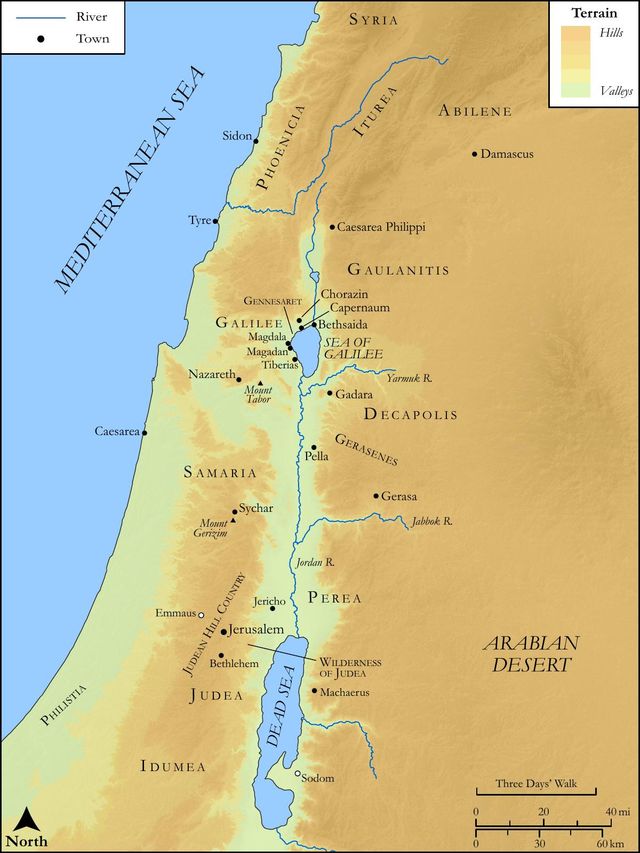
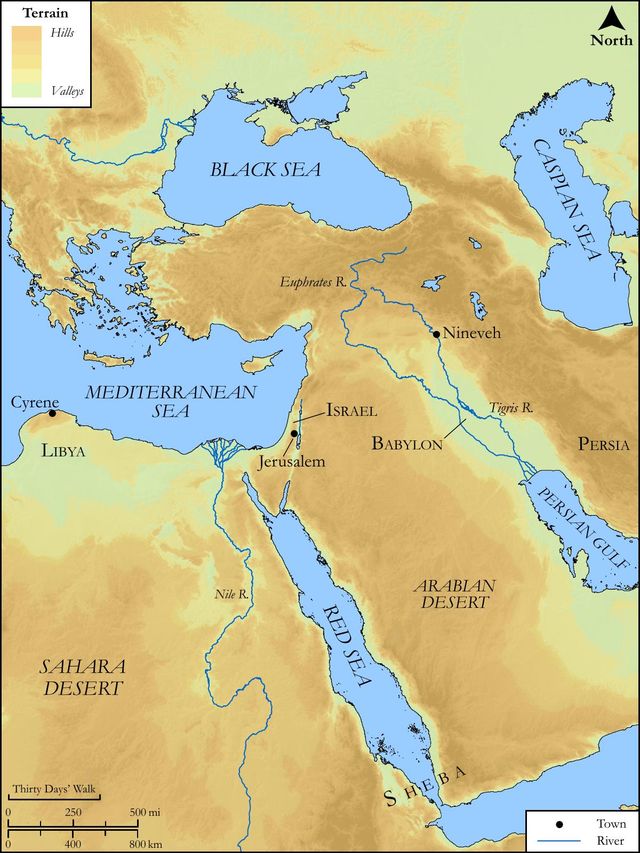
Study this verse
Public-domain commentary
Matthew Henry
From his Commentary on the Whole Bible. Henry comments on passages, not single verses — this entry covers Matthew 10:5–15. His four-level outline is real structure in the source text, so it is rendered as structure.
We have here the instructions that Christ gave to his disciples, when he gave them their commission. Whether this charge was given them in a continued discourse, or the several articles of it hinted to them at several times, is not material; in this he commanded them. Jacob's blessing his sons, is called his commanding them, and with these commands Christ commanded a blessing. Observe,
I.The people to whom he sent them. These ambassadors are directed what places to go to.
1.Not to the Gentiles nor the Samaritans. They must not go into the way of the Gentiles, nor into any road out of the land of Israel, whatever temptations they might have. The Gentiles must not have the gospel brought them, till the Jews have first refused it. As to the Samaritans, who were the posterity of the mongrel people that the king of Assyria planted about Samaria, their country lay between Judea and Galilee, so that they could not avoid going into the way of the Samaritans, but they must not enter into any of their cities. Christ had declined manifesting himself to the Gentiles or Samaritans, and therefore the apostles must not preach to them. If the gospel be hid from any place, Christ thereby hides himself from that place. This restraint was upon them only in their first mission, afterwards they were appointed to go into all the world, and teach all nations.
2.But to the lost sheep of the house of Israel. To them Christ appropriated his own ministry (Mat 15:24), for he was a minister of the circumcision (Rom 15:8): and, therefore, to them the apostles, who were but his attendants and agents, must be confined. The first offer of salvation must be made to the Jews, Act 3:26. Note, Christ had a particular and very tender concern for the house of Israel; they were beloved for the fathers' sakes, Rom 11:28. He looked with compassion upon them as lost sheep, whom he, as a shepherd, was to gather out of the by-paths of sin and error, into which they were gone astray, and in which, if not brought back, they would wander endlessly; see Jer 2:6. The Gentiles also had been as lost sheep, Pe1 2:25. Christ gives this description of those to whom they were sent, to quicken them to diligence in their work, they were sent to the house of Israel (of which number they themselves lately were), whom they could not but pity, and be desirous to help.
II.The preaching work which he appointed them.
He did not send them forth without an errand; no, As ye go, preach, Mat 10:7. They were to be itinerant preachers: wherever they come they must proclaim the beginning of the gospel, saying, The kingdom of heaven is at hand. Not that they must say nothing else, but this must be their text; on this subject they must enlarge: let people know, that the kingdom of the Messiah, who is the Lord from heaven, is now to be set up according to the scriptures; from whence it follows, that men must repent of their sins and forsake them, that they might be admitted to the privileges of that kingdom. It is said (Mar 6:12), they went out, and preached that men should repent; which was the proper use and application of this doctrine, concerning the approach of the kingdom of heaven. They must, therefore, expect to hear more of this long-looked-for Messiah shortly, and must be ready to receive his doctrine, to believe in him, and to submit to his yoke. The preaching of this was like the morning light, to give notice of the approach of the rising sun. How unlike was this to the preaching of Jonah, which proclaimed ruin at hand! Jon 3:4. This proclaims salvation at hand, nigh them that fear God; mercy and truth meet together (Psa 85:9, Psa 85:10), that is, the kingdom of heaven at hand: not so much the personal presence of the king; that must not be doated upon; but a spiritual kingdom which is to be set up, when his bodily presence is removed, in the hearts of men.
Now this was the same that John the Baptist and Christ had preached before. Note, People need to have good truths pressed again and again upon them, and if they be preached and heard with new affections, they are as if they were fresh to us. Christ, in the gospel, is the same yesterday, today, and for ever, Heb 13:8. Afterwards, indeed, when the Spirit was poured out, and the Christian church was formed, this kingdom of heaven came, which was now spoken of as at hand; but the kingdom of heaven must still be the subject of our preaching: now it is come, we must tell people it is come to them, and must lay before them the precepts and privileges of it; and there is a kingdom of glory yet to come, which we must speak of as at hand, and quicken people to diligence from the consideration of that.
III.The power he gave them to work miracles for the confirmation of their doctrine, Mat 10:8.
When he sent them to preach the same doctrine that he had preached, he empowered them to confirm it, by the same divine seals, which could never be set to a lie. This is not necessary now the kingdom of God is come; to call for miracles now is to lay again the foundation when the building is reared. The point being settled, and the doctrine of Christ sufficiently attested, by the miracles which Christ and his apostles wrought, it is tempting God to ask for more signs. They are directed here,
1.To use their power in doing good: not "Go and remove mountains," or "fetch fire from heaven," but, Heal the sick, cleanse the lepers. They are sent abroad as public blessings, to intimate to the world, that love and goodness were the spirit and genius of that gospel which they came to preach, and of that kingdom which they were employed to set up. By this it would appear, that they were the servants of that God who is good and does good, and whose mercy is over all his works; and that the intention of the doctrine they preached, was to heal sick souls, and to raise those that were dead in sin; and therefore, perhaps, that of raising the dead is mentioned; for though we read not of their raising any to life before the resurrection of Christ, yet they were instrumental to raise many to spiritual life.
2.In doing good freely; Freely ye heave received, freely give. Those that had power to heal all diseases, had an opportunity to enrich themselves; who would not purchase such easy certain cures at any rate? Therefore they are cautioned not to make a gain of the power they had to work miracles: they must cure gratis, further to exemplify the nature and complexion of the gospel kingdom, which is made up, not only of grace, but of free grace. Gratia gratis data (Rom 3:24), freely by his grace, Buy medicines without money, and without price, Isa 55:1. And the reason is, because freely you have received. Their power to heal the sick cost them nothing, and, therefore, they must not make any secular advantage to themselves of it. Simon Magus would not have offered money for the gifts of the Holy Ghost, if he had not hoped to get money by them; Act 8:18. Note, The consideration of Christ's freeness in doing good to us, should make us free in doing good to others.
IV.The provision that must be made for them in this expedition; it is a thing to be considered in sending an ambassador, who must bear the charge of the embassy. As to that,
1.They must make no provision for it themselves, Mat 10:9, Mat 10:10. Provide neither gold nor silver. As, on the one hand, they shall not raise estates by their work, so, on the other hand, they shall not spend what little they have of their own upon it. This was confined to the present mission, and Christ would teach them,
(1.)To act under the conduct of human prudence. They were now to make but a short excursion, and were soon to return to their Master, and to their head-quarters again, and, therefore, why should they burthen themselves with that which they would have no occasion for?
(2.)To act in dependence upon Divine Providence. They must be taught to live, without taking thought for life, Mat 6:25, etc. Note, They who go upon Christ's errand, have, of all people, most reason to trust him for food convenient. Doubtless he will not be wanting to those that are working for him. Those whom he employs, as they are taken under special protection, so they are entitled to special provisions. Christ's hired servants shall have bread enough and to spare; while we abide faithful to God and our duty, and are in care to do our work well, we may cast all our other care upon God; Jehovah-jireh, let the Lord provide for us and ours as he thinks fit.
2.They might expect that those to whom they were sent would provide for them what was necessary, Mat 10:10. The workman is worthy of his meat. They must not expect to be fed by miracles, as Elijah was: but they might depend upon God to incline the hearts of those they went among, to be kind to them, and provide for them. Though they who serve at the altar may not expect to grow rich by the altar, yet they may expect to live, and to live comfortably upon it, Co1 9:13, Co1 9:14. It is fit they should have their maintenance from their work. Ministers are, and must be, workmen, labourers, and they that are so are worthy of their meat, so as not to be forced to any other labour for the earning of it. Christ would have his disciples, as not to distrust their God, so not to distrust their countrymen, so far as to doubt of a comfortable subsistence among them. If you preach to them, and endeavour to do good among them, surely they will give you meat and drink enough for your necessities: and if they do, never desire dainties; God will pay you your wages hereafter, and it will be running on in the mean time.
V.The proceedings they were to observe in dealing with any place, Mat 10:11-15.
They went abroad they knew not whither, uninvited, unexpected, knowing none, and known of none; the land of their nativity was to them a strange land; what rule must they go by? what course must they take? Christ would not send them out without full instructions, and here they are.
1.They are here directed how to conduct themselves toward those that were strangers to them; How to do,
(1.)In strange towns and cities: when you come to a town, enquire who in it is worthy.
[1.]It is supposed that there were some such in every place, as were better disposed than others to receive the gospel, and the preachers of it; though it was a time of general corruption and apostasy. Note, In the worst of times and places, we may charitably hope that there are some who distinguish themselves, and are better than their neighbours; some who swim against the stream, and are as wheat among the chaff. There were saints in Nero's household. Enquire who is worthy, who there are that have some fear of God before their eyes, and have made a good improvement of the light and knowledge they have. The best are far from meriting the favour of a gospel offer; but some would be more likely than others to give the apostles and their message a favourable entertainment, and would not trample these pearls under their feet. Note, Previous dispositions to that which is good, are both directions and encouragements to ministers, in dealing with people. There is most hope of the word being profitable to those who are already so well inclined, as that it is acceptable to them; and there is here and there one such.
[2.]They must enquire out such; not enquire for the best inns; public houses were no proper places for them that neither took money with them (Mat 10:9), nor expected to receive any (Mat 10:8); but they must look out for accommodations in private houses, with those that would entertain them well, and expect no other recompence for it but a prophet's reward, an apostle's reward, their praying and preaching. Note, They that entertain the gospel, must neither grudge the expense of it, nor promise themselves to get by it in this world. They must enquire, not who is rich, but who is worthy; not who is the best gentleman, but who is the best man. Note, Christ's disciples, wherever they come, should ask for the good people of the place, and be acquainted with them; when we took God for our God, we took his people for our people, and like will rejoice in its like. Paul in all his travels found out the brethren, if there were any, Act 28:14. It is implied, that if they did enquire who was worthy, they might discover them. They that were better than their neighbours would be taken notice of, and any one could tell them, there lives an honest, sober, good man; for this is a character which, like the ointment of the right hand, betrays itself and fills the house with its odours. Every body knew where the seer's house was, Sa1 9:18.
[3.]In the house of those they found worthy, they must continue; which intimates that they were to make so short a stay at each town, that they needed not change their lodging, but whatever house providence brought them to at first, there they must continue till they left that town. They are justly suspected, as having no good design, that are often changing their quarters. Note, It becomes the disciples of Christ to make the best of that which is, to abide by it, and not be for shifting upon every dislike or inconvenience.
(2.)In strange houses. When they had found the house of one they thought worthy, they must at their entrance salute it. "In those common civilities, be beforehand with people, in token of your humility. Think it not a disparagement, to invite yourselves into a house, nor stand upon the punctilio of being invited. Salute the family, [1.] To draw on further discourse, and so to introduce your message." (From matters of common conversation, we may insensibly pass into that communication which is good to the use of edifying.) [2.] "To try whether you are welcome or not; you will take notice whether the salutation be received with shyness and coldness, or with a ready return. He that will not receive your salutation kindly, will not receive your message kindly; for he that is unskilful and unfaithful in a little, will also be in much, Luk 16:10. [3.] To insinuate yourselves into their good opinion. Salute the family, that they may see that though you are serious, you are not morose." Note, Religion teaches us to be courteous and civil, and obliging to all with whom we have to do. Though the apostles went out backed with the authority of the Son of God himself, yet their instructions were, when they came into a house, not to command it, but to salute it; for love's sake rather to beseech, is the evangelical way, Plm 1:8, Plm 1:9. Souls are first drawn to Christ with the cords of a man, and kept to him by the bands of love, Hos 11:4. When Peter made the first offer of the gospel to Cornelius, a Gentile, Peter was first saluted; see Act 10:25, for the Gentiles courted that which the Jews were courted to.
When they had saluted the family after a godly sort, they must by the return, judge concerning the family, and proceed accordingly. Note, The eye of God is upon us, to observe what entertainment we give to good people and good ministers; if the house be worthy, let your peace come and rest upon it; if not, let it return to you, Mat 10:13. It seems then, that after they had enquired for the most worthy (Mat 10:11), it was possible they might light upon those that were unworthy. Note, Though it is wisdom to hearken to, yet it is folly to rely upon, common report and opinion; we ought to use a judgment of discretion, and to see with our own eyes. The wisdom of the prudent is himself to understand his own way. Now this rule is intended,
First, For satisfaction to the apostles. The common salutation was, Peace be unto you; this, as they used it, was turned into gospel; it was the peace of God, the peace of the kingdom of heaven, that they wished. Now lest they should make a scruple of pronouncing this blessing upon all promiscuously, because many were utterly unworthy of it, this is to clear them of that scruple; Christ tells them that this gospel prayer (for so it was now become) should be put up for all, as the gospel proffer was made to all indefinitely, and that they should leave it to God who knows the heart, and every man's true character, to determine the issue of it. If the house be worthy, it will reap the benefit of your blessing; if now, there is no harm done, you will not lose the benefit of it; it shall return to you, as David's prayers for his ungrateful enemies did, Psa 35:13. Note, It becomes us to judge charitably of all, to pray heartily for all, and to conduct ourselves courteously to all, for that is our part, and then to leave it with God to determine what effect it shall have upon them, for that is his part.
Secondly, For direction to them. "If, upon your salutation, it appear that they are indeed worthy, let them have more of your company, and so let your peace come upon them; preach the gospel to them, peace by Jesus Christ; but if otherwise, if they carry it rudely to you, and shut their doors against you, let your peace, as much as in you lies, return to you. Retract what you have said, and turn your backs upon them; by slighting this, they have made themselves unworthy of the rest of your favours, and cut themselves short of them." Note, Great blessings are often lost by a neglect seemingly small and inconsiderable, when men are in their probation and upon their behaviour. Thus Esau lost his birthright (Gen 25:34), and Saul his kingdom, Sa1 13:13, Sa1 13:14.
2.They are here directed how to carry it towards those that were refusers of them. The case is put (Mat 10:14) of those that would not receive them, nor hear their words. The apostles might think, that now they had such a doctrine to preach, and such a power to work miracles for the confirmation of it, no doubt but they should be universally entertained and made welcome: they are, therefore, told before, that there would be those that would slight them, and put contempt on them and their message. Note, The best and most powerful preachers of the gospel must expect to meet with some, that will not so much as give them the hearing, nor show them any token of respect. Many turn a deaf ear, even to the joyful sound, and will not hearken to the voice of the charmers, charm they never so wisely. Observe, "They will not receive you, and they will not hear your words." Note, Contempt of the gospel, and contempt of gospel ministers, commonly go together, and they will either of them be construed into a contempt of Christ, and will be reckoned for accordingly.
Now in this case we have here,
(1.)The directions given to the apostles what to do. They must depart out of that house or city. Note, The gospel will not tarry long with those that put it away from them. At their departure they must shake off the dust of their feet,
[1.]In detestation of their wickedness; it was so abominable, that it did even pollute the ground they went upon, which must therefore be shaken off as a filthy thing. The apostles must have no fellowship nor communion with them; must not so much as carry away the dust of their city with them. The work of them that turn aside shall not cleave to me, Psa 101:3. The prophet was not to eat or drink in Bethel, Kg1 13:9.
[2.]As a denunciation of wrath against them. It was to signify, that they were base and vile as dust, and that God would shake them off. The dust of the apostles' feet, which they left behind them, would witness against them, and be brought in as evidence, that the gospel had been preached to them, Mar 6:11. Compare Jam 5:3. See this practised, Act 13:51, Act 18:6. Note, They who despise God and his gospel shall be lightly esteemed.
(2.)The doom passed upon such wilful recusants, Mat 10:15. It shall be more tolerable, in the day of judgment, for the land of Sodom, as wicked a place as it was. Note,
[1.]There is a day of judgment coming, when all those that refused the gospel will certainly be called to account for it; however they now make a jest of it. They that would not hear the doctrine that would save them, shall be made to hear the sentence that will ruin them. Their judgment is respited till that day.
[2.]There are different degrees of punishment in that day. All the pains of hell will be intolerable; but some will be more so than others. Some sinners sink deeper into hell than others, and are beaten with more stripes.
[3.]The condemnation of those that reject the gospel, will in that day be severer and heavier than that of Sodom and Gomorrah. Sodom is said to suffer the vengeance of eternal fire, Jde 1:7. But that vengeance will come with an aggravation upon those that despise the great salvation. Sodom and Gomorrah were exceedingly wicked (Gen 13:13), and that which filled up the measure of their iniquity was, that they received not the angels that were sent to them, but abused them (Gen 19:4, Gen 19:5), and hearkened not to their words, Mat 10:14. And yet it will be more tolerable for them than for those who receive not Christ's ministers and hearken not to their words. God's wrath against them will be more flaming, and their own reflections upon themselves more cutting. Son, remember I will sound most dreadfully in the ears of such as had a fair offer made them of eternal life, and chose death rather. The iniquity of Israel, when God sent them his servants the prophets, is represented as, upon that account, more heinous than the iniquity of Sodom (Eze 16:48, Eze 16:49), much more now he sent them his Son, the great Prophet.
Historical interpretation
Eleven Centuries of Reception
17 surviving comments on this verse. Each one is dated, so this reads as a timeline rather than a list.
Select a marker to jump to its quote. Markers stagger vertically where authors wrote within a few decades of each other.
"But," say they, "God is `good, 'and `most good, ' and `pitiful-hearted, 'and `a pitier, 'and `abundant in pitiful-heartedness, ' which He holds `dearer than all sacrifice, ' `not thinking the sinner's death of so much worth as his repentance', `a Saviour of all men, most of all of believers.' And so it will be becoming for `the sons of God' too to be `pitiful-hearted' and `peacemakers; ' `giving in their turn just as Christ withal hath given to us; ' `not judging, that we be not judged.' For `to his own lord a man standeth or falleth; who art thou, to judge another's servant? ' `Remit, and remission shall be made to thee.'"
The promulgation of the Law deserved also the first preaching of the Gospel; and Israel was to have less excuse for its crime, as it had experienced more care in being warned.
Though they are here called sheep, yet they raged against Christ with the tongues and throats of wolves and vipers.
The exercise of the Lord's power is wholly entrusted to the Apostles, that they who were formed in the image of Adam, and the likeness of God, should now obtain the perfect image of Christ; and whatever evil Satan had introduced into the body of Adam, this they should now repair by communion with the Lord's power.
All the power possessed by the Lord is bestowed upon the apostles! Those who were prefigured in the image and likeness of God in Adam have now received the perfect image and likeness of Christ. They have been given powers in no way different from those of the Lord. Those once earthbound now become heaven-centered. They will proclaim that the kingdom of heaven is at hand, that the image and likeness of God are now appropriated in the company of truth, so that all the holy ones who have been made heirs of heaven may reign with the Lord. Let them cure the sick, raise the dead, cleanse the lepers and cast out devils. Whatever impairment Adam’s body had incurred from being goaded on by Satan, let the apostles wipe away through their sharing in the Lord’s power. And that they may fully obtain the likeness of God according to the prophecy in Genesis, they are ordered to give freely what they freely have received. Thus a gift freely bestowed should be freely dispensed.
Observe the propriety of the time in which they are sent. After they had seen the dead raised, the sea rebuked, and other like wonders, and had had both in word and deed sufficient proof of His excellent power, then He sends them.
Also they were sent to the Jews first, in order that being trained in Judæa, as in a palæstra, they might enter on the arena of the world to contend; thus He taught them like weak nestlings to fly.
Also that they should not suppose that they were hated of Christ because they had reviled Him, and branded Him as demoniac, He sought first their cure, and withholding His disciples from all other nations, He sent this people physicians and teachers; and not only forbid them to preach to any others before the Jews, but would not that they should so much as approach the way that led to the Gentiles; Go not into the way of the Gentiles. And because the Samaritans, though more readily disposed to be converted to the faith, were yet at enmity with the Jews, He would not suffer the Samaritans to be preached to before the Jews.
From these then He diverts his disciples, and sends them to the children of Israel, whom He calls perishing sheep, not straying; in every way contriving an apology for them, and drawing them to Himself.
Behold the greatness of their ministry, behold the dignity of the Apostles. They are not to preach of any thing that can be an object of sense, as Moses and the Prophets did; but things new and unlooked for; those preached earthly goods, but these the kingdom of heaven and all the goods that are there.
But afterwards they ceased when a reverence for the faith was universally established. Or, if they were continued at all, they were few and seldom; for it is usual with God to do such things when evil is increased, then He shows forth His power.
Observe how He is as careful that they should be upright in moral virtue, as that they should have the miraculous powers, showing that miracles without these are nought. Freely ye have received, seems a check upon their pride; freely give, a command to keep themselves pure from filthy lucre. Or, that what they should do might not be thought to be their own benevolence, He says, Freely ye have received; as much as to say; Ye bestow nothing of your own on those ye relieve; for ye have not received these things for money, nor for wages of labour; as ye have received them, so give to others; for indeed it is not possible to receive a price equal to their value.
But let us see whither, and to whom, He sends them.
"These twelve," it is said, "Jesus sent forth."
What manner of men were these? The fishermen, the publicans: for indeed four were fishermen and two publicans, Matthew and James, and one was even a traitor. And what saith He to them? He presently charges them, saying,
"Go not into the way of the Gentiles, and into any city of the Samaritans enter ye not; but go rather to the lost sheep of the house of Israel."
"For think not at all," saith He, "because they insult me, and call me demoniac, that I hate them and turn away from them. Nay, as I sought earnestly to amend them in the first place, so keeping you away from all the rest, to them do I send you as teachers and physicians. And I not only forbid you to preach to others before these, but I do not suffer you so much as to touch upon the road that leads thither, nor to enter into such a city." Because the Samaritans too are in a state of enmity with the Jews. And yet it was an easier thing to deal with them, for they were much more favorably disposed to the faith; but the case of these was more difficult. But for all this, He sends them on the harder task, indicating his guardian care of them, and stopping the mouths of the Jews, and preparing the way for the teaching of the apostles, that people might not hereafter blame them for "entering in to men uncircumcised," and think they had a just cause for shunning and abhorring them. And he calls them "lost," not "stray," "sheep," in every way contriving how to excuse them, and whining their mind to himself.
"And as ye go," saith He, "preach, saying, The kingdom of Heaven is at hand."
Seest thou the greatness of their ministry? Seest thou the dignity of apostles? Of nothing that is the object of sense are they commanded to speak, nor such as Moses spake of, and the prophets before them, but of some new and strange things. For while the former preached no such things, but earth, and the good things in the earth, these preached the kingdom of Heaven, and whatever is there.
And not from this circumstance only were these the greater, but also from their obedience: in that they shrink not, nor are they backward, like those of old; but, warned as they are of perils, and wars, and of those insupportable evils, they receive with great obedience His injunctions, as being heralds of a kingdom.
"And what marvel," saith one, "if having nothing to preach that is dismal or grievous, they readily obeyed?" What sayest thou? nothing grievous enjoined them? Dost thou not hear of the prisons, the executions, the civil wars, the hatred of all men? all which, He said a little while after, they must undergo. True, as to other men, He sent them to be procurers and heralds of innumerable blessings: but for themselves, He said and proclaimed beforehand, that they were to suffer terrible and incurable ills.
After this, to make them trustworthy, He saith,
"Heal the sick, cleanse the lepers, cast out devils: freely ye have received, freely give."
See how He provides for their conduct, and that no less than for their miracles, implying that the miracles without this are nothing. Thus He both quells their pride by saying, "Freely ye have received, freely give;" and takes order for their being clear of covetousness. Moreover, lest it should be thought their own work, and they be lifted up by the signs that were wrought, He saith, "freely ye have received." "Ye bestow no favor on them that receive you, for not for a price did ye receive these things, nor after toil: for the grace is mine. In like manner therefore give ye to them also, for there is no finding a price worthy of them."
This passage does not contradict the command which He gave afterwards, Go and teach all nations; for this was before His resurrection, that was after. And it behoved the coming of Christ to be preached to the Jews first, that they might not have any just plea, or say that they were rejected of the Lord, who sent the Apostles to the Gentiles and Samaritans.
Figuratively; Herein we who bear the name of Christ are commanded not to walk in the way of the Gentiles, or the error of the heretics, but as we are separate in religion, that we be also separate in our life.
Lest peasants untaught and illiterate, without the graces of speech, should obtain credit with none when they announced the kingdom of heaven, He gives them power to do the things above mentioned, that the greatness of the miracles might approve the greatness of their promises.
And because spiritual gifts are more lightly esteemed when money is made the means of obtaining them, He adds a condemnation of avarice; Freely ye have received, freely give; I your Master and Lord have imparted these to you without price, do you therefore give them to others in like manner, that the free grace of the Gospel be not corrupted.
[Daniel 5:17] "To this Daniel made answer before the king, saying: 'Thy gifts be unto thyself, and bestow the presents of thy house upon someone else...'" We should follow the example of a man like Daniel, who despised the honor and gifts of a king, and who without any reward even in that early day followed the Gospel injunction: "Freely have ye received, freely give." (Matthew 10:8) And besides, when one is announcing sad tidings, it is unbecoming for him willingly to accept gifts.
(Verse 7, 8.) And as you go, preach, saying: 'The kingdom of heaven is at hand.' Heal the sick, raise the dead, cleanse the lepers, cast out demons. Freely you have received, freely give. And let no one among the rural and uneducated people doubt, for those who promise the kingdom of heaven are given the power to heal the sick, cleanse the lepers, and cast out demons, in order to prove the greatness of the promises by the greatness of the signs. And because spiritual gifts (if the reward is of medium value) always become less valuable, condemnation of greed is added.
Freely you have received, freely give. I, as the master and Lord, have bestowed this upon you without cost, and you give without cost, so that the grace of the Gospel is not corrupted.
Lest anyone hold as unworthy of belief these rough men bereft of eloquence, unschooled and unlettered, as they promise the kingdom of heaven, Jesus empowered them to cure the sick, cleanse the lepers and cast out devils. Many signs would confirm the promises made. And because spiritual gifts are defiled if connected with rewards, Jesus adds a condemnation of avarice: “Freely you have received, freely give.” I, your Lord and Master, have given this to you without cost, and you should give, lest the grace of the gospel be corrupted.
The sick are the slothful who have not strength to live well; the lepers are the unclean in sin and carnal delights; the dæmoniacs are they that are given up under the power of the Devil.
(Hom. in Ev. iv. 1.) Or He would be first preached to Judæa and afterwards to the Gentiles, in order that the preaching of the Redeemer should seem to seek out foreign lands only because it had been rejected in His own. There were also at that time some among the Jews who should be called, and among the Gentiles some who were not to be called, as being unworthy of being renewed to life, and yet not deserving of the aggravated punishment which would ensue upon their rejection of the Apostles' preaching.
(ubi sup.) Miracles also were granted to the holy preachers, that the power they should show might be a pledge of the truth of their words, and they who preached new things should also do new things; wherefore it follows, Heal the sick, raise the dead, cleanse the lepers, cast out dæmons.
(Hom. in Ev. xxix. 4.) These signs were necessary in the beginning of the Church; the faith of the believers must be fed with miracles, that it might grow.
(ubi sup.) The Holy Church daily doth spiritually, what it then did materially by the Apostles; yea, things far greater, inasmuch as she raises and cures souls and not bodies.
(Hom. in Ev. iv. 4.) For He knew before that there would be some that would turn the gift of the Spirit which they had received into merchandize, and pervert the power of miracles into an instrument of their covetousness.
Hence also miracles were added to the holy preachers, so that the power displayed might give faith to their words, and that those who preached new things might do new things, as is added in this same reading: "Heal the sick, raise the dead, cleanse the lepers, cast out demons." When the world was flourishing, when the human race was increasing, when the flesh was subsisting long in this life, when the abundance of things was overflowing, who upon hearing would believe that there was another life? Who would prefer invisible things to visible things? But when the sick were returning to health, when the dead were rising to life, when lepers were receiving cleanliness of flesh, when demoniacs were snatched from the power of unclean spirits, with so many visible miracles performed, who would not believe what he heard about invisible things? For visible miracles shine forth for this purpose: that they may draw the hearts of those who see them to faith in invisible things, so that through what is done wondrously on the outside, what is within may be perceived to be far more wondrous. Hence now also, when the number of the faithful has increased, there are many within the holy Church who hold to a life of virtues but do not have the signs of virtues, because a miracle is shown outwardly in vain if what it should work inwardly is lacking. For according to the voice of the Teacher of the Gentiles: "Tongues are for a sign not to believers, but to unbelievers." Hence also that same distinguished preacher, amidst the words of his preaching, raised by praying, in the sight of all the unbelievers, Eutychus who had fallen asleep and fallen from the window and was completely extinguished from life. Coming to Malta, and knowing the island was full of unbelievers, he healed by praying the father of Publius who was afflicted with dysentery and fevers. But his companion on his journey and helper in his holy preaching, Timothy, who was growing weak from a stomach ailment, he does not cure by a word but restores by the art of medicine, saying: "Use a little wine, for your stomach and your frequent infirmities." Why then does he who saves an unbelieving sick person with a single prayer not also strengthen his sick companion with prayer? Because surely that one who was not inwardly alive needed to be healed outwardly through a miracle, so that through what the external power displayed, the internal virtue might animate him to life. But to the faithful sick companion, outward signs did not need to be shown, since he was living healthily within.
But having granted the power of preaching, having granted the miracles of virtues, let us hear what our Redeemer adds: Freely you have received, freely give. For he foreknew that some would bend this very gift of the received Spirit to the use of commerce, and turn the signs of miracles to the service of avarice. Hence it is that Simon Magus, seeing miracles performed through the laying on of hands, wished to obtain the gift of the Holy Spirit with money, namely so that he might sell more wickedly what he had acquired wrongly. Hence our Redeemer, having made a whip of cords, drove the crowds from the temple and overturned the seats of those selling doves. Indeed, to sell doves is to give the laying on of hands by which the Holy Spirit is received, not for the merit of life, but for payment. But there are some who indeed do not receive rewards of money from ordination, yet bestow sacred orders for human favor, and from that very generosity seek only the recompense of praise. These certainly do not bestow freely what was freely received, because from the service of holiness they have rendered, they seek the coin of favor. Hence the prophet spoke well when describing the just man, saying: Who shakes his hands free from every gift. For he does not say: Who shakes his hands from a gift, but added from every, because one thing is a gift from service, another a gift from the hand, another a gift from the tongue. A gift from service is deference unduly rendered, a gift from the hand is money, a gift from the tongue is favor. Therefore he who bestows sacred orders shakes his hands free from every gift when in divine matters he seeks not only no money, but also no human favor.
But why do we speak of these things, when we still see many burdened by more atrocious deeds? For I speak to you priests with grief, because we have learned that some of you perform ordinations for payments, selling spiritual grace and accumulating temporal gains from the iniquities of others along with the harm of sin. Why then does the voice of the Lord commanding not return to your memory, saying: Freely you have received, freely give? Why do you not recall before the eyes of your mind that our Redeemer, entering the temple, overturned the seats of those selling doves and poured out the money of the money-changers? For who are those in the temple of God today who sell doves, if not those who in the Church receive payment for the imposition of hands? Through which imposition, namely, the Holy Spirit is given from heaven. Therefore the dove is sold, because the imposition of hands, through which the Holy Spirit is received, is offered for a price. But our Redeemer overturned the seats of those selling doves, because he destroys the priesthood of such merchants. For hence it is that the sacred canons condemn the simonian heresy, and command that those be deprived of the priesthood who seek payment for bestowing ordinations.
Also He willed to be betrayed by a disciple, that you when betrayed by your intimate might bear patiently that your judgment has erred, that your favours have been thrown away.
The kingdom of heaven is here said to draw nigh by the faith in the unseen Creator which is bestowed upon us, not by any movement of the visible elements. The saints are rightly denoted by the heavens, because they contain God by faith, and love Him with affection.
Nothing so befits a teacher as humility and non-possessiveness. He indicates these two virtues here by saying, "freely ye have received." Do not think highly of yourselves that you have such good things to give, for you have received them as a gift and by grace. But as you are humble-minded, so also do not be lovers of money. For He says, "freely give." And finally He eradicates the root of all evils, saying:
(non occ.) Because the manifestation of the Spirit, as the Apostle speaks, is given for the profit of the Church, after bestowing His power on the Apostles, He sends them that they may exercise this power for the good of others; These twelve Jesus sent forth.
(non occ.) When He sends them, He teaches them whither they should go, what they should preach, and what they should do. And first, whither they should go; Giving them commandment, and saying, Go ye not into the way of the Gentiles, and into any city of the Samaritans enter ye not; hut go ye rather to the lost sheep of the house of Israel.
(ap. Anselm.) The Samaritans were Gentiles who had been settled in the land of Israel by the king of Assyria after the captivity which he made. They had been driven by many terrors to turn to Judaism, and had received circumcision and the five books of Moses, but renouncing every thing else; hence there was no communication between the Jews and the Samaritans.
(non occ.) Having told them to whom they should go, He now introduces what they should preach; Go and preach, saying, The kingdom of heaven is at hand.
(non occ.) This He says, that Judas who had the bag might not use the above power for getting money; a plain condemnation of the abomination of the simoniacal heresy.
Continue studying Matthew 10:8 across the web’s major study libraries — every link below opens this exact verse, chapter, or book on the destination site.
Read & Compare
 BibleGatewayThis verse in more than 200 translations and 70 languages.
 Bible.comThe YouVersion reader — hundreds of translations, reading plans, and highlights.
 ESV.orgCrossway's official English Standard Version reader.
 NET BibleThe NET translation with 60,000+ translators' notes on every rendering decision.
 STEP BibleTyndale House's free study tool — original text, vocabulary, and scholarly resources.
 BibliaLogos Bible Software's free web reader.
 USCCBThe New American Bible (Revised Edition) with the U.S. bishops' study notes.
Commentaries
 BibleHub CommentariesDozens of classic commentaries on this verse, gathered on one page.
 StudyLightMore than 100 commentary sets — the largest collection on the web.
 BibleRefPlain-English commentary on what this verse means, verse by verse.
 Enduring WordDavid Guzik's free commentary on this chapter, widely used by Bible teachers.
 Bible Study ToolsVerse commentary alongside Greek and Hebrew study aids.
Original Language & Research
- BibleHub InterlinearThe verse word by word — original language, transliteration, and English.
- BibleHub LexiconEvery word's original-language definition and Strong's entry.
 Blue Letter BibleDeep-study tools — Strong's numbers, concordance, and word studies.
 CNTR CollationThe earliest Greek manuscripts of this verse, collated letter by letter.
Sermons, Hymns & Audio


TrulyRandomVerse is not affiliated with these sites and doesn’t control their content. They’re linked because they’re genuinely useful.
Summary
Matthew 10:8 encapsulates Jesus' commissioning of His twelve apostles, empowering them with divine authority to perform miraculous signs—healing the sick, cleansing lepers, raising the dead, and casting out demons—as tangible demonstrations of the Kingdom of God's arrival. This extraordinary power, freely bestowed upon them, was to be exercised with the same boundless generosity, underscoring that God's gifts are given by grace and are to be shared without expectation of personal gain or payment.
Context
ShowHideLiterary Context
This verse is a pivotal part of Jesus' detailed instructions to His twelve disciples before sending them out on their first independent mission. It immediately follows the account of Jesus' compassion for the harassed and helpless crowds, likening them to a harvest ripe for laborers (Matthew 9:35-38). Having identified the need, Jesus then calls and empowers His chosen apostles (Matthew 10:1-4), giving them specific authority over unclean spirits and diseases. The preceding verses (Matthew 10:5-7) outline their initial geographical scope (to the lost sheep of Israel) and their core message ("The kingdom of heaven is at hand"). Thus, Matthew 10:8 serves as the practical manifestation of the authority granted in Matthew 10:1 and the demonstration accompanying their proclamation of the Kingdom. The subsequent verses (Matthew 10:9-15) provide further guidance on their conduct, provision, and response to rejection, reinforcing the self-sacrificial nature of their mission.
Historical & Cultural Context
In first-century Judea, illness, especially leprosy, and demon possession were often seen not merely as physical ailments but as signs of divine judgment or spiritual defilement. Leprosy, in particular, rendered individuals ritually unclean and socially ostracized, forcing them to live apart from the community (Leviticus 13-14). The ability to heal such conditions, and especially to raise the dead, was considered a divine prerogative, a sign of God's direct intervention and power, often associated with prophetic figures like Elijah and Elisha in the Old Testament. Casting out demons was also a powerful demonstration of authority over malevolent spiritual forces, a common belief in that era. The concept of "freely ye have received, freely give" challenged the prevailing practices of some religious leaders who might have sought personal gain from their spiritual services or teachings. It aligned with the Jewish principle of tzedakah (righteous giving) but extended it to the realm of miraculous power, emphasizing that divine gifts are not commodities to be bought or sold.
Key Themes
ShowHideMatthew 10:8 powerfully contributes to several key themes within the Gospel of Matthew and the broader biblical narrative. Firstly, it highlights the authority of Jesus to delegate His own power to His disciples, signifying the extension of His ministry through His followers. Secondly, the miracles performed—healing, cleansing, raising, and casting out—are signs of the Kingdom of God, demonstrating its active breaking into the world and God's sovereign rule over sickness, death, and evil (Matthew 12:28). Thirdly, the command "freely ye have received, freely give" establishes a foundational principle of grace and stewardship in ministry. It underscores that divine gifts are unmerited and are to be administered with selfless generosity, reflecting the character of God Himself (2 Corinthians 9:7). This theme of gracious giving is central to the Christian understanding of service and the distribution of spiritual gifts, emphasizing that ministry is a response to God's prior generosity, not a means of personal enrichment.
Exposition and Analysis
ShowHideKey Word Analysis
ShowHideThis word, derived from a root meaning "to wait upon menially," signifies "to relieve (of disease)." It implies a devoted, caring service that results in restoration to health. In this context, it emphasizes the compassionate and restorative nature of the disciples' ministry, mirroring Jesus' own acts of healing.
Meaning "to waken" or "to rouse," this verb is used literally for awakening from sleep or figuratively for rising from obscurity, inactivity, or, most profoundly here, from death. Its inclusion in the list of powers granted to the disciples highlights the extraordinary, life-giving authority they were given, pointing to the ultimate triumph over death through God's power.
This adverb means "gratuitously," "without cost," or "as a gift." It strongly emphasizes that the power and authority the disciples received were unearned and unmerited. Consequently, their exercise of this power was to be without financial charge or expectation of personal recompense, purely out of generosity and grace.
Verse Breakdown
ShowHide"Heal the sick, cleanse the lepers, raise the dead, cast out devils:"
This opening clause is a series of four imperative commands, directly delegating Jesus' own demonstrated powers to His disciples. Each action addresses a profound human need and a manifestation of evil or brokenness in the world: physical infirmity, social ostracization due to disease, the ultimate enemy of death, and spiritual oppression by demonic forces. The progression from general sickness to the most extreme cases (death, demonic possession) underscores the comprehensive nature of the authority granted, signifying the arrival of God's Kingdom with power to overcome all forms of suffering and evil.
"freely ye have received,"
This phrase serves as the theological basis for the subsequent command. It highlights the nature of the disciples' empowerment: it was a pure gift, undeserved and unearned. The divine authority and miraculous abilities were not a result of their merit, training, or payment, but flowed solely from Jesus' gracious bestowal. This emphasizes the concept of grace as the foundation of their ministry.
"freely give."
This is the direct command that flows from the previous statement. Because the disciples received these extraordinary gifts without cost, they are commanded to exercise them without charging others or seeking personal profit. This principle establishes a standard of selfless, grace-motivated ministry, ensuring that the focus remains on God's generosity and the needs of the people, rather than on the personal gain of the minister. It underscores that divine power is a conduit of God's grace, not a commodity.
Literary Devices
ShowHideMatthew 10:8 employs several potent literary devices. The most prominent is Parallelism through the rapid succession of four imperative verbs ("Heal," "cleanse," "raise," "cast out") followed by their direct objects. This creates a powerful, rhythmic list that emphasizes the breadth and scope of the delegated authority. The use of the Imperative Mood throughout the first clause ("Heal... cleanse... raise... cast out... give") conveys the authoritative nature of Jesus' commission, leaving no doubt about the disciples' mandate. Furthermore, the verse exhibits a form of Chiasmus or Antithesis in its second half: "freely ye have received, freely give." The repetition of "freely" (dōreán) at the beginning and end of this phrase, combined with the contrasting actions of "receiving" and "giving," creates a memorable and impactful ethical principle, reinforcing the reciprocal nature of grace in ministry.
Theological and Thematic Connections
ShowHideMatthew 10:8 is a profound theological statement on the nature of divine power, grace, and ministry. It reveals God's compassionate heart for humanity's suffering and His active intervention through His chosen agents. The delegation of miraculous power to the disciples signifies that the Kingdom of God is not merely a future hope but a present reality breaking into the world, demonstrating God's sovereign rule over all forms of brokenness—physical, spiritual, and even death itself. The core principle, "freely ye have received, freely give," establishes a foundational ethic for all Christian service. It teaches that all spiritual gifts, abilities, and opportunities for ministry are unmerited blessings from God, and therefore, they are to be stewarded and exercised with the same selfless generosity that characterized their reception. This principle guards against commercialism in ministry, emphasizing that the power of God is a gift of grace, not a commodity to be exploited for personal gain. It calls believers to reflect the boundless generosity of God in their service to others.
Reflection and Application
ShowHideMatthew 10:8 serves as a timeless directive for all who follow Christ, extending beyond the original twelve apostles to every believer empowered by the Holy Spirit. While the specific miraculous gifts may manifest differently across individuals and eras, the underlying principle of receiving by grace and giving by grace remains paramount. This verse challenges us to examine the source of our abilities, resources, and opportunities for service, recognizing them as divine endowments rather than personal achievements. It then compels us to consider our motivation for ministry: Are we serving out of a genuine desire to bless others, reflecting God's selfless love, or are we subtly seeking personal recognition, financial gain, or any other form of self-aggrandizement? True Christian service, as exemplified by Jesus and commanded to His disciples, is characterized by a radical generosity that mirrors the unmerited grace we have received. It calls us to use our spiritual gifts, talents, and material possessions not for accumulation, but for the edification of the church and the advancement of God's Kingdom, freely sharing the blessings God has so freely poured into our lives.
Questions for Reflection
ShowHideFAQ
ShowHideDoes the command to "heal the sick, cleanse the lepers, raise the dead, cast out devils" apply to all believers today?
ShowHideWhile the specific, comprehensive scope of miraculous authority granted to the twelve apostles in Matthew 10:8 was unique to their foundational mission, the New Testament teaches that God continues to work miracles through believers. The Holy Spirit distributes various spiritual gifts, including gifts of healing and working miracles (1 Corinthians 12:9-10), to equip the church for ministry. Therefore, while not every believer will necessarily raise the dead or cleanse lepers, the underlying principle of God empowering His people to demonstrate His Kingdom's reality and compassion remains. All believers are called to pray for the sick, confront spiritual darkness, and be instruments of God's redemptive power in ways appropriate to their gifting and calling, always remembering that the power originates from God, not from themselves.
What does "freely ye have received, freely give" mean for modern Christian ministry and financial support?
ShowHideThis principle is foundational for the ethics of Christian ministry. It means that divine gifts and spiritual services (like healing, teaching, or pastoral care) should not be commodified or sold. Ministers should not exploit their spiritual authority or gifts for personal financial gain. However, this does not preclude ministers from receiving legitimate financial support for their labor, as the Bible also teaches that "the laborer is worthy of his wages" (1 Timothy 5:18) and that those who preach the gospel should "get their living from the gospel" (1 Corinthians 9:14). The key distinction is between selling spiritual gifts (forbidden) and receiving support to enable full-time ministry (permitted). The emphasis of Matthew 10:8 is on the selfless, grace-driven nature of ministry, ensuring that the focus remains on God's generosity and the needs of others, rather than on personal profit or the commercialization of sacred things.
Christ-Centered Fulfillment
ShowHideMatthew 10:8 finds its ultimate fulfillment and deepest meaning in the person and work of Jesus Christ Himself. The powers delegated to the disciples—healing, cleansing, raising, and casting out demons—were precisely the signs that characterized Jesus' own ministry, demonstrating that the Kingdom of God had indeed arrived in Him (Luke 7:22). He was the one who freely healed every disease and sickness (Matthew 4:23-24), cleansed the lepers (Matthew 8:2-4), raised the dead (John 11:43-44), and cast out countless demons (Mark 1:34). More profoundly, Jesus is the ultimate embodiment of "freely ye have received, freely give." He, who was God, freely laid aside His divine prerogatives (Philippians 2:6-8), freely offered Himself as the spotless Lamb of God to take away the sin of the world (John 1:29), and freely gives eternal life to all who believe (Romans 6:23). The disciples' commission was a participation in Christ's ongoing redemptive mission, empowered by His Spirit, to extend the free gift of salvation and the tangible blessings of His Kingdom to a broken world. Believers today, indwelt by the same Spirit, continue to receive grace upon grace from Christ (John 1:16) and are called to freely give of themselves and their resources, reflecting the boundless, self-giving love of their Savior.