


Matthew 10:1
Bible text: King James Version (1769 Blayney text) · Public domain
Bible text: King James Version with Strong's numbers · Public domain
Bible text: Berean Standard Bible · Public domain
Bible text: American Standard Version (1901) · Public domain
Bible text: World English Bible, Messianic edition · Public domain
Bible text: Geneva Bible (1599) · Public domain
Bible text: Young's Literal Translation · Public domain
- ΚαὶKaiAndG2532CONJConjunction
- προσκαλεσάμενοςproskalesamenoshaving summonedG4341V-ADP-NSMVerb Aorist Middle Deponent Participle Nominative Singular Masculine
- τοὺςtoustheG3588T-APMDefinite article Accusative Plural Masculine
- δώδεκαdōdekatwelveG1427A-NUIAdjective
- μαθητὰςmathētasdisciplesG3101N-APMNoun Accusative Plural Masculine
- αὐτοῦautouof HimG846P-GSMPersonal pronoun Genitive Singular Masculine
- ἔδωκενedōkenHe gaveG1325V-AAI-3SVerb Aorist Active Indicative 3rd Singular
- αὐτοῖςautoisto themG846P-DPMPersonal pronoun Dative Plural Masculine
- ἐξουσίανexousianauthorityG1849N-ASFNoun Accusative Singular Feminine
- πνευμάτωνpneumatōnover spiritsG4151N-GPNNoun Genitive Plural Neuter
- ἀκαθάρτωνakathartōnuncleanG169A-GPNAdjective Genitive Plural Neuter
- ὥστεhōsteso asG5620CONJConjunction
- ἐκβάλλεινekballeinto cast outG1544V-PANVerb Present Active Infinitive
- αὐτὰautathemG846P-APNPersonal pronoun Accusative Plural Neuter
- καὶkaiandG2532CONJConjunction
- θεραπεύεινtherapeueinto healG2323V-PANVerb Present Active Infinitive
- πᾶσανpasaneveryG3956A-ASFAdjective Accusative Singular Feminine
- νόσονnosondiseaseG3554N-ASFNoun Accusative Singular Feminine
- καὶkaiandG2532CONJConjunction
- πᾶσανpasaneveryG3956A-ASFAdjective Accusative Singular Feminine
- μαλακίανmalakiansicknessG3119N-ASFNoun Accusative Singular Feminine
English is a literal word-by-word gloss of the Greek, not the KJV's wording. Why?
This is the original text the KJV's translators worked from — each Greek word with its own literal English meaning in this verse, prepared by scholars at Tyndale House, Cambridge. The KJV translates whole sentences, not word by word, so its wording differs: one Greek word can become several English words, and the KJV may choose “charity” where the gloss reads “love”. Both are faithful — they answer different questions. For the KJV's own rendering, switch to the KJV text.
Details
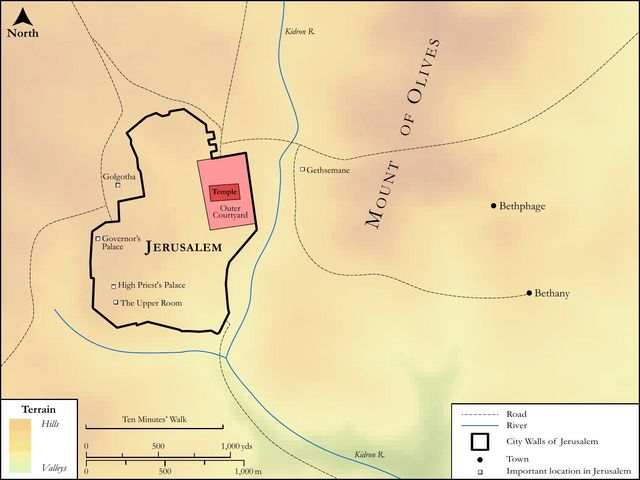
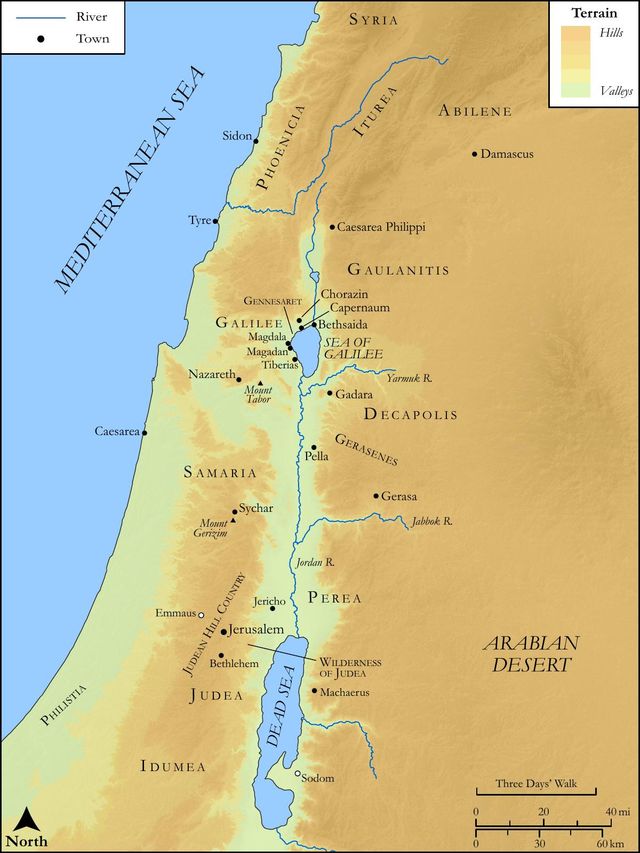
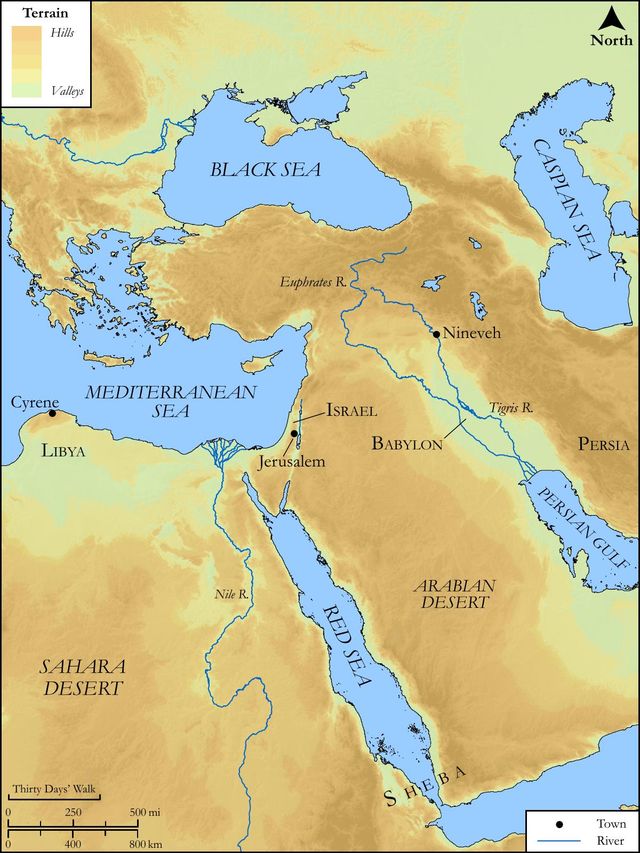
See on the biblical-era maps
Study this verse
Public-domain commentary
Matthew Henry
From his Commentary on the Whole Bible. Henry comments on passages, not single verses — this entry covers Matthew 10:1–4. His three-level outline is real structure in the source text, so it is rendered as structure.
Here we are told, I. Who they were that Christ ordained to be his apostles or ambassadors; they were his disciples, Mat 10:1. He had called them some time before to be disciples, his immediate followers and constant attendants, and he then told them that they should be made fishers of men, which promise he now performed. Note, Christ commonly confers honours and graces by degrees; the light of both, like that of the morning, shines more and more. All this while Christ had kept these twelve,
1.In a state of probation. Though he knows what is in man, though he knew from the first what was in them (Joh 6:70), yet he took this method to give an example to his church. Note, The ministry being a great trust, it is fit that men should be tried for a time, before they are entrusted with it. Let them first be proved, Ti1 3:10. Therefore, hands must not be laid suddenly on any man, but let him first be observed as a candidate and probationer, a proposant (that is the term the French churches use), because some men's sins go before, others follow, Ti1 5:22.
2.In a state of preparation. All this while he had been fitting them for this great work. Note, Those whom Christ intends for, and calls to, any work, he first prepares and qualifies, in some measure, for it. He prepared them,
(1.)By taking them to be with him. Note, The best preparative for the work of the ministry, is an acquaintance and communion with Jesus Christ. They that would serve Christ, must first be with him (Joh 12:26). Paul had Christ revealed, not only to him, but in him, before he went to preach him among the Gentiles, Gal 1:16. By the lively acts of faith, and the frequent exercise of prayer and meditation, that fellowship with Christ must be maintained and kept up, which is a requisite qualification for the work of the ministry.
(2.)By teaching them; they were with him as scholars or pupils, and he taught them privately, besides the benefit they derived from his public preaching; he opened the scriptures to them, and opened their understandings to understand the scriptures: to them it was given to know the mysteries of the kingdom of heaven, and to them they were made plain. Note, They that design to be teachers must first be learners; they must receive, that they may give; they must be able to teach others, Ti2 2:2. Gospel truths must be first committed to them, before they be commissioned to be gospel ministers. To give men authority to teach others, that have not an ability, is but a mockery to God and the church; it is sending a message by the hand of a fool, Pro 26:6. Christ taught his disciples before he sent them forth (Mat 5:2), and afterwards, when he enlarged their commission, he gave them more ample instructions, Act 1:3.
II.What the commission was that he gave them.
1.He called them to him, Mat 10:1. He had called them to come after him before; now he calls them to come to him, admits them to a greater familiarity, and will not have them to keep at such a distance as they had hitherto observed. They that humble themselves shall thus be exalted. The priests under the law were said to draw near and approach unto God, nearer than the people; the same may be said of gospel ministers; they are called to draw near to Christ, which, as it is an honour, so should strike an awe upon them, remembering that Christ will be sanctified in those that come nigh unto him. It is observable, that when the disciples were to be instructed, they came unto him of their own accord, Mat 5:1. But now they were to be ordained, he called them. Note, It well becomes the disciples of Christ to be more forward to learn than to teach. In the sense of our own ignorance, we must seek opportunities to be taught; and in the same sense we must wait for a call, a clear call, ere we take upon us to teach others; for no man ought to take this honour to himself.
2.He gave them power, exousian, authority in his name, to command men to obedience, and for the confirmation of that authority, to command devils too into a subjection. Note, All rightful authority is derived from Jesus Christ. All power is given to him without limitation, and the subordinate powers that be are ordained of him. Some of his honour he put on his ministers, as Moses put some of his on Joshua. Note, It is an undeniable proof of the fulness of power which Christ used as Mediator, that he could impart his power to those he employed, and enable them to work the same miracles that he wrought in his name. He gave them power over unclean spirits, and over all manner of sickness. Note, The design of the gospel was to conquer the devil and to cure the world. These preachers were sent out destitute of all external advantages to recommend them; they had no wealth, nor learning, nor titles of honour, and they made a very mean figure; it was therefore requisite that they should have some extraordinary power to advance them above the scribes.
(1.)He gave them power against unclean spirits, to cast them out. Note, The power that is committed to the ministers of Christ, is directly levelled against the devil and his kingdom. The devil, as an unclean spirit, is working both in doctrinal errors (Rev 16:13), and in practical debauchery (Pe2 2:10); and in both these, ministers have a charge against him. Christ gave them power to cast him out of the bodies of people; but that was to signify the destruction of his spiritual kingdom, and all the works of the devil; for which purpose the Son of God was manifested.
(2.)He gave them power to heal all manner of sickness. He authorized them to work miracles for the confirmation of their doctrine, to prove that it was of God; and they were to work useful miracles for the illustration of it, to prove that it is not only faithful, but well worthy of all acceptation; that the design of the gospel is to heal and save. Moses's miracles were many of them for destruction; those Mahomet pretended to, were for ostentation; but the miracles Christ wrought, and appointed his apostles to work, were all for edification, and evince him to be, not only the great Teacher and Ruler, but the great Redeemer, of the world. Observe what an emphasis is laid upon the extent of their power to all manner of sickness, and all manner of disease, without the exception even of those that are reckoned incurable, and the reproach of physicians. Note, In the grace of the gospel there is a salve for every sore, a remedy for every malady. There is no spiritual disease so malignant, so inveterate, but there is a sufficiency of power in Christ, for the cure of it. Let none therefore say there is no hope, or that the breach is wide as the sea, that cannot be healed.
III.The number and names of those that were commissioned; they are made apostles, that is, messengers.
An angel, and an apostle, both signify the same thing - one sent on an errand, an ambassador. All faithful ministers are sent of Christ, but they that were first, and immediately, sent by him, are eminently called apostles, the prime ministers of state in his kingdom. Yet this was but the infancy of their office; it was when Christ ascended on high that he gave some apostles, Eph 4:11. Christ himself is called an apostle (Heb 3:1), for he was sent by the Father, and so sent them, Joh 20:21. The prophets were called God's messengers.
1.Their number was twelve, referring to the number of the tribes of Israel, and the sons of Jacob that were the patriarchs of those tribes. The gospel church must be the Israel of God; the Jews must be first invited into it; the apostles must be spiritual fathers, to beget a seed to Christ. Israel after the flesh is to be rejected for their infidelity; these twelve, therefore, are appointed to be the fathers of another Israel. These twelve, by their doctrine, were to judge the twelve tribes of Israel, Luk 22:30. These were the twelve stars that made up the church's crown (Rev 12:1): the twelve foundations of the new Jerusalem (Rev 21:12, Rev 21:14), typified by the twelve precious stones in Aaron's breast-plate, the twelve loaves on the table of show-bread, the twelve wells of water at Elim. This was that famous jury (and to make it a grand jury, Paul was added to it) that was impanelled to enquire between the King of kings, and the body of mankind; and, in this chapter, they have their charge given them, by him to whom all judgment was committed.
2.Their names are here left upon record, and it is their honour; yet in this they had more reason to rejoice, that their names were written in heaven (Luk 10:20), while the high and mighty names of the great ones of the earth are buried in the dust. Observe,
(1.)There are some of these twelve apostles, of whom we know no more, from the scripture, than their names; as Bartholomew, and Simon the Canaanite; and yet they were faithful servants to Christ and his church. Note, all the good ministers of Christ are not alike famous, nor their actions alike celebrated.
(2.)They are names by couples; for at first they were sent forth two and two, because two are better than one; they would be serviceable to each other, and the more serviceable jointly to Christ and souls; what one forgot the other would remember, and out of the mouth of two witnesses every word would be established. Three couple of them were brethren; Peter and Andrew, James and John, and the other James and Lebbeus. Note, Friendship and fellowship ought to be kept up among relations, and to be made serviceable to religion. It is an excellent thing, when brethren by nature are brethren by grace, and those two bonds strengthen each other.
(3.)Peter is named first, because he was first called; or because he was the most forward among them, and upon all occasions made himself the mouth of the rest, and because he was to be the apostle of the circumcision; but that gave him no power over the rest of the apostles, nor is there the least mark of any supremacy that was given to him, or ever claimed by him, in this sacred college.
(4.)Matthew, the penman of this gospel, is here joined with Thomas (Mat 10:3), but in two things there is a variation from the accounts of Mark and Luke, Mar 3:18; Luk 6:15. There, Matthew is put first; in that order it appears he was ordained before Thomas; but here, in his own catalogue, Thomas is put first. Note, It well becomes the disciples of Christ in honour to prefer one another. There, he is only called Matthew, here Matthew the publican, the toll-gatherer or collector of the customs, who was called from that infamous employment to be an apostle. Note, It is good for those who are advanced to honour with Christ, to look unto the rock whence they were hewn; often to remember what they were before Christ called them, that thereby they may be kept humble, and divine grace may be the more glorified. Matthew the apostle was Matthew the publican.
(5.)Simon is called the Canaanite, or rather the Canite, from Cana of Galilee, where probably he was born; or Simon the Zealot, which some make to be the signification of Kananitēs.
(6.)Judas Iscariot is always named last, and with that black brand upon his name, who also betrayed him; which intimates that from the first, Christ knew what a wretch he was, that he had a devil, and would prove a traitor; yet Christ took him among the apostles, that it might not be a surprise and discouragement to his church, if, at any time, the vilest scandals should break out in the best societies. Such spots there have been in our feasts of charity; tares among the wheat, wolves among the sheep; but there is a day of discovery and separation coming, where hypocrites shall be unmasked and discarded. Neither the apostleship, nor the rest of the apostles, were ever the worse for Judas's being one of the twelve, while his wickedness was concealed and did not break out.
Historical interpretation
Nine Centuries of Reception
11 surviving comments on this verse. Each one is dated, so this reads as a timeline rather than a list.
Select a marker to jump to its quote. Markers stagger vertically where authors wrote within a few decades of each other.
(in Luc. 6.) He was not chosen among the Apostles unwittingly; for that truth is great, which cannot be harmed even by having an adversary in one of its own ministers.
"And when He had called unto Him," it saith, "His twelve disciples, He gave them power against unclean spirits, to cast them out, and to heal all manner of sickness, and all manner of disease."
Still the Spirit was not yet given. For "there was not yet," it saith, "a Spirit, because that Jesus was not yet glorified." How then did they cast out the spirits? By His command, by His authority.
And mark, I pray thee, also, how well timed was the mission. For not at the beginning did He send them; but when they had enjoyed sufficiently the advantage of following Him, and had seen a dead person raised, and the sea rebuked, and devils expelled, and a paralytic new-strung, and sins remitted, and a leper cleansed, and had received a sufficient proof of His power, both by deeds and words, then He sends them forth: and not to dangerous acts, for as yet there was no danger in Palestine, but they had only to stand against evil speakings. However, even of this He forewarns them, I mean of their perils; preparing them even before the time, and making them feel as in conflict by His continual predictions of that sort.
Then, since He had mentioned to us two pairs of apostles, that of Peter, and that of John, and after those had pointed out the calling of Matthew, but had said nothing to us either of the calling or of the name of the other apostles; here of necessity He sets down the list of them, and their number, and makes known their names, saying thus:
"Now the names of the twelve apostles are these; first, Simon, who is called Peter."
Because there was also another Simon, the Canaanite; and there was Judas Iscariot, and Judas the brother of James; and James the son of Alphaeus, and James the son of Zebedee.
Now Mark doth also put them according to their dignity; for after the two leaders, He then numbers Andrew; but our evangelist not so, but without distinction; or rather He sets before himself even Thomas who came far short of him.
But let us look at the list of them from the beginning.
"First, Simon, who is called Peter, and Andrew his brother."
Even this is no small praise. For the one he named from his virtue, the other from his high kindred, which was in conformity to his disposition.
Then, "James the son of Zebedee, and John his brother."
Seest thou how He arranges them not according to their dignity. For to me John seems to be greater, not only than the others, but even than his brother.
After this, when he had said, "Philip, and Bartholomew," he added, "Thomas, and Matthew the Publican."
But Luke not so, but in the opposite order, and he puts him before Thomas.
Next, "James the son of Alphaeus." For there was, as I have already said, the son of Zebedee also. Then after having mentioned "Lebbaeus, whose surname was Thaddaeus," and "Simon" Zelotes, whom he calls also "the Canaanite," he comes to the traitor. And not as a sort of enemy or foe, but as one writing a history, so hath he described him. He saith not, "the unholy, the all unholy one," but hath named him from his city, "Judas Iscariot." Because there was also another Judas, "Lebbaeus, whose surname was Thaddaeus," who, Luke saith, was the brother of James, saying, "Judas the brother of James." Therefore to distinguish him from this man, it saith, "Judas Iscariot, who also betrayed Him." And he is not ashamed to say, "who also betrayed Him." So far were they from ever disguising aught even of those things that seem to be matters of reproach.
And first of all, and leader of the choir, is the "unlearned, the ignorant man."
He makes them confident not only by calling their ministry a sending forth to the harvest, but by giving them strength for the ministry; whence it follows, He gave them power over all unclean spirits to cast them out, and to heal every sickness and every disease.
This is no small honour (done to Peter), He places Peter from his merit, Andrew from the nobility he had in being the brother of Peter. Mark names Andrew next after the two heads, namely, Peter and John; but this one not so; for Mark has arranged them in order of dignity.
Observe that he does not place them according to their dignity; for to me John would seem to be greater not than others only, but even than his brother.
(Chapter 10, Verse 1) And having called his twelve disciples together, he gave them power over unclean spirits, to cast them out, and to heal all manner of sickness and all manner of disease. The kind and merciful Lord and Master does not withhold His powers from His servants and disciples. And just as he had healed all manner of sickness and all manner of disease, he also granted the apostles the power to heal all manner of sickness and all manner of disease among the people. But there is a great difference between having and giving, donating and receiving. Whatever he does, he does it by the power of the Lord: they, if they do anything, confess their weakness and the power of the Lord, saying: In the name of Jesus, rise up and walk (Acts 3:6). It should be noted that in the twelfth place, the power of signs is granted to the apostles.
A kind and merciful Lord and Master does not envy His servants and disciples a share in His powers. As Himself had cured every sickness and disease, He imparted the same power to His Apostles. But there is a wide difference between having and imparting, between giving and receiving. Whatever He does He does with the power of a master, whatever they do it is with confession of their own weakness, as they speak, In the name of Jesus rise and walk. (Acts 3:6.) A catalogue of the names of the Apostles is given, that all false Apostles might be excluded. The names of the twelve Apostles are these; First, Simon who is called Peter, and Andrew his brother. To arrange them in order according to their merit is His alone who searches the secrets of all hearts. But Simon is placed first, having the surname of Peter given to distinguish him from the other Simon surnamed Chananæus, from the village of Chana in Galilee where the Lord turned the water into wine.
The Evangelist couples the names throughout in pairs. So he puts together Peter and Andrew, brothers not so much according to the flesh as in spirit; James and John who left their father after the flesh to follow their true Father; James the son of Zebedee and John his brother. He calls him the son of Zebedee, to distinguish him from the other James the son of Alphæus.
The other Evangelists in this pair of names put Matthew before Thomas; and do not add, the Publican, that they should not seem to throw scorn upon the Evangelist by bringing to mind his former life. But writing of himself he both puts Thomas first in the pair, and styles himself the Publican; because, where sin hath abounded, there grace shall much more abound. (Rom. 5:20.)
Simon Chananæus is the same who in the other Evangelist is called Zelotes. Chana signifies 'Zeal.' Judas is named Scarioth, either from the town in which he was born, or from the tribe of Issachar, a prophetic omen of his sin; for Issachar means 'a booty,' thus signifying the reward of the betrayer.
These therefore He chose for His disciples, whom also He named Apostles, humbly born without honour, without learning, that whatever they should do that was great, it was He that should be in them and should do it. He had among them one that was evil, whom He should use in the accomplishment of His Passion, and who should be an example to His Church of suffering evil men.
The Evangelist had related above that the Lord exhorted His disciples to pray the Lord of the harvest to send labourers into His vineyard; and He now seems to be fulfilling what He had exhorted them to. For the number twelve is a perfect number, being made up of the number six, which has perfection because it is formed of its own parts, one, two, three, multiplied into one another; and the number six when doubled amounts to twelve.
Wherein is openly showed that the multitude were troubled not with one single kind of affliction, but with many, and this was His pity for the multitude, to give His disciples power to heal and cleanse them.
(ap. Raban.) There have been some who in this name Peter, which is Greek and Latin, have sought a Hebrew interpretation, and would have it to signify, 'Taking off the shoe,' 'or unloosing,' or 'acknowledging.' But those that say this are contradicted by two facts. First, that the Hebrew has no letter P, but uses PH instead. Thus Pilate they call Philate. Secondly, that one of the Evangelists has used the word as an interpretation of Cephas; The Lord said, Thou shalt be called Cephas, (John 1:42.) on which the Evangelist adds, which being interpreted is Petrus. Simon is interpreted 'obedient,' for he obeyed the words of Andrew, and with him came to Christ, or because he obeyed the divine commands, and at one word of bidding followed the Lord. Or as some will have it, it is to be interpreted, 'Laying aside grief,' and, 'hearing painful things;' for that on the Lord's resurrection he laid aside the grief he had for His death; and he heard sorrowful things when the Lord said to him, Another shall gird thee, and shall carry thee whither thou wouldest not. (John 21:18.)
And Andrew his brother.
Andrew is interpreted 'manly;' for as in Latin 'virilis' is derived from 'vir,' so in Greek Andrew is derived from ἀνὴρ. Rightly is he called manly, who left all and followed Christ, and manfully persevered in His commands.
(e Beda.) James is interpreted 'The supplanter,' or 'that supplanteth;' for he not only supplanted the vices of the flesh, but even contemned the same flesh when Herod put him to death. John is interpreted 'The grace of God,' because he deserved before all to be loved by the Lord; whence also in the favour of His especial love, he leaned at supper in the Lord's bosom.
Philip and Bartholomew. (e Beda.) Philip is interpreted, 'The mouth of a lamp,' or 'of lamps,' because when he had been enlightened by the Lord, he straightway sought to communicate the light to his brother by the means of his mouth. Bartholomew is a Syriac, not a Hebrew, name, and is interpreted 'The son of him that raiseth watera,' that is, of Christ, who raises the hearts of His preachers from earthly to heavenly things, and hangs them there, that the more they penetrate heavenly things, the more they should steep and inebriate the hearts of their hearers with the droppings of holy preaching.
Thomas, and Matthew the Publican.
(e Beda.) Thomas is interpreted 'an abyss,' or 'a twin,' which in Greek is Didymus. Rightly is Didymus interpreted an abyss, for the longer he doubted the more deeply did he believe the effect of the Lord's passion, and the mystery of His Divinity, which forced him to cry, My Lord and my God. (John 20:28.) Matthew is interpreted 'given,' because by the Lord's bounty he was made an Evangelist of a Publican.
James the son of Alphæus, and Thaddæus.
It is well said, the son of Alphæus, that is, 'of the just,' or 'the learned;' for he not only overthrew the vices of the flesh, but also despised all care of the same. And of what he was worthy the Apostles are witness, who ordained him Bishop of the Church of Jerusalemb. And ecclesiastical history (Hegesippus. ap. Euseb. ii. 23.) among other things tells of him, that he never ate flesh, drunk neither wine nor strong drink, abstained from the bath and linen garments, and night and day prayed on his bended knees. And so great was his merit, that he was called by all men, 'The just.' Thaddæus is the same whom Luke calls Jude of James, (that is, the brother of James,) whose Epistle is read in the Church, in which he calls himself the brother of James.
Jude is interpreted 'having confessed,' because he confessed the Son of God.
Scarioth is interpreted 'The memory of the Lord,' because he followed the Lord; or 'The memorial of death,' because he plotted in his heart how he might betray the Lord to death; or 'strangling,' because he went and hanged himself. It should be known that there are two disciples of this name, who are types of all Christians; Jude the brother of James, of such as persevere in the confession of the faith; Jude Scarioth of such as leave the faith; and turn back again.
For the number twelve, which is made up of three into four, denotes that through the four quarters of the world they were to preach the faith of the holy Trinity.
(cf. Tertull. cont. Marc. iv. 13.) This number is typified by many things in the Old Testament; by the twelve sons of Jacob, by the twelve princes of the children of Israel, by the twelve running springs in Helim, by the twelve stones in Aaron's breastplate, by the twelve loaves of the show-bread, by the twelve spies sent by Moses, by the twelve stones of which the altar was made, by the twelve stones taken out of Jordan, by the twelve oxen which bare the brazen sea. Also in the New Testament, by the twelve stars in the bride's crown, by the twelve foundations of Jerusalem which John saw, and her twelve gates.
(e Beda.) The Greek or Latin 'Petrus' is the same as the Syriac Cephas, in both tongues the word is derived from a rock; undoubtedly that of which Paul speaks, And that rock was Christ. (1 Cor. 10:4.)
(e Beda.) This James is he who in the Gospels, and also in the Epistle to the Galatians, is called the Lord's brother. For Mary the wife of Alphæus was the sister of Mary the mother of the Lord; John the Evangelist calls her Mary the wife of Cleophas, probably because Cleophas and Alphæus were the same person. Or Mary herself on the death of Alphæus after the birth of James married Cleophas.
Thaddæus or Lebbæus is interpreted 'a little heart,' that is, a heart-worshipper.
Simon Chananæus, and Judas Scarioth, who also betrayed him.
Also He willed to be betrayed by a disciple, that you when betrayed by your intimate might bear patiently that your judgment has erred, that your favours have been thrown away.
. He chose twelve disciples according to the number of the twelve tribes. He gave them power, although indeed they were few, and sent them out. For few are they who walk the narrow way. He granted them the power to work miracles so that having first caused astonishment by the miracles, the disciples would then have receptive listeners for their teaching.
(ord.) From the healing of Peter's wife's mother to this place there has been a continued succession of miracles; and they were done before the Sermon upon the Mount, as we know for certain from Matthew's call, which is placed among them; for he was one of the twelve chosen to the Apostleship upon the mount. He here returns to the order of events, taking it up again at the healing of the centurion's servant; saying, And calling to him his twelve disciples.
(vid. Greg. Hom. in Ev. xvii. 1.) And this doubling seems to have some reference to the two precepts of charity, or to the two Testaments.
(non occ.) They are named two and two to express their union as yoke-fellows.
Continue studying Matthew 10:1 across the web’s major study libraries — every link below opens this exact verse, chapter, or book on the destination site.
Read & Compare
 BibleGatewayThis verse in more than 200 translations and 70 languages.
 Bible.comThe YouVersion reader — hundreds of translations, reading plans, and highlights.
 ESV.orgCrossway's official English Standard Version reader.
 NET BibleThe NET translation with 60,000+ translators' notes on every rendering decision.
 STEP BibleTyndale House's free study tool — original text, vocabulary, and scholarly resources.
 BibliaLogos Bible Software's free web reader.
 USCCBThe New American Bible (Revised Edition) with the U.S. bishops' study notes.
Commentaries
 BibleHub CommentariesDozens of classic commentaries on this verse, gathered on one page.
 StudyLightMore than 100 commentary sets — the largest collection on the web.
 BibleRefPlain-English commentary on what this verse means, verse by verse.
 Enduring WordDavid Guzik's free commentary on this chapter, widely used by Bible teachers.
 Bible Study ToolsVerse commentary alongside Greek and Hebrew study aids.
Original Language & Research
- BibleHub InterlinearThe verse word by word — original language, transliteration, and English.
- BibleHub LexiconEvery word's original-language definition and Strong's entry.
 Blue Letter BibleDeep-study tools — Strong's numbers, concordance, and word studies.
 CNTR CollationThe earliest Greek manuscripts of this verse, collated letter by letter.
Sermons, Hymns & Audio


TrulyRandomVerse is not affiliated with these sites and doesn’t control their content. They’re linked because they’re genuinely useful.
Summary
Matthew 10:1 serves as the foundational commissioning of Jesus' twelve chosen disciples, marking a pivotal moment where His ministry of teaching, preaching, and healing begins to be extended through His followers. In this verse, Jesus gathers His inner circle and, with divine authority, bestows upon them the specific power to confront and overcome spiritual darkness by casting out unclean spirits, and to alleviate human suffering by healing all forms of sickness and disease, thus empowering them to participate directly in the expansion of His kingdom work.
Context
ShowHideLiterary Context
Matthew 10:1 immediately follows a summary of Jesus' extensive ministry throughout Galilee, where He taught in synagogues, preached the gospel of the kingdom, and healed every disease and sickness among the people Matthew 9:35. This verse also directly follows Jesus' compassionate observation of the "multitudes... as sheep having no shepherd" Matthew 9:36 and His instruction to His disciples to pray for more laborers for the harvest Matthew 9:37-38. Thus, the commissioning of the twelve is presented as a direct response to the overwhelming need and a strategic expansion of the kingdom's reach, moving from Jesus' singular ministry to a delegated, multiplying effort. Chapter 10 then proceeds to detail the instructions and warnings Jesus gives to these newly empowered apostles for their mission.
Historical & Cultural Context
In first-century Judea and Galilee, the concept of spiritual and physical ailments often intertwined, with many attributing sickness and misfortune to demonic influence or divine judgment. Exorcism was practiced by some Jewish healers, but Jesus' authority in this realm was unparalleled and immediate. The calling of twelve disciples would have resonated with the twelve tribes of Israel, symbolizing a new foundation for God's people or a restoration of Israel. Discipleship in this period involved a master-student relationship where students would follow their rabbi, learn from him, and eventually carry on his teachings. Jesus' act of "calling unto Him" and "giving them power" signifies a formal ordination, setting them apart for a unique, authoritative role far beyond that of typical rabbinic students. Their mission to heal and cast out demons directly challenged the prevailing powers of darkness and suffering, demonstrating the arrival of God's kingdom.
Key Themes
ShowHideThis verse introduces and reinforces several key themes prevalent in Matthew's Gospel and the broader biblical narrative. Firstly, it highlights the theme of Divine Authority and Delegation, as Jesus, possessing all authority, now shares a portion of that authority with His chosen representatives. This foreshadows the Great Commission in Matthew 28:18-20, where all authority in heaven and on earth is given to Jesus, who then commissions His disciples to make disciples of all nations. Secondly, it emphasizes the Expansion of God's Kingdom, demonstrating that the kingdom's advance is not solely dependent on Jesus' physical presence but will be carried forward by His empowered followers. Thirdly, the focus on casting out unclean spirits and healing diseases underscores the Comprehensive Nature of Salvation in Jesus' ministry, addressing both spiritual bondage and physical brokenness, a holistic restoration that combats the effects of sin and evil in the world. This aligns with the prophetic vision of the Messiah bringing healing and liberation, as seen in passages like Isaiah 53:4-5.
Exposition and Analysis
ShowHideKey Word Analysis
ShowHideThis term (G1849) signifies delegated authority, privilege, or the right to act. It is distinct from dynamis (inherent strength or ability). Here, Jesus grants His disciples not merely strength, but the legitimate right and capacity to operate in His name, demonstrating His supreme sovereignty and His ability to bestow a share of that authority upon others for a specific purpose.
This adjective (G169) describes something impure, whether ceremonially, morally, or, as in this context, specifically demonic. When applied to spirits, it denotes their defiling, corrupting nature and their opposition to God's holiness. The disciples are given authority against these entities, indicating a direct confrontation with spiritual forces of evil.
This verb (G1544) means to eject, drive out, or expel, often with force or urgency. Its use here emphasizes the decisive and authoritative nature of the disciples' action against unclean spirits. It's not a gentle persuasion but a forceful removal, signifying the triumph of divine authority over demonic presence.
Verse Breakdown
ShowHide"And when he had called unto him his twelve disciples"
This phrase highlights Jesus' intentional and sovereign act of selection and summons. The "twelve" are specifically chosen, echoing the twelve tribes of Israel and signifying a foundational group for the new covenant community. His calling them "unto him" implies a personal invitation and a direct impartation of His mission.
"he gave them power against unclean spirits"
This is the core of the delegation. Jesus, who possesses all authority, actively bestows upon His disciples the exousía—the right and capacity—to confront and overcome demonic entities. This power is not inherent in the disciples but is a gift from Jesus, specifically for spiritual warfare.
"to cast them out"
This clause specifies the immediate application of the power against unclean spirits. The disciples are empowered to forcibly expel these malevolent entities, demonstrating the kingdom of God's invasion into the realm of spiritual darkness and its liberating effect on those oppressed.
"and to heal all manner of sickness and all manner of disease"
This expands the scope of the delegated power to include physical healing. "All manner of sickness" (nósos, G3554) refers to general maladies or infirmities, while "all manner of disease" (malakía, G3119) refers to specific debilitating conditions or weaknesses. This comprehensive authority over both spiritual and physical ailments underscores the holistic nature of Jesus' redemptive work, addressing the full spectrum of human suffering caused by the fall.
Literary Devices
ShowHideMatthew 10:1 employs several significant literary devices. Delegation is central, as Jesus, the ultimate authority, formally transfers a portion of His power to His disciples, establishing a pattern for the expansion of His ministry. This act also functions as Empowerment, demonstrating that those sent on God's mission are not sent in their own strength but are divinely equipped. The verse also utilizes Juxtaposition by placing the power over "unclean spirits" alongside the power to heal "all manner of sickness and all manner of disease." This highlights the dual nature of the disciples' mission: combating spiritual evil and alleviating physical suffering, both of which are symptoms of a fallen world. The specific number "twelve" functions as Symbolism, likely alluding to the twelve tribes of Israel and signifying the establishment of a new, spiritual Israel, a foundational group for God's renewed covenant people.
Theological and Thematic Connections
ShowHideMatthew 10:1 profoundly underscores the active presence of God's kingdom breaking into the world through Jesus and now through His delegated agents. It reveals that the comprehensive scope of Christ's redemptive work extends beyond spiritual salvation to include the confrontation of evil and the restoration of physical well-being. The authority granted to the disciples signifies that the battle against spiritual darkness and human suffering is part of the divine agenda, and that God chooses to work through His people to accomplish His purposes. This delegation also foreshadows the ongoing mission of the Church, which is called to continue Christ's work in the world, empowered by His Spirit.
Reflection and Application
ShowHideMatthew 10:1 offers a powerful reminder that God's work in the world is not solely dependent on a select few, but involves the active participation of His called and empowered people. Just as Jesus equipped His first disciples, He continues to equip believers today for the specific tasks He calls them to. This equipping is not based on our inherent abilities or qualifications, but on His divine authority and enabling grace. We are called to be agents of His compassion and power, confronting spiritual darkness in its various forms and bringing healing—physical, emotional, and spiritual—to a broken world. Our effectiveness in ministry stems from our reliance on Christ's delegated authority, operating not in our own strength, but by His power and for His glory. This verse encourages us to boldly step into the roles God has prepared for us, trusting in His provision of power and His unwavering presence.
Questions for Reflection
ShowHideFAQ
ShowHideDid the disciples possess this power inherently, or was it a temporary gift?
ShowHideThe power granted to the disciples in Matthew 10:1 was not inherent to them but was a specific, delegated gift from Jesus. The Greek word exousía (G1849), translated as "power," clearly indicates "delegated authority" or "the right to act," rather than intrinsic strength (dynamis). This power was given for the specific mission outlined in Matthew 10:5-8, enabling them to perform the works of the kingdom as representatives of Jesus. While the immediate context points to a specific commission, the principle of God empowering His servants for His purposes is a consistent biblical theme, culminating in the Holy Spirit's empowerment of all believers for witness and service in Acts 1:8.
Christ-Centered Fulfillment
ShowHideMatthew 10:1 finds its ultimate fulfillment in Christ Himself, who is the source and perfect embodiment of all authority and power. The disciples' delegated authority to cast out demons and heal diseases is a direct extension of Jesus' own ministry, demonstrating that the kingdom of God had truly arrived in His person. He is the one who possesses "all authority in heaven and on earth" Matthew 28:18, and it is from this boundless authority that He commissions His followers. The power over "unclean spirits" foreshadows Christ's ultimate victory over Satan and all forces of darkness through His death and resurrection, triumphing over them on the cross Colossians 2:15. Likewise, His power to heal "all manner of sickness and all manner of disease" points to His role as the Great Physician, whose atoning work on the cross provides not only spiritual healing but also the promise of ultimate physical restoration in the new heavens and new earth, where there will be no more sickness, sorrow, or death Revelation 21:4. Thus, the disciples' temporary commission serves as a powerful testament to the comprehensive, liberating, and sovereign power of Christ, who continues His work through His Church until His glorious return.