


Matthew 9:38
Bible text: King James Version (1769 Blayney text) · Public domain
Bible text: Berean Standard Bible · Public domain
Bible text: American Standard Version (1901) · Public domain
Bible text: World English Bible, Messianic edition · Public domain
Bible text: Geneva Bible (1599) · Public domain
Bible text: Young's Literal Translation · Public domain
- δεήθητεdeēthētedo beseechG1189V-AOM-2PVerb Aorist Passive Deponent Imperative 2nd Plural
- οὖνounthereforeG3767CONJConjunction
- τοῦtoutheG3588T-GSMDefinite article Genitive Singular Masculine
- κυρίουkuriouLordG2962N-GSM-TNoun Genitive Singular Masculine Title
- τοῦtouof theG3588T-GSMDefinite article Genitive Singular Masculine
- θερισμοῦtherismouharvestG2326N-GSMNoun Genitive Singular Masculine
- ὅπωςhopōsthatG3704CONJConjunction
- ἐκβάλῃekbalēHe may send outG1544V-2AAS-3SVerb 2nd Aorist Active Subjunctive 3rd Singular
- ἐργάταςergatasworkmenG2040N-APMNoun Accusative Plural Masculine
- εἰςeisintoG1519PREPPreposition
- τὸνtontheG3588T-ASMDefinite article Accusative Singular Masculine
- θερισμὸνtherismonharvestG2326N-ASMNoun Accusative Singular Masculine
- αὐτοῦautouof HimG846P-GSMPersonal pronoun Genitive Singular Masculine
English is a literal word-by-word gloss of the Greek, not the KJV's wording. Why?
This is the original text the KJV's translators worked from — each Greek word with its own literal English meaning in this verse, prepared by scholars at Tyndale House, Cambridge. The KJV translates whole sentences, not word by word, so its wording differs: one Greek word can become several English words, and the KJV may choose “charity” where the gloss reads “love”. Both are faithful — they answer different questions. For the KJV's own rendering, switch to the KJV text.
Details
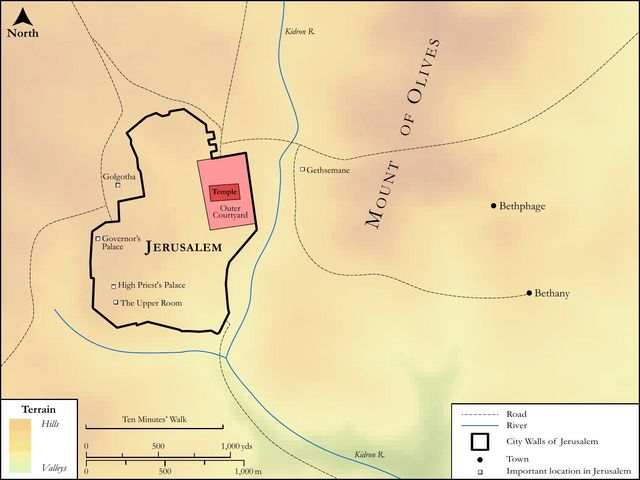
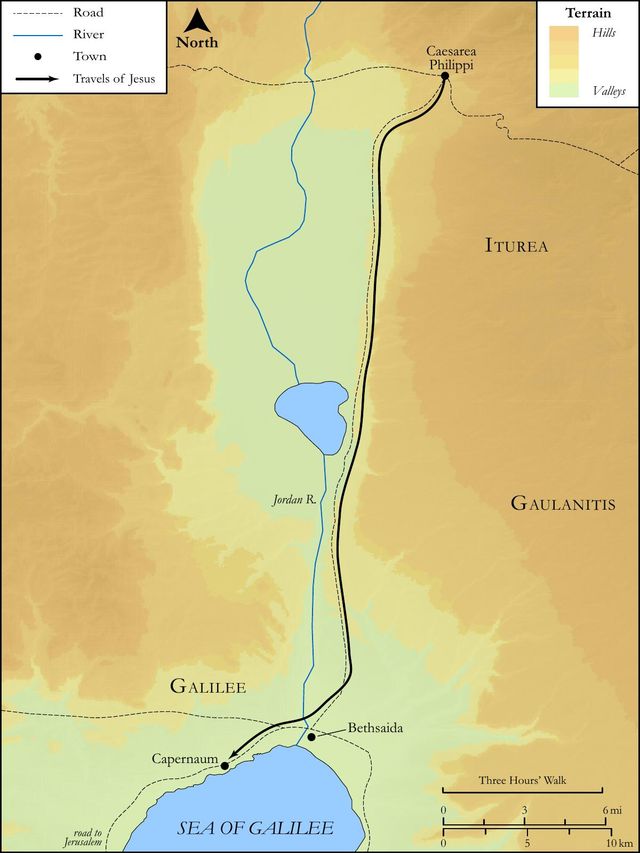
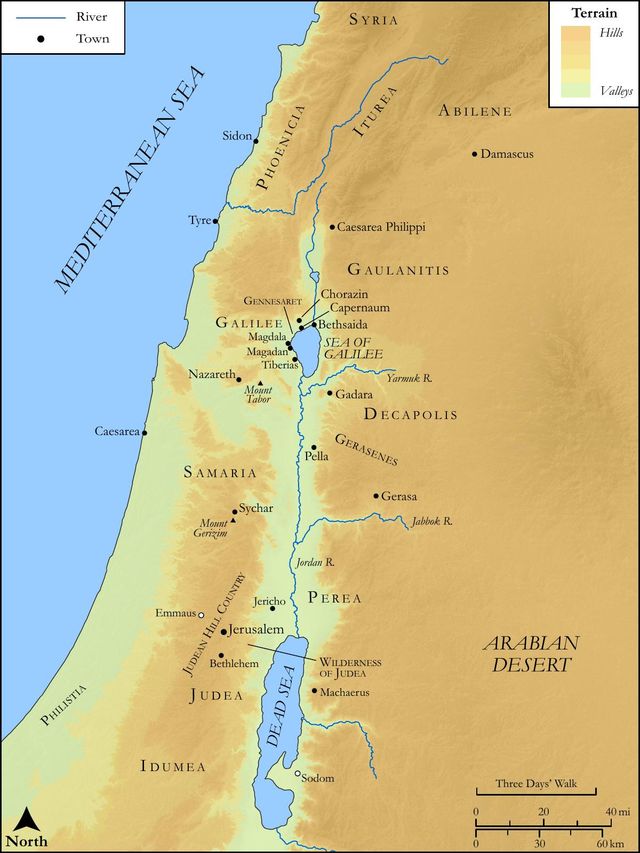
See on the biblical-era maps
Study this verse
Public-domain commentary
Matthew Henry
From his Commentary on the Whole Bible. Henry comments on passages, not single verses — this entry covers Matthew 9:35–38. His four-level outline is real structure in the source text, so it is rendered as structure.
Here is, I. A conclusion of the foregoing account of Christ's preaching and miracles (Mat 9:35); He went about all the cities teaching and healing. This is the same we had before, Mat 4:23. There it ushers in the more particular record of Christ's preaching (ch. 5, 6 and 7) and of his cures (ch. 8 and 9), and here it is elegantly repeated in the close of these instances, as the quod erat demonstrandum - the point to be proved; as if the evangelist should say, "Now I hope I have made it out, by an induction of particulars, that Christ preached and healed; for you have had the heads of his sermons, and some few instances of his cures, which were wrought to confirm his doctrine: and these were written that you might believe." Some think that this was a second perambulation in Galilee, like the former; he visited again those whom he had before preached to. Though the Pharisees cavilled at him and opposed him, he went on with his work; he preached the gospel of the kingdom. He told them of a kingdom of grace and glory, now to be set up under the government of a Mediator: this was gospel indeed, good news, glad tidings of great joy.
Observe how Christ in his preaching had respect,
1.To the private towns. He visited not only the great and wealthy cities, but the poor, obscure villages; there he preached, there he healed. The souls of those that are meanest in the world are as precious to Christ, and should be to us, as the souls of those that make the greatest figure. Rich and poor meet together in him, citizens and boors: his righteous acts towards the inhabitants of his villages must be rehearsed, Jdg 5:11.
2.To the public worship. He taught in their synagogues,
(1.)That he might bear a testimony to solemn assemblies, even then when there were corruptions in them. We must not forsake the assembling of ourselves together, as the manner of some is.
(2.)That he might have an opportunity of preaching there, where people were gathered together, with an expectation to hear. Thus, even where the gospel church was founded, and Christian meetings erected, the apostles often preached in the synagogues of the Jews. It is the wisdom of the prudent, to make the best of that which is.
II.A preface, or introduction, to the account in the following chapter, of his sending forth his apostles.
He took notice of the multitude (Mat 9:36); not only of the crowds that followed him, but of the vast numbers of people with whom (as he passed along) he observed the country to be replenished; he noticed what nests of souls the towns and cities were, and how thick of inhabitants; what abundance of people there were in every synagogue, and what places of concourse the openings of the gates were: so very populous was that nation now grown; and it was the effect of God's blessing on Abraham. Seeing this,
1.He pities them, and was concerned for them (Mat 9:36); He was moved with compassion on them; not upon a temporal account, as he pities the blind, and lame, and sick; but upon a spiritual account; he was concerned to see them ignorant and careless, and ready to perish for lack of vision. Note, Jesus Christ is a very compassionate friend to precious souls; here his bowels do in a special manner yearn. It was pity to souls that brought him from heaven to earth, and there to the cross. Misery is the object of mercy; and the miseries of sinful, self-destroying souls, are the greatest miseries: Christ pities those most that pity themselves least; so should we. The most Christian compassion is compassion to souls; it is most Christ-like.
See what moved this pity. (1.) They fainted; they were destitute, vexed, wearied. They strayed, so some; were loosed one from another; The staff of bands was broken, Zac 11:14. They wanted help for their souls, and had none at hand that was good for any thing. The scribes and Pharisees filled them with vain notions, burthened them with the traditions of the elders, deluded them into many mistakes, while they were not instructed in their duty, nor acquainted with the extent and spiritual nature of the divine law; therefore they fainted; for what spiritual health, and life, and vigour can there be in those souls, that are fed with husks and ashes, instead of the bread of life? Precious souls faint when duty is to be done, temptations to be resisted, afflictions to be borne, being not nourished up with the word of truth. (2.) They were scattered abroad, as sheep having no shepherd. That expression is borrowed from Kg1 22:17, and it sets forth the sad condition of those that are destitute of faithful guides to go before them in the things of God. No creature is more apt to go astray than a sheep, and when gone astray more helpless, shiftless, and exposed, or more unapt to find the way home again: sinful souls are as lost sheep; they need the care of shepherds to bring them back. The teachers the Jews then had pretended to be shepherds, yet Christ says they had not shepherds, for they were worse than none; idle shepherds that led them away, instead of leading them back, and fleeced the flock, instead of feeding it: such shepherds as were described, Jer 23:1, etc. Eze 34:2, etc. Note, The case of those people is very pitiable, who either have no ministers at all, or those that are as bad as none; that seek their own things, not the things of Christ and souls.
2.He excited his disciples to pray for them. His pity put him upon devising means for the good of these people. It appears (Luk 6:12, Luk 6:13) that upon this occasion, before he sent out his apostles, he did himself spend a great deal of time in prayer. Note, Those we pity we should pray for. Having spoken to God for them he turns to his disciples, and tells them,
(1.)How the case stood; The harvest truly is plenteous, but the labourers are few. People desired good preaching, but there were few good preachers. There was a great deal of work to be done, and a great deal of good likely to be done, but there wanted hands to do it.
[1.]It was an encouragement, that the harvest was so plenteous. It was not strange, that there were multitudes that needed instruction, but it was what does not often happen, that they who needed it, desired it, and were forward to receive it. They that were ill taught were desirous to be better taught; people's expectations were raised, and there was such a moving of affections, as promised well. Note, It is a blessed thing, to see people in love with good preaching. The valleys are then covered over with corn, and there are hopes it may be well gathered in. That is a gale of opportunity, that calls for a double care and diligence in the improvement of it; a harvest-day should be a busy day.
[2.]It was a pity when it was so that the labourers should be so few; that the corn should shed and spoil, and rot upon the ground for want of reapers; loiterers many, but labourers very few. Note, It is ill with the church, when good work stands still, or goes slowly on, for want of good workmen; when it is so, the labourers that there are have need to be very busy.
(2.)What was their duty in this case (Mat 9:38); Pray ye therefore the Lord of the harvest. Note, The melancholy aspect of the times and the deplorable state of precious souls, should much excite and quicken prayer. When things look discouraging, we should pray more, and then we should complain and fear less. And we should adapt our prayers to the present exigencies of the church; such an understanding we ought to have of the times, as to know, not only what Israel ought to do, but what Israel ought to pray for. Note,
[1.]God is the Lord of the harvest; my Father is the Husbandman, Joh 15:1. It is the vineyard of the Lord of hosts, Isa 5:7. It is for him and to him, and to his service and honour, that the harvest is gathered in. Ye are God's husbandry (Co1 3:9); his threshing, and the corn of his floor, Isa 21:10. He orders every thing concerning the harvest as he pleases; when and where the labourers shall work, and how long; and it is very comfortable to those who wish well to the harvest-work, that God himself presides in it, who will be sure to order all for the best.
[2.]Ministers are and should be labourers in God's harvest; the ministry is a work and must be attended to accordingly; it is harvest-work, which is needful work; work that requires every thing to be done in its season, and diligence to do it thoroughly; but it is pleasant work; they reap in joy, and the joy of the preachers of the gospel is likened to the joy of harvest (Isa 9:2, Isa 9:3); and he that reapeth receiveth wages; the hire of the labourers that reap down God's field, shall not be kept back, as theirs was, Jam 5:4.
[3.]It is God's work to send forth labourers; Christ makes ministers (Eph 4:11); the office is of his appointing, the qualifications of his working, the call of his giving. They will not be owned nor paid as labourers, that run without their errand, unqualified, uncalled. How shall they preach except they be sent?
[4.]All that love Christ and souls, should show it by their earnest prayers to God, especially when the harvest is plenteous, that he would send forth more skillful, faithful, wise, and industrious labourers into his harvest; that he would raise up such as he will own in the conversion of sinners and the edification of saints; would give them a spirit for the work, call them to it, and succeed them in it; that he would give them wisdom to win souls; that he would thrust forth labourers, so some; intimating unwillingness to go forth, because of their own weakness and the people's badness, and opposition from men, that endeavour to thrust them out of the harvest; but we should pray that all contradiction from within and from without, may be conquered and got over. Christ puts his friends upon praying this, just before he sends apostles forth to labour in the harvest. Note, It is a good sign God is about to bestow some special mercy upon a people, when he stirs up those that have an interest at the throne of grace, to pray for it, Psa 10:17. Further observe, that Christ said this to his disciples, who were to be employed as labourers. They must pray, First, That God would send them forth. Here am I, send me, Isa 6:8. Note, Commissions, given in answer to prayer, are most likely to be successful; Paul is a chosen vessel, for behold he prays, Act 9:11, Act 9:15. Secondly, That he would send others forth. Note, Not the people only, but those who are themselves ministers, should pray for the increase of ministers. Though self-interest makes those that seek their own things desirous to be placed alone (the fewer ministers the more preferments), yet those that seek the things of Christ, desire more workmen, that more work may be done, though they be eclipsed by it.
Historical interpretation
Nine Centuries of Reception
9 surviving comments on this verse. Each one is dated, so this reads as a timeline rather than a list.
Select a marker to jump to its quote. Markers stagger vertically where authors wrote within a few decades of each other.
Figuratively; When salvation was given to the Gentiles, then all cities and towns were enlightened by the power and entrance of Christ, and escaped every former sickness and infirmity. The Lord pities the people troubled with the violence of the unclean Spirit, and sick under the burden of the Law, and having no shepherd at hand to bestow on them the guardianship of the Holy Spirit. But of that gift there was a most abundant fruit, whose plenty far exceeded the multitude of those that drank thereof; how many soever take of it, yet an inexhaustible supply remains; and because it is profitable that there should be many to minister it, He bids us ask the Lord of the harvest, that God would provide a supply of reapers for the ministration of that gift of the Holy Spirit which was made ready; for by prayer this gift is poured out upon us from God.
The Lord would refute by actions the charge of the Pharisees, who said, He casteth out dæmons by the Prince of the dæmons; for a dæmon having suffered rebuke, does not return good but evil to those who have not shown him honour. But the Lord on the other hand, when He has suffered blasphemy and contumely, not only does not punish, but does not utter a hard speech, yea He shows kindness to them that did it, as it here follows, And Jesus went about all their towns and villages. Herein He teaches us not to return accusations to them that accuse us, but kindness. For he that ceases to do good because of accusation, shows that his good has been done because of men. But if for God's sake you do good to your fellow-servants, you will not cease from doing good whatever they do, that your reward may be greater.
Nor does Christ's goodness rest here, but He manifests His care for them, opening the bowels of His mercy towards them; whence it follows, And seeing the multitudes, he had compassion upon them.
This is an accusation against the rulers of the Jews, that being shepherds they appeared like wolves; not only not improving the multitude, but hindering their progress. For when the multitude marvelled and said, It was never so seen in Israel, these opposed themselves, saying, He casteth out dæmons by the prince of the dæmons. (vid. Ps. 102:19.)
He privately insinuates Himself to be the Lord; for it is He Himself who is Lord of the harvest. For if He sent the Apostles to reap what they had not sown, it is manifest that He sent them not to reap the things of others, but what He had sown by the Prophets. But since the twelve Apostles are the labourers, He said, Pray ye the Lord of the harvest, that he would send labourers into his harvest; and notwithstanding He added none to their number, but rather He multiplied those twelve many times, not by increasing their numbers, but by giving them more abundant grace.
He shows us that it is a great gift that one should have the power of rightly preaching, in that He tells them that they ought to pray for it. Also we are here reminded of the words of John concerning the threshing-floor, and the fan, the chaff, and the wheat.
And not even at this doth He stop, but He exhibits also another instance of His forethought. That is,
"When He saw," it is said, "the multitudes, He was moved with compassion on them, because they were troubled, and scattered abroad, as sheep having no shepherd. Then saith He unto His disciples, The harvest truly is plenteous, but the laborers are few, pray ye therefore the Lord of the harvest, that He will send forth laborers into His harvest."
See again His freedom from vainglory. That He may not draw all men unto Himself, He sends out His disciples.
And not with this view only, but that He might also teach them, after practising in Palestine, as in a sort of training-school, to strip themselves for their conflicts with the world. For this purpose then He makes the exercises even more serious than the actual conflicts, so far as pertained to their own virtue; that they might more easily engage in the struggles that were to ensue; as it were a sort of tender nestlings whom He was at length leading out to fly. And for the present He makes them physicians of bodies, dispensing to them afterwards the cure of the soul, which is the principal thing.
And mark how He points out the facility and necessity of the thing. For what saith He? "The harvest truly is plenteous, but the laborers are few." That is, "not to the sowing," saith He, "but to the reaping do I send you." Which in John He expressed by, "Other men labored, and ye are entered into their labors."
And these things he said, at once repressing their pride, and preparing them to be of good courage, and signifying that the greater part of the labor came first.
And contemplate Him here too beginning from love to man, not with any requital. "For He had compassion, because they were troubled and scattered abroad as sheep having no shepherd." This is His charge against the rulers of the Jews, that being shepherds they acted the part of wolves. For so far from amending the multitude, they even marred their progress. For instance, when they were marvelling and saying, "It was never so seen in Israel:" these were affirming the contrary, "He casteth out devils through the prince of the devils."
But of what laborers doth He speak here? Of the twelve disciples. What then? whereas He had said, "But the laborers are few," did He add to their number? By no means, but He sent them out alone. Wherefore then did He say, "Pray ye the Lord of the harvest, that He would send forth laborers into His harvest; and made no addition to their number? Because though they were but twelve, He made them many from that time forward, not by adding to their number, but by giving them power.
Then to signify how great the gift is, He saith, "Pray ye the Lord of the harvest;" and indirectly declares it to be His own prerogative. For after having said, "Pray ye the Lord of the harvest;" when they had not made any entreaty nor prayer, He Himself at once ordains them, reminding them also of the sayings of John, of the threshing floor, and of the Person winnowing, and of the chaff, and of the wheat. Whence it is evident that Himself is the husbandman, Himself the Lord of the harvest, Himself the master and owner of the prophets. For if He sent them to reap, clearly it was not to reap what belongs to another, but what Himself had sown by the prophets.
But not in this way only was He indirectly encouraging them, in calling their ministry a harvest; but also by making them able for the ministry.
Observe how equally in villages, cities, and towns, that is to great as well as small, He preaches the Gospel, not respecting the might of the noble, but the salvation of those that believe. It follows, Teaching in their synagogues; this was His meat, going about to do the will of His Father, and saving by His teaching such as yet believed not.
He first preached and taught, and then proceeded to heal sicknesses, that the works might convince those who would not believe the words. Hence it follows, Healing every sickness and every disease, for to Him alone nothing is impossible.
The great harvest denotes the multitude of the people; the few labourers, the want of instructors.
(Verse 37, 38.) Indeed, the harvest is plentiful, but the laborers are few. Therefore, pray to the Lord of the harvest to send out laborers into his harvest. The abundant harvest signifies the multitude of people, while the few laborers represent a shortage of workers. And it is commanded to pray to the Lord of the harvest to send out laborers into his harvest. These are the laborers whom the Psalmist speaks of, saying: Those who sow in tears will reap with joy. Going forth, they went and wept, carrying their seeds. But when they come, they will come with joy, carrying their sheaves (Psalm 126:7-8). And to speak more plainly, the abundant harvest is the entire crowd of believers. However, the workers are few, like the apostles and those who imitate them and are sent to the harvest.
Understand, 'of God;' for though temporal blessings are also proclaimed, yet they are not called The Gospel. Hence the Law was not called a Gospel, because to such as kept it, it held out not heavenly, but earthly, goods.
It should be known that those whom He healed outwardly in their bodies, He also healed inwardly in their souls. Others cannot do this of their own power, but can by God's grace.
Herein Christ shows in Himself the disposition of the good shepherd and not that of the hireling. Why He pitied them is added, Because they were troubled, and sick as sheep that have no shepherd—troubled either by dæmons, or by divers sicknesses and infirmities.
But when the Son of God looked down from heaven upon the earth, to hear the groans of the captives, straight a great harvest began to ripen; for the multitude of the human race would never have come near to the faith, had not the Author of human salvation looked down from heaven; and it follows, Then said he unto his disciples, The harvest truly is great, but the labourers are few.
For the number of the Apostles was small in comparison of so great crops to be reaped. The Lord exhorts His preachers, that is, the Apostles and their followers, that they should daily desire an increase of their number; Pray ye therefore the Lord of the harvest, that he would send forth labourers into his harvest.
Or, He then increased their number when He chose the seventy and two, and then when many preachers were made what time the Holy Spirit descended upon the believers.
But consider, dearest brothers, consider what is said: "Pray the Lord of the harvest, that he send laborers into his harvest." Petition on our behalf, that we may be able to work worthily for you, lest our tongue grow sluggish from exhortation, lest after we have taken up the place of preaching, our silence condemn us before the just judge. For often the tongue of preachers is restrained because of their own wickedness; but often indeed it happens through the fault of those subject to them that the word of preaching is withdrawn from those who are in charge. Indeed the tongue of preachers is restrained because of their own wickedness, as the Psalmist says: "But to the sinner God said: Why do you declare my justices?" And again, because of the fault of those subject to them, the voice of preachers is forbidden, as the Lord says to Ezekiel: "I will make your tongue cleave to your palate, and you shall be mute, and not as a man who rebukes, because it is a provoking house." As if he were to say openly: Therefore the word of preaching is taken from you, because while the people provoke me in their actions, they are not worthy to receive the exhortation of truth. From whose fault, therefore, the word is withdrawn from the preacher is not easily known. But it is known most certainly that the silence of the Pastor sometimes harms himself, but always harms those subject to him.
The multitude in need of healing He calls the "harvest," and those who ought to teach them, "labourers." The "Lord of the harvest" is Christ Himself Who is Lord of prophets and apostles. This is made clear when He ordains the twelve without petitioning God. Listen, then:
(non occ.) He taught in their synagogues the Gospel of the Kingdom, as it follows, Preaching the Gospel of the Kingdom.
(ap. Anselm.) By disease we may understand complaints of long standing, by sickness any lesser infirmity.
(ap. Anselm.) Or, troubled by dæmons, and sick, that is, benumbed and unable to rise; and though they had shepherds, yet they were as though they had them not.
(ap. Anselm.) The harvest are those men who can be reaped by the preachers, and separated from the number of the damned, as grain is beaten out from the chaff that it may be laid up in granaries.
Continue studying Matthew 9:38 across the web’s major study libraries — every link below opens this exact verse, chapter, or book on the destination site.
Read & Compare
 BibleGatewayThis verse in more than 200 translations and 70 languages.
 Bible.comThe YouVersion reader — hundreds of translations, reading plans, and highlights.
 ESV.orgCrossway's official English Standard Version reader.
 NET BibleThe NET translation with 60,000+ translators' notes on every rendering decision.
 STEP BibleTyndale House's free study tool — original text, vocabulary, and scholarly resources.
 BibliaLogos Bible Software's free web reader.
 USCCBThe New American Bible (Revised Edition) with the U.S. bishops' study notes.
Commentaries
 BibleHub CommentariesDozens of classic commentaries on this verse, gathered on one page.
 StudyLightMore than 100 commentary sets — the largest collection on the web.
 BibleRefPlain-English commentary on what this verse means, verse by verse.
 Enduring WordDavid Guzik's free commentary on this chapter, widely used by Bible teachers.
 Bible Study ToolsVerse commentary alongside Greek and Hebrew study aids.
Original Language & Research
- BibleHub InterlinearThe verse word by word — original language, transliteration, and English.
- BibleHub LexiconEvery word's original-language definition and Strong's entry.
 Blue Letter BibleDeep-study tools — Strong's numbers, concordance, and word studies.
 CNTR CollationThe earliest Greek manuscripts of this verse, collated letter by letter.
Sermons, Hymns & Audio


TrulyRandomVerse is not affiliated with these sites and doesn’t control their content. They’re linked because they’re genuinely useful.
Summary
Matthew 9:38 presents Jesus' direct command to His disciples, urging them to pray to the "Lord of the harvest" for more laborers to be sent into His abundant harvest. This imperative arises from Jesus' profound compassion upon seeing the multitudes "faint, and scattered abroad, as sheep having no shepherd," recognizing the vast spiritual need and the readiness of people to receive the Gospel, yet lamenting the scarcity of those willing and equipped to share it. The verse encapsulates a foundational principle for Christian mission, highlighting the divine ownership of the evangelistic endeavor and the essential role of prayer in mobilizing God's workers.
Context
ShowHideLiterary Context
This powerful command from Jesus serves as the climax of a significant section in Matthew's Gospel (Matthew 9:35-38). Immediately preceding it, Matthew 9:35 describes Jesus' extensive ministry, traveling through cities and villages, teaching in synagogues, preaching the good news of the kingdom, and healing every disease. This active engagement with the crowds leads directly to His profound observation in Matthew 9:36, where He is moved with compassion for them, seeing them "harassed and helpless, like sheep without a shepherd." This empathetic gaze then prompts His statement in Matthew 9:37 that "The harvest is plentiful, but the laborers are few." Thus, the command to pray for laborers is not an isolated instruction but a direct, prayerful response to the overwhelming spiritual need Jesus perceived, emphasizing that the solution to the "shepherdless" state of humanity lies in divine intervention through prayer and the sending of workers.
Historical & Cultural Context
Jesus' audience, living in an agrarian society, would have immediately grasped the imagery of a "harvest." A harvest was a critical, time-sensitive event, requiring diligent and numerous workers to gather crops before they spoiled or were lost. It represented a period of intense activity and great potential yield. Spiritually, this metaphor resonated deeply within Jewish thought, often symbolizing the eschatological gathering of God's people or a time of divine judgment and ingathering (e.g., Joel 3:13). For Jesus to declare the "harvest" as "plenteous" meant that the people were spiritually ripe for the Kingdom message, ready to be "gathered." The cultural understanding of a shepherd's vital role in guiding and protecting sheep further amplified Jesus' compassion for the "harassed and helpless" multitudes, underscoring their desperate need for spiritual leadership and guidance, a need that the existing religious authorities were failing to meet.
Key Themes
ShowHideThis verse contributes significantly to several overarching themes in Matthew's Gospel and broader biblical theology. Firstly, it underscores the Divine Initiative and Ownership of Mission. By referring to the "Lord of the harvest," Jesus unequivocally states that the mission of salvation and ingathering belongs to God, not to human effort alone. He is the sovereign orchestrator of the spiritual realm. Secondly, the theme of Urgency and Readiness is paramount; the "harvest" implies a window of opportunity that must be seized before it passes, highlighting the critical need for immediate action in evangelism. Thirdly, the verse establishes the Primacy of Prayer in Ministry. Jesus does not immediately send His disciples out but commands them to pray, demonstrating that divine empowerment and commissioning of laborers is a direct result of earnest supplication. This emphasizes dependence on God for the provision of workers. Finally, the verse is deeply rooted in Jesus' Compassion for the Lost. The entire passage (Matthew 9:35-38) is framed by Jesus' empathetic response to the spiritual plight of the crowds, revealing that the impetus for the mission is God's profound love and desire for humanity's salvation, a theme powerfully illustrated in His own ministry of healing and teaching found throughout Matthew's Gospel.
Exposition and Analysis
ShowHideKey Word Analysis
ShowHideThis word, often translated as "to beg" or "to make request," carries a strong sense of urgent petition, implying a deeply felt need and earnest supplication. It's not a casual wish but a fervent plea, suggesting that the matter of sending laborers is of utmost importance and requires persistent, heartfelt prayer from believers.
Signifying "supreme in authority" or "controller," this term emphasizes God's absolute sovereignty over the spiritual harvest. He is the owner and master of the field, and therefore, the one with the authority and power to "send forth" workers. Addressing Him as "Lord" acknowledges His ultimate dominion and the necessity of His divine intervention.
This verb is powerful and carries the connotation of "to eject," "to cast out," or "to drive out with force." It's the same word used for casting out demons (e.g., Matthew 8:31). Its use here suggests that God doesn't merely invite or gently persuade laborers; He powerfully, purposefully, and even urgently dispatches them into His mission field, implying a divine compulsion and equipping for the task, overcoming any reluctance or obstacle.
Derived from the word for "work" (ergon), an ergátēs is primarily a "toiler" or "worker." Figuratively, in this context, it refers to those who actively engage in the spiritual work of the harvest—preaching, teaching, evangelizing, discipling. It implies diligent effort and active participation in God's mission, not passive observation.
Verse Breakdown
ShowHide"Pray ye therefore"
This is an imperative command, directly instructing the disciples (and by extension, all believers) to engage in prayer. The "therefore" links this command directly to the preceding observation of the vast spiritual need and the scarcity of workers, establishing prayer as the primary, foundational response to this critical situation. It underscores that human effort alone is insufficient; divine intervention is essential.
"the Lord of the harvest"
This phrase identifies the specific recipient and authority for the prayer. God is portrayed as the sovereign owner and master of the spiritual harvest, possessing ultimate authority and control over its timing, its yield, and the workers needed to gather it. This emphasizes that the mission is His, and He is the one who will provide the necessary resources.
"that he will send forth labourers"
This clause specifies the content and purpose of the prayer: a request for God to actively and powerfully dispatch workers. The forceful verb "send forth" (ekbállō) suggests a divine initiative that compels and commissions individuals for this vital spiritual work, implying a supernatural equipping and an urgent deployment into the mission field.
"into his harvest"
This concluding phrase reiterates the divine ownership of the mission and defines the destination of the laborers. They are to be sent into "His" harvest, the spiritual field already ripe for gathering, where souls are ready to respond to the Gospel. It reinforces that the work is God's, for His glory, and in His appointed time and place.
Literary Devices
ShowHideMatthew 9:38 is rich in Metaphor, primarily employing the agricultural imagery of a "harvest" and "labourers." The "harvest" symbolizes a time of spiritual readiness and opportunity for souls to be gathered into God's Kingdom, while "labourers" represent those called and equipped to participate in this spiritual ingathering. This metaphor effectively conveys the urgency, the abundance of potential, and the need for active participation. The verse also features a strong Imperative ("Pray ye"), which functions as a direct command from Jesus, highlighting the non-negotiable nature of this instruction for His followers. Furthermore, the phrase "Lord of the harvest" utilizes Personification, attributing ownership and authority over a natural process (harvest) to a divine being, thereby emphasizing God's ultimate sovereignty over the spiritual realm and His active involvement in the work of salvation.
Theological and Thematic Connections
ShowHideMatthew 9:38 is a pivotal verse that profoundly shapes our understanding of Christian mission and the role of prayer within it. It establishes that the evangelistic task is not merely a human endeavor but a divine enterprise, owned and orchestrated by God Himself, the "Lord of the harvest." This theological truth alleviates the burden of human inadequacy and places the ultimate responsibility and power for the ingathering of souls squarely on God's shoulders. The command to pray for laborers underscores the absolute necessity of divine initiative in raising up and deploying workers, highlighting that effective ministry flows from God's sovereign call and empowerment, not merely from human recruitment strategies. It also connects deeply with the concept of God's compassionate heart for humanity, as seen in Jesus' motivation for uttering this command, reinforcing that the mission is driven by divine love for the lost.
Reflection and Application
ShowHideMatthew 9:38 serves as a timeless summons to every believer, challenging us to adopt Jesus' perspective on the world and to participate actively in His mission. It calls us first to cultivate a heart of compassion for the spiritually lost, seeing them not as statistics but as "sheep without a shepherd," harassed and helpless, in desperate need of the Good News. This compassionate vision should then propel us to earnest, persistent prayer. We are not merely to wish for more workers, but to "pray ye therefore," recognizing that the sending forth of laborers is a divine act, prompted by the fervent prayers of God's people. This prayer should be specific, asking the "Lord of the harvest" to raise up and dispatch individuals who are willing, equipped, and compelled by His Spirit to serve in various capacities—as missionaries, evangelists, pastors, teachers, and everyday witnesses in their spheres of influence. Furthermore, this verse subtly prompts self-reflection: while we pray for others to be sent, are we ourselves available and willing to be among those laborers, ready to answer God's call to serve in His abundant harvest, wherever He may lead?
Questions for Reflection
ShowHideFAQ
ShowHideWhy does Jesus command us to pray for laborers instead of just telling His disciples to go?
ShowHideJesus commands prayer for laborers to underscore the divine ownership and initiative of the mission. While He does eventually send His disciples out (e.g., Matthew 10:5-15), this initial command emphasizes that the spiritual harvest is God's, and therefore, the provision of workers must come from Him. It highlights human dependence on God's power and sovereignty. Prayer is not a substitute for action, but the essential precursor to divinely empowered action, ensuring that the work is undertaken in God's strength and according to His will, rather than solely by human effort or strategy. It also fosters humility and acknowledges that true spiritual fruit comes from God's enabling.
What kind of "labourers" is Jesus referring to? Is it only missionaries or pastors?
ShowHideWhile the term "labourers" certainly includes those in full-time ministry roles like missionaries, pastors, and evangelists, its scope is much broader. The "harvest" refers to all souls ready to hear and receive the Gospel. Therefore, "labourers" are any believers who are willing to participate in the work of the Kingdom, sharing the Good News in their unique contexts. This can include Sunday school teachers, Bible study leaders, compassionate neighbors, faithful friends, or anyone who, through their words and deeds, points others to Christ. The emphasis is on active participation in the spiritual ingathering, whatever form that may take, as empowered and sent by God into "His harvest."
Is this command still relevant today, or was it only for Jesus' time?
ShowHideThis command is profoundly and eternally relevant. The spiritual "harvest" remains "plenteous" in every generation, as countless individuals around the world are still "harassed and helpless, like sheep without a shepherd" (Matthew 9:36). The need for dedicated, Spirit-empowered "labourers" to proclaim the Gospel and make disciples is as urgent today as it was in Jesus' day. The command to pray for these laborers is a perpetual call to the Church, recognizing that the mission of God continues until Christ's return, and its success is contingent upon divine provision of workers in response to fervent prayer.
Christ-Centered Fulfillment
ShowHideMatthew 9:38 finds its ultimate Christ-centered fulfillment in Jesus Himself, who is the quintessential "Lord of the harvest" and the supreme "labourer" sent by the Father. He is the one who surveyed the "fields," saw them "white for harvest" (John 4:35), and then, out of profound compassion, initiated the work of gathering. Jesus not only commanded prayer for laborers but also embodied the answer to that prayer, being the perfectly obedient Son sent by God to accomplish the Father's will (John 6:38). His entire earthly ministry, characterized by teaching, preaching, and healing (Matthew 9:35), was the very act of gathering the harvest. Furthermore, Jesus' ascension and the subsequent outpouring of the Holy Spirit on Pentecost (Acts 2:1-4) marked the "sending forth" of His disciples, equipping them with divine power to continue the harvest work, fulfilling the very prayer He commanded. The Church, as the body of Christ, now continues this mission, empowered by His Spirit, to bring in the harvest until He returns, making every believer a potential answer to the prayer for more laborers, all operating under the ultimate authority of the resurrected "Lord of the harvest" (Matthew 28:18-20).