


Matthew 10:9
Bible text: King James Version (1769 Blayney text) · Public domain
Bible text: Berean Standard Bible · Public domain
Bible text: American Standard Version (1901) · Public domain
Bible text: World English Bible, Messianic edition · Public domain
Bible text: Geneva Bible (1599) · Public domain
Bible text: Young's Literal Translation · Public domain
- ΜὴMēNeitherG3361PRT-NNegative Particle Negative
- κτήσησθεktēsēsthemay take alongG2932V-ADS-2PVerb Aorist Middle Deponent Subjunctive 2nd Plural
- χρυσὸνchrusongoldG5557N-ASMNoun Accusative Singular Masculine
- μηδὲmēdenorG3366CONJ-NConjunction Negative
- ἄργυρονarguronsilverG696N-ASMNoun Accusative Singular Masculine
- μηδὲmēdenorG3366CONJ-NConjunction Negative
- χαλκὸνchalkoncopperG5475N-ASMNoun Accusative Singular Masculine
- εἰςeisinG1519PREPPreposition
- τὰςtastheG3588T-APFDefinite article Accusative Plural Feminine
- ζώναςzōnasbeltsG2223N-APFNoun Accusative Plural Feminine
- ὑμῶνhumōnof youG4771P-2GPPersonal pronoun Genitive 2nd Plural
English is a literal word-by-word gloss of the Greek, not the KJV's wording. Why?
This is the original text the KJV's translators worked from — each Greek word with its own literal English meaning in this verse, prepared by scholars at Tyndale House, Cambridge. The KJV translates whole sentences, not word by word, so its wording differs: one Greek word can become several English words, and the KJV may choose “charity” where the gloss reads “love”. Both are faithful — they answer different questions. For the KJV's own rendering, switch to the KJV text.
Details
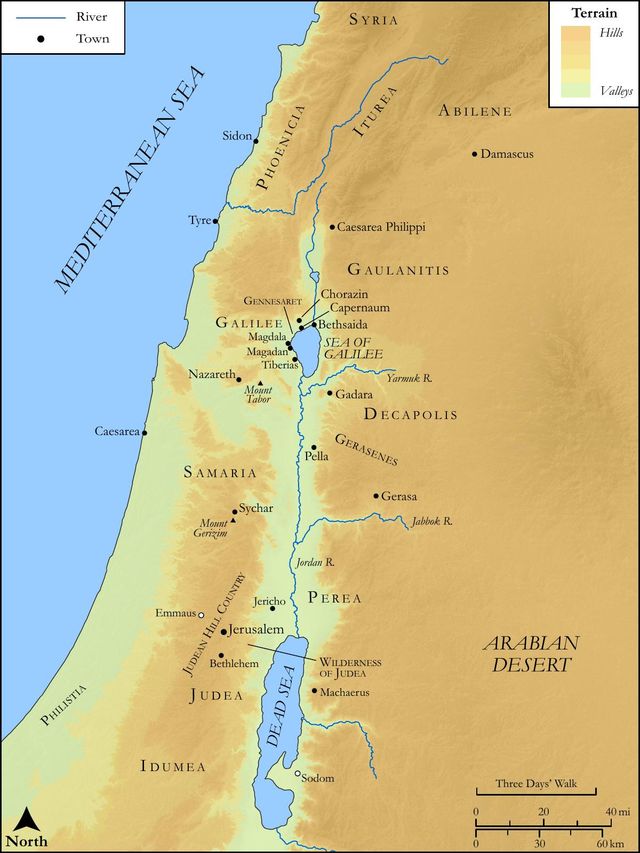
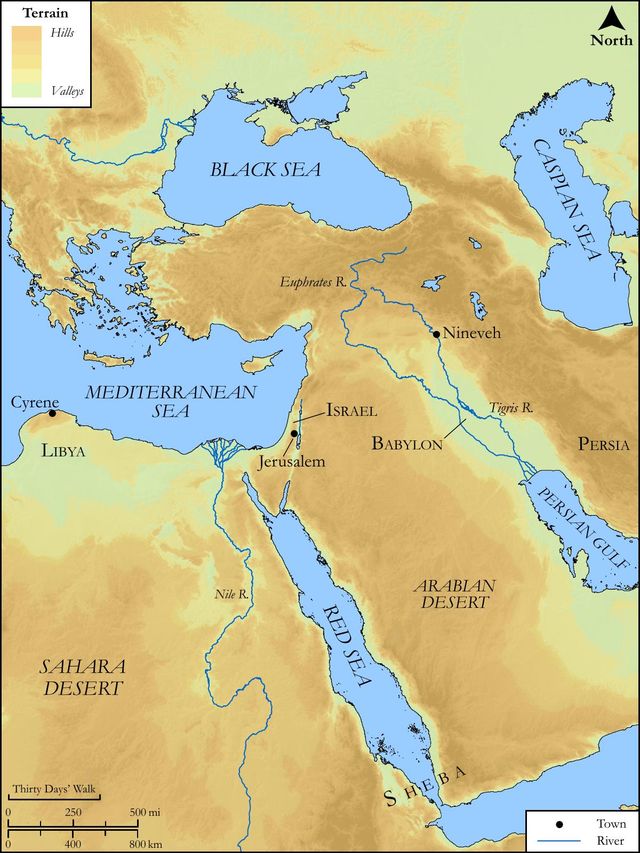
See on the biblical-era maps

Study this verse
Public-domain commentary
Matthew Henry
From his Commentary on the Whole Bible. Henry comments on passages, not single verses — this entry covers Matthew 10:5–15. His four-level outline is real structure in the source text, so it is rendered as structure.
We have here the instructions that Christ gave to his disciples, when he gave them their commission. Whether this charge was given them in a continued discourse, or the several articles of it hinted to them at several times, is not material; in this he commanded them. Jacob's blessing his sons, is called his commanding them, and with these commands Christ commanded a blessing. Observe,
I.The people to whom he sent them. These ambassadors are directed what places to go to.
1.Not to the Gentiles nor the Samaritans. They must not go into the way of the Gentiles, nor into any road out of the land of Israel, whatever temptations they might have. The Gentiles must not have the gospel brought them, till the Jews have first refused it. As to the Samaritans, who were the posterity of the mongrel people that the king of Assyria planted about Samaria, their country lay between Judea and Galilee, so that they could not avoid going into the way of the Samaritans, but they must not enter into any of their cities. Christ had declined manifesting himself to the Gentiles or Samaritans, and therefore the apostles must not preach to them. If the gospel be hid from any place, Christ thereby hides himself from that place. This restraint was upon them only in their first mission, afterwards they were appointed to go into all the world, and teach all nations.
2.But to the lost sheep of the house of Israel. To them Christ appropriated his own ministry (Mat 15:24), for he was a minister of the circumcision (Rom 15:8): and, therefore, to them the apostles, who were but his attendants and agents, must be confined. The first offer of salvation must be made to the Jews, Act 3:26. Note, Christ had a particular and very tender concern for the house of Israel; they were beloved for the fathers' sakes, Rom 11:28. He looked with compassion upon them as lost sheep, whom he, as a shepherd, was to gather out of the by-paths of sin and error, into which they were gone astray, and in which, if not brought back, they would wander endlessly; see Jer 2:6. The Gentiles also had been as lost sheep, Pe1 2:25. Christ gives this description of those to whom they were sent, to quicken them to diligence in their work, they were sent to the house of Israel (of which number they themselves lately were), whom they could not but pity, and be desirous to help.
II.The preaching work which he appointed them.
He did not send them forth without an errand; no, As ye go, preach, Mat 10:7. They were to be itinerant preachers: wherever they come they must proclaim the beginning of the gospel, saying, The kingdom of heaven is at hand. Not that they must say nothing else, but this must be their text; on this subject they must enlarge: let people know, that the kingdom of the Messiah, who is the Lord from heaven, is now to be set up according to the scriptures; from whence it follows, that men must repent of their sins and forsake them, that they might be admitted to the privileges of that kingdom. It is said (Mar 6:12), they went out, and preached that men should repent; which was the proper use and application of this doctrine, concerning the approach of the kingdom of heaven. They must, therefore, expect to hear more of this long-looked-for Messiah shortly, and must be ready to receive his doctrine, to believe in him, and to submit to his yoke. The preaching of this was like the morning light, to give notice of the approach of the rising sun. How unlike was this to the preaching of Jonah, which proclaimed ruin at hand! Jon 3:4. This proclaims salvation at hand, nigh them that fear God; mercy and truth meet together (Psa 85:9, Psa 85:10), that is, the kingdom of heaven at hand: not so much the personal presence of the king; that must not be doated upon; but a spiritual kingdom which is to be set up, when his bodily presence is removed, in the hearts of men.
Now this was the same that John the Baptist and Christ had preached before. Note, People need to have good truths pressed again and again upon them, and if they be preached and heard with new affections, they are as if they were fresh to us. Christ, in the gospel, is the same yesterday, today, and for ever, Heb 13:8. Afterwards, indeed, when the Spirit was poured out, and the Christian church was formed, this kingdom of heaven came, which was now spoken of as at hand; but the kingdom of heaven must still be the subject of our preaching: now it is come, we must tell people it is come to them, and must lay before them the precepts and privileges of it; and there is a kingdom of glory yet to come, which we must speak of as at hand, and quicken people to diligence from the consideration of that.
III.The power he gave them to work miracles for the confirmation of their doctrine, Mat 10:8.
When he sent them to preach the same doctrine that he had preached, he empowered them to confirm it, by the same divine seals, which could never be set to a lie. This is not necessary now the kingdom of God is come; to call for miracles now is to lay again the foundation when the building is reared. The point being settled, and the doctrine of Christ sufficiently attested, by the miracles which Christ and his apostles wrought, it is tempting God to ask for more signs. They are directed here,
1.To use their power in doing good: not "Go and remove mountains," or "fetch fire from heaven," but, Heal the sick, cleanse the lepers. They are sent abroad as public blessings, to intimate to the world, that love and goodness were the spirit and genius of that gospel which they came to preach, and of that kingdom which they were employed to set up. By this it would appear, that they were the servants of that God who is good and does good, and whose mercy is over all his works; and that the intention of the doctrine they preached, was to heal sick souls, and to raise those that were dead in sin; and therefore, perhaps, that of raising the dead is mentioned; for though we read not of their raising any to life before the resurrection of Christ, yet they were instrumental to raise many to spiritual life.
2.In doing good freely; Freely ye heave received, freely give. Those that had power to heal all diseases, had an opportunity to enrich themselves; who would not purchase such easy certain cures at any rate? Therefore they are cautioned not to make a gain of the power they had to work miracles: they must cure gratis, further to exemplify the nature and complexion of the gospel kingdom, which is made up, not only of grace, but of free grace. Gratia gratis data (Rom 3:24), freely by his grace, Buy medicines without money, and without price, Isa 55:1. And the reason is, because freely you have received. Their power to heal the sick cost them nothing, and, therefore, they must not make any secular advantage to themselves of it. Simon Magus would not have offered money for the gifts of the Holy Ghost, if he had not hoped to get money by them; Act 8:18. Note, The consideration of Christ's freeness in doing good to us, should make us free in doing good to others.
IV.The provision that must be made for them in this expedition; it is a thing to be considered in sending an ambassador, who must bear the charge of the embassy. As to that,
1.They must make no provision for it themselves, Mat 10:9, Mat 10:10. Provide neither gold nor silver. As, on the one hand, they shall not raise estates by their work, so, on the other hand, they shall not spend what little they have of their own upon it. This was confined to the present mission, and Christ would teach them,
(1.)To act under the conduct of human prudence. They were now to make but a short excursion, and were soon to return to their Master, and to their head-quarters again, and, therefore, why should they burthen themselves with that which they would have no occasion for?
(2.)To act in dependence upon Divine Providence. They must be taught to live, without taking thought for life, Mat 6:25, etc. Note, They who go upon Christ's errand, have, of all people, most reason to trust him for food convenient. Doubtless he will not be wanting to those that are working for him. Those whom he employs, as they are taken under special protection, so they are entitled to special provisions. Christ's hired servants shall have bread enough and to spare; while we abide faithful to God and our duty, and are in care to do our work well, we may cast all our other care upon God; Jehovah-jireh, let the Lord provide for us and ours as he thinks fit.
2.They might expect that those to whom they were sent would provide for them what was necessary, Mat 10:10. The workman is worthy of his meat. They must not expect to be fed by miracles, as Elijah was: but they might depend upon God to incline the hearts of those they went among, to be kind to them, and provide for them. Though they who serve at the altar may not expect to grow rich by the altar, yet they may expect to live, and to live comfortably upon it, Co1 9:13, Co1 9:14. It is fit they should have their maintenance from their work. Ministers are, and must be, workmen, labourers, and they that are so are worthy of their meat, so as not to be forced to any other labour for the earning of it. Christ would have his disciples, as not to distrust their God, so not to distrust their countrymen, so far as to doubt of a comfortable subsistence among them. If you preach to them, and endeavour to do good among them, surely they will give you meat and drink enough for your necessities: and if they do, never desire dainties; God will pay you your wages hereafter, and it will be running on in the mean time.
V.The proceedings they were to observe in dealing with any place, Mat 10:11-15.
They went abroad they knew not whither, uninvited, unexpected, knowing none, and known of none; the land of their nativity was to them a strange land; what rule must they go by? what course must they take? Christ would not send them out without full instructions, and here they are.
1.They are here directed how to conduct themselves toward those that were strangers to them; How to do,
(1.)In strange towns and cities: when you come to a town, enquire who in it is worthy.
[1.]It is supposed that there were some such in every place, as were better disposed than others to receive the gospel, and the preachers of it; though it was a time of general corruption and apostasy. Note, In the worst of times and places, we may charitably hope that there are some who distinguish themselves, and are better than their neighbours; some who swim against the stream, and are as wheat among the chaff. There were saints in Nero's household. Enquire who is worthy, who there are that have some fear of God before their eyes, and have made a good improvement of the light and knowledge they have. The best are far from meriting the favour of a gospel offer; but some would be more likely than others to give the apostles and their message a favourable entertainment, and would not trample these pearls under their feet. Note, Previous dispositions to that which is good, are both directions and encouragements to ministers, in dealing with people. There is most hope of the word being profitable to those who are already so well inclined, as that it is acceptable to them; and there is here and there one such.
[2.]They must enquire out such; not enquire for the best inns; public houses were no proper places for them that neither took money with them (Mat 10:9), nor expected to receive any (Mat 10:8); but they must look out for accommodations in private houses, with those that would entertain them well, and expect no other recompence for it but a prophet's reward, an apostle's reward, their praying and preaching. Note, They that entertain the gospel, must neither grudge the expense of it, nor promise themselves to get by it in this world. They must enquire, not who is rich, but who is worthy; not who is the best gentleman, but who is the best man. Note, Christ's disciples, wherever they come, should ask for the good people of the place, and be acquainted with them; when we took God for our God, we took his people for our people, and like will rejoice in its like. Paul in all his travels found out the brethren, if there were any, Act 28:14. It is implied, that if they did enquire who was worthy, they might discover them. They that were better than their neighbours would be taken notice of, and any one could tell them, there lives an honest, sober, good man; for this is a character which, like the ointment of the right hand, betrays itself and fills the house with its odours. Every body knew where the seer's house was, Sa1 9:18.
[3.]In the house of those they found worthy, they must continue; which intimates that they were to make so short a stay at each town, that they needed not change their lodging, but whatever house providence brought them to at first, there they must continue till they left that town. They are justly suspected, as having no good design, that are often changing their quarters. Note, It becomes the disciples of Christ to make the best of that which is, to abide by it, and not be for shifting upon every dislike or inconvenience.
(2.)In strange houses. When they had found the house of one they thought worthy, they must at their entrance salute it. "In those common civilities, be beforehand with people, in token of your humility. Think it not a disparagement, to invite yourselves into a house, nor stand upon the punctilio of being invited. Salute the family, [1.] To draw on further discourse, and so to introduce your message." (From matters of common conversation, we may insensibly pass into that communication which is good to the use of edifying.) [2.] "To try whether you are welcome or not; you will take notice whether the salutation be received with shyness and coldness, or with a ready return. He that will not receive your salutation kindly, will not receive your message kindly; for he that is unskilful and unfaithful in a little, will also be in much, Luk 16:10. [3.] To insinuate yourselves into their good opinion. Salute the family, that they may see that though you are serious, you are not morose." Note, Religion teaches us to be courteous and civil, and obliging to all with whom we have to do. Though the apostles went out backed with the authority of the Son of God himself, yet their instructions were, when they came into a house, not to command it, but to salute it; for love's sake rather to beseech, is the evangelical way, Plm 1:8, Plm 1:9. Souls are first drawn to Christ with the cords of a man, and kept to him by the bands of love, Hos 11:4. When Peter made the first offer of the gospel to Cornelius, a Gentile, Peter was first saluted; see Act 10:25, for the Gentiles courted that which the Jews were courted to.
When they had saluted the family after a godly sort, they must by the return, judge concerning the family, and proceed accordingly. Note, The eye of God is upon us, to observe what entertainment we give to good people and good ministers; if the house be worthy, let your peace come and rest upon it; if not, let it return to you, Mat 10:13. It seems then, that after they had enquired for the most worthy (Mat 10:11), it was possible they might light upon those that were unworthy. Note, Though it is wisdom to hearken to, yet it is folly to rely upon, common report and opinion; we ought to use a judgment of discretion, and to see with our own eyes. The wisdom of the prudent is himself to understand his own way. Now this rule is intended,
First, For satisfaction to the apostles. The common salutation was, Peace be unto you; this, as they used it, was turned into gospel; it was the peace of God, the peace of the kingdom of heaven, that they wished. Now lest they should make a scruple of pronouncing this blessing upon all promiscuously, because many were utterly unworthy of it, this is to clear them of that scruple; Christ tells them that this gospel prayer (for so it was now become) should be put up for all, as the gospel proffer was made to all indefinitely, and that they should leave it to God who knows the heart, and every man's true character, to determine the issue of it. If the house be worthy, it will reap the benefit of your blessing; if now, there is no harm done, you will not lose the benefit of it; it shall return to you, as David's prayers for his ungrateful enemies did, Psa 35:13. Note, It becomes us to judge charitably of all, to pray heartily for all, and to conduct ourselves courteously to all, for that is our part, and then to leave it with God to determine what effect it shall have upon them, for that is his part.
Secondly, For direction to them. "If, upon your salutation, it appear that they are indeed worthy, let them have more of your company, and so let your peace come upon them; preach the gospel to them, peace by Jesus Christ; but if otherwise, if they carry it rudely to you, and shut their doors against you, let your peace, as much as in you lies, return to you. Retract what you have said, and turn your backs upon them; by slighting this, they have made themselves unworthy of the rest of your favours, and cut themselves short of them." Note, Great blessings are often lost by a neglect seemingly small and inconsiderable, when men are in their probation and upon their behaviour. Thus Esau lost his birthright (Gen 25:34), and Saul his kingdom, Sa1 13:13, Sa1 13:14.
2.They are here directed how to carry it towards those that were refusers of them. The case is put (Mat 10:14) of those that would not receive them, nor hear their words. The apostles might think, that now they had such a doctrine to preach, and such a power to work miracles for the confirmation of it, no doubt but they should be universally entertained and made welcome: they are, therefore, told before, that there would be those that would slight them, and put contempt on them and their message. Note, The best and most powerful preachers of the gospel must expect to meet with some, that will not so much as give them the hearing, nor show them any token of respect. Many turn a deaf ear, even to the joyful sound, and will not hearken to the voice of the charmers, charm they never so wisely. Observe, "They will not receive you, and they will not hear your words." Note, Contempt of the gospel, and contempt of gospel ministers, commonly go together, and they will either of them be construed into a contempt of Christ, and will be reckoned for accordingly.
Now in this case we have here,
(1.)The directions given to the apostles what to do. They must depart out of that house or city. Note, The gospel will not tarry long with those that put it away from them. At their departure they must shake off the dust of their feet,
[1.]In detestation of their wickedness; it was so abominable, that it did even pollute the ground they went upon, which must therefore be shaken off as a filthy thing. The apostles must have no fellowship nor communion with them; must not so much as carry away the dust of their city with them. The work of them that turn aside shall not cleave to me, Psa 101:3. The prophet was not to eat or drink in Bethel, Kg1 13:9.
[2.]As a denunciation of wrath against them. It was to signify, that they were base and vile as dust, and that God would shake them off. The dust of the apostles' feet, which they left behind them, would witness against them, and be brought in as evidence, that the gospel had been preached to them, Mar 6:11. Compare Jam 5:3. See this practised, Act 13:51, Act 18:6. Note, They who despise God and his gospel shall be lightly esteemed.
(2.)The doom passed upon such wilful recusants, Mat 10:15. It shall be more tolerable, in the day of judgment, for the land of Sodom, as wicked a place as it was. Note,
[1.]There is a day of judgment coming, when all those that refused the gospel will certainly be called to account for it; however they now make a jest of it. They that would not hear the doctrine that would save them, shall be made to hear the sentence that will ruin them. Their judgment is respited till that day.
[2.]There are different degrees of punishment in that day. All the pains of hell will be intolerable; but some will be more so than others. Some sinners sink deeper into hell than others, and are beaten with more stripes.
[3.]The condemnation of those that reject the gospel, will in that day be severer and heavier than that of Sodom and Gomorrah. Sodom is said to suffer the vengeance of eternal fire, Jde 1:7. But that vengeance will come with an aggravation upon those that despise the great salvation. Sodom and Gomorrah were exceedingly wicked (Gen 13:13), and that which filled up the measure of their iniquity was, that they received not the angels that were sent to them, but abused them (Gen 19:4, Gen 19:5), and hearkened not to their words, Mat 10:14. And yet it will be more tolerable for them than for those who receive not Christ's ministers and hearken not to their words. God's wrath against them will be more flaming, and their own reflections upon themselves more cutting. Son, remember I will sound most dreadfully in the ears of such as had a fair offer made them of eternal life, and chose death rather. The iniquity of Israel, when God sent them his servants the prophets, is represented as, upon that account, more heinous than the iniquity of Sodom (Eze 16:48, Eze 16:49), much more now he sent them his Son, the great Prophet.
Historical interpretation
Nine Centuries of Reception
11 surviving comments on this verse. Each one is dated, so this reads as a timeline rather than a list.
Select a marker to jump to its quote. Markers stagger vertically where authors wrote within a few decades of each other.
The girdle is the making ready for the ministry, the girding up that we may be active in duty; we may suppose that the forbidding money in the girdle is to warn us from suffering any thing in the ministry to be bought and sold. We are not to have a scrip by the way, that is, we are to leave all care of our worldly substance; for all treasure on earth is hurtful to the heart, which will be there where the treasure is. Not two coats, for it is enough to have once put on Christ, nor after true knowledge of Him ought we to be clothed with any other garment of heresy or law. Not shoes, because standing on holy ground as was said to Moses not covered with the thorns and prickles of sin, we are admonished to have no other preparation of our walk than that we have received from Christ.
Neither a staff; that is, We are not to seek rights of extraneous power, having a rod from the root of Jesse.
After this plucking up immediately the root of the evils, He saith,
"Provide neither gold, nor silver, nor brass in your purses, nor scrip for your journey, neither two coats, neither shoes, nor yet a staff."
He said not, "take them not with you," but, "even if you can obtain them from another, flee the evil disease." And you see that hereby He was answering many good purposes; first setting His disciples above suspicion; secondly, freeing them from all care, so that they might give all their leisure to the word; thirdly, teaching them His own power. Of this accordingly He quite speaks out to them afterwards, "Lacked ye anything, when I sent you naked and unshod?"
He did not at once say, "Provide not," but when He had said, "Cleanse the lepers, cast out devils," then He said, "Provide nothing; freely ye have received, freely give;" by His way of ordering things consulting at once for their interest, their credit, and their ability.
But perhaps some one may say, that the rest may not be unaccountable, but "not to have a scrip for the journey, neither two coats, nor a staff, nor shoes," why did He enjoin this? Being minded to train them up unto all perfection; since even further back, He had suffered them not to take thought so much as for the next day. For even to the whole world He was to send them out as teachers. Therefore of men He makes them even angels (so to speak); releasing them from all worldly care, so that they should be possessed with one care alone, that of their teaching; or rather even from that He releases them, saying, "Take no thought how or what ye shall speak."
And thus, what seems to be very grievous and galling, this He shows to be especially light and easy for them. For nothing makes men so cheerful as being freed from anxiety and care; and especially when it is granted them, being so freed, to lack nothing, God being present, and becoming to them instead of all things.
Next, lest they should say, "whence then are we to obtain our necessary food?" He saith not unto them, "Ye have heard that I have told you before, 'Behold the fowls of the air;'" (for they were not yet able to realise this commandment in their actions); but He added what came far short of this, saying, "For the workman is worthy of his meat;" declaring that they must be nourished by their disciples, that neither they might be high minded towards those whom they were teaching, as though giving all and receiving nothing at their hands; nor these again break away, as being despised by their teachers.
After this, that they may not say, "Dost thou then command us to live by begging?" and be ashamed of this, He signifies the thing to be a debt, both by calling them "workmen," and by terming what was given, "hire." For "think not," saith He, "because the labor is in words, that the benefit conferred by you is small; nay, for the thing hath much toil; and whatsoever they that are taught may give, it is not a free gift which they bestow, but a recompence which they render: "for the workman is worthy of his meat." But this He said, not as declaring so much to be the worth of the apostles' labors, far from it; God forbid: but as both making it a law for them to seek nothing more, and as convincing the givers, that what they do is not an act of liberality, but a debt.
And again, when sending them out, He said not, "Fast," but, "Eat of all that is set before you." With regard to wealth, however, He required of them great strictness, saying, "Provide not gold, or silver, or brass, in your purses."
And all this I say, not to depreciate fasting, God forbid, but rather highly to commend it. But I grieve when other duties being neglected, ye think it enough for salvation, having but the last place in the choir of virtue. For the greatest thing is charity, and moderation, and almsgiving; which hits a higher mark even than virginity.
Observe how He is as careful that they should be upright in moral virtue, as that they should have the miraculous powers, showing that miracles without these are nought. Freely ye have received, seems a check upon their pride; freely give, a command to keep themselves pure from filthy lucre. Or, that what they should do might not be thought to be their own benevolence, He says, Freely ye have received; as much as to say; Ye bestow nothing of your own on those ye relieve; for ye have not received these things for money, nor for wages of labour; as ye have received them, so give to others; for indeed it is not possible to receive a price equal to their value.
The Lord having forbidden to make merchandize of spiritual things, proceeds to pull up the root of all evil, saying, Possess neither gold, nor silver.
This precept then first frees the Apostles from all suspicions; secondly, from all care, so that they may give up their whole time to preaching the word; thirdly, teaches them their excellence. This is what He said to them afterwards, Was any thing lacking to you, when I sent you without bag or scrip?
A happy exchange! In place of gold and silver, and the like, they received power to heal the sick, to raise the dead. For He had not commanded them from the beginning, Possess neither gold nor silver; but only then when He said at the same time, Cleanse the lepers, cast out dæmons. Whence it is clear that He made them Angels more than men, freeing them from all anxiety of this life, that they might have but one care, that of teaching; and even of that He in a manner takes away the burden, saying, Be not careful what ye shall speak. Thus what seemed hard and burdensome, He shows them to be light and easy. For nothing is so pleasant as to be delivered from all care and anxiety, more especially when it is possible, being delivered from this, to lack nothing, God being present, and being to us instead of all things.
It behoved the Apostles to be supported by their disciples, that neither they should be haughty towards those whom they taught, as though they gave all, and received nothing; and that the others, on their part, should not fall away, as overlooked by them. Also that the Apostles might not cry, He bids us lead the life of beggars, and should be ashamed thereat, He shows that this is their due, calling them labourers, and that which is given their hire. For they were not to suppose that because what they gave was only words, therefore they were to esteem it but a small benefit that they conferred; therefore He says, The labourer is worthy of his meat. This He said not to signify that the labours of the Apostles were only worth so much, but laying down a rule for the Apostles, and persuading those that gave, that what they gave was only what was due.
For if they preach without receiving reward for it, the possession of gold and silver and wealth was unnecessary. For had they had such, they would have been thought to be preaching, not for the sake of men's salvation, but their own gain.
As He had cut off riches, which are meant by gold and silver, He now almost cuts off necessaries of life; that the Apostles, teachers of the true religion, who taught men that all things are directed by God's providence, might show themselves to be without thought for the morrow.
In forbidding the scrip, neither scrip for your journey,He aimed at those philosophers commonly called Bactroperatæ (vid. Cotel. not. in Herm. Past. ii. 1.), who being despisers of this world, and esteeming all things as nothing, yet carry a bag about with them. Nor two coats. By the two coats He seems to mean a change of raiment; not to bid us be content with a single tunic in the snow and frosts of Scythia, but that they should not carry about a change with them, wearing one, and carrying about the other as provision for the future. Nor shoes. It is a precept of Plato, that the two extremities of the body should be left unprotected, and that we should not accustom ourselves to tender care of the head and feet; for if these parts be hardy, it will follow that the rest of the body will be vigorous and healthy. Nor staff; for having the protection of the Lord, why need we seek the aid of a staff?
As He had sent the Apostles forth unprovided and unencumbered on their mission, and the condition of the teachers seemed a hard one, He tempered the severity of the rules by this maxim, The labourer is worthy of his hire, i. e. Receive what you need for your food and clothing. Whence the Apostle says, Having food and raiment, let us therewith be content. (1 Tim. 6:8. Gal. 6:6.) And again, Let him that is catechized communicate unto him that catechizeth in all good things; that they whose disciples reap spiritual things, should make them partakers of their carnal things, not for the gratification of covetousness, but for the supply of wants.
Thus far we have expounded by the letter; but metaphorically, as we often find gold put for the sense, silver for the words, brass for the voice—all these we may say we are not to receive from others, but to have them given by the Lord. We are not to take up the teaching of heretics, of philosophers, and of corrupt doctrine.
Or; The Lord herein teaches us that our feet are not to be bound with the chains of death, but to be bare as we tread on the holy ground. We are not to carry a staff which may be turned into a serpent, nor to trust in any arm of flesh; for all such is a reed on which if a man lean ever so lightly, it will break and go into his hand and pierce him.
(Vers. 9, 10.) Do not possess gold, silver, or money in your belts. Take no bag for the journey, nor two tunics, nor sandals, nor staff. For the worker deserves his food. Therefore, he gives these precepts to the evangelizers of truth, to whom he had said before: Freely you have received, freely give. For if they preach in such a way that they do not accept payment, the possession of gold, silver, and money is superfluous. For if they had gold and silver, they seemed to preach not for the sake of the salvation of souls, but for the sake of profit. Nor is there money in their purses. He who cuts off wealth, almost cuts off the necessities of life, as the apostolic teachers of true religion, who taught that all things are governed by the providence of God, showed themselves to think nothing of tomorrow. Not a bag on the way. By this precept he condemns the philosophers, who are commonly called Bactroperitae, because they despise the world and consider everything as worthless, and carried the storeroom with them. Nor two tunics. In two tunics it seems to me to show a double garment. Not that in the regions of Scythia and freezing snow, one should be satisfied with one tunic: but rather that we understand clothing in the tunic: so that, dressed in one thing, we do not preserve another thing out of fear of future events. Nor footwear. And Plato taught that the two summits of the body should not be covered, nor should we become accustomed to the softness of the head and feet. For when these things have strength, the rest are stronger. Not the rod: Why do we seek the help of the Lord, the protection of the staff? And because he had sent apostles somewhat dumb and unprepared to preach, and the condition of masters seemed hard, he tempered the severity of the command with the following sentiment, saying: The worker is worthy of his food. Only, he said, take what is necessary for you in food and clothing. And the Apostle also repeats: Having food and clothing, let us be content with these (I Tim. VI, 8). And in another place: Let him who is being catechized communicate the word to him who is catechizing him in all good things (Galat. VI, 6): so that those who reap spiritual things may make them companions of their carnal things: not in greed, but in necessity. We have said these things historically. However, according to the anagoge, it is not permitted for teachers to possess gold and silver, and money that is in belts. We often read about gold in terms of its value; silver, in terms of its use in conversation; copper, in terms of its sound. These things we are not allowed to receive from others, but to possess them as gifts from the Lord. Nor are we to embrace the teachings of heretics, philosophers, or false doctrines that are weighed down by the world, nor should we have two minds or allow our feet to be bound by deadly chains. Instead, as we enter the holy land, we are to be naked; we are not to have a staff that turns into a snake or rely on any support from the flesh. For this kind of staff and stick is made of reeds, and if you press on it even a little, it will break and pierce the hand of the one leaning on it.
Consequently he gave this order to the preachers of truth to whom he had said before: “Freely you have received, freely give.” If they truly declare that they do not receive payment, the possession of gold, silver and money is superfluous. For if they were to have gold and silver, it would seem they were preaching not for the sake of humanity’s salvation but for the sake of their own financial gain. “No copper in your belts.” One who cuts off riches nearly cuts off what is necessary for life. Thus as the apostles and teachers of true religion taught that all things were governed by providence, they show they are not concerned about what tomorrow will bring.
(Serm. 46.) The Gospel therefore is not for sale, that it should be preached for reward. For if they so sell it, they sell a great thing for a small price. Let preachers then receive their necessary support from the people, and from God the reward of their employment. For the people do not give pay to those that minister to them in the love of the Gospel, but as it were a stipend that may support them to enable them to work.
(De Cons. Ev. ii. 30.) Otherwise; When the Lord said to the Apostles, Possess not gold, He added immediately, The labourer is worthy of his hire, to show why He would not have them possess and carry about these things; not that these things were not needed for the support of this life, but that He sent them in such a way as to show that these things were due to them from those to whom they preached the Gospel, as pay to soldiers. It is clear that this precept of the Lord does not at all imply that they ought not according to the Gospel to live by any other means, than by the contributions of those to whom they preached; otherwise Paul transgressed this precept when he lived by the labour of his own hands. But He gave the Apostles authority that these things were due to them from the house in which they abode. But when the Lord has issued a command, if it be not performed, it is the sin of disobedience; when He bestows a privilege, it is in any one's power not to use it, and as it were to refrain from claiming his right. The Lord then having sanctioned this maxim, that they who preach the Gospel should live of the Gospel, He spoke these things to the Apostles, that being confident they should not possess nor carry about with them the necessaries of life, neither things great nor things small. Therefore He adds, Nor a staff, to show that from His people all things are due to His ministers, and they require no superfluities. This authority He signifies by the staff, saying in Mark, Take nothing but a staff only. (Mark 6:18.) And when He forbids them (in Matthew) to take with them shoes, He forbids that carefulness and thought which would be anxious to carry them lest they should be wanting. Thus also we must understand concerning the two coats, that none should think it necessary to carry another besides that which he wore, supposing that he should have need of it; for it would be in his power to obtain one by this authority which the Lord gave. Further that we read in Mark that they should be shod with sandals, seems to imply that this kind of shoe has a mystic meaning in it, that the foot should neither be covered above, nor yet bare beneath, that is, that the Gospel should not be hid, nor yet rest itself on earthly advantage. Also when He forbids them to carry two coats, He warned them not to walk deceitfully, but in simplicity. So we cannot doubt that all these things were said by the Lord, partly in a direct, partly in a figurative sense; and that of the two Evangelists one inserted some things, the other other things, in his narrative. If any one should think that the Lord could not in one speech speak some things in a direct, and some things in a mystic sense, let him look at any other of His sayings, and he will see how hasty and unlearned his opinion is. When the Lord commands that the left hand should not know what the right hand doeth, does he think that almsgiving, and the rest of His precepts in that place are to be taken figuratively?
The Lord shows by these words that the holy preachers were reinstated in the dignity of the first man, who as long as he possessed the heavenly treasures, did not desire other; but having lost those by sinning, he straightway began to desire the other.
Hence it is also added: "Do not carry a money bag, nor a wallet, nor sandals, and greet no one along the way." For the preacher ought to have such great trust in God that, although he does not provide for the expenses of the present life, he nevertheless knows most certainly that these will not be lacking to him, lest while his mind is occupied with temporal things, he provide less for others concerning eternal things. If anyone wishes to understand these words also allegorically: in a money bag, money is enclosed; but enclosed money is hidden wisdom. Therefore, whoever has the word of wisdom but neglects to distribute it to his neighbor holds money bound up in a bag, as it were. Hence it is written: "Hidden wisdom and a concealed treasure, what profit is there in either?"
(non occ.) Whence He adds, Neither money in your purses. For there are two kinds of things necessary; one is the means of buying necessaries, which is signified by the money in their purses; the other the necessaries themselves, which are signified by the scrip.
Continue studying Matthew 10:9 across the web’s major study libraries — every link below opens this exact verse, chapter, or book on the destination site.
Read & Compare
 BibleGatewayThis verse in more than 200 translations and 70 languages.
 Bible.comThe YouVersion reader — hundreds of translations, reading plans, and highlights.
 ESV.orgCrossway's official English Standard Version reader.
 NET BibleThe NET translation with 60,000+ translators' notes on every rendering decision.
 STEP BibleTyndale House's free study tool — original text, vocabulary, and scholarly resources.
 BibliaLogos Bible Software's free web reader.
 USCCBThe New American Bible (Revised Edition) with the U.S. bishops' study notes.
Commentaries
 BibleHub CommentariesDozens of classic commentaries on this verse, gathered on one page.
 StudyLightMore than 100 commentary sets — the largest collection on the web.
 BibleRefPlain-English commentary on what this verse means, verse by verse.
 Enduring WordDavid Guzik's free commentary on this chapter, widely used by Bible teachers.
 Bible Study ToolsVerse commentary alongside Greek and Hebrew study aids.
Original Language & Research
- BibleHub InterlinearThe verse word by word — original language, transliteration, and English.
- BibleHub LexiconEvery word's original-language definition and Strong's entry.
 Blue Letter BibleDeep-study tools — Strong's numbers, concordance, and word studies.
 CNTR CollationThe earliest Greek manuscripts of this verse, collated letter by letter.
Sermons, Hymns & Audio


TrulyRandomVerse is not affiliated with these sites and doesn’t control their content. They’re linked because they’re genuinely useful.
Summary
In Matthew 10:9, Jesus issues a radical and counter-intuitive command to His twelve disciples as He sends them on their initial missionary journey to the lost sheep of Israel. He instructs them to make no provision for their material needs—neither gold, silver, nor brass in their money-bags—thereby compelling them into absolute dependence on God's divine provision and the hospitality of those they would minister to, underscoring the urgency and spiritual nature of their mission.
Context
ShowHideLiterary Context
This verse is situated within Jesus' comprehensive instructions to His twelve apostles following their commissioning and empowerment in Matthew 10:1. Having granted them authority over unclean spirits and all manner of sickness and disease, Jesus immediately outlines the parameters of their urgent mission. They are specifically commanded to go to the "lost sheep of the house of Israel" (Matthew 10:6) and to proclaim that "the kingdom of heaven is at hand" while healing the sick, raising the dead, cleansing lepers, and casting out demons (Matthew 10:8). The instructions regarding provisions in Matthew 10:9-10 are integral to this initial, short-term, and highly focused evangelistic tour, emphasizing a complete reliance on God rather than personal resources.
Historical & Cultural Context
In first-century Judea, itinerant teachers, prophets, and philosophers were not uncommon. While some might travel with provisions, it was also customary for such figures to rely on the hospitality of their hosts, especially if their message was welcomed. The "purses" (Greek: zṓnē) referred to a belt or girdle that often contained a pouch for carrying money or other small items. Gold, silver, and brass represented the common denominations of currency, from valuable gold coins to everyday brass or copper coins. Jesus' command directly challenged the conventional wisdom of preparing for a journey, placing His disciples in a position of immediate vulnerability and complete reliance on God's direct intervention through the generosity of others. This also served to distinguish His disciples from common beggars or charlatans, as their provision would be a direct sign of the divine approval of their message.
Key Themes
ShowHideMatthew 10:9 contributes significantly to several overarching themes within the chapter and the broader Gospel. Foremost is the theme of Radical Trust and Dependence on God. By forbidding the disciples to carry any form of currency, Jesus forces them into a position of absolute reliance on God's provision through the hospitality of those who would receive their message. This underscores that their mission was divinely ordained and would be divinely sustained. Another key theme is the Urgency of the Mission. The lack of time for preparation highlights the immediate and pressing nature of proclaiming the kingdom, leaving no room for worldly distractions or delays. This command also promotes Simplicity and Focus, encouraging the disciples to be unburdened by material concerns, allowing them to concentrate entirely on their spiritual task. Finally, this directive implicitly introduces the theme of The Worker is Worthy of His Hire, a principle explicitly stated in Matthew 10:10, where Jesus states that "the laborer is worthy of his food." This established the expectation that those who received the message of the kingdom would, in turn, provide for the messengers' basic needs.
Exposition and Analysis
ShowHideKey Word Analysis
ShowHideThis verb (G2932) means "to get, i.e. acquire (by any means; own)." The command is not merely against carrying money they already possessed, but against actively acquiring or procuring it for the journey. It implies a prohibition on making any financial preparations or accumulating resources for their mission, emphasizing a complete and immediate reliance on God's spontaneous provision.
This primary particle (G3361) expresses a qualified negation, indicating a prohibition or a "not" that is conditional or volitional. When combined with "nor" (G3366, mēdé), it forms a strong, absolute prohibition: "not even... nor... nor." This emphasizes the comprehensive nature of Jesus' command, excluding all forms of monetary provision.
This noun (G2223) primarily refers to "a belt," but by implication, it also denotes "a pocket" or "money-bag" often attached to or integrated into the belt. The instruction to not carry gold, silver, or brass in their purses specifically targets the common method of carrying money, reinforcing the practical and immediate nature of the prohibition on personal financial security for the journey.
Verse Breakdown
ShowHide"Provide neither gold, nor silver, nor brass"
This clause issues a direct and comprehensive prohibition against any form of monetary provision for the journey. "Gold," "silver," and "brass" represent the full spectrum of coinage in circulation, from the most valuable to the most common. The command is not merely against excess, but against any personal financial preparation whatsoever, underscoring a radical call to dependence.
"in your purses"
This phrase specifies the location where such money would typically be carried, reinforcing the practical dimension of the command. The "purses" (money-bags or belt-pouches) were the means by which one would secure and transport financial resources. By forbidding money in these typical carriers, Jesus ensures that the disciples would be entirely unburdened by and unreliant upon personal finances.
Literary Devices
ShowHideMatthew 10:9 employs several literary devices to convey its profound message. The most prominent is Hyperbole, as Jesus' command to "provide neither gold, nor silver, nor brass" is an extreme, all-encompassing prohibition. While seemingly literal, its primary function is to dramatically emphasize the absolute nature of the dependence required and the urgency of the mission, rather than setting a permanent, universal financial standard for all believers. There is also clear Symbolism at play: "gold, silver, and brass" symbolize worldly security, self-reliance, and material provision, which are to be forsaken in favor of divine sustenance. The "purses" themselves can be seen as a Metonymy for financial independence or preparedness, the very concept of which is being challenged. These devices collectively amplify the radical call to faith and single-minded dedication to the kingdom's proclamation.
Theological and Thematic Connections
ShowHideMatthew 10:9 stands as a profound theological statement on divine provision and the nature of kingdom ministry. It asserts that God is the ultimate provider for those engaged in His work, calling His messengers to a radical trust that transcends conventional human security. This command challenges the notion that effective ministry is contingent upon material resources, instead emphasizing spiritual empowerment and God's faithfulness. The disciples' lack of personal provision was intended to demonstrate God's active involvement in their mission, compelling them to rely solely on Him and the hospitality of those receptive to the Gospel. This principle of dependence fosters humility, deepens faith, and ensures that the glory for any success redounds to God alone.
Reflection and Application
ShowHideWhile the literal conditions of Jesus' command in Matthew 10:9 were specific to a particular, urgent mission to Israel, the underlying spiritual principles remain profoundly relevant for believers today. This verse challenges us to examine the depth of our trust in God for our daily needs and for the resources required to fulfill His calling on our lives. It encourages a radical detachment from the illusion of self-sufficiency, prompting us to prioritize God's kingdom and mission above accumulating worldly security. For those engaged in ministry, it serves as a powerful reminder that our effectiveness stems not from our financial reserves or elaborate preparations, but from divine empowerment and provision. It calls us to step out in faith, knowing that God will sustain His work and His workers, even when it means embracing vulnerability and relying on unexpected sources of provision.
Questions for Reflection
ShowHideFAQ
ShowHideWas Jesus' command about not carrying provisions meant for all Christians for all time?
ShowHideNo, Jesus' command in Matthew 10:9 was a specific instruction for a particular, urgent, and short-term missionary journey to the "lost sheep of the house of Israel" (Matthew 10:6). It was designed to teach the disciples radical dependence on God and to emphasize the urgency of their task. Later in His ministry, Jesus gives different instructions regarding provisions. In Luke 22:35-36, Jesus asks His disciples, "When I sent you without purse, and scrip, and shoes, lacked ye anything?" They answered, "Nothing." Then He tells them, "But now, he that hath a purse, let him take it, and likewise his scrip." This later instruction indicates that the initial command was contextual and temporary, adapting to the changing circumstances of their ongoing ministry and the broader mission to the Gentiles. The principle of trusting God remains, but the method of provision can vary.
Does this verse prohibit Christians from saving money or financial planning?
ShowHideThis verse does not imply a blanket prohibition against saving money or wise financial stewardship for Christians. Instead, it highlights a principle of radical trust and prioritization for a specific missionary context. The Bible, particularly in wisdom literature like Proverbs 6:6-8, encourages diligence and foresight in preparing for the future. The core message of Matthew 10:9 is about the source of security and priority in ministry. It teaches that God's provision is ultimate and that the mission of the kingdom should not be hindered or delayed by a lack of material resources or an over-reliance on them. For believers today, it calls for a balance: to be wise stewards of resources God provides, but never to allow those resources to become the object of our ultimate trust or to impede our obedience to God's call.
Christ-Centered Fulfillment
ShowHideMatthew 10:9, with its radical call to dependence, finds its ultimate Christ-centered fulfillment in Jesus Himself, who perfectly embodied this principle throughout His earthly ministry. Just as He sent His disciples without material provision, Jesus, the Son of God, "made himself of no reputation, and took upon him the form of a servant" (Philippians 2:7), relying entirely on the Father for His sustenance and direction. He had "nowhere to lay his head" (Matthew 8:20), depending on the hospitality of others and the miraculous provision of God (e.g., feeding the multitudes). His life was a living testament to the truth that His "meat is to do the will of him that sent me, and to finish his work" (John 4:34). The disciples' mission, undertaken with such radical trust, foreshadowed the greater mission of the church, empowered by Christ's Spirit and sustained by His ongoing provision. Their dependence mirrored His own perfect reliance on the Father, demonstrating that true spiritual authority and effectiveness flow from a complete surrender of worldly security in favor of divine sufficiency, culminating in the ultimate sacrifice of the Lamb of God who provided salvation through His own self-emptying.