


Matthew 10:5
- ΤούτουςToutousTheseG3778D-APMDemonstrative pronoun Accusative Plural Masculine
- τοὺςtous<the>G3588T-APMDefinite article Accusative Plural Masculine
- δώδεκαdōdekatwelveG1427A-NUIAdjective
- ἀπέστειλενapesteilensent forthG649V-AAI-3SVerb Aorist Active Indicative 3rd Singular
- ὁho<the>G3588T-NSMDefinite article Nominative Singular Masculine
- ἸησοῦςIēsousJesusG2424N-NSM-PNoun Nominative Singular Masculine Individual
- παραγγείλαςparangeilashaving instructedG3853V-AAP-NSMVerb Aorist Active Participle Nominative Singular Masculine
- αὐτοῖςautoisthemG846P-DPMPersonal pronoun Dative Plural Masculine
- λέγων·legōnsayingG3004V-PAP-NSMVerb Present Active Participle Nominative Singular Masculine
- εἰςeisIntoG1519PREPPreposition
- ὁδὸνhodon[the] wayG3598N-ASFNoun Accusative Singular Feminine
- ἐθνῶνethnōnof the GentilesG1484N-GPNNoun Genitive Plural Neuter
- μὴmēnotG3361PRT-NNegative Particle Negative
- ἀπέλθητεapelthēteshall go offG565V-2AAS-2PVerb 2nd Aorist Active Subjunctive 2nd Plural
- καὶkaiandG2532CONJConjunction
- εἰςeisintoG1519PREPPreposition
- πόλινpolinany cityG4172N-ASFNoun Accusative Singular Feminine
- ΣαμαριτῶνSamaritōnof [the] SamaritansG4541N-GPM-LGNoun Genitive Plural Masculine Location Gentilic
- μὴmēnotG3361PRT-NNegative Particle Negative
- εἰσέλθητε·eiselthēteshall enterG1525V-2AAS-2PVerb 2nd Aorist Active Subjunctive 2nd Plural
English is a literal word-by-word gloss of the Greek, not the KJV's wording. Why?
This is the original text the KJV's translators worked from — each Greek word with its own literal English meaning in this verse, prepared by scholars at Tyndale House, Cambridge. The KJV translates whole sentences, not word by word, so its wording differs: one Greek word can become several English words, and the KJV may choose “charity” where the gloss reads “love”. Both are faithful — they answer different questions. For the KJV's own rendering, switch to the KJV text.
Details
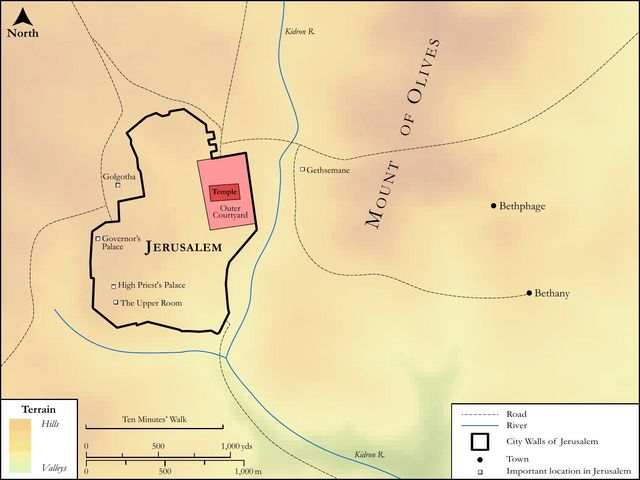
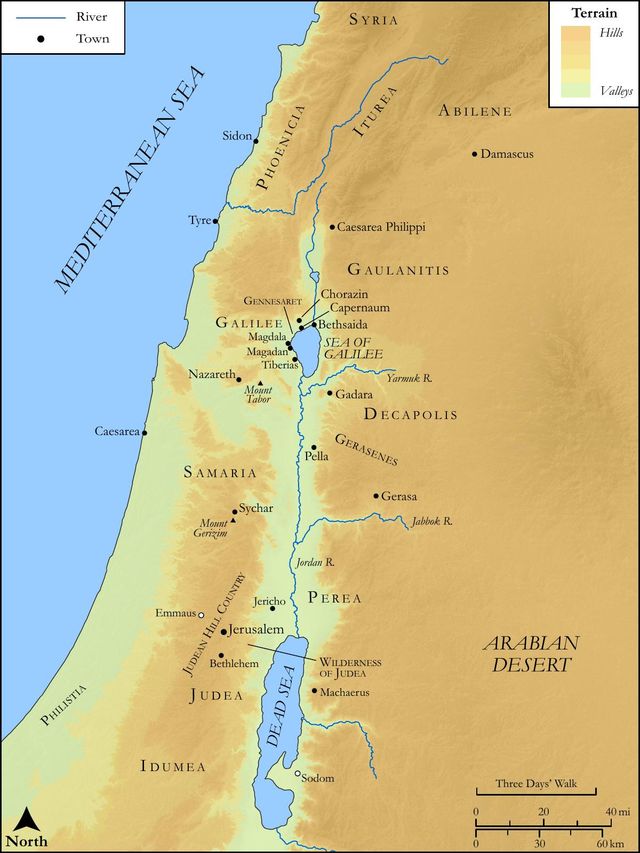
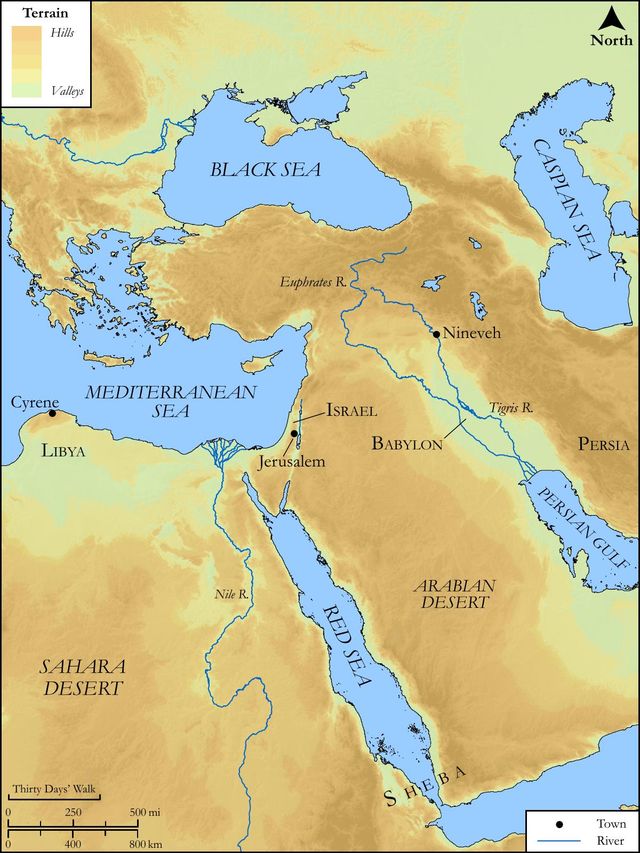
See on the biblical-era map
Study this verse
Public-domain commentary
Matthew Henry
From his Commentary on the Whole Bible. Henry comments on passages, not single verses — this entry covers Matthew 10:5–15. His four-level outline is real structure in the source text, so it is rendered as structure.
We have here the instructions that Christ gave to his disciples, when he gave them their commission. Whether this charge was given them in a continued discourse, or the several articles of it hinted to them at several times, is not material; in this he commanded them. Jacob's blessing his sons, is called his commanding them, and with these commands Christ commanded a blessing. Observe,
I.The people to whom he sent them. These ambassadors are directed what places to go to.
1.Not to the Gentiles nor the Samaritans. They must not go into the way of the Gentiles, nor into any road out of the land of Israel, whatever temptations they might have. The Gentiles must not have the gospel brought them, till the Jews have first refused it. As to the Samaritans, who were the posterity of the mongrel people that the king of Assyria planted about Samaria, their country lay between Judea and Galilee, so that they could not avoid going into the way of the Samaritans, but they must not enter into any of their cities. Christ had declined manifesting himself to the Gentiles or Samaritans, and therefore the apostles must not preach to them. If the gospel be hid from any place, Christ thereby hides himself from that place. This restraint was upon them only in their first mission, afterwards they were appointed to go into all the world, and teach all nations.
2.But to the lost sheep of the house of Israel. To them Christ appropriated his own ministry (Mat 15:24), for he was a minister of the circumcision (Rom 15:8): and, therefore, to them the apostles, who were but his attendants and agents, must be confined. The first offer of salvation must be made to the Jews, Act 3:26. Note, Christ had a particular and very tender concern for the house of Israel; they were beloved for the fathers' sakes, Rom 11:28. He looked with compassion upon them as lost sheep, whom he, as a shepherd, was to gather out of the by-paths of sin and error, into which they were gone astray, and in which, if not brought back, they would wander endlessly; see Jer 2:6. The Gentiles also had been as lost sheep, Pe1 2:25. Christ gives this description of those to whom they were sent, to quicken them to diligence in their work, they were sent to the house of Israel (of which number they themselves lately were), whom they could not but pity, and be desirous to help.
II.The preaching work which he appointed them.
He did not send them forth without an errand; no, As ye go, preach, Mat 10:7. They were to be itinerant preachers: wherever they come they must proclaim the beginning of the gospel, saying, The kingdom of heaven is at hand. Not that they must say nothing else, but this must be their text; on this subject they must enlarge: let people know, that the kingdom of the Messiah, who is the Lord from heaven, is now to be set up according to the scriptures; from whence it follows, that men must repent of their sins and forsake them, that they might be admitted to the privileges of that kingdom. It is said (Mar 6:12), they went out, and preached that men should repent; which was the proper use and application of this doctrine, concerning the approach of the kingdom of heaven. They must, therefore, expect to hear more of this long-looked-for Messiah shortly, and must be ready to receive his doctrine, to believe in him, and to submit to his yoke. The preaching of this was like the morning light, to give notice of the approach of the rising sun. How unlike was this to the preaching of Jonah, which proclaimed ruin at hand! Jon 3:4. This proclaims salvation at hand, nigh them that fear God; mercy and truth meet together (Psa 85:9, Psa 85:10), that is, the kingdom of heaven at hand: not so much the personal presence of the king; that must not be doated upon; but a spiritual kingdom which is to be set up, when his bodily presence is removed, in the hearts of men.
Now this was the same that John the Baptist and Christ had preached before. Note, People need to have good truths pressed again and again upon them, and if they be preached and heard with new affections, they are as if they were fresh to us. Christ, in the gospel, is the same yesterday, today, and for ever, Heb 13:8. Afterwards, indeed, when the Spirit was poured out, and the Christian church was formed, this kingdom of heaven came, which was now spoken of as at hand; but the kingdom of heaven must still be the subject of our preaching: now it is come, we must tell people it is come to them, and must lay before them the precepts and privileges of it; and there is a kingdom of glory yet to come, which we must speak of as at hand, and quicken people to diligence from the consideration of that.
III.The power he gave them to work miracles for the confirmation of their doctrine, Mat 10:8.
When he sent them to preach the same doctrine that he had preached, he empowered them to confirm it, by the same divine seals, which could never be set to a lie. This is not necessary now the kingdom of God is come; to call for miracles now is to lay again the foundation when the building is reared. The point being settled, and the doctrine of Christ sufficiently attested, by the miracles which Christ and his apostles wrought, it is tempting God to ask for more signs. They are directed here,
1.To use their power in doing good: not "Go and remove mountains," or "fetch fire from heaven," but, Heal the sick, cleanse the lepers. They are sent abroad as public blessings, to intimate to the world, that love and goodness were the spirit and genius of that gospel which they came to preach, and of that kingdom which they were employed to set up. By this it would appear, that they were the servants of that God who is good and does good, and whose mercy is over all his works; and that the intention of the doctrine they preached, was to heal sick souls, and to raise those that were dead in sin; and therefore, perhaps, that of raising the dead is mentioned; for though we read not of their raising any to life before the resurrection of Christ, yet they were instrumental to raise many to spiritual life.
2.In doing good freely; Freely ye heave received, freely give. Those that had power to heal all diseases, had an opportunity to enrich themselves; who would not purchase such easy certain cures at any rate? Therefore they are cautioned not to make a gain of the power they had to work miracles: they must cure gratis, further to exemplify the nature and complexion of the gospel kingdom, which is made up, not only of grace, but of free grace. Gratia gratis data (Rom 3:24), freely by his grace, Buy medicines without money, and without price, Isa 55:1. And the reason is, because freely you have received. Their power to heal the sick cost them nothing, and, therefore, they must not make any secular advantage to themselves of it. Simon Magus would not have offered money for the gifts of the Holy Ghost, if he had not hoped to get money by them; Act 8:18. Note, The consideration of Christ's freeness in doing good to us, should make us free in doing good to others.
IV.The provision that must be made for them in this expedition; it is a thing to be considered in sending an ambassador, who must bear the charge of the embassy. As to that,
1.They must make no provision for it themselves, Mat 10:9, Mat 10:10. Provide neither gold nor silver. As, on the one hand, they shall not raise estates by their work, so, on the other hand, they shall not spend what little they have of their own upon it. This was confined to the present mission, and Christ would teach them,
(1.)To act under the conduct of human prudence. They were now to make but a short excursion, and were soon to return to their Master, and to their head-quarters again, and, therefore, why should they burthen themselves with that which they would have no occasion for?
(2.)To act in dependence upon Divine Providence. They must be taught to live, without taking thought for life, Mat 6:25, etc. Note, They who go upon Christ's errand, have, of all people, most reason to trust him for food convenient. Doubtless he will not be wanting to those that are working for him. Those whom he employs, as they are taken under special protection, so they are entitled to special provisions. Christ's hired servants shall have bread enough and to spare; while we abide faithful to God and our duty, and are in care to do our work well, we may cast all our other care upon God; Jehovah-jireh, let the Lord provide for us and ours as he thinks fit.
2.They might expect that those to whom they were sent would provide for them what was necessary, Mat 10:10. The workman is worthy of his meat. They must not expect to be fed by miracles, as Elijah was: but they might depend upon God to incline the hearts of those they went among, to be kind to them, and provide for them. Though they who serve at the altar may not expect to grow rich by the altar, yet they may expect to live, and to live comfortably upon it, Co1 9:13, Co1 9:14. It is fit they should have their maintenance from their work. Ministers are, and must be, workmen, labourers, and they that are so are worthy of their meat, so as not to be forced to any other labour for the earning of it. Christ would have his disciples, as not to distrust their God, so not to distrust their countrymen, so far as to doubt of a comfortable subsistence among them. If you preach to them, and endeavour to do good among them, surely they will give you meat and drink enough for your necessities: and if they do, never desire dainties; God will pay you your wages hereafter, and it will be running on in the mean time.
V.The proceedings they were to observe in dealing with any place, Mat 10:11-15.
They went abroad they knew not whither, uninvited, unexpected, knowing none, and known of none; the land of their nativity was to them a strange land; what rule must they go by? what course must they take? Christ would not send them out without full instructions, and here they are.
1.They are here directed how to conduct themselves toward those that were strangers to them; How to do,
(1.)In strange towns and cities: when you come to a town, enquire who in it is worthy.
[1.]It is supposed that there were some such in every place, as were better disposed than others to receive the gospel, and the preachers of it; though it was a time of general corruption and apostasy. Note, In the worst of times and places, we may charitably hope that there are some who distinguish themselves, and are better than their neighbours; some who swim against the stream, and are as wheat among the chaff. There were saints in Nero's household. Enquire who is worthy, who there are that have some fear of God before their eyes, and have made a good improvement of the light and knowledge they have. The best are far from meriting the favour of a gospel offer; but some would be more likely than others to give the apostles and their message a favourable entertainment, and would not trample these pearls under their feet. Note, Previous dispositions to that which is good, are both directions and encouragements to ministers, in dealing with people. There is most hope of the word being profitable to those who are already so well inclined, as that it is acceptable to them; and there is here and there one such.
[2.]They must enquire out such; not enquire for the best inns; public houses were no proper places for them that neither took money with them (Mat 10:9), nor expected to receive any (Mat 10:8); but they must look out for accommodations in private houses, with those that would entertain them well, and expect no other recompence for it but a prophet's reward, an apostle's reward, their praying and preaching. Note, They that entertain the gospel, must neither grudge the expense of it, nor promise themselves to get by it in this world. They must enquire, not who is rich, but who is worthy; not who is the best gentleman, but who is the best man. Note, Christ's disciples, wherever they come, should ask for the good people of the place, and be acquainted with them; when we took God for our God, we took his people for our people, and like will rejoice in its like. Paul in all his travels found out the brethren, if there were any, Act 28:14. It is implied, that if they did enquire who was worthy, they might discover them. They that were better than their neighbours would be taken notice of, and any one could tell them, there lives an honest, sober, good man; for this is a character which, like the ointment of the right hand, betrays itself and fills the house with its odours. Every body knew where the seer's house was, Sa1 9:18.
[3.]In the house of those they found worthy, they must continue; which intimates that they were to make so short a stay at each town, that they needed not change their lodging, but whatever house providence brought them to at first, there they must continue till they left that town. They are justly suspected, as having no good design, that are often changing their quarters. Note, It becomes the disciples of Christ to make the best of that which is, to abide by it, and not be for shifting upon every dislike or inconvenience.
(2.)In strange houses. When they had found the house of one they thought worthy, they must at their entrance salute it. "In those common civilities, be beforehand with people, in token of your humility. Think it not a disparagement, to invite yourselves into a house, nor stand upon the punctilio of being invited. Salute the family, [1.] To draw on further discourse, and so to introduce your message." (From matters of common conversation, we may insensibly pass into that communication which is good to the use of edifying.) [2.] "To try whether you are welcome or not; you will take notice whether the salutation be received with shyness and coldness, or with a ready return. He that will not receive your salutation kindly, will not receive your message kindly; for he that is unskilful and unfaithful in a little, will also be in much, Luk 16:10. [3.] To insinuate yourselves into their good opinion. Salute the family, that they may see that though you are serious, you are not morose." Note, Religion teaches us to be courteous and civil, and obliging to all with whom we have to do. Though the apostles went out backed with the authority of the Son of God himself, yet their instructions were, when they came into a house, not to command it, but to salute it; for love's sake rather to beseech, is the evangelical way, Plm 1:8, Plm 1:9. Souls are first drawn to Christ with the cords of a man, and kept to him by the bands of love, Hos 11:4. When Peter made the first offer of the gospel to Cornelius, a Gentile, Peter was first saluted; see Act 10:25, for the Gentiles courted that which the Jews were courted to.
When they had saluted the family after a godly sort, they must by the return, judge concerning the family, and proceed accordingly. Note, The eye of God is upon us, to observe what entertainment we give to good people and good ministers; if the house be worthy, let your peace come and rest upon it; if not, let it return to you, Mat 10:13. It seems then, that after they had enquired for the most worthy (Mat 10:11), it was possible they might light upon those that were unworthy. Note, Though it is wisdom to hearken to, yet it is folly to rely upon, common report and opinion; we ought to use a judgment of discretion, and to see with our own eyes. The wisdom of the prudent is himself to understand his own way. Now this rule is intended,
First, For satisfaction to the apostles. The common salutation was, Peace be unto you; this, as they used it, was turned into gospel; it was the peace of God, the peace of the kingdom of heaven, that they wished. Now lest they should make a scruple of pronouncing this blessing upon all promiscuously, because many were utterly unworthy of it, this is to clear them of that scruple; Christ tells them that this gospel prayer (for so it was now become) should be put up for all, as the gospel proffer was made to all indefinitely, and that they should leave it to God who knows the heart, and every man's true character, to determine the issue of it. If the house be worthy, it will reap the benefit of your blessing; if now, there is no harm done, you will not lose the benefit of it; it shall return to you, as David's prayers for his ungrateful enemies did, Psa 35:13. Note, It becomes us to judge charitably of all, to pray heartily for all, and to conduct ourselves courteously to all, for that is our part, and then to leave it with God to determine what effect it shall have upon them, for that is his part.
Secondly, For direction to them. "If, upon your salutation, it appear that they are indeed worthy, let them have more of your company, and so let your peace come upon them; preach the gospel to them, peace by Jesus Christ; but if otherwise, if they carry it rudely to you, and shut their doors against you, let your peace, as much as in you lies, return to you. Retract what you have said, and turn your backs upon them; by slighting this, they have made themselves unworthy of the rest of your favours, and cut themselves short of them." Note, Great blessings are often lost by a neglect seemingly small and inconsiderable, when men are in their probation and upon their behaviour. Thus Esau lost his birthright (Gen 25:34), and Saul his kingdom, Sa1 13:13, Sa1 13:14.
2.They are here directed how to carry it towards those that were refusers of them. The case is put (Mat 10:14) of those that would not receive them, nor hear their words. The apostles might think, that now they had such a doctrine to preach, and such a power to work miracles for the confirmation of it, no doubt but they should be universally entertained and made welcome: they are, therefore, told before, that there would be those that would slight them, and put contempt on them and their message. Note, The best and most powerful preachers of the gospel must expect to meet with some, that will not so much as give them the hearing, nor show them any token of respect. Many turn a deaf ear, even to the joyful sound, and will not hearken to the voice of the charmers, charm they never so wisely. Observe, "They will not receive you, and they will not hear your words." Note, Contempt of the gospel, and contempt of gospel ministers, commonly go together, and they will either of them be construed into a contempt of Christ, and will be reckoned for accordingly.
Now in this case we have here,
(1.)The directions given to the apostles what to do. They must depart out of that house or city. Note, The gospel will not tarry long with those that put it away from them. At their departure they must shake off the dust of their feet,
[1.]In detestation of their wickedness; it was so abominable, that it did even pollute the ground they went upon, which must therefore be shaken off as a filthy thing. The apostles must have no fellowship nor communion with them; must not so much as carry away the dust of their city with them. The work of them that turn aside shall not cleave to me, Psa 101:3. The prophet was not to eat or drink in Bethel, Kg1 13:9.
[2.]As a denunciation of wrath against them. It was to signify, that they were base and vile as dust, and that God would shake them off. The dust of the apostles' feet, which they left behind them, would witness against them, and be brought in as evidence, that the gospel had been preached to them, Mar 6:11. Compare Jam 5:3. See this practised, Act 13:51, Act 18:6. Note, They who despise God and his gospel shall be lightly esteemed.
(2.)The doom passed upon such wilful recusants, Mat 10:15. It shall be more tolerable, in the day of judgment, for the land of Sodom, as wicked a place as it was. Note,
[1.]There is a day of judgment coming, when all those that refused the gospel will certainly be called to account for it; however they now make a jest of it. They that would not hear the doctrine that would save them, shall be made to hear the sentence that will ruin them. Their judgment is respited till that day.
[2.]There are different degrees of punishment in that day. All the pains of hell will be intolerable; but some will be more so than others. Some sinners sink deeper into hell than others, and are beaten with more stripes.
[3.]The condemnation of those that reject the gospel, will in that day be severer and heavier than that of Sodom and Gomorrah. Sodom is said to suffer the vengeance of eternal fire, Jde 1:7. But that vengeance will come with an aggravation upon those that despise the great salvation. Sodom and Gomorrah were exceedingly wicked (Gen 13:13), and that which filled up the measure of their iniquity was, that they received not the angels that were sent to them, but abused them (Gen 19:4, Gen 19:5), and hearkened not to their words, Mat 10:14. And yet it will be more tolerable for them than for those who receive not Christ's ministers and hearken not to their words. God's wrath against them will be more flaming, and their own reflections upon themselves more cutting. Son, remember I will sound most dreadfully in the ears of such as had a fair offer made them of eternal life, and chose death rather. The iniquity of Israel, when God sent them his servants the prophets, is represented as, upon that account, more heinous than the iniquity of Sodom (Eze 16:48, Eze 16:49), much more now he sent them his Son, the great Prophet.
Historical interpretation
Eleven Centuries of Reception
15 surviving comments on this verse. Each one is dated, so this reads as a timeline rather than a list.
Select a marker to jump to its quote. Markers stagger vertically where authors wrote within a few decades of each other.
Now, the Gentiles knew nothing either of Him, or of any of His promises. Therefore it was to Israel that he spake when He said, "I am not sent but to the lost sheep of the house of Israel." Not yet had He "cast to the dogs the children's bread; " not yet did He charge them to "go into the way of the Gentiles." It is only at the last that He instructs them to "go and teach all nations, and baptize them," when they were so soon to receive "the Holy Ghost, the Comforter, who should guide them into all the truth."
"When they begin," He says, "to persecute you, flee from city to city," We maintain that this belongs specially to the persons of the apostles, and to their times and circumstances, as the following sentences will show, which are suitable only to the apostles: "Do not go into the way of the Gentiles, and into a city of the Samaritans do not enter: but go rather to the lost sheep of the house of Israel." But to us the way of the Gentiles is also open, as in it we in fact were found, and to the very last we walk; and no city has been excepted.
The promulgation of the Law deserved also the first preaching of the Gospel; and Israel was to have less excuse for its crime, as it had experienced more care in being warned.
Though they are here called sheep, yet they raged against Christ with the tongues and throats of wolves and vipers.
The exercise of the Lord's power is wholly entrusted to the Apostles, that they who were formed in the image of Adam, and the likeness of God, should now obtain the perfect image of Christ; and whatever evil Satan had introduced into the body of Adam, this they should now repair by communion with the Lord's power.
They are warned to avoid the ways of the Gentiles, not because they were never going to be sent for the salvation of the Gentiles, but because they were to avoid the works and lifestyle of the unenlightened Gentiles. They were forbidden to enter the towns of the Samaritans. Yet, did he not cure the Samaritan woman? They were warned, moreover, not to go into the assemblies of heretics. For heterodoxy does not differ at all from unenlightenment. Therefore they were being sent to the lost sheep of the house of Israel, who raged against him with the tongues and jaws of wolves and vipers. At any rate, the law was due to receive the special benefit of the gospel. The less excuse Israel had for its ungodly behavior, the more zeal it might have in heeding the warning.
Observe the propriety of the time in which they are sent. After they had seen the dead raised, the sea rebuked, and other like wonders, and had had both in word and deed sufficient proof of His excellent power, then He sends them.
Also they were sent to the Jews first, in order that being trained in Judæa, as in a palæstra, they might enter on the arena of the world to contend; thus He taught them like weak nestlings to fly.
Also that they should not suppose that they were hated of Christ because they had reviled Him, and branded Him as demoniac, He sought first their cure, and withholding His disciples from all other nations, He sent this people physicians and teachers; and not only forbid them to preach to any others before the Jews, but would not that they should so much as approach the way that led to the Gentiles; Go not into the way of the Gentiles. And because the Samaritans, though more readily disposed to be converted to the faith, were yet at enmity with the Jews, He would not suffer the Samaritans to be preached to before the Jews.
From these then He diverts his disciples, and sends them to the children of Israel, whom He calls perishing sheep, not straying; in every way contriving an apology for them, and drawing them to Himself.
Behold the greatness of their ministry, behold the dignity of the Apostles. They are not to preach of any thing that can be an object of sense, as Moses and the Prophets did; but things new and unlooked for; those preached earthly goods, but these the kingdom of heaven and all the goods that are there.
But afterwards they ceased when a reverence for the faith was universally established. Or, if they were continued at all, they were few and seldom; for it is usual with God to do such things when evil is increased, then He shows forth His power.
Observe how He is as careful that they should be upright in moral virtue, as that they should have the miraculous powers, showing that miracles without these are nought. Freely ye have received, seems a check upon their pride; freely give, a command to keep themselves pure from filthy lucre. Or, that what they should do might not be thought to be their own benevolence, He says, Freely ye have received; as much as to say; Ye bestow nothing of your own on those ye relieve; for ye have not received these things for money, nor for wages of labour; as ye have received them, so give to others; for indeed it is not possible to receive a price equal to their value.
But let us see whither, and to whom, He sends them.
"These twelve," it is said, "Jesus sent forth."
What manner of men were these? The fishermen, the publicans: for indeed four were fishermen and two publicans, Matthew and James, and one was even a traitor. And what saith He to them? He presently charges them, saying,
"Go not into the way of the Gentiles, and into any city of the Samaritans enter ye not; but go rather to the lost sheep of the house of Israel."
"For think not at all," saith He, "because they insult me, and call me demoniac, that I hate them and turn away from them. Nay, as I sought earnestly to amend them in the first place, so keeping you away from all the rest, to them do I send you as teachers and physicians. And I not only forbid you to preach to others before these, but I do not suffer you so much as to touch upon the road that leads thither, nor to enter into such a city." Because the Samaritans too are in a state of enmity with the Jews. And yet it was an easier thing to deal with them, for they were much more favorably disposed to the faith; but the case of these was more difficult. But for all this, He sends them on the harder task, indicating his guardian care of them, and stopping the mouths of the Jews, and preparing the way for the teaching of the apostles, that people might not hereafter blame them for "entering in to men uncircumcised," and think they had a just cause for shunning and abhorring them. And he calls them "lost," not "stray," "sheep," in every way contriving how to excuse them, and whining their mind to himself.
"And as ye go," saith He, "preach, saying, The kingdom of Heaven is at hand."
Seest thou the greatness of their ministry? Seest thou the dignity of apostles? Of nothing that is the object of sense are they commanded to speak, nor such as Moses spake of, and the prophets before them, but of some new and strange things. For while the former preached no such things, but earth, and the good things in the earth, these preached the kingdom of Heaven, and whatever is there.
And not from this circumstance only were these the greater, but also from their obedience: in that they shrink not, nor are they backward, like those of old; but, warned as they are of perils, and wars, and of those insupportable evils, they receive with great obedience His injunctions, as being heralds of a kingdom.
"And what marvel," saith one, "if having nothing to preach that is dismal or grievous, they readily obeyed?" What sayest thou? nothing grievous enjoined them? Dost thou not hear of the prisons, the executions, the civil wars, the hatred of all men? all which, He said a little while after, they must undergo. True, as to other men, He sent them to be procurers and heralds of innumerable blessings: but for themselves, He said and proclaimed beforehand, that they were to suffer terrible and incurable ills.
After this, to make them trustworthy, He saith,
"Heal the sick, cleanse the lepers, cast out devils: freely ye have received, freely give."
See how He provides for their conduct, and that no less than for their miracles, implying that the miracles without this are nothing. Thus He both quells their pride by saying, "Freely ye have received, freely give;" and takes order for their being clear of covetousness. Moreover, lest it should be thought their own work, and they be lifted up by the signs that were wrought, He saith, "freely ye have received." "Ye bestow no favor on them that receive you, for not for a price did ye receive these things, nor after toil: for the grace is mine. In like manner therefore give ye to them also, for there is no finding a price worthy of them."
This passage does not contradict the command which He gave afterwards, Go and teach all nations; for this was before His resurrection, that was after. And it behoved the coming of Christ to be preached to the Jews first, that they might not have any just plea, or say that they were rejected of the Lord, who sent the Apostles to the Gentiles and Samaritans.
Figuratively; Herein we who bear the name of Christ are commanded not to walk in the way of the Gentiles, or the error of the heretics, but as we are separate in religion, that we be also separate in our life.
Lest peasants untaught and illiterate, without the graces of speech, should obtain credit with none when they announced the kingdom of heaven, He gives them power to do the things above mentioned, that the greatness of the miracles might approve the greatness of their promises.
And because spiritual gifts are more lightly esteemed when money is made the means of obtaining them, He adds a condemnation of avarice; Freely ye have received, freely give; I your Master and Lord have imparted these to you without price, do you therefore give them to others in like manner, that the free grace of the Gospel be not corrupted.
(Verses 5, 6.) Do not go into the way of the Gentiles, and do not enter into the cities of the Samaritans: but go rather to the lost sheep of the house of Israel. This place is not contrary to the commandment which is afterwards said: Going, teach all nations, baptizing them in the name of the Father, and of the Son, and of the Holy Ghost (Matt. 28:19) . Because this is before the resurrection, and that after the resurrection is the commandment. And it was necessary to announce the first coming of Christ to the Jews, so that they would not have a just excuse for rejecting Him; because He sent the apostles to the Gentiles and to the Samaritans. But according to the tropology, those of us who are called by the name of Christ are commanded not to walk in the error of the way of the gentiles and heretics, so that as their religion is separated, let their way of life be separated as well.
This passage is not contrary to the command given later: “Go, therefore, and make disciples of all nations, baptizing them in the name of the Father, and of the Son and of the Holy Spirit.” The former command was given before the resurrection and the latter after the resurrection. It was necessary to announce Christ’s first coming to the Jews, lest they have a good excuse for saying that the Lord rejected them because he had sent the apostles to the Gentiles and the Samaritans. In line with the metaphor, we who call ourselves Christians are advised not to walk in the ways of the Gentiles and heretics, for they have not only a separate religion but also a separate way of life.
The sick are the slothful who have not strength to live well; the lepers are the unclean in sin and carnal delights; the dæmoniacs are they that are given up under the power of the Devil.
Since it is evident to all, dearest brothers, that our Redeemer came into the world for the redemption of the nations, and since we see Samaritans being called to faith daily, what does it mean that when sending the disciples to preach, He says: "Do not go into the way of the Gentiles, and do not enter into the cities of the Samaritans, but go rather to the lost sheep of the house of Israel"? Unless we understand from the outcome of the event that He wished the preaching to be first to Judea alone, and afterward to all nations, so that when she, though called, refused to be converted, the holy preachers might come in due order to the calling of the nations, and thus our Redeemer's preaching, rejected by His own people, might seek the Gentile peoples as though they were strangers; and what was done as a testimony to the Jews might become an increase of grace for the Gentiles. For there were then some who were to be called from Judea, and some from the Gentiles who were not yet to be called. For in the Acts of the Apostles we read that when Peter preached, first three thousand Hebrews believed, and afterward five thousand. And when the apostles wished to preach to the Gentiles in Asia, they are recorded to have been forbidden by the Spirit; and yet the same Spirit who first forbade the preaching afterward poured it into the hearts of the Asians. For it has been a long time since all of Asia believed. Therefore He first forbade what He afterward brought about, because there were then in that land those who were not to be saved. There were then in that land those who did not yet deserve to be restored to life, nor yet to be judged more severely for having despised the preaching. By a subtle and hidden judgment, therefore, holy preaching is withdrawn from the ears of certain people, because they do not deserve to be raised up by grace. Hence it is necessary, dearest brothers, that in everything we do, we fear the hidden counsels of almighty God over us, lest while our mind, scattered outwardly, does not recall itself from its pleasure, the Judge within terribly arranges adversities against it. Perceiving this well, the Psalmist says: "Come and see the works of the Lord, how terrible He is in His counsels over the sons of men." For he saw that one is mercifully called, while another is rejected as justice demands. And because the Lord arranges some things by sparing, and other things by showing wrath, he trembled at what he could not penetrate. And because he saw Him to be not only unsearchable, but also inflexible in certain of His judgments, he declared Him to be terrible in His counsels.
By the name of every creature, every nation of the Gentiles can also be designated. For before it had been said: "Do not go into the way of the Gentiles." But now it is said, "Preach to every creature," so that the preaching of the apostles, first rejected by Judea, might then become a help to us, when that proud people had rejected it as a testimony to their own condemnation.
(Hom. in Ev. iv. 1.) Or He would be first preached to Judæa and afterwards to the Gentiles, in order that the preaching of the Redeemer should seem to seek out foreign lands only because it had been rejected in His own. There were also at that time some among the Jews who should be called, and among the Gentiles some who were not to be called, as being unworthy of being renewed to life, and yet not deserving of the aggravated punishment which would ensue upon their rejection of the Apostles' preaching.
(ubi sup.) Miracles also were granted to the holy preachers, that the power they should show might be a pledge of the truth of their words, and they who preached new things should also do new things; wherefore it follows, Heal the sick, raise the dead, cleanse the lepers, cast out dæmons.
(Hom. in Ev. xxix. 4.) These signs were necessary in the beginning of the Church; the faith of the believers must be fed with miracles, that it might grow.
(ubi sup.) The Holy Church daily doth spiritually, what it then did materially by the Apostles; yea, things far greater, inasmuch as she raises and cures souls and not bodies.
(Hom. in Ev. iv. 4.) For He knew before that there would be some that would turn the gift of the Spirit which they had received into merchandize, and pervert the power of miracles into an instrument of their covetousness.
Also He willed to be betrayed by a disciple, that you when betrayed by your intimate might bear patiently that your judgment has erred, that your favours have been thrown away.
The kingdom of heaven is here said to draw nigh by the faith in the unseen Creator which is bestowed upon us, not by any movement of the visible elements. The saints are rightly denoted by the heavens, because they contain God by faith, and love Him with affection.
(non occ.) Because the manifestation of the Spirit, as the Apostle speaks, is given for the profit of the Church, after bestowing His power on the Apostles, He sends them that they may exercise this power for the good of others; These twelve Jesus sent forth.
(non occ.) When He sends them, He teaches them whither they should go, what they should preach, and what they should do. And first, whither they should go; Giving them commandment, and saying, Go ye not into the way of the Gentiles, and into any city of the Samaritans enter ye not; hut go ye rather to the lost sheep of the house of Israel.
(ap. Anselm.) The Samaritans were Gentiles who had been settled in the land of Israel by the king of Assyria after the captivity which he made. They had been driven by many terrors to turn to Judaism, and had received circumcision and the five books of Moses, but renouncing every thing else; hence there was no communication between the Jews and the Samaritans.
(non occ.) Having told them to whom they should go, He now introduces what they should preach; Go and preach, saying, The kingdom of heaven is at hand.
(non occ.) This He says, that Judas who had the bag might not use the above power for getting money; a plain condemnation of the abomination of the simoniacal heresy.
Continue studying Matthew 10:5 across the web’s major study libraries — every link below opens this exact verse, chapter, or book on the destination site.
Read & Compare
 BibleGatewayThis verse in more than 200 translations and 70 languages.
 Bible.comThe YouVersion reader — hundreds of translations, reading plans, and highlights.
 ESV.orgCrossway's official English Standard Version reader.
 NET BibleThe NET translation with 60,000+ translators' notes on every rendering decision.
 STEP BibleTyndale House's free study tool — original text, vocabulary, and scholarly resources.
 BibliaLogos Bible Software's free web reader.
 USCCBThe New American Bible (Revised Edition) with the U.S. bishops' study notes.
Commentaries
 BibleHub CommentariesDozens of classic commentaries on this verse, gathered on one page.
 StudyLightMore than 100 commentary sets — the largest collection on the web.
 BibleRefPlain-English commentary on what this verse means, verse by verse.
 Enduring WordDavid Guzik's free commentary on this chapter, widely used by Bible teachers.
 Bible Study ToolsVerse commentary alongside Greek and Hebrew study aids.
Original Language & Research
- BibleHub InterlinearThe verse word by word — original language, transliteration, and English.
- BibleHub LexiconEvery word's original-language definition and Strong's entry.
 Blue Letter BibleDeep-study tools — Strong's numbers, concordance, and word studies.
 CNTR CollationThe earliest Greek manuscripts of this verse, collated letter by letter.
Sermons, Hymns & Audio


TrulyRandomVerse is not affiliated with these sites and doesn’t control their content. They’re linked because they’re genuinely useful.
Summary
Matthew 10:5 marks a pivotal moment in Jesus' earthly ministry, detailing the specific, initial commission given to His twelve disciples. In this verse, Jesus dispatches His chosen apostles with explicit instructions to limit their outreach geographically and ethnically, directing them to avoid the regions inhabited by Gentiles and Samaritans. This command highlights a strategic, phased approach to the proclamation of the Kingdom of Heaven, prioritizing the "lost sheep of the house of Israel" before the message would eventually expand to all nations.
Context
ShowHideLiterary Context
This verse is situated within Jesus' extensive discourse to His twelve apostles, immediately following their formal appointment and listing in Matthew 10:2-4. The broader context begins in Matthew 9:35-38, where Jesus, observing the harassed and scattered crowds, expresses compassion and notes that "the harvest is plentiful, but the laborers are few." He then charges His disciples to pray for more laborers, and subsequently, He empowers and sends them out. Matthew 10:5-15 contains the specific instructions for this inaugural mission, which includes commands regarding their conduct, message, and the reception they should expect. The immediate follow-up in Matthew 10:6 explicitly states the positive command that complements the negative one here: "But go rather to the lost sheep of the house of Israel." This initial, restricted mission serves as both a training exercise and a focused outreach to God's covenant people.
Historical & Cultural Context
The distinction between Jews, Gentiles, and Samaritans was deeply ingrained in first-century Jewish society. "Gentiles" (Gk. ethne) referred to all non-Jewish peoples, often viewed with suspicion or disdain due to their pagan practices and lack of adherence to the Mosaic Law. The "Samaritans" were a distinct ethno-religious group inhabiting the region of Samaria, located between Judea and Galilee. Their origins traced back to the intermarriage of the remaining Israelites with foreign settlers after the Assyrian conquest in 722 BC, leading to a mixed heritage and a syncretistic religion that incorporated elements of Israelite worship but rejected the Jerusalem Temple in favor of their own temple on Mount Gerizim. This historical and theological divergence fostered profound animosity between Jews and Samaritans, famously illustrated in John 4:9. Jesus' command to avoid these groups for this specific mission would have been readily understood by the disciples within this cultural framework, emphasizing a strategic, initial focus on the Jewish population, who were the primary recipients of God's covenant promises.
Key Themes
ShowHideThis verse contributes significantly to several key themes within Matthew's Gospel and broader biblical theology. Firstly, it underscores the limited scope of the initial mission, highlighting Jesus' strategic, phased approach to evangelism. This was a training ground for the disciples, preparing them for future, broader ministries, but initially focused on Jewish audiences as seen in Matthew 10:6. Secondly, it emphasizes the priority to Israel in God's redemptive plan. God's covenant relationship with Israel meant that the message of the Messiah would first be offered to His chosen people, fulfilling ancient prophecies regarding the coming of the Messiah to Israel. Thirdly, it reveals divine timing and strategy in the unfolding of God's redemptive plan. Jesus, in His wisdom, understood the necessity of establishing the foundational message within Israel before expanding to a global reach, a progression that culminates in the Great Commission after His resurrection. Finally, for the apostles, this command was an integral part of their discipleship and obedience, teaching them to follow specific divine directives, even when they might seem restrictive in a broader sense, thereby preparing them for the universal mission that lay ahead.
Exposition and Analysis
ShowHideKey Word Analysis
ShowHideThis verb (G649) means "to send out (properly, on a mission)." It is the root from which the English word "apostle" is derived, signifying one who is "sent out" with authority and a specific commission. Jesus' act of "sending forth" these twelve individuals underscores their designated role as His authorized representatives, establishing the foundational nature of their mission.
This noun (G1484) refers to "a race (as of the same habit), i.e. a tribe; specially, a foreign (non-Jewish) one (usually, by implication, pagan)." In the New Testament, it consistently denotes non-Jewish peoples, distinguishing them from Israel. Jesus' prohibition against entering "the way of the Gentiles" highlights a temporary but deliberate restriction of the mission's scope to the Jewish people.
This term (G4541) refers to an "inhabitant of Samaria." As discussed in the context, Samaritans were a distinct ethno-religious group with whom Jews had significant historical and religious animosity. The explicit exclusion of Samaritan cities further underscores the focused nature of this initial mission solely on the Jewish population.
Verse Breakdown
ShowHide"These twelve Jesus sent forth, and commanded them, saying,"
This opening clause establishes Jesus' authority and intentionality. He is the one initiating and directing the mission, and the twelve are His chosen agents. The phrase "sent forth" (apostéllō) highlights their role as apostles, those uniquely commissioned by Christ. The subsequent "commanded them, saying" introduces the specific, authoritative instructions that follow, emphasizing the non-negotiable nature of His directives.
"Go not into the way of the Gentiles,"
This is the first negative command, prohibiting the disciples from traveling along roads or entering regions primarily inhabited by non-Jewish people. The "way" (hodós) here implies not just a physical path but a sphere of activity or direction. This restriction signifies a deliberate, temporary exclusion of the broader pagan world from this initial phase of the gospel proclamation, focusing the disciples' efforts exclusively on Israel.
"and into [any] city of the Samaritans enter ye not:"
This second negative command reinforces the geographical and ethnic limitation. Samaritans, though ethnically distinct from Gentiles, were also outside the immediate scope of this mission due to their mixed heritage and divergent religious practices. The explicit prohibition against entering their cities underscores the precise boundaries Jesus set for this specific outreach, further narrowing the focus to the Jewish population and their towns.
Literary Devices
ShowHideMatthew 10:5 employs several literary devices that enhance its meaning and impact. The most prominent is Negative Parallelism, where two distinct but similar prohibitions are placed side-by-side ("Go not into the way of the Gentiles, and into [any] city of the Samaritans enter ye not"). This structure emphasizes the dual exclusion and reinforces the specific, narrow focus of the mission. There is also an element of Foreshadowing, as this temporary restriction implicitly points to a future, broader mission. The very existence of this prohibition suggests that a time will come when the message will go to the Gentiles and Samaritans, setting up the dramatic expansion seen later in the New Testament. Furthermore, the passage uses Synecdoche in "the way of the Gentiles," where "way" represents the entire domain or sphere of Gentile habitation and influence, succinctly conveying the scope of the exclusion. The specific mention of "city of the Samaritans" also uses a form of Metonymy, where the city stands for the entire Samaritan people and their territory, highlighting the deep-seated cultural and religious divisions that necessitated this temporary directive.
Theological and Thematic Connections
ShowHideMatthew 10:5 provides a critical insight into God's redemptive strategy, demonstrating that His plan unfolds in stages, beginning with His covenant people, Israel. This initial restriction does not negate God's universal love or ultimate intention for all nations to hear the Gospel, but rather underscores the divine order of salvation history: "to the Jew first and also to the Greek" (Romans 1:16). This temporary limitation was essential for establishing the Kingdom message within its historical and theological context, allowing the disciples to be thoroughly trained and the message to be firmly rooted among those who possessed the Old Testament promises. It highlights God's faithfulness to His covenants with Israel while simultaneously preparing the ground for the eventual inclusion of the Gentiles, a mystery fully revealed in Christ.
Reflection and Application
ShowHideMatthew 10:5 offers profound lessons for contemporary believers regarding divine strategy, obedience, and the nature of ministry. It reminds us that God's plans often unfold in specific, sometimes seemingly counter-intuitive, stages. Just as Jesus had a particular focus for His disciples' initial mission, so too might God call us to specific, limited spheres of influence or tasks for a season. This verse challenges us to discern God's particular instructions for our lives and ministries, rather than assuming a universal approach is always appropriate. Obedience to specific divine directives, even when they seem restrictive or do not align with our broader aspirations, is crucial for effective service and spiritual formation. It teaches us the importance of strategic evangelism and discipleship, recognizing that preparation and focused effort may precede wider expansion. Ultimately, it encourages us to trust God's perfect timing and wisdom in the unfolding of His redemptive purposes in the world and in our individual lives.
Questions for Reflection
ShowHideFAQ
ShowHideWhy did Jesus restrict the disciples' mission to exclude Gentiles and Samaritans?
ShowHideJesus' restriction was a strategic and theological necessity for this initial phase of the Gospel's proclamation. Theologically, God's covenant promises and the Messiah's arrival were first and foremost for Israel (Romans 9:4-5). This initial mission honored that divine priority, fulfilling prophecies that the Messiah would come to His own people. Strategically, it allowed the disciples to focus their efforts, gain experience, and establish the Kingdom message within a familiar cultural and religious context before expanding to the more complex and hostile Gentile world. It was a training mission, preparing them for the eventual universal commission after Jesus' resurrection.
Does this command contradict the Great Commission in Matthew 28:19?
ShowHideNo, it does not contradict the Great Commission; rather, it sets the stage for it. Matthew 10:5 represents a temporary, specific directive for an inaugural mission during Jesus' earthly ministry. The Great Commission in Matthew 28:19-20 is a post-resurrection command, given after Jesus had accomplished salvation and was about to ascend. At that point, the barriers between Jew and Gentile were broken down in Christ (Ephesians 2:14-16), and the Gospel was ready to be proclaimed to "all nations." This progression illustrates God's unfolding redemptive plan, moving from a focused beginning to a universal conclusion.
What is the significance of "the way of the Gentiles" and "city of the Samaritans" specifically?
ShowHide"The way of the Gentiles" refers to the territories and routes predominantly inhabited by non-Jewish peoples, signifying a complete avoidance of their sphere of influence for this mission. The "city of the Samaritans" specifically targets a group with whom Jews had deep-seated historical and religious animosity, despite their partial Israelite heritage. By explicitly excluding both, Jesus underscored the narrow, ethnically Jewish focus of this initial mission. It was a clear boundary marker, ensuring the disciples understood the precise scope of their immediate task.
Christ-Centered Fulfillment
ShowHideWhile Matthew 10:5 outlines a temporary restriction for the disciples' mission, Jesus Himself embodies the ultimate fulfillment of God's redemptive plan, which begins with Israel but extends to all humanity. Even as He sent His disciples only to the "lost sheep of the house of Israel" (Matthew 15:24), Jesus personally demonstrated an universal reach that transcended these very boundaries. He intentionally engaged with a Samaritan woman at the well, revealing His identity as Messiah to her (John 4:7-26), and later commended the faith of a Roman centurion (Matthew 8:5-13) and healed the daughter of a Canaanite woman (Matthew 15:21-28). These encounters foreshadowed the universal scope of His atoning work. His death on the cross broke down the "dividing wall of hostility" between Jew and Gentile (Ephesians 2:14), making one new humanity in Himself. Thus, the temporary restriction in Matthew 10:5 highlights the strategic wisdom of the Son of God, who, having first come as a "servant to the circumcised to show God's truthfulness, in order to confirm the promises given to the patriarchs" (Romans 15:8), ultimately became the "light for the Gentiles" (Isaiah 49:6) and the Savior of the world (John 4:42).