


Luke 12:11
Bible text: King James Version (1769 Blayney text) · Public domain
Bible text: King James Version with Strong's numbers · Public domain
Bible text: Berean Standard Bible · Public domain
Bible text: American Standard Version (1901) · Public domain
Bible text: World English Bible, Messianic edition · Public domain
Bible text: Geneva Bible (1599) · Public domain
Bible text: Young's Literal Translation · Public domain
- ὍτανHotanWhenG3752CONJConjunction
- δὲdethenG1161CONJConjunction
- εἰσφέρωσινeispherōsinthey may bring inG1533V-PAS-3PVerb Present Active Subjunctive 3rd Plural
- ὑμᾶςhumasyouG4771P-2APPersonal pronoun Accusative 2nd Plural
- ἐπὶepibeforeG1909PREPPreposition
- τὰςtastheG3588T-APFDefinite article Accusative Plural Feminine
- συναγωγὰςsunagōgassynagoguesG4864N-APFNoun Accusative Plural Feminine
- καὶkaiandG2532CONJConjunction
- τὰςtastheG3588T-APFDefinite article Accusative Plural Feminine
- ἀρχὰςarchasrulersG746N-APFNoun Accusative Plural Feminine
- καὶkaiandG2532CONJConjunction
- τὰςtastheG3588T-APFDefinite article Accusative Plural Feminine
- ἐξουσίαςexousiasauthoritiesG1849N-APFNoun Accusative Plural Feminine
- μὴmēnotG3361PRT-NNegative Particle Negative
- μεριμνήσητεmerimnēsētemay be anxiousG3309V-AAS-2PVerb Aorist Active Subjunctive 2nd Plural
- πῶςpōshowG4459PRT-IInterrogative Particle Interrogative
- ἢēorG2228CONJConjunction
- τίtiwhatG5101I-ASNInterrogative pronoun Accusative Singular Neuter
- ἀπολογήσησθεapologēsēstheyou may present a defenseG626V-ADS-2PVerb Aorist Middle Deponent Subjunctive 2nd Plural
- ἢēorG2228CONJConjunction
- τίtiwhatG5101I-ASNInterrogative pronoun Accusative Singular Neuter
- εἴπητε·eipēteyou may sayG2036V-2AAS-2PVerb 2nd Aorist Active Subjunctive 2nd Plural
English is a literal word-by-word gloss of the Greek, not the KJV's wording. Why?
This is the original text the KJV's translators worked from — each Greek word with its own literal English meaning in this verse, prepared by scholars at Tyndale House, Cambridge. The KJV translates whole sentences, not word by word, so its wording differs: one Greek word can become several English words, and the KJV may choose “charity” where the gloss reads “love”. Both are faithful — they answer different questions. For the KJV's own rendering, switch to the KJV text.
Details
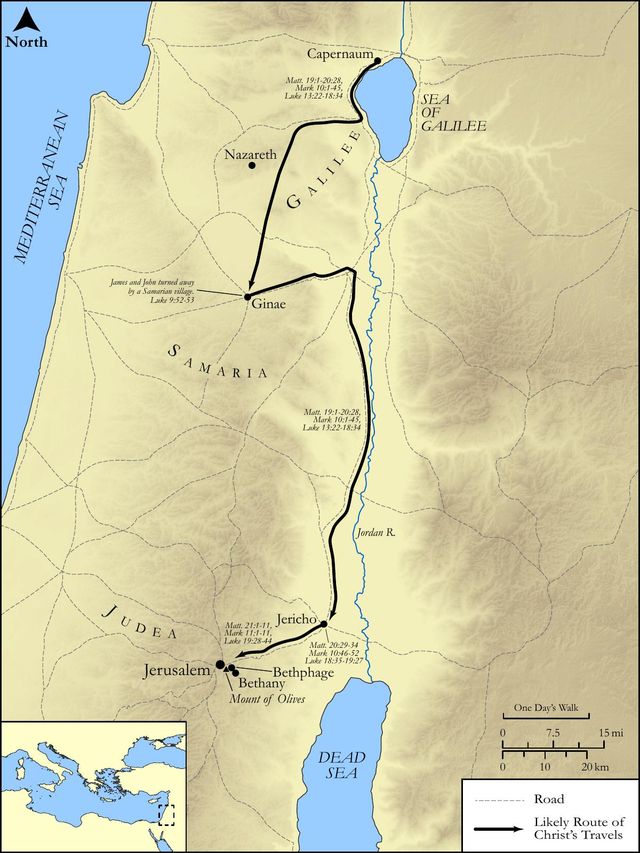
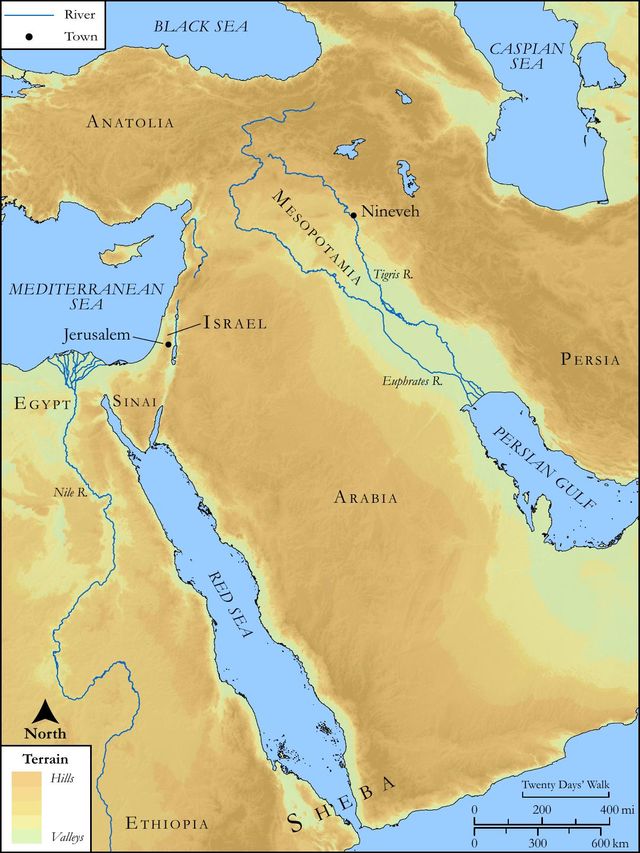
See on the biblical-era maps

Study this verse
Public-domain commentary
Matthew Henry
From his Commentary on the Whole Bible. Henry comments on passages, not single verses — this entry covers Luke 12:1–12. His four-level outline is real structure in the source text, so it is rendered as structure.
We find here, I. A vast auditory that was got together to hear Christ preach. The scribes and Pharisees sought to accuse him, and do him mischief; but the people, who were not under the bias of their prejudices and jealousies, still admired him, attended on him, and did him honour. In the mean time (Luk 12:1), while he was in the Pharisee's house, contending with them that sought to ensnare him, the people got together for an afternoon sermon, a sermon after dinner, after dinner with a Pharisee; and he would not disappoint them. Though in the morning sermon, when they were gathered thickly together (Luk 11:29), he had severely reproved them, as an evil generation that seek a sign, yet they renewed their attendance on him; so much better could the people bear their reproofs than the Pharisees theirs. The more the Pharisees strove to drive the people from Christ, the more flocking there was to him. Here was an innumerable multitude of people gathered together, so that they trade one upon another, in labouring to get foremost, and to come within hearing. It is a good sight to see people thus forward to hear the word, and venture upon inconvenience and danger rather than miss an opportunity for their souls. Who are these that thus fly as the doves to their windows? Isa 60:8. When the net is cast where there is such a multitude of fish, it may be hoped that some will be enclosed.
II.The instructions which he gave his followers, in the hearing of this auditory.
1.He began with a caution against hypocrisy. This he said to his disciples first of all; either to the twelve, or to the seventy. These were his more peculiar charge, his family, his school, and therefore he particularly warned them as his beloved sons; they made more profession of religion than others and hypocrisy in that was the sin they were most in danger of. They were to preach to others; and, if they should prevaricate, corrupt the word, and deal deceitfully, hypocrisy would be worse in them than in others. Besides, there was a Judas among them, who was a hypocrite, and Christ knew it, and would hereby startle him, or leave him inexcusable. Christ's disciples were, for aught we know, the best men then in the world, yet they needed to be cautioned against hypocrisy. Christ said this to the disciples, in the hearing of this great multitude, rather than privately when he had them by themselves, to add the greater weight to the caution, and to let the world know that he would not countenance hypocrisy, no, not in his own disciples. Now observe,
(1.)The description of that sin which he warns them against: It is the leaven of the Pharisees.
[1.]It is leaven; it is spreading as leaven, insinuates itself into the whole man, and all that he does; it is swelling and souring as leaven, for it puffs men up with pride, embitters them with malice, and makes their service unacceptable to God.
[2.]It is the leaven of the Pharisees: "It is the sin they are most of them found in. Take heed of imitating them; be not you of their spirit; do not dissemble in Christianity as they do in Judaism; make not your religion a cloak of maliciousness, as they do theirs."
(2.)A good reason against it: "For there is nothing covered that shall not be revealed, Luk 12:2, Luk 12:3. It is to no purpose to dissemble, for, sooner or later, truth will come out; and a lying tongue is but for a moment. If you speak in darkness that which is unbecoming you, and is inconsistent with your public professions, it shall be heard in the light; some way or other it shall be discovered, a bird of the air shall carry the voice (Ecc 10:20), and your folly and falsehood will be made manifest." The iniquity that is concealed with a show of piety will be discovered, perhaps in this world, as Judas's was, and Simon Magus's, at furthest in the great day, when the secrets of all hearts shall be made manifest, Ecc 12:14; Rom 2:16. If men's religion prevail not to conquer and cure the wickedness of their hearts, it shall not always serve for a cloak. The day is coming when hypocrites will be stripped of their fig-leaves.
2.To this he added a charge to them to be faithful to the trust reposed in them, and not to betray it, through cowardice or base fear. Some make Luk 12:2, Luk 12:3, to be a caution to them not to conceal those things which they had been instructed in, and were employed to publish to the world. "Whether men will hear, or whether they will forbear, tell them the truth, the whole truth, and nothing but the truth; what has been spoken to you, and you have talked of among yourselves, privately, and in corners, that do you preach publicly, whoever is offended; for, if you please men, you are not Christ's servants, nor can you please him," Gal 1:10. But this was not the worst of it: it was likely to be a suffering cause, though never a sinking one: let them therefore arm themselves with courage; and divers arguments are furnished here to steel them with a holy resolution in their work. Consider,
(1.)"The power of your enemies is a limited power (Luk 12:4): I say unto you, my friends" (Christ's disciples are his friends, he calls them friends, and gives them this friendly advice), "be not afraid, do not disquiet yourselves with tormenting fears of the power and rage of men." Note, Those whom Christ owns for his friends need not be afraid of any enemies. "Be not afraid, no, not of them that kill the body, let it not be in the power of scoffers, not even of murderers, to drive you off from your work, for you that have learned to triumph over death may say, even of them, Let them do their worst, after that there is no more that they can do; the immortal soul lives, and is happy, and enjoys itself and its God, and sets them all at defiance." Note, Those can do Christ's disciples no real harm, and therefore ought not to be dreaded, who can but kill the body; for they only send that to its rest, and the soul to its joy, the sooner.
(2.)God is to be feared more than the most powerful men: "I will forewarn you whom you shall fear (Luk 12:5): that you may fear man less, fear God more. Moses conquers his fear of the wrath of the king, by having an eye to him that is invisible. By owning Christ you may incur the wrath of men, which can reach no further than to put you to death (and without God's permission they cannot do that); but by denying Christ, and disowning him, you will incur the wrath of God, which has power to send you to hell, and there is no resisting it. Now of two evils the less is to be chosen, and the greater is to be dreaded, and therefore I say unto you, Fear him." "It is true," said that blessed martyr, Bishop Hooper, "life is sweet, and death bitter; but eternal life is more sweet, and eternal death more bitter."
(3.)The lives of good Christians and good ministers are the particular care of divine Providence, Luk 12:6, Luk 12:7. To encourage us in times of difficulty and danger, we must have recourse to our first principles, and build upon them. Now a firm belief of the doctrine of God's universal providence, and the extent of it, will be satisfying to us when at any time we are in peril, and will encourage us to trust God in the way of duty. [1.] Providence takes cognizance of the meanest creatures, even of the sparrows. "Though they are of such small account that five of them are sold for two farthings, yet not one of them is forgotten of God, but is provided for, and notice is taken of its death. Now, you are of more value than many sparrows, and therefore you may be sure you are not forgotten, though imprisoned, though banished, though forgotten by your friends; much more precious in the sight of the Lord is the death of saints than the death of sparrows." [2.] Providence takes cognizance of the meanest interest of the disciples of Christ: "Even the very hairs of your head are all numbered (Luk 12:7); much more are your sighs and tears numbered, and the drops of your blood, which you shed for Christ's name's sake. An account is kept of all your losses, that they may be, and without doubt they shall be, recompensed unspeakably to your advantage."
(4.)"You will be owned or disowned by Christ, in the great day, according as you now own or disown him," Luk 12:8, Luk 12:9.
[1.]To engage us to confess Christ before men, whatever we may lose or suffer for our constancy to him, and how dear soever it may cost us, we are assured that they who confess Christ now shall be owned by him in the great day before the angels of God, to their everlasting comfort and honour. Jesus Christ will confess, not only that he suffered for them, and that they are to have the benefit of his sufferings, but that they suffered for him, and that his kingdom and interest on earth were advanced by their sufferings; and what greater honour can be done them?
[2.]To deter us from denying Christ, and a cowardly deserting of his truths and ways, we are here assured that those who deny Christ, and treacherously depart from him, whatever they may save by it, though it were life itself, and whatever they may gain by it, though it were a kingdom, will be vast losers at last, for they shall be denied before the angels of God; Christ will not know them, will not own them, will not show them any favour, which will turn to their everlasting terror and contempt. By the stress here laid upon their being confessed or denied before the angels of God, it should seem to be a considerable part of the happiness of glorified saints that they will not only stand right, but stand high, in the esteem of the holy angels; they will love them, and honour them, and own them, if they be Christ's servants; they are their fellow-servants, and they will take them for their companions. On the contrary, a considerable part of the misery of damned sinners will be that the holy angels will abandon them, and will be the pleased witnesses, not only of their disgrace, as here, but of their misery, for they shall be tormented in the presence of the holy angels (Rev 14:10), who will give them no relief.
(5.)The errand they were shortly to be sent out upon was of the highest and last importance to the children of men, to whom they were sent, Luk 12:10. Let them be bold in preaching the gospel, for a sorer and heavier doom would attend those that rejected them (after the Spirit was poured upon them, which was to be the last method of conviction) than those that now rejected Christ himself, and opposed him: "Greater works than those shall he do, and, consequently, greater will be the punishment of those that blaspheme the gifts and operations of the Holy Ghost in you. Whosoever shall speak a word against the Son of man, shall stumble at the meanness of his appearance, and speak slightly and spitefully of him, it is capable of some excuse: Father, forgive them, for they know not what they do. But unto him that blasphemes the Holy Ghost, that blasphemes the Christian doctrine, and maliciously opposes it, after the pouring out of the Spirit and his attestation of Christ's being glorified (Act 2:33; Act 5:32), the privilege of the forgiveness of sins shall be denied; he shall have no benefit by Christ and his gospel. You may shake off the dust of your feet against those that do so, and give them over as incurable; they have forfeited that repentance and that remission which Christ was exalted to give, and which you are commissioned to preach." The sin, no doubt, was the more daring, and consequently the case the more desperate, during the continuance of the extraordinary gifts and operations of the Spirit in the church, which were intended for a sign to them who believed not, Co1 14:22. There were hopes of those who, though not convinced by them at first, yet admired them, but those who blasphemed them were given over.
(6.)Whatever trials they should be called out to, they should be sufficiently furnished for them, and honourably brought through them, Luk 12:11, Luk 12:12. The faithful martyr for Christ has not only sufferings to undergo, but a testimony to bear, a good confession to witness, and is concerned to do that well, so that the cause of Christ may not suffer, though he suffer for it; and, if this be his care, let him cast it upon God: "When they bring you into the synagogues, before church-rulers, before the Jewish courts, or before magistrates and powers, Gentile rulers, rulers in the state, to be examined about your doctrine, what it is, and what the proof of it, take no thought what ye shall answer," [1.] "That you may save yourselves. Do not study by what art or rhetoric to mollify your judges, or by what tricks in law to bring yourselves off; if it be the will of God that you should come off, and your time is not yet come, he will bring it about effectually." [2.] "That you may serve your Master; aim at this, but do not perplex yourselves about it, for the Holy Ghost, as a Spirit of wisdom, shall teach you what you ought to say, and how to say it, so that it may be for the honour of God and his cause."
Historical interpretation
Eleven Centuries of Reception
15 surviving comments on this verse. Each one is dated, so this reads as a timeline rather than a list.
Select a marker to jump to its quote. Markers stagger vertically where authors wrote within a few decades of each other.
"And when they bring you before synagogues, and rulers, and powers, think not: beforehand how ye shall make your defence, or what ye shall say. For the Holy Spirit shall teach you in the same hour what ye must say."
When "brought before magistrates," and examined, He forbids them "to take thought how they shall answer; ""for," says He, "the Holy Ghost shall teach you in that very hour what ye ought to say." If such an injunction as this comes from the Creator, the precept will only be His by whom an example was previously given.
But what will be more glorious than to have the only-begotten Word of God Himself to bear witness in our behalf at the divine judgment, and by His own love to draw forth as a recompense for confession, a declaration upon that soul to whom He bears witness, For not as abiding without him to whom He bears witness, but as dwelling in him and filling him with light, He will give His testimony. But having confirmed them with good hope by so great promises, He again rouses them by more alarming threats, saying, But he that denieth me before men, shall be denied before the Angels of God.
He rightly declares this threatening, in order that none should refuse to confess Him by reason of the punishment, which is to be denied by the Son of God, to be disowned by Wisdom, to fall away from life, to be deprived of light, and to lose every blessing; but all these things to suffer before God the Father who is in heaven, and the Angels of God.
(Ep. 4. ad Serap.) The ancients indeed, the learned Origen and the great Theognostus, describe this to be the blasphemy against the Holy Ghost, when they who have been counted worthy of the gift of the Holy Spirit in Baptism, fall back into sin. For they say that for this reason they can not obtain pardon; as Paul says, It is impossible for those who have been made partakers of the Holy Ghost to renew them again, &c. (Heb. 6:4.)
But each adds his own explanation. For Origen gives this as his reason; God the Father indeed penetrates and contains all things, but the power of the Son extends to rational things only; the Holy Spirit is only in those who partake of Him in the gift of Baptism. When then catechumens and heathens sin, they sin against the Son who abideth in them, yet they may obtain pardon when they become worthy of the gift of regeneration. But when the baptized commit sin, he says that their offence touches the Spirit, after coming to whom they have sinned, and therefore their condemnation must be irrevocable.
But Theognostus says, that he who has gone beyond both the first and second threshold deserves less punishment, but he who has also passed the third, shall no more receive pardon. By the first and second threshold, he speaks of the doctrine of the Father and the Son, but by the third the partaking of the Holy Spirit. According to St. John, When the Spirit of truth is come, he will lead you into all truth. (John 16:13.) Not as though the doctrine of the Spirit was above that of the Son, but because the Son condescends to those who are imperfect, but the Spirit is the seal of those who are perfect. If then not because the Spirit is above the Son, blasphemy against the Spirit is unpardonable; but because remission of sin is indeed to the imperfect, but no excuse remains to the perfect, therefore since the Son is in the Father, He is in those in whom the Father and the Spirit are not absent, for the Holy Trinity cannot be divided. Besides this, if all things were made by the Son, and all things consist in Him, He will Himself be truly in all; so that it must needs be, that he who sinneth against the Son, sinneth against the Father also, and against the Holy Spirit. But holy Baptism is given in the name of the Father, and the Son, and the Holy Spirit. And so they that sin after baptism commit blasphemy against the holy Trinity. But if the Pharisees had not received baptism, how did He condemn them as if they had spoken blasphemy against the Holy Spirit, of which they were not yet partakers, especially since He did not accuse them simply of sin, but of blasphemy? But these differ, for he who sins transgresses the Law, but he who blasphemes offends against the Deity Himself. But again, if to those who sin after baptism there is no remission of the punishment of their offences, how does the Apostle pardon the penitent at Corinth; (2 Cor. 11:10) but he travails in birth of the backsliding Galatians until Christ be formed again in them. (Gal. 4:19.)
And why also do we oppose Novatus, who does away with repentance after baptism? The Apostle to the Hebrews does not thus reject the repentance of sinners, but lest they should suppose that as according to the rites of the Law, under the veil of repentance there could be many and daily baptisms, he therefore warns them indeed to repent, but tells them that there could be only one renewal, namely, by Baptism. But with such considerations I return to the dispensation (οἰκονομίαν) which is in Christ, who being God was made man; as very God raised the dead; as clothed with the flesh, thirsted, laboured, suffered. When any then, looking to human things, see the Lord athirst or in suffering, and speak against the Saviour as if against a man, they sin indeed, yet may speedily on repentance receive pardon, alleging as excuse the weakness of His body. And again when any, beholding the works of Deity, doubt concerning the nature of our Lord's body, they also sin grievously. But these too if they repent may be quickly pardoned, seeing that they have an excuse in the greatness of the works. But when they refer the works of God to the Devil, justly do they undergo the irrevocable sentence, because they have judged God to be the Devil, and the true God to have nothing more in His works than the evil spirits. To this unbelief then the Pharisees had come. For when the Saviour manifested the works of the Father, raising the dead, giving sight to the blind, and such like deeds, they said that these were the works of Beelzebub. As well might they say, looking at the order of the world and the providence exercised over it, that the world was created by Beelzebub. As long then as regarding human things they erred in knowledge, saying, Is not this the carpenter's son, and how knoweth this man things which he never learnt? He suffered them as sinning against the Son of man; but when they wax more furious, saying that the works of God are the works of Beelzebub, He no longer endured them. For thus also He endured their fathers so long as their murmurings were for bread and water; but when having found a calf, they impute to it the divine mercies they had received, they were punished. At first indeed multitudes of them were slain, afterwards He said indeed, Nevertheless, in the day when I visit I will visit their sin upon them. (Exod. 32:34.) Such then is the sentence passed upon the Pharisees, that in the flame prepared for the devil they shall be together with him everlastingly consumed. Not then to make comparison between a blasphemy spoken against Himself and the Holy Spirit said He these things, as if the Spirit were the greater, but each blasphemy being uttered against Him, He shows the one to be greater, the other less. For looking at Him as man they reviled Him, and said that His works were those of Beelzebub.
The Christian should not fear or be distressed in difficult circumstances and thus be distracted from trust in God. He should take courage as if the Lord were at hand directing his affairs and strengthening him against all his adversaries. It is as if the Holy Spirit were instructing him even as to the very replies he should make to his enemies.
You must also know that the Holy Spirit empowers the martyrs to bear witness.… A person cannot testify as a martyr for Christ’s sake except through the Holy Spirit. If “no man can say ‘Jesus is Lord,’ except in the Holy Spirit,” will any man give his life for Jesus’ sake except through the Holy Spirit?
He has also well introduced faith, stimulating us to its confession, and to faith itself He has placed virtue as a foundation. For as faith is the incentive to fortitude, so is fortitude the strong support of faith.
Truly by the Son of Man we understand Christ, Who by the Holy Spirit was born of a virgin, seeing that His only parent on earth is the Virgin. What then, is the Holy Spirit greater than Christ, that they who sin against Christ should obtain pardon, while they who offend against the Holy Spirit are not thought worthy to obtain it? But where there is unity of power there is no question of comparison.
Thus it is thought by some that we should believe both the Son and the Holy Spirit to be the same Christ, preserving the distinction of Persons with the unity of the substance, since Christ both God and man is one Spirit, as it is written, The Spirit before our face, Christ the Lord; (Lam. 4:20.) the same Spirit is holy, for both the Father is holy, and the Son holy, and the Spirit holy. If then Christ is each, what difference is there except we know that it is not lawful for us to deny the divinay of Christ?
(Hom. 34. in Matt.) The Lord is not then content with an inward faith, but requires an outward confession, urging us to confidence and greater love. And since this is useful for all, He speaks generally, saying, Whosoever shall confess me, &c.
(ubi sup.) Both in condemnation a greater punishment is announced, and in blessing a greater reward; as if He said, Now you confess and deny, but I then, for a far greater recompense of good and evil awaits them in the world to come.
There are other modes also of denying which St. Paul describes, saying, They profess that they know God, but in works they deny him. (Tit. 1:16.) And again, If any provide not for his own, and specially for those of his own house, he hath denied the faith, and is worse than an infidel. (1 Tim. 5:8.) Also, Flee from covetousness, which is idolatry. (Col. 3:5.) Since then there are so many modes of denial, it is plain that there are many likewise of confession, which whosoever has practised, shall hear that most blessed voice with which Christ greets all who have confessed Him. But mark the precaution of the words. For in the Greek he says, Whosoever shall confess in Me, showing that not by his own strength, but by the aid of grace from above, a man confesses Christ. But of him who denies, He said not "in Me," but me. For though being destitute of grace he denies, he is nevertheless condemned, because the destitution is owing to him who is forsaken, or he is forsaken for his own fault.
(Hom. 33. in Matt.) But elsewhere it is said, Be ready to answer every one who shall ask you for a reason of the hope that is in you. When indeed a contest or strife arises among friends, He bids us take thought, but when there are the terrors of a court of justice and fear on every side, He gives His own strength so as to inspire boldness and utterance, but not dismay.
I would therefore beseech you, Pammachius, as a foremost lover of learning, and Marcella, as an outstanding examplar of Roman virtue, men who are bound together by faith and blood, to lend aid to my efforts by your prayers, in order that our Lord and Savior might in His own cause and by His mind make answer through my mouth. For it is He who says to the prophet, "Open thy mouth and I will fill it" (Psalm 81:10). For if He admonishes us, when we have been hailed before judges and tribunals, not to ponder what answer we are to give to them (Luke 12:11-12), how much more is He able to carry on His own war against blaspheming adversaries and through His servants to vanquish them?
But the Lord after having inspired such great fear, and prepared men to resist those who depart from a right confession, commanded them for the rest to take no care what they should answer, because for those who are faithfully disposed, the Holy Spirit frames fit words, as their teacher, and dwelling within them. Whence it follows, And when they shall bring you into synagogues, take no thought how or what ye shall answer.
When they bring you into the synagogues, and to the rulers, and authorities. For He had said before: I will send to them prophets and apostles, and some of them they will kill and persecute.
Do not worry about how or what you are to answer, or what you are to say. For the Holy Spirit will teach you in that very hour what you ought to say. Therefore, when we are brought before judges for Christ's sake, we should only offer our will for Christ; for Christ Himself who dwells in us, speaks for Himself, and the grace of the Holy Spirit in responding will be provided.
It was said above, that every hidden work and word is to be revealed, but He now declares that this revelation is to take place in the presence of the heavenly city and the eternal Judge and King; saying, But I say unto you, Whosoever shall confess me, &c.
But lest from what He says, that those who have denied Him are to be denied, it should be supposed that the condition of all was alike, that is, both of those who deny deliberately, and those who deny from infirmity or ignorance, He immediately added, And whosoever shall speak a word against the Son of Man, it shall be forgiven him.
Or else; Whoso saith that the works of the Holy Spirit are those of Beelzebub, it shall not be forgiven him either in the present world, or in that which is to come. Not that we deny that if he could come to repentance he could be forgiven by God, but that we believe that such a blasphemer as by the necessity of his deserts he would never come to forgiveness, so neither to the fruits themselves of a worthy repentance; according to that, He hath blinded their eyes, so that they should not be converted, and I should heal them. (Isa. 6:10.)
Nor however are all they who say that the Spirit is not holy, or is not God, but is inferior to the Father and the Son, involved in the crime of unpardonable blasphemy, because they are led to do it through human ignorance, not a demoniacal hatred, as the rulers of the Jews were.
For when we are led for Christ's sake before judges, we ought to offer only our will for Christ, but in answering, the Holy Spirit will supply His grace, as it is added, For the Holy Spirit will leach you, &c.
Since then our weakness is twofold, and either from fear of punishment we shun martyrdom, or because we are ignorant and can not give a reason of our faith, he has excluded both; the fear of punishment in that He said, Fear not them which kill the body, but the fear of ignorance, when He said, Take no thought how or what ye shall answer, &c.
(inter.) Now he says, how, with respect to the manner of speaking, what, with respect to the manner of intention. How ye shall answer to those who ask, or what ye shall say to those who wish to learn.
Continue studying Luke 12:11 across the web’s major study libraries — every link below opens this exact verse, chapter, or book on the destination site.
Read & Compare
 BibleGatewayThis verse in more than 200 translations and 70 languages.
 Bible.comThe YouVersion reader — hundreds of translations, reading plans, and highlights.
 ESV.orgCrossway's official English Standard Version reader.
 NET BibleThe NET translation with 60,000+ translators' notes on every rendering decision.
 STEP BibleTyndale House's free study tool — original text, vocabulary, and scholarly resources.
 BibliaLogos Bible Software's free web reader.
 USCCBThe New American Bible (Revised Edition) with the U.S. bishops' study notes.
Commentaries
 BibleHub CommentariesDozens of classic commentaries on this verse, gathered on one page.
 StudyLightMore than 100 commentary sets — the largest collection on the web.
 BibleRefPlain-English commentary on what this verse means, verse by verse.
 Enduring WordDavid Guzik's free commentary on this chapter, widely used by Bible teachers.
 Bible Study ToolsVerse commentary alongside Greek and Hebrew study aids.
Original Language & Research
- BibleHub InterlinearThe verse word by word — original language, transliteration, and English.
- BibleHub LexiconEvery word's original-language definition and Strong's entry.
 Blue Letter BibleDeep-study tools — Strong's numbers, concordance, and word studies.
 CNTR CollationThe earliest Greek manuscripts of this verse, collated letter by letter.
Sermons, Hymns & Audio


TrulyRandomVerse is not affiliated with these sites and doesn’t control their content. They’re linked because they’re genuinely useful.
Summary
Luke 12:11 presents a profound instruction and promise from Jesus to His disciples, preparing them for the inevitable persecution they would face for their faith. He assures them that when they are brought before various religious and civil authorities—synagogues, magistrates, and powers—they are not to be anxious or preoccupied with how or what they should say in their defense, for divine provision will be granted in that very hour.
Context
ShowHideLiterary Context
This verse is situated within a larger discourse by Jesus to His disciples, specifically addressing the nature of discipleship and the challenges of following Him. Immediately preceding this, Jesus warns against the hypocrisy of the Pharisees and encourages His followers not to fear those who can only kill the body, but rather to fear God, who has power to cast into hell. The subsequent verse, Luke 12:12, explicitly reveals the source of the promised divine aid: "For the Holy Ghost shall teach you in the same hour what ye ought to say." This entire section underscores the radical commitment required of disciples and the supernatural enablement available to them in times of trial.
Historical & Cultural Context
The mention of "synagogues, and magistrates, and powers" reflects the multifaceted opposition early Christians would encounter. Synagogues served as local Jewish religious and judicial centers, where believers could be interrogated, disciplined, or excommunicated. "Magistrates" (Greek: archē) and "powers" (Greek: exousía) refer to the various levels of civil and governmental authorities, both Jewish and Roman, that possessed legal jurisdiction. Disciples of Jesus were often perceived as a threat to established religious traditions and political order, making appearances before such bodies a common and dangerous reality. This context highlights the very real, life-threatening stakes involved in proclaiming the Gospel in the Roman Empire.
Key Themes
ShowHideLuke 12:11 contributes significantly to several overarching themes in Luke's Gospel and the broader New Testament. It powerfully illustrates the theme of Divine Provision in Persecution, assuring believers that God will supernaturally equip them to bear witness even in hostile environments. It emphasizes Trust Over Anxiety, directly commanding disciples not to worry about their defense, a theme echoed in Jesus' broader teachings on not being anxious about life's necessities. Crucially, it foreshadows the Guidance and Empowerment of the Holy Spirit, as the immediate context of Luke 12:12 clarifies that the Spirit is the divine agent who will provide the words. This verse also speaks to the Cost of Discipleship and the necessity of Bold Witness in the face of opposition.
Exposition and Analysis
ShowHideKey Word Analysis
ShowHideThis verb (G3309) means "to be anxious about," "to worry," or "to be distracted by cares." The negative particle mḗ (G3361) intensifies the prohibition, making it a command against anxious preoccupation rather than a general prohibition against thoughtful preparation. It calls for a radical trust in God's immediate provision.
This noun (G1849) denotes "privilege," "force," "capacity," "competency," "freedom," or "mastery." Objectively, it refers to "authority," "jurisdiction," "magistrate," or "delegated influence." In this context, it refers to those established authorities, both civil and religious, who possess the power and right to judge or interrogate.
This verb (G626) means "to give an account of oneself," "to make a defense," or "to exculpate oneself." It carries the legal connotation of presenting a formal defense in a court setting. The instruction is not to worry about crafting such a defense, implying that the Holy Spirit will provide the appropriate words for their apologia.
Verse Breakdown
ShowHide"And when they bring you unto the synagogues"
This clause anticipates the initial form of persecution believers would face—interrogation and judgment within Jewish religious communities, often leading to excommunication or other forms of social ostracism.
"and unto magistrates, and powers"
This expands the scope of opposition to include secular governmental authorities, encompassing local rulers, Roman officials, and any established legal or political systems that would seek to question or condemn them for their faith.
"take ye no thought how or what thing ye shall answer, or what ye shall say"
This is the core command, instructing disciples not to be anxious or to pre-plan their defense. The repetition of "how or what" and "answer or say" emphasizes the complete surrender of their verbal defense to divine guidance, removing the burden of human ingenuity or fear.
Literary Devices
ShowHideLuke 12:11 employs several literary devices to convey its powerful message. Anticipation is central, as Jesus foretells future trials, preparing His disciples mentally and spiritually for the inevitable opposition. The phrase "take ye no thought" uses Emphasis through a strong prohibition, highlighting the radical trust required. While not strictly hyperbole, it underscores the complete reliance on divine provision rather than human strategizing. There is also a subtle Parallelism in the phrasing "how or what thing ye shall answer, or what ye shall say," which uses synonymous expressions to reinforce the singular idea of not worrying about one's verbal defense. This repetition creates a rhythmic and memorable command, impressing upon the listeners the depth of their required trust.
Theological and Thematic Connections
ShowHideThis verse powerfully articulates the theological truth of God's active involvement in the lives of His faithful, particularly during times of intense pressure and persecution. It underscores the sovereignty of God over human authorities and the empowering presence of the Holy Spirit, who serves as the divine advocate and instructor for believers. The command to "take no thought" is not an endorsement of intellectual laziness, but a profound call to radical dependence on God, acknowledging that the most effective witness often comes not from human cleverness, but from Spirit-inspired utterance. This divine provision ensures that the testimony given is not merely a personal defense, but a powerful declaration of God's truth, even in the face of hostility.
Reflection and Application
ShowHideLuke 12:11 offers profound encouragement and a challenging call to trust for believers today. While many may not face literal courtrooms for their faith, the principle remains deeply relevant when confronted with social pressure, professional scrutiny, or opportunities to articulate one's convictions in challenging environments. This verse calls us to release our anxious grip on self-preservation and human cleverness, inviting us instead to lean fully on the Holy Spirit's wisdom and empowerment. It reminds us that our most potent witness often arises not from meticulously crafted arguments, but from a Spirit-filled heart speaking truth with courage and clarity, even when we feel inadequate or unprepared. It cultivates a posture of humble dependence, recognizing that our defense and our message ultimately come from God, enabling us to stand firm and speak boldly for Christ in a world that often opposes His truth.
Questions for Reflection
ShowHideFAQ
ShowHideDoes "take ye no thought" mean Christians shouldn't prepare at all for evangelism or apologetics?
ShowHideNo, the phrase "take ye no thought" (Greek: merimnáō) specifically means "do not be anxious" or "do not worry." It's a prohibition against anxious preoccupation and fear-driven strategizing in the face of persecution, not a general command against thoughtful preparation for ministry or intellectual engagement. Other scriptures encourage believers to be ready always to give an answer for the hope that is within them. Luke 12:11, especially in light of Luke 12:12, speaks to a specific context of being brought before hostile authorities where human ingenuity would fail, and divine, Spirit-prompted wisdom is required. It emphasizes trust in God's immediate enablement in moments of crisis, rather than a dismissal of all prior learning or preparation.
Who are the "magistrates and powers" mentioned here?
ShowHideThe terms "magistrates" (Greek: archḗ) and "powers" (Greek: exousía) refer to various forms of governmental and judicial authorities that possessed legal jurisdiction over individuals. In the context of the early church, this would have included both Jewish religious councils (like the Sanhedrin, as seen in Acts 4) and Roman civil officials (such as governors or local magistrates, as seen in Acts 24). These terms collectively encompass the full range of established human authorities—religious, political, and legal—before whom Jesus' disciples would be compelled to give an account of their faith.
Christ-Centered Fulfillment
ShowHideLuke 12:11 finds its profound Christ-centered fulfillment in several ways, primarily by pointing to Jesus Himself as the ultimate example and the source of this divine empowerment. Jesus, when brought before the synagogue leaders, magistrates like Pilate, and the powers of the Sanhedrin, perfectly embodied this principle. He often remained silent or spoke with a wisdom that confounded His accusers, demonstrating a reliance on His Father's will rather than human defense. His promise to the disciples that the Holy Spirit would teach them what to say is an extension of His own ministry and a testament to His ongoing advocacy for His people. The Spirit's voice, speaking through believers, is ultimately the voice of Christ, bearing witness to His truth and kingdom. This divine enablement ensures that the testimony given under duress is not merely a human defense, but a Spirit-empowered declaration of the Gospel, ultimately exalting Christ as Lord and fulfilling His commission to be witnesses to the ends of the earth. Thus, the believer's Spirit-filled witness in persecution becomes a continuation of Christ's own testimony in the world, demonstrating His victory over all opposing powers.