


Luke 12:2
Bible text: King James Version (1769 Blayney text) · Public domain
Bible text: Berean Standard Bible · Public domain
Bible text: American Standard Version (1901) · Public domain
Bible text: World English Bible, Messianic edition · Public domain
Bible text: Geneva Bible (1599) · Public domain
Bible text: Young's Literal Translation · Public domain
- ΟὐδὲνOudenNo [thing]G3762A-NSNAdjective Nominative Singular Neuter
- δὲdenowG1161CONJConjunction
- συγκεκαλυμμένονsugkekalummenonconcealedG4780V-RPP-NSNVerb Perfect Passive Participle Nominative Singular Neuter
- ἐστὶνestinisG1510V-PAI-3SVerb Present Active Indicative 3rd Singular
- ὃhowhichG3739R-NSNRelative pronoun Nominative Singular Neuter
- οὐκouknotG3756PRT-NNegative Particle Negative
- ἀποκαλυφθήσεταιapokaluphthēsetaiwill be revealedG601V-FPI-3SVerb Future Passive Indicative 3rd Singular
- καὶkainorG2532CONJConjunction
- κρυπτὸνkruptonhiddenG2927A-NSNAdjective Nominative Singular Neuter
- ὃhowhichG3739R-NSNRelative pronoun Nominative Singular Neuter
- οὐounotG3756PRT-NNegative Particle Negative
- γνωσθήσεταιgnōsthēsetaiwill be knownG1097V-FPI-3SVerb Future Passive Indicative 3rd Singular
English is a literal word-by-word gloss of the Greek, not the KJV's wording. Why?
This is the original text the KJV's translators worked from — each Greek word with its own literal English meaning in this verse, prepared by scholars at Tyndale House, Cambridge. The KJV translates whole sentences, not word by word, so its wording differs: one Greek word can become several English words, and the KJV may choose “charity” where the gloss reads “love”. Both are faithful — they answer different questions. For the KJV's own rendering, switch to the KJV text.
Details
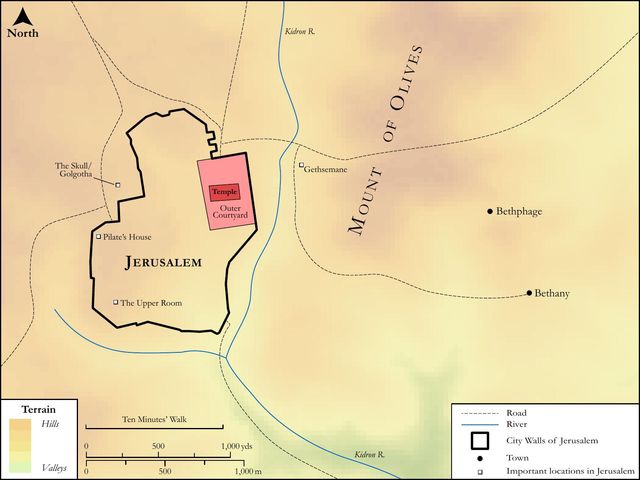
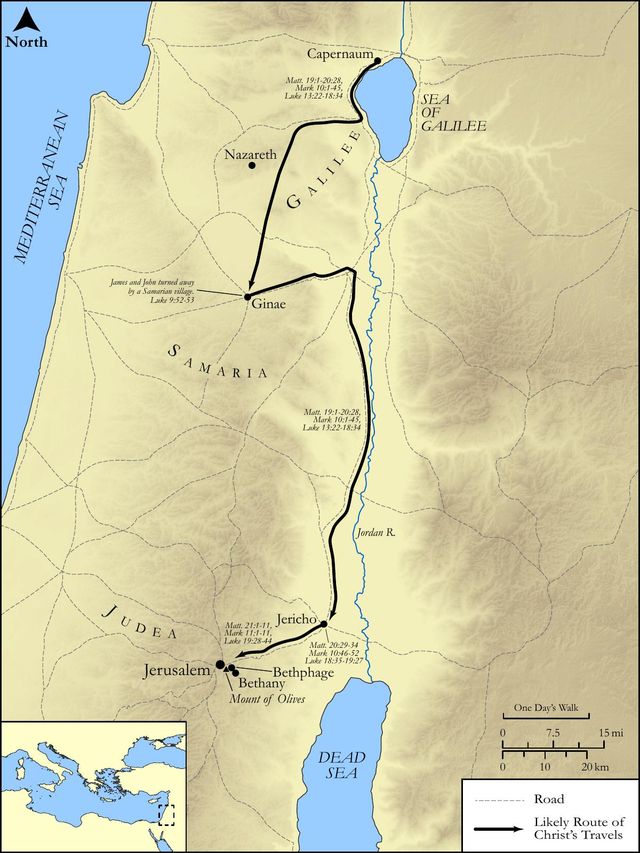
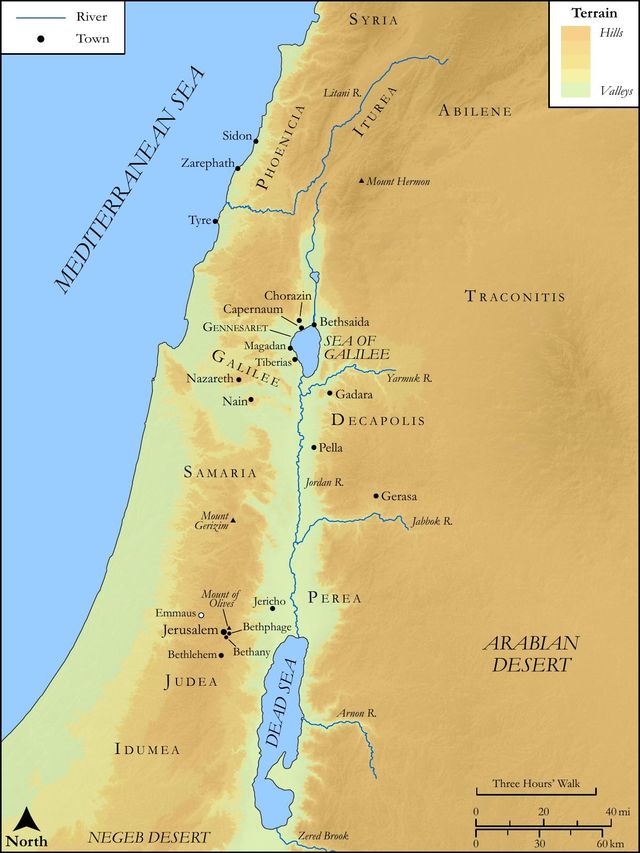
See on the biblical-era maps
Study this verse
Public-domain commentary
Matthew Henry
From his Commentary on the Whole Bible. Henry comments on passages, not single verses — this entry covers Luke 12:1–12. His four-level outline is real structure in the source text, so it is rendered as structure.
We find here, I. A vast auditory that was got together to hear Christ preach. The scribes and Pharisees sought to accuse him, and do him mischief; but the people, who were not under the bias of their prejudices and jealousies, still admired him, attended on him, and did him honour. In the mean time (Luk 12:1), while he was in the Pharisee's house, contending with them that sought to ensnare him, the people got together for an afternoon sermon, a sermon after dinner, after dinner with a Pharisee; and he would not disappoint them. Though in the morning sermon, when they were gathered thickly together (Luk 11:29), he had severely reproved them, as an evil generation that seek a sign, yet they renewed their attendance on him; so much better could the people bear their reproofs than the Pharisees theirs. The more the Pharisees strove to drive the people from Christ, the more flocking there was to him. Here was an innumerable multitude of people gathered together, so that they trade one upon another, in labouring to get foremost, and to come within hearing. It is a good sight to see people thus forward to hear the word, and venture upon inconvenience and danger rather than miss an opportunity for their souls. Who are these that thus fly as the doves to their windows? Isa 60:8. When the net is cast where there is such a multitude of fish, it may be hoped that some will be enclosed.
II.The instructions which he gave his followers, in the hearing of this auditory.
1.He began with a caution against hypocrisy. This he said to his disciples first of all; either to the twelve, or to the seventy. These were his more peculiar charge, his family, his school, and therefore he particularly warned them as his beloved sons; they made more profession of religion than others and hypocrisy in that was the sin they were most in danger of. They were to preach to others; and, if they should prevaricate, corrupt the word, and deal deceitfully, hypocrisy would be worse in them than in others. Besides, there was a Judas among them, who was a hypocrite, and Christ knew it, and would hereby startle him, or leave him inexcusable. Christ's disciples were, for aught we know, the best men then in the world, yet they needed to be cautioned against hypocrisy. Christ said this to the disciples, in the hearing of this great multitude, rather than privately when he had them by themselves, to add the greater weight to the caution, and to let the world know that he would not countenance hypocrisy, no, not in his own disciples. Now observe,
(1.)The description of that sin which he warns them against: It is the leaven of the Pharisees.
[1.]It is leaven; it is spreading as leaven, insinuates itself into the whole man, and all that he does; it is swelling and souring as leaven, for it puffs men up with pride, embitters them with malice, and makes their service unacceptable to God.
[2.]It is the leaven of the Pharisees: "It is the sin they are most of them found in. Take heed of imitating them; be not you of their spirit; do not dissemble in Christianity as they do in Judaism; make not your religion a cloak of maliciousness, as they do theirs."
(2.)A good reason against it: "For there is nothing covered that shall not be revealed, Luk 12:2, Luk 12:3. It is to no purpose to dissemble, for, sooner or later, truth will come out; and a lying tongue is but for a moment. If you speak in darkness that which is unbecoming you, and is inconsistent with your public professions, it shall be heard in the light; some way or other it shall be discovered, a bird of the air shall carry the voice (Ecc 10:20), and your folly and falsehood will be made manifest." The iniquity that is concealed with a show of piety will be discovered, perhaps in this world, as Judas's was, and Simon Magus's, at furthest in the great day, when the secrets of all hearts shall be made manifest, Ecc 12:14; Rom 2:16. If men's religion prevail not to conquer and cure the wickedness of their hearts, it shall not always serve for a cloak. The day is coming when hypocrites will be stripped of their fig-leaves.
2.To this he added a charge to them to be faithful to the trust reposed in them, and not to betray it, through cowardice or base fear. Some make Luk 12:2, Luk 12:3, to be a caution to them not to conceal those things which they had been instructed in, and were employed to publish to the world. "Whether men will hear, or whether they will forbear, tell them the truth, the whole truth, and nothing but the truth; what has been spoken to you, and you have talked of among yourselves, privately, and in corners, that do you preach publicly, whoever is offended; for, if you please men, you are not Christ's servants, nor can you please him," Gal 1:10. But this was not the worst of it: it was likely to be a suffering cause, though never a sinking one: let them therefore arm themselves with courage; and divers arguments are furnished here to steel them with a holy resolution in their work. Consider,
(1.)"The power of your enemies is a limited power (Luk 12:4): I say unto you, my friends" (Christ's disciples are his friends, he calls them friends, and gives them this friendly advice), "be not afraid, do not disquiet yourselves with tormenting fears of the power and rage of men." Note, Those whom Christ owns for his friends need not be afraid of any enemies. "Be not afraid, no, not of them that kill the body, let it not be in the power of scoffers, not even of murderers, to drive you off from your work, for you that have learned to triumph over death may say, even of them, Let them do their worst, after that there is no more that they can do; the immortal soul lives, and is happy, and enjoys itself and its God, and sets them all at defiance." Note, Those can do Christ's disciples no real harm, and therefore ought not to be dreaded, who can but kill the body; for they only send that to its rest, and the soul to its joy, the sooner.
(2.)God is to be feared more than the most powerful men: "I will forewarn you whom you shall fear (Luk 12:5): that you may fear man less, fear God more. Moses conquers his fear of the wrath of the king, by having an eye to him that is invisible. By owning Christ you may incur the wrath of men, which can reach no further than to put you to death (and without God's permission they cannot do that); but by denying Christ, and disowning him, you will incur the wrath of God, which has power to send you to hell, and there is no resisting it. Now of two evils the less is to be chosen, and the greater is to be dreaded, and therefore I say unto you, Fear him." "It is true," said that blessed martyr, Bishop Hooper, "life is sweet, and death bitter; but eternal life is more sweet, and eternal death more bitter."
(3.)The lives of good Christians and good ministers are the particular care of divine Providence, Luk 12:6, Luk 12:7. To encourage us in times of difficulty and danger, we must have recourse to our first principles, and build upon them. Now a firm belief of the doctrine of God's universal providence, and the extent of it, will be satisfying to us when at any time we are in peril, and will encourage us to trust God in the way of duty. [1.] Providence takes cognizance of the meanest creatures, even of the sparrows. "Though they are of such small account that five of them are sold for two farthings, yet not one of them is forgotten of God, but is provided for, and notice is taken of its death. Now, you are of more value than many sparrows, and therefore you may be sure you are not forgotten, though imprisoned, though banished, though forgotten by your friends; much more precious in the sight of the Lord is the death of saints than the death of sparrows." [2.] Providence takes cognizance of the meanest interest of the disciples of Christ: "Even the very hairs of your head are all numbered (Luk 12:7); much more are your sighs and tears numbered, and the drops of your blood, which you shed for Christ's name's sake. An account is kept of all your losses, that they may be, and without doubt they shall be, recompensed unspeakably to your advantage."
(4.)"You will be owned or disowned by Christ, in the great day, according as you now own or disown him," Luk 12:8, Luk 12:9.
[1.]To engage us to confess Christ before men, whatever we may lose or suffer for our constancy to him, and how dear soever it may cost us, we are assured that they who confess Christ now shall be owned by him in the great day before the angels of God, to their everlasting comfort and honour. Jesus Christ will confess, not only that he suffered for them, and that they are to have the benefit of his sufferings, but that they suffered for him, and that his kingdom and interest on earth were advanced by their sufferings; and what greater honour can be done them?
[2.]To deter us from denying Christ, and a cowardly deserting of his truths and ways, we are here assured that those who deny Christ, and treacherously depart from him, whatever they may save by it, though it were life itself, and whatever they may gain by it, though it were a kingdom, will be vast losers at last, for they shall be denied before the angels of God; Christ will not know them, will not own them, will not show them any favour, which will turn to their everlasting terror and contempt. By the stress here laid upon their being confessed or denied before the angels of God, it should seem to be a considerable part of the happiness of glorified saints that they will not only stand right, but stand high, in the esteem of the holy angels; they will love them, and honour them, and own them, if they be Christ's servants; they are their fellow-servants, and they will take them for their companions. On the contrary, a considerable part of the misery of damned sinners will be that the holy angels will abandon them, and will be the pleased witnesses, not only of their disgrace, as here, but of their misery, for they shall be tormented in the presence of the holy angels (Rev 14:10), who will give them no relief.
(5.)The errand they were shortly to be sent out upon was of the highest and last importance to the children of men, to whom they were sent, Luk 12:10. Let them be bold in preaching the gospel, for a sorer and heavier doom would attend those that rejected them (after the Spirit was poured upon them, which was to be the last method of conviction) than those that now rejected Christ himself, and opposed him: "Greater works than those shall he do, and, consequently, greater will be the punishment of those that blaspheme the gifts and operations of the Holy Ghost in you. Whosoever shall speak a word against the Son of man, shall stumble at the meanness of his appearance, and speak slightly and spitefully of him, it is capable of some excuse: Father, forgive them, for they know not what they do. But unto him that blasphemes the Holy Ghost, that blasphemes the Christian doctrine, and maliciously opposes it, after the pouring out of the Spirit and his attestation of Christ's being glorified (Act 2:33; Act 5:32), the privilege of the forgiveness of sins shall be denied; he shall have no benefit by Christ and his gospel. You may shake off the dust of your feet against those that do so, and give them over as incurable; they have forfeited that repentance and that remission which Christ was exalted to give, and which you are commissioned to preach." The sin, no doubt, was the more daring, and consequently the case the more desperate, during the continuance of the extraordinary gifts and operations of the Spirit in the church, which were intended for a sign to them who believed not, Co1 14:22. There were hopes of those who, though not convinced by them at first, yet admired them, but those who blasphemed them were given over.
(6.)Whatever trials they should be called out to, they should be sufficiently furnished for them, and honourably brought through them, Luk 12:11, Luk 12:12. The faithful martyr for Christ has not only sufferings to undergo, but a testimony to bear, a good confession to witness, and is concerned to do that well, so that the cause of Christ may not suffer, though he suffer for it; and, if this be his care, let him cast it upon God: "When they bring you into the synagogues, before church-rulers, before the Jewish courts, or before magistrates and powers, Gentile rulers, rulers in the state, to be examined about your doctrine, what it is, and what the proof of it, take no thought what ye shall answer," [1.] "That you may save yourselves. Do not study by what art or rhetoric to mollify your judges, or by what tricks in law to bring yourselves off; if it be the will of God that you should come off, and your time is not yet come, he will bring it about effectually." [2.] "That you may serve your Master; aim at this, but do not perplex yourselves about it, for the Holy Ghost, as a Spirit of wisdom, shall teach you what you ought to say, and how to say it, so that it may be for the honour of God and his cause."
Historical interpretation
Nine Centuries of Reception
8 surviving comments on this verse. Each one is dated, so this reads as a timeline rather than a list.
Select a marker to jump to its quote. Markers stagger vertically where authors wrote within a few decades of each other.
Since, then, He had censured their hypocrisy, which covered the secrets of the heart, and obscured with superficial offices the mysteries of unbelief, because (while holding the key of knowledge) it would neither enter in itself, nor permit others to enter in, He therefore adds, "There is nothing covered that shall not be revealed; neither hid, which shall not be known," in order that no one should suppose that He was attempting the revelation and the recognition of an hitherto unknown and hidden god.
He either then says this concerning that time when God shall judge the secrets of men, or He says it because however much a man may endeavour to hide the good deeds of another by discredit, good of its own nature cannot be concealed.
When leaven is praised it is as composing the bread of life, but when blamed it signifies a lasting and bitter maliciousness.
Our Lord has introduced a most forcible argument for preserving simplicity, and being zealous for the faith, that we should not after the manner of faithless Jews put one thing in practice, while in words we pretend another, namely, that at the last day the hidden thoughts accusing or else excusing one another, shall be seen to reveal the secrets of our mind. Whence it is added, There is nothing hid which shall not be revealed.
(Hom. 34. in Matt.) As if He says to His disciples, Although now some call you deceivers and wizards, time shall reveal all things and convict them of calumny, while it makes known your virtue. Therefore whatsoever things I have spoken to you in the small corner of Palestine, these boldly and with open brow, casting away all fear, proclaim to the whole world. And therefore He adds, Whatsoever ye have spoken in darkness shall be heard in light.
Nothing, however, is covered that will not be revealed, nor hidden that will not be known. And how in the present age does the hypocrisy of many long remain hidden? Therefore, it must be understood about the future time, when God will judge the hidden things of men. For just as one of the friends of blessed Job very truly said: The praise of the wicked is brief, and the joy of the hypocrite is but for a moment. If his arrogance rises to the heavens, and his head touches the clouds, he will be lost in the end like dung (Job. XX). In the end, he says, he will be lost, who appeared to flourish at the beginning. Therefore, the sense is: Beware of emulating simulators, because surely the time will come, when both your virtue will be revealed to all, and their hypocrisy. But what follows:
For as a little leaven leaveneth a whole lump of meal, (1 Cor. 5:6.) so hypocrisy will rob the mind of all the purity and integrity of its virtues.
Or He says this, because all the things which the Apostles of old spoke and suffered amid the darkness of oppression and the gloom of the prison, arc now that the Church is made known through the world and their acts are read, publicly proclaimed. The words, shall be proclaimed on the housetops, are spoken according to the manner of the country of Palestine, where they are accustomed to live on the housetops. For their roofs were not after our way raised to a point, but flat shaped, and level at the top. Therefore He says, proclaimed on the housetops; that is, spoken openly in the hearing of all men.
The Pharisees sought indeed to catch Jesus in His talk, that they might lead away the people from Him. But this design of theirs is reversed. For the people came all the more unto Him gathered together by thousands, and so desirous to attach themselves to Christ, that they pressed one upon another. So mighty a thing is truth, so feeble every where deceit. Whence it is said, And when there were gathered together a great multitude, insomuch that they trode upon one another, he began to sag unto his disciples, Beware ye of the leaven of the Pharisees, which is hypocrisy.
He calls their hypocrisy leaven, as perverting and corrupting the intentions of the men in whom it has sprung up. For nothing so changes the characters of men as hypocrisy.
Or this is addressed to the Pharisees; as if He said, O Pharisees, what you have spoken in darkness, that is, all your endeavours to tempt me in the secrets of your hearts, shall be heard in the light, for I am the light, and in My light shall be known whatsoever your darkness devises. And what you have spoken in the ear and in closets, that is, whatsoever in whispers you have poured into one another's ears, shall be proclaimed on the housetops, that is, was as audible to me as if it had been cried aloud on the housetops. Herein also you may understand that the light is the Gospel, but the housetop the lofty souls of the Apostles. But whatever things the Pharisees plotted together, were afterwards divulged and heard in the light of the Gospel, the great Herald, the Holy Spirit, presiding over the souls of the Apostles.
Continue studying Luke 12:2 across the web’s major study libraries — every link below opens this exact verse, chapter, or book on the destination site.
Read & Compare
 BibleGatewayThis verse in more than 200 translations and 70 languages.
 Bible.comThe YouVersion reader — hundreds of translations, reading plans, and highlights.
 ESV.orgCrossway's official English Standard Version reader.
 NET BibleThe NET translation with 60,000+ translators' notes on every rendering decision.
 STEP BibleTyndale House's free study tool — original text, vocabulary, and scholarly resources.
 BibliaLogos Bible Software's free web reader.
 USCCBThe New American Bible (Revised Edition) with the U.S. bishops' study notes.
Commentaries
 BibleHub CommentariesDozens of classic commentaries on this verse, gathered on one page.
 StudyLightMore than 100 commentary sets — the largest collection on the web.
 BibleRefPlain-English commentary on what this verse means, verse by verse.
 Enduring WordDavid Guzik's free commentary on this chapter, widely used by Bible teachers.
 Bible Study ToolsVerse commentary alongside Greek and Hebrew study aids.
Original Language & Research
- BibleHub InterlinearThe verse word by word — original language, transliteration, and English.
- BibleHub LexiconEvery word's original-language definition and Strong's entry.
 Blue Letter BibleDeep-study tools — Strong's numbers, concordance, and word studies.
 CNTR CollationThe earliest Greek manuscripts of this verse, collated letter by letter.
Sermons, Hymns & Audio


TrulyRandomVerse is not affiliated with these sites and doesn’t control their content. They’re linked because they’re genuinely useful.
Summary
Luke 12:2 presents a profound declaration by Jesus, serving as both a solemn warning and a comforting assurance: "For there is nothing covered, that shall not be revealed; neither hid, that shall not be known." This verse underscores the ultimate transparency of all things before God, emphasizing that every secret—whether a hidden sin, a concealed motive, or an unacknowledged act of righteousness—will inevitably be brought into the light of divine scrutiny and public recognition. It speaks to the inescapable reality of God's omniscience and the certainty of future accountability, particularly for those who practice hypocrisy.
Context
ShowHideLiterary Context
This powerful statement immediately follows Jesus' direct warning to His disciples concerning "the leaven of the Pharisees, which is hypocrisy" (Luke 12:1). In the preceding chapter, Jesus had engaged in sharp confrontations with the religious leaders, exposing their outward piety as a facade for inward corruption and legalistic burdens (Luke 11:37-54). Therefore, Luke 12:2 functions as a direct consequence and an inevitable outcome of such hypocrisy: what is hidden will ultimately be exposed. It also serves as an encouragement to His followers who might face persecution or fear for their open confession of faith, assuring them that their true loyalty and righteous deeds, though perhaps hidden from human eyes, will also be revealed and vindicated by God.
Historical & Cultural Context
In ancient Jewish society, particularly among the religious elite, outward appearance and public reputation held immense significance. The Pharisees, in particular, were known for their meticulous adherence to external rituals and traditions, often to gain human praise and status. Jesus frequently critiqued this emphasis on external conformity over internal righteousness (Matthew 23:27-28). The cultural premium on honor and the fear of shame made the concept of hidden deeds being exposed particularly potent. Jesus' words challenge the very foundation of a society that valued outward show, asserting that divine judgment penetrates beyond the surface, revealing the true state of the heart and the reality of one's actions, whether good or evil.
Key Themes
ShowHideLuke 12:2 contributes significantly to several major themes in Luke's Gospel and the broader biblical narrative. Firstly, it highlights Divine Omniscience and Transparency, emphasizing that nothing is truly hidden from God, who sees all and will ultimately bring all things into the open. This principle is foundational to understanding God's character as the ultimate judge (Hebrews 4:13). Secondly, the verse strongly reinforces the theme of Accountability and Judgment, serving as a stark reminder that every thought, word, and deed, whether public or private, will be brought to light before the divine judgment seat (Ecclesiastes 12:14). Thirdly, it speaks to the Inevitable Revelation of Truth, implying that truth cannot be permanently suppressed, and falsehood will ultimately be exposed, providing hope for those who seek justice. Finally, given its immediate context, a primary message is the Consequences of Hypocrisy, underscoring that pretense and deceit are unsustainable and will eventually lead to shame and condemnation.
Exposition and Analysis
ShowHideKey Word Analysis
ShowHideMeaning "to conceal altogether." This word emphasizes a complete and deliberate act of hiding or obscuring something, suggesting an intention to keep it from view or knowledge. In the context of Luke 12:2, it speaks to the comprehensive nature of human attempts to hide their true motives or actions.
Meaning "to take off the cover, i.e. disclose." This term is the direct antonym of "covered" and carries the sense of unveiling, uncovering, or making manifest what was previously hidden. It is the root of the English word "apocalypse," signifying a revelation or disclosure of truth. The passive voice ("shall not be revealed") implies a divine agent responsible for this unveiling.
Meaning "to 'know' (absolutely) in a great variety of applications and with many implications." This word signifies not merely intellectual acquaintance but a deep, experiential, and full comprehension. When applied to "what shall not be known," it implies that the truth will be fully understood and recognized by all, leaving no room for doubt or further concealment.
Verse Breakdown
ShowHide"For there is nothing covered,"
This opening clause establishes a universal principle. The word "nothing" (G3762, oudeís) emphasizes the absolute nature of the statement—no secret, no matter how carefully hidden or insignificant it may seem, will escape divine notice. "Covered" refers to any attempt to conceal or obscure, whether actions, intentions, or character.
"that shall not be revealed;"
This phrase declares the inevitable outcome for anything that is "covered." The passive voice ("shall not be revealed") strongly implies a divine agent, namely God, who will ensure this unveiling. It signifies that God's omniscience and ultimate justice will bring every hidden thing into the light. This revelation is not merely an uncovering but a full disclosure for all to see.
"neither hid,"
This clause parallels the first, using a slightly different term for concealment ("hid," G2927, kryptós, meaning "concealed, private"). This repetition serves to reinforce the universality of the principle, encompassing all forms of secrecy, whether actively "covered" or simply "kept private." It emphasizes that no aspect of one's life, no matter how personal or internal, is exempt from this ultimate exposure.
"that shall not be known."
This final clause parallels the second, stating the inevitable consequence for anything "hid." "Known" (G1097, ginṓskō) implies not just a superficial awareness but a deep and full understanding. The passive voice again points to God as the one who ensures this comprehensive knowledge. This means that what was once obscured will be fully comprehended and recognized by all, leaving no room for denial or misinterpretation.
Literary Devices
ShowHideLuke 12:2 is rich in literary devices that amplify its profound message. The most prominent is Parallelism, specifically Synonymous Parallelism, where the second half of the verse ("neither hid, that shall not be known") reiterates and reinforces the meaning of the first half ("For there is nothing covered, that shall not be revealed") using different but equivalent terms. This repetition creates emphasis and ensures the universality of the declaration. The use of Hyperbole with the absolute negative "nothing" ("there is nothing covered") underscores the comprehensive nature of God's knowledge and the certainty of revelation, leaving no exceptions. Furthermore, the consistent use of the Divine Passive ("shall not be revealed," "shall not be known") subtly but powerfully attributes the action of unveiling and knowing to God, highlighting His sovereignty and active role in bringing truth to light. There is also an implied Metaphor of light and darkness, where hidden things reside in darkness but will ultimately be exposed to the light of truth and judgment.
Theological and Thematic Connections
ShowHideLuke 12:2 is a cornerstone verse for understanding divine attributes and human accountability. Theologically, it affirms God's perfect omniscience—His absolute and comprehensive knowledge of all things, past, present, and future, including the deepest secrets of the human heart. This divine attribute underpins the certainty of divine justice and judgment, ensuring that no wrong will ultimately go unpunished and no righteous deed unrewarded. The verse also speaks to the inherent nature of truth itself, which, like light, cannot be permanently suppressed by darkness; it will inevitably break forth. This provides both a sobering warning to the hypocritical and a profound comfort to the persecuted, assuring them that ultimate vindication belongs to God.
Reflection and Application
ShowHideLuke 12:2 calls believers to a life of profound integrity and authenticity. Knowing that every hidden thing will eventually be revealed should fundamentally shape our approach to daily living, motivating us to align our private actions and inner motives with our public confession of faith. This verse encourages us to live transparently before God and others, fostering a deep commitment to truthfulness and righteousness, rather than succumbing to the temptation of hypocrisy. For those who have been wronged or who witness injustice seemingly going unpunished, this declaration offers immense comfort and hope, assuring that ultimate justice will prevail and all hidden wrongs will be exposed and dealt with by God. Conversely, it serves as a powerful impetus for self-examination, prompting us to confess and repent of any secret sins or areas of our lives where we might be acting deceitfully, allowing God's light to penetrate every hidden corner of our hearts for purification and transformation.
Questions for Reflection
ShowHideFAQ
ShowHideDoes this verse imply that all our private sins will be publicly exposed for everyone to see?
ShowHideWhile Luke 12:2 clearly states that "nothing covered... shall not be revealed," the nature of this revelation is multifaceted and primarily concerns divine knowledge and judgment. For the believer who has confessed their sins and received God's forgiveness through Christ, their sins are covered by His blood (Psalm 32:1). The emphasis for believers is on the exposure of hypocrisy and the true state of one's heart before God, leading to either vindication or a call to repentance. For the unrepentant, it signifies the ultimate accountability before God's judgment seat, where all deeds, good or evil, will be laid bare for divine assessment (Romans 2:16). The "revelation" is primarily about God's perfect knowledge and the ultimate triumph of truth and justice, rather than necessarily a public shaming for those who are in Christ.
How does this teaching relate to God's forgiveness?
ShowHideLuke 12:2 highlights God's omniscience and the inevitability of truth being known, which might initially seem to contradict the idea of forgiveness. However, it actually underscores the profound nature of God's grace. Forgiveness, in the biblical sense, does not mean God forgets our sins or that they were never known to Him. Rather, it means that through Christ's atoning sacrifice, our sins, though fully known to God, are no longer counted against us; they are "covered" by His grace, and we are declared righteous (2 Corinthians 5:21). Thus, while all things will be revealed, for those in Christ, this revelation will ultimately confirm their justification and the efficacy of His atoning work, rather than condemning them for past sins that have been truly forgiven. The verse serves as a call to confess our hidden sins, knowing that God already sees them, and to receive His cleansing and forgiveness (1 John 1:9).
Christ-Centered Fulfillment
ShowHideLuke 12:2 finds its ultimate Christ-centered fulfillment in several profound ways. Jesus Himself is the embodiment of the truth that cannot remain hidden. His very incarnation was a "revelation" of God to humanity, unveiling the Father's character and will (John 1:18). Throughout His ministry, Jesus consistently exposed the hidden motives and hypocrisy of the religious leaders, bringing their inner corruption into the light, just as He warns His disciples about the "leaven of the Pharisees" (Luke 12:1). His death and resurrection were the ultimate "unveiling" of God's power over sin and death, revealing His righteousness and redemptive plan to a world shrouded in darkness (Romans 1:17). Furthermore, Jesus is the one through whom all things will ultimately be revealed at the final judgment. He is the one who "will bring to light the hidden things of darkness and make manifest the counsels of the hearts" (1 Corinthians 4:5), ensuring that every secret, whether good or evil, will be known. Thus, Luke 12:2 points to Christ as both the revealer of truth and the ultimate standard by which all truth will be judged, offering both a sobering warning to the unrepentant and a glorious assurance of vindication for those who faithfully follow Him in the light.