


Luke 21:11
- σεισμοίseismoiEarthquakesG4578N-NPMNoun Nominative Plural Masculine
- τεtebothG5037CONJConjunction
- μεγάλοιmegaloigreatG3173A-NPMAdjective Nominative Plural Masculine
- καὶkaiandG2532CONJConjunction
- κατὰkatain differentG2596PREPPreposition
- τόπουςtopousplacesG5117N-APMNoun Accusative Plural Masculine
- λιμοὶlimoifaminesG3042N-NPMNoun Nominative Plural Masculine
- καὶkaiandG2532CONJConjunction
- λοιμοὶloimoipestilencesG3061N-NPMNoun Nominative Plural Masculine
- ἔσονταιesontaithere will beG1510V-FDI-3PVerb Future Middle Deponent Indicative 3rd Plural
- φόβητράphobētrafearful sightsG5400N-NPNNoun Nominative Plural Neuter
- τεtealsoG5037CONJConjunction
- καὶkaiandG2532CONJConjunction
- ἀπ᾽ap᾽fromG575PREPPreposition
- οὐρανοῦouranouheavenG3772N-GSMNoun Genitive Singular Masculine
- σημεῖαsēmeiasignsG4592N-NPNNoun Nominative Plural Neuter
- μεγάλαmegalagreatG3173A-NPNAdjective Nominative Plural Neuter
- ἔσταιestaiwill there beG1510V-FDI-3SVerb Future Middle Deponent Indicative 3rd Singular
English is a literal word-by-word gloss of the Greek, not the KJV's wording. Why?
This is the original text the KJV's translators worked from — each Greek word with its own literal English meaning in this verse, prepared by scholars at Tyndale House, Cambridge. The KJV translates whole sentences, not word by word, so its wording differs: one Greek word can become several English words, and the KJV may choose “charity” where the gloss reads “love”. Both are faithful — they answer different questions. For the KJV's own rendering, switch to the KJV text.
Details
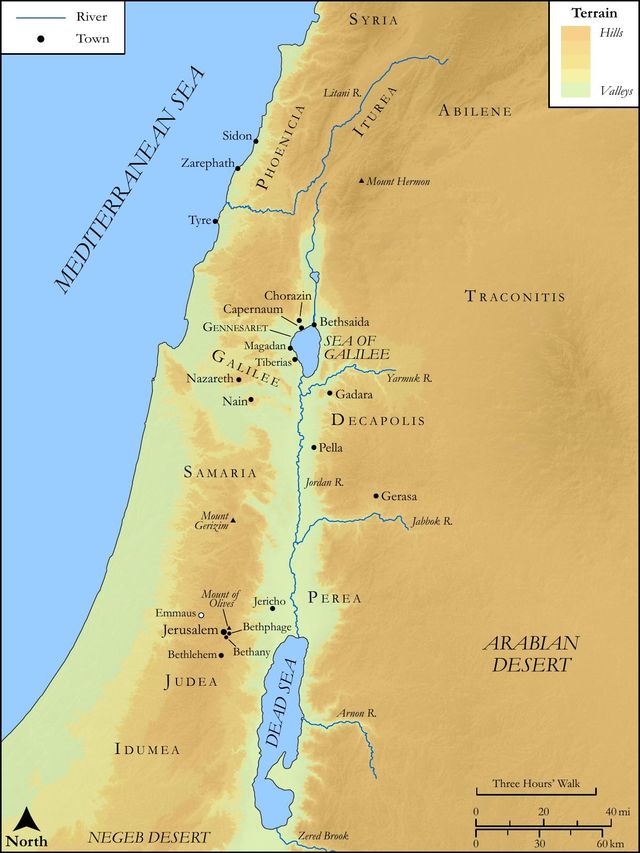
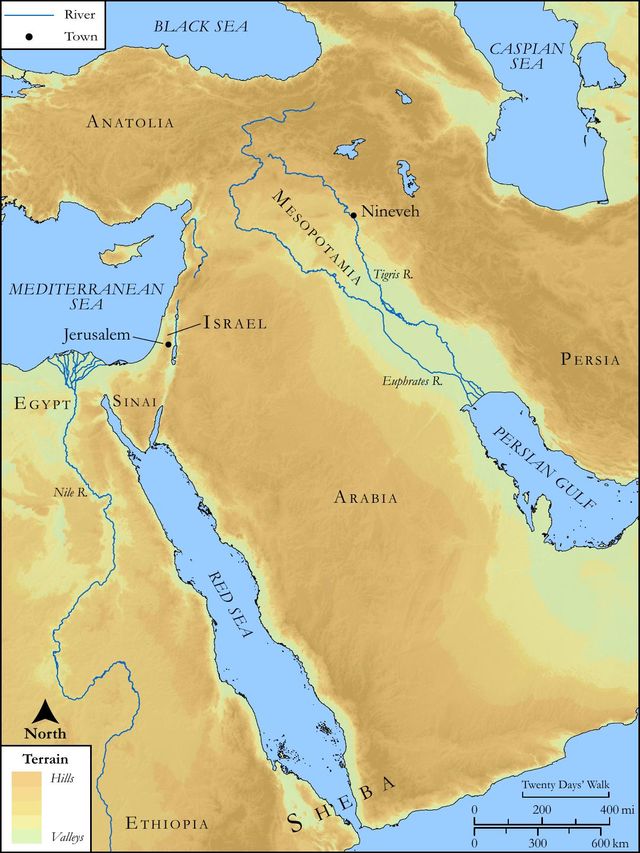
See on the biblical-era map

Study this verse
Public-domain commentary
Matthew Henry
From his Commentary on the Whole Bible. Henry comments on passages, not single verses — this entry covers Luke 21:5–19. His four-level outline is real structure in the source text, so it is rendered as structure.
See here, I. With what admiration some spoke of the external pomp and magnificence of the temple, and they were some of Christ's own disciples too; and they took notice of it to him how it was adorned with goodly stones and gifts, Luk 21:5. The outside was built up with goodly stones, and within it was beautified and enriched with the presents that were offered up for that purpose, and were hung up in it. They thought their Master should be as much affected with those things as they were, and should as much regret the destruction of them as they did. When we speak of the temple, it should be of the presence of God in it, and of the ordinances of God administered in it, and the communion which his people there have with him. It is a poor thing, when we speak of the church, to let our discourse dwell upon its pomps and revenues, and the dignities and powers of its officers and rulers; for the king's daughter is all glorious within.
II.With what contempt Christ spoke of them, and with what assurance of their being all made desolate very shortly (Luk 21:6):
"As for those things which you behold, those dear things which you are so much in love with, behold, the days will come, and some now living may live to see them, in which there shall not be left one stone upon another. This building, which seems so beautiful that one would think none could, for pity, pull it down, and which seems so strong that one would think none would be able to pull it down, shall yet be utterly ruined; and this shall be done as soon as ever the spiritual temple of the gospel church (the substance of that shadow) begins to flourish in the world." Did we by faith foresee the blasting and withering of all external glory, we should not set our hearts upon it as those do that cannot see, or will not look, so far before them.
III.With what curiosity those about him enquire concerning the time when this great desolation should be:
Master, when shall these things be? Luk 21:7. It is natural to us to covet to know future things and the time of them, which it is not for us to know, when we are more concerned to ask what is our duty in the prospect of these things, and how we may prepare for them, which it is for us to know. They enquire what sign there shall be when these things shall come to pass. They ask not for a present sign, to confirm the prediction itself, and to induce them to believe it (Christ's word was enough for that), but what the future signs will be of the approaching accomplishment of the prediction, by which they may be put in mind of it. These signs of the times Christ had taught them to observe.
IV.With what clearness and fulness Christ answers their enquiries, as far as was necessary to direct them in their duty; for all knowledge is desirable as far as it is in order to practice.
1.They must expect to hear of false Christs and false prophets appearing, and false prophecies given out (Luk 21:8): Many shall come in my name; he does not mean in the name of Jesus, though there were some deceivers who pretended commissions from him (as Act 19:13), but usurping the title and character of the Messiah. Many pretended to be the deliverers of the Jewish church and nation from the Romans, and to fix the time when the deliverance should be wrought, by which multitudes were drawn into a snare, to their ruin. They shall say, hoti egō eimi - I am he, or I am, as if they would assume that incommunicable name of God, by which he made himself known when he came to deliver Israel out of Egypt, I am; and, to encourage people to follow them, they added, "The time draws near when the kingdom shall be restored to Israel, and all who will follow me shall share in it." Now as to this, he gives them a needful caution (1.) "Take heed that you be not deceived; do not imagine that I shall myself come again in external glory, to take possession of the throne of kingdoms. No, you must not expect any such thing, for my kingdom is not of this world." When they asked solicitously and eagerly, Master, when shall these things be? the first word Christ said was, Take heed that you be not deceived. Note, Those that are most inquisitive in the things of God (though it is very good to be so) are in most danger of being imposed upon, and have most need to be upon their guard. (2.) "Go you not after them. You know the Messiah is come, and you are not to look for any other; and therefore do not so much as hearken to them, nor have any thing to do with them." If we are sure that Jesus is the Christ, and his doctrine is the gospel, of God, we must be deaf to all intimations of another Christ and another gospel.
2.They must expect to hear of great commotions in the nations, and many terrible judgments inflicted upon the Jews and their neighbours.
(1.)There shall be bloody wars (Luk 21:10): Nation shall rise against nation, one part of the Jewish nation against another, or rather the whole against the Romans. Encouraged by the false Christs, they shall wickedly endeavour to throw off the Roman yoke, by taking up arms against the Roman powers; when they had rejected the liberty with which Christ would have made them free they were left to themselves, to grasp at their civil liberty in ways that were sinful, and therefore could not be successful.
(2.)There shall be earthquakes, great earthquakes, in divers places, which shall not only frighten people, but destroy towns and houses, and bury many in the ruins of them.
(3.)There shall be famines and pestilences, the common effects of war, which destroys the fruits of the earth, and, by exposing men to ill weather and reducing them to ill diet, occasions infectious diseases. God has various ways of punishing a provoking people. The four sorts of judgments which the Old Testament prophets so often speak of are threatened by the New Testament prophets too; for, though spiritual judgments are more commonly inflicted in gospel times, yet God makes use of temporal judgments also.
(4.)There shall be fearful sights and great signs from heaven, uncommon appearances in the clouds, comets and blazing stars, which frighten the ordinary sort of beholders, and have always been looked upon as ominous, and portending something bad. Now, as to these, the caution he gives them is, "Be not terrified. Others will be frightened at them, but be not you frightened, Luk 21:2. As to the fearful sights, let them not be fearful to you, who look above the visible heavens to the throne of God's government in the highest heavens. Be not dismayed at the signs of heaven, for the heathen are dismayed at them, Jer 10:2. And, as to the famines and pestilences, you fall into the hands of God, who has promised to those who are his that in the days of famine they shall be satisfied, and that he will keep them from the noisome pestilence; trust therefore in him, and be not afraid. Nay, when you hear of wars, when without are fightings and within are fears, yet then be not you terrified; you know the worst that any of these judgments can do to you, and therefore be not afraid of them; for," [1.] "It is your interest to make the best of that which is, for all your fears cannot alter it: these things must first come to pass; there is no remedy; it will be your wisdom to make yourselves easy by accommodating yourselves to them." [2.] "There is worse behind; flatter not yourselves with a fancy that you will soon see an end of these troubles, no, not so soon as you think of: the end is not by and by, not suddenly. Be not terrified, for, if you begin so quickly to be discouraged, how will you bear up under what is yet before you?"
3.They must expect to be themselves for signs and wonders in Israel; their being persecuted would be a prognostic of the destruction of the city and temple, which he had now foretold. Nay, this would be the first sign of their ruin coming: "Before all these, they shall lay their hands on you. The judgment shall begin at the house of God; you must smart first, for warning to them, that, if they have any consideration, they may consider, If this be done to the green tree, what shall be done to the dry? See Pe1 4:17, Pe1 4:18. But this is not all; this must be considered not only as the suffering of the persecuted, but as the sin of the persecutors. Before God's judgments are brought upon them, they shall fill up the measure of their iniquity by laying their hands on you." Note, The ruin of a people is always introduced by their sin; and nothing introduces a surer or sorer ruin than the sin of persecution. This is a sign that God's wrath is coming upon a people to the uttermost when their wrath against the servants of God comes to the uttermost. Now as to this,
(1.)Christ tells them what hard things they should suffer for his name's sake, much to the same purport with what he had told them when he first called them to follow him, Mt. 10: They should know the wages of it, that they might sit down and count the cost. St. Paul, who was the greatest labourer and sufferer of them all, not being now among them, was told by Christ himself what great things he should suffer for his name's sake (Act 9:16), so necessary is it that all who will live godly in Christ Jesus should count upon persecution. The Christians, having themselves been originally Jews, and still retaining an equal veneration with them for the Old Testament and all the essentials of their religion, and differing only in ceremony, might expect fair quarter with them; but Christ bids them not expect it: "No, they shall be the most forward to persecute you." [1.] "They shall use their own church-power against you: They shall deliver you up to the synagogues to be scourged there, and stigmatized with their anathemas." [2.] "They shall incense the magistrates against you: they shall deliver you into prisons, that you may be brought before kings and rulers for my name's sake, and be punished by them." [2.] "Your own relations will betray you (Luk 21:16), your parents, brethren, and kinsfolks, and friends; so that you will not know whom to put a confidence in, or where to be safe." [4.] "Your religion will be made a capital crime, and you will be called to resist unto blood. Some of you shall they cause to be put to death; so far must you be from expecting honour and wealth that you must expect nothing but death in its most frightful shapes, death in all its dreadful pomp. Nay." [5.] "You shall be hated of all men for my name's sake." This is worse than death itself, and was fulfilled when the apostles were not only appointed to death, but made a spectacle to the world, and counted as the filth of the world, and the offscouring of all things, which every body loathes, Co1 4:9, Co1 4:13. They were hated of all men, that is, of all bad men, who could not bear the light of the gospel (because it discovered their evil deeds), and therefore hated those who brought in that light, flew in their faces, and would have pulled them to pieces. The wicked world, which hated to be reformed, hated Christ the great Reformer, and all that were his, for his sake. The rulers of the Jewish church, knowing very well that if the gospel obtained among the Jews their usurped abused power was at an end, raised all their forces against it, put it into an ill name, filled people's minds with prejudices against it, and so made the preachers and professors of it odious to the mob.
(2.)He encourages them to bear up under their trials, and to go on in their work, notwithstanding the opposition they would meet with.
[1.]God will bring glory both to himself and them out of their sufferings: "It shall turn to you for a testimony, Luk 21:13. Your being set up thus for a mark, and publicly persecuted, will make you the more taken notice of and your doctrine and miracles the more enquired into; your being brought before kings and rulers will give you an opportunity of preaching the gospel to them, who otherwise would never have come within hearing of it; your suffering such severe things, and being so hated by the worst of men, men of the most vicious lives, will be a testimony that you are good, else you would not have such bad men for your enemies; your courage, and cheerfulness, and constancy under your sufferings will be a testimony for you, that you believe what you preach, that you are supported by a divine power, and that the Spirit of God and glory rests upon you."
[2.]"God will stand by you, and own you, and assist you, in your trials; you are his advocates, and you shall be well furnished with instructions, Luk 21:14, Luk 21:15. Instead of setting your hearts on work to contrive an answer to informations, indictments, articles, accusations, and interrogatories, that will be exhibited against you in the ecclesiastical and civil courts, on the contrary, settle it in your hearts, impress it upon them, take pains with them to persuade them not to meditate before what you shall answer; do not depend upon your own wit and ingenuity, your own prudence and policy, and do not distrust or despair of the immediate and extraordinary aids of the divine grace. Think not to bring yourselves off in the cause of Christ as you would in a cause of your own, by your own parts and application, with the common assistance of divine Providence, but promise yourselves, for I promise you, the special assistance of divine grace: I will give you a mouth and wisdom." This proves Christ to be God; for it is God's prerogative to give wisdom, and he it is that made man's mouth. Note, First, A mouth and wisdom together completely fit a man both for services and sufferings; wisdom to know what to say, and a mouth wherewith to say it as it should be said. It is a great happiness to have both matter and words wherewith to honour God and do good; to have in the mind a storehouse well furnished with things new and old, and a door of utterance by which to bring them forth. Secondly, Those that plead Christ's cause may depend upon him to give them a mouth and wisdom, which way soever they are called to plead it, especially when they are brought before magistrates for his name's sake. It is not said that he will send an angel from heaven to answer for them, though he could do this, but that he will give them a mouth and wisdom to enable them to answer for themselves, which puts a greater honour upon them, which requires them to use the gifts and graces Christ furnishes them with, and redounds the more to the glory of God, who stills the enemy and the avenger out of the mouths of babes and sucklings. Thirdly, When Christ gives to his witnesses a mouth and wisdom, they are enabled to say that both for him and themselves which all their adversaries are not able to gainsay or resist, so that they are silenced, and put to confusion. This was remarkably fulfilled presently after the pouring out of the Spirit, by whom Christ gave his disciples this mouth and wisdom, when the apostles were brought before the priest sand rulers, and answered them so as to make them ashamed, Acts 4, 5, and Act 6:1-15.
[3.]"You shall suffer no real damage by all the hardships they shall put upon you (Luk 21:18): There shall not a hair of your head perish." Shall some of them lose their heads, and yet not lose a hair? It is a proverbial expression, denoting the greatest indemnity and security imaginable; it is frequently used both in the Old Testament and New, in that sense. Some think that it refers to the preservation of the lives of all the Christians that were among the Jews when they were cut off by the Romans; historians tell us that not one Christian perished in that desolation. Others reconcile it with the deaths of multitudes in the cause of Christ, and take it figuratively in the same sense that Christ saith, He that loseth his life for my sake shall find it. "Not a hair of your head shall perish but," First, "I will take cognizance of it." To this end he had said (Mat 10:30), The hairs of your head are all numbered; and an account is kept of them, so that none of them shall perish but he will miss it. Secondly, "It shall be upon a valuable consideration." We do not reckon that lost or perishing which is laid out for good purposes, and will turn to a good account. If we drop the body itself for Christ's name's sake, it does not perish, but is well bestowed. Thirdly, "It shall be abundantly recompensed; when you come to balance profit and loss, you will find that nothing has perished, but, on the contrary, that you have great gain in present comforts, especially in the joys of a life eternal;" so that though we may be losers for Christ we shall not, we cannot, be losers by him in the end.
[4.]"It is therefore your duty and interest, in the midst of your own sufferings and those of the nation, to maintain a holy sincerity and serenity of mind, which will keep you always easy (Luk 21:19): In your patience possess ye your souls; get and keep possession of your souls." Some read it as a promise, "You may or shall possess your souls." It comes all to one. Note, First, It is our duty and interest at all times, especially in perilous trying times, to secure the possession of our own souls; not only that they be not destroyed and lost for ever, but that they be not distempered now, nor our possession of them disturbed and interrupted. "Possess your souls, be your own men, keep up the authority and dominion of reason, and keep under the tumults of passion, that neither grief nor fear may tyrannize over you, nor turn you out of the possession and enjoyment of yourselves." In difficult times, when we can keep possession of nothing else, then let us make that sure which may be made sure, and keep possession of our souls. Secondly, It is by patience, Christian patience, that we keep possession of our own souls. "In suffering times, set patience upon the guard for the preserving of your souls; by it keep your souls composed and in a good frame, and keep out all those impressions which would ruffle you and put you out of temper."
Historical interpretation
Seven Centuries of Reception
12 surviving comments on this verse. Each one is dated, so this reads as a timeline rather than a list.
Select a marker to jump to its quote. Markers stagger vertically where authors wrote within a few decades of each other.
But of the heavenly words none are greater witnesses than we, upon whom the ends of the world have come. What wars and what rumours of wars have we received!
The ruin of the world then is preceded by certain of the world's calamities, such as famine, pestilence, and persecution.
There are also other wars which the Christian wages, the struggles of different lusts, and the conflicts of the will; and domestic foes are far more dangerous than foreign.
Jerusalem certainly was besieged and taken by the Roman army … then, the desolation will be near since many will fall into error and depart from the true faith.… Then the day of the Lord will suitably come, and the days will be shortened for the sake of the chosen. Since the Lord’s first coming was to atone for sins, the second will be to prevent transgressions, fearing more might fall into the error of unbelief. False prophets and then famine will come. Tell me again of the times of Elijah, and you will find prophets of confusion, Jezebel, famine and drought on earth. What was the reason? Wickedness abounded, and love grew cold.
There is a true saying next to the points about the temple that Solomon founded. The enemy must first destroy this by the time of the judgment. Everything made by labor and by hand in either age will wear out or be destroyed by force or consumed by fire.…When asked when the destruction of the temple would be and what would be the sign of his coming, the Lord warns of signs and does not think that the time should be made known. Matthew added a third question. The disciples asked about the times of the destruction of the temple, the sign of the coming, and the end of the world. Luke thought that enough was known about the end of the world if it were learned under the topic of the Lord’s coming.
(Hom. 11. in Acta.) For an earthquake is at one time a sign of wrath, as when our Lord was crucified the earth shook; but at another time it is a token of God's providence, as when the Apostles were praying, the place was moved where they were assembled. It follows, and pestilence.
But He says, that the end of the city shall not come immediately, that is, the taking of Jerusalem, but there shall be many battles first.
When this type of thing was chanted to you in the temple, "The gods who protected Rome have not saved it now, because they no longer exist," you would say, "They did save it when they existed."We, however, can show that our God is truthful. He foretold all these things. You read all of them and heard them. I am not sure whether you have remembered them, you that are upset by such words. Have you not heard the prophets, the apostles, the Lord Jesus Christ himself foretelling evils to come? When old age comes to the world and the end draws near, you heard it, brothers and sisters, we all heard it together. There will be wars, turmoil, tribulations and famines. Why do we contradict ourselves? When these things are read, we believe them, but when they are fulfilled, we grumble.
Perhaps you are anxious, brothers and sisters, at the fact that we hear constantly of the tumult of wars and the onsets of battles. Perhaps your love is still more anxious since these are taking place in our times. The reason is the closer we are to the destruction of the world, the closer we are to the kingdom of the Savior. The Lord himself says, “In the last days nation will rise against nation and kingdom against kingdom. When you see wars, earthquakes and famines, know that the kingdom of God is at hand.” This nearness of wars shows us that Christ is near.
(in Hom. 35. in Evang.) God denounces the woes that shall forerun the destruction of the world, that so they may the less disturb when they come, as having been foreknown. For darts strike the less which are foreseen. And so He says, But when ye shall hear of wars and commotions, &c. Wars refer to the enemy, commotions to citizens. To show us then that we shall be troubled from within and without, He asserts that the one we suffer from the enemy, the other from our own brethren.
But that the end will not immediately follow these evils which come first, it is added, These things must first come to pass; but the end is not yet, &c. For the last tribulation is preceded by many tribulations, because many evils must come first, that they may await that evil which has no end. It follows, Then said he unto them, Nation shall rise against nation, &c. For it must needs be that we should suffer some things from heaven, some from earth, some from the elements, and some from men. Here then are signified the confusions of men. It follows, And great earthquakes shall be in divers places. This relates to the wrath from above.
(in Hom. 35.) Look at the vicissitudes of bodies. And famine. Observe the barrenness of the ground. And fearful sights and great signs there shall be from heaven. Behold the variableness of the climate, which must be ascribed to those storms which by no means regard the order of the seasons. For the things which come in fixed order are not signs. For every thing that we receive for the use of life we pervert to the service of sin, but all those things which we have bent to a wicked use, are turned to the instruments of our punishment.
"There will be great earthquakes in various places"—behold the look of wrath from above; "there will be pestilences"—behold the disorder of bodies; "there will be famine"—behold the barrenness of the earth; "terrors from heaven and storms"—behold the disorder of the air. Because therefore all things are to be brought to an end, before the end all things are disturbed; and we who have sinned in all things are struck in all things, so that what is said may be fulfilled: "And the world will fight on his behalf against the senseless." For all things that we received for the use of life we have turned to the use of sin, but all things that we bent to the use of wickedness are turned against us for the use of vengeance. Indeed we turned the tranquility of human peace to the use of vain security; we loved the pilgrimage of earth as if it were our homeland's dwelling; we reduced the health of bodies to the use of vices; we twisted the abundance of plenty not to the necessity of the flesh but to the perversity of pleasure; we forced even the serene enticements of the air to serve our love of earthly delight. Rightly therefore it remains that all things strike us together, which all together served our vices in evil subjection, so that as many joys as we previously had unharmed in the world, so many torments from it we are afterward compelled to feel.
But it should be noted what is said: "Terrors from heaven and storms." Since winter storms usually come according to the order of the seasons, why are storms predicted here as a sign of destruction, unless because the Lord announces that storms will come that in no way keep the order of the seasons? For those that come in an orderly fashion are not a sign; but storms are a sign that confound even the appointed times of the seasons themselves. This we too have recently experienced, because we saw the entire summer season turned into winter rains.
And there shall be terrors in the heavens, and great signs. And these same things being fulfilled, whoever has read the history of Josephus will find out. For indeed a star similar to a sword, as he states, hung over Jerusalem for a whole year, terrifying the anxious citizens with a dreadful portent. And likewise chariots and armed horsemen were seen running through the skies, and mimicking the manner of warriors for forty days. Moreover, when a heifer was brought to sacrifices, it gave birth to a lamb in the hands of those offering it. But what merit caused these things to happen is immediately added when it is said:
The Apostles are also exhorted not to be alarmed by these forerunners, nor to desert Jerusalem and Judæa. But the kingdom against kingdom, and the pestilence of those whose word creepeth as a cancer, and the famine of hearing the word of God, and the shaking of the whole earth, and the separation from the true faith, may be explained also in the heretics, who contending one with another bring victory to the Church.
Then he said to them: Nation will rise against nation, and kingdom against kingdom, and there will be great earthquakes in various places, and famines, and pestilences. It is established that these things occurred literally before the end of the desolation of the temple, that is, in the time of the Jewish sedition. However, kingdoms against kingdoms, and the pestilence of those whose word spreads like gangrene (2 Tim. 2), and the famine of hearing the word of God (Amos 8), and the disturbance of the entire earth, and separation from true faith, can also be understood in the heretics, who, fighting against each other, bring about the victory of the Church.
Now some have wished to place the fulfilment of these things not only at the future consummation of all things, but at the time also of the taking of Jerusalem. For when the Author of peace was killed, then justly arose among the Jews wars and sedition, But from wars proceed pestilence and famine, the former indeed produced by the air infected with dead bodies, the latter through the lands remaining uncultivated. Josephus also relates the most intolerable distresses to have occurred from famine; and at the time of Claudius Cæsar there was a severe famine, as we read in the Acts, (Acts 11:28.) and many terrible events happened, forboding, as Josephus says, the destruction of Jerusalem.
Continue studying Luke 21:11 across the web’s major study libraries — every link below opens this exact verse, chapter, or book on the destination site.
Read & Compare
 BibleGatewayThis verse in more than 200 translations and 70 languages.
 Bible.comThe YouVersion reader — hundreds of translations, reading plans, and highlights.
 ESV.orgCrossway's official English Standard Version reader.
 NET BibleThe NET translation with 60,000+ translators' notes on every rendering decision.
 STEP BibleTyndale House's free study tool — original text, vocabulary, and scholarly resources.
 BibliaLogos Bible Software's free web reader.
 USCCBThe New American Bible (Revised Edition) with the U.S. bishops' study notes.
Commentaries
 BibleHub CommentariesDozens of classic commentaries on this verse, gathered on one page.
 StudyLightMore than 100 commentary sets — the largest collection on the web.
 BibleRefPlain-English commentary on what this verse means, verse by verse.
 Enduring WordDavid Guzik's free commentary on this chapter, widely used by Bible teachers.
 Bible Study ToolsVerse commentary alongside Greek and Hebrew study aids.
Original Language & Research
- BibleHub InterlinearThe verse word by word — original language, transliteration, and English.
- BibleHub LexiconEvery word's original-language definition and Strong's entry.
 Blue Letter BibleDeep-study tools — Strong's numbers, concordance, and word studies.
 CNTR CollationThe earliest Greek manuscripts of this verse, collated letter by letter.
Sermons, Hymns & Audio


TrulyRandomVerse is not affiliated with these sites and doesn’t control their content. They’re linked because they’re genuinely useful.
Summary
Part of Jesus's Olivet Discourse, prophesies a series of escalating natural disasters and celestial phenomena that will precede the destruction of Jerusalem and serve as signs pointing towards the end of the age and His eventual return. This verse specifically enumerates widespread earthquakes, famines, and pestilences across various regions, alongside terrifying heavenly sights and significant celestial indicators, all contributing to a period of global upheaval and distress.
Context
ShowHideLiterary Context
Luke 21:11 is situated within Jesus's Olivet Discourse (Luke 21:5-36), a significant eschatological prophecy delivered on the Mount of Olives. The discourse begins with the disciples marveling at the Temple's grandeur, prompting Jesus's startling prediction of its complete destruction (Luke 21:5-6). The disciples then ask for signs concerning these events and the "end of these things" (Luke 21:7). In response, Jesus first warns against deception and false messiahs (Luke 21:8), then describes political and natural upheavals (Luke 21:9-11), followed by the persecution of believers (Luke 21:12-19), and finally the siege of Jerusalem (Luke 21:20-24) and the cosmic signs preceding His return (Luke 21:25-28). Verse 11 specifically details the natural calamities and celestial signs, setting the stage for the intensified tribulation and the ultimate revelation of the Son of Man.
Historical & Cultural Context
The Olivet Discourse was given shortly before Jesus's crucifixion, to disciples living under Roman occupation in Judea. Jerusalem, with its magnificent Temple, was the spiritual and cultural heart of Judaism. The prophecy of the Temple's destruction would have been profoundly shocking, as it symbolized God's presence and Israel's identity. Earthquakes, famines, and pestilences were not uncommon in the ancient world, but their widespread and intense occurrence, as described by Jesus, would signify an unprecedented period of distress. The mention of "fearful sights and great signs from heaven" would resonate with Jewish apocalyptic expectations, which often included celestial disturbances as harbingers of divine judgment or the coming of the Messiah. The audience would understand these events as divine portents, not mere natural occurrences, aligning with a worldview that saw God's hand in natural phenomena.
Key Themes
ShowHideThis verse contributes to several key themes within Luke's Gospel and biblical eschatology. It underscores the theme of Divine Sovereignty over history and nature, as these events are not random but part of God's predetermined plan. It highlights the theme of Warning and Preparation, urging believers to discern the times and remain faithful amidst tribulation, as seen in Jesus's call to "stay awake at all times" in Luke 21:36. The catalog of disasters also reinforces the theme of Birth Pangs, a metaphor used elsewhere (e.g., Matthew 24:8) to describe the increasing intensity and frequency of suffering before a significant new era, in this case, the return of Christ and the establishment of His kingdom. Finally, it speaks to the Cosmic Scope of Redemption, indicating that not only humanity but also the natural world will groan under the weight of sin and experience upheaval before the new heavens and new earth.
Exposition and Analysis
ShowHideKey Word Analysis
ShowHideThis term signifies something "big" or "large," used here to emphasize the immense scale and severity of the earthquakes and signs. It suggests not just ordinary occurrences but events of significant magnitude and impact, exceeding what is typical.
Derived from a word meaning "to shake," this term refers to a "commotion" or "shaking." While it can denote a gale or tempest in the air, in this context, it clearly refers to seismic activity, indicating ground tremors and their destructive power.
This word specifically denotes a "plague" or "disease." Its inclusion points to widespread epidemics or outbreaks of illness that will afflict populations, contributing to the overall distress and loss of life.
This term, a neuter derivative of the verb "to fear," refers to "a frightening thing" or "terrific portent." It suggests phenomena that are not merely unusual but are inherently terrifying and serve as omens or signs of impending dread.
This word signifies "an indication," especially one that is "ceremonial or supernatural." In this context, it refers to extraordinary, often miraculous or divinely orchestrated, occurrences that serve as pointers or tokens, drawing attention to a deeper spiritual or prophetic reality.
Verse Breakdown
ShowHide"And great earthquakes shall be in divers places"
This clause predicts widespread seismic activity of significant magnitude. The term "divers places" (Greek: katá tópos) indicates that these earthquakes will not be localized but will occur in "various places" or "many different locations" simultaneously or with increasing frequency across the globe. This suggests a global phenomenon rather than isolated incidents.
"and famines, and pestilences"
Following earthquakes, Jesus lists two other widespread calamities. "Famines" (Greek: limós) refers to severe scarcity of food, leading to widespread hunger and starvation. "Pestilences" (Greek: loimós) denotes widespread diseases or plagues, causing significant mortality. These three — earthquakes, famines, and pestilences — are often grouped together in biblical prophecy as a triad of divine judgment or signs of the end times, signifying a breakdown of natural order and human well-being.
"and fearful sights and great signs shall there be from heaven"
This final clause introduces a category of celestial phenomena. "Fearful sights" (Greek: phóbētron) implies terrifying or awe-inspiring visual occurrences, likely in the sky, that cause dread. "Great signs" (Greek: sēmeîon mégas) refers to significant, extraordinary, and potentially supernatural indicators originating "from heaven" (Greek: apó ouranós). These are not merely natural astronomical events but portents intended to convey a divine message or signify a momentous shift, adding a supernatural dimension to the earthly calamities.
Literary Devices
ShowHideLuke 21:11 employs several powerful literary devices to convey its prophetic message. The most prominent is Enumeration, where Jesus lists a series of distinct but related calamities (earthquakes, famines, pestilences, fearful sights, signs from heaven). This cumulative listing creates a sense of overwhelming and pervasive distress, emphasizing the comprehensive nature of the coming tribulations. The use of the adjective "great" (Greek: mégas) before "earthquakes" and "signs" serves as Amplification, intensifying the scale and impact of these events beyond ordinary occurrences. Furthermore, the phrase "in divers places" (or "in various places") uses Hyperbole or Generalization to underscore the widespread, global nature of these disasters, suggesting a world-encompassing upheaval rather than isolated incidents. The overall effect is one of Foreshadowing, preparing the audience for a period of unprecedented global turmoil that will precede the final eschatological events.
Theological and Thematic Connections
ShowHideLuke 21:11 connects deeply with the broader biblical narrative concerning God's judgment and the signs of the end times. The natural disasters described—earthquakes, famines, and pestilences—are frequently depicted in Scripture as instruments of divine judgment or as manifestations of a world groaning under the curse of sin. These signs are not random but are part of God's sovereign plan, serving as a wake-up call to humanity, demonstrating the fragility of the created order and the urgency of repentance. The "fearful sights and great signs from heaven" further emphasize God's direct involvement, reminding us that He is active in history and reveals His purposes through both earthly and celestial phenomena. Ultimately, these portents serve to underscore the certainty of Christ's return and the ultimate triumph of God's kingdom.
Reflection and Application
ShowHideJesus's prophecy in Luke 21:11, far from inciting panic, serves as a profound call to spiritual vigilance and steadfast faith. In a world increasingly marked by natural disasters, global pandemics, and unsettling phenomena, this verse reminds believers that such events, while tragic, are not outside of God's knowledge or control. Instead, they are part of a larger divine narrative, serving as "birth pains" that signal the approaching culmination of history and the glorious return of Christ. For us today, this means cultivating a posture of watchfulness, not fear. It calls us to live with an eternal perspective, investing our lives in what truly lasts, and to be ready to give an account of our hope. It also compels us to compassionate action, ministering to those suffering from these calamities, demonstrating Christ's love in a broken world, and sharing the good news of His coming kingdom.
Questions for Reflection
ShowHideFAQ
ShowHideAre these signs unique to the "end times," or have they always occurred throughout history?
ShowHideWhile earthquakes, famines, and pestilences have indeed occurred throughout history, Jesus's prophecy in Luke 21:11 and its parallels (e.g., Matthew 24:7-8) suggest an increase in their frequency, intensity, and global scope as the end approaches. The emphasis is not merely on their occurrence but on their heightened presence and the addition of "fearful sights and great signs from heaven," indicating a unique period of escalating distress that serves as a collective signpost for the discerning. They are not isolated incidents but part of a prophetic pattern leading to the return of Christ.
Christ-Centered Fulfillment
ShowHideWhile Luke 21:11 describes signs of distress and judgment, its ultimate fulfillment points to the person and work of Jesus Christ. These escalating calamities—earthquakes, famines, and pestilences—are not merely random acts of nature but are part of a divinely orchestrated process that culminates in the revelation of Christ's glory and the establishment of His eternal kingdom. Jesus Himself is the ultimate answer to a world groaning under the weight of sin and suffering, a world that will experience these "birth pains" before its full redemption. He is the one who will ultimately bring an end to all suffering, hunger, and disease, as prophesied in Revelation 21:4. The "fearful sights and great signs from heaven" foreshadow the glorious and terrifying appearance of the Son of Man coming on a cloud with power and great glory, as described later in Luke 21:27. Thus, these signs, while unsettling, direct our gaze to the sovereign Lord who controls all things and whose return will usher in a new heaven and a new earth, where righteousness dwells, fulfilling the promise of a world without pain or sorrow (see Isaiah 65:17 and 2 Peter 3:13).