


Luke 21:8
Bible text: King James Version (1769 Blayney text) · Public domain
Bible text: King James Version with Strong's numbers · Public domain
Bible text: Berean Standard Bible · Public domain
Bible text: American Standard Version (1901) · Public domain
Bible text: World English Bible, Messianic edition · Public domain
Bible text: Geneva Bible (1599) · Public domain
Bible text: Young's Literal Translation · Public domain
- ὉHo<the>G3588T-NSMDefinite article Nominative Singular Masculine
- δὲdeAndG1161CONJConjunction
- εἶπεν·eipenHe saidG2036V-2AAI-3SVerb 2nd Aorist Active Indicative 3rd Singular
- βλέπετεblepetedo take heedG991V-PAM-2PVerb Present Active Imperative 2nd Plural
- μὴmēlestG3361PRT-NNegative Particle Negative
- πλανηθῆτε·planēthēteyou may be led astrayG4105V-APS-2PVerb Aorist Passive Subjunctive 2nd Plural
- πολλοὶpolloimanyG4183A-NPMAdjective Nominative Plural Masculine
- γὰρgarforG1063CONJConjunction
- ἐλεύσονταιeleusontaiwill comeG2064V-FDI-3PVerb Future Middle Deponent Indicative 3rd Plural
- ἐπὶepiinG1909PREPPreposition
- τῷtōtheG3588T-DSNDefinite article Dative Singular Neuter
- ὀνόματίonomatinameG3686N-DSNNoun Dative Singular Neuter
- μουmouof MeG3165P-1GSPersonal pronoun Genitive 1st Singular
- λέγοντεςlegontessayingG3004V-PAP-NPMVerb Present Active Participle Nominative Plural Masculine
- ὃτι·hotithatG3754CONJConjunction
- ἐγώegōI myselfG1473P-1NSPersonal pronoun Nominative 1st Singular
- εἰμιeimiam [He]G1510V-PAI-1SVerb Present Active Indicative 1st Singular
- καὶkaiandG2532CONJConjunction
- ὁhoTheG3588T-NSMDefinite article Nominative Singular Masculine
- καιρὸςkairostimeG2540N-NSMNoun Nominative Singular Masculine
- ἤγγικενēngikenhas drawn nearG1448V-RAI-3SVerb Perfect Active Indicative 3rd Singular
- μὴmēNotG3361PRT-NNegative Particle Negative
- οὖνounthereforeG3767CONJConjunction
- πορευθῆτεporeuthētemay goG4198V-AOS-2PVerb Aorist Passive Deponent Subjunctive 2nd Plural
- ὀπίσωopisōafterG3694PREPPreposition
- αὐτῶνautōnthemG846P-GPMPersonal pronoun Genitive Plural Masculine
English is a literal word-by-word gloss of the Greek, not the KJV's wording. Why?
This is the original text the KJV's translators worked from — each Greek word with its own literal English meaning in this verse, prepared by scholars at Tyndale House, Cambridge. The KJV translates whole sentences, not word by word, so its wording differs: one Greek word can become several English words, and the KJV may choose “charity” where the gloss reads “love”. Both are faithful — they answer different questions. For the KJV's own rendering, switch to the KJV text.
Details
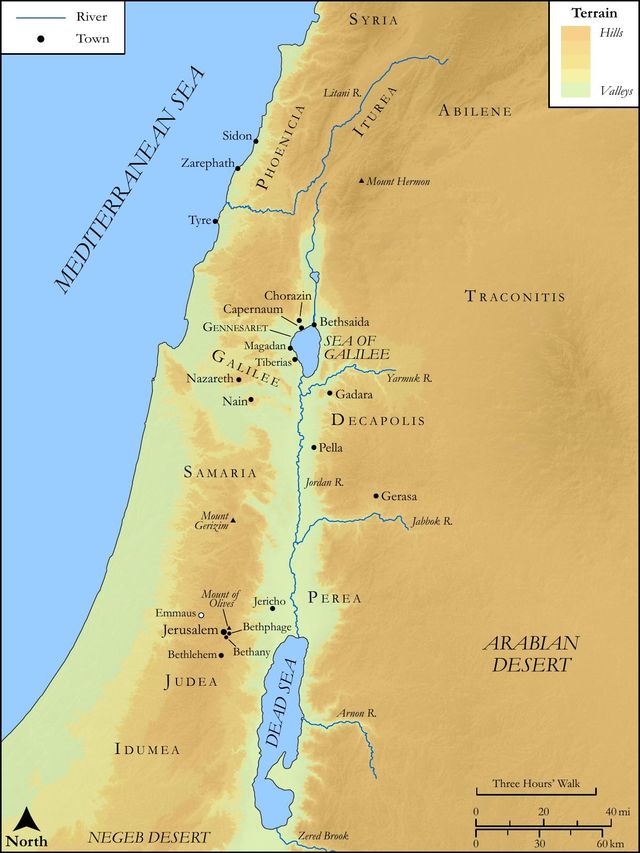
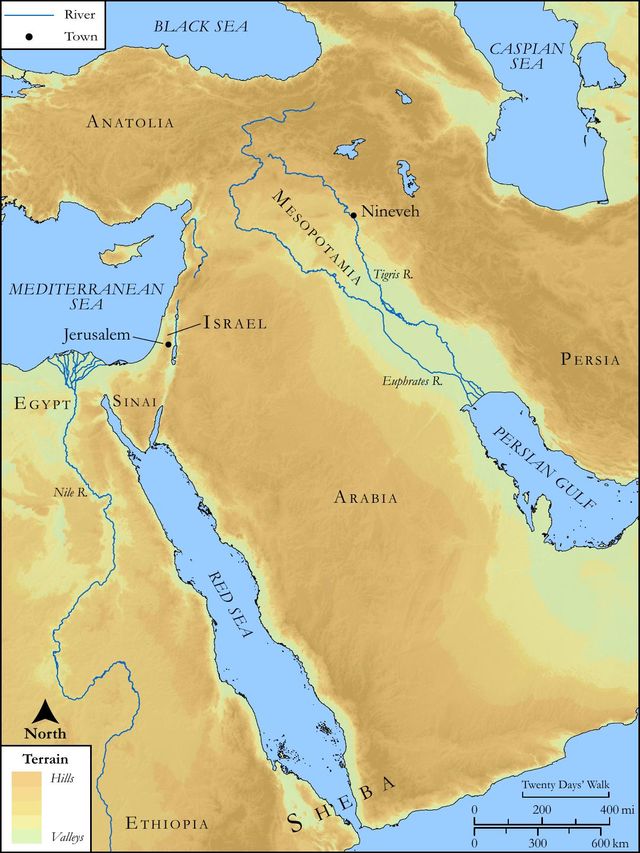
See on the biblical-era maps

Study this verse
Public-domain commentary
Matthew Henry
From his Commentary on the Whole Bible. Henry comments on passages, not single verses — this entry covers Luke 21:5–19. His four-level outline is real structure in the source text, so it is rendered as structure.
See here, I. With what admiration some spoke of the external pomp and magnificence of the temple, and they were some of Christ's own disciples too; and they took notice of it to him how it was adorned with goodly stones and gifts, Luk 21:5. The outside was built up with goodly stones, and within it was beautified and enriched with the presents that were offered up for that purpose, and were hung up in it. They thought their Master should be as much affected with those things as they were, and should as much regret the destruction of them as they did. When we speak of the temple, it should be of the presence of God in it, and of the ordinances of God administered in it, and the communion which his people there have with him. It is a poor thing, when we speak of the church, to let our discourse dwell upon its pomps and revenues, and the dignities and powers of its officers and rulers; for the king's daughter is all glorious within.
II.With what contempt Christ spoke of them, and with what assurance of their being all made desolate very shortly (Luk 21:6):
"As for those things which you behold, those dear things which you are so much in love with, behold, the days will come, and some now living may live to see them, in which there shall not be left one stone upon another. This building, which seems so beautiful that one would think none could, for pity, pull it down, and which seems so strong that one would think none would be able to pull it down, shall yet be utterly ruined; and this shall be done as soon as ever the spiritual temple of the gospel church (the substance of that shadow) begins to flourish in the world." Did we by faith foresee the blasting and withering of all external glory, we should not set our hearts upon it as those do that cannot see, or will not look, so far before them.
III.With what curiosity those about him enquire concerning the time when this great desolation should be:
Master, when shall these things be? Luk 21:7. It is natural to us to covet to know future things and the time of them, which it is not for us to know, when we are more concerned to ask what is our duty in the prospect of these things, and how we may prepare for them, which it is for us to know. They enquire what sign there shall be when these things shall come to pass. They ask not for a present sign, to confirm the prediction itself, and to induce them to believe it (Christ's word was enough for that), but what the future signs will be of the approaching accomplishment of the prediction, by which they may be put in mind of it. These signs of the times Christ had taught them to observe.
IV.With what clearness and fulness Christ answers their enquiries, as far as was necessary to direct them in their duty; for all knowledge is desirable as far as it is in order to practice.
1.They must expect to hear of false Christs and false prophets appearing, and false prophecies given out (Luk 21:8): Many shall come in my name; he does not mean in the name of Jesus, though there were some deceivers who pretended commissions from him (as Act 19:13), but usurping the title and character of the Messiah. Many pretended to be the deliverers of the Jewish church and nation from the Romans, and to fix the time when the deliverance should be wrought, by which multitudes were drawn into a snare, to their ruin. They shall say, hoti egō eimi - I am he, or I am, as if they would assume that incommunicable name of God, by which he made himself known when he came to deliver Israel out of Egypt, I am; and, to encourage people to follow them, they added, "The time draws near when the kingdom shall be restored to Israel, and all who will follow me shall share in it." Now as to this, he gives them a needful caution (1.) "Take heed that you be not deceived; do not imagine that I shall myself come again in external glory, to take possession of the throne of kingdoms. No, you must not expect any such thing, for my kingdom is not of this world." When they asked solicitously and eagerly, Master, when shall these things be? the first word Christ said was, Take heed that you be not deceived. Note, Those that are most inquisitive in the things of God (though it is very good to be so) are in most danger of being imposed upon, and have most need to be upon their guard. (2.) "Go you not after them. You know the Messiah is come, and you are not to look for any other; and therefore do not so much as hearken to them, nor have any thing to do with them." If we are sure that Jesus is the Christ, and his doctrine is the gospel, of God, we must be deaf to all intimations of another Christ and another gospel.
2.They must expect to hear of great commotions in the nations, and many terrible judgments inflicted upon the Jews and their neighbours.
(1.)There shall be bloody wars (Luk 21:10): Nation shall rise against nation, one part of the Jewish nation against another, or rather the whole against the Romans. Encouraged by the false Christs, they shall wickedly endeavour to throw off the Roman yoke, by taking up arms against the Roman powers; when they had rejected the liberty with which Christ would have made them free they were left to themselves, to grasp at their civil liberty in ways that were sinful, and therefore could not be successful.
(2.)There shall be earthquakes, great earthquakes, in divers places, which shall not only frighten people, but destroy towns and houses, and bury many in the ruins of them.
(3.)There shall be famines and pestilences, the common effects of war, which destroys the fruits of the earth, and, by exposing men to ill weather and reducing them to ill diet, occasions infectious diseases. God has various ways of punishing a provoking people. The four sorts of judgments which the Old Testament prophets so often speak of are threatened by the New Testament prophets too; for, though spiritual judgments are more commonly inflicted in gospel times, yet God makes use of temporal judgments also.
(4.)There shall be fearful sights and great signs from heaven, uncommon appearances in the clouds, comets and blazing stars, which frighten the ordinary sort of beholders, and have always been looked upon as ominous, and portending something bad. Now, as to these, the caution he gives them is, "Be not terrified. Others will be frightened at them, but be not you frightened, Luk 21:2. As to the fearful sights, let them not be fearful to you, who look above the visible heavens to the throne of God's government in the highest heavens. Be not dismayed at the signs of heaven, for the heathen are dismayed at them, Jer 10:2. And, as to the famines and pestilences, you fall into the hands of God, who has promised to those who are his that in the days of famine they shall be satisfied, and that he will keep them from the noisome pestilence; trust therefore in him, and be not afraid. Nay, when you hear of wars, when without are fightings and within are fears, yet then be not you terrified; you know the worst that any of these judgments can do to you, and therefore be not afraid of them; for," [1.] "It is your interest to make the best of that which is, for all your fears cannot alter it: these things must first come to pass; there is no remedy; it will be your wisdom to make yourselves easy by accommodating yourselves to them." [2.] "There is worse behind; flatter not yourselves with a fancy that you will soon see an end of these troubles, no, not so soon as you think of: the end is not by and by, not suddenly. Be not terrified, for, if you begin so quickly to be discouraged, how will you bear up under what is yet before you?"
3.They must expect to be themselves for signs and wonders in Israel; their being persecuted would be a prognostic of the destruction of the city and temple, which he had now foretold. Nay, this would be the first sign of their ruin coming: "Before all these, they shall lay their hands on you. The judgment shall begin at the house of God; you must smart first, for warning to them, that, if they have any consideration, they may consider, If this be done to the green tree, what shall be done to the dry? See Pe1 4:17, Pe1 4:18. But this is not all; this must be considered not only as the suffering of the persecuted, but as the sin of the persecutors. Before God's judgments are brought upon them, they shall fill up the measure of their iniquity by laying their hands on you." Note, The ruin of a people is always introduced by their sin; and nothing introduces a surer or sorer ruin than the sin of persecution. This is a sign that God's wrath is coming upon a people to the uttermost when their wrath against the servants of God comes to the uttermost. Now as to this,
(1.)Christ tells them what hard things they should suffer for his name's sake, much to the same purport with what he had told them when he first called them to follow him, Mt. 10: They should know the wages of it, that they might sit down and count the cost. St. Paul, who was the greatest labourer and sufferer of them all, not being now among them, was told by Christ himself what great things he should suffer for his name's sake (Act 9:16), so necessary is it that all who will live godly in Christ Jesus should count upon persecution. The Christians, having themselves been originally Jews, and still retaining an equal veneration with them for the Old Testament and all the essentials of their religion, and differing only in ceremony, might expect fair quarter with them; but Christ bids them not expect it: "No, they shall be the most forward to persecute you." [1.] "They shall use their own church-power against you: They shall deliver you up to the synagogues to be scourged there, and stigmatized with their anathemas." [2.] "They shall incense the magistrates against you: they shall deliver you into prisons, that you may be brought before kings and rulers for my name's sake, and be punished by them." [2.] "Your own relations will betray you (Luk 21:16), your parents, brethren, and kinsfolks, and friends; so that you will not know whom to put a confidence in, or where to be safe." [4.] "Your religion will be made a capital crime, and you will be called to resist unto blood. Some of you shall they cause to be put to death; so far must you be from expecting honour and wealth that you must expect nothing but death in its most frightful shapes, death in all its dreadful pomp. Nay." [5.] "You shall be hated of all men for my name's sake." This is worse than death itself, and was fulfilled when the apostles were not only appointed to death, but made a spectacle to the world, and counted as the filth of the world, and the offscouring of all things, which every body loathes, Co1 4:9, Co1 4:13. They were hated of all men, that is, of all bad men, who could not bear the light of the gospel (because it discovered their evil deeds), and therefore hated those who brought in that light, flew in their faces, and would have pulled them to pieces. The wicked world, which hated to be reformed, hated Christ the great Reformer, and all that were his, for his sake. The rulers of the Jewish church, knowing very well that if the gospel obtained among the Jews their usurped abused power was at an end, raised all their forces against it, put it into an ill name, filled people's minds with prejudices against it, and so made the preachers and professors of it odious to the mob.
(2.)He encourages them to bear up under their trials, and to go on in their work, notwithstanding the opposition they would meet with.
[1.]God will bring glory both to himself and them out of their sufferings: "It shall turn to you for a testimony, Luk 21:13. Your being set up thus for a mark, and publicly persecuted, will make you the more taken notice of and your doctrine and miracles the more enquired into; your being brought before kings and rulers will give you an opportunity of preaching the gospel to them, who otherwise would never have come within hearing of it; your suffering such severe things, and being so hated by the worst of men, men of the most vicious lives, will be a testimony that you are good, else you would not have such bad men for your enemies; your courage, and cheerfulness, and constancy under your sufferings will be a testimony for you, that you believe what you preach, that you are supported by a divine power, and that the Spirit of God and glory rests upon you."
[2.]"God will stand by you, and own you, and assist you, in your trials; you are his advocates, and you shall be well furnished with instructions, Luk 21:14, Luk 21:15. Instead of setting your hearts on work to contrive an answer to informations, indictments, articles, accusations, and interrogatories, that will be exhibited against you in the ecclesiastical and civil courts, on the contrary, settle it in your hearts, impress it upon them, take pains with them to persuade them not to meditate before what you shall answer; do not depend upon your own wit and ingenuity, your own prudence and policy, and do not distrust or despair of the immediate and extraordinary aids of the divine grace. Think not to bring yourselves off in the cause of Christ as you would in a cause of your own, by your own parts and application, with the common assistance of divine Providence, but promise yourselves, for I promise you, the special assistance of divine grace: I will give you a mouth and wisdom." This proves Christ to be God; for it is God's prerogative to give wisdom, and he it is that made man's mouth. Note, First, A mouth and wisdom together completely fit a man both for services and sufferings; wisdom to know what to say, and a mouth wherewith to say it as it should be said. It is a great happiness to have both matter and words wherewith to honour God and do good; to have in the mind a storehouse well furnished with things new and old, and a door of utterance by which to bring them forth. Secondly, Those that plead Christ's cause may depend upon him to give them a mouth and wisdom, which way soever they are called to plead it, especially when they are brought before magistrates for his name's sake. It is not said that he will send an angel from heaven to answer for them, though he could do this, but that he will give them a mouth and wisdom to enable them to answer for themselves, which puts a greater honour upon them, which requires them to use the gifts and graces Christ furnishes them with, and redounds the more to the glory of God, who stills the enemy and the avenger out of the mouths of babes and sucklings. Thirdly, When Christ gives to his witnesses a mouth and wisdom, they are enabled to say that both for him and themselves which all their adversaries are not able to gainsay or resist, so that they are silenced, and put to confusion. This was remarkably fulfilled presently after the pouring out of the Spirit, by whom Christ gave his disciples this mouth and wisdom, when the apostles were brought before the priest sand rulers, and answered them so as to make them ashamed, Acts 4, 5, and Act 6:1-15.
[3.]"You shall suffer no real damage by all the hardships they shall put upon you (Luk 21:18): There shall not a hair of your head perish." Shall some of them lose their heads, and yet not lose a hair? It is a proverbial expression, denoting the greatest indemnity and security imaginable; it is frequently used both in the Old Testament and New, in that sense. Some think that it refers to the preservation of the lives of all the Christians that were among the Jews when they were cut off by the Romans; historians tell us that not one Christian perished in that desolation. Others reconcile it with the deaths of multitudes in the cause of Christ, and take it figuratively in the same sense that Christ saith, He that loseth his life for my sake shall find it. "Not a hair of your head shall perish but," First, "I will take cognizance of it." To this end he had said (Mat 10:30), The hairs of your head are all numbered; and an account is kept of them, so that none of them shall perish but he will miss it. Secondly, "It shall be upon a valuable consideration." We do not reckon that lost or perishing which is laid out for good purposes, and will turn to a good account. If we drop the body itself for Christ's name's sake, it does not perish, but is well bestowed. Thirdly, "It shall be abundantly recompensed; when you come to balance profit and loss, you will find that nothing has perished, but, on the contrary, that you have great gain in present comforts, especially in the joys of a life eternal;" so that though we may be losers for Christ we shall not, we cannot, be losers by him in the end.
[4.]"It is therefore your duty and interest, in the midst of your own sufferings and those of the nation, to maintain a holy sincerity and serenity of mind, which will keep you always easy (Luk 21:19): In your patience possess ye your souls; get and keep possession of your souls." Some read it as a promise, "You may or shall possess your souls." It comes all to one. Note, First, It is our duty and interest at all times, especially in perilous trying times, to secure the possession of our own souls; not only that they be not destroyed and lost for ever, but that they be not distempered now, nor our possession of them disturbed and interrupted. "Possess your souls, be your own men, keep up the authority and dominion of reason, and keep under the tumults of passion, that neither grief nor fear may tyrannize over you, nor turn you out of the possession and enjoyment of yourselves." In difficult times, when we can keep possession of nothing else, then let us make that sure which may be made sure, and keep possession of our souls. Secondly, It is by patience, Christian patience, that we keep possession of our own souls. "In suffering times, set patience upon the guard for the preserving of your souls; by it keep your souls composed and in a good frame, and keep out all those impressions which would ruffle you and put you out of temper."
Historical interpretation
Nine Centuries of Reception
16 surviving comments on this verse. Each one is dated, so this reads as a timeline rather than a list.
Select a marker to jump to its quote. Markers stagger vertically where authors wrote within a few decades of each other.
The impudence, therefore, of Marcion's Christ will be evident, when he says that many will come in his name, whereas this name does not at all belong to him, since he is not the Christ and Jesus of the Creator, to whom these names do properly appertain; and more especially when he prohibits those to be received whose very equal in imposture he is, inasmuch as he (equally with them ) comes in a name which belongs to another-unless it was his business to warn off from a mendaciously assumed name the disciples (of One) who, by reason of His name being properly given to Him, possessed also the verity thereof. But when "they shall by and by come and say, I am Christ," they will be received by you, who have already received one altogether like them.
No one is at once a proposer and a seconder to himself. Besides, you have read, no doubt, that "many shall come, saying, I am Christ." Now if any one can pretend that he is Christ, how much more might a man profess to be an apostle of Christ! But still, for my own part, I appear in the character of a disciple and an inquirer; that so I may even thus both refute your belief, who have nothing to support it, and confound your shamelessness, who make claims without possessing the means of establishing them.
And what am I to say with respect to men, when the very elements themselves will disown their order? There will be earthquakes in every city, and plagues in every country; and monstrous thunderings and frightful lightnings will burn up both houses and fields. Storms of winds will disturb both sea and land excessively; and there will be unfruitfulness on the earth, and a roaring in the sea, and an intolerable agitation on account of souls and the destruction of men. There will be signs in the sun, and signs in the moon, deflections in the stars, distresses of nations, intemperateness in the atmosphere, discharges of hail upon the face of the earth, winters of excessive severity, different frosts, inexorable scorching winds, unexpected thunderings, unlooked-for conflagrations; and in general, lamentation and mourning in the whole earth, without consolation. For, "because iniquity shall abound, the love of many shall wax cold." By reason of the agitation and confusion of all these, the Lord of the universe cries in the Gospel, saying, "Take heed that ye be not deceived; for many shall come in my name, saying, I am Christ, and the time draweth near: go ye not therefore after them. But when ye shall hear of wars and commotions, be not terrified: for these things must first come to pass; but the end is not yet by and by." Let us observe the word of the Saviour, how He always admonished us with a view to our security: "Take heed that ye be not deceived: for many shall come in my name, saying, I am Christ."
Moreover, concerning these very men, warnings are not wanting to us, for the Lord foretold: "Take heed that ye be not deceived: for many shall come in My flame, saying, I am Christ; and the tithe draweth near: go ye not therefore after them."
How beautiful was every thing relating to the structure of the temple, history informs us, and there are yet preserved remains of it, enough to instruct us in what was once the character of the buildings. But our Lord proclaimed to those that were wondering at the building of the temple, that there should not be left in it one stone upon another. For it was meet that that place, because of the presumption of its worshippers, should suffer every kind of desolation.
(Orat. 1. cont. Arian.) For since we have received, delivered unto us by God, graces and doctrines which are above man, (as, for example, the rule of a heavenly life, power against evil spirits, the adoption and the knowledge of the Father and the Word, the gift of the Holy Spirit,) our adversary the devil goeth about seeking to steal from us the seed of the word which has been sown. But the Lord, shutting up in us His teaching as His own precious gift, warns us, lest we be deceived. And one very great gift He gives us, the word of God, that not only we be not led away by what appears, but even if there is ought lying concealed, by the grace of God we may discern it. For seeing that the devil is the hateful inventor of evil, what he himself is he conceals, but craftily assumes a name desirable to all; just as if a man wishing to get into his power some children not His own, should in the absence of the parents counterfeit their looks, and lead away the children who were longing for them. In every heresy then the devil says in disguise, "I am Christ, and with me there is truth." And so it follows, For many shall come in my name, saying, I am Christ; and the time draweth near.
Or perhaps He docs not speak of false Christs coming before the end of the world, but of those who existed in the Apostles' time.
Jerusalem certainly was besieged and taken by the Roman army … then, the desolation will be near since many will fall into error and depart from the true faith.… Then the day of the Lord will suitably come, and the days will be shortened for the sake of the chosen. Since the Lord’s first coming was to atone for sins, the second will be to prevent transgressions, fearing more might fall into the error of unbelief. False prophets and then famine will come. Tell me again of the times of Elijah, and you will find prophets of confusion, Jezebel, famine and drought on earth. What was the reason? Wickedness abounded, and love grew cold.
There is a true saying next to the points about the temple that Solomon founded. The enemy must first destroy this by the time of the judgment. Everything made by labor and by hand in either age will wear out or be destroyed by force or consumed by fire.…When asked when the destruction of the temple would be and what would be the sign of his coming, the Lord warns of signs and does not think that the time should be made known. Matthew added a third question. The disciples asked about the times of the destruction of the temple, the sign of the coming, and the end of the world. Luke thought that enough was known about the end of the world if it were learned under the topic of the Lord’s coming.
Matthew adds a third question, that both the time of the destruction of the temple, and the sign of His coming, and the end of the world, might be inquired into by the disciples. But our Lord being asked when the destruction of the temple should be, and what the sign of His coming, instructs them as to the signs, but does not mind to inform them as to the time. It follows, Take heed that ye be not deceived.
Now His disciples did not at all perceive the force of His words, but supposed they were spoken of the end of the world. Therefore asked they Him, saying, Master, but when shall these things be? and what sign, &c.
For before His descent from heaven, there shall come some to whom we must not give place. For the Only-begotten Son of God, when He came to save the world, wished to be in secret, that He might bear the cross for us. But His second coming shall not be in secret, but terrible and open. For He shall descend in the glory of God the Father, with the Angels attending Him, to judge the world in righteousness. Therefore He concludes, Go ye not therefore after them.
He explains what will happen at the consummation of the world and warns them. Before our Savior Christ comes from heaven, various false christs and false prophets will appear, coming before him. They will falsely take upon themselves his person, coming into the world like swirling smoke springing up from a fire about to break out. "Do not follow them," he says. The only-begotten Word of God consented to take our likeness upon himself and to endure the birth in the flesh from a woman, in order that he might save all under heaven.… It was necessary that Christ should remain unknown during the time that preceded his passion. His second advent from heaven, however, will not happen secretly, as did his coming at first, but will be illustrious and terrifying. In the glory of God the Father, he will descend with the holy angels guarding him to judge the world in righteousness. He therefore says, "When false christs and false prophets arise, do not go after them."
Perhaps you are anxious, brothers and sisters, at the fact that we hear constantly of the tumult of wars and the onsets of battles. Perhaps your love is still more anxious since these are taking place in our times. The reason is the closer we are to the destruction of the world, the closer we are to the kingdom of the Savior. The Lord himself says, “In the last days nation will rise against nation and kingdom against kingdom. When you see wars, earthquakes and famines, know that the kingdom of God is at hand.” This nearness of wars shows us that Christ is near.
He said: See to it that you are not led astray. For many will come in my name, saying, "I am he" and "the time is near." Therefore, do not go after them. Many, at the imminent destruction of Jerusalem, rose up as leaders and claimed to be the Christs, asserting that the time of freedom was now approaching. Many in the Church, even in the times of the apostles, arose as heresiarchs who, among numerous other things contrary to the truth, preached that the day of the Lord was at hand. Whom the Apostle condemns in the letter to the Thessalonians. Many in the name of Christ came as Antichrists, the first of whom was Simon the Magician, to whom, as we read in the Acts of the Apostles, all those in Samaria listened, from the least to the greatest, saying, "This man is the power of God that is called great" (Acts 8). Because for a long time he had amazed them with his magic.
For it was ordained by the dispensation of God that the city itself and the temple should be overthrown, lest perhaps some one yet a child in the faith, while wrapt in astonishment at the rites of the sacrifices, should be carried away by the mere sight of the various beauties.
For there were many leaders when the destruction of Jerusalem was at hand, who declared themselves to be Christ, and that the time of deliverance was drawing nigh. Many heresiarchs also in the Church have preached that the day of the Lord is at hand, whom the Apostles condemn. (2 Thess. 2:2.) Many Antichrists also came in Christ's name, of whom the first was Simon Magus, who said, This man is the great power of God. (Acts 8:10.)
Or the widow may be taken to mean any soul bereft as it were of her first husband, the ancient law, and not worthy to be united to the Word of God. Who brings to God instead of a dowry faith and a good conscience, and so seems to offer more than those who are rich in words, and abound in the moral virtues of the Gentiles.
Continue studying Luke 21:8 across the web’s major study libraries — every link below opens this exact verse, chapter, or book on the destination site.
Read & Compare
 BibleGatewayThis verse in more than 200 translations and 70 languages.
 Bible.comThe YouVersion reader — hundreds of translations, reading plans, and highlights.
 ESV.orgCrossway's official English Standard Version reader.
 NET BibleThe NET translation with 60,000+ translators' notes on every rendering decision.
 STEP BibleTyndale House's free study tool — original text, vocabulary, and scholarly resources.
 BibliaLogos Bible Software's free web reader.
 USCCBThe New American Bible (Revised Edition) with the U.S. bishops' study notes.
Commentaries
 BibleHub CommentariesDozens of classic commentaries on this verse, gathered on one page.
 StudyLightMore than 100 commentary sets — the largest collection on the web.
 BibleRefPlain-English commentary on what this verse means, verse by verse.
 Enduring WordDavid Guzik's free commentary on this chapter, widely used by Bible teachers.
 Bible Study ToolsVerse commentary alongside Greek and Hebrew study aids.
Original Language & Research
- BibleHub InterlinearThe verse word by word — original language, transliteration, and English.
- BibleHub LexiconEvery word's original-language definition and Strong's entry.
 Blue Letter BibleDeep-study tools — Strong's numbers, concordance, and word studies.
 CNTR CollationThe earliest Greek manuscripts of this verse, collated letter by letter.
Sermons, Hymns & Audio


TrulyRandomVerse is not affiliated with these sites and doesn’t control their content. They’re linked because they’re genuinely useful.
Summary
In Luke 21:8, Jesus delivers a foundational warning to His disciples within the broader context of His eschatological discourse, commonly known as the Olivet Discourse. He urges them to exercise extreme caution against deception, specifically highlighting the emergence of numerous individuals who will falsely claim messianic identity and authority. This verse underscores the critical importance of spiritual discernment and steadfastness in the face of widespread spiritual error, preparing believers for the challenges that precede His return.
Context
ShowHideLiterary Context
This verse serves as Jesus' immediate and primary caution in response to the disciples' questions regarding the signs of His coming and the end of the age, particularly after He prophesied the destruction of the Temple in Luke 21:6. Before delving into specific signs like wars, famines, and earthquakes, Jesus prioritizes the danger of spiritual deception. This foundational warning is echoed in the parallel accounts of the Olivet Discourse found in Matthew 24:4-5 and Mark 13:5-6, indicating its paramount importance in Jesus' teaching on the end times. It sets the stage for understanding that the greatest threat to believers will not merely be external calamities, but internal spiritual compromise through false claims.
Historical & Cultural Context
Jesus' warning must be understood against the backdrop of first-century Judea, a time ripe with messianic expectation and fervent nationalism. Various figures had already emerged claiming to be prophets or deliverers, often leading popular movements that ended in disaster (e.g., Theudas, Judas the Galilean, mentioned in Acts 5:36-37). The Jewish people, under Roman occupation, longed for a political Messiah who would liberate them. This longing created fertile ground for imposters. Jesus' caution, "many shall come in my name, saying, I am Christ," directly addresses this cultural predisposition, preparing His followers for a spiritual battle against false messianic claims rather than solely political ones. The phrase "the time draweth near" also resonates with the Jewish understanding of a divinely appointed "time" or "season" (Greek: kairos) for God's redemptive plan to unfold, intensifying the urgency of discernment.
Key Themes
ShowHideLuke 21:8 powerfully contributes to several key themes within Luke's Gospel and broader biblical eschatology. The most prominent is the theme of discernment and vigilance, emphasizing the need for believers to be spiritually awake and discerning in a world prone to deception. It introduces the pervasive danger of false messianic claims and spiritual imposters, a recurring warning throughout the New Testament (e.g., 2 Peter 2:1-3). Furthermore, the verse touches upon the eschatological tension between the "already" and the "not yet"—the "time draweth near" suggests an impending reality, yet the command "go ye not therefore after them" urges patience and steadfastness, cautioning against premature or misguided responses to perceived end-time events. This highlights the importance of endurance in faith amidst trials and temptations to stray.
Exposition and Analysis
ShowHideKey Word Analysis
ShowHideMeaning "to look at," "to behold," "to beware," or "to take heed." In this context, it is an imperative, demanding active and conscious vigilance. It's not a passive observation but an urgent call to be on guard, to perceive and understand the spiritual dangers.
Meaning "to roam," "to go astray," "to err," or "to be led into error." This word highlights the danger of being led off the true path of faith, implying a wandering from truth or virtue. It speaks to the spiritual disorientation caused by false teachings and false claims.
Meaning "to make near," "to approach," "to be at hand," or "to come nigh." This verb conveys a sense of imminence or proximity. While it doesn't necessarily mean "immediately," it indicates that the events Jesus describes, including the rise of false Christs, are part of a divinely appointed timeline that is advancing towards its culmination.
Verse Breakdown
ShowHide"And he said,"
This introductory phrase, using the Greek particle dé (G1161) and the verb épō (G2036), signals a direct and authoritative pronouncement from Jesus. It links this crucial warning to the preceding dialogue about the Temple's destruction and the disciples' questions about the end times, emphasizing that this is Jesus' direct answer and primary concern.
"Take heed that ye be not deceived:"
This is a direct, imperative command from Jesus, using blépō (G991) and planáō (G4105). It serves as the central warning of the verse, highlighting the pervasive and dangerous nature of spiritual deception. The passive voice ("be not deceived") suggests that the disciples are vulnerable to being led astray, underscoring the need for active vigilance on their part to resist such influences.
"for many shall come in my name, saying, I am Christ;"
This clause provides the reason (gár, G1063) for the preceding warning. Jesus specifically identifies the source of deception: numerous individuals (polýs, G4183) who will claim His authority or identity (ónoma, G3686) and declare themselves to be the Messiah (egṓ eimí Christos, "I am Christ"). This is a direct prophecy of false messiahs and spiritual leaders who will attempt to usurp Jesus' unique role.
"and the time draweth near:"
This phrase, using kaí (G2532) and kairós (G2540) with engízō (G1448), adds a layer of urgency and eschatological significance. It indicates that the period when these deceptions will occur is not distant but is approaching or already at hand. This "time" refers to a divinely appointed season, implying that these events are part of God's unfolding plan toward the consummation of the ages.
"go ye not therefore after them."
This is a second, equally strong imperative command, using oûn (G3767) for "therefore" and poreúomai (G4198) with mḗ (G3361) for negation. It provides the practical instruction following the warning: do not follow, pursue, or align yourselves with these false claimants. It emphasizes the need for steadfastness, discernment, and adherence to the true Christ, rather than being swayed by sensational or deceptive movements.
Literary Devices
ShowHideLuke 21:8 employs several significant literary devices to convey its urgent message. The most prominent is Admonition, as Jesus issues a direct and stern warning to His disciples. This is reinforced by the use of the Imperative Mood ("Take heed," "go ye not"), which underscores the non-negotiable nature of His commands and the critical importance of obedience. The verse also functions as Prophecy, as Jesus foretells the future emergence of "many" false Christs. This prophetic element serves not merely to predict, but to prepare and protect His followers. Furthermore, there is an element of Contrast implicit in the verse: the true Christ (Jesus) warns against false Christs, highlighting the stark difference between genuine divine authority and deceptive human claims. The phrase "in my name" can be seen as a form of Metonymy, where "name" stands for the authority, character, and identity of Jesus Himself, indicating that these imposters will falsely appropriate His very essence.
Theological and Thematic Connections
ShowHideLuke 21:8 is a cornerstone passage for understanding Christian eschatology and the nature of spiritual warfare. Theologically, it establishes the reality of spiritual deception as a significant characteristic of the end times, directly preceding Christ's return. It underscores the importance of Christology, emphasizing the unique and singular identity of Jesus as the true Messiah, against whom all other claimants are false. The warning against being "deceived" highlights the human vulnerability to error and the necessity of divine revelation and the Holy Spirit's guidance for discernment. The command to "go ye not therefore after them" speaks to the believer's responsibility to remain steadfast in sound doctrine and to resist movements that deviate from the truth, even when they appear compelling or claim divine sanction. This passage thus serves as a timeless call to doctrinal purity and spiritual vigilance for all generations of believers awaiting Christ's return.
Reflection and Application
ShowHideLuke 21:8 remains profoundly relevant for believers today, perhaps more so than ever in an age saturated with information and diverse spiritual claims. Jesus' warning to "take heed that ye be not deceived" is not merely a historical note but a living imperative for every generation. It calls us to cultivate a robust and discerning faith that is deeply rooted in the unchanging truth of God's Word. In a world where spiritual leaders, movements, and teachings can quickly gain traction, often leveraging compelling rhetoric or even miraculous claims, Jesus' instruction to "go ye not therefore after them" provides a vital guardrail. It challenges us to prioritize biblical fidelity over sensationalism, and sound doctrine over charismatic appeal. True spiritual maturity involves the ability to "test everything; hold fast what is good" (1 Thessalonians 5:21). This verse compels us to be students of the Word, to pray for discernment, and to remain anchored in the person and work of the true Christ, lest we be led astray by the many who come "in His name" but do not represent His truth.
Questions for Reflection
ShowHideFAQ
ShowHideWhat does Jesus mean by "many shall come in my name, saying, I am Christ"?
ShowHideJesus is warning about individuals who will emerge claiming to possess His authority, identity, or even claiming to be the Messiah (Christ) themselves. This isn't just about people using His name superficially, but about those who will falsely represent Him, or outright declare themselves to be the promised deliverer, thereby attempting to usurp His unique role and mislead believers. This prophecy has seen various fulfillments throughout history, from early Gnostic teachers to modern cult leaders, all of whom draw people away from the true Christ. The warning is against those who, under the guise of spiritual authority, lead people astray from the authentic gospel message and the person of Jesus as revealed in Scripture.
Christ-Centered Fulfillment
ShowHideLuke 21:8 finds its profound Christ-centered fulfillment not only in Jesus' role as the ultimate prophet who foretells future events, but more significantly, in His unique and singular identity as the true Messiah, against whom all false claimants are exposed. Jesus' warning protects His sheep from being scattered by wolves, demonstrating His pastoral heart as the Good Shepherd who lays down His life for His sheep. He is the only one who can truthfully say, "I am the way, the truth, and the life; no one comes to the Father except through Me" (John 14:6). The "time draweth near" ultimately points to the consummation of God's redemptive plan through Christ's second coming, when He will return not as a mere claimant, but as the King of kings and Lord of lords, putting an end to all deception and establishing His eternal kingdom. Therefore, Jesus' warning is an invitation to fix our eyes on Him alone, the author and perfecter of our faith, who alone embodies the truth and offers eternal salvation, standing in stark contrast to the fleeting and deceptive claims of false messiahs.