


Luke 21:27
- καὶkaiAndG2532CONJConjunction
- τότεtotethenG5119ADVAdverb
- ὄψονταιopsontaiwill they beholdG3700V-FDI-3PVerb Future Middle Deponent Indicative 3rd Plural
- τὸνtontheG3588T-ASMDefinite article Accusative Singular Masculine
- υἱὸνhuionSonG5207N-ASM-TNoun Accusative Singular Masculine Title
- τοῦtou<the>G3588T-GSMDefinite article Genitive Singular Masculine
- ἀνθρώπουanthrōpouof ManG444N-GSM-TNoun Genitive Singular Masculine Title
- ἐρχόμενονerchomenoncomingG2064V-PNP-ASMVerb Present Middle Or Passive Deponent Participle Accusative Singular Masculine
- ἐνeninG1722PREPPreposition
- νεφέλῃnephelēa cloudG3507N-DSFNoun Dative Singular Feminine
- μετὰmetawithG3326PREPPreposition
- δυνάμεωςdunameōspowerG1411N-GSFNoun Genitive Singular Feminine
- καὶkaiandG2532CONJConjunction
- δόξηςdoxēsgloryG1391N-GSFNoun Genitive Singular Feminine
- πολλῆςpollēsgreatG4183A-GSFAdjective Genitive Singular Feminine
English is a literal word-by-word gloss of the Greek, not the KJV's wording. Why?
This is the original text the KJV's translators worked from — each Greek word with its own literal English meaning in this verse, prepared by scholars at Tyndale House, Cambridge. The KJV translates whole sentences, not word by word, so its wording differs: one Greek word can become several English words, and the KJV may choose “charity” where the gloss reads “love”. Both are faithful — they answer different questions. For the KJV's own rendering, switch to the KJV text.
Details
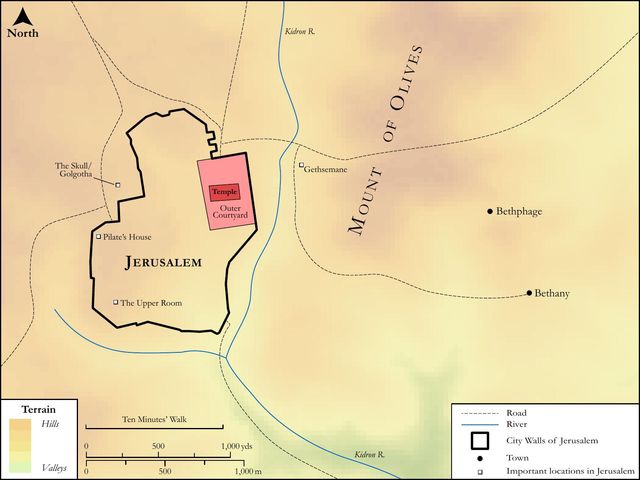
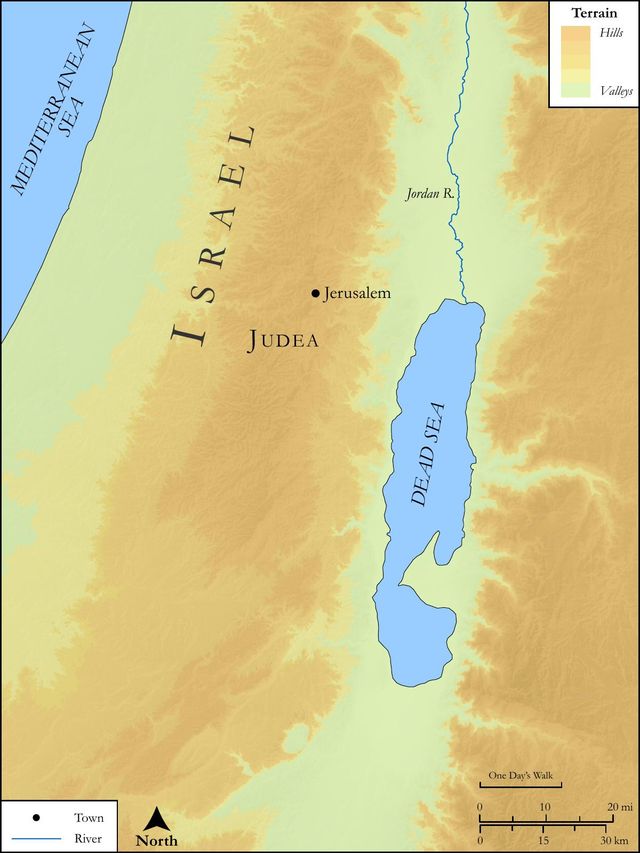
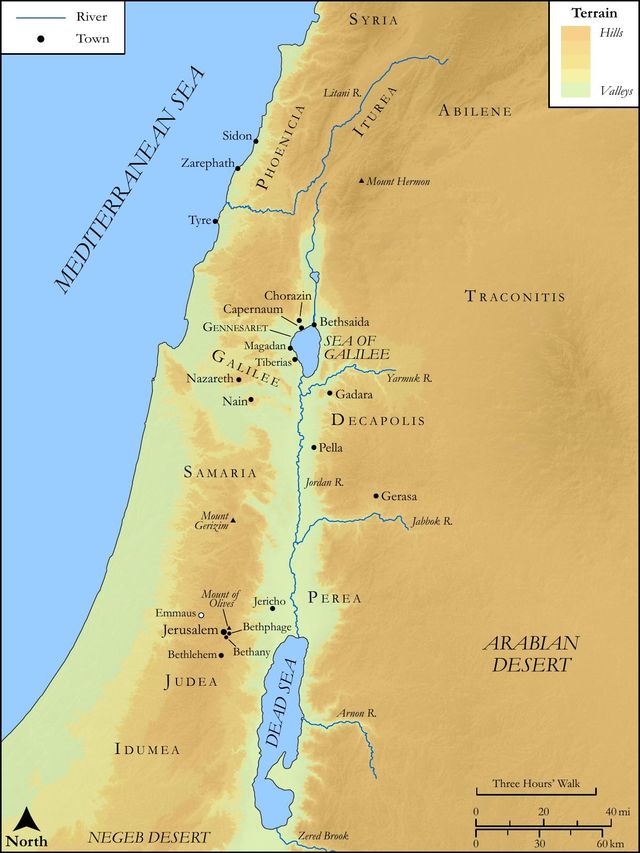
See on the biblical-era map
Study this verse
Public-domain commentary
Matthew Henry
From his Commentary on the Whole Bible. Henry comments on passages, not single verses — this entry covers Luke 21:20–28. His two-level outline is real structure in the source text, so it is rendered as structure.
Having given them an idea of the times for about thirty-eight years next ensuing, he here comes to show them what all those things would issue in at last, namely, the destruction of Jerusalem, and the utter dispersion of the Jewish nation, which would be a little day of judgment, a type and figure of Christ's second coming, which was not so fully spoken of here as in the parallel place (Mt. 24), yet glanced at; for the destruction of Jerusalem would be as it were the destruction of the world to those whose hearts were bound up in it.
I.He tells them that they should see Jerusalem besieged, compassed with armies (Luk 21:20), the Roman armies; and, when they saw this, they might conclude that its desolation was nigh, for in this the siege would infallibly end, though it might be a long siege. Note, As in mercy, so in judgment, when God begins, he will make an end.
II.He warns them, upon this signal given, to shift for their own safety (Luk 21:21):
"Then let them that are in Judea quit the country and flee to the mountains; let them that are in the midst of it" (Of Jerusalem) "depart out, before the city be closely shut up, and" (as we say now) "before the trenches be opened; and let not them that are in the countries and villages about enter into the city, thinking to be safe there. Do you abandon a city and country which you see God has abandoned and given up to ruin. Come out of her, my people."
III.He foretels the terrible havoc that should be made of the Jewish nation (Luk 21:22):
Those are the days of vengeance so often spoken of by the Old Testament prophets, which would complete the ruin of that provoking people. All their predictions must now be fulfilled, and the blood of all the Old Testament martyrs must now be required. All things that are written must be fulfilled at length. After days of patience long abused, there will come days of vengeance; for reprieves are not pardons. The greatness of that destruction is set forth,
1.By the inflicting cause of it. It is wrath upon this people, the wrath of God, that will kindle this devouring consuming fire.
2.By the particular terror it would be to women with child, and poor mothers that are nurses. Woe to them, not only because they are most subject to frights, and least able to shift for their own safety, but because it will be a very great torment to them to think of having borne and nursed children for the murderers.
3.By the general confusion that should be all the nation over. There shall be great distress in the land, for men will not know what course to take, nor how to help themselves.
IV.He describes the issue of the struggles between the Jews and the Romans, and what they will come to at last; in short,
1.Multitudes of them shall fall by the edge of the sword. It is computed that in those wars of the Jews there fell by the sword above eleven hundred thousand. And the siege of Jerusalem was, in effect, a military execution.
2.The rest shall be led away captive; not into one nations, as when they were conquered by the Chaldeans, which gave them an opportunity of keeping together, but into all nations, which made it impossible for them to correspond with each other, much less to incorporate.
3.Jerusalem itself was trodden down of the Gentiles. The Romans, when they had made themselves masters of it, laid it quite waste, as a rebellious and bad city, hurtful to kings and provinces, and therefore hateful to them.
V.He describes the great frights that people should generally be in.
Many frightful sights shall be in the sun, moon, and stars, prodigies in the heavens, and here in this lower world, the sea and the waves roaring, with terrible storms and tempests, such as had not been known, and above the ordinary working of natural causes. The effect of this shall be universal confusion and consternation upon the earth, distress of nations with perplexity, Luk 21:25. Dr. Hammond understands by the nations the several governments or tetrarchies of the Jewish nation, Judea, Samaria, and Galilee; these shall be brought to the last extremity. Men's hearts shall fail them for fear (Luk 21:26), apopsuchontōn anthrōpōn - men being quite exanimated, dispirited, unsouled, dying away for fear. Thus those are killed all the day long by whom Christ's apostles were so (Rom 8:36), that is, they are all the day long in fear of being killed; sinking under that which lies upon them, and yet still trembling for fear of worse, and looking after those things which are coming upon the world. When judgment begins at the house of God, it will not end there; it shall be as if all the world were falling in pieces; and where can any be secure then? The powers of heaven shall be shaken, and then the pillars of the earth cannot but tremble. Thus shall the present Jewish policy, religion, laws, and government, be all entirely dissolved by a series of unparalleled calamities, attended with the utmost confusion. So Dr. Clarke. But our Saviour makes use of these figurative expressions because at the end of time they shall be literally accomplished, when the heavens shall be rolled together as a scroll, and all their powers not only shaken, but broken, and the earth and all the works that are therein shall be burnt up, Pe2 3:10, Pe2 3:12. As that day was all terror and destruction to the unbelieving Jews, so the great day will be to all unbelievers.
VI.He makes this to be a kind of appearing of the Son of man:
Then shall they see the Son of man coming in a cloud, with power and great glory, Luk 21:27. The destruction of Jerusalem was in a particular manner an act of Christ's judgment, the judgment committed to the Son of man; his religion could never be thoroughly established but by the destruction of the temple, and the abolishing of the Levitical priesthood and economy, after which even the converted Jews, and many of the Gentiles too, were still hankering, till they were destroyed; so that it might justly be looked upon as a coming of the Son of man, in power and great glory, yet not visibly, but in the clouds; for in executing such judgments as these clouds and darkness are round about him. Now this was,
1.An evidence of the first coming of the Messiah; so some understand it. Then the unbelieving Jews shall be confined, when it is too late, that Jesus was the Messiah; those that would not see him coming in the power of his grace to save them shall be made to see him coming in the power of his wrath to destroy them; those that would not have him to reign over them shall have him to triumph over them.
2.It was an earnest of his second coming. Then in the terrors of that day they shall see the Son of man coming in a cloud, and all the terrors of the last day. They shall see a specimen of it, a faint resemblance of it. If this be so terrible, what will that be?
VII.He encourages all the faithful disciples in reference to the terrors of that day (Luk 21:28):
"When these things begin to come to pass, when Jerusalem is besieged, and every thing is concurring to the destruction of the Jews, then do you look up, when others are looking down, look heavenward, in faith, hope, and prayer, and lift up your heads with cheerfulness and confidence, for your redemption draws night." 1. When Christ came to destroy the Jews, he came to redeem the Christians that were persecuted and oppressed by them; then had the churches rest. 2. When he comes to judge the world at the last day, he will redeem all that are his, from all their grievances. And the foresight of that day is as pleasant to all good Christians as it is terrible to the wicked and ungodly. Their death itself is so; when they see that day approaching, they can lift up their heads with joy, knowing that their redemption draws nigh, their removal to their Redeemer.
VIII.Here is one word of prediction that looks further than the destruction of the Jewish nation, which is not easily understood; we have it in Luk 21:24 : Jerusalem shall be trodden down of the Gentiles, till the times of the Gentiles be fulfilled.
1.Some understand it of what is past; so Dr. Hammond. The Gentiles, who have conquered Jerusalem, shall keep possession of it, and it shall be purely Gentile, till the times of the Gentiles be fulfilled, till a great part of the Gentile world shall have become Christian, and then after Jerusalem shall have been rebuilt by Adrian the emperor, with an exclusion of all the Jews from it, many of the Jews shall turn Christians, shall join with the Gentile Christians, to set up a church in Jerusalem, which shall flourish there for a long time.
2.Others understand it of what is yet to come; so Dr. Whitby. Jerusalem shall be possessed by the Gentiles, of one sort or other, for the most part, till the time come when the nations that yet remain infidels shall embrace the Christian faith, when the kingdoms of this world shall become Christ's kingdoms, and then all the Jews shall be converted. Jerusalem shall be inhabited by them, and neither they nor their city any longer trodden down by the Gentiles.
Historical interpretation
Ten Centuries of Reception
18 surviving comments on this verse. Each one is dated, so this reads as a timeline rather than a list.
Select a marker to jump to its quote. Markers stagger vertically where authors wrote within a few decades of each other.
Watch for your life's sake. Let not your lamps be quenched, nor your loins unloosed; but be ye ready, for ye know not the hour in which our Lord cometh. But often shall ye come together, seeking the things which are befitting to your souls: for the whole time of your faith will not profit you, if ye be not made perfect in the last time. For in the last days false prophets and corrupters shall be multiplied, and the sheep shall be turned into wolves, and love shall be turned into hate; for when lawlessness increaseth, they shall hate and persecute and betray one another, and then shall appear the world-deceiver as Son of God, and shall do signs and wonders, and the earth shall be delivered into his hands, and he shall do iniquitous things which have never yet come to pass since the beginning. Then shall the creation of men come into the fire of trial, and many shall be made to stumble and shall perish; but they that endure in their faith shall be saved from under the curse itself. And then shall appear the signs of the truth; first, the sign of an out-spreading in heaven; then the sign of the sound of the trumpet; and the third, the resurrection of the dead; yet not of all, but as it is said: The Lord shall come and all His saints with Him. Then shall the world see the Lord coming upon the clouds of heaven.
And when these things shall come to pass, ye shall look up, and raise your heads; for your redemption hath come near," that is, at the time of the kingdom, of which the parable itself treats. "So likewise ye, when ye shall see these things come to pass, know ye that the kingdom of God is nigh at hand.
These things, then, being to come to pass, beloved, and the one week being divided into two parts, and the abomination of desolation being manifested then, and the two prophets and forerunners of the Lord having finished their course, and the whole world finally approaching the consummation, what remains but the coming of our Lord and Saviour Jesus Christ from heaven, for whom we have looked in hope? who shall bring the conflagration and just judgment upon all who have refused to believe on Him. For the Lord says, "And when these things begin to come to pass, then look up, and lift up your heads; for your redemption draweth nigh." "And there shall not a hair of your head perish." "For as the lightning cometh out of the east, and shineth even unto the west, so shall also the coming of the Son of man be. For wheresoever the carcase is, there will the eagles be gathered together." Now the fall took place in paradise; for Adam fell there. And He says again, "Then shall the Son of man send His angels, and they shall gather together His elect from the four winds of heaven." And David also, in announcing prophetically the judgment and coming of the Lord, says, "His going forth is from the end of the heaven, and His circuit unto the end of the heaven: and there is no one hid from the heat thereof." By the heat he means the conflagration. And Esaias speaks thus: "Come, my people, enter thou into thy chamber, (and) shut thy door: hide thyself as it were for a little moment, until the indignation of the Lord be overpast." And Paul in like manner: "For the wrath of God is revealed from heaven against all ungodliness and unrighteousness of men, who hold the truth of God in unrighteousness."
Beloved brothers and sisters, whoever serves as a soldier of God stationed in the camp of heaven already hopes for the divine things. He should recognize himself so that we should have no fear or dread at the storms and whirlwinds of the world. Through the encouragement of his provident voice, the Lord predicted that these things would come when he was instructing, teaching, preparing and strengthening the people of his church to endure everything to come. Christ foretold and prophesied that wars, famine, earthquakes and epidemics would arise in the various places. So that an unexpected and new fear of destructive agencies might not shake us, he forewarned that adversity would increase in the last times. Note that the things that were spoken of are happening. Since the things that were foretold are happening, whatever he promises will also follow. The Lord himself promises, “When you shall see these things come to pass, know that the kingdom of God is at hand.” The kingdom of God, beloved brothers and sisters, has drawn near. The reward of life, the joy of eternal salvation, the perpetual happiness and the possession of paradise once lost are now coming as the world passes away.
For at that time when the end of this perishing life shall be accomplished, and, as the Apostle says, The fashion of this world passeth away, (1 Cor. 7:13.) then shall succeed a new world, in which instead of sensible light, Christ Himself shall shine as a sunbeam, and as the King of the new world, and so mighty and glorious will be His light, that the sun which now dazzles so brightly, and the moon and all the stars, shall be hidden by the coming of a far greater light.
What things shall befall the world after the darkening of the orbs of light, and whence shall arise the straitening of nations, He next explains as follows, And on the earth distress of nations, by reason of the confusion of the roaring of the sea. Wherein He seems to teach, that the beginning of the universal change will be owing to the failing of the watery substance. For this being first absorbed or congealed, so that no longer is heard the roaring of the sea, nor do the waves reach the shore because of the exceeding drought, the other parts of the world, ceasing to obtain the usual vapour which came forth from the watery matter, shall undergo a revolution. Accordingly since the appearance of Christ must put down the prodigies which resist God, namely, those of Antichrist, the beginnings of wrath shall take their rise from droughts, such as that neither storm nor roaring of the sea be any more heard. And this event shall be succeeded by the distress of the men who survive; as it follows, Men's hearts being dried up for fear, and looking after those things which shall come upon the whole world. But the things that shall then come upon the world He proceeds to declare, adding, For the powers of heaven shall be shaken.
When also the Son of God shall come in glory, and shall crush the proud empire of the son of sin, the angels of heaven attending Him, the doors of heaven which have been shut from the foundation of the world shall be opened, that the things that are on high may be witnessed.
Or the powers of heaven are those which preside over the sensible parts of the universe, which indeed shall then be shaken that they may attain to a better state. For they shall be discharged from the ministry with which they serve God toward the sensible bodies in their perishing condition.
All which signs are more clearly described in Matthew, Then shall the sun be darkened, and the moon shall not give her light, and the stars shall fall from heaven.
While many also fall away from religion, clear faith will be obscured by the cloud of unbelief, for to me that Sun of righteousness is either diminished or increased according to my faith; and as the moon in its monthly wanings, or when it is opposite the sun by the interposition of the earth, suffers eclipse, so also the holy Church when the sins of the flesh oppose the heavenly light, cannot borrow the brightness of divine light from Christ's rays. For in persecutions, the love of this world generally shuts out the light of the divine Sun; the stars also fall, that is, men who shine in glory fall when the bitterness of persecution waxes sharp and prevails. And this must be until the multitude of the Church be gathered in, for thus are the good tried and the weak made manifest.
So severe then will be the manifold fires of our souls, that with consciences depraved through the multitude of crimes, by reason of our fear of the coming judgment, the dew of the sacred fountain will be dried upon us. But as the Lord's coming is looked for, in order that His presence may dwell in the whole circle of mankind or the world, which now dwells in each individual who has embraced Christ with his whole heart, so the powers of heaven shall at our Lord's coming obtain an increase of grace, and shall be moved by the fulness of the Divine nature more closely infusing itself. There are also heavenly powers which proclaim the glory of God, which shall be stirred by a fuller infusion of Christ, that they may see Christ.
You see him in the clouds. I certainly do not think that Christ will come in the darkness of mist and the chill of rain. The clouds are visible and surely cover the heaven in foggy cold. How has he set his tabernacle in the sun if his coming brings the rain? Some clouds suitably cover the radiance of the heavenly mystery. Some clouds grow moist with the dew of spiritual grace. Consider the cloud in the Old Testament. “He spoke to them,” it says, “in a pillar of cloud.” … He comes in a calm cloud in the Song of Songs, shining with the joy of a bridegroom. He also comes in a swift light cloud, incarnate of the Virgin. The prophet saw him as a cloud coming from the east. He fittingly said, “a light cloud,” that earthly vices would not weigh down. See the cloud upon which the Holy Spirit came and the power of the Most High overshadowed. When Christ will appear in the clouds, the tribes of the earth will grieve over themselves.
The fig tree therefore has a double meaning: when the wild is tamed or when sins abound. Like the believer’s faith that shriveled up before it will flower, so also sinners will glory through the grace of their transgressions. On the one hand is the fruit of faith, and on the other the lewdness of unbelief. The gardening of the Evangelist as farmer produces the fruit of the fig tree for me. We must not despair if sinners cover themselves with the leaves of the fig tree as with a garment of deceit, so that they may veil their conscience. Leaves without fruit are therefore suspicious.
For as in this world the moon and the stars are soon dimmed by the rising of the sun, so at the glorious appearance of Christ shall the sun become dark, and the moon not shed her ray, and the stars shall fall from heaven, stripped of their former attire, that they may put on the robe of a better light.
(ad Olymp. Ep. 2.) Or the heavenly powers shall be shaken, although themselves know it not. For when they see the innumerable multitudes condemned, they shall not stand there without trembling.
For God ever appears in a cloud, according to the Psalms, clouds and darkness are round about him. (Ps. 17:11.) Therefore shall the Son of man come in the clouds as God, and the Lord, not secretly, but in glory worthy of God. Therefore He adds, with great power and majesty.
"Then they will see the Son of man coming in a cloud with great power and majesty." As I see it, this could be taken in two ways. One way is that he will come in the church as in a cloud. He continues to come in this way according to his word, "Hereafter you will see the Son of man sitting on the right hand of the power of God, and coming in the clouds of heaven." He comes with great power and majesty because his greater power and majesty will appear in the saints to whom he will give great power, so that persecution might not overcome them. The other way in which he will come will be in his body in which he sits at the right hand of the Father. In this body, he died, rose again, and ascended into heaven. It is written in the Acts of the Apostles: "When he had said these things, a cloud received him and he was taken up from their sight." The angels then said, "He shall so come as you have seen him going away." We have reason to believe that he will come not only in the same body but also in a cloud since he will come as he left, and a cloud received him as he went.
You say that our very suffering forces us to admit that the end is at hand when there is a fulfillment of what was foretold: "men withering away for fear and expectation of what shall come upon the whole world." You say, "It is plain that there is no country or place in our time that is not harassed or humbled according to the words 'for fear and expectation of what shall come upon the whole world.' " If the evils that the human race now suffers are clear signs that the Lord is about to come now, what becomes of the apostle's words: "When they shall say, 'Peace and security' "? When the Gospel said, "men withering away for fear and expectation," it immediately continued, "For the powers of heaven shall be moved. And then shall they see the Son of man coming in a cloud with great power and majesty."
Great must be understood in like manner. For His first appearance He made in our weakness and lowliness, the second He shall celebrate in all His own power.
He says that they will see the Son of man coming in a cloud with power and great glory. Christ will not come secretly or obscurely but as God and Lord in glory suitable for deity. He will transform all things for the better. He will renew creation and refashion the nature of people to what it was at the beginning. He said, "When these things come to pass, lift up your heads and look upward, for your redemption is near." The dead will rise. This earthly and infirm body will put off corruption and will clothe itself with incorruption by Christ's gift. He grants those that believe in him to be conformed to the likeness of his glorious body.
And there it is added: "And then they shall see the Son of Man coming in the clouds with great power and majesty." As if it were openly said: They shall see in power and majesty Him whom, placed in humility, they refused to hear, so that they may then feel His power all the more strictly, inasmuch as now they do not bow the neck of their heart to His patience.
(Hom. 1. in Ev.) For whom does He call the powers of heaven, but the angels, dominions, principalities, and powers? which at the coming of the strict Judge shall then appear visibly to our eyes, that they may strictly exact judgment of us, seeing that now our invisible Creator patiently bears with us.
(ut sup.) For in power and majesty will men see Him, whom in lowly stations they refused to hear, that so much the more acutely they may feel His power, as they are now the less willing to bow the necks of their hearts to His sufferings.
The events which were to follow the fulfilment of the times of the Gentiles He explains in regular order, saying, There shall be signs in the sun, and in the moon, and in the stars
Thus it is said in Job, the pillars of heaven tremble and are afraid at his reproof. (Job 26:11.) What then do the boards do, when the pillars tremble? what does the shrub of the desert suffer, when the cedar of Paradise is shaken?
And then they will see the Son of Man coming in a cloud with great power and majesty. In power and majesty, they will see Him whom, when He was in humility, they did not wish to hear, so that they will then feel His power all the more severely, as they now do not bow the neck of their hearts to His patience. But since these words are spoken against the reprobate, they are soon turned to the consolation of the elect, for it is added:
Or else, When the higher world shall be changed, then also the lower elements shall suffer loss; whence it follows, And on the earth distress of nations, &c. As if He said, the sea shall roar terribly, and its shores shall be shaken with the tempest, so that of the people and nations of the earth there shall be distress, that is, a universal misery, so that they shall pine away from fear and expectation of the evils which are coming upon the world.
But not only shall men be tossed about when the world shall be changed, but angels even shall stand amazed at the terrible revolutions of the universe. Hence it follows, And the powers of heaven shall be shaken.
(ut sup.) It follows, And then shall they see the Son of man coming in the clouds. Both the believers and unbelievers shall see Him, for He Himself as well as His cross shall glisten brighter than the sun, and so shall be observed of all.
Continue studying Luke 21:27 across the web’s major study libraries — every link below opens this exact verse, chapter, or book on the destination site.
Read & Compare
 BibleGatewayThis verse in more than 200 translations and 70 languages.
 Bible.comThe YouVersion reader — hundreds of translations, reading plans, and highlights.
 ESV.orgCrossway's official English Standard Version reader.
 NET BibleThe NET translation with 60,000+ translators' notes on every rendering decision.
 STEP BibleTyndale House's free study tool — original text, vocabulary, and scholarly resources.
 BibliaLogos Bible Software's free web reader.
 USCCBThe New American Bible (Revised Edition) with the U.S. bishops' study notes.
Commentaries
 BibleHub CommentariesDozens of classic commentaries on this verse, gathered on one page.
 StudyLightMore than 100 commentary sets — the largest collection on the web.
 BibleRefPlain-English commentary on what this verse means, verse by verse.
 Enduring WordDavid Guzik's free commentary on this chapter, widely used by Bible teachers.
 Bible Study ToolsVerse commentary alongside Greek and Hebrew study aids.
Original Language & Research
- BibleHub InterlinearThe verse word by word — original language, transliteration, and English.
- BibleHub LexiconEvery word's original-language definition and Strong's entry.
 Blue Letter BibleDeep-study tools — Strong's numbers, concordance, and word studies.
 CNTR CollationThe earliest Greek manuscripts of this verse, collated letter by letter.
Sermons, Hymns & Audio


TrulyRandomVerse is not affiliated with these sites and doesn’t control their content. They’re linked because they’re genuinely useful.
Summary
Luke 21:27 is a pivotal declaration by Jesus Christ, forming a central component of His Olivet Discourse, a prophetic sermon delivered to His disciples concerning the signs of the end times, the destruction of Jerusalem, and His ultimate, glorious Second Coming. This verse specifically foretells the visible, undeniable return of "the Son of Man" with unparalleled power and majesty, appearing in a cloud, signaling the culmination of human history and the establishment of His eternal kingdom.
Context
ShowHideLiterary Context
Luke 21:27 stands as the climax of Jesus' detailed eschatological discourse, often referred to as the Olivet Discourse, given on the Mount of Olives. Preceding this verse, Jesus describes a period of intense global turmoil, including wars, famines, earthquakes, persecutions of believers, and cosmic disturbances—"signs in the sun, and in the moon, and in the stars" (Luke 21:25). These cataclysmic events are presented not as the end itself, but as harbingers of the Son of Man's imminent arrival. The verse immediately follows the description of "distress of nations, with perplexity; the sea and the waves roaring; Men's hearts failing them for fear" (Luke 21:25-26), setting the stage for a dramatic divine intervention that will resolve the chaos. This structure emphasizes that while the world experiences unprecedented tribulation, the ultimate hope and resolution lie in Christ's return.
Historical & Cultural Context
Jesus' audience, primarily His Jewish disciples, would have been deeply familiar with Old Testament prophetic traditions concerning a coming Messiah. However, their expectations often focused on a political deliverer who would overthrow Roman rule and restore the Davidic kingdom. Jesus' discourse, including this verse, reorients their understanding towards a cosmic, divine intervention. The imagery of "the Son of Man coming in a cloud" directly echoes the vision in Daniel 7:13-14, a powerful prophecy of a divine, sovereign figure receiving everlasting dominion. For a Jewish audience, clouds were frequently associated with the Shekinah glory of God, His divine presence (e.g., leading Israel in the wilderness, filling the tabernacle and temple). Thus, Jesus' use of this imagery would have conveyed an unmistakable claim to divine authority and a future coming that would be unmistakably supernatural and glorious, far surpassing any earthly king.
Key Themes
ShowHideLuke 21:27 contributes significantly to several major themes within Luke's Gospel and biblical eschatology. Firstly, it underscores the Sovereignty of Christ over history and creation, asserting His ultimate authority as the divine orchestrator of end-time events. Secondly, it highlights the Certainty of Prophecy, affirming that Jesus' words, though spoken centuries ago, will be fulfilled precisely as declared, providing assurance for believers. Thirdly, the verse emphasizes the Visible and Universal Nature of Christ's Return, contrasting with His humble first advent and ensuring that His second coming will be an undeniable, globally witnessed event. Finally, it reinforces the theme of Divine Judgment and Vindication, as the Son of Man's return will bring both judgment upon the unrighteous and ultimate vindication and redemption for those who have faithfully endured the preceding tribulations, as suggested by Jesus' encouraging words in Luke 21:28 to "look up, and lift up your heads; for your redemption draweth nigh."
Exposition and Analysis
ShowHideKey Word Analysis
ShowHideThis word denotes a gaze with wide-open eyes, as at something remarkable or extraordinary. It implies a vision that is not merely mechanical or casual but an intentional, profound observation of something significant. In the context of Luke 21:27, it emphasizes that the Son of Man's coming will be a universally observable, undeniable, and awe-inspiring spectacle, not a secret or spiritual event.
Properly referring to cloudiness or a cloud, this term carries profound theological weight in biblical literature. Clouds are consistently associated with the theophany (manifestation of God's presence), divine glory, and divine judgment. Examples include God's presence on Mount Sinai, the pillar of cloud guiding Israel, and the cloud of glory filling the Tabernacle. Jesus' ascension also occurred in a cloud (Acts 1:9). Therefore, His return "in a cloud" signifies a supernatural, divine event, demonstrating His majesty and heavenly origin, and separating it from any earthly phenomenon.
This word refers to force, inherent might, or miraculous power. It encompasses ability, strength, and the capacity to perform mighty deeds. When applied to Christ's return, it signifies an overwhelming display of divine might, demonstrating His absolute authority and ability to execute judgment and establish His kingdom. This is a stark contrast to His humble, seemingly powerless first advent.
Derived from a root meaning "to seem" or "to appear," this term signifies glory as something very apparent, encompassing dignity, honor, praise, and worship. In a theological sense, it refers to the radiant splendor and majesty of God. The "great glory" accompanying the Son of Man's return speaks to the full revelation of His divine nature, His inherent majesty, and the honor due to Him as King of kings and Lord of lords.
Verse Breakdown
ShowHide"And then shall they see"
This opening phrase establishes the timing and the universal nature of the event. "Then" (Greek, tóte') points to a specific future moment, following the cosmic disturbances described in the preceding verses. The phrase "shall they see" (Greek, optánomai') emphasizes that this will be a visible, undeniable, and globally witnessed event. It will not be a secret rapture or a spiritual coming, but a physical manifestation that all people, believers and unbelievers alike, will observe.
"the Son of man"
This is Jesus' most frequent self-designation, used over 80 times in the Gospels. It is a profound title that simultaneously highlights His full humanity (He is truly "man," Greek ánthrōpos') and His divine, messianic authority, drawing directly from the prophetic vision in Daniel 7:13-14. By using this title, Jesus identifies Himself as the one appointed by God to receive everlasting dominion, glory, and a kingdom that will never be destroyed.
"coming in a cloud"
This imagery is rich with Old Testament significance. Clouds are consistently associated with God's presence, majesty, and divine intervention (e.g., the Shekinah glory). It recalls Jesus' ascension, where He was "taken up; and a cloud received him out of their sight" (Acts 1:9), and the angelic promise that "this same Jesus... shall so come in like manner as ye have seen him go into heaven" (Acts 1:11). The cloud signifies a supernatural, heavenly, and divine mode of arrival, emphasizing His celestial origin and divine authority.
"with power and great glory"
This phrase describes the manner and nature of His return. Unlike His first coming in humility and weakness, His second coming will be marked by an overwhelming display of divine might (Greek, dýnamis') and radiant splendor (Greek, dóxa'). This signifies His role as the sovereign King and righteous Judge, demonstrating His inherent omnipotence and the full manifestation of His divine majesty. It is a triumphant return, confirming His victory over sin, death, and all opposing forces.
Literary Devices
ShowHideLuke 21:27 is rich in Symbolism. The "Son of Man" symbolizes both Jesus' authentic humanity and His divine, messianic authority, directly linking Him to the powerful figure in Daniel's prophecy. The "cloud" is a potent symbol of divine presence, majesty, and a supernatural, heavenly arrival, recalling the Shekinah glory of God in the Old Testament and Jesus' own ascension. The phrase "power and great glory" employs Hyperbole to emphasize the overwhelming, unprecedented nature of Christ's return, contrasting sharply with His humble first advent. This contrast serves as a powerful Antithesis, highlighting the two distinct phases of His redemptive work: the suffering servant and the triumphant King. The entire verse functions as a Prophecy, a direct foretelling of future events, providing both warning and hope.
Theological and Thematic Connections
ShowHideLuke 21:27 is a cornerstone of Christian eschatology, affirming the certainty of Christ's glorious return and the ultimate triumph of God's kingdom. Theologically, it asserts Jesus' divine sovereignty over history, His role as the ultimate Judge, and the culmination of His redemptive plan. His coming "with power and great glory" signifies the full manifestation of His divine nature, contrasting sharply with His first advent in humility and servanthood. This future event provides profound hope for believers, assuring them of ultimate vindication, the end of suffering, and the establishment of eternal righteousness. It also serves as a solemn warning to the unbelieving world, highlighting the necessity of repentance and faith before the day of judgment. The verse underscores that God's plan is unfolding precisely as prophesied, leading to a definitive, visible, and glorious display of His Son's majesty.
Reflection and Application
ShowHideLuke 21:27 calls believers to live with a profound sense of anticipation and readiness. Knowing that Christ's return will be a visible, powerful, and glorious event should transform our perspective on the present world. It encourages perseverance amidst trials and persecutions, reminding us that our ultimate hope is not in earthly stability but in the certain return of our King. This prophecy compels us to live watchful and holy lives, prioritizing eternal realities over temporal concerns. It fuels our evangelistic fervor, knowing that the time for salvation is now, before the day of judgment. Furthermore, it offers immense comfort in times of global distress, assuring us that even amidst chaos and fear, the Lord remains sovereign and will ultimately intervene to bring about His perfect will. Our response should be one of active waiting, characterized by prayer, obedience, and a passionate pursuit of God's kingdom.
Questions for Reflection
ShowHideFAQ
ShowHideIs the "coming in a cloud" a literal or symbolic event?
ShowHideWhile biblical prophecy often employs symbolic language, the context of Luke 21:27, particularly the phrase "shall they see," strongly suggests a literal, physical, and universally observable event. The "cloud" is symbolic of divine presence and majesty, but the coming itself is depicted as a real, tangible return of Jesus Christ. This aligns with the angelic promise in Acts 1:11 that Jesus will return "in like manner" as He ascended, which was a visible, physical departure.
What is the significance of Jesus referring to Himself as "the Son of Man" in this context?
ShowHideThe title "Son of Man" is Jesus' most frequent self-designation, carrying profound theological weight. It emphasizes both His full humanity and His divine, messianic authority. In this context, it directly echoes the prophecy in Daniel 7:13-14, where "one like the Son of Man" comes with the clouds of heaven to receive everlasting dominion and glory. By using this title, Jesus asserts His identity as the divinely appointed, sovereign ruler who will return to establish His eternal kingdom, fulfilling Old Testament prophecy.
How does this verse relate to the destruction of Jerusalem, which Jesus also prophesied in Luke 21?
ShowHideLuke 21 is a complex discourse that weaves together prophecies about the destruction of Jerusalem (fulfilled in A.D. 70) and the ultimate end-time events leading to Christ's second coming. While some elements of the discourse found a partial fulfillment in A.D. 70, the cosmic signs and the visible return of the Son of Man "with power and great glory" (Luke 21:27) clearly point to a future, global event distinct from the fall of Jerusalem. Jesus often used near-term events as types or foreshadowings of far-off eschatological realities, indicating a dual fulfillment or a progression towards the ultimate climax of history.
Christ-Centered Fulfillment
ShowHideLuke 21:27 finds its profound Christ-centered fulfillment in the person and work of Jesus, who is the "Son of Man" uniquely qualified to return "with power and great glory." His first coming, marked by humility and suffering, was essential for His atoning work on the cross, where He became the Lamb of God who takes away the sin of the world. His resurrection from the dead demonstrated His victory over sin and death, and His ascension into heaven, notably "in a cloud" (Acts 1:9), foreshadowed the very manner of His promised return. This verse assures us that the same Jesus who humbled Himself to die for humanity will return as the triumphant King and righteous Judge. His glorious return will not only vindicate His claims and His followers but will also bring to completion the redemptive work He began, establishing His eternal kingdom where every knee shall bow and every tongue confess that Jesus Christ is Lord. It is the ultimate demonstration of God's faithfulness and Christ's supreme authority, the blessed hope for which believers eagerly wait, knowing that He will appear a second time, not to bear sin, but to bring salvation to those who are waiting for Him.