


Luke 21:26
Bible text: King James Version (1769 Blayney text) · Public domain
Bible text: King James Version with Strong's numbers · Public domain
Bible text: Berean Standard Bible · Public domain
Bible text: American Standard Version (1901) · Public domain
Bible text: World English Bible, Messianic edition · Public domain
Bible text: Geneva Bible (1599) · Public domain
Bible text: Young's Literal Translation · Public domain
- ἀποψυχόντωνapopsuchontōnwhen are faintingG674V-PAP-GPMVerb Present Active Participle Genitive Plural Masculine
- ἀνθρώπωνanthrōpōnmenG444N-GPMNoun Genitive Plural Masculine
- ἀπὸapofromG575PREPPreposition
- φόβουphoboufearG5401N-GSMNoun Genitive Singular Masculine
- καὶkaiandG2532CONJConjunction
- προσδοκίαςprosdokiasexpectationG4329N-GSFNoun Genitive Singular Feminine
- τῶνtōnof that whichG3588T-GPMDefinite article Genitive Plural Masculine
- ἐπερχομένωνeperchomenōnis comingG1904V-PNP-GPMVerb Present Middle Or Passive Deponent Participle Genitive Plural Masculine
- τῇtēaon theG3588T-DSFDefinite article Dative Singular Feminine
- οἰκουμένῃ·oikoumenēearthG3625N-DSFNoun Dative Singular Feminine
- αἱhai<the>G3588T-NPFDefinite article Nominative Plural Feminine
- γὰρgarforG1063CONJConjunction
- δυνάμειςdunameisthe powersG1411N-NPFNoun Nominative Plural Feminine
- τῶνtōnof theG3588T-GPMDefinite article Genitive Plural Masculine
- οὐρανῶνouranōnheavensG3772N-GPMNoun Genitive Plural Masculine
- σαλευθήσονταιsaleuthēsontaiwill be shakenG4531V-FPI-3PVerb Future Passive Indicative 3rd Plural
English is a literal word-by-word gloss of the Greek, not the KJV's wording. Why?
This is the original text the KJV's translators worked from — each Greek word with its own literal English meaning in this verse, prepared by scholars at Tyndale House, Cambridge. The KJV translates whole sentences, not word by word, so its wording differs: one Greek word can become several English words, and the KJV may choose “charity” where the gloss reads “love”. Both are faithful — they answer different questions. For the KJV's own rendering, switch to the KJV text.
Details
See on the biblical-era maps
Study this verse
Public-domain commentary
Matthew Henry
From his Commentary on the Whole Bible. Henry comments on passages, not single verses — this entry covers Luke 21:20–28. His two-level outline is real structure in the source text, so it is rendered as structure.
Having given them an idea of the times for about thirty-eight years next ensuing, he here comes to show them what all those things would issue in at last, namely, the destruction of Jerusalem, and the utter dispersion of the Jewish nation, which would be a little day of judgment, a type and figure of Christ's second coming, which was not so fully spoken of here as in the parallel place (Mt. 24), yet glanced at; for the destruction of Jerusalem would be as it were the destruction of the world to those whose hearts were bound up in it.
I.He tells them that they should see Jerusalem besieged, compassed with armies (Luk 21:20), the Roman armies; and, when they saw this, they might conclude that its desolation was nigh, for in this the siege would infallibly end, though it might be a long siege. Note, As in mercy, so in judgment, when God begins, he will make an end.
II.He warns them, upon this signal given, to shift for their own safety (Luk 21:21):
"Then let them that are in Judea quit the country and flee to the mountains; let them that are in the midst of it" (Of Jerusalem) "depart out, before the city be closely shut up, and" (as we say now) "before the trenches be opened; and let not them that are in the countries and villages about enter into the city, thinking to be safe there. Do you abandon a city and country which you see God has abandoned and given up to ruin. Come out of her, my people."
III.He foretels the terrible havoc that should be made of the Jewish nation (Luk 21:22):
Those are the days of vengeance so often spoken of by the Old Testament prophets, which would complete the ruin of that provoking people. All their predictions must now be fulfilled, and the blood of all the Old Testament martyrs must now be required. All things that are written must be fulfilled at length. After days of patience long abused, there will come days of vengeance; for reprieves are not pardons. The greatness of that destruction is set forth,
1.By the inflicting cause of it. It is wrath upon this people, the wrath of God, that will kindle this devouring consuming fire.
2.By the particular terror it would be to women with child, and poor mothers that are nurses. Woe to them, not only because they are most subject to frights, and least able to shift for their own safety, but because it will be a very great torment to them to think of having borne and nursed children for the murderers.
3.By the general confusion that should be all the nation over. There shall be great distress in the land, for men will not know what course to take, nor how to help themselves.
IV.He describes the issue of the struggles between the Jews and the Romans, and what they will come to at last; in short,
1.Multitudes of them shall fall by the edge of the sword. It is computed that in those wars of the Jews there fell by the sword above eleven hundred thousand. And the siege of Jerusalem was, in effect, a military execution.
2.The rest shall be led away captive; not into one nations, as when they were conquered by the Chaldeans, which gave them an opportunity of keeping together, but into all nations, which made it impossible for them to correspond with each other, much less to incorporate.
3.Jerusalem itself was trodden down of the Gentiles. The Romans, when they had made themselves masters of it, laid it quite waste, as a rebellious and bad city, hurtful to kings and provinces, and therefore hateful to them.
V.He describes the great frights that people should generally be in.
Many frightful sights shall be in the sun, moon, and stars, prodigies in the heavens, and here in this lower world, the sea and the waves roaring, with terrible storms and tempests, such as had not been known, and above the ordinary working of natural causes. The effect of this shall be universal confusion and consternation upon the earth, distress of nations with perplexity, Luk 21:25. Dr. Hammond understands by the nations the several governments or tetrarchies of the Jewish nation, Judea, Samaria, and Galilee; these shall be brought to the last extremity. Men's hearts shall fail them for fear (Luk 21:26), apopsuchontōn anthrōpōn - men being quite exanimated, dispirited, unsouled, dying away for fear. Thus those are killed all the day long by whom Christ's apostles were so (Rom 8:36), that is, they are all the day long in fear of being killed; sinking under that which lies upon them, and yet still trembling for fear of worse, and looking after those things which are coming upon the world. When judgment begins at the house of God, it will not end there; it shall be as if all the world were falling in pieces; and where can any be secure then? The powers of heaven shall be shaken, and then the pillars of the earth cannot but tremble. Thus shall the present Jewish policy, religion, laws, and government, be all entirely dissolved by a series of unparalleled calamities, attended with the utmost confusion. So Dr. Clarke. But our Saviour makes use of these figurative expressions because at the end of time they shall be literally accomplished, when the heavens shall be rolled together as a scroll, and all their powers not only shaken, but broken, and the earth and all the works that are therein shall be burnt up, Pe2 3:10, Pe2 3:12. As that day was all terror and destruction to the unbelieving Jews, so the great day will be to all unbelievers.
VI.He makes this to be a kind of appearing of the Son of man:
Then shall they see the Son of man coming in a cloud, with power and great glory, Luk 21:27. The destruction of Jerusalem was in a particular manner an act of Christ's judgment, the judgment committed to the Son of man; his religion could never be thoroughly established but by the destruction of the temple, and the abolishing of the Levitical priesthood and economy, after which even the converted Jews, and many of the Gentiles too, were still hankering, till they were destroyed; so that it might justly be looked upon as a coming of the Son of man, in power and great glory, yet not visibly, but in the clouds; for in executing such judgments as these clouds and darkness are round about him. Now this was,
1.An evidence of the first coming of the Messiah; so some understand it. Then the unbelieving Jews shall be confined, when it is too late, that Jesus was the Messiah; those that would not see him coming in the power of his grace to save them shall be made to see him coming in the power of his wrath to destroy them; those that would not have him to reign over them shall have him to triumph over them.
2.It was an earnest of his second coming. Then in the terrors of that day they shall see the Son of man coming in a cloud, and all the terrors of the last day. They shall see a specimen of it, a faint resemblance of it. If this be so terrible, what will that be?
VII.He encourages all the faithful disciples in reference to the terrors of that day (Luk 21:28):
"When these things begin to come to pass, when Jerusalem is besieged, and every thing is concurring to the destruction of the Jews, then do you look up, when others are looking down, look heavenward, in faith, hope, and prayer, and lift up your heads with cheerfulness and confidence, for your redemption draws night." 1. When Christ came to destroy the Jews, he came to redeem the Christians that were persecuted and oppressed by them; then had the churches rest. 2. When he comes to judge the world at the last day, he will redeem all that are his, from all their grievances. And the foresight of that day is as pleasant to all good Christians as it is terrible to the wicked and ungodly. Their death itself is so; when they see that day approaching, they can lift up their heads with joy, knowing that their redemption draws nigh, their removal to their Redeemer.
VIII.Here is one word of prediction that looks further than the destruction of the Jewish nation, which is not easily understood; we have it in Luk 21:24 : Jerusalem shall be trodden down of the Gentiles, till the times of the Gentiles be fulfilled.
1.Some understand it of what is past; so Dr. Hammond. The Gentiles, who have conquered Jerusalem, shall keep possession of it, and it shall be purely Gentile, till the times of the Gentiles be fulfilled, till a great part of the Gentile world shall have become Christian, and then after Jerusalem shall have been rebuilt by Adrian the emperor, with an exclusion of all the Jews from it, many of the Jews shall turn Christians, shall join with the Gentile Christians, to set up a church in Jerusalem, which shall flourish there for a long time.
2.Others understand it of what is yet to come; so Dr. Whitby. Jerusalem shall be possessed by the Gentiles, of one sort or other, for the most part, till the time come when the nations that yet remain infidels shall embrace the Christian faith, when the kingdoms of this world shall become Christ's kingdoms, and then all the Jews shall be converted. Jerusalem shall be inhabited by them, and neither they nor their city any longer trodden down by the Gentiles.
Historical interpretation
Nine Centuries of Reception
13 surviving comments on this verse. Each one is dated, so this reads as a timeline rather than a list.
Select a marker to jump to its quote. Markers stagger vertically where authors wrote within a few decades of each other.
That "the very powers also of heaven have to be shaken," you may find in Joel: "And I will show wonders in the heavens and in the earth-blood and fire, and pillars of smoke; the sun shall be turned into darkness, and the moon into blood, before the great and terrible day of the Lord come.
These things, then, being to come to pass, beloved, and the one week being divided into two parts, and the abomination of desolation being manifested then, and the two prophets and forerunners of the Lord having finished their course, and the whole world finally approaching the consummation, what remains but the coming of our Lord and Saviour Jesus Christ from heaven, for whom we have looked in hope? who shall bring the conflagration and just judgment upon all who have refused to believe on Him. For the Lord says, "And when these things begin to come to pass, then look up, and lift up your heads; for your redemption draweth nigh." "And there shall not a hair of your head perish." "For as the lightning cometh out of the east, and shineth even unto the west, so shall also the coming of the Son of man be. For wheresoever the carcase is, there will the eagles be gathered together." Now the fall took place in paradise; for Adam fell there. And He says again, "Then shall the Son of man send His angels, and they shall gather together His elect from the four winds of heaven." And David also, in announcing prophetically the judgment and coming of the Lord, says, "His going forth is from the end of the heaven, and His circuit unto the end of the heaven: and there is no one hid from the heat thereof." By the heat he means the conflagration. And Esaias speaks thus: "Come, my people, enter thou into thy chamber, (and) shut thy door: hide thyself as it were for a little moment, until the indignation of the Lord be overpast." And Paul in like manner: "For the wrath of God is revealed from heaven against all ungodliness and unrighteousness of men, who hold the truth of God in unrighteousness."
For at that time when the end of this perishing life shall be accomplished, and, as the Apostle says, The fashion of this world passeth away, (1 Cor. 7:13.) then shall succeed a new world, in which instead of sensible light, Christ Himself shall shine as a sunbeam, and as the King of the new world, and so mighty and glorious will be His light, that the sun which now dazzles so brightly, and the moon and all the stars, shall be hidden by the coming of a far greater light.
What things shall befall the world after the darkening of the orbs of light, and whence shall arise the straitening of nations, He next explains as follows, And on the earth distress of nations, by reason of the confusion of the roaring of the sea. Wherein He seems to teach, that the beginning of the universal change will be owing to the failing of the watery substance. For this being first absorbed or congealed, so that no longer is heard the roaring of the sea, nor do the waves reach the shore because of the exceeding drought, the other parts of the world, ceasing to obtain the usual vapour which came forth from the watery matter, shall undergo a revolution. Accordingly since the appearance of Christ must put down the prodigies which resist God, namely, those of Antichrist, the beginnings of wrath shall take their rise from droughts, such as that neither storm nor roaring of the sea be any more heard. And this event shall be succeeded by the distress of the men who survive; as it follows, Men's hearts being dried up for fear, and looking after those things which shall come upon the whole world. But the things that shall then come upon the world He proceeds to declare, adding, For the powers of heaven shall be shaken.
When also the Son of God shall come in glory, and shall crush the proud empire of the son of sin, the angels of heaven attending Him, the doors of heaven which have been shut from the foundation of the world shall be opened, that the things that are on high may be witnessed.
Or the powers of heaven are those which preside over the sensible parts of the universe, which indeed shall then be shaken that they may attain to a better state. For they shall be discharged from the ministry with which they serve God toward the sensible bodies in their perishing condition.
All which signs are more clearly described in Matthew, Then shall the sun be darkened, and the moon shall not give her light, and the stars shall fall from heaven.
While many also fall away from religion, clear faith will be obscured by the cloud of unbelief, for to me that Sun of righteousness is either diminished or increased according to my faith; and as the moon in its monthly wanings, or when it is opposite the sun by the interposition of the earth, suffers eclipse, so also the holy Church when the sins of the flesh oppose the heavenly light, cannot borrow the brightness of divine light from Christ's rays. For in persecutions, the love of this world generally shuts out the light of the divine Sun; the stars also fall, that is, men who shine in glory fall when the bitterness of persecution waxes sharp and prevails. And this must be until the multitude of the Church be gathered in, for thus are the good tried and the weak made manifest.
So severe then will be the manifold fires of our souls, that with consciences depraved through the multitude of crimes, by reason of our fear of the coming judgment, the dew of the sacred fountain will be dried upon us. But as the Lord's coming is looked for, in order that His presence may dwell in the whole circle of mankind or the world, which now dwells in each individual who has embraced Christ with his whole heart, so the powers of heaven shall at our Lord's coming obtain an increase of grace, and shall be moved by the fulness of the Divine nature more closely infusing itself. There are also heavenly powers which proclaim the glory of God, which shall be stirred by a fuller infusion of Christ, that they may see Christ.
This is a true sequence of prophecy and a fresh cause of mystery, because the Jews will be led captive a second time to Babylon and Assyria. Those throughout the world who have denied Christ will be captive. A hostile army will trample visible Jerusalem as the sword kills Jews. All Judea will be put to the spiritual sword, the two-edged sword, by the nations that will believe. There will be different signs in the sun, moon and the stars. … When very many fall away from religion, a cloud of unbelief will darken bright faith, because for me that heavenly Sun is either diminished or increased by my faith. If very many gaze on the rays of the worldly sun, the sun seems bright or pale in proportion to the capacity of the viewer, so the spiritual light is imparted to each according to the devotion of the believer. In its monthly courses, the moon, opposite the earth, wanes when it is in the sun’s quarter. When the vices of the flesh obstruct the heavenly Light, the holy church also cannot borrow the brightness of the divine Light from the rays of Christ. In the persecutions, love of this life alone certainly very often shuts out the light of God.
For as in this world the moon and the stars are soon dimmed by the rising of the sun, so at the glorious appearance of Christ shall the sun become dark, and the moon not shed her ray, and the stars shall fall from heaven, stripped of their former attire, that they may put on the robe of a better light.
(ad Olymp. Ep. 2.) Or the heavenly powers shall be shaken, although themselves know it not. For when they see the innumerable multitudes condemned, they shall not stand there without trembling.
For God ever appears in a cloud, according to the Psalms, clouds and darkness are round about him. (Ps. 17:11.) Therefore shall the Son of man come in the clouds as God, and the Lord, not secretly, but in glory worthy of God. Therefore He adds, with great power and majesty.
(ut sup.) Or the powers of heaven shall be stirred, because when the ungodly persecute, some of the most stout-hearted believers shall be troubled.
You say that our very suffering forces us to admit that the end is at hand when there is a fulfillment of what was foretold: "men withering away for fear and expectation of what shall come upon the whole world." You say, "It is plain that there is no country or place in our time that is not harassed or humbled according to the words 'for fear and expectation of what shall come upon the whole world.' " If the evils that the human race now suffers are clear signs that the Lord is about to come now, what becomes of the apostle's words: "When they shall say, 'Peace and security' "? When the Gospel said, "men withering away for fear and expectation," it immediately continued, "For the powers of heaven shall be moved. And then shall they see the Son of man coming in a cloud with great power and majesty."
(Hom. 1. in Ev.) For whom does He call the powers of heaven, but the angels, dominions, principalities, and powers? which at the coming of the strict Judge shall then appear visibly to our eyes, that they may strictly exact judgment of us, seeing that now our invisible Creator patiently bears with us.
(ut sup.) For in power and majesty will men see Him, whom in lowly stations they refused to hear, that so much the more acutely they may feel His power, as they are now the less willing to bow the necks of their hearts to His sufferings.
We say these things, dearly beloved brethren, so that your minds may be awakened to the pursuit of caution, lest they grow sluggish through security, lest they become feeble through ignorance, but that fear may always stir them and solicitude strengthen them in good work, considering what is added by the voice of our Redeemer: "Men withering away from fear and expectation of what shall come upon the whole world. For the powers of heaven shall be moved." For what does the Lord call the powers of heaven except angels, archangels, thrones, dominions, principalities, and powers, which at the coming of the strict Judge will then visibly appear to our eyes, so that they may then strictly demand from us what the invisible Creator now patiently bears with us?
The events which were to follow the fulfilment of the times of the Gentiles He explains in regular order, saying, There shall be signs in the sun, and in the moon, and in the stars
Thus it is said in Job, the pillars of heaven tremble and are afraid at his reproof. (Job 26:11.) What then do the boards do, when the pillars tremble? what does the shrub of the desert suffer, when the cedar of Paradise is shaken?
Men will wither away from fear and expectation of what is coming upon the entire world. For the powers of the heavens will be shaken. I believe this sentence signifies the very advent of the judge, when, according to another parable, all, that is, both wise and foolish virgins, roused by an unusual cry, trim their lamps, that is, they count their works with them, for which, with great fear, they are now expecting the imminent event of eternal judgment. For until then, nearly the entire world will act without any fear of the judge, as testified by the apostle who says: For when they say, 'Peace and safety,' then sudden destruction will come upon them (I Thess. V). Then therefore, with fear and expectation of the strict examination coming upon the whole world, many who seemed to flourish in this world will wither when they see themselves fruitless. Then faith, which flourished without works, will wither, as proven by the righteous Judge. Nor is it surprising that men, that is either by nature or by earthly sense, are disturbed at His judgment, whose presence even the powers of the heavens, that is, the angelic hosts, tremble at, as testified by the blessed Job who says: The pillars of heaven tremble and are astonished at His rebuke. What, then, will the planks do when the columns tremble? What will the twig of the desert endure when the cedar of paradise is shaken?
Or else, When the higher world shall be changed, then also the lower elements shall suffer loss; whence it follows, And on the earth distress of nations, &c. As if He said, the sea shall roar terribly, and its shores shall be shaken with the tempest, so that of the people and nations of the earth there shall be distress, that is, a universal misery, so that they shall pine away from fear and expectation of the evils which are coming upon the world.
But not only shall men be tossed about when the world shall be changed, but angels even shall stand amazed at the terrible revolutions of the universe. Hence it follows, And the powers of heaven shall be shaken.
(ut sup.) It follows, And then shall they see the Son of man coming in the clouds. Both the believers and unbelievers shall see Him, for He Himself as well as His cross shall glisten brighter than the sun, and so shall be observed of all.
Continue studying Luke 21:26 across the web’s major study libraries — every link below opens this exact verse, chapter, or book on the destination site.
Read & Compare
 BibleGatewayThis verse in more than 200 translations and 70 languages.
 Bible.comThe YouVersion reader — hundreds of translations, reading plans, and highlights.
 ESV.orgCrossway's official English Standard Version reader.
 NET BibleThe NET translation with 60,000+ translators' notes on every rendering decision.
 STEP BibleTyndale House's free study tool — original text, vocabulary, and scholarly resources.
 BibliaLogos Bible Software's free web reader.
 USCCBThe New American Bible (Revised Edition) with the U.S. bishops' study notes.
Commentaries
 BibleHub CommentariesDozens of classic commentaries on this verse, gathered on one page.
 StudyLightMore than 100 commentary sets — the largest collection on the web.
 BibleRefPlain-English commentary on what this verse means, verse by verse.
 Enduring WordDavid Guzik's free commentary on this chapter, widely used by Bible teachers.
 Bible Study ToolsVerse commentary alongside Greek and Hebrew study aids.
Original Language & Research
- BibleHub InterlinearThe verse word by word — original language, transliteration, and English.
- BibleHub LexiconEvery word's original-language definition and Strong's entry.
 Blue Letter BibleDeep-study tools — Strong's numbers, concordance, and word studies.
 CNTR CollationThe earliest Greek manuscripts of this verse, collated letter by letter.
Sermons, Hymns & Audio


TrulyRandomVerse is not affiliated with these sites and doesn’t control their content. They’re linked because they’re genuinely useful.
Summary
Luke 21:26, a pivotal verse within Jesus' Olivet Discourse, vividly portrays the profound and paralyzing fear that will grip humanity as the climactic events preceding Christ's second coming unfold. It describes a global state of existential dread, where people's very lives are drained by terror, driven by an anxious anticipation of cataclysmic events on earth and the visible shaking of the heavens, signaling the imminent shaking of all established powers.
Context
ShowHideLiterary Context
This verse is an integral part of Jesus' extensive eschatological discourse, recorded in Luke 21:5-38. Following His prophecy of the Jerusalem Temple's destruction, Jesus shifts to broader signs of the end of the age and His glorious return. Immediately preceding Luke 21:26, Jesus speaks of "distress among nations, with perplexity; the sea and the waves roaring; men's hearts failing them for fear" (Luke 21:25). This verse therefore serves as a direct consequence and emotional response to the disturbances of heaven and earth previously described, setting the stage for the ultimate revelation of the Son of Man's coming with power and great glory (Luke 21:27). The discourse parallels similar prophecies in Matthew 24 and Mark 13, emphasizing a consistent prophetic message across the Synoptic Gospels.
Historical & Cultural Context
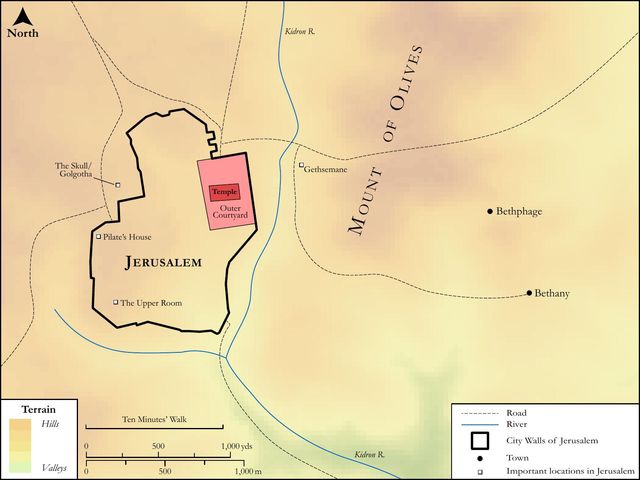
Jesus delivered this discourse on the Mount of Olives, overlooking Jerusalem and its magnificent Temple, a symbol of Jewish identity and divine presence. The disciples' initial question about the Temple's destruction (Luke 21:5-7) naturally led to broader inquiries about the "end of these things." First-century Jewish thought was deeply steeped in the visions of the prophets, which often depicted signs in the heavens and cataclysmic events preceding the arrival of God's kingdom or the Day of the Lord. The "shaking of the powers of heaven" would have resonated with Old Testament prophecies foretelling the disruption of the created order as a prelude to divine judgment and the establishment of God's ultimate reign, as seen in passages like Isaiah 13:10 and Joel 2:30-31. The Roman Empire's pervasive power also provided a backdrop; the idea that even seemingly unshakeable earthly and heavenly powers would be disturbed would have been profoundly unsettling yet also a source of hope for those awaiting God's intervention.
Key Themes
ShowHideLuke 21:26 contributes significantly to several key themes within the broader Olivet Discourse and the book of Luke. The most prominent theme is eschatological distress and human fear, highlighting the profound psychological impact of the end-time events on an unbelieving world. This fear is contrasted sharply with the call for believers to "look up, and lift up your heads; for your redemption draweth nigh" (Luke 21:28). Another crucial theme is upheaval of heaven and earth and divine sovereignty, where the shaking of the "powers of heaven" underscores that even the natural order and spiritual forces are subject to God's ultimate control and will be disturbed as His sovereign plan unfolds. This points to the imminence of God's judgment and the establishment of His kingdom, as these signs are not random but indicators of a divinely orchestrated culmination of history. Finally, the verse subtly reinforces the theme of discernment and readiness, urging listeners to recognize the signs of the times and prepare for the Son of Man's return, a call echoed throughout Luke's Gospel.
Exposition and Analysis
ShowHideKey Word Analysis
ShowHideMeaning "to breathe out," "to expire," or "to faint." This word conveys a profound physical and emotional collapse, suggesting that the fear is so intense it literally drains the life out of people, causing them to faint or even die from sheer terror. It's not mere anxiety but an overwhelming, life-threatening dread.
Meaning "apprehension (of evil)" or "infliction anticipated." This word describes a fearful expectation or anxious anticipation. People are not just observing events; they are actively and fearfully awaiting what is to come, indicating a conscious awareness of impending doom or drastic change.
Meaning "to waver," "agitate," "rock," "topple," or "destroy"; figuratively, "to disturb," "incite." This term implies a violent disturbance or destabilization. Applied to the "powers of heaven," it suggests a profound disruption of the order of the heavens, whether referring to celestial bodies, spiritual authorities, or the very fabric of the universe, indicating a loss of stability and control.
Verse Breakdown
ShowHide"Men's hearts failing them for fear"
This clause describes the immediate and visceral human reaction to the unfolding eschatological events. The phrase "hearts failing them" (ἀποψυχόντων ἀνθρώπων) vividly portrays a state of utter collapse, a literal "breathing out" or fainting due to overwhelming terror. It speaks to a profound existential dread that saps the life and courage from people, leaving them paralyzed and helpless in the face of the cataclysmic changes. This is not just psychological distress but a physical manifestation of extreme fear.
"and for looking after those things which are coming on the earth"
This part explains the cause of the aforementioned fear. People are not merely reacting to current events but are gripped by a fearful anticipation of future calamities. The phrase "looking after" (προσδοκίας) implies an anxious expectation, a dread of what is yet to unfold on the planet. This suggests a conscious awareness of impending judgment or unprecedented global upheaval, intensifying their terror as they perceive the inevitability of these coming events.
"for the powers of heaven shall be shaken"
This final clause provides the ultimate reason and the heavenly scale of the widespread fear. The conjunction "for" (γάρ) indicates a causal link. The "powers of heaven" (δυνάμεις τῶν οὐρανῶν) can refer to the celestial bodies (sun, moon, stars) whose stability is disrupted, or to the spiritual forces and authorities that rule in the heavens. The verb "shall be shaken" (σαλευθήσονται) denotes a violent agitation, a profound destabilization. This shaking signifies a dismantling of the established order of the heavens, signaling the end of the present age and the prelude to God's direct intervention and the establishment of His kingdom. It is this ultimate shaking of the heavens that elicits such profound fear in humanity.
Literary Devices
ShowHideLuke 21:26 employs several powerful literary devices to convey its message. Hyperbole is evident in "Men's hearts failing them for fear," which, while rooted in a literal Greek term for fainting, emphasizes the extreme, life-draining nature of the terror rather than merely a common anxiety. This exaggeration underscores the unprecedented scale of the fear. Apocalyptic Language pervades the verse, particularly in "the powers of heaven shall be shaken." This phrase draws on Old Testament prophetic imagery (e.g., Isaiah 34:4) to describe disturbances of the heavens that signal the end of an age and the direct intervention of God. It creates a sense of awe and dread, pointing to events beyond normal human experience. Finally, Symbolism is present in "the powers of heaven." While it can refer to literal celestial bodies, it often symbolizes the established order, whether natural, political, or spiritual. Their "shaking" thus symbolizes the collapse of all human-perceived stability and authority in the face of divine judgment and the coming kingdom of God.
Theological and Thematic Connections
ShowHideLuke 21:26 serves as a stark reminder of humanity's inherent vulnerability and the profound impact of God's unfolding eschatological plan. Theologically, it underscores God's ultimate sovereignty over creation and history. The "shaking of the powers of heaven" signifies that no power, earthly or heavenly, can withstand the divine will or prevent the consummation of God's purposes. This verse also highlights the contrast between the world's reaction to impending judgment and the believer's call to hope. While the unredeemed will be paralyzed by fear, those who are in Christ are called to "look up" (Luke 21:28) because these very signs herald their redemption. It speaks to the reality of divine judgment for those who reject God, while simultaneously affirming the certainty of salvation and deliverance for His faithful.
Reflection and Application
ShowHideLuke 21:26 presents a sobering picture of a world overwhelmed by fear in the face of unprecedented upheaval of heaven and earth. For those without hope in Christ, the future is indeed terrifying, filled with an anxious "looking after" what is to come, leading to despair and even physical collapse. This verse calls us to examine the source of our own security and hope. Are we building our lives on transient earthly foundations that will inevitably be shaken, or on the unshakeable kingdom of God? For believers, this passage is not meant to incite fear but to deepen our understanding of God's sovereign plan and to cultivate a posture of vigilant hope. The very signs that terrify the world are, for us, indicators that our "redemption draweth nigh" (Luke 21:28). It compels us to live with an eternal perspective, prioritizing spiritual readiness and faithfulness over worldly anxieties. Our response should be one of prayer, evangelism, and steadfast trust, knowing that even amidst chaos, God remains in control, and His promises are true.
Questions for Reflection
ShowHideFAQ
ShowHideWhat does "hearts failing them for fear" literally mean?
ShowHideThe Greek word translated as "hearts failing them" is apopsýchō (G674), which literally means "to breathe out," "to expire," or "to faint away." It conveys a sense of extreme physical and emotional collapse, suggesting that the fear is so overwhelming it causes people to lose their breath, faint, or even die from sheer terror. It's not just anxiety but a profound, life-draining dread that grips people in the face of the cataclysmic events described in Luke 21:25.
What are "the powers of heaven" that shall be shaken?
ShowHide"The powers of heaven" (Greek: dynameis tōn ouranōn) can be interpreted in a few ways, all pointing to a profound disruption of the established order. It can refer to the celestial bodies themselves (sun, moon, stars), whose regular functions will be disturbed, as often depicted in Old Testament apocalyptic prophecies (e.g., Isaiah 34:4). Alternatively, it can refer to the spiritual forces or angelic hosts that rule in the heavens, implying that even these powerful entities will be disturbed or divested of their stability in preparation for God's ultimate reign. In either case, the "shaking" signifies a complete dismantling of all perceived stability and authority, whether natural or spiritual, preceding the direct intervention of God and the return of Christ (Luke 21:27).
Christ-Centered Fulfillment
ShowHideLuke 21:26, though depicting a scene of global terror, finds its ultimate Christ-centered fulfillment not in the fear it describes, but in the glorious hope that immediately follows it. The "shaking of the powers of heaven" and the resulting human dread are not arbitrary events, but the divinely orchestrated prelude to the triumphant return of Jesus Christ. He is the one before whom all earthly and heavenly powers must bow, the one whose coming will bring an end to the reign of sin and death. While the world's hearts fail them, believers are called to "look up, and lift up your heads; for your redemption draweth nigh" (Luke 21:28). This redemption was secured through Christ's first coming, His atoning death (Romans 5:8) and resurrection (1 Corinthians 15:20), which disarmed the spiritual powers (Colossians 2:15) and established His eternal kingdom. Therefore, the very signs that terrify the unbelieving world are, for the redeemed, the joyful harbingers of their King's glorious return, when He will gather His elect (Matthew 24:31) and fully establish His reign of peace and righteousness (Revelation 11:15). In Christ, fear is replaced by an eager anticipation of ultimate deliverance and the consummation of God's eternal plan.