


2 Peter 3:12
“The Call to Holy Living”2 Peter 3:11–14
Bible text: King James Version (1769 Blayney text) · Public domain
Bible text: King James Version with Strong's numbers · Public domain
Bible text: Berean Standard Bible · Public domain
Bible text: American Standard Version (1901) · Public domain
Bible text: World English Bible, Messianic edition · Public domain
Bible text: Geneva Bible (1599) · Public domain
Bible text: Young's Literal Translation · Public domain
- προσδοκῶνταςprosdokōntasexpectingG4328V-PAP-APMVerb Present Active Participle Accusative Plural Masculine
- καὶkaiandG2532CONJConjunction
- σπεύδονταςspeudontashasteningG4692V-PAP-APMVerb Present Active Participle Accusative Plural Masculine
- τὴνtēntheG3588T-ASFDefinite article Accusative Singular Feminine
- παρουσίανparousiancomingG3952N-ASFNoun Accusative Singular Feminine
- τῆςtēsof theG3588T-GSFDefinite article Genitive Singular Feminine
- τοῦtou[the]G3588T-GSMDefinite article Genitive Singular Masculine
- θεοῦtheouof GodG2316N-GSM-TNoun Genitive Singular Masculine Title
- ἡμέραςhēmerasdayG2250N-GSFNoun Genitive Singular Feminine
- δι᾽di᾽throughG1223PREPPreposition
- ἣνhēnwhichG3739R-ASFRelative pronoun Accusative Singular Feminine
- οὐρανοὶouranoi[the] heavensG3772N-NPMNoun Nominative Plural Masculine
- πυρούμενοιpuroumenoibeing set on fireG4448V-PPP-NPMVerb Present Passive Participle Nominative Plural Masculine
- λυθήσονταιluthēsontaiwill be dissolvedG3089V-FPI-3PVerb Future Passive Indicative 3rd Plural
- καὶkaiandG2532CONJConjunction
- στοιχεῖαstoicheia[the] elementsG4747N-NPNNoun Nominative Plural Neuter
- καυσούμεναkausoumenaburning with heatG2741V-PPP-NPNVerb Present Passive Participle Nominative Plural Neuter
- τήκεται;tēketaiare melting?G5080V-PPI-3SVerb Present Passive Indicative 3rd Singular
English is a literal word-by-word gloss of the Greek, not the KJV's wording. Why?
This is the original text the KJV's translators worked from — each Greek word with its own literal English meaning in this verse, prepared by scholars at Tyndale House, Cambridge. The KJV translates whole sentences, not word by word, so its wording differs: one Greek word can become several English words, and the KJV may choose “charity” where the gloss reads “love”. Both are faithful — they answer different questions. For the KJV's own rendering, switch to the KJV text.
Words in [ ] are added by the English.
Details
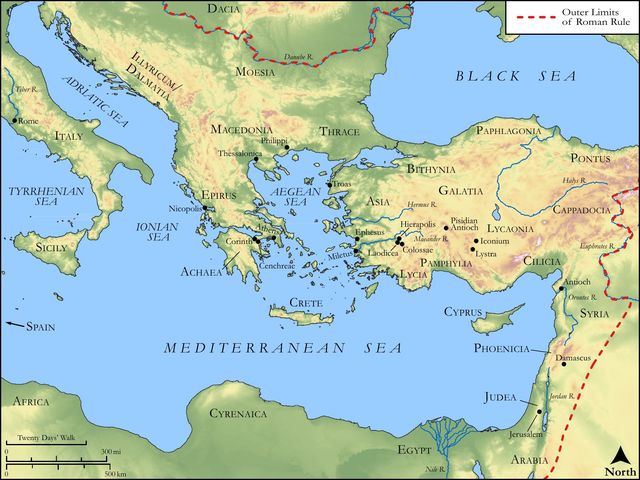
See on the biblical-era maps

Study this verse
Public-domain commentary
Matthew Henry
From his Commentary on the Whole Bible. Henry wrote on whole passages, and this entry covers 2 Peter 3:11–18. He set out his notes in a four-level outline, kept here as he numbered it.
The apostle, having instructed them in the doctrine of Christ's second coming,
I.Takes occasion thence to exhort them to purity and godliness in their whole conversation:
all the truths which are revealed in scripture should be improved for our advancement in practical godliness: this is the effect that knowledge must produce, or we are never the better for it. If you know these things, happy are you if you do them. Seeing all these things must be dissolved, how holy should we be, that are assured of it, departing from and dying to sin, that has so corrupted and defiled all the visible creation that there is an absolute need of its dissolution! All that was made for man's use is subject to vanity by man's sin: and if the sin of man has brought the visible heavens, and the elements and earth, under a curse, from which they cannot be freed without being dissolved, what an abominable evil is sin, and how much to be hated by us! And, inasmuch as this dissolution is in order to their being restored to their primitive beauty and excellency, how pure and holy should we be, in order to our being fit for the new heaven and new earth, wherein dwelleth righteousness! It is a very exact and universal holiness that he exhorts to, not resting in any lower measure or degree, but labouring to be eminent beyond what is commonly attained - holy in God's house and in our own, holy in our worshipping of God and in our conversing with men. All our conversation, whether with high or low, rich or poor, good or bad, friends or enemies, must be holy. We must keep ourselves unspotted from the world in all our converses with it. We must be perfecting holiness in the fear of God, and in the love of God too. We must exercise ourselves unto godliness of all sorts, in all its parts, trusting in God and delighting in God only, who continues the same when the whole visible creation shall be dissolved, devoting ourselves to the service of God, and designing the glorifying and enjoyment of God, who endures for ever; whereas what worldly men delight in and follow after must all be dissolved. Those things which we now see must in a little while pass away, and be no more as they now are: let us look therefore at what shall abide and continue, which, though it be not present, is certain and not far off. This looking for the day of God is one of the directions the apostle gives us, in order to our being eminently holy and godly in all manner of conversation. "Look for the day of God as what you firmly believe shall come, and what you earnestly long for." The coming of the day of God is what every Christian must hope for and earnestly expect; for it is a day when Christ shall appear in the glory of the Father, and evidence his divinity and Godhead even to those who counted him a mere man. The first coming of our Lord Jesus Christ, when he appeared in the form of a servant, was what the people of God earnestly waited and looked for: that coming was for the consolation of Israel, Luke 2:25. How much more should they wait with expectation and earnestness for his second coming, which will be the day of their complete redemption, and of his most glorious manifestation! Then he shall come to be admired in his saints, and glorified in all those that believe. For though it cannot but terrify and affright the ungodly to see the visible heavens all in a flame, and the elements melting, yet the believer, whose faith is the evidence of things not seen, can rejoice in hope of more glorious heavens after these have been melted and refined by that dreadful fire which shall burn up all the dross of this visible creation. Here we must take notice,
1.What true Christians look for: new heavens and a new earth, in which a great deal more of the wisdom, power and goodness of our great God and Saviour Jesus Christ will be clearly discerned than we are able to discover in what we now see; for in these new heavens and earth, freed from the vanity the former were subject to, and the sin they were polluted with, only righteousness shall dwell; this is to be the habitation of such righteous persons as do righteousness, and are free from the power and pollution of sin; all the wicked shall be turned into hell; those only who are clothed with a righteousness of Christ, and sanctified by the Holy Ghost, shall be admitted to dwell in this holy place.
2.What is the ground and foundation of this expectation and hope - the promise of God. To look for any thing which God has not promised is presumption; but if our expectations are according to the promise, both as to the things we look for and the time and way of their being brought about, we cannot meet with a disappointment; for he is faithful who has promised. "See therefore that you raise and regulate your expectations of all the great things that are to come according to the word of God; and, as to the new heaven and new earth, look for them as God has allowed and directed by the passages we have in this portion of scripture how before you, and in Isaiah 65:17; Isaiah 66:22, to which the apostle may be thought to allude."
II.As in 2 Peter 3:11 he exhorts to holiness from the consideration that the heavens and the earth shall be dissolved, so in 2 Peter 3:14 he resumes his exhortation from the consideration that they shall be again renewed. "Seeing you expect the day of God, when our Lord Jesus Christ will appear in his glorious majesty, and these heavens and earth shall be dissolved and melted down, and, being purified and refined, shall be erected and rebuilt, prepare to meet him. It nearly concerns you to see in what state you will be when the Judge of all the world shall come to pass sentence upon men, and to determine how it shall be with them to all eternity. This is the court of judicature whence there lies no appeal; whatever sentence is here passed by this great Judge is irreversible; therefore get ready to appear before the judgment-seat of Christ: and see to it,"
1."That you be found of him in peace, in a state of peace and reconciliation with God through Christ, in whom alone God is reconciling the world to himself. All that are out of Christ are in a state of enmity, and reject and oppose the Lord and his anointed, and shall therefore be punished with everlasting destruction from the presence of the Lord, and the glory of his power. Those whose sins are pardoned and their peace made with God are the only safe and happy people; therefore follow after peace, and that with all." (1.) Peace with God through our Lord Jesus Christ. (2.) Peace in our own consciences, through the Spirit of grace witnessing with our spirits that we are the children of God. (3.) Peace with men, by having a calm and peaceable disposition wrought in us, resembling that of our blessed Lord.
2.That you be found of Christ without spot, and blameless. Follow after holiness as well as peace: and even spotless and perfect; we must not only take heed of all spots which are not the spots of God's children (this only prevents our being found of men without spot), we must be pressing towards spotless purity, absolute perfection. Christians must be perfecting holiness, that they may be not only blameless before men, but also in the sight of God; and all this deserves and needs the greatest diligence; he who does this work negligently can never do it successfully. "Never expect to be found at that day of God in peace, if you are lazy and idle in this your day, in which we must finish the work that is given us to do. It is only the diligent Christian who will be the happy Christian in the day of the Lord. Our Lord will suddenly come to us, or shortly call us to him; and would you have him find you idle?" Remember there is a curse denounced against him who does the work of the Lord negligently, Marg. Jeremiah 48:10. Heaven will be a sufficient recompence for all our diligence and industry; therefore let us labour and take pains in the work of the Lord; he will certainly reward us if we be diligent in the work he has allotted us; now, that you may be diligent, account the long-suffering of our Lord to be salvation. "Does your Lord delay his coming? Do not think this is to give more time to make provision for your lusts, to gratify them; it is so much space to repent and work out your salvation. It proceeds not from a want of concern or compassion for his suffering servants, nor is it designed to give countenance and encouragement to the world of the ungodly, but that men may have time to prepare for eternity. Learn then to make a right use of the patience of our Lord, who does as yet delay his coming. Follow after peace and holiness, or else his coming will be dreadful to you." And inasmuch as it is difficult to prevent men's abuse of God's patience, and engage them in the right improvement thereof, our apostle quotes St. Paul as directing men to make the same good use of the divine forbearance, that in the mouth, or from the pen, of two apostles the truth might be confirmed. And we may here observe with what esteem and affection he speaks of him who had formerly publicly withstood and sharply reproved Peter. If a righteous man smite one who is truly religious, it shall be received as a kindness; and let him reprove, it shall be as an excellent oil, which shall soften and sweeten the good man that is reproved when he does amiss. What an honourable mention does this apostle of the circumcision make of that very man who had openly, before all, reproved him, as not walking uprightly according to the truth of the gospel!
(1.)He calls him brother, whereby he means not only that he is a fellow-christian (in which sense the word brethren is used 1 Thessalonians 5:27), or a fellow-preacher (in which sense Paul calls Timothy the evangelist a brother, Colossians 1:1), but a fellow-apostle, one who had the same extraordinary commission, immediately from Christ himself, to preach the gospel in every place, and to disciple all nations. Though many seducing teachers denied Paul's apostleship, yet Peter owns him to be an apostle.
(2.)He calls him beloved; and they being both alike commissioned, and both united in the same service of the same Lord, it would have been very unseemly if they had not been united in affection to one another, for the strengthening of one another's hands, mutually desirous of, and rejoicing in, one another's success.
(3.)He mentions Paul as one who had an uncommon measure of wisdom given unto him. He was a person of eminent knowledge in the mysteries of the gospel, and did neither in that nor any other qualification come behind any of all the other apostles. How desirable is it that those who preach the same gospel should treat one another according to the pattern Peter here sets them! It is surely their duty to endeavour, by proper methods, to prevent or remove all prejudices that hinder ministers' usefulness, and to beget and improve the esteem and respect in the minds of people towards their ministers that may promote the success of their labours. And let us also here observe,
[1.]The excellent wisdom that was in Paul is said to be given him. The understanding and knowledge that qualify men to preach the gospel are the gift of God. We must seek for knowledge, and labour to get understanding, in hopes that it shall be given us from above, while we are diligent in using proper means to attain it.
[2.]The apostle imparts to men according as he had received from God. He endeavours to lead others as far as he himself was led into the knowledge of the mysteries of the gospel. He is not an intruder into the things he had not seen or been fully assured of, and yet he does not fail to declare the whole counsel of God, Acts 20:27.
[3.]The epistles which were written by the apostle of the Gentiles, and directed to those Gentiles who believed in Christ, are designed for the instruction and edification of those who from among the Jews were brought to believe in Christ; for it is generally thought that what is here alluded to is contained in the epistle to the Romans (Romans 2:4), though in all his epistles there are some things that refer to one or other of the subjects treated of in this and the foregoing chapter; and it cannot seem strange that those who were pursuing the same general design should in their epistles insist upon the same things. But the apostle Peter proceeds to tell us that in those things which are to be met with in Paul's epistles there are some things hard to be understood. Among the variety of subjects treated of in scripture, some are not easy to be understood because of their own obscurity, such are prophecies; others cannot be so easily understood because of their excellency and sublimity, as the mysterious doctrines; and others are with difficulty taken in because of the weakness of men's minds, such are the things of the Spirit of God, mentioned 1 Corinthians 2:14. And here the unlearned and unstable make wretched work; for they wrest and torture the scriptures, to make them speak what the Holy Ghost did not intend. Those who are not well instructed and well established in the truth are in great danger of perverting the word of God. Those who have heard and learned of the Father are best secured from misunderstanding and misapplying any part of the word of God; and, where there is a divine power to establish as well as to instruct men in divine truth, persons are effectually secured from falling into errors. How great a blessing this is we learn by observing what is the pernicious consequence of the errors that ignorant and unstable men fall into - even their own destruction. Errors in particular concerning the holiness and justice of God are the utter ruin of multitudes of men. Let us therefore earnestly pray for the Spirit of God to instruct us in the truth, that we may know it as it is in Jesus, and have our hearts established with grace, that we may stand firm and unshaken, even in the most stormy times, when others are tossed to and fro with every wind of doctrine.
III.The apostle gives them a word of caution, 2 Peter 3:17, 2 Peter 3:18, where,
1.He intimates that the knowledge we have of these things should make us very wary and watchful, inasmuch as there is a twofold danger, 2 Peter 3:17.
(1.)We are in great danger of being seduced, and turned away from the truth. The unlearned and unstable, and they are very numerous, do generally wrest the scripture. Many who have the scriptures and read them do not understand what they read; and too many of those who have a right understanding of the sense and meaning of the word are not established in the belief of the truth, and all these are liable to fall into error. Few attain to the knowledge and acknowledgment of doctrinal Christianity; and fewer find, so as to keep in the way of practical godliness, which is the narrow way, which only leadeth unto life. There must be a great deal of self-denial and suspicion of ourselves, and submitting to the authority of Christ Jesus our great prophet, before we can heartily receive all the truths of the gospel, and therefore we are in great danger of rejecting the truth.
(2.)We are in great danger by being seduced; for,
[1.]So far as we are turned from the truth so far are we turned out of the way to true blessedness, into the path which leads to destruction. If men corrupt the word of God, it tends to their own utter ruin.
[2.]When men wrest the word of God, they fall into the error of the wicked, men without law, who keep to no rules, set no bounds to themselves, a sort of free-thinkers, which the psalmist detests. Psalm 119:113, I hate vain thoughts, but thy law do I love. Whatever opinions and thoughts of men are not conformable to the law of God, and warranted by it, the good man disclaims and abhors; they are the conceits and counsels of the ungodly, who have forsaken God's law, and, if we imbibe their opinions, we shall too soon imitate their practices.
[3.]Those who are led away by error fall from their own stedfastness. They are wholly unhinged and unsettled, and know not where to rest, but are at the greatest uncertainty, like a wave of the sea, driven with the wind and tossed. It nearly concerns us therefore to be upon our guard, seeing the danger is so great.
2.That we may the better avoid being led away, the apostle directs us what to do, 2 Peter 3:18. And,
(1.)We must grow in grace. He had in the beginning of the epistle exhorted us to add one grace to another, and here he advises us to grow in all grace, in faith, and virtue, and knowledge. By how much the stronger grace is in us, by so much the more stedfast shall we be in the truth.
(2.)We must grow in the knowledge of our Lord Jesus Christ. "Follow on to know the Lord. Labour to know him more clearly and more fully, to know more of Christ and to know him to better purpose, so as to be more like him and to love him better." This is the knowledge of Christ the apostle Paul reached after and desired to attain, Philippians 3:10. Such a knowledge of Christ as conforms us more to him, and endears him more to us, must needs be of great use to us, to preserve us from falling off in times of general apostasy; and those who experience this effect of the knowledge of the Lord and Saviour Jesus Christ will, upon receiving such grace from him, give thanks and praise to him, and join with our apostle in saying, To him be glory both now and for ever. Amen.
Historical interpretation
Eight Centuries of Reception
3 surviving comments on this verse. Each one is dated, so this reads as a timeline rather than a list.
Select a marker to jump to its quote. Markers stagger vertically where authors wrote within a few decades of each other.
For the river of fire shall come forth in fury like an angry sea, and shall burn up mountains and hills, and shall make the sea vanish, and shall dissolve the atmosphere with its heat like wax.
You are waiting for the end as the virgins waited for the bridegroom.
Therefore, since all these things will be dissolved, what manner of persons ought you to be in holy conduct and godliness, looking for and hastening the coming of the day of God, because of which the heavens will be dissolved, being on fire, and the elements will melt with fervent heat? Nevertheless, we, according to His promise, look for new heavens and a new earth in which righteousness dwells. Therefore, beloved, looking forward to these things, be diligent to be found by Him in peace, without spot and blameless, and consider that the long-suffering of our Lord is salvation.
"According to his promise." For He promised the faithful, saying: "I will come and take you, etc. (Jn. 14:33) "In my Father's house there are many mansions." (Jn. 14:2) Therefore, Paul also says that, when the angel shall sound the trumpet from heaven, and the dead shall rise immortal (1 Thess. 4:15), they themselves will also meet the Lord in glory, signifying immortality by what he said about glory. But if they are immortal or incorruptible, surely they will also be new. If, however, these are new, it is evident that a new creature has been born to be changed along with the establishment of men: corruptible indeed because of the corruptible downfall of men, but incorruptible because of the renewal of men. Consider, moreover, that both the delay of time until the Lord's coming and the long-suffering expectation itself are said to effect our salvation.
Continue studying 2 Peter 3:12 across the web’s major study libraries — every link below opens this exact verse, chapter, or book on the destination site.
Read & Compare
 BibleGatewayThis verse in more than 200 translations and 70 languages.
 Bible.comThe YouVersion reader — hundreds of translations, reading plans, and highlights.
 ESV.orgCrossway's official English Standard Version reader.
 NET BibleThe NET translation with 60,000+ translators' notes on every rendering decision.
 STEP BibleTyndale House's free study tool — original text, vocabulary, and scholarly resources.
 BibliaLogos Bible Software's free web reader.
 USCCBThe New American Bible (Revised Edition) with the U.S. bishops' study notes.
Commentaries
 BibleHub CommentariesDozens of classic commentaries on this verse, gathered on one page.
 StudyLightMore than 100 commentary sets — the largest collection on the web.
 BibleRefPlain-English commentary on what this verse means, verse by verse.
 Enduring WordDavid Guzik's free commentary on this chapter, widely used by Bible teachers.
 Bible Study ToolsVerse commentary alongside Greek and Hebrew study aids.
Original Language & Research
- BibleHub InterlinearThe verse word by word — original language, transliteration, and English.
- BibleHub LexiconEvery word's original-language definition and Strong's entry.
 Blue Letter BibleDeep-study tools — Strong's numbers, concordance, and word studies.
 CNTR CollationThe earliest Greek manuscripts of this verse, collated letter by letter.
Sermons, Hymns & Audio


TrulyRandomVerse is not affiliated with these sites and doesn’t control their content. They’re linked because they’re genuinely useful.
Written with AI assistance. Always check it against Scripture.
This verse
Holy people look eagerly for the coming of the day of God, when the heavens will be dissolved in fire and the elements of the world will melt in intense heat.
“Looking for and hasting unto the coming of the day of God,”
Prosdokáō is watchful expectation and speúdō is eagerness. The “coming” is the parousía, and “the day of God” is the day of the Lord under another name.
“wherein the heavens being on fire shall be dissolved,”
The heavens (ouranós) burn (pyróō) and come apart. The same verb, lýō, described “all these things” in verse 11.
“and the elements shall melt with fervent heat?”
The elements (stoicheîon) are the material components of the world, which melt (tḗkō) in intense heat (kausóō). The question mark closes the question that verse 11 opened.
Passage study2 Peter 3:11–14
Holy Living While We Wait for the New Earth
Summary
Peter has just said that the present heavens and earth will be dissolved by fire on the day of the Lord. In these four verses he turns to what that means for us now. Since everything around us is passing, we ought to be people of holy conduct and godliness, who look eagerly for the day of God. Our hope rests on God’s promise of new heavens and a new earth where righteousness dwells, and because we look for that home, we give ourselves to being found by Christ in peace, without spot and blameless.
Why the end of this world calls for holy living
Peter writes 2 Peter 3 to believers who were hearing scoffers mock the promise of Christ’s return. Their argument was that “all things continue as they were from the beginning of the creation” (2 Peter 3:3–4), so the promise could be laughed off. Peter answers that God has judged the world before, by the flood, and that the present heavens and earth are kept for a judgment by fire (2 Peter 3:5–7). The delay is God’s patience, which gives people time to repent (2 Peter 3:9). Then the day of the Lord will come, the heavens will pass away with a great noise, the elements will melt, and the earth and its works will be burned up (2 Peter 3:10). Some schools of thought in that world taught that history turns in cycles, or that matter is all there is. Peter teaches a definite end and a new beginning, both brought about by God.
Verse 11 draws the conclusion. “Seeing then that all these things shall be dissolved” takes all of that as settled, and “all these things” covers the entire present creation. If the world we see is temporary, the pressing question is what kind of people we should be while it lasts. Peter’s phrase “what manner of persons” (potapós) asks about the quality of a whole person, and he puts it as a question whose answer is already plain, so that it searches the one who hears it. The word “ought” is deî, “it is necessary, one must”, the Greek word for what duty requires. Holy living is the necessary response to what God has told us about the future.
Jesus taught the same when he told his disciples to lay up treasures in heaven (Matthew 6:19–21). Peter’s first letter gives the deepest reason for holiness, that the God who called us is holy (1 Peter 1:15–16). Paul says that our citizenship is in heaven, and that from there we await the Saviour who will change our lowly body to be like his glorious body (Philippians 3:20–21).
What “holy conversation and godliness” means
In the English of the King James Version, “conversation” meant a person’s conduct or manner of life, and that is the meaning of the Greek word anastrophḗ. “Holy” is hágios, so “holy conversation” is a life set apart for God, pure and upright in how we behave, deal with others and spend our days. “Godliness” is eusébeia, piety or reverence, a practical devotion to God that shows in character and action. The first phrase looks at the outward life and the second at the reverent heart beneath it. The word “all” stands at the front, so every part of life, private and public, comes under this call.
Will the world be annihilated?
The word for “dissolved”, lýō, means to loosen, unbind, break up or destroy. It describes the present order being taken apart, and Peter goes straight on to new heavens and a new earth, so the fire clears the way for a creation cleansed of all that sin has corrupted. John saw this in his vision of a new heaven and a new earth (Revelation 21:1–5), and Paul writes of the creation waiting eagerly and groaning for that day (Romans 8:19–22). God’s plan for what he has made ends in its purifying and transformation.
Looking for and hasting unto the day of God
Verse 12 finishes the sentence that verse 11 began, which is why the King James Version sets its question mark here. Most modern translations print these words as a statement. On either punctuation Peter is describing how holy people live, with their faces turned toward a day that is coming.
“Looking for” is prosdokáō, to anticipate, expect or await. It is the watchfulness of someone who knows what is coming and stays ready for it. “The coming” is parousía, an arrival or presence, the word for Christ’s return. “The day of God” is the day Peter has just called the day of the Lord, when God judges and saves and brings his plan to its completion.
Can we hasten the day of God?
“Hasting unto” translates speúdō, to make haste or hurry, and here it speaks of eagerness, an earnest desire for that day and a life lived in active preparation for it. God’s timetable is his own, and our eagerness leaves it where he has set it. What the word asks of us is a heart that longs for the Lord’s return and shows that longing in godly living while we wait.
The heavens on fire and the elements melting
On that day “the heavens being on fire shall be dissolved”. The heavens (ouranós) are set on fire (pyróō) and dissolved, and the verb is the lýō of verse 11. “The elements” are stoicheîon, the basic components of a thing. Elsewhere the word can mean the first principles of knowledge or the spiritual powers of the world. Here, set beside the heavens and melting in heat, it means the material parts of the physical world. They “melt” (tḗkō) with “fervent heat” (kausóō), an intense burning. The whole fabric of creation is unmade by God’s fire, on a scale we can hardly picture, and it shows how thoroughly he will deal with sin and all its effects.
New heavens and a new earth, according to his promise
“Nevertheless” turns from the fire to hope. The “we” is believers, and what we look for rests on “his promise”, God’s own word. That promise goes back to the prophets, where God says through Isaiah that he will create new heavens and a new earth (Isaiah 65:17) and that they will endure (Isaiah 66:22). For the first believers, pressed by false teachers and by a world often hostile to their faith, this promise was comfort and strength to keep going.
The word “new” is kainós. It can mean new as recent or unused, and it can mean new as superior to the old, and the second sense fits this verse, since the creation to come is free of the curse that fell on the ground when Adam sinned (Genesis 3:17–19).
What marks the new creation is that righteousness dwells in it. “Dwelleth” is katoikéō, built from katá and oikéō, and it means to live in a place in a settled way, as someone resides in a house. “Righteousness” is dikaiosýnē, equity of character and act, what is right before God. Peter speaks of it almost as a person who has moved in to stay. In the world to come, justice, holiness and purity will be at home everywhere, and evil and injustice will be gone.
Be diligent to be found in peace, without spot, and blameless
“Wherefore” (dió) ties verse 14 to everything Peter has said about the day of the Lord and the new creation. He calls his readers “beloved” (agapētoi), so the command comes with a pastor’s affection. “Seeing that ye look for such things” uses prosdokáō again, the verb of verse 12. The command itself is “be diligent” (spoudázō), which means earnest effort, zeal and urgency. Its aim is that we “may be found of him” (heurískō). Christ will find us as we are when he comes, and so we live now ready to meet his eye.
Three phrases describe how he should find us. “In peace” is eirḗnē, a word probably derived from a verb meaning to join, which speaks of wholeness and harmony. Peace was prized in the Roman world, with its unrest and divisions, and Peter means the peace of a reconciled standing with God, free from guilt and condemnation, together with the quiet of heart that follows. “Without spot” is áspilos, unblemished, free from moral stain. “Blameless” is amṓmētos, free from fault, a life that gives God and other people nothing just to accuse. The first looks at inward purity and the second at conduct that is open to inspection. Both come from the sacrifices of the Old Testament, where an animal offered to God had to be physically perfect. Applied to us, they describe a life set apart for God like a clean offering.
Is this diligence a way of earning salvation?
Our diligence is a response to grace already given, and it is carried out in the strength of the Spirit. Paul holds the two together when he tells believers to work out their salvation because God is at work in them (Philippians 2:12–13). John says that everyone who has this hope purifies himself (1 John 3:3). The effort is real, and it rests on what Christ has done.
Christ at the centre of this hope
The day of God is the day of Jesus Christ’s return. All things were made through him (John 1:3), things in heaven and on earth, visible and invisible (Colossians 1:16), and he is the one who will bring in the new creation. He will come again “in like manner” as he went (Acts 1:11), to judge the living and the dead (John 5:22).
Everything Peter asks of us in verse 14 is ours in Christ first. He made peace through the blood of his cross, reconciling all things to himself (Colossians 1:19–20). He is the Lamb “without blemish and without spot” (1 Peter 1:19), “holy, harmless, undefiled, separate from sinners” (Hebrews 7:26), and through his death we are presented holy and blameless before God (Colossians 1:22). He will present the church to himself free of every spot and wrinkle (Ephesians 5:27). The righteousness that fills the new earth is his, counted to those who believe (Romans 3:21–26).
Anyone who is in Christ is already a new creation (2 Corinthians 5:17), a first sign of the renewal of all things. On that day God will dwell with his people and make all things new, and Christ will be all and in all (Colossians 3:11). To look for the new heavens and the new earth is, at bottom, to look for him.
What this hope gives us
These verses give us a way to hold the world we live in. Our possessions, achievements and reputations belong to an order that God will dissolve, and knowing this frees us to give our time and strength to what lasts: knowing God, growing like Christ, loving others and making him known. The fire of verse 12 is real, and for those who belong to Christ the day it belongs to is a day to long for, because it ends in a home where everything is right.
The passage also shows us who God is. He keeps his promises. He is patient so that people may repent. He calls us “beloved” in the same breath as he calls us to be diligent. When the wrongs of this world weigh on you, verse 13 says they are temporary and that righteousness will one day be at home everywhere. Waiting for that day is an active thing, and a holy life now is the fitting life for people who are headed there.
2 Peter 3:11
“Seeing then that all these things shall be dissolved,”
The premise, taken from the description of the day of the Lord in the verse before. “All these things” is the whole present creation, and “dissolved” is lýō, to loosen or break up.
“what manner of persons ought ye to be”
A question that already holds its answer. Potapós asks what sort of people we are through and through, and deî says that a certain kind of life is necessary, a matter of duty.
“in all holy conversation and godliness,”
“Conversation” (anastrophḗ) is conduct, the whole manner of life, and “holy” is hágios. “Godliness” (eusébeia) is reverence for God that shapes what we do. “All” leaves no corner of life outside the call.
2 Peter 3:12 This verse
“Looking for and hasting unto the coming of the day of God,”
Prosdokáō is watchful expectation and speúdō is eagerness. The “coming” is the parousía, and “the day of God” is the day of the Lord under another name.
“wherein the heavens being on fire shall be dissolved,”
The heavens (ouranós) burn (pyróō) and come apart. The same verb, lýō, described “all these things” in verse 11.
“and the elements shall melt with fervent heat?”
The elements (stoicheîon) are the material components of the world, which melt (tḗkō) in intense heat (kausóō). The question mark closes the question that verse 11 opened.
2 Peter 3:13
“Nevertheless we, according to his promise,”
The turn from judgment to hope. Our expectation stands on what God has said, and he said it first through Isaiah.
“look for new heavens and a new earth,”
A whole creation made new (kainós), cleansed of sin and its effects, and the final home of God’s redeemed people.
“wherein dwelleth righteousness.”
The Greek behind “wherein” is en hois, “in which things”, meaning the new heavens and earth together. Righteousness (dikaiosýnē) lives there as a settled resident (katoikéō, from katá and oikéō), which makes that world the opposite of this one, marred as it is by evil.
2 Peter 3:14
“Wherefore, beloved, seeing that ye look for such things,”
Dió draws the conclusion and agapētoi gives it warmth. What we expect in the future is the reason for how we live in the present.
“be diligent that ye may be found of him”
Spoudázō is earnest, zealous effort. “Found” (heurískō) points to the moment Christ returns and sees his people as they are.
“in peace,”
Eirḗnē, a right and harmonious standing with the Lord, with the troubled conscience of unconfessed sin put away.
“without spot,”
Áspilos, unblemished, like a clean garment or an offering fit to be brought to God.
“and blameless.”
Amṓmētos, free from fault. Set beside “without spot”, it completes the picture of a life that is whole inside and out.
Last revised