


Matthew 24:30
- καὶkaiAndG2532CONJConjunction
- τότεtotethenG5119ADVAdverb
- φανήσεταιphanēsetaiwill appearG5316V-2FPI-3SVerb 2nd Future Passive Indicative 3rd Singular
- τὸtotheG3588T-NSNDefinite article Nominative Singular Neuter
- σημεῖονsēmeionsignG4592N-NSNNoun Nominative Singular Neuter
- τοῦtouof theG3588T-GSMDefinite article Genitive Singular Masculine
- υἱοῦhuiouSonG5207N-GSM-TNoun Genitive Singular Masculine Title
- τοῦtou<the>G3588T-GSMDefinite article Genitive Singular Masculine
- ἀνθρώπουanthrōpouof ManG444N-GSM-TNoun Genitive Singular Masculine Title
- ἐνeninG1722PREPPreposition
- τῷtō<the>G3588T-DSMDefinite article Dative Singular Masculine
- οὐρανῷ·ouranōheavenG3772N-DSMNoun Dative Singular Masculine
- καὶkaiandG2532CONJConjunction
- τότεtotethenG5119ADVAdverb
- κόψονταιkopsontaiwill mournG2875V-FDI-3PVerb Future Middle Deponent Indicative 3rd Plural
- πᾶσαιpasaiallG3956A-NPFAdjective Nominative Plural Feminine
- αἱhaitheG3588T-NPFDefinite article Nominative Plural Feminine
- φυλαὶphulaitribesG5443N-NPFNoun Nominative Plural Feminine
- τῆςtēsof theG3588T-GSFDefinite article Genitive Singular Feminine
- γῆςgēsearthG1093N-GSFNoun Genitive Singular Feminine
- καὶkaiandG2532CONJConjunction
- ὄψονταιopsontaithey will beholdG3700V-FDI-3PVerb Future Middle Deponent Indicative 3rd Plural
- τὸνtontheG3588T-ASMDefinite article Accusative Singular Masculine
- υἱὸνhuionSonG5207N-ASM-TNoun Accusative Singular Masculine Title
- τοῦtou<the>G3588T-GSMDefinite article Genitive Singular Masculine
- ἀνθρώπουanthrōpouof ManG444N-GSM-TNoun Genitive Singular Masculine Title
- ἐρχόμενονerchomenoncomingG2064V-PNP-ASMVerb Present Middle Or Passive Deponent Participle Accusative Singular Masculine
- ἐπὶepionG1909PREPPreposition
- τῶνtōntheG3588T-GPFDefinite article Genitive Plural Feminine
- νεφελῶνnephelōncloudsG3507N-GPFNoun Genitive Plural Feminine
- τοῦtou<the>G3588T-GSMDefinite article Genitive Singular Masculine
- οὐρανοῦouranouof heavenG3772N-GSMNoun Genitive Singular Masculine
- μετὰmetawithG3326PREPPreposition
- δυνάμεωςdunameōspowerG1411N-GSFNoun Genitive Singular Feminine
- καὶkaiandG2532CONJConjunction
- δόξηςdoxēsgloryG1391N-GSFNoun Genitive Singular Feminine
- πολλῆςpollēsgreatG4183A-GSFAdjective Genitive Singular Feminine
English is a literal word-by-word gloss of the Greek, not the KJV's wording. Why?
This is the original text the KJV's translators worked from — each Greek word with its own literal English meaning in this verse, prepared by scholars at Tyndale House, Cambridge. The KJV translates whole sentences, not word by word, so its wording differs: one Greek word can become several English words, and the KJV may choose “charity” where the gloss reads “love”. Both are faithful — they answer different questions. For the KJV's own rendering, switch to the KJV text.
Details
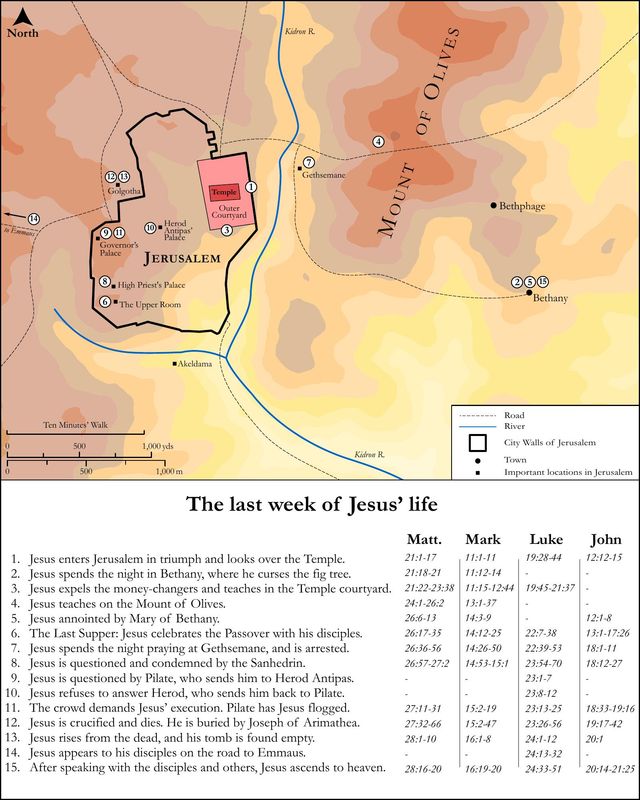
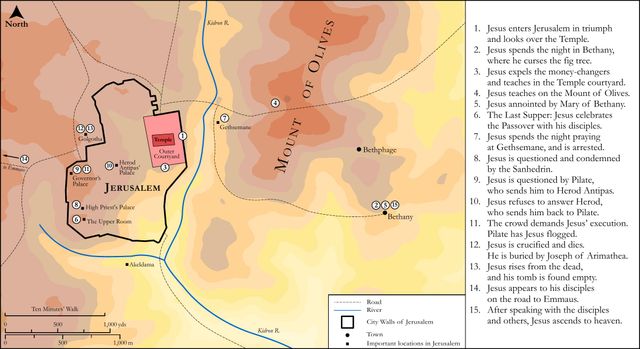
See on the biblical-era map

Study this verse
Historical interpretation
Twelve Centuries of Reception
16 surviving comments on this verse. Each one is dated, so this reads as a timeline rather than a list.
Select a marker to jump to its quote. Markers stagger vertically where authors wrote within a few decades of each other.
Watch for your life's sake. Let not your lamps be quenched, nor your loins unloosed; but be ye ready, for ye know not the hour in which our Lord cometh. But often shall ye come together, seeking the things which are befitting to your souls: for the whole time of your faith will not profit you, if ye be not made perfect in the last time. For in the last days false prophets and corrupters shall be multiplied, and the sheep shall be turned into wolves, and love shall be turned into hate; for when lawlessness increaseth, they shall hate and persecute and betray one another, and then shall appear the world-deceiver as Son of God, and shall do signs and wonders, and the earth shall be delivered into his hands, and he shall do iniquitous things which have never yet come to pass since the beginning. Then shall the creation of men come into the fire of trial, and many shall be made to stumble and shall perish; but they that endure in their faith shall be saved from under the curse itself. And then shall appear the signs of the truth; first, the sign of an out-spreading in heaven; then the sign of the sound of the trumpet; and the third, the resurrection of the dead; yet not of all, but as it is said: The Lord shall come and all His saints with Him. Then shall the world see the Lord coming upon the clouds of heaven.
And then shall appear the signs of the truth; first, the sign of an outspreading in heaven; then the sign of the sound of the trumpet; and the third, the resurrection of the dead; yet not of all, but as it is said: The Lord shall come and all His saints with Him. Then shall the world see the Lord coming upon the clouds of heaven.
But if so great a power is shown to have followed and to be still following the dispensation of His suffering, how great shall that be which shall follow His glorious advent! For He shall come on the clouds as the Son of man, so Daniel foretold, and His angels shall come with Him. These are the words: [...he quotes Daniel 7:9-28]
The aforesaid Scribes and Pharisees therefore placed James upon the pinnacle of the temple, and cried out to him and said: 'You just one, in whom we ought all to have confidence, forasmuch as the people are led astray after Jesus, the crucified one, declare to us, what is the gate of Jesus.'
And he answered with a loud voice, 'Why do you ask me concerning Jesus, the Son of Man? He himself sits in heaven at the right hand of the great Power, and is about to come upon the clouds of heaven.'
And then shall appear the sign of the Son of Man in heaven, that sign by which the heavenly things were made, that is, the power which the Son wrought when He hung upon the cross. And the sign shall appear in heaven, that men of all tribes who before had not believed Christianity when preached, then by that sign, acknowledging it as made plain, shall grieve and mourn for their ignorance and sins.
Therefore shall they see with the bodily eyes the Son of Man, coming in human shape, in the clouds of heaven, that is, on high. As at the transfiguration, a voice came out of the cloud, so when He shall come again transformed into His glorious appearance, it shall be not on one cloud, but upon many, which shall be His chariot. And if when the Son of God went up to Jerusalem, they who loved Him spread their garments in the way, not willing that even the ass that carried Him should tread upon the earth; what wonder, if the Father and God of all should spread the clouds of heaven under the body of the Son, when He comes to the work of the consummation? And one may say, that as in the creation of man, God took clay from the earth and made man; so to manifest the glory of Christ, the Lord taking of the heaven, and of its substance, gave it a body of a bright cloud in the Transfiguration, and of bright clouds at the Consummation; wherefore it is here said, in the clouds of heaven, as it was there said, of the clay of the ground. (Gen. 2:7.) And it behoves the Father to give all such admirable gifts to the Son, because He humbled Himself; and He has also exalted Him, not only spiritually, but bodily, that He should come upon such clouds; and perhaps upon rational clouds, that even the chariot of the glorified Son of Man should not be irrational. At the first, Jesus came with that power with which He wrought signs and wonders in the people; yet was that power little in comparison of that great power with which He shall come in the end; for that was the power of one emptying Himself of power. And also, it is fitting that He should be transformed into greater glory than at the transfiguration on the mount; for then He was transfigured for the sake of three only, but in the consummation of the whole world, He shall appear in great glory, that all may see Him in glory.
Or He comes every day with great power to the mind of the believer in the clouds of prophecy, that is, in the Scriptures of the Prophets and the Apostles, who utter the word of God with a meaning above human nature. Also we say that to those who understand He comes with great glory, and that this is the more seen in the second coming of the Word which is to the perfect. And so it may be, that all which the three Evangelists have said concerning Christ's coming, if carefully compared together and thoroughly examined, would be found to apply to His continual daily coming in His body, which is the Church, of which coming He said in another place, Hereafter shall ye see the Son of Man sitting on the right hand of the power of God, and coming in the clouds of heaven, (Mat. 26:6.) excepting those places in which He promises that His last coming in His own person.
The darkening of the sun, the failing of the moon, and the fall of the stars, indicate the glories of His coming.
For in the last days false prophets shall be multiplied, and such as corrupt the word; and the sheep shall be changed into wolves, and love into hatred: for through the abounding of iniquity the love of many shall wax cold. For men shall hate, and persecute, and betray one another. And then shall appear the deceiver of the world, the enemy of the truth, the prince of lies, [2 Thessalonians 2:3-12] whom the Lord Jesus "shall destroy with the spirit of His mouth, who takes away the wicked with His lips; and many shall be offended at Him. But they that endure to the end, the same shall be saved. And then shall appear the sign of the Son of man in heaven;" [Isaiah 11:4; Matthew 24:1-51] and afterwards shall be the voice of a trumpet by the archangel; and in that interval shall be the revival of those that were asleep. And then shall the Lord come, and all His saints with Him, with a great concussion above the clouds, with the angels of His power, [Matthew 16:27] in the throne of His kingdom, to condemn the devil, the deceiver of the world, and to render to every one according to his deeds. "Then shall the wicked go away into everlasting punishment, but the righteous shall go into life eternal," [Matthew 25:46] to inherit those things "which eye has not seen, nor ear heard, nor have entered into the heart of man, such things as God has prepared for them that love Him;" [1 Corinthians 2:9] and they shall rejoice in the kingdom of God, which is in Christ Jesus.
Then He tells of fearful prodigies. What are these prodigies? "Immediately after the tribulation of those days," saith He, "the sun shall be darkened." Of the tribulation of what days doth He speak? Of those of Antichrist and of the false prophets? For there shall be great tribulation, there being so many deceivers. But it is not protracted to a length of time. For if the Jewish war was shortened for the elect's sake, much more shall this temptation be limited for these same's sake. Therefore, He said not, "after the tribulation," but Immediately "after the tribulation of those days shall the sun be darkened," for almost at the same time all things come to pass. For the false prophets and false Christs shall come and cause confusion, and immediately He Himself will be here. Because no small turmoil is then to prevail over the world.
But how doth He come? The very creation being then transfigured, for "the sun shall be darkened," not destroyed, but overcome by the light of His presence; and the stars shall fall, for what shall be the need of them thenceforth, there being no night? and "the powers of Heaven shall be shaken," and in all likelihood, seeing so great a change come to pass. For if when the stars were made, they trembled and marvelled ("for when the stars were made, all angels," it is said, "praised Me with a loud voice"); much more seeing all things in course of change, and their fellow servants giving account, and the whole world standing by that awful judgment-seat, and those who have lived from Adam unto His coming, having an account demanded of them of all that they did, how shall they but tremble, and be shaken?
"Then shall appear the sign of the Son of Man in Heaven;" that is, the cross being brighter than the sun, since this last will be darkened, and hide himself, and that will appear when it would not appear, unless it were far brighter than the beams of the sun. But wherefore doth the sign appear? In order that the shamelessness of the Jews may be more abundantly silenced. For having the cross as the greatest plea, Christ thus cometh to that judgment-seat, showing not His wounds only, but also the death of reproach. "Then shall the tribes mourn," for there shall be no need of an accusation, when they see the cross; and they shall mourn, that by His death they are nothing benefited; because they crucified Him whom they ought to have adored.
Seest thou how fearfully He has pictured His coming? how He has stirred up the spirits of His disciples? For this reason, let me add, He puts the mournful things first, and then the good things, that in this way also He may comfort and refresh them. And of His passion He suggests to them the remembrance, and of His resurrection, and with a display of glory, He mentions His cross, so that they may not be ashamed nor grieve, whereas indeed He cometh then setting it forth for His sign. And another saith, "They shall look on Him whom they pierced." Therefore it is that they shall mourn, when they see that this is He.
And forasmuch as He had made mention of the cross, He added, "They shall see the Son of Man coming," no longer on the cross, but "in the clouds of Heaven, with power and great glory."
For think not, He meaneth, because thou hearest of the cross, that it is again anything mournful, for He shall come with power and great glory. But He bringeth it, that their sin may be self-condemned, as if any one who had been struck by a stone, were to show the stone itself, or his garments stained with blood. And He cometh in a cloud as He was taken up, and the tribes seeing these things mourn. Not however that the terrors shall with them proceed no further than mournings; but the mourning shall be, that they may bring forth their sentence from within, and condemn themselves.
By the tribulation, He means the times of Antichrist and the false Prophets; for when there are so many deceivers, the tribulation will be great. But it shall not extend through any great length of time. For if for the elect's sake the Jewish war is shortened, much more shall this tribulation be shortened for their sakes; for which reason He said not After, but Immediately after, for He shall come immediately after.
Very fitly shall they be shaken and dismayed, seeing so mighty a change being wrought, their fellow-servants punished, and the universe standing before a terrible tribunal.
But because the sun will be darkened, the cross would not be seen, if it were not far brighter than the rays of the sun. That the disciples might not be ashamed, and grieve over the cross, He speaks of it as a sign, with a kind of distinction. The sign of the cross will appear to overthrow the shamelessness of the Jews, when Christ shall appear in the judgment, showing not only His wounds, but His most ignominious death, And then all the tribes of the earth shall mourn. For when they shall see the cross, they shall bethink them how they have gained nought by His death, and that they have crucified Him whom they ought to have worshipped.
He adds this, that having heard of the cross, they should not now imagine a similar degradation.
(Verse 30) And then the sign of the Son of Man will appear in heaven. Let us understand this sign, either as the cross, so that the Jews may see the one they crucified (according to Zechariah (Zech. XII) and John (John XIX)); or as the banner of triumphant victory.
And then all the tribes of the earth will mourn, and they will see the Son of Man coming on the clouds of heaven with power and great glory. Those who did not have citizenship in heaven will mourn, but they are written in the earth.
We are invited to flock to Christ's passion wheresoever in Scripture it is read of, that through it we may be able to come to God's word.
These things, therefore, shall not come to pass by any diminution of light, for in another place we read that the light of the sun shall be sevenfold; but by comparison with real light, all things shall seem dim.
By the powers of heaven, we understand the bands of the Angels.
Rightly does He say, the tribes of the earth, for they shall mourn who have no citizenship in heaven, but are written in earth. (Jer. 17:13.)
(Ep. 199, 41.) The first and most apparent meaning of this is of that time when He shall come to judge the quick and the dead in His body--that body in which He sits at the right hand of the Father, in which He died and rose again and ascended into heaven. As we read in the Acts of the Apostles; He was taken up, and a cloud received Him out of their sight, (Acts 1:9.) upon which it was said by the Angels, He shall so come as ye hare seen Him go into heaven, we may reasonably believe that He will come again, not only in the same body, but also in a cloud.
(ubi sup.) But because the Scriptures are to be searched, and we are not to content ourselves with the surface of them, let us look closely at what follows, When ye see all these things come to pass, know that he is near even at the door. We know then that He is near, when we see come to pass not any of the foregoing things, but all of them, among which is this that the Son of Man shall be seen coming. And he shall send his Angels, who from the four quarters of the world shall gather together His elect. All these things He does at the last hour (1 John 2:18.) coming in His members as in the clouds, or in the whole Church as in one great cloud, as now He ceases not to come. And with great power and glory, because His power and glory will seem greater in the Saints to whom He will give great power, that they may not be overcome of persecution.
"And then they shall see the Son of Man coming in the clouds with great power and majesty." As if it were openly said: They shall see in power and majesty Him whom, placed in humility, they refused to hear, so that they may then feel His power all the more strictly, inasmuch as now they do not bow the neck of their heart to His patience.
But nothing hinders our supposing that the sun and moon with the other stars shall for a time lose their light, as we know did the sun at the time of the Lord's passion; as Joel also says, The sun shall be turned into darkness, and the moon into blood, before the great and manifest day of the Lord come. (Joel 2:31.) But when the day of judgment is passed, and the life of future glory shall dawn, and there shall be a new heaven and a new earth, then shall that come to pass of which Isaiah speaks, The light of the moon shall be as the light of the sun, and the light of the sun shall be sevenfold. (Is. 30:26.) The stars shall fall from heaven, is expressed in Mark; There shall be stars falling from heaven, (Mark. 13:25.) that is, lacking their proper light.
The Cross will then be seen in heaven shining more brightly than the sun as a reproof to the Jews, for when the Lord comes He will display the Cross as the strongest evidence against the Jews, like one who shows the stone with which he was struck. He calls the Cross a sign, as a trophy and royal ensign. Then all the tribes of the land of Judea will mourn and bewail their own unbelief, and all those who care for earthly things will mourn, though they be Christians. For those who are attached to earthly things might also be called "the tribes of the earth." Although the Lord comes accompanied by the Cross, He also comes "with power and great glory."
(non occ.) As soon as the Lord has fortified the believers against the arts of Antichrist and his ministers, by showing that His coming would be public, He proceeds to show the order and method of His coming.
Continue studying Matthew 24:30 across the web’s major study libraries — every link below opens this exact verse, chapter, or book on the destination site.
Read & Compare
 BibleGatewayThis verse in more than 200 translations and 70 languages.
 Bible.comThe YouVersion reader — hundreds of translations, reading plans, and highlights.
 ESV.orgCrossway's official English Standard Version reader.
 NET BibleThe NET translation with 60,000+ translators' notes on every rendering decision.
 STEP BibleTyndale House's free study tool — original text, vocabulary, and scholarly resources.
 BibliaLogos Bible Software's free web reader.
 USCCBThe New American Bible (Revised Edition) with the U.S. bishops' study notes.
Commentaries
 BibleHub CommentariesDozens of classic commentaries on this verse, gathered on one page.
 StudyLightMore than 100 commentary sets — the largest collection on the web.
 BibleRefPlain-English commentary on what this verse means, verse by verse.
 Enduring WordDavid Guzik's free commentary on this chapter, widely used by Bible teachers.
 Bible Study ToolsVerse commentary alongside Greek and Hebrew study aids.
Original Language & Research
- BibleHub InterlinearThe verse word by word — original language, transliteration, and English.
- BibleHub LexiconEvery word's original-language definition and Strong's entry.
 Blue Letter BibleDeep-study tools — Strong's numbers, concordance, and word studies.
 CNTR CollationThe earliest Greek manuscripts of this verse, collated letter by letter.
Sermons, Hymns & Audio


TrulyRandomVerse is not affiliated with these sites and doesn’t control their content. They’re linked because they’re genuinely useful.
Summary
Matthew 24:30 presents a dramatic and pivotal moment in Jesus' Olivet Discourse, vividly describing His glorious Second Coming. Following cosmic disturbances, an unmistakable "sign of the Son of Man" will appear in heaven, prompting global mourning among all earthly inhabitants, as they witness Jesus' visible return on the clouds with immense power and resplendent glory, signaling the culmination of human history and the establishment of His eternal reign.
Context
ShowHideLiterary Context
This verse is a central component of the Olivet Discourse, Jesus' extensive prophetic teaching delivered to His disciples on the Mount of Olives. It directly follows Jesus' description of the preceding cosmic signs—the darkening of the sun and moon and the falling of stars—as outlined in Matthew 24:29. These cataclysmic events serve as the immediate prelude, intensifying the anticipation for the appearance of the "sign of the Son of Man" and His subsequent glorious arrival. The discourse as a whole addresses the disciples' questions regarding the destruction of the Temple and the signs of Jesus' return and the end of the age, with Matthew 24:30 marking the undeniable, visible, and universal manifestation of Christ's advent.
Historical & Cultural Context
Jesus' audience, first-century Jews, would have been deeply familiar with Old Testament prophetic traditions, particularly the apocalyptic imagery found in books like Daniel and Zechariah. The title "Son of Man" immediately evokes Daniel 7:13-14, where a figure "like a son of man" comes with the clouds of heaven to receive dominion, glory, and an everlasting kingdom. This background would have shaped their understanding of a messianic figure with divine authority and cosmic power. The "mourning" of "all the tribes of the earth" also resonates with Old Testament prophecies of lamentation during divine judgment, such as Zechariah 12:10, which speaks of a future mourning for "him whom they have pierced," linking the lament to a recognition of the Messiah.
Key Themes
ShowHideMatthew 24:30 powerfully contributes to several key themes within the Olivet Discourse and the broader New Testament. Foremost is the theme of the Visible and Glorious Second Coming of Jesus Christ. Unlike His humble first advent, this return will be unmistakable and universally witnessed, accompanied by "power and great glory," signifying His ultimate triumph and reign as King. Another crucial theme is Divine Judgment and Accountability, as the global mourning suggests a profound sense of regret or despair among those who have rejected Christ or are unprepared for His coming, contrasting sharply with the joy of believers (1 Thessalonians 4:17). The verse also underscores Christ's Sovereignty and Authority, as the "Son of Man" returns not as a suffering servant, but as the cosmic judge and ruler, fulfilling Old Testament prophecies of His dominion. Finally, it highlights the theme of Cosmic Disclosure, where the heavens themselves declare the arrival of God's appointed King, making His presence undeniable to all.
Exposition and Analysis
ShowHideKey Word Analysis
ShowHideAn indication, especially ceremonially or supernaturally; a miracle, token, or wonder. In this context, it refers to an unmistakable, divine manifestation that heralds the Son of Man's arrival, serving as an undeniable proof of His identity and the impending climax of history. It is a supernatural signal that cannot be misinterpreted.
To "chop"; specially, to beat the breast in grief, to lament, or wail. This word vividly describes a deep, visceral expression of sorrow, anguish, or despair. The global nature of this mourning suggests a profound realization of past rejection or unpreparedness for Christ's return, leading to a lamentation of regret or judgment.
Force, especially miraculous power; ability, might, or a mighty deed. Here, it denotes the inherent divine authority and omnipotence with which Jesus will return, not merely as a human figure, but as the sovereign Lord, capable of executing judgment and establishing His kingdom. This power is both inherent to His being and manifested in His actions.
Glory as very apparent; dignity, honor, praise, or worship. This term signifies the resplendent, majestic radiance that accompanies Christ's return, reflecting His divine nature and supreme majesty. It is the visible manifestation of His inherent honor and worthiness of worship, contrasting sharply with His humble first advent.
Verse Breakdown
ShowHide"And then shall appear the sign of the Son of man in heaven:"
This clause introduces the immediate, unmistakable prelude to Christ's return. "Then" (G5119, tóte) emphasizes the temporal sequence following the cosmic disturbances of Matthew 24:29. The "sign" (G4592, sēmeîon) is a supernatural indicator, likely Christ Himself in His glorified state or a visible manifestation of His divine presence, appearing "in heaven" (G1722, en G3772, ouranós), signifying its celestial origin and universal visibility. The "Son of man" (G5207, huiós G444, ánthrōpos) is Jesus' preferred self-designation, emphasizing both His humanity and His divine authority as prophesied in Daniel 7:13.
"and then shall all the tribes of the earth mourn,"
This phrase describes the universal response to the appearance of the sign and the impending return. "All the tribes of the earth" (G3956, pâs G5443, phylḗ G1093, gē) signifies a global, comprehensive reaction, encompassing all peoples and nations. The word "mourn" (G2875, kóptō) implies a deep, visceral lamentation, often expressed by beating one's breast. This mourning is likely a realization of judgment, regret for rejecting Christ, or despair for being unprepared, echoing prophetic laments in Zechariah 12:10.
"and they shall see the Son of man coming in the clouds of heaven with power and great glory."
This final clause depicts the actual, visible return of Christ. "They shall see" (G3700, optánomai) emphasizes the undeniable, direct observation by all. The "Son of man coming" (G2064, érchomai) reiterates His identity and the active nature of His arrival. His coming "in the clouds of heaven" (G1909, epí G3507, nephélē G3772, ouranós) is a clear allusion to Daniel 7:13 and signifies divine presence, majesty, and often judgment. The accompanying "power" (G1411, dýnamis) and "great glory" (G4183, polýs G1391, dóxa) underscore the authoritative, majestic, and divine nature of His return, contrasting sharply with His humble first advent and establishing His ultimate reign.
Literary Devices
ShowHideMatthew 24:30 is rich with Apocalyptic Imagery, drawing heavily from Old Testament prophetic traditions, particularly Daniel's vision of the Son of Man. The phrase "sign of the Son of man in heaven" employs Symbolism, where the "sign" itself is likely Christ in His glorified state, or a powerful divine manifestation, rather than a literal object. The "clouds of heaven" also serve as powerful Symbols of divine presence, majesty, and often judgment, echoing the Shekinah glory of God in the Old Testament. The description of "all the tribes of the earth mourn" uses Hyperbole to emphasize the universal and undeniable impact of Christ's return, ensuring no one misses this pivotal event, while also conveying the profound, widespread lamentation. The entire verse is a vivid example of Prophecy, foretelling a future event with specific, dramatic details, designed to evoke both awe and a sense of urgency. The powerful sensory details of seeing and mourning contribute to the verse's striking Imagery, making the future event palpable to the reader.
Theological and Thematic Connections
ShowHideMatthew 24:30 serves as a profound theological statement on the certainty and nature of Christ's Second Coming, emphasizing its visible, glorious, and universal impact. It underscores the culmination of God's redemptive plan, where the once-humble Son of Man returns as the sovereign King and Judge. The global mourning highlights the theme of ultimate accountability and the profound regret of those who have rejected His grace, while for believers, it signifies the glorious realization of their hope and the final establishment of God's eternal kingdom. This passage firmly grounds the eschatological hope of the Church in the undeniable return of Christ, who will bring both salvation to His people and judgment upon the world.
Reflection and Application
ShowHideThe vivid imagery of Matthew 24:30 compels us to live with an eternal perspective, recognizing that human history is moving towards a divinely appointed climax. For believers, this verse offers immense comfort and assurance that our Lord will indeed return, fulfilling all His promises and establishing His righteous kingdom. This hope should fuel our perseverance, inspire our evangelism, and motivate us to live lives of holiness and faithful stewardship, eagerly anticipating His glorious appearing. For those who have not yet embraced Christ, the verse serves as a solemn warning, underscoring the gravity of rejecting God's gracious offer of salvation. The global mourning depicted is a stark reminder that a day of reckoning is coming, when every person will be confronted with the undeniable truth of Christ's identity and authority. Therefore, it calls all people to humble repentance and faith in Jesus, ensuring that on that day, their response will be one of joyful welcome rather than despairing lamentation.
Questions for Reflection
ShowHideFAQ
ShowHideWhat is "the sign of the Son of man in heaven"?
ShowHideThe "sign of the Son of man in heaven" (G4592, sēmeîon) is not explicitly defined, but given the context of Christ's visible return, it is widely understood to be an unmistakable, supernatural manifestation that heralds His glorious arrival. Many scholars believe it refers to Christ Himself in His glorified state, or a brilliant, divine light or phenomenon that precedes or accompanies His descent. It serves as an undeniable, universal indicator of His identity and the commencement of His final judgment and reign. This sign will be so clear that no one will be able to deny or misunderstand its significance, setting the stage for the global mourning and the visible appearance of the Son of Man.
Why will "all the tribes of the earth mourn"?
ShowHideThe mourning of "all the tribes of the earth" (G2875, kóptō) signifies a profound, universal lamentation. This sorrow is generally interpreted in two primary ways: for unbelievers, it represents a deep despair, regret, and terror as they realize the truth of Christ's identity and their rejection of Him, facing impending judgment. This aligns with prophetic passages like Zechariah 12:10 and Revelation 1:7, which also speak of universal mourning at Christ's appearing. For some, it may also encompass a sorrow for the suffering endured by humanity, or even a recognition of the majesty of God. However, the dominant interpretation points to a lament of judgment and final reckoning for those who are unprepared for His return.
Christ-Centered Fulfillment
ShowHideMatthew 24:30 is a powerful declaration of Christ-centered fulfillment, bringing to culmination numerous Old Testament prophecies concerning the Messiah's ultimate reign and judgment. The title "Son of Man" directly echoes Daniel 7:13-14, where "one like a son of man" comes with the clouds of heaven to receive everlasting dominion, glory, and a kingdom that will never be destroyed. This passage in Matthew reveals Jesus as the very fulfillment of Daniel's vision, returning not as a humble servant, but as the cosmic King, vested with all authority, "power and great glory." His visible return on the clouds, a symbol of divine presence and majesty throughout Scripture, confirms His identity as the ascended Lord who will indeed come back "in the same way you have seen him go into heaven" (Acts 1:11). The global mourning underscores the universal recognition of His sovereignty and the finality of His judgment, fulfilling prophecies that "every eye will see him" (Revelation 1:7) and that He will separate the sheep from the goats (Matthew 25:31-33). Thus, Matthew 24:30 is not merely a prediction but a profound theological statement affirming Jesus Christ as the Alpha and Omega, the beginning and the end, whose return will bring about the full and glorious consummation of God's redemptive plan for all creation.