


Matthew 26:64
Bible text: King James Version (1769 Blayney text) · Public domain
Bible text: King James Version with Strong's numbers · Public domain
Bible text: Berean Standard Bible · Public domain
Bible text: American Standard Version (1901) · Public domain
Bible text: World English Bible, Messianic edition · Public domain
Bible text: Geneva Bible (1599) · Public domain
Bible text: Young's Literal Translation · Public domain
- λέγειlegeiSaysG3004V-PAI-3SVerb Present Active Indicative 3rd Singular
- αὐτῷautōto himG846P-DSMPersonal pronoun Dative Singular Masculine
- ὁho<the>G3588T-NSMDefinite article Nominative Singular Masculine
- Ἰησοῦς·IēsousJesusG2424N-NSM-PNoun Nominative Singular Masculine Individual
- σὺsuYou yourselfG4771P-2NSPersonal pronoun Nominative 2nd Singular
- εἶπαςeipashave saidG2036V-2AAI-2SVerb 2nd Aorist Active Indicative 2nd Singular
- πλὴνplēnButG4133CONJConjunction
- λέγωlegōI sayG3004V-PAI-1SVerb Present Active Indicative 1st Singular
- ὑμῖν·huminto youG4771P-2DPPersonal pronoun Dative 2nd Plural
- ἀπ᾽ap᾽fromG575PREPPreposition
- ἄρτιartinowG737ADVAdverb
- ὄψεσθεopsestheyou will beholdG3700V-FDI-2PVerb Future Middle Deponent Indicative 2nd Plural
- τὸνtontheG3588T-ASMDefinite article Accusative Singular Masculine
- υἱὸνhuionSonG5207N-ASM-TNoun Accusative Singular Masculine Title
- τοῦtou<the>G3588T-GSMDefinite article Genitive Singular Masculine
- ἀνθρώπουanthrōpouof ManG444N-GSM-TNoun Genitive Singular Masculine Title
- καθήμενονkathēmenonsittingG2521V-PNP-ASMVerb Present Middle Or Passive Deponent Participle Accusative Singular Masculine
- ἐκekatG1537PREPPreposition
- δεξιῶνdexiōn[the] right handG1188A-GPNAdjective Genitive Plural Neuter
- τῆςtēs<the>G3588T-GSFDefinite article Genitive Singular Feminine
- δυνάμεωςdunameōsof PowerG1411N-GSFNoun Genitive Singular Feminine
- καὶkaiandG2532CONJConjunction
- ἐρχόμενονerchomenoncomingG2064V-PNP-ASMVerb Present Middle Or Passive Deponent Participle Accusative Singular Masculine
- ἐπὶepiuponG1909PREPPreposition
- τῶνtōntheG3588T-GPFDefinite article Genitive Plural Feminine
- νεφελῶνnephelōncloudsG3507N-GPFNoun Genitive Plural Feminine
- τοῦtou<the>G3588T-GSMDefinite article Genitive Singular Masculine
- οὐρανοῦouranouof heavenG3772N-GSMNoun Genitive Singular Masculine
English is a literal word-by-word gloss of the Greek, not the KJV's wording. Why?
This is the original text the KJV's translators worked from — each Greek word with its own literal English meaning in this verse, prepared by scholars at Tyndale House, Cambridge. The KJV translates whole sentences, not word by word, so its wording differs: one Greek word can become several English words, and the KJV may choose “charity” where the gloss reads “love”. Both are faithful — they answer different questions. For the KJV's own rendering, switch to the KJV text.
Details
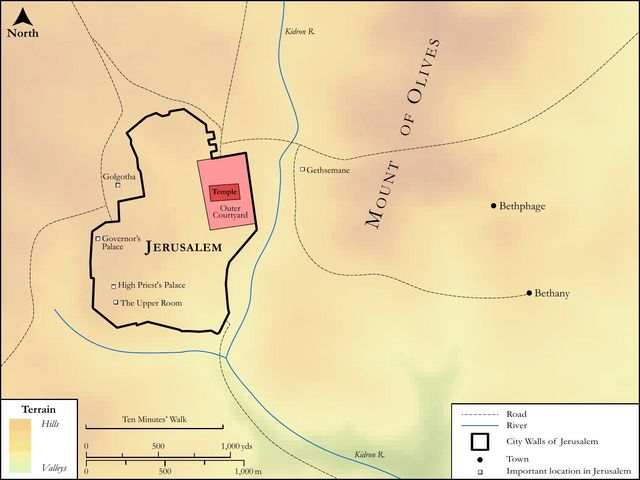
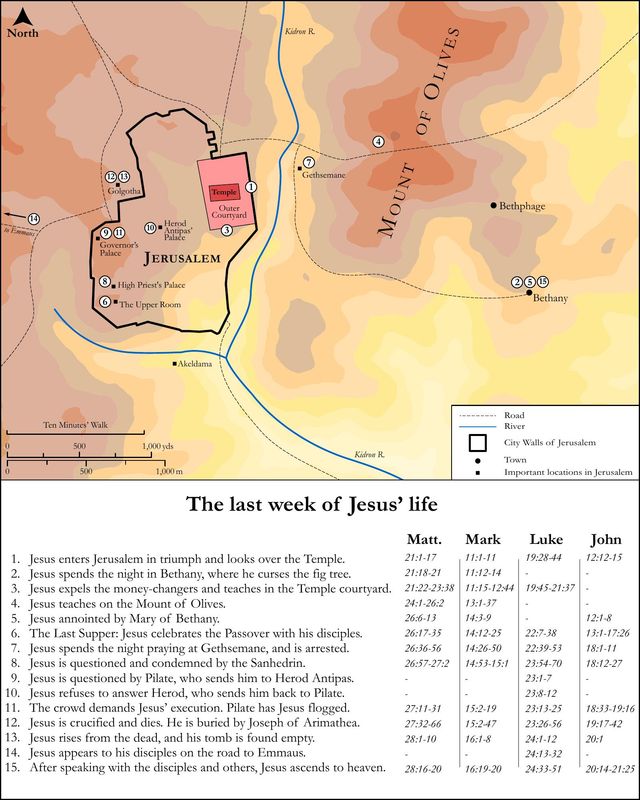
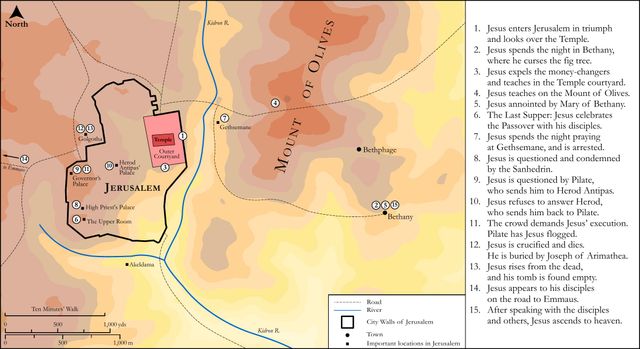
See on the biblical-era maps
Study this verse
Historical interpretation
Twelve Centuries of Reception
12 surviving comments on this verse. Each one is dated, so this reads as a timeline rather than a list.
Select a marker to jump to its quote. Markers stagger vertically where authors wrote within a few decades of each other.
Watch for your life's sake. Let not your lamps be quenched, nor your loins unloosed; but be ye ready, for ye know not the hour in which our Lord cometh. But often shall ye come together, seeking the things which are befitting to your souls: for the whole time of your faith will not profit you, if ye be not made perfect in the last time. For in the last days false prophets and corrupters shall be multiplied, and the sheep shall be turned into wolves, and love shall be turned into hate; for when lawlessness increaseth, they shall hate and persecute and betray one another, and then shall appear the world-deceiver as Son of God, and shall do signs and wonders, and the earth shall be delivered into his hands, and he shall do iniquitous things which have never yet come to pass since the beginning. Then shall the creation of men come into the fire of trial, and many shall be made to stumble and shall perish; but they that endure in their faith shall be saved from under the curse itself. And then shall appear the signs of the truth; first, the sign of an out-spreading in heaven; then the sign of the sound of the trumpet; and the third, the resurrection of the dead; yet not of all, but as it is said: The Lord shall come and all His saints with Him. Then shall the world see the Lord coming upon the clouds of heaven.
Now, in the Gospel according to Mark, the Lord being interrogated by the chief of the priests if He was the Christ, the Son of the blessed God, answering, said, "I am; and you shall see the Son of man sitting at the right hand of power." But powers mean the holy angels. Further, when He says "at the right hand of God," He means the self-same [beings], by reason of the equality and likeness of the angelic and holy powers, which are called by the name of God. He says, therefore, that He sits at the right hand; that is, that He rests in pre-eminent honour. In the other Gospels, however, He is said not to have replied to the high priest, on his asking if He was the Son of God. But what said He? "You say." Answering sufficiently well. For had He said, It is as you understand, he would have said what was not true, not confessing Himself to be the Son of God; [for] they did not entertain this opinion of Him; but by saying "You say," He spoke truly. For what they had no knowledge of, but expressed in words, that he confessed to be true.
The prophets of God and the apostles of Christ are those living clouds which Jesus orders to rain down or not to rain down, as he sees fit, upon the fruitless vineyard. Now if anyone does not wish to become these clouds upon which and with which the Son of man will appear, Christ will know this. For God the Word and wisdom and truth and justice will always come upon these clouds and be with them, manifesting his coming to those worthy of himself. Furthermore, we speak of these clouds as though they bear a "sign from heaven," heavenly clouds that do not pass away. They have been made worthy of the throne of God and the kingdom of God as "heirs of God and coheirs of Christ." And they will reign with him.
It seems to me that the Son of man seated "at the right hand of Power" signifies enthronement and empowerment. He was seated therefore next to Power—the only power properly so called—and at the right hand. He received all power from the Father "in heaven and on earth." His adversaries too will see his enthronement, sometime after the blessed have seen him with joy.Now the passage according to Mark does not say "hereafter." It reads simply, "You will see the Son of man seated at the right hand of Power." This does not imply anything contrary to what we have said. However, in light of Matthew's words, "hereafter you will see" and Luke's words, "so will the Son of man be in his day," one may ask whether since the time the Savior had said these things, they were fulfilled to those who heard his words.… Our reply is that they appear to have been fulfilled, since from that time, that is, from the time of the dispensation, the Son of man has been seated "at the right hand of Power," and his disciples witnessed his resurrection from the dead. For this reason, as we noted before, they saw him seated "at the right hand of Power."
It was not fit that the Lord should answer the High Priest's adjuration as though under compulsion, wherefore He neither denied nor confessed Himself to be the Son of God. For he was not worthy to be the object of Christ's teaching, therefore He does not instruct him, but taking up his own words retorts them upon him. This sitting of the Son of Man seems to me to denote a certain regal security; by the power of God, Who is the only power, is He securely seated to Whom is given by His Father all power in heaven as in earth. And there will come a time when the enemies shall see this establishment. Indeed this has begun to be fulfilled from the earliest time of the dispensation; for the disciples saw Him rising from the dead, and thereby saw Him seated on the right hand of power. Or, In respect of that eternity of duration which is with God, from the beginning of the world to the end of it is but one day; it is therefore no wonder that the Saviour here says, Shortly, signifying that there is but short time before the end come. He prophesies moreover, that they should not only see Him sitting at the right hand of power, but also coming in the clouds of heaven. These clouds are the Prophets and Apostles, whom He commands to rain when it is required, they are the clouds that pass not away, but bearing the image of the heavenly, (1 Cor. 15:49.) are worthy to be the throne of God, as heirs of God, and joint-heirs with Christ. (Rom. 8:17.)
Wherefore also they were all assembled together, and it was a council of pestilent men, and they ask some questions, wishing to invest this plot with the appearance of a court of justice. For "neither did their testimonies agree together;" so feigned was the court of justice, and all things full of confusion and disorder.
"But false witnesses came, and said, This fellow said, I will destroy this temple, and in three days I will raise it." And indeed He had said, "In three days," but He said not, "I will destroy," but, "Destroy," and not about that temple but about His own body.
What then doth the high priest? Willing to press Him to a defense, that by that he might take Him, he saith, "Hearest Thou not what these witness against Thee? But He held His peace."
For the attempts at defense were unprofitable, no man hearing. For this was a show only of a court of justice, but in truth an onset of robbers, assailing Him without cause, as in a cave, or on a road.
Wherefore "He held His peace," but the other continued, saying, "I adjure Thee by the living God, that Thou tell us whether Thou be the Christ, the Son of the living God. But He said, Thou hast said. Nevertheless I say unto you, Hereafter shall ye see the Son of Man sitting at the right hand of power, and coming in the clouds. Then the high priest rent his clothes, saying, He hath spoken blasphemy." And this he did to add force to the accusation, and to aggravate what He said, by the act. For since what had been said moved the hearers to fear, what they did about Stephen, stopping their ears, this high priest doth here also.
And yet what kind of blasphemy was this? For indeed before He had said, when they were gathered together, "The Lord said unto my Lord. Sit Thou on my right hand," and interpreted the saying, and they dared say nothing, but held their peace, and from that time forth gainsaid Him no more. Why then did they now call the saying a blasphemy? And wherefore also did Christ thus answer them? To take away all their excuse, because unto the last day He taught that He was Christ, and that He sitteth at the right hand of the Father, and that He will come again to judge the world, which was the language of one manifesting His full accordance with the Father.
Having rent therefore his clothes, he saith, "What think ye?" He gives not the sentence from himself, but invites it from them, as in a case of confessed sins, and manifest blasphemy. For, inasmuch as they knew that if the thing came to be inquired into, and carefully decided, it would free Him from all blame, they condemn Him amongst themselves, and anticipate the hearers by saying, "Ye have heard the blasphemy;" all but necessitating and forcing them to deliver the sentence. What then say they? "He is guilty of death;" that having taken Him as condemned, they should thus work upon Pilate thereupon to pass sentence. In which matter those others also being accomplices say, "He is guilty of death;" themselves accusing, themselves judging, themselves passing sentence, themselves being everything then.
But wherefore did they not bring forward the Sabbaths? Because He had often stopped their mouths; and moreover they wanted to take Him, and condemn Him by the things then said. And the high priest anticipated them, and gave the sentence as from them, and drew them all on by rending his vestments, and having led Him away as now condemned unto Pilate, thus did all.
When the Chief Priests were thus assembled, this conventicle of ruffians sought to give their conspiracy the character of a legal trial. But it was entirely a scene of confusion and uproar, as what follows shows, Though many false witnesses came, yet found they none.
Why did they not bring forward now His breaking the Sabbath? Because He had so often confuted them on this point.
He said this with a design to draw from Him some indefensible answer which might be made a snare for Him. But Jesus held his peace, for defence had availed nothing when none would listen to it. For here was only a mockery of justice, it was in truth nothing more than the anarchy of a den of robbers.
This He did to give weight to the accusation, and to confirm by deeds what He taught in words.
Then, after rending his garment, he did not give sentence of himself, but asked of others, saying, What think ye? As was always done in undeniable cases of sin, and manifest blasphemy, and as by force driving them to a certain opinion, he anticipates the answer, What need we any further witnesses? Behold, now ye have heard his blasphemy. What was this blasphemy? For before He had interpreted to them as they were gathered together that text, The Lord said unto my Lord, Sit thou on my right hand, (Matt. 22:44.) and they had held their peace, and had not contradicted Him. How then do they call what He now says blasphemy? They answered and said, He is guilty of death, the same persons at once accusers, examiners, and sentencers.
(Hom. lxxxv.) As hunters who have started their game, so they exhibit a wild and drunken exultation.
Observe how circumstantially the Evangelist recounts all those particulars even which seem most disgraceful, hiding or extenuating nothing, but thinking it the highest glory that the Lord of the earth should endure such things for us. This let us read continually, let us imprint in our minds, and in these things let us boast.
(Verse 64.) Jesus said to him: You have said it. Nevertheless, I tell you: from now on you will see the Son of Man seated at the right hand of the power of God, and coming on the clouds of heaven. And against Pilate, and against Caiaphas, a similar response, so that they are condemned by their own sentence.
He went in, either out of the attachment of a disciple, or natural curiosity, seeking to know what sentence the High Priest would pass, whether death, or scourging.
At last came two false witnesses. How are they false witnesses, when they repeat only what we read that the Lord spoke? A false witness is one who takes what is said in a different sense from that in which it was said. Now this the Lord had spoken of the temple of His Body, and they cavil at His expressions, and by a slight change and addition produce a plausible charge. The Lord's words were, Destroy this temple; (John 2:19.) this they make into, I can destroy the Temple of God. He said, Destroy, not 'I will destroy,' because it is unlawful to lay hands on ourselves. Also they phrased it, And build it again, making it apply to the temple of the Jews; but the Lord had said, And I will raise it up again, thus clearly pointing out a living and breathing temple. For to build again, and to raise again, are two different things.
Headlong and uncontrolled rage, unable to find even a false accusation, moves the High Priest from his throne, the motion of his body showing the emotion of his mind. And the High Priest arose, and said unto him, Answerest thou nothing to the things which these witness against Thee?
For as God, He knew that whatever He said would be twisted into an accusation against Him. But at this His silence before false witnesses and ungodly Priests, the High Priest was exasperated, and summons Him to answer, that from anything He says he may raise a charge against Him.
The same fury which drew the High Priest from his seat, impels him now to rend his clothes; for so it was customary with the Jews to do whenever they heard any blasphemy, or any thing against God.
And by this rending his garments, he shows that the Jews have lost the priestly glory, and that their High Priest's throne was vacant. For by rending his garment he rent the veil of the Law which covered him.
They spit in his face, and buffeted him, to fulfil the prophecy of Esaias, I gave my cheek to the smiters, and turned not away my face from shame and spitting. (Isa. 50:6.)
But it would have been foolish to have answered them that smote Him, and to have declared the smiter, seeing that in their madness they seem to have struck Him openly.
. He is speaking to them from the prophecy of Daniel who said, "I saw one coming as the Son of Man upon the clouds" (Daniel 7:13). For since they thought that He was deluded, as He appeared to them in humble form, He said, "You shall see Me then coming in power and seated with the Father." "Power" here means that of the Father, and the Son of Man will be coming not from earth but from heaven.
Truly these were false witnesses. For Christ had not said, "I am able to destroy," but "You shall destroy." And He had not said, "the temple of God," but "this temple," that is, "My Body." And again, He had not said, "I shall build," but "I shall raise." So they were clearly false witnesses, the Lord having said one thing while they reported that He had said another. Jesus therefore kept silent, knowing that their tribunal was unlawful. For how would a verbal defense persuade those whom signs had not persuaded? The high priest asks the question, wanting to induce Him to blaspheme; so that if He should say, "I am the Son of God," He might be condemned as a blasphemer, but if He should deny it, the High priest would have Him as a witness against Himself. But the Lord caught those sophists in their own cunning, and answers, "Thou hast said," meaning, "Your mouth has confessed that I am the Son of God."
(ord) Prophesy unto us is said in ridicule of His claim to be held as a Prophet by the people.
Continue studying Matthew 26:64 across the web’s major study libraries — every link below opens this exact verse, chapter, or book on the destination site.
Read & Compare
 BibleGatewayThis verse in more than 200 translations and 70 languages.
 Bible.comThe YouVersion reader — hundreds of translations, reading plans, and highlights.
 ESV.orgCrossway's official English Standard Version reader.
 NET BibleThe NET translation with 60,000+ translators' notes on every rendering decision.
 STEP BibleTyndale House's free study tool — original text, vocabulary, and scholarly resources.
 BibliaLogos Bible Software's free web reader.
 USCCBThe New American Bible (Revised Edition) with the U.S. bishops' study notes.
Commentaries
 BibleHub CommentariesDozens of classic commentaries on this verse, gathered on one page.
 StudyLightMore than 100 commentary sets — the largest collection on the web.
 BibleRefPlain-English commentary on what this verse means, verse by verse.
 Enduring WordDavid Guzik's free commentary on this chapter, widely used by Bible teachers.
 Bible Study ToolsVerse commentary alongside Greek and Hebrew study aids.
Original Language & Research
- BibleHub InterlinearThe verse word by word — original language, transliteration, and English.
- BibleHub LexiconEvery word's original-language definition and Strong's entry.
 Blue Letter BibleDeep-study tools — Strong's numbers, concordance, and word studies.
 CNTR CollationThe earliest Greek manuscripts of this verse, collated letter by letter.
Sermons, Hymns & Audio


TrulyRandomVerse is not affiliated with these sites and doesn’t control their content. They’re linked because they’re genuinely useful.
Summary
In Matthew 26:64, Jesus delivers a profound and prophetic declaration to the High Priest Caiaphas during His trial, unequivocally affirming His divine identity, present authority, and future glorious return. This statement serves as a pivotal moment, revealing Jesus' self-understanding as the promised Messiah and Son of God, who, despite His imminent suffering, will be exalted to ultimate power and return in triumph to judge the world.
Context
ShowHideLiterary Context
This powerful declaration is uttered at the climax of Jesus' illegal night trial before the Jewish Sanhedrin. Following His arrest in Gethsemane and initial questioning by Annas, Jesus is brought before Caiaphas and the full council. They seek false testimony against Him, but when none suffices for a capital charge, Caiaphas directly challenges Jesus, "I adjure thee by the living God, that thou tell us whether thou be the Christ, the Son of God" (Matthew 26:63). Jesus' response in verse 64 is not a defense against the false accusations, but a solemn, self-affirming pronouncement of His true identity and future glory, a truth that the Sanhedrin immediately interprets as blasphemy, sealing His condemnation. This moment underscores the profound irony of the trial: the accused is, in fact, the ultimate Judge.
Historical & Cultural Context
The trial of Jesus took place during the Passover festival in Jerusalem, a time of heightened religious and political tension. The Jewish Sanhedrin, composed of chief priests, elders, and scribes, served as the supreme religious and judicial body. Their authority under Roman rule was limited, particularly concerning capital punishment, which required Roman approval. The charge of blasphemy, claiming to be God or the Messiah in a divine sense, was punishable by death under Jewish law. Caiaphas's adjuration by the living God was a solemn oath designed to compel a response, and Jesus' direct affirmation, coupled with His claim to divine authority and future judgment, was precisely the "blasphemy" they sought to condemn Him. The imagery of "sitting on the right hand of power" and "coming in the clouds of heaven" would have immediately resonated with the Jewish leaders as clear messianic claims drawn from their sacred texts.
Key Themes
ShowHideMatthew 26:64 encapsulates several profound themes central to Matthew's Gospel and Christian theology. Firstly, it highlights Christ's Divine Authority and Identity, as Jesus unequivocally confirms He is the Christ, the Son of God, and the "Son of Man" (a title laden with divine authority from Daniel 7:13-14). Secondly, it emphasizes Messianic Exaltation and Sovereignty, drawing on Psalm 110:1 to declare His future enthronement at God's right hand, signifying ultimate power and dominion. Thirdly, the verse powerfully foreshadows The Second Coming and Final Judgment, portraying Jesus' return not as a humble servant, but as a glorious figure, Lord over all things, coming "in the clouds of heaven," a clear reference to the divine judgment and vindication of the Son of Man. This declaration transforms a moment of apparent defeat into a profound statement of ultimate triumph and eschatological hope.
Exposition and Analysis
ShowHideKey Word Analysis
ShowHideThis word (G1411) signifies force, might, or miraculous power. In this context, "the right hand of power" serves as a reverential circumlocution for God Himself, avoiding direct utterance of the divine name. It emphasizes God's omnipotence and majesty, indicating that Jesus will be seated at the right hand of the Almighty God, sharing in His ultimate authority and dominion.
Referring to the right side or hand (G1188), this term is universally recognized in Israel and in Scripture as the place of honor, authority, and power. To sit at someone's right hand denotes a position of co-regency, supreme authority, and intimate association with the one in power. Here, it signifies Jesus' ultimate exaltation and shared sovereignty with God the Father.
This primary verb (G2064) means "to come or go" in a wide variety of applications. In the context of "coming in the clouds of heaven," it specifically denotes a majestic, public, and undeniable arrival, echoing the prophetic vision of the Son of Man in Daniel 7:13. It speaks to Jesus' future advent as judge and king, a dramatic contrast to His current humble and accused state.
Verse Breakdown
ShowHide"Jesus saith unto him, Thou hast said:"
Jesus' initial response to Caiaphas's direct question ("Art thou the Christ, the Son of God?") is a common Jewish idiom, "Thou hast said" (or "You have said it"). This is not an evasion but a firm and unequivocal affirmation, essentially meaning, "Yes, it is as you say," or "You have spoken the truth." It acknowledges the High Priest's statement as accurate, confirming Jesus' identity as both the Christ (Messiah) and the Son of God.
"nevertheless I say unto you,"
This phrase marks a significant shift from affirmation to a direct, authoritative declaration by Jesus Himself. "Nevertheless" (G4133, plḗn) introduces a strong contrast, implying that despite His current humble state and the impending judgment by men, a far greater reality awaits. Jesus asserts His own divine authority to speak prophetically to His accusers, shifting the focus from their judgment of Him to His future judgment of them.
"Hereafter shall ye see the Son of man sitting on the right hand of power,"
This clause contains a profound prophetic statement. "Hereafter" (G737, árti G575, apó) indicates a future, yet certain, event. The title "Son of Man" (G5207, huiós G444, ánthrōpos), Jesus' preferred self-designation, connects Him to the divine, authoritative figure of Daniel 7:13-14. "Sitting on the right hand of power" is a direct allusion to Psalm 110:1, a key messianic prophecy. It signifies Jesus' post-resurrection exaltation, ascension, and enthronement in a position of ultimate authority, majesty, and shared sovereignty with God. The very ones who condemn Him will one day witness His divine authority.
"and coming in the clouds of heaven."
This final phrase completes the powerful imagery of Jesus' future glory. It directly echoes Daniel 7:13, where "one like the Son of Man came with the clouds of heaven." The "clouds" (G3507, nephélē) are a biblical symbol of divine presence, glory (the Shekinah glory), and judgment (e.g., God's appearance at Sinai, the pillar of cloud). This signifies Jesus' glorious, undeniable, public, and authoritative return for judgment and the establishment of His eternal kingdom, a dramatic vindication of His claims.
Literary Devices
ShowHideMatthew 26:64 is rich with literary devices that amplify its theological weight. Allusion is paramount, as Jesus directly references two foundational Old Testament prophecies: Psalm 110:1 ("sitting on the right hand of power") and Daniel 7:13 ("coming in the clouds of heaven"). These allusions would have been immediately recognized by the Jewish Sanhedrin, highlighting Jesus' claim to be the prophesied Messiah with divine authority. There is profound irony in this scene: Jesus, the accused, declares that His accusers will one day witness Him as their Judge. The imagery of "right hand of power" and "clouds of heaven" serves as powerful symbolism, representing ultimate divine authority, majesty, and the glorious, public nature of His future return. Furthermore, the entire statement functions as a direct prophecy, a definitive declaration by Jesus about His future exaltation and eschatological role, which stands in stark contrast to His present humiliation.
Theological and Thematic Connections
ShowHideMatthew 26:64 is a theological cornerstone, revealing Jesus' self-understanding as the divine Messiah and Son of God, not merely a human prophet. It asserts His present and future sovereignty, establishing His ultimate authority over all creation and His role as the final Judge. This declaration transforms the narrative of His trial from one of human condemnation to one of divine vindication, underscoring that His crucifixion is not a defeat but a necessary step towards His ultimate exaltation and glorious return. The verse bridges the gap between His earthly ministry and His heavenly reign, providing a foundational truth for Christian eschatology and Christology.
Reflection and Application
ShowHideMatthew 26:64 offers profound assurance and a sobering warning. For believers, it is a powerful reminder that our Lord, though crucified in weakness, now reigns in ultimate power at the right hand of God. This truth provides immense comfort and hope in times of suffering or perceived defeat, knowing that our Savior is sovereign over all circumstances. His promise to return in glory calls us to live with an eternal perspective, prioritizing His kingdom and mission. We are encouraged to persevere, knowing that His vindication is certain, and our ultimate reward is with Him. For those who deny or reject Him, the verse serves as a solemn warning: the very One they dismiss will one day return as the undeniable Judge, before whom every knee will bow and every tongue confess. This compels us to share the Gospel with urgency and compassion, inviting others to embrace Him as Lord before that day of reckoning arrives.
Questions for Reflection
ShowHideFAQ
ShowHideWhat does "Thou hast said" mean in this context?
ShowHide"Thou hast said" (Greek: Su eipas) is a common Jewish idiom used as a polite but firm affirmation. It's not an evasion or a question, but a direct and unequivocal "Yes, it is as you say," or "You have spoken the truth." Jesus is confirming the High Priest's statement that He is indeed "the Christ, the Son of God" (Matthew 26:63).
Why does Jesus refer to Himself as "the Son of Man" instead of "the Son of God" here?
ShowHideJesus frequently used the title "Son of Man" as His preferred self-designation throughout the Gospels. While it highlights His true humanity, it also carries profound theological weight, particularly in light of the vision in Daniel 7:13-14. In Daniel, the Son of Man is a divine, heavenly figure who receives everlasting dominion, glory, and a kingdom. By using this title in conjunction with "sitting on the right hand of power and coming in the clouds of heaven," Jesus is not only affirming His humanity but, more importantly, asserting His unique, divinely appointed, and authoritative role as the Messiah and future Judge, a claim that the Sanhedrin would have understood as blasphemous.
What is the significance of "sitting on the right hand of power"?
ShowHide"Sitting on the right hand of power" is a direct allusion to Psalm 110:1, a foundational messianic prophecy. In Scripture, the "right hand" symbolizes supreme authority, honor, and power. "Power" (Greek: dynamis) here is a circumlocution for God Himself, meaning "the right hand of God." Thus, Jesus is declaring that He will be exalted to the highest position of authority and sovereignty alongside God the Father after His resurrection and ascension. It signifies His co-regency and divine majesty.
What do "coming in the clouds of heaven" signify?
ShowHideThis phrase directly echoes the vision of the Son of Man in Daniel 7:13, where a divine figure comes "with the clouds of heaven" to receive an everlasting kingdom. In biblical imagery, "clouds" are often associated with God's presence (the Shekinah glory, e.g., at Sinai or the Transfiguration), His majesty, and His judgment. Therefore, Jesus' statement signifies His glorious, public, undeniable, and authoritative return, not as a suffering servant, but as the divine Judge and King, bringing ultimate vindication to Himself and judgment upon His adversaries.
Christ-Centered Fulfillment
ShowHideMatthew 26:64 stands as a profound Christ-centered declaration, revealing Jesus' identity and future in light of His redemptive work. His affirmation to Caiaphas, "Thou hast said," followed by the declaration of His future enthronement and return, is a direct fulfillment of Old Testament prophecies concerning the Messiah's dual role as suffering servant and glorious King. The "Son of Man sitting on the right hand of power" points directly to His post-resurrection exaltation, as described in Acts 2:33 where Peter proclaims, "Therefore being by the right hand of God exalted..." This enthronement signifies Christ's completed work of atonement and His current reign as Lord over all creation, having "all authority in heaven and on earth" (Matthew 28:18). Furthermore, "coming in the clouds of heaven" anticipates His glorious Second Advent, when He will return not as a humble man on trial, but as the triumphant King and Judge, fulfilling the promise of His ascension where He was "taken up... and a cloud received him out of their sight," with the angels promising He would "so come in like manner" (Acts 1:9-11). This ultimate revelation of Christ's power and glory will be seen by "every eye" (Revelation 1:7), establishing His eternal kingdom and bringing final judgment and salvation. Thus, Matthew 26:64 is not merely a statement about Jesus' future, but a foundational truth about His present reign and the certain hope of His return, all centered on His identity as the Christ who accomplished salvation.