


Matthew 26:63
- ὁho<the>G3588T-NSMDefinite article Nominative Singular Masculine
- δὲdeAndG1161CONJConjunction
- ἸησοῦςIēsousJesusG2424N-NSM-PNoun Nominative Singular Masculine Individual
- ἐσιώπαesiōpawas silentG4623V-IAI-3SVerb Imperfect Active Indicative 3rd Singular
- καὶkaiAndG2532CONJConjunction
- ἀποκριθεὶςapokritheisansweringG611V-AOP-NSMVerb Aorist Passive Deponent Participle Nominative Singular Masculine
- ὁhotheG3588T-NSMDefinite article Nominative Singular Masculine
- ἀρχιερεὺςarchiereushigh priestG749N-NSMNoun Nominative Singular Masculine
- εἶπενeipensaidG2036V-2AAI-3SVerb 2nd Aorist Active Indicative 3rd Singular
- αὐτῷ·autōto HimG846P-DSMPersonal pronoun Dative Singular Masculine
- ἐξορκίζωexorkizōI adjureG1844V-PAI-1SVerb Present Active Indicative 1st Singular
- σεseyouG4771P-2ASPersonal pronoun Accusative 2nd Singular
- κατὰkatabyG2596PREPPreposition
- τοῦtou<the>G3588T-GSMDefinite article Genitive Singular Masculine
- θεοῦtheouGodG2316N-GSM-TNoun Genitive Singular Masculine Title
- τοῦtoutheG3588T-GSMDefinite article Genitive Singular Masculine
- ζῶντοςzōntoslivingG2198V-PAP-GSMVerb Present Active Participle Genitive Singular Masculine
- ἵναinathatG2443CONJConjunction
- ἡμῖνhēminusG3165P-1DPPersonal pronoun Dative 1st Plural
- εἴπῃςeipēsmay you tellG2036V-2AAS-2SVerb 2nd Aorist Active Subjunctive 2nd Singular
- εἰeiifG1487CONDConjunction
- σὺsuYou yourselfG4771P-2NSPersonal pronoun Nominative 2nd Singular
- εἶeiareG1510V-PAI-2SVerb Present Active Indicative 2nd Singular
- ὁhotheG3588T-NSMDefinite article Nominative Singular Masculine
- χριστὸςchristosChristG5547N-NSM-TNoun Nominative Singular Masculine Title
- ὁhotheG3588T-NSMDefinite article Nominative Singular Masculine
- υἱὸςhuiosSonG5207N-NSMNoun Nominative Singular Masculine
- τοῦtou<the>G3588T-GSMDefinite article Genitive Singular Masculine
- θεοῦtheouof GodG2316N-GSM-TNoun Genitive Singular Masculine Title
English is a literal word-by-word gloss of the Greek, not the KJV's wording. Why?
This is the original text the KJV's translators worked from — each Greek word with its own literal English meaning in this verse, prepared by scholars at Tyndale House, Cambridge. The KJV translates whole sentences, not word by word, so its wording differs: one Greek word can become several English words, and the KJV may choose “charity” where the gloss reads “love”. Both are faithful — they answer different questions. For the KJV's own rendering, switch to the KJV text.
Details
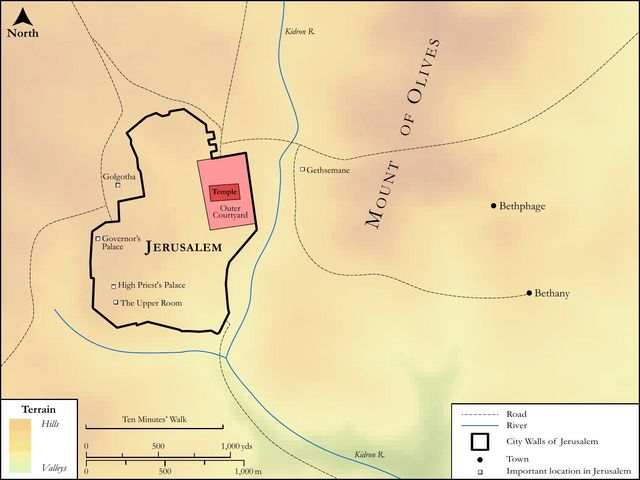
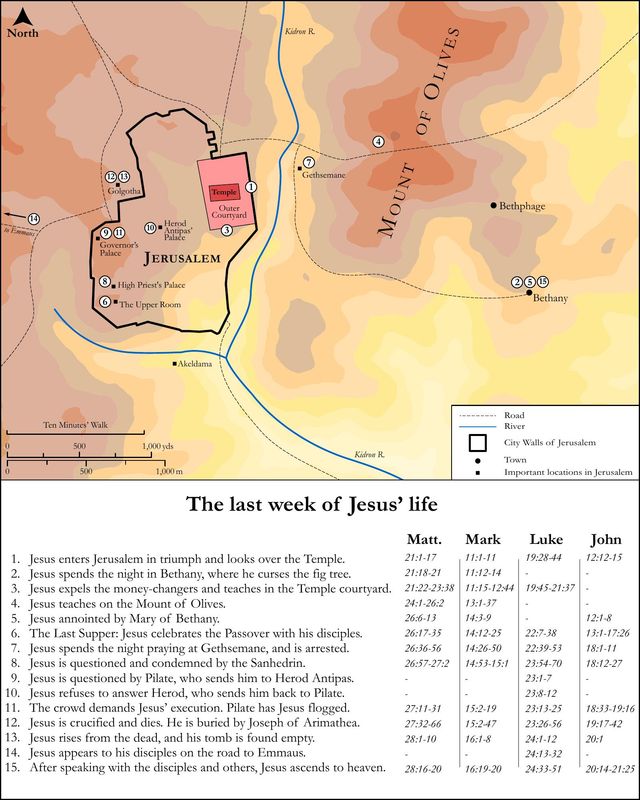
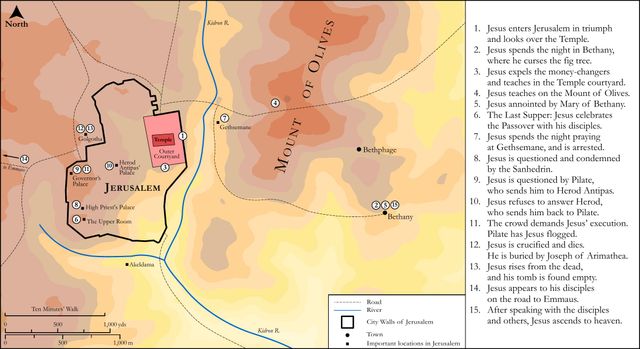
See on the biblical-era map
Study this verse
Historical interpretation
Ten Centuries of Reception
9 surviving comments on this verse. Each one is dated, so this reads as a timeline rather than a list.
Select a marker to jump to its quote. Markers stagger vertically where authors wrote within a few decades of each other.
We find in the law several cases of swearing. And now, on this occasion, the priest commands Jesus to swear "by the living God." In this regard, I believe it is improper for one who wants to live by the gospel to command someone to swear.Likewise, the Lord himself says in the Gospel: "But I say to you, 'Do not swear at all' " and do not command someone else to swear at all. So, according to Christ's Gospel command, if it is not permissible to swear, neither is it permissible to command someone else to swear. Therefore it is clear that the high priest unlawfully ordered Jesus to swear, even though he may have ordered him to swear "by the living God."
This place teaches us to contemn the clamours of slanderers and false witnesses, and not to consider those who speak unbeseeming things of us worthy of an answer; but then, above all, when it is greater to be manfully and resolutely silent, than to plead our cause in vain.
Under the Law, we do indeed find many instances of this adjuration (Numb. 5:19, 1 Kings 22:16.); but I judge that a man who would live according to the Gospel should not adjure another; for if we are not permitted to swear, surely not to adjure. But he that regards Jesus commanding the daemons, and giving His disciples power over them, will say, that to address the daemons by the power given by the Saviour, is not to adjure them. But the High Priest did sin in laying a snare for Jesus; imitating his father, who twice asked the Saviour, If thou be Christ the Son of God. (Matt. 4.) Hence one might rightly say, that to doubt concerning the Son of God, whether Christ be He, is the work of the Devil.
It was not fitting for our Lord to respond to the high priest's command to swear... For this reason, he neither denied that he was Christ, the Son of God, nor did he openly declare it. Instead, as though accepting to be a swearing witness ... he replied, "You have said so."
And since "everyone who commits sin is of the devil," the high priest also committed a sin in plotting against Jesus. Therefore he was of the devil, and, being of the devil as it were, he imitated his very father, who doubtingly asked the Savior twice, "If you are the Son of God," as is written concerning his temptations. Similar in fact are the words "If you are the Son of God" and "if you are the Christ, the Son of God." Someone may rightly say in this regard that to doubt whether Christ is the Son of God is the work of the devil and of the high priest who plotted against our Lord.
What then doth the high priest? Willing to press Him to a defense, that by that he might take Him, he saith, "Hearest Thou not what these witness against Thee? But He held His peace."
For the attempts at defense were unprofitable, no man hearing. For this was a show only of a court of justice, but in truth an onset of robbers, assailing Him without cause, as in a cave, or on a road.
Wherefore "He held His peace," but the other continued, saying, "I adjure Thee by the living God, that Thou tell us whether Thou be the Christ, the Son of the living God."
Wherefore also they were all assembled together, and it was a council of pestilent men, and they ask some questions, wishing to invest this plot with the appearance of a court of justice. For "neither did their testimonies agree together;" so feigned was the court of justice, and all things full of confusion and disorder.
"But false witnesses came, and said, This fellow said, I will destroy this temple, and in three days I will raise it." And indeed He had said, "In three days," but He said not, "I will destroy," but, "Destroy," and not about that temple but about His own body.
What then doth the high priest? Willing to press Him to a defense, that by that he might take Him, he saith, "Hearest Thou not what these witness against Thee? But He held His peace."
For the attempts at defense were unprofitable, no man hearing. For this was a show only of a court of justice, but in truth an onset of robbers, assailing Him without cause, as in a cave, or on a road.
Wherefore "He held His peace," but the other continued, saying, "I adjure Thee by the living God, that Thou tell us whether Thou be the Christ, the Son of the living God. But He said, Thou hast said. Nevertheless I say unto you, Hereafter shall ye see the Son of Man sitting at the right hand of power, and coming in the clouds. Then the high priest rent his clothes, saying, He hath spoken blasphemy." And this he did to add force to the accusation, and to aggravate what He said, by the act. For since what had been said moved the hearers to fear, what they did about Stephen, stopping their ears, this high priest doth here also.
And yet what kind of blasphemy was this? For indeed before He had said, when they were gathered together, "The Lord said unto my Lord. Sit Thou on my right hand," and interpreted the saying, and they dared say nothing, but held their peace, and from that time forth gainsaid Him no more. Why then did they now call the saying a blasphemy? And wherefore also did Christ thus answer them? To take away all their excuse, because unto the last day He taught that He was Christ, and that He sitteth at the right hand of the Father, and that He will come again to judge the world, which was the language of one manifesting His full accordance with the Father.
Having rent therefore his clothes, he saith, "What think ye?" He gives not the sentence from himself, but invites it from them, as in a case of confessed sins, and manifest blasphemy. For, inasmuch as they knew that if the thing came to be inquired into, and carefully decided, it would free Him from all blame, they condemn Him amongst themselves, and anticipate the hearers by saying, "Ye have heard the blasphemy;" all but necessitating and forcing them to deliver the sentence. What then say they? "He is guilty of death;" that having taken Him as condemned, they should thus work upon Pilate thereupon to pass sentence. In which matter those others also being accomplices say, "He is guilty of death;" themselves accusing, themselves judging, themselves passing sentence, themselves being everything then.
But wherefore did they not bring forward the Sabbaths? Because He had often stopped their mouths; and moreover they wanted to take Him, and condemn Him by the things then said. And the high priest anticipated them, and gave the sentence as from them, and drew them all on by rending his vestments, and having led Him away as now condemned unto Pilate, thus did all.
When the Chief Priests were thus assembled, this conventicle of ruffians sought to give their conspiracy the character of a legal trial. But it was entirely a scene of confusion and uproar, as what follows shows, Though many false witnesses came, yet found they none.
Why did they not bring forward now His breaking the Sabbath? Because He had so often confuted them on this point.
He said this with a design to draw from Him some indefensible answer which might be made a snare for Him. But Jesus held his peace, for defence had availed nothing when none would listen to it. For here was only a mockery of justice, it was in truth nothing more than the anarchy of a den of robbers.
This He did to give weight to the accusation, and to confirm by deeds what He taught in words.
Then, after rending his garment, he did not give sentence of himself, but asked of others, saying, What think ye? As was always done in undeniable cases of sin, and manifest blasphemy, and as by force driving them to a certain opinion, he anticipates the answer, What need we any further witnesses? Behold, now ye have heard his blasphemy. What was this blasphemy? For before He had interpreted to them as they were gathered together that text, The Lord said unto my Lord, Sit thou on my right hand, (Matt. 22:44.) and they had held their peace, and had not contradicted Him. How then do they call what He now says blasphemy? They answered and said, He is guilty of death, the same persons at once accusers, examiners, and sentencers.
(Hom. lxxxv.) As hunters who have started their game, so they exhibit a wild and drunken exultation.
Observe how circumstantially the Evangelist recounts all those particulars even which seem most disgraceful, hiding or extenuating nothing, but thinking it the highest glory that the Lord of the earth should endure such things for us. This let us read continually, let us imprint in our minds, and in these things let us boast.
(Verse 63.) And the high priest said to him, I adjure you by the living God that you tell us if you are the Christ, the Son of God. Why do you swear, most wicked of priests, to accuse rather than to believe? If to accuse, others argue: condemn the silent one. If to believe, why did you not want to believe the one confessing?
He went in, either out of the attachment of a disciple, or natural curiosity, seeking to know what sentence the High Priest would pass, whether death, or scourging.
At last came two false witnesses. How are they false witnesses, when they repeat only what we read that the Lord spoke? A false witness is one who takes what is said in a different sense from that in which it was said. Now this the Lord had spoken of the temple of His Body, and they cavil at His expressions, and by a slight change and addition produce a plausible charge. The Lord's words were, Destroy this temple; (John 2:19.) this they make into, I can destroy the Temple of God. He said, Destroy, not 'I will destroy,' because it is unlawful to lay hands on ourselves. Also they phrased it, And build it again, making it apply to the temple of the Jews; but the Lord had said, And I will raise it up again, thus clearly pointing out a living and breathing temple. For to build again, and to raise again, are two different things.
Headlong and uncontrolled rage, unable to find even a false accusation, moves the High Priest from his throne, the motion of his body showing the emotion of his mind. And the High Priest arose, and said unto him, Answerest thou nothing to the things which these witness against Thee?
For as God, He knew that whatever He said would be twisted into an accusation against Him. But at this His silence before false witnesses and ungodly Priests, the High Priest was exasperated, and summons Him to answer, that from anything He says he may raise a charge against Him.
The same fury which drew the High Priest from his seat, impels him now to rend his clothes; for so it was customary with the Jews to do whenever they heard any blasphemy, or any thing against God.
And by this rending his garments, he shows that the Jews have lost the priestly glory, and that their High Priest's throne was vacant. For by rending his garment he rent the veil of the Law which covered him.
They spit in his face, and buffeted him, to fulfil the prophecy of Esaias, I gave my cheek to the smiters, and turned not away my face from shame and spitting. (Isa. 50:6.)
But it would have been foolish to have answered them that smote Him, and to have declared the smiter, seeing that in their madness they seem to have struck Him openly.
(ord) Prophesy unto us is said in ridicule of His claim to be held as a Prophet by the people.
Continue studying Matthew 26:63 across the web’s major study libraries — every link below opens this exact verse, chapter, or book on the destination site.
Read & Compare
 BibleGatewayThis verse in more than 200 translations and 70 languages.
 Bible.comThe YouVersion reader — hundreds of translations, reading plans, and highlights.
 ESV.orgCrossway's official English Standard Version reader.
 NET BibleThe NET translation with 60,000+ translators' notes on every rendering decision.
 STEP BibleTyndale House's free study tool — original text, vocabulary, and scholarly resources.
 BibliaLogos Bible Software's free web reader.
 USCCBThe New American Bible (Revised Edition) with the U.S. bishops' study notes.
Commentaries
 BibleHub CommentariesDozens of classic commentaries on this verse, gathered on one page.
 StudyLightMore than 100 commentary sets — the largest collection on the web.
 BibleRefPlain-English commentary on what this verse means, verse by verse.
 Enduring WordDavid Guzik's free commentary on this chapter, widely used by Bible teachers.
 Bible Study ToolsVerse commentary alongside Greek and Hebrew study aids.
Original Language & Research
- BibleHub InterlinearThe verse word by word — original language, transliteration, and English.
- BibleHub LexiconEvery word's original-language definition and Strong's entry.
 Blue Letter BibleDeep-study tools — Strong's numbers, concordance, and word studies.
 CNTR CollationThe earliest Greek manuscripts of this verse, collated letter by letter.
Sermons, Hymns & Audio


TrulyRandomVerse is not affiliated with these sites and doesn’t control their content. They’re linked because they’re genuinely useful.
Summary
Matthew 26:63 records the pivotal moment in Jesus' trial before the Sanhedrin where, after enduring false testimonies and maintaining a profound silence, the High Priest Caiaphas directly challenges Him with a solemn oath. Caiaphas demands to know, under the gravest spiritual obligation, if Jesus is indeed the Christ, the Son of God, thereby forcing a direct confrontation with Jesus' true identity and messianic claims.
Context
ShowHideLiterary Context
This verse is situated within the immediate aftermath of Jesus' arrest in Gethsemane and His subsequent appearance before the Jewish high council, the Sanhedrin, at the palace of Caiaphas. Prior to this verse, the Jewish leaders had desperately sought false witnesses to condemn Jesus, but their testimonies proved inconsistent and insufficient for a legal conviction (Matthew 26:59-60). Jesus' silence in the face of these fabricated charges exasperated the high priest, leading to Caiaphas's direct, adjuratory question in this verse. The immediate follow-up in Matthew 26:64 reveals Jesus' affirmative and profound response, which ultimately serves as the basis for His condemnation for blasphemy. This entire sequence underscores the illegitimacy of the trial and the predetermined outcome of the Jewish leaders to put Jesus to death.
Historical & Cultural Context
The Sanhedrin was the supreme judicial and legislative body of the Jewish people during the Second Temple period, composed of 71 members, including the high priest, chief priests, elders, and scribes. Trials before the Sanhedrin followed specific procedures, though Jesus' trial appears to have violated many of them, particularly regarding the timing (at night, during a festival) and the pursuit of false testimony. The oath administered by Caiaphas, "I adjure thee by the living God," was the most solemn and binding form of testimony in Jewish law. To refuse to answer such an oath, or to lie under it, was considered a grave offense against God Himself (Leviticus 5:1). Caiaphas's use of this oath was a calculated move to compel Jesus to speak, knowing that any claim to be the "Son of God" would be interpreted as blasphemy by the Jewish authorities, who understood "Son of God" in a unique, divine sense that they believed only applied to God.
Key Themes
ShowHideMatthew 26:63 contributes significantly to several overarching themes in the Gospel of Matthew. It highlights Jesus' Sovereignty and Fulfillment of Prophecy, as His prior silence aligns with the suffering servant passages in Isaiah 53:7, yet His subsequent answer demonstrates His deliberate control over the unfolding events. The verse also brings to the fore the Centrality of Jesus' Identity as the Christ (Messiah) and the Son of God, which is the foundational theological question driving the entire narrative of the Gospels. Furthermore, it powerfully illustrates the Clash Between Divine Truth and Human Authority, as the highest religious body of Israel confronts the very embodiment of divine truth, ultimately rejecting Him. This rejection, however, is paradoxically part of God's redemptive plan, leading to the atonement for sin.
Exposition and Analysis
ShowHideKey Word Analysis
ShowHideThis verb signifies a deliberate, purposeful silence, not merely a lack of speaking. It implies composure, self-control, and a conscious decision to remain silent in the face of accusations. This is distinct from being unable to speak and suggests Jesus' sovereign control over the situation, choosing when and how to respond, rather than being overwhelmed or silenced by fear.
Derived from "out of" and "oath," this term means "to exact an oath" or "to conjure." It describes a formal, legal, and supremely binding command, compelling someone to testify truthfully under the authority and judgment of God. Caiaphas's use of this word transforms the interrogation from a mere question into a solemn, religious obligation, making Jesus' subsequent answer a divinely attested declaration.
This phrase emphasizes God's active, dynamic, and true nature, in contrast to lifeless idols or abstract concepts. Invoking "the living God" elevates the oath to the highest possible level of solemnity and consequence, implying that the one adjured is directly accountable to the active, present, and judging God of Israel. It underscores the gravity of the high priest's demand and the profound theological weight of Jesus' impending response.
Verse Breakdown
ShowHide"But Jesus held his peace."
This clause highlights Jesus' deliberate and strategic silence in response to the barrage of false testimonies and accusations. His quietness is not an admission of guilt or a sign of weakness, but a powerful demonstration of His control and fulfillment of prophetic suffering, refusing to dignify the fraudulent proceedings with a defense until directly challenged by divine authority.
"And the high priest answered and said unto him,"
This transition signifies Caiaphas's frustration and desperation. Having failed to secure a conviction through false witnesses, he takes direct action, shifting from allowing others to accuse to personally interrogating Jesus. His "answer" is not to a question from Jesus, but a response to Jesus' silence and the failure of the prosecution.
"I adjure thee by the living God,"
This is the core of Caiaphas's legal and theological maneuver. By invoking the "living God," he places Jesus under the most solemn and binding oath known in Jewish law. This command compelled Jesus to speak, as refusing to answer an oath sworn by God was considered a grave sin. It forces Jesus out of His silence and into a direct declaration of His identity.
"that thou tell us whether thou be the Christ, the Son of God."
This final clause reveals the ultimate question at the heart of the trial: Jesus' identity. "The Christ" (Messiah) refers to the long-awaited Anointed One, the King of Israel. "The Son of God" carries profound theological weight, implying a unique, divine relationship and nature, which the Jewish leaders understood as a claim to deity. Caiaphas's question is designed to elicit a confession that he can then use as a charge of blasphemy, leading to a death sentence.
Literary Devices
ShowHideMatthew 26:63 employs several powerful literary devices. The most prominent is Dramatic Irony, as Caiaphas, intending to condemn Jesus, inadvertently provides the platform for Jesus to declare His true identity under the most solemn circumstances. The high priest's desperate attempt to force a confession becomes the very moment of divine revelation. There is also significant Foreshadowing in Jesus' initial silence, which echoes the suffering servant passages of Isaiah, hinting at His ultimate, silent submission to God's will on the cross. The Juxtaposition between Jesus' serene silence and Caiaphas's agitated demand underscores the contrast between divine composure and human desperation. Finally, the use of the Solemn Oath ("I adjure thee by the living God") functions as a powerful rhetorical device, escalating the tension and highlighting the gravity of the moment, forcing a theological showdown that is central to the Gospel narrative.
Theological and Thematic Connections
ShowHideMatthew 26:63 is a pivotal theological moment, as it directly addresses the core identity of Jesus Christ. Caiaphas's question forces Jesus to break His silence and declare His divine Sonship and Messiahship, making explicit what had previously been revealed through miracles, teachings, and Peter's confession. This declaration, made under the most solemn oath, underscores that Jesus' claim to be the Christ and the Son of God is not merely a human assertion but a divinely attested truth. The Jewish leaders' rejection of this truth, despite its solemn declaration, highlights their spiritual blindness and the tragic culmination of their opposition to God's plan. This moment sets the stage for the ultimate sacrifice, demonstrating that Jesus was condemned not for any earthly crime, but for His divine identity.
Reflection and Application
ShowHideMatthew 26:63 calls us to deep reflection on the nature of truth, authority, and identity. Jesus' deliberate silence in the face of false accusations, followed by His powerful, divinely compelled declaration, teaches us about the timing and nature of our own witness. There are times for silent endurance, and times for courageous proclamation, especially when the very truth of Christ's identity is questioned. Caiaphas's question, though malicious in intent, served God's sovereign purpose by eliciting a clear, undeniable confession from Jesus. This reminds us that even human opposition can be unwittingly used by God to advance His will. For believers, this verse reinforces the absolute centrality of Jesus' identity as the Christ, the Son of God – a truth worth living for, and if necessary, dying for. It challenges us to consider if our lives truly reflect a belief in Jesus as the "Living God's" Son, and if we are prepared to affirm that truth even when it comes at a personal cost.
Questions for Reflection
ShowHideFAQ
ShowHideWhy did Jesus remain silent before Caiaphas's direct question?
ShowHideJesus' initial silence (prior to Matthew 26:63) was deliberate and multifaceted. It fulfilled prophecy, particularly the suffering servant passages in Isaiah 53:7, which states, "He was oppressed and He was afflicted, yet He opened not His mouth." His silence also demonstrated His sovereignty and composure in the face of false accusations, refusing to dignify the inconsistent testimonies with a defense. However, when Caiaphas adjured Him by "the living God," Jesus broke His silence because an oath sworn by God demanded a response, and it was the opportune moment to declare His true identity under divine compulsion, thereby sealing His "blasphemy" in the eyes of the Jewish court.
Christ-Centered Fulfillment
ShowHideMatthew 26:63 stands as a profound moment of Christ-centered fulfillment, as Jesus, under the most solemn oath, publicly affirms His divine identity as "the Christ, the Son of God." This declaration is the culmination of the Old Testament's messianic prophecies, pointing to the Anointed One who would come to redeem His people. Jesus' affirmation here directly foreshadows His ultimate redemptive work: His death as the sinless Lamb of God and His resurrection as the triumphant Son. The Jewish leaders' condemnation of Jesus for "blasphemy" based on this truth ironically paves the way for the New Covenant, where this very truth becomes the cornerstone of salvation for all who believe (Romans 10:9-10). Jesus' willingness to confirm His divine Sonship, knowing it would lead to His crucifixion, demonstrates His perfect obedience to the Father's will and His unwavering commitment to His mission to reconcile humanity to God. His identity, declared under oath and sealed with His blood, is the foundation of Christian faith, establishing Him as the unique bridge between God and humanity (1 Timothy 2:5).