


Mark 13:12
Bible text: King James Version (1769 Blayney text) · Public domain
Bible text: King James Version with Strong's numbers · Public domain
Bible text: Berean Standard Bible · Public domain
Bible text: American Standard Version (1901) · Public domain
Bible text: World English Bible, Messianic edition · Public domain
Bible text: Geneva Bible (1599) · Public domain
Bible text: Young's Literal Translation · Public domain
- παραδώσειparadōseiwill deliver upG3860V-FAI-3SVerb Future Active Indicative 3rd Singular
- δὲdenowG1161CONJConjunction
- ἀδελφὸςadelphosbrotherG80N-NSMNoun Nominative Singular Masculine
- ἀδελφὸνadelphonbrotherG80N-ASMNoun Accusative Singular Masculine
- εἰςeistoG1519PREPPreposition
- θάνατονthanatondeathG2288N-ASMNoun Accusative Singular Masculine
- καὶkaiandG2532CONJConjunction
- πατὴρpatērfatherG3962N-NSMNoun Nominative Singular Masculine
- τέκνονteknonchildG5043N-ASNNoun Accusative Singular Neuter
- καὶkaiandG2532CONJConjunction
- ἐπαναστήσονταιepanastēsontaiwill rise upG1881V-FDI-3PVerb Future Middle Deponent Indicative 3rd Plural
- τέκναteknachildrenG5043N-NPNNoun Nominative Plural Neuter
- ἐπὶepiagainstG1909PREPPreposition
- γονεῖςgoneisparentsG1118N-APMNoun Accusative Plural Masculine
- καὶkaiandG2532CONJConjunction
- θανατώσουσινthanatōsousinwill put to deathG2289V-FAI-3PVerb Future Active Indicative 3rd Plural
- αὐτούςautousthemG846P-APMPersonal pronoun Accusative Plural Masculine
English is a literal word-by-word gloss of the Greek, not the KJV's wording. Why?
This is the original text the KJV's translators worked from — each Greek word with its own literal English meaning in this verse, prepared by scholars at Tyndale House, Cambridge. The KJV translates whole sentences, not word by word, so its wording differs: one Greek word can become several English words, and the KJV may choose “charity” where the gloss reads “love”. Both are faithful — they answer different questions. For the KJV's own rendering, switch to the KJV text.
Details
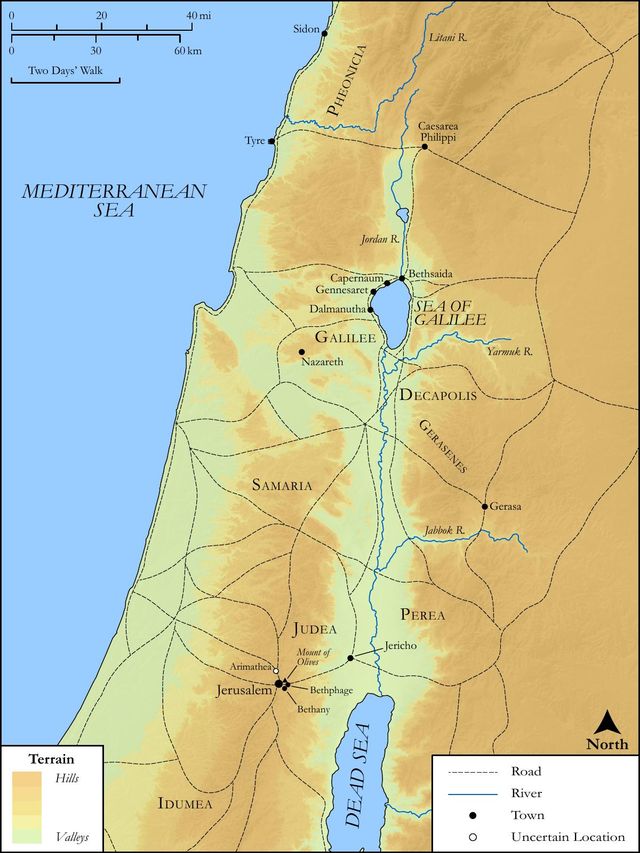
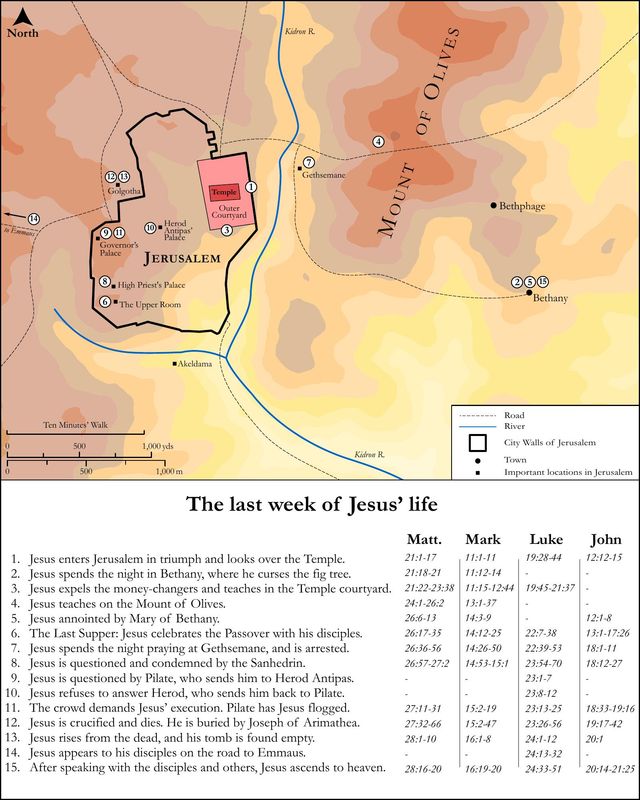
See on the biblical-era maps

Study this verse
Public-domain commentary
Matthew Henry
From his Commentary on the Whole Bible. Henry comments on passages, not single verses — this entry covers Mark 13:5–13. His three-level outline is real structure in the source text, so it is rendered as structure.
Our Lord Jesus, in reply to their question, sets himself, not so much to satisfy their curiosity as to direct their consciences; leaves them still in the dark concerning the times and seasons, which the father has kept in his own power, and which it was not for them to know; but gives them the cautions which were needful, with reference to the events that should now shortly come to pass.
I.They must take heed that they be not deceived by the seducers and imposters that should now shortly arise (Mar 13:5, Mar 13:6); "Take heed lest any man deceive you, lest, having found the true Messiah, you lose him again in the crowd of pretenders, or be inveigled to embrace others in rivalship with him. Many shall come in my name (not in the name of Jesus), but saying, I am the Christ, and so claiming the dignities which I only an entitled to." After the Jews had rejected the true Christ, they were imposed upon, and so exposed by many false Christs, but never before; those false Christs deceived many; Therefore take heed lest they deceive you. Note, When many are deceived, we should thereby be awakened to look to ourselves.
II.They must take heed that they be not disturbed at the noise of wars, which they should be alarmed with, Mar 13:7, Mar 13:8.
Sin introduced wars, and they come from men's lusts. But at some times the nations are more distracted and wasted with wars than at other times; so it shall be now; Christ was born into the world when there was a general peace, but soon after he went out of the world there were general wars; Nation shall rise against nation, and kingdom against kingdom. And what will become of them then who are to preach the gospel to every nation? Inter arma silent leges - Amidst the clash of arms, the voice of law is not heard. "But be not troubled at it." 1. "Let it be no surprise to you; you are bid to expect it, and such things must needs be, for God has appointed them, in order to further accomplishment of his purposes, and by the wars of the Jews" (which Josephus has given us a large account of) "God will punish the wickedness of the Jews." 2. "Let it be no terror to you, as if your interest were in danger of being overthrown, or your work obstructed by these wars; you have no concern in them, and therefore need not be apprehensive of any damage by them." Note, Those that despise the smiles of the world, and do not court and covet them, may despise the frowns of the world, and need not fear them. If we seek not to rise with them that rise in the world, why should we dread falling with them that fall in the world? 3. "Let it not be looked upon as an omen of the approaching period of the world, for the end is not yet, Mar 13:7. Think not that these wars will bring the world to a period; no, there are other intermediate counsels to be fulfilled betwixt that end and the end of all things, which are designed to prepare you for the end, but not to hasten it out of due time." 4. "Let it not be looked upon as if in them God has done his worst; no, he has more arrows in his quiver, and they are ordained against the persecutors; be not troubled at the wars you shall hear of, for they are but the beginnings of sorrows, and therefore, instead of being disturbed at them, you ought to prepare for worse; for there shall also be earthquakes in divers places, which shall bury multitudes in the ruins of their own houses, and there shall be famines, by which many of the poor shall perish for want of bread, and troubles and commotions; so that there shall be no peace to him that goes out or comes in. The world shall be full of troubles, but be not ye troubled; without are fightings, within are fears, but fear not ye their fear." Note, The disciples of Christ, if it be not their own fault, may enjoy a holy security and serenity of mind, when all about them is in the greatest disorder.
III.They must take heed that they be not drawn away from Christ, and from their duty to him, by the sufferings they should meet with for Christ's sake. Again, he saith, "Take heed to yourselves, Mar 13:9. Though you may escape the sword of war, better than some of your neighbours, because you interest not yourselves in the public quarrels, yet be not secure; you will be exposed to the sword of justice more than others, and the parties that contend with one another, will unite against you. Take heed therefore lest you deceive yourselves with the hopes of outward prosperity, and such a temporal kingdom as you have been dreaming of, when it is through many tribulations that you must enter into the kingdom of God. Take heed lest you needlessly expose yourselves to trouble, and pull it upon your own head. Take heed what you say and do, for you will have many eyes upon you." Observe,
1.What the trouble is which they must expect.
(1.)They shall be hated of all men; trouble enough! The thoughts of being hated are grievous to a tender spirit, and the fruits of that hatred must needs be a constant vexation; those that are malicious, will be mischievous. It was not for any thing amiss in them, or done amiss by them, that they were hated, but for Christ's name sake, because they were called by his name, called upon his name, preached his name, and wrought miracles in his name. The world hated them because he loved them.
(2.)Their own relations shall betray them, those to whom they were most nearly allied, and on whom therefore they depended for protection; "They shall betray you, shall inform against you, and be your prosecutors." If a father has a child that is a Christian, he shall become void of natural affection, it shall be swallowed up in bigotry, and he shall betray his own child to the persecutors, as if he were a worshipper of other gods, Deu 13:6-10.
(3.)Their church-rulers shall inflict their censures upon them; "You shall be delivered up to the great Sanhedrim at Jerusalem, and to the inferior courts and consistories in other cities, and shall be beaten in the synagogues with forty stripes at a time, as offenders against the law which was read in the synagogue." It is no new thing for the church's artillery, through the treachery of its officers, to be turned against some of its best friends.
(4.)Governors and kings shall use their power against them. Because the Jews have not power to put them to death, they shall incense the Roman powers against them, as they did Herod against James and Peter; and they shall cause you to be put to death, as enemies to the empire. They must resist unto blood, and still resist.
2.What they shall have to comfort themselves with, in the midst of these great and sore troubles.
(1.)That the work they were called to should be carried on and prosper, notwithstanding all this opposition which they should meet with in it (Mar 13:10); "The gospel shall, for all this, be published among all nations, and before the destruction of Jerusalem the sound of it shall go forth into all the earth; not only through all the nation of the Jews, but to all the nations of the earth." It is comfort to those who suffer for the gospel, that, though they may be crushed and borne down, the gospel cannot; it shall keep its ground, and carry the day.
(2.)That their sufferings, instead of obstructing their work, should forward it; "Your being brought before governors and kings shall be for a testimony of them (so some read it, Mar 13:9); it shall give you an opportunity of preaching the gospel to those before whom you are brought as criminals, to whom otherwise you could not have access." Thus St. Paul's being brought before Felix, and Festus, and Agrippa, and Nero, was a testimony to them concerning Christ and his gospel. Or, as we read it, It shall be for a testimony against them, against both the judges and the prosecutors, who pursue those with the utmost rage that appear, upon examination, to be not only innocent but excellent persons. The gospel is a testimony to us concerning Christ and heaven. If we receive it, it will be a testimony for us: it will justify and save us; if not, it will be a testimony against us in the great day.
(3.)That, when they were brought before kings and governors for Christ's sake, they should have special assistance from heaven, to plead Christ's cause and their own (Mar 13:11); "Take no thought before-hand what he shall speak, be not solicitous how to address yourselves to great men, so as to obtain their favour; your cause is just and glorious, and needs not be supported by premeditated speeches and harangues; but whatsoever shall be given you in that hour, whatsoever shall be suggested to you, and put into your minds, and into your mouths" (pro re nat - on the spur of the occasion), "that speak ye, and fear not the success of it, because it is off-hand, for it is not ye that speak, purely by the strength of your own wisdom, consideration, and resolution, but it is the Holy Ghost." Note, Those whom Christ calls out to be advocates for him, shall be furnished with full instructions: and when we are engaged in the service of Christ, we may depend upon the aids of the Spirit of Christ.
(4.)That heaven at last would make amends for all; "You will meet with a great deal of hardship in your way, but have a good heart on it, your warfare will be accomplished, and your testimony finished, and he that shall endure to the end, the same shall be saved," Mar 13:13. Perseverance gains the crown. The salvation here promised is more than a deliverance from evil, it is an everlasting blessedness, which shall be an abundant recompence for all their services and sufferings. All this we have, Mat 10:17, etc.
Historical interpretation
Seven Centuries of Reception
5 surviving comments on this verse. Each one is dated, so this reads as a timeline rather than a list.
Select a marker to jump to its quote. Markers stagger vertically where authors wrote within a few decades of each other.
"But you will be betrayed by parents and brothers, and relatives and friends, and they will put some of you to death." Evils inflicted by strangers cause lesser pain. But those torments rage more fiercely within us which we suffer from those in whose minds we had confidence, because along with bodily harm, the evils of lost love torment us. All the elect, therefore, because they are members of the supreme Head, also follow their Head in sufferings, so that they feel those very people as adversaries in their death from whose life they had confidence, and their reward of labor increases all the more as the gain of their virtue profits from another's loss of love.
(ubi sup.) The Lord shows how Jerusalem and the province of Judæa merited the infliction of such calamities, in the following words: But take heed to yourselves: for they shall deliver you up to councils; and in the synagogues ye shall be beaten. For the greatest cause of destruction to the Jewish people was, that after slaying the Saviour, they also tormented the heralds of His name and faith with wicked cruelty.
Ecclesiastical historians testify that this was fulfilled, for they relate that all the Apostles long before the destruction of the province of Judæa were dispersed to preach the Gospel over the whole world, except James the son of Zebedee and James the brother of our Lord, who had before shed their blood in Judæa for the word of the Lord. Since then the Lord knew that the hearts of the disciples would be saddened by the fall and destruction of their nation, He relieves them by this consolation, to let them know that even after the casting away of the Jews, companions in their joy and heavenly kingdom should not be wanting, nay that many more were to be collected out of all mankind than perished in Judæa.
(ubi sup.) For when we are led before judges for Christ's sake, all our duty is to offer up our will for Christ. As for the rest, Christ Himself who dwells in us speaks for us, and the grace of the Holy Ghost shall be given us, when we answer. Wherefore it goes on: For it is not ye that shall speak, but the Holy Ghost.
(ubi sup.) This has often been seen in time of persecution, nor can there be any firm affection amongst men who differ in faith.
Brother will betray brother to death, and a father his child; and children will rise against parents and have them put to death. And you will be hated by all because of my name. But, etc. We have often seen this happen in persecutions, and there is no loyal affection among those who have different faiths.
Fitly also did He premise a recital of those things which concerned the Apostles, that in their own tribulations they might find some consolation in the community of troubles and sufferings. There follows: And ye shall be brought before rulers and kings for my sake, for a testimony against them. He says kings and rulers, as, for instance, Agrippa, Nero, and Herod. Again, His saying, for my sake, gave them no small consolation, in that they were about to suffer for His sake. For a testimony against them, means, as a judgment beforehand against them, that they might be inexcusable, in that though the Apostles were labouring for the truth, they would not join themselves to it. Then, that they might not think that their preaching should be impeded by troubles and dangers, He adds: And the Gospel must first be published among all nations.
He also foretells to them a worse evil, that they should suffer persecution from their relations. Wherefore there follows: Now the brother shall betray the brother to death, and the father the son; and children shall rise up against their parents, and shall cause them to be put to death; and ye shall be hated of all men for my name's sake.
And this He says, that on hearing it, they might prepare themselves to bear persecutions and ills with greater patience. Then He brings them consolation, saying, And ye shall be hated of all men for my name's sake; for the being hated for Christ's sake is a sufficient reason for suffering persecutions patiently,1 for it is not the punishment, but the cause, that makes the martyr. Again, that which follows is no small comfort amidst persecution: But he that shall endure unto the end, the same shall be saved.
(non occ.) Another anxiety might also arise in the breasts of the disciples. Lest therefore after hearing that they were to be brought before kings and rulers, they should fear that their want of science and eloquence should render them unable to answer, our Lord consoles them by saying, But when they shall lead you and deliver you up, take no thought beforehand what ye shall speak, but whatsoever shall be given you in that hour, that speak ye.
Continue studying Mark 13:12 across the web’s major study libraries — every link below opens this exact verse, chapter, or book on the destination site.
Read & Compare
 BibleGatewayThis verse in more than 200 translations and 70 languages.
 Bible.comThe YouVersion reader — hundreds of translations, reading plans, and highlights.
 ESV.orgCrossway's official English Standard Version reader.
 NET BibleThe NET translation with 60,000+ translators' notes on every rendering decision.
 STEP BibleTyndale House's free study tool — original text, vocabulary, and scholarly resources.
 BibliaLogos Bible Software's free web reader.
 USCCBThe New American Bible (Revised Edition) with the U.S. bishops' study notes.
Commentaries
 BibleHub CommentariesDozens of classic commentaries on this verse, gathered on one page.
 StudyLightMore than 100 commentary sets — the largest collection on the web.
 BibleRefPlain-English commentary on what this verse means, verse by verse.
 Enduring WordDavid Guzik's free commentary on this chapter, widely used by Bible teachers.
 Bible Study ToolsVerse commentary alongside Greek and Hebrew study aids.
Original Language & Research
- BibleHub InterlinearThe verse word by word — original language, transliteration, and English.
- BibleHub LexiconEvery word's original-language definition and Strong's entry.
 Blue Letter BibleDeep-study tools — Strong's numbers, concordance, and word studies.
 CNTR CollationThe earliest Greek manuscripts of this verse, collated letter by letter.
Sermons, Hymns & Audio


TrulyRandomVerse is not affiliated with these sites and doesn’t control their content. They’re linked because they’re genuinely useful.
Summary
Mark 13:12 is a solemn prophetic utterance from Jesus' Olivet Discourse, depicting the profound societal and familial breakdown that will characterize the tribulation preceding His return. It starkly warns that during this intense period of persecution, even the most sacred bonds of kinship—between siblings, parents and children—will dissolve into betrayal and death, underscoring the extreme spiritual darkness and animosity that will be directed against those who faithfully follow Christ.
Context
ShowHideLiterary Context
This verse is embedded within Jesus' extensive eschatological discourse on the Mount of Olives, as recorded in Mark 13, Matthew 24, and Luke 21. Following His disciples' awe at the Temple's grandeur and their subsequent question about its destruction and the signs of His coming, Jesus delivers a detailed prophecy. The discourse begins with warnings against deception and false messiahs (Mark 13:5-6), progresses to global calamities like wars and famines (Mark 13:7-8), and then shifts to the direct persecution of believers (Mark 13:9-13). Within this escalating sequence of tribulation, Mark 13:12 specifically intensifies the description of persecution, moving from external opposition to the most intimate and shocking form of betrayal—that within one's own family. This progression highlights the pervasive nature of the coming tribulation, affecting not just public life but also the most private spheres.
Historical & Cultural Context
Jesus' prophecy would have resonated deeply with His Jewish audience, who understood the sanctity of family bonds as foundational to their society and faith, rooted in Mosaic law (e.g., Exodus 20:12). The idea of familial betrayal leading to death was horrifying, even in a context where political and religious tensions were high under Roman occupation. While the immediate audience might have anticipated persecution from Roman authorities or Jewish religious leaders, Jesus' words point to an unprecedented level of animosity that would transcend conventional societal divisions, attacking the very fabric of kinship. This prophecy found initial fulfillment in the early church's history, where believers often faced ostracism and betrayal from their Jewish and pagan families for their allegiance to Christ, as evidenced in historical accounts and New Testament letters (e.g., Acts 7:54-60). The intensity of the language also points to a future, ultimate tribulation where such betrayals will reach their zenith.
Key Themes
ShowHideMark 13:12 contributes significantly to several key themes within the Olivet Discourse and the broader Gospel of Mark. Firstly, it emphasizes the cost of discipleship, showing that following Jesus may demand loyalty that transcends even the most fundamental human relationships, potentially leading to rejection and death, a theme echoed in Mark 8:34-37. Secondly, it highlights the intensity of end-times tribulation, portraying a period of unprecedented societal decay and spiritual darkness where natural affections are corrupted by hatred for Christ and His followers, serving as a "birth pain" signaling the end of the age (Mark 13:8). Thirdly, the verse underscores the radical nature of the Kingdom of God, implying that allegiance to Christ creates a new family that may stand in opposition to earthly ties, as Jesus Himself stated in Mark 3:31-35. Finally, it foreshadows the persecution of the righteous, a recurring biblical theme (e.g., Psalm 34:19), here reaching its most intimate and devastating expression.
Exposition and Analysis
ShowHideKey Word Analysis
ShowHideMeaning "to surrender," "to yield up," "to entrust," or "to transmit." This word carries the strong connotation of handing someone over, often to an authority for judgment or punishment. It is the same verb used to describe Judas's handing over of Jesus (Mark 14:43). In the context of familial betrayal, it signifies a deliberate, active turning over of a loved one to death, not merely a passive abandonment.
Meaning "death" (literally or figuratively). Here, it refers to physical death, the ultimate consequence of the betrayal. The phrase "to death" (G1519 eis thánatos) emphasizes the purpose or outcome of the betrayal: it is specifically for the purpose of bringing about the person's demise.
Meaning "a parent." This term encompasses both father and mother, indicating that the rebellion of children will be against both parental figures, reinforcing the complete breakdown of the family unit. The use of this general term after specific mentions of "father" and "son" highlights the comprehensive nature of this familial rupture.
Verse Breakdown
ShowHide"Now the brother shall betray the brother to death"
This clause initiates the chilling prophecy, establishing the theme of intimate betrayal. The term "brother" (G80 adelphós) signifies not just a sibling, but any close kinsman or fellow member of a community. The act of "betraying" (G3860 paradídōmi) implies a deliberate act of handing over, leading directly "to death" (G1519 eis G2288 thánatos). This highlights the profound corruption of natural affection, where the closest bonds are severed for the purpose of lethal persecution.
"and the father the son"
This phrase intensifies the horror, moving from horizontal sibling betrayal to vertical parental betrayal. The "father" (G3962 patḗr), traditionally a protector and provider, is prophesied to turn against his "son" (G5043 téknon). This reversal of natural order underscores the extreme nature of the tribulation, where even the most fundamental and sacred family relationships are shattered by the pressure of the times or animosity towards faith.
"and children shall rise up against [their] parents, and shall cause them to be put to death."
This final clause completes the picture of familial disintegration, portraying a reciprocal and equally grievous betrayal. "Children" (G5043 téknon) will "rise up against" (G1881 epanístamai, G1909 epí G1118 goneús) their "parents" (G1118 goneús), actively rebelling and instigating their demise. The phrase "shall cause them to be put to death" (G2289 thanatóō) emphasizes the active role of the children in bringing about the death of their parents. This signifies a complete inversion of the divinely ordained family structure, where respect and honor are replaced by lethal antagonism, demonstrating the ultimate depth of depravity and the severity of the end-times persecution.
Literary Devices
ShowHideMark 13:12 employs several powerful literary devices to convey its stark message. Hyperbole is evident in the extreme nature of the familial betrayal described; while such instances may occur, the prophecy's sweeping statement emphasizes the radical and widespread breakdown of natural affection. This serves to shock the audience and underscore the severity of the coming tribulation. Parallelism is also present in the successive clauses ("brother shall betray brother," "father the son," "children shall rise up against parents"), creating a rhythmic emphasis on the pervasive nature of this internal strife. This repetition reinforces the idea that no familial bond, no matter how sacred, will be immune to the destructive forces unleashed during the end times. Furthermore, the verse utilizes Foreshadowing, preparing the disciples and future believers for the intense persecution that would arise, not only from external authorities but from within their most intimate circles. This serves as a sober warning and a call to unwavering faithfulness in the face of unimaginable opposition.
Theological and Thematic Connections
ShowHideMark 13:12 powerfully illustrates the profound spiritual warfare that will escalate in the last days, where allegiance to Christ will clash violently with earthly loyalties, even those as fundamental as family. This prophecy reveals the depth of human depravity and the pervasive influence of spiritual darkness that can corrupt the most sacred bonds. It underscores the truth that the Kingdom of God often brings division, not peace in the worldly sense, as the light of Christ exposes and challenges the darkness of sin. The willingness of family members to betray one another to death for the sake of their faith highlights the ultimate cost of discipleship and the radical nature of true commitment to Jesus, where one's primary allegiance must be to God above all others. This serves as a sobering reminder that following Christ may lead to profound personal sacrifice and alienation, but also implicitly calls believers to trust in God's ultimate sovereignty and protection amidst such trials.
Reflection and Application
ShowHideMark 13:12 stands as a potent reminder of the potential cost of authentic discipleship and the challenging realities that believers may face in a world increasingly hostile to Christ. While we may not currently experience familial betrayal leading to death, the underlying principle of loyalty to Christ superseding all earthly allegiances remains profoundly relevant. This verse compels us to examine the depth of our own commitment: are we prepared to stand for Christ even when it means alienation from those we love most? It challenges us to cultivate a faith so rooted in God that it can withstand the severing of the most cherished human ties. Furthermore, it encourages us to pray for those who are persecuted globally, and to be a source of spiritual family and support for those who have been rejected by their biological families for their faith. This passage calls for sober preparation, not fear, fostering a resilient hope grounded in Christ's ultimate victory, knowing that He has overcome the world and will sustain His faithful ones through every trial.
Questions for Reflection
ShowHideFAQ
ShowHideDoes Mark 13:12 apply only to the end times, or does it have relevance for believers today?
ShowHideWhile Mark 13:12 is part of Jesus' prophecy concerning the "end of the age" and the great tribulation, its principles have found partial fulfillment throughout church history and continue to be relevant for believers today. From the earliest days of Christianity, many converts faced ostracism, rejection, and even betrayal from their families for choosing to follow Christ. This is particularly true in contexts where conversion to Christianity is viewed as a betrayal of cultural or religious identity. Jesus' words serve as a timeless warning that following Him may indeed create division, as He stated in Matthew 10:34-36, "Do not think that I have come to bring peace to the earth. I have not come to bring peace, but a sword. For I have come to set a man against his father, and a daughter against her mother, and a daughter-in-law against her mother-in-law. And a person's enemies will be those of his own household." Thus, while the ultimate fulfillment awaits the climactic end-time tribulation, the spiritual reality of familial division for Christ's sake is a present possibility for many believers worldwide.
How can believers cope with the pain of familial betrayal for their faith?
ShowHideCoping with familial betrayal, especially for one's faith, is one of the most agonizing experiences a believer can face. Mark 13:12 implicitly calls believers to find their ultimate refuge and family in God. First, it is crucial to remember that Jesus Himself experienced profound betrayal, even from His closest disciples (Mark 14:43-45). This provides a deep sense of empathy and understanding from Christ. Second, believers are encouraged to lean heavily on the community of faith, the church, which the New Testament often portrays as the true spiritual family of God (Mark 3:31-35). Third, the promise of divine recompense and eternal reward offers profound comfort (Mark 10:29-30). Finally, maintaining a posture of forgiveness and prayer for those who betray, as Christ did on the cross (Luke 23:34), is essential for spiritual healing and perseverance, trusting God to work all things for good (Romans 8:28).
Christ-Centered Fulfillment
ShowHideMark 13:12, with its chilling prophecy of familial betrayal leading to death, finds its ultimate Christ-centered fulfillment not only in the suffering of His followers but preeminently in the experience of Jesus Himself. Jesus, the Son of God, was "betrayed" (using the same Greek word, paradídōmi) by one of His own disciples, Judas Iscariot, into the hands of those who sought His death (Mark 14:43-45). He was rejected by His own people (John 1:11), abandoned by His closest friends (Mark 14:50), and ultimately handed over to "death" on a cross (Philippians 2:8). Thus, the very pattern of intimate betrayal and suffering unto death described for His disciples was first and perfectly embodied by Christ. His experience validates the prophecy and assures believers that their suffering is a participation in His own (Colossians 1:24). Moreover, Jesus' triumph over death through His resurrection (Mark 16:6) transforms the grim prospect of betrayal and death into a pathway to eternal life and glory. For the believer, facing such trials is a call to identify with Christ's suffering, knowing that just as He was raised, so too will those who remain faithful to Him be raised to new life and receive an imperishable crown (1 Peter 5:4). The prophecy of familial betrayal, therefore, points to the profound reality that following Christ means entering into a new, spiritual family, whose bonds are eternal and whose head, Jesus, has already endured and conquered the worst that the world can inflict.