


Matthew 24:4
- ΚαὶKaiAndG2532CONJConjunction
- ἀποκριθεὶςapokritheisansweringG611V-AOP-NSMVerb Aorist Passive Deponent Participle Nominative Singular Masculine
- ὁho<the>G3588T-NSMDefinite article Nominative Singular Masculine
- ἸησοῦςIēsousJesusG2424N-NSM-PNoun Nominative Singular Masculine Individual
- εἶπενeipensaidG2036V-2AAI-3SVerb 2nd Aorist Active Indicative 3rd Singular
- αὐτοῖς·autoisto themG846P-DPMPersonal pronoun Dative Plural Masculine
- βλέπετεblepetedo take heedG991V-PAM-2PVerb Present Active Imperative 2nd Plural
- μήmēlestG3361PRT-NNegative Particle Negative
- τιςtisanyoneG5100X-NSMIndefinite pronoun Nominative Singular Masculine
- ὑμᾶςhumasyouG4771P-2APPersonal pronoun Accusative 2nd Plural
- πλανήσῃplanēsēmay misleadG4105V-AAS-3SVerb Aorist Active Subjunctive 3rd Singular
English is a literal word-by-word gloss of the Greek, not the KJV's wording. Why?
This is the original text the KJV's translators worked from — each Greek word with its own literal English meaning in this verse, prepared by scholars at Tyndale House, Cambridge. The KJV translates whole sentences, not word by word, so its wording differs: one Greek word can become several English words, and the KJV may choose “charity” where the gloss reads “love”. Both are faithful — they answer different questions. For the KJV's own rendering, switch to the KJV text.
Details
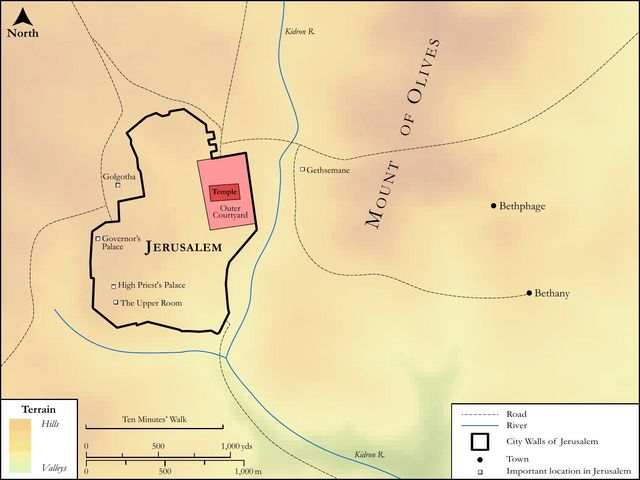
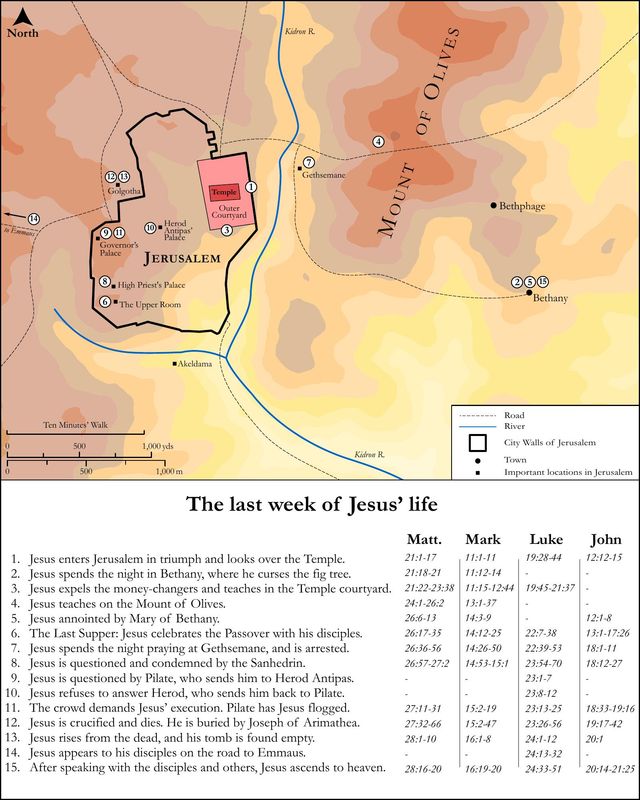
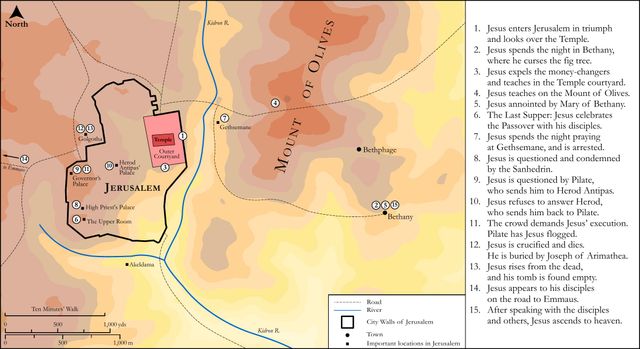
See on the biblical-era map
Study this verse
Historical interpretation
Four Centuries of Reception
10 surviving comments on this verse. Each one is dated, so this reads as a timeline rather than a list.
Select a marker to jump to its quote. Markers stagger vertically where authors wrote within a few decades of each other.
Watch for your life's sake. Let not your lamps be quenched, nor your loins unloosed; but be ye ready, for ye know not the hour in which our Lord cometh. But often shall ye come together, seeking the things which are befitting to your souls: for the whole time of your faith will not profit you, if ye be not made perfect in the last time. For in the last days false prophets and corrupters shall be multiplied, and the sheep shall be turned into wolves, and love shall be turned into hate; for when lawlessness increaseth, they shall hate and persecute and betray one another, and then shall appear the world-deceiver as Son of God, and shall do signs and wonders, and the earth shall be delivered into his hands, and he shall do iniquitous things which have never yet come to pass since the beginning. Then shall the creation of men come into the fire of trial, and many shall be made to stumble and shall perish; but they that endure in their faith shall be saved from under the curse itself. And then shall appear the signs of the truth; first, the sign of an out-spreading in heaven; then the sign of the sound of the trumpet; and the third, the resurrection of the dead; yet not of all, but as it is said: The Lord shall come and all His saints with Him. Then shall the world see the Lord coming upon the clouds of heaven.
The character of the times in which we live is such as to call forth from us even this admonition, that we ought not to be astonished at the heresies (which abound) neither ought their existence to surprise us, for it was foretold that they should come to pass; nor the fact that they subvert the faith of some, for their final cause is, by affording a trial to faith, to give it also the opportunity of being "approved.
And because the questions of the disciples are threefold, they are separated by different times and meanings. That concerning the destruction of the city is first answered, and is then confirmed by truth of doctrine, that no seducer might prevail with the ignorant.
For in the last days false prophets shall be multiplied, and such as corrupt the word; and the sheep shall be changed into wolves, and love into hatred: for through the abounding of iniquity the love of many shall wax cold. For men shall hate, and persecute, and betray one another. And then shall appear the deceiver of the world, the enemy of the truth, the prince of lies, [2 Thessalonians 2:3-12] whom the Lord Jesus "shall destroy with the spirit of His mouth, who takes away the wicked with His lips; and many shall be offended at Him. But they that endure to the end, the same shall be saved. And then shall appear the sign of the Son of man in heaven;" [Isaiah 11:4; Matthew 24:1-51] and afterwards shall be the voice of a trumpet by the archangel; and in that interval shall be the revival of those that were asleep. And then shall the Lord come, and all His saints with Him, with a great concussion above the clouds, with the angels of His power, [Matthew 16:27] in the throne of His kingdom, to condemn the devil, the deceiver of the world, and to render to every one according to his deeds. "Then shall the wicked go away into everlasting punishment, but the righteous shall go into life eternal," [Matthew 25:46] to inherit those things "which eye has not seen, nor ear heard, nor have entered into the heart of man, such things as God has prepared for them that love Him;" [1 Corinthians 2:9] and they shall rejoice in the kingdom of God, which is in Christ Jesus.
Therefore did they come unto Him privately, as it was of such matters they meant to inquire. For they were in travail to know the day of His coming, because of their eager desire to behold that glory, which is the cause of countless blessings. And these two things do they ask him, when shall these things be? that is, the overthrow of the temple; and, what is the sign of thy coming? But Luke saith, the question was one concerning Jerusalem, as though they were supposing that then is His coming. And Mark saith, that neither did all of them ask concerning the end of Jerusalem, but Peter and John, as having greater freedom of speech.
What then saith He? "Take heed that no man deceive you. For many shall come in my name, saying, I am Christ, and shall deceive many. And ye shall hear of wars and rumors of wars. See that ye be not troubled; for all these things must come to pass, but the end is not yet."
For since they felt as being told of vengeance falling on others when hearing of that which was to be brought upon Jerusalem and as though they were to be out of the turmoils, and were dreaming of good things only, and looked for these to befall them quite immediately; for this cause He again foretells to them grievous things, making them earnest, and commanding them on two grounds to watch, so as neither to be seduced by the deceit of them that would beguile them, nor to be overpowered by the violence of ills that should overtake them.
What then saith He? "Take heed that no man deceive you. For many shall come in my name, saying, I am Christ, and shall deceive many. And ye shall hear of wars and rumors of wars. See that ye be not troubled; for all these things must come to pass, but the end is not yet."
For since they felt as being told of vengeance falling on others when hearing of that which was to be brought upon Jerusalem and as though they were to be out of the turmoils, and were dreaming of good things only, and looked for these to befall them quite immediately; for this cause He again foretells to them grievous things, making them earnest, and commanding them on two grounds to watch, so as neither to be seduced by the deceit of them that would beguile them, nor to be overpowered by the violence of ills that should overtake them.
But He answered nothing directly to this question, but first speaks of those other things that are urgent, and which it was needful for them to learn first. For neither concerning Jerusalem straightway, nor of His own second coming, did He speak, but touching the ills that were to meet them at the doors. Wherefore also He makes them earnest in their exertions, by saying, "Take heed that no man deceive you; for many shall come in my name, saying, I am Christ."
Afterwards, when He hath roused them to listen about these things (for, "take heed," saith He, "that no man deceive you"); and having made them energetic, and prepared them to be watchful, and hath spoken first of the false Christs, then He speaks of the ills of Jerusalem, assuring them ever by the things already past, foolish and contentious though they were, of those which were yet to come.
They asked Him in private, because they were great things about which they were going to ask Him. They wished to know the day of His coming, for the vehement desire they had to see His glory.
Luke speaks of one enquiry, that concerning Jerusalem, as though the disciples supposed that Christ's coming should be then, and the end of the world should be when Jerusalem should be destroyed. Whereas Mark does not state them all to have asked concerning the destruction of Jerusalem, but Peter, James, John, and Andrew, as having more bold and free speech with Christ.
His first answer is neither concerning the destruction of Jerusalem, nor concerning His second coming, but concerning the evils which were to be immediately encountered.
They ask Him three things. First, The time of the destruction of Jerusalem, saying, Tell us when shall these things be? Secondly, The time of Christ's coming, saying, And what shall be the sign of Thy coming? Thirdly, The time of the consummation of this world, saying, And of the end of the world?
One of them of whom The speaks was Simon of Samaria, of whom we read in the Acts of the Apostles, that he gave himself out to be the great Power, leaving these things written in his worksa among others, I am the Word of God, I am the Almighty, I am all things of God. The Apostle John also in his Epistle, Ye have heard that Antichrist shall come; even now there are many Antichrists. (1 John 2:18.) I suppose all heresiarchs to be Antichrists, and under the name of Christ to teach those things which are contrary to Christ. No wonder if we see some led away by such teachers, when the Lord has said, And shall deceive many.
(Vers. 3, 4.) But while he was sitting on the Mount of Olives, the disciples came to him privately, saying: Tell us, when will these things be, and what will be the sign of your coming and of the end of the age? And Jesus answered them, saying: See that no one deceives you. He sits on the Mount of Olives, where the true light of knowledge was born, and the disciples come to him privately, who desired to know the mysteries and revelations of the future, and they ask three things: When will Jerusalem be destroyed; when will Christ come; when will the end of the age be.
The Lord continuing His walk arrives at Mount Olivet, having by the way foretold the destruction of the temple to those disciples who had shown and commended the buildings. When they had reached the Mount they came to Him, asking Him further of this.
For Mount Olivet has no unfruitful trees, but olives, which supply light to dispel darkness, which give rest to the weary, health to the sick. And sitting on Mount Olivet over against the temple, the Lord discourses of its destruction, and the destruction of the Jewish nation, that even by His choice of a situation He might show, that abiding still in the Church He condemns the pride of the wicked.
Continue studying Matthew 24:4 across the web’s major study libraries — every link below opens this exact verse, chapter, or book on the destination site.
Read & Compare
 BibleGatewayThis verse in more than 200 translations and 70 languages.
 Bible.comThe YouVersion reader — hundreds of translations, reading plans, and highlights.
 ESV.orgCrossway's official English Standard Version reader.
 NET BibleThe NET translation with 60,000+ translators' notes on every rendering decision.
 STEP BibleTyndale House's free study tool — original text, vocabulary, and scholarly resources.
 BibliaLogos Bible Software's free web reader.
 USCCBThe New American Bible (Revised Edition) with the U.S. bishops' study notes.
Commentaries
 BibleHub CommentariesDozens of classic commentaries on this verse, gathered on one page.
 StudyLightMore than 100 commentary sets — the largest collection on the web.
 BibleRefPlain-English commentary on what this verse means, verse by verse.
 Enduring WordDavid Guzik's free commentary on this chapter, widely used by Bible teachers.
 Bible Study ToolsVerse commentary alongside Greek and Hebrew study aids.
Original Language & Research
- BibleHub InterlinearThe verse word by word — original language, transliteration, and English.
- BibleHub LexiconEvery word's original-language definition and Strong's entry.
 Blue Letter BibleDeep-study tools — Strong's numbers, concordance, and word studies.
 CNTR CollationThe earliest Greek manuscripts of this verse, collated letter by letter.
Sermons, Hymns & Audio


TrulyRandomVerse is not affiliated with these sites and doesn’t control their content. They’re linked because they’re genuinely useful.
Summary
Matthew 24:4 serves as Jesus' foundational warning to His disciples, and by extension to all future believers, regarding the pervasive danger of deception in the period leading up to His return. It establishes the critical need for spiritual discernment and vigilance, setting the tone for the entire Olivet Discourse as a call to steadfastness amidst widespread spiritual error.
Context
ShowHideLiterary Context
This verse immediately follows the disciples' pivotal questions posed in Matthew 24:3. Having just heard Jesus predict the destruction of the Temple, they inquire about the timing of these events, the sign of His coming, and the end of the age. Rather than providing a direct chronological answer, Jesus' very first response is a solemn warning against deception. This strategic placement underscores the primary importance of spiritual discernment as a prerequisite for navigating the complexities of the end times, framing the entire discourse that follows as a guide for vigilance.
Historical & Cultural Context
Jesus delivers this discourse on the Mount of Olives, overlooking Jerusalem and the Temple, a setting laden with prophetic significance for Jewish apocalyptic expectations. The disciples, steeped in Old Testament prophecies concerning the Messiah's coming and the establishment of His kingdom, would have been anticipating a clear, immediate timeline for these events. However, Jesus redirects their focus from chronological curiosity to spiritual preparedness. The cultural landscape of the time also included various messianic claimants and prophetic movements, making the warning against false teachers particularly pertinent for a Jewish audience susceptible to such influences.
Key Themes
ShowHideMatthew 24:4 introduces several crucial themes that permeate the Olivet Discourse and the broader New Testament eschatology. Foremost is the theme of deception, which Jesus reiterates throughout the chapter, warning of false christs and false prophets who will perform great signs and wonders to lead astray even the elect (e.g., Matthew 24:11 and Matthew 24:24). This directly correlates with the theme of vigilance and discernment, as the command to "Take heed" necessitates an active, watchful posture from believers. It also highlights the endurance and perseverance required of those who will remain faithful until the end, as seen in Matthew 24:13. The verse thus establishes a foundational principle: spiritual integrity is paramount in the face of escalating trials and errors.
Exposition and Analysis
ShowHideKey Word Analysis
ShowHideFrom apó (from) and krínō (to judge, decide). This verb means "to conclude for oneself," and by implication, "to respond." In a Hebraic sense, it can also mean "to begin to speak" where an address is expected. Here, Jesus' "answer" is not merely a reply but a decisive, authoritative pronouncement, setting the tone for His subsequent teaching.
A primary verb meaning "to look at" (literally or figuratively), "to perceive," "to regard," or "to beware." It implies an active, intentional observation and caution. It is not a passive reception but an urgent command to be watchful, to see clearly, and to guard against potential dangers.
From plánē (a wandering, error, deceit). This verb means "to cause to roam" or "to lead astray" from safety, truth, or virtue. It signifies a leading into error, delusion, or moral wandering. The implication is that the deception will cause individuals to deviate from the true path of faith and understanding.
Verse Breakdown
ShowHide"¶ And Jesus answered and said unto them,"
This introductory clause firmly places Jesus as the speaker and the disciples as the direct audience. The use of "answered and said" emphasizes the deliberateness and authority of Jesus' forthcoming words, which are a direct response to the disciples' earlier questions about the future.
"Take heed"
This is an imperative command, a direct instruction from Jesus. The Greek blépete (plural imperative of blépō) underscores the collective responsibility of the disciples (and by extension, all believers) to be actively watchful, discerning, and cautious. It is a call to spiritual alertness, implying that a passive stance will leave one vulnerable.
"that no man deceive you."
This is the content of the warning, specifying the danger against which they must take heed. The phrase "no man" (Greek mē tis) indicates that the deception could come from anyone, emphasizing the widespread and insidious nature of the threat. The verb "deceive" (planáō) highlights the potential for being led astray from truth, into error, or away from the correct path. This warning is paramount because spiritual deception undermines faith and leads to apostasy.
Literary Devices
ShowHideMatthew 24:4 employs several potent literary devices. The most prominent is Imperative Mood, seen in the command "Take heed." This grammatical choice conveys urgency and direct instruction, emphasizing the critical importance of the warning. The verse also functions as a Proleptic Warning, foreshadowing the extensive discussion of false prophets, false christs, and various signs of deception that will follow throughout the Olivet Discourse. By placing this warning at the outset, Jesus establishes a Thematic Frame for the entire chapter, signaling that discernment will be a central challenge for believers in the end times. Furthermore, the simplicity and directness of the language create a sense of Aphorism, a concise statement of principle that is easily remembered and profoundly significant.
Theological and Thematic Connections
ShowHideJesus' initial warning in Matthew 24:4 establishes a foundational theological truth: the spiritual journey is fraught with peril, particularly the danger of deception. This highlights the ongoing spiritual warfare between truth and error, light and darkness. The emphasis on individual and corporate vigilance underscores the believer's responsibility to actively guard their faith and understanding against misleading influences. It points to the necessity of a robust theological framework and a deep grounding in God's Word as the primary defense against the insidious nature of spiritual falsehood. This warning is not merely about avoiding specific false teachings but cultivating a posture of discernment that consistently evaluates all claims against the revealed truth of God.
Reflection and Application
ShowHideMatthew 24:4 is a timeless and profoundly relevant warning for believers in every generation, especially as the world becomes increasingly complex and saturated with diverse ideologies. Jesus' command to "Take heed" is an urgent call to proactive spiritual discipline. It compels us to cultivate a posture of constant vigilance, not out of fear, but out of a desire to remain steadfast in truth. This means diligently studying Scripture to build a robust framework of biblical truth, which serves as the ultimate standard for evaluating all claims. It also necessitates a reliance on the Holy Spirit, who guides us into all truth and empowers us with discernment. In an age where information, misinformation, and disinformation proliferate, this verse reminds us that our spiritual well-being depends on our ability to distinguish between genuine revelation and deceptive counterfeits, safeguarding our hearts and minds against anything that would lead us astray from Christ.
Questions for Reflection
ShowHideFAQ
ShowHideWhy is Jesus' first warning about deception, rather than other signs of the end times?
ShowHideJesus prioritizes the warning against deception because it is the most insidious and spiritually damaging threat. Unlike natural disasters or wars, which are external signs, deception targets the mind and heart, undermining faith and leading people away from truth. If believers are deceived, they will misinterpret other signs, fall prey to false Christs or prophets, and ultimately abandon their faith. By placing this warning first, Jesus emphasizes that spiritual discernment is the foundational prerequisite for navigating the complexities of the end times and remaining faithful to Him. It underscores that the greatest danger is not external tribulation, but internal spiritual error.
Christ-Centered Fulfillment
ShowHideMatthew 24:4, with its urgent call to guard against deception, finds its ultimate Christ-centered fulfillment in Jesus Himself as the embodiment of Truth and the sole source of genuine revelation. He is not merely a prophet warning about deception, but the very Way, the Truth, and the Life, making Him the absolute standard against which all claims of truth must be measured. In a world full of wandering stars and misleading voices, Jesus is the steadfast light that guides His people. He is the Good Shepherd whose sheep know His voice and will not follow a stranger (John 10:27-28). Therefore, the ultimate defense against deception is not merely intellectual vigilance, but a deep, abiding relationship with Christ, for in Him "are hid all the treasures of wisdom and knowledge" (Colossians 2:3). Any teaching or spirit that leads away from His person, His finished work, or His authoritative Word is, by definition, a deception to be guarded against, for He is the truth that sets us free (John 8:32).