


Matthew 12:39
Bible text: King James Version (1769 Blayney text) · Public domain
Bible text: King James Version with Strong's numbers · Public domain
Bible text: Berean Standard Bible · Public domain
Bible text: American Standard Version (1901) · Public domain
Bible text: World English Bible, Messianic edition · Public domain
Bible text: Geneva Bible (1599) · Public domain
Bible text: Young's Literal Translation · Public domain
- ὉHo<the>G3588T-NSMDefinite article Nominative Singular Masculine
- δὲdeAndG1161CONJConjunction
- ἀποκριθεὶςapokritheisansweringG611V-AOP-NSMVerb Aorist Passive Deponent Participle Nominative Singular Masculine
- εἶπενeipenHe saidG2036V-2AAI-3SVerb 2nd Aorist Active Indicative 3rd Singular
- αὐτοῖς·autoisto themG846P-DPMPersonal pronoun Dative Plural Masculine
- γενεὰgeneaA generationG1074N-NSFNoun Nominative Singular Feminine
- πονηρὰponēraevilG4190A-NSFAdjective Nominative Singular Feminine
- καὶkaiandG2532CONJConjunction
- μοιχαλὶςmoichalisadulterousG3428A-NSFAdjective Nominative Singular Feminine
- σημεῖονsēmeiona signG4592N-ASNNoun Accusative Singular Neuter
- ἐπιζητεῖ·epizēteiseeks forG1934V-PAI-3SVerb Present Active Indicative 3rd Singular
- καὶkaiandG2532CONJConjunction
- σημεῖονsēmeiona signG4592N-NSNNoun Nominative Singular Neuter
- οὐounotG3756PRT-NNegative Particle Negative
- δοθήσεταιdothēsetaiwill be givenG1325V-FPI-3SVerb Future Passive Indicative 3rd Singular
- αὐτῇautēato itG846P-DSFPersonal pronoun Dative Singular Feminine
- εἰeionlyG1487CONDConjunction
- μὴmēexceptG3361PRT-NNegative Particle Negative
- τὸtotheG3588T-NSNDefinite article Nominative Singular Neuter
- σημεῖονsēmeionsignG4592N-NSNNoun Nominative Singular Neuter
- ἸωνᾶIōnaof JonahG2495N-GSM-PNoun Genitive Singular Masculine Individual
- τοῦtoutheG3588T-GSMDefinite article Genitive Singular Masculine
- προφήτουprophētouprophetG4396N-GSMNoun Genitive Singular Masculine
English is a literal word-by-word gloss of the Greek, not the KJV's wording. Why?
This is the original text the KJV's translators worked from — each Greek word with its own literal English meaning in this verse, prepared by scholars at Tyndale House, Cambridge. The KJV translates whole sentences, not word by word, so its wording differs: one Greek word can become several English words, and the KJV may choose “charity” where the gloss reads “love”. Both are faithful — they answer different questions. For the KJV's own rendering, switch to the KJV text.
Details
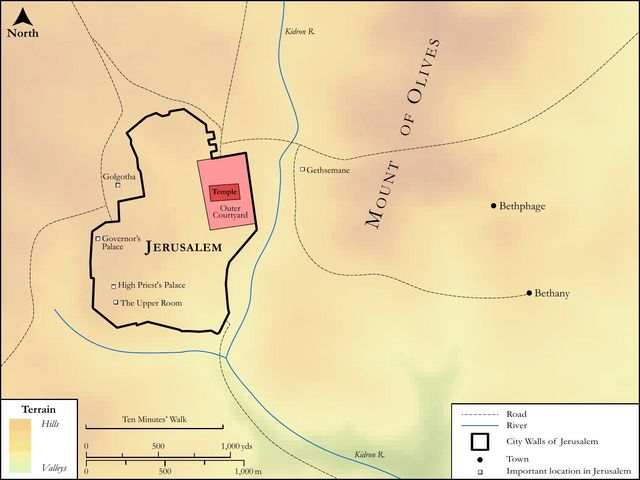
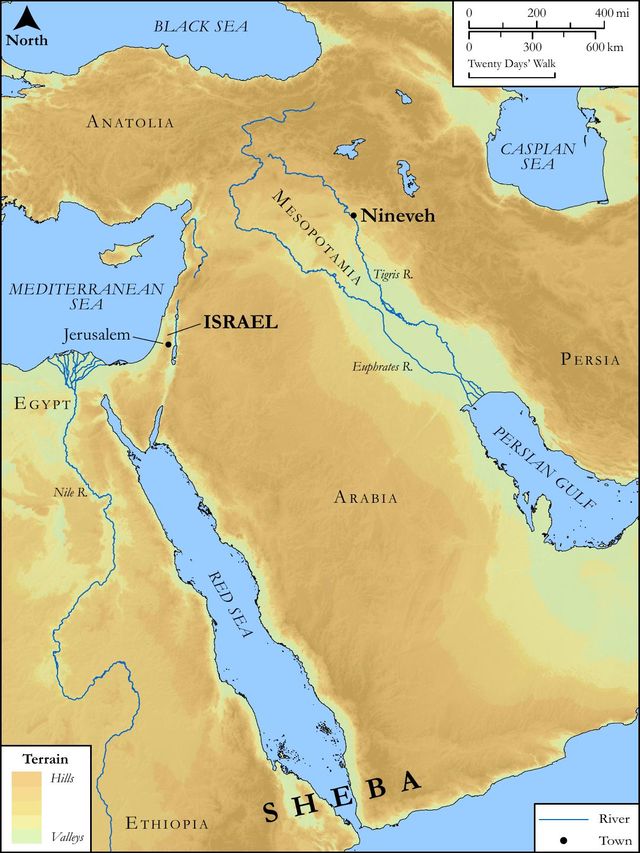
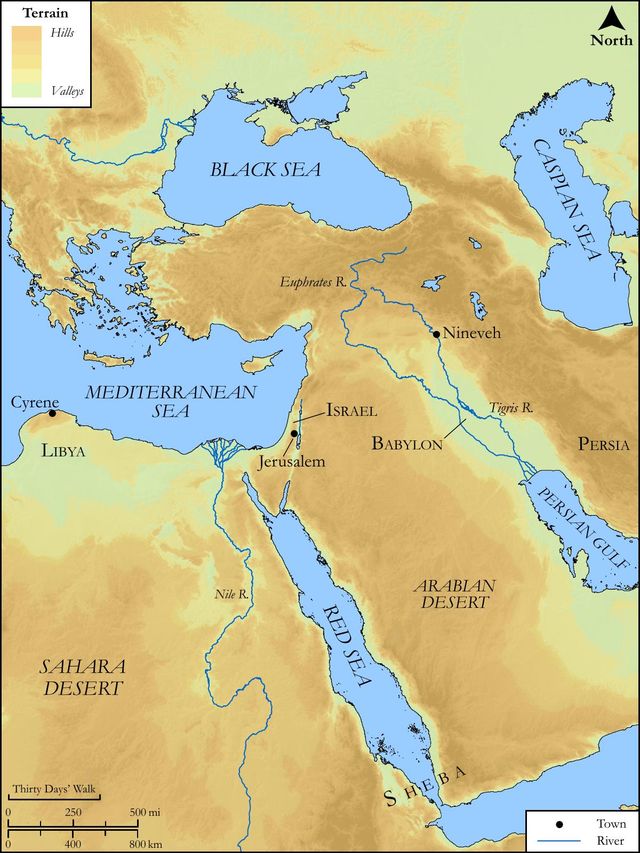
See on the biblical-era maps
Study this verse
Public-domain commentary
Matthew Henry
From his Commentary on the Whole Bible. Henry comments on passages, not single verses — this entry covers Matthew 12:38–45. His four-level outline is real structure in the source text, so it is rendered as structure.
It is probable that these Pharisees with whom Christ is here in discourse were not the same that cavilled at him (Mat 12:24), and would not credit the signs he gave; but another set of them, who saw that there was no reason to discredit them, but would not content themselves with the signs he gave, nor admit the evidence of them, unless he would give them such further proof as they should demand. Here is,
I.Their address to him, Mat 12:38.
They compliment him with the title of Master, pretending respect for him, when they intended to abuse him; all are not indeed Christ's servants, who call him Master. Their request is, We would see a sign from thee. It was highly reasonable that they should see a sign, that he should by miracles prove his divine mission: see Exo 4:8, Exo 4:9. He came to take down a model of religion that was set up by miracles, and therefore it was requisite he should produce the same credentials; but it was highly unreasonable to demand a sign now, when he had given so many signs already, that did abundantly prove him sent of God. Note, It is natural to proud men to prescribe to God, and then to make that an excuse for not subscribing to him; but a man's offence will never be his defence.
II.His answer to this address, this insolent demand,
1.He condemns the demand, as the language of an evil and adulterous generation, Mat 12:39. He fastens the charge, not only on the scribes and Pharisees, but the whole nation of the Jews; they were all like their leaders, a seed and succession of evil-doers: they were an evil generation indeed, that not only hardened themselves against the conviction of Christ's miracles, but set themselves to abuse him, and put contempt on his miracles. They were an adulterous generation,
(1.)As an adulterous brood; so miserably degenerated from the faith and obedience of their ancestors, that Abraham and Israel acknowledged them not. See Isa 57:3. Or,
(2.)As an adulterous wife; they departed from that God, to whom by covenant they had been espoused: they were not guilty of the whoredom of idolatry, as they had been before the captivity, but they were guilty of infidelity, and all iniquity, and that is whoredom too: they did not look after gods of their own making, but they looked for signs of their own devising; and that was adultery.
2.He refuses to give them any other sign than he has already given them, but that of the prophet Jonas. Note, Though Christ is always ready to hear and answer holy desires and prayers, yet he will not gratify corrupt lusts and humours. Those who ask amiss, ask, and have not. Signs were granted to those who desired them for the confirmation of their faith, as to Abraham and Gideon; but were denied to those who demanded them for the excuse of their unbelief.
Justly might Christ have said, They shall never see another miracle: but see his wonderful goodness; (1.) They shall have the same signs still repeated, for their further benefit, and more abundant conviction. (2.) They shall have one sign of a different kind from all these, and that is, the resurrection of Christ from the dead by his own power, called here the sign of the prophet Jonas this was yet reserved for their conviction, and was intended to be the great proof of Christ's being the Messiah; for by that he was declared to be the Son of God with power, Rom 1:4. That was such a sign as surpassed all the rest, completed and crowned them. "If they will not believe the former signs, they will believe this (Exo 4:9), and if this will not convince them, nothing will." And yet the unbelief of the Jews found out an evasion to shift off that too, by saying, His disciples came and stole him away; for none are so incurably blind as those who are resolved they will not see.
Now this sign of the prophet Jonas he further explains here; (Mat 12:40) As Jonas was three days and three nights in the whale's belly, and then came out again safe and well, thus Christ shall be so long in the grave, and then shall rise again. [1.] The grave was to Christ as the belly of the fish was to Jonah; thither he was thrown, as a Ransom for lives ready to be lost in a storm; there he lay, as in the belly of hell (Jon 2:2), and seemed to be cast out of God's sight. [2.] He continued in the grave just as long as Jonah continued in the fish's belly, three days and three nights; not three whole days and nights: it is probable, Jonah did not lie so long in the whale's belly, but part of three natural days (nuchthēmerai, the Greeks called them); he was buried in the afternoon of the sixth day of the week, and rose again in the morning of the first day; it is a manner of speech very usual; see Kg1 20:29; Est 4:16; Est 5:1; Luk 2:21. So long Jonah was a prisoner for his own sins, so long Christ was a Prisoner for ours. [3.] As Jonah in the whale's belly comforted himself with an assurance that yet he should look again toward God's holy temple (Jon 2:4), so Christ when he lay in the grave, is expressly said to rest in hope, as one assured he should not see corruption, Act 2:26, Act 2:27. [4.] As Jonah on the third day was discharged from his prison, and came to the land of the living again, from the congregation of the dead (for dead things are said to be formed from under the waters, Job 26:5), so Christ on the third day should return to life, and rise out of his grave to send abroad the gospel to the Gentiles.
3.Christ takes this occasion to represent the sad character and condition of that generation in which he lived, a generation that would not be reformed, and therefore could not but be ruined; and he gives them their character, as it would stand in the day of judgment, under the full discoveries and final sentences of that day. Persons and things now appear under false colours; characters and conditions are here changeable: if therefore we would make a right estimate, we must take our measures from the last judgment; things are really, what they are eternally.
Now Christ represents the people of the Jews,
(1.)As a generation that would be condemned by the men of Nineveh, whose repenting at the preaching of Jonas would rise up in judgment against them, Mat 12:41. Christ's resurrection will be the sign of the prophet Jonas to them: but it will not have so happy an effect upon them, as that of Jonas had upon the Ninevites, for they were by it brought to such a repentance as prevented their ruin; but the Jews will be hardened in an unbelief that shall hasten their ruin; and in the day of judgment, the repentance of the Ninevites will be mentioned as an aggravation of the sin, and consequently the condemnation of those to whom Christ preached then, and of those to whom Christ is preached now; for this reason, because Christ is greater than Jonah.
[1.]Jonah was but a man, subject to like passions, to like sinful passions, as we are; but Christ is the Son of God.
[2.]Jonah was a stranger in Nineveh, he came among the strangers that were prejudiced against his country; but Christ came to his own, when he preached to the Jews, and much more when he is preached among professing Christians, that are called by his name.
[3.]Jonah preached but one short sermon, and that with no great solemnity, but as he passed along the streets; Christ renews his calls, sat and taught, taught in the synagogues.
[4.]Jonah preached nothing but wrath and ruin within forty days, gave no instructions, directions, or encouragements, to repent: but Christ, besides the warning given us of our danger, has shown wherein we must repent, and assured us of acceptance upon our repentance, because the kingdom of heaven is at hand.
[5.]Jonah wrought no miracle to confirm his doctrine, showed no good will to the Ninevites; but Christ wrought abundance of miracles, and all miracles of mercy: yet the Ninevites repented at the preaching of Jonas, but the Jews were not wrought upon by Christ's preaching. Note, The goodness of some, who have less helps and advantages for their souls, will aggravate the badness of those who have much greater. Those who by the twilight discover the things that belong to their peace, will shame those who grope at noon-day.
(2.)As a generation that would be condemned by the queen of the south, the queen of Sheba, Mat 12:42. The Ninevites would shame them for not repenting, the queen of Sheba for not believing in Christ. She came from a far country to hear the wisdom of Solomon; yet people will not be persuaded to come and hear the wisdom of Christ, though he is in every thing greater than Solomon.
[1.]The queen of Sheba had no invitation to come to Solomon, nor any promise of being welcome; but we are invited to Christ, to sit at his feet and hear his word.
[2.]Solomon was but a wise man, but Christ is wisdom itself, in whom are hid all the treasures of wisdom.
[3.]The queen of Sheba had many difficulties to break through; she was a woman, unfit for travel, the journey long and perilous; she was a queen, and what would become of her own country in her absence? We have no such cares to hinder us.
[4.]She could not be sure that it would be worth her while to go so far on this errand; fame uses to flatter men, and perhaps she might have in her own country or court wise men sufficient to instruct her; yet, having heard of Solomon's fame, she would see him; but we come not to Christ upon such uncertainties.
[5.]She came from the uttermost parts of the earth, but we have Christ among us, and his word nigh us: Behold he stands at the door, and knocks.
[6.]It should seem the wisdom the queen of Sheba came for was only philosophy and politics; but the wisdom that is to be had with Christ is wisdom to salvation.
[7.]She could only hear Solomon's wisdom; he could not give her wisdom: but Christ will give wisdom to those who come to him; nay, he will himself be made of God to them Wisdom; so that, upon all these accounts, if we do not hear the wisdom of Christ, the forwardness of the queen of Sheba to come and hear the wisdom of Solomon will rise up in judgment against us and condemn us; for Jesus Christ is greater than Solomon.
(3.)As a generation that were resolved to continue in the possession, and under the power, of Satan, notwithstanding all the methods that were used to dispossess him and rescue them. They are compared to one out of whom the devil is gone, but returns with double force, Mat 12:43-45. The devil is here called the unclean spirit, for he has lost all his purity, and delights in and promotes all manner of impurity among men. Now,
[1.]The parable represents his possessing men's bodies: Christ having lately cast out a devil, and they having said he had a devil, gave occasion to show how much they were under the power of Satan. This is a further proof that Christ did not cast out devils by compact with the devil, for then he would soon have returned again; but Christ's ejectment of him was final, and such as barred a re-entry: we find him charging the evil spirit to go out, and enter no more, Mar 9:25. Probably the devil was wont sometimes thus to sport with those he had possession of; he would go out, and then return again with more fury; hence the lucid intervals of those in that condition were commonly followed with the more violent fits. When the devil is gone out, he is uneasy, for he sleeps not except he have done mischief (Pro 4:16); he walks in dry places, like one that is very melancholy; he seeks rest but finds none, till he returns again. When Christ cast the legion out of the man, they begged leave to enter into the swine, where they went not long in dry places, but into the lake presently.
[2.]The application of the parable makes it to represent the case of the body of the Jewish church and nation: So shall it be with this wicked generation, that now resist, and will finally reject, the gospel of Christ. The devil, who by the labours of Christ and his disciples had been cast out of many of the Jews, sought for rest among the heathen, from whose persons and temples the Christians would every where expel him: so Dr. Whitby: or finding no where else in the heathen world such pleasant, desirable habitations, to his satisfaction, as here in the heart of the Jews: so Dr. Hammond: he shall therefore enter again into them, for Christ had not found admission among them, and they, by their prodigious wickedness and obstinate unbelief, were still more ready than ever to receive him; and then he shall take a durable possession here, and the state of this people is likely to be more desperately damnable (so Dr. Hammond) than it was before Christ came among them, or would have been if Satan had never been cast out.
The body of that nation is here represented, First, As an apostate people. After the captivity in Babylon, they began to reform, left their idols, and appeared with some face of religion; but they soon corrupted themselves again: though they never relapsed into idolatry, they fell into all manner of impiety and profaneness, grew worse and worse, and added to all the rest of their wickedness a wilful contempt of, and opposition to, Christ and his gospel. Secondly, As a people marked for ruin. A new commission was passing the seals against that hypocritical nation, the people of God's wrath (like that, Isa 10:6), and their destruction by the Romans was likely to be greater than any other, as their sins had been more flagrant: then it was that wrath came upon them to the uttermost, Th1 2:15, Th1 2:16. Let this be a warning to all nations and churches, to take heed of leaving their first love, of letting fall a good work of reformation begun among them, and returning to that wickedness which they seemed to have forsaken; for the last state of such will be worse than the first.
Historical interpretation
Six Centuries of Reception
7 surviving comments on this verse. Each one is dated, so this reads as a timeline rather than a list.
Select a marker to jump to its quote. Markers stagger vertically where authors wrote within a few decades of each other.
That generation was evil, on account of the influence that had come to be in it from the evil one. It was adulterous because it had left her natural husband—the word or law of truth—and had come to be wedded to a lie. The law which is “in the members” of our flesh wars against “the law of the mind.” It is an adulterer of the soul. Every opposing power, when it has intercourse with the soul unfaithfully—the soul that has as its bridegroom the Word of God—causes the soul to commit adultery.
(Hom. xliii.) Because the Lord had so oft repressed the shameless tongue of the Pharisees by His sayings, they now turn to His works, whereat the Evangelist wondering, says, Then certain of the Scribes and Pharisees answered, saying, Master, we would see a sign of thee; and that at a time when they should have been moved, when they should have wondered, and been dumb with astonishment; yet even at such time they desist not from their malice. For they say, We would see a sign of thee, that they may take Him as in a snare.
But their words are full of hypocrisy and irony. But now they were railing against Him, saying that He had a dæmon; now they fawn upon Him, calling Him, Master. Wherefore the Lord rebukes them severely; He answered and said unto them, An evil and adulterous generation seeketh after a sign. When they railed on Him, He had answered them mildly; now they approached Him with smooth and deceitful words, He rebukes them sharply; showing that He was above either affection, and was neither moved to anger by evil speaking, nor was to be gained by flattery. What He says is this; What wonder that ye do thus to Me who am unknown to you, when you have done the same to the Father, of whom ye have had such large knowledge, in that, despising Him ye went after dæmons? He calls them an evil generation, because they have ever been ungrateful to their benefactors, and were made worse when they received benefits, which is the extreme of wickedness.
Which also proves Him to be equal to the Father, if not to believe in Him makes them adulterous.
For the signs He wrought were not in order to move them, for He knew that they were hard as stone, but for the profit of others. Or because they had not received it when He had given them a sign such as they now desired. And a sign was given them, when by their own punishment they learned His power. This He alludes to when He says, No sign shall he given it. As much as to say; I have shown you many mercies; yet none of these has brought you to honour My power, which you will then know when you shall behold your city thrown down upon the ground in punishment. In the mean time He brings in a saying concerning the Resurrection which they should after understand by those things that they should suffer; saying, Except the sign of the Prophet Jonas. For verily His Cross would not have been believed, unless it had had signs to testify to it. But if that were not believed, truly the Resurrection would not have been believed. For this reason also He calls this a sign, and brings forward a figure thereof, that the verity itself may be believed. It follows, As Jonas was three days and three nights in the belly of the whale,
He said not openly that He should rise again, because they would have derided him, but hints it distantly that even they might believe that He foreknew it. He said not in the earth, but in the heart of the earth, therein declaring His tomb, and that none might suspect that there was only the semblance of death. Therefore also He spake of three days, that it should be believed that He was dead. But the sign itself proves the truth of it; for Jonas was in the whale's belly not in figure but in deed; and surely the sign did not happen in very deed, if the thing signified happened only in figure. Wherefore it is manifest that they are children of the Devil who follow Marcion asserting that the passion of Christ was only a phantasy. And that He should suffer for them also, though they would not profit by it, is shown by that which He speaks, that to this generation should be given the sign of Jonas the Prophet.
This is the sign which before He had promised to give them when they asked it, saying, "An evil and adulterous generation seeketh after a sign, and there shall no sign be given to it, but the sign of the prophet Jonas;" meaning His cross, and His death, His burial, and His resurrection. And again, declaring in another way the virtue of the cross, He said, "When ye have lifted up the Son of Man, then shall ye know that I am He." And what He saith is to this purport: "When ye have crucified me, and think ye have overcome me, then, above all, shall ye know my might."
For after the crucifixion, the city was destroyed, and the Jewish state came to an end, they fell away from their polity and their freedom, the gospel flourished, the word was spread abroad to the ends of the world; both sea and land, both the inhabited earth and the desert perpetually proclaim its power.
Could then anything be more foolish than these men (not more impious only), who after so many miracles, as though none had been wrought, say, "We would see a sign from Thee?" With what intent then did they so speak? That they might lay hold of Him again. For since by His words He had stopped their mouths, once and twice and often, and had checked their shameless tongue, they come to His works again. At which also the evangelist marvelling again, said, "Then certain of the scribes answered Him, asking a sign."
"Then," when? When they ought to be stooping before Him, to admire, to be amazed and give way, "then" they desist not from their wickedness.
And see their words too, teeming with flattery and dissimulation. For they thought to draw Him towards them in that way. And now they insult, now they flatter Him; now calling Him a demoniac, now again "Master," both out of an evil mind, how contrary soever the words they speak.
Wherefore also He rebukes them severely. And when they were questioning Him roughly and insulting Him, He reasoned with them gently; when they were flattering; reproachfully, and with great severity; implying that He is superior to either passion, and is neither at the one time moved to anger, nor at the other softened by flattery. And see His reproach, that it is not merely hard words, but contains a demonstration of their wickedness. For what saith He?
"An evil and adulterous generation seeketh after a sign." Now what He saith is to this effect: What marvel if ye behave so to me who have been hitherto unknown to you when even to the Father, of whom ye have had so much experience, ye have done the very same? forsaking Him, ye have run unto the devils, drawing to yourselves wicked lovers. With this Ezekiel too was continually upbraiding them.
Now by these sayings He signified Himself to be of one accord with His Father, and them to be doing nothing new; He was also unfolding their secrets, how with hypocrisy and as enemies they were making their demand. Therefore He called them "an evil generation," because they have been always ungrateful towards their benefactors; because upon favors they become worse, which belongs to extreme wickedness.
And He called it "adulterous," declaring both their former and their present unbelief; whereby He implies Himself again to be equal to the Father, if at least the not believing Him makes it "adulterous."
Then, after His reproach, what saith He? "There shall no sign be given to it, but the sign of Jonas the prophet." Now is He striking the first note of the doctrine of His resurrection, and confirming it by the type.
What then? one may say; was no sign given it? None was given to it on asking. For not to bring in them did He work His signs (for He knew them to be hardened), but in order to amend others. Either then this may be said, or that they were not to receive such a sign as that was. For a sign did befall them, when by their own punishment they learnt His power. Here then He speaks as threatening, and with this very meaning obscurely conveyed: as if He said, innumerable benefits have I showed forth, none of these hath drawn you to me, neither were ye willing to adore my power. Ye shall know therefore my might by the contrary tokens, when ye shall see your city cast down to the ground, the walls also dismantled, the temple become a ruin; when ye shall be cast out both from your former citizenship and freedom, and shall again go about everywhere, houseless and in exile. (For all these things came to pass after the cross.) These things therefore shall be to you for great signs. And indeed it is an exceeding great sign, that their ills remain unchanged; that although ten thousand have attempted it, no one hath been able to reverse the judgment once gone forth against them.
All this however He saith not, but leaves it to after time to make it clear to them, but for the present He is making trial of the doctrine of His resurrection, which they were to come to know by the things which they should afterwards suffer.
They require a sign of Him, as though what they had seen were not signs; and in another Evangelist what they required is more fully expressed, We would see of thee a sign from heaven. Either they would have fire from heaven as Elias did; or after the example of Samuel they would that in summer-time, contrary to the nature of the climate, thunder should be heard, lightnings gleam, and rain descend; as though they could not have spoken falsely even against such miracles, and said that they befel by reason of divers hidden motions in the air. For if thou cavillest against what thou not only beholdest with thine eyes, but feelest with thine hand, and reapest the benefit of, what wilt thou do in those things which come down from heaven. You might make answer, that in Egypt the magi also had given many signs from heaven.
Excellently is that said, and adulterous, seeing she has put away her husband, and, according to Ezekiel, has joined herself to many lovers.
Not that He remained three whole days and three nights in hell, but that this be understood to imply a part of the preparation day, and of the Lord's day, and the whole sabbath day.
(Verse 39.) And he answered and said to them: An evil and adulterous generation. Admirably said adulterous: because she had dismissed her husband, and according to Ezekiel, had joined herself to many lovers (Ezek. 16).
Then He begins to answer them, giving them a sign not from heaven, which they were unworthy to see, but giving it them from the deep beneath. But to His own disciples He gave a sign from heaven, to whom He showed the glory of His blessed eternity both in a figure on the mount, and after in verity when He was taken up into heaven. Wherefore it follows, And there shall no sign he given it, but the sign of the Prophet Jonas.
He shows that the Jews were as criminal as the Ninevites, and that unless they repented they would be destroyed. But like as punishment was denounced against the Ninevites, and at the same time a remedy was set before them, so neither should the Jews despair of pardon, if at least after Christ's resurrection they should do penitence. For Jonas, that is The Dove, or The mourner, is a sign of Him on whom the Holy Spirit descended in the form of a Dove, and who bare our sorrows. (Is. 53:4) The fish which swallowed Jonas in the sea, shows forth the death which Christ suffered in the world. Three days and nights was the one in the whale's belly, the other in the tomb; the one was cast up on dry laud, the other arose in glory.
Continue studying Matthew 12:39 across the web’s major study libraries — every link below opens this exact verse, chapter, or book on the destination site.
Read & Compare
 BibleGatewayThis verse in more than 200 translations and 70 languages.
 Bible.comThe YouVersion reader — hundreds of translations, reading plans, and highlights.
 ESV.orgCrossway's official English Standard Version reader.
 NET BibleThe NET translation with 60,000+ translators' notes on every rendering decision.
 STEP BibleTyndale House's free study tool — original text, vocabulary, and scholarly resources.
 BibliaLogos Bible Software's free web reader.
 USCCBThe New American Bible (Revised Edition) with the U.S. bishops' study notes.
Commentaries
 BibleHub CommentariesDozens of classic commentaries on this verse, gathered on one page.
 StudyLightMore than 100 commentary sets — the largest collection on the web.
 BibleRefPlain-English commentary on what this verse means, verse by verse.
 Enduring WordDavid Guzik's free commentary on this chapter, widely used by Bible teachers.
 Bible Study ToolsVerse commentary alongside Greek and Hebrew study aids.
Original Language & Research
- BibleHub InterlinearThe verse word by word — original language, transliteration, and English.
- BibleHub LexiconEvery word's original-language definition and Strong's entry.
 Blue Letter BibleDeep-study tools — Strong's numbers, concordance, and word studies.
 CNTR CollationThe earliest Greek manuscripts of this verse, collated letter by letter.
Sermons, Hymns & Audio


TrulyRandomVerse is not affiliated with these sites and doesn’t control their content. They’re linked because they’re genuinely useful.
Summary
In Matthew 12:39, Jesus sternly rebukes the scribes and Pharisees who demand a miraculous sign as proof of His authority, labeling them an "evil and adulterous generation." He declares that no sign will be given to them except "the sign of the prophet Jonas," a profound foreshadowing of His own death, burial, and resurrection, which would serve as the ultimate and undeniable testament to His divine identity and mission.
Context
ShowHideLiterary Context
This verse is situated within a broader narrative in Matthew 12 where Jesus consistently demonstrates His divine authority through miracles, teachings, and confrontations with religious leaders. Immediately preceding this statement, in Matthew 12:38, "certain of the scribes and of the Pharisees" approach Jesus, demanding to see a "sign from thee." This demand comes after Jesus has healed a demon-possessed man who was blind and mute, leading the crowds to wonder if He was the Son of David (Matthew 12:22-23). Their request for a sign, therefore, is not born of genuine inquiry but of hardened skepticism and a desire to trap Him, despite overwhelming evidence. Jesus's response in Matthew 12:39 and the subsequent explanation in Matthew 12:40 directly address their unbelief and point to the definitive sign of His resurrection.
Historical & Cultural Context
The Jewish religious leaders of Jesus's day, particularly the Pharisees and scribes, often sought signs from God as validation of a prophet's claims or the Messiah's identity. This practice was rooted in Old Testament precedents where God often confirmed His messengers through miraculous displays (e.g., Moses and the plagues in Exodus 7-12, Elijah and the fire on Mount Carmel in 1 Kings 18). However, their demand here was not for genuine confirmation but for a sign on their terms, specifically a spectacular heavenly display, perhaps to fit their preconceived notions of the Messiah's arrival. Jesus's labeling of them as "adulterous" carries significant Old Testament weight, where Israel's unfaithfulness to God through idolatry and disobedience was often depicted as spiritual adultery (e.g., Hosea 1-3, Jeremiah 3:6-10). This implies that their demand for a sign stemmed from a deeper spiritual disloyalty and a refusal to recognize God's work already present among them.
Key Themes
ShowHideThis verse contributes to several crucial themes within Matthew's Gospel and broader biblical theology. Firstly, it highlights the theme of spiritual blindness and hardened hearts, demonstrating how even abundant evidence of God's power can be rejected by those unwilling to believe. The "evil and adulterous generation" signifies a profound spiritual unfaithfulness, akin to Israel's historical pattern of covenant breaking, which prevents them from discerning God's truth. Secondly, it underscores the nature of true faith, which does not demand signs as a prerequisite but responds to God's revealed truth with humble trust. Jesus's refusal to grant their specific demand emphasizes that faith is not coerced by spectacle. Thirdly, the verse introduces the ultimate sign of Christ's resurrection, foreshadowing the central event of Christian faith. By pointing to "the sign of the prophet Jonas," Jesus redirects their focus from immediate, superficial signs to the profound, redemptive act that would definitively prove His messianic claims and divine authority, as further explained in Matthew 12:40. Finally, it touches upon the theme of divine judgment on unbelief, as Jesus's refusal to cater to their demands serves as a pronouncement of their spiritual condition and the consequences of their persistent rejection of Him.
Exposition and Analysis
ShowHideKey Word Analysis
ShowHideThis word describes something inherently bad, morally corrupt, or wicked. It refers to the internal disposition and character of the generation, indicating a deep-seated depravity that manifests in their actions and demands. It suggests a harmful influence, distinguishing it from mere badness and pointing to active malevolence or culpability in their spiritual state.
While literally referring to physical infidelity, in this context, it carries a profound spiritual meaning. It signifies unfaithfulness to God, depicting the generation's breach of their covenant relationship with Him. This echoes Old Testament prophetic language where Israel's idolatry and turning away from God were consistently portrayed as spiritual adultery, highlighting a betrayal of their sacred vows to the Lord.
This term refers not merely to a chronological period but to the people living within that period, characterized by a shared disposition or spiritual state. Here, it denotes the contemporary Jewish people, particularly their religious leadership, who collectively exhibited the "evil and adulterous" qualities Jesus describes. It emphasizes a collective spiritual condition rather than just individual actions.
Verse Breakdown
ShowHide"But he answered and said unto them"
This introductory clause sets the scene for Jesus's direct response to the scribes and Pharisees' demand for a sign. It highlights His authoritative posture and the intentionality of His forthcoming rebuke.
"An evil and adulterous generation seeketh after a sign;"
This is Jesus's scathing indictment of His interlocutors. He exposes their spiritual depravity ("evil") and their profound unfaithfulness to God ("adulterous"), which underlies their demand for a sign. Their "seeking" is not a humble search for truth but a demanding, craving for a spectacle on their own terms, indicative of their unbelief despite the many signs already displayed.
"and there shall no sign be given to it, but the sign of the prophet Jonas:"
This declares Jesus's refusal to cater to their demands for a sign on their terms. He emphatically states that no other sign will be given to this particular generation, except for one specific, future sign: "the sign of the prophet Jonas." This cryptic statement serves as a powerful prophecy, redirecting their attention from the present miracles to the ultimate, definitive sign of His death, burial, and resurrection, which would parallel Jonah's experience in the belly of the great fish.
Literary Devices
ShowHideMatthew 12:39 is rich in literary devices that amplify its theological weight. The most prominent is Metaphor, as Jesus labels the generation "adulterous." This is not a literal accusation of marital infidelity but a powerful spiritual metaphor for their unfaithfulness to God, echoing Old Testament prophetic language where Israel's idolatry was likened to a wife betraying her husband (e.g., Ezekiel 16). This metaphor underscores the severity of their spiritual condition and their breach of covenant. Symbolism is also central, with "the sign of the prophet Jonas" serving as a profound symbol of Jesus's impending death, burial, and resurrection. Jonah's three days and nights in the fish's belly (Jonah 1:17) become a prefigurement, a type, of Christ's time in the tomb. There is also a strong element of Irony in Jesus's response; the very people demanding a sign are told they will receive one, but it will be a sign they ultimately reject—the resurrection—which will be the definitive proof of His identity, yet it will lead to their condemnation rather than their belief. This also functions as Foreshadowing, pointing directly to the pivotal event of the Gospel narrative.
Theological and Thematic Connections
ShowHideThe theological implications of Matthew 12:39 are profound, revealing God's response to hardened unbelief and the nature of true divine revelation. Jesus's refusal to provide a sign on demand underscores that faith is not coerced by spectacle but is a response to God's self-revelation. The "evil and adulterous generation" highlights the spiritual condition of those who, despite witnessing God's power, remain unfaithful to His covenant and seek to dictate the terms of His manifestation. The ultimate sign, the resurrection, is presented as the definitive proof, not for those who demand it out of unbelief, but for all who would truly seek God. This passage asserts that the most significant divine intervention is not a fleeting miracle but the redemptive work of Christ, culminating in His triumph over death.
Reflection and Application
ShowHideMatthew 12:39 serves as a powerful mirror for contemporary faith. It challenges us to examine the posture of our hearts: do we genuinely seek God, or do we demand specific proofs and experiences before we commit to Him? Jesus's rebuke of the "evil and adulterous generation" reminds us that true faith is not about dictating terms to God or requiring a continuous stream of spectacular signs. Instead, it is about humbly responding to the revelation He has already provided. For believers today, the ultimate sign has already been given—the resurrection of Jesus Christ, which stands as the cornerstone of Christian faith and the definitive proof of His divine authority. This verse calls us to cultivate a faith that trusts in God's revealed truth, embraces the finished work of Christ, and seeks to live in faithfulness to Him, rather than constantly seeking external validation or demanding further proof. It encourages us to move beyond a superficial desire for spectacle and to embrace a deep, abiding trust in God's sovereign plan and His ultimate revelation in Christ.
Questions for Reflection
ShowHideFAQ
ShowHideWhy did Jesus call them an "evil and adulterous generation"?
ShowHideJesus called them "evil" (Greek: ponērós') because their hearts were morally corrupt and actively hostile towards God's truth, despite His clear demonstrations of power. The term "adulterous" (Greek: moichalís') is a profound spiritual indictment. In the Old Testament, Israel's unfaithfulness to God through idolatry and disobedience was frequently depicted as spiritual adultery, a breach of their covenant marriage to Yahweh (e.g., Jeremiah 3:6-10, Hosea 1-3). By using this term, Jesus accused them not merely of physical infidelity but of a deep-seated spiritual disloyalty and a rejection of their covenant relationship with God, even as they outwardly claimed religious devotion. Their demand for a sign was a symptom of this deeper unfaithfulness.
What is "the sign of the prophet Jonas" that Jesus refers to?
ShowHideJesus explains "the sign of the prophet Jonas" in the very next verse, Matthew 12:40. He states, "For as Jonas was three days and three nights in the whale's belly; so shall the Son of man be three days and three nights in the heart of the earth." This refers to His own death, burial, and resurrection. Just as Jonah's miraculous survival after three days in the great fish's belly was a sign to the Ninevites (Jonah 3:1-5), Jesus's resurrection after three days in the tomb would be the ultimate, definitive sign of His divine authority and messianic identity. It was the only sign He would give to this unbelieving generation, a sign that would validate all His claims.
Christ-Centered Fulfillment
ShowHideThe "sign of the prophet Jonas" is the quintessential Christ-centered fulfillment in Matthew 12:39. Jesus's prophetic declaration points directly to His own death, burial, and glorious resurrection as the ultimate and most profound sign of His Messiahship and divine power. Just as Jonah's miraculous emergence from the great fish served as a sign to the Ninevites (Jonah 1:17), so too would Christ's triumph over death on the third day be the definitive proof for all humanity. This event, central to the Gospel message, demonstrates Jesus's authority over sin and death, fulfilling Old Testament prophecies and establishing the foundation of the New Covenant. The resurrection is not merely a historical event but the very power of God unto salvation for all who believe (Romans 1:4, 1 Corinthians 15:3-4). It is the sign that validates every claim Jesus made, offering hope and eternal life to an "evil and adulterous generation" that, through faith, can be reconciled to God and transformed by the power of His resurrected Son (Romans 6:4).