


Matthew 24:36
Bible text: King James Version (1769 Blayney text) · Public domain
Bible text: Berean Standard Bible · Public domain
Bible text: American Standard Version (1901) · Public domain
Bible text: World English Bible, Messianic edition · Public domain
Bible text: Geneva Bible (1599) · Public domain
Bible text: Young's Literal Translation · Public domain
- ΠερὶPeriConcerningG4012PREPPreposition
- δὲdehoweverG1161CONJConjunction
- τῆςtēs<the>G3588T-GSFDefinite article Genitive Singular Feminine
- ἡμέραςhēmerasdayG2250N-GSFNoun Genitive Singular Feminine
- ἐκείνηςekeinēsthat [very]G1565D-GSFDemonstrative pronoun Genitive Singular Feminine
- καὶkaiandG2532CONJConjunction
- τῆςtēs<the>G3588T-GSFDefinite article Genitive Singular Feminine
- ὥραςhōrashourG5610N-GSFNoun Genitive Singular Feminine
- οὐδεὶςoudeisno [one]G3762A-NSMAdjective Nominative Singular Masculine
- οἶδενoidenknowsG1492V-RAI-3SVerb Perfect Active Indicative 3rd Singular
- οὐδὲoudenot evenG3761CONJ-NConjunction Negative
- οἱhoitheG3588T-NPMDefinite article Nominative Plural Masculine
- ἄγγελοιangeloiangelsG32N-NPMNoun Nominative Plural Masculine
- τῶνtōnof theG3588T-GPMDefinite article Genitive Plural Masculine
- οὐρανῶνouranōnheavensG3772N-GPMNoun Genitive Plural Masculine
- εἰeionlyG1487CONDConjunction
- μὴmēexceptG3361PRT-NNegative Particle Negative
- ὁhotheG3588T-NSMDefinite article Nominative Singular Masculine
- πατὴρpatērFatherG3962N-NSM-TNoun Nominative Singular Masculine Title
- μουmouof mineG3165P-1GSPersonal pronoun Genitive 1st Singular
- μόνοςmonosaloneG3441A-NSMAdjective Nominative Singular Masculine
English is a literal word-by-word gloss of the Greek, not the KJV's wording. Why?
This is the original text the KJV's translators worked from — each Greek word with its own literal English meaning in this verse, prepared by scholars at Tyndale House, Cambridge. The KJV translates whole sentences, not word by word, so its wording differs: one Greek word can become several English words, and the KJV may choose “charity” where the gloss reads “love”. Both are faithful — they answer different questions. For the KJV's own rendering, switch to the KJV text.
Details
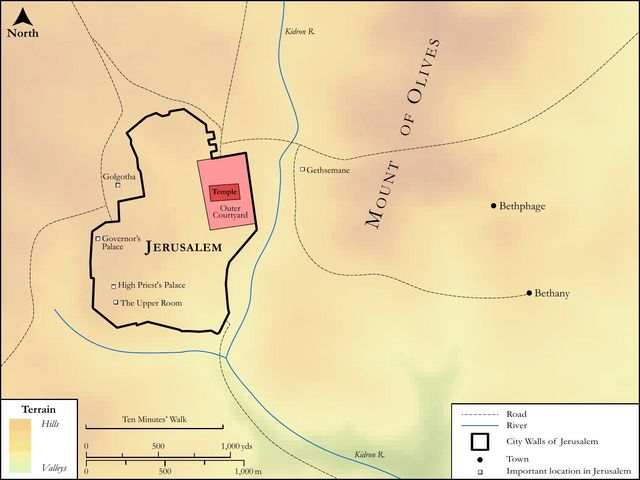
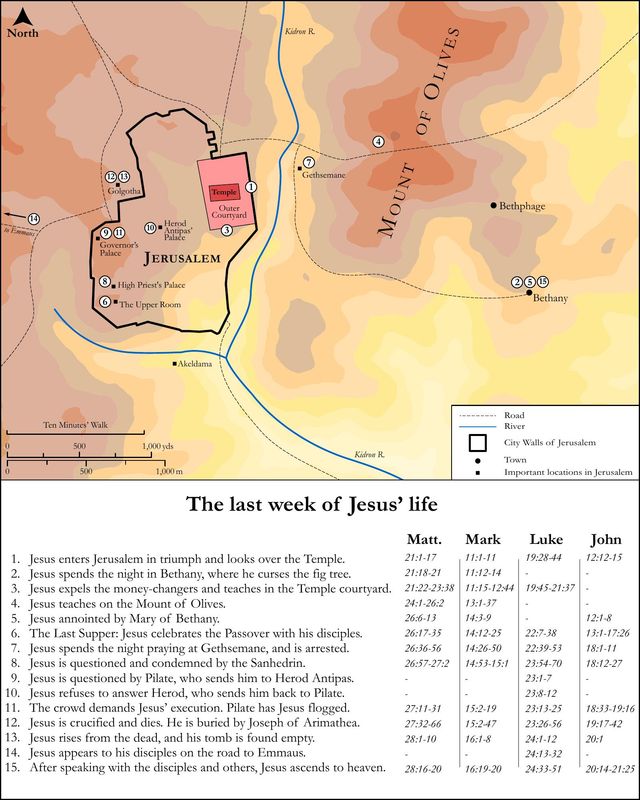
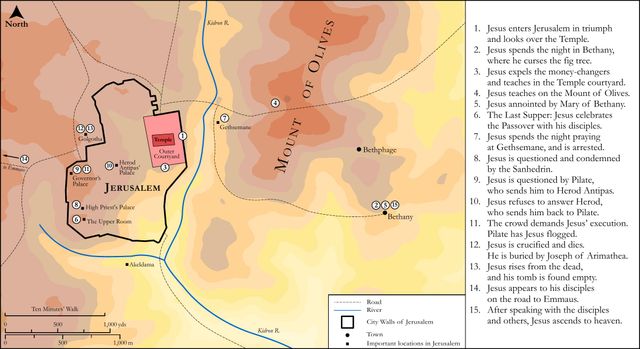
See on the biblical-era maps
Study this verse
Historical interpretation
Nineteen Centuries of Reception
15 surviving comments on this verse. Each one is dated, so this reads as a timeline rather than a list.
Select a marker to jump to its quote. Markers stagger vertically where authors wrote within a few decades of each other.
Watch for your life's sake. Let not your lamps be quenched, nor your loins unloosed; but be ye ready, for ye know not the hour in which our Lord cometh. But often shall ye come together, seeking the things which are befitting to your souls: for the whole time of your faith will not profit you, if ye be not made perfect in the last time. For in the last days false prophets and corrupters shall be multiplied, and the sheep shall be turned into wolves, and love shall be turned into hate; for when lawlessness increaseth, they shall hate and persecute and betray one another, and then shall appear the world-deceiver as Son of God, and shall do signs and wonders, and the earth shall be delivered into his hands, and he shall do iniquitous things which have never yet come to pass since the beginning. Then shall the creation of men come into the fire of trial, and many shall be made to stumble and shall perish; but they that endure in their faith shall be saved from under the curse itself. And then shall appear the signs of the truth; first, the sign of an out-spreading in heaven; then the sign of the sound of the trumpet; and the third, the resurrection of the dead; yet not of all, but as it is said: The Lord shall come and all His saints with Him. Then shall the world see the Lord coming upon the clouds of heaven.
He also introduces a parable of the mission to the vineyard of the Son (not the Father), who was sent after so many servants, and slain by the husbandmen, and avenged by the Father. He is also ignorant of the last day and hour, which is known to the Father only. He awards the kingdom to His disciples, as He says it had been appointed to Himself by the Father.
Otherwise; So long as the Church which is Christ's body knows not that day and hour, so long the Son Himself is said not to know that day and hour. The word know is used according to its proper usual meaning in Scripture. The Apostle speaks of Christ, as him who knew no sin, (2 Cor. 5:21.) i. e. sinned not. The knowledge of that day and hour the Son reserves in store for the fellow-heirs of the promise, that all may know at once, i. e. in the day when it shall come upon them, what things God hath prepared for them that love him. (1 Cor. 2:9.)
And has indeed God the Father denied the knowledge of that day to the Son, when He has declared, All things are committed to me of my Father? (Luke 10:22.) but if any thing has been denied, all things are not committed to Him.
Or, the two in the field, are the two people of believers and unbelievers, whom the day of the Lord shall overtake, as it were in the labours of this life. And they shall be separated, one being taken and the other left; this shows the separation that shall be between believers and unbelievers; when God's wrath is kindled, the saints shall be gathered into His garner, and the unbelievers shall be left as fuel for the fire from heaven. The same is the account to be given of that, Two shall be grinding at the mill. The mill is the work of the Law, but as some of the Jews believed through the Apostles, so some shall believe through Elias, and be justified through faith; and one part shall be taken through this same faith of good works, the other part shall be left unfruitful in the work of the Law, grinding in vain, and never to produce the bread of heavenly food.
The two in one bed are those who preach alike the Lord's rest after His passion, about which heretics and catholics have the same confession; but because the Catholic Faith preaches the unity of the Godhead of the Father and the Son, and the false creed of the heretics impugns that, therefore shall the Divine judgment decide between the confession of these two by taking one and leaving the other.
When Christ taught us that no one knows the day on which the end of time will come, not the angels and not even himself, he removed from us any need to be concerned about its date. O immeasurable mercy of divine goodness! Since the Son said, “All things have been delivered to me by my Father,” we know that the Father did not deny him the knowledge of this day. If anything was denied him, he could not have said that all things were delivered to him. But because the Son has handed on to us everything the Father gave him and the Word of God does not contain in himself as much assurance of the future as of things already accomplished, therefore it was established by God that the date of the end should be indefinite. Thus he could allow us an abundant amount of time for repentance yet still keep us solicitous for fear of the uncertain and so as to avoid giving anyone the idea of a particular day by expressing his will. For just as at the time of the flood, in the normal course of our life, in our activities and in our sufferings, that great day will suddenly appear.
For in the last days false prophets shall be multiplied, and such as corrupt the word; and the sheep shall be changed into wolves, and love into hatred: for through the abounding of iniquity the love of many shall wax cold. For men shall hate, and persecute, and betray one another. And then shall appear the deceiver of the world, the enemy of the truth, the prince of lies, [2 Thessalonians 2:3-12] whom the Lord Jesus "shall destroy with the spirit of His mouth, who takes away the wicked with His lips; and many shall be offended at Him. But they that endure to the end, the same shall be saved. And then shall appear the sign of the Son of man in heaven;" [Isaiah 11:4; Matthew 24:1-51] and afterwards shall be the voice of a trumpet by the archangel; and in that interval shall be the revival of those that were asleep. And then shall the Lord come, and all His saints with Him, with a great concussion above the clouds, with the angels of His power, [Matthew 16:27] in the throne of His kingdom, to condemn the devil, the deceiver of the world, and to render to every one according to his deeds. "Then shall the wicked go away into everlasting punishment, but the righteous shall go into life eternal," [Matthew 25:46] to inherit those things "which eye has not seen, nor ear heard, nor have entered into the heart of man, such things as God has prepared for them that love Him;" [1 Corinthians 2:9] and they shall rejoice in the kingdom of God, which is in Christ Jesus.
"But of that day and hour knoweth no man, no, not the angels of Heaven, neither the Son, but the Father." By saying, not the angels, He stopped their mouths, that they should not seek to learn what these angels know not; and by saying, "neither the Son," forbids them not only to learn, but even to inquire. For in proof that therefore He said this, see after His resurrection, when He saw they were become over curious, how He stopped their mouths more decidedly. For now indeed He hath mentioned infallible signs, many and endless; but then He saith merely, "It is not for you to know times or seasons." And then that they might not say, we are driven to perplexity, we are utterly scorned, we are not held worthy so much as of this, He says, "which the Father hath put in His own power." And this, because He was exceedingly careful to honor them, and to conceal nothing from them. Therefore He refers it to His Father, both to make the thing awful, and to exclude that of which He had spoken from their inquiry.
Since if it be not this, but He is ignorant of it, when will He know it? Will it be together with us? But who would say this? And the Father He knoweth clearly, even as clearly as He knoweth the Son; and of the day is He ignorant? Moreover, "the Spirit indeed searcheth even the deep things of God," and doth not He know so much as the time of the judgment? But how He ought to judge He knoweth, and of the secrets of each He hath a full perception; and what is far more common than that, of this could He be ignorant? And how, if "all things were made by Him, and without Him was not even one thing made," was He ignorant of the day? For He who made the worlds, it is quite plain that He made the times also; and if the times, even that day. How then is He ignorant of that which He made?
And ye indeed say that ye know even His substance, but that the Son not even the day, the Son, who is always in the bosom of the Father; and yet His substance is much greater than the days, even infinitely greater. How then, while assigning to yourselves the greater things, do you not allow even the less to the Son, "in whom are hid all the treasures of wisdom and knowledge." But neither do you know what God is in His substance, though ten thousand times ye talk thus madly, neither is the Son ignorant of the day, but is even in full certainty thereof.
For this cause, I say, when He had told all things, both the times and the seasons, and had brought it to the very doors ("for it is near," He saith, "even at the doors"), He was silent as to the day. For if thou seek after the day and hour, thou shall not hear them of me, saith He; but if of times and preludes, without hiding anything, I will tell thee all exactly.
For that indeed I am not ignorant of it, I have shown by many things; having mentioned intervals, and all the things that are to occur, and how short from this present time until the day itself (for this did the parable of the fig tree indicate), and I lead thee to the very vestibule; and if I do not open unto thee the doors, this also I do for your good.
He brings forward the elements of the earth to show that the Church is of more value than either heaven or earth, and that He is Maker of all things.
The Lord having described all the tokens that shall precede His coming, and brought His discourse to the very doors, yet would not name the day; Of that day and hour knoweth no man, no not the Angels of heaven, but my Father only.
That you may perceive that it is not owing to ignorance that He is silent of the day and hour of the judgment, He brings forward another token, As it the as in we days of Noe, so shall the coming of the Son of Man be. By this He means that He shall come sudden and unlooked for, and while men are taking their pleasure; of which Paul also speaks, When they shall say, Peace and safety, then sudden destruction cometh upon them. (1 Thess. 5:3.)
Or, To such as are thoughtlessly disposed, it shall be a time of peace and enjoyment; as the Apostle said not, 'When there shall be peace,' but When they shall say, Peace and safety, showing their insensibility to be such as was theirs in the days of Noe, when the wicked, and not the good, indulged themselves, but their end was sorrow and tribulation. This shows also, that when Antichrist shall come, those who are wicked, and despair of their salvation, shall ran into illicit pleasures; therefore He chooses an instance suitable. For while the ark was building, Noe preached among them, foretelling the evils that should come; but those wicked giving no heed to him, wantoned as though no evil should ever come; so now, because many would not believe things future, He makes credible what He says from what has happened. Another token He gives to show how unexpectedly that day shall come, and that He is not ignorant of the day, Then two shall be in the field, one shall be taken and the other left. These words show that masters and servants, they that work, and they that work not, shall be taken or left alike.
In some Latin copies is added here, "neither the Son:" but in the Greek copies, and particularly those of Adamantius and Pierius, it is not foundh But because it is read in some, it seems to require our notice.
Whereat Arius and Eunomius rejoice greatly; for say they, He who knows and He who is ignorant cannot be both equal. Against these we answer shortly; Seeing that Jesus, that is, The Word of God, made all times, (for By him all things were made, and without him was not any thing made that was made,) (John 1:3.) and that the day of judgment must be in all time, by what reasoning can He who knows the whole be shown to be ignorant of a part? This we will further say; Which is the greater, the knowledge of the Father, or the knowledge of the judgment? If He knows the greater, how can He be ignorant of the less?
Having then shown that the Son of God cannot be ignorant of the day of the consummation, we must now show a cause why He should be said to be ignorant. When after the resurrection He is demanded concerning this day by the Apostles, He answers more openly; It is not for you to know the times or the seasons which the Father has put in his own power. (Acts 1:7.) Wherein He shows that Himself knows, but that it was not expedient for the Apostles to know, that being in uncertainty of the coming of their Judge, they should live every day as though they were to be judged that day.
It is asked here, how it was said above, Nation shall rise against nation, and kingdom against kingdom, &c. when here only tokens of peace are spoken of as what shall be then? We must suppose, that after the wars and the other miseries which shall waste the human race, shall follow a short peace, offering rest and quiet to approve the faith of the believers.
Or, Two men in one field shall be found performing the same labour, sowing corn together, but not reaping the same fruit of their labour. The two grinding together we may understand either of the Synagogue and the Church, which seem to grind together in the Law, and to make of the same Scriptures meal of the commandments of God; or of other heresies, which out of both or one Testament, seem to grind meal of their own doctrines.
(Ver. 36.) But about that day and hour no one knows, not even the angels of heaven, except the Father alone. In some Latin manuscripts, it is added, not even the Son: since in Greek and especially in the exemplars of Adamantius and Pierius, this is not found written, but because it is read in some, it seems worthy of discussion. Arius and Eunomius rejoice, as if the ignorance of the teacher is the glory of the disciples, and they say: One who knows and one who is ignorant cannot be equal. Against whom are these things to be said briefly: When Jesus has done all things, that is, the Word of God: For all things were made through him, and without him was made nothing (John 1:3), in all times, even the day of judgment: by what consequence can he ignore a part of which he knows the whole? This also must be said: What is greater, the knowledge of the Father, or of the judgment? If he knows the greater, how does he not know what is lesser? We have read the scripture. All that belongs to the Father has been handed over to me (Luke 10:22). If all that belongs to the Father also belongs to the Son, then how is it that the Son reserved the knowledge of one day for himself and did not want to share it with the Son? But we must also infer this: If he is ignorant of the last day of times, he is also ignorant of nearly the last, and, looking backward, of all. For it cannot happen that one who is ignorant of the first knows what the second is. Therefore, because we have proven that the Son does not ignore the day of the consummation of all things (God is added in some versions), a reason must be given why he is said to be ignorant. The Apostle writes about the Savior: In whom are hidden all the treasures of wisdom and knowledge (Colossians 2:3). Therefore, all the treasures of wisdom and knowledge are in Christ, but they are hidden. Why are they hidden? After the resurrection, when questioned by the apostles, he answered more explicitly about the day: It is not for you to know the times or seasons that the Father has established in His own authority (Acts 1:7). When he says, 'It is not for you to know,' he shows that he himself knows, but it is not expedient for the apostles to know, so that they may always live uncertain about the coming of the Judge, as if every day were a different Judgment Day. Finally, the consistent sermon of the Gospel urges us to understand this same thing, saying that only the Father knows: in the Father he includes the Son. For every father, the name of the son is.
(de Trin. i. 12.) When He says here, Knows not, He means,' makes others not to know;' i. e. He knew not then, so as to tell His disciples; as it was said to Abraham, Now I know that thou fearest God; (Gen. 22:19.) i. e. 'Now have I caused that thou shouldest know,' because by the temptation he came to know himself.
(Serm. 97. 1.) He says that the Father knoweth, implies that in the Father the Son also knows. For what can there be in time which was not made by the Word, seeing that time itself was made by the Word!
(Lib. 83 Quaest. q. 60.) That the Father alone knows maybe well understood in the above-mentioned manner of knowing, that He makes the Son to know; but the Son is said not to know, because he does not make men to know.
(Ep. 199, 16.) The Gospel then says, Of that day and hour knoweth no man; but you say, That neither the month nor the year of His coming can be known. This exactness of yours up to this point seems as if you meant that the year could not be known, but that the week or the decade of years might be known, as though it was possible to fix or assign it to some seven, ten, or a hundred, or some number of years more or less. If you allow that you cannot so limit it, you think with me.
And Mark has the addition. (Mark 13:32.)
Or, these words denote three orders in the Church. The two men in the field (prædicatores.) denote the order of preachers, to whom is committed the field of the Church; by the two grinding at the mill, (conjugati.) the order of the married priests, who while with a divided heart they are called first to one side, then to the other, do, as it were, ever turn round a mill; by the two in one bed, (continentes.) the order of the continent, whose repose is signified by the bed. But in all these orders are good and bad, righteous and unrighteous, so that some shall be taken, and some left.
I have read also in some one's book, that the Son here is not to be taken of the Only-begotten, but of the adopted, for that He would not have put the Angels before the Only-begotten Son, saying, Not the Angels of heaven, neither the Son.i
Marriage and meats in themselves are not here condemned, as the error of Marcion and Manichæus teaches; for in the one the continuation of the species, in the other that of life, depends; but what is reproved is an unrestrained use of things lawful.
Here He teaches the disciples not to seek to know things that exceed human knowledge. By saying "not the angels," He restrains them from seeking to learn now that which even the angels do not know. By saying "My Father only," He also prevents them from seeking to learn thereafter. For if He had said, "I know, but I do not wish to tell you," they would have been grieved as though He had disdained them. But now by saying, "Not even the Son knows, but My Father only," He prevents them from asking. It is like a father who will often hold something in his hands and when his children ask for it and he does not want to give it, he hides it and says, "I do not have what you are asking for," and so the children stop crying for it. So too the Lord says, "Even I do not know, but My Father only," in order to put an end to the desire of the apostles to know the day and the hour. That He Himself does know that day and hour is clear from many other things. All that the Father has, belongs to the Son. As the Father has knowledge of the hour, so the Son surely has the same knowledge. It is even more clear from this: how is it possible for the Son to be ignorant of the day, when He knows the things that precede the day, that is, the signs that He has just foretold? For he who has lead another into the vestibule surely knows where the door is as well. But it was for their good that Christ did not open it. For it is never to our benefit to know the time of the end, lest we become lazy. Not knowing, we remain alert.
But there is worse to come. Say what you like, we shall be told. The apocalyptic beliefs of the first Christians have been proved to be false. It is clear from the New Testament that they all expected the second coming in their own lifetime, and, worse still, they had a reason, and one which you will find very embarrassing. Their master had told them so. He shared, and indeed created, their delusion.
He said, in so many words, ‘This generation shall not pass till all these things be done.’ And he was wrong. He clearly knew no more about the end of the world than anyone else. It is certainly the most embarrassing verse in the Bible. Yet how teasing, also, that within fourteen words of it should come the statement, ‘But of that day and that hour knoweth no man, no, not the angels which are in heaven, neither the Son, but the Father.’ The one exhibition of error and the one confession of ignorance grow side by side.
That they stood thus in the mouth of Jesus Himself, and were not merely placed thus by the reporter, we surely need not doubt. Unless the reporter were perfectly honest, he would never have recorded the confession of ignorance at all. He could have had no motive for doing so except a desire to tell the whole truth. And unless later copyists were equally honest, they would never have preserved the apparently mistaken prediction about this generation after the passage of time had shown the apparent mistake.
This passage, Mark chapter 13, verses 30-32, and the cry, ‘Why hast Thou forsaken Me?’ Mark chapter 15, verse 34, together make up the strongest proof that the New Testament is historically reliable. The evangelists have the first great characteristic of honest witnesses. They mention facts which are, at first sight, damaging to their main contention.
The facts then are these, that Jesus professed Himself in some sense ignorant, and within a moment showed that He really was so. To believe in the Incarnation, to believe that He is God, makes it hard to understand how He could be ignorant, but also makes it certain that if He said He could be ignorant, then ignorant He could really be. For a God who can be ignorant is less baffling than a God who falsely professes ignorance.
The answer of theologians is that the God-Man was omniscient as God and ignorant as man. This, no doubt, is true, though it cannot be imagined. Nor, indeed, can the unconsciousness of Christ in sleep be imagined, nor the twilight of reason in His infancy. Still less is merely organic life in His mother’s womb.
But the physical sciences, no less than theology, propose for our belief much that cannot be imagined. A generation which has accepted the curvature of space need not boggle at the impossibility of imagining the consciousness of incarnate God. In that consciousness the temporal and the timeless were united. I think we can acquiesce in mystery at that point, provided we do not aggravate it by our tendency to picture the timeless life of God as simply another sort of time.
We are committing that blunder whenever we ask how Christ could be, at the same moment, ignorant and omniscient, or how He could be the God who neither slumbers nor sleeps while He slept. The italicized words conceal an attempt to establish a temporal relation between His timeless life as God and the days, months, and years of His life as man. And, of course, there is no such relation.
The incarnation is not an episode in the life of God. The Lamb is slain, and therefore presumably born, grown to maturity, and risen from all eternity. The taking up into God’s nature of humanity, with all its ignorance and limitations, is not itself a temporal event, though the humanity which is so taken up was, like our own, a thing living and dying in time.
And if limitation, and therefore ignorance, was thus taken up, we ought to expect that the ignorance should, at some time, be actually displayed. It would be difficult and, to me, repellent, to suppose that Jesus never asked a genuine question, that is, a question to which He did not know the answer. That would make of His humanity something so unlike ours as scarcely to deserve the name.
I find it easier to believe that when He said, ‘Who touched Me?’ Luke chapter 8, verse 45, He really wanted to know.
Continue studying Matthew 24:36 across the web’s major study libraries — every link below opens this exact verse, chapter, or book on the destination site.
Read & Compare
 BibleGatewayThis verse in more than 200 translations and 70 languages.
 Bible.comThe YouVersion reader — hundreds of translations, reading plans, and highlights.
 ESV.orgCrossway's official English Standard Version reader.
 NET BibleThe NET translation with 60,000+ translators' notes on every rendering decision.
 STEP BibleTyndale House's free study tool — original text, vocabulary, and scholarly resources.
 BibliaLogos Bible Software's free web reader.
 USCCBThe New American Bible (Revised Edition) with the U.S. bishops' study notes.
Commentaries
 BibleHub CommentariesDozens of classic commentaries on this verse, gathered on one page.
 StudyLightMore than 100 commentary sets — the largest collection on the web.
 BibleRefPlain-English commentary on what this verse means, verse by verse.
 Enduring WordDavid Guzik's free commentary on this chapter, widely used by Bible teachers.
 Bible Study ToolsVerse commentary alongside Greek and Hebrew study aids.
Original Language & Research
- BibleHub InterlinearThe verse word by word — original language, transliteration, and English.
- BibleHub LexiconEvery word's original-language definition and Strong's entry.
 Blue Letter BibleDeep-study tools — Strong's numbers, concordance, and word studies.
 CNTR CollationThe earliest Greek manuscripts of this verse, collated letter by letter.
Sermons, Hymns & Audio


TrulyRandomVerse is not affiliated with these sites and doesn’t control their content. They’re linked because they’re genuinely useful.
Summary
Matthew 24:36 stands as a definitive statement by Jesus within His Olivet Discourse, asserting the absolute and exclusive knowledge of God the Father regarding the precise timing of the end of the age and the Son of Man's return. This verse unequivocally declares that neither human beings nor even the highest angelic beings in heaven possess this specific information, underscoring the profound mystery surrounding the eschatological climax and redirecting focus from speculative curiosity to a posture of faithful watchfulness and preparedness.
Context
ShowHideLiterary Context
This verse is strategically placed within the larger prophetic discourse known as the Olivet Discourse, which spans Matthew 24 and Matthew 25. Jesus delivers this teaching in response to His disciples' questions about the destruction of the Temple and the signs of His coming and the end of the age, as recorded in Matthew 24:3. Prior to this verse, Jesus describes various signs, including false Christs, wars, famines, earthquakes (Matthew 24:4-8), persecution (Matthew 24:9-14), the "abomination of desolation" (Matthew 24:15-28), and disturbances in the heavens accompanying His glorious return (Matthew 24:29-31). Following these detailed prophecies and the parable of the fig tree (Matthew 24:32-35), which indicates that the signs will reveal the nearness of His coming, Matthew 24:36 serves as a crucial counterpoint, emphasizing that despite the discernible signs, the exact moment remains a divine secret. It sets the stage for the subsequent parables that stress readiness and vigilance.
Historical & Cultural Context
The disciples' questions in Matthew 24:3 reflect common Jewish eschatological expectations concerning the Messiah's coming, the end of the present age, and the establishment of God's kingdom. Many Jews anticipated a dramatic, unmistakable intervention by God to usher in the messianic era, often linked with the destruction of oppressive powers (like Rome) and the restoration of Israel. However, the concept of a precise, divinely predetermined "Day of the Lord" was also deeply rooted in Old Testament prophecy, where its timing was often depicted as sudden and unexpected (e.g., Isaiah 13:6-9, Joel 2:1-2). Jesus' statement in Matthew 24:36 aligns with this tradition of divine hiddenness regarding ultimate timing, while simultaneously challenging any human presumption of knowing God's precise schedule. It also implicitly corrects any expectation that the disciples, or anyone else, would be privy to such specific details, reinforcing the unique prerogative of God the Father.
Key Themes
ShowHideThis verse powerfully contributes to several key themes within the Olivet Discourse and the broader New Testament. Firstly, it highlights Divine Sovereignty, asserting God the Father's absolute and exclusive control over the timing of history's culmination. This underscores His supreme authority and omniscient plan, which transcends human comprehension or manipulation. Secondly, it emphasizes Universal Ignorance, explicitly stating that neither humanity nor even the highest echelons of angelic beings possess this specific knowledge. This serves to humble any who might claim special insight or attempt to set dates for the Lord's return, directly countering such speculation. Thirdly, and perhaps most importantly, the unknown timing implicitly, and other verses in this discourse explicitly, drive home the theme of Call to Preparedness. Because the exact "day and hour" are undisclosed, believers are called to live in continuous watchfulness and spiritual readiness. This imperative is echoed throughout the discourse, such as in Matthew 24:42, where Jesus commands, "Watch therefore: for ye know not what hour your Lord doth come." The element of surprise is a recurring motif, also found in 1 Thessalonians 5:2, where the "day of the Lord so cometh as a thief in the night." This unknown timing shifts the focus from chronological curiosity to faithful living and active obedience.
Exposition and Analysis
ShowHideKey Word Analysis
ShowHideThis verb, G1492, denotes an intuitive, complete, and settled knowledge, rather than merely having information. It implies a deep, inherent understanding. When Jesus states that only the Father "knoweth," He is emphasizing a unique, intrinsic comprehension that is not shared with anyone else. This is distinct from merely being aware of something; it speaks to a fundamental, exclusive possession of this knowledge.
Refers to a time space, specifically the time between dawn and dark, or the whole 24 hours. Figuratively, it denotes a period, always defined more or less clearly by the context. In this eschatological context, "that day" refers to the specific, climactic period of the Lord's return and the end of the age, signifying the precise point in time when these ultimate events will transpire.
Meaning "remaining, i.e., sole or single; by implication, mere." This word strongly emphasizes exclusivity. When applied to the Father, it underscores that this knowledge is His alone, without any partners or sharers. It highlights His unique prerogative and sovereignty over this ultimate revelation.
Verse Breakdown
ShowHide"But of that day and hour knoweth no man,"
This opening clause, introduced by "But" (G1161, dé), immediately sets a contrast with the preceding discussion of signs. It declares a universal ignorance among humanity regarding the precise moment ("day and hour") of the eschatological climax. The phrase "no man" (G3762, oudeís) is an absolute negation, leaving no room for human insight or calculation.
"no, not the angels of heaven,"
This phrase intensifies the preceding negation, extending the circle of ignorance beyond humanity to include even the angelic realm. Angels, who are spiritual beings with access to divine knowledge and who serve as messengers of God (G32, ángelos), are explicitly excluded from this specific revelation. This further emphasizes the profound secrecy of the timing and the unique nature of this divine knowledge.
"but my Father only."
This concluding clause provides the definitive answer to who possesses this knowledge. The conjunction "but" (G1508, ei mḗ) introduces the sole exception: God the Father (G3962, patḗr). The word "only" (G3441, mónos) powerfully reinforces the exclusivity, underscoring that this is a unique prerogative of the First Person of the Trinity. This statement highlights the Father's ultimate sovereignty and omniscience.
Literary Devices
ShowHideMatthew 24:36 employs several potent literary devices to convey its profound theological truth. The most prominent is Emphasis through Negation and Exclusion. Jesus uses a double negative ("no man, no, not the angels") to create a strong, unequivocal statement about universal ignorance, which then serves to highlight the singular exception. This rhetorical technique builds suspense and then delivers a powerful punchline. There is also a clear Contrast established between the widespread lack of knowledge (humanity and angels) and the exclusive possession of this knowledge by God the Father. This contrast underscores the Father's unique authority and sovereign control over the ultimate timeline. Furthermore, the verse embodies the theological concept of Divine Secrecy or Mystery, presenting the timing of the end as a truth intentionally hidden by God, not for arbitrary reasons, but for purposes related to human faithfulness and divine prerogative. The use of "day and hour" is a form of Merism, where two distinct parts are named to represent the whole, signifying the entirety of the precise moment.
Theological and Thematic Connections
ShowHideMatthew 24:36 is a cornerstone for understanding Christian eschatology, particularly regarding the timing of Christ's return. It firmly establishes the principle of divine prerogative, asserting that the precise moment of the end is solely within the Father's domain. This truth safeguards against human speculation and date-setting, grounding our hope not in a calendar, but in the character and sovereignty of God. It highlights the Father's omniscience and omnipotence, demonstrating that He orchestrates all of history according to His perfect will, with a timetable known only to Himself. For believers, this means that while the signs of the times may indicate the season of Christ's coming, the exact day and hour remain a divine secret, necessitating a constant posture of spiritual readiness and faithful living rather than chronological curiosity.
Reflection and Application
ShowHideMatthew 24:36 carries profound implications for how believers are to live in light of Christ's promised return. Far from fostering apathy or despair, the unknown timing serves as a powerful impetus for constant vigilance and faithful stewardship. It emphatically discourages any form of date-setting or speculative predictions about the end times, as such attempts directly contradict Jesus' own explicit words. Instead, our focus is shifted from unrevealed details to revealed duties: living holy lives, actively sharing the Gospel, and serving others as if today could be the day of the Lord's return. This verse cultivates humility, reminding us that God's ways and timing are higher than our own, and calls us to trust in His perfect plan. Our ultimate hope is not in deciphering a timeline, but in the certain promise of Christ's return and the consummation of His kingdom, motivating us to be found faithful and productive until He comes.
Questions for Reflection
ShowHideFAQ
ShowHideDoes "knoweth no man" imply that Jesus, as the Son of God, was also ignorant of the timing?
ShowHideThis is a profound theological question that touches on the mystery of Christ's dual nature—fully God and fully human. When Jesus states in Matthew 24:36 and its parallel in Mark 13:32 that "of that day and that hour knoweth no man, no, not the angels which are in heaven, neither the Son, but the Father," it refers to His self-limitation in His incarnate state. As the eternal Son of God, co-equal with the Father, He possesses all divine knowledge. However, in His humanity, Jesus voluntarily "emptied himself" (Greek: kenosis), as described in Philippians 2:7, taking on the form of a servant. This self-limitation meant that, in His human capacity, He did not access all of the divine knowledge that was inherently His as God. It was a functional limitation, not an ontological one, demonstrating His perfect obedience and dependence on the Father during His earthly ministry. Therefore, in His incarnate state, Jesus chose not to know this specific detail, aligning Himself fully with humanity's limitations while on earth.
Why does God keep the timing of Christ's return a secret?
ShowHideThe divine secrecy regarding the precise timing of Christ's return serves several crucial theological and practical purposes. Firstly, it underscores God's absolute sovereignty and control over history, ensuring that no human or angelic being can manipulate or predict His ultimate plan. Secondly, it fosters a necessary posture of vigilance and readiness among believers. If the exact time were known, there would be a temptation to procrastinate spiritual preparation until the last moment. However, because the time is unknown, believers are called to live in constant expectation, as illustrated in the parables of the wise and foolish virgins (Matthew 25:1-13) and the talents (Matthew 25:14-30). This encourages faithful stewardship, active evangelism (e.g., Matthew 28:19-20), and holy living at all times. Thirdly, it promotes trust and humility, preventing human pride or speculative endeavors that might detract from genuine faith and obedience. The unknown timing ensures that our hope is placed squarely on Christ Himself and His certain promise to return, rather than on a specific date.
Christ-Centered Fulfillment
ShowHideWhile Matthew 24:36 emphasizes the Father's exclusive knowledge of the precise timing of the end, it paradoxically deepens our focus on Christ as the central figure of all eschatological hope and fulfillment. The "day and hour" refer to the glorious return of the Son of Man, the very event that will consummate God's redemptive plan. Though the when is hidden, the who is revealed: Jesus Christ, who first came in humility to redeem humanity, will return in power and glory to judge the living and the dead and establish His eternal kingdom. His first coming inaugurated the "last days" (Hebrews 1:1-2), and His second coming will bring them to their triumphant conclusion. Therefore, the mystery of the timing serves not to obscure Christ, but to intensify our anticipation of Him. We are called to live in constant expectation of the One who promised, "Surely I am coming quickly" (Revelation 22:20), and to fix our hope on the "blessed hope and glorious appearing of our great God and Savior Jesus Christ" (Titus 2:13). Our citizenship is in heaven, from which we eagerly await a Savior, the Lord Jesus Christ, who will transform our lowly body to be like His glorious body (Philippians 3:20-21). The unknown day thus compels us to live every day for Him, the Alpha and Omega, the beginning and the end, who holds all time in His hands.