


Matthew 24:24
- ἐγερθήσονταιegerthēsontaiThere will ariseG1453V-FPI-3PVerb Future Passive Indicative 3rd Plural
- γὰρgarforG1063CONJConjunction
- ψευδόχριστοιpseudochristoifalse ChristsG5580N-NPMNoun Nominative Plural Masculine
- καὶkaiandG2532CONJConjunction
- ψευδοπροφῆταιpseudoprophētaifalse prophetsG5578N-NPMNoun Nominative Plural Masculine
- καὶkaiandG2532CONJConjunction
- δώσουσινdōsousinthey will giveG1325V-FAI-3PVerb Future Active Indicative 3rd Plural
- σημεῖαsēmeiasignsG4592N-APNNoun Accusative Plural Neuter
- μεγάλαmegalagreatG3173A-APNAdjective Accusative Plural Neuter
- καὶkaiandG2532CONJConjunction
- τέραταteratawondersG5059N-APNNoun Accusative Plural Neuter
- ὥστεhōsteso asG5620CONJConjunction
- πλανῆσαιplanēsaito misleadG4105V-AANVerb Aorist Active Infinitive
- εἰeiifG1487CONDConjunction
- δυνατὸνdunatonpossibleG1415A-NSNAdjective Nominative Singular Neuter
- καὶkaievenG2532CONJConjunction
- τοὺςtoustheG3588T-APMDefinite article Accusative Plural Masculine
- ἐκλεκτούςeklektouselectG1588A-APMAdjective Accusative Plural Masculine
English is a literal word-by-word gloss of the Greek, not the KJV's wording. Why?
This is the original text the KJV's translators worked from — each Greek word with its own literal English meaning in this verse, prepared by scholars at Tyndale House, Cambridge. The KJV translates whole sentences, not word by word, so its wording differs: one Greek word can become several English words, and the KJV may choose “charity” where the gloss reads “love”. Both are faithful — they answer different questions. For the KJV's own rendering, switch to the KJV text.
Details
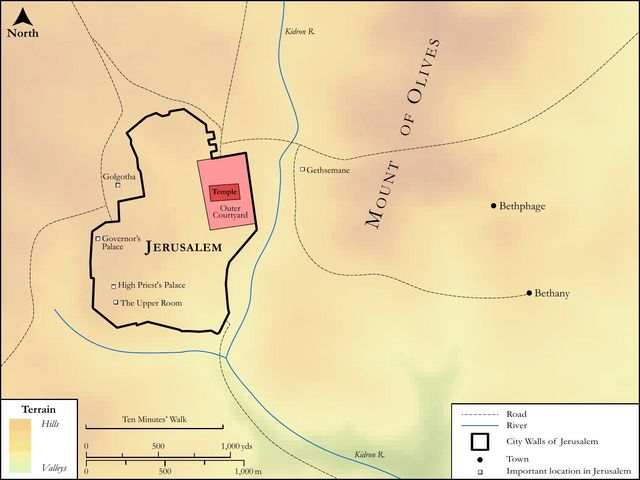
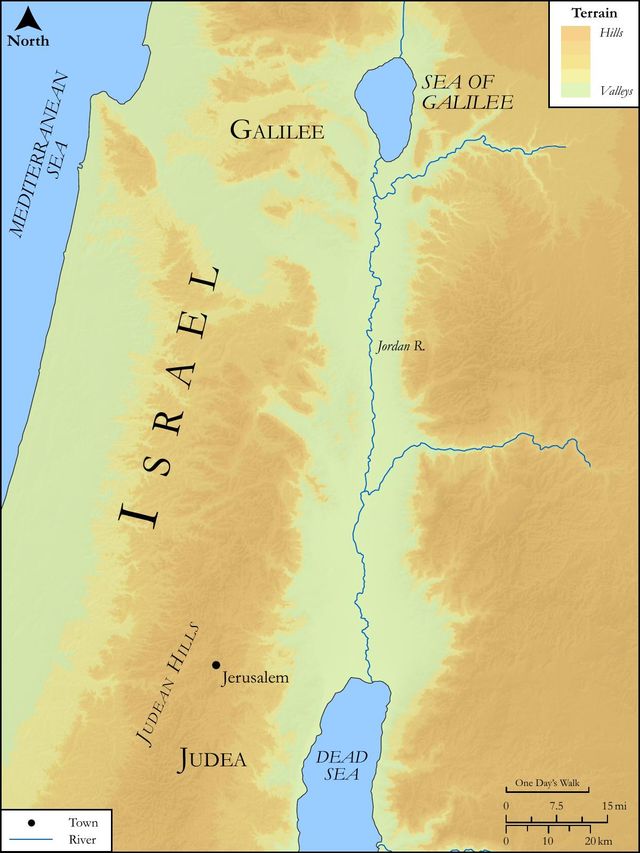
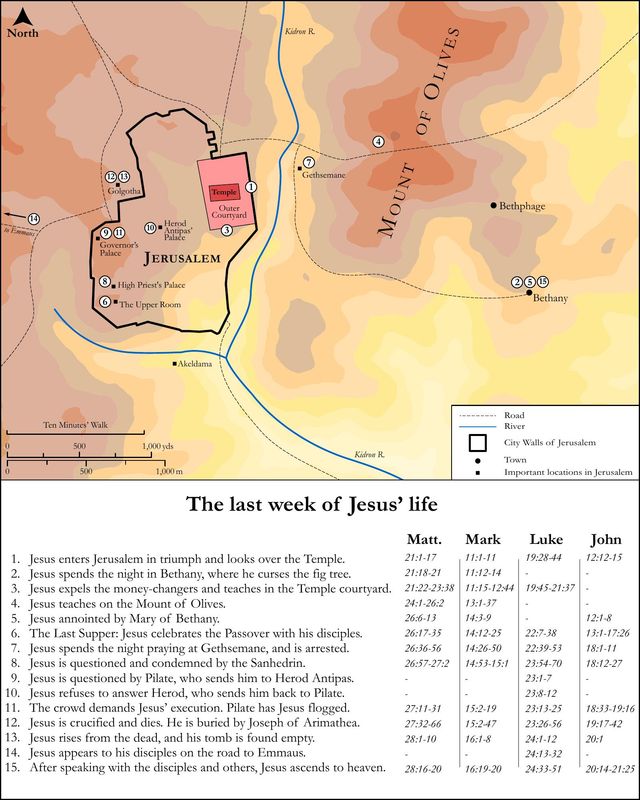
See on the biblical-era map
Study this verse
Historical interpretation
Eight Centuries of Reception
15 surviving comments on this verse. Each one is dated, so this reads as a timeline rather than a list.
Select a marker to jump to its quote. Markers stagger vertically where authors wrote within a few decades of each other.
Watch for your life's sake. Let not your lamps be quenched, nor your loins unloosed; but be ye ready, for ye know not the hour in which our Lord cometh. But often shall ye come together, seeking the things which are befitting to your souls: for the whole time of your faith will not profit you, if ye be not made perfect in the last time. For in the last days false prophets and corrupters shall be multiplied, and the sheep shall be turned into wolves, and love shall be turned into hate; for when lawlessness increaseth, they shall hate and persecute and betray one another, and then shall appear the world-deceiver as Son of God, and shall do signs and wonders, and the earth shall be delivered into his hands, and he shall do iniquitous things which have never yet come to pass since the beginning. Then shall the creation of men come into the fire of trial, and many shall be made to stumble and shall perish; but they that endure in their faith shall be saved from under the curse itself. And then shall appear the signs of the truth; first, the sign of an out-spreading in heaven; then the sign of the sound of the trumpet; and the third, the resurrection of the dead; yet not of all, but as it is said: The Lord shall come and all His saints with Him. Then shall the world see the Lord coming upon the clouds of heaven.
We know that "Satan himself is transformed into an angel of light" -much more into a man of light-and that at last he will "show himself to be even God," and will exhibit "great signs and wonders, insomuch that, if it were possible, he shall deceive the very elect." He hardly hesitated on the before-mentioned occasion to affirm himself to be a prophet of God, and especially to Saul, in whom he was then actually dwelling.
He Himself afterwards deprived it of its authority, because when He declared that many would come and "show great signs and wonders," so as to turn aside the very elect, and yet for all that were not to be received, He showed how rash was belief in signs and wonders, which were so very easy of accomplishment by even false christs.
The genus of Antichrist is one, the species many, just as all lies are of one sort. As all the holy Prophets were Prophets of the true Christ, so understand that each false Christ shall have his own false Prophets, who shall preach as true the false teachings of some Antichrist. When then one shall say, Lo, here is Christ, or lo, there, we need not look abroad out of the Scriptures, for out of the Law, the Prophets, and the Apostles, they bring the things which seem to favour their lie. Or by this, Lo, here is Christ, or lo, there, they show that it was not Christ, but some impostor under the same title, such for example as Marcion, or Valentinus, or Basilides taught.
That, If it were possible, is spoken hyperbolically; not that the elect can be led astray, but He wishes to show that the discourse of heretics is often so persuasive, as to have force to prevail even with those who act wisely.
Notwithstanding, by reason of the great tribulation in which men shall be cast, false prophets promising to show aid present from Christ, will falsely affirm that Christ is present in divers places, that they may draw into the service of Antichrist men discouraged and distracted.
The false prophets, of whom He had spoken above, shall say of Christ one while, Lo, He is in the desert, in order that they may cause men to wander astray; another while, Lo, He is in the secret chambers, that they may enthral men under the dominion of Antichrist. But the Lord declares Himself to be neither lurking in a remote corner, nor shut up to be visited singly, but that He shall be exhibited to the view of all, and in every place, As the lightning cometh out of the east, and shineth even unto the west, so shall the coming of the Son of Man be.
That we might not be ignorant of the place in which He should come, He adds this, Wheresoever the carcase, &c. He calls the Saints eagles, from the spiritual flight of their bodies, and shows that their gathering shall be to the place of His passion, the Angels guiding them thither; and rightly should we look for His coming in glory there, where He wrought for us eternal glory by the suffering of His bodily humiliation.
For in the last days false prophets shall be multiplied, and such as corrupt the word; and the sheep shall be changed into wolves, and love into hatred: for through the abounding of iniquity the love of many shall wax cold. For men shall hate, and persecute, and betray one another. And then shall appear the deceiver of the world, the enemy of the truth, the prince of lies, [2 Thessalonians 2:3-12] whom the Lord Jesus "shall destroy with the spirit of His mouth, who takes away the wicked with His lips; and many shall be offended at Him. But they that endure to the end, the same shall be saved. And then shall appear the sign of the Son of man in heaven;" [Isaiah 11:4; Matthew 24:1-51] and afterwards shall be the voice of a trumpet by the archangel; and in that interval shall be the revival of those that were asleep. And then shall the Lord come, and all His saints with Him, with a great concussion above the clouds, with the angels of His power, [Matthew 16:27] in the throne of His kingdom, to condemn the devil, the deceiver of the world, and to render to every one according to his deeds. "Then shall the wicked go away into everlasting punishment, but the righteous shall go into life eternal," [Matthew 25:46] to inherit those things "which eye has not seen, nor ear heard, nor have entered into the heart of man, such things as God has prepared for them that love Him;" [1 Corinthians 2:9] and they shall rejoice in the kingdom of God, which is in Christ Jesus.
"Then, if any man shall say unto you, Lo, here is Christ, or there; believe it not: for there shall arise false Christs, and false prophets, and shall show signs and wonders, so as to deceive, if possible, the very elect. Behold, I have told you before. Wherefore if they shall say unto you, Behold, He is in the desert, go not forth: behold, He is in the secret chambers, believe it not. For as the lightning cometh out of the east, and shineth even unto the west, so shall also the coming of the Son of Man be. For wheresoever the carcase is, there shall the eagles be gathered together."
Having finished what concerned Jerusalem, He passes on to His own coming, and tells the signs of it, not for their use only, but for us also, and for all that shall come after us.
"Then." When? Here, as I have often said, the word, "then," relates not to the connection in order of time with the things before mentioned. At least, when He was minded to express the connection of time, He added, "Immediately after the tribulation of those days," but here not so, but, "then," not meaning what should follow straightway after these things, but what should be in the time, when these things were to be done, of which He was about to speak.
Awhile He secures them by the place, mentioning the distinguishing marks of His second coming, and the indications of the deceivers. For not, as when at His former coming He appeared in Bethlehem, and in a small corner of the world, and no one knew Him at the beginning, so doth He say it shall be then too; but openly and with all circumstance, and so as not to need one to tell these things. And this is no small sign that He will not come secretly.
But mark how here He saith nothing of war (for He is interpreting the doctrine concerning His advent), but of them that attempt to deceive. For some in the days of the apostles deceived the multitude, "for they shall come," saith He, "and shall deceive many;" and others shall do so before His second coming, who shall also be more grievous than the former. "For they shall show," He saith, "signs and wonders, so as to deceive if possible the very elect:" here He is speaking of Antichrist, and indicates that some also shall minister to him. Of him Paul too speaks on this wise. Having called him "man of sin," and "son of perdition," He added, "Whose coming is after the working of Satan, with all power and signs and lying wonders; and with all deceivableness of unrighteousness in them that perish."
And see how He secures them; "Go not forth into the deserts, enter not into the secret chambers." He did not say, "Go, and do not believe;" but, "Go not forth, neither depart thither." For great then will be the deceiving, because that even deceiving miracles are wrought.
Having told them how Antichrist cometh, as, for instance, that it will be in a place; He saith how Himself also cometh. How then doth He Himself come? "As the lightning cometh out of the east, and shineth even unto the west, so shall also the coming of the Son of Man be. For wheresoever the carcase is, there also will the eagles be gathered together."
How then shineth the lightning? It needs not one to talk of it, it needs not a herald, but even to them that sit in houses, and to them in chambers it shows itself in an instant of time throughout the whole world. So shall that coming be, showing itself at once everywhere by reason of the shining forth of His glory. But He mentions also another sign, "where the carcase is, there also shall the eagles be;" meaning the multitude of the angels, of the martyrs, of all the saints.
When the Lord had finished all that related to Jerusalem, He came in the rest to His own coming, and gives them signs thereof, useful not for them only, but for us and for all who shall be after us. As above, the Evangelist said, In those days came John the Baptist, (Mat. 3:1.) not implying immediately after what had gone before, but thirty years after; so here, when He says Then, He passes over the whole interval of time between the taking of Jerusalem and the beginnings of the consummation of the world. Among the signs which He gives of His second coming He certifies them concerning the place, and the deceivers. For it shall not be then as at His former coming, when He appeared in Bethlehem, in a corner of the world, unknown of any; but He shall come openly so as not to need any to announce His approach, wherefore, If any man shall say unto you, Lo, here is Christ, or there, believe not.
He speaks here of Antichrist, and of certain his ministers, whom He calls false Christs and false prophets, such as were many in the time of the Apostles; but before Christ's second coming there shall come others more bitter than the former, And they shall show great signs and wonders. (cf. 2 Thes. 2:8.)
As He had above described in what guise Antichrist should come, so here He describes how He Himself shall come. For as the lightning needeth none to herald or announce it, but is in an instant of time visible throughout the whole world, even to those that are sitting in their chambers, so the coming of Christ shall be seen every where at once, because of the brightness of His glory. Another sign He adds of His coming, Wheresoever the body is, thither will the eagles be gathered together. The eagles denote the company of the Angels, Martyrs, and Saints.
Wherein He shows that His second coming shall be not in lowliness as His first, but in glory; and therefore it is folly to seek in places little and obscure for Him who is the Light of the whole world. (John 8:12.)
By an instance from nature, which we daily see, we are instructed in a sacrament of Christ. Eagles and vultures are said to scent dead bodies even beyond sea, and to flock to feed upon them. If then birds, not having the gift of reason, by instinct alone find out where lays a dead body, separated by so great space of country, how much more ought the whole multitude of believers to hasten to Christ, whose lightning goeth forth out of the east, and shines even to the west? We may understand by the carcase here, or corpse, which in the Latin is more expressively 'cadaver,' an allusion to the passion of Christ's death.
They are called eagles whose youth is renewed as the eagle's, and who take to themselves wings that they may come to Christ's passion. (Ps. 103:5. Is. 40:31.)
Or otherwise; This may be understood of the false prophets. At the time of the Jewish captivity, there were many leaders who declared themselves to be Christs, (Joseph B.J. v. 1) so that while the Romans were actually besieging them, there were three factions within. But it is better taken as we expounded it above, of the end of the world. Thirdly, it may be understood of the warfare of the heretics against the Church, and of those Antichrists, who under pretext of false science, fight against Christ.
If then any one assert to you that Christ tarries in the desert of the Gentiles, or in the teaching of the Philosophers, or in the secret chambers of the heretics, who promise the hidden things of God, believe Him not, but believe that the Catholic Faith shines from east to west in the Churches.
Or by this, in the desert, or in the secret chambers, He means that in times of persecution and distress, the false Prophets always find place for deceiving.
We are invited to flock to Christ's passion wheresoever in Scripture it is read of, that through it we may be able to come to God's word.
(Verse 24) For false Christs and false prophets will arise and will perform great signs and wonders, so as to deceive, if possible, even the elect. Behold, I have told you beforehand. There are three ways, as I have already said, in which this may be interpreted: either concerning the time of the siege of Rome, or concerning the end of the world, or concerning the struggle of heretics against the Church and similar antichrists, who under the guise of false knowledge fight against Christ.
(Lib. 83 Quæst. q. 79.) Here the Lord forewarns us that even wicked men shall do some miracles which the saints cannot do, yet are they not therefore to be thought to have a higher place in the sight of God. For the Egyptian magi were not more acceptable to God than the people of Israel, because they could do what the Israelites could not; yet did Moses, by the power of God, work greater things. This gift is not bestowed on all the saints, lest the weak should be led astray by a most destructive error, supposing such powers to be higher gifts than those works of righteousness by which eternal life is secured. And though magi do the same miracles that the saints do, yet are they done with a different end, and through a different authority; for the one do them seeking the glory of God, the others seeking their own glory; these do them by some special compact or privilege granted to the Powers, within their sphere, those by the public dispensation and the command of Him to whom all creation is subject. For it is one thing for the owner of a horse to be compelled to give it up to a soldier, another for him to hand it over to a purchaser, or to give or lend it to a friend; and as those evil soldiers, who are condemned by the imperial discipline, employ the imperial ensigns to terrify the owners of any property, and to extort from them what is not required by the public service; so some evil Christians, by means of the name of Christ, or by words or sacraments Christian, compel somewhat from the Powers; yet these, when thus at the bidding of evil men, they depart from their purpose, they depart in order to deceive men in whose wanderings they rejoice. It is one way then in which magi, another in which good Christians, another in which bad Christians, work miracles; the magi by a private compact, good Christians by the public righteousness, evil Christians by the signs of public righteousness. And we ought not to wonder at this when we believe not unreasonably that all that we see happen is wrought by the agency of the inferior powers of this air.
(de Trin. iii. 8.) Yet are we not therefore to think that this visible material world attends the nod of the disobedient angels, but rather the power is given them of God. Nor are we to suppose that such evil angels have creative power, but by their spirituality they know the seeds of things which are hidden from us, and these they secretly scatter by suitable adaptations of the elements, and so they give occasion both to the whole being, and the more rapid increase of substances. For so there are many men who know what sort of creatures use to be generated out of certain herbs, meats, juices and humours, bruised and mingled together in a certain fashion; save only that it is harder for men to do these things, inasmuch as they lack that subtlety of sense, and penetrativeness of body in their limbs dull and of earthly mould.
(Quæst. Ev. i. 38.) By the east and west, He signifies the whole world, throughout which the Church should be. In the same way as He said below, Hereafter shall ye see the Son of Man coming in the clouds of heaven, (Mat. 26:64.) so now He likens His coming to lightning, which uses to flash out of the clouds. When then the authority of the Church is set up clear and manifest throughout the whole world, He suitably warns His disciples that they should not believe schismatics and heretics. Each schism and heresy holds its own place, either occupying some important position in the earth, or ensnaring men's curiosity in obscure and remote conventicles. Lo, here is Christ, or lo, there, refers to some district or province of the earth; the secret chambers, or the desert, signify the obscure and lurking conventicles of heretics.
We are warned by the Lord so that if anyone were to come to us falsely in his name, none of us would believe in such a person, having already been prepared. Henceforth how great will be the signs by which the faith of the elect is demonstrated! But whoever builds his house on the rock, that is, establishes his faith on Christ, cannot be destroyed by winds or rains. The rock represents Christ, the floods are the kings, and the winds are the kings’ orders to persecute the servants of God.The holy reading continues: “False Christs and false prophets will arise and perform great signs and wonders so that even the elect would be led into error, if possible. Behold, I have told you.” You see then, beloved, what great love the Lord displays toward us. He carefully instructs each one of us individually regarding the future so that even if we see all these signs come to pass (having been forewarned by him) we will be wise to the enemy and accept nothing contrary to Christ and the catholic faith. In the Acts of the Apostles, Simon declared himself to be the power of God. Likewise, in the last days, the antichrist will declare himself to be God, as the apostle says, “Thus he will sit in the temple of God, calling himself God … whom the Lord Jesus Christ will kill with the breath of his mouth.” The day of judgment will come upon the antichrist also, and the Lord will kill him with the sword of his mouth.
(Mor. xv. 61.) When then Antichrist shall have wrought wonderful prodigies before the eyes of the carnal, he shall draw men after him, all such as delight in present goods, surrendering themselves irrevocably to his sway, Insomuch that if it were possible the very elect should be led astray.
(Hom. in Ev. xxxv. i.) Or, because the heart of the elect is assailed with fearful thoughts, yet their faithfulness is not shaken, the Lord comprehends both under the same sentence, for to waver in thought is to err. He adds, If it were possible, because it is not possible that the elect should be taken in error
And as darts, when foreseen, are less likely to hit, He adds, Lo, I have told you. Our Lord announces the woes which are to precede the destruction of the world, that when they come they may alarm the less from having been foreknown.
(Mor. xxxi. 53.) We may understand this, Wheresoever the carcase is, as meaning, I who incarnate sit on the throne of heaven, as soon as I shall have loosed the souls of the elect from the flesh, will exalt them to heavenly places.
He says not this because it is possible for the divine election to be defeated, but because they, who to men's judgment seemed elect, shall be led into error.
Continue studying Matthew 24:24 across the web’s major study libraries — every link below opens this exact verse, chapter, or book on the destination site.
Read & Compare
 BibleGatewayThis verse in more than 200 translations and 70 languages.
 Bible.comThe YouVersion reader — hundreds of translations, reading plans, and highlights.
 ESV.orgCrossway's official English Standard Version reader.
 NET BibleThe NET translation with 60,000+ translators' notes on every rendering decision.
 STEP BibleTyndale House's free study tool — original text, vocabulary, and scholarly resources.
 BibliaLogos Bible Software's free web reader.
 USCCBThe New American Bible (Revised Edition) with the U.S. bishops' study notes.
Commentaries
 BibleHub CommentariesDozens of classic commentaries on this verse, gathered on one page.
 StudyLightMore than 100 commentary sets — the largest collection on the web.
 BibleRefPlain-English commentary on what this verse means, verse by verse.
 Enduring WordDavid Guzik's free commentary on this chapter, widely used by Bible teachers.
 Bible Study ToolsVerse commentary alongside Greek and Hebrew study aids.
Original Language & Research
- BibleHub InterlinearThe verse word by word — original language, transliteration, and English.
- BibleHub LexiconEvery word's original-language definition and Strong's entry.
 Blue Letter BibleDeep-study tools — Strong's numbers, concordance, and word studies.
 CNTR CollationThe earliest Greek manuscripts of this verse, collated letter by letter.
Sermons, Hymns & Audio


TrulyRandomVerse is not affiliated with these sites and doesn’t control their content. They’re linked because they’re genuinely useful.
Summary
Matthew 24:24 serves as a stark warning from Jesus Christ within His Olivet Discourse, alerting His disciples to the profound spiritual deception that will characterize the end times. He prophesies the emergence of counterfeit messiahs and false prophets who will possess the ability to perform astonishing signs and wonders. The power of their deceit will be so compelling that, if it were at all possible, even God's chosen ones, the elect, would be led astray, underscoring the severity of the coming spiritual battle and the divine protection afforded to true believers.
Context
ShowHideLiterary Context
This verse is a critical component of Jesus' eschatological discourse, known as the Olivet Discourse, delivered on the Mount of Olives in response to His disciples' questions about the destruction of the Temple and the signs of His coming and the end of the age (Matthew 24:3). Following predictions of general calamities like wars, famines, and earthquakes (Matthew 24:6-7), Jesus shifts focus to the internal spiritual dangers, specifically religious deception. He first warns that "many shall come in my name, saying, I am Christ; and shall deceive many" (Matthew 24:5). Verse 24 intensifies this warning, describing a higher level of deception involving supernatural manifestations, making it an unprecedented challenge to faith, even for the most devout. This section emphasizes the crucial need for discernment amidst escalating spiritual falsehoods.
Historical & Cultural Context
Jesus' warning about "false Christs" and "false prophets" resonated deeply with His Jewish audience, who were familiar with a history of messianic claimants and self-proclaimed prophets. Throughout the intertestamental period and into the first century, various individuals arose, claiming divine authority or messianic status, often leading popular movements or rebellions against Roman rule. Figures like Theudas and an Egyptian prophet, mentioned by Josephus and in Acts 5:36-37, exemplify this phenomenon. The expectation of a conquering Messiah was strong, making the populace susceptible to those who could perform impressive feats or offer political deliverance. Jesus' warning subverts these expectations, indicating that true spiritual authority would not be found in outward displays of power by those who lead astray, but in adherence to His truth, even amidst miraculous counterfeits.
Key Themes
ShowHideMatthew 24:24 contributes significantly to several overarching themes within the Olivet Discourse and the broader book of Matthew. The primary theme is Eschatological Warning and Discernment, emphasizing the need for believers to be vigilant and spiritually astute in the face of widespread deception in the last days. It highlights the Nature of Spiritual Deception, revealing that it will not always be obvious but will often masquerade as truth, even employing supernatural signs. This contrasts sharply with the genuine signs and wonders performed by Jesus, which validated His divine authority and message (Matthew 11:4-5). Furthermore, the verse underscores the Security of the Elect, affirming God's sovereign preservation of His chosen people against ultimate apostasy, even when faced with the most potent forms of evil. This theme echoes God's faithfulness to His covenant people throughout salvation history, as seen in the preservation of a remnant in the Old Testament (Isaiah 1:9).
Exposition and Analysis
ShowHideKey Word Analysis
ShowHideDerived from pseudēs (false, lying) and Christos (Christ, Anointed One), this term denotes individuals who falsely claim to be the Messiah or the Anointed One of God. They are not merely mistaken, but intentionally deceptive, presenting themselves as the fulfillment of messianic prophecies to mislead people. Their claims are a direct counterfeit of Jesus' true identity and mission.
Composed of pseudēs (false, lying) and prophḗtēs (prophet), this term refers to those who pretend to speak on behalf of God or claim divine inspiration, but whose messages are not from God. They are spiritual impostors, often delivering messages that appeal to human desires or cultural trends, rather than divine truth. Their prophecies are deceptive, leading people away from God's genuine Word.
This verb means "to cause to roam from safety, truth, or virtue; to lead astray, to err, to seduce, to wander." It vividly describes the effect of the false Christs and prophets: they cause people to deviate from the path of truth and righteousness, leading them into error and spiritual danger. The strong implication is not just intellectual error, but moral and spiritual wandering that results in being lost.
Verse Breakdown
ShowHide"For there shall arise false Christs, and false prophets"
This clause sets the stage for the intense spiritual conflict of the end times. Jesus predicts the emergence of two categories of deceivers: those who claim to be the Messiah (false Christs) and those who claim to speak for God (false prophets). The term "arise" (Greek, egeírō) suggests a sudden, active appearance, implying that these figures will not be passive but will actively present themselves and their deceptive claims to the world.
"and shall shew great signs and wonders;"
This critical phrase reveals the method of their deception. These false figures will not merely rely on persuasive words but will perform "great signs" (sēmeia) and "wonders" (terata). These are terms typically used in the New Testament to describe genuine miracles performed by God or His true messengers. The inclusion of "great" (mégas) emphasizes the impressive and convincing nature of these supernatural displays, making them incredibly difficult to distinguish from genuine divine acts for the undiscerning.
"insomuch that, if it were possible, they shall deceive the very elect."
This final clause highlights the extreme potency of the deception. The phrase "insomuch that" (hṓste) indicates the consequence of their powerful signs and wonders. The conditional "if it were possible" (ei dynatós) is a rhetorical device emphasizing the impossibility of the elect being ultimately deceived. It does not suggest a theoretical possibility, but rather underscores the immense power of the deception while simultaneously affirming the absolute security and preservation of "the very elect" (tous eklektous) by God. The elect are God's chosen ones, whom He has sovereignly called and preserved for salvation.
Literary Devices
ShowHideMatthew 24:24 employs several significant literary devices. The most prominent is Hyperbole, particularly in the phrase "if it were possible, they shall deceive the very elect." This is not meant to suggest that the elect could be deceived under certain circumstances, but rather to emphasize the overwhelming power of the deception that will be unleashed, so potent that it would deceive anyone except for God's divinely protected chosen ones. This rhetorical exaggeration heightens the sense of urgency and the gravity of the warning. The verse also functions as a powerful Warning, directly addressing the disciples and, by extension, all future believers, to be vigilant against spiritual counterfeits. The figures of "false Christs" and "false prophets" serve as Symbolism for the broader forces of spiritual darkness and deception that will oppose God's truth in the end times. Their "great signs and wonders" are a form of Counterfeit Miracles, mimicking genuine divine power to mislead, creating a stark Contrast between true divine activity and deceptive spiritual manifestations.
Theological and Thematic Connections
ShowHideMatthew 24:24 is a profound theological statement on the nature of spiritual warfare and God's sovereignty. It reveals that the enemy's tactics will include not just overt opposition but subtle, miraculous deception, designed to mimic divine power and lead people away from truth. Yet, it simultaneously affirms the unwavering security of God's elect, highlighting that divine preservation is stronger than any deceptive force. This verse underscores the importance of discerning the source of spiritual power and clinging to the revealed truth of God's Word, rather than being swayed by impressive but false displays. It teaches that God's plan for His people is unshakeable, even amidst the greatest spiritual turmoil.
Reflection and Application
ShowHideMatthew 24:24 offers a timeless and urgent call to spiritual vigilance for believers in every age, especially as we observe the proliferation of diverse spiritual claims and the ease with which information (and misinformation) spreads. It compels us to cultivate a deep and abiding relationship with the truth of God's Word, allowing it to be the ultimate plumb line for all spiritual experiences and teachings. We are challenged to move beyond superficial assessments of spiritual phenomena and to develop a robust discernment, rooted in the Holy Spirit's guidance and a thorough understanding of biblical doctrine. Our security is not in our own intellectual prowess or ability to detect every lie, but in God's sovereign power to preserve His elect. Therefore, the application is not merely about identifying error, but about anchoring ourselves so firmly in Christ that we become impervious to the most sophisticated deceptions, trusting in His promise to keep us.
Questions for Reflection
ShowHideFAQ
ShowHideWho are the "false Christs" and "false prophets" Jesus warns about?
ShowHideThe "false Christs" are individuals who will emerge claiming to be the Messiah, the Anointed One of God, in a deceptive attempt to draw followers away from the true Christ. They are counterfeits of Jesus himself. The "false prophets" are those who claim to speak for God or to have divine revelation, but whose messages are not from God and lead people astray. Both categories are spiritual impostors, aiming to mislead people through their false claims and teachings, often appealing to human desires or religious fervor. They represent the ultimate spiritual deception in the end times, as described in 2 Peter 2:1.
What kind of "great signs and wonders" will they perform, and how can they be distinguished from genuine miracles?
ShowHideThe "great signs and wonders" refer to supernatural acts, seemingly miraculous displays of power that will be incredibly convincing. These are not mere tricks or illusions, but genuine supernatural manifestations, though their source is not divine. They are "lying wonders" (2 Thessalonians 2:9) performed by the power of Satan. They can be distinguished from genuine miracles not by their outward appearance or power, but by their source and message. True miracles glorify God and confirm His truth as revealed in Scripture, always pointing to Christ. False miracles, however impressive, will ultimately lead people away from the biblical Christ and His revealed Word, promoting a false gospel or a different Jesus (Galatians 1:8-9). Discernment requires testing the spirits and their teachings against the unchanging truth of God's Word (1 John 4:1).
Why does Jesus say "if it were possible, they shall deceive the very elect"? Does this mean the elect could be deceived?
ShowHideThe phrase "if it were possible" is a rhetorical device, a strong hyperbole, emphasizing the extreme power and convincing nature of the deception. It does not imply that it is actually possible for the truly elect to be ultimately deceived and fall away from salvation. Instead, it highlights that the deception will be so profound that if the elect were not divinely protected, they would succumb. This statement underscores God's sovereign preservation of His chosen people. The "elect" are those whom God has chosen for salvation, and He guarantees their perseverance and security in Christ (John 6:37). Their security rests not on their own strength or discernment, but on the faithfulness and power of God to preserve them.
Christ-Centered Fulfillment
ShowHideMatthew 24:24 finds its ultimate Christ-centered fulfillment in Jesus Himself as the singular, true Messiah and the embodiment of divine truth, standing in stark contrast to the deceptive figures He warns against. While false Christs will arise, Jesus is the only true Christ, the Lamb of God who takes away the sin of the world (John 1:29). He is the one whose signs and wonders truly validated His divine authority and saving mission, not to deceive, but to reveal God's kingdom and bring healing and redemption (Acts 2:22). Furthermore, the warning about the deception of the elect points directly to Christ's role as their Shepherd and Preserver. Jesus assures His followers that His sheep hear His voice, and He knows them, and they follow Him, and that no one can snatch them out of His hand or His Father's hand. Thus, the "impossibility" of the elect being deceived is a testament to Christ's power, faithfulness, and the security found in Him alone. He is the ultimate safeguard against all spiritual falsehood, and true believers are kept by His power through faith (1 Peter 1:5).