


Matthew 24:5
Bible text: King James Version (1769 Blayney text) · Public domain
Bible text: Berean Standard Bible · Public domain
Bible text: American Standard Version (1901) · Public domain
Bible text: World English Bible, Messianic edition · Public domain
Bible text: Geneva Bible (1599) · Public domain
Bible text: Young's Literal Translation · Public domain
- πολλοὶpolloiManyG4183A-NPMAdjective Nominative Plural Masculine
- γὰρgarforG1063CONJConjunction
- ἐλεύσονταιeleusontaiwill comeG2064V-FDI-3PVerb Future Middle Deponent Indicative 3rd Plural
- ἐπὶepiinG1909PREPPreposition
- τῷtōtheG3588T-DSNDefinite article Dative Singular Neuter
- ὀνόματίonomatinameG3686N-DSNNoun Dative Singular Neuter
- μουmouof MeG3165P-1GSPersonal pronoun Genitive 1st Singular
- λέγοντες·legontessayingG3004V-PAP-NPMVerb Present Active Participle Nominative Plural Masculine
- ἐγώegōI myselfG1473P-1NSPersonal pronoun Nominative 1st Singular
- εἰμιeimiamG1510V-PAI-1SVerb Present Active Indicative 1st Singular
- ὁhotheG3588T-NSMDefinite article Nominative Singular Masculine
- χριστόςchristosChristG5547N-NSM-TNoun Nominative Singular Masculine Title
- καὶkaiandG2532CONJConjunction
- πολλοὺςpollousmanyG4183A-APMAdjective Accusative Plural Masculine
- πλανήσουσινplanēsousinthey will misleadG4105V-FAI-3PVerb Future Active Indicative 3rd Plural
English is a literal word-by-word gloss of the Greek, not the KJV's wording. Why?
This is the original text the KJV's translators worked from — each Greek word with its own literal English meaning in this verse, prepared by scholars at Tyndale House, Cambridge. The KJV translates whole sentences, not word by word, so its wording differs: one Greek word can become several English words, and the KJV may choose “charity” where the gloss reads “love”. Both are faithful — they answer different questions. For the KJV's own rendering, switch to the KJV text.
Details
See on the biblical-era maps
Study this verse
Historical interpretation
Ten Centuries of Reception
11 surviving comments on this verse. Each one is dated, so this reads as a timeline rather than a list.
Select a marker to jump to its quote. Markers stagger vertically where authors wrote within a few decades of each other.
Watch for your life's sake. Let not your lamps be quenched, nor your loins unloosed; but be ye ready, for ye know not the hour in which our Lord cometh. But often shall ye come together, seeking the things which are befitting to your souls: for the whole time of your faith will not profit you, if ye be not made perfect in the last time. For in the last days false prophets and corrupters shall be multiplied, and the sheep shall be turned into wolves, and love shall be turned into hate; for when lawlessness increaseth, they shall hate and persecute and betray one another, and then shall appear the world-deceiver as Son of God, and shall do signs and wonders, and the earth shall be delivered into his hands, and he shall do iniquitous things which have never yet come to pass since the beginning. Then shall the creation of men come into the fire of trial, and many shall be made to stumble and shall perish; but they that endure in their faith shall be saved from under the curse itself. And then shall appear the signs of the truth; first, the sign of an out-spreading in heaven; then the sign of the sound of the trumpet; and the third, the resurrection of the dead; yet not of all, but as it is said: The Lord shall come and all His saints with Him. Then shall the world see the Lord coming upon the clouds of heaven.
They that are deceived are many, because wide is the gate that leadeth to destruction, and many there be which go in thereat. (Mat. 7:13.) This one thing is enough to detect the Antichrists and seducers that they shall say, I am Christ, which Christ Himself is no where read to have said: for the works of God, and the word which He taught, and His power, were enough to produce belief that He is Christ. For every discourse which professes to expound Scripture faithfully, and has not the truth, is Antichrist. For the truth is Christ, that which feigns itself to be the truth is Antichrist. So also all virtues are Christ, all that feigns itself to be virtue is Antichrist; for Christ has in Himself in truth all manner of good for the edification of men, but the devil has forged resemblances of the same for the deceiving of the saints. We have need therefore of God to help us, that none deceive us, neither word nor power. It is a bad thing to find any one erring in his course of life; but I esteem it much worse not to think according to the most true rule of Scripture.
And because the questions of the disciples are threefold, they are separated by different times and meanings. That concerning the destruction of the city is first answered, and is then confirmed by truth of doctrine, that no seducer might prevail with the ignorant.
For in the last days false prophets shall be multiplied, and such as corrupt the word; and the sheep shall be changed into wolves, and love into hatred: for through the abounding of iniquity the love of many shall wax cold. For men shall hate, and persecute, and betray one another. And then shall appear the deceiver of the world, the enemy of the truth, the prince of lies, [2 Thessalonians 2:3-12] whom the Lord Jesus "shall destroy with the spirit of His mouth, who takes away the wicked with His lips; and many shall be offended at Him. But they that endure to the end, the same shall be saved. And then shall appear the sign of the Son of man in heaven;" [Isaiah 11:4; Matthew 24:1-51] and afterwards shall be the voice of a trumpet by the archangel; and in that interval shall be the revival of those that were asleep. And then shall the Lord come, and all His saints with Him, with a great concussion above the clouds, with the angels of His power, [Matthew 16:27] in the throne of His kingdom, to condemn the devil, the deceiver of the world, and to render to every one according to his deeds. "Then shall the wicked go away into everlasting punishment, but the righteous shall go into life eternal," [Matthew 25:46] to inherit those things "which eye has not seen, nor ear heard, nor have entered into the heart of man, such things as God has prepared for them that love Him;" [1 Corinthians 2:9] and they shall rejoice in the kingdom of God, which is in Christ Jesus.
Therefore did they come unto Him privately, as it was of such matters they meant to inquire. For they were in travail to know the day of His coming, because of their eager desire to behold that glory, which is the cause of countless blessings. And these two things do they ask him, when shall these things be? that is, the overthrow of the temple; and, what is the sign of thy coming? But Luke saith, the question was one concerning Jerusalem, as though they were supposing that then is His coming. And Mark saith, that neither did all of them ask concerning the end of Jerusalem, but Peter and John, as having greater freedom of speech.
What then saith He? "Take heed that no man deceive you. For many shall come in my name, saying, I am Christ, and shall deceive many. And ye shall hear of wars and rumors of wars. See that ye be not troubled; for all these things must come to pass, but the end is not yet."
For since they felt as being told of vengeance falling on others when hearing of that which was to be brought upon Jerusalem and as though they were to be out of the turmoils, and were dreaming of good things only, and looked for these to befall them quite immediately; for this cause He again foretells to them grievous things, making them earnest, and commanding them on two grounds to watch, so as neither to be seduced by the deceit of them that would beguile them, nor to be overpowered by the violence of ills that should overtake them.
They asked Him in private, because they were great things about which they were going to ask Him. They wished to know the day of His coming, for the vehement desire they had to see His glory.
Luke speaks of one enquiry, that concerning Jerusalem, as though the disciples supposed that Christ's coming should be then, and the end of the world should be when Jerusalem should be destroyed. Whereas Mark does not state them all to have asked concerning the destruction of Jerusalem, but Peter, James, John, and Andrew, as having more bold and free speech with Christ.
His first answer is neither concerning the destruction of Jerusalem, nor concerning His second coming, but concerning the evils which were to be immediately encountered.
"For many shall come in my name, saying, I am Christ, and shall deceive many."
For the war, saith He, shall be twofold that of the deceivers, and that of the enemies, but the former far more grievous, as coming upon them in the confusion and turmoils, and when men were terrified and troubled. For indeed great was the storm then, when the Roman power was beginning to flourish, and cities were taken, and camps and weapons were set in motion, and many were readily believed.
They ask Him three things. First, The time of the destruction of Jerusalem, saying, Tell us when shall these things be? Secondly, The time of Christ's coming, saying, And what shall be the sign of Thy coming? Thirdly, The time of the consummation of this world, saying, And of the end of the world?
One of them of whom The speaks was Simon of Samaria, of whom we read in the Acts of the Apostles, that he gave himself out to be the great Power, leaving these things written in his worksa among others, I am the Word of God, I am the Almighty, I am all things of God. The Apostle John also in his Epistle, Ye have heard that Antichrist shall come; even now there are many Antichrists. (1 John 2:18.) I suppose all heresiarchs to be Antichrists, and under the name of Christ to teach those things which are contrary to Christ. No wonder if we see some led away by such teachers, when the Lord has said, And shall deceive many.
(Verse 5.) For many will come in my name, saying: I am the Christ, and they will deceive many. One of them is Simon the Samaritan, whom we read about in the Acts of the Apostles, who claimed to be a great power of God (Acts 8). Leaving these things aside, he also wrote among other things in his own volumes: I am the word of God, I am beautiful, I am the Paraclete, I am omnipotent, I am all things of God. But even the apostle John speaks in his epistle: You have heard that the Antichrist is coming, now many antichrists are already here (1 John 2:18). I believe that all heresiarchs are Antichrists, and they teach under the name of Christ those things which are contrary to Christ. It is not surprising if we see some being led astray by them, since the Lord has said: And many will be led astray.
The Lord continuing His walk arrives at Mount Olivet, having by the way foretold the destruction of the temple to those disciples who had shown and commended the buildings. When they had reached the Mount they came to Him, asking Him further of this.
For Mount Olivet has no unfruitful trees, but olives, which supply light to dispel darkness, which give rest to the weary, health to the sick. And sitting on Mount Olivet over against the temple, the Lord discourses of its destruction, and the destruction of the Jewish nation, that even by His choice of a situation He might show, that abiding still in the Church He condemns the pride of the wicked.
Many, He says, will come declaring themselves to be Christs. For Dositheus the Samaritan said, "I am that prophet foretold by Moses" (Dt. 18:18); and Simon the Samaritan called himself the great power of God.
Continue studying Matthew 24:5 across the web’s major study libraries — every link below opens this exact verse, chapter, or book on the destination site.
Read & Compare
 BibleGatewayThis verse in more than 200 translations and 70 languages.
 Bible.comThe YouVersion reader — hundreds of translations, reading plans, and highlights.
 ESV.orgCrossway's official English Standard Version reader.
 NET BibleThe NET translation with 60,000+ translators' notes on every rendering decision.
 STEP BibleTyndale House's free study tool — original text, vocabulary, and scholarly resources.
 BibliaLogos Bible Software's free web reader.
 USCCBThe New American Bible (Revised Edition) with the U.S. bishops' study notes.
Commentaries
 BibleHub CommentariesDozens of classic commentaries on this verse, gathered on one page.
 StudyLightMore than 100 commentary sets — the largest collection on the web.
 BibleRefPlain-English commentary on what this verse means, verse by verse.
 Enduring WordDavid Guzik's free commentary on this chapter, widely used by Bible teachers.
 Bible Study ToolsVerse commentary alongside Greek and Hebrew study aids.
Original Language & Research
- BibleHub InterlinearThe verse word by word — original language, transliteration, and English.
- BibleHub LexiconEvery word's original-language definition and Strong's entry.
 Blue Letter BibleDeep-study tools — Strong's numbers, concordance, and word studies.
 CNTR CollationThe earliest Greek manuscripts of this verse, collated letter by letter.
Sermons, Hymns & Audio


TrulyRandomVerse is not affiliated with these sites and doesn’t control their content. They’re linked because they’re genuinely useful.
Summary
Matthew 24:5 serves as Jesus' initial and foundational warning within the Olivet Discourse, alerting His disciples to the pervasive deception that will characterize the period leading up to His return. He prophesies that many individuals will emerge, falsely claiming messianic identity by invoking His authority or explicitly declaring themselves to be "the Christ," thereby leading a multitude of people astray from the truth. This verse underscores the critical importance of spiritual discernment and vigilance against counterfeit spiritual claims in the end times.
Context
ShowHideLiterary Context
This verse is the very first specific warning Jesus issues in His pivotal Olivet Discourse, recorded in Matthew 24, Mark 13, and Luke 21. It immediately follows the disciples' threefold question in Matthew 24:3: "Tell us, when shall these things be? and what shall be the sign of thy coming, and of the end of the world?" Jesus' response begins not with a sign of His coming, but with a warning against deception, highlighting its immediate and pervasive nature as a precursor to other events. This places the issue of false messiahs and spiritual counterfeits at the forefront of eschatological concerns, setting the tone for the entire discourse.
Historical & Cultural Context
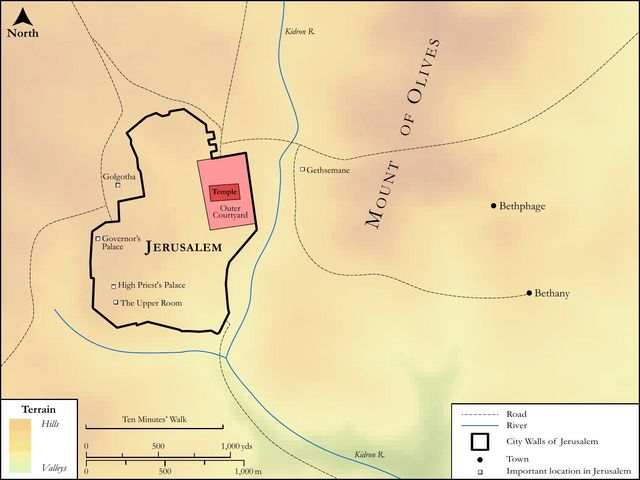
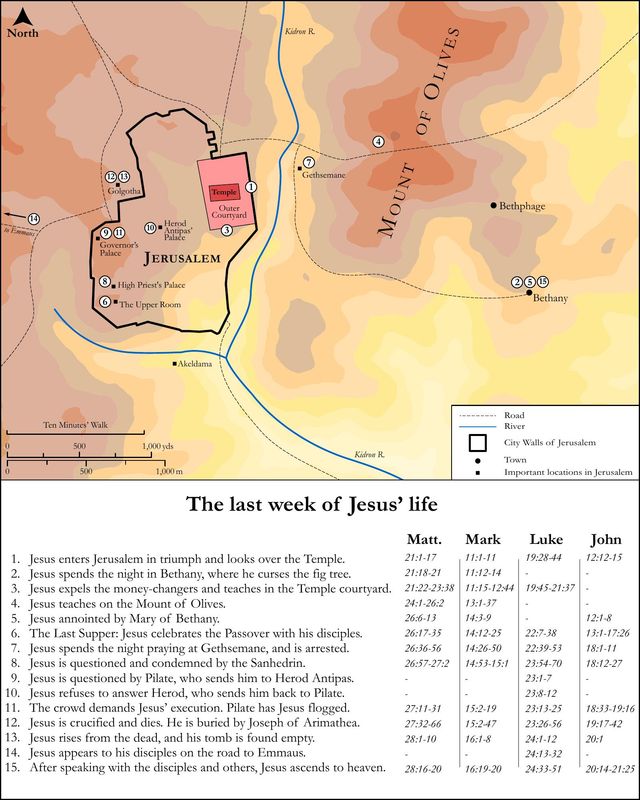
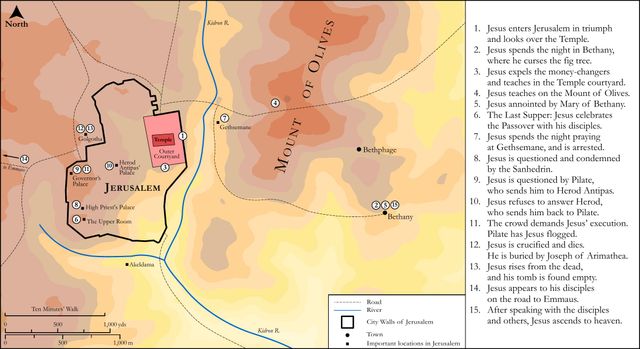
Jesus delivered this discourse privately to His disciples on the Mount of Olives, overlooking the Temple in Jerusalem. At this time, Judea was under Roman occupation, and the Jewish people harbored an intense and widespread expectation for the arrival of the Messiah—a divinely appointed deliverer who would liberate them from foreign rule and establish God's kingdom. This fervent hope, often intertwined with political aspirations, created a fertile ground for charlatans and revolutionaries to claim messianic status, promising salvation or liberation. Throughout Jewish history, and particularly in the first century, there were various individuals who garnered followings by asserting spiritual or political leadership, some even claiming divine anointing. Jesus' warning directly addresses this cultural susceptibility to false messianic claims.
Key Themes
ShowHideThe central theme of Matthew 24:5 is deception, particularly concerning the identity and authority of Christ. Jesus highlights the danger of spiritual counterfeits who will exploit the genuine longing for the Messiah. This verse introduces the broader theme of discernment, emphasizing the need for believers to distinguish between truth and falsehood, especially regarding claims of divine authority or messianic identity. It also touches upon the nature of the end times as a period marked by significant spiritual peril and widespread error, contrasting the true, singular nature of the Messiah with the proliferation of false claimants. The warning serves as a foundational caution for all who seek to understand the signs of the times and remain steadfast in their faith.
Exposition and Analysis
ShowHideKey Word Analysis
ShowHideThis word signifies a large number or quantity, emphasizing the widespread nature of the phenomenon Jesus describes. It suggests that the deception will not be isolated but will affect a significant portion of the population, both those who claim to be Christ and those who are deceived by them. The repetition of "many" underscores the scale of this spiritual threat.
The preposition epí (in, upon, by) combined with ónoma (name) denotes acting under the authority, character, or reputation of someone. Here, it means these false claimants will present themselves as legitimate representatives of Jesus, or even as Jesus Himself, drawing on the power and recognition associated with His name. This is more than merely uttering His name; it implies a usurpation of His unique identity and divine authority.
The combination of the emphatic first-person pronoun egṓ ("I") and the verb eimí ("am") forms a powerful declaration. In a Jewish context, "I AM" (Hebrew: Yahweh) is a divine self-designation, notably used by God to Moses in Exodus 3:14. When Jesus uses "I am" in other contexts (e.g., "I am the bread of life"), it carries profound theological weight. Here, false Christs blasphemously appropriate this divine claim for themselves, asserting absolute authority and identity.
This verb means to cause to roam, to lead astray, to wander from safety, truth, or virtue. It implies not just a simple mistake, but a deliberate act of misleading that results in spiritual error or moral deviation. The deception is effective, causing many to stray from the true path and embrace falsehood.
Verse Breakdown
ShowHide"For many shall come in my name"
The particle "For" (G1063, gár) introduces the reason or explanation for the preceding context (the disciples' questions about the signs). "Many" indicates a significant number of individuals, not just a few isolated cases. These individuals will "come," implying an active emergence and presentation of themselves. The crucial phrase "in my name" signifies that they will claim to act under Jesus' authority, or even embody His identity, leveraging the reverence and expectation associated with the Messiah. This suggests a subtle, insidious form of deception, as they appear to be aligned with Christ.
"saying, I am Christ"
This clause reveals the specific nature of their false claim. They will directly declare themselves to be "Christ" (G5547, Christós), the Anointed One, the long-awaited Messiah. The emphatic "I am" (G1473 egṓ + G1510 eimí) echoes divine declarations, indicating a claim to absolute and unique messianic authority and identity. This is a direct usurpation of Jesus' singular role as the Son of God and Savior.
"and shall deceive many"
This is the inevitable and tragic consequence of their false claims. The conjunction "and" (G2532, kaí) links the action of the false Christs to their effect. The verb "deceive" (G4105, planáō) denotes leading astray, causing to wander from truth or righteousness. The repetition of "many" underscores the widespread success of this deception, indicating that a significant number of people will fall victim to these spiritual counterfeits, believing their lies and straying from the true path of faith.
Literary Devices
ShowHideJesus employs several literary devices in this concise warning. The primary device is Foreshadowing, as He predicts future events that will precede His return, setting the stage for the detailed signs to follow. The statement itself functions as a direct Warning, a crucial admonition to His disciples (and by extension, to all future believers) to be vigilant against specific forms of spiritual danger. The use of "many" (G4183, polýs) can be seen as a form of Generalization or Hyperbole to emphasize the pervasive nature and scale of the deception, rather than a precise numerical count. There is also an element of Irony, as those who come "in my name" (claiming to represent or embody Christ) are, in fact, diametrically opposed to Him, serving as agents of spiritual falsehood. This creates a stark Contrast between the true Messiah and the deceptive imposters.
Theological and Thematic Connections
ShowHideMatthew 24:5 is foundational to understanding the biblical emphasis on discernment and the reality of spiritual warfare. Theologically, it highlights the unique and singular identity of Jesus as the Christ, against whom all other claims are false and deceptive. The warning about "false Christs" underscores the constant threat of spiritual counterfeits that seek to undermine the true gospel and lead believers astray from the authentic person and work of Jesus. This deception is not merely intellectual error but a spiritual wandering that can have eternal consequences, emphasizing the importance of grounding one's faith firmly in the revealed truth of Scripture and the Holy Spirit's guidance. The prevalence of such deception is presented as a characteristic sign of the end times, demanding vigilance and a deep, abiding knowledge of the true Christ.
Reflection and Application
ShowHideJesus' warning in Matthew 24:5 remains profoundly relevant for believers in every generation, serving as a timeless call to spiritual vigilance. In an age saturated with information and diverse spiritual claims, the danger of being led astray by those who present themselves as authoritative spiritual figures, or even as the embodiment of divine truth, is ever-present. This verse compels us to cultivate a deep familiarity with the authentic character, teachings, and mission of Jesus as revealed in the Scriptures. It challenges us to test all spirits and claims against the unwavering standard of God's Word, rather than relying on charisma, emotional appeal, or extraordinary signs. Our protection against deception lies not in fear, but in a robust and discerning faith that is rooted in the truth of Christ, empowering us to recognize and reject anything that deviates from His gospel.
Questions for Reflection
ShowHideFAQ
ShowHideWhat does "in my name" mean here?
ShowHideWhen Jesus says "in my name," it signifies more than simply uttering or invoking His name. It refers to claiming His authority, representing His character, or even asserting His identity. These false Christs will present themselves as having the backing, power, or even the very essence of Jesus, thereby leveraging the reverence and expectation associated with the true Messiah to gain followers and deceive. It implies a usurpation of His unique divine prerogative and mission.
Are these "false Christs" literal individuals claiming to be Jesus, or can it be broader?
ShowHidePrimarily, Jesus is warning about literal individuals who will emerge and explicitly claim the title and identity of the "Christ" or "Messiah." History has seen many such claimants. However, the principle extends more broadly to any teaching, movement, or spiritual leader that subtly or overtly displaces the true Christ, diminishes His unique role, or claims a false "anointing" that leads people away from the biblical Jesus. The core danger is the substitution of the authentic Christ with a counterfeit. This warning is echoed in Matthew 24:24, which speaks of "false Christs, and false prophets" who will "shew great signs and wonders."
How does this warning about false Christs relate to other warnings about false prophets or teachers in the Bible?
ShowHideThe warning about "false Christs" is a specific and highly significant subset of the broader biblical warnings against false prophets and teachers. False prophets claim to speak for God or deliver new revelations, while false teachers distort established doctrines. False Christs, however, go a step further: they claim the ultimate identity of the Anointed One, the Messiah Himself. This makes their deception particularly potent and dangerous, as it strikes at the very core of who Jesus is and what He accomplished. All three categories (false Christs, false prophets, false teachers) are agents of spiritual deception, leading people astray from the truth of God's Word, as seen in passages like Matthew 7:15 and 1 John 4:1.
Christ-Centered Fulfillment
ShowHideThe warning in Matthew 24:5 finds its profound Christ-centered fulfillment in the singular, unrepeatable, and utterly unique identity of Jesus as the true Messiah. While many will come claiming to be "Christ," Jesus alone embodies the fulfillment of all Old Testament prophecies concerning the Anointed One (Luke 24:44). He is not merely a Christ, but the Christ, the Son of the living God, as confessed by Peter in Matthew 16:16. His authority is not claimed but inherent, demonstrated through His miraculous life, atoning death, and victorious resurrection (Romans 1:4). The very existence of false Christs highlights the preciousness and exclusivity of the true Christ, whose coming was marked by humility and sacrifice, not by self-proclamation and deception. The ultimate defense against these counterfeits is a steadfast faith in the one who truly is "the way, the truth, and the life" (John 14:6), the only name under heaven given among men by which we must be saved (Acts 4:12). Thus, this warning ultimately magnifies the unparalleled glory and sufficiency of Jesus Christ, the one true Lamb of God who takes away the sin of the world.