


Luke 21:1
Bible text: King James Version (1769 Blayney text) · Public domain
Bible text: Berean Standard Bible · Public domain
Bible text: American Standard Version (1901) · Public domain
Bible text: World English Bible, Messianic edition · Public domain
Bible text: Geneva Bible (1599) · Public domain
Bible text: Young's Literal Translation · Public domain
- ἈναβλέψαςAnablepsasHaving looked upG308V-AAP-NSMVerb Aorist Active Participle Nominative Singular Masculine
- δὲdenowG1161CONJConjunction
- εἶδενeidenHe sawG1492V-2AAI-3SVerb 2nd Aorist Active Indicative 3rd Singular
- τοὺςtousthe onesG3588T-APMDefinite article Accusative Plural Masculine
- βάλλονταςballontascastingG906V-PAP-APMVerb Present Active Participle Accusative Plural Masculine
- εἰςeisintoG1519PREPPreposition
- τὸtotheG3588T-ASNDefinite article Accusative Singular Neuter
- γαζοφυλάκιονgazophulakiontreasuryG1049N-ASNNoun Accusative Singular Neuter
- τὰtatheG3588T-APNDefinite article Accusative Plural Neuter
- δῶραdōragiftsG1435N-APNNoun Accusative Plural Neuter
- αὐτῶνautōnof themG846P-GPMPersonal pronoun Genitive Plural Masculine
- πλουσίουςplousiousrichG4145A-APMAdjective Accusative Plural Masculine
English is a literal word-by-word gloss of the Greek, not the KJV's wording. Why?
This is the original text the KJV's translators worked from — each Greek word with its own literal English meaning in this verse, prepared by scholars at Tyndale House, Cambridge. The KJV translates whole sentences, not word by word, so its wording differs: one Greek word can become several English words, and the KJV may choose “charity” where the gloss reads “love”. Both are faithful — they answer different questions. For the KJV's own rendering, switch to the KJV text.
Details
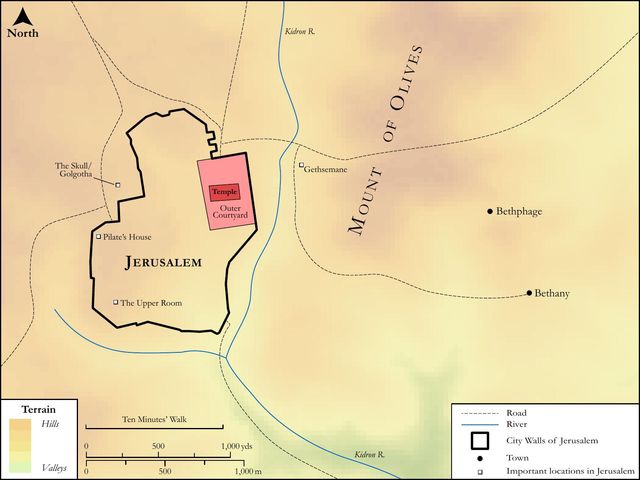
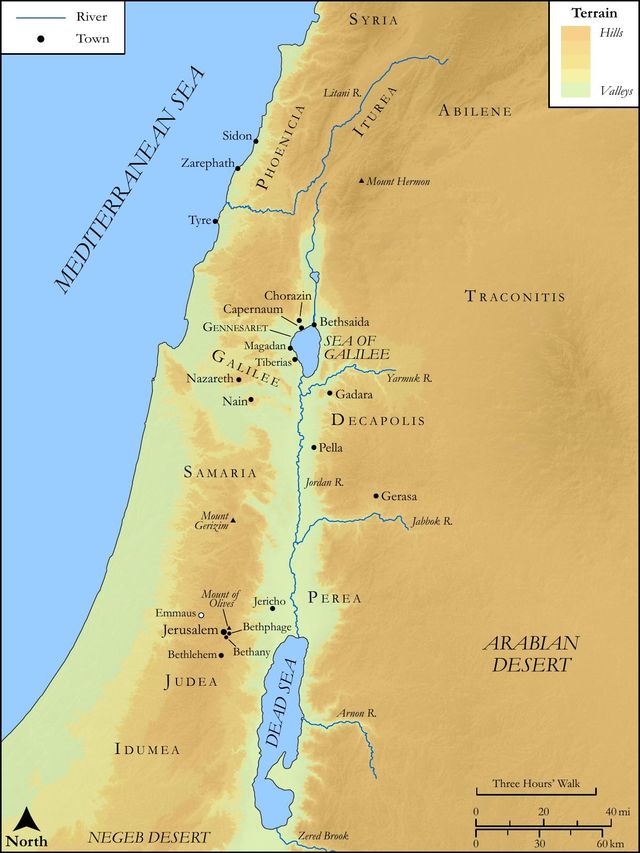
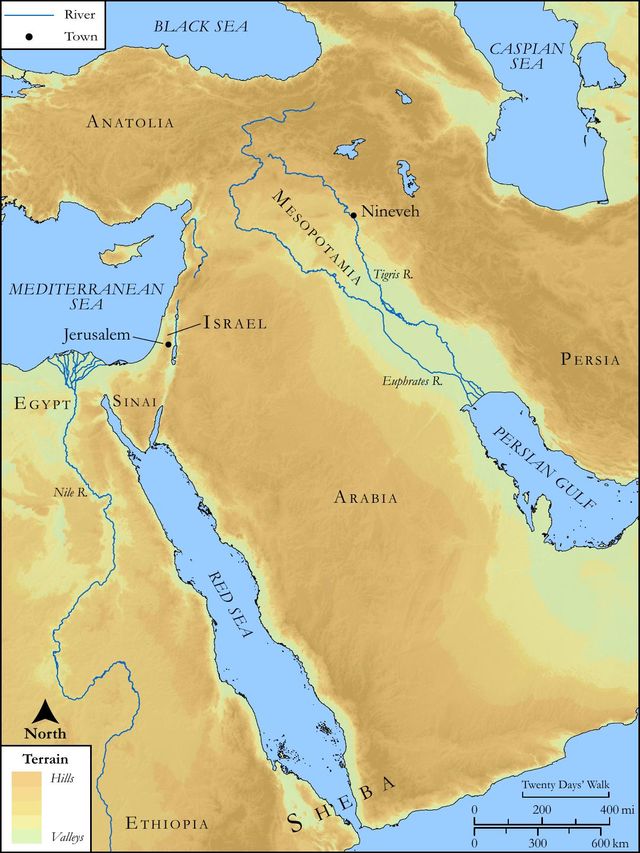
See on the biblical-era maps
Study this verse
Public-domain commentary
Matthew Henry
From his Commentary on the Whole Bible. Henry comments on passages, not single verses — this entry covers Luke 21:1–4.
This short passage of story we had before in Mark. It is thus recorded twice, to teach us, 1. That charity to the poor is a main matter in religion. Our Lord Jesus took all occasions to commend it and recommend it. He had just mentioned the barbarity of the scribes, who devoured poor widows (ch. 20); and perhaps this is designed as an aggravation of it, that the poor widows were the best benefactors to the public funds, of which the scribes had the disposal. 2. That Jesus Christ has his eye upon us, to observe what we give to the poor, and what we contribute to works of piety and charity. Christ, though intent upon his preaching, looked up, to see what gifts were cast into the treasury, Luk 21:1. He observes whether we give largely and liberally, in proportion to what we have, or whether we be sneaking and paltry in it; nay, his eye goes further, he observes whether we give charitably and with a willing mind, or grudgingly and with reluctance. This should make us afraid of coming short of our duty in this matter; men may be deceived with excuses which Christ knows to be frivolous. And this should encourage us to be abundant in it, without desiring that men should know it; it is enough that Christ does; he sees in secret, and will reward openly. 3. That Christ observes and accepts the charity of the poor in a particular manner. Those that have nothing to give may yet do a great deal in charity by ministering to the poor, and helping them, and begging for them, that cannot help themselves, or beg for themselves. But here was one that was herself poor and yet gave what little she had to the treasury. It was but two mites, which make a farthing; but Christ magnified it as a piece of charity exceeding all the rest: She has cast in more than they all. Christ does not blame her for indiscretion, in giving what she wanted herself, nor for vanity in giving among the rich to the treasury; but commended her liberality, and her willingness to part with what little she had for the glory of God, which proceeded from a belief of and dependence upon God's providence to take care of her. Jehovah-jireh - the Lord will provide. 4. That, whatever may be called the offerings of God, we ought to have a respect for, and to our power, yea, and beyond our power, to contribute cheerfully to. These have cast in unto the offerings of God. What is given to the support of the ministry and the gospel, to the spreading and propagating of religion, the education of youth, the release of prisoners, the relief of widows and strangers, and the maintenance of poor families, is given to the offerings of God, and it shall be so accepted and recompensed.
Historical interpretation
Ten Centuries of Reception
10 surviving comments on this verse. Each one is dated, so this reads as a timeline rather than a list.
Select a marker to jump to its quote. Markers stagger vertically where authors wrote within a few decades of each other.
You that are rich cannot do good works in the church, because your eyes, saturated with blackness and covered with the shadows of night, do not see the needy and the poor. Do you, rich and wealthy, think that you celebrate the Lord’s feast? You do not at all consider the offering. You come to the Lord’s feast without a sacrificial offering and take a part of the sacrifice that the poor offered. Look in the Gospel at the widow mindful of the heavenly commandments, doing good in the very middle of the pressures and hardships of poverty. She throws two mites that were her only possessions into the treasury.… She was a greatly blessed and glorious woman, who even before the judgment day merited to be praised by the voice of the Judge. Let the rich be ashamed of their sterility and their misfortunes. A poor widow is found with an offering. Although all things that are given are given to orphans and widows, she who should receive gives that we may know what punishment awaits the rich person. By this teaching, even the poor should do good. We should understand that these works are given to God and that whoever does these deserves well of God. Christ therefore calls these “gifts of God” and points out that the widow has placed two mites among the gifts of God, that it can be more apparent that he who pities the poor lends to God.
While [Jesus] stood in the temple, he also gave the verdict of which we are speaking. In the following verses, you have: “Jesus spoke these words in the treasury while teaching in the temple. And no one seized him.” What is the treasury? It is the contribution of the faithful, the bank of the poor, and the refuge of the needy. Christ sat near this and, according to Luke, gave the opinion that the two mites of the widow were preferable to the gifts of the rich. God’s word preferred love joined with zeal and generosity rather than the lavish gifts of generosity.Let us see what comparison he made when he gave such judgment there near the treasury, for with good reason he preferred the widow who contributed the two mites. That precious poverty of hers was rich in the mystery of faith. So are the two coins that the Samaritan of the Gospels left at the inn to care for the wounds of the man who had fallen among robbers. Mystically representing the church, the widow thought it right to put into the sacred treasury the gift with which the wounds of the poor are healed and the hunger of wayfarers is satisfied.
For here I perceive that Jesus also looks on willingly at the gifts of the rich men, when they are put into the treasury. All too little, at the same time, is it if gifts are cast into the treasury by the rich alone; and so there are the two mites of the poor widow which are also received with gladness; and in that offering verily something is exhibited that goes beyond what Moses prescribed on the subject of the receipt of moneys. For he received gifts from those who had; but Jesus receives them even from those who have not.
(Hom. 1. in Ep. ad Heb., Hom. 28.) For God regarded not the scantiness of the offering, but the overflowing of the affection. Almsgiving is not the bestowing a few things out of many, but it is that of the widow emptying, herself of her whole substance. But if you cannot offer as much as the widow, at least give all that remains over.
Although the spite of some people does not grow gentle with any kindness, nevertheless the works of mercy are not fruitless, and kindness never loses what is offered to the ungrateful. May no one, dearly beloved, make themselves strangers to good works. Let no one claim that his poverty scarcely sufficed for himself and could not help another. What is offered from a little is great, and in the scale of divine justice, the quantity of gifts is not measured but the steadfastness of souls. The “widow” in the Gospel put two coins into the “treasury,” and this surpassed the gifts of all the rich. No mercy is worthless before God. No compassion is fruitless. He has given different resources to human beings, but he does not ask different affections.
A hermit said, ‘One man eats a lot and is still hungry. Another eats a little and has had enough. The man who eats a lot and is still hungry has more merit than the man who eats the little that satisfies him.’
In the Greek language, φυλάξαι signifies to keep, and gaza in Persian means riches, hence gazophylacium is used for the name of the place in which money is kept. Now there was a chest with an opening at the top placed near the altar, on the right hand of those entering the house of God, into which the Priests cast all the money, which was given for the Lord's temple. But our Lord as He overthrows those who trade in His house, so also He remarks those who bring gifts, giving praise to the deserving, but condemning the bad. Hence it follows, And he saw also a certain poor widow casting in thither two mites.
For whatever we offer with an honest heart is well pleasing to God, who hath respect unto the heart, not the substance, nor does He weigh the amount of that which is given in sacrifice, but of that from which it is taken; as it follows, For all these have cast in of their abundance, but she all that she had.
Now mystically, the rich men who cast their gifts into the treasury signify the Jews puffed up with the righteousness of the law; the poor widow, the simplicity of the Church which is called poor, because it has either cast away the spirit of pride, or its sins, as if they were worldly riches. But the Church is a widow, because her Husband endured death for her. She cast two mites into the treasury, because in God's sight, in whose keeping are all the offerings of our works, she presents her gifts, whether of love to God and her neighbour, or of faith and prayer. And these excel all the works of the proud Jews, for they of their abundance cast into the offerings of God, in that they presume on their righteousness, but the Church casts in all her living, for every thing that hath life she believes to be the gift of God.
But looking up, He saw the rich putting their offerings into the treasury. Because in the Greek language, φυλάσσειν means to guard, and gaza in the Persian language means riches, the treasury was called the place where riches were kept. It was a chest with a hole on top, placed near the altar to the right of those entering the house of the Lord, into which the priests who guarded the doors put all the money brought to the temple of the Lord and its upkeep. Read the words of the days. Even now, those who pray running into the house of the Lord, He too looks upon those bringing gifts, and whom He sees as worthy, He praises; whom He sees as reproachable, He condemns.
Or the widow may be taken to mean any soul bereft as it were of her first husband, the ancient law, and not worthy to be united to the Word of God. Who brings to God instead of a dowry faith and a good conscience, and so seems to offer more than those who are rich in words, and abound in the moral virtues of the Gentiles.
(non occ.) Our Lord having rebuked the covetousness of the Scribes who devoured widows' houses, commends the almsgiving of a widow; as it is said, And he looked up, and saw the rich men casting into the treasury, & c.
Continue studying Luke 21:1 across the web’s major study libraries — every link below opens this exact verse, chapter, or book on the destination site.
Read & Compare
 BibleGatewayThis verse in more than 200 translations and 70 languages.
 Bible.comThe YouVersion reader — hundreds of translations, reading plans, and highlights.
 ESV.orgCrossway's official English Standard Version reader.
 NET BibleThe NET translation with 60,000+ translators' notes on every rendering decision.
 STEP BibleTyndale House's free study tool — original text, vocabulary, and scholarly resources.
 BibliaLogos Bible Software's free web reader.
 USCCBThe New American Bible (Revised Edition) with the U.S. bishops' study notes.
Commentaries
 BibleHub CommentariesDozens of classic commentaries on this verse, gathered on one page.
 StudyLightMore than 100 commentary sets — the largest collection on the web.
 BibleRefPlain-English commentary on what this verse means, verse by verse.
 Enduring WordDavid Guzik's free commentary on this chapter, widely used by Bible teachers.
 Bible Study ToolsVerse commentary alongside Greek and Hebrew study aids.
Original Language & Research
- BibleHub InterlinearThe verse word by word — original language, transliteration, and English.
- BibleHub LexiconEvery word's original-language definition and Strong's entry.
 Blue Letter BibleDeep-study tools — Strong's numbers, concordance, and word studies.
 CNTR CollationThe earliest Greek manuscripts of this verse, collated letter by letter.
Sermons, Hymns & Audio


TrulyRandomVerse is not affiliated with these sites and doesn’t control their content. They’re linked because they’re genuinely useful.
Summary
Luke 21:1 serves as a crucial introductory verse, depicting Jesus' keen observation of the affluent members of society making their contributions within the Temple treasury. This seemingly simple act of looking and seeing sets the stage for one of Jesus' most profound teachings on the nature of true generosity and stewardship, contrasting outward displays of wealth with the humble, sacrificial heart that God truly values. It underscores the divine scrutiny of human actions, particularly within the sacred context of worship and giving.
Context
ShowHideLiterary Context
This scene immediately follows Jesus' forceful denunciation of the scribes and their hypocrisy, particularly their love for public recognition and their exploitation of widows (Luke 20:46-47). The transition from a warning against ostentatious piety to an observation of public giving is seamless, setting up a direct counter-example of genuine devotion. This passage is part of Jesus' final teachings in Jerusalem before His passion, delivered within the Temple courts, where He has engaged in various debates and parables, all leading to His ultimate confrontation with the religious establishment. The verses that follow directly present the poignant account of the poor widow's offering (Luke 21:2-4), making Luke 21:1 the essential narrative setup for that pivotal lesson.
Historical & Cultural Context
The "treasury" (Greek: gazophylákion) refers to a specific area within the Temple complex, likely in the Court of Women, where thirteen trumpet-shaped collection chests were placed. These chests were designed to receive various categories of offerings, not just general donations, but specific contributions for wood, incense, gold vessels, and other Temple needs. Public giving was a common practice, and the act of casting gifts into these large, visible receptacles would have been a noticeable event, especially for large sums. Wealthy individuals, often seeking social recognition or fulfilling religious obligations, would make their contributions openly. This cultural backdrop highlights the social dynamics and expectations surrounding religious giving in first-century Judaism, which Jesus would subtly challenge.
Key Themes
ShowHideThis verse introduces several significant themes that resonate throughout Jesus' ministry and the broader New Testament. Firstly, it emphasizes Divine Observation, highlighting that God sees not just the act of giving but the heart behind it. Jesus' "looking up" and "seeing" mirrors God's omnipresent gaze. Secondly, it sets up the theme of Contrast Between Outward Appearance and Inward Reality, which is a recurring motif in Luke's Gospel, particularly in Jesus' critiques of the Pharisees and religious leaders. The rich men's visible, presumably large, gifts stand in stark opposition to the hidden, sacrificial offering of the poor widow in Luke 21:2-4. Finally, it underscores the theme of True Stewardship, prompting a re-evaluation of what constitutes valuable giving in the eyes of God, shifting the focus from quantity to quality of devotion.
Exposition and Analysis
ShowHideKey Word Analysis
ShowHideFrom anablépō, meaning "to look up" or "to recover sight." In this context, it signifies Jesus' intentional upward gaze, perhaps from a seated position, indicating a deliberate act of observation rather than a casual glance. This highlights His focused attention on the activities within the Temple, particularly the financial transactions.
From eídō, a primary verb meaning "to see" (literally or figuratively); by implication, "to know." This word suggests not merely physical perception but a deeper understanding or discernment. Jesus didn't just visually register the rich men; He perceived the nature of their act, setting the stage for His subsequent commentary on its true value.
From gazophylákion, a compound word derived from gáza (treasure) and phylakḗ (a guard or place of keeping). It refers specifically to the "treasure-house" or "collection-boxes" within the Temple courts. This term precisely identifies the location where offerings were deposited, emphasizing the financial aspect of Temple worship and the public nature of these contributions.
Verse Breakdown
ShowHide"¶ And he looked up,"
This opening phrase establishes Jesus' posture and intentionality. He is not passively observing but actively engaging with the scene before Him. The "looked up" suggests He might have been seated, perhaps resting after His intense teaching, and then raised His gaze to survey the surroundings. This deliberate act underscores the significance of what He is about to witness.
"and saw the rich men"
This clause introduces the primary subjects of Jesus' observation. The "rich men" (Greek: ploúsios) are identified by their economic status, which immediately sets up a contrast with the "poor widow" who will appear in the subsequent verses. Their wealth implies an ability to give substantial amounts, and their public act of giving would have been noticeable.
"casting their gifts"
The verb "casting" (Greek: bállō) implies a decisive, perhaps even forceful or ostentatious, action. It suggests that the rich men were not merely placing their gifts discreetly but were making a visible and audible deposit into the collection chests. The "gifts" (Greek: dōron) refer to monetary contributions, distinct from animal sacrifices, intended for the Temple's upkeep and services.
"into the treasury."
This final phrase specifies the destination of the offerings. The "treasury" (Greek: gazophylákion) was the designated area in the Temple for financial donations. Its public nature and the presence of multiple collection boxes made it a focal point for worshippers and observers alike, where acts of giving were on full display.
Literary Devices
ShowHideLuke 21:1, though brief, employs several significant literary devices. The most prominent is Foreshadowing, as this verse directly sets the stage for the profound lesson of the poor widow's offering in the verses that follow (Luke 21:2-4). It creates an immediate Contrast between the wealthy givers and the humble widow, highlighting the disparity in their social standing and, implicitly, their motivations. The act of "looking up" and "seeing" also functions as Symbolism, representing God's omnipresent gaze and His discerning eye that penetrates beyond outward appearances to perceive the heart. There is also a subtle Irony at play: what appears to be a grand act of piety by the rich men will soon be revealed by Jesus as less significant than a seemingly meager contribution.
Theological and Thematic Connections
ShowHideThis verse, while descriptive, carries profound theological weight. It establishes the foundational principle that God observes all human actions, particularly those related to worship and stewardship. Jesus' gaze into the treasury mirrors the divine scrutiny that penetrates beyond outward displays of piety to the true motivations of the heart. The rich men's public giving, likely intended to impress or fulfill religious duty, stands in stark contrast to the genuine, sacrificial giving that Jesus will soon commend. This highlights a core biblical theme: God does not measure generosity by the quantity of the gift but by the devotion and sacrifice it represents. It challenges believers to examine their own motivations in giving and service, recognizing that all deeds are seen by a God who values sincerity over spectacle.
Reflection and Application
ShowHideLuke 21:1 serves as a powerful reminder that our actions, especially those performed in the context of worship and service, are never unseen by God. Jesus' observation of the rich men casting their gifts into the treasury invites us to consider the motivation behind our own generosity and devotion. Are we giving to be seen by others, to fulfill an obligation, or from a heart overflowing with genuine love and gratitude for God? This verse challenges us to move beyond superficial acts of piety and to cultivate an inner disposition of true stewardship, recognizing that our resources, time, and talents are ultimately gifts from God to be used for His glory. It prompts us to reflect on the nature of true worship, which is not measured by the size of our contributions or the prominence of our service, but by the sincerity and sacrifice of our hearts.
Questions for Reflection
ShowHideFAQ
ShowHideWhat was the "treasury" in the Temple?
ShowHideThe "treasury" (Greek: gazophylákion) was a specific area within the Temple complex in Jerusalem, most likely located in the Court of Women. It contained thirteen trumpet-shaped collection chests, each designated for different types of offerings or Temple needs, such as funds for wood, incense, gold vessels, or general maintenance. It was a public and bustling part of the Temple where worshippers would bring their monetary contributions.
Why did Jesus "look up" to see the rich men?
ShowHideThe Greek word anablépō (looked up) suggests that Jesus might have been seated, perhaps resting or teaching, and then deliberately raised His gaze to observe the activity around the collection chests. This act signifies His intentional and focused attention on the scene, indicating that what He was about to witness and comment on was of significant spiritual importance. It wasn't a casual glance but a discerning observation.
What is the significance of "the rich men" in this verse?
ShowHideThe "rich men" are significant because they represent a common societal expectation of giving: those with much should give much, and their giving would be public and substantial. Their presence immediately sets up a dramatic contrast with the "poor widow" introduced in the very next verse (Luke 21:2), whose offering, though monetarily small, is deemed by Jesus to be of far greater value. This contrast highlights Jesus' radical redefinition of true generosity, shifting the focus from the size of the gift to the heart and sacrifice of the giver.
Christ-Centered Fulfillment
ShowHideLuke 21:1, while seemingly a simple observation, profoundly foreshadows and illuminates the very nature of Christ's mission and the values of His kingdom. Jesus, the ultimate observer, sees beyond the outward show of the rich men, preparing His disciples to understand true giving not by its quantity but by its quality of sacrifice, a principle He Himself would perfectly embody. The rich men's gifts, though substantial, pale in comparison to the ultimate "gift" of Christ Himself, who "though he was rich, yet for your sake he became poor, so that you by his poverty might become rich" (2 Corinthians 8:9). Jesus' subsequent teaching on the widow's mite reveals that God values a heart fully surrendered, a truth supremely demonstrated by Christ's own self-offering on the cross, where He "gave himself for us, to redeem us from all lawlessness" (Titus 2:14). His entire life and death were a "casting" of Himself into the treasury of God's will, not for public acclaim, but for the salvation of humanity, fulfilling the law and prophets not through external show but through perfect, internal obedience and sacrificial love (Hebrews 10:5-10). Thus, this verse, by setting the stage for a lesson on true giving, ultimately points to Christ as the supreme example and enabler of such radical, heart-centered devotion.