


Matthew 24:15
Bible text: King James Version (1769 Blayney text) · Public domain
Bible text: King James Version with Strong's numbers · Public domain
Bible text: Berean Standard Bible · Public domain
Bible text: American Standard Version (1901) · Public domain
Bible text: World English Bible, Messianic edition · Public domain
Bible text: Geneva Bible (1599) · Public domain
Bible text: Young's Literal Translation · Public domain
- ὍτανHotanWhenG3752CONJConjunction
- οὖνounthereforeG3767CONJConjunction
- ἴδητεidēteyou may seeG1492V-2AAS-2PVerb 2nd Aorist Active Subjunctive 2nd Plural
- τὸtotheG3588T-ASNDefinite article Accusative Singular Neuter
- βδέλυγμαbdelugmaabominationG946N-ASNNoun Accusative Singular Neuter
- τῆςtēs<the>G3588T-GSFDefinite article Genitive Singular Feminine
- ἐρημώσεωςerēmōseōsof desolation’G2050N-GSFNoun Genitive Singular Feminine
- τὸtowhichG3588T-ASNDefinite article Accusative Singular Neuter
- ῥηθὲνrhēthenhaving been spoken ofG2046V-APP-ASNVerb Aorist Passive Participle Accusative Singular Neuter
- διὰdiathroughG1223PREPPreposition
- ΔανιὴλDaniēlDanielG1158N-GSM-PNoun Genitive Singular Masculine Individual
- τοῦtoutheG3588T-GSMDefinite article Genitive Singular Masculine
- προφήτουprophētouprophetG4396N-GSMNoun Genitive Singular Masculine
- ἑστὸςhestosalready standingG2476V-2RAP-ASNVerb 2nd Perfect Active Participle Accusative Singular Neuter
- ἐνenin [the]G1722PREPPreposition
- τόπῳtopōplaceG5117N-DSMNoun Dative Singular Masculine
- ἁγίῳhagiōholy —G40A-DSMAdjective Dative Singular Masculine
- ὁhothe [one]G3588T-NSMDefinite article Nominative Singular Masculine
- ἀναγινώσκωνanaginōskōnreadingG314V-PAP-NSMVerb Present Active Participle Nominative Singular Masculine
- νοείτωnoeitōhe should understand —G3539V-PAM-3SVerb Present Active Imperative 3rd Singular
English is a literal word-by-word gloss of the Greek, not the KJV's wording. Why?
This is the original text the KJV's translators worked from — each Greek word with its own literal English meaning in this verse, prepared by scholars at Tyndale House, Cambridge. The KJV translates whole sentences, not word by word, so its wording differs: one Greek word can become several English words, and the KJV may choose “charity” where the gloss reads “love”. Both are faithful — they answer different questions. For the KJV's own rendering, switch to the KJV text.
Details
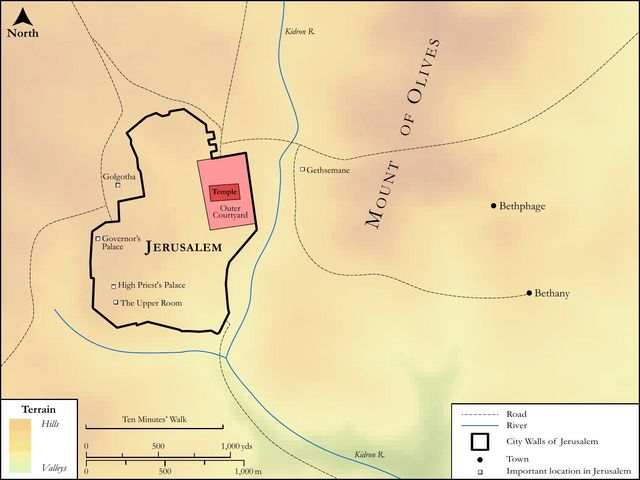
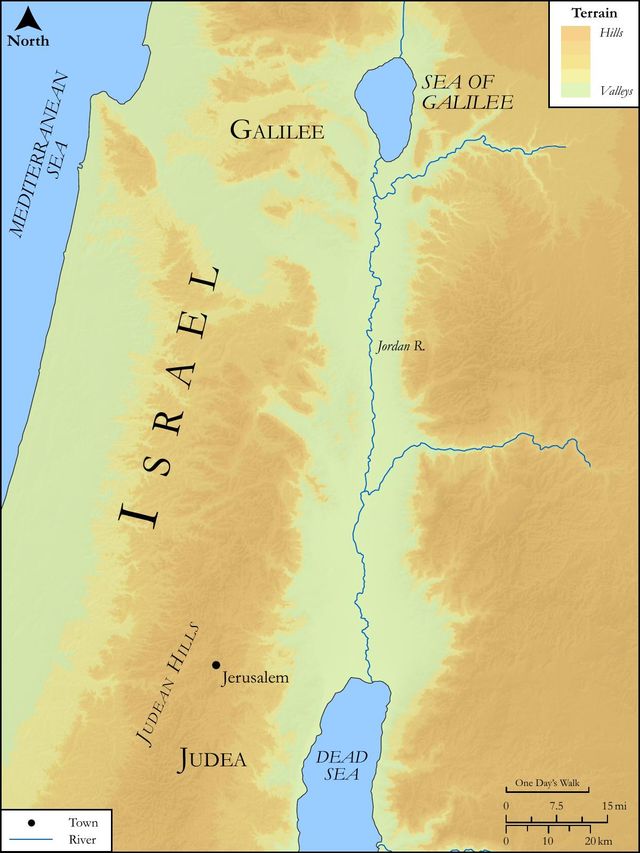
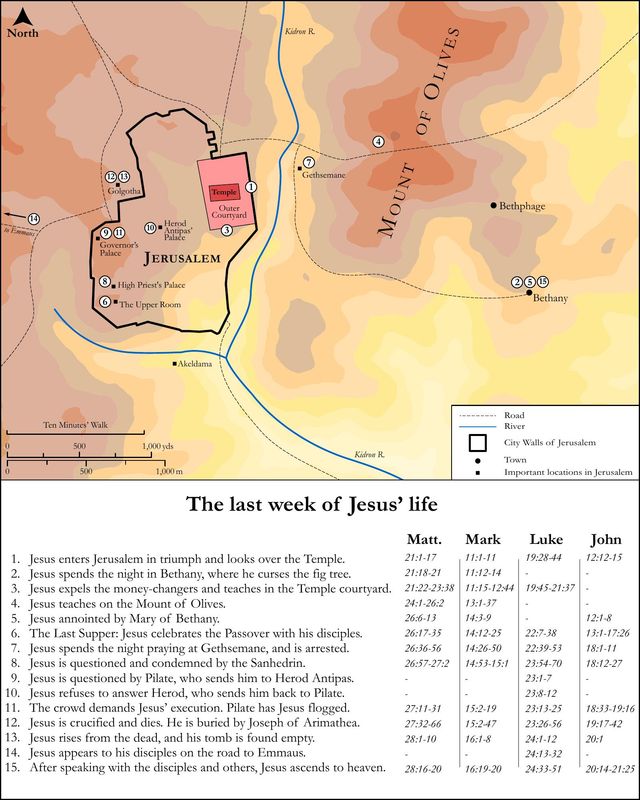
See on the biblical-era maps
Study this verse
Historical interpretation
Ten Centuries of Reception
15 surviving comments on this verse. Each one is dated, so this reads as a timeline rather than a list.
Select a marker to jump to its quote. Markers stagger vertically where authors wrote within a few decades of each other.
(Aug. Serm. App. 75. 2.) Or, They that are with child, are they who covet what belongs to others; they that give suck, are they who have already forcibly taken that which they coveted; to them shall be woe in the day of judgment. Pray ye that your flight be not in the winter, or on the sabbath day; that is,
Watch for your life's sake. Let not your lamps be quenched, nor your loins unloosed; but be ye ready, for ye know not the hour in which our Lord cometh. But often shall ye come together, seeking the things which are befitting to your souls: for the whole time of your faith will not profit you, if ye be not made perfect in the last time. For in the last days false prophets and corrupters shall be multiplied, and the sheep shall be turned into wolves, and love shall be turned into hate; for when lawlessness increaseth, they shall hate and persecute and betray one another, and then shall appear the world-deceiver as Son of God, and shall do signs and wonders, and the earth shall be delivered into his hands, and he shall do iniquitous things which have never yet come to pass since the beginning. Then shall the creation of men come into the fire of trial, and many shall be made to stumble and shall perish; but they that endure in their faith shall be saved from under the curse itself. And then shall appear the signs of the truth; first, the sign of an out-spreading in heaven; then the sign of the sound of the trumpet; and the third, the resurrection of the dead; yet not of all, but as it is said: The Lord shall come and all His saints with Him. Then shall the world see the Lord coming upon the clouds of heaven.
Mystically; In the holy place of the Scriptures, both Old and New Testament, Antichrist, that is, false word, has often stood; let those who see this flee from the Judæa of the letter to the high mountains of truth. And whoso has been found to have gone up to the house-top of the word, and to be standing upon its summit, let him not come down thence as though he would fetch any thing out of his house. And if he be in the field in which the treasure is hid, and return thence to his house, he will run into the temptation of a false word; but especially if he have stripped off his old garment, that is, the old man, and should have returned again to take it up. Then the soul, as it were with child by the word, not having yet brought forth, is liable to a woe; for it casts that which it had conceived, and loses that hope which is in the acts of truth; and the same also if the word has been brought forth perfect and entire, but not having yet attained sufficient growth. Let them that flee to the mountains pray that their flight be not in the winter or on the sabbath-day, because in the serenity of a settled spirit they may reach the way of salvation, but if the winter overtake them they fall amongst those whom they would fly from. And there be some who rest from evil works, but do not good works; be your flight then not on such sabbath when a man rests from good works, for no man is easily overcome in times of peril from false doctrines, except he is unprovided with good works. But what sorer affliction is there than to see our brethren deceived, and to feel one's self shaken and terrified? Those days mean the precepts and dogmas of truth; and all interpretations coming of science falsely so called (1 Tim. 6:20.) are so many additions to those days, which God shortens by those whom He wills.
Or otherwise; It is a sign of His future coming that the Lord gives, when He says, When ye shall see the abomination. For the Prophet spoke this of the times of Antichrist; and he calls abomination that which coming against God claims to itself the honour of God. It is the abomination of desolation, because it will desolate the earth with wars and slaughter; and it is admitted by the Jews, and set up in the holy place, that where God had been invoked by the prayers of the saints, into that same place admitted by the unbelievers it might be adored with the worship of God. And because this error will be peculiar to the Jews, that having rejected the truth they should adopt a lie, He warns them to leave Judæa, and flee to the mountains, that no pollution or infection might be gathered by admixture with a people who should believe on Antichrist. That He says, Let him which is on the housetop not come down to take ang thing out of his house, is thus understood. The roof is the highest part of the house, the summit and perfection of the whole building. He then who stands on the top of his house, i. e. in the perfection of his heart, aloft in the regeneration of a new spirit, ought not to come down to the lower desire of things of the world. Neither let him which is in the field return back to take his coat; i. e. He that has attained to obedience to the command, let him not return back to his former cares, to take on him again the coat of his former sins in which he once was clothed.
That which is said, Woe unto them that are with child, and to them that give suck, is not to be taken literally as an admonition to women pregnant, but as a description of souls burdened with the weight of sin, that neither in the house, nor in the field, may escape the storm of the wrath that is in store for them. Woe also to those that are being suckled; the weak souls, that is, who are being brought to the knowledge of God as by milk, to whom it shall be woe, because they are too laden to fly, and too inexperienced to resist Antichrist, having neither escaped sin, nor partaken of the food of true bread.
Or; That we be not taken in the frost of sins, or in discontinuance of good works, because of the soreness of the affliction; notwithstanding that for the sake of God's elect, those days shall be shortened, that the abridgment of the time may disarm the force of the calamities.
For in the last days false prophets shall be multiplied, and such as corrupt the word; and the sheep shall be changed into wolves, and love into hatred: for through the abounding of iniquity the love of many shall wax cold. For men shall hate, and persecute, and betray one another. And then shall appear the deceiver of the world, the enemy of the truth, the prince of lies, [2 Thessalonians 2:3-12] whom the Lord Jesus "shall destroy with the spirit of His mouth, who takes away the wicked with His lips; and many shall be offended at Him. But they that endure to the end, the same shall be saved. And then shall appear the sign of the Son of man in heaven;" [Isaiah 11:4; Matthew 24:1-51] and afterwards shall be the voice of a trumpet by the archangel; and in that interval shall be the revival of those that were asleep. And then shall the Lord come, and all His saints with Him, with a great concussion above the clouds, with the angels of His power, [Matthew 16:27] in the throne of His kingdom, to condemn the devil, the deceiver of the world, and to render to every one according to his deeds. "Then shall the wicked go away into everlasting punishment, but the righteous shall go into life eternal," [Matthew 25:46] to inherit those things "which eye has not seen, nor ear heard, nor have entered into the heart of man, such things as God has prepared for them that love Him;" [1 Corinthians 2:9] and they shall rejoice in the kingdom of God, which is in Christ Jesus.
For He brought in also a prophecy, to confirm their desolation, saying, "But when ye shall see the abomination of desolation, spoken of by Daniel the prophet, standing in the holy place, let him that readeth understand." He referred them to Daniel. And by "abomination" He meaneth the statue of him who then took the city, which he who desolated the city and the temple placed within the temple, wherefore Christ calleth it, "of desolation." Moreover, in order that they might learn that these things will be while some of them are alive, therefore He said, "When ye see the abomination of desolation."
Whence one may most marvel at Christ's power, and their courage, for that they preached in such times, in which most especially the Jewish state was warred against, in which most especially men regarded them as movers of sedition, when Caesar commanded all of them to be driven away. And the result was the same as if any one (when the sea was stirred up on every side, and darkness was filling all the air, and successive shipwrecks taking place, and when all their fellow-sailors were at strife above, and monsters were rising up from beneath, and with the waves devouring the mariners, and thunderbolts falling, and their being pirates, and those in the vessel plotting one against another), were to command men inexperienced in sailing, and who had not so much as seen the sea to sit at the rudder, and to guide and fight the vessel, and when an immense fleet was coming against them with a great array, making use of a single bark, with her crew in this disturbed state, to sink and subdue the fleet. For indeed by the heathens they were hated as Jews, and by the Jews were stoned, as waging war against their laws; and nowhere could they stand.
Thus were all things, precipices, and reefs, and rocks, the things in the cities, the things in the fields, the things in the houses, and every single person was at war with them; generals and rulers, and private persons, and all nations, and all people, and a turmoil which cannot be set forth by words. For the Jewish race was exceedingly detestable to the government of the Romans, as having occasioned them endless trouble; and not even from this did the preaching of the word take hurt; but the city was stormed and set on fire, and involved its inhabitants in countless evils; but the apostles that came from thence, introducing new laws, prevailed even over the Romans.
O strange and wonderful facts! Countless myriads of Jews did the Romans then subdue, and they did not prevail over twelve men fighting against them naked and unarmed. What language can set forth this miracle? For they that teach need to have these two things, to be worthy of credit, and to be beloved by them whom they are instructing; and together with these, and besides them, that their sayings should be easy of reception, and the time should be free from trouble and tumults.
But then were all the contraries to these. For while they did not seem worthy of credit, they were withdrawing from such as did seem worthy of it, those who had been deceived by them. So far from being loved, they were even hated, and were taking men away from what they loved, both habits, and hereditary customs, and laws.
Again, their injunctions had great difficulty; but the things, from which they were withdrawing men, much pleasure. And many were the perils, many the deaths, both themselves and they that obeyed them underwent, and together with all this, the time also occasioned them much difficulty, teeming with wars, tumults, disturbance, so that, even if there had been none of the things we have mentioned, it would have quite thrown all things into confusion.
As above He had obscurely intimated the end of Jerusalem; He now proceeds to a more plain announcement of it, citing a prophecy which should make them believe it.
Or because he who desolated the city and the temple placed his statue there. He says, When ye shall see, because these things were to happen while some of them were yet alive. Wherein admire Christ's power, and the courage of the disciples, who preached through those times in which all things Jewish were the object of attack. The Apostles, being Jews, introduced new laws in opposition to the Roman authority. The Romans conquered countless thousands of Jews, but could not overcome twelve unarmed unprotected men.
(Hom. lxxvi.) But because it had often happened to the Jews to be recovered in very desperate circumstances, as in the times of Sennacherib and Antiochus, that no man might look for any such event now, He gave command to His disciples to fly, saying, Then let them which are in Judæa flee to the mountains.
Then to show how inevitable the evils that should come upon the Jews, and how infinite their calamity, He adds, And let him which is on the housetop, not come down to take any thing out of his house, for it was better to be saved, and to lose his clothes, than to put on a garment and perish; and of him who is in the field He says the same. For if those who are in the city fly from it, little need is there for those who are abroad to return to the city. But it is easy to despise money, and not hard to provide other raiment; but how can one avoid natural circumstances? How can a woman with child be made active for flight, or how can she that gives suck desert the child she has brought forth? Woe, therefore, to them that are with child, and to them that give suck in those days; to the one, because they are encumbered, and cannot easily fly, bearing about the burden of the womb; to the other, because they are held by compassion for their children, and cannot save with them those whom they are suckling.
Note how this speech is directed against the Jews; for when these things were done by Vespasian, the Apostles could neither observe the Sabbath nor fly, seeing most of them were already dead, and those who survived were living in distant countries. And why they should pray for this He adds a reason, For then shall be great tribulation, such as was not since the beginning of the world to this time, no, nor shall be.
I ask the Jews, whence came upon them so grievous wrath from heaven more woful than all that had come upon them before? Plainly it was because of the desperate crime and the denial of the Cross. But He shows that they deserved still heavier punishment than they received, when He adds, And except those days should be shortened, there should no flesh he saved; that is, If the siege by the Romans should be continued longer, all the Jews would perish; for by all flesh, He means all the Jewish nation, those within and those without; for the Romans were at war not only with those in Judæa, but with the whole race wherever dispersed.
But that the Jews should not say that these evils came because of the preaching and the disciples of Christ, He shows them that had it not been for His disciples, they would have totally perished, but for the elect's sake those days shall be shortened.
Observe this economy of the Holy Spirit in this, that John wrote nothing of all this, that he might not seem to be writing a history after the event; for he survived sometime the taking of Jerusalem. But these who died before it, and saw nothing of it, these write it, that the power of prophecy may shine manifestly forth.
"And except those days should be shortened, there should no flesh be saved; but for the elect's sake those days shall be shortened." By these things He shows them to be deserving of a more grievous punishment than had been mentioned, speaking now of the days of the war and of that siege. But what He saith is like this. If, saith He, the war of the Romans against the city had prevailed further, all the Jews had perished (for by "no flesh" here, He meaneth no Jewish flesh), both those abroad, and those at home. For not only against those in Judaea did they war, but also those that were dispersed everywhere they outlawed and banished, because of their hatred against the former.
But whom doth He here mean by the elect? The believers that were shut up in the midst of them. For that Jews may not say that because of the gospel, and the worship of Christ, these ills took place, He showeth, that so far from the believers being the cause, if it had not been for them, all had perished utterly. For if God had permitted the war to be protracted, not so much as a remnant of the Jews had remained, but lest those of them who had become believers should perish together with the unbelieving Jews, He quickly put down the fighting, and gave an end to the war. Therefore He saith, "But for the elect's sake they shall be shortened." But these things He said to leave an encouragement to those of them who were shut up in the midst of them, and to allow them to take breath, that they might not be in fear, as though they were to perish with them. And if here so great is His care for them, that for their sakes others also are saved, and that for the sake of Christians remnants were left of the Jews, how great will be their honor in the time for their crowns?
By this He also encouraged them not to be distressed at their own dangers, since these others are suffering such things, and for no profit, but for evil upon their own head.
But He not only encouraged them, but also led them off secretly and unsuspectedly from the customs of the Jews. For if there is not to be a change afterwards, and the temple is not to stand, it is quite evident that the law also shall be made to cease.
However, He spake not this openly, but by their entire destruction He darkly intimated it. But He spake it not openly, lest He should startle them before the time. Wherefore neither at the beginning did He of Himself fall into discourse touching these things; but having first lamented over the city, He constrained them to show Him the stones, and question Him, in order that as it were in answering them their question, He might declare to them beforehand all the things to come.
But mark thou, I pray thee, the dispensation of the Spirit, that John wrote none of these things, lest he should seem to write from the very history of the things done (for indeed he lived a long time after the taking of the city), but they, who died before the taking, and had seen none of these things, they write it, in order that every way the power of the prediction should clearly shine forth.
Whenever we are urged to use our understanding, the meaning is shown to be mystical. But we read in Daniel this only: “And for half a week my sacrifice and offering will be removed, and the abomination of desolation shall be in the temple until the end of time, and the end will be given in abandonment.” The apostle also said in this regard that the man of iniquity, the enemy, would rise up against everything uttered by God and would dare to stand in the temple and be worshiped as though he were God. After Satan’s work is finished, however, Christ’s coming will destroy all who raised themselves against him and will return them to the state of divine abandonment. This man of iniquity can be interpreted either simply as the antichrist, or as the image of Caesar which Pilate put in the temple, or as the statue of Hadrian the equestrian which still today stands in the Holy of Holies. Because the Old Testament normally calls the abomination an idol, the word desolation is added here to indicate that the idol shall be placed there resulting in the temple’s abandonment and destruction.
That, Let him that readeth understand, is said to call us to the mystic understanding of the place. What we read in Daniel is this; And in the midst of the week the sacrifice and the oblation shall be taken away, and in the temple shall be the abomination of desolations until the consummation of the time, and consummation shall be given upon the desolate. (Dan. 9:27. sec. LXX.)
Or it may be understood of the statue of Cæsar, which Pilate set up in the temple; or of the equestrian statue of Adrian, which stood to the present time in the very Holy of Holies. For, according to the Old Scripture, an idol is called 'abomination;' of desolation is added, because the idol was set up in the desolated and deserted temple.
Because in the one the severity of the cold prevents your flight to the deserts, and your lurking in mountains and wilds; in the other, you must either transgress the Law, if you will fly, or encounter instant death if you will stay.
Not remembering that which is written. The day continues according to thy ordinances. (Ps. 119:91.) We must understand it of their being shortened not in measure, but in number, lest the faith of believers should be shaken by lengthened affliction.
(Verse 15.) When therefore you shall see the abomination of desolation, which was spoken of by Daniel the prophet, standing in the holy place: he that readeth, let him understand. When we are called to understanding, it is shown to be a mystical happening. We read in Daniel in this way: And in the middle of the week, sacrifice and oblation shall be taken away: and in the temple shall be the abomination of desolation: and the desolation shall continue even to the consummation, and to the end. The apostle speaks about this (II Thess. II): that the man of sin and the adversary will be exalted against everything that is called God and worshiped, so that he dares to stand in the temple of God and show himself to be God, whose coming is according to the working of Satan, with all power, signs, and lying wonders, and destroys those who do not receive the love of the truth, that they might be saved. It can be understood either simply or of the Antichrist, or of the image of Caesar, which Pilate placed in the temple, or of the equestrian statue of Hadrian, which stood in the holy of holies until the present day. Abominatio quoque, secundum veterem Scripturam, idolum nuncupatur; et idcirco additur, desolationis; quod in desolato templo atque destructo idolum positum sit.
(Ep. 199. 31.) Luke, in order to show that the abomination of desolation foretold by Daniel had reference to the time of the siege of Jerusalem, repeats these words of our Lord, When ye shall see Jerusalem encompassed by armies, then know ye that its desolation draweth nigh. (Luke 21:20.)
(Ep. 199. 30.) In Luke it is thus read, There shall be great distress upon the earth, and wrath upon this people, and they shall fall by the edge of the sword, and shall be led away captive into all nations. (Luke 21:23.) And so Josephus, who wrote the Jewish History, (B. J. vii.) relates evils so great happening to this people as to seem hardly credible. Whence it was not unreasonably said, that such tribulation had never been from the beginning of creation, nor should be; for though in the lime of Antichrist shall be such, or perhaps greater; yet to the Jews, of whom we must understand this, such shall never more befal. For if they shall be the first and the chief to receive Antichrist, they will then rather inflict than suffer tribulation.
Indeed some persons seem to me not unfitly to understand by these days the evils themselves, as in other places of divine Scripture evil days are spoken of; not that the days themselves are evil, but the things that are done on them. And they are said to be shortened, because they are less felt, God giving us endurance; so that even though grievous, they are felt as short.
For we ought not to doubt that when Jerusalem was overthrown, there were among that people elect of God who had believed out of the circumcision, or would have believed, elect before the foundation of the world, for whose sake those days should be shortened, and their evils made endurable. Some there are who suppose that the days will be shortened by a more rapid motion of the sun, as the day was made longer on the prayer of Jesus Naue.
(ubi sup.) For let us not suppose that the computation of Daniel's weeks was interfered with by this shortening of those days, or that they were not already at that time complete, but had to be completed afterwards in the end of all things, for Luke most plainly testifies that the prophecy of Daniel was accomplished at the time when Jerusalem was overthrown.
(ubi sup.) For in tribulations we must beware of coming down from the spiritual heights, and yielding ourselves to the carnal life; or of failing and looking behind us, after having made some progress forwards.
(Quæst. Ev. I. 37.) That no one be found in that day in either joy or sorrow for temporal things.
Whence I think that by the abomination of desolation, He means the army by which the city of the holy Jerusalem was desolated.
And this we know was so done when the fall of Jerusalem drew near; for on the approach of the Roman army, all the Christians in the province, warned, as ecclesiastical history tells us (Euseb. H.E. iii. 5.), miraculously from heaven, withdrew, and passing the Jordan, took refuge in the city of Pella; and under the protection of that King Agrippa, of whom we read in the Acts of the Apostles, they continued some time; but Agrippa himself, with the Jews whom he governed, was subjected to the dominion of the Romans.
The "abomination of desolation" means the monument of the city’s captor which he set up in the inner sanctuary of the temple. "Of desolation," because the city had been ravaged; "abomination," because statues and images of men were called "abominations" by the Jews, who hated idolatry.
Continue studying Matthew 24:15 across the web’s major study libraries — every link below opens this exact verse, chapter, or book on the destination site.
Read & Compare
 BibleGatewayThis verse in more than 200 translations and 70 languages.
 Bible.comThe YouVersion reader — hundreds of translations, reading plans, and highlights.
 ESV.orgCrossway's official English Standard Version reader.
 NET BibleThe NET translation with 60,000+ translators' notes on every rendering decision.
 STEP BibleTyndale House's free study tool — original text, vocabulary, and scholarly resources.
 BibliaLogos Bible Software's free web reader.
 USCCBThe New American Bible (Revised Edition) with the U.S. bishops' study notes.
Commentaries
 BibleHub CommentariesDozens of classic commentaries on this verse, gathered on one page.
 StudyLightMore than 100 commentary sets — the largest collection on the web.
 BibleRefPlain-English commentary on what this verse means, verse by verse.
 Enduring WordDavid Guzik's free commentary on this chapter, widely used by Bible teachers.
 Bible Study ToolsVerse commentary alongside Greek and Hebrew study aids.
Original Language & Research
- BibleHub InterlinearThe verse word by word — original language, transliteration, and English.
- BibleHub LexiconEvery word's original-language definition and Strong's entry.
 Blue Letter BibleDeep-study tools — Strong's numbers, concordance, and word studies.
 CNTR CollationThe earliest Greek manuscripts of this verse, collated letter by letter.
Sermons, Hymns & Audio


TrulyRandomVerse is not affiliated with these sites and doesn’t control their content. They’re linked because they’re genuinely useful.
Summary
Matthew 24:15 presents a pivotal prophetic warning from Jesus, drawing directly from the Old Testament prophecies of Daniel. This verse describes a future, unmistakable sign—the "abomination of desolation" standing in the "holy place"—which will signal the onset of the Great Tribulation. Jesus's parenthetical exhortation, "whoso readeth, let him understand," underscores the critical importance of spiritual discernment and careful study of Scripture for believers living in the end times, enabling them to recognize these events and respond appropriately.
Context
ShowHideLiterary Context
Matthew 24:15 is a crucial component of the Olivet Discourse, Jesus's extensive eschatological teaching delivered on the Mount of Olives. This discourse (Matthew 24-25) directly follows His pronouncement of the Temple's destruction in Matthew 24:2. The disciples' subsequent questions in Matthew 24:3 regarding the timing of these events and the signs of His coming prompt Jesus's detailed prophetic response. Verse 15 serves as a specific, unmistakable sign within this broader prophetic timeline, differentiating between general signs of the end (wars, famines, earthquakes) and a definitive marker that initiates the period of intense tribulation described in Matthew 24:21-22. It is a call to immediate action and discernment for those who witness it.
Historical & Cultural Context
The phrase "abomination of desolation" (Greek: bdelygma eremoseos) directly alludes to prophecies in the book of Daniel, specifically Daniel 9:27, Daniel 11:31, and Daniel 12:11. Historically, a significant precursor or "type" of this event occurred in 167 BC when Antiochus IV Epiphanes, a Seleucid king, desecrated the Jerusalem Temple by sacrificing a pig on the altar and erecting an idol of Zeus, an event recorded in 1 Maccabees. For Jesus's Jewish audience, the "holy place" would unequivocally refer to the Temple in Jerusalem, the epicenter of Jewish worship and national identity. The desecration of this sacred space by a foreign or idolatrous entity was the ultimate affront, evoking deep historical and religious memory. Jesus's reference to Daniel indicates a future, ultimate fulfillment that would surpass even Antiochus's act in its spiritual significance and devastating impact.
Key Themes
ShowHideMatthew 24:15 contributes to several overarching themes within the Olivet Discourse and the Gospel of Matthew. Firstly, it highlights Prophetic Fulfillment and Divine Sovereignty, demonstrating God's meticulous control over history and future events, as ancient prophecies find their ultimate realization. Secondly, it emphasizes Discernment and Watchfulness, particularly through the parenthetical "whoso readeth, let him understand." This theme calls believers to actively engage with Scripture and spiritual insight to correctly interpret the signs of the times, rather than being caught unaware, as Jesus warns in Matthew 24:42-44. Thirdly, the verse foreshadows the nature of Ultimate Evil and Antichrist's Deception, as many scholars interpret the "abomination" as an act perpetrated by the "man of lawlessness" (as described in 2 Thessalonians 2:3-4) who will seek to usurp God's place and demand worship in a rebuilt Temple. Finally, it underscores the theme of Perseverance Amidst Tribulation, as the recognition of this sign is meant to prompt believers to flee and endure, knowing that these events are part of God's sovereign plan leading to Christ's return.
Exposition and Analysis
ShowHideKey Word Analysis
ShowHideMeaning "a detestation, i.e. (specially) idolatry." In this context, it refers to something utterly detestable to God, particularly an idolatrous act or object that pollutes or desecrates a sacred space. It carries strong Old Testament connotations of pagan worship or practices that are an affront to Yahweh.
Meaning "despoliation." This word indicates a state of ruin, devastation, or abandonment. When combined with "abomination," it signifies an act that not only defiles but also brings about spiritual and perhaps physical ruin, leading to a state where the holy place is rendered desolate or abandoned by God's presence.
Meaning "to exercise the mind (observe), i.e. (figuratively) to comprehend, heed." This is not merely intellectual comprehension but a deep spiritual insight and discernment that leads to appropriate action. Jesus's imperative calls for careful and prayerful consideration of Daniel's prophecies in light of the unfolding events.
Verse Breakdown
ShowHide"When ye therefore shall see the abomination of desolation,"
Jesus directly addresses His disciples, and by extension, future believers, indicating a specific, observable event. The "abomination of desolation" is a direct reference to Daniel's prophecies, signifying an act or entity that is profoundly detestable to God and results in devastation. This phrase encapsulates the ultimate act of defiance against God within His sacred space.
"spoken of by Daniel the prophet,"
This parenthetical reminder emphasizes the Old Testament prophetic foundation for Jesus's warning. It instructs the audience to consult Daniel's writings for a fuller understanding of this specific event, highlighting the continuity of God's prophetic word across testaments and the reliability of Scripture.
"stand in the holy place,"
This specifies the location of the abomination. The "holy place" unequivocally refers to the Jewish Temple in Jerusalem, or a future rebuilt Temple, which is considered sacred ground. The act of the abomination "standing" there implies an established presence, a public and defiant act of desecration within the very heart of God's designated dwelling.
"(whoso readeth, let him understand:)"
This is a direct appeal from Jesus, not merely a narrative aside. It stresses the urgent need for spiritual discernment and intellectual engagement with the prophetic texts. It implies that understanding these prophecies is crucial for recognizing the signs of the end times and responding with wisdom and obedience, particularly in the face of unprecedented tribulation.
Literary Devices
ShowHideMatthew 24:15 is rich in literary devices that enhance its prophetic weight and urgency. Allusion is paramount, as Jesus directly references "the abomination of desolation, spoken of by Daniel the prophet," immediately invoking the detailed prophecies found in Daniel 9:27, Daniel 11:31, and Daniel 12:11. This intertextual connection establishes continuity between the Old and New Testaments and validates Daniel's prophetic authority. The verse also functions as a Prophetic Warning, clearly outlining a future event that will serve as a definitive sign for believers. The phrase "stand in the holy place" employs Symbolism, as the "holy place" represents not just a physical structure but the sacred space of God's presence, making its desecration a profound spiritual affront. Finally, the Parenthetical Remark "(whoso readeth, let him understand:)" is a direct, urgent exhortation to the reader, breaking the narrative flow to emphasize the critical need for spiritual insight and active discernment, transforming the prophecy from a mere prediction into a call to action.
Theological and Thematic Connections
ShowHideMatthew 24:15 underscores the profound theological truth of God's sovereign control over history and His meticulous revelation of future events. The "abomination of desolation" serves as a stark reminder of the escalating nature of evil in the end times, culminating in an ultimate act of defiance against God within His sacred space. This prophecy highlights the importance of discerning between general signs of the end and specific, pivotal events that trigger the final period of tribulation. It calls believers to a posture of spiritual readiness, not fear, understanding that God's foreknowledge of these events is meant to equip His people to stand firm in faith and bear witness to His truth amidst unprecedented challenges. The continuity of prophecy from Daniel to Jesus demonstrates the unified testimony of Scripture and the unwavering reliability of God's word.
Reflection and Application
ShowHideMatthew 24:15, while speaking of future events, carries profound implications for present-day believers. It serves as a powerful call to spiritual vigilance and a deep engagement with biblical prophecy. Rather than promoting fear or speculative obsession, Jesus's warning encourages a sober and discerning approach to world events, viewed through the lens of Scripture. We are called to be students of God's Word, allowing its prophetic insights to shape our worldview and inform our prayers. This verse reminds us that even in the face of profound evil and tribulation, God remains sovereign, and His plan will unfold exactly as foretold. Our application involves cultivating a lifestyle of watchfulness, living with eternal perspective, and prioritizing spiritual growth so that we are not caught off guard but are prepared to stand firm in our faith, bearing witness to Christ's truth and hope until His glorious return.
Questions for Reflection
ShowHideFAQ
ShowHideWhat exactly is the "abomination of desolation" mentioned by Jesus?
ShowHideThe "abomination of desolation" refers to a profoundly detestable act or object that desecrates a sacred space, specifically the Jewish Temple, and leads to its spiritual and perhaps physical ruin. Jesus directly links it to the prophecies in the Old Testament book of Daniel (Daniel 9:27, Daniel 11:31, Daniel 12:11). Historically, a partial fulfillment occurred when Antiochus IV Epiphanes desecrated the Temple in 167 BC. However, Jesus's use of the phrase, within the context of His end-time discourse, points to a future, ultimate fulfillment, widely understood by evangelical scholars to involve the "man of lawlessness" or Antichrist who will set himself up in a rebuilt Temple and demand worship (2 Thessalonians 2:3-4).
Has the "abomination of desolation" already occurred?
ShowHideWhile there was a historical precursor in 167 BC with Antiochus IV Epiphanes, and some scholars interpret the destruction of the Temple in AD 70 as a fulfillment, Jesus's prophecy in Matthew 24 clearly places the "abomination of desolation" as a sign that precedes the Great Tribulation and His second coming. The language used, particularly the call to "flee to the mountains" immediately after this sign (Matthew 24:16), suggests a future, distinct event that initiates the final, most intense period of tribulation before Christ's return. Therefore, most futurist interpretations understand it as an event yet to occur.
What is meant by the "holy place" where the abomination will stand?
ShowHideThe "holy place" most directly refers to the Jewish Temple in Jerusalem. In the context of the Olivet Discourse, Jesus had just prophesied the destruction of the existing Temple (Matthew 24:2). Therefore, for the "abomination of desolation" to "stand in the holy place" in the future, it implies the existence of a rebuilt Temple in Jerusalem. This is consistent with other New Testament prophecies, such as 2 Thessalonians 2:4, which speaks of the "man of lawlessness" sitting in the "temple of God."
Christ-Centered Fulfillment
ShowHideWhile Matthew 24:15 describes a future act of ultimate rebellion against God, its Christ-centered fulfillment lies in the ultimate triumph of Jesus over all evil and His absolute sovereignty over history. The "abomination of desolation" signifies the pinnacle of human and demonic defiance, yet it is precisely this ultimate manifestation of lawlessness that sets the stage for Christ's glorious return. Jesus, as the true Lamb of God who takes away the sin of the world, is the one who will decisively defeat the "man of lawlessness" and all forces of evil, as prophesied in 2 Thessalonians 2:8. His first coming inaugurated His kingdom, and His second coming will fully establish it, bringing an end to all desolation and establishing a new heavens and new earth where righteousness dwells (2 Peter 3:13). Thus, this dark prophecy ultimately points to the radiant hope of Christ's victorious reign, where every knee will bow and every tongue confess that Jesus Christ is Lord, to the glory of God the Father (Philippians 2:10-11). The warning in Matthew 24:15 serves not to instill fear, but to highlight the necessity and certainty of Christ's ultimate and final triumph over all that opposes God.