


Genesis 1:24
“Day Six: Animals and Humanity Created”Genesis 1:24–31
Bible text: King James Version (1769 Blayney text) · Public domain
Bible text: King James Version with Strong's numbers · Public domain
Bible text: Berean Standard Bible · Public domain
Bible text: American Standard Version (1901) · Public domain
Bible text: World English Bible, Messianic edition · Public domain
Bible text: Geneva Bible (1599) · Public domain
Bible text: Young's Literal Translation · Public domain
- וַיֹּאמֶרvai·Yo·merand he saidH559Conj-w ¦ V-Qal-ConsecImperf-3msVerb Qal Consecutive Imperfect 3rd Singular Masculineוַandיֹּאמֶרhe said
- אֱלֹהִים'E·lo·HimGodH430N-mpNoun Plural Masculine Absolute
- תּוֹצֵאto·Tze'let it produceH3318V-Hiphil-Imperf-3fsVerb Hiphil Imperfect 3rd Singular Feminine
- הָאָרֶץha·'A·retzthe earthH776Art ¦ N-fsNoun Singular Feminine Absoluteהָtheאָרֶץearth
- נֶפֶשׁNe·feshcreature[s]H5315N-fsNoun Singular Feminine Absolute
- חַיָּהchai·YahlivingH2416Adj-fsAdjective Singular Feminine Absolute
- לְמִינָהּle·mi·Nahto its kindH4327Prep-l ¦ N-msc ¦ 3fsNoun Singular Masculine Construct with suffixלְtoמִינָkindהּits
- בְּהֵמָהbe·he·MahlivestockH929N-fsNoun Singular Feminine Absolute
- וָרֶמֶשׂva·Re·mesand creeping thing[s]H7431Conj-w ¦ N-msNoun Singular Masculine Absoluteוָandרֶמֶשׂcreeping thing[s]
- וְחַיְתוֹve·chay·tovand animal[s] ofH2416Conj-w ¦ N-fscNoun Singular Feminine Constructוְandחַיְתוֹanimal[s] of
- אֶרֶץ'E·retz[the] earthH776N-fsNoun Singular Feminine Absolute
- לְמִינָהּle·mi·Nahto its kindH4327Prep-l ¦ N-msc ¦ 3fsNoun Singular Masculine Construct with suffixלְtoמִינָkindהּits
- וַיְהִיvay·hiand it wasH1961Conj-w ¦ V-Qal-ConsecImperf-3msVerb Qal Consecutive Imperfect 3rd Singular Masculineוַandיְהִיit was
- כֵןKhensoH3651AdvAdverb
English is a literal word-by-word gloss of the Hebrew, not the KJV's wording. Why?
This is the original text the KJV's translators worked from — each Hebrew word with its own literal English meaning in this verse, prepared by scholars at Tyndale House, Cambridge. The KJV translates whole sentences, not word by word, so its wording differs: one Hebrew word can become several English words, and the KJV may choose “the LORD” where the gloss reads “Yahweh”. Both are faithful — they answer different questions. For the KJV's own rendering, switch to the KJV text.
Words in [ ] are added by the English.
Details
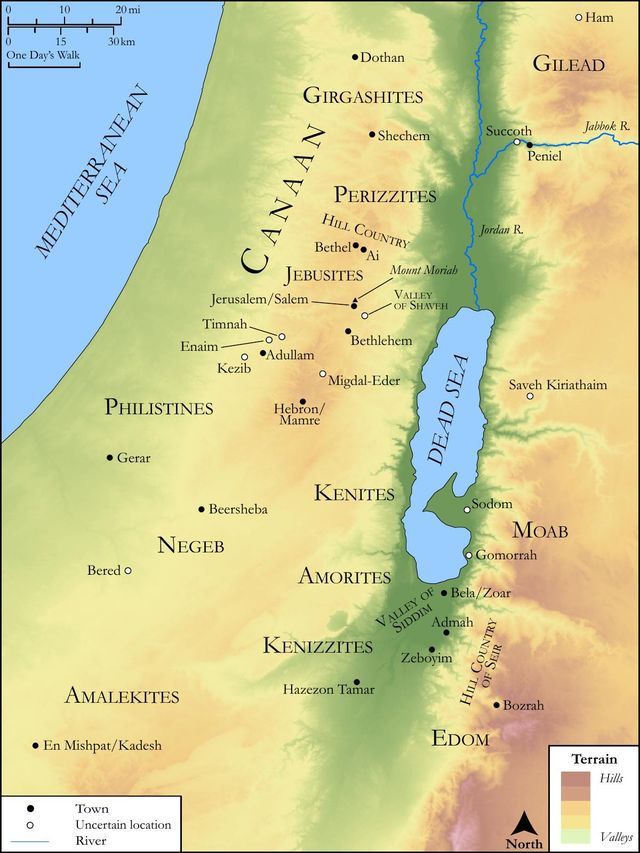
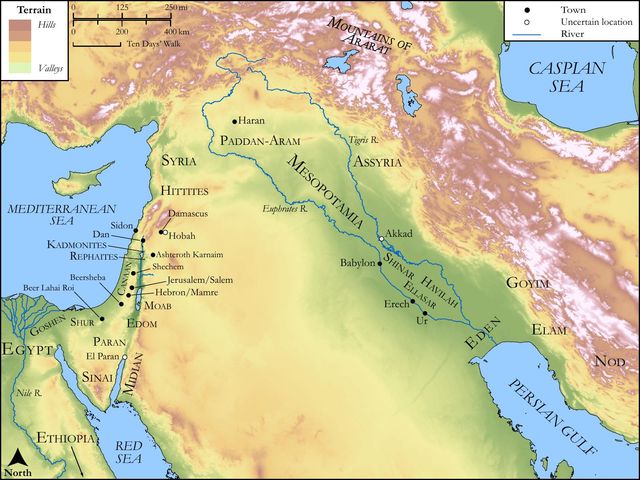
See on the biblical-era maps
Study this verse
Public-domain commentary
Matthew Henry
From his Commentary on the Whole Bible. Henry wrote on whole passages, and this entry covers Genesis 1:24–25.
We have here the first part of the sixth day's work. The sea was, the day before, replenished with its fish, and the air with its fowl; and this day were made the beasts of the earth, the cattle, and the creeping things that pertain to the earth. Here, as before, 1. The Lord gave the word; he said, Let the earth bring forth, not as if the earth had any such prolific virtue as to produce these animals, or as if God resigned his creating power to it; but, "Let these creatures now come into being upon the earth, and out of it, in their respective kinds, conformable to the ideas of them in the divine counsels concerning their creation." 2. He also did the work; he made them all after their kind, not only of divers shapes, but of divers natures, manners, food, and fashions - some to be tame about the house, others to be wild in the fields - some living upon grass and herbs, others upon flesh - some harmless, and others ravenous - some bold, and others timorous - some for man's service, and not his sustenance, as the horse - others for his sustenance, and not his service, as the sheep - others for both, as the ox - and some for neither, as the wild beasts. In all this appears the manifold wisdom of the Creator.
Historical interpretation
Ten Centuries of Reception
12 surviving comments on this verse. Each one is dated, so this reads as a timeline rather than a list.
Select a marker to jump to its quote. Markers stagger vertically where authors wrote within a few decades of each other.
In the present text, I think the impulses of our outer man, that is, of our carnal and earthly man, are indicated by this which is said: "Let the earth bring forth the living creatures according to their kind, four-footed creatures, creeping creatures and beasts on the earth according to their kind." In brief the text indicated nothing winged in these things that are said about the flesh, but only "four-footed creatures, creeping creatures and beasts of the earth." According to that, to be sure, which is said by the apostle, that "no good dwells in my flesh" and that "the wisdom of the flesh is hostile to God," those are certainly things that the earth, that is, our flesh, produces.
After Moses spoke about the creation of the swarming things and of the birds and the sea serpents on the fifth day, he turned to write about the creeping things and the animals and the beasts that were created on the sixth day, saying, "And God said, 'Let the earth bring forth living creatures according to their kinds: cattle and reptiles and beasts.'" [ Gen1:24 ] Although the entire earth was swarming with swarming things, nevertheless the cattle and the beasts were made on the border of Paradise so that they might dwell at the appointed place of Adam. ,
Then the entire earth stirred with creeping things as it had been commanded. The earth also brought forth the beasts of the field as companions to the wild beasts, and it brought forth as many beasts as would be useful for the service of that one who, on that very day, was to transgress the commandment of his Lord.
The command of God advanced step by step and earth thus received her adornment. Yesterday it was said, Let the waters produce moving things, and today let the earth bring forth the living creature. Is the earth then alive? And are the mad-minded Manichæans right in giving it a soul? At these words Let the earth bring forth, it did not produce a germ contained in it, but He who gave the order at the same time gifted it with the grace and power to bring forth. When the earth had heard this command Let the earth bring forth grass and the tree yielding fruit, it was not grass that it had hidden in it that it caused to spring forth, it did not bring to the surface a palm tree, an oak, a cypress, hitherto kept back in its depths. It is the word of God which forms the nature of things created. Let the earth bring forth; that is to say not that she may bring forth that which she has but that she may acquire that which she lacks, when God gives her the power. Even so now, Let the earth bring forth the living creature, not the living creature that is contained in herself, but that which the command of God gives her. Further, the Manichæans contradict themselves, because if the earth has brought forth the life, she has left herself despoiled of life. Their execrable doctrine needs no demonstration.
But why did the waters receive the command to bring forth the moving creature that has life and the earth to bring forth the living creature? We conclude that, by their nature, swimming creatures appear only to have an imperfect life, because they live in the thick element of water. They are hard of hearing, and their sight is dull because they see through the water; they have no memory, no imagination, no idea of social intercourse. Thus divine language appears to indicate that, in aquatic animals, the carnal life originates their psychic movements, while in terrestrial animals, gifted with a more perfect life, the soul enjoys supreme authority. In fact the greater part of quadrupeds have more power of penetration in their senses; their apprehension of present objects is keen, and they keep all exact remembrance of the past. It seems therefore, that God, after the command given to the waters to bring forth moving creatures that have life, created simply living bodies for aquatic animals, while for terrestrial animals He commanded the soul to exist and to direct the body, showing thus that the inhabitants of the earth are gifted with greater vital force. Without doubt terrestrial animals are devoid of reason. At the same time how many affections of the soul each one of them expresses by the voice of nature! They express by cries their joy and sadness, recognition of what is familiar to them, the need of food, regret at being separated from their companions, and numberless emotions. Aquatic animals, on the contrary, are not only dumb; it is impossible to tame them, to teach them, to train them for man's society. The ox knows his owner, and the ass his master's crib. Isaiah 1:3 But the fish does not know who feeds him. The ass knows a familiar voice, he knows the road which he has often trodden, and even, if man loses his way, he sometimes serves him as a guide. His hearing is more acute than that of any other terrestrial animal. What animal of the sea can show so much rancour and resentment as the camel? The camel conceals its resentment for a long time after it has been struck, until it finds an opportunity, and then repays the wrong. Listen, you whose heart does not pardon, you who practise vengeance as a virtue; see what you resemble when you keep your anger for so long against your neighbour like a spark, hidden in the ashes, and only waiting for fuel to set your heart ablaze!
2. Let the earth bring forth a living soul. Why did the earth produce a living soul? So that you may make a difference between the soul of cattle and that of man. You will soon learn how the human soul was formed; hear now about the soul of creatures devoid of reason. Since, according to Scripture, the life of every creature is in the blood, as the blood when thickened changes into flesh, and flesh when corrupted decomposes into earth, so the soul of beasts is naturally an earthy substance. Let the earth bring forth a living soul. See the affinity of the soul with blood, of blood with flesh, of flesh with earth; and remounting in an inverse sense from the earth to the flesh, from the flesh to the blood, from the blood to the soul, you will find that the soul of beasts is earth. Do not suppose that it is older than the essence of their body, nor that it survives the dissolution of the flesh; avoid the nonsense of those arrogant philosophers who do not blush to liken their soul to that of a dog; who say that they have been formerly themselves women, shrubs, fish. Have they ever been fish? I do not know; but I do not fear to affirm that in their writings they show less sense than fish. Let the earth bring forth the living creature. Perhaps many of you ask why there is such a long silence in the middle of the rapid rush of my discourse. The more studious among my auditors will not be ignorant of the reason why words fail me. What! Have I not seen them look at each other, and make signs to make me look at them, and to remind me of what I have passed over? I have forgotten a part of the creation, and that one of the most considerable, and my discourse was almost finished without touching upon it. Let the waters bring forth abundantly the moving creature that has life and fowl that may fly above the earth in the open firmament, of heaven. Genesis 1:20 I spoke of fish as long as eventide allowed: today we have passed to the examination of terrestrial animals; between the two, birds have escaped us. We are forgetful like travellers who unmindful of some important object, are obliged, although they be far on their road, to retrace their steps, punished for their negligence by the weariness of the journey. So we have to turn back. That which we have omitted is not to be despised. It is the third part of the animal creation, if indeed there are three kinds of animals, land, winged and water.
Let the waters it is said bring forth abundantly moving creature that has life and fowl that may fly above the earth in the open firmament of heaven. Why do the waters give birth also to birds? Because there is, so to say, a family link between the creatures that fly and those that swim. In the same way that fish cut the waters, using their fins to carry them forward and their tails to direct their movements round and round and straightforward, so we see birds float in the air by the help of their wings. Both endowed with the property of swimming, their common derivation from the waters has made them of one family. At the same time no bird is without feet, because finding all its food upon the earth it cannot do without their service. Rapacious birds have pointed claws to enable them to close on their prey; to the rest has been given the indispensable ministry of feet to seek their food and to provide for the other needs of life. There are a few who walk badly, whose feet are neither suitable for walking nor for preying. Among this number are swallows, incapable of walking and seeking their prey, and the birds called swifts who live on little insects carried about by the air. As to the swallow, its flight, which grazes the earth, fulfils the function of feet.
3. There are also innumerable kinds of birds. If we review them all, as we have partly done the fish, we shall find that under one name, the creatures which fly differ infinitely in size, form and colour; that in their life, their actions and their manners, they present a variety equally beyond the power of description. Thus some have tried to imagine names for them of which the singularity and the strangeness might, like brands, mark the distinctive character of each kind known. Some, as eagles, have been called Schizoptera, others Dermoptera, as the bats, others Ptilota, as wasps, others Coleoptera, as beetles and all those insects which brought forth in cases and coverings, break their prison to fly away in liberty. But we have enough words of common usage to characterise each species and to mark the distinction which Scripture sets up between clean and unclean birds. Thus the species of carnivora is of one sort and of one constitution which suits their manner of living, sharp talons, curved beak, swift wings, allowing them to swoop easily upon their prey and to tear it up after having seized it. The constitution of those who pick up seeds is different, and again that of those who live on all they come across. What a variety in all these creatures! Some are gregarious, except the birds of prey who know no other society than conjugal union; but innumerable kinds, doves, cranes, starlings, jackdaws, like a common life. Among them some live without a chief and in a sort of independence; others, as cranes, do not refuse to submit themselves to a leader. And a fresh difference between them is that some are stationary and non-migratory; others undertake long voyages and the greater part of them migrate at the approach of winter. Nearly all birds can be tamed and are capable of training, except the weakest, who through fear and timidity cannot bear the constant and annoying contact of the hand. Some like the society of man and inhabit our dwellings; others delight in mountains and in desert places. There is a great difference too in their peculiar notes. Some twitter and chatter, others are silent, some have a melodious and sonorous voice, some are wholly inharmonious and incapable of song; some imitate the voice of man, taught their mimicry either by nature or training; others always give forth the same monotonous cry. The cock is proud; the peacock is vain of his beauty; doves and fowls are amorous, always seeking each other's society. The partridge is deceitful and jealous, lending perfidious help to the huntsmen to seize their prey.
4. What a variety, I have said, in the actions and lives of flying creatures. Some of these unreasoning creatures even have a government, if the feature of government is to make the activity of all the individuals centre in one common end. This may be observed in bees. They have a common dwelling place; they fly in the air together, they work at the same work together; and what is still more extraordinary is that they give themselves to these labours under the guidance of a king and superintendent, and that they do not allow themselves to fly to the meadows without seeing if the king is flying at their head. As to this king, it is not election that gives him this authority; ignorance on the part of the people often puts the worst man in power; it is not fate; the blind decisions of fate often give authority to the most unworthy. It is not heredity that places him on the throne; it is only too common to see the children of kings, corrupted by luxury and flattery, living in ignorance of all virtue. It is nature which makes the king of the bees, for nature gives him superior size, beauty, and sweetness of character. He has a sting like the others, but he does not use it to revenge himself. It is a principle of natural and unwritten law, that those who are raised to high office, ought to be lenient in punishing. Even bees who do not follow the example of their king, repent without delay of their imprudence, since they lose their lives with their sting. Listen, Christians, you to whom it is forbidden to recompense evil for evil and commanded to overcome evil with good. Take the bee for your model, which constructs its cells without injuring any one and without interfering with the goods of others. It gathers openly wax from the flowers with its mouth, drawing in the honey scattered over them like dew, and injects it into the hollow of its cells. Thus at first honey is liquid; time thickens it and gives it its sweetness. The book of Proverbs has given the bee the most honourable and the best praise by calling her wise and industrious. How much activity she exerts in gathering this precious nourishment, by which both kings and men of low degree are brought to health! How great is the art and cunning she displays in the construction of the store houses which are destined to receive the honey! After having spread the wax like a thin membrane, she distributes it in contiguous compartments which, weak though they are, by their number and by their mass, sustain the whole edifice. Each cell in fact holds to the one next to it, and is separated by a thin partition; we thus see two or three galleries of cells built one upon the other. The bee takes care not to make one vast cavity, for fear it might break under the weight of the liquid, and allow it to escape. See how the discoveries of geometry are mere by-works to the wise bee!
The rows of honey-comb are all hexagonal with equal sides. They do not bear on each other in straight lines, lest the supports should press on empty spaces between and give way; but the angles of the lower hexagons serve as foundations and bases to those which rise above, so as to furnish a sure support to the lower mass, and so that each cell may securely keep the liquid honey.
5. How shall we make an exact review of all the peculiarities of the life of birds? During the night cranes keep watch in turn; some sleep, others make the rounds and procure a quiet slumber for their companions. After having finished his duty, the sentry utters a cry, and goes to sleep, and the one who awakes, in his turn, repays the security which he has enjoyed. You will see the same order reign in their flight. One leads the way, and when it has guided the flight of the flock for a certain time, it passes to the rear, leaving to the one who comes after the care of directing the march.
The conduct of storks comes very near intelligent reason. In these regions the same season sees them all migrate. They all start at one given signal. And it seems to me that our crows, serving them as escort, go to bring them back, and to help them against the attacks of hostile birds. The proof is that in this season not a single crow appears, and that they return with wounds, evident marks of the help and of the assistance that they have lent. Who has explained to them the laws of hospitality? Who has threatened them with the penalties of desertion? For not one is missing from the company. Listen, all inhospitable hearts, you who shut your doors, whose house is never open either in the winter or in the night to travellers. The solicitude of storks for their old would be sufficient, if our children would reflect upon it, to make them love their parents; because there is no one so failing in good sense, as not to deem it a shame to be surpassed in virtue by birds devoid of reason. The storks surround their father, when old age makes his feathers drop off, warm him with their wings, and provide abundantly for his support, and even in their flight they help him as much as they are able, raising him gently on each side upon their wings, a conduct so notorious that it has given to gratitude the name of antipelargosis. Let no one lament poverty; let not the man whose house is bare despair of his life, when he considers the industry of the swallow. To build her nest, she brings bits of straw in her beak; and, as she cannot raise the mud in her claws, she moistens the end of her wings in water and then rolls in very fine dust and thus procures mud. After having united, little by little, the bits of straw with this mud, as with glue, she feeds her young; and if any one of them has its eyes injured, she has a natural remedy to heal the sight of her little ones.
This sight ought to warn you not to take to evil ways on account of poverty; and, even if you are reduced to the last extremity, not to lose all hope; not to abandon yourself to inaction and idleness, but to have recourse to God. If He is so bountiful to the swallow, what will He not do for those who call upon Him with all their heart?
The halcyon is a sea bird, which lays its eggs along the shore, or deposits them in the sand. And it lays in the middle of winter, when the violence of the winds dashes the sea against the land. Yet all winds are hushed, and the wave of the sea grows calm, during the seven days that the halcyon sits.
For it only takes seven days to hatch the young. Then, as they are in need of food so that they may grow, God, in His munificence, grants another seven days to this tiny animal. All sailors know this, and call these days halcyon days. If divine Providence has established these marvellous laws in favour of creatures devoid of reason, it is to induce you to ask for your salvation from God. Is there a wonder which He will not perform for you— you have been made in His image, when for so little a bird, the great, the fearful sea is held in check and is commanded in the midst of winter to be calm.
6. It is said that the turtle-dove, once separated from her mate, does not contract a new union, but remains in widowhood, in remembrance of her first alliance. Listen, O women! What veneration for widowhood, even in these creatures devoid of reason, how they prefer it to an unbecoming multiplicity of marriages. The eagle shows the greatest injustice in the education which she gives to her young. When she has hatched two little ones, she throws one on the ground, thrusting it out with blows from her wings, and only acknowledges the remaining one. It is the difficulty of finding food which has made her repulse the offspring she has brought forth. But the osprey, it is said, will not allow it to perish, she carries it away and brings it up with her young ones. Such are parents who, under the plea of poverty, expose their children; such are again those who, in the distribution of their inheritance, make unequal divisions. Since they have given existence equally to each of their children, it is just that they should equally and without preference furnish them with the means of livelihood. Beware of imitating the cruelty of birds with hooked talons. When they see their young are from henceforth capable of encountering the air in their flight, they throw them out of the nest, striking them and pushing them with their wings, and do not take the least care of them. The love of the crow for its young is laudable! When they begin to fly, she follows them, gives them food, and for a very long time provides for their nourishment. Many birds have no need of union with males to conceive. But their eggs are unfruitful, except those of vultures, who more often, it is said, bring forth without coupling: and this although they have a very long life, which often reaches its hundredth year. Note and retain, I pray you, this point in the history of birds; and if ever you see any one laugh at our mystery, as if it were impossible and contrary to nature that a virgin should become a mother without losing the purity of her virginity, bethink you that He who would save the faithful by the foolishness of preaching, has given us beforehand in nature a thousand reasons for believing in the marvellous.
7. Let the waters bring forth the moving creatures that have life, and fowl that may fly above the earth in the open firmament of heaven. They received the command to fly above the earth because earth provides them with nourishment. In the firmament of heaven, that is to say, as we have said before, in that part of the air called οὐρανός, heaven, from the word ὁ ρᾶν, which means to see; called firmament, because the air which extends over our heads, compared to the æther, has greater density, and is thickened by the vapours which exhale from the earth. You have then heaven adorned, earth beautified, the sea peopled with its own creatures, the air filled with birds which scour it in every direction. Studious listener, think of all these creations which God has drawn out of nothing, think of all those which my speech has left out, to avoid tediousness, and not to exceed my limits; recognise everywhere the wisdom of God; never cease to wonder, and, through every creature, to glorify the Creator.
There are some kinds of birds which live by night in the midst of darkness; others which fly by day in full light. Bats, owls, night-ravens are birds of night: if by chance you cannot sleep, reflect on these nocturnal birds and their peculiarities and glorify their Maker. How is it that the nightingale is always awake when sitting on her eggs, passing the night in a continual melody? How is it that one animal, the bat, is at the same time quadruped and fowl? That it is the only one of the birds to have teeth? That it is viviparous like quadrupeds, and traverses the air, raising itself not upon wings, but upon a kind of membrane? What natural love bats have for each other! How they interlace like a chain and hang the one upon the other! A very rare spectacle among men, who for the greater part prefer individual and private life to the union of common life. Have not those who give themselves up to vain science the eyes of owls? The sight of the owl, piercing during the night time, is dazzled by the splendour of the sun; thus the intelligence of these men, so keen to contemplate vanities, is blind in presence of the true light.
During the day, also, how easy it is for you to admire the Creator everywhere! See how the domestic cock calls you to work with his shrill cry, and how, forerunner of the sun, and early as the traveller, he sends forth labourers to the harvest! What vigilance in geese! With what sagacity they divine secret dangers! Did they not once upon a time save the imperial city? When enemies were advancing by subterranean passages to possess themselves of the capitol of Rome, did not geese announce the danger? Is there any kind of bird whose nature offers nothing for our admiration? Who announces to the vultures that there will be carnage when men march in battle array against one another? You may see flocks of vultures following armies and calculating the result of warlike preparations; a calculation very nearly approaching to human reasoning. How can I describe to you the fearful invasions of locusts, which rise everywhere at a given signal, and pitch their camps all over a country? They do not attack crops until they have received the divine command. Or shall I describe how the remedy for this curse, the thrush, follows them with its insatiable appetite, and the devouring nature that the loving God has given it in His kindness for men? How does the grasshopper modulate its song? Why is it more melodious at midday owing to the air that it breathes in dilating its chest?
But it appears to me that in wishing to describe the marvels of winged creatures, I remain further behind than I should if my feet had tried to match the rapidity of their flight. When you see bees, wasps, in short all those flying creatures called insects, because they have an incision all around, reflect that they have neither respiration nor lungs, and that they are supported by air through all parts of their bodies. Thus they perish, if they are covered with oil, because it stops up their pores. Wash them with vinegar, the pores reopen and the animal returns to life. Our God has created nothing unnecessarily and has omitted nothing that is necessary. If now you cast your eyes upon aquatic creatures, you will find that their organization is quite different. Their feet are not split like those of the crow, nor hooked like those of the carnivora, but large and membraneous; therefore they can easily swim, pushing the water with the membranes of their feet as with oars. Notice how the swan plunges his neck into the depths of the water to draw his food from it, and you will understand the wisdom of the Creator in giving this creature a neck longer than his feet, so that he may throw it like a line, and take the food hidden at the bottom of the water.
8. If we simply read the words of Scripture we find only a few short syllables. Let the waters bring forth fowl that may fly above the earth in the open firmament of heaven, but if we enquire into the meaning of these words, then the great wonder of the wisdom of the Creator appears. What a difference He has foreseen among winged creatures! How He has divided them by kinds! How He has characterized each one of them by distinct qualities! But the day will not suffice me to recount the wonders of the air. Earth is calling me to describe wild beasts, reptiles and cattle, ready to show us in her turn sights rivalling those of plants, fish, and birds. Let the earth bring forth the living soul of domestic animals, of wild beasts, and of reptiles after their kind. What have you to say, you who do not believe in the change that Paul promises you in the resurrection, when you see so many metamorphoses among creatures of the air? What are we not told of the horned worm of India! First it changes into a caterpillar, then becomes a buzzing insect, and not content with this form, it clothes itself, instead of wings, with loose, broad plates. Thus, O women, when you are seated busy with your weaving, I mean of the silk which is sent you by the Chinese to make your delicate dresses, remember the metamorphoses of this creature, conceive a clear idea of the resurrection, and do not refuse to believe in the change that Paul announces for all men.
But I am ashamed to see that my discourse oversteps the accustomed limits; if I consider the abundance of matters on which I have just discoursed to you, I feel that I am being borne beyond bounds; but when I reflect upon the inexhaustible wisdom which is displayed in the works of creation, I seem to be but at the beginning of my story. Nevertheless, I have not detained you so long without profit. For what would you have done until the evening? You are not pressed by guests, nor expected at banquets. Let me then employ this bodily fast to rejoice your souls. You have often served the flesh for pleasure, today persevere in the ministry of the soul. Delight yourself also in the Lord and he shall give you the desire of your heart. Do you love riches? Here are spiritual riches. The judgments of the Lord are true and righteous altogether. More to be desired are they than gold and precious stones. Do you love enjoyment and pleasures? Behold the oracles of the Lord, which, for a healthy soul, are sweeter than honey and the honey-comb. If I let you go, and if I dismiss this assembly, some will run to the dice, where they will find bad language, sad quarrels and the pangs of avarice. There stands the devil, inflaming the fury of the players with the dotted bones, transporting the same sums of money from one side of the table to the other, now exalting one with victory and throwing the other into despair, now swelling the first with boasting and covering his rival with confusion. Of what use is bodily fasting and filling the soul with innumerable evils? He who does not play spends his leisure elsewhere. What frivolities come from his mouth! What follies strike his ears! Leisure without the fear of the Lord is, for those who do not know the value of time, a school of vice. I hope that my words will be profitable; at least by occupying you here they have prevented you from sinning. Thus the longer I keep you, the longer you are out of the way of evil.
An equitable judge will deem that I have said enough, not if he considers the riches of creation, but if he thinks of our weakness and of the measure one ought to keep in that which tends to pleasure. Earth has welcomed you with its own plants, water with its fish, air with its birds; the continent in its turn is ready to offer you as rich treasures. But let us put an end to this morning banquet, for fear satiety may blunt your taste for the evening one. May He who has filled all with the works of His creation and has left everywhere visible memorials of His wonders, fill your hearts with all spiritual joys in Jesus Christ, our Lord, to whom belong glory and power, world without end. Amen.
1. How did you like the fare of my morning's discourse? It seemed to me that I had the good intentions of a poor giver of a feast, who, ambitious of having the credit of keeping a good table saddens his guests by the poor supply of the more expensive dishes. In vain he lavishly covers his table with his mean fare; his ambition only shows his folly. It is for you to judge if I have shared the same fate. Yet, whatever my discourse may have been, take care lest you disregard it. No one refused to sit at the table of Elisha; and yet he only gave his friends wild vegetables. 2 Kings 4:39 I know the laws of allegory, though less by myself than from the works of others. There are those truly, who do not admit the common sense of the Scriptures, for whom water is not water, but some other nature, who see in a plant, in a fish, what their fancy wishes, who change the nature of reptiles and of wild beasts to suit their allegories, like the interpreters of dreams who explain visions in sleep to make them serve their own ends. For me grass is grass; plant, fish, wild beast, domestic animal, I take all in the literal sense. For I am not ashamed of the gospel. Romans 1:16 Those who have written about the nature of the universe have discussed at length the shape of the earth. If it be spherical or cylindrical, if it resemble a disc and is equally rounded in all parts, or if it has the forth of a winnowing basket and is hollow in the middle; all these conjectures have been suggested by cosmographers, each one upsetting that of his predecessor. It will not lead me to give less importance to the creation of the universe, that the servant of God, Moses, is silent as to shapes; he has not said that the earth is a hundred and eighty thousand furlongs in circumference; he has not measured into what extent of air its shadow projects itself while the sun revolves around it, nor stated how this shadow, casting itself upon the moon, produces eclipses. He has passed over in silence, as useless, all that is unimportant for us. Shall I then prefer foolish wisdom to the oracles of the Holy Spirit? Shall I not rather exalt Him who, not wishing to fill our minds with these vanities, has regulated all the economy of Scripture in view of the edification and the making perfect of our souls? It is this which those seem to me not to have understood, who, giving themselves up to the distorted meaning of allegory, have undertaken to give a majesty of their own invention to Scripture. It is to believe themselves wiser than the Holy Spirit, and to bring forth their own ideas under a pretext of exegesis. Let us hear Scripture as it has been written.
2. Let the earth bring forth the living creature. Genesis 1:24 Behold the word of God pervading creation, beginning even then the efficacy which is seen displayed today, and will be displayed to the end of the world! As a ball, which one pushes, if it meet a declivity, descends, carried by its form and the nature of the ground and does not stop until it has reached a level surface; so nature, once put in motion by the Divine command, traverses creation with an equal step, through birth and death, and keeps up the succession of kinds through resemblance, to the last. Nature always makes a horse succeed to a horse, a lion to a lion, an eagle to an eagle, and preserving each animal by these uninterrupted successions she transmits it to the end of all things. Animals do not see their peculiarities destroyed or effaced by any length of time; their nature, as though it had been just constituted, follows the course of ages, for ever young. Let the earth bring forth the living creature. This command has continued and earth does not cease to obey the Creator. For, if there are creatures which are successively produced by their predecessors, there are others that even today we see born from the earth itself. In wet weather she brings forth grasshoppers and an immense number of insects which fly in the air and have no names because they are so small; she also produces mice and frogs. In the environs of Thebes in Egypt, after abundant rain in hot weather, the country is covered with field mice. We see mud alone produce eels; they do not proceed from an egg, nor in any other manner; it is the earth alone which gives them birth. Let the earth produce a living creature.
Cattle are terrestrial and bent towards the earth. Man, a celestial growth, rises superior to them as much by the mould of his bodily conformation as by the dignity of his soul. What is the form of quadrupeds? Their head is bent towards the earth and looks towards their belly, and only pursues their belly's good. Your head, O man! Is turned towards heaven; your eyes look up. When therefore you degrade yourself by the passions of the flesh, slave of your belly, and your lowest parts, you approach animals without reason and becomest like one of them. You are called to more noble cares; seek those things which are above where Christ sits. Colossians 3:1 Raise your soul above the earth; draw from its natural conformation the rule of your conduct; fix your conversation in heaven. Your true country is the heavenly Jerusalem; your fellow citizens and your compatriots are the first-born which are written in heaven. Hebrews 12:23
3. Let the earth bring forth the living creature. Thus when the soul of brutes appeared it was not concealed in the earth, but it was born by the command of God. Brutes have one and the same soul of which the common characteristic is absence of reason. But each animal is distinguished by peculiar qualities. The ox is steady, the ass is lazy, the horse has strong passions, the wolf cannot be tamed, the fox is deceitful, the stag timid, the ant industrious, the dog grateful and faithful in his friendships. As each animal was created the distinctive character of his nature appeared in him in due measure; in the lion spirit, taste for solitary life, an unsociable character. True tyrant of animals, he, in his natural arrogance, admits but few to share his honours. He disdains his yesterday's food and never returns to the remains of the prey. Nature has provided his organs of voice with such great force that often much swifter animals are caught by his roaring alone. The panther, violent and impetuous in his leaps, has a body fitted for his activity and lightness, in accord with the movements of his soul. The bear has a sluggish nature, ways of its own, a sly character, and is very secret; therefore it has an analogous body, heavy, thick, without articulations such as are necessary for a cold dweller in dens.
When we consider the natural and innate care that these creatures without reason take of their lives we shall be induced to watch over ourselves and to think of the salvation of our souls; or rather we shall be the more condemned when we are found falling short even of the imitation of brutes. The bear, which often gets severely wounded, cares for himself and cleverly fills the wounds with mullein, a plant whose nature is very astringent. You will also see the fox heal his wounds with droppings from the pine tree; the tortoise, gorged with the flesh of the viper, finds in the virtue of marjoram a specific against this venomous animal and the serpent heals sore eyes by eating fennel.
And is not reasoning intelligence eclipsed by animals in their provision for atmospheric changes? Do we not see sheep, when winter is approaching, devouring grass with avidity as if to make provision for future scarcity? Do we not also see oxen, long confined in the winter season, recognise the return of spring by a natural sensation, and look to the end of their stables towards the doors, all turning their heads there by common consent? Studious observers have remarked that the hedgehog makes an opening at the two extremities of his hole. If the wind from the north is going to blow he shuts up the aperture which looks towards the north; if the south wind succeeds it the animal passes to the northern door. What lesson do these animals teach man? They not only show us in our Creator a care which extends to all beings, but a certain presentiment of future even in brutes. Then we ought not to attach ourselves to this present life and ought to give all heed to that which is to come. Will you not be industrious for yourself, O man? And will you not lay up in the present age rest in that which is to come, after having seen the example of the ant? The ant during summer collects treasures for winter. Far from giving itself up to idleness, before this season has made it feel its severity, it hastens to work with an invincible zeal until it has abundantly filled its storehouses. Here again, how far it is from being negligent! With what wise foresight it manages so as to keep its provisions as long as possible! With its pincers it cuts the grains in half, for fear lest they should germinate and not serve for its food. If they are damp it dries them; and it does not spread them out in all weathers, but when it feels that the air will keep of a mild temperature. Be sure that you will never see rain fall from the clouds so long as the ant has left the grain out.
What language can attain to the marvels of the Creator? What ear could understand them? And what time would be sufficient to relate them? Let us say, then, with the prophet, O Lord, how manifold are your works! In wisdom have you made them all. We shall not be able to say in self-justification, that we have learned useful knowledge in books, since the untaught law of nature makes us choose that which is advantageous to us. Do you know what good you ought to do your neighbour? The good that you expect from him yourself. Do you know what is evil? That which you would not wish another to do to you. Neither botanical researches nor the experience of simples have made animals discover those which are useful to them; but each knows naturally what is salutary and marvellously appropriates what suits its nature.
4. Virtues exist in us also by nature, and the soul has affinity with them not by education, but by nature herself. We do not need lessons to hate illness, but by ourselves we repel what afflicts us, the soul has no need of a master to teach us to avoid vice. Now all vice is a sickness of the soul as virtue is its health. Thus those have defined health well who have called it a regularity in the discharge of natural functions; a definition that can be applied without fear to the good condition of the soul. Thus, without having need of lessons, the soul can attain by herself to what is fit and conformable to nature. Hence it comes that temperance everywhere is praised, justice is in honour, courage admired, and prudence the object of all aims; virtues which concern the soul more than health concerns the body. Children love your parents, and you, parents provoke not your children to wrath. Does not nature say the same? Paul teaches us nothing new; he only tightens the links of nature. If the lioness loves her cubs, if the she wolf fights to defend her little ones, what shall man say who is unfaithful to the precept and violates nature herself; or the son who insults the old age of his father; or the father whose second marriage has made him forget his first children?
With animals invincible affection unites parents with children. It is the Creator, God Himself, who substitutes the strength of feeling for reason in them. From whence it comes that a lamb as it bounds from the fold, in the midst of a thousand sheep recognises the colour and the voice of its mother, runs to her, and seeks its own sources of milk. If its mother's udders are dry, it is content, and, without stopping, passes by more abundant ones. And how does the mother recognise it among the many lambs? All have the same voice, the same colour, the same smell, as far at least as regards our sense of smell. Yet there is in these animals a more subtle sense than our perception which makes them recognise their own. The little dog has as yet no teeth, nevertheless he defends himself with his mouth against any one who teases him. The calf has as yet no horns, nevertheless he already knows where his weapons will grow. Here we have evident proof that the instinct of animals is innate, and that in all beings there is nothing disorderly, nothing unforeseen. All bear the marks of the wisdom of the Creator, and show that they have come to life with the means of assuring their preservation.
The dog is not gifted with a share of reason; but with him instinct has the power of reason. The dog has learned by nature the secret of elaborate inferences, which sages of the world, after long years of study, have hardly been able to disentangle. When the dog is on the track of game, if he sees it divide in different directions, he examines these different paths, and speech alone fails him to announce his reasoning. The creature, he says, is gone here or there or in another direction. It is neither here nor there; it is therefore in the third direction. And thus, neglecting the false tracks, he discovers the true one. What more is done by those who, gravely occupied in demonstrating theories, trace lines upon the dust and reject two propositions to show that the third is the true one?
Does not the gratitude of the dog shame all who are ungrateful to their benefactors? Many are said to have fallen dead by their murdered masters in lonely places. Others, when a crime has just been committed, have led those who were searching for the murderers, and have caused the criminals to be brought to justice. What will those say who, not content with not loving the Master who has created them and nourished them, have for their friends men whose mouth attacks the Lord, sitting at the same table with them, and, while partaking of their food, blaspheme Him who has given it to them?
5. But let us return to the spectacle of creation. The easiest animals to catch are the most productive. It is on account of this that hares and wild goats produce many little ones, and that wild sheep have twins, for fear lest these species should disappear, consumed by carnivorous animals. Beasts of prey, on the contrary, produce only a few and a lioness with difficulty gives birth to one lion; because, if they say truly, the cub issues from its mother by tearing her with its claws; and vipers are only born by gnawing through the womb, inflicting a proper punishment on their mother. Thus in nature all has been foreseen, all is the object of continual care. If you examine the members even of animals, you will find that the Creator has given them nothing superfluous, that He has omitted nothing that is necessary. To carnivorous animals He has given pointed teeth which their nature requires for their support. Those that are only half furnished with teeth have received several distinct receptacles for their food. As it is not broken up enough in the first, they are gifted with the power of returning it after it has been swallowed, and it does not assimilate until it has been crushed by rumination. The first, second, third, and fourth stomachs of ruminating animals do not remain idle; each one of them fulfils a necessary function. The neck of the camel is long so that it may lower it to its feet and reach the grass on which it feeds. Bears, lions, tigers, all animals of this sort, have short necks buried in their shoulders; it is because they do not live upon grass and have no need to bend down to the earth; they are carnivorous and eat the animals upon whom they prey.
Why has the elephant a trunk? This enormous creature, the greatest of terrestrial animals, created for the terror of those who meet it, is naturally huge and fleshy. If its neck was large and in proportion to its feet it would be difficult to direct, and would be of such an excessive weight that it would make it lean towards the earth. As it is, its head is attached to the spine of the back by short vertebrae and it has its trunk to take the place of a neck, and with it it picks up its food and draws up its drink. Its feet, without joints, like united columns, support the weight of its body. If it were supported on lax and flexible legs, its joints would constantly give way, equally incapable of supporting its weight, should it wish either to kneel or rise. But it has under the foot a little ankle joint which takes the place of the leg and knee joints whose mobility would never have resisted this enormous and swaying mass. Thus it had need of this nose which nearly touches its feet. Have you seen them in war marching at the head of the phalanx, like living towers, or breaking the enemies' battalions like mountains of flesh with their irresistible charge? If their lower parts were not in accordance with their size they would never have been able to hold their own. Now we are told that the elephant lives three hundred years and more, another reason for him to have solid and unjointed feet. But, as we have said, his trunk, which has the form and the flexibility of a serpent, takes its food from the earth and raises it up. Thus we are right in saying that it is impossible to find anything superfluous or wanting in creation. Well! God has subdued this monstrous animal to us to such a point that he understands the lessons and endures the blows we give him; a manifest proof that the Creator has submitted all to our rule, because we have been made in His image. It is not in great animals only that we see unapproachable wisdom; no less wonders are seen in the smallest. The high tops of the mountains which, near to the clouds and continually beaten by the winds, keep up a perpetual winter, do not arouse more admiration in me than the hollow valleys, which escape the storms of lofty peaks and preserve a constant mild temperature. In the same way in the constitution of animals I am not more astonished at the size of the elephant, than at the mouse, who is feared by the elephant, or at the scorpion's delicate sting, which has been hollowed like a pipe by the supreme artificer to throw venom into the wounds it makes. And let nobody accuse the Creator of having produced venomous animals, destroyers and enemies of our life. Else let them consider it a crime in the schoolmaster when he disciplines the restlessness of youth by the use of the rod and whip to maintain order.
6. Beasts bear witness to the faith. Have you confidence in the Lord? Thou shall walk upon the asp and the basilisk and you shall trample under feet the lion and the dragon. With faith you have the power to walk upon serpents and scorpions. Do you not see that the viper which attached itself to the hand of Paul, while he gathered sticks, did not injure him, because it found the saint full of faith? If you have not faith, do not fear beasts so much as your faithlessness, which renders you susceptible of all corruption. But I see that for a long time you have been asking me for an account of the creation of man, and I think I can hear you all cry in your hearts, We are being taught the nature of our belongings, but we are ignorant of ourselves. Let me then speak of it, since it is necessary, and let me put an end to my hesitation. In truth the most difficult of sciences is to know one's self. Not only our eye, from which nothing outside us escapes, cannot see itself; but our mind, so piercing to discover the sins of others, is slow to recognise its own faults. Thus my speech, after eagerly investigating what is external to myself, is slow and hesitating in exploring my own nature. Yet the beholding of heaven and earth does not make us know God better than the attentive study of our being does; I am, says the Prophet, fearfully and wonderfully made; that is to say, in observing myself I have known Your infinite wisdom.
Let us glorify the Master Craftsman for all that has been done wisely and skillfully, and from the beauty of the visible things let us form an idea of him who is more than beautiful. And from the greatness of these perceptible and circumscribed bodies let us conceive of him who is infinite and immense and who surpasses all understanding in the plenitude of his power. For even if we are ignorant of things made, yet at least that which in general comes under our observation is so wonderful that even the most acute mind is shown to be at a loss as regards the least of the things in the world, either in the ability to explain it worthily or to render due praise to the Creator, to whom be all glory, honor and power forever.
“Let the earth bring forth living creatures according to their kinds: cattle and creeping things and beasts of the earth according to their kinds.” Consider the word of God moving through all creation, having begun at that time, active up to the present and efficacious until the end, even to the consummation of the world. As a ball, when pushed by someone and then meeting with a slope, is borne downward by its own shape and the inclination of the ground and does not stop before some level surface receives it, so too the nature of existing objects, set in motion by one command, passes through creation, without change, by generation and destruction, preserving the succession of the species through resemblance, until it reaches the very end.
The soul of brute beasts did not emerge after having been hidden in the earth, but it was called into existence of the time of the command.
God said: “Let the earth bring forth living creatures according to their kinds: cattle and creeping things and beasts of the earth according to their kinds.” Different natures of animals sprang forth from the one earth at a single command—the gentle sheep and the carnivorous lion—and the various tendencies of irrational animals that display analogies to various human characteristics. Thus the fox typifies the craftiness of men, the snake the venomous treachery of friends and the neighing horse the wanton young man. There is the busy ant to rouse the indolent and sluggish; for when a man spends an idle youth, then he is instructed by the irrational creatures, being chided by the sacred Scripture, which says, “Go to the ant, O sluggard, and considering her ways, emulate her and become wiser than she.” For when you observe her treasuring up food for herself in good season, imitate her. Treasure up for yourself the fruits of good works for the world to come.
It wasn’t simply for our use that he produced all these things; it was also for our benefit in the sense that we might see the overflowing abundance of his creatures and be overwhelmed at the Creator’s power, and be in a position to know that all these things were produced by a certain wisdom and ineffable love out of regard for the human being that was destined to come into being.
We might infer that because the writer says three times "according to their kinds," our attention is called to three classes. First quadrupeds and creeping things according to their kinds, and here I believe he has indicated what quadrupeds he means, namely, those that belong to the class of creeping things, such as lizards, amphibians, and the like. Thus, in repeating the enumeration of animals, the author did not repeat the name quadrupeds apparently because he included them in the term "creeping things." With this in view, he did not say simply "creeping things" but rather "all creeping things of earth." "Of earth" is added because there are also creeping things in the waters, and "all" is added to include those also that move on four feet, the class specifically intended above by the term quadruped. Next, the beasts are another class, indicated also by the expression "according to their kinds," and they are all those animals, excluding reptiles, that prowl about with fearsome mouths and claws. Finally, the herds make up a third class designated by the phrase "according to their kinds." These have no such fierce and violent ways as wild beasts, although some may attack with their horns.
God also said: Let the earth produce living creatures according to their kinds: livestock, creeping things, and wild animals according to their species. And it was so. After the heavens were adorned with stars, after the air, which due to its proximity deserved the name of heaven, was filled with flying creatures, and after the waters, which are closely connected by nature to the air, were enriched with their animals, from which also rains, snows, hail, and the like derive, it was fitting that the earth too should be filled with its own animals, that is, those born from itself. For it also has a chief connection with the waters, for without their moisture and irrigation, it can neither bear fruit nor even sustain itself, as Peter attests, who says: For the heavens existed long ago, and the earth was formed out of water and through water by God's word (II Peter 3:5). Therefore, God commands the earth to produce livestock, and creeping things, and wild animals; because under the true name of wild animals, everything that rages with mouth or claws, except for serpents, is understood to be comprehended, but the name of creeping things on the earth also includes serpents, and by the name of livestock are designated the animals that are in the use of humans. Where therefore the condition of the other four-footed animals is described, for example, deer, roe deer, antelopes, and goats, and similar creatures, unless perhaps we should say that these also, due to the wildness of their untamed nature, are numbered among the wild animals, according to the old translation, in which it is written: Let the earth bring forth a living soul according to its kind: four-footed creatures, and creeping things, and wild animals, there is no question at all, because under the name of four-footed creatures, all are comprehended which, except for wild animals and creeping things, the earth produced, whether those under human care or those that are wild and in the field.
The saying that man and animals have a like beginning in generation is true of the body; for all animals alike are made of earth. But it is not true of the soul. For the souls of brutes are produced by some power of the body; whereas the human soul is produced by God. To signify this it is written as to other animals: "Let the earth bring forth the living soul" (Genesis 1:24): while of man it is written (Genesis 2:7) that "He breathed into his face the breath of life."
Continue studying Genesis 1:24 across the web’s major study libraries — every link below opens this exact verse, chapter, or book on the destination site.
Read & Compare
 BibleGatewayThis verse in more than 200 translations and 70 languages.
 Bible.comThe YouVersion reader — hundreds of translations, reading plans, and highlights.
 ESV.orgCrossway's official English Standard Version reader.
 NET BibleThe NET translation with 60,000+ translators' notes on every rendering decision.
 STEP BibleTyndale House's free study tool — original text, vocabulary, and scholarly resources.
 BibliaLogos Bible Software's free web reader.
 USCCBThe New American Bible (Revised Edition) with the U.S. bishops' study notes.
Commentaries
 BibleHub CommentariesDozens of classic commentaries on this verse, gathered on one page.
 StudyLightMore than 100 commentary sets — the largest collection on the web.
 BibleRefPlain-English commentary on what this verse means, verse by verse.
 Enduring WordDavid Guzik's free commentary on this chapter, widely used by Bible teachers.
 Bible Study ToolsVerse commentary alongside Greek and Hebrew study aids.
Original Language & Research
- BibleHub InterlinearThe verse word by word — original language, transliteration, and English.
- BibleHub LexiconEvery word's original-language definition and Strong's entry.
 Blue Letter BibleDeep-study tools — Strong's numbers, concordance, and word studies.
 SefariaThe Hebrew text with Rashi and centuries of Jewish commentary.
Sermons, Hymns & Audio


TrulyRandomVerse is not affiliated with these sites and doesn’t control their content. They’re linked because they’re genuinely useful.
Written with AI assistance. Always check it against Scripture.
This verse
God commands the land to bring forth its animals, tame, wild and small, each after its own kind, and it happens just as he says.
“And God said, Let the earth bring forth”
The land, the last part of the world to receive its creatures, yields them at God’s word.
“the living creature after his kind,”
A breathing, living being, made in its own sort.
“cattle, and creeping thing, and beast of the earth”
Tame, small and wild, the animals as people meet them.
“and it was so.”
Every creature God ordered appeared.
Passage studyGenesis 1:24–31
Man Made in God’s Image on the Sixth Day
Summary
On the sixth and last day of his work, God fills the land with animals and then makes man. He commands the earth to bring forth cattle, creeping things and wild beasts, each after its kind, and he sees that they are good. Then he says, “Let us make man in our image, after our likeness,” and he creates mankind in his own image, male and female. He blesses them, gives them the earth and its creatures to rule under him, and gives plants as food to them and to every animal. Last of all he looks over everything he has made and finds it very good. Here we learn where every person’s worth comes from and how God means us to care for his world.
God fills the land with animals
The world is ready for them. The dry land and plants came on the third day (Genesis 1:9, 1:11), the lights that mark the seasons on the fourth (1:14), and the creatures of sea and sky on the fifth (1:20–23). Now God says, “Let the earth bring forth the living creature after his kind.” The verb yâtsâʼ means to go out, or in this form to bring out, so the land yields its creatures at God’s order. The next verse names the maker, “And God made the beast of the earth”, using ʻâsâh, the common word for doing or making anything. The earth supplied the ground, and God gave the animals their being. Genesis 1 often tells what God said and then what he did, as with the firmament (Genesis 1:6, 1:7), and the two always match.
Genesis 2 adds that “out of the ground the LORD God formed every beast of the field” (Genesis 2:19), and man too is formed from the dust of the ground (Genesis 2:7). We share that humble beginning with the animals, and their day of making, though only man bears God’s image.
The three groups name the animals as people meet them: the ones they keep, the small ones at their feet and the wild ones beyond. Cattle, bᵉhêmâh, are the larger animals, especially the herd animals kept as livestock. The creeping thing, remes, is any small creature that moves low along the ground, such as lizards, snakes, mice and beetles. The beast of the earth is the wild animal, whose only master is God: “For every beast of the forest is mine, and the cattle upon a thousand hills” (Psalm 50:10). Verse 25 adds “every” to the creeping things, so even the smallest creature is counted.
People often ask where dinosaurs fit. The three groups are broad enough to take in every land animal, so a creature that lived on land has its plainest place here on the sixth day, though believers who read the days differently differ over when such animals lived. Job describes a huge creature called behemoth (Job 40:15), and Scripture leaves unsaid which animal it was.
The animals are “the living creature”, nephesh with chay, a breathing, living being. Scripture uses the same pair for man when God breathes life into him (Genesis 2:7), so the words show that animals are truly alive and leave open what becomes of a soul after death. What sets man apart in this chapter is the image of God.
What “after his kind” means
God made the animals in distinct sorts, each producing more of its own. The word mîyn, from a root meaning to portion out, is a sort or type. The phrase was said of plants (Genesis 1:11) and of sea creatures and birds (Genesis 1:21), and it returns when God keeps the animals alive through the flood: “Of fowls after their kind, and of cattle after their kind, of every creeping thing of the earth after his kind, two of every sort shall come unto thee, to keep them alive” (Genesis 6:20). God planned the variety of living things, and he cares enough to preserve it. A kind is an everyday word that lines up only loosely with the modern “species”, and it leaves room for great variety within one sort, as dogs come in many breeds and still produce dogs.
Good in God’s sight
God calls the land animals good before man has been made, so they matter to him for their own sake, and man is later put over creatures God has already approved (Genesis 1:28). The word ṭôwb covers what is pleasant, right, useful and fit for its purpose, and Paul says that God’s invisible power is clearly seen in what he has made (Romans 1:20). God gave this verdict on the animals as he first made them, before sin. The fear between people and animals is first spoken of after the flood (Genesis 9:2), where God also requires an account when a beast sheds man’s blood (Genesis 9:5). Even now God speaks to Job of hunting prey for the lion (Job 38:39–41), so a creature can be fearsome to us and still good in his sight.
“Let us make man in our image”
Until now God has said “Let there be” or “Let the earth bring forth”. Here, for the first time in the Bible, he speaks as “us” and announces what he will make before he makes it, and that pause sets man apart from every creature before him. The word for man, ʼâdâm, means a human being or mankind as a whole, which is why God says “man” and then “let them have dominion”.
Who is “us”?
Believers differ here, and each reading has its reasons.
The name ʼĕlôhîym is plural in form and is the Bible’s usual word for the one true God, normally with singular verbs, including “said” in this verse, so it leaves the question open. All three readings hold that there is one God (Deuteronomy 6:4) and that he alone made man. The doctrine of the Trinity rests on far more than this verse, so we can hold it firmly while weighing how much this verse shows.
What it means to be made in God’s image
Being made in God’s image means at least that man resembles God and represents him on the earth. The word tselem, image, is a likeness or representing figure, often used elsewhere of carved or molten figures (Numbers 33:52), and man bears it as a living person. In the world around Israel a king might set up his image in a land to mark his rule there, and God gives that standing to every human being. The other word, dᵉmûwth, likeness, means a resemblance, and saying both strengthens the point. Scripture uses them interchangeably, with likeness alone in Genesis 5:1, image alone in Genesis 9:6, and both when Adam has a son “in his own likeness, after his image” (Genesis 5:3), the language of a son who takes after his father. Luke traces that line back to Adam, “which was the son of God” (Luke 3:38).
God made one creature able to know him, to reason, to choose what is right, to love and to rule. His next words are “and let them have dominion”, so ruling the earth under God belongs with the image from the start. He speaks to the man and woman (Genesis 1:28), and when he later calls to Adam, Adam answers (Genesis 3:9, 3:10), so we are made to hear God and answer him. When Paul speaks of the image renewed in believers, he names “knowledge” (Colossians 3:10) and “righteousness and true holiness” (Ephesians 4:24), so the image includes knowing God and being like him in character. Christian books often call this by its Latin name, Imago Dei.
Jesus says that God is a Spirit (John 4:24) and that a spirit has no flesh and bones (Luke 24:39), and Israel saw no form when the LORD spoke to them (Deuteronomy 4:15). So our likeness to God lies in what we are and do, and our bodies are how we live it out in the world. Only the Son took on flesh, when he became man (John 1:14).
Where believers place the emphasis
Believers stress different sides of the image. Catholic and Orthodox teaching has long placed it chiefly in the soul, with its reason and free will. Reformed teaching adds the knowledge, righteousness and holiness Paul names, and Lutheran teaching ties the image so closely to that first righteousness that it speaks of it, in its narrow sense, as lost at the fall. Many Protestants today stress man’s role as God’s representative ruling creation, and others stress relationship with God and one another, since verse 27 moves straight from the image to “male and female”. Some Orthodox and early Christian writers distinguish image, what man is by nature, from likeness, what he grows into by grace. These views fit together more than they compete, and all agree that the image belongs to man alone among the creatures.
Does the image remain after the fall?
Every fallen person still bears it. After the flood God forbids murder because man is made “in the image of God” (Genesis 9:6), and James says it is wrong to bless God and then curse people made in his likeness (James 3:9). Sin has done great damage, and the image needs renewing in Christ (Colossians 3:10). Believers differ on how deep the damage goes. Reformed teaching holds that sin has corrupted every part of the person, Catholic teaching that human nature is wounded and still good at its root, and Orthodox teaching that the image is kept and the likeness lost and to be regained.
Male and female created he them
God now does what he said, and the story slows to say it three times. The verb bârâʼ, create, comes in each line, and in this chapter it is otherwise kept for the heaven and the earth (Genesis 1:1) and for the great sea creatures and other living things (Genesis 1:21), always with God himself creating. The lines fall into a pattern like poetry, and the event is fully real, just as Moses and Israel sing of the Red Sea (Exodus 15:1) after the crossing has been told. Here ʼâdâm means mankind, since the verse goes on to say “them”, and the same word later becomes the first man’s name: “Male and female created he them; and blessed them, and called their name Adam” (Genesis 5:2).
Every person’s worth
The image gives every person a dignity that rests on God’s making, whatever their strength, usefulness or achievement. So murder is a crime against God’s image (Genesis 9:6), and whoever mocks the poor insults his Maker (Proverbs 17:5). The same holds for the unborn, the aged and the dying. God made all nations of one blood (Acts 17:26), and Eve is “the mother of all living” (Genesis 3:20), so every ancestry, age and ability is included here.
Man and woman share the image fully and equally. The verse sets “male and female” right beside “the image of God”, and God’s blessing in the next verse goes to “them” together. Peter calls husband and wife “heirs together of the grace of life” (1 Peter 3:7). Believers who agree on this equal dignity differ, from other passages, on whether Scripture gives different roles to husbands and wives or to men and women in the church, with complementarians holding that it does and egalitarians that it does not. Paul’s words that man is “the image and glory of God” come in a passage about order and head coverings in worship (1 Corinthians 11:7), and they leave what this verse says of the woman untouched.
How Genesis 1 and Genesis 2 fit together
This verse gives the overall view, and Genesis 2 gives the close-up. There God forms the man from the dust (Genesis 2:7), puts him in the garden (Genesis 2:8) and later makes the woman from his side (Genesis 2:22), and Paul takes the order from that account (1 Timothy 2:13). Jesus reads the two chapters together in one answer about divorce, quoting this verse, “Have ye not read, that he which made them at the beginning made them male and female” (Matthew 19:4), and then Genesis 2 (Matthew 19:5). Mark has “But from the beginning of the creation God made them male and female” (Mark 10:6). Jesus treats this as God’s own design, still in force, and builds his teaching on marriage upon it.
The historic teaching of the church is that a person’s sex is part of God’s good gift in creation, though some denominations have read it differently in recent years. Every person bears God’s image, so anyone wrestling with questions of gender is owed honour and kindness and may bring the struggle to God. In the same conversation Jesus speaks without contempt of people born eunuchs (Matthew 19:12), and God promises eunuchs who hold fast his covenant a place and a name in his house (Isaiah 56:4, 56:5).
Ruling the earth under God
Have dominion, râdâh, means to rule, with the root idea of treading down. It is a king’s word, used of Solomon (1 Kings 4:24), and it can describe harsh rule, as when God condemns the shepherds of Israel: “with force and with cruelty have ye ruled them” (Ezekiel 34:4). Subdue, kâbash, is as forceful, used of a land taken and held (Numbers 32:22, Joshua 18:1) and of people forced back into servitude, which God condemned in Judah (Jeremiah 34:11, 34:17). Here its object is the earth alone. The earth is still unworked, and the first people are to spread over it, work it and make it serve life, for God formed it to be inhabited (Isaiah 45:18). Farming, building, learning and every good kind of work grow from this charge.
The way man rules depends on whom he rules for. The earth remains the LORD’s (Psalm 24:1), his rule is over all (Psalm 103:19) and every beast of the forest is his (Psalm 50:10), so man holds the world in trust. The man’s first task is to dress the garden and keep it (Genesis 2:15). The law gives the ox and donkey their rest (Exodus 23:12), forbids muzzling the ox that treads out the grain (Deuteronomy 25:4) and spares the mother bird (Deuteronomy 22:7). A righteous man cares for the life of his animal (Proverbs 12:10), whether he farms or hunts, and the law even instructs the hunter who catches an animal (Leviticus 17:13). Dominion rules for God and answers to him, and domination rules for itself. The king of Psalm 72 has dominion “from sea to sea” (Psalm 72:8) and uses it to deliver the needy (Psalm 72:12).
Man does stand above the animals: “ye are of more value than many sparrows” (Matthew 10:31), though God remembers every sparrow (Luke 12:6). After the flood God gives animals to man for food (Genesis 9:3) and in the same passage forbids shedding man’s blood (Genesis 9:6). The animals remain God’s and good, so man’s higher place is a duty toward them. Psalm 8 marvels, “What is man, that thou art mindful of him?” (Psalm 8:4), and praises the honour God gave him (Psalm 8:5–8): “Thou madest him to have dominion over the works of thy hands” (Psalm 8:6).
The first blessing: be fruitful and fill the earth
The first words the Bible records God saying to people begin with a gift, and they go to “them”, the man and woman together and the race that will come from them. To bless, bârak, comes from a root meaning to kneel. When God blesses people he gives them something good and the ability to enjoy it, so everything he asks of them here he first enables them to do. The fish and birds had a like blessing on the fifth day (Genesis 1:22), and fruitfulness stays God’s gift through Scripture: “I will have respect unto you, and make you fruitful” (Leviticus 26:9). The man who fears the LORD has children like olive plants round his table (Psalm 128:3, 128:4), and children are a good gift (Psalm 127:3).
“Replenish” in the KJV means fill. Many hear “fill again” today, as if the earth had been full before, but in the English of the KJV the word simply meant to fill, and the Hebrew mâlêʼ means to fill. The BSB reads fill, and the KJV itself has “fill” for the same word in Genesis 1:22. So this word gives no support to the idea of an earlier world destroyed before the six days.
The fall made the charge harder, with pain in childbirth and sweat in work (Genesis 3:16, 3:19). Yet after the flood God speaks the same words: “And God blessed Noah and his sons, and said unto them, Be fruitful, and multiply, and replenish the earth” (Genesis 9:1, and again at 9:7). What follows is new, the animals’ fear of man and their gift as food (Genesis 9:2, 9:3), and the blessing stays the same. Scripture sets no number at which the earth counts as full, so we can think soberly about how to live on the land and still welcome every child as God’s gift.
Is every person meant to have children?
The blessing was given to the human race, and Scripture leaves room within it for each person’s calling. God told Jeremiah to stay unmarried (Jeremiah 16:2), Jesus himself stayed unmarried and honours those who remain single for the kingdom of heaven (Matthew 19:10–12), and Paul calls singleness a gift from God (1 Corinthians 7:7). Someone unmarried or unable to have children is still part of the race God blessed and fully in his image. God promises the faithful eunuch a name better than sons and daughters (Isaiah 56:5), a psalm praises his care for the barren woman (Psalm 113:9), and the longing may be brought to him without shame. Believers differ on how freely married couples may plan the number of their children, with Catholic teaching setting tighter limits than most Protestant churches.
Food from God’s hand
“Behold, I have given you” bids the man and woman look around them. The verb nâthan, give, makes all of it a gift before they have planted anything, from plants that have been growing since the third day. The gift covers “all the earth”, and it lasts, because herb and fruit hold seed, zeraʻ, and each harvest brings the next. “Meat” in the KJV means food of any kind, as the Hebrew ʼoklâh does, so the food named here is plants. The one limit comes in the garden, where God again lets man eat freely of every tree and names a single exception (Genesis 2:16, 2:17), like a generous host who offers the whole house and asks you to leave one room alone.
To every beast, bird and creeping thing “wherein there is life”, again nephesh and chay, God gives “every green herb”. The word for green, yereq, means fresh green growth, and the word for herb, ʻeseb, means grass or tender plants. Insects belong among the creeping things, and fish lie outside this list of land animals and birds. God feeds the animals himself: “He causeth the grass to grow for the cattle” (Psalm 104:14), “He giveth to the beast his food, and to the young ravens which cry” (Psalm 147:9), and all of them wait on him for their food (Psalm 104:27–28, 145:15). “Thou openest thine hand, and satisfiest the desire of every living thing” (Psalm 145:16). Jesus says that your Father feeds the birds, and that you matter more than they do (Matthew 6:26).
Were people vegetarian before the flood?
God gave people plants at creation, and flesh after the flood: “Every moving thing that liveth shall be meat for you; even as the green herb have I given you all things” (Genesis 9:3). That gift came with one limit, that flesh be eaten apart from its blood (Genesis 9:4). Abel kept sheep and offered their fat (Genesis 4:2, 4:4), and God clothed Adam and Eve in skins (Genesis 3:21), yet the first word about eating animals is God’s word to Noah. The fair reading is that permission for flesh came after the flood, and Scripture leaves unsaid whether anyone ate it earlier, or why God first gave plants. This first gift cost no animal its life and belonged to a very good world, and anything further would be guessing.
God himself gave animals as food after the flood, and the New Testament warns against teachers who forbid foods God made to be received with thanks (1 Timothy 4:3, 4:4). A Christian may also eat plants only, and Paul asks the one who eats and the one who abstains to receive each other without contempt (Romans 14:3).
Did animals kill one another before the fall?
Verse 30 names no animal as food for another, and believers differ on what follows.
Scripture is silent on how sharp teeth and claws came to be. Those who hold the first view suggest that God changed these creatures after the fall or made them with the fall in view, and they point out that the giant panda and fruit bats have sharp teeth and live mostly on plants. Those who hold the second take such features as part of the first design. Both agree that God made and fed every creature and that all his work was good. Isaiah sees the wolf dwelling with the lamb and the lion eating straw like the ox, with none to hurt or destroy in all God’s holy mountain (Isaiah 11:6–9, 11:7, 11:9, 65:25), and many see in the lion’s straw a likeness to the food of this verse, though Scripture leaves that link undrawn. On either view, death is an enemy God will destroy (1 Corinthians 15:26).
Very good
God looks at “every thing that he had made”, man in his image included, and calls it “very good”. The verb râʼâh, saw, means to see and also to consider, and God looks over his work as a maker does. He knows the end from the beginning (Isaiah 46:10), so the verdict is written for us, to tell us what he himself thinks of his world, and “behold” bids us stop and look. “Good” was said day after day (Genesis 1:4, 1:10, 1:12, 1:18, 1:21, 1:25), and now mᵉʼôd, very, makes it emphatic over the finished whole, with man in his place and every creature fed. Here ṭôwb means that everything was as God wanted it and did what he made it to do. His work is perfect (Deuteronomy 32:4), he rejoices in it (Psalm 104:31), and the psalmist sings, “O LORD, how manifold are thy works! in wisdom hast thou made them all: the earth is full of thy riches” (Psalm 104:24).
If everything was very good, where did evil come from?
Evil came later, from creatures who turned against God. God made man upright, and people have gone looking for their own inventions (Ecclesiastes 7:29). Man’s sin is told in Genesis 3:6, and sin entered the world through one man (Romans 5:12). The temptation came from the serpent, which Revelation identifies with the devil (Revelation 12:9), and Scripture speaks of angels who sinned and left their first place (Jude 1:6, 2 Peter 2:4) without telling us when. The serpent itself was a creature God made (Genesis 3:1), and as a creature it was good. Thorns first appear in the curse on the ground (Genesis 3:18), and death comes as the penalty God warned of (Genesis 2:17). God tempts no one (James 1:13), so whatever Scripture leaves unexplained about how evil began, it never lays the blame on him.
The sixth day
The sixth day closes God’s work of making, and on the seventh he rests and blesses the day (Genesis 2:1–3, 2:2, 2:3). In Hebrew the first day is literally one day, and only the sixth and seventh carry the word for “the”, which may set apart the last day of work and the day of rest. Believers differ on how long the days were, a question taken up more fully at Genesis 1:5. Many read this as an ordinary day, pointing to the evening and the morning and to the Sabbath command, “For in six days the LORD made heaven and earth” (Exodus 20:11). Others read the days as long periods or as a God-given pattern for telling the story, and ask how the naming of the animals and the making of Eve fit into one day (Genesis 2:19, 2:22). Those who hold to an ordinary day reply that God can do it, and that Adam named only the cattle, the birds and the beasts of the field (Genesis 2:20).
Christ and the sixth day
All things were made through the Son (John 1:3, Colossians 1:16), and “by him all things consist” (Colossians 1:17). He is “the image of the invisible God” (Colossians 1:15) and “the express image of his person” (Hebrews 1:3), and believers are being shaped to be like him (Romans 8:29), changed into the same image from glory to glory (2 Corinthians 3:18) and “renewed in knowledge after the image of him that created him” (Colossians 3:10). So the purpose God announced on this day is still at work in everyone who belongs to Christ.
Christ is the last Adam (1 Corinthians 15:45), and the wind and the sea obeyed him (Mark 4:39). Hebrews takes up Psalm 8 and admits that all things are still to be put under man, and then says that we see Jesus, crowned with glory and honour after suffering death (Hebrews 2:8, 2:9). He holds perfectly the rule man spoiled, and his people will share it through him. He is the bread of life (John 6:35), and the tree of life in the new Jerusalem yields its fruit every month (Revelation 22:2). Anyone in Christ is already a new creature (2 Corinthians 5:17), and the God who called the first world very good says he will make all things new (Revelation 21:1–5, 21:5).
Bearing God’s image in his world
“I have made the earth, the man and the beast that are upon the ground,” says the LORD (Jeremiah 27:5), and in his hand “is the soul of every living thing, and the breath of all mankind” (Job 12:10). Your worth comes from that hand. The image of God was given to you when you were made, and it stays with you through failure, age, sickness and neglect, whatever anyone has said about your sex, your background, your body or your mind. It rests just as surely on the person who annoys you and the person too weak to speak for himself, so the way we speak of anyone should honour the likeness they carry (James 3:9).
Whatever you tend, whether a family, a field, a business or a few animals, you hold it from God and will answer to him for it. The blessing came before the charge, so you can do that work leaning on him and with thanks. Every meal comes from the hand that said “I have given you”, and every good thing he made is to be received with thanksgiving (1 Timothy 4:4). “The heavens declare the glory of God” (Psalm 19:1), and the rest of creation does too, even now, so noticing what God has made and thanking him is a way of agreeing with what he said on this day.
All have sinned (Romans 3:23), and the whole creation groans as it waits to be set free (Romans 8:19–23, 8:21, 8:22, 8:23). When something in the world feels wrong, you are right, because the ruin sin brought is foreign to what God called very good. God loved us while we were still sinners and gave his Son for us (Romans 5:8), and in Christ we are “his workmanship, created in Christ Jesus unto good works” (Ephesians 2:10). The LORD is near to the brokenhearted (Psalm 34:18), and he promises a day when he will wipe away every tear and put an end to death (Revelation 21:4).
Genesis 1:24 This verse
“And God said, Let the earth bring forth”
The land, the last part of the world to receive its creatures, yields them at God’s word.
“the living creature after his kind,”
A breathing, living being, made in its own sort.
“cattle, and creeping thing, and beast of the earth”
Tame, small and wild, the animals as people meet them.
“and it was so.”
Every creature God ordered appeared.
Genesis 1:25
“And God made the beast of the earth after his kind,”
Verse 24 told from God’s side: the land gave the ground, and God made the animal.
“and every thing that creepeth upon the earth after his kind:”
“Every” is added here, so the smallest creature is counted.
“and God saw that it was good.”
The sixth “good” of the chapter, said before man exists.
Genesis 1:26
“And God said, Let us make man”
The first time God speaks as “us” and announces a work before doing it.
“in our image, after our likeness:”
Two near-synonyms for one point: man resembles God and stands for him.
“and let them have dominion”
“Them” shows that “man” means mankind, man and woman both.
“over the fish of the sea, and over the fowl of the air, and over the cattle”
Sea, air and land, the realms filled on the fifth and sixth days.
Genesis 1:27
“So God created man in his own image,”
The purpose of verse 26 carried out.
“in the image of God created he him;”
Said a second time to press the point home.
“male and female created he them.”
Both sexes bear the image, and Jesus builds on these words when he teaches on marriage.
Genesis 1:28
“And God blessed them,”
The gift comes before the charge.
“Be fruitful, and multiply, and replenish the earth,”
Have children and fill the earth.
“and subdue it:”
Bring the unworked earth under control so that it serves life.
“and have dominion over the fish of the sea”
The rule announced in verse 26, now spoken to the man and woman themselves.
Genesis 1:29
“And God said, Behold, I have given you”
God points to food already growing around them.
“every herb bearing seed,”
Plants that carry their own next harvest.
“and every tree, in the which is the fruit of a tree yielding seed;”
Fruit trees too, the whole plant world laid open.
“to you it shall be for meat.”
For food.
Genesis 1:30
“And to every beast of the earth, and to every fowl of the air,”
Land animals and birds, with insects among the creeping things.
“wherein there is life,”
The “living creature” of verse 24.
“I have given every green herb for meat:”
God feeds the animals as he feeds people.
“and it was so.”
The provision stood for every creature on land and in the air.
Genesis 1:31
“And God saw every thing that he had made,”
The whole work at once, man included.
“and, behold, it was very good.”
God’s own verdict, written down for us.
“And the evening and the morning were the sixth day.”
The last day of God’s work, marked in Hebrew with “the”.
Last revised