


Job 40:15
Bible text: King James Version (1769 Blayney text) · Public domain
Bible text: Berean Standard Bible · Public domain
Bible text: American Standard Version (1901) · Public domain
Bible text: World English Bible, Messianic edition · Public domain
Bible text: Geneva Bible (1599) · Public domain
Bible text: Young's Literal Translation · Public domain
- הִנֵּהhi·nehthere!H2009PrtParticle Interjection
- נָאna'pleaseH4994PrtParticle Interjection
- בְהֵמוֹתVe·he·motBehemothH930N-fpNoun Title Plural Feminine Absolute
- אֲשֶׁר'a·SherwhichH834RelParticle Relative
- עָשִׂיתִי'a·Si·tiI madeH6213V-Qal-Perf-1csVerb Qal Perfect 1st Singular common gender
- עִמָּךְ'i·Makhwith youH5973Prep ¦ 2msPrepositionעִמָּwithךְyou
- חָצִירcha·TzirgrassH2682N-msNoun Singular Masculine Absolute
- כַּבָּקָרka·ba·Karlike <the> oxH1241Prep-k ¦ N-csNoun Singular common gender Absoluteכַּlike <the>בָּקָרox
- יֹאכֵלyo·Khelit eatsH398V-Qal-Imperf-3msVerb Qal Imperfect 3rd Singular Masculine
English is a literal word-by-word gloss of the Hebrew, not the KJV's wording. Why?
This is the original text the KJV's translators worked from — each Hebrew word with its own literal English meaning in this verse, prepared by scholars at Tyndale House, Cambridge. The KJV translates whole sentences, not word by word, so its wording differs: one Hebrew word can become several English words, and the KJV may choose “the LORD” where the gloss reads “Yahweh”. Both are faithful — they answer different questions. For the KJV's own rendering, switch to the KJV text.
Details
See on the biblical-era map
Study this verse
Public-domain commentary
Matthew Henry
From his Commentary on the Whole Bible. Henry comments on passages, not single verses — this entry covers Job 40:15–24. His three-level outline is real structure in the source text, so it is rendered as structure.
God, for the further proving of his own power and disproving of Job's pretensions, concludes his discourse with the description of two vast and mighty animals, far exceeding man in bulk and strength, one he calls behemoth, the other leviathan. In these verses we have the former described. "Behold now behemoth, and consider whether thou art able to contend with him who made that beast and gave him all the power he has, and whether it is not thy wisdom rather to submit to him and make thy peace with him." Behemoth signifies beasts in general, but must here be meant of some one particular species. Some understand it of the bull; others of an amphibious animal, well known (they say) in Egypt, called the river-horse (hippopotamus), living among the fish in the river Nile, but coming out to feed upon the earth. But I confess I see no reason to depart from the ancient and most generally received opinion, that it is the elephant that is here described, which is a very strong stately creature, of very large stature above any other, of wonderful sagacity, and of so great a reputation in the animal kingdom that among so many four-footed beasts as we have had the natural history of (ch. 38 and 39) we can scarcely suppose this should be omitted. Observe,
I.The description here given of the behemoth.
1.His body is very strong and well built. His strength is in his loins, Job 40:16. His bones, compared with those of other creatures, are like bars of iron, Job 40:18. His back-bone is so strong that, though his tail be not large, yet he moves it like a cedar, with a commanding force, Job 40:17. Some understand it of the trunk of the elephant, for the word signifies any extreme part, and in that there is indeed a wonderful strength. So strong is the elephant in his back and loins, and the sinews of his thighs, that he will carry a large wooden tower, and a great number of fighting men in it. No animal whatsoever comes near the elephant for strength of body, which is the main thing insisted on in this description.
2.He feeds on the productions of the earth and does not prey upon other animals: He eats grass as an ox (Job 40:15), the mountains bring him forth food (Job 40:20), and the beasts of the field do not tremble before him nor flee from him, as from a lion, but they play about him, knowing they are in no danger from him. This may give us occasion,
(1.)To acknowledge the goodness of God in ordering it so that a creature of such bulk, which requires so much food, should not feed upon flesh (for then multitudes must die to keep him alive), but should be content with the grass of the field, to prevent such destruction of lives as otherwise must have ensued.
(2.)To commend living upon herbs and fruits without flesh, according to the original appointment of man's food, Gen 1:29. Even the strength of an elephant, as of a horse and an ox, may be supported without flesh; and why not that of a man? Though therefore we use the liberty God has allowed us, yet be not among riotous eaters of flesh, Pro 23:20.
(3.)To commend a quiet and peaceable life. Who would not rather, like the elephant, have his neighbours easy and pleasant about him, than, like the lion, have them all afraid of him?
3.He lodges under the shady trees (Job 40:21), which cover him with their shadow (Job 40:22), where he has a free and open air to breathe in, while lions, which live by prey, when they would repose themselves, are obliged to retire into a close and dark den, to live therein, and to abide in the covert of that, Job 38:40. Those who are a terror to others cannot but be sometimes a terror to themselves too; but those will be easy who will let others be easy about them; and the reed and fens, and the willows of the brook, though a very weak and slender fortification, yet are sufficient for the defence and security of those who therefore dread no harm, because they design none.
4.That he is a very great and greedy drinker, not of wine or strong drink (to be greedy of that is peculiar to man, who by his drunkenness makes a beast of himself), but of fair water.
(1.)His size is prodigious, and therefore he must have supply accordingly, Job 40:23. He drinks so much that one would think he could drink up a river, if you would give him time, and not hasten him. Or, when he drinks, he hasteth not, as those do that drink in fear; he is confident of his own strength and safety, and therefore makes no haste when he drinks, no more haste than good speed.
(2.)His eye anticipates more than he can take; for, when he is very thirsty, having been long kept without water, he trusts that he can drink up Jordan in his mouth, and even takes it with his eyes, Job 40:24. As a covetous man causes his eyes to fly upon the wealth of this world, which he is greedy of, so this great beast is said to snatch, or draw up, even a river with his eyes.
(3.)His nose has in it strength enough for both; for, when he goes greedily to drink with it, he pierces through snares or nets, which perhaps are laid in the waters to catch fish. He makes nothing of the difficulties that lie in his way, so great is his strength and so eager his appetite.
II.The use that is to be made of this description.
We have taken a view of this mountain of a beast, this over-grown animal, which is here set before us, not merely as a show (as sometimes it is in our country) to satisfy our curiosity and to amuse us, but as an argument with us to humble ourselves before the great God; for,
1.He made this vast animal, which is so fearfully and wonderfully made; it is the work of his hands, the contrivance of his wisdom, the production of his power; it is behemoth which I made, Job 40:15. Whatever strength this, or any other creature, has, it is derived from God, who therefore must be acknowledged to have all power originally and infinitely in himself, and such an arm as it is not for us to contest with. This beast is here called the chief, in its kind, of the ways of God (Job 40:19), an eminent instance of the Creator's power and wisdom. Those that will peruse the accounts given by historians of the elephant will find that his capacities approach nearer to those of reason than the capacities of any other brute-creature whatsoever, and therefore he is fitly called the chief of the ways of God, in the inferior part of the creation, no creature below man being preferable to him.
2.He made him with man, as he made other four-footed beasts, on the same day with man (Gen 1:25, Gen 1:26), whereas the fish and fowl were made the day before; he made him to live and move on the same earth, in the same element, and therefore man and beast are said to be jointly preserved by divine Providence as fellow-commoners, Psa 36:6. "It is behemoth, which I made with thee; I made that beast as well as thee, and he does not quarrel with me; why then dost thou? Why shouldst thou demand peculiar favours because I made thee (Job 10:9), when I made the behemoth likewise with thee? I made thee as well as that beast, and therefore can as easily manage thee at pleasure as that beast, and will do it whether thou refuse or whether thou choose. I made him with thee, that thou mayest look upon him and receive instruction." We need not go far for proofs and instances of God's almighty power and sovereign dominion; they are near us, they are with us, they are under our eye wherever we are.
3.He that made him can make his sword to approach to him (Job 40:19), that is, the same hand that made him, notwithstanding his great bulk and strength, can unmake him again at pleasure and kill an elephant as easily as a worm or a fly, without any difficulty, and without the imputation either of waste or wrong. God that gave to all the creatures their being may take away the being he gave; for may he not do what he will with his own? And he can do it; he that has power to create with a word no doubt has power to destroy with a word, and can as easily speak the creature into nothing as at first he spoke it out of nothing. The behemoth perhaps is here intended (as well as the leviathan afterwards) to represent those proud tyrants and oppressors whom God had just now challenged Job to abase and bring down. They think themselves as well fortified against the judgments of God as the elephant with his bones of brass and iron; but he that made the soul of man knows all the avenues to it, and can make the sword of justice, his wrath, to approach to it, and touch it in the most tender and sensible part. He that framed the engine, and put the parts of it together, knows how to take it in pieces. Woe to him therefore that strives with his Maker, for he that made him has therefore power to make him miserable, and will not make him happy unless he will be ruled by him.
Historical interpretation
Five Centuries of Reception
4 surviving comments on this verse. Each one is dated, so this reads as a timeline rather than a list.
Select a marker to jump to its quote. Markers stagger vertically where authors wrote within a few decades of each other.
The Behemoth is a dragon, that is, a land animal, just as the Leviathan is an aquatic sea animal.
Through the creation of such a hateful and tremendous beast people are given three opportunities of edification. They can recognize that the power of the Creator did not only make those beasts that would have served human beings but also fashioned those who frighten them; they can understand the goodness of Providence, because it removed those beasts that would have been deadly from the midst [of humans] and placed them in the wilderness. There they can learn how severe he is against vices. These [beasts] that are troublesome to mortals according to their size and strength are also subject to his regulation.
16. Whom does He suggest, under the name ‘Behemoth,’ except the ancient enemy? which being interpreted from the Hebrew word, means ‘Animal’ in the Latin tongue. For when his malice is added below, his person is plainly pointed out. But since it is written of God that He made all things together, why does He declare that He made this animal at the same time with man, when it is plain that He made all things at once? Again, we must enquire how God created all things at once, when Moses describes them as created separately with the varying change of six days. But we learn this the more readily, if we enquire minutely into the actual cases themselves of their beginnings. For the substance of things was indeed created at once, but the form was not fashioned at once: and that which existed at the same time in the substance of matter, appeared not at the same time by the figure of its shape. For when heaven and earth are described as made at the same time, it is pointed out that things spiritual and things corporeal, whatever arises from heaven, and whatever is produced from earth, were created all of them together. For the sun, the moon, and the stars, are said to have been created in the heaven on the fourth day: but that which on the fourth day came forth in appearance, existed on the first day in the substance of heaven by the creation. The earth is said to have been created on the first day, and the trees and all the green things of the earth are described as being made on the third. But that which on the third day put itself forth in appearance, was doubtless created on the first day in the substance of the earth, from which it sprung. Hence it is that Moses distinctly related the creation of all things in separate days, and yet added that all were created at the same time, saying, These are the generations of the heaven and the earth, when they were created, in the day that the Lord made the heaven, and the earth, and every plant of the field, before it sprung up in the earth, and every herb of the region. [Gen. 2, 4, 5] For he who had related that the heaven, and the earth, the trees and herbs, were created on different days, now declares that they were made on one day; in order clearly to point out that every creature began to be at the same time in substance, although it came not forth at the same time in appearance. Hence also it is written there, God created man in His own image; in the image of God created He him, male and female created He them. [Gen. 1, 27] For Eve is not as yet described as having been made, and yet man is already said to be male and female. But because woman was certainly about to come forth from the side of Adam, she is already reckoned as being in him in substance, from whom she was hereafter to come forth in form. But we can consider these points in the smallest matters, in order from the smallest to consider greater. For when the herb is created, neither fruit, nor the seed of its fruit, as yet appears in it. But fruit and seed exist therein, even when they appear not; because they doubtless exist together in the substance of the root, which appear not together in the increase of time.
17. But because we say that those things are created at the same time in substance, which we find come forth the one from the other, in what way is Behemoth declared to be created together with blessed Job, when, neither is the substance of an angel, and of a man the same, and man springs not forth from an angel, nor an angel from a man? But if Behemoth is said to be created together with blessed Job, because every creature is without question created at the same time by a Maker, Who is not spread out in His doings in extent of time, why is that specially said of Behemoth, which is possessed in common with all creatures in general? But if we weigh the causes of things with accurate enquiry, we learn that Angels and men were created together; together, that is, not in unity of time, but in the knowledge of reason; together, by receiving the image of wisdom, and not together by the union of the substance of their form. For it is written of man, Let us make man after Our image and likeness. [Gen. 1, 26] And it is said to Satan by Ezekiel, Thou wast a seal of similitude, full of wisdom, and perfect in beauty in the delights of the Paradise of God. [Ez. 28, 12] In the whole creation, then, men and angels came into being together, because they came forth distinct from every irrational creature. Because then in all the creation there is no rational being but men and Angels, whatever can not exercise reason, is not made together with Man. Let it be said then to man, let it be said of the angel, who although he lost the power of his high estate, yet lost not the subtlety of a rational nature; Behold, Behemoth, which I made with thee. In order that while man considers that he who was made together with him in reason has perished, he may, from the ruin of him who is near him, fear that the fall of pride is nigh himself also. But we must carefully notice that in these words, the wicked doctrine of Manichæus is plainly reproved by the voice of the Lord; for he, when he speaks of two principles, endeavours to establish that the ‘race of darkness’ was not created. For how is that most wicked race said to have not been made, when the Lord declares that He created that Behemoth, the author, namely, of wickedness, who was rightly fashioned by nature? But because we have heard with whom that Behemoth was made, let us hear what he does, when ruined. It follows;
He will eat hay as an ox.
18. If we carefully examine the words of the Prophets, we discover that these and they were put forth by the same Spirit. For when Isaiah observed the life of sinners devoured by the ancient and insatiable enemy, he said, the lion shall eat straw like the ox. [Is. 11, 7] But what is signified by the words hay, and straw, except the life of the carnal? Of which it is said by the Prophet, All flesh is hay. [Is. 40, 6] He then who here is ‘Behemoth,’ is there a ‘lion;’ they who are here called ‘hay,’ are there called ‘straw.’ But the mind strives to enquire why this lion in Isaiah, or Behemoth as he is called by the voice of the Lord, is in both passages compared not to a horse, but an ox. But we ascertain this the sooner, if we consider what is the difference of foods in the two animals. For horses eat hay, however dirty, but drink clean water only. But oxen drink water, however filthy, but feed only on clean hay. What then is it, for which this Behemoth is compared to an ox, which feeds on clean food, except that which is said of this ancient enemy by another Prophet; His food is choice. [Hab. 1, 16] For he rejoices not in seizing those whom he beholds lying of their own accord in the lowest depths with himself, involved in wicked and filthy actions. He therefore seeks to eat hay as an ox, because he seeks to wound with the fang of his suggestion the pure life of the spiritual.
19. But I see we must enquire, how this Behemoth, who eats hay like an ox, is said to destroy the life of the spiritual, when, as was before said, by the word ‘hay’ is designated the life of the carnal. His food also will no longer be choice, if, in eating hay, he seizes the carnal. But it occurs at once in reply, that some men are both hay in the sight of God, and among men are counted under the name of holiness, when their life displays one thing before the eyes of men, and before the Divine judgment their conscience intends another. They therefore in the opinion of men are ‘choice,’ [‘electi’] but in the accurate judgment of the Lord are ‘hay.’ Was not Saul hay in the sight of God, of whom the Prophet Samuel said to the people, Ye surely see him whom the Lord hath chosen, [1 Sam. 10, 24] and of whom it is said just above, He is choice and good? [ib. 9, 2] For he whom the sinful people deserved, was both reprobate in the sight of God, and yet in the order of causes was choice and good. That many are hay, and suspect that they are Elect from the opinion of men, is well said by Solomon; I saw the wicked buried, who even while they were still living were in the holy place, and were praised in the city as if of good works. [Eccles. 8, 10] That many are hay, but yet are protected by the favour of sanctity, a certain wise man well points out, saying, Pass over, O stranger, and furnish a table. [Ecclus. 29, 26] For a stranger is said by passing over to furnish a table; because if any one standing at the altar of God seeks his own glory by good works, both the praise of the altar is extended by the display of his sanctity, and yet he himself is not counted by God in the number of the citizens. His opinion advances with others, and yet he himself ‘passes over as a stranger’ from God. He therefore ‘adorned the table in passing over,’ because he would not remain at the sacrifice, who in all he studied to do descended in thought to the praises of men. Because then some persons studiously lead a clean life, but seek not thereby to approve themselves within, his food is both rightly said to be choice, and yet this Behemoth is said to eat hay as an ox. For clean hay lies, as it were, on the ground, and below, before the mouth of this Behemoth, when both a life is passed, as it were, in innocence through keeping the commandments, and yet in the midst of conduct which is set forth as good, the heart is not raised to seek after things above. What useful purpose then does he effect, who guards purity of life in himself, if by his base intention, he leaves himself on the earth to be found by the mouth of this Behemoth? Because therefore Almighty God informs us what our enemy is doing, let Him now make known to us how he prevails, in order that the more the wickedness of his cunning is known, the more easily it may be overcome.
The Behemoth is a dragon without equal. The Interpreter calls it “an imaginary dragon” that the author [of the book of Job] has poetically invented by himself. He has reported many statements in the name of Job, of his friends and in the name of God himself that are not appropriate to them, that appear to be unlikely. In the whole creation, he says, there is no animal that is unique and not male or female, because all animals have been created in pairs. On the other hand, those who assert that this book was written by the divine Moses maintain the reality of the Behemoth. It is a figure of Satan, they say, and as this animal destroys everything it sees, so Satan does the same thing secretly, and therefore it has been made Satan’s accomplice in crime. Both in its name and in its action it is the figure of Satan, because, according to the sense of the word, Behemoth means “through it death,” that is, death has entered among people through it. But the Jews assert that it is an ox, and, some day they will eat it and the Leviathan as well when they come back.
Continue studying Job 40:15 across the web’s major study libraries — every link below opens this exact verse, chapter, or book on the destination site.
Read & Compare
 BibleGatewayThis verse in more than 200 translations and 70 languages.
 Bible.comThe YouVersion reader — hundreds of translations, reading plans, and highlights.
 ESV.orgCrossway's official English Standard Version reader.
 NET BibleThe NET translation with 60,000+ translators' notes on every rendering decision.
 STEP BibleTyndale House's free study tool — original text, vocabulary, and scholarly resources.
 BibliaLogos Bible Software's free web reader.
 USCCBThe New American Bible (Revised Edition) with the U.S. bishops' study notes.
Commentaries
 BibleHub CommentariesDozens of classic commentaries on this verse, gathered on one page.
 StudyLightMore than 100 commentary sets — the largest collection on the web.
 BibleRefPlain-English commentary on what this verse means, verse by verse.
 Enduring WordDavid Guzik's free commentary on this chapter, widely used by Bible teachers.
 Bible Study ToolsVerse commentary alongside Greek and Hebrew study aids.
Original Language & Research
- BibleHub InterlinearThe verse word by word — original language, transliteration, and English.
- BibleHub LexiconEvery word's original-language definition and Strong's entry.
 Blue Letter BibleDeep-study tools — Strong's numbers, concordance, and word studies.
 SefariaThe Hebrew text with Rashi and centuries of Jewish commentary.
Sermons, Hymns & Audio


TrulyRandomVerse is not affiliated with these sites and doesn’t control their content. They’re linked because they’re genuinely useful.
Summary
Job 40:15 introduces "Behemoth," the first of two magnificent creatures God presents to Job from the whirlwind. This verse marks a pivotal moment in God's response to Job's questioning of divine justice, shifting the focus from Job's suffering to God's incomparable power and wisdom as the Creator. By directing Job's attention to this immense, powerful, yet surprisingly herbivorous creature, God powerfully demonstrates His absolute sovereignty over all creation, intending to humble Job and underscore the vast chasm between human limitation and divine omnipotence.
Context
ShowHideLiterary Context
This verse is deeply embedded within God's climactic discourse to Job, which began in Job 38:1. After Job's persistent laments and questions regarding his suffering and God's perceived injustice, the Almighty responds not with an explanation for Job's trials, but with a series of rhetorical questions and vivid descriptions of His creative power and providential control over the natural world. Chapters 38 and 39 detail various aspects of creation, from the wonders of the heavens to the instincts of wild animals. Job 40:15 then transitions to the description of Behemoth, followed by Leviathan in Job 41. These two creatures serve as the ultimate illustrations of God's power, presenting beings so formidable that they are beyond human control, thereby highlighting the futility of Job's attempt to contend with their Creator. The immediate context of Job 40:1-14 shows God challenging Job to take on the role of divine judge, an impossible task that sets the stage for the unveiling of Behemoth as a testament to God's unique authority.
Historical & Cultural Context
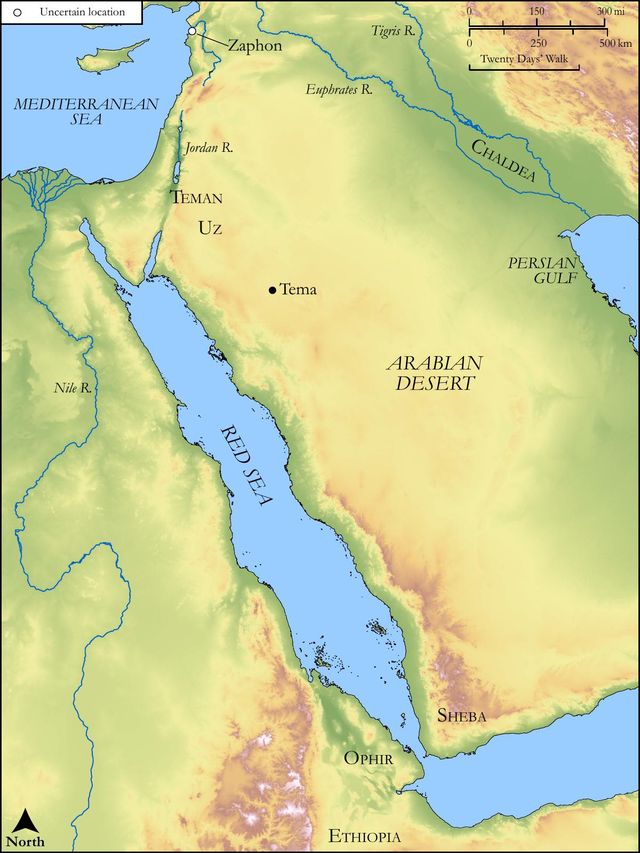
The book of Job is set in the land of Uz, a location generally associated with the Edomite or Arabian regions, suggesting a non-Israelite, perhaps patriarchal, setting. Scripture presents these powerful, sometimes monstrous, creatures as the Creator's own works, "which I made with thee," so that only He who made them could subdue them. While the precise identity of Behemoth (and Leviathan) has been debated—often suggested to be a hippopotamus or elephant due to their immense size and habitat—their primary function in the text transcends a mere zoological identification. They represent the apex of God's creation in terms of raw power and untamable nature. The cultural understanding of such formidable beasts would have immediately conveyed a sense of overwhelming might and mystery, reinforcing God's argument that if humans cannot control these creatures, they certainly cannot fathom or challenge the One who made them. The emphasis on their wildness and power underscores that all that is wild and fearsome lies under the hand of God.
Key Themes
ShowHideThe introduction of Behemoth in Job 40:15 powerfully reinforces several core themes of the book of Job and God's discourse. The most prominent is Divine Sovereignty and Power, demonstrating God's absolute control and creative mastery over all things, even the most formidable and seemingly untamable aspects of creation. By presenting Behemoth, a creature of immense strength and scale, God showcases His ability to create, sustain, and govern even the mightiest beings, underscoring that His power is beyond human comprehension or challenge. This leads directly to the theme of Human Limitation and Humility Before God. The description of Behemoth is designed to humble Job, highlighting the vast difference between God's infinite power and Job's finite understanding and strength. It encourages a posture of awe, submission, and trust in the Creator, even amidst suffering and unanswered questions, as seen in Job's eventual repentance in Job 42:1-6. Furthermore, the passage touches upon The Mystery and Order of Creation. While Behemoth's identity remains debated, its function as a creature whose power and characteristics are beyond human management is clear. Its herbivorous diet ("he eateth grass as an ox") despite its immense power further emphasizes God's ordered, yet mysterious, control over even the most formidable aspects of His creation, showcasing a divine design that often defies human expectations.
Exposition and Analysis
ShowHideKey Word Analysis
ShowHideIn form, this word is a plural of the common Hebrew word for "beast" (בְּהֵמָה, bᵉhēmāh), but it functions here as a singular noun, often understood as a "plural of intensity" or "plural of majesty." This linguistic nuance signifies a "super-beast" or "beast of beasts," pointing to a creature of extraordinary, unparalleled size, power, and significance. It immediately elevates Behemoth beyond a mere animal, presenting it as a singular, awe-inspiring entity that embodies immense, untamable power within the created order, so grand that its very name implies its supremacy among beasts. Its Egyptian derivation suggests a "water-ox," like a hippopotamus or Nile-horse.
This primitive root means "to do or make, in the broadest sense and widest application." In this context, it emphasizes God's exclusive creative agency and His sole authorship over Behemoth's existence. The phrase "which I made with thee" does not imply Job's participation in creation but rather highlights that God made Behemoth in the same created reality that Job himself inhabits. It underscores the shared creaturely status of both Job and Behemoth under God's supreme creative power, thereby reinforcing Job's inability to challenge the Creator who brought both him and this formidable beast into being.
This primitive root means "to eat (literally or figuratively)." Here, it describes Behemoth's diet, "he eateth grass as an ox." This detail is striking and seemingly contradictory for a creature of such immense power. While one might expect a "super-beast" to be a predator, its herbivorous diet underscores God's complete and surprising control over its nature. It demonstrates that even this formidable creature, a symbol of raw power, is entirely dependent on God's provision and operates within the bounds of His established order. This seemingly mundane detail profoundly emphasizes that Behemoth's strength is not chaotic or self-sufficient, but perfectly integrated into God's providential design.
Verse Breakdown
ShowHide"¶ Behold now behemoth"
God directly commands Job's attention with the imperative "Behold" (הִנֵּה, hinnēh), signaling the introduction of something truly remarkable and demanding full contemplation. This opening immediately establishes Behemoth as a central focus of God's argument, an awe-inspiring entity whose very existence testifies to God's unparalleled power and wisdom. It is an invitation for Job to gaze upon a marvel of creation that will shatter his limited perspective and challenge his understanding of divine governance.
"which I made with thee"
This clause reiterates God's exclusive creative agency, asserting His sole authorship over Behemoth's existence. By placing Behemoth and Job within the same created order, God subtly highlights the vast disparity in their power and understanding. It challenges Job to recognize his own creaturely status and the immense gulf between himself and the God who brought both him and this formidable beast into being. The implication is clear: if Job cannot contend with Behemoth, how can he contend with its Maker, who made both of them?
"he eateth grass as an ox"
This seemingly mundane detail is profoundly significant. It highlights the paradoxical nature of Behemoth: a creature of immense, untamable power, yet sustained by the most common and peaceful of diets. This juxtaposition underscores God's absolute control over every aspect of His creation, even the most surprising. It demonstrates that Behemoth's strength is not chaotic or self-sufficient, but perfectly integrated into God's providential order, thriving on a simple, divinely provided sustenance, much like a common farm animal. This detail further emphasizes the Creator's mastery over all things, from the mightiest to the most humble.
Literary Devices
ShowHideThe description of Behemoth in Job 40:15 employs several powerful literary devices to convey God's message. The most prominent is Apostrophe, as God directly addresses Job, commanding his attention with "Behold now behemoth," drawing him into an immediate, personal encounter with divine power. This direct address makes the argument intensely personal and inescapable for Job. There is also significant Symbolism at play; Behemoth functions not merely as a literal animal but as a symbol of immense, untamable power and the raw, majestic force of creation, wholly under God's control. It represents the very limits of human understanding and control within the natural world. Furthermore, the verse utilizes Juxtaposition by presenting the immense power and formidable nature of Behemoth alongside the surprising detail of its humble, herbivorous diet ("he eateth grass as an ox"). This contrast emphasizes God's complete and often unexpected control over His creation, demonstrating that even the most powerful beings are subject to His ordered design and provision. The entire discourse, including this verse, functions as a grand Rhetorical Argument, where God's descriptions of creation serve as unanswerable proofs of His omnipotence, designed to humble Job and silence his complaints without directly addressing the problem of suffering.
Theological and Thematic Connections
ShowHideJob 40:15 stands as a profound theological statement on God's absolute sovereignty and the incomprehensible wisdom embedded within His creation. By presenting Behemoth, a creature of unparalleled might, God asserts His unchallengeable authority over all living things, from the smallest to the most colossal. This demonstration of power is not merely for show but serves to humble humanity, reminding us of our finite understanding and limited capacity in comparison to the infinite Creator. The verse highlights that God's power extends not only to creating such formidable beings but also to sustaining them in ways that defy human expectation (e.g., a powerful creature eating grass). This intricate control over the natural order underscores God's meticulous design and providential care, even in aspects of creation that seem wild or chaotic to human eyes. Ultimately, the passage calls for a posture of awe, trust, and submission before a God whose ways are higher than our ways, and whose power is beyond our ability to question or comprehend.
Reflection and Application
ShowHideFor believers today, Job 40:15 offers profound lessons that resonate deeply with our own struggles with doubt, unanswered questions, and feelings of being overwhelmed. When we face circumstances that seem chaotic, unjust, or beyond our control, reflecting on God's magnificent creation, as exemplified by Behemoth, reminds us of His incomprehensible power, wisdom, and sovereign control over all things. Just as Job learned to submit to God's sovereign plan, we are called to trust in the Creator who controls every detail, from the smallest atom to the mightiest "behemoth" of our challenges. This verse encourages us to cultivate a deeper sense of awe and worship for our God, who is infinitely greater than any problem we face. It fosters humility before the Almighty, reminding us that true wisdom begins with acknowledging God's supreme authority and placing our trust in His perfect, though often mysterious, plan. In a world that often feels out of control, this passage anchors our faith in the One who holds all things together, inviting us to rest in His omnipotence rather than striving to understand every detail of His ways.
Questions for Reflection
ShowHideFAQ
ShowHideWhat is Behemoth, and is it a real animal?
ShowHideThe term "Behemoth" (Hebrew: בְּהֵמוֹת, bᵉhêmôwth) is a plural of intensity, signifying a "super-beast" or "beast of beasts," a creature of extraordinary size and power. While its precise identity is debated, many scholars suggest it refers to a hippopotamus or elephant, given the descriptions of its immense size, strength, and habitat (e.g., its tail like a cedar, bones like bronze, and dwelling in the reeds). However, its primary function in the book of Job is symbolic rather than strictly zoological. Behemoth represents the untamed, immense power of God's creation, a creature so formidable that it is beyond human control. Its specific identity is less important than its role in demonstrating God's unchallengeable might and wisdom.
Why does God describe Behemoth to Job, instead of answering his questions about suffering?
ShowHideGod's description of Behemoth is a rhetorical strategy designed to humble Job and demonstrate the vast chasm between human understanding and divine omnipotence. God does not directly explain the reasons for Job's suffering. Instead, He challenges Job's ability to comprehend or control the natural world, culminating in the presentation of Behemoth (and later Leviathan). The implied question is: If Job cannot even manage or understand a creature like Behemoth, how can he possibly contend with or question the One who created it and sustains all things? As God asks in Job 40:2, "Shall a faultfinder contend with the Almighty? He who argues with God, let him answer it." The purpose is to lead Job to a place of awe, humility, and trust in God's sovereign wisdom, even when His ways are beyond human comprehension.
Christ-Centered Fulfillment
ShowHideWhile Job 40:15 describes a creature of immense power in the Old Testament, its ultimate fulfillment and deeper theological significance are found in Christ. Behemoth serves as a testament to God's raw creative power and absolute sovereignty, illustrating that all things, even the most formidable, are subject to His will. This power is fully embodied in Jesus Christ, who is not merely a creature but the co-eternal Creator of all things. As John 1:3 declares, "All things were made through him, and without him was not anything made that was made," and Colossians 1:16 affirms that "by him all things were created, in heaven and on earth, visible and invisible... all things were created through him and for him." The power displayed in Behemoth is but a shadow of Christ's authority over all things, who not only created but also sustains all creation. Furthermore, while Behemoth represents untamable power in the natural world, Christ demonstrates power over all forms of chaos, including the spiritual. He calms storms with a word (Mark 4:39) and ultimately conquers the "behemoth" of sin and death, which no human could ever subdue. The ultimate demonstration of God's wisdom and power is not just in creating a mighty beast, but in the self-humiliation of the Creator Himself, who, "though he was in the form of God, did not count equality with God a thing to be grasped, but emptied himself, by taking the form of a servant" (Philippians 2:6-7). Through His death and resurrection, Christ disarmed the powers of darkness (Colossians 2:15), demonstrating a redemptive power far exceeding the creative power shown in Behemoth, ultimately bringing humanity into submission not through overwhelming might, but through self-sacrificial love.