


Job 39:8
Bible text: King James Version (1769 Blayney text) · Public domain
Bible text: Berean Standard Bible · Public domain
Bible text: American Standard Version (1901) · Public domain
Bible text: World English Bible, Messianic edition · Public domain
Bible text: Geneva Bible (1599) · Public domain
Bible text: Young's Literal Translation · Public domain
- יְתוּרye·Turit exploresH8446V-Qal-Imperf-3msVerb Qal Imperfect 3rd Singular Masculine
- הָרִיםha·RimmountainsH2022N-mpNoun Plural Masculine Absolute
- מִרְעֵהוּmir·'E·huits pastureH4829N-msc ¦ 3msNoun Singular Masculine Constructמִרְעֵpastureהוּits
- וְאַחַרve·'a·Charand afterH310Conj-w ¦ Adj-mscAdjective Numerical Singular Masculine Constructוְandאַחַרafter
- כָּלkoleveryH3605N-mscNoun Singular Masculine Construct
- יָרוֹקya·Rokgreen plantH3387N-msNoun Singular Masculine Absolute
- יִדְרוֹשׁyid·Ro·oshit searchesH1875V-Qal-Imperf-3msVerb Qal Imperfect 3rd Singular Masculine
English is a literal word-by-word gloss of the Hebrew, not the KJV's wording. Why?
This is the original text the KJV's translators worked from — each Hebrew word with its own literal English meaning in this verse, prepared by scholars at Tyndale House, Cambridge. The KJV translates whole sentences, not word by word, so its wording differs: one Hebrew word can become several English words, and the KJV may choose “the LORD” where the gloss reads “Yahweh”. Both are faithful — they answer different questions. For the KJV's own rendering, switch to the KJV text.
Details
See on the biblical-era map
Study this verse
Public-domain commentary
Matthew Henry
From his Commentary on the Whole Bible. Henry comments on passages, not single verses — this entry covers Job 39:1–12. His three-level outline is real structure in the source text, so it is rendered as structure.
God here shows Job what little acquaintance he had with the untamed creatures that run wild in the deserts and live at large, but are the care of the divine Providence. As,
I.The wild goats and the hinds.
That which is taken notice of concerning them is the bringing forth and bringing up of their young ones. For, as every individual is fed, so every species of animals is preserved, by the care of the divine Providence, and, for aught we know, none extinct to this day. Observe here,
1.Concerning the production of their young,
(1.)Man is wholly ignorant of the time when they bring forth, Job 39:1, Job 39:2. Shall we pretend to tell what is in the womb of Providence, or what a day will bring forth, who know not the time of the pregnancy of a hind or a wild goat?
(2.)Though they bring forth their young with a great deal of difficulty and sorrow, and have no assistance from man, yet, by the good providence of God, their young ones are safely produced, and their sorrows cast out and forgotten, Job 39:3. Some think it is intimated (Psa 29:9) that God by thunder helps the hinds in calving. Let it be observed, for the comfort of women in labour, that God helps even the hinds to bring forth their young; and shall he not much more succour them, and save them in child-bearing, who are his children in covenant with him?
2.Concerning the growth of their young, (Job 39:4): They are in good liking; though they are brought forth in sorrow, after their dams have suckled them awhile they shift for themselves in the corn-fields, and are no more burdensome to them, which is an example to children, when they have grown up, not to be always hanging upon their parents and craving from them, but to put forth themselves to get their own livelihood and to requite their parents.
II.The wild ass, a creature we frequently read of in Scripture, some say untameable.
Man is said to be born as the wild ass's colt, so hard to be governed. Two things Providence has allotted to the wild ass: - 1. An unbounded liberty (Job 39:5): Who but God has sent out the wild ass free? He has given a disposition to it, and therefore a dispensation for it. The tame ass is bound to labour; the wild ass has no bonds on him. Note, Freedom from service, and liberty to range at pleasure, are but the privileges of a wild ass. It is a pity that any of the children of men should covet such a liberty, or value themselves on it. It is better to labour and be good for something than ramble and be good for nothing. But if, among men, Providence sets some at liberty and suffers them to live at ease, while others are doomed to servitude, we must not marvel at the matter: it is so among the brute-creatures. 2. An unenclosed lodging (Job 39:6): Whose house I have made the wilderness, where he has room enough to traverse his ways, and snuff up the wind at his pleasure, as the wild ass is said to do (Jer 2:24), as if he had to live upon the air, for it is the barren land that is his dwelling. Observe, The tame ass, that labours, and is serviceable to man, has his master's crib to go to both for shelter and food, and lives in a fruitful land: but the wild ass, that will have his liberty, must have it in a barren land. He that will not labour, let him not eat. He that will shall eat the labour of his hands, and have also to give to him that needs. Jacob, the shepherd, has good red pottage to spare, when Esau, a sportsman, is ready to perish for hunger. A further description of the liberty and livelihood of the wild ass we have, Job 39:7, Job 39:8. (1.) He has no owner, nor will he be in subjection: He scorns the multitude of the city. If they attempt to take him, and in order to that surround him with a multitude, he will soon get clear of them, and the crying of the driver is nothing to him. He laughs at those that live in the tumult and bustle of cities (so bishop Patrick), thinking himself happier in the wilderness; and opinion is the rate of things. (2.) Having no owner, he has no feeder, nor is any provision made for him, but he must shift for himself: The range of the mountains is his pasture, and a bare pasture it is; there he searches after here and there a green thing, as he can find it and pick it up; whereas the labouring asses have green things in plenty, without their searching for them. From the untameableness of this and other creatures we may infer how unfit we are to give law to Providence, who cannot give law even to a wild ass's colt.
III.The unicorn - rhem, a strong creature (Num 23:22), a stately proud creature, Psa 112:10.
He is able to serve, but not willing; and God here challenges Job to force him to it. Job expected every thing should be just as he would have it. "Since thou dost pretend" (says God) "to bring every thing beneath thy sway, begin with the unicorn, and try thy skill upon him. Now that thy oxen and asses are all gone, try whether he will be willing to serve thee in their stead (Job 39:9) and whether he will be content with the provision thou usedst to make for them: Will he abide by thy crib? No;" 1. "Thou canst not tame him, nor bind him with his band, nor set him to draw the harrow," Job 39:10. There are creatures that are willing to serve man, that seem to take a pleasure in serving him, and to have a love for their masters; but there are such as will never be brought to serve him, which is the effect of sin. Man has revolted from his subjection to his Maker, and is therefore justly punished with the revolt of the inferior creatures from their subjection to him; and yet, as an instance of God's good-will to man, there are some that are still serviceable to him. Though the wild bull (which some think is meant here by the unicorn) will not serve him, nor submit to his hand in the furrows, yet there are tame bullocks that will, and other animals that are not ferae naturae - of a wild nature, in whom man may have a property, for whom he provides, and to whose service he is entitled. Lord, what is man, that thou art thus mindful of him? 2. "Thou darest not trust him; though his strength is great, yet thou wilt not leave thy labour to him, as thou dost with thy asses or oxen, which a little child may lead or drive, leaving to them all the pains. Thou wilt never depend upon the wild bull, as likely to come to thy harvest-work, much less to go through it, to bring home thy seed and gather it into thy barn," Job 39:11, Job 39:12. And, because he will not serve about the corn, he is not so well fed as the tame ox, whose mouth was not to be muzzled in treading out the corn; but therefore he will not draw the plough, because he that made him never designed him for it. A disposition to labour is as much the gift of God as an ability for it; and it is a great mercy if, where God gives strength for service, he gives a heart; it is what we should pray for, and reason ourselves into, which the brutes cannot do; for, as among beasts, so among men, those may justly be reckoned wild and abandoned to the deserts who have no mind either to take pains or to do good.
Historical interpretation
Two Centuries of Reception
3 surviving comments on this verse. Each one is dated, so this reads as a timeline rather than a list.
Select a marker to jump to its quote. Markers stagger vertically where authors wrote within a few decades of each other.
Then he adds, “Who has let the wild ass go free?” “Who has disposed things in this manner?” he says. “Who has established the laws of nature?” These are, he says, permanent laws that never change. This animal is strong and untamed. Even if you multiply your efforts, you will never have it under your control. “Who will destroy the decisions that God has taken?” You see that according to Providence and because God wants that, everything yields and obeys us. But if he does not want us to obtain obedience, we can use every means, and it will be of no use. We will gain nothing. Therefore, why is our effort useless, even though we want to get results? That is because when we see a domesticated animal we can admire the docility in which it has been established. But God has left things out of our reach in order that, before those things that are subjected to you, you may not admire your own wisdom and may not attribute to your capability the obedience of that animal.
78. Mountains we understand to be all the lofty ones of this world, who were swollen in their hearts with earthly loftiness. But since the Lord engrains [‘inviscerat’] even such, when converted, into the body of His Church, and, turning them from their former pride, transforms them into His own members, these are mountains of His pasture; doubtless, because He is satisfied with the conversion of the wandering, and the humility of the proud. As He Himself says, My meat is to do the will of Him that sent Me. [John 4, 34] And as He commanded the Apostles, when sent forth to preach, saying, Labour not for the meat which perisheth, but for that which endureth unto eternal life. [John 6, 27] Of these mountains it is said by the Prophet, The Lord will not reject His people, for in His hand are all the ends of the earth, and the heights of the hills He beholdeth. [Ps. 95, 4. LXX.] For the heights of the mountains are surely the loftinesses of the proud. Which the Lord is said to behold, that is, to change from their iniquity for the better. For the Lord converts the person whom He looks on. Whence it is written, The Lord turned, and looked upon Peter; and Peter remembered the word of the Lord, how He had said, Before the cock crow thou shalt deny Me thrice; and he went out, and wept bitterly. [Luke 22, 61. 62.] And as Solomon says, A King that sitteth on the throne of judgment, scattereth away all evil with His look. [Prov. 20, 8] Of this looking at the mountains it is said again by the Prophet, The mountains melted like wax from the face of the Lord; [Ps. 97, 5] because, after the hardness of their perversity, they were melted by the Divine fear, and subsided from their former rigid swelling.
79. But we must observe, that He does not say, ‘beholdeth,’ but looketh round on the mountains of His pasture. For the Lord was in truth Incarnate in Judaea, which was placed in the midst of the nations. And He therefore looked round on the mountains, because He gathered together, from the whole body of the Gentiles, the proud of this world situated every where around. He feeds therefore in these mountains; because He is satiated with the good works of the converted, as if with green herbs. Hence is it that it is said to Him by the voice of the Bride in the Song of Songs, show me where Thou feedest, where Thou liest at noon. [Cant. 1, 7] For the Lord is fed, when He is delighted with our good deeds. But He lies down at noon, when, after the heart of the reprobate burning with carnal desires, He finds the cool refreshment of holy thought in the breasts of His Elect. For Matthew had been a kind of mountain, when he was swelling with the profits of the custom house; of whom it is also written, that after he believed, he invited our Lord into his house, and made a great feast. [Luke 5, 29] This mountain therefore produced for this wild ass the herbs of green pasture, because he fed Him outwardly with a feast, and inwardly with banquets of virtues. And this is set forth still more fully, when it is subjoined;
He searcheth after every green thing.
80. For He deserts the parched places, and searches for every green thing. For parched are those hearts of men, which, planted in the perishing hope of this world, have no assurance of eternity. But those flourish, which cling to that inheritance of which the Apostle Peter says; To an inheritance incorruptible, undefiled, and that fadeth not away. [1 Pet. 1, 4] For they are more truly green, the more they plant the root of thought in the portion of an inheritance that fadeth not away. Let every one therefore, who dreads being parched within, fly from the barren desires of this world without. Let every one who longs to be sought for by the Lord, seek for his eternal home, and become verdant in the inward plantation of his heart.
81. Let this twofold exposition of the wild ass he sufficient. But it must he left to the judgment of the reader, which he thinks best to select. But if he chance to scorn the meaning of either exposition, I will willingly myself follow my reader, as a pupil his master, if he thinks more accurately and truly. Because whatever I find he knows better than myself, I believe it to be vouchsafed as a special gift to myself. For all we, who endeavour, full of faith, to utter something concerning God, are organs of truth: and it is in the power of this same Truth, whether It utters Its voice through me to another, or through another to me. For dwelling in the midst of us it deals alike with all, even though they live not alike, and often touches one person to hear plainly what It has spoken by another, but often touches another, to utter something clearly to be heard by others.
82. Power of speech is often given to a teacher, for the sake of his hearer, and skill in speaking is often taken away from a teacher, on account of the guilt of his hearer. Let not the teacher then be puffed up with pride in these cases in which he preaches copiously, lest his tongue be perchance filled, not for his own, but for his hearers’ sake; and let not a hearer be angry, in cases in which a teacher speaks barrenly, lest the tongue of the teacher perchance be dumb, not for his own, but his hearers’ rejection. For power of speech is given even to bad teachers for the sake of a good hearer, just as words of preaching were able to abound to the Pharisees, though it was written of them, All therefore whatsoever they have said to you, observe and do: but do not after their works. [Matt. 23, 3] But skill in speaking is taken away even from good teachers, for the rejection of their hearers. As is said to Ezekiel against Israel; I will make thy tongue cleave to the roof of thy mouth, and thou shalt be dumb, and shalt not be as a man reproving, for it is a provoking house. [Ez. 3, 26]
83. But the word of preaching is sometimes granted on account of both, sometimes withdrawn on account of both. For it is given on account of both, as is said by the voice of God to Paul amongst the Corinthians; Be not afraid, but speak. [Acts 18, 9] And a little after, For I have much people in this city. [ibid. 10] But it is withdrawn on account of both, as Eli the priest both knew the wicked conduct of his children, and exercised not the fitting language of reproof, when these the guilt of their sin, and him the punishment of his silence, was plainly about to mulct with the suffering of death. When we know not therefore, amongst these cases, either for whom the fervour of speech is given, or on whose account it is withdrawn, the one safe remedy is, neither to pride ourselves on those gifts which we have received beyond others, nor yet to make jest of another for having received less: but to walk gravely and steadily, with the firm-fixed foot of humility. Because we are in this life the more truly learned, the more we know that our learning cannot be supplied to us from ourselves. Why should therefore any one be proud of his learning, who knows not either when it is given to any one by a secret sentence, or when it is withdrawn? For though fear seems to be always far removed from security; yet there is nothing safer for us than ever to feel fear, under the prevalence of hope, lest our mind should from want of caution plunge itself into sin through desperation, or fall headlong through boasting of its gifts. For the more humbly a man trembles for himself, together with hope, before the eyes of the strict and merciful Judge, the more firmly does he stand in Him.
64. The mountains of his pasture are the lofty contemplations of inward refreshment. For the more holy men abase themselves outwardly with contempt, the more abundantly are they supported within with the contemplation of revelations. Whence it is written; He hath disposed the ascents in his heart in the valley of tears; [Ps. 84, 6] because those, whom the valley of humility outwardly imprisons in tears, the ascent of contemplation elevates within. The mountains of pasture are also the lofty powers of angels: which therefore refresh us here by ministering and assisting, because they are fattened there with the inward dew of contemplation. And because, by the bounty of God, they protect us in every contest, they are well said to be beheld around. For we behold them present on all sides around us, by whose defence we are protected against our adversaries on every side. The mountains of pasture can be taken, still further, for the lofty sentences of Holy Scripture, of which it is said by the Psalmist; The high hills for the stags, [Ps. 104, 18] because those who know already how to make the leaps of contemplation, ascend the lofty summits of the Divine sentences, as the tops of mountains. And because the feeble cannot reach in truth to these tops, it is there rightly subjoined, the rock is a refuge for the urchins, because, namely, their understanding does not sublimely exercise the feeble, but faith alone in Christ humbly keeps them in. It follows;
He searcheth after every green thing.
65. For parched in truth are all things, which, fashioned for a time, are dried up from the sweetness of the present life by the coming end, as if by the summer sun. But those are called green, which fade not away by any shortness of existence. For this wild ass then to seek every green thing, is for each holy man, despising transitory things, to long for those which are to endure for ever.
But all these things which have been said of the wild ass, can be understood in another way also. Which we explain, having repeated the former verse, in order to leave to the judgment of the reader what he believes is to be preferred. After, then, the dispensation of preachers has been described under the figure of hinds, to show by Whom this same virtue of preaching is given, the mention of our Lord’s Incarnation is immediately subjoined.
Continue studying Job 39:8 across the web’s major study libraries — every link below opens this exact verse, chapter, or book on the destination site.
Read & Compare
 BibleGatewayThis verse in more than 200 translations and 70 languages.
 Bible.comThe YouVersion reader — hundreds of translations, reading plans, and highlights.
 ESV.orgCrossway's official English Standard Version reader.
 NET BibleThe NET translation with 60,000+ translators' notes on every rendering decision.
 STEP BibleTyndale House's free study tool — original text, vocabulary, and scholarly resources.
 BibliaLogos Bible Software's free web reader.
 USCCBThe New American Bible (Revised Edition) with the U.S. bishops' study notes.
Commentaries
 BibleHub CommentariesDozens of classic commentaries on this verse, gathered on one page.
 StudyLightMore than 100 commentary sets — the largest collection on the web.
 BibleRefPlain-English commentary on what this verse means, verse by verse.
 Enduring WordDavid Guzik's free commentary on this chapter, widely used by Bible teachers.
 Bible Study ToolsVerse commentary alongside Greek and Hebrew study aids.
Original Language & Research
- BibleHub InterlinearThe verse word by word — original language, transliteration, and English.
- BibleHub LexiconEvery word's original-language definition and Strong's entry.
 Blue Letter BibleDeep-study tools — Strong's numbers, concordance, and word studies.
 SefariaThe Hebrew text with Rashi and centuries of Jewish commentary.
Sermons, Hymns & Audio


TrulyRandomVerse is not affiliated with these sites and doesn’t control their content. They’re linked because they’re genuinely useful.
Summary
Job 39:8, situated within God's profound discourse to Job, powerfully depicts the untamed wild ass, or onager, as a living testament to divine sovereignty and meticulous provision. This verse illustrates how God designates the rugged mountain ranges as its expansive pasture and instills within the creature the innate instinct to diligently seek out even the most sparse vegetation for sustenance. It serves as a compelling demonstration of God's comprehensive care for all creation, particularly those creatures existing beyond human control and cultivation, thereby underscoring His infinite wisdom and power in sustaining life even in seemingly desolate environments.
Context
ShowHideLiterary Context
Job 39:8 is an integral part of a magnificent divine monologue that spans Job 38 through Job 41. Following Job's lengthy lamentations and his friends' theological debates, God intervenes, not to explain suffering directly, but to assert His unparalleled wisdom and omnipotent power as the Creator and Sustainer of all creation. Chapters Job 38 and Job 39 present a series of rhetorical questions challenging Job's limited understanding of creation, moving from the grand wonders of the heavens like stars and weather to the intricate lives of various wild animals. Specifically, Job 39:5-8 focuses on the wild ass, contrasting its divinely granted freedom and self-sufficiency with the subservience of domesticated animals. This particular verse, Job 39:8, concludes the description of the wild ass's habitat and foraging behavior, setting the stage for God's continued display of His mastery over creation through other animals like the wild ox, ostrich, horse, hawk, and eagle. The overarching aim of this divine speech is to humble Job and expand his perspective on the vastness of divine wisdom beyond human comprehension.
Historical & Cultural Context
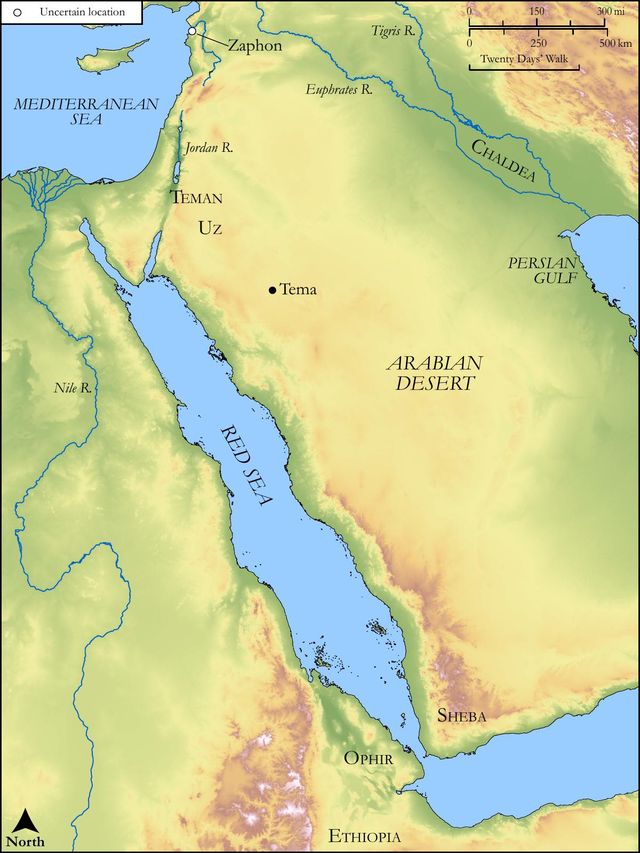
The geographical setting for the book of Job is traditionally understood to be the land of Uz, likely in Edom or northern Arabia, a region characterized by extensive deserts, rugged mountains, and vast steppes. In this environment, the wild ass (often identified as the onager or Equus hemionus) was a familiar inhabitant, distinctly different from its domesticated counterpart, the donkey. Unlike the donkey, which was a common beast of burden and a symbol of humility and service, the wild ass represented untamed freedom, formidable resilience, and fierce independence. Its remarkable ability to thrive in arid, rugged terrain, far from human settlements and agricultural cultivation, would have been a well-known and impressive sight to ancient peoples. The nomadic and pastoral men of the east possessed a deep, practical understanding of animal behavior and their intricate relationship with the land. God's vivid description of the wild ass's habitat ("range of the mountains") and its foraging habits ("searcheth after every green thing") would resonate profoundly with an audience intimately familiar with the challenges of survival in such harsh environments, thereby powerfully highlighting God's direct and unmediated provision even in seemingly barren landscapes, without any human intervention.
Key Themes
ShowHideThis verse powerfully contributes to several overarching themes central to the book of Job and broader biblical theology. Firstly, it underscores Divine Sovereignty and Omniscience, demonstrating that God's rule extends not only to humanity but to every creature and every remote corner of the earth, even the most desolate and untamed. The wild ass's freedom from human control is not an absence of divine control, but rather a divinely ordained liberty, as explicitly stated in Job 39:5-6. Secondly, it highlights God's Meticulous Provision, illustrating His boundless ability to sustain life even in the most challenging and harsh conditions. The wild ass's innate instinct to "search after every green thing" is a God-given drive, ensuring its survival, echoing the broader biblical principle of God feeding all creatures, as beautifully described in Psalm 147:9. Thirdly, the wild ass serves as a potent symbol of Untamed Freedom and Resilience, a creature that thrives independently of human intervention, directly challenging Job's anthropocentric view of the world and reminding him that God's purposes and methods are infinitely vast and often beyond limited human comprehension. This theme is crucial in God's argument to Job, emphasizing that His wisdom encompasses far more than Job's narrow perspective.
Exposition and Analysis
ShowHideKey Word Analysis
ShowHideThis word, derived from a passive participle, properly signifies "what is left" or, by implication, a "gleaning." In this context, it refers to the vast, open, and often sparsely vegetated areas that are left wild, uncultivated, and untamed by humans. It emphasizes the expansive and rugged domain that God has specifically designated for the wild ass, highlighting its independence from human agriculture and the sufficiency of God's provision even in seemingly barren or overlooked landscapes.
This term refers to elevated landforms, specifically mountains or ranges of hills. In Israel, mountains were often synonymous with wilderness, ruggedness, and places beyond human control. Here, "mountains" underscore the challenging, untamed, and expansive environment that serves as the wild ass's natural habitat. It signifies a domain where human influence is minimal, further emphasizing God's direct and sovereign provision for creatures in their wild state.
This primitive root verb means "to tread or frequent," and more commonly, "to follow (for pursuit or search)," "to seek or ask," and specifically "to worship." In Job 39:8, it denotes the active, diligent, and persistent effort of the wild ass to find sustenance. It implies an innate, divinely programmed instinct to forage for survival, indicating that the animal is equipped by God with the necessary drive to seek out food, no matter how scarce or hidden the "green thing" might be. This highlights God's wisdom in imbuing His creatures with the very instincts essential for their flourishing.
Verse Breakdown
ShowHide"The range of the mountains [is] his pasture"
This foundational clause establishes the wild ass's divinely appointed habitat and source of sustenance. The "range of the mountains" signifies a vast, untamed, and rugged environment, far removed from human settlement or cultivation. By declaring this wild territory as "his pasture," God asserts His sovereign designation of this specific landscape as the place where the wild ass finds its necessary nourishment. It powerfully highlights God's comprehensive care, demonstrating His ability to provide for creatures even in seemingly desolate or inaccessible regions, entirely without human intervention or management.
"and he searcheth after every green thing"
This second clause describes the active, divinely instilled instinct and behavior of the wild ass within its vast and challenging habitat. The phrase "searcheth after" implies a diligent, persistent, and active effort, while "every green thing" suggests that even sparse, scattered, or hidden vegetation is sought out with precision and determination. This demonstrates God's meticulous provision, not only by designating the habitat but also by equipping the creature with the necessary drive, senses, and intelligence to survive and thrive within its wild environment, ensuring its sustenance despite the apparent scarcity of its "pasture."
Literary Devices
ShowHideJob 39:8 employs several potent literary devices to convey its profound theological message. Imagery is vividly used, painting a compelling picture of the wild ass roaming vast, rugged mountain ranges in diligent search of sparse green vegetation. This sensory description appeals to the reader's visual imagination, underscoring both the harshness of the environment and, by extension, the remarkable nature of God's provision within it. Symbolism is prominently at play, with the wild ass embodying untamed freedom, fierce resilience, and complete independence from human control, standing in stark contrast to domesticated animals. This creature thus becomes a powerful symbol of God's unbridled sovereignty over all creation, even that which humans cannot subdue or manage. The entire passage is part of a larger Rhetorical Question sequence initiated by God, where He challenges Job's understanding of divine wisdom and power through the intricate workings of the natural world, subtly rebuking Job's limited human perspective.
Theological and Thematic Connections
ShowHideJob 39:8 profoundly illustrates God's universal and meticulous providence, extending His sovereign care not only to humanity but to every creature in every corner of His vast creation, regardless of its perceived value or habitat. It challenges an anthropocentric worldview, reminding us that God's wisdom and power are infinitely vast, encompassing the sustenance of wild animals in untamed lands just as surely as He provides for humanity. This verse underscores that true freedom and provision ultimately stem from divine design and ongoing sustenance, not from human control or cultivation. If God so carefully provides for the wild ass in its rugged mountain pasture, equipping it with the instinct to find sustenance in harsh conditions, it serves as a powerful testament to His unwavering commitment to sustain all life, inviting deeper trust in His sovereign and benevolent care for His human creation.
Reflection and Application
ShowHideJob 39:8 offers a profound invitation to trust in God's unfailing provision and boundless wisdom, especially when our own circumstances feel barren, wild, or beyond our immediate control. Just as God meticulously provides for the wild ass in its rugged mountain range, equipping it with the innate instinct to find sustenance in seemingly desolate places, so too does He care for us, His beloved children, with even greater tenderness and precision. This verse reminds us that God's care is not limited to what we can cultivate, manage, or understand; His sovereignty extends to every untamed corner of our lives and the world. It encourages us to release our anxieties about provision and control, recognizing that the same divine wisdom that sustains the wild ass will surely sustain us, guiding us to "every green thing" we truly need, even in challenging and uncertain seasons. Our profound task is to cultivate a deeper trust in His guidance and diligently seek His provision, knowing that His care is boundless, precise, and perfectly tailored to our needs.
Questions for Reflection
ShowHideFAQ
ShowHideWhat is the significance of God choosing the wild ass (onager) as an example in His discourse to Job?
ShowHideThe wild ass, or onager, is chosen precisely because it embodies untamed freedom, independence from human control, and remarkable resilience, a stark contrast to domesticated animals like the donkey. God uses this creature to highlight His absolute sovereignty over all creation, demonstrating that even those creatures that operate entirely outside of human management are meticulously cared for and sustained by His divine wisdom. It serves to humble Job by showing him that God's dominion is far vaster and more intricate than Job's limited human perspective, encompassing even the wildest and seemingly insignificant aspects of the natural world. This choice emphasizes that God's provision is not dependent on human effort or cultivation, but flows directly from His own boundless power and wisdom, as seen in the preceding verses where God asks, "Who has let the wild ass go free?" (Job 39:5).
How does "he searcheth after every green thing" relate to God's provision?
ShowHideThis phrase highlights God's meticulous and precise provision by illustrating the divinely instilled instinct of the wild ass to find sustenance in its challenging environment. It's not merely that God provides the "pasture" (the "range of the mountains"), but that He also equips the creature with the inherent drive and ability to actively seek out and utilize what is available, no matter how sparse or hidden. This demonstrates that God's provision is not passive; it involves both the external supply (the designated habitat) and the internal capacity (the "searching" instinct) to access that supply. It underscores God's comprehensive care, ensuring that His creatures are not only given a habitat but also the means and instincts necessary to survive and thrive within it, echoing the broader biblical truth that God feeds all His creatures, as articulated in Psalm 145:15-16).
Christ-Centered Fulfillment
ShowHideWhile Job 39:8 directly speaks of God's providential care for creation, its deepest and most profound fulfillment is found in Christ, who perfectly embodies and reveals this divine wisdom and provision. Jesus, as the Logos through whom "all things were made" and "in him all things hold together" (John 1:3; Colossians 1:17), is the ultimate sustainer of all life, including the wild ass in its mountain pasture. His teachings consistently affirm God's meticulous care, assuring His disciples that if God feeds the birds of the air and clothes the lilies of the field, He will surely provide for His beloved children, who are of far greater value (Matthew 6:26-30). The wild ass, thriving in its divinely appointed freedom and provision, foreshadows the spiritual freedom and abundant life found in Christ, who declares, "I am the good shepherd; I know my sheep and my sheep know me" (John 10:14), promising not just mere sustenance but "life, and have it more abundantly" (John 10:10). Ultimately, the God who provides for the wild ass in the wilderness is the same God who, in Christ, provides the ultimate "green thing"—the bread of life and living water—for the eternal sustenance of our souls, leading us to spiritual pastures where we "shall not want" (John 6:35; John 4:14; Psalm 23:1-2).