


Job 40:22
Bible text: King James Version (1769 Blayney text) · Public domain
Bible text: Berean Standard Bible · Public domain
Bible text: American Standard Version (1901) · Public domain
Bible text: World English Bible, Messianic edition · Public domain
Bible text: Geneva Bible (1599) · Public domain
Bible text: Young's Literal Translation · Public domain
- יְסֻכֻּהוּye·su·Ku·huthey cover itH5526V-Qal-Imperf-3mp ¦ 3msVerb Qal Imperfect 3rd Plural Masculineיְסֻכֻּthey coverהוּit
- צֶאֱלִיםtze·'e·Limthorny lotus plantsH6628N-mpNoun Plural Masculine Absolute
- צִלֲלוֹtzi·la·Loits shadeH6752N-msc ¦ 3msNoun Singular Masculine Constructצִלֲלshadeוֹits
- יְסֻבּוּהוּye·su·Bu·huthey surround itH5437V-Qal-Imperf-3mp ¦ 3msVerb Qal Imperfect 3rd Plural Masculineיְסֻבּוּthey surroundהוּit
- עַרְבֵי'ar·vei[the] poplars ofH6155N-mpcNoun Plural Masculine Construct
- נָחַלNa·chal[the] wadiH5158N-msNoun Singular Masculine Absolute
English is a literal word-by-word gloss of the Hebrew, not the KJV's wording. Why?
This is the original text the KJV's translators worked from — each Hebrew word with its own literal English meaning in this verse, prepared by scholars at Tyndale House, Cambridge. The KJV translates whole sentences, not word by word, so its wording differs: one Hebrew word can become several English words, and the KJV may choose “the LORD” where the gloss reads “Yahweh”. Both are faithful — they answer different questions. For the KJV's own rendering, switch to the KJV text.
Details
See on the biblical-era map
Study this verse
Public-domain commentary
Matthew Henry
From his Commentary on the Whole Bible. Henry comments on passages, not single verses — this entry covers Job 40:15–24. His three-level outline is real structure in the source text, so it is rendered as structure.
God, for the further proving of his own power and disproving of Job's pretensions, concludes his discourse with the description of two vast and mighty animals, far exceeding man in bulk and strength, one he calls behemoth, the other leviathan. In these verses we have the former described. "Behold now behemoth, and consider whether thou art able to contend with him who made that beast and gave him all the power he has, and whether it is not thy wisdom rather to submit to him and make thy peace with him." Behemoth signifies beasts in general, but must here be meant of some one particular species. Some understand it of the bull; others of an amphibious animal, well known (they say) in Egypt, called the river-horse (hippopotamus), living among the fish in the river Nile, but coming out to feed upon the earth. But I confess I see no reason to depart from the ancient and most generally received opinion, that it is the elephant that is here described, which is a very strong stately creature, of very large stature above any other, of wonderful sagacity, and of so great a reputation in the animal kingdom that among so many four-footed beasts as we have had the natural history of (ch. 38 and 39) we can scarcely suppose this should be omitted. Observe,
I.The description here given of the behemoth.
1.His body is very strong and well built. His strength is in his loins, Job 40:16. His bones, compared with those of other creatures, are like bars of iron, Job 40:18. His back-bone is so strong that, though his tail be not large, yet he moves it like a cedar, with a commanding force, Job 40:17. Some understand it of the trunk of the elephant, for the word signifies any extreme part, and in that there is indeed a wonderful strength. So strong is the elephant in his back and loins, and the sinews of his thighs, that he will carry a large wooden tower, and a great number of fighting men in it. No animal whatsoever comes near the elephant for strength of body, which is the main thing insisted on in this description.
2.He feeds on the productions of the earth and does not prey upon other animals: He eats grass as an ox (Job 40:15), the mountains bring him forth food (Job 40:20), and the beasts of the field do not tremble before him nor flee from him, as from a lion, but they play about him, knowing they are in no danger from him. This may give us occasion,
(1.)To acknowledge the goodness of God in ordering it so that a creature of such bulk, which requires so much food, should not feed upon flesh (for then multitudes must die to keep him alive), but should be content with the grass of the field, to prevent such destruction of lives as otherwise must have ensued.
(2.)To commend living upon herbs and fruits without flesh, according to the original appointment of man's food, Gen 1:29. Even the strength of an elephant, as of a horse and an ox, may be supported without flesh; and why not that of a man? Though therefore we use the liberty God has allowed us, yet be not among riotous eaters of flesh, Pro 23:20.
(3.)To commend a quiet and peaceable life. Who would not rather, like the elephant, have his neighbours easy and pleasant about him, than, like the lion, have them all afraid of him?
3.He lodges under the shady trees (Job 40:21), which cover him with their shadow (Job 40:22), where he has a free and open air to breathe in, while lions, which live by prey, when they would repose themselves, are obliged to retire into a close and dark den, to live therein, and to abide in the covert of that, Job 38:40. Those who are a terror to others cannot but be sometimes a terror to themselves too; but those will be easy who will let others be easy about them; and the reed and fens, and the willows of the brook, though a very weak and slender fortification, yet are sufficient for the defence and security of those who therefore dread no harm, because they design none.
4.That he is a very great and greedy drinker, not of wine or strong drink (to be greedy of that is peculiar to man, who by his drunkenness makes a beast of himself), but of fair water.
(1.)His size is prodigious, and therefore he must have supply accordingly, Job 40:23. He drinks so much that one would think he could drink up a river, if you would give him time, and not hasten him. Or, when he drinks, he hasteth not, as those do that drink in fear; he is confident of his own strength and safety, and therefore makes no haste when he drinks, no more haste than good speed.
(2.)His eye anticipates more than he can take; for, when he is very thirsty, having been long kept without water, he trusts that he can drink up Jordan in his mouth, and even takes it with his eyes, Job 40:24. As a covetous man causes his eyes to fly upon the wealth of this world, which he is greedy of, so this great beast is said to snatch, or draw up, even a river with his eyes.
(3.)His nose has in it strength enough for both; for, when he goes greedily to drink with it, he pierces through snares or nets, which perhaps are laid in the waters to catch fish. He makes nothing of the difficulties that lie in his way, so great is his strength and so eager his appetite.
II.The use that is to be made of this description.
We have taken a view of this mountain of a beast, this over-grown animal, which is here set before us, not merely as a show (as sometimes it is in our country) to satisfy our curiosity and to amuse us, but as an argument with us to humble ourselves before the great God; for,
1.He made this vast animal, which is so fearfully and wonderfully made; it is the work of his hands, the contrivance of his wisdom, the production of his power; it is behemoth which I made, Job 40:15. Whatever strength this, or any other creature, has, it is derived from God, who therefore must be acknowledged to have all power originally and infinitely in himself, and such an arm as it is not for us to contest with. This beast is here called the chief, in its kind, of the ways of God (Job 40:19), an eminent instance of the Creator's power and wisdom. Those that will peruse the accounts given by historians of the elephant will find that his capacities approach nearer to those of reason than the capacities of any other brute-creature whatsoever, and therefore he is fitly called the chief of the ways of God, in the inferior part of the creation, no creature below man being preferable to him.
2.He made him with man, as he made other four-footed beasts, on the same day with man (Gen 1:25, Gen 1:26), whereas the fish and fowl were made the day before; he made him to live and move on the same earth, in the same element, and therefore man and beast are said to be jointly preserved by divine Providence as fellow-commoners, Psa 36:6. "It is behemoth, which I made with thee; I made that beast as well as thee, and he does not quarrel with me; why then dost thou? Why shouldst thou demand peculiar favours because I made thee (Job 10:9), when I made the behemoth likewise with thee? I made thee as well as that beast, and therefore can as easily manage thee at pleasure as that beast, and will do it whether thou refuse or whether thou choose. I made him with thee, that thou mayest look upon him and receive instruction." We need not go far for proofs and instances of God's almighty power and sovereign dominion; they are near us, they are with us, they are under our eye wherever we are.
3.He that made him can make his sword to approach to him (Job 40:19), that is, the same hand that made him, notwithstanding his great bulk and strength, can unmake him again at pleasure and kill an elephant as easily as a worm or a fly, without any difficulty, and without the imputation either of waste or wrong. God that gave to all the creatures their being may take away the being he gave; for may he not do what he will with his own? And he can do it; he that has power to create with a word no doubt has power to destroy with a word, and can as easily speak the creature into nothing as at first he spoke it out of nothing. The behemoth perhaps is here intended (as well as the leviathan afterwards) to represent those proud tyrants and oppressors whom God had just now challenged Job to abase and bring down. They think themselves as well fortified against the judgments of God as the elephant with his bones of brass and iron; but he that made the soul of man knows all the avenues to it, and can make the sword of justice, his wrath, to approach to it, and touch it in the most tender and sensible part. He that framed the engine, and put the parts of it together, knows how to take it in pieces. Woe to him therefore that strives with his Maker, for he that made him has therefore power to make him miserable, and will not make him happy unless he will be ruled by him.
Historical interpretation
Four Centuries of Reception
3 surviving comments on this verse. Each one is dated, so this reads as a timeline rather than a list.
Select a marker to jump to its quote. Markers stagger vertically where authors wrote within a few decades of each other.
“And when he has gone up to a steep mountain, he causes joy to the quadrupeds in the deep.” This means the wild animals have raised their heads only when this animal has withdrawn to the mountains. If [God] has created these two enormous beasts, he did so in order that you might know that he may create all of them according to their own type. But God does not do so because his creation is oriented to provide what is useful to you. Notice how these beasts observe their proper laws: they haunt that part of the sea which is not navigable. But one may ask, What is their use? We ignore what is the mysterious utility of these monsters, but, if we want to take the risk of an explanation, we may say that they lead toward the knowledge of God.
10. For all the wicked are in truth shadows of the devil: for while they give themselves up to imitate his iniquity, they derive, as it were, a form of resemblance from his body. But as the reprobate are his ‘shadows’ in the plural number, so each separate sinner is his ‘shadow’ in the singular. But when the wicked gainsay the teaching of the just, when they do not permit any wicked person to be corrected by them, the shadows of this Behemoth cover his shadow; because sinners, whenever they are conscious to themselves of sin, support another sinner in the same course. His shadows cover his shadow, when the more wicked support by their misdirected patronage the doings of the most wicked. And this they doubtless do with this object, that, while the fault, with which they themselves are bound, is corrected in others, they may not at last be reached themselves. They cover themselves therefore, when they protect others, because they foresee that their own conduct is attacked, by the same means as they see others confounded with bold reproof. And thus it happens, that while the aggregate of sins is defended, it is also increased, and that the guilt of each person is more easy of commission, the more difficult it is of punishment. For the evil doings of sinners derive so much greater increase, the longer they are permitted, through the defence of the powerful, to remain unpunished. But such persons, whether they seem to be within or without Holy Church, display themselves more openly as the enemies of God, the greater patrons they are of sins. For in defending themselves they fight against Him, Who is displeased with those doings, which they multiply, by defending them. Which conduct the Lord by the Prophet well reproves, under the character of Babylon, saying; Thorns and nettles shall spring up in her houses, and the bramble in the fortresses thereof. [Is. 34, 13] For what do we understand by ‘nettles,’ but the irritations of thoughts, and what by ‘thorns,’ but the piercings of sins? Nettles therefore and thorns spring up in the houses of Babylon, because in the disorder of a reprobate mind there arise longings of thoughts which exasperate, and sinful deeds which wound. But they who act thus have others also more wicked than themselves as their defenders. Whence he there fitly subjoined immediately, And the bramble in the fortresses thereof. For the bramble is crowded with such a circle of thorns, that it can hardly be touched from its roughness. The nettle and the thorn therefore spring up within, but both of them are fortified without by the bramble: because, namely, smaller offenders commit any kinds of evil, but greater and most abandoned ones defend them. Whence it is here also well said, His shadows protect his shadow. For whilst a greater sinner defends a wicked person, a shadow, as it were, darkens a shadow, that it be not irradiated with the light of truth. It follows;
The willows of the brook will compass him about.
11. ‘Willows’ are trees which bear indeed no fruit; but are of such great greenness, as hardly to dry up, even when cut off by the roots and torn up. Whence in Holy Scripture by the name ‘willows,’ the good are sometimes designated, from their greenness, and sometimes the reprobate from their sterility. For unless by their continual greenness they typified the life of the Elect, the Prophet would not have said concerning the children of Holy Church, They shall spring up among the grass, as willows by the water courses. [Is. 44, 4] For the children of Holy Church spring up as willows among the grass, when amidst the withering life of carnal men, they last on in manifold numbers, and perpetual greenness of mind. And they are well said to spring up by the water courses, because each of them derives its fruitful productiveness from the teaching of Holy Scripture, which runs along in this temporal state. And again, if the life of sinners were not signified by the sterility of willows, the Psalmist would not have said against Babylon by the voice of preachers; We hanged our instruments upon the willows in the midst thereof. [Ps. 137, 2] For the willows are described as being in the midst of Babylon, doubtless because the unfruitful, and those estranged from the love of their heavenly country, are rooted with all the affections of their heart in this confusion of the world. Whence also holy preachers do not play, but hang their instruments in these willows, because when they see minds unfruitful and reprobate, they display not the power of their preaching, but rather weep and are silent. What also is expressed by the brook except the course of this mortal life? Of which it is said again by the Prophet, He shall drink of the brook in the way, therefore shall he lift up his head. [Ps. 110, 7] Because, namely, our Redeemer tasted the punishment of mortal life, as though in a passage through it, and therefore did not long abide in that death to which he had yielded of his own accord. Whence on the third day he lifted up at His resurrection that Head which He had laid down at His death. What then is the meaning of that which is said of this Behemoth, the willows of the brook will compass him about? except that lovers of this mortal life, unfruitful in good deeds, cleave the closer to him, the more abundantly the delight of transitory pleasure waters them. For a brook waters them, as it were, at their roots, when the love of a carnal life intoxicates them in their thoughts. And like willows they bring forth in truth no fruit, but are green in their leaves, because they sometimes utter words of propriety, which are not burdensome to be said, but display by their good works no weight of life. It is therefore well said, The willows of the brook will compass him about, because when they who bear no fruit devote themselves to the love of this temporal life, they comply too familiarly with the depraved customs of the ancient enemy. But since we have heard what is rendered him by his clients, let us now hear what he works in them.
The words “the shadows surround it.” Because of the size of the animal, [the author says], anywhere it goes, it casts shadows around it. The words “the crows like a torrent surround it.” [This is said] because the habit of these birds is to approach and croak anytime they see something terrifying.
Continue studying Job 40:22 across the web’s major study libraries — every link below opens this exact verse, chapter, or book on the destination site.
Read & Compare
 BibleGatewayThis verse in more than 200 translations and 70 languages.
 Bible.comThe YouVersion reader — hundreds of translations, reading plans, and highlights.
 ESV.orgCrossway's official English Standard Version reader.
 NET BibleThe NET translation with 60,000+ translators' notes on every rendering decision.
 STEP BibleTyndale House's free study tool — original text, vocabulary, and scholarly resources.
 BibliaLogos Bible Software's free web reader.
 USCCBThe New American Bible (Revised Edition) with the U.S. bishops' study notes.
Commentaries
 BibleHub CommentariesDozens of classic commentaries on this verse, gathered on one page.
 StudyLightMore than 100 commentary sets — the largest collection on the web.
 BibleRefPlain-English commentary on what this verse means, verse by verse.
 Enduring WordDavid Guzik's free commentary on this chapter, widely used by Bible teachers.
 Bible Study ToolsVerse commentary alongside Greek and Hebrew study aids.
Original Language & Research
- BibleHub InterlinearThe verse word by word — original language, transliteration, and English.
- BibleHub LexiconEvery word's original-language definition and Strong's entry.
 Blue Letter BibleDeep-study tools — Strong's numbers, concordance, and word studies.
 SefariaThe Hebrew text with Rashi and centuries of Jewish commentary.
Sermons, Hymns & Audio


TrulyRandomVerse is not affiliated with these sites and doesn’t control their content. They’re linked because they’re genuinely useful.
Summary
Job 40:22, nestled within God's profound discourse to Job from the whirlwind, offers a vivid depiction of Behemoth's natural habitat, a creature presented by the Almighty to underscore His unparalleled sovereignty and wisdom. The verse paints an evocative picture of this colossal beast finding shelter and concealment amidst the dense "shady trees" and the encircling "willows of the brook," firmly establishing its presence within a lush, water-rich environment. This detailed portrayal serves as a powerful testament to God's meticulous design, boundless power, and intricate provision for even the most formidable and untamed elements of His creation, ultimately humbling Job and illuminating the vast chasm between finite human understanding and infinite divine omnipotence.
Context
ShowHideLiterary Context
Job 40:22 is situated within the climactic second and final speech of God to Job, a divine monologue that commences in Job 38 and extends through Job 41. Following Job's initial, humbled responses, God continues to challenge Job's presumption by unveiling the incomprehensible grandeur and complexity of His creation. Specifically, the passage from Job 40:15-24 is dedicated to Behemoth, a creature whose immense size, formidable strength, and self-sufficient nature are presented as irrefutable evidence of God's unchallengeable power. The description of Behemoth's natural environment in Job 40:22 reinforces its formidable character and God's absolute control over even the wildest aspects of the natural world, setting the stage for the even more terrifying Leviathan in the subsequent chapter, thus building a cumulative argument for divine sovereignty.
Historical & Cultural Context
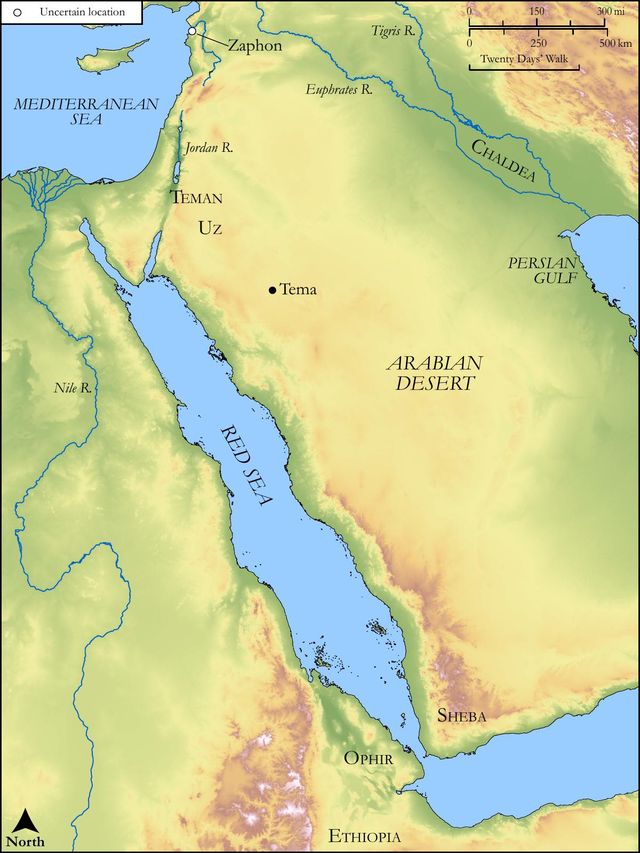
The Book of Job, while addressing universal themes of suffering and divine justice, is set in the land of Uz among the men of the east. Among the nations round about, powerful, untamable beasts were often taken to symbolize chaos or the raw power of deities. Behemoth, and later Leviathan, may draw on such imagery of primeval or mythical creatures, though their primary function in Job is profoundly theological rather than zoological. The "shady trees" and "willows of the brook" suggest a well-watered, possibly swampy or riverine environment, consistent with descriptions of large, herbivorous animals found in regions like the Nile or Tigris-Euphrates valleys. This imagery would have resonated deeply with an audience familiar with the formidable power of nature and the creatures inhabiting its wilder domains, further emphasizing the Creator's mastery over all things, both known and unknown.
Key Themes
ShowHideThe meticulous description of Behemoth's habitat in Job 40:22 contributes significantly to several overarching themes in the book of Job. Foremost is God's absolute sovereignty and wisdom over all creation; if He can design, sustain, and provide for such a creature, His control over Job's seemingly chaotic circumstances is unquestionably perfect. This highlights the grandeur and wildness of creation, portraying a world teeming with life beyond human comprehension or control, emphasizing that God's power is not limited to the domesticated or orderly. The verse also underscores divine provision, demonstrating that God meticulously provides for even the largest and most untamed of His creatures, ensuring their shelter and sustenance. Ultimately, this detailed portrayal serves to humble human pride and call Job (and the reader) to a posture of profound awe and trust before the incomprehensible wisdom and power of the Almighty, a theme powerfully echoed throughout God's speeches in Job 38-41.
Exposition and Analysis
ShowHideKey Word Analysis
ShowHideTranslated as "shady trees" or "lotus tree." This word refers to a specific type of large, broad-leaved tree or aquatic plant, likely the lotus tree (Nelumbo nucifera), known for its substantial foliage and preference for water-rich environments. Its presence here emphasizes Behemoth's integration into a lush, dense, and protective habitat, highlighting the sheer scale of the creature that requires such significant natural cover.
Translated as "cover." This primitive root means "to entwine as a screen," implying a dense, protective enclosure. By extension, it signifies fencing in, covering over, or even figuratively protecting. In this context, it vividly describes how the "shady trees" actively provide a natural canopy and concealment for Behemoth, underscoring God's precise design in providing a secure and suitable environment for even His most formidable creatures.
Translated as "brook." This term refers to a stream, especially a winter torrent, or by implication, a narrow valley through which a brook runs. Its inclusion here, in the phrase "willows of the brook," firmly grounds Behemoth's habitat in a water-dependent, riverine, or marshy setting. This flowing water source is essential for sustaining both the willows and a creature of Behemoth's presumed immense size and thirst, further illustrating God's comprehensive provision.
Verse Breakdown
ShowHide"The shady trees cover him [with] their shadow"
This clause immediately conveys the immense scale of Behemoth, requiring substantial natural cover. The "shady trees" (likely lotus or similar large foliage) are not merely present; they actively "cover" the creature, providing a natural canopy and a place of concealment. This imagery speaks to the creature's immense size and its integration into the wild, untamed aspects of creation, where it finds natural sanctuary and rest. It highlights God's design in providing precisely what is needed for even the most formidable of His creatures.
"the willows of the brook compass him about"
This second clause further refines the description of Behemoth's dwelling. The "willows of the brook" specify the type of vegetation and its location – by a flowing water source. The phrase "compass him about" (from the Hebrew çâbab, meaning to surround or revolve) suggests a dense, encircling growth, indicating that Behemoth is not merely near these trees but enveloped by them. This reinforces the idea of a secure, well-provided habitat, emphasizing the creature's natural dominion within its chosen environment and the comprehensive provision God has made for its existence.
Literary Devices
ShowHideJob 40:22 masterfully employs several literary devices to enhance its theological impact and vividness. Imagery is paramount, painting a rich, sensory picture of Behemoth's lush, water-rich environment through the specific mentions of "shady trees" and "willows of the brook." This creates a powerful visual and environmental context, allowing the reader to grasp the creature's immense scale within its natural sanctuary. There is a subtle use of Personification, as the trees are described as actively "cover[ing]" and "compass[ing]" Behemoth, almost as if they are providing a deliberate, protective embrace, underscoring the natural world's responsiveness to God's design. The overall description of Behemoth, including its habitat, functions as a powerful Symbolism for God's untamed power, His meticulous design, and the inherent limits of human understanding and control. The creature itself, and its awe-inspiring environment, serve as a tangible representation of the Creator's boundless might and wisdom, a rhetorical strategy designed to humble Job and underscore the vastness of divine sovereignty.
Theological and Thematic Connections
ShowHideJob 40:22, in its detailed description of Behemoth's natural habitat, serves as a profound theological statement about God's meticulous care and absolute sovereignty over all creation. It reveals that God's power extends not only to the creation of immense and formidable creatures but also to their ongoing sustenance and provision, ensuring that even the wildest beasts find their appropriate shelter and resources. This verse, therefore, contributes to God's argument that His wisdom and power are beyond human comprehension, demonstrating His capacity to manage all aspects of His universe, including Job's seemingly chaotic suffering. It challenges humanity to acknowledge its limited perspective and to trust in the divine order that undergirds all existence, even when it appears untamed or inexplicable.
Reflection and Application
ShowHideJob 40:22 offers a powerful invitation to humility and trust in the face of God's incomprehensible power and wisdom. When we consider the sheer scale of God's provision for a creature as immense and wild as Behemoth, finding perfect shelter and sustenance in its natural environment, our own anxieties and perceived lack of control can be profoundly recontextualized. This verse reminds us that the God who meticulously cares for the "shady trees" and "willows of the brook" to provide for Behemoth is the very same God who oversees every minute detail of our lives. It calls us to relinquish our attempts to fully comprehend or control divine providence, encouraging us instead to rest in the knowledge that our Creator's wisdom far surpasses our own. In moments of confusion, hardship, or perceived chaos, reflecting on God's sovereign command over all creation, even its most formidable and untamed parts, can foster a deep sense of peace, reliance on His unfailing care, and a renewed posture of worship.
Questions for Reflection
ShowHideFAQ
ShowHideIs Behemoth a real animal, or is it symbolic?
ShowHideThe identity of Behemoth has been a subject of much scholarly debate. While some interpretations suggest it is a mythological creature representing primeval chaos, the detailed description in Job 40:15-24, particularly verses like Job 40:22, strongly aligns with a large, herbivorous, water-dwelling animal. The most common and compelling identification is the hippopotamus, given its immense size, powerful tail (described in Job 40:17), and preference for riverine, swampy environments where "shady trees" and "willows of the brook" would be abundant. Other suggestions include the elephant or even a dinosaur. However, regardless of its precise zoological identity, the primary purpose of Behemoth in the text is theological: to serve as an undeniable, awe-inspiring example of God's creative power and sovereignty, demonstrating to Job that if humanity cannot control even this creature, how much less can it comprehend or challenge the Creator Himself.
Why does God describe animals like Behemoth to Job in such detail?
ShowHideGod describes Behemoth (and later Leviathan) to Job not merely to provide a natural history lesson, but as a profound rhetorical strategy designed to humble Job and reorient his perspective. Throughout the preceding chapters, Job has questioned God's justice and wisdom, implicitly challenging the divine order. By presenting creatures of immense power and untamed nature, over which humanity has no control, God implicitly asks Job: "If you cannot even manage these creatures I have made, how can you presume to question My governance of the universe or My ways?" The detailed descriptions, including Behemoth's specific habitat in Job 40:22, serve to emphasize God's meticulous design, boundless power, and absolute sovereignty over all creation, from the smallest to the most formidable. This overwhelming demonstration of divine omnipotence aims to lead Job to a place of profound awe, humility, and renewed trust in God's unsearchable wisdom, ultimately preparing him for repentance and restoration.
Christ-Centered Fulfillment
ShowHideThe display of God's sovereign power and meticulous provision for Behemoth in Job 40:22 finds its ultimate and most profound fulfillment in the person and work of Jesus Christ. While Job highlights God's untamed control over creation, the New Testament reveals that it is precisely through Christ that all things were created, and by Him, all things hold together, for He is "before all things, and in him all things hold together" (Colossians 1:16-17). The raw power demonstrated in sustaining a creature as immense as Behemoth is fully embodied in the Son, who effortlessly calmed the raging sea with a single word (Mark 4:39) and commanded even the most formidable spiritual forces to obey Him (Luke 4:36). Furthermore, the divine provision for Behemoth's physical needs in its natural habitat foreshadows Christ's ultimate spiritual provision for humanity; He is the "Lamb of God, who takes away the sin of the world!" (John 1:29), offering eternal shelter, rest, and sustenance to all who come to Him, inviting the weary and burdened to find rest for their souls (Matthew 11:28). Thus, the awe inspired by Behemoth's Creator in Job points directly to the even greater awe due to the incarnate Christ, who is the visible image of the invisible God, the one through whom all of God's wisdom, power, and redemptive purpose are perfectly revealed and eternally accomplished.