


Isaiah 15:7
- עַל'althere-H5921PrepPreposition
- כֵּןken-foreH3651AdvAdverb
- יִתְרָהyit·Rah[the] wealthH3502N-fsNoun Singular Feminine Absolute
- עָשָׂה'a·Sah[which] it has madeH6213V-Qal-Perf-3msVerb Qal Perfect 3rd Singular Masculine
- וּפְקֻדָּתָםu·fe·ku·da·Tamand their storeH6486Conj-w ¦ N-fsc ¦ 3mpNoun Singular Feminine Constructוּandפְקֻדָּתָstoreםtheir
- עַל'aloverH5921PrepPreposition
- נַחַלNa·chal[the] wadi ofH5158N-mscNoun Singular Masculine Construct
- הָעֲרָבִיםha·'a·ra·Vimthe poplarsH6155Art ¦ N-mpNoun Plural Masculine Absoluteהָtheעֲרָבִיםpoplars
- יִשָּׂאוּםyi·sa·'Umthey carry off themH5375V-Qal-Imperf-3mp ¦ 3mpVerb Qal Imperfect 3rd Plural Masculineיִשָּׂאוּthey carry offםthem
English is a literal word-by-word gloss of the Hebrew, not the KJV's wording. Why?
This is the original text the KJV's translators worked from — each Hebrew word with its own literal English meaning in this verse, prepared by scholars at Tyndale House, Cambridge. The KJV translates whole sentences, not word by word, so its wording differs: one Hebrew word can become several English words, and the KJV may choose “the LORD” where the gloss reads “Yahweh”. Both are faithful — they answer different questions. For the KJV's own rendering, switch to the KJV text.
Details
See on the biblical-era map
Study this verse
Public-domain commentary
Matthew Henry
From his Commentary on the Whole Bible. Henry comments on passages, not single verses — this entry covers Isaiah 15:6–9. His two-level outline is real structure in the source text, so it is rendered as structure.
Here the prophet further describes the woeful and piteous lamentations that should be heard throughout all the country of Moab when it should become a prey to the Assyrian army. "By this time the cry has gone round about all the borders of Moab," Isa 15:8. Every corner of the country has received the alarm, and is in the utmost confusion upon it. It has reached to Eglaim, a city at one end of the country, and to Beer-elim, a city as far the other way. Where sin has been general, and all flesh have corrupted their way, what can be expected but a general desolation? Two things are here spoken of as causes of this lamentation: -
I.The waters of Nimrim are desolate (Isa 15:6), that is, the country is plundered and impoverished, and all the wealth and substance of it swept away by the victorious army. Famine is usually the sad effect of war. Look into the fields that were well watered, the fruitful meadows that yielded delightful prospects and more delightful products, and there all is eaten up, or carried off by the enemy's foragers, and the remainder trodden to dirt by their horses. If an army encamp upon green fields, their greenness is soon gone. Look into the houses, and they are stripped too (Isa 15:7): The abundance of wealth that they had gotten with a great deal of art and industry, and that which they had laid up with a great deal of care and confidence, shall they carry away to the brook of the willows. Either the owners shall carry it thither to hide it or the enemies shall carry it thither to pack it up and send it home, by water perhaps, to their own country. Note,
1.Those that are eager to get abundance of this world, and solicitous to lay up what they have gotten, little consider what may become of it and in how short a time it may be all taken from them. Great abundance, by tempting the robbers, exposes the owners; and those who depend upon it to protect them often find it does but betray them.
2.In times of distress great riches are often great burdens, and do but increase the owner's care or the enemies' strength. Cantabit vacuus coram latrone viator - The penniless traveller will exult, when accosted by a robber, in having nothing about him.
II.The waters of Dimon are turned into blood (Isa 15:9), that is, the inhabitants of the country are slain in great numbers, so that the waters adjoining to the cities, whether rivers or pools, are discoloured with human gore, inhumanly shed like water. Dimon signifies bloody; the place shall answer to its name. Perhaps it was that place in the country of Moab where the waters seemed to the Moabites as blood (Kg2 3:22, Kg2 3:23), which occasioned their overthrow. But now, says God, I will bring more upon Dimon, more blood than was shed, or thought to be seen, at that time. I will bring additions upon Dimon (so the word is), additional plagues; I have yet more judgments in reserve for them. For all this, God's anger is not turned away. When he judges he will overcome; and to the roll of curses shall be added many like words, Jer 36:32. See here what is the yet more evil to be brought upon Dimon, upon Moab, which is now to be made a land of blood. Some flee, and make their escape, others sit still, and are overlooked, and are as a remnant of the land; but upon both God will bring lions, beasts of prey (which are reckoned one of God's four judgments, Eze 14:21), and these shall glean up those that have escaped the sword of the enemy. Those that continue impenitent in sin, when they are preserved from one judgment, are but reserved for another.
Historical interpretation
Historical reception
2 surviving comments on this verse. Each one is dated, so this reads as a timeline rather than a list.
(Verse 7.) According to the magnitude of the work and the visitation of them: lead them to the river of willows. Concerning the willows, we read in Hebrew Arabim (), which can be understood both as Arabs and as Orvim (), that is, a village situated on their borders, of which it is said by many inhabitants that it provided sustenance to the prophet Elijah on Mount Horeb: this name is transferred due to ambiguity to both crows and the West, and to open places. The meaning, however, is: the visitation will correspond to the magnitude of the illness. Receive this visitation not for healing, but for punishment. I will visit, He says, with a rod their iniquities, and with stripes their sins (Ps. 88:33). Receive the rivers of Babylon, like a torrent of willows, concerning which David said, In the midst thereof we have hung up our organs on the willows (Ps. 136:2); or the valley of Arabia, through which one must pass to the Assyrians.
(Verse 3 and following) Over Nebo and over Medeba, Moab will wail; on every head there is baldness, every beard is shaved off. In its streets they are dressed in sackcloth; on its rooftops and in its squares everyone wails and goes down in weeping. Heshbon and Elealeh cry out; their voices are heard as far as Jahaz; therefore the armed men of Moab cry aloud; his soul trembles. My heart cries out for Moab; its bars are dragged away, to Luhith and to Heshbon they come, crying; on the way to Horonaim they raise a cry of destruction; the waters of Nimrim are a desolation; the grass is withered, the vegetation fails, the greenery is no more. According to the magnitude of their work and their visitation, they shall be led to the torrent of the willows; because a cry hath gone round the border of Moab unto Eglaim, the howling thereof unto Beer Elim. For the waters of Dimon have been filled with blood: for I will bring more upon Dimon, lions upon them that shall flee out of Moab, and upon the remnant of the land. Therefore, since every teaching contrary to the truth, which is born without the inspiration of God from human understanding in the darkness of error, has been laid waste by the night, and its arguments, which are understood as walls, have been destroyed by the words of Ecclesiastes; so that they fall into eternal silence, to such an extent that their entire faction turns to repentance and tears, over Nabo, that is, over prophecy and authority, that is, over their leaders, and over Medaba, where there are no fruitful trees, but barren thickets, in which beasts dwell, as it is written in the twenty-eighth psalm: And he will reveal the hidden things of the forest: there will be wailing and lamentation, and all the ornaments of eloquence will be taken away from their heads, so that they remain naked and deformed. And if anything seemed to have masculinity in a beard, when shaved by a Ecclesiastical man, it is considered effeminate and weak. In their crossroads, that is, the byways of errors, while each one fabricates according to his own will, he is equipped with the sack of penance, and over the roofs and tamed places, in which they first believed themselves to be lofty; and in the streets (because they do not enter by the narrow way, which leads to life, but by the broad way, which leads to death) there will be wailing. And they shall by no means ascend into pride, but descend into weeping. Then they shall understand all their vain thoughts, which are interpreted as Esbon, and the futile ascent of pride, which sounds like Eleale, so that the voice of their deeds may be heard, and the commandment they thought was from God, condemning themselves by their own confession. Therefore, the bars, that is, those who were strong in Moab and understood their error, shall howl, and they who had hopes will begin to have regrets when their soul howls to itself. Where the Prophet speaks with compassionate affection to those whose souls cried out to him, and says: My heart will cry out to Moab, that I may provoke them to repentance. But their beams and all the foundations, which seemed to have support in their heresies, will reach as far as Segor, that is, to the little one: and it will be shown that they are not strong, but fragile. And this Segor, that is, the small repentance, if it perseveres, will lead them to perfect salvation: which is signified by the three-year-old heifer, as we read in Genesis, where Abraham is commanded to offer a calf, a ram, and a three-year-old goat, a perfect sacrifice, that he may deservedly be the heir of the Lord (Genesis 15). And when they have repented, through tears of sorrow, that is, the tears of their cheeks, they will ascend to higher things. And through this as if through a hole and entrance of sorrow, they will raise the cry of contrition to the Lord, so that they may say: Sacrifice to God is a contrite spirit: a contrite and humble heart God will not despise (Ps. 50:19). And this will happen because the waters of Nemrim, that is, the teachings of heretics, which are compared to leopards and transgressors, will be deserted and brought to nothing. They are stubborn, whose variations and blemishes are not changed (Jeremiah XIII), and apostates, of whom we read in the Psalms, I have regarded all the sinners of the earth as transgressors (Psalm CXVIII, 119). Also, every plant and sprout, and everything that seemed green in their speech, withered. And they were visited by God according to the magnitude of their sins, so that those whom they had not felt through blessings, they would come to know through afflictions. Finally, they will be led to the valley or torrent of willows, so that no fruit remains in them. For they say that this is the nature of the seeds of these trees, that whoever drinks it in a cup will be barren. Hence the holy ones who, because of their sins, began to be in the confusion of this world, hang their organs in the willows of the Babylonian rivers (Ps. CXXXVI). The cry of the Moabites goes around all the borders, either calling for repentance or mourning for the error, so that they can offer through their wailing the calves of their lips and reach the spring of the Lord's rams, or the mighty ones, because Elim signifies both. But the waters of Dimon, which is interpreted as sufficient pain or sorrow, which had polluted many with its sprinkling, will be accused by deceived peoples of not being for their salvation, but for their bloodshed. Hence the prophetic speech promises that over flowing tears, which is interpreted as Dibon, they will accumulate not just one sorrow, but multiple additions of sorrow: so that after they have fully repented and fled from the Moabite lion, they may have God as their leader, whom the Septuagint called Ariel, which is interpreted as lion of God: I will refrain from discussing their translation in this place, because it disagrees with the Hebrew truth in many places, and from what we have interpreted, the sense of that can also be understood.
Continue studying Isaiah 15:7 across the web’s major study libraries — every link below opens this exact verse, chapter, or book on the destination site.
Read & Compare
 BibleGatewayThis verse in more than 200 translations and 70 languages.
 Bible.comThe YouVersion reader — hundreds of translations, reading plans, and highlights.
 ESV.orgCrossway's official English Standard Version reader.
 NET BibleThe NET translation with 60,000+ translators' notes on every rendering decision.
 STEP BibleTyndale House's free study tool — original text, vocabulary, and scholarly resources.
 BibliaLogos Bible Software's free web reader.
 USCCBThe New American Bible (Revised Edition) with the U.S. bishops' study notes.
Commentaries
 BibleHub CommentariesDozens of classic commentaries on this verse, gathered on one page.
 StudyLightMore than 100 commentary sets — the largest collection on the web.
 BibleRefPlain-English commentary on what this verse means, verse by verse.
 Enduring WordDavid Guzik's free commentary on this chapter, widely used by Bible teachers.
 Bible Study ToolsVerse commentary alongside Greek and Hebrew study aids.
Original Language & Research
- BibleHub InterlinearThe verse word by word — original language, transliteration, and English.
- BibleHub LexiconEvery word's original-language definition and Strong's entry.
 Blue Letter BibleDeep-study tools — Strong's numbers, concordance, and word studies.
 SefariaThe Hebrew text with Rashi and centuries of Jewish commentary.
Sermons, Hymns & Audio


TrulyRandomVerse is not affiliated with these sites and doesn’t control their content. They’re linked because they’re genuinely useful.
Summary
Isaiah 15:7, situated within the prophetic oracle against Moab, vividly portrays the profound and devastating impact of divine judgment. It depicts the forced removal and loss of Moab's accumulated material wealth and cherished possessions, symbolizing the complete stripping away of their security, prosperity, and self-reliance. This verse powerfully underscores the transience of earthly riches in the face of God's sovereign decree, as Moab's once-proud abundance is carried away to a desolate place, signifying their utter desolation, displacement, and the futility of trust in worldly gains.
Context
ShowHideLiterary Context
Isaiah 15 inaugurates a series of "burdens" (Hebrew: massa), prophetic pronouncements against foreign nations, with chapters 15-16 specifically targeting Moab. The chapter opens with a sudden, catastrophic judgment, describing the swift destruction of key Moabite cities like Ar and Kir in a single night (Isaiah 15:1). The subsequent verses paint a picture of widespread lamentation, public mourning, and desperate flight, as the people ascend to their high places to weep and cry out. Verse 7 serves as a concrete and poignant illustration of this unfolding desolation, detailing the tangible loss of wealth as a direct consequence of the calamities described. It transitions from the initial shock of destruction to the stark reality of its aftermath, demonstrating the complete disruption of Moabite life and the tangible impact of their forced displacement.
Historical & Cultural Context
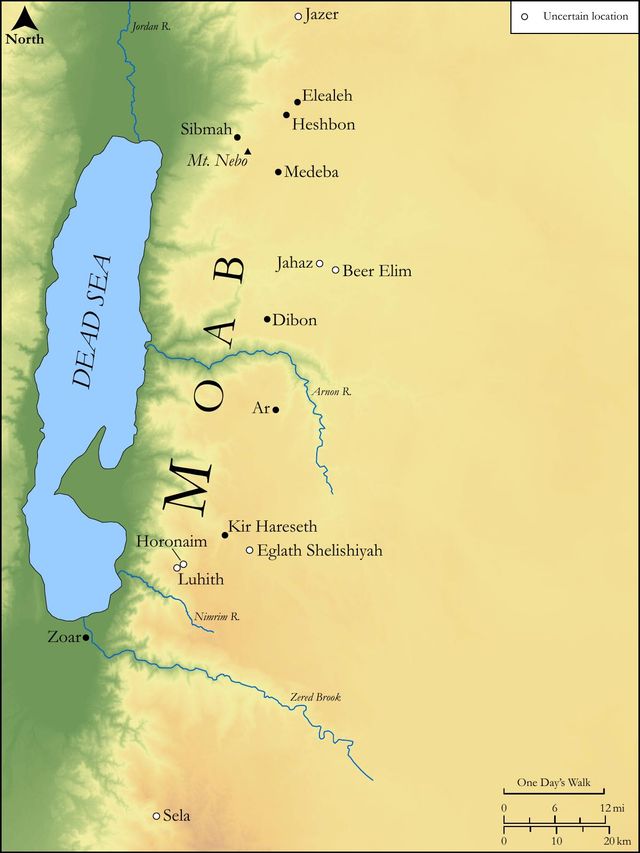
Moab was an ancient kingdom located east of the Dead Sea, often in a complex relationship of conflict or uneasy peace with Israel. As descendants of Lot (Genesis 19:37), the Moabites were known for their pride, their worship of the idol Chemosh (Numbers 21:29), and their historical antagonism towards Israel. Moab was a fertile and prosperous agricultural land, benefiting from trade routes, which allowed for significant accumulation of wealth. The "brook of the willows" (likely the Wadi al-Hasa, identified with the Brook Zered in Numbers 21:12) often marked a southern border or a significant geographical feature along common trade or escape routes. The act of "carrying away" possessions reflects both the plunder by invading armies and the desperate flight of refugees, abandoning their homes and taking only what they could carry in a desperate attempt to preserve something or find safety in exile.
Key Themes
ShowHideThis verse powerfully contributes to several overarching themes prominent in Isaiah and the broader prophetic literature. Foremost is the theme of Divine Judgment and Sovereignty, illustrating God's ultimate control over all nations and His willingness to execute judgment upon those who persist in pride, idolatry, and opposition to His divine will. Moab's judgment serves as a stark warning against national arrogance and self-reliance, echoing similar pronouncements against human pride found throughout Isaiah 2. Secondly, it highlights the Transience of Material Wealth and earthly security. The "abundance" and "laid up" possessions, once symbols of Moab's stability and power, are rendered utterly useless and become burdens in the face of divine wrath, demonstrating that true security lies beyond fleeting temporal riches, a truth frequently emphasized in wisdom literature (compare Proverbs 11:4). Finally, the verse underscores the theme of Forced Displacement and Loss, depicting a people stripped of their identity, land, and livelihood, compelled into exile or flight, a common consequence of divine judgment in the ancient Near East.
Exposition and Analysis
ShowHideKey Word Analysis
ShowHideDerived from the root meaning "to be over and above," this feminine noun (H3502) properly signifies excellence, but by implication, it refers to wealth, surplus, or riches. In Isaiah 15:7, it denotes the accumulated prosperity, the excess goods, and the substantial material possessions that Moab had acquired. Its use here emphasizes the sheer quantity of their wealth, which now becomes a burden or a prize for plunderers, highlighting the completeness of their loss.
This primitive root (H5375) is remarkably versatile, meaning "to lift," "to bear," or "to carry" in a wide variety of applications. In this context, it conveys the act of transporting or taking away. It can imply either the forceful removal of goods by conquerors (plunder) or the desperate effort of refugees attempting to flee with what little they can salvage, underscoring the involuntary, disruptive, and burdensome nature of their departure from their homeland.
This term (H5158) refers to a stream, especially a winter torrent, or a narrow valley (a wadi) through which a seasonal brook runs. A nachal often serves as a significant geographical feature, sometimes marking a border or a common route. When combined with "willows," it paints a picture of a specific, perhaps desolate or remote, destination for the fleeing Moabites, symbolizing their forced exile, desperate flight, and the loss of their familiar and fertile land.
Verse Breakdown
ShowHide"Therefore the abundance they have gotten,"
This clause refers to the vast material wealth, prosperity, and surplus that the Moabites had diligently acquired through their economic activities, trade, or agricultural success. It speaks to their established economic stability and the tangible results of their labor and resources, which were a source of national pride and security.
"and that which they have laid up,"
This phrase further specifies the nature of their wealth, referring to stored goods, accumulated treasures, or possessions that were set aside for security, future use, or as a display of their affluence. It emphasizes the foresight and effort they put into securing their future, highlighting the tragic irony that these very provisions are now rendered futile and subject to loss.
"shall they carry away"
This signifies the forced removal of their possessions. It implies either plunder by an invading army, where their goods are forcibly taken as spoils of war, or the desperate act of a fleeing populace, where they are compelled to abandon their homes and carry only what is absolutely necessary or possible on their arduous journey of escape.
"to the brook of the willows."
This identifies the desolate destination for their forced movement. The "brook of the willows" (Hebrew: nachal ha-_aravim, H5158 and H6155) is a specific geographical landmark, suggesting a route of flight, exile, or a desolate border region. It symbolizes the complete displacement and the loss of their homeland, as they are driven to a place far from their former security and prosperity, a stark picture of their utter desolation.
Literary Devices
ShowHideIsaiah 15:7 employs several powerful literary devices to convey its message of impending judgment and profound loss. Symbolism is prominent, with "the abundance they have gotten, and that which they have laid up" symbolizing Moab's misplaced pride, self-sufficiency, and perceived security, which are now shown to be utterly ephemeral. The "brook of the willows" functions as a symbol of exile, desolation, and a forced journey away from their homeland and former prosperity. The overall tone of Isaiah 15, including this verse, is one of Lament, a mournful expression of sorrow and grief over the impending destruction, inviting the audience to feel the weight of Moab's tragic fate. Furthermore, the stark contrast between Moab's past prosperity and its future desolation creates a powerful sense of Irony, where the very things they relied upon for security become burdens or are utterly lost in their desperate flight.
Theological and Thematic Connections
ShowHideIsaiah 15:7 serves as a profound theological statement on divine sovereignty and the transient nature of earthly security. It vividly illustrates that no nation, regardless of its wealth, strength, or perceived self-sufficiency, is exempt from God's judgment when it persists in pride, idolatry, and opposition to His will. The stripping away of Moab's material possessions underscores a universal biblical truth: true and lasting security is not found in accumulated riches or worldly power, but in a right relationship with God. This divine principle echoes throughout scripture, warning against misplaced trust and encouraging a focus on eternal values over fleeting temporal ones, reminding humanity that all earthly possessions are ultimately held in trust and can be removed by the hand of the Almighty.
Reflection and Application
ShowHideIsaiah 15:7 offers a timeless and sobering reflection for individuals and nations alike. It challenges us to examine the foundations of our security and where we place our ultimate trust. In a world that often equates success with material accumulation and defines worth by possessions, this verse powerfully reminds us that earthly treasures are inherently fleeting and can be stripped away in an instant, whether by economic downturns, natural disasters, political upheaval, or the sovereign hand of God. For the believer, it reinforces the call to live with an eternal perspective, prioritizing spiritual riches and a deepening relationship with Christ over the relentless pursuit of worldly wealth. It encourages generosity, detachment from materialism, and a profound reliance on God's unfailing provision rather than our own perceived abundance or self-sufficiency. Ultimately, it invites us to consider what truly endures and where our true hope lies, urging us to invest in what cannot be carried away by any earthly storm or consumed by the ravages of time.
Questions for Reflection
ShowHideFAQ
ShowHideWhat is the significance of the "brook of the willows" in this verse?
ShowHideThe "brook of the willows" (Hebrew: nachal ha-_aravim) is a significant geographical reference that likely points to the Wadi al-Hasa, which is often identified with the biblical Brook Zered (mentioned in Numbers 21:12). This wadi served as a natural border, often between Moab and Edom, and was a common route for travel or escape. Its mention here signifies the destination of the fleeing Moabites, symbolizing their forced displacement, exile, or desperate flight from their homeland. It represents a place of desolation, a stark contrast to the fertile lands they once inhabited, underscoring the completeness of their judgment and the profound loss of their former security and prosperity.
Christ-Centered Fulfillment
ShowHideWhile Isaiah 15:7 speaks directly to the judgment of Moab and the transience of earthly wealth, it finds profound Christ-centered fulfillment in several ways. The ultimate "abundance" that truly endures is not material, but spiritual, found exclusively in Christ. He is the true and imperishable treasure, the one in whom "are hidden all the treasures of wisdom and knowledge" (Colossians 2:3). The judgment on Moab, a nation characterized by pride, idolatry, and self-reliance, foreshadows the ultimate divine judgment against all sin and unrighteousness—a judgment that was fully and perfectly borne by Christ on the cross, offering redemption and reconciliation to those who believe (Romans 3:23-26). Furthermore, the forced carrying away of possessions by the Moabites contrasts sharply with the eternal, secure, and imperishable inheritance secured for believers in Christ, an "inheritance that is imperishable, undefiled, and unfading, kept in heaven for you" (1 Peter 1:4). Unlike the fleeting security of Moab's wealth, Christ offers an unshakeable kingdom and a refuge that no earthly power or calamity can take away (Hebrews 12:28). He is the true Lamb of God who takes away the sin of the world, offering a way to escape the ultimate judgment, not by fleeing with earthly possessions, but by trusting in His finished work and receiving His eternal salvation (John 1:29).