


Genesis 2:19
“The Creation of Woman and Marriage”Genesis 2:18–25
Bible text: King James Version (1769 Blayney text) · Public domain
Bible text: King James Version with Strong's numbers · Public domain
Bible text: Berean Standard Bible · Public domain
Bible text: American Standard Version (1901) · Public domain
Bible text: World English Bible, Messianic edition · Public domain
Bible text: Geneva Bible (1599) · Public domain
Bible text: Young's Literal Translation · Public domain
- וַיִּצֶרvai·yi·Tzerand he formedH3335Conj-w ¦ V-Qal-ConsecImperf-3msVerb Qal Consecutive Imperfect 3rd Singular Masculineוַandיִּצֶרhe formed
- יְהוָהYah·wehYahwehH3068N-properNoun Proper Title
- אֱלֹהִים'E·lo·HimGodH430N-mpNoun Plural Masculine Absolute
- מִןminfromH4480PrepPreposition
- הָאֲדָמָהha·'a·da·Mahthe groundH127Art ¦ N-fsNoun Singular Feminine Absoluteהָtheאֲדָמָהground
- כָּלkoleveryH3605N-mscNoun Singular Masculine Construct
- חַיַּתchai·Yat[the] animal ofH2416N-fscNoun Singular Feminine Construct
- הַשָּׂדֶהha·sa·Dehthe fieldH7704Art ¦ N-msNoun Singular Masculine Absoluteהַtheשָּׂדֶהfield
- וְאֵתve·'Etand [obj.]H853Conj-w ¦ DirObjMParticle Object Indicatorוְandאֵת[obj.]
- כָּלkoleveryH3605N-mscNoun Singular Masculine Construct
- עוֹףof[the] bird ofH5775N-mscNoun Singular Masculine Construct
- הַשָּׁמַיִםha·sha·Ma·yimthe heavensH8064Art ¦ N-mpNoun Plural Masculine Absoluteהַtheשָּׁמַיִםheavens
- וַיָּבֵאvai·ya·Ve'and he brought [them]H935Conj-w ¦ V-Hiphil-ConsecImperf-3msVerb Hiphil Consecutive Imperfect 3rd Singular Masculineוַandיָּבֵאhe brought [them]
- אֶל'EltoH413PrepPreposition
- הָאָדָםha·'a·Damthe manH120Art ¦ N-msNoun Singular Masculine Absoluteהָtheאָדָםman
- לִרְאוֹתlir·'otto seeH7200Prep-l ¦ V-Qal-InfVerb Qal Infinitive Constructלִtoרְאוֹתsee
- מַהmahwhat?H4100InterrogPronoun Interrogative
- יִּקְרָאyik·ra'will he callH7121V-Qal-Imperf-3msVerb Qal Imperfect 3rd Singular Masculine
- לוֹloto [the] itPrep-l ¦ 3msSuffix Personal 3rd Singular Masculineלto [the]וֹit
- וְכֹלve·Kholand allH3605Conj-w ¦ N-msNoun Singular Masculine Absoluteוְandכֹלall
- אֲשֶׁר'a·SherthatH834RelParticle Relative
- יִקְרָאyik·ra'he calledH7121V-Qal-Imperf-3msVerb Qal Imperfect 3rd Singular Masculine
- לוֹloto [the] itPrep-l ¦ 3msSuffix Personal 3rd Singular Masculineלto [the]וֹit
- הָאָדָםha·'a·Damthe manH120Art ¦ N-msNoun Singular Masculine Absoluteהָtheאָדָםman
- נֶפֶשׁNe·fesha creatureH5315N-fsNoun Singular Feminine Absolute
- חַיָּהchai·YahlivingH2416Adj-fsAdjective Singular Feminine Absolute
- הוּאhu'itH1931Pro-3msPronoun Personal 3rd Singular Masculine
- שְׁמוֹshe·Mo[was] its nameH8034N-msc ¦ 3msNoun Singular Masculine Construct with suffixשְׁמ[was] nameוֹits
English is a literal word-by-word gloss of the Hebrew, not the KJV's wording. Why?
This is the original text the KJV's translators worked from — each Hebrew word with its own literal English meaning in this verse, prepared by scholars at Tyndale House, Cambridge. The KJV translates whole sentences, not word by word, so its wording differs: one Hebrew word can become several English words, and the KJV may choose “the LORD” where the gloss reads “Yahweh”. Both are faithful — they answer different questions. For the KJV's own rendering, switch to the KJV text.
Words in [ ] are added by the English.
- Adam (KJV) / man (BSB) אָדָם
Details
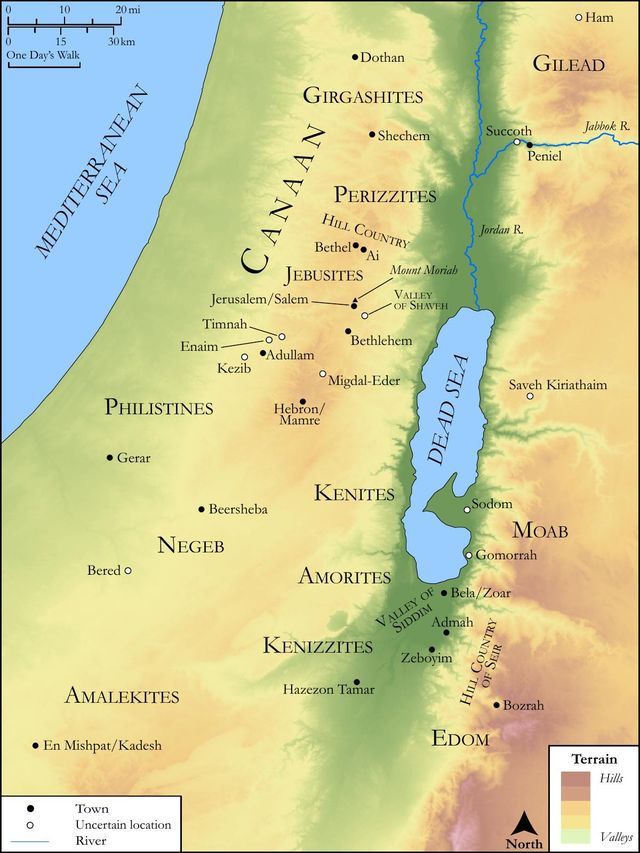
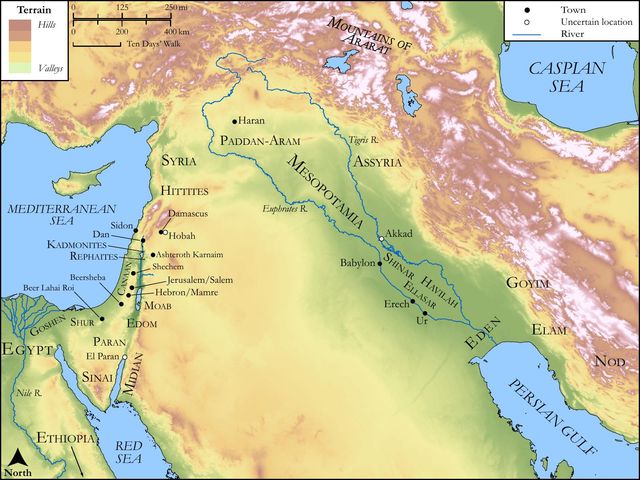
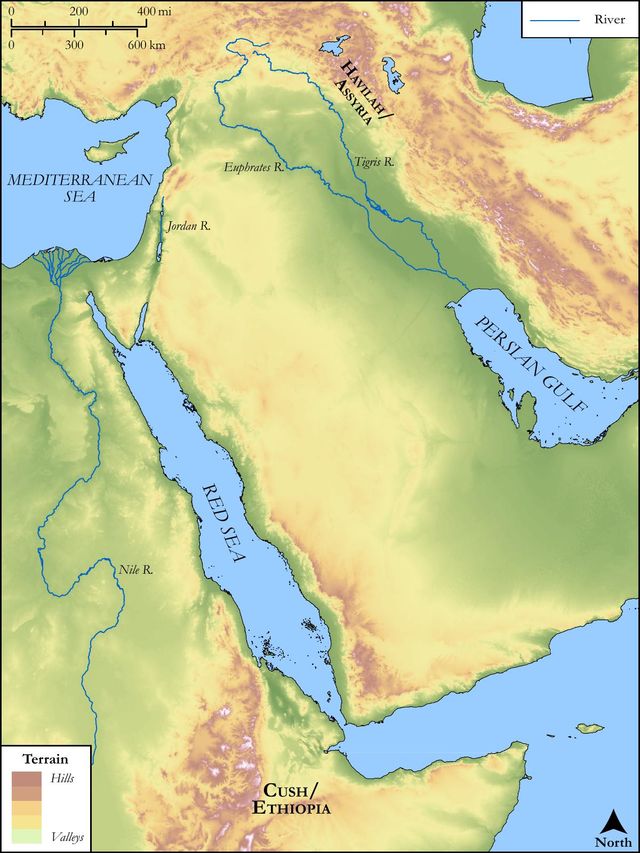
See on the biblical-era maps
Study this verse
Public-domain commentary
Matthew Henry
From his Commentary on the Whole Bible. Henry wrote on whole passages, and this entry covers Genesis 2:18–20. He set out his notes in a three-level outline, kept here as he numbered it.
Here we have, I. An instance of the Creator's care of man and his fatherly concern for his comfort, Genesis 2:18. Though God had let him know that he was a subject, by giving him a command, (Genesis 2:16, Genesis 2:17), yet here he lets him know also, for his encouragement in his obedience, that he was a friend, and a favourite, and one whose satisfaction he was tender of. Observe,
1.How God graciously pitied his solitude: It is not good that man, this man, should be alone. Though there was an upper world of angels and a lower world of brutes, and he between them, yet there being none of the same nature and rank of beings with himself, none that he could converse familiarly with, he might be truly said to be alone. Now he that made him knew both him and what was good for him, better than he did himself, and he said, "It is not good that he should continue thus alone." (1.) It is not for his comfort; for man is a sociable creature. It is a pleasure to him to exchange knowledge and affection with those of his own kind, to inform and to be informed, to love and to be beloved. What God here says of the first man Solomon says of all men (Ecclesiastes 4:9, etc.), that two are better than one, and woe to him that is alone. If there were but one man in the world, what a melancholy man must he needs be! Perfect solitude would turn a paradise into a desert, and a palace into a dungeon. Those therefore are foolish who are selfish and would be place alone in the earth. (2.) It is not for the increase and continuance of his kind. God could have made a world of men at first, to replenish the earth, as he replenished heaven with a world of angels: but the place would have been too strait for the designed number of men to live together at once; therefore God saw fit to make up that number by a succession of generations, which, as God had formed man, must be from two, and those male and female; one will be ever one.
2.How God graciously resolved to provide society for him. The result of this reasoning concerning him was this kind resolution, I will make a help-meet for him; a help like him (so some read it), one of the same nature and the same rank of beings; a help near him (so others), one to cohabit with him, and to be always at hand; a help before him (so others), one that he should look upon with pleasure and delight. Note hence,
(1.)In our best state in this world we have need of one another's help; for we are members one of another, and the eye cannot say to the hand, I have no need of thee, 1 Corinthians 12:21. We must therefore be glad to receive help from others, and give help to others, as there is occasion.
(2.)It is God only who perfectly knows our wants, and is perfectly able to supply them all, Philippians 4:19. In him alone our help is, and from him are all our helpers.
(3.)A suitable wife is a help-meet, and is from the Lord. The relation is then likely to be comfortable when meetness directs and determines the choice, and mutual helpfulness is the constant care and endeavour, 1 Corinthians 7:33, 1 Corinthians 7:34.
(4.)Family-society, if it is agreeable, is a redress sufficient for the grievance of solitude. He that has a good God, a good heart, and a good wife, to converse with, and yet complains he wants conversation, would not have been easy and content in paradise; for Adam himself had no more: yet, even before Eve was created, we do not find that he complained of being alone, knowing that he was not alone, for the Father was with him. Those that are most satisfied in God and his favour are in the best way, and in the best frame, to receive the good things of this life, and shall be sure of them, as far as Infinite Wisdom sees good.
II.An instance of the creatures' subjection to man, and his dominion over them (Genesis 2:19, Genesis 2:20):
Every beast of the field and every fowl of the air God brought to Adam, either by the ministry of angels, or by a special instinct, directing them to come to man as their master, teaching the ox betimes to know his owner. Thus God gave man livery and seisin of the fair estate he had granted him, and put him in possession of his dominion over the creatures. God brought them to him, that he might name them, and so might give,
1.A proof of his knowledge, as a creature endued with the faculties both of reason and speech, and so taught more than the beasts of the earth and made wiser than the fowls of the heaven, Job 35:11. And,
2.A proof of his power. It is an act of authority to impose names (Daniel 1:7), and of subjection to receive them. The inferior creatures did now, as it were, do homage to their prince at his inauguration, and swear fealty and allegiance to him. If Adam had continued faithful to his God, we may suppose the creatures themselves would so well have known and remembered the names Adam now gave them as to have come at his call, at any time, and answered to their names. God gave names to the day and night, to the firmament, to the earth, and to the sea; and he calleth the stars by their names, to show that he is the supreme Lord of these. But he gave Adam leave to name the beasts and fowls, as their subordinate lord; for, having made him in his own image, he thus put some of his honour upon him.
III.An instance of the creatures' insufficiency to be a happiness for man:
But (among them all) for Adam there was not found a help meet for him. Some make these to be the words of Adam himself; observing all the creatures come to him by couples to be named, he thus intimates his desire to his Maker: - "Lord, these have all helps meet for them; but what shall I do? Here is never a one for me." It is rather God's judgment upon the review. He brought them all together, to see if there were ever a suitable match for Adam in any of the numerous families of the inferior creatures; but there was none. Observe here,
1.The dignity and excellency of the human nature. On earth there was not its like, nor its peer to be found among all visible creatures; they were all looked over, but it could not be matched among them all.
2.The vanity of this world and the things of it; put them all together, and they will not make a help-meet for man. They will not suit the nature of his soul, nor supply its needs, nor satisfy its just desires, nor run parallel with its never-failing duration. God creates a new thing to be a help-meet for man - not so much the woman as the seed of the woman.
Historical interpretation
Seven Centuries of Reception
13 surviving comments on this verse. Each one is dated, so this reads as a timeline rather than a list.
Select a marker to jump to its quote. Markers stagger vertically where authors wrote within a few decades of each other.
(20) Why did God bring every animal to man, that he might give them their names? [Gen 2:19] He has here explained a great source of perplexity to the students of philosophy, admonishing them that names proceed from having been given, and not from nature; for a natural nomenclature is with peculiar fitness assigned to each creature when a man of wisdom and pre-eminent knowledge appears; and, in fact, the office of assigning the names to animals is one which particularly belongs to the mind of the wise man alone, and indeed to the first man born out of the earth, since it was fitting that the first of the human race, and the sovereign of all the animals born out of the earth, should have the dignity assigned to him. For inasmuch as he was the first person to see the animals, and as he was the first person who deserved to govern them all as their chief, so also it was fitting that he should be their first namer and the inventor of their names, since it would have been inconsistent and mad to leave them without any names, or to allow them to receive names from any one born at a later period, which would have been an insult to and a derogation from the honour and glory due to the first born. But we may also adopt this idea, that the giving of names to the different animals was so easily arranged that the very moment that Adam gave the name the animal itself also heard it; being influenced by the name thus given to it as by a familiar indication closely connected with it.
(21) Why does Moses say, "He brought the animals to Adam, that he might see what he would call them," when God can never entertain a doubt? [Gen 2:19] It is in truth inconsistent with the nature of God to doubt; therefore it does not appear that he was in doubt on this occasion, but that since he had given intellect to man as being the first man born out of the earth and endowed with a great desire for virtue, by which he was made thoroughly wise as if he had been endowed with wisdom by nature, so as to consider all things like the proper Ruler and Lord of all, God now caused him to be influenced to display the proper performance of his task, and saw what was really the most excellent point of his mind. Besides this, by this statement he evidently indicates the perfect free-will existing in us, refuting those who affirm that everything exists by a certain necessity. Or else because it belonged to man to employ the animals, therefore he also gave him authority to give them names.
(22) What is the meaning of the expression, "And whatever he called each living thing, that was the name thereof?" [Gen 2:19] We must consider that Adam gave names not only to all living creatures, but also to plants, and to everything else which is inanimate, beginning with the more excellent class; for the living creature is superior to that which has not life. Therefore the scripture considers the mention of the better part sufficient, indicating by this mention to all who are not utterly devoid of sense, that he in fact gave names to everything, since it was easy to fix names to things without life, which were never likely to change their place, and which had no passions of the soul to exercise, but the giving of proper appellations to living creatures was a more difficult task on account of the motions of their bodies and the various impulses of their souls, in accordance with the imagination and the variety of the outward senses, and the different agitations of the mind from which the effects of their works proceed. Therefore the mind could give names to the more difficult classes of living creatures. And on this account it was a very proper expression to employ, that he gave them names as being easy to name, because they were near.
Moses said, “God brought them to Adam.” This happened in order that God might make known the wisdom of Adam and the harmony that existed between the animals and Adam before he transgressed the commandment. The animals came to Adam as to a loving shepherd. Without fear they passed before him in orderly fashion, by kinds and by species. They were neither afraid of him nor were they afraid of each other. A species of predatory animals would pass by with a species of animal that is preyed upon following safely right behind.
Having spoken of Adam's entry into Paradise and of the law that was laid down for him, Scripture turns to describe the names which he gave to the animals, as follows: "The Lord fashioned out of the earth all the wild animals and the birds of the sky; and He brought them to Adam to see what he would call them. " [ Gen. 2:19 ]
The beasts of the field and the birds of the air which were brought to Adam are our irrational senses, because beasts and animals represent the diverse passions of the body, whether of the more violent kind or even of the more temperate.… God granted to you the power of being able to discern by the application of sober logic the species of each and every object in order that you may be induced to form a judgment on all of them. God called them all to your attention so that you might realize that your mind is superior to all of them.
Examine, now, the reason why God had by this time created out of the earth 'all the beasts of the field and all the birds of the air' and brought them to Adam to see what he would call them. How account for the fact that God brought merely the beasts of the field and the birds of the air to Adam? Animals were there, we know, each according to its kind. And so it is related further on: 'Adam named all the animals and all the beasts of the field, but he found no helper like himself.' [ Gen 2:19,20 ] How can we explain this other than by saying that the untamed beasts and the birds of the air were brought to man by divine power, while man himself held power over the beasts that were tame and domesticated? The former lay within the province of God's activity. The latter were due to the diligence of man. Besides this, there is a reason why everything was brought to Adam. In this way he would be able to see that nature in every aspect is constituted of two sexes: male and female. Following these observations, he would become aware that association with a woman was a necessity of his lot.
Those names that [Adam] imposed on them remain up to the present time. In this way God determined that we might retain a constant reminder of the esteem which the human being from the outset received from the Lord of all and might attribute responsibility for its removal to a person who by sin put an abrupt end to his authority.
While Adam had been given the whole earth, he had been given paradise for his home. He could leave and go out of paradise, but there was not a habitable place for humans beyond its borders—only for senseless animals, four-footed animals, wild monsters and crawling bugs. His “basilica” and “palace” was located in paradise. Because of this, God brought the living creatures to Adam; they had been separated from him. For slaves do not always stand in their master’s presence; they are present only when needed. The living creatures were named and immediately sent away. Adam, however, remained in paradise.
Now we should not imagine God bringing the animals to Adam in a crudely material way. What I have said in the preceding book about the twofold working of divine Providence should be a help here. We must not suppose that the animals were brought to Adam as when hunters and fowlers seek them out and drive them into their nets when they engage in the chase. Nor was there a command spoken by a voice from a cloud in words that rational creatures on hearing would understand and obey. Beasts and birds have not received such power. But according to their nature they obey God, not by a rational free choice of the will but according to the plan by which God moves all creatures at the appropriate times. Although he is himself unmoved in time, the angels who minister to him understand in his Word what things are to be done at appointed times. And hence, without any temporal motion in God, the angels are moved in time to accomplish his will in the creatures that are subject to them.
God first showed man how much better he was than cattle and all irrational animals. This is signified by the statement that all the animals were brought to him that he might see what he would call them and give them names. This shows that man is better equipped than the animals in virtue of reason, since only reason that judges concerning them is able to distinguish and know them by name. The one idea is an easy one to grasp, for man quickly understands that he is better equipped than cattle. The other idea is a difficult one to grasp, namely, that by which he understands that the rational part in him that rules is distinct from the animal part, which is ruled.
He who speaks contemptuously against the humble man and does not consider him an animate creature is like one who has opened his mouth against God. And though the humble man is contemptible in his eyes, his honor is esteemed by all creation. The humble man approaches ravenous beasts, and when their gaze rests upon him, their wildness is tamed. They come up to him as to their Master, wag their heads and tails and lick his hands and feet, for they smell coming from him that same scent that exhaled from Adam before the fall, when they were gathered together before him and he gave them names in paradise. This was taken away from us, but Jesus has renewed it and given it back to us through his coming. This it is that has sweetened the fragrance of the race of men.
For whatever Adam called every living soul, that was its name; and Adam gave names to all the animals of the earth, to all the birds of the sky, and to all the beasts of the earth. It is evident that Adam in that language, in which all of mankind spoke until the construction of the tower when languages were divided, named the animals of the earth and the birds of the sky. However, at the destruction of the tower, when God assigned to each nation its own distinct language, it is then to be believed that He also distinguished the names of the animals and other things according to each one's language: although it is also known that later men gave various names to many newfound things per their individual nations as they pleased, and still continue to do so. Finally, about the fish brought to Adam to name, Scripture says nothing, but it is credible that as they were gradually known, they were given different names by men according to the diversity of nations. However, it seems that the first language for the human race was Hebrew, since all the names we read about in Genesis up to the division of languages belong to that language. The reason for bringing all the animals of the earth and the birds of the sky to Adam, for him to see and name them, was to thus show God how much better man was than all irrational animals. For it appears that man, by his very reasoning, is better than beasts, as only reason can distinguish and name them individually, and reason itself is superior.
Therefore the Lord God formed out of the ground all the animals of the earth and all the birds of the sky and brought them to Adam. If anyone is concerned because it does not say "formed out of the ground all the animals of the earth and out of the waters all the birds of the sky," but as if He formed both kinds from the ground, then it is said, "The Lord God formed out of the ground all the animals of the earth and all the birds of the sky"; it should be understood in two ways: either that it is now silent about where He formed the birds of the sky from, because it could also be implied that it is possible He did not form both from the ground; but let us understand that He only formed the animals of the earth and the birds of the sky, even if Scripture is silent about where He formed them from; or that He calls the ground universally, along with the waters, just as it is called in that Psalm where, after the praises of the heavens were finished, the speech turns to the earth and says, "Praise the Lord from the earth, sea monsters, and all deeps" (Ps. 148:7), etc. It is not said afterward: "Praise the Lord from the waters." For where all depths which praise the Lord from the earth are, there also are reptiles and winged birds which likewise praise God from the earth according to this universal appellation of the earth, according to which it is said of the whole world: "God who made heaven and earth," whether from dry land or from the waters, whatever is created is truly understood to be created from the earth.
And he brought them to Adam to see what he would call them. It should not be thought carnally that God brought the animals of the earth or the birds to Adam in the same way a shepherd drives his flock from place to place; but it should rather be understood that just as by divine power He created these from the waters when He willed, in the same mysterious will of His power He brought them to man to be seen whenever He willed, just as all kinds of birds or quadrupeds are read to have come to Noah's ark, not gathered by the hand of man, but driven by divine command, and entered it, not knowing themselves for what purpose they were coming, but known by the man who, as they came into the ark, received them, God bringing and commanding.
Continue studying Genesis 2:19 across the web’s major study libraries — every link below opens this exact verse, chapter, or book on the destination site.
Read & Compare
 BibleGatewayThis verse in more than 200 translations and 70 languages.
 Bible.comThe YouVersion reader — hundreds of translations, reading plans, and highlights.
 ESV.orgCrossway's official English Standard Version reader.
 NET BibleThe NET translation with 60,000+ translators' notes on every rendering decision.
 STEP BibleTyndale House's free study tool — original text, vocabulary, and scholarly resources.
 BibliaLogos Bible Software's free web reader.
 USCCBThe New American Bible (Revised Edition) with the U.S. bishops' study notes.
Commentaries
 BibleHub CommentariesDozens of classic commentaries on this verse, gathered on one page.
 StudyLightMore than 100 commentary sets — the largest collection on the web.
 BibleRefPlain-English commentary on what this verse means, verse by verse.
 Enduring WordDavid Guzik's free commentary on this chapter, widely used by Bible teachers.
 Bible Study ToolsVerse commentary alongside Greek and Hebrew study aids.
Original Language & Research
- BibleHub InterlinearThe verse word by word — original language, transliteration, and English.
- BibleHub LexiconEvery word's original-language definition and Strong's entry.
 Blue Letter BibleDeep-study tools — Strong's numbers, concordance, and word studies.
 SefariaThe Hebrew text with Rashi and centuries of Jewish commentary.
Sermons, Hymns & Audio


TrulyRandomVerse is not affiliated with these sites and doesn’t control their content. They’re linked because they’re genuinely useful.
Written with AI assistance. Always check it against Scripture.
This verse
God forms the beasts and birds from the ground and brings them to Adam, who names each one, and the names he gives them stand.
“And out of the ground the LORD God formed every beast of the field, and every fowl of the air;”
The animals come from the same ground as the man, shaped by the same hand. “Beast of the field” and “fowl of the air” cover the land creatures and the birds.
“and brought them unto Adam to see what he would call them:”
God leads each creature to Adam and gives him a real task that uses his mind and judgment.
“and whatsoever Adam called every living creature, that was the name thereof.”
The names Adam gave became their names, the first exercise of the dominion of Genesis 1:28.
Passage studyGenesis 2:18–25
God Creates Woman and Joins the Two as One
Summary
The LORD God has made the man and placed him in Eden, and now for the first time he says that something is “not good”: the man is alone. God promises to make “an help meet for him”, a strong partner who matches him. He brings the animals to Adam, who names every one, and among them all there is none that fits him. So God puts Adam into a deep sleep, takes one of his ribs, builds a woman from it and brings her to him. Adam greets her with joy as bone of his bones and flesh of his flesh. From this God gives the pattern of marriage for every generation: a man leaves his father and mother, cleaves to his wife, and the two become one flesh. The passage ends with the man and his wife naked together and unashamed, in the moment just before sin enters the world.
Why the man needed a companion
The LORD God has formed the man from the dust of the ground (Genesis 2:7), set him in the garden to dress it and keep it, and given him the one command about the tree of the knowledge of good and evil (Genesis 2:15–17). All through Genesis 1 God looked at his work and called it good, and at the end he saw everything he had made and called it “very good” (Genesis 1:31). Here he names the one thing that is “not good”, and it is the man’s being alone. The word for good, ṭôwb, covers what is beautiful, excellent, beneficial and whole. Adam himself is just as God made him. What he lacks is a partner, and without one his life and his work are incomplete.
The word for man here, ʼâdâm, comes from a root meaning “ruddy” and is the ordinary word for a human being. It can mean one man, it becomes his name, Adam, and it can mean mankind as a whole. The blessing God had already spoken over mankind, “Be fruitful, and multiply, and replenish the earth” (Genesis 1:28), needed a man and a woman to carry it out.
Behind this lies who God is. We are made in the image of the one God who is Father, Son and Holy Spirit, living in perfect fellowship, and so we are made for fellowship with him and with one another. The wisdom of Ecclesiastes says the same in everyday terms: “Two are better than one; because they have a good reward for their labour”, and “woe to him that is alone when he falleth” (Ecclesiastes 4:9–12).
The Babylonians and other nations around Israel told of people made to do the work of the gods. Genesis shows the LORD God attending to the man’s own good. Before Adam asks for anything, God sees his need and says, “I will make him an help meet for him.” The answer is God’s plan and God’s gift, and it shows his care for every creature he has made.
People ask whether this verse is only about marriage. Marriage is the first and fullest answer God gives to the man’s aloneness, and verse 24 builds on it. The need the verse names reaches into all of life, so family, friendship and the fellowship of God’s people are part of his answer too.
“An help meet for him”
The KJV’s “help meet” stands for two Hebrew words, ʻêzer kenegdo. “Meet” is older English for fit or suitable, so the phrase means a help suited to him.
ʻêzer means help, aid or support, and Scripture uses it again and again for God himself as the helper of his people. “Our soul waiteth for the LORD: he is our help and our shield” (Psalm 33:20). “My help cometh from the LORD, which made heaven and earth” (Psalm 121:1–2). The psalmist prays that God will “Send thee help from the sanctuary, and strengthen thee out of Zion” (Psalm 20:2), and Moses blesses Israel in the name of the God “who rideth upon the heaven in thy help” (Deuteronomy 33:26). So the word carries strength. It describes the help that the one in need depends on.
kenegdo means “corresponding to him”, “opposite him” or “matching him”. It describes a counterpart who shares his nature and stands face to face with him, alike and yet distinct, and so able to supply what he lacks. Together, ʻêzer kenegdo describes a strong partner, perfectly suited to the man, for a life of shared work and mutual support.
Does “help meet” make the woman less than the man?
The word for help is the very word Scripture uses for God’s help to Israel, so it gives the woman a place of strength, and kenegdo makes her the man’s match. Genesis has already said that God made mankind in his own image, “male and female created he them” (Genesis 1:26–27), so man and woman are equal in worth before him.
Believers agree on that, and they differ on a further question. On one reading, the details of this chapter, with the man formed first, the woman made from him and for him, and the man naming her, show a pattern of loving leadership that God gives the husband in marriage, alongside full equality of worth. On the other reading, the same details speak of closeness and partnership, and the passage sets the two side by side with no order of rank. Both readings draw the woman’s dignity from this verse, and both see marriage as the first place where two people are a help to each other. Paul’s teaching on marriage in Ephesians 5:21–33 opens with “Submitting yourselves one to another in the fear of God” and goes on to set the love of husband and wife beside the love of Christ for his church.
Adam names the animals
“And out of the ground the LORD God formed every beast of the field, and every fowl of the air”. The verb for formed, yâtsar, means to mould or shape, as a potter shapes clay, and it is the same verb used for the forming of the man in Genesis 2:7. The beasts and birds come out of the same ground as the man, so they share his earthly origin, while the man alone received the breath of life from God and the task that follows. The name “the LORD God”, Yᵉhôvâh ʼĕlôhîym, joins God’s personal covenant name to his name as the supreme Creator.
God then “brought them unto Adam to see what he would call them”. God himself leads each creature to the man and leaves the naming to him. In Scripture a name, shêm, stands for identity and character, and giving a name often shows authority, much as a king would name a land he had conquered. To name each creature Adam had to look at it and understand it, so the work drew on his mind and will, the gifts of one made in God’s image. “And whatsoever Adam called every living creature, that was the name thereof.” God let Adam’s names stand.
This is the rule over the creatures that God gave mankind in Genesis 1:28, and that the psalm celebrates: “Thou madest him to have dominion over the works of thy hands; thou hast put all things under his feet” (Psalm 8:6). It is rule held under God and for the good of what he has made, the work of a steward who is to dress and keep the garden.
Why did God bring the animals to Adam?
God gave Adam the naming so that he would use the authority and understanding God had given him, sharing in God’s work as a worker in his world. The naming also let Adam see for himself what God had already said. He named the cattle, the fowl of the air and every beast of the field, and when the work was done, “for Adam there was not found an help meet for him.” The verb mâtsâʼ means to find or attain. Among every creature he met, Adam found none that shared his nature, since mankind alone bears God’s image. By the time God made the woman, Adam knew his need, and he could receive her as the gift she was. Proverbs speaks of the same gift: “Whoso findeth a wife findeth a good thing, and obtaineth favour of the LORD” (Proverbs 18:22).
The deep sleep and the rib
“And the LORD God caused a deep sleep to fall upon Adam, and he slept”. The word tardêmâh means a deep sleep, heavier than ordinary rest, and Scripture uses it for sleep that God sends. A deep sleep fell on Abram as God made his covenant with him (Genesis 15:12), and when David took Saul’s spear and cruse of water from beside him, it was because “a deep sleep from the LORD was fallen upon them” (1 Samuel 26:12). Adam sleeps through all that follows, so the woman is wholly God’s work, made by his power and for his purpose.
God took “one of his ribs”. The word tsêlâʻ means rib or side, and elsewhere it can mean a plank, a storey of a building or the slope of a hill. Every creature so far, Adam included, was formed from the ground, and now the woman is made from the man himself. Then God “closed up the flesh instead thereof”. The verb çâgar means to shut or close, and here God closes the place he opened, tending Adam’s body with care.
Why did God make the woman from the man’s rib?
God made the woman from the man’s own body so that she would be of one nature with him, and Adam says exactly this when he sees her: “bone of my bones, and flesh of my flesh”. An old saying draws a picture from it. The woman was taken from the man’s side to stand beside him as his partner, close to his heart to be loved and under his arm to be protected, neither from his head to rule over him nor from his feet to be trampled by him. Genesis gives its own reason in Adam’s words, and the saying is a picture built on that reason.
God builds the woman and brings her to the man
The KJV says God “made” the woman, and the Hebrew verb, bânâh, means to build. From the one rib “which the LORD God had taken from man”, where taken is lâqach, God built a whole person, the woman, ʼishshâh, with the care of a craftsman. She owes her life and her worth to God, who designed her to be the man’s counterpart.
Then God “brought her unto the man”. The verb bôwʼ means to bring or lead in. God brought the animals to Adam in verse 19, and now he brings the partner Adam had looked for among them. He presents her as a father brings his daughter to her bridegroom, so God himself stands at the first wedding. Marriage began as his work and is his institution, and Jesus draws the same conclusion from this chapter (Matthew 19:4–6).
The verse begins and ends with the man, ʼâdâm. The rib was taken “from man”, and the woman was brought “unto the man”. She was made from him and for him, and God gives her to him.
“Bone of my bones, and flesh of my flesh”
“And Adam said” uses ʼâmar, the everyday word for saying, and the joy is in the words that follow, which come as a short poem. “This is now” carries the sense of “at last”: after every creature that passed before him, here is the one who matches him.
The word for bone, ʻetsem, comes from a root meaning “strong” and can stand for the body or for the self, as in “the selfsame day”. “Bone of my bones, and flesh of my flesh” is the Hebrew way of naming the closest kinship. When the tribes of Israel came to make David king, they said, “Behold, we are thy bone and thy flesh” (2 Samuel 5:1). Adam is saying that this woman shares his very substance and nature.
“She shall be called Woman, because she was taken out of Man.” The Hebrew plays on the sound of the two words: man is ʼîysh, and woman is ʼishshâh, its feminine form. English “man” and “woman” keep something of the same link. Her name ties her to him and to her origin, and it marks her as his female counterpart, distinct from him and one with him in nature. Adam named the animals, and now he names her, with a name that says she belongs with him.
Leaving, cleaving and one flesh
“Therefore” ties marriage to everything that has gone before. Because God made the woman from the man and brought her to him, a man in every generation leaves his father and mother, cleaves to his wife, and becomes one flesh with her. The verse moves from what happened in Eden to what holds for all mankind, and Jesus quotes it, together with “male and female” from Genesis 1:27, as the word of the Creator. Mark records him saying, “And they twain shall be one flesh: so then they are no more twain, but one flesh” (Mark 10:6–9).
To leave, ʻâzab, means to loosen or let go. The man’s parents’ household stops being his first loyalty, and his wife comes first among all people in his life. To cleave, dâbaq, means to cling or stick fast, and it is a word of strong, lasting attachment. Scripture uses it of Israel’s loyalty to the LORD: “But ye that did cleave unto the LORD your God are alive every one of you this day” (Deuteronomy 4:4). So marriage asks of husband and wife the faithfulness God asks of his people, and that he himself shows, for he is “the faithful God, which keepeth covenant and mercy with them that love him” (Deuteronomy 7:9).
“One flesh” is ʼechâd bâsâr, “one” and “flesh”, where flesh can mean the body or the whole person. Two people become one in God’s eyes, with one life, one identity and one future. The order of the verse moves from leaving to cleaving to becoming one, and each step makes room for the next.
Does leaving father and mother mean neglecting them?
Leaving means that a man’s first loyalty among people now belongs to his wife, and that the two of them become a new family. The command “Honour thy father and thy mother” (Exodus 20:12) holds for grown children all their lives, so leaving changes the order of a man’s loyalties and keeps his love and honour for his parents.
Is “one flesh” only about the body?
One flesh includes the sexual union of husband and wife, and it reaches through every part of their life together. Body, heart and spirit are joined in a shared purpose, mutual support and a common future.
What does this verse teach about divorce?
This verse gives God’s design for marriage as a union for life. Jesus quotes it when he teaches on marriage, and he concludes, “What therefore God hath joined together, let not man put asunder” (Matthew 19:4–6). Scripture recognises that divorce happens in a fallen world because of human sin, and Genesis 2:24 remains the standard by which every departure from God’s design is measured.
Naked and unashamed
“And they were both naked, the man and his wife, and were not ashamed.” The word for naked, ʻârôwm, means unclothed, wholly or in part. The word for both, shᵉnayim, is the ordinary word for two. The man, ʼâdâm, and his wife, ʼishshâh, stand together before God and before each other with nothing hidden.
Elsewhere in Scripture nakedness goes with defeat, slavery and disgrace, as when the king of Assyria led the Egyptians away captive, naked and barefoot. In Eden, before sin, the same nakedness speaks of innocence, openness and trust. The verb for ashamed, bûwsh, means to grow pale, and so to be ashamed, and it can also mean to be disappointed. Shame is what we feel when we are exposed in our failure or our wrongdoing. The man and his wife were innocent before God, so being seen by each other and by him brought them only peace.
This is the world as God made it and called very good, and the verse prepares for what comes next in Genesis 3. The following verse says the serpent “was more subtil than any beast of the field” (Genesis 3:1), and the Hebrew word for subtil, ʻārûm, sounds almost the same as ʻârôwm, naked. Through the serpent’s cunning, the nakedness that was innocent becomes a source of shame. Once they have eaten, “the eyes of them both were opened, and they knew that they were naked; and they sewed fig leaves together, and made themselves aprons”, and Adam tells God, “I was afraid, because I was naked; and I hid myself” (Genesis 3:7–10). Shame, fear and hiding enter the world together.
In Christ that shame is answered. Jesus was stripped of his garments and bore public shame on the cross to cover our sin and guilt, and those who trust him are clothed in his righteousness. “There is therefore now no condemnation to them which are in Christ Jesus” (Romans 8:1). In the new creation “God shall wipe away all tears from their eyes” (Revelation 21:4), and his people will live with him in the open, unashamed communion he made them for.
Christ and his bride
Paul quotes verse 24 and then says, “This is a great mystery: but I speak concerning Christ and the church” (Ephesians 5:31–32). The first marriage was made to picture a greater one. Husbands are to love their wives “even as Christ also loved the church, and gave himself for it” (Ephesians 5:25–27), and to love them as their own bodies, for “He that loveth his wife loveth himself” (Ephesians 5:28–30). The church is Christ’s body, “the fulness of him that filleth all in all” (Ephesians 1:22–23).
Paul calls Christ “the last Adam” (1 Corinthians 15:45). Adam named the creatures and ruled them under God, and Christ is Lord of all, for all things were created by him and for him, “and by him all things consist” (Colossians 1:16–17).
The deep sleep and the opened side give a picture of the cross. Adam slept, and God took from his side the one who became his bride. Christ slept in death, and “one of the soldiers with a spear pierced his side, and forthwith came there out blood and water” (John 19:34). By that death Christ gained his church, a new people joined to him. Scripture draws the comparison between marriage and Christ’s love in plain words in Ephesians, and the comparison of the sleep and the side is a likeness we see in the pattern.
The man’s leaving has its likeness too. Christ, “being in the form of God”, made himself of no reputation and took the form of a servant (Philippians 2:6–7), and he gave himself for his bride. The deepest aloneness of mankind is separation from God through sin, and God was in Christ reconciling the world to himself (2 Corinthians 5:18–19). In him we are brought home to God, and Paul tells believers, “ye are complete in him” (Colossians 2:10).
God’s gift of one another
The first thing God called “not good” was a man alone, so the people he puts in our lives are his provision. Marriage, family, friendship and the fellowship of the church are gifts from his hand, worth cherishing and tending. You can be an ʻêzer to the people around you, a strong help who stands with them in their joys and their struggles, as God stands with us.
If you are married, this passage gives you the shape of your marriage: a loyalty that puts your husband or wife first among all people, a faithfulness that holds fast as God holds fast to his people, and one shared life before him. If you are single, God’s care for Adam’s need is the same care he has for yours, and he places you among his people.
Above all, God is our help, and in Christ we can come to him without shame. The man and his wife stood before God with nothing to hide, and through Christ, who bore our shame, God’s people will stand before him that way again.
Genesis 2:18
“And the LORD God said,”
The words come from God himself, who knows perfectly what his creature needs.
“It is not good that the man should be alone;”
The first time Scripture calls anything not good, said in a world still free of sin. The lack lies in the man’s solitude, with Adam himself just as God made him.
“I will make him an help meet for him.”
God promises before Adam asks. ʻêzer kenegdo is a strong help who matches him and stands face to face with him.
Genesis 2:19 This verse
“And out of the ground the LORD God formed every beast of the field, and every fowl of the air;”
The animals come from the same ground as the man, shaped by the same hand. “Beast of the field” and “fowl of the air” cover the land creatures and the birds.
“and brought them unto Adam to see what he would call them:”
God leads each creature to Adam and gives him a real task that uses his mind and judgment.
“and whatsoever Adam called every living creature, that was the name thereof.”
The names Adam gave became their names, the first exercise of the dominion of Genesis 1:28.
Genesis 2:20
“And Adam gave names to all cattle, and to the fowl of the air, and to every beast of the field;”
Tame beasts, birds and wild beasts, the whole range of creatures around him, pass before him and receive their names.
“but for Adam there was not found an help meet for him.”
The naming ends with the need still open. Adam has seen every creature, and the next verse is God’s answer.
Genesis 2:21
“And the LORD God caused a deep sleep to fall upon Adam, and he slept:”
Adam rests while God works, so he receives the woman as a gift he had no hand in making.
“and he took one of his ribs,”
The word can also be read “one of his sides”.
“and closed up the flesh instead thereof;”
God shuts the place he opened and leaves Adam whole.
Genesis 2:22
“And the rib, which the LORD God had taken from man,”
The material for the woman comes from the man, and the verse names God as the one who took it.
“made he a woman,”
Literally “built”: from one rib God builds a whole person.
“and brought her unto the man.”
God presents the woman to the man himself, at the first wedding, where God brings the bride.
Genesis 2:23
“And Adam said, This is now”
Adam’s first response is joy, with the sense of “at last”.
“bone of my bones, and flesh of my flesh:”
The language of closest kinship, used later of Israel’s tie to David (2 Samuel 5:1).
“she shall be called Woman,”
Adam names her as he named the animals, and her name, ʼishshâh, ties her to him.
“because she was taken out of Man.”
The reason for the name is her origin. ʼîysh and ʼishshâh sound alike in Hebrew.
Genesis 2:24
“Therefore”
Marriage rests on the way God made man and woman, and the verse turns from that one couple to every couple after them.
“shall a man leave his father and his mother,”
Father and mother together stand for the whole household he grew up in. His first loyalty passes to his wife, and the honour he owes his parents remains.
“and shall cleave unto his wife:”
dâbaq, to cling or stick fast, the word used of Israel holding fast to the LORD.
“and they shall be one flesh.”
Body and life joined. Jesus and Paul both quote these words (Mark 10:6–9, Ephesians 5:31–32).
Genesis 2:25
“And they were both naked, the man and his wife,”
The first couple, together, with nothing between them and nothing to hide.
“and were not ashamed.”
Innocence before God and each other. The next chapter tells how shame came in and they hid (Genesis 3:7–10).
Last revised