


Matthew 19:4
Bible text: King James Version (1769 Blayney text) · Public domain
Bible text: King James Version with Strong's numbers · Public domain
Bible text: Berean Standard Bible · Public domain
Bible text: American Standard Version (1901) · Public domain
Bible text: World English Bible, Messianic edition · Public domain
Bible text: Geneva Bible (1599) · Public domain
Bible text: Young's Literal Translation · Public domain
- ὉHoWhichG3588T-NSMDefinite article Nominative Singular Masculine
- δὲdenowG1161CONJConjunction
- ἀποκριθεὶςapokritheisansweringG611V-AOP-NSMVerb Aorist Passive Deponent Participle Nominative Singular Masculine
- εἶπενeipenHe saidG2036V-2AAI-3SVerb 2nd Aorist Active Indicative 3rd Singular
- αὐτοῖς·autoisto themG846P-DPMPersonal pronoun Dative Plural Masculine
- οὐκoukSurelyG3756PRT-NNegative Particle Negative
- ἀνέγνωτεanegnōteyou have readG314V-2AAI-2PVerb 2nd Aorist Active Indicative 2nd Plural
- ὅτιhotithatG3754CONJConjunction
- ὁhothe [One]G3588T-NSMDefinite article Nominative Singular Masculine
- κτίσαςktisascreatedG2936V-AAP-NSMVerb Aorist Active Participle Nominative Singular Masculine
- ἀπ᾽ap᾽from [the]G575PREPPreposition
- ἀρχῆςarchēsbeginningG746N-GSFNoun Genitive Singular Feminine
- ἄρσενarsenmaleG730A-ASNAdjective Accusative Singular Neuter
- καὶkaiandG2532CONJConjunction
- θῆλυthēlufemaleG2338A-ASNAdjective Accusative Singular Neuter
- ἐποίησενepoiēsenmadeG4160V-AAI-3SVerb Aorist Active Indicative 3rd Singular
- αὐτούς;autousthem?G846P-APMPersonal pronoun Accusative Plural Masculine
English is a literal word-by-word gloss of the Greek, not the KJV's wording. Why?
This is the original text the KJV's translators worked from — each Greek word with its own literal English meaning in this verse, prepared by scholars at Tyndale House, Cambridge. The KJV translates whole sentences, not word by word, so its wording differs: one Greek word can become several English words, and the KJV may choose “charity” where the gloss reads “love”. Both are faithful — they answer different questions. For the KJV's own rendering, switch to the KJV text.
Details
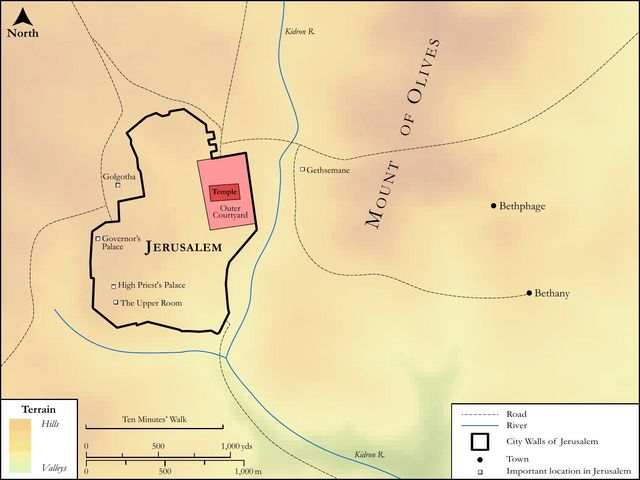
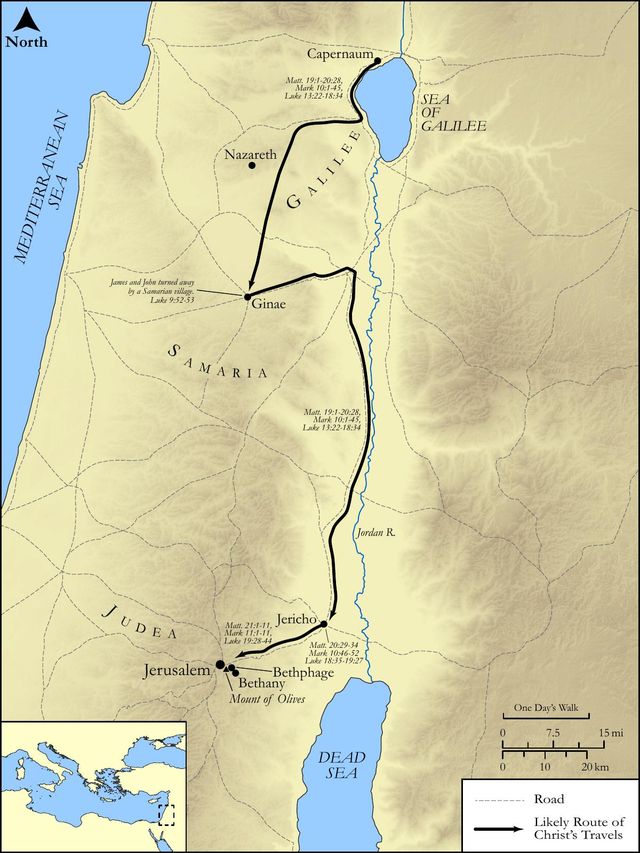
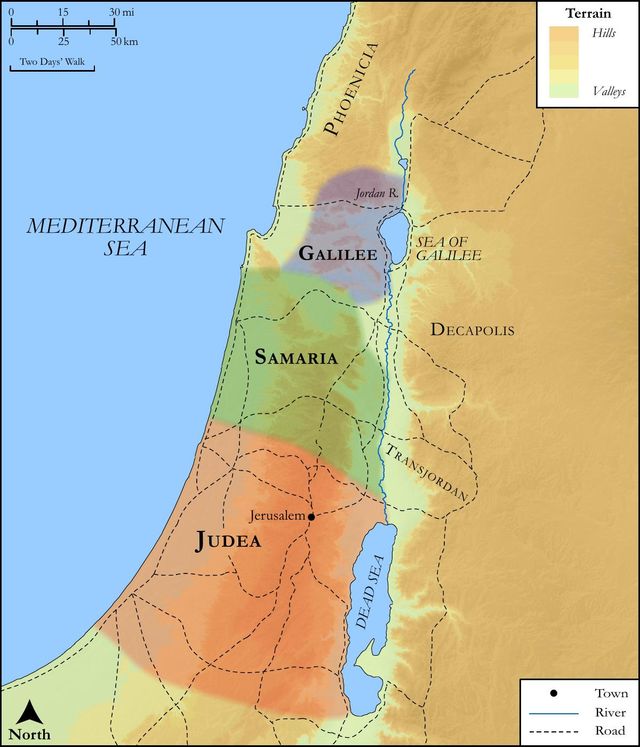
See on the biblical-era maps
Study this verse
Historical interpretation
Eighteen Centuries of Reception
19 surviving comments on this verse. Each one is dated, so this reads as a timeline rather than a list.
Select a marker to jump to its quote. Markers stagger vertically where authors wrote within a few decades of each other.
"Sir, if any one has a wife who trusts in the Lord, and if he detect her in adultery, does the man sin if he continue to live with her?" And he said to me, "As long as he remains ignorant of her sin, the husband commits no transgression in living with her. But if the husband know that his wife has gone astray, and if the woman does not repent, but persists in her fornication, and yet the husband continues to live with her, he also is guilty of her crime, and a sharer in her adultery." And I said to him, "What then, sir, is the husband to do, if his wife continue in her vicious practices?" And he said, "The husband should put her away, and remain by himself. But if he put his wife away and marry another, he also commits adultery." And I said to him, "What if the woman put away should repent, and wish to return to her husband: shall she not be taken back by her husband?" And he said to me, "Assuredly. If the husband do not take her back, he sins, and brings a great sin upon himself; for he ought to take back the sinner who has repented. But not frequently. For there is but one repentance to the servants of God. In case, therefore, that the divorced wife may repent, the husband ought not to marry another, when his wife has been put away. In this matter man and woman are to be treated exactly in the same way."
Concerning chastity, He uttered such sentiments as these: "Whosoever looketh upon a woman to lust after her, hath committed adultery with her already in his heart before God." And, "If thy right eye offend thee, cut it out; for it is better for thee to enter into the kingdom of heaven with one eye, than, having two eyes, to be cast into everlasting fire." And, "Whosoever shall marry her that is divorced from another husband, committeth adultery." And, "There are some who have been made eunuchs of men, and some who were born eunuchs, and some who have made themselves eunuchs for the kingdom of heaven's sake; but all cannot receive this saying." So that all who, by human law, are twice married, are in the eye of our Master sinners, and those who look upon a woman to lust after her. For not only he who in act commits adultery is rejected by Him, but also he who desires to commit adultery: since not only our works, but also our thoughts, are open before God.
And the voice of the Gospel teaches still more urgently concerning chastity, saying: "Whosoever looks on a woman who is not his own wife, to lust after her, has committed adultery with her already in his heart." [Matthew 5:28] "And he that marries," says [the Gospel], "her that is divorced from her husband, commits adultery; and whosoever puts away his wife, saving for the cause of fornication, causes her to commit adultery." [Matthew 5:32] Because Solomon says: "Can a man take fire in his bosom, and his clothes not be burned? Or can one walk upon hot coals, and his feet not be burned? So he that goes in to a married woman shall not be innocent." [Proverbs 6:27-29]
A person should either remain as he was born, or be content with one marriage; for a second marriage is only a specious adultery. "For whosoever puts away his wife," says He, "and marries another, commits adultery;" [Matthew 19:9] not permitting a man to send her away whose virginity he has brought to an end, nor to marry again. For he who deprives himself of his first wife, even though she be dead, is a cloaked adulterer, resisting the hand of God, because in the beginning God made one man and one woman, and dissolving the strictest union of flesh with flesh, formed for the intercourse of the race.
Concerning the words, "Not all can receive this saying. There are some eunuchs who were born so, and some who were made eunuchs by men, and some who have made themselves eunuchs for the sake of the kingdom of heaven; let him receive it who can receive it," they do not realize the context. After his word about divorce some asked him whether, if that is the position in relation to woman, it is better not to marry; and it was then that the Lord said: "Not all can receive this saying, but those to whom it is granted." What the questioners wanted to know was whether, when a man's wife has been condemned for fornication, it is allowable for him to marry another.
Now that the Scripture counsels marriage, and allows no release from the union, is expressly contained in the law, "Thou shalt not put away thy wife, except for the cause of fornication;" and it regards as fornication, the marriage of those separated while the other is alive. Not to deck and adorn herself beyond what is becoming, renders a wife free of calumnious suspicion, while she devotes herself assiduously to prayers and supplications; avoiding frequent departures from the house, and shutting herself up as far as possible from the view of all not related to her, and deeming housekeeping of more consequence than impertinent trifling. "He that taketh a woman that has been put away," it is said, "committeth adultery; and if one puts away his wife, he makes her an adulteress," that is, compels her to commit adultery. And not only is he who puts her away guilty of this, but he who takes her, by giving to the woman the opportunity of sinning; for did he not take her, she would return to her husband. What, then, is the law? In order to check the impetuosity of the passions, it commands the adulteress to be put to death, on being convicted of this; and if of priestly family, to be committed to the flames. And the adulterer also is stoned to death, but not in the same place, that not even their death may be in common. And the law is not at variance with the Gospel, but agrees with it. How should it be otherwise, one Lord being the author of both? She who has committed fornication liveth in sin, and is dead to the commandments; but she who has repented, being as it were born again by the change in her life, has a regeneration of life; the old harlot being dead, and she who has been regenerated by repentance having come back again to life. The Spirit testifies to what has been said by Ezekiel, declaring, "I desire not the death of the sinner, but that he should turn." Now they are stoned to death; as through hardness of heart dead to the law which they believed not. But in the case of a priestess the punishment is increased, because "to whom much is given, from him shall more be required."
There, while prohibiting divorce, He has given us a solution of this special question respecting it: "Moses," says He, "because of the hardness of your hearts, suffered you to give a bill of divorcement; but from the beginning it was not so" -for this reason, indeed, because He who had "made them male and female" had likewise said, "They twain shall become one flesh; what therefore God hath joined together, let not man put asunder." Now, by this answer of His (to the Pharisees), He both sanctioned the provision of Moses, who was His own (servant), and restored to its primitive purpose the institution of the Creator, whose Christ He was.
Also He cures the Galileans on the borders of Judæa, that He might admit the sins of the Gentiles to that pardon which was prepared for the Jews.
If a layman divorces his own wife, and takes another, or one divorced by another, let him be suspended.
See a teacher's wisdom. I mean, that being asked, Is it lawful? He did not at once say, It is not lawful, lest they should be disturbed and put in disorder, but before the decision by His argument He rendered this manifest, showing that it is itself too the commandment of His Father, and that not in opposition to Moses did He enjoin these things, but in full agreement with him.
But mark Him arguing strongly not from the creation only, but also from His command. For He said not, that He made one man and one woman only, but that He also gave this command that the one man should be joined to the one woman. But if it had been His will that he should put this one away, and bring in another, when He had made one man, He would have formed many Women.
But now both by the manner of the creation, and by the manner of lawgiving, He showed that one man must dwell with one woman continually, and never break off from her.
And see how He saith, "He which made them at the beginning, made them male and female," that is, from one root they sprung, and into one body came they together, "for the twain shall be one flesh."
After this, to make it a fearful thing to find fault with this lawgiving, and to confirm the law, He said not, "Sever not therefore, nor put asunder," but, "What God hath joined together, let not man put asunder."
But if thou put forward Moses, I tell thee of Moses' Lord, and together with this, I rely upon the time also. For God at the beginning made them male and female; and this law is older (though it seem to have been now introduced by me), and with much earnestness established. For not merely did He bring the woman to the man, but also commanded to leave father and mother. And neither did He make it a law for him merely to come to the woman, but also "to cleave to her," by the form of the language intimating that they might not be severed. And not even with this was He satisfied, but sought also for another greater union, "for the twain," He saith, "shall be one flesh."
Then after He had recited the ancient law, which was brought in both by deeds and by words, and shown it to be worthy of respect because of the giver, with authority after that He Himself too interprets and gives the law, saying, "So that they are no more twain, but one flesh." Like then as to sever flesh is a horrible thing, so also to divorce a wife is unlawful. And He stayed not at this, but brought in God also by saying, "What therefore God hath joined together, let not man put asunder," showing that the act was both against nature, and against law; against nature, because one flesh is dissevered; against law, because that when God hath joined and commanded it not to be divided, ye conspire to do this.
(Hom. lxii.) The Lord had before left Judæa because of their jealousy, but now He keeps Himself more to it, because His passion was near at hand. Yet does He not go up to Judæa itself, but into the borders of Judæa; whence it is said, And it came to pass when Jesus had ended all these sayings, he departed from Galilee.
It should be also observed, that the Lord is not either ever delivering doctrine, or ever working miracles, but one while does this, and again turns to that; that by His miracles faith might be given to what He said, and by His teaching might be showed the profit of those things which He wrought.
For indeed Christ so healed men, as to do good both to themselves, and through them to many other. For these men's healing was to others the occasion of their knowledge of God; but not to the Pharisees, who were only hardened by the miracles; whence it follows; And the Pharisees came to him, tempting him,, and saying, Is it lawful for a man to put away his wife for every cause?
Observe their wickedness even in the way of putting their question. The Lord had above disputed concerning thus law, but they now ask Him as though He had spoken nothing thereof, supposing He had forgot what He had before delivered in this matter.
But not by the law of creation only, but also by the practice of the law, He shows that they ought to be joined one and one, and never put asunder, And he said, For this cause shall a man leave his father and his mother, and shall cleave to his wife.
See the wisdom of the Teacher. Being asked, Is it lawful, He said not straight, It is not lawful, lest they should be troubled, but establishes it through a proof. For God made them from the beginning male and female, and not merely joined them together, but bade them quit father and mother; and not bade the husband merely approach his wife, but be joined to her, showing by this manner of speaking the inseparable bond. He even added a still closer union, saying, And they twain shall be one flesh.
When He had brought forward the words and facts of the old law, He then interprets it with authority, and lays down a law, saying, Therefore they are no more twain, but one flesh. For as those who love one another spiritually are said to be one soul, And all they that believed had one heart and one soul, (Acts 4:32.) so husband and wife who love each other after the flesh, are said to be one flesh. And as it is a wretched thing to cut the flesh, so is it an unjust thing to put away a wife.
He brings in God yet again, saying, What God has joined, let no man put asunder, showing that it is against both nature and God's law to put away a wife; against nature, because one flesh is therein divided; against law, because God has joined and forbidden to sunder them.
Had the Lord been opposed to the Old Testament, He would not thus have contended in Moses' behalf, nor have gone about to show that what was his was in agreement with the things of old. But the unspeakable wisdom of Christ made answer and excuse for these in this manner, He saith unto them, Moses for the hardness of your hearts suffered you to put away your wives. By this He clears Moses from their charge, and retorts it all upon their own head.
At last, because what He had said was severe, He goes back to the old law, saying, From the beginning it was not so.
(V. 4.) And he answered and said unto them, Have ye not read, that he which made them at the beginning made them male and female? This is written in the beginning of Genesis. But in saying male and female, he pointed towards monogamous marriages. For he did not say males and females, which was sought after due to the repudiation of the former, but male and female, so that the bond of one spouse might be established.
That they might have Him as it were between the horns of a syllogism, so that, whatever answer He should make, it would lie open to cavil. Should He allow a wife to be put away for any cause, and the marriage of another, he would seem to contradict Himself as a preacher of chastity. Should He answer that she may not be put away for any cause whatsoever, He will be judged to have spoken impiously, and to make against the teaching of Moses and of God.
But He so frames His answer as to evade their snare. He brings in the testimony of Holy Writ, and the law of nature, and opposing God's first sentence to this second, He answered and said unto them, Have ye not read, that he which made them at the beginning made them male and female? This is written in the beginning of Genesis. This teaches that second marriages are to be avoided, for He said not male and females, which was what was sought by the putting away of the first, but, male and female, implying only one tie of wedlock.
In like manner He says his wife, and not wives, and adds expressly, and they twain shall be one flesh. For it is the reward of marriage that one flesh, namely in the offspring, is made of two.
God has joined by making man and woman one flesh; this then man may not put asunder, but God only. Man puts asunder, when from desire of a second wife the first is put away; God puts asunder, who also had joined, when by consent for the service of God we so have our wives as though we had them not. (1 Cor. 7:29.)
Here they reveal the cavil which they had prepared; albeit the Lord had not given sentence of Himself, but had recalled to their minds ancient history, and the commands of God.
What He says is to this purpose. Is it possible that God should so contradict Himself, as to command one thing at first, and after defeat His own ordinance by a new statute? Think not so; but, whereas Moses saw that through desire of second wives who should be richer, younger, or fairer, that the first were put to death, or treated ill, he chose rather to suffer separation, than the continuance of hatred and assassination. Observe moreover that He said not God suffered you, but, Moses; showing that it was, as the Apostle speaks, a counsel of man, not a command of God. (1 Cor. 7:12.)
(Cont. Faust. xix. 29.) Behold now out of the books of Moses it is proved to the Jews that a wife may not be put away. For they thought that they were doing according to the purport of Moses' law when they did put them away. This also we learn hence by the testimony of Christ Himself, that it was God who made it thus, and joined them male and female; which when the Manichæans deny, they are condemned, resisting the Gospel of Christ.
PSEUDO-CHRYSOSTOM.e. As the righteous Lord of all, who loves these servants so as not to despise those.
They were conducting Him forth, as the young children of a father going on a far journey. And He setting forth as a father, left them as pledges of His love the healing of their diseases, as it is said, And he healed them.
But, as when you see one much pursuing the acquaintance of physicians, you know that he is sick, so, when you see either man or woman enquiring concerning divorce, know that that man is lustful and that woman unchaste. For chastity has pleasure in wedlock, but desire is tormented as though under a slavish bondage therein. And knowing that they had no sufficient cause to allege for their putting away their wives, save their own lewdness, they feigned many divers causes. They feared to ask Him for what cause, lest they should be tied down within the limits of fixed and certain causes; and therefore they asked if it were lawful for every cause; for they knew that appetite knows no limits, and cannot hold itself within the bounds of one marriage, but the more it is indulged the more it is kindled.
If then God created the male and female out of one, to this end that they should be one, why then henceforth were not they born man and wife at one birth, as it is with certain insects? Because God created male and female for the continuance of the species, yet is He ever a lover of chastity, and promoter of continence. Therefore did He not follow this pattern in all kinds, to the end that, if any man choose to marry, he may know what is, according to the first disposition of the creation, the condition of man and wife; but if he choose not to marry, he shall not be under necessity to marry by the circumstances of his birth, lest he should by his continence be the destruction of the other who was not willing to be continent; for which same cause God forbids that after being joined in wedlock one should separate if the other be unwilling.
If then because the wife is made of the man, and both one of one flesh, a man shall leave his father and his mother, then there should be yet greater affection between brothers and sisters, for these come of the same parents, but man and wife of different. But this is saying too much, because the ordinance of God is of more force than the law of nature. For God's precepts are not subject to the law of nature, but nature bends to the precepts of God. Also brethren are born of one, that they should seek out different roads; but the man and the wife are born of different persons, that they should coalesce in one. The order of nature also follows the appointment of God. For as is the sap in trees, so is affection in man. The sap ascends from the roots into the leaves, and passes forth into the seed. Therefore parents love their children, but are not so loved of them, for the desire of a man is not towards his parents, but towards the sons whom he has begot; and this is what is said, Therefore shall a man leave his father and his mother, and shall cleave unto his wife.
This sentence of chastity seemed hard to these adulterers; but they could not make answer to the argument. Howbeit, they will not submit to the truth, but betake themselves for shelter to Moses, as men having a bad cause fly to some powerful personage, that where justice is not, his countenance may prevail; They say unto him, Why did Moses then command to give a writing of divorcement, and to put her away?
Therefore said He well, Moses suffered, not commanded. For what we command, that we ever wish; but when we suffer, we yield against our will, because we have not the power to put full restraint upon the evil wills of men. He therefore suffered you to do evil that you might not do worse; thus in suffering this he was not enforcing the righteousness of God, but taking away its sinfulness from a sin; that while you did it according to His law, your sin should not appear sin.
The Apostle says that this is a mystery in Christ and the Church (Eph. 5:32.); for the Lord Jesus Christ left His Father when He came down from heaven to earth; and He left His mother, that is, the synagogue, because of its unbelief, and clave unto His wife, that is, the Holy Church, and they two are one flesh, that is, Christ and the Church are one body.
Here then He begins to relate what He did, taught, or suffered in Judæa. At first beyond Jordan eastward, afterwards on this side Jordan when He came to Jericho, Bethphage, and Jerusalem; whence it follows, And He came into the coasts of Judæa beyond Jordan.
It should be known, that the whole territory of the Israelites was called Judæa, to distinguish it from other nations. But its southern portion, inhabited by the tribes of Judah and Benjamin, was called Judæa proper, to distinguish it from other districts in the same province as Samaria, Galilee, Decapolis, and the rest. It follows, And great multitudes followed him.
For by the wholesome design of God it was ordained that a man should have in the woman a part of his own body, and should not look upon as separate from himself that which he knew was formed out of himself.
(interlin.) Or, one flesh, that is in carnal connection.
The Christian idea of marriage is based on Christ's words that a man and wife are to be regarded as a single organism - for that is what the words 'one flesh' would be in modern English. And the Christians believe that when He said this He was not expressing a sentiment but stating a fact - just as one is stating a fact when one says that a lock and its key are one mechanism, or that a violin and a bow are one musical instrument. The inventor of the human machine was telling us that its two halves, the male and the female, were made to be combined together in pairs, not simply on the sexual level, but totally combined. The monstrosity of sexual intercourse outside marriage is that those who indulge in it are trying to isolate one kind of union (the sexual) from all the other kinds of union which were intended to go along with it and make up the total union. The Christian attitude does not mean that there is anything wrong about sexual pleasure, any more than about the pleasure of eating. It means that you must not isolate that pleasure and try to get it by itself, any more than you ought to try to get the pleasures of taste without swallowing and digesting, by chewing things and spitting them out again.
Continue studying Matthew 19:4 across the web’s major study libraries — every link below opens this exact verse, chapter, or book on the destination site.
Read & Compare
 BibleGatewayThis verse in more than 200 translations and 70 languages.
 Bible.comThe YouVersion reader — hundreds of translations, reading plans, and highlights.
 ESV.orgCrossway's official English Standard Version reader.
 NET BibleThe NET translation with 60,000+ translators' notes on every rendering decision.
 STEP BibleTyndale House's free study tool — original text, vocabulary, and scholarly resources.
 BibliaLogos Bible Software's free web reader.
 USCCBThe New American Bible (Revised Edition) with the U.S. bishops' study notes.
Commentaries
 BibleHub CommentariesDozens of classic commentaries on this verse, gathered on one page.
 StudyLightMore than 100 commentary sets — the largest collection on the web.
 BibleRefPlain-English commentary on what this verse means, verse by verse.
 Enduring WordDavid Guzik's free commentary on this chapter, widely used by Bible teachers.
 Bible Study ToolsVerse commentary alongside Greek and Hebrew study aids.
Original Language & Research
- BibleHub InterlinearThe verse word by word — original language, transliteration, and English.
- BibleHub LexiconEvery word's original-language definition and Strong's entry.
 Blue Letter BibleDeep-study tools — Strong's numbers, concordance, and word studies.
 CNTR CollationThe earliest Greek manuscripts of this verse, collated letter by letter.
Sermons, Hymns & Audio


TrulyRandomVerse is not affiliated with these sites and doesn’t control their content. They’re linked because they’re genuinely useful.
Summary
In Matthew 19:4, Jesus responds to the Pharisees' question about divorce by redirecting their focus from legalistic debates to God's original design for marriage, as revealed in the creation account. He asserts that the Creator, from the very beginning, established humanity as male and female, thereby laying the foundational truth for the institution of marriage as a union between two distinct, complementary sexes, intended by God Himself.
Context
ShowHideLiterary Context
This verse initiates Jesus' profound teaching on marriage and divorce, directly following the Pharisees' attempt to test Him on the lawfulness of divorce in Matthew 19:3. Instead of engaging in a rabbinic debate over the interpretation of Deuteronomy 24:1, Jesus transcends the legalistic arguments by appealing to the pre-Mosaic, foundational truth of creation. His subsequent teaching in Matthew 19:5-6 builds directly upon this initial statement, emphasizing the indissoluble nature of the marital bond and God's role in joining husband and wife. The entire discourse, culminating in the disciples' reaction in Matthew 19:10 and Jesus' teaching on celibacy for the kingdom, underscores the high regard Jesus held for marriage as a divine institution.
Historical & Cultural Context
First-century Jewish society was deeply influenced by varying interpretations of Mosaic law, particularly regarding divorce. Two prominent rabbinic schools, Hillel and Shammai, held differing views on the grounds for divorce, primarily based on Deuteronomy 24:1. The Hillel school permitted divorce for virtually any reason that displeased the husband, while the Shammai school held a stricter view, allowing it only for "uncleanness" (sexual immorality). The Pharisees' question to Jesus was likely an attempt to force Him to align with one of these schools, thereby alienating the other and potentially undermining His authority. Jesus' response, however, bypasses these contemporary debates by appealing to a higher, more ancient authority: the creation narrative, which predates the Mosaic Law and any rabbinic interpretation.
Key Themes
ShowHideMatthew 19:4 is pivotal in establishing several key themes. Firstly, it underscores the Divine Authority of Scripture, as Jesus grounds His teaching not in human tradition or legalistic interpretation, but in the foundational truths of Genesis 1 and Genesis 2. By asking, "Have ye not read," Jesus emphasizes that the answers to life's most profound questions are found in God's revealed Word. Secondly, it highlights God's Original Design for Marriage, presenting it as a divine institution established at creation, not merely a human convention or a legal contract. This design involves the Complementary Nature of Male and Female, emphasizing the distinct yet interdependent roles of man and woman as created by God. This complementarity is foundational to the unique union of marriage, as further elaborated in Matthew 19:5-6.
Exposition and Analysis
ShowHideKey Word Analysis
ShowHideThis word signifies "to know again" or "to recognize," and by extension, "to read." Jesus' use of this term is not merely a casual inquiry but a pointed challenge to the Pharisees, implying that the truth about marriage is readily available and should have been understood by those who diligently studied the Law. It underscores the accessibility and clarity of God's original intent in the Scriptures.
This verb is a broad term meaning "to make" or "to do," often implying deliberate action, creation, or performance. In this context, it emphasizes God's active and intentional role as the Creator. It highlights that the distinction and union of male and female in creation were not accidental but the result of God's purposeful design and sovereign will, establishing a divine blueprint for humanity and marriage.
Derived from a root meaning "to lift" or "to be stronger," this word denotes the male sex.
This word specifically refers to the female sex. The pairing of "male and female" (árrhēn kaí thēlys) is a direct echo of Genesis 1:27 and Genesis 5:2, emphasizing the fundamental, divinely ordained binary distinction of human sexes at creation, which is foundational to the biblical understanding of marriage.
Verse Breakdown
ShowHide"And he answered and said unto them"
This phrase sets the stage for Jesus' authoritative response, indicating that He is directly addressing the Pharisees' challenging question. His answer is not a debate point but a declaration of truth.
"Have ye not read"
This is a rhetorical question, a common teaching device used by Jesus. It serves to appeal to the Pharisees' own knowledge of the Scriptures, implying that the answer to their question is not obscure but plainly stated in the very texts they claim to uphold. It highlights their selective or insufficient understanding of God's Word.
"that he which made [them] at the beginning made them male and female"
This is the core of Jesus' argument, a direct allusion and summary of the creation narrative in Genesis. "He which made" refers to God the Creator. "At the beginning" points to the foundational act of creation, establishing God's original, perfect design before the fall and before the Mosaic Law. The phrase "made them male and female" directly quotes or paraphrases Genesis 1:27 and Genesis 5:2, asserting the divine origin and binary nature of human sexuality as the basis for marriage.
Literary Devices
ShowHideJesus employs several potent literary devices in this concise verse. The most prominent is the Rhetorical Question, "Have ye not read," which is not intended to elicit an answer but to challenge the Pharisees' presumed expertise in the Law and to underscore the self-evident nature of the truth He is about to declare. This question also serves as a form of Admonition, subtly rebuking their failure to grasp the fundamental principles of Scripture. Furthermore, the verse is a profound example of Allusion and Intertextuality, as Jesus directly references and builds His argument upon the creation accounts in Genesis 1 and Genesis 2. By appealing to "the beginning," He establishes a timeless, pre-fall, and pre-Mosaic foundation for marriage, elevating it above human legalistic interpretations. This also demonstrates Emphasis on divine authority, as Jesus' argument rests not on His own opinion but on the very words and actions of God the Creator.
Theological and Thematic Connections
ShowHideMatthew 19:4 serves as a theological cornerstone, asserting that the institution of marriage is not a human construct but a divine ordinance, rooted in the very act of creation. By appealing to "the beginning," Jesus establishes a timeless and universal principle for marriage, emphasizing its sacred origin and the Creator's intentional design for humanity as male and female. This foundational truth transcends cultural norms and legalistic interpretations, presenting marriage as a covenantal union reflecting God's order for human flourishing and procreation. It highlights the inherent dignity and complementary nature of the sexes as part of God's original, good creation.
Reflection and Application
ShowHideJesus' response in Matthew 19:4 is a profound call for us to anchor our understanding of marriage, gender, and human relationships in God's original, unchanging design. In a world constantly redefining and challenging these foundational concepts, this verse serves as a crucial reminder that divine wisdom, not human opinion or cultural trends, must be our ultimate guide. It compels us to recognize the sacredness of marriage as a union ordained by God for a man and a woman, reflecting His creative intent and the complementary nature He built into humanity. For believers, this means upholding the dignity of both male and female, honoring the covenant of marriage, and seeking to live in alignment with the Creator's blueprint for flourishing relationships, even when it stands counter to prevailing societal norms.
Questions for Reflection
ShowHideFAQ
ShowHideWhy did Jesus refer to "the beginning" instead of directly addressing the Mosaic Law on divorce?
ShowHideJesus referred to "the beginning" (the creation account in Genesis 1 and Genesis 2) to establish a higher, more fundamental authority than the Mosaic Law. The Mosaic Law, particularly concerning divorce in Deuteronomy 24:1, was given because of the "hardness of your hearts" (Matthew 19:8), a concession to human sinfulness after the Fall. By contrast, God's original design at creation represents His perfect, ideal will for humanity and marriage, before sin corrupted it. Jesus elevates the discussion from legalistic loopholes to God's eternal purpose, demonstrating that the creation ordinance is the ultimate standard for marriage.
Christ-Centered Fulfillment
ShowHideMatthew 19:4, while directly addressing the Pharisees' question about marriage and divorce, profoundly points to Christ as the ultimate fulfillment of God's creative design and redemptive purpose. Jesus, as the very "Word" through whom "all things were made" (John 1:3), is the Creator referenced in this verse. He is the one who "made them male and female" at the beginning, embodying the wisdom and power of God in creation. His teaching here is not merely a recitation of ancient texts but an authoritative declaration from the Creator Himself, revealing the divine intent for human relationships. Furthermore, in the New Testament, marriage becomes a profound type and shadow of the relationship between Christ and His Church (Ephesians 5:31-32). Just as God designed male and female for a complementary union, so Christ, the heavenly Bridegroom, perfectly unites with His Bride, the Church, in a new creation. His coming inaugurates a new "beginning" for humanity, restoring what was marred by sin and offering the possibility of living in accordance with God's original, perfect design through the power of the Holy Spirit, ultimately culminating in the "marriage supper of the Lamb" (Revelation 19:7-9).