


Matthew 19:12
Bible text: King James Version (1769 Blayney text) · Public domain
Bible text: King James Version with Strong's numbers · Public domain
Bible text: Berean Standard Bible · Public domain
Bible text: American Standard Version (1901) · Public domain
Bible text: World English Bible, Messianic edition · Public domain
Bible text: Geneva Bible (1599) · Public domain
Bible text: Young's Literal Translation · Public domain
- εἰσὶνeisinThere areG1510V-PAI-3PVerb Present Active Indicative 3rd Plural
- γὰρgarforG1063CONJConjunction
- εὐνοῦχοιeunouchoieunuchsG2135N-NPMNoun Nominative Plural Masculine
- οἵτινεςoitineswhoG3748R-NPMRelative pronoun Nominative Plural Masculine
- ἐκekfrom [the]G1537PREPPreposition
- κοιλίαςkoiliaswombG2836N-GSFNoun Genitive Singular Feminine
- μητρὸςmētrosof [their] motherG3384N-GSFNoun Genitive Singular Feminine
- ἐγεννήθησανegennēthēsanwere bornG1080V-API-3PVerb Aorist Passive Indicative 3rd Plural
- οὕτωςhoutōsthusG3779ADVAdverb
- καὶkaiandG2532CONJConjunction
- εἰσὶνeisinthere areG1510V-PAI-3PVerb Present Active Indicative 3rd Plural
- εὐνοῦχοιeunouchoieunuchsG2135N-NPMNoun Nominative Plural Masculine
- οἵτινεςoitineswhoG3748R-NPMRelative pronoun Nominative Plural Masculine
- εὐνουχίσθησανeunouchisthēsanwere made eunuchsG2134V-API-3PVerb Aorist Passive Indicative 3rd Plural
- ὑπὸhupobyG5259PREPPreposition
- τῶνtōn<the>G3588T-GPMDefinite article Genitive Plural Masculine
- ἀνθρώπωνanthrōpōnmenG444N-GPMNoun Genitive Plural Masculine
- καὶkaiandG2532CONJConjunction
- εἰσὶνeisinthere areG1510V-PAI-3PVerb Present Active Indicative 3rd Plural
- εὐνοῦχοιeunouchoieunuchsG2135N-NPMNoun Nominative Plural Masculine
- οἵτινεςoitineswhoG3748R-NPMRelative pronoun Nominative Plural Masculine
- εὐνούχισανeunouchisanmade eunuchs ofG2134V-AAI-3PVerb Aorist Active Indicative 3rd Plural
- ἑαυτοὺςhe'autousthemselvesG1438F-3APMReflexive pronoun Accusative 3rd Plural Masculine
- διὰdiafor the sake ofG1223PREPPreposition
- τὴνtēntheG3588T-ASFDefinite article Accusative Singular Feminine
- βασιλείανbasileiankingdomG932N-ASFNoun Accusative Singular Feminine
- τῶνtōnof theG3588T-GPMDefinite article Genitive Plural Masculine
- οὐρανῶνouranōnheavensG3772N-GPMNoun Genitive Plural Masculine
- ὁhoThe [one]G3588T-NSMDefinite article Nominative Singular Masculine
- δυνάμενοςdunamenosbeing ableG1410V-PNP-NSMVerb Present Middle Or Passive Deponent Participle Nominative Singular Masculine
- χωρεῖνchōreinto receive [it]G5562V-PANVerb Present Active Infinitive
- χωρείτωchōreitōhe should receive [it]G5562V-PAM-3SVerb Present Active Imperative 3rd Singular
English is a literal word-by-word gloss of the Greek, not the KJV's wording. Why?
This is the original text the KJV's translators worked from — each Greek word with its own literal English meaning in this verse, prepared by scholars at Tyndale House, Cambridge. The KJV translates whole sentences, not word by word, so its wording differs: one Greek word can become several English words, and the KJV may choose “charity” where the gloss reads “love”. Both are faithful — they answer different questions. For the KJV's own rendering, switch to the KJV text.
Details
See on the biblical-era maps

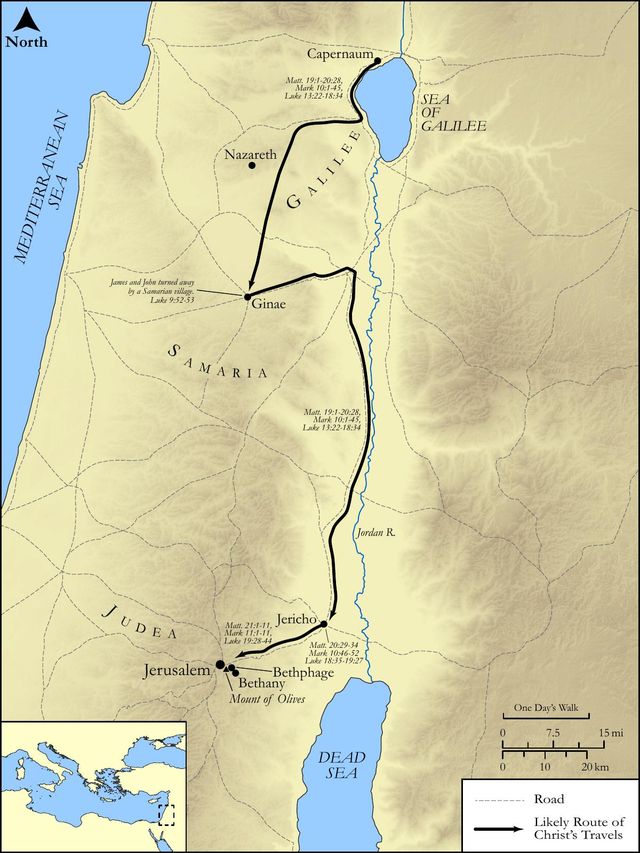
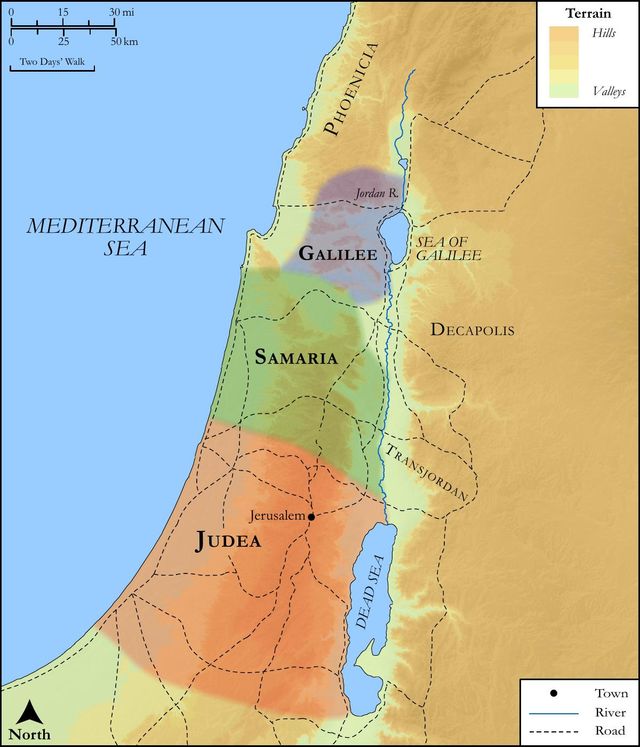
Study this verse
Historical interpretation
Eleven Centuries of Reception
19 surviving comments on this verse. Each one is dated, so this reads as a timeline rather than a list.
Select a marker to jump to its quote. Markers stagger vertically where authors wrote within a few decades of each other.
Concerning the words, "Not all can receive this saying. There are some eunuchs who were born so, and some who were made eunuchs by men, and some who have made themselves eunuchs for the sake of the kingdom of heaven; let him receive it who can receive it," they do not realize the context. After his word about divorce some asked him whether, if that is the position in relation to woman, it is better not to marry; and it was then that the Lord said: "Not all can receive this saying, but those to whom it is granted." What the questioners wanted to know was whether, when a man's wife has been condemned for fornication, it is allowable for him to marry another.
This (even) broader assertion we make: that even if the Paraclete had in this our day definitely prescribed a virginity or continence total and absolute, so as not to permit the heat of the flesh to foam itself down even in single marriage, even thus He would seem to be introducing nothing of "novelty; "seeing that the Lord Himself opens "the kingdoms of the heavens" to "eunuchs," as being Himself, withal, a virgin; to whom looking, the apostle also-himself too for this reason abstinent-gives the preference to continence.
If, then he shows plainly that even wives themselves are so to be had as if they be not had, on account of the straits of the times, what would be his sentiments about these vain appliances of theirs? Why, are there not many, withal, who so do, and seal themselves up to eunuchhood for the sake of the kingdom of God, spontaneously relinquishing a pleasure so honourable, and (as we know) permitted? Are there not some who prohibit to themselves (the use of) the very "creature of God," abstaining from wine and animal food, the enjoyments of which border upon no peril or solicitude; but they sacrifice to God the humility of their soul even in the chastened use of food? Sufficiently, therefore, have you, too, used your riches and your delicacies; sufficiently have you cut down the fruits of your dowries, before (receiving) the knowledge of saving disciplines.
But (now), when the "extremity of the times" has cancelled (the command) "Grow and multiply," since the apostles (another command), "It remaineth, that both they who have wives so be as if they have not," because "the time is compressed; and "the sour grape" chewed by "the fathers" has ceased "to set the sons' teeth on edge," for, "each one shall die in his own sin; "and "eunuchs" not only have lost ignominy, but have even deserved grace, being invited into "the kingdoms of the heavens: " the law of succeeding to the wife of a brother being buried, its contrary has obtained-that of not succeeding to the wife of a brother.
is it that He Himself withal should set upon His own official chair men who were mindful rather to enjoin-(but) not likewise to practise-sanctity of the flesh, which (sanctity) He had in all ways recommended to their teaching and practising?-first by His own example, then by all other arguments; while He tells (them) that "the kingdom of heavens" is "children's; " while He associates with these (children) others who, after marriage, remained (or became)virgins; " while He calls (them) to (copy) the simplicity of the dove, a bird not merely innocuous, but modest too, and whereof one male knows one female; while He denies the Samaritan woman's (partner to be) a husband, that He may show that manifold husbandry is adultery; while, in the revelation of His own glory, He prefers, from among so many saints and prophets, to have with him Moses and Elias -the one a monogamist, the other a voluntary celibate (for Elias was nothing else than John, who came "in the power and spirit of Elias" ); while that "man gluttonous and toping," the "frequenter of luncheons and suppers, in the company of publicans and sinners," sups once for all at a single marriage, though, of course, many were marrying (around Him); for He willed to attend (marriages) only so often as (He willed) them to be.
Further, if we set down in order the higher and happier grades of bodily patience, (we find that)it is she who is entrusted by holiness with the care of continence of the flesh: she keeps the widow, and sets on the virgin the seal and raises the self-made eunuch to the realms of heaven. That which springs from a virtue of the mind is perfected in the flesh; and, finally, by the patience of the flesh, does battle under persecution.
Thus in the Revelation of John it is said: "These are they which have not defiled their clothes with women," -indicating, of course, virgins, and such as have become "eunuchs for the kingdom of heaven's sake." Therefore they shall be "clothed in white raiment," that is, in the bright beauty of the unwedded flesh.
How many are there who from the moment of their baptism set the seal (of virginity) upon their flesh? How many, again, who by equal mutual consent cancel the debt of matrimony-voluntary eunuchs for the sake of their desire! after the celestial kingdom! But if, while the marriage-tie is still intact, abstinence is endured, how much more when it has been undone! For I believe it to be harder for what is intact to be quite forsaken, than for what has been lost not to be yearned after.
These things, my brother, seem to you perhaps harsh and not to be endured; but recall that God has said, "He who receives it, let him receive it," that is, let him who does not receive it go his way.
How long shall we allege "the flesh," because the Lord said, "the flesh is weak? " But He has withal premised that "the Spirit is prompt," in order that the Spirit may vanquish the flesh-that the weak may yield to the stronger. For again He says, "Let him who is able to receive, receive (it); " that is, let him who is not able go his way.
The cause in one item he assigns nature; in the next violence, and in the last his own choice, in him, namely, that determined to be so from hope of the kingdom of heaven.
For it is a lighter thing to contend with himself, and his own lust, than with an evil woman.
Then to show that this is possible, He says, For there are some eunuchs, which were made eunuchs of men; as much as to say, Consider, had you been so made of others, you would have lost the pleasure without gaining the reward.
When he says, Who have made themselves eunuchs, He does not mean cutting off of members, but a putting away of evil thoughts. For he that cuts off a limb is under a curse, for such an one undertakes the deeds of murderers, and opens a door to Manicheans who depreciate the creature, and cut off the same members as do the Gentiles. For to cut off members is of the temptation of dæmons. But by the means of which we have spoken desire is not diminished but made more urgent; for it has its source elsewhere, and chiefly in a weak purpose and an unguarded heart, For if the heart be well governed, there is no danger from the natural motions; nor does the amputation of a member bring such peacefulness and immunity from temptation as does a bridle upon the thoughts.
For since to speak of virginity seemed to be grievous, by the constraint of this law He drove them to this desire. Then to show the possibility of it, He saith, "There are some eunuchs, who were so born from their mother's womb, there are some eunuchs which were made eunuchs of men, and there be eunuchs which have made themselves eunuchs for the kingdom of Heaven's sake," by these words secretly leading them to choose the thing, and establishing the possibility of this virtue, and all but saying, Consider if thou wert in such case by nature, or hadst endured this selfsame thing at the hands of those who inflict such wanton injuries, what wouldest thou have done, being deprived indeed of the enjoyment, yet not having a reward? Thank God therefore now, for that with rewards and crowns thou undergoest this, which those men endure without crowns; or rather not ever this, but what is much lighter, being supported both by hope, and by the consciousness of the good work, and not having the desire so raging like waves within thee.
For the excision of a member is not able to quell such waves, and to make a calm, like the curb of reason; or rather, reason only can do this.
For this intent therefore He brought in those others, even that He might encourage these, since if this was not what He was establishing, what means His saying concerning the other eunuchs? But when He saith, that they made themselves eunuchs, He means not the excision of the members, far from it, but the putting away of wicked thoughts. Since the man who hath mutilated himself, in fact, is subject even to a curse, as Paul saith, "I would they were even cut off which trouble you." And very reasonably. For such a one is venturing on the deeds of murderers, and giving occasion to them that slander God's creation, and opens the mouths of the Manichaeans, and is guilty of the same unlawful acts as they that mutilate themselves amongst the Greeks. For to cut off our members hath been from the beginning a work of demoniacal agency, and satanic device, that they may bring up a bad report upon the work of God, that they may mar this living creature, that imputing all not to the choice, but to the nature of our members, the more part of them may sin in security, as being irresponsible; and doubly harm this living creature, both by mutilating the members, and by impeding the forwardness of the free choice in behalf of good deeds.
These are the ordinances of the devil, bringing in, besides the things which we have mentioned, another wicked doctrine also, and making way beforehand for the arguments concerning destiny and necessity even from hence, and everywhere marring the freedom given to us of God, and persuading us that evil deeds are of nature, and hence secretly implanting many other wicked doctrines, although not openly. For such are the devil's poisons.
Therefore I beseech you to flee from such lawlessness. For together with the things I have mentioned, neither doth the force of lust become milder hereby, but even more fierce. For from another origin hath the seed that is in us its sources, and from another cause do its waves swell. And some say from the brain, some from the loins, this violent impulse hath its birth; but I should say from nothing else than from an ungoverned will and a neglected mind: if this be temperate, there is no evil result from the motions of nature.
Having spoken then of the eunuchs that are eunuchs for nought and fruitlessly, unless with the mind they too practise temperance, and of those that are virgins for Heaven's sake, He proceeds again to say, "He that is able to receive it, let him receive it," at once making them more earnest by showing that the good work is exceeding in greatness, and not suffering the thing to be shut up in the compulsion of a law, because of His unspeakable gentleness. And this He said, when He showed it to be most possible, in order that the emulation of the free choice might be greater.
A wife is a grievous burden, if it is not permitted to put her away except for the cause of fornication. For what if she be a drunkard, an evil temper, or of evil habits, is she to be kept? The Apostles, perceiving this burden someness, express what they feel; His disciples say unto him, If the case of the man be so with his wife, it is not good to marry.
But let none think, that wherein He adds, save they to whom it is given, that either fate or fortune is implied, as though they were virgins only whom chance has led to such a fortune. For that is given to those who have sought it of God, who have longed for it, who have striven that they might obtain it.
He speaks of three kinds of eunuchs, of whom two are carnal, and one spiritual. One, those who are so born of their mother's womb; another, those whom enemies or courtly luxury has made so; a third, those who have made themselves so for the kingdom of heaven, and who might have been men, but become eunuchs for Christ. To them the reward is promised, for to the others whose continence was involuntary, nothing is due.
(cf. Orig. in loc.) Or we may say otherwise. The eunuchs from their mothers' wombs are they whose nature is colder, and not prone to lust. And they that are made so of men are they whom physicians made so, or they whom worship of idols has made effeminate, or who from the influence of heretical teaching pretend to chastity, that they may thereupon claim truth for their tenets. But none of them obtain the kingdom of heaven, save he only who has become a eunuch for Christ's sake. Whence it follows, He that is able to receive it, let him receive it; let each calculate his own strength, whether he is able to fulfil the rules of virginity and abstinence. For in itself continence is sweet and alluring, but each man must consider his strength, that he only that is able may receive it. This is the voice of the Lord exhorting and encouraging on His soldiers to the reward of chastity, that he who can fight might fight and conquer and triumph.
There are three kinds of eunuchs, two carnal and the third spiritual. One group are those who are born this way. Another are those who are made into eunuchs by captivity or for pleasuring older women. The third are those who “have made themselves eunuchs for the kingdom of heaven” and who become eunuchs for Christ though they could be whole men. The last group are promised the reward. The other two, for whom chastity is not a matter of willing but necessity, are due nothing at all. We can put it another way. There are eunuchs from birth who are of a rather frigid nature and not inclined to lust. There are others who are made eunuchs by men, those who are made so by philosophers, others who are made weak toward sex from their worship of idols, and still others who by heretical persuasion feign chastity so as to falsely claim the truth of religion. None of the above is receptive to the kingdom of heaven. Only the person who for Christ seeks chastity wholeheartedly and cuts off sexual impurity altogether [is the genuine eunuch]. So he adds, “He who is able to receive this, let him receive it,” so that each of us should look to his own strength as to whether he can carry out the commands of virginity and chastity. Chastity in itself is agreeable and alluring; but one must look to one’s strength so that “he who is able to receive this may receive it.” It is as if the Lord with his words were urging on his soldiers to the reward of chastity with these words: He who is able to receive this let him receive it; he who is able to fight, let him fight and conquer.
(Verse 12.) For there are eunuchs who have been so from birth, and there are eunuchs who have been made eunuchs by men, and there are eunuchs who have made themselves eunuchs for the sake of the kingdom of heaven. Let the one who is able to receive this receive it. There are three types of eunuchs: those who are eunuchs from birth, those who are made eunuchs by men, and those who make themselves eunuchs for the sake of the kingdom of heaven. Some are born eunuchs, others are made eunuchs by men, and others choose to be eunuchs for the sake of the kingdom of heaven. And those who can accept it should accept it. A reward is promised to these people, but to the previous ones, for whom the necessity of chastity is not voluntary, nothing is owed at all. We can say differently. There are eunuchs who are born from their mother's womb, who are of a colder nature and do not desire lust. And there are others who are made by humans: whom either philosophers make, or they are softened into women because of the worship of idols: or they pretend chastity due to heretical persuasion, in order to lie about the truth of religion. But none of them will inherit the kingdom of heaven unless he has castrated himself for the sake of Christ. Therefore, it is concluded: He who is able to receive this, let him receive it; so that each person may consider his own abilities, whether he can fulfill the commands of virginity and chastity. For chastity is enticing in itself, attracting anyone to itself. But one's abilities must be considered, so that he who is able to receive it, may receive it. It is like the voice of the Lord urging and inciting his soldiers to the reward of chastity. Let whoever is able to understand, understand; let whoever is able to fight, fight, overcome and triumph.
And the Lord said not, It is good, but rather assented that it is not good. However, He considered the weakness of the flesh; But he said unto them, All cannot receive this saying; that is, All are not able to do this.
But all cannot obtain it, because all do not desire to obtain it. The prize is before them; he who desires the honour will not consider the toil. None would ever vanquish, if all shunned the struggle. Because then some have fallen from their purpose of continence, we ought not therefore to faint from that virtue; for they that fall in the battle do not slay the rest. That He says therefore, Save they to whom it is given, shows that unless we receive the aid of grace, we have not strength. But this aid of grace is not denied to such as seek it, for the Lord says above, Ask, and ye shall receive.
For as the deed without the will does not constitute a sin; so a righteous act is not in the deed unless the will go with it. That therefore is honourable continence, not which mutilation of body of necessity enforces, but which the will of holy purpose embraces.
For they are born such, just as others are born having six or four fingers. For if God according as He formed our bodies in the beginning, had continued the same order unchangeably, the working of God would have been brought into oblivion among men. The order of nature is therefore changed at times from its nature, that God the framer of nature may be had in remembrance.
There are few, He says, who can achieve this virginity. For there are some who are eunuchs from their mother’s womb, that is, by their physical temperament are never aroused towards sexual intercourse, so they are chaste without thereby deriving any profit. And there are those who have been made eunuchs by men. Those who have made themselves eunuchs for the kingdom of heaven’s sake are not those who have castrated themselves (for that is an accursed deed), but those who exercise self-control. You may also understand it this way. He is a eunuch by nature who, on account of his physical temperament, is not easily aroused to carnal pleasures. He who is made a eunuch by men is he who is guided by human teaching to cut off the burning of carnal desires. He who makes himself a eunuch is he who is instructed by no one else but by himself, and who, self-taught, inclines towards chastity. So this one is best who is guided not by another but by himself to the kingdom of heaven. Christ wants us of our own free will to practice virtue, saying, "He that is able to receive it, let him receive it." For Christ neither demands virginity, nor dissolves marriage, but He puts virginity first.
(ord.) He says this to the terror of him that would take her to wife, for the adulteress would have no fear of disgrace.
Continue studying Matthew 19:12 across the web’s major study libraries — every link below opens this exact verse, chapter, or book on the destination site.
Read & Compare
 BibleGatewayThis verse in more than 200 translations and 70 languages.
 Bible.comThe YouVersion reader — hundreds of translations, reading plans, and highlights.
 ESV.orgCrossway's official English Standard Version reader.
 NET BibleThe NET translation with 60,000+ translators' notes on every rendering decision.
 STEP BibleTyndale House's free study tool — original text, vocabulary, and scholarly resources.
 BibliaLogos Bible Software's free web reader.
 USCCBThe New American Bible (Revised Edition) with the U.S. bishops' study notes.
Commentaries
 BibleHub CommentariesDozens of classic commentaries on this verse, gathered on one page.
 StudyLightMore than 100 commentary sets — the largest collection on the web.
 BibleRefPlain-English commentary on what this verse means, verse by verse.
 Enduring WordDavid Guzik's free commentary on this chapter, widely used by Bible teachers.
 Bible Study ToolsVerse commentary alongside Greek and Hebrew study aids.
Original Language & Research
- BibleHub InterlinearThe verse word by word — original language, transliteration, and English.
- BibleHub LexiconEvery word's original-language definition and Strong's entry.
 Blue Letter BibleDeep-study tools — Strong's numbers, concordance, and word studies.
 CNTR CollationThe earliest Greek manuscripts of this verse, collated letter by letter.
Sermons, Hymns & Audio


TrulyRandomVerse is not affiliated with these sites and doesn’t control their content. They’re linked because they’re genuinely useful.
Summary
Matthew 19:12 concludes Jesus' teaching on marriage and divorce with a profound statement distinguishing three categories of "eunuchs." While two categories refer to physical conditions (born so or castrated by men), the third, and most significant, speaks metaphorically of those who voluntarily choose a life of celibacy for the sake of the Kingdom of Heaven. This verse highlights a unique and demanding calling to radical, undistracted devotion to God's purposes, emphasizing that such a path is a special capacity, not a universal command.
Context
ShowHideLiterary Context
This verse immediately follows a pivotal exchange between Jesus and the Pharisees regarding the legality of divorce, as recorded in Matthew 19:3-9. Jesus' teaching here is exceptionally stringent, asserting that divorce, except in cases of sexual immorality, leads to adultery. The disciples, taken aback by the demanding nature of this teaching, respond in Matthew 19:10 by exclaiming, "If this is the case of the man with his wife, it is better not to marry." Jesus' statement in Matthew 19:11-12 serves as a direct clarification and counterpoint to their reaction, introducing the idea that while marriage is a profound commitment, there are also those uniquely called to a different, equally valid, and spiritually purposeful path of singleness for the Kingdom.
Historical & Cultural Context
Among the kings of that day, the term "eunuch" primarily referred to a castrated male, often employed in royal courts, harems, or as guardians of women. Such individuals were typically seen as outside the normal social structure, unable to fulfill the societal expectation of procreation and family lineage. The concept of being "born a eunuch" might refer to congenital physical conditions that rendered one incapable of marriage or procreation. The practice of forced castration was a brutal reality. Against this backdrop, Jesus' third category—those who "made themselves eunuchs for the kingdom of heaven's sake"—would have been startling. It redefines the cultural understanding of a "eunuch" from a state of physical inability or societal imposition to a radical, voluntary spiritual commitment, elevating a choice previously associated with neglect to one of profound spiritual significance.
Key Themes
ShowHideMatthew 19:12 contributes significantly to several key themes within the Gospel of Matthew and broader biblical theology. Firstly, it underscores the theme of Radical Discipleship, demonstrating that following Jesus may require unconventional choices and profound personal sacrifice, even to the extent of foregoing deeply ingrained societal norms like marriage and family for the sake of God's purposes. Secondly, it illuminates the Nature of the Kingdom of Heaven, revealing that its demands and rewards transcend earthly conventions and offer a higher calling that redefines human values. This aligns with Jesus' consistent teaching that the Kingdom of God requires total commitment. Thirdly, the verse subtly introduces the theme of Divine Calling and Spiritual Gifts, implying that the capacity to embrace such a demanding path is not universal but a specific grace or gift bestowed by God, as further elaborated by the Apostle Paul in 1 Corinthians 7:7.
Exposition and Analysis
ShowHideKey Word Analysis
ShowHideThis term, derived from words meaning "bed" and "to have/hold," literally refers to a castrated person, often employed as a chamberlain or guardian in royal households. By extension, it could also refer to an impotent or unmarried man. In Matthew 19:12, Jesus uses this term both literally (for the first two categories) and profoundly metaphorically (for the third category), signifying a person who, for spiritual reasons, chooses to live as if they were a eunuch in terms of abstaining from marriage and sexual relations.
This verb means "to castrate" or, figuratively, "to live unmarried." In the context of the third category, it emphasizes a deliberate, volitional act. It is not a physical self-mutilation (which would be condemned by Jewish law and Christian ethics), but a conscious decision to abstain from marriage and its associated intimacies for a higher spiritual purpose.
This word means "to be in (give) space," "to pass," "to enter," or "to hold/admit." In this context, it signifies the capacity to comprehend, accept, and embrace this demanding teaching and way of life. It implies a spiritual and mental readiness, a unique aptitude or grace, to live out such a commitment.
Verse Breakdown
ShowHide"For there are some eunuchs, which were so born from their mother's womb:"
This clause describes individuals who are naturally incapable of marriage or procreation due to congenital physical conditions. Jesus acknowledges a biological reality that precludes some from marital life.
"and there are some eunuchs, which were made eunuchs of men:"
This clause refers to those who were physically castrated by others, a common practice in ancient times for various societal roles, often involving servitude or guardianship. This condition is imposed externally, not chosen.
"and there be eunuchs, which have made themselves eunuchs for the kingdom of heaven's sake."
This is the pivotal and metaphorical category. Jesus introduces a third type of "eunuch" – one who voluntarily chooses a life of celibacy, not due to physical inability or external compulsion, but out of a consecrated devotion to God and the advancement of His Kingdom. This choice implies a radical commitment to undistracted service.
"He that is able to receive it, let him receive it."
This concluding statement underscores that the path of celibacy for the Kingdom is not a universal command but a special calling or gift. It requires a specific capacity or grace ("able to receive it") to embrace and live out this demanding commitment. Jesus acknowledges that not everyone possesses this capacity, and therefore, it is a choice to be made only by those who are truly called and equipped for it.
Literary Devices
ShowHideThe primary literary device employed by Jesus in Matthew 19:12 is Metaphor. By using the term "eunuch" in its third category, Jesus reinterprets a literal, often stigmatized, physical condition into a powerful spiritual symbol. This metaphorical usage transforms a state of physical incapacity or forced servitude into a voluntary, consecrated choice of celibacy for the sake of God's Kingdom. This redefinition is radical, challenging conventional societal values that prioritized marriage and procreation. Furthermore, there is an element of Paradox in Jesus' statement. He presents a demanding path—abstaining from marriage—as a means of greater freedom and devotion to the Kingdom, turning a perceived lack into a spiritual advantage. The concluding phrase, "He that is able to receive it, let him receive it," functions as a Proverbial Statement, signaling that this teaching is profound and requires spiritual discernment and a specific capacity to understand and embody.
Theological and Thematic Connections
ShowHideMatthew 19:12 offers a profound theological insight into the diverse ways individuals can serve God and advance His Kingdom. It elevates the choice of celibacy, when undertaken for spiritual reasons, to a position of honor and purpose, placing it on par with, though distinct from, the sanctity of marriage. This teaching emphasizes that ultimate devotion to God may sometimes require radical personal sacrifice, redirecting energies and affections that might otherwise be focused on family life towards singular service to Christ and His mission. It underscores that God's callings are varied, and each, whether marriage or celibacy, is valid and valuable when lived out in obedience and for His glory. The verse also implicitly highlights the concept of spiritual gifts, suggesting that the capacity for such a life of dedicated singleness is a divine endowment rather than a universally achievable human endeavor.
Reflection and Application
ShowHideMatthew 19:12 challenges believers to consider the depth of their commitment to the Kingdom of Heaven, regardless of their marital status. For those who are single, it offers profound validation and purpose, affirming that a life of celibacy, when chosen for God's purposes, is a noble and spiritually fruitful path. It encourages single individuals to discern if God has given them the capacity and calling to serve Him with undivided devotion, free from the concerns of family life. For those who are married, the verse serves as a reminder that while marriage is a sacred institution, the Kingdom of Heaven remains the ultimate priority. Both states—marriage and singleness—are opportunities for wholehearted devotion to Christ. The key is to discern one's unique calling and capacity, embracing it fully for God's glory and the advancement of His Kingdom, understanding that true discipleship often involves radical reorientation of priorities.
Questions for Reflection
ShowHideFAQ
ShowHideIs Jesus commanding celibacy for all believers in Matthew 19:12?
ShowHideNo, Jesus is explicitly not commanding celibacy for all believers. The concluding phrase, "He that is able to receive it, let him receive it," clearly indicates that this is a specific calling or gift, not a universal expectation. Jesus outlines three categories of "eunuchs," with only the third being a voluntary choice for spiritual reasons. This choice is presented as requiring a particular capacity or grace, implying that it is not for everyone. The Apostle Paul reiterates this idea, stating that each person has their own gift from God, one of marriage and another of singleness, in 1 Corinthians 7:7.
What does it mean to "make themselves eunuchs for the kingdom of heaven's sake"? Does it imply physical self-mutilation?
ShowHideThis phrase is universally understood metaphorically, not literally. It does not imply physical self-mutilation, which would be contrary to biblical teaching (e.g., Deuteronomy 23:1 and the sanctity of the body as a temple of the Holy Spirit, 1 Corinthians 6:19-20). Rather, it refers to a voluntary, consecrated decision to abstain from marriage and sexual relations for the purpose of serving God and advancing His Kingdom with undivided devotion. It means choosing a celibate life out of spiritual conviction, dedicating one's energies and affections fully to divine purposes.
How does this verse relate to the sanctity of marriage? Is singleness superior to marriage?
ShowHideMatthew 19:12 does not diminish the sanctity of marriage; rather, it complements Jesus' strong affirmation of marriage's permanence and sacredness in the preceding verses (Matthew 19:4-6). Jesus presents singleness for the Kingdom as an equally valid, though distinct, path of discipleship. Neither state is inherently superior; both are callings from God that offer unique opportunities for glorifying Him. Marriage is a divine institution reflecting Christ and the Church (Ephesians 5:31-32), while celibacy for the Kingdom allows for a more focused and undistracted service (1 Corinthians 7:32-35). The emphasis is on wholehearted devotion to God in whatever state one is called.
Christ-Centered Fulfillment
ShowHideMatthew 19:12, though seemingly about human choices regarding marriage and celibacy, points profoundly to the ultimate "eunuch for the kingdom"—Jesus Christ Himself. While not literally a eunuch, Jesus lived a life of singular, undivided devotion to the Father's will and the establishment of His Kingdom. His entire earthly existence was characterized by an unparalleled commitment, foregoing personal comforts and earthly attachments to fulfill His divine mission. He exemplified what it means to "make oneself a eunuch for the kingdom of heaven's sake" by His radical obedience, His focus on proclaiming the gospel of the Kingdom, and His ultimate sacrifice. Jesus' life was a living embodiment of the principle that nothing, not even the most fundamental human relationships or desires, should supersede the call to advance God's reign. His teaching here, therefore, calls His followers to a similar, though imperfect, dedication, mirroring His own complete surrender to the Father's purposes, culminating in His death and resurrection which secured the very Kingdom of God for all who believe. He is the one who was truly "able to receive it" and did so perfectly, offering Himself as the ultimate example of radical, Christ-centered discipleship for the sake of the Kingdom.