


Matthew 1:19
Bible text: King James Version (1769 Blayney text) · Public domain
Bible text: King James Version with Strong's numbers · Public domain
Bible text: Berean Standard Bible · Public domain
Bible text: American Standard Version (1901) · Public domain
Bible text: World English Bible, Messianic edition · Public domain
Bible text: Geneva Bible (1599) · Public domain
Bible text: Young's Literal Translation · Public domain
- ἸωσὴφIōsēphJosephG2501N-NSM-PNoun Nominative Singular Masculine Individual
- δὲdenowG1161CONJConjunction
- ὁhotheG3588T-NSMDefinite article Nominative Singular Masculine
- ἀνὴρanērhusbandG435N-NSMNoun Nominative Singular Masculine
- αὐτῆςautēsof herG846P-GSFPersonal pronoun Genitive Singular Feminine
- δίκαιοςdikaiosrighteousG1342A-NSMAdjective Nominative Singular Masculine
- ὢνōnbeingG1510V-PAP-NSMVerb Present Active Participle Nominative Singular Masculine
- καὶkaiandG2532CONJConjunction
- μὴmēnotG3361PRT-NNegative Particle Negative
- θέλωνthelōnwillingG2309V-PAP-NSMVerb Present Active Participle Nominative Singular Masculine
- αὐτὴνautēnherG846P-ASFPersonal pronoun Accusative Singular Feminine
- δειγματίσαιdeigmatisaito disgraceG1165V-AANVerb Aorist Active Infinitive
- ἐβουλήθηeboulēthēhe purposedG1014V-AOI-3SVerb Aorist Passive Deponent Indicative 3rd Singular
- λάθρᾳlathrasecretlyG2977ADVAdverb
- ἀπολῦσαιapolusaito send awayG630V-AANVerb Aorist Active Infinitive
- αὐτήνautēnherG846P-ASFPersonal pronoun Accusative Singular Feminine
English is a literal word-by-word gloss of the Greek, not the KJV's wording. Why?
This is the original text the KJV's translators worked from — each Greek word with its own literal English meaning in this verse, prepared by scholars at Tyndale House, Cambridge. The KJV translates whole sentences, not word by word, so its wording differs: one Greek word can become several English words, and the KJV may choose “charity” where the gloss reads “love”. Both are faithful — they answer different questions. For the KJV's own rendering, switch to the KJV text.
Details
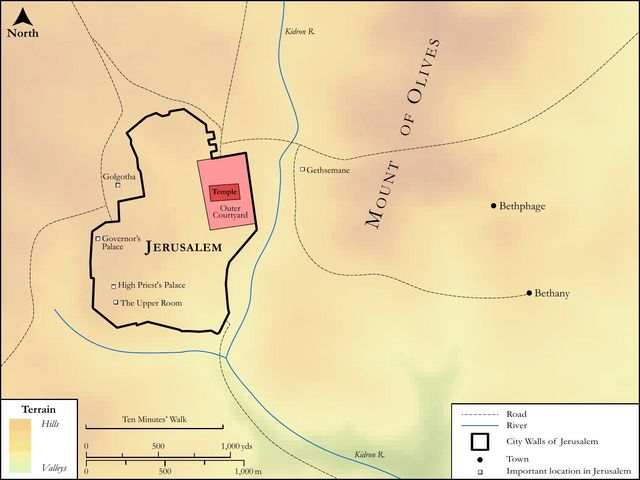
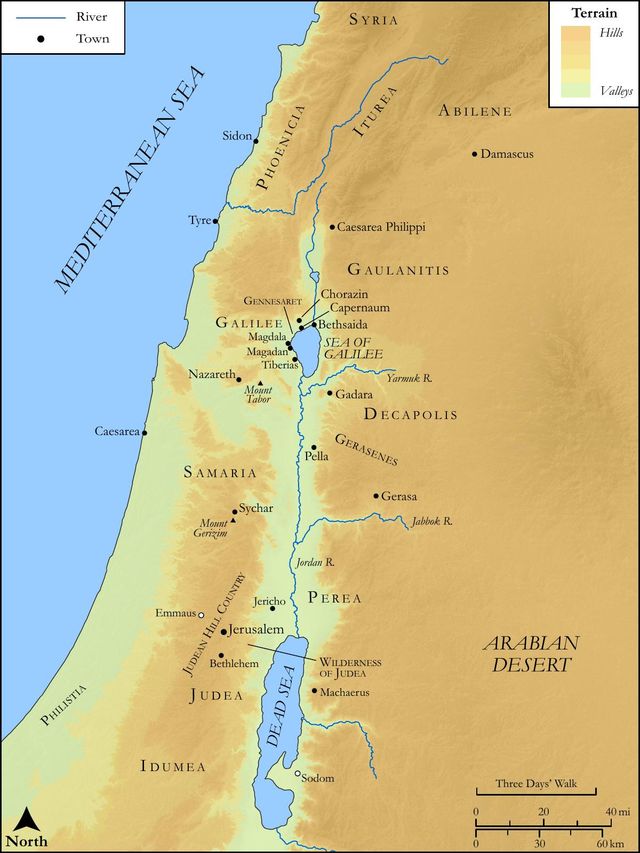
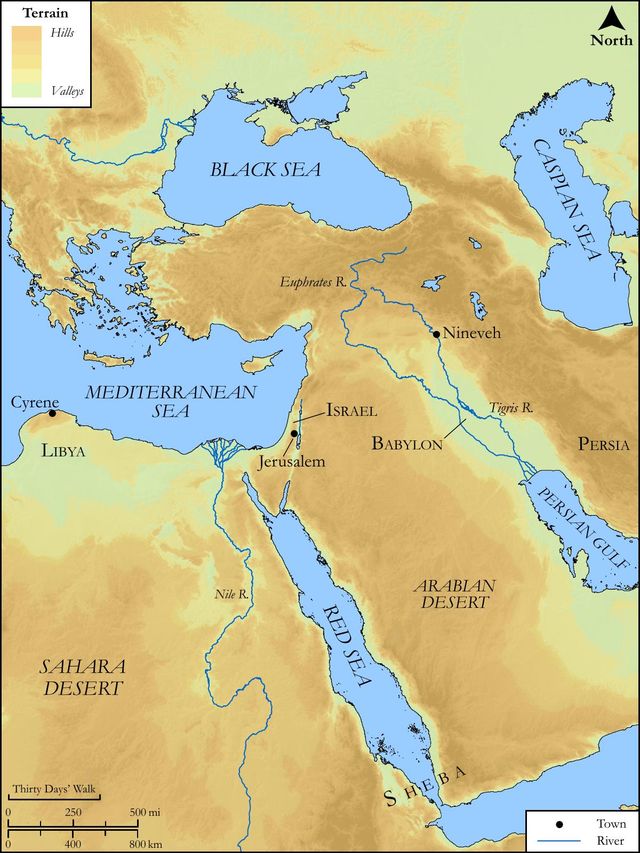
See on the biblical-era maps
Study this verse
Public-domain commentary
Matthew Henry
From his Commentary on the Whole Bible. Henry comments on passages, not single verses — this entry covers Matthew 1:18–25. His four-level outline is real structure in the source text, so it is rendered as structure.
The mystery of Christ's incarnation is to be adored, not pried into. If we know not the way of the Spirit in the formation of common persons, nor how the bones are formed in the womb of any one that is with child (Ecc 11:5), much less do we know how the blessed Jesus was formed in the womb of the blessed virgin. When David admires how he himself was made in secret, and curiously wrought (Psa 139:13-16), perhaps he speaks in the spirit of Christ's incarnation. Some circumstances attending the birth of Christ we find here which are not in Luke, though it is more largely recorded here. Here we have,
I.Mary's espousal to Joseph.
Mary, the mother of our Lord, was espoused to Joseph, not completely married, but contracted; a purpose of marriage solemnly declared in words de futuro - that regarding the future, and a promise of it made if God permit. We read of a man who has betrothed a wife and has not taken her, Deu 20:7. Christ was born of a virgin, but a betrothed virgin,
1.To put respect upon the marriage state, and to recommend it as honourable among all, against that doctrine of devils which forbids to marry, and places perfection in the single state. Who more highly favoured than Mary was in her espousals?
2.To save the credit of the blessed virgin, which otherwise would have been exposed. It was fit that her conception should be protected by a marriage, and so justified in the eye of the world. One of the ancients says, It was better it should be asked, Is not this the son of a carpenter? than, Is not this the son of a harlot?
3.That the blessed virgin might have one to be the guide of her youth, the companion of her solitude and travels, a partner in her cares, and a help meet for her. Some think that Joseph was now a widower, and that those who are called the brethren of Christ (Mat 13:55), were Joseph's children by a former wife. This is the conjecture of many of the ancients. Joseph was just man, she a virtuous woman. Those who are believers should not be unequally yoked with unbelievers: but let those who are religious choose to marry with those who are so, as they expect the comfort of the relation, and God's blessing upon them in it. We may also learn, from this example, that it is good to enter into the married state with deliberation, and not hastily - to preface the nuptials with a contract. It is better to take time to consider before than to find time to repent after.
II.Her pregnancy of the promised seed; before they came together, she was found with child, which really was of the Holy Ghost.
The marriage was deferred so long after the contract that she appeared to be with child before the time came for the solemnizing of the marriage, though she was contracted before she conceived. Probably, it was after her return from her cousin Elizabeth, with whom she continued three months (Luk 1:56), that she was perceived by Joseph to be with child, and did not herself deny it. Note, Those in whom Christ is formed will show it: it will be found to be a work of God which he will own. Now we may well imagine, what a perplexity this might justly occasion to the blessed virgin. She herself knew the divine original of this conception; but how could she prove it? She would be dealt with as a harlot. Note, After great and high advancements, lest we should be puffed up with them, we must expect something or other to humble us, some reproach, as a thorn in the flesh, nay, as a sword in the bones. Never was any daughter of Eve so dignified as the Virgin Mary was, and yet in danger of falling under the imputation of one of the worse crimes; yet we do not find that she tormented herself about it; but, being conscious of her own innocence, she kept her mind calm and easy, and committed her cause to him that judgeth righteously. Note, those who take care to keep a good conscience may cheerfully trust God with the keeping of their good names, and have reason to hope that he will clear up, not only their integrity, but their honour, as the sun at noon day.
III.Joseph's perplexity, and his care what to do in this case.
We may well imagine what a great trouble and disappointment it was to him to find one he had such an opinion of, and value for, come under the suspicion of such a heinous crime. Is this Mary? He began to think, "How may we be deceived in those we think best of! How may we be disappointed in what we expect most from!" He is loth to believe so ill a thing of one whom he believed to be so good a woman; and yet the matter, as it is too bad to be excused, is also too plain to be denied. What a struggle does this occasion in his breast between that jealousy which is the rage of man, and is cruel as the grave, on the one hand, and that affection which he has for Mary on the other!
Observe, 1. The extremity which he studied to avoid. He was not willing to make her a public example. He might have done so; for, by the law, a betrothed virgin, if she played the harlot, was to be stoned to death, Deu 22:23, Deu 22:24. But he was not willing to take the advantage of the law against her; if she be guilty, yet it is not known, nor shall it be known from him. How different was the spirit which Joseph displayed from that of Judah, who in a similar case hastily passed that severe sentence, Bring her forth and let her be burnt! Gen 38:24. How good it is to think on things, as Joseph did here! Were there more of deliberation in our censures and judgments, there would be more of mercy and moderation in them. Bringing her to punishment is here called making her a public example; which shows what is the end to be aimed at in punishment - the giving of warning to others: it is in terrorem - that all about may hear and fear. Smite the scorner, and the simple will beware.
Some persons of a rigorous temper would blame Joseph for his clemency: but it is here spoken of to his praise; because he was a just man, therefore he was not willing to expose her. He was a religious, good man; and therefore inclined to be merciful as God is, and to forgive as one that was forgiven. In the case of the betrothed damsel, if she were defiled in the field, the law charitably supposed that she cried out (Deu 22:26), and she was not to be punished. Some charitable construction or other Joseph will put upon this matter; and herein he is a just man, tender of the good name of one who never before had done anything to blemish it. Note, It becomes us, in many cases, to be gentle towards those that come under suspicion of having offended, to hope the best concerning them, and make the best of that which at first appears bad, in hopes that it may prove better. Summum just summa injuria - The rigour of the law is (sometimes) the height of injustice. That court of conscience which moderates the rigour of the law we call a court of equity. Those who are found faulty were perhaps overtaken in the fault, and are therefore to be restored with the spirit of meekness; and threatening, even when just, must be moderated.
2.The expedient he found out for avoiding this extremity. He was minded to put her away privily, that is, to give a bill of divorce into her hand before two witnesses, and so to hush up the matter among themselves. Being a just man, that is, a strict observer of the law, he would not proceed to marry her, but resolved to put her away; and yet, in tenderness for her, determined to do it as privately as possible. Note, The necessary censures of those who have offended ought to be managed without noise. The words of the wise are heard in quiet. Christ himself shall not strive nor cry. Christian love and Christian prudence will hide a multitude of sins, and great ones, as far as may be done without having fellowship with them.
IV.Joseph's discharge from this perplexity by an express sent from heaven, Mat 1:20, Mat 1:21.
While he thought on these things and knew not what to determine, God graciously directed him what to do, and made him easy. Note, Those who would have direction from God must think on things themselves, and consult with themselves. It is the thoughtful, not the unthinking, whom God will guide. When he was at a loss, and had carried the matter as far as he could in his own thoughts, then God came in with advice. Note, God's time to come in with instruction to his people is when they are nonplussed and at a stand. God's comforts most delight the soul in the multitude of its perplexed thoughts. The message was sent to Joseph by an angel of the Lord, probably the same angel that brought Mary the tidings of the conception - the angel Gabriel. Now the intercourse with heaven, by angels, with which the patriarchs had been dignified, but which had been long disused, begins to be revived; for, when the First-begotten is to be brought into the world, the angels are ordered to attend his motions. How far God may now, in an invisible way, make use of the ministration of angels, for extricating his people out of their straits, we cannot say; but this we are sure of, they are all ministering spirits for their good. This angel appeared to Joseph in a dream when he was asleep, as God sometimes spoke unto the fathers. When we are most quiet and composed we are in the best frame to receive the notices of the divine will. The Spirit moves on the calm waters. This dream, no doubt, carried its own evidence along with it that it was of God, and not the production of a vain fancy. Now,
1.Joseph is here directed to proceed in his intended marriage. The angel calls him, Joseph, thou son of David; he puts him in mind of his relation to David, that he might be prepared to receive this surprising intelligence of his relation to the Messiah, who, every one knew, was to be a descendant from David. Sometimes, when great honours devolve upon those who have small estates, they care not for accepting them, but are willing to drop them; it was therefore requisite to put this poor carpenter in mind of his high birth: "Value thyself. Joseph, thou art that son of David through whom the line of the Messiah is to be drawn." We may thus say to every true believer, "Fear not, thou son of Abraham, thou child of God; forget not the dignity of thy birth, thy new birth." Fear not to take Mary for thy wife; so it may be read. Joseph, suspecting she was with child by whoredom, was afraid of taking her, lest he should bring upon himself either guilt or reproach. No, saith God, Fear not; the matter is not so. Perhaps Mary had told him that she was with child by the Holy Ghost, and he might have heard what Elizabeth said to her (Luk 1:43), when she called her the mother of her Lord; and, if so, he was afraid of presumption in marrying one so much above him. But, from whatever cause his fears arose, they were all silenced with this word, Fear not to take unto thee Mary thy wife. Note, It is a great mercy to be delivered from our fears, and to have our doubts resolved, so as to proceed in our affairs with satisfaction.
2.He is here informed concerning that holy thing with which his espoused wife was now pregnant. That which is conceived in her is of a divine original. He is so far from being in danger of sharing in an impurity by marrying her, that he will thereby share in the highest dignity he is capable of. Two things he is told,
(1.)That she had conceived by the power of the Holy Ghost; not by the power of nature. The Holy Spirit, who produced the world, now produced the Saviour of the world, and prepared him a body, as was promised him, when he said, Lo, I come, Heb 10:5. Hence he is said to be made of a woman (Gal 4:4), and yet to be that second Adam that is the Lord from heaven, Co1 15:47. He is the Son of God, and yet so far partakes of the substance of his mother as to be called the fruit of her womb, Luk 1:42. It was requisite that is conception should be otherwise than by ordinary generation, that so, so though he partook of the human nature, yet he might escape the corruption and pollution of it, and not be conceived and shapen in iniquity. Histories tell us of some who vainly pretended to have conceived by a divine power, as the mother of Alexander; but none ever really did so, except the mother of our Lord. His name in this, as in other things, is Wonderful. We do not read that the virgin Mary did herself proclaim the honour done to her; but she hid it in her heart, and therefore God sent an angel to attest it. Those who seek not their own glory shall have the honour that comes from God; it is reserved for the humble.
(2.)That she should bring forth the Saviour of the world (Mat 1:21). She shall bring forth a Son; what he shall be is intimated,
[1.]In the name that should be given to her Son: Thou shalt call his name Jesus, a Saviour. Jesus is the same name with Joshua, the termination only being changed, for the sake of conforming it to the Greek. Joshua is called Jesus (Act 7:45; Heb 4:8), from the Seventy. There were two of that name under the Old Testament, who were both illustrious types of Christ, Joshua who was Israel's captain at their first settlement in Canaan, and Joshua who was their high priest at their second settlement after the captivity, Zac 6:11, Zac 6:12. Christ is our Joshua; both the Captain of our salvation, and the High Priest of our profession, and, in both, our Saviour - a Joshua who comes in the stead of Moses, and does that for us which the law could not do, in that it was weak. Joshua had been called Hosea, but Moses prefixed the first syllable of the name Jehovah, and so made it Jehoshua (Num 13:16), to intimate that the Messiah, who was to bear that name, should be Jehovah; he is therefore able to save to the uttermost, neither is there salvation in any other.
[2.]In the reason of that name: For he shall save his people from their sins; not the nation of the Jews only (he came to his own, and they received him not), but all who were given him by the Father's choice, and all who had given themselves to him by their own. He is a king who protects his subjects, and, as the judges of Israel of old, works salvation for them. Note, those whom Christ saves he saves from their sins; from the guilt of sin by the merit of his death, from the dominion of sin by the Spirit of his grace. In saving them from sin, he saves them from wrath and the curse, and all misery here and hereafter. Christ came to save his people, not in their sins, but from their sins; to purchase for them, not a liberty to sin, but a liberty from sins, to redeem them from all iniquity (Tit 2:14); and so to redeem them from among men (Rev 14:4) to himself, who is separate from sinners. So that those who leave their sins, and give up themselves to Christ as his people, are interested in the Saviour, and the great salvation which he has wrought out, Rom 11:26.
V.The fulfilling of the scripture in all this.
This evangelist, writing among the Jews, more frequently observes this than any other of the evangelists. Here the Old Testament prophecies had their accomplishment in our Lord Jesus, by which it appears that this was he that should come, and we are to look for no other; for this was he to whom all the prophets bore witness. Now the scripture that was fulfilled in the birth of Christ was that promise of a sign which God gave to king Ahaz (Isa 7:14), Behold a virgin shall conceive; where the prophet, encouraging the people of God to hope for the promised deliverance from Sennacherib's invasion, directs them to look forward to the Messiah, who was to come of the people of the Jews, and the house of David; whence it was easy to infer, that though that people and that house were afflicted, yet neither the one nor the other could be abandoned to ruin, so long as God had such an honour, such a blessing, in reserve for them. The deliverances which God wrought for the Old Testament church were types and figures of the great salvation by Christ; and, if God will do the greater, he will not fail to do the less.
The prophecy here quoted is justly ushered in with a Behold, which commands both attention and admiration; for we have here the mystery of godliness, which is, without controversy, great, that God was manifested in the flesh.
1.The sign given is that the Messiah shall be born of a virgin. A virgin shall conceive, and, by her, he shall be manifested in the flesh. The word Almah signifies a virgin in the strictest sense, such as Mary professes herself to be (Luk 1:34), I know not a man; nor had it been any such wonderful sign as it was intended for, if it had been otherwise. It was intimated from the beginning that the Messiah should be born of a virgin, when it was said that he should be the seed of the woman; so the seed of the woman as not to be the seed of any man. Christ was born of a virgin not only because his birth was to be supernatural, and altogether extraordinary, but because it was to be spotless, and pure, and without any stain of sin. Christ would be born, not of an empress or queen, for he appeared not in outward pomp or splendour, but of a virgin, to teach us spiritual purity, to die to all the delights of sense, and so to keep ourselves unspotted from the world and the flesh that we may be presented chaste virgins to Christ.
2.The truth proved by this sign is, that he is the Son of God, and the Mediator between God and man: for they shall call his name Immanuel; that is, he shall be Immanuel; and when it is said, He shall be called, it is meant, he shall be, the Lord our righteousness. Immanuel signifies God with us; a mysterious name, but very precious; God incarnate among us, and so God reconcilable to us, at peace with us, and taking us into covenant and communion with himself. The people of the Jews had God with them, in types and shadows, dwelling between the cherubim; but never so as when the Word was made flesh - that was the blessed Shechinah. What a happy step is hereby taken toward the settling of a peace and correspondence between God and man, that the two natures are thus brought together in the person of the Mediator! by this he became an unexceptionable referee, a days-man, fit to lay his hand upon them both, since he partakes of the nature of both. Behold, in this, the deepest mystery, and the richest mercy, that ever was. By the light of nature, we see God as a God above us; by the light of the law, we see him as a God against us; but by the light of the gospel, we see him as Immanuel, God with us, in our own nature, and (which is more) in our interest. Herein the Redeemer commended his love. With Christ's name, Immanuel, we may compare the name given to the gospel church (Eze 48:35). Jehovah Shammah - The Lord is there; the Lord of hosts is with us.
Nor is it improper to say that the prophecy which foretold that he should be called Immanuel was fulfilled, in the design and intention of it, when he was called Jesus; for if he had not been Immanuel - God with us, he could not have been Jesus - a Saviour; and herein consists the salvation he wrought out, in the bringing of God and man together; this was what he designed, to bring God to be with us, which is our great happiness, and to bring us to be with God, which is our great duty.
VI.Joseph's obedience to the divine precept (Mat 1:24).
Being raised from sleep by the impression which the dream made upon him, he did as the angel of the Lord had bidden him, though it was contrary to his former sentiments and intentions; he took unto him his wife; he did is speedily, without delay, and cheerfully, without dispute; he was not disobedient to the heavenly vision. Extraordinary direction like this we are not now to expect; but God has still ways of making known his mind in doubtful cases, by hints of providence, debates of conscience, and advice of faithful friends; by each of these, applying the general rules of the written word, we should, therefore, in all the steps of our life, particularly the great turns of it, such as this of Joseph's, take direction from God, and we shall find it safe and comfortable to do as he bids us.
VII.The accomplishment of the divine promise (Mat 1:25).
She brought forth her first-born son. The circumstances of it are more largely related, Luk 2:1, etc. Note, That which is conceived of the Holy Ghost never proves abortive, but will certainly be brought forth in its season. What is of the will of the flesh, and of the will of man, often miscarries; but, if Christ be formed in the soul, God himself has begun the good work which he will perform; what is conceived in grace will no doubt be brought forth in glory.
It is here further observed, 1. That Joseph, though he solemnized the marriage with Mary, his espoused wife, kept at a distance from her while she was with child of this Holy thing; he knew her not till she had brought him forth. Much has been said concerning the perpetual virginity of our Lord: Jerome was very angry with Helvidius for denying it. It is certain that it cannot be proved from scripture. Dr. Whitby inclines to think that when it is said, Joseph knew her not till she had brought forth her first-born, it is intimated that, afterwards, the reason ceasing, he lived with her, according to the law, Exo 21:10. 2. That Christ was the first-born; and so he might be called though his mother had not any other children after him, according to the language of scripture. Nor is it without a mystery that Christ is called her first-born, for he is the first-born of every creature, that is, the Heir of all things; and he is the first-born among many brethren, that in all things he may have the pre-eminence. 3. That Joseph called his name Jesus, according to the direction given him. God having appointed him to be the Saviour, which was intimated in his giving him the name Jesus, we must accept of him to be our Saviour, and, in concurrence with that appointment, we must call him Jesus, our Saviour.
Historical interpretation
Nineteen Centuries of Reception
16 surviving comments on this verse. Each one is dated, so this reads as a timeline rather than a list.
Select a marker to jump to its quote. Markers stagger vertically where authors wrote within a few decades of each other.
(Serm. in App. s. 195.) Joseph, understanding that Mary was with child, is perplexed that it should be thus with her whom he had received from the temple of the Lord, and had not yet known, and resolved within himself, saying, What shall I do? Shall I proclaim it, or shall I overlook it? If I proclaim it, I am indeed not consenting to the adultery; but I am running into the guilt of cruelty, for by Moses' law she must be stoned. If I overlook it, I am consenting to the crime, and take my portion with the adulterers. Since then it is an evil to overlook the thing, and worse to proclaim the adultery, I will put her away from being my wife.
For what reason did God, deciding that the Savior should be born from a virgin, not choose a virgin who was not betrothed? Might it have been, then, an economy for her to conceive while having a betrothed, so that it might not appear as a disgrace upon her body for her to conceive? For it is rightly written in one of the letters of a certain martyr—I mean Ignatius, the second bishop of Antioch after the blessed Peter, who fought with beasts in Rome during the persecution—“and the virginity of Mary escaped the notice of the ruler of this age.” So, if it had not been for what seemed to be a marriage, it would not have escaped his notice, but the ruler of this age would have known that Mary, having never slept with a man, conceived, and thus the conception must be divine. The Savior wished through the entire economy to elude the devil, and indeed ordered the disciples not to make him manifest.
For the one and the same Spirit of God, who proclaimed by the prophets what and of what sort the advent of the Lord should be, did by these elders give a just interpretation of what had been truly prophesied; and He did Himself, by the apostles, announce that the fullness of the times of the adoption had arrived, that the kingdom of heaven had drawn near, and that He was dwelling within those that believe in Him who was born Emmanuel of the Virgin. To this effect they testify, [saying,] that before Joseph had come together with Mary, while she therefore remained in virginity, "she was found with child of the Holy Ghost;" [Matthew 1:18] and that the angel Gabriel said to her, "The Holy Ghost shall come upon you, and the power of the Highest shall overshadow you; therefore also that holy thing which shall be born of you shall be called the Son of God;" [Luke 1:35] and that the angel said to Joseph in a dream, "Now this was done, that it might be fulfilled which was spoken by Isaiah the prophet, Behold, a virgin shall be with child." [Matthew 1:23] But the elders have thus interpreted what Esaias said: "And the Lord, moreover, said to Ahaz, Ask for yourself a sign from the Lord your God out of the depth below, or from the height above. And Ahaz said, I will not ask, and I will not tempt the Lord. And he said, It is not a small thing for you to weary men; and how does the Lord weary them? Therefore the Lord himself shall give you a sign; Behold, a virgin shall conceive, and bear a son; and you shall call His name Emmanuel. Butter and honey shall He eat: before He knows or chooses out things that are evil, He shall exchange them for what is good; for before the child knows good or evil, He shall not consent to evil, that He may choose that which is good." [Isaiah 7:10-17] Carefully, then, has the Holy Ghost pointed out, by what has been said, His birth from a virgin, and His essence, that He is God (for the name Emmanuel indicates this). And He shows that He is a man, when He says, "Butter and honey shall He eat;" and in that He terms Him a child also, [in saying,] "before He knows good and evil;" for these are all the tokens of a human infant. But that He "will not consent to evil, that He may choose that which is good,"— this is proper to God; that by the fact, that He shall eat butter and honey, we should not understand that He is a mere man only, nor, on the other hand, from the name Emmanuel, should suspect Him to be God without flesh.
But to what shifts you resort, in your attempt to rob the syllable ex (of) of its proper force as a preposition, and to substitute another for it in a sense not found throughout the Holy Scriptures! You say that He was born through a virgin, not of a virgin, and in a womb, not of a womb, because the angel in the dream said to Joseph, "That which is born in her" (not of her) "is of the Holy Ghost." But the fact is, if he had meant "of her," he must have said "in her; "for that which was of her, was also in her. The angel's expression, therefore, "in her," has precisely the same meaning as the phrase "of her." It is, however, a fortunate circumstance that Matthew also, when tracing down the Lord's descent from Abraham to Mary, says, "Jacob begat Joseph the husband of Mary, of whom was born Christ."
But if he had no suspicion of her, how could he be a just man, and yet seek to put her away, being immaculate? He sought, to put her away, because he saw in her a great sacrament, to approach which he thought himself unworthy.
(in Luc. ii. 5.) St. Matthew has beautifully taught how a righteous man ought to act, who has detected his wife's disgrace; so as at once to keep himself guiltless of her blood, and yet pure from her defilements; therefore it is he says, Being a just man. Thus is preserved throughout in Joseph the gracious character of a righteous man, that his testimony may be the more approved; for, the tongue of the just speaketh the judgment of truth.
(in Luc. ii. 1.) But as no one puts away what he has not received; in that he was minded to put her away, he admits to have received her.
The Evangelist having said that she was found with child of the Holy Ghost, and without knowledge of man, that you should not herein suspect Christ's disciple of inventing wonders in honour of his Master, brings forward Joseph confirming the history by his own share in it; Now Joseph her husband, being a just man.
But it should be known, that just here is used to denote one who is in all things virtuous. For there is a particular justice, namely, the being free from covetousness; and another universal virtue, in which sense Scripture generally uses the word justice. Therefore being just, that is kind, merciful, he was minded to put away privily her who according to the Law was liable not only to dismissal, but to death. But Joseph remitted both, as though living above the Law. For as the sun lightens up the world, before he shows his rays, so Christ before He was born caused many wonders to be seen.
"And Joseph her husband, being," saith he "a just man, and not willing to make her a public example, was minded to put her away privily."
Having said that it was of the Holy Ghost, and without cohabitation, he establishes his statement in another way again. Lest any one should say, "Whence doth this appear? Who hath heard, who hath seen any such thing ever come to pass?"-or lest you should suspect the disciple as inventing these things to favor his Master;-he introduces Joseph as contributing, by what he underwent, to the proof of the things mentioned; and by his narrative all but says, "If thou doubt, me, and if thou suspect my testimony, believe her husband." For "Joseph," saith he, "her husband, being a just man." By "a just man" in this place he means him that is virtuous in all things. For both freedom from covetousness is justice, and universal virtue is also justice; and it is mostly in this latter sense that the Scripture uses the name of justice; as when it saith, "a man that was just and true;" and again, "they were both just." Being then "just," that is good and considerate, "he was minded to put her away privily." For this intent he tells what took place before Joseph's being fully informed, that thou mightest not mistrust what was done after he knew. However, such a one was not liable to be made a public example only, but that she should also be punished was the command of the law. Whereas Joseph remitted not only that greater punishment, but the less likewise, namely, the disgrace. For so far from punishing, he was not minded even to make an example of her. Seest thou a man under self-restraint, and freed from the most tyrannical of passions. For ye know how great a thing jealousy is: and therefore He said, to whom these things are clearly known, "For full of jealousy is the rage of a husband;" "he will not spare in the day of vengeance:" and "jealousy is cruel as the grave." And we too know of many that have chosen to give up their lives rather than fall under the suspicion of jealousy. But in this case it was not so little as suspicion, the burden of the womb entirely convicting her. But nevertheless he was so free from passion as to be unwilling to grieve the Virgin even in the least matters. Thus, whereas to keep her in his house seemed like a transgression of the law, but to expose and bring her to trial would constrain him to deliver her to die; he doth none of these things, but conducts himself now by a higher rule than the law. For grace being come, there must needs henceforth be many tokens of that exalted citizenship. For as the sun, though as yet he show not his beams, doth from afar by his light illumine more than half the world; so likewise Christ, when about to rise from that womb, even before He came forth, shone over all the world. Wherefore, even before her travail, prophets danced for joy, and women foretold what was to come, and John, when he had not yet come forth from the belly, leaped from the very womb. Hence also this man exhibited great self-command, in that he neither accused nor upbraided, but only set about putting her away.
(Ver. 19.) But Joseph her husband, being a just man, and not willing publicly to expose her, was minded privately to put her away. But while he thought on these things, behold the angel of the Lord appeared to him in his sleep, saying: If any man take her as wife that has been defiled, her defilement is upon him (1 Cor. VI, 16). And it is commanded in the Law, not only guilty persons, but also those who have knowledge of the crime, to be subject to punishment (Lev. V): how then does Joseph, who conceals the crime of his wife, deserve to be called just? But this is a testimony to Mary, that Joseph knowing her chastity, and wondering at what had happened, kept silent about it, not understanding its mystery.
But how is Joseph thus called just, when he is ready to hide his wife's sin? For the Law enacts, that not only the doers of evil, but they who are privy to any evil done, shall be held to be guilty.
Or this may be considered a testimony to Mary, that Joseph, confident in her purity, and wondering at what had happened, covered in silence that mystery which he could not explain.
(De Cons. Evang. ii. 5.) How this was done Matthew omits to write, but Luke relates after the conception of John, In the sixth month the Angel was sent; and again, The Holy Ghost shall come upon thee. This is what Matthew relates in these words, She was found with child of the Holy Ghost. And it is no contradiction that Luke has described what Matthew omits; or again that Matthew relates what Luke has omitted; that namely which follows, from Now Joseph her husband being a just man, to that place where it is said of the Magi, that They returned into their own country another way. If one desired to digest into one narrative the two accounts of Christ's birth, he would arrange thus; beginning with Matthew's words, Now the birth of Christ was on this wise; (Luke 1:5.) then taking up with Luke, from There was in the days of Herod, to, Mary abode with her three months, and returned to her house; then taking up again Matthew, add, She was found with child of the Holy Ghost. (Mat. 1:10.)
Otherwise; if you alone have knowledge of a sin that any has committed against you, and desire to accuse him thereof before men, you do not herein correct, but rather betray him. But Joseph, being a just man, with great mercy spared his wife, in this great crime of which he suspected her. The seeming certainty of her unchastity tormented him, and yet because he alone knew of it, he was willing not to publish it, but to send her away privily; seeking rather the benefit than the punishment of the sinner.
He beheld her to be with child, whom he knew to be chaste; and because he had read, There shall come a Rod out of the stem of Jesse, (Is. 11:1.) of which he knew that Mary was comes, and had also read, Behold, a virgin shall conceive, (Is. 7:14.) he did not doubt that this prophecy should be fulfilled in her.
The law decreed that the adulteress be pilloried, that is, exposed and punished publicly. How, then, was Joseph righteous since he intended to cover up her sin and thus to transgress the law? The answer is, first, that he was righteous for intending to do this very thing. He did not wish to be harsh, but in his great goodness took compassion on her, showing himself to be above the law, and already living in a manner superior to the decrees of the law. Secondly, since he himself knew that she had conceived of the Holy Spirit, he did not wish to pillory and abuse her who had conceived not by adultery but of the Holy Spirit. Behold what the evangelist says: "She was found to be with child." Found by whom? By Joseph; that is, he discerned that she had conceived of the Holy Spirit. Therefore he "was minded to divorce her secretly," for he no longer dared to take as a wife her who had been deemed worthy of such grace.
(ap. Anselm.) Or, in seeking to put her away, he was just; in that he sought it privily, is shown his mercy, defending her from disgrace; Being a just man, he was minded to put her away; and being unwilling to expose her in public, and so to disgrace her, he sought to do it privily.
(part ap. Anselm. part in Ord.) Or, being unwilling to bring her home to his house to live with him for ever, he was minded to put her away privily; that is, to change the time of their marriage. For that is true virtue, when neither mercy is observed without justice, nor justice without mercy; both which vanish when severed one from the other. Or he was just because of his faith, in that he believed that Christ should be born of a virgin; wherefore he wished to humble himself before so great a favour.
Now this refutes also the false interpretation which some have drawn from the words of Matthew, where he says, "Before they came together she was found to be with child." They interpret this as though the evangelist meant to say, "Later she came together with Joseph like any other wife and lay with him, but before this occurred she was with child apart from Joseph," etc. Again, when he says, "And Joseph knew her not until she brought forth her first-born son" [Matt. 1:25], they interpret it as though the evangelist meant to say that he knew her, but not before she had brought forth her first-born son. This was the view of Helvidius which was refuted by Jerome.
Such carnal interpretations miss the meaning and purpose of the evangelist. As we have said, the evangelist, like the prophet Isaiah, wishes to set before our eyes this mighty wonder, and point out what an unheard-of thing it is for a maiden to be with child before her husband brings her home and lies with her; and further, that he does not know her carnally until she first has a son, which she should have had after first having been known by him. Thus, the words of the evangelist do not refer to anything that occurred after the birth, but only to what took place before it. For the prophet and the evangelist, and St. Paul as well, do not treat of this virgin beyond the point where they have from her that fruit for whose sake she is a virgin and everything else. After the child is born they dismiss the mother and speak not about her, what became of her, but only about her offspring. Therefore, one cannot from these words [Matt. 1:18, 25] conclude that Mary, after the birth of Christ, became a wife in the usual sense; it is therefore neither to be asserted nor believed. All the words are merely indicative of the marvelous fact that she was with child and gave birth before she had lain with a man.
The form of expression used by Matthew is the common idiom, as if I were to say, "Pharaoh believed not Moses, until he was drowned in the Red Sea." Here it does not follow that Pharaoh believed later, after he had drowned; on the contrary, it means that he never did believe. Similarly when Matthew [1:25] says that Joseph did not know Mary carnally until she had brought forth her son, it does not follow that he knew her subsequently; on the contrary, it means that he never did know her. Again, the Red Sea overwhelmed Pharaoh before he got across. Here too it does not follow that Pharaoh got across later, after the Red Sea had overwhelmed him, but rather that he did not get across at all. In like manner, when Matthew [1:18] says, "She was found to be with child before they came together," it does not follow that Mary subsequently lay with Joseph, but rather that she did not lie with him.
Elsewhere in Scripture the same manner of speech is employed. Psalm 110 [:1] reads, "God says to my Lord: 'Sit at my right hand, till I make your enemies your footstool.'" Here it does not follow that Christ does not continue to sit there after his enemies are placed beneath his feet. Again, in Genesis 28 [:15], "I will not leave you until I have done all that of which I have spoken to you." Here God did not leave him after the fulfillment had taken place. Again, in Isaiah 42 [:4], "He shall not be sad, nor troublesome, till he has established justice in the earth." There are many more similar expression, so that this babble of Helvidius is without justification; in addition, he has neither noticed nor paid any attention to either Scripture or the common idiom.
There is an activity of God displayed throughout creation, a wholesale activity let us say which men refuse to recognize. The miracles done by God incarnate, living as a man in Palestine, perform the very same things as this wholesale activity, but at a different speed and on a smaller scale. One of their chief purposes is that men, having seen a thing done by personal power on the small scale, may recognize, when they see the same thing done on the large scale, that the power behind it is also personal – is indeed the very same person who lived among us two thousand years ago. The miracles in fact are a retelling in small letters of the very same story which is written across the whole world in letters too large for some of us to see...
I can understand the man who denies the miraculous altogether; but what is one to make of the people who admit some miracles but deny the Virgin Birth? Is it that for all their lip service to the laws of Nature there is only one law of Nature that they really believe? Or is it that they see in this miracle a slur upon sexual intercourse which is rapidly becoming the one thing venerated in a world without veneration? No miracle is in fact more significant. What happens in ordinary generation? What is a father’s function in the act of begetting? A microscopic particle of matter from his body fertilizes the female: and with that microscopic particle passes, it may be, the color of his hair and his great grandfather’s hanging lip, and the human form in all its complexity of bones, liver, sinews, heart, and limbs, and pre-human form which the embryo will recapitulate in the womb. Behind every spermatozoon lies the whole history of the universe: locked within it is no small part of the world’s future. That is God’s normal way of making a man – a process that takes centuries, beginning with the creation of matter itself, and narrowing to one second and one particle at the moment of begetting. And once again men will mistake the sense impressions which this creative act throws off for the act itself or else refer it to some infinite being such as Genius. Once, therefore, God does it directly, instantaneously; without a spermatozoon, without the millenniums of organic history behind the spermatozoon. There was of course another reason. This time He was creating not simply a man, but the man who was to be Himself: the only true Man. The process which leads to the spermatozoon has carried down with it through the centuries much undesirable silt; the life which reaches us by that normal route is tainted. To avoid that taint, to give humanity a fresh start, he once short-circuited the process. There is a vulgar anti-God paper which some anonymous donor sends me every week. In it recently I saw the taunt that we Christians believe in a God who committed adultery with the wife of a Jewish carpenter. The answer to that is that if you describe the action of God in fertilizing Mary as “adultery” then, in that sense, God would have committed adultery with every woman who ever had a baby. For what He did once without a human father, He does always even when He uses a human father as His instrument. For the human father in ordinary generation is only a carrier, sometimes an unwilling carrier, always the last in a long line of carriers, of life that comes from the supreme life. Thus the filth that our poor, muddled, sincere, resentful enemies fling at the Holy One, either does not stick, or, sticking, turns into glory.
Continue studying Matthew 1:19 across the web’s major study libraries — every link below opens this exact verse, chapter, or book on the destination site.
Read & Compare
 BibleGatewayThis verse in more than 200 translations and 70 languages.
 Bible.comThe YouVersion reader — hundreds of translations, reading plans, and highlights.
 ESV.orgCrossway's official English Standard Version reader.
 NET BibleThe NET translation with 60,000+ translators' notes on every rendering decision.
 STEP BibleTyndale House's free study tool — original text, vocabulary, and scholarly resources.
 BibliaLogos Bible Software's free web reader.
 USCCBThe New American Bible (Revised Edition) with the U.S. bishops' study notes.
Commentaries
 BibleHub CommentariesDozens of classic commentaries on this verse, gathered on one page.
 StudyLightMore than 100 commentary sets — the largest collection on the web.
 BibleRefPlain-English commentary on what this verse means, verse by verse.
 Enduring WordDavid Guzik's free commentary on this chapter, widely used by Bible teachers.
 Bible Study ToolsVerse commentary alongside Greek and Hebrew study aids.
Original Language & Research
- BibleHub InterlinearThe verse word by word — original language, transliteration, and English.
- BibleHub LexiconEvery word's original-language definition and Strong's entry.
 Blue Letter BibleDeep-study tools — Strong's numbers, concordance, and word studies.
 CNTR CollationThe earliest Greek manuscripts of this verse, collated letter by letter.
Sermons, Hymns & Audio


TrulyRandomVerse is not affiliated with these sites and doesn’t control their content. They’re linked because they’re genuinely useful.
Summary
Matthew 1:19 offers a profound insight into the character of Joseph, the earthly father of Jesus, revealing his deep righteousness and compassionate nature amidst a deeply challenging and culturally sensitive dilemma. Upon discovering Mary's pregnancy before their formal marriage, Joseph, as a man committed to God's law, faced the legal necessity of dissolving their betrothal. However, driven by mercy and a desire to spare Mary public humiliation and severe societal repercussions, he resolved to divorce her quietly and privately, demonstrating a remarkable balance of justice and grace.
Context
ShowHideLiterary Context
This verse immediately follows the revelation of Mary's miraculous conception by the Holy Spirit in Matthew 1:18. Joseph's reaction, as described in Matthew 1:19, sets the stage for the divine intervention that follows, where an angel of the Lord appears to Joseph in a dream to clarify Mary's situation and confirm the divine origin of the child (Matthew 1:20-21). Joseph's decision in this verse is crucial because it highlights his integrity and compassion, making his subsequent obedience to the angelic message even more significant. The narrative then progresses to the birth of Jesus and the fulfillment of prophecy (Matthew 1:22-25).
Historical & Cultural Context
In first-century Jewish society, betrothal was far more legally binding than a modern engagement. It was considered the first stage of marriage, requiring a formal divorce to dissolve, akin to an actual marriage. If a betrothed woman was found to be pregnant by another man, it was considered adultery, a grave offense under Mosaic Law (Deuteronomy 22:23-24). While the law prescribed stoning for such an offense, by the time of Jesus, public shaming and a formal divorce were more common practices. A public divorce would involve a public accusation and the issuance of a bill of divorce before witnesses, bringing immense shame, disgrace, and severe social and economic consequences upon the woman and her family. Joseph's dilemma was thus not merely personal but deeply embedded in the legal and social fabric of his time.
Key Themes
ShowHideJoseph's character is central to this verse. His description as a "just man" introduces the theme of righteousness – not merely legalistic adherence to the law, but an upright character that seeks to honor God. Coupled with this is the profound theme of compassion and mercy. Despite his legal right and societal expectation to expose Mary, Joseph's unwillingness "to make her a publick example" demonstrates a merciful heart, prioritizing her dignity over strict legalism. This act of quiet discretion, intending to "put her away privily," underscores a third theme: divine providence. Joseph's merciful intention, though based on a misunderstanding, creates the necessary space for God's miraculous intervention to unfold, highlighting how human choices, even in difficult circumstances, can align with God's greater plan, as seen in the subsequent verses of Matthew 1.
Exposition and Analysis
ShowHideKey Word Analysis
ShowHideThis term (G1342) describes Joseph as equitable in character and act, implying innocence and holiness. It signifies someone who is righteous, upright, and conforms to God's will and law, not merely in a legalistic sense but in a moral and ethical one. Joseph's "justice" here is not punitive but principled, seeking to do what is right according to the law while also considering the welfare of others.
This verb (G1014) indicates Joseph's internal disposition and intention. It reflects a deliberate choice or will, a considered decision made from his own volition rather than external pressure. Unlike thélō (G2309), which can denote a subjective impulse, boúlomai suggests a more reasoned and reflective determination, highlighting Joseph's thoughtful approach to his difficult situation.
This adverb (G2977) means "privately" or "secretly." It emphasizes Joseph's desire for discretion and avoidance of public scandal. His intention to act "privily" underscores his compassionate nature, seeking to protect Mary's reputation and spare her the public humiliation and severe consequences that a public divorce would entail.
Verse Breakdown
ShowHide"Then Joseph her husband, being a just [man],"
This clause introduces Joseph's character, emphasizing his righteousness and adherence to God's law. As Mary's betrothed, he was legally considered her husband, and his "justness" meant he was bound to respond to her perceived infidelity according to the Mosaic Law, which would typically involve a divorce.
"and not willing to make her a publick example,"
This phrase reveals Joseph's profound compassion. Despite his legal right and societal expectation to expose Mary, he chose not to. "Making her a public example" (from paradeigmatízō G3856) would involve public denouncement and disgrace, potentially leading to severe social ostracism or worse. Joseph's unwillingness to inflict such harm highlights his merciful and gracious spirit.
"was minded to put her away privily."
This final clause describes Joseph's intended course of action. "To put her away" (from apolýō G630) means to divorce. His decision to do so "privily" (secretly, without public accusation or fanfare) underscores his desire to protect Mary from public shame, even while believing she had wronged him. This quiet, discreet intention sets the stage for the divine intervention that would soon reveal the truth.
Literary Devices
ShowHideThe verse employs several literary devices to portray Joseph's character and the unfolding narrative. Characterization is prominent, as the description of Joseph as a "just man" immediately establishes his moral integrity and adherence to divine law. This is juxtaposed with his compassionate decision, creating a nuanced portrait of a man who balances legal righteousness with profound mercy. The phrase "not willing to make her a publick example" functions as a form of Euphemism, gently conveying the severe consequences Mary would have faced without explicitly detailing them, thus emphasizing Joseph's protective intent. Furthermore, the entire verse serves as Foreshadowing, subtly preparing the reader for the divine intervention that is about to occur. Joseph's quiet, merciful decision creates the necessary narrative space for God's miraculous plan to unfold without immediate public scandal, hinting at the extraordinary nature of Mary's pregnancy and the divine hand at work.
Theological and Thematic Connections
ShowHideMatthew 1:19 beautifully illustrates the tension and harmony between divine justice and divine mercy, mirrored in Joseph's character. Joseph, being "just," recognized the legal implications of Mary's perceived situation according to God's law. Yet, his unwillingness to publicly disgrace her demonstrates a profound act of grace and compassion, echoing God's own character, who is both perfectly just and infinitely merciful. This verse reminds us that true righteousness is not merely adherence to rules but is infused with love, discretion, and a desire to preserve dignity, even when wronged. It highlights God's providential care, using Joseph's quiet, merciful intention as a means to protect the purity and sacredness of the Incarnation before its divine truth was revealed.
Reflection and Application
ShowHideJoseph's response in Matthew 1:19 offers a profound model for believers navigating complex and challenging relationships or situations. His character demonstrates the vital importance of balancing adherence to principles of truth and justice with the practice of profound mercy and grace. In a world quick to condemn, expose, and shame, Joseph's quiet discretion and desire to protect Mary's dignity, even when he believed she had committed a grave offense, stands as a powerful testament to a Christ-like character. This verse encourages us to cultivate a heart that seeks to understand, to extend grace, and to act with compassion, especially when faced with circumstances that are difficult to comprehend or that challenge our expectations. It reminds us that God often works in unexpected ways, and our merciful responses can create space for His divine plan to unfold, even when we don't fully grasp the bigger picture.
Questions for Reflection
ShowHideFAQ
ShowHideWhy was Joseph described as a "just man" if he intended to divorce Mary?
ShowHideIn the context of first-century Jewish law, being a "just man" (Greek: díkaios) meant adhering to God's commandments and the Mosaic Law. According to the law, if a betrothed woman was found to be pregnant by someone other than her fiancé, it was considered adultery, and the betrothal had to be dissolved. Joseph's intention to divorce Mary was, therefore, the legally "just" and righteous action given his understanding of the situation. However, his "justice" was tempered with mercy, as he sought to do so privately rather than publicly expose her, which would have been equally "just" in a legal sense but far more severe in its consequences. This demonstrates that his righteousness was not merely legalistic but also compassionate, reflecting a deeper understanding of God's heart.
What does it mean that Joseph was "not willing to make her a publick example"?
ShowHideTo "make her a publick example" (Greek: paradeigmatízō) means to expose her to public shame, disgrace, or infamy. Under Jewish law, a woman accused of adultery during betrothal could face severe penalties, including public stoning or at least a public divorce that would ruin her reputation and future prospects. Joseph, despite his belief that Mary had been unfaithful, chose not to pursue such a course. His unwillingness to publicly humiliate her demonstrates his profound compassion, mercy, and desire to protect her dignity, even at potential personal cost or misunderstanding from others. This decision highlights his noble character and sets him apart from a purely legalistic approach.
Why did Joseph intend to "put her away privily"?
ShowHideJoseph intended to "put her away" (divorce her) "privily" (secretly or privately) to spare Mary from public shame and the severe social consequences of a public divorce. A private divorce would involve a simple written declaration of divorce, perhaps witnessed by only a few individuals, rather than a public accusation before the community. This act of discretion underscores Joseph's gentle and merciful nature. He sought to fulfill the legal requirement of dissolving the betrothal while simultaneously extending grace and protection to Mary, demonstrating a balance of justice and compassion that prepared him for God's subsequent revelation of the miraculous nature of Mary's pregnancy, as described in Matthew 1:20-21.
Christ-Centered Fulfillment
ShowHideJoseph's righteous and merciful character, so vividly portrayed in Matthew 1:19, beautifully foreshadows the ultimate justice and mercy found in Jesus Christ. Joseph, a "just man," sought to uphold the law while simultaneously demonstrating profound compassion, choosing to cover Mary's perceived transgression with grace rather than expose her. This mirrors God's own character, who, being perfectly just, could not overlook sin, yet in His infinite mercy, provided a way for humanity's sin to be covered through the sacrifice of His Son. Just as Joseph quietly protected Mary and the unborn Christ from public scandal, Jesus, the Lamb of God, quietly and humbly entered the world to bear the public shame and punishment for our sins, offering a private, personal redemption to all who believe. Joseph's obedience to God's will, even when it meant personal sacrifice and potential misunderstanding, reflects Christ's ultimate obedience to His Father's will, even to the point of death on the cross (Philippians 2:8). Through Joseph's actions, we see a glimpse of the divine heart that would ultimately bring salvation not through public condemnation, but through a quiet, sacrificial act of love that covers a multitude of sins (1 Peter 4:8).