


Matthew 2:22
Bible text: King James Version (1769 Blayney text) · Public domain
Bible text: King James Version with Strong's numbers · Public domain
Bible text: Berean Standard Bible · Public domain
Bible text: American Standard Version (1901) · Public domain
Bible text: World English Bible, Messianic edition · Public domain
Bible text: Geneva Bible (1599) · Public domain
Bible text: Young's Literal Translation · Public domain
- ἈκούσαςAkousasHaving heardG191V-AAP-NSMVerb Aorist Active Participle Nominative Singular Masculine
- δὲdenowG1161CONJConjunction
- ὅτιhotithatG3754CONJConjunction
- ἈρχέλαοςArchelaosArchelausG745N-NSM-PNoun Nominative Singular Masculine Individual
- βασιλεύειbasileueirulesG936V-PAI-3SVerb Present Active Indicative 3rd Singular
- ἐπὶepiuponG1909PREPPreposition
- τῆςtēs<the>G3588T-GSFDefinite article Genitive Singular Feminine
- ἸουδαίαςIoudaiasJudeaG2449N-GSF-LNoun Genitive Singular Feminine Location
- ἀντὶantiin place ofG473PREPPreposition
- τοῦtoutheG3588T-GSMDefinite article Genitive Singular Masculine
- πατρὸςpatrosfatherG3962N-GSMNoun Genitive Singular Masculine
- αὐτοῦautouof himG846P-GSMPersonal pronoun Genitive Singular Masculine
- ἩρῴδουHērōdouHerodG2264N-GSM-PNoun Genitive Singular Masculine Individual
- ἐφοβήθηephobēthēhe was afraidG5399V-AOI-3SVerb Aorist Passive Deponent Indicative 3rd Singular
- ἐκεῖekeithereG1563ADVAdverb
- ἀπελθεῖνapeltheinto goG565V-2AANVerb 2nd Aorist Active Infinitive
- χρηματισθεὶςchrēmatistheishaving been divinely warnedG5537V-APP-NSMVerb Aorist Passive Participle Nominative Singular Masculine
- δὲdenowG1161CONJConjunction
- κατ᾽kat᾽inG2596PREPPreposition
- ὄναρonara dreamG3677N-ASNNoun Accusative Singular Neuter
- ἀνεχώρησενanechōrēsenhe withdrewG402V-AAI-3SVerb Aorist Active Indicative 3rd Singular
- εἰςeisintoG1519PREPPreposition
- τὰtatheG3588T-APNDefinite article Accusative Plural Neuter
- μέρηmerēdistrictG3313N-APNNoun Accusative Plural Neuter
- τῆςtēs<the>G3588T-GSFDefinite article Genitive Singular Feminine
- ΓαλιλαίαςGalilaiasof GalileeG1056N-GSF-LNoun Genitive Singular Feminine Location
English is a literal word-by-word gloss of the Greek, not the KJV's wording. Why?
This is the original text the KJV's translators worked from — each Greek word with its own literal English meaning in this verse, prepared by scholars at Tyndale House, Cambridge. The KJV translates whole sentences, not word by word, so its wording differs: one Greek word can become several English words, and the KJV may choose “charity” where the gloss reads “love”. Both are faithful — they answer different questions. For the KJV's own rendering, switch to the KJV text.
Details
See on the biblical-era maps
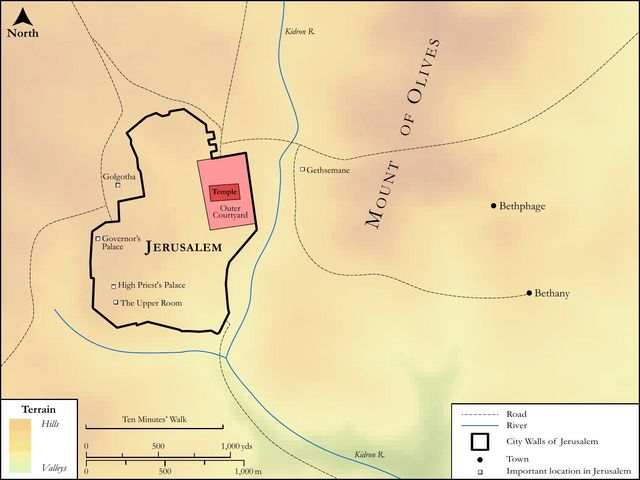
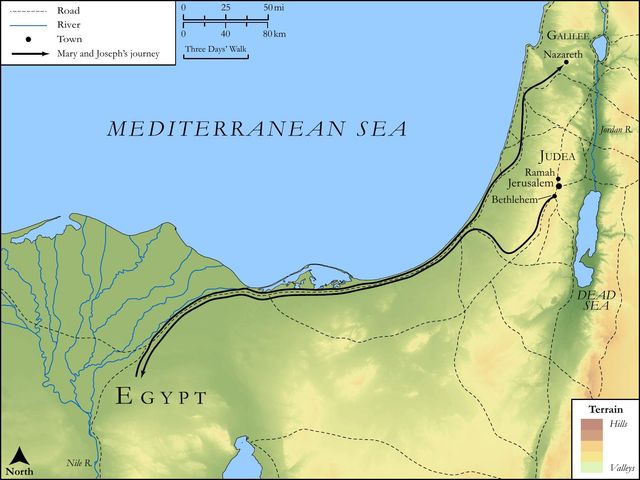
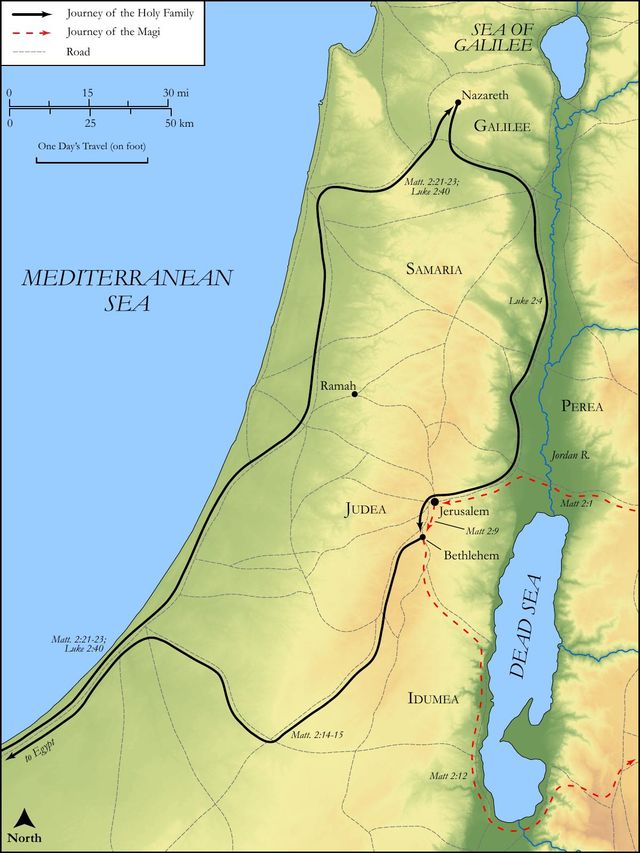
Study this verse
Public-domain commentary
Matthew Henry
From his Commentary on the Whole Bible. Henry comments on passages, not single verses — this entry covers Matthew 2:19–23. His two-level outline is real structure in the source text, so it is rendered as structure.
We have here Christ's return out of Egypt into the land of Israel again. Egypt may serve to sojourn in, or take shelter in, for a while, but not to abide in. Christ was sent to the lost sheep of the house of Israel, and therefore to them he must return. Observe,
I.What it was that made way for his return - the death of Herod, which happened not long after the murder of the infants; some think not above three months. Such quick work did divine vengeance make! Note, Herods must die; proud tyrants, that were the terror of the mighty, and the oppressors of the godly, in the land of the living, their day must come to fall, and down to the pit they must go. Who art thou then, that thou shouldest be afraid of a man that shall die? (Isa 51:12, Isa 51:13) especially considering that at death, not only their envy and hatred are perished (Ecc 9:6), and they cease from troubling (Job 3:17), but they are punished. Of all sins, the guilt of innocent blood fills the measure soonest. It is a dreadful account which Josephus gives of the death of this same Herod (Antiq. 17.146-199), that he was seized with a disease which burned him inwardly with an inexpressible torture; that he was insatiably greedy of meat; had the colic, and gout, and dropsy; such an intolerable stench attended his disease, that none could come near him: and so passionate and impatient was he, that he was a torment to himself, and a terror to all that attended him: his innate cruelty, being thus exasperated, made him more barbarous than ever; having ordered his own son to be put to death, he imprisoned many of the nobility and gentry, and ordered that as soon as he was dead they should be killed; but that execution was prevented. See what kind of men have been the enemies and persecutors of Christ and his followers! Few have opposed Christianity but such as have first divested themselves of humanity, as Nero and Domitian.
II.The orders given from heaven concerning their return, and Joseph's obedience to those orders, Mat 2:19-21.
God had sent Joseph into Egypt, and there he staid till the same that brought him thither ordered him thence. Note, In all our removes, it is good to see our way plain, and God going before us; we should not move either one way or the other without order. These orders were sent him by an angel. Note, Our intercourse with God, if it be kept up on our part, shall be kept up on his, wherever we are. No place can exclude God's gracious visits. Angels come to Joseph in Egypt, to Ezekiel in Babylon, and to John in Patmos. Now,
1.The angel informs him of the death of Herod and his accomplices: They are dead, which sought the young Child's life. They are dead, but the young Child lives. Persecuted saints sometimes live to tread upon the graves of their persecutors. Thus did the church's King weather the storm, and many a one has the church in like manner weathered. They are dead, to wit, Herod and his son Antipater, who, though there were mutual jealousies between them, yet, probably, concurred in seeking the destruction of this new King. If Herod first kill Antipater, and then die himself, the coasts are cleared, and the Lord is known by the judgments which he executes, when one wicked instrument is in the ruin of another.
2.He directs him what to do. He must go and return to the land of Israel; and he did so without delay; not pleading the tolerably good settlement he had in Egypt, or the inconveniences of the journey, especially if, as is supposed, it was in the beginning of winter that Herod died. God's people follow his direction whithersoever he leads them, wherever he lodges them. Did we but look upon the world as our Egypt, the place of our bondage and banishment, and heaven only as our Canaan, our home, our rest, we should as readily arise, and depart thither, when we are called for, as Joseph did out of Egypt.
III.The further direction he had from God, which way to steer, and where to fix in the land of Israel, Mat 2:22, Mat 2:23.
God could have given him these instructions with the former, but God reveals his mind to his people by degrees, to keep them still waiting on him, and expecting to hear further from him. These orders Joseph received in a dream, probably, as those before, by the ministration of an angel. God could have signified his will to Joseph by the Child Jesus, but we do not find that in those removes he either takes notice, or gives notice, of any thing that occurred; surely it was because in all things it behoved him to be made like his brethren; being a Child, he spake as a child, and did as a child, and drew a veil over his infinite knowledge and power; as a child he increased in wisdom.
Now the direction given this holy, royal family, is, 1. That it might not settle in Judea, Mat 2:22. Joseph might think that Jesus, being born in Bethlehem, must be brought up there; yet he is prudently afraid for the young Child, because he hears that Archelaus reigns in Herod's stead, not over all the kingdom as his father did, but only over Judea, the other provinces being put into other hands. See what a succession of enemies there is to fight against Christ and his church! If one drop off, another presently appears, to keep up the old enmity. But for this reason Joseph must not take the young Child into Judea. Note, God will not thrust his children into the mouth of danger, but when it is for his own glory and their trial; for precious in the sight of the Lord are the life and the death of his saints; precious is their blood to him.
2.That it must settle in Galilee, Mat 2:22. There Philip now ruled, who was a mild, quiet, man. Note, The providence of God commonly so orders it, that his people shall not want a quiet retreat from the storm and from the tempest; when one climate becomes hot and scorching, another shall be kept more cool and temperate. Galilee lay far north; Samaria lay between it and Judea; thither they were sent, to Nazareth, a city upon a hill, in the centre of the lot of Zebulun; there the mother of our Lord lived, when she conceived that holy thing; and, probably, Joseph lived there too, Luk 1:26, Luk 1:27. Thither they were sent, and there they were well known, and were among their relations; the most proper place for them to be in. There they continued, and from thence our Saviour was called Jesus of Nazareth, which was to the Jews a stumbling-block, for, Can any good thing come out of Nazareth?
In this is said to be fulfilled what was spoken by the prophets, He shall be called a Nazarene. Which may be looked upon, (1.) As a man of honour and dignity, though primarily it signifies no more than a man of Nazareth; there is an allusion or mystery in speaking it, speaking Christ to be, [1.] The Man, the Branch, spoken of, Isa 11:1. The word there is Netzar, which signifies either a branch, or the city of Nazareth; in being denominated from that city, he is declared to be that Branch. [2.] It speaks him to be the great Nazarite; of whom the legal Nazarites were a type and figure (especially Samson, Jdg 13:5), and Joseph, who is called a Nazarite among his brethren (Gen 49:26), and to whom that which was prescribed concerning the Nazarites, has reference, Num 6:2, etc. Not that Christ was, strictly, a Nazarite, for he drank wine, and touched dead bodies; but he was eminently so, both as he was singularly holy, and as he was by a solemn designation and dedication set apart to the honour of God in the work of our redemption, as Samson was to save Israel. And it is a name we have all reason to rejoice in, and to know him by. Or, (2.) As a name of reproach and contempt. To be called a Nazarene, was to be called a despicable man, a man from whom no good was to be expected, and to whom no respect was to be paid. The devil first fastened this name upon Christ, to render him mean, and prejudice people against him, and it stuck as a nickname to him and his followers. Now this was not particularly foretold by any one prophet, but, in general, it was spoken by the prophets, that he should be despised and rejected of men (Isa 53:2, Isa 53:3), a Worm, and no man (Psa 22:6, Psa 22:7), that he should be an Alien to his brethren Psa 69:7, Psa 69:8. Let no name of reproach for religion's sake seem hard to us, when our Master was himself called a Nazarene.
Historical interpretation
Twelve Centuries of Reception
12 surviving comments on this verse. Each one is dated, so this reads as a timeline rather than a list.
Select a marker to jump to its quote. Markers stagger vertically where authors wrote within a few decades of each other.
Herod had nine wives, by seven of whom he had a numerous issue. By Josida, his first born Antipater—by Mariamine, Alexander and Aristobulus—by Mathuca, a Samaritan woman, Archelaus—by Cleopatra of Jerusalem, Herod, who was afterwards tetrarch, and Philip. The three first were put to death by Herod; and after his death, Archelaus seized the throne by occasion of his father's will, and the question of the succession was carried before Augustus Cæsar. After some delay, he made a distribution of the whole of Herod's dominions in accordance with the Senate's advice. To Archelaus he assigned one half, consisting of Idumæa and Judæa, with the title of tetrarch, and a promise of that of king if he showed himself deserving of it. The rest he divided into two tetrarchates, giving Galilee to Herod the tetrarch, Ituræa and Trachonitis to Philip. Thus Archelaus was after his father's death a duarch, which kind of sovereignty is here called a kingdom.
But the figurative interpretation holds good any way. Joseph represents the Apostles, to whom Christ is entrusted to be borne about. These, as though Herod were dead, that is, his people being destroyed in the Lord's passion, are commanded to preach the Gospel to the Jews; they are sent to the lost sheep of the house of Israel. But finding the seed of their hereditary unbelief still abiding, they fear and withdraw; admonished by a vision, to wit, seeing the Holy Ghost poured upon the Gentiles, they carry Christ to them.
Joseph therefore comes to Nazareth, partly to avoid the danger, partly also delighting to abide in his native place. To give him the more courage, he receives also an oracle from the angel touching this matter. Luke, however, doth not say that he came there by Divine warning, but that when they had fulfilled all the purification, they returned to Nazareth. What then may one say? That Luke is giving an account of the time before the going down to Egypt, when he saith these things. For He would not have brought them down thither before the purification, in order that nothing should be done contrary to the law, but he waited for her to be purified, and to go to Nazareth, and that then they should go down to Egypt. Then, after their return, He bids them go to Nazareth. But before this they were not warned of God to go thither, but yearning after their native place, they did so of their own accord. For since they had gone up for no other cause but on account of the taxing, and had not so much as a place where to stay, when they had fulfilled that for which they had come up, they went down to Nazareth.
And when he had once left the country of His birth, all the occurrences passed out of mind; the rage of persecution had been spent in Bethlehem and its neighbourhood. By choosing Nazareth therefore, Joseph both avoided danger, and returned to his country.
But how did Archelaus reign over Judaea, when Pontius Pilate was governor? Herod's death had recently taken place, and the kingdom had not yet been divided into many parts; but as he had only just ended his life, the son for a while kept possession of the kingdom "in the room of his father Herod;" his brother also bearing this name, which is the reason why the evangelist added, "in the room of his father Herod."
It may be said, however, "if he was afraid to settle in Judaea on account of Archelaus, he had cause to fear Galilee also on account of Herod." I answer, By his changing the place, the whole matter was thenceforward thrown into shade; for the whole assault was upon "Bethlehem and the coasts thereof." Therefore now that the slaughter had taken place, the youth Archelaus had no other thought, but that the whole was come to an end, and that amongst the many, He that was sought had been destroyed. And besides, his father having come to such an end of his life before his eyes, he became for the future more cautious about further proceedings, and about urging on that course of iniquity.
(Verse 22) But hearing that Archelaus was reigning in Judea, in place of his father Herod, he was afraid to go there. And being warned in a dream, he withdrew to the region of Galilee. Many fall into error due to ignorance of history, thinking that he is the same Herod who mocked the Lord in his passion, and who is reported to be dead now. Therefore, this Herod, who later became friends with Pilate, is the son of that Herod, the brother of Archelaus; and Tiberius Caesar himself, the city of Lugdunum, which is in Gaul, banished him, and made his brother Herod successor to the kingdom. Read the story of Joseph.
Had he meant to quote a particular text, he would not have written 'Prophets,' but 'the Prophet.' By thus using the plural he evidently does not take the words of any one passage in Scripture, but the sense of the whole. Nazarene is interpreted 'Holyd,' and that the Lord would be Holy, all Scripture testifies. Otherwise we may explain that it is found in Isaiah (c. 11:1.) rendered to the strict letter of the Hebrew. There shall come a Rod out of the stem of Jesse, and a Nazarene shall grow out of His rootse.
(De Con. Evan. ii. 10.) Here it may be asked, How then could his parents go up every year of Christ's childhood to Jerusalem, as Luke relates, if fear of Archelaus now prevented them from approaching it? This difficulty is easily solved. At the festival they might escape notice in the crowd, and by returning soon, where in ordinary times they might be afraid to live. So they neither became irreligious by neglecting the festival, nor notorious by dwelling continually in Jerusalem. Or it is open to us to understand Luke when he says, they went up every year, as speaking of a time when they had nothing to fear from Archelaus, who, as Josephus relates, reigned only nine years. There is yet a difficulty in what follows; Being warned in a dream, he turned aside into the parts of Galilee. If Joseph was afraid to go into Judaea because one of Herod's sons, Archelaus, reigned there, how could he go into Galilee, where another of his sons Herod was tetrarch, as Luke tells us? As if the times of which Luke is speaking were times in which there was any longer need to fear for the Child, when even in Judaea things were so changed, that Archelaus no longer ruled there, but Pilate was governor.
(De Con. Evan. ii. 9.) This may perhaps occur to some, that Matthew says His parents went with the Child Jesus to Galilee because they feared Archelaus, when it should seem most probable that they chose Galilee because Nazareth was their own city, as Luke has not forgot to mention. We must understand, that when the Angel in the vision in Egypt said to Joseph, Go into the land of Israel, Joseph understood the command to be that he should go straight into Judaea, that being properly the land of Israel. But finding Archelaus ruling there, he would not court the danger, as the land of Israel might be interpreted to extend to Galilee, which was inhabited by children of Israel. Or we may suppose His parents supposed that Christ should dwell no where but in Jerusalem, where was the temple of the Lord, and would have gone thither had not the fear of Archelaus hindered them. And they had not been commanded from God to dwell positively in Judaea, or Jerusalem, so as that they should have despised the fear of Archelaus, but only in the land of Israel generally, which they might understand of Galilee.
(De Con. Evan. ii. 5.) The whole of this history, from the account of the Magi inclusively, Luke omits. Let it be here noticed once for all, that each of the Evangelists writes as if he were giving a full and complete history, which omits nothing; where he really passes over any thing, he continues his thread of history as if he had told all. Yet by a diligent comparison of their several narratives, we can be at no loss to know where to insert any particular that is mentioned by one and not by the other.
They might have read this in some Prophets who are not in our canon, as Nathan or Esdras. That there was some prophecy to this purport is clear from what Philip says to Nathanael. Him of whom Moses in the Law and the Prophets did write, Jesus of Nazareth. (John 1:15.) Hence the Christians were at first called Nazarenes, at Antioch their name was changed to that of 'Christians.'
Or, we may apply it to the last times of the Jewish Church, when many Jews having turned to the preaching of Enoch and Elijah, the rest filled with the spirit of Antichrist shall fight against the faith. So that part of Judæa where Archelaus rules, signifies the followers of Antichrist; Nazareth of Galilee, whither Christ is conveyed, that part of the nation that shall embrace the faith. Galilee means 'removal;' Nazareth, 'the flower of virtues;' for the Church the more zealously she removes from the earthly to the heavenly, the more she abounds in the flower and fruit of virtues.
Herod left three sons: Philip, Antipas, and Archelaus. He had directed Archelaus to be king, and the other two, tetrarchs. Joseph was afraid to go into the land of Israel, that is, Judea, because Archelaus was similar to Herod, his father. Antipas was the young Herod who slew the Forerunner.
Galilee was not of the land of Israel, but of the Gentiles, and for this reason the Jews considered the Galileans an abomination.
Joseph was not disobedient to the angelic warning, but he arose, and took the young Child and his mother, and came into the land of Israel. The Angel had not fixed the particular place, so that while Joseph hesitates, the Angel returns, and by the often visiting him confirms his obedience.
(ord.) But then we might ask, why was he not afraid to go into Galilee, seeing Archelaus ruled there also? He could be better concealed in Nazareth than in Jerusalem, which was the capital of the kingdom, and where Archelaus was constantly resident.
To this he adds the Prophet's testimony, saying, That it might be fulfilled which was spoken by the Prophets, &c.
Continue studying Matthew 2:22 across the web’s major study libraries — every link below opens this exact verse, chapter, or book on the destination site.
Read & Compare
 BibleGatewayThis verse in more than 200 translations and 70 languages.
 Bible.comThe YouVersion reader — hundreds of translations, reading plans, and highlights.
 ESV.orgCrossway's official English Standard Version reader.
 NET BibleThe NET translation with 60,000+ translators' notes on every rendering decision.
 STEP BibleTyndale House's free study tool — original text, vocabulary, and scholarly resources.
 BibliaLogos Bible Software's free web reader.
 USCCBThe New American Bible (Revised Edition) with the U.S. bishops' study notes.
Commentaries
 BibleHub CommentariesDozens of classic commentaries on this verse, gathered on one page.
 StudyLightMore than 100 commentary sets — the largest collection on the web.
 BibleRefPlain-English commentary on what this verse means, verse by verse.
 Enduring WordDavid Guzik's free commentary on this chapter, widely used by Bible teachers.
 Bible Study ToolsVerse commentary alongside Greek and Hebrew study aids.
Original Language & Research
- BibleHub InterlinearThe verse word by word — original language, transliteration, and English.
- BibleHub LexiconEvery word's original-language definition and Strong's entry.
 Blue Letter BibleDeep-study tools — Strong's numbers, concordance, and word studies.
 CNTR CollationThe earliest Greek manuscripts of this verse, collated letter by letter.
Sermons, Hymns & Audio


TrulyRandomVerse is not affiliated with these sites and doesn’t control their content. They’re linked because they’re genuinely useful.
Summary
Matthew 2:22 describes a critical juncture in the Holy Family's return from Egypt, where Joseph, upon learning that Archelaus, a notoriously cruel ruler, had succeeded his father Herod in Judaea, was gripped by fear. In response to this legitimate concern, God intervened once more through a dream, divinely warning Joseph and redirecting him and his family away from the dangerous Judean region and into the safer, northern territory of Galilee, ultimately leading them to settle in Nazareth. This passage powerfully illustrates God's meticulous, ongoing providence and protection over His Son, Jesus, ensuring His safety and the fulfillment of His redemptive purpose.
Context
ShowHideLiterary Context
This verse serves as the concluding act in the narrative of Jesus' infancy, following the dramatic flight to Egypt to escape Herod the Great's murderous decree against Bethlehem's male infants (Matthew 2:13-18). The preceding verse, Matthew 2:21, signals the family's departure from Egypt after Herod's death, fulfilling the prophecy of Hosea 11:1. However, the journey back to their homeland is interrupted by new political realities. Verse 22 introduces a fresh obstacle and another divine intervention, setting the stage for the family's eventual settlement in Nazareth, which Matthew 2:23 explicitly links to prophetic fulfillment. This repeated pattern of threat, divine warning, and miraculous preservation underscores God's sovereign control over the Messiah's early life.
Historical & Cultural Context
The fear Joseph experienced was entirely justified given the historical reality of Archelaus. Upon Herod the Great's death in 4 BC, his kingdom was divided among his three sons: Archelaus received Judaea, Samaria, and Idumaea; Herod Antipas received Galilee and Perea; and Philip received the northeastern territories. Archelaus, like his father, was known for his extreme cruelty and tyrannical rule. His reign began with the slaughter of 3,000 Jews in the Temple during Passover and continued with heavy taxation and ruthless suppression of dissent. His brutality was so pronounced that in AD 6, a delegation of Jews and Samaritans appealed to Emperor Augustus, who subsequently deposed Archelaus and banished him to Gaul, replacing his rule with a Roman procurator. Joseph's decision to avoid Judaea was thus a prudent response to a very real and widely recognized danger, highlighting the volatile political landscape of first-century Palestine under Roman oversight.
Key Themes
ShowHideThe verse profoundly reinforces several key themes woven throughout the infancy narratives in Matthew. Firstly, Divine Guidance and Protection is paramount, as God repeatedly intervenes through dreams to direct Joseph, safeguarding Jesus from earthly threats. This is the fourth such dream Joseph receives in Matthew's Gospel, following the initial revelation regarding Jesus' miraculous conception (Matthew 1:20-21), the command to flee to Egypt (Matthew 2:13), and the instruction to return after Herod's death (Matthew 2:19-20). Secondly, Obedience in the Face of Fear is a prominent theme, as Joseph, despite his understandable apprehension about Archelaus, demonstrates unwavering trust and immediate obedience to God's specific, divinely revealed instructions. His actions exemplify a faithful response to God's leading, even when it means altering well-laid plans. Lastly, the verse underscores God's Sovereignty and Providence, demonstrating how God orchestrates events, even political successions and human fears, to ensure His redemptive plan for His Son unfolds precisely as intended, ultimately leading Jesus to Nazareth, a location significant for prophetic fulfillment (Matthew 2:23).
Exposition and Analysis
ShowHideKey Word Analysis
ShowHideThis name, meaning "people-ruling," belonged to the ethnarch who succeeded his father, Herod the Great, over Judaea, Samaria, and Idumaea. His rule (4 BC - AD 6) was marked by extreme cruelty and oppression, even exceeding his father's tyranny in some respects, leading to his eventual deposition by Rome. Joseph's fear upon hearing of his reign was therefore well-founded and indicative of Archelaus's notorious reputation.
Derived from phobos, meaning "fear" or "terror," this verb signifies Joseph's genuine and rational apprehension. It is not an irrational panic but a prudent assessment of the danger posed by Archelaus. The text does not condemn Joseph's fear but acknowledges it as a legitimate human response, which God then addresses with specific guidance, demonstrating divine compassion and practical care for His servants.
This verb literally means "to utter an oracle" or "to divinely intimate." In the New Testament, it consistently describes a direct, authoritative communication from God, often in a dream or vision. Its use here emphasizes the supernatural and undeniable source of the instruction Joseph received, underscoring that the redirection to Galilee was not a human decision based on fear alone, but a divinely ordained command.
Verse Breakdown
ShowHide"But when he heard that Archelaus did reign in Judaea in the room of his father Herod"
This clause establishes the immediate political context upon Joseph's return from Egypt. Herod the Great, responsible for the Bethlehem massacre, had died, but his son Archelaus had taken over the rule of Judaea. The phrase "in the room of" (Greek anti) signifies a direct succession, highlighting that Archelaus occupied the same position of authority and, as history confirms, inherited his father's violent disposition. Joseph, likely upon reaching the borders of Judaea or hearing news from travelers, became aware of this critical change in leadership.
"he was afraid to go thither"
Joseph's fear was a natural and rational response to the known character of Archelaus. Given the recent history of Herod's attempt on Jesus' life, and Archelaus's reputation for brutality, Joseph rightly perceived a continued threat to the young Messiah if they were to settle in Judaea, particularly Bethlehem or Jerusalem. This fear demonstrates Joseph's protective instincts as the earthly guardian of Jesus and his family.
"notwithstanding, being warned of God in a dream, he turned aside into the parts of Galilee"
Despite his fear, Joseph did not act solely on human prudence. The phrase "notwithstanding" (Greek dé) signals a divine counter-action. God intervened once more, providing specific, authoritative guidance "in a dream." This divine warning superseded Joseph's initial inclination or fear, directing him away from Judaea. Consequently, Joseph obediently "turned aside" (Greek anachōréō, "to withdraw" or "retire") from his intended path and journeyed northward "into the parts of Galilee," a region under the rule of Herod Antipas, a less tyrannical son of Herod, and thus a safer haven for the Holy Family.
Literary Devices
ShowHideMatthew's narrative in Matthew 2 employs several literary devices to convey its theological message. Divine Intervention is a dominant motif, with God repeatedly communicating with Joseph through dreams, guiding and protecting Jesus from the moment of His conception through His early childhood. This highlights God's active, personal involvement in the unfolding of salvation history. The narrative also uses Foreshadowing, as the redirection to Galilee anticipates Jesus' later ministry, which was predominantly centered in this region. This geographical shift sets the stage for the fulfillment of the prophecy that Jesus would be called a Nazarene (Matthew 2:23), and later, the prophecy of Isaiah 9:1-2 regarding the "light" that would dawn in Galilee. Furthermore, there is a subtle Contrast between the dangerous, politically volatile Judaea under Archelaus and the relatively safer, more obscure Galilee, emphasizing God's provision of refuge for His Son.
Theological and Thematic Connections
ShowHideMatthew 2:22 profoundly illustrates God's unwavering commitment to His redemptive plan, demonstrating His meticulous care for the infant Jesus. This passage underscores that even amidst human fear, political turmoil, and the schemes of wicked rulers, God's sovereign hand is at work, orchestrating circumstances to ensure the safety and proper development of His Son, who is the promised Messiah. Joseph's obedience to divine instruction, even when it meant altering his plans and facing uncertainty, serves as a powerful testament to the necessity of trusting God's guidance above all else. The redirection to Galilee was not merely a pragmatic escape from danger but a divinely appointed step that positioned Jesus for His future ministry, fulfilling prophecy and setting the stage for the spread of the Gospel from a region often overlooked by the religious elite of Jerusalem. This narrative reassures believers that God is intimately involved in the details of their lives, providing direction and protection for those who walk in obedience to His will.
Reflection and Application
ShowHideMatthew 2:22 offers timeless lessons for believers navigating the uncertainties and fears of life. Joseph's experience reminds us that it is natural and even wise to acknowledge legitimate fears arising from dangerous circumstances. However, our response to fear should not be paralysis or human ingenuity alone, but a humble turning to God for divine guidance. Just as God provided specific, actionable direction to Joseph through a dream, He continues to guide His people today through His Word, the Holy Spirit, and the counsel of wise believers. This passage challenges us to cultivate a posture of listening and obedience, recognizing that God's plans for us often involve unexpected detours or changes in direction. Our security is not found in the absence of threat, but in the presence and protection of God, who sovereignly directs our steps for His purposes. Embracing this truth empowers us to step out in faith, even when the path ahead is unclear, trusting that God's wisdom will always lead us to the safest and most fruitful destination.
Questions for Reflection
ShowHideFAQ
ShowHideWhy was Joseph afraid of Archelaus?
ShowHideJoseph's fear of Archelaus was entirely justified and based on Archelaus's well-known reputation for extreme cruelty and tyranny. Upon the death of his father, Herod the Great, Archelaus inherited the rule of Judaea, Samaria, and Idumaea. His reign began with a brutal slaughter of 3,000 Jews in the Temple and was characterized by oppressive taxation and violent suppression of any opposition. Joseph, having just protected Jesus from Herod the Great's murderous decree (Matthew 2:16), recognized that returning to Judaea under Archelaus's rule would place Jesus and his family in continued grave danger. The historical record confirms Archelaus's brutality, which was so severe that he was eventually deposed by Emperor Augustus in AD 6.
How did God communicate with Joseph in this instance?
ShowHideAs with previous critical junctures in Jesus' infancy narrative, God communicated with Joseph "in a dream." The Greek word used, chrēmatízō (G5537), translated as "warned of God," signifies a divine revelation or authoritative oracle. This was not a mere ordinary dream but a supernatural communication from God, providing clear and specific instructions. This repeated method of divine communication underscores God's direct involvement in guiding Joseph and protecting Jesus, demonstrating His active providence in the unfolding of His redemptive plan.
Why did Joseph turn aside into Galilee, specifically Nazareth?
ShowHideJoseph turned aside into Galilee because God specifically warned him in a dream not to go to Judaea. Galilee, while still part of the broader Herodian kingdom, was ruled by Herod Antipas, another son of Herod the Great, who was less tyrannical than Archelaus. This made Galilee a safer place for the Holy Family. The specific destination of Nazareth in Galilee (Matthew 2:23) was also part of God's sovereign plan, as Matthew explicitly states it was to fulfill the prophecy that Jesus "would be called a Nazarene." This settlement in a relatively obscure Galilean town also set the stage for Jesus' upbringing and the later launch of His public ministry from this region.
Christ-Centered Fulfillment
ShowHideThe redirection of the Holy Family to Galilee in Matthew 2:22 is a profound moment of Christ-centered fulfillment, demonstrating God's meticulous care for His Son, the promised Messiah, and ensuring the unfolding of His redemptive plan. The divine protection of the infant Jesus from the tyranny of Archelaus foreshadows His ultimate victory over all powers of darkness and death. This seemingly minor geographical shift was orchestrated by God to position Jesus in Nazareth, a humble town in Galilee, thereby fulfilling prophecy and setting the stage for His public ministry. It is from this "Galilee of the Gentiles" that Jesus would later begin His preaching, calling disciples, and performing miracles, bringing light to those who sat in darkness (Matthew 4:12-17). The safe upbringing of Jesus, secured by God's direct intervention, was essential for Him to grow in wisdom and stature, and in favor with God and man (Luke 2:52), preparing Him for His ultimate mission as the Lamb of God who takes away the sin of the world. Thus, this verse is not just about Joseph's fear or God's guidance, but about the sovereign preservation of the One through whom all humanity would find salvation and eternal life (John 3:16).