


Matthew 12:19
Bible text: King James Version (1769 Blayney text) · Public domain
Bible text: Berean Standard Bible · Public domain
Bible text: American Standard Version (1901) · Public domain
Bible text: World English Bible, Messianic edition · Public domain
Bible text: Geneva Bible (1599) · Public domain
Bible text: Young's Literal Translation · Public domain
- οὐκoukNotG3756PRT-NNegative Particle Negative
- ἐρίσειeriseiwill He quarrelG2051V-FAI-3SVerb Future Active Indicative 3rd Singular
- οὐδὲoudenorG3761CONJ-NConjunction Negative
- κραυγάσειkraugaseiwill he cry outG2905V-FAI-3SVerb Future Active Indicative 3rd Singular
- οὐδὲoudenorG3761CONJ-NConjunction Negative
- ἀκούσειakouseiwill hearG191V-FAI-3SVerb Future Active Indicative 3rd Singular
- τιςtisanyoneG5100X-NSMIndefinite pronoun Nominative Singular Masculine
- ἐνeninG1722PREPPreposition
- ταῖςtaistheG3588T-DPFDefinite article Dative Plural Feminine
- πλατείαιςplateiaisstreetsG4116N-DPFNoun Dative Plural Feminine
- τὴνtēntheG3588T-ASFDefinite article Accusative Singular Feminine
- φωνὴνphōnēnvoiceG5456N-ASFNoun Accusative Singular Feminine
- αὐτοῦautouof HimG846P-GSMPersonal pronoun Genitive Singular Masculine
English is a literal word-by-word gloss of the Greek, not the KJV's wording. Why?
This is the original text the KJV's translators worked from — each Greek word with its own literal English meaning in this verse, prepared by scholars at Tyndale House, Cambridge. The KJV translates whole sentences, not word by word, so its wording differs: one Greek word can become several English words, and the KJV may choose “charity” where the gloss reads “love”. Both are faithful — they answer different questions. For the KJV's own rendering, switch to the KJV text.
Details
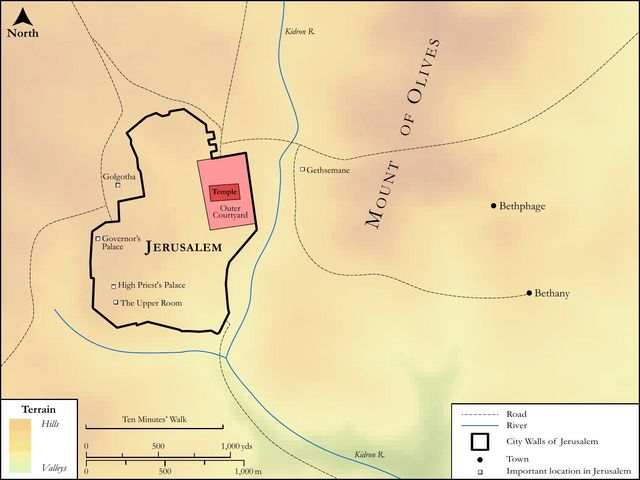
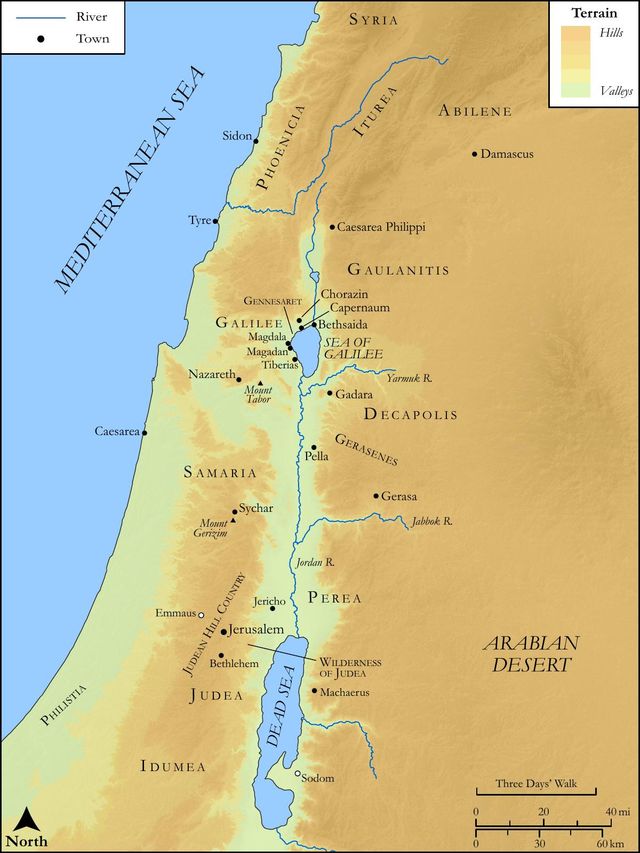
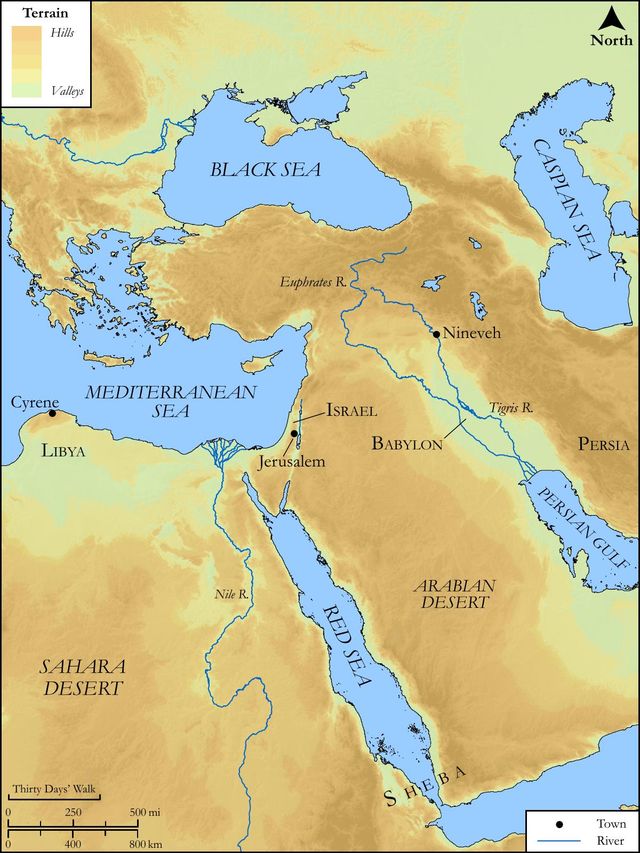
See on the biblical-era maps
Study this verse
Public-domain commentary
Matthew Henry
From his Commentary on the Whole Bible. Henry comments on passages, not single verses — this entry covers Matthew 12:14–21. His four-level outline is real structure in the source text, so it is rendered as structure.
As in the midst of Christ's greatest humiliations, there were proofs of his dignity, so in the midst of his greatest honours, he gave proofs of his humility; and when the mighty works he did gave him an opportunity of making a figure, yet he made it appear that he emptied himself, and made himself of no reputation. Here we have,
I.The cursed malice of the Pharisees against Christ (Mat 12:14); being enraged at the convincing evidence of his miracles, they went out, and held a council against him, how they might destroy him. That which vexed them was, not only that by his miracles his honour eclipsed theirs, but that the doctrine he preached was directly opposite to their pride, and hypocrisy, and worldly interest; but they pretended to be displeased at his breaking the sabbath day, which was by the law a capital crime, Exo 35:2. Note, it is no new thing to see the vilest practices cloaked with the most specious pretences. Observe their policy; they took counsel about it, considered with themselves which way to do it effectually; they took counsel together in a close cabal about it, that they might both animate and assist one another. Observe their cruelty; they took counsel, not to imprison or banish him, but to destroy him, to be the death of him who came that we might have life. What an indignity was hereby put upon our Lord Jesus, to run him down as an outlaw (qui caput gerit lupinum - carries a wolf's head), and the plague of his country, who was the greatest blessing of it, the Glory of his people Israel!
II.Christ's absconding upon this occasion, and the privacy he chose, to decline, not his work, but his danger; because his hour was not yet come (Mat 12:15), he withdrew himself from thence. He could have secured himself by miracle, but chose to do it in the ordinary way of flight and retirement; because in this, as in other things, he would submit to the sinless infirmities of our nature. Herein he humbled himself, that he was driven to the common shift of those who are most helpless; thus also he would give an example to his own rule, When they persecute you in one city, flee to another. Christ had said and done enough to convince those Pharisees, if reason or miracles would have done it; but instead of yielding to the conviction, they were hardened and enraged, and therefore he left them as incurable, Jer 51:9.
Christ did not retire for his own ease, nor seek an excuse to leave off his work; no, his retirements were filled up with business, and he was even then doing good, when he was forced to flee for the same. Thus he gave an example to his ministers, to do what they can, when they cannot do what they would, and to continue teaching, even when they are removed into corners. When the Pharisees, the great dons and doctors of the nation, drove Christ from then, and forced him to withdraw himself, yet the common people crowded after him; great multitudes followed him and found him out. This some would turn to his reproach, and call him the ring-leader of the mob; but it was really his honour, that all who were unbiased and unprejudiced, and not blinded by the pomp of the world, were so hearty, so zealous for him, that they would follow him whithersoever he went, and whatever hazards they ran with him; as it was also the honour of his grace, that the poor were evangelized; that when they received him, he received them and healed them all. Christ came into the world to be a Physician-general, as the sun to the lower world, with healing under his wings. Though the Pharisees persecuted Christ for doing good, yet he went on in it, and did not let the people fare the worse for the wickedness of their rulers. Note, Though some are unkind to us, we must not on that account be unkind to others.
Christ studied to reconcile usefulness and privacy; he healed them all, and yet (Mat 12:16), charged them that they should not make him known; which may be looked upon, 1. As an act of prudence; it was not so much the miracles themselves, as the public discourse concerning them, that enraged the Pharisees (Mat 12:23, Mat 12:24); therefore Christ, though he would not omit doing good, yet would do it with as little noise as possible, to avoid offence to them and peril to himself. Note, Wise and good men, though they covet to do good, yet are far from coveting to have it talked of when it is done; because it is God's acceptance, not men's applause, that they aim at. And in suffering times, though we must boldly go on in the way of duty, yet we must contrive the circumstances of it so as not to exasperate, more than is necessary, those who seek occasion against us; Be ye wise as serpents, Mat 10:16. 2. It may be looked upon as an act of righteous judgment upon the Pharisees, who were unworthy to hear of any more of his miracles, having made so light of those they had seen. By shutting their eyes against the light, they had forfeited the benefit of it. 3. As an act of humility and self-denial. Though Christ's intention in his miracles was to prove himself the Messiah, and so to bring men to believe on him, in order to which it was requisite that they should be known, yet sometimes he charged the people to conceal them, to set us an example of humility, and to teach us not to proclaim our own goodness or usefulness, or to desire to have it proclaimed. Christ would have his disciples to be the reverse of those who did all their works to be seen of men.
III.The fulfilling of the scriptures in all this, Mat 12:17.
Christ retired into privacy and obscurity, that though he was eclipsed, the word of God might be fulfilled, and so illustrated and glorified, which was the thing his heart was upon. The scripture here said to be fulfilled is Isa 42:1-4, which is quoted at large, Mat 12:18-21. The scope of it is to show how mild and quiet, and yet how successful, our Lord Jesus should be in his undertaking; instances of both which we have in the foregoing passages. observe here,
1.The pleasure of the Father in Christ (Mat 12:18); Behold, my Servant whom I have chosen, my Beloved in whom my soul is well pleased. Hence we may learn,
(1.)That our Saviour was God's Servant in the great work of our redemption. He therein submitted himself to the Father's will (Heb 10:7), and set himself to serve the design of his grace and the interests of his glory, in repairing the breaches that had been made by man's apostasy. As a Servant, he had a great work appointed him, and a great trust reposed in him. This was a part of his humiliation, that though he thought it not robbery to be equal with God, yet that in the work of our salvation he took upon him the form of a servant, received a law, and came into bonds. Though he were a son, yet learned he this obedience, Heb 5:8. The motto of this Prince is, Ich dien - I serve.
(2.)That Jesus Christ was chosen of God, as the only fit and proper person for the management of the great work of our redemption. He is my Servant whom I have chosen, as par negotio - equal to the undertaking. None but he was able to do the Redeemer's work, or fit to wear the Redeemer's crown. He was one chosen out of the people (Psa 89:19), chosen by Infinite Wisdom to that post of service and honour, for which neither man nor angel was qualified; none but Christ, that he might in all things have the pre-eminence. Christ did not thrust himself upon this work, but was duly chosen into it; Christ was so God's Chosen as to be the head of election, and of all other the Elect, for we are chosen in him, Eph 1:4.
(3.)That Jesus Christ is God's Beloved, his beloved Son; as God, he lay from eternity in his bosom (Joh 1:18); he was daily his delight, (Pro 8:30). Between the Father and the Son there was before all time an eternal and inconceivable intercourse and interchanging of love, and thus the Lord possessed him in the beginning of his way, Pro 8:22. As Mediator, the Father loved him; then when it pleased the Lord to bruise him, and he submitted to it, therefore did the Father love him, Joh 10:17.
(4.)That Jesus Christ is one in whom the Father is well pleased, in whom his soul is pleased; which denotes the highest complacency imaginable. God declared, by a voice from heaven, that he was his beloved Son in whom he is well pleased; well pleased in him, because he was the ready and cheerful Undertaker of that work of wonder which God's heart was so much upon, and he is well pleased with us in him; for he had made us accepted in the Beloved, Eph 1:6. All the interest which fallen man has or can have in God is grounded upon and owing to God's well-pleasedness in Jesus Christ; for there is no coming to the Father but by him, Joh 14:6.
2.The promise of the Father to him in two things.
(1.)That he should be every way well qualified for his undertaking; I will put my Spirit upon him, as a Spirit of wisdom and counsel, Isa 11:2, Isa 11:3. Those whom God calls to any service, he will be sure to fit and qualify for it; and by that it will appear that he called them to it, as Moses, Exo 4:12. Christ, as God, was equal in power and glory with the Father; as Mediator, he received from the Father power and glory, and received that he might give: and all that the Father gave him, to qualify him for his undertaking, was summed up in this, he put his Spirit upon him: this was that oil of gladness with which he was anointed above his fellows, Heb 1:9. He received the Spirit, not by measure, but without measure, Joh 3:34. Note, Whoever they be that God has chosen, and in whim he is well pleased, he will be sure to put his Spirit upon them. Wherever he confers his love, he confers somewhat of his likeness.
(2.)That he should be abundantly successful in his understanding. Those whom God sends he will certainly own. It was long since secured by promise to our Lord Jesus, that the good pleasure of the Lord should prosper in his hand, Isa 53:10. And here we have an account of that prospering good pleasure.
[1.]He shall show judgment to the Gentiles. Christ in his own person preached to those who bordered upon the heathen nations (see Mar 3:6-8), and by his apostle showed his gospel, called here his judgment, to the Gentile world. The way and method of salvation, the judgment which is committed to the Son, is not only wrought out by him as our great High Priest, but showed and published by him as our great Prophet. The gospel, as it is a rule of practice and conversation, which has a direct tendency to the reforming and bettering of men's hearts and lives, shall be showed to the Gentiles. God's judgments had been the Jews' peculiar (Psa 147:19), but it was often foretold, by the Old Testament prophets, that they should be showed to the Gentiles, which therefore ought not to have been such a surprise as it was to the unbelieving Jews, much less a vexation.
[2.]In his name shall the Gentiles trust, Mat 12:21. He shall so show judgment to them, that they shall heed and observe what he shows them, and be influenced by it to depend upon him, to devote themselves to him, and conform to that judgment. Note, The great design of the gospel, is to bring people to trust in the name of Jesus Christ; his name Jesus, a Saviour, that precious name whereby he is called, and which is as ointment poured forth; The Lord our Righteousness. The evangelist here follows the Septuagint (or perhaps the latter editions of the Septuagint follow the evangelist); the Hebrew (Isa 42:4) is, The isles shall wait for his law. The isles of the Gentiles are spoken of (Gen 10:5), as peopled by the sons of Japhet, of whom it was said (Gen 9:27), God shall persuade Japhet to dwell in the tents of Shem; which was now to be fulfilled, when the isles (says the prophet), the Gentiles (says the evangelist), shall wait for his law, and trust in his name: compare these together, and observe, that they, and they only, can with confidence trust in Christ's name, that wait for his law with a resolution to be ruled by it. Observe also, that the law we wait for is the law of faith, the law of trusting in his name. This is now his great commandment, that we believe in Christ, Jo1 3:23.
3.The prediction concerning him, and his mild and quiet management of his undertaking, Mat 12:19, Mat 12:20. It is chiefly for the sake of this that it is here quoted, upon occasion of Christ's affected privacy and concealment.
(1.)That he should carry on his undertaking without noise or ostentation. He shall not strive, or make an outcry. Christ and his kingdom come not with observation, Luk 17:20, Luk 17:21. When the First-begotten was brought into the world, it was not with state and ceremony; he made no public entry, had no harbingers to proclaim him King. He was in the world and the world knew him not. Those were mistaken who fed themselves with hopes of a pompous Saviour. His voice was not heard in the streets; "Lo, here is Christ;" or, "Lo, he is there:" he spake in a still small voice, which was alluring to all, but terrifying to none; he did not affect to make a noise, but came down silently like the dew. What he spake and did was with the greatest possible humility and self-denial. His kingdom was spiritual, and therefore not to be advanced by force or violence, or by high pretensions. No, the kingdom of God is not in word, but in power.
(2.)That he should carry on his undertaking without severity and rigour (Mat 12:20). A bruised reed shall he not break. Some understand this of his patience in bearing with the wicked; he could as easily have broken these Pharisees as a bruised reed, and have quenched them as soon as smoking flax; but he will not do it till the judgment-day, when all his enemies shall be made his footstool. Others rather understand it of his power and grace in bearing up the weak. In general, the design of his gospel is to establish such a method of salvation as encourages sincerity, though there be much infirmity; it does not insist upon a sinless obedience, but accepts an upright, willing mind. As to particular persons, that follow Christ in meekness, and in fear, and in much trembling, observe,
[1.]How their case is here described - they are like a bruised reed, and smoking flax. Young beginners in religion are weak as a bruised reed, and their weakness offensive like smoking flax; some little life they have, but it is like that of a bruised reed; some little heat, but like that of smoking flax. Christ's disciples were as yet but weak, and many are so that have a place in his family. The grace and goodness in them are as a bruised reed, the corruption and badness in them are as smoking flax, as the wick of a candle when it is put out and is yet smoking.
[2.]What is the compassion of our Lord Jesus toward them? He will not discourage them, much less reject them or cast them off; the reed that is bruised shall not be broken and trodden down, but shall be supported, and made as strong as a cedar or flourishing palm-tree. The candle newly lighted, though it only smokes and does not flame, shall not be blown out, but blown up. The day of small things is the day of precious things, and therefore he will not despise it, but make it the day of great things, Zac 4:10. Note, Our Lord Jesus deals very tenderly with those who have true grace, though they be weak in it, Isa 40:11; Heb 5:2. He remembers not only that we are dust, but that we are flesh.
[3.]The good issue and success of this, intimated in that, till he send forth judgment unto victory. That judgment which he showed to the Gentiles shall be victorious, he will go on conquering and to conquer, Rev 6:2. Both the preaching of the gospel in the world, and the power of the gospel in the heart, shall prevail. Grace shall get the upper hand of corruption, and shall at length be perfected in glory. Christ's judgment will be brought forth to victory, for when he judges he will overcome. He shall bring forth judgment unto truth; so it is, Isa 42:3. Truth and victory are much the same, for great is the truth, and will prevail.
Historical interpretation
Nine Centuries of Reception
11 surviving comments on this verse. Each one is dated, so this reads as a timeline rather than a list.
Select a marker to jump to its quote. Markers stagger vertically where authors wrote within a few decades of each other.
If He "neither did contend nor shout, nor was His voice heard abroad," who "crushed not the bruised reed"-Israel's faith, who "quenched not the burning flax" -that is, the momentary glow of the Gentiles-but made it shine more by the rising of His own light,-He can be none other than He who was predicted.
The Pharisees are moved with jealousy at what had been done; because beholding the outward body of a man, they did not recognize the God in His works; The Pharisees went out and sought counsel against him, how they might destroy him.
And He knowing their plots withdrew, that He might be far from the counsels of the evil hearted, as it follows, Jesus knowing it departed thence.
On those whom He healed He enjoined silence, whence it follows, And he charged them that they should not make him known. For his restored health was a witness to each man. And by commanding them to hold their peace, He avoids all ostentation of Himself, and at the same time notwithstanding affords a knowledge of Himself in that very admonition to hold their peace; for the observance of silence proceeds from that very thing which is to be kept silent.
Or, he means this bruised reed that is not broken, to show that the perishing and bruised bodies of the Gentiles, are not to be broken, but are rather reserved for salvation. He shall not quench a smoking flax, shows the feebleness of that spark which though not quenched, only moulders in the flax, and that among the remnants of that ancient grace, the Spirit is yet not quite taken away from Israel, but power still remains to them of resuming the whole flame thereof in a day of penitence.
Or, Until he shall send forth judgment to victory, that is, Until He shall take away the power of death, and bring in judgment and the return of His splendour.
Those who teach “in the streets” do this, not for the sake of helping anyone but out of egotism and to hoodwink the gullible. The result of this is that everyone views them with suspicion and they fail to reach the goal of their teaching. Thus the Savior taught us these lessons not only by word. His way of life also taught us not to scream nor to show off but to lead a public life in respect to virtuous actions. For a talkative disposition would be most harmful for us. It is the opposite that is most useful and beneficial.
And that you may not be troubled at those things which are done, and at the incredible madness of the Pharisees, He introduces the Prophet's words. For such was the carefulness of the Prophets, that they had not omitted even this, but had noted all His ways and movements, and the meaning with which He did this; that you might learn that He spoke all things by the Holy Spirit, for if it be impossible to know the thoughts of men, much more to know the meaning of Christ, unless the Holy Spirit revealed it. Therefore it follows, That it might be fulfilled which was spoken by Esaias the Prophet, saying, Behold my servant whom I have chosen.
This the Prophet puts in the beginning, that you might learn that that which is here said was according to the counsel of the Father. For he that is beloved does according to his will who loveth him. And again, he that is chosen, does not as an enemy break the law, nor as one being an adversary of the legislator, but as one in agreement with Him. Because therefore He is beloved, I will put my Spirit upon him.
Further, to show His lowliness, He says, He shall not strive; and so He was offered up as the Father had willed, and gave Himself willingly into the hands of His persecutors. Neither shall he cry; so He was dumb as a lamb before his shearer. Nor shall any hear voice in the streets.
The Lord sought to heal the Jews by this mildness. But though they rejected Him, yet He did not resist them by destroying them; whence the Prophet, displaying His power and their weakness, says, A bruised reed he shall not break, and a smoking flax he shall not quench.
Or this, He shall not break a bruised reed, shows that it was as easy for Him to break them all, as to break a reed, and that a bruised reed. And, He shall not quench a smoking flax, shows that their rage was fired, and that the power of Christ was strong to quench such rage with all readiness; hence in this is shown the great mercy of Christ.
But one might say, What then, shall these things be always thus? Will He endure for ever those who thus lay snares, and are mad against Him? Far from it; when His own work shall be all complete, then shall He work these things also. And. this He signifies, saying, Until he shall send forth judgment to victory; as much as to say, When He shall have accomplished all things which are of Himself, then shall He bring in perfect vengeance; then shall they receive punishment when He has made his victory illustrious, that there be not left to them any irreverent opportunity of contradiction,
But the things of this dispensation will not rest in this only, that they who have not believed should be punished, but He will also draw the world to Him; whence it follows, And in his name shall the Gentiles hope.
Then, lest thou shouldest be confounded at what is going on, and at their strange frenzy, He introduces the prophet also, foretelling all this. For so great was the accuracy of the prophets, that they omit not even these things, but foretell His very journeyings, and changes of place, and the intent with which He acted therein; that thou mightest learn, how they spake all by the Spirit. For if the secrets of men cannot by any art be known, much more were it impossible to learn Christ's purpose, except the Spirit revealed it.
What then saith the prophet? Nay, it is subjoined: "That it might be fulfilled which was spoken by Esaias the Prophet, saying, Behold my servant, whom I have chosen; my beloved, in whom my soul is well pleased. I will put my Spirit upon Him, and He shall show judgment to the Gentiles. He shall not strive nor cry, neither shall any man hear His voice in the streets. A bruised reed shall He not break, and smoking flax shall He not quench, till He send forth judgment unto victory. And in His name shall the Gentiles trust."
The prophet celebrates His meekness, and His unspeakable power, and opens to the Gentiles "a great door and effectual;" he foretells also the ills that are to overtake the Jews, and signifies His unanimity with the Father. For "behold," saith He, "my servant, whom I have chosen, my beloved, in whom my soul is well pleased." Now if He chose Him, not as an adversary doth Christ set aside the law, nor as being an enemy of the lawgiver, but as having the same mind with Him, and the same objects.
Then proclaiming His meekness, he saith, "He shall not strive nor cry." For His desire indeed was to heal in their presence; but since they thrust Him away, not even against this did He contend.
And intimating both His might, and their weakness, he saith, "A bruised reed shall He not break." For indeed it was easy to break them all to pieces like a reed, and not a reed merely, but one already bruised.
"And smoking flax shall He not quench." Here he sets forth both their anger that is kindled, and His might that is able to put down their anger, and to quench it with all ease; whereby His great mildness is signified.
What then? Shall these things always be? And will He endure them perpetually, forming such frantic plots against Him? Far from it; but when He hath performed His part, then shall He execute the other purposes also. For this He declared by saying "Till He send forth judgment unto victory: and in His name shall the Gentiles trust." As Paul likewise saith, "Having in a readiness to revenge all disobedience, when your obedience is fulfilled."
But what is, "when He sends forth judgment unto victory?" When He hath fulfilled all His own part, then, we are told, He will bring down upon them His vengeance also, and that a perfect vengeance. Then shall they suffer His terrors, when His trophy is gloriously set up, and the ordinances that proceed from Him have prevailed, and He hath left them no plea of contradiction, however shameless. For He is wont to call righteousness, "judgment."
But not to this will His dispensation be confined, to the punishment of unbelievers only, but He will also win to Himself the whole world. Wherefore He added, "And in His name shall the Gentiles trust."
Then, to inform thee that this too is according to the purpose of the Father, in the beginning the prophet had assured us of this likewise, together with what had gone before; saying, "My well-beloved, in whom my soul is well pleased." For of the well-beloved it is quite evident that He did these things also according to the mind of the beloved.
(Verse 19.) Neither will anyone hear his voice in the streets. For the way is broad and spacious that leads to destruction, and many enter through it (Mat. 7:13). Those who do not hear the voice of the Savior are many, because they are not on the narrow path, but on the spacious one.
What does it mean that it is written in Matthew: 'A bruised reed shall he not break, and smoking flax shall he not quench' (Matthew 12:20). For the explanation of this passage, the whole testimony that Matthew takes from the Prophet Isaiah must be set forth, even the words of Isaiah (Isaiah 42): according to the Septuagint interpreters and the Hebrew itself, to which Theodotus, Aquila, and Symmachus agree. Thus of the four Evangelists, only Matthew relates: "And Jesus knowing it, retired from thence: and many followed him, and he healed them all. And he charged them that they should not make him known. That it might be fulfilled which was spoken by Isaias the prophet, saying: Behold my servant whom I have chosen, my beloved in whom my soul hath been well pleased. I will put my spirit upon him, and he shall shew judgment to the Gentiles." (Chapter 12, verses 15-18) He will not strive, nor cry out, nor will anyone hear his voice in the streets. A bruised reed he will not break, and smoking flax he will not extinguish, until he brings forth judgment unto victory. And in his name the Gentiles will hope" (Matthew 12:15 and following). For which in Isaiah, according to the Septuagint interpreters, it is thus written: "Jacob my servant, I will uplift him. My chosen one, my soul has received him. I have given my spirit upon him, he shall bring forth judgment to the Gentiles. He shall not cry, nor have respect to person, neither shall his voice be heard abroad. The bruised reed he shall not break: and smoking flax he shall not extinguish: but he shall bring forth judgment unto truth. He shall shine, and shall not be broken, until he set judgment in the earth: and the countries shall wait for his law." However, we translate it from Hebrew like this, "Behold my servant, I will uphold him; my chosen, my soul has delighted in him. I have given my spirit upon him: he shall bring forth judgment to the Gentiles. "He will not cry out, nor raise his voice, nor make it heard in the street. A bruised reed he will not break, and a smoldering wick he will not snuff out. In truth he will bring forth justice. He will not grow faint or be discouraged till he has established justice on the earth; and the islands will put their hope in his law." This shows that the Gospel writer Matthew, not bound by authority of the old interpretation, dismissed the Hebrew truth and brought forth to the nations, educated in the Law of the Lord, the things he had read in Hebrew as if he were a Hebrew among Hebrews. For if it is to be taken thus, as the Seventy Interpreters have given it: Jacob is my servant, I will receive him; Israel is my chosen, my soul has received him, how do we understand that it has been fulfilled in Jesus, what has been written concerning Jacob and Israel? We read that Blessed Matthew did this not only in this testimony, but also in another place: Out of Egypt I called my son (Hosea 11:2): for which the Seventy translated: Out of Egypt I called his sons. Certainly, if we do not follow the Hebrew truth, it is evident that it does not pertain to the Lord and Savior. For it follows: but they sacrificed to Baalim. And that which is less in the assumed testimony in the Gospel: it shall shine and not be shaken, until he shall place judgment upon the earth, seems to have happened by the error of the first writer who, reading the higher sentence to be finished in the word judgment, thought that the final word of the lower sentence was judgment, and he omitted a few words which were in the middle, that is, between judgment and judgment. And again, that which is read among the Hebrews: And in his law shall the islands hope, Matthew, interpreting the sense rather than the words, put for law and islands, a name and nations. And not only in the present place, but wherever the testimonies of the Evangelists and Apostles from the old Instrument have been brought forth, it should be observed more diligently: not that they followed words, but the sense: and where they differ from the Hebrew in the Septuagint, they expressed the Hebrew sense in their own words. Therefore, the Child of the almighty God, according to the dispensation of assumed flesh, which is sent to us, is called the Savior. To whom and in another place the Father says: It is great for you to be called my child, to gather the tribes of Jacob (Isai. 49.3). This is the vineyard of Sorec, which is interpreted as chosen. This is the beloved son, in whom the soul of God is pleased; not because God has a soul, but because every affection of God is shown in the soul. And it is not surprising if the soul is named in God, when all the members of the human body, according to the laws of tropology, and various intelligences, are said to have it. He also placed his spirit upon him: the Spirit of Wisdom and Understanding, the Spirit of Counsel and Strength, the Spirit of Knowledge and Piety, and the Spirit of the Fear of the Lord (Isaiah 11): He who descends upon him in the form of a dove, about whom John the Baptist narrates having heard from God the Father: "The One upon whom you see the Holy Spirit descending and remaining upon, He is" (John 1:33). And He will announce judgment to the Gentiles; concerning whom it is also written in the Psalms: "Give the king your justice, O God, and your righteousness to the son of a king" (Psalm 71:1). He Himself speaks about it in the Gospel: "For the Father judges no one, but has given all judgment to the Son" (John 5:22). He will not contend: like a lamb led to the slaughter: He will not argue in the hearing. Nor will he cry out, in accordance with what the Apostle Paul writes: Let all clamor, and anger, and bitterness be taken away from you (Ephesians 4:31). He will not cry out: because Israel did not do justice, but cry out. Nor will anyone hear his voice in the streets or outdoors. For all the glory of the daughter of the king is within (Psalm 44:14): And, Narrow, and cramped is the way that leads to life (Matthew 7:14). Therefore his voice is not heard in the streets, where wisdom confidently acts, not entering a broad and spacious way, but accusing and condemning. And so he spoke to those who were outside, not in his own voice, but in parables: 'The reed, he said, shaken does not break; or, as the Septuagint translated, the broken reed not to be crushed. The broken reed that was once vocal, and sang in praise of the Lord, is called Israel, who, because he stumbled on a corner stone and fell on it, was broken in it; therefore it is said of him: Rebuke, O Lord, the beasts of the reed (Ps. 67. 31): and in the volume of Jesus he is called the torrent of the cane, that is, of the reed; who has turbid waters, which Israel chose, despising the purest streams of the Jordan: and turning his mind back to Egypt, and desiring the marshy and swampy region, and pumpkins, and onions, and garlic, and cucumbers, and the pots of Egyptian flesh, is rightly called a broken reed by Isaiah: he who wants to lean on which, his hand will be pierced. For whoever, after the advent of the Lord and Savior and leaving behind the spirit of interpreting the Gospel, rests in the death of Jewish literature, all the works of that person are harmed. Even smoking linen will not extinguish a people gathered from the nations who, with the ardor of natural law extinguished, are wrapped in the bitter smoke, which is hurtful to the eyes, and enveloped in the darkness of errors. He who not only did not restrain and reduce to ashes, but on the contrary, from a small spark, and almost dying, raised the greatest fire; so that the whole world burned with the fire of the Lord and Savior, whom he came to send upon the earth, and in all desires to burn (Luke 12:49). According to the tropology, what we see in this place, we have briefly noted in the Commentaries of Matthew. But he who has not broken the bruised reed, and has not extinguished the smoking flax, has also brought judgment unto victory (Isai. 42:3), whose judgments are true, justified in themselves (Psalm 18), so that he may be justified in his words and may overcome in judgment (Psalm 50), and so that the light of his preaching may shine in the world, not be crushed by anyone, and may overcome all snares, until he establishes judgment on earth and that which is written may be fulfilled: 'Thy will be done on earth, as it is in heaven' (Matthew 6:10). And, in his name shall the Gentiles hope (Isaiah 11:10); or the islands shall hope in his law (Ibid. 42:4). For just as the islands are struck by the blast and rush of winds and frequently buffeted by storms, but they are not overturned, as an example of the Gospel house built on a sturdy foundation of rock (Matthew 7; and Luke 6), so the Churches, which hope in the law and in the name of the Lord and Savior, speak through Isaiah: I am a strong city, a city that cannot be taken (Isaiah 27:3, LXX).
Knowing, that is, their designs against Him withdrew Himself, that He might remove from the Pharisees all opportunity of sin.
But the Holy Spirit is put, not on the Word of God, but on the Only-Begotten, who came forth from the bosom of the Father; on Him, that is, of whom it is said, Behold my servant. And what He will do by Him He adds, And he shall declare judgment to the Gentiles.
For the way is broad and wide which leads to destruction, and many walk in it; and being many, they will not hear the voice of the Saviour, because they are not in the narrow but in the broad way.
He that holds not out his hand to a sinner, nor bears his brother's burden, he breaks a bruised reed; and he who despises a weak spark of faith in a little one, he quenches a smoking flax.
(Ep. 121.2.) Or, the reverse, He calls the Jews a bruised reed, whom tossed by the wind and shaken from one another, the Lord did not immediately condemn, but patiently endured; and the smoking flax He calls the people gathered out of the Gentiles, who, having extinguished the light of the natural law, were involved in the wandering mazes of thick darkness of smoke, bitter and hurtful to the eyes; this He not only did not extinguish, by reducing them to ashes, but on the contrary from a small spark and one almost dead He raised a mighty flame.
Or, He withdrew from thence as avoiding the designs of His own when they persecuted Him; or because that was not the time or place for Him to suffer, for It cannot he that a Prophet should perish out of Jerusalem, (Luke 13:33) as He Himself spake. The Lord also shunned those who persecuted Him through hatred, and went thither where He found many who were attached to Him from affection, whence it follows, And there followed him many. Him whom the Pharisees with one consent plotted against to destroy, the untaught multitude with one consent love and follow; whence they soon received the fulfilment of their desires, for it follows, And he healed them all.
And He also gives them command that they should not make Him known, that they might not by persecuting Him be put into a worse state.
The Lord Jesus Christ is called the servant of the Almighty Godb, not in respect of His divinity, but in respect of the dispensation of the flesh which He took upon Him, because by the cooperation of the Holy Spirit He took flesh of the Virgin without stain of sin. Some books have, Elect, whom I have chosen, for He was chosen by God the Father, that is, predestinated that He should be the Son of God, proper, not adopted.
That he says, My soul, is not to be understood as though God the Father had a soul, but by way of adaptation, showing how God is disposed towards Him. And it is no wonder that a soul is ascribed to God in this manner, seeing that all other members of the body are likewise.
Then also God the Father put His Spirit upon Him, when by the working of the Holy Spirit He took flesh of the Virgin; and as soon as He became man, He took the fulness of the Holy Spirit.
The Greek πλατεῖα, is in Latin called 'latitudo.' No one therefore has heard His voice in the streets, because He has not promised pleasant things in this world to those that love Him, but hardships.
And it should be known, that the meaning not only of this passage, but of many others also, is supported by this testimony from the Prophet. The words, Behold my servant, may be referred to the place in which the Father had said above, This is my Son. (Mat. 3:17.) The words, I will put my Spirit upon him, is referred to the descent of the Holy Spirit upon the Lord at His baptism; He shall declare judgment to the Gentiles, to that which He says below, When the Son of Man shall sit in the seat of his Majesty. (Mat. 25:31) What he adds, He shall not strive nor cry, refers to the Lord how He answered but little to the Chief Priests, and to Pilate, but to Herod nothing at all. He shall not break the bruised reed, refers to His shunning His persecutors that they might not be made worse; and that In his name shall the Gentiles hope, refers to what Himself says below, Go ye, and teach all nations. (Mat. 28:19)
Otherwise; The man who had the withered hand denotes the human race in its barrenness of good works dried up by the hand which was stretched out to the fruit; (Gen. 3:6.) this was healed by the stretching out of the innocent hand on the Cross. And well is this withered hand said to have been in the Synagogue, for where the gift of knowledge is greater, there is the greater danger of an irrecoverable infliction. The withered hand when it is to be healed is first bid to be stretched out, because the weakness of a barren mind is healed by no means better than by liberality of almsgiving. A man's right hand is affected when he is remiss in giving alms, his left whole when he is attentive to his own interests. But when the Lord comes, the right hand is restored whole as the left, because what he had got together greedily, that he distributes freely.
He says, went out because their mind was alien from the Lord. They took counsel how they might destroy life, not how themselves might find life.
In this also He instructs us, that when we have done any thing great we are not to seek praise abroad.
Whom I have chosen, he says, for a work which none else has done, that He should redeem the human race, and make peace between God and the world. It follows, My beloved, in whom my soul is well pleased, for He alone is the Lamb without spot of sin, of whom the Father speaks, This is my beloved Son, in whom I am well pleased. (Mat. 17:5)
Or, Until that judgment which was being done in Him should come forth to victory. For after that by His resurrection He had overcome death, and driven forth the prince of this world, He returned as conqueror to His kingdom to sit on the right hand of the Father, until He shall put all His enemies under His feet.
Matthew brings in the prophet as a witness to Jesus’ meekness (Ms. 42:1-4). For whatever the Jews want, he says, Christ will do. If they do not want Him io be made known, then He will not make Himself known. He will not stand up against them like one seeking renown, nor will He dispute contentiously. He will bid the multitudes not to make Him known, but He will also proclaim judgement to the Gentiles, that is, He will teach the Gentiles. For "judgement" (krisis) is teaching, knowledge, and discernment (diakrisis) of the good. Or, in another sense, He will also proclaim the coming judgement to the Gentiles who have never heard of this judgement. "Neither shall any man hear His voice in the streets." For He did not teach in the middle of the market place, as did the vainglorious, but in the temple and in the synagogues and on the mountain and along the shores.
Continue studying Matthew 12:19 across the web’s major study libraries — every link below opens this exact verse, chapter, or book on the destination site.
Read & Compare
 BibleGatewayThis verse in more than 200 translations and 70 languages.
 Bible.comThe YouVersion reader — hundreds of translations, reading plans, and highlights.
 ESV.orgCrossway's official English Standard Version reader.
 NET BibleThe NET translation with 60,000+ translators' notes on every rendering decision.
 STEP BibleTyndale House's free study tool — original text, vocabulary, and scholarly resources.
 BibliaLogos Bible Software's free web reader.
 USCCBThe New American Bible (Revised Edition) with the U.S. bishops' study notes.
Commentaries
 BibleHub CommentariesDozens of classic commentaries on this verse, gathered on one page.
 StudyLightMore than 100 commentary sets — the largest collection on the web.
 BibleRefPlain-English commentary on what this verse means, verse by verse.
 Enduring WordDavid Guzik's free commentary on this chapter, widely used by Bible teachers.
 Bible Study ToolsVerse commentary alongside Greek and Hebrew study aids.
Original Language & Research
- BibleHub InterlinearThe verse word by word — original language, transliteration, and English.
- BibleHub LexiconEvery word's original-language definition and Strong's entry.
 Blue Letter BibleDeep-study tools — Strong's numbers, concordance, and word studies.
 CNTR CollationThe earliest Greek manuscripts of this verse, collated letter by letter.
Sermons, Hymns & Audio


TrulyRandomVerse is not affiliated with these sites and doesn’t control their content. They’re linked because they’re genuinely useful.
Summary
Matthew 12:19, a direct quotation from Isaiah 42:2, profoundly describes the character and ministry of Jesus Christ. It portrays Him not as a clamorous revolutionary or a self-promoting public figure, but as a gentle, humble, and unassuming Servant of God. This verse highlights Jesus's deliberate avoidance of public contention and sensationalism, emphasizing that His messianic mission was to be accomplished through quiet, compassionate service and the demonstration of divine power rather than through worldly striving or loud displays.
Context
ShowHideLiterary Context
This verse is strategically placed by Matthew after a series of escalating conflicts between Jesus and the Jewish religious authorities, particularly the Pharisees. In the preceding verses of Matthew 12, Jesus heals a man with a withered hand on the Sabbath, directly challenging the Pharisees' rigid interpretation of the Law. Their response is to conspire against Him, seeking to destroy Him (Matthew 12:14). In response, Jesus withdraws from that immediate confrontation, yet continues His healing ministry to large crowds, charging those He healed not to make Him known (Matthew 12:15-16). Matthew then inserts this prophecy from Isaiah 42:1-4 to explain Jesus's quiet, non-confrontational approach, demonstrating that His actions were not out of weakness or fear, but in fulfillment of divine prophecy concerning the Messiah's gentle and humble character. This literary move underscores Matthew's consistent theme of Jesus as the promised Messiah who perfectly fulfills Old Testament scripture.
Historical & Cultural Context
First-century Judea was a land under Roman occupation, with many Jews longing for a Messiah who would be a powerful political and military leader, overthrowing Roman rule and restoring Israel's national sovereignty. This expectation often involved a figure who would "strive" and "cry" in the public square, rallying the people to revolution. The Pharisees, as influential religious leaders, often engaged in public debates and sought to uphold their authority through strict adherence to and public display of the Law. Jesus's ministry, as described in Matthew 12:19, directly countered these prevailing cultural and messianic expectations. Instead of seeking public acclaim or engaging in clamorous disputes in the "streets" (public squares or marketplaces, which were centers of social and political activity), Jesus demonstrated a different kind of power—one characterized by humility, service, and quiet authority. This prophetic description from Isaiah would have been revolutionary in its implications for understanding the true nature of God's chosen Servant.
Key Themes
ShowHideThis verse contributes significantly to several key themes within Matthew's Gospel and the broader biblical narrative. Firstly, it powerfully establishes the theme of Gentle and Humble Ministry, portraying Jesus as the antithesis of a self-promoting or contentious leader. His power is demonstrated through quiet compassion and healing, not through loud proclamations or public arguments. Secondly, it reinforces the theme of Fulfillment of Prophecy, as Matthew explicitly states that Jesus's actions and character align perfectly with the ancient predictions of the "Servant of the Lord" found in Isaiah 42. This emphasizes Jesus's divine identity and mission as the long-awaited Messiah, whose unassuming manner was a divinely ordained aspect of His messianic role, not a flaw. Finally, it highlights the theme of Quiet Authority, demonstrating that true divine authority does not need to resort to human striving or clamor to achieve its purposes. Jesus's profound impact was achieved through grace, truth, and sacrificial love, contrasting sharply with worldly pursuits of power through dominance and public acclaim.
Exposition and Analysis
ShowHideKey Word Analysis
ShowHideDerived from the Greek word for "strife" or "contention" (ἔρις), this verb means "to wrangle," "to contend," or "to dispute." In the context of Matthew 12:19, it describes Jesus's deliberate avoidance of public quarrels, heated arguments, or open conflict, particularly with His adversaries. He did not engage in the kind of contentious debate common among religious leaders of His day, choosing instead to embody truth through His life and works rather than through verbal sparring for dominance.
This word, stemming from the Greek for "clamor" or "outcry" (κραυγή), signifies to "cry aloud," "to shout," or "to make a clamorous noise." It paints a picture of sensationalism, boastful declarations, or drawing attention to oneself through loud, public displays. Jesus's ministry was characterized by a refusal to seek such fanfare, opting for quiet, personal interactions and profound teaching over theatrical or self-aggrandizing performances in the public eye.
A primary verb meaning "to hear" in various senses, including to listen, to perceive sound, or to understand. In this context, it emphasizes the absence of any public outcry or clamor from Jesus that would be widely heard in the "streets." His voice, though authoritative in teaching, was not one of public contention or self-promotion that would draw widespread, sensational attention.
Verse Breakdown
ShowHide"He shall not strive"
This clause emphasizes Jesus's non-confrontational nature. It means He would not engage in public disputes, quarrels, or contentious arguments, even when provoked. His method was not one of forceful debate or seeking to overpower opponents through verbal combat, but rather to present truth with quiet authority and to demonstrate God's will through His actions and character.
"nor cry"
This phrase further elaborates on Jesus's humble demeanor, indicating that He would not make a loud clamor, shout, or draw attention to Himself through sensational displays. His ministry was not characterized by self-promotion, boastful declarations, or seeking public fanfare in a way that would create a noisy spectacle. Instead, His influence was subtle, profound, and rooted in genuine spiritual authority rather than outward show.
"neither shall any man hear his voice in the streets"
This final clause reinforces the quiet and unassuming nature of Jesus's ministry. "In the streets" refers to public places, open squares, or marketplaces—areas where public figures would typically gather crowds, engage in debates, or make loud proclamations. The meaning is that Jesus would not seek public acclaim or widespread notoriety through clamorous means. His impact was not dependent on being the loudest voice or the most visible figure in the public arena, but on the quiet, transformative power of His presence and message.
Literary Devices
ShowHideMatthew's use of this prophecy from Isaiah employs several potent literary devices. First, the most prominent is Quotation/Allusion, as Matthew directly quotes from Isaiah 42:2, explicitly linking Jesus's character and ministry to Old Testament prophecy. This serves to affirm Jesus's identity as the long-awaited Messiah in a way that aligns with divine foresight. Second, there is a powerful Contrast implied between Jesus's gentle approach and the typical expectations of a messianic figure or a powerful leader in the first century, who might be expected to "strive" or "cry" for political or change in society. This highlights the unique nature of God's kingdom and its King. Third, the verse uses Understatement or Meekness as a descriptive technique, focusing on what Jesus will not do (strive, cry, be heard in the streets) to emphasize His humble and unassuming character. Finally, "voice in the streets" can be seen as a form of Metonymy or Synecdoche, where "voice" represents public proclamation or clamor, and "streets" represent the public arena or sphere of sensational activity.
Theological and Thematic Connections
ShowHideMatthew 12:19 reveals a profound theological truth about the nature of God's kingdom and the character of its King. Unlike earthly kingdoms that often rise through force, clamor, and self-promotion, God's kingdom advances through humility, quiet service, and the transformative power of truth and love. Jesus's refusal to "strive" or "cry" is not a sign of weakness, but of divine strength and wisdom, demonstrating that true authority flows from a place of meekness and submission to the Father's will. This quiet approach was essential for His mission as the Suffering Servant, who would draw people to Himself not through outward show, but through the intrinsic beauty and power of His life and sacrificial work. It teaches us that God's ways are often counter-cultural, valuing inner character and genuine impact over external display and human applause.
Reflection and Application
ShowHideMatthew 12:19 serves as a profound model for Christian conduct and ministry in a world often driven by noise, self-promotion, and contentious striving. Jesus's example calls believers to cultivate a spirit of humility and gentleness, seeking to influence others through authentic character and quiet service rather than through clamorous disputes or the pursuit of public recognition. It challenges us to examine our motivations: are we seeking to be heard and seen "in the streets" for our own glory, or are we content to faithfully embody Christ's truth, trusting that God's purposes will be accomplished through humble obedience? This verse encourages us to prioritize substance over showmanship, to engage in dialogue with grace, and to avoid the temptation to win arguments through sheer volume or aggressive posturing. Our impact, like Christ's, is often greatest when it flows from a place of quiet confidence in God's power, rather than from human striving.
Questions for Reflection
ShowHideFAQ
ShowHideWhy did Matthew emphasize this specific aspect of Jesus's ministry by quoting Isaiah 42:2?
ShowHideMatthew's primary aim in quoting Isaiah 42:2 was to demonstrate that Jesus perfectly fulfilled Old Testament prophecy, thereby proving His identity as the long-awaited Messiah. By highlighting Jesus's quiet and non-confrontational demeanor, Matthew countered the popular Jewish expectation of a political, conquering Messiah who would lead a loud, public revolution against Roman oppression. Instead, Matthew presented Jesus as the "Servant of the Lord" prophesied by Isaiah, whose kingdom would advance not through worldly clamor or strife, but through humble service, quiet authority, and ultimately, a sacrificial death. This emphasis also served to explain why Jesus often commanded those He healed not to spread the word (Matthew 8:4, Matthew 9:30), as His ministry was not about sensationalism but about fulfilling God's redemptive plan in a divinely ordained manner.
Does this verse mean that Christians should never speak out or engage in public discourse about their faith or social issues?
ShowHideNo, Matthew 12:19 does not advocate for silence or withdrawal from public life. Rather, it speaks to the manner in which Jesus conducted His ministry and, by extension, how His followers should engage the world. Jesus Himself taught publicly, preached boldly, and confronted injustice, but He did so without "striving" (engaging in contentious, self-serving arguments) or "crying" (seeking attention through sensationalism or boastful displays). The emphasis is on humility, gentleness, and avoiding the kind of clamorous, self-promoting behavior that characterized many worldly leaders. Christians are called to be salt and light in the world (Matthew 5:13-16), speaking truth with grace and love (Ephesians 4:15), and engaging in public discourse with a spirit that reflects Christ's character, not worldly ambition or contention.
Christ-Centered Fulfillment
ShowHideMatthew 12:19 finds its ultimate Christ-centered fulfillment in the profound paradox of God's redemptive plan. Jesus, the Son of God, came not as a conquering king with a loud fanfare, but as the humble Suffering Servant of Isaiah, whose quiet demeanor and non-confrontational ministry paved the way for the ultimate act of self-sacrifice. His refusal to "strive" or "cry" in the streets was a deliberate choice that underscored His mission to be the Lamb of God, who takes away the sin of the world, rather than a political liberator. This quietness was essential for Him to fully identify with humanity, to endure rejection, and to walk the path of obedience to the cross without seeking worldly vindication or glory. It was precisely this humble path, devoid of public clamor, that led to His ultimate exaltation by God (Philippians 2:9-11). Thus, Matthew 12:19 is not merely a description of Jesus's character, but a prophetic declaration of the divine wisdom that chose humility and quiet suffering as the means to achieve the loudest and most impactful victory in history: the redemption of humanity through the cross and resurrection. His quiet ministry culminates in the powerful, Spirit-empowered proclamation of the gospel by His disciples, sent out to the ends of the earth (Acts 1:8), a testament to the enduring and expansive power of His humble beginnings.