


Matthew 12:1
Bible text: King James Version (1769 Blayney text) · Public domain
Bible text: King James Version with Strong's numbers · Public domain
Bible text: Berean Standard Bible · Public domain
Bible text: American Standard Version (1901) · Public domain
Bible text: World English Bible, Messianic edition · Public domain
Bible text: Geneva Bible (1599) · Public domain
Bible text: Young's Literal Translation · Public domain
- ἘνEnAtG1722PREPPreposition
- ἐκείνῳekeinōthat [very]G1565D-DSMDemonstrative pronoun Dative Singular Masculine
- τῷtō<the>G3588T-DSMDefinite article Dative Singular Masculine
- καιρῷkairōtimeG2540N-DSMNoun Dative Singular Masculine
- ἐπορεύθηeporeuthēwentG4198V-AOI-3SVerb Aorist Passive Deponent Indicative 3rd Singular
- ὁho<the>G3588T-NSMDefinite article Nominative Singular Masculine
- ἸησοῦςIēsousJesusG2424N-NSM-PNoun Nominative Singular Masculine Individual
- τοῖςtoison theG3588T-DPNDefinite article Dative Plural Neuter
- σάββασινsabbasinSabbathsG4521N-DPNNoun Dative Plural Neuter
- διὰdiathroughG1223PREPPreposition
- τῶνtōntheG3588T-GPNDefinite article Genitive Plural Neuter
- σπορίμων·sporimōngrainfieldsG4702A-GPNAdjective Genitive Plural Neuter
- οἱhoi<the>G3588T-NPMDefinite article Nominative Plural Masculine
- δὲdeandG1161CONJConjunction
- μαθηταὶmathētaithe disciplesG3101N-NPMNoun Nominative Plural Masculine
- αὐτοῦautouof HimG846P-GSMPersonal pronoun Genitive Singular Masculine
- ἐπείνασανepeinasanhungeredG3983V-AAI-3PVerb Aorist Active Indicative 3rd Plural
- καὶkaiandG2532CONJConjunction
- ἤρξαντοērxantothey beganG757V-ADI-3PVerb Aorist Middle Deponent Indicative 3rd Plural
- τίλλεινtilleinto pluck [the]G5089V-PANVerb Present Active Infinitive
- στάχυαςstachuasheads of grainG4719N-APMNoun Accusative Plural Masculine
- καὶkaiandG2532CONJConjunction
- ἐσθίεινesthieinto eatG2068V-PANVerb Present Active Infinitive
English is a literal word-by-word gloss of the Greek, not the KJV's wording. Why?
This is the original text the KJV's translators worked from — each Greek word with its own literal English meaning in this verse, prepared by scholars at Tyndale House, Cambridge. The KJV translates whole sentences, not word by word, so its wording differs: one Greek word can become several English words, and the KJV may choose “charity” where the gloss reads “love”. Both are faithful — they answer different questions. For the KJV's own rendering, switch to the KJV text.
Details
See on the biblical-era maps

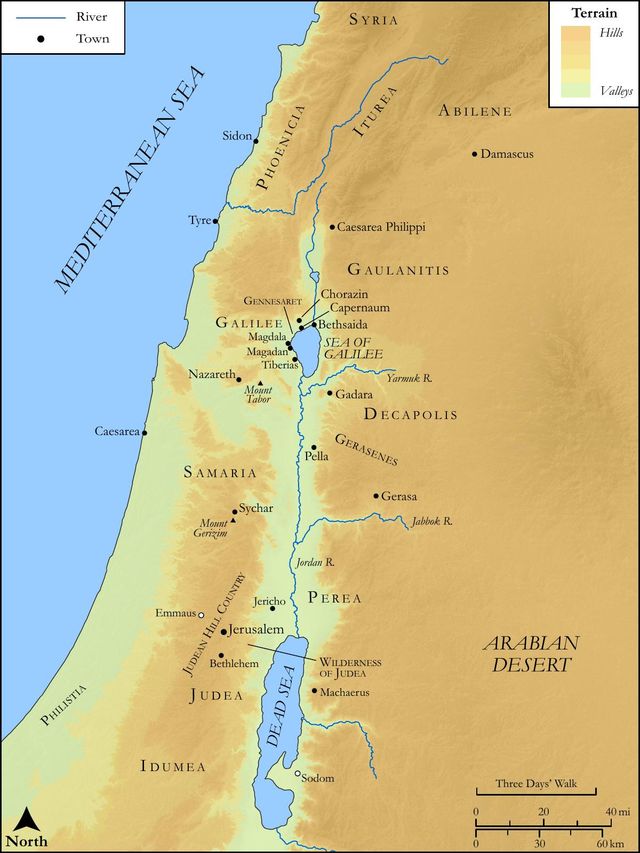
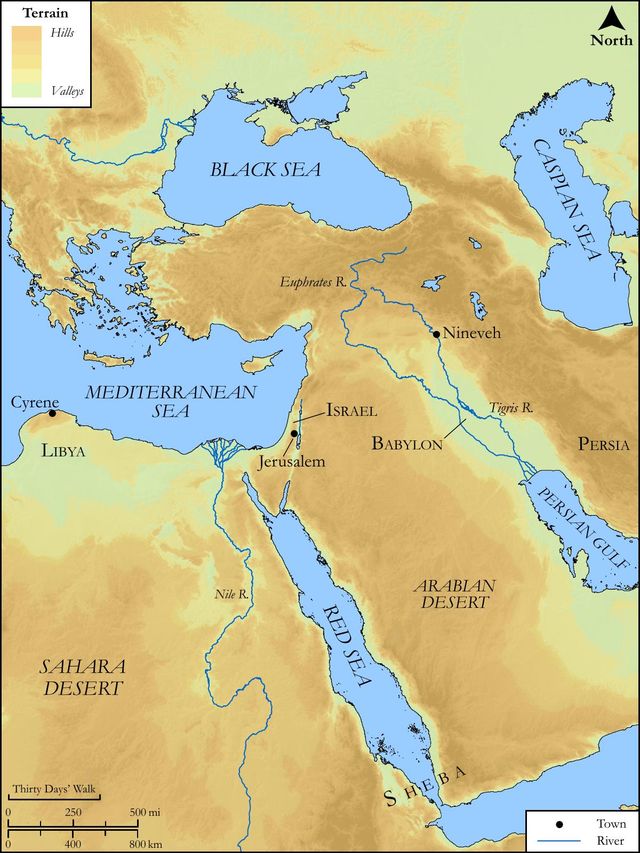
Study this verse
Public-domain commentary
Matthew Henry
From his Commentary on the Whole Bible. Henry comments on passages, not single verses — this entry covers Matthew 12:1–13. His four-level outline is real structure in the source text, so it is rendered as structure.
The Jewish teachers had corrupted many of the commandments, by interpreting them more loosely than they were intended; a mistake which Christ discovered and rectified (ch. 5) in his sermon on the mount: but concerning the fourth commandment, they had erred in the other extreme, and interpreted it too strictly. Note, it is common for men of corrupt minds, by their zeal in rituals, and the external services of religion, to think to atone for the looseness of their morals. But they are cursed who add to, as well as they who take fRom. the words of this book, Rev 22:16, Rev 22:19; Pro 30:6.
Now that which our Lord Jesus here lays down is, that the works of necessity and mercy are lawful on the sabbath day, which the Jews in many instances were taught to make a scruple of. Christ's industrious explanation of the fourth commandment, intimates its perpetual obligation to the religious observation of one day in seven, as a holy sabbath. He would not expound a law that was immediately to expire, but doubtless intended hereby to settle a point which would be of use to his church in all ages; and so it is to teach us, that our Christian sabbath, though under the direction of the fourth commandment, is not under the injunctions of the Jewish elders.
It is usual to settle the meaning of a law by judgments given upon cases that happen in fact, and in like manner is the meaning of this law settled. Here are two passages of story put together for this purpose, happening at some distance of time from each other, and of a different nature, but both answering this intention.
I.Christ, by justifying his disciples in plucking the ears of corn on the sabbath-day, shows that works of necessity are lawful on that day. Now here observe,
1.What it was that the disciples did. They were following their Master one sabbath day through a corn-field; it is likely they were going to the synagogue (Mat 12:9), for it becomes not Christ's disciples to take idle walks on that day, and they were hungry; let it be no disparagement to our Master's house-keeping. But we will suppose they were so intent upon the sabbath work, that they forgot to eat bread; had spent so much time in their morning worship, that they had no time for their morning meal, but came out fasting, because they would not come late to the synagogue. Providence ordered it that they went through the corn, and there they were supplied. Note, God has many ways of bringing suitable provision to his people when they need it, and will take particular care of them when they are going to the synagogue, as of old for them that went up to Jerusalem to worship (Psa 84:6, Psa 84:7), for whose use the rain filled the pools: while we are in the way of duty, Jehovah-jireh, let God alone to provide for us. Being in the corn-fields, they began to pluck the ears of corn; the law of God allowed this (Deu 23:25), to teach people to be neighbourly, and not to insist upon property in a small matter, whereby another may be benefited. This was but slender provision for Christ and his disciples, but it was the best they had, and they were content with it. The famous Mr. Ball, of Whitmore, used to say he had two dishes of meat to his sabbath dinner, a dish of hot milk, and a dish of cold, and he had enough and enough.
2.What was the offence that the Pharisees took at this. It was but a dry breakfast, yet the Pharisees would not let them eat that in quietness. They did not quarrel with them for taking another man's corn (they were no great zealots for justice), but for doing it on the sabbath day; for plucking and rubbing the ears of corn of that day was expressly forbidden by the tradition of the elders, for this reason, because it was a kind of reaping.
Note, It is no new thing for the most harmless and innocent actions of Christ's disciples to be evil spoken of, and reflected upon as unlawful, especially by those who are zealous for their own inventions and impositions. The Pharisees complained of them to their Master for doing that which it was not lawful to do. Note, Those are no friends to Christ and his disciples, who make that to be unlawful which God has not made to be so.
3.What was Christ's answer to this cavil of the Pharisees. The disciples could say little for themselves, especially because those who quarrelled with them seemed to have the strictness of the sabbath sanctification on their side; and it is safest to err on that hand: but Christ came to free his followers, not only from the corruptions of the Pharisees, but from their unscriptural impositions, and therefore has something to say for them, and justifies what they did, though it was a transgression of the canon.
(1.)He justifies them by precedents, which were allowed to be good by the Pharisees themselves.
[1.]He urges an ancient instance of David, who in a case of necessity did that which otherwise he ought not to have done (Mat 12:3, Mat 12:4); "Have ye not read the story (Sa1 21:6) of David's eating the show-bread, which by the law was appropriated to the priest?" (Lev 24:5-9). It is most holy to Aaron and his sons; and (Exo 29:33) a stranger shall not eat of it; yet the priest gave it to David and his men; for though the exception of a case of necessity was not expressed, yet it was implied in that and all other ritual institutions. That which bore out David in eating the show-bread was not his dignity (Uzziah, that invaded the priest's office in the pride of his heart, though a king, was struck with a leprosy for it, Ch2 26:16, etc.), but his hunger. The greatest shall not have their lusts indulged, but the meanest shall have their wants considered. Hunger is a natural desire which cannot be mortified, but must be gratified, and cannot be put off with any thing but meat; therefore we say, It will break through stone walls. Now the Lord is for the body, and allowed his own appointment to be dispensed with in a case of distress; much more might the tradition of the elders be dispensed with. Note, That may be done in a case of necessity which may not be done at another time; there are laws which necessity has not, but it is a law to itself. Men do not despise, but pity, a thief that steals to satisfy his soul when he is hungry, Pro 6:30.
[2.]He urges a daily instance of the priests, which they likewise read in the law, and according to which was the constant usage, Mat 12:5. The priests in the temple did a great deal of servile work on the sabbath day; killing, flaying, burning the sacrificed beasts, which in a common case would have been profaning the sabbath; and yet it was never reckoned any transgression of the fourth commandment, because the temple-service required and justified it. This intimates, that those labours are lawful on the sabbath day which are necessary, not only to the support of life, but to the service of the day; as tolling a bell to call the congregation together, travelling to church, and the like. Sabbath rest is to promote, not to hinder, sabbath worship.
(2.)He justifies them by arguments, three cogent ones.
[1.]In this place is one greater than the temple, Mat 12:6. If the temple-service would justify what the priests did in their ministration, the service of Christ would much more justify the disciples in what they did in their attendance upon him. The Jews had an extreme veneration for the temple: it sanctified the gold; Stephen was accused for blaspheming that holy place (Act 6:13); but Christ, in a corn-field, was greater than the temple, for in him dwelt not the presence of God symbolically, but all the fulness of the Godhead bodily. Note, If whatever we do, we do it in the name of Christ, and as unto him, it shall be graciously accepted of God, however it may be censured and cavilled at by men.
[2.]God will have mercy and not sacrifice, Mat 12:7. Ceremonial duties must give way to moral, and the natural, royal law of love and self-preservation must take place of ritual observances. This is quoted from Hos 6:6. It was used before, Mat 9:13, in vindication of mercy to the souls of men; here, of mercy to their bodies. The rest of the sabbath was ordained for man's good, in favour of the body, Deu 5:14. Now no law must be construed so as to contradict its own end. If you had known what this means, had known what it is to be of a merciful disposition, you would have been sorry that they were forced to do this to satisfy their hunger, and would not have condemned the guiltless. Note, First, Ignorance is the cause of our rash and uncharitable censures of our brethren. Secondly, It is not enough for us to know the scriptures, but we must labour to know the meaning of them. Let him that readeth understand. Thirdly, Ignorance of the meaning of the scripture is especially shameful in those who take upon them to teach others.
[3.]The Son of man is Lord even of the sabbath day, Mat 12:8. That law, as all the rest, is put into the hand of Christ, to be altered, enforced, or dispensed with, as he sees good. It was by the Son that God made the world, and by him he instituted the sabbath in innocency; by him he gave the ten commandments at mount Sinai, and as Mediator he is entrusted with the institution of ordinances, and to make what changes he thought fit; and particularly, as being Lord of the sabbath, he was authorized to make such an alteration of that day, as that it should become the Lord's day, the Lord Christ's day. And if Christ be the Lord of the sabbath, it is fit the day and all the work of it should be dedicated to him. By virtue of this power Christ here enacts, that works of necessity, if they be really such, and not a pretended and self-created necessity, are lawful on the sabbath day; and this explication of the law plainly shows that it was to be perpetual. Exceptio firmat regulam - The exception confirms the rule.
Christ having thus silenced the Pharisees, and got clear of them (Mat 12:9), departed, and went into their synagogue, the synagogue of these Pharisees, in which they presided, and toward which he was going, when they picked this quarrel with him. Note, First, We must take heed lest any thing that occurs in our way to holy ordinances unfit us for, or divert us fRom. our due attendance on them. Let us proceed in the way of our duty, notwithstanding the artifices of Satan, who endeavours, by the perverse disputings of men of corrupt minds, and many other ways, to ruffle and discompose us. Secondly, We must not, for the sake of private feuds and personal piques, draw back from public worship. Though the Pharisees had thus maliciously cavilled at Christ, yet he went into their synagogue. Satan gains this point, if, by sowing discord among brethren, he prevail to drive them, or any of them, from the synagogue, and the communion of the faithful.
II.Christ, by healing the man that had the withered hand on the sabbath day, shows that works of mercy are lawful and proper to be done on that day. The work of necessity was done by the disciples, and justified by him; the work of mercy was done by himself; the works of mercy were his works of necessity; it was his meat and drink to do good. I must preach, says he, Luk 4:43. This cure is recorded for the sake of the time when it was wrought, on the sabbath.
Here is, 1. The affliction that this poor man was in; his hand was withered so that he was utterly disabled to get his living by working with his hands. St. Jerome says, that the gospel of Matthew in Hebrew, used by the Nazarenes and Ebionites, adds this circumstance to this story of the man with the withered hand, that he was Caementarius - a bricklayer, and applied himself to Christ thus; "Lord, I am a bricklayer, and have got my living by my labour (manibus victum quaeritans); I beseech thee, O Jesus, restore me the use of my hand, that I may not be obliged to beg my bread" (ne turpiter mendicem cibos). Hieron. in loc. This poor man was in the synagogue. Note, Those who can do but little, or have but little to do for the world, must do so much the more for their souls; as the rich, the aged, and the infirm.
2.A spiteful question which the Pharisees put to Christ upon the sight of this man. They asked him, saying, Is it lawful to heal? We read not here of any address this poor man made to Christ for a cure, but they observed Christ began to take notice of him, and knew it was usual for him to be found of those that sought him not, and therefore with their badness they anticipated his goodness, and started this case as a stumbling-block in the way of doing good; Is it lawful to heal on the sabbath-day? Whether it was lawful for physicians to heal on that day or not, which was the thing disputed in their books, one would think it past dispute, that it is lawful for prophets to heal, for him to heal who discovered a divine power and goodness in all he did of this kind, and manifested himself to be sent of God. Did ever any ask, whether it is lawful for God to heal, to send his word and heal? It is true, Christ was now made under the law, by a voluntary submission to it, but he was never made under the precepts of the elders. Is it lawful to heal? To enquire into the lawfulness and unlawfulness of actions is very good, and we cannot apply ourselves to any with such enquiries more fitly than to Christ; but they asked here, not that they might be instructed by him, but that they might accuse him. If he should say that it was lawful to heal on the sabbath day, they would accuse him of a contradiction to the fourth commandment; to so great a degree of superstition had the Pharisees brought the sabbath rest, that, unless in peril of life, they allowed not any medicinal operations on the sabbath day. If he should say that it was not lawful, they would accuse him of partiality, having lately justified his disciples in plucking the ears of corn on that day.
3.Christ's answer to this question, by way of appeal to themselves, and their own opinion and practice, Mat 12:11, Mat 12:12. In case a sheep (though but one, of which the loss would not be very great) should fall into a pit on the sabbath day, would they not lift it out? No doubt they might do it, the fourth commandment allows it; they must do it, for a merciful man regardeth the life of his beast, and for their parts they would do it, rather than lose a sheep; does Christ take care for sheep? Yes, he does; he preserves and provides for both man and beast. But here he says it for our sakes (Co1 9:9, Co1 9:10), and hence argues, How much then is a man better than a sheep? Sheep are not only harmless but useful creatures, and are prized and tended accordingly; yet a man is here preferred far before them. Note, Man, in respect of his being, is a great deal better, and more valuable, than the best of the brute creatures: man is a reasonable creature, capable of knowing, loving, and glorifying God, and therefore is better than a sheep. The sacrifice of a sheep could therefore not atone for the sin of a soul. They do not consider this, who are more solicitous for the education, preservation, and supply of their horses and dogs than of God's poor, or perhaps their own household.
Hence Christ infers a truth, which, even at first sight, appears very reasonable and good-natured; that it is lawful to do well on the sabbath days; they had asked, Is it lawful to hear? Christ proves it is lawful to do well, and let any one judge whether healing, as Christ healed, was not doing well. Note, There are more ways of doing well upon sabbath days, than by the duties of God's immediate worship; attending the sick, relieving the poor, helping those who are fallen into sudden distress, and call for speedy relief; this is doing good: and this must be done from a principle of love and charity, with humility and self-denial, and a heavenly frame of spirit, and this is doing well, and it shall be accepted, Gen 4:7.
4.Christ's curing of the man, notwithstanding the offence which he foresaw the Pharisees would take at it, Mat 12:13. Though they could not answer Christ's arguments, they were resolved to persist in their prejudice and enmity; but Christ went on with his work notwithstanding. Note, Duty is not to be left undone, nor opportunities of doing good neglected, for fear of giving offence. Now the manner of the cure is observable; he said to the man, "Stretch forth thy hand, exert thyself as well as thou canst;" and he did so, and it was restored whole. This, as other cures Christ wrought, had a spiritual significancy.
(1.)By nature our hands are withered, we are utterly unable of ourselves to doing any thing that is good.
(2.)It is Christ only, by the power of his grace, that cures us; he heals the withered hand by putting life into the dead soul, works in us both to will and to do.
(3.)In order to our cure, he commands us to stretch forth our hands, to improve our natural powers, and do as well as we can; to stretch them out in prayer to God, to stretch them out to lay hold on Christ by faith, to stretch them out in holy endeavours. Now this man could not stretch forth his withered hand of himself, any more than the impotent man could arise and carry his bed, or Lazarus come forth out of his grave; yet Christ bid him do it. God's commands to us to do the duty which of ourselves we are not able to do are no more absurd or unjust, than this command to the man with the withered hand, to stretch it forth; for with the command, there is a promise of grace which is given by the word. Turn ye at my reproof, and I will pour out my Spirit, Pro 1:23. Those who perish are as inexcusable as this man would have been, if he had not attempted to stretch forth his hand, and so had not been healed. But those who are saved have no more to boast of than this man had of contributing to his own cure, by stretching forth his hand, but are as much indebted to the power and grace of Christ as he was.
Historical interpretation
Nine Centuries of Reception
13 surviving comments on this verse. Each one is dated, so this reads as a timeline rather than a list.
Select a marker to jump to its quote. Markers stagger vertically where authors wrote within a few decades of each other.
We must first point out the beginning of this passage: “At that time Jesus went through the standing grain.” This is set at the time he gave thanks to God the Father for having given salvation to the people. The same meaning is given to what went before (his thanksgiving) and what came after (his walking in the fields). Note the relationships. Spiritually viewed, the land is the world, the sabbath is the day of rest, and the crop is the effect of future believers upon the harvest. Therefore, having gone out to a field on the sabbath, the day of rest under God’s law, he proceeded into this world, to visiting the crop, the sown field of the human race. And since hunger is the craving for human salvation, the disciples hasten to pluck off the ears of corn, namely, the holy people, to get their fill of salvation. But the grain is not yet ready for human consumption. Rather, the crop upholds faith in the events to come. The added power of words completes the sacrament that implies both hunger and fullness.
Figuratively; First consider that this discourse was held at that time, namely, when He had given thanks to the Father for giving salvation to the Gentiles. The field is the world, the sabbath is rest, the corn the ripening of them that believe for the harvest; thus His passing through the corn field on the sabbath, is the coming of the Lord into the world in the rest of the Law; the hunger of the disciples is their desire for the salvation of men.
The Pharisees, who thought that the key of the kingdom of heaven was in their hands, accused the disciples of doing what was not lawful to do; whereon the Lord reminded them of deeds in which, under the guise of facts, a prophecy was concealed; and that He might show the power of all things, He further added, that it contained the form of that work which was to be, Had ye known what that meaneth, I will have mercy; for the work of our salvation is not in the sacrifice of the Law, but in mercy; and the Law having ceased, we are saved by the mercy of God. Which gift if they had understood they would not have condemned the innocent, that is His Apostles, whom in their jealousy they were to accuse of having transgressed the Law, where the old sacrifices having ceased, the new dispensation of mercy came through them to the aid of all.
(Hon. xxxix.) Why then did He lead them through the corn fields on the sabbath, seeing He knew all things, unless He desired to break the sabbath? This he desired indeed, but not absolutely, therefore He broke it not without cause, but furnished a sufficient reason; so that He both caused the Law to cease, and yet offended not against it. Thus in order to soften the Jews, He here introduces a natural necessity; this is what is said, And his disciples being an hungred, began to pluck the ears of corn, and to eat. Although in things which are manifestly sinful, there can be no excuse, he who kills another cannot plead rage, nor he who commits adultery, lust, or any other cause; yet here saying that the disciples were hungry, He delivers them from all accusation.
Here admire the disciples, who are so limited in their desires, that they have no care of the things of the body, but despise the support of the flesh; they are assailed by hunger, and yet they go not away from Christ; for had not they been hard pressed by hunger, they would not have done thus. What the Pharisees said to this is added, The Pharisees seeing it said unto Him, Behold, thy disciples do what is not lawful to do on the sabbath.
To clear His disciples, He brings forward the instance of David, whose glory as a Prophet was great among the Jews. Yet they could not here answer that this was lawful for him, because he was a Prophet; for it was not Prophets, but Priests only who might eat. And the greater was he who did this, the greater is the defence of the disciples; yet though David was a Prophet, they that were with him were not.
But some one will say, How is this instance applicable to the question in hand? For David did not transgress the sabbath. Herein is shown the wisdom of Christ, that He brings forward an instance stronger than the sabbath. For it is by no means the same thing to violate the sabbath, and to touch that sacred table, which is lawful for none. And again, He adds yet another answer, saying, Or have ye not read in the Law, that on the sabbath days the Priests in the temple profane the sabbath, and are blameless?
But that you should not say to me, that to find an instance of another's sin is not to excuse our own—indeed where the thing done and not the doer of it is accused, we excuse the thing done. But this is not enough, He said what is yet more, that they are blameless. But see how great things He brings in; first, the place, in the Temple; secondly, the time, on the sabbath; the setting aside the Law, in the word profane, not merely break; and that they are not only free from punishment but from blame; and are blameless. And this second instance is not like the first which He gave respecting David; for that was done but once, by David who was not a Priest, and was a case of necessity; but this second is done every sabbath, and by the Priests, and according to the Law. So that not only by indulgence, as the first case would establish, but by the strict law the disciples are to be held blameless. But are the disciples Priests? yea, they are yet greater than Priests, forasmuch as He was there who is the Lord of the Temple, who is the reality and not the type; and therefore it is added, But I say unto you, one greater than the Temple is here.
And because what He had said seemed hard to those that heard it, He again exhorts to mercy, introducing His discourse with emphasis, saying, But had ye known what that meaneth, I will have mercy and not sacrifice, ye would never have condemned the innocent.
Observe again how in leading the discourse towards an apology for them, He shows His disciples to be above the need of any apology, and to be indeed blameless, as He had said above of the Priests. And He adds yet another plea which clears them of blame, For the Son of Man is Lord also of the sabbath.
"At that time Jesus went on the Sabbath day through the corn; and His disciples were a hungered, and began to pluck the ears of corn, and to eat." But Luke saith, "On a double Sabbath." Now what is a double Sabbath? When the cessation from toil is twofold, both that of the regular Sabbath, and that of another feast coming upon it. For they call every cessation from toil, a sabbath.
But why could He have led them away from it, who foreknew all, unless it had been His will that the Sabbath should be broken? It was His will indeed, but not simply so; wherefore He never breaks it without a cause, but giving reasonable excuses: that He might at once bring the law to an end, and not startle them. But there are occasions on which He even repeals it directly, and not with circumstance: as when He anoints with the clay the eyes of the blind man; as when He saith, "My Father worketh hitherto, and I work." And He doth so, by this to glorify His own Father, by the other to soothe the infirmity of the Jews. At which last He is laboring here, putting forward as a plea the necessity of nature; although in the case of acknowledged sins, that could not of course ever be an excuse. For neither may the murderer make his anger a plea, nor the adulterer allege his lust, no, nor any other excuse; but here, by mentioning their hunger, He freed them from all blame.
But do thou, I pray thee, admire the disciples, how entirely they control themselves, and make no account of the things of the body, but esteem the table of the flesh a secondary thing, and though they have to struggle with continual hunger, do not even so withdraw themselves. For except hunger had sorely constrained them, they would not have done so much as this.
(Chapter 12, Verse 1) At that time, Jesus went through the grainfields on the Sabbath; and His disciples were hungry, and began to pluck heads of grain and to eat. In another Gospel, we also read that because of their great need, they did not even have a place to eat, and therefore they were hungry like men (Mark 2 and Luke 6). The fact that they rubbed the heads of grain with their hands and found solace in hunger is an indication of a more austere life; they sought simple food, not prepared feasts.
As we read in another Evangelist, they had no opportunity of taking food because of the thronging of the multitude, and therefore they hungred as men. That they rub the ears of corn in their hands, and with them satisfy themselves, is a proof of an austere life, and of men who needed not prepared meats, but sought only simple food.
Observe, that the first Apostles of the Saviour broke the letter of the sabbath, contrary to the opinion of the Ebionitesa, who receive the other Apostles, but reject Paul as a transgressor of the Law. Then it proceeds to their excuse; But he said unto them, Have ye not read what David did, when he was an hungred? To refute the false accusation of the Pharisees, He calls to mind the ancient history, that David flying from Saul came to Nobba, and being entertained by Achimelech the Priest, asked for food; (1 Sam. 21.) he having no common bread, gave him the consecrated loaves, which it was not lawful for any to eat, but the Priests only and Levites; esteeming it a better action to deliver men from the danger of famine than to offer sacrifice to God; for the preservation of man is a sacrifice acceptable to God. Thus then the Lord meets their objection, saying, If David be a holy man, and if you blame not the high-priest Achimelech, but consider their excuse for their transgression of the Law to be valid, and that was hunger; how do ye not approve in the Apostles the same plea which you approve in others? Though even here there is much difference. These rub ears of corn in their hands on the sabbath, those ate the Levitical bread, and over and above the solemn sabbath it was the season of new moon, during which when sought for at the banquet he fled from the royal palace.
Observe that neither David nor his servants received the loaves of show-bread, before they had made answer that they were pure from women.
As though He had said, Ye bring complaints against my disciples, that on the sabbath they rub ears of corn in their hands, under stress of hunger, and ye yourselves profane the sabbath, slaying victims in the temple, killing bulls, burning holocausts on piles of wood; also, on the testimony of another Gospel (John 7:23.), ye circumcise infants on the sabbath; so that in keeping one law, ye break that concerning the sabbath. But the laws of God are never contrary one to another; wisely therefore, wherein His disciples might be accused of having transgressed them, He shows that therein they followed the examples of Achimelech and David; and this their pretended charge of breaking the sabbath He retorts truly, and not having the plea of necessity, upon those who had brought the accusation.
The word Hic is not a pronoun, but an adverb of place here, for that place is greater than the Temple which contains the Lord of the Temple.
What I will have mercy, and not sacrifice, signifies, we have explained above. The words, Ye mould never have condemned the innocent, are to be referred to the Apostles, and the meaning is, If ye allow the mercy of Achimelech, in that he refreshed David when in danger of famishing, why do ye condemn My disciples?
(De Cons. Ev. ii. 34.) This which here follows is related both by Mark and Luke, without any question of discrepancy; indeed they do not say, At that time, so that Matthew has here perhaps preserved the order of time, they that of their recollection; unless we take the words in a wider sense, At that time, that is, the time in which these many and divers things were done, whence we may conceive that all these things happened after the death of John. For he is believed to have been beheaded a little after he sent his disciples to Christ. So that when he says at that time, he may mean only an indefinite time.
(De Op. Monach. 23.) The Jews rather charged the Lord's disciples with the breach of the sabbath than with theft; because it was commanded the people of Israel in the Law (Deut. 23:25.), that they should not lay hold of any as a thief in their fields, unless he sought to carry ought away with him; but if any touched only what he needed to eat, him they suffered to depart with impunity free.
(cont. Faust. xvi. 28.) He did not forbid His disciples to pluck the ears of corn on the sabbath, that so He might convict both the Jews who then were, and the Manichæans who were to come, who will not pluck up a herb lest they should be committing a murder.
(Quæst. Ev. i. 2.) But no man passes into the body of Christ, until he has been stripped of his fleshly raiment; according to that of the Apostle, Put ye off the old man. (Eph. 4:22.)
He calls Himself the Son of Man, and the meaning is, He whom ye suppose a mere man is God, the Lord of all creatures, and also of the sabbath, and He has therefore power to change the law after His pleasure, because He made it.
They pluck the ears of corn when they withdraw men from devotion to the world; they rub them in their hands when they tear away their hearts from the lusts of the flesh; they eat the grain when they transfer such as are amended into the body of the Church.
This they do on the sabbath, that is in the hope of eternal rest, to which they invite others. Also they walk through the corn fields with the Lord, who have delight in meditating on the Scriptures; they are hungry while they desire to find the bread of life, that is the love of God, in them; they pluck the ears of corn and rub them in their hands, while they examine the testimonies to discover what lies hid under the letter, and this on the sabbath, that is, while they are free from disquieting thoughts.
(ord.) Having related the preaching together with the miracles of one year before John's enquiry, He passes to those of another year, namely after the death of John, when Jesus is already in all things spoken against, and hence it is said, At that time Jesus passed through the corn fields on the sabbath day.
Continue studying Matthew 12:1 across the web’s major study libraries — every link below opens this exact verse, chapter, or book on the destination site.
Read & Compare
 BibleGatewayThis verse in more than 200 translations and 70 languages.
 Bible.comThe YouVersion reader — hundreds of translations, reading plans, and highlights.
 ESV.orgCrossway's official English Standard Version reader.
 NET BibleThe NET translation with 60,000+ translators' notes on every rendering decision.
 STEP BibleTyndale House's free study tool — original text, vocabulary, and scholarly resources.
 BibliaLogos Bible Software's free web reader.
 USCCBThe New American Bible (Revised Edition) with the U.S. bishops' study notes.
Commentaries
 BibleHub CommentariesDozens of classic commentaries on this verse, gathered on one page.
 StudyLightMore than 100 commentary sets — the largest collection on the web.
 BibleRefPlain-English commentary on what this verse means, verse by verse.
 Enduring WordDavid Guzik's free commentary on this chapter, widely used by Bible teachers.
 Bible Study ToolsVerse commentary alongside Greek and Hebrew study aids.
Original Language & Research
- BibleHub InterlinearThe verse word by word — original language, transliteration, and English.
- BibleHub LexiconEvery word's original-language definition and Strong's entry.
 Blue Letter BibleDeep-study tools — Strong's numbers, concordance, and word studies.
 CNTR CollationThe earliest Greek manuscripts of this verse, collated letter by letter.
Sermons, Hymns & Audio


TrulyRandomVerse is not affiliated with these sites and doesn’t control their content. They’re linked because they’re genuinely useful.
Summary
Matthew 12:1 initiates a pivotal confrontation between Jesus and the Pharisees, setting the stage for a profound discussion on the true meaning and purpose of the Sabbath. As Jesus and His disciples travel through a grain field on the Sabbath, the disciples, driven by hunger, pluck and eat ears of grain. This seemingly innocuous act, permitted by Mosaic Law for immediate consumption, is interpreted by the rigid Pharisaic tradition as a violation of their expanded Sabbath regulations, thus sparking a theological and practical dispute about human need versus legalistic adherence.
Context
ShowHideLiterary Context
This verse serves as a crucial transition point in Matthew's Gospel. Following Jesus' powerful teachings and invitations to find rest in Him in Matthew 11:28-30, Chapter 12 immediately plunges into a series of controversies with the religious authorities, particularly the Pharisees. This incident regarding the Sabbath is the first of several encounters that highlight the growing tension between Jesus' kingdom ethic and the established religious system. It directly precedes Jesus' declaration of His authority over the Sabbath in Matthew 12:8 and the subsequent healing of a man with a withered hand on the Sabbath, further escalating the conflict.
Historical & Cultural Context
The Sabbath, commanded in Exodus 20:8-11 and Deuteronomy 5:12-15, was a cornerstone of Jewish life, a day of rest consecrated to God. While the Mosaic Law provided the foundational principles, over centuries, Jewish religious leaders, especially the Pharisees, developed an intricate body of oral traditions (Halakha) that meticulously defined what constituted "work" on the Sabbath. These traditions often went far beyond the biblical text, creating a burdensome system of rules. Although Deuteronomy 23:25 permitted travelers to pluck grain from a neighbor's field for immediate consumption, the Pharisees considered the act of plucking and rubbing the grain as forms of harvesting and threshing, thereby violating their expanded Sabbath regulations.
Key Themes
ShowHideMatthew 12:1 introduces several critical themes that resonate throughout Jesus' ministry. Firstly, it highlights the tension between Human Need vs. Legalism. The disciples' hunger, a basic human necessity, is pitted against the Pharisees' rigid, uncompassionate application of religious rules. This sets the stage for Jesus' subsequent teaching that the Sabbath was made for humanity, not humanity for the Sabbath. Secondly, the incident subtly introduces the theme of Jesus' Authority. While not explicitly stated in this verse, the ensuing dialogue in Matthew 12:2-8 reveals Jesus' claim as "Lord even of the sabbath day," asserting His ultimate sovereignty over religious traditions and interpretations. Finally, it underscores the theme of the Spirit of the Law vs. the Letter of the Law, foreshadowing Jesus' teaching that God desires mercy, not sacrifice (Matthew 12:7), implying that the true purpose of God's commands is compassion and human flourishing, not burdensome adherence to man-made regulations.
Exposition and Analysis
ShowHideKey Word Analysis
ShowHideFrom the Hebrew Shabbat, meaning "rest" or "cessation." It refers to the weekly day of repose from secular work, consecrated to God as commanded in the Ten Commandments, and signifies a time for worship and spiritual renewal. The controversy in this passage arises from the Pharisees' hyper-specific and burdensome interpretations of what constituted "rest" on this day.
To famish, either absolutely or comparatively; figuratively, to crave. In this context, it denotes a literal physical hunger experienced by the disciples, highlighting a basic human need. This physical state serves as the immediate catalyst for their actions and becomes a central point in Jesus' defense against the Pharisees' accusations, emphasizing compassion over strict legalism.
To pull off. This action refers to stripping the ears of grain from their stalks, which, while permitted for immediate consumption by Mosaic Law (Deuteronomy 23:25), was interpreted by the Pharisees as a form of harvesting, thus violating their Sabbath regulations. The specific verb highlights the simple, direct nature of the disciples' action, which the Pharisees then categorized as a prohibited labor.
Verse Breakdown
ShowHide"¶ At that time Jesus went on the sabbath day through the corn;"
This opening clause meticulously sets the scene, specifying the exact timing ("At that time," linking to the preceding narrative of Jesus' ministry), the day of the week (the "sabbath day," which immediately signals potential conflict given its strict observance), and the location ("through the corn," a grain field). Jesus' presence in this setting on the Sabbath is not accidental but deliberately places Him in a context where His actions and teachings will challenge prevailing religious norms.
"and his disciples were an hungred,"
This phrase provides the crucial motivation for the disciples' subsequent actions. Their hunger is presented as a fundamental human need, a natural and understandable condition. This detail is vital because Jesus will later use this human need to justify their actions and critique the Pharisees' lack of compassion.
"and began to pluck the ears of corn, and to eat."
This final clause describes the specific actions that trigger the Pharisaic confrontation. The disciples' "plucking" and "eating" of the grain are simple acts of sustenance. However, within the elaborate framework of Pharisaic Sabbath law, these actions were deemed equivalent to harvesting and threshing, forbidden forms of labor. This seemingly minor act thus becomes the flashpoint for a major theological dispute about the interpretation and purpose of God's law.
Literary Devices
ShowHideMatthew 12:1 employs several literary devices to set the stage for the ensuing conflict. Juxtaposition is evident in the immediate contrast between the disciples' basic human need ("were an hungred") and the rigid, man-made interpretations of the Sabbath law. This tension between compassion and legalism is central to the passage. The verse also functions as Foreshadowing, hinting at the deeper theological debates that will unfold. The seemingly simple act of plucking grain sets the scene for Jesus to reveal His authority over the Sabbath and challenge the Pharisees' understanding of God's heart. Furthermore, the "cornfield" itself, a place of sustenance, can be seen as a subtle Symbolism of life and provision, where the spiritual principles of God's law intersect with the practical realities of human existence.
Theological and Thematic Connections
ShowHideMatthew 12:1 is not merely a historical account but a profound theological statement on the nature of God's law and the heart of true religion. It highlights the recurring biblical tension between external observance and internal disposition, between the letter of the law and its spirit. The disciples' hunger underscores that God's laws, including the Sabbath, were given for human flourishing and well-being, not to be burdensome or to stifle basic human needs. This incident serves as a prelude to Jesus' broader teaching that mercy and compassion take precedence over rigid ritualism, revealing a God who prioritizes relationship and human dignity above all else. It challenges us to examine our own adherence to rules and traditions, ensuring that they align with God's loving character rather than becoming ends in themselves.
Reflection and Application
ShowHideMatthew 12:1 offers a timeless challenge to believers regarding the balance between adherence to religious principles and the exercise of compassion. It calls us to reflect on whether our understanding and practice of faith prioritize human need and the spirit of God's commands over rigid, unyielding legalism. The disciples' hunger reminds us that true spirituality is not divorced from the practical realities of life, nor should it lead to a lack of empathy for others' struggles. This passage encourages us to cultivate a heart that seeks to understand the underlying purpose of God's laws—which is always love—and to apply them with wisdom, grace, and mercy. It cautions against the dangers of becoming so focused on external regulations that we lose sight of the greater principles of justice, compassion, and faithfulness that God truly desires. We are invited to live out a faith that is both deeply rooted in truth and profoundly compassionate, reflecting the very character of Christ.
Questions for Reflection
ShowHideFAQ
ShowHideWhy was plucking corn on the Sabbath an issue?
ShowHideWhile Deuteronomy 23:25 explicitly permitted travelers to pluck grain from a neighbor's field for immediate consumption (not to carry away), the Pharisees' extensive oral tradition (Halakha) had significantly expanded the definition of "work" forbidden on the Sabbath. They categorized the disciples' actions of plucking the ears of grain as a form of "harvesting" and rubbing them in their hands as a form of "threshing" or "winnowing." These activities were considered prohibited labor under their detailed Sabbath regulations, even though they were for immediate sustenance and not for commercial purposes. Thus, the issue was not a violation of the clear biblical command, but of the Pharisees' man-made interpretations and expansions of that command.
What does "corn" mean in this context?
ShowHideIn the King James Version, "corn" is a generic term referring to any cereal grain, such as wheat, barley, or rye, which were staple crops widely cultivated in ancient Israel. It does not refer to maize, which is what is commonly called "corn" in modern American English and was unknown in the Middle East at that time. Therefore, "plucking the ears of corn" means the disciples were stripping the heads of grain from the stalks of wheat or barley for immediate consumption.
Christ-Centered Fulfillment
ShowHideMatthew 12:1, though seemingly a simple narrative of hunger and a legal dispute, profoundly points to Jesus Christ as the fulfillment of God's law and the ultimate source of spiritual sustenance. The very act of the disciples being "an hungred" foreshadows humanity's deeper spiritual hunger, which only Christ can satisfy. Jesus' subsequent defense, culminating in His declaration as "Lord even of the sabbath day," reveals His divine authority over creation, over the Law, and over human traditions. He does not abolish the Sabbath but fulfills its true intent: a day of rest and renewal found ultimately in Him. Just as He provides physical sustenance to His hungry disciples, He offers Himself as the "bread of life" to a spiritually famished world, inviting all who are weary and heavy-laden to find rest in Him (Matthew 11:28-30). This incident underscores that the true purpose of the Law, perfectly embodied and fulfilled by Christ, is not burdensome legalism but the loving provision for humanity's deepest needs, culminating in salvation and eternal life through Him.