


Luke 6:5
Bible text: King James Version (1769 Blayney text) · Public domain
Bible text: Berean Standard Bible · Public domain
Bible text: American Standard Version (1901) · Public domain
Bible text: World English Bible, Messianic edition · Public domain
Bible text: Geneva Bible (1599) · Public domain
Bible text: Young's Literal Translation · Public domain
- καὶkaiAndG2532CONJConjunction
- ἔλεγενelegenHe was sayingG3004V-IAI-3SVerb Imperfect Active Indicative 3rd Singular
- αὐτοῖςautoisto themG846P-DPMPersonal pronoun Dative Plural Masculine
- ὅτι·hotithatG3754CONJConjunction
- κύριόςkuriosLordG2962N-NSM-TNoun Nominative Singular Masculine Title
- ἐστινestinisG1510V-PAI-3SVerb Present Active Indicative 3rd Singular
- καὶkaialsoG2532CONJConjunction
- τοῦtouof theG3588T-GSNDefinite article Genitive Singular Neuter
- σαββάτουsabbatouSabbathG4521N-GSNNoun Genitive Singular Neuter
- ὁhotheG3588T-NSMDefinite article Nominative Singular Masculine
- υἱὸςhuiosSonG5207N-NSM-TNoun Nominative Singular Masculine Title
- τοῦtou<the>G3588T-GSMDefinite article Genitive Singular Masculine
- ἀνθρώπουanthrōpouof ManG444N-GSM-TNoun Genitive Singular Masculine Title
English is a literal word-by-word gloss of the Greek, not the KJV's wording. Why?
This is the original text the KJV's translators worked from — each Greek word with its own literal English meaning in this verse, prepared by scholars at Tyndale House, Cambridge. The KJV translates whole sentences, not word by word, so its wording differs: one Greek word can become several English words, and the KJV may choose “charity” where the gloss reads “love”. Both are faithful — they answer different questions. For the KJV's own rendering, switch to the KJV text.
Details
See on the biblical-era maps
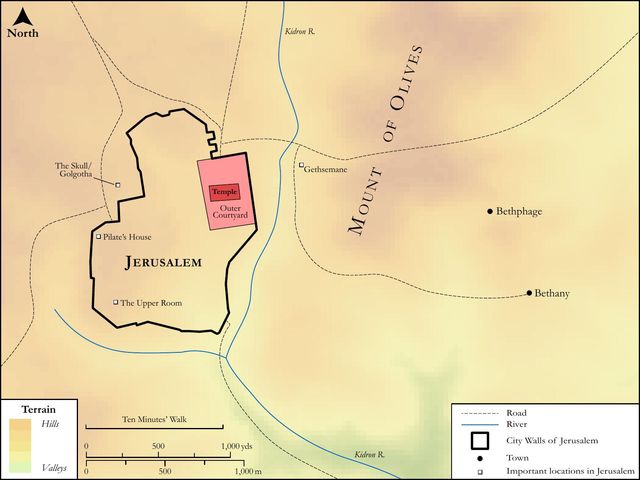
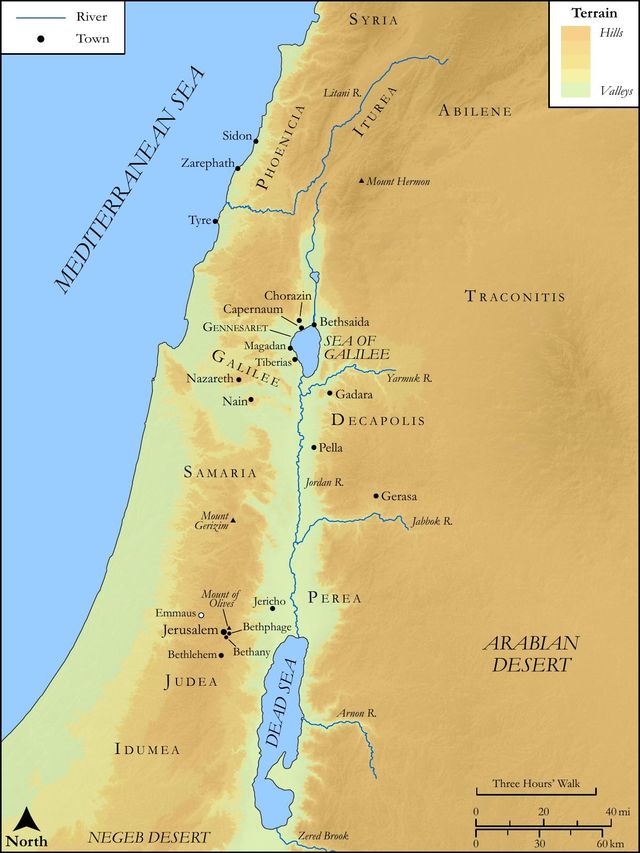
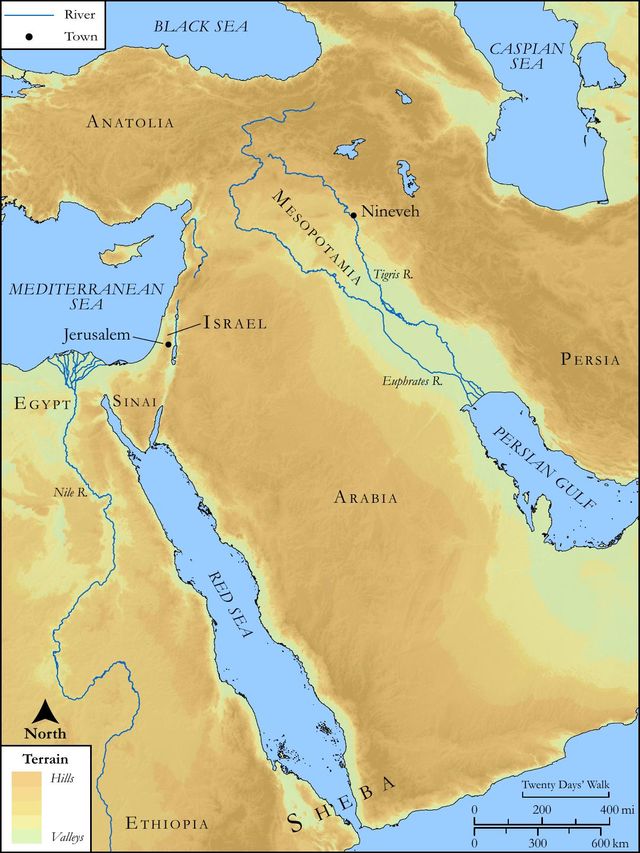
Study this verse
Public-domain commentary
Matthew Henry
From his Commentary on the Whole Bible. Henry comments on passages, not single verses — this entry covers Luke 6:1–11. His two-level outline is real structure in the source text, so it is rendered as structure.
These two passages of story we had both in Matthew and Mark, and they were there laid together (Mat 12:1; Mar 2:23; Mar 3:1), because, though happening at some distance of time from each other, both were designed to rectify the mistakes of the scribes and Pharisees concerning the sabbath day, on the bodily rest of which they laid greater stress and required greater strictness than the Law-giver intended. Here,
I.Christ justifies his disciples in a work of necessity for themselves on that day, and that was plucking the ears of corn, when they were hungry on that day. This story here has a date, which we had not in the other evangelists; it was on the second sabbath after the first (Luk 6:1), that is, as Dr. Whitby thinks is pretty clear, the first sabbath after the second day of unleavened bread, from which day they reckoned the seven weeks to the feast of pentecost; the first of which they called Sabbaton deuteroprōton, the second deuterodeuteron, and so on. Blessed be God we need not be critical in this matter. Whether this circumstance be mentioned to intimate that this sabbath was thought to have some peculiar honour upon it, which aggravated the offence of the disciples, or only to intimate that, being the first sabbath after the offering of the first fruits, it was the time of the year when the corn was nearly ripe, is not material. We may observe,
1.Christ's disciples ought not to be nice and curious in their diet, at any time, especially on sabbath days, but take up with what is easiest got, and be thankful. These disciples plucked the ears of corn, and did eat (Luk 6:1); a little served them, and that which had no delicacy in it.
2.Many that are themselves guilty of the greatest crimes are forward to censure others for the most innocent and inoffensive actions, Luk 6:2. The Pharisees quarrelled with them as doing that which it was not lawful to do on the sabbath days, when it was their own practice to feed deliciously on sabbath days, more than on all other days.
3.Jesus Christ will justify his disciples when they are unjustly censured, and will own and accept of them in many a thing which men tell them it is not lawful for them to do. How well is it for us that men are not to be our judges, and that Christ will be our Advocate!
4.Ceremonial appointments may be dispensed with, in cases of necessity; as the appropriating of the showbread to the priests was dispensed with, when David was by Providence brought into such a strait that he must have either that or none, Luk 6:3, Luk 6:4. And, if God's own appointments might be thus set aside for a greater good, much more may the traditions of men.
5.Works of necessity are particularly allowable on the sabbath day; but we must take heed that we turn not this liberty into licentiousness, and abuse God's favourable concessions and condescensions to the prejudice of the work of the day.
6.Jesus Christ, though he allowed works of necessity on the sabbath day, will notwithstanding have us to know and remember that it is his day, and therefore is to be spent in his service and to his honour (Luk 6:5): The Son of man is Lord also of the sabbath. In the kingdom of the Redeemer, the sabbath day is to be turned into a Lord's day; the property of it is, in some respects, to be altered, and it is to be observed chiefly in honour of the Redeemer, as it had been before in honour of the Creator, Jer 16:14, Jer 16:15. In token of this, it shall not only have a new name, the Lord's day (yet not forgetting the old, for it is a sabbath of rest still) but shall be transferred to a new day, the first day of the week.
II.He justifies himself in doing works of mercy for others on the sabbath day. Observe in this,
1.Christ on the sabbath day entered into the synagogue. Note, It is our duty, as we have opportunity, to sanctify sabbaths in religious assemblies. On the sabbath there ought to be a holy convocation; and our place must not be empty without very good reason.
2.In the synagogue, on the sabbath day, he taught. Giving and receiving instruction from Christ is very proper work for a sabbath day, and for a synagogue. Christ took all opportunities to teach, not only his disciples, but the multitude.
3.Christ's patient was one of his hearers. A man whose right hand was withered came to learn from Christ. Whether he had any expectation to be healed by him does not appear. But those that would be cured by the grace of Christ must be willing to learn the doctrine of Christ.
4.Among those who were the hearers of Christ's excellent doctrine, and the eye-witnesses of his glorious miracles, there were some who came with no other design than to pick quarrels with him, Luk 6:7. The scribes and Pharisees would not, as became generous adversaries, give him fair warning that, if he did heal on the sabbath day, they would construe it into a violation of the fourth commandment, which they ought in honour and justice to have done, because it was a case without precedent (none having ever cured as he did), but they basely watched him, as the lion does his prey, whether he would heal on the sabbath day, that they might find an accusation against him, and surprise him with a prosecution.
5.Jesus Christ was neither ashamed nor afraid to own the purposes of his grace, in the face of those who, he knew, confronted them, Luk 6:8. He knew their faults, and what they designed, and he bade the man rise, and stand forth, hereby to try the patient's faith and boldness.
6.He appealed to his adversaries themselves, and to the convictions of natural conscience, whether it was the design of the fourth commandment to restrain men from doing good on the sabbath day, that good which their hand finds to do, which they have an opportunity for, and which cannot so well be put off to another time (Luk 6:9): Is it lawful to do good, or evil, on the sabbath days? No wicked men are such absurd and unreasonable men as persecutors are, who study to do evil to men for doing good.
7.He healed the poor man, and restored him to the present use of his right hand, with a word's speaking, though he knew that his enemies would not only take offence at it, but take advantage against him for it, Luk 6:10. Let not us be drawn off, either from our duty or usefulness, by the oppression we meet with in it.
8.His adversaries were hereby enraged so much the more against him, Luk 6:11. Instead of being convinced by this miracle, as they ought to have been, that he was a teacher come from God, - instead of being brought to be in love with him as a benefactor to mankind, - they were filled with madness, vexed that they could not frighten him from doing good, or hinder the growth of his interest in the affections of the people. They were mad at Christ, mad at the people, mad at themselves. Anger is a short madness, malice is a long one; impotent malice, especially disappointed malice; such was theirs. When they could not prevent his working this miracle, they communed one with another what they might do to Jesus, what other way they might take to run him down. We may well stand amazed at it that the sons of men should be so wicked as to do thus, and that the Son of God should be so patient as to suffer it.
Historical interpretation
Nine Centuries of Reception
12 surviving comments on this verse. Each one is dated, so this reads as a timeline rather than a list.
Select a marker to jump to its quote. Markers stagger vertically where authors wrote within a few decades of each other.
Wishing, therefore, to initiate them into this meaning of the law by the restoration of the withered hand, He requires, "Is it lawful on the Sabbath-days to do good, or not? to save life, or to destroy it? " In order that He might, whilst allowing that amount of work which He was about to perform for a soul, remind them what works the law of the Sabbath forbade-even human works; and what it enjoined-even divine works, which might be done for the benefit of any soul, He was called "Lord of the Sabbath," because He maintained the Sabbath as His own institution.
“Behold, your disciples are doing what is not lawful to do on the sabbath.” Our Lord had instructed them in advance and trained them in the truth of the just, so that whenever he dispensed from the law fully, they would not be alarmed. His Father had also dispensed from sabbaths to show that the sabbath was of his own making. He was also continuing to dispense from it that he might show that these were discerning remedies, proposed by the skilled physician for the pain which stretches from the sole of the foot to the head.
Not only in the form of expression, but in His very practice and mode of action, did the Lord begin to absolve man from the observance of the old law. Hence it is said, And it came to pass that he went through the corn fields, &c.
But the Lord proves the defenders of the law to be ignorant of what belongs to the law, bringing the example of David; as it follows, And Jesus answering said to them, Have ye not read so much as this, &c.
But herein is a great mystery. For the field is the whole world, the corn is the abundant harvest of the saints in the seed of the human race, the ears of corn are the fruits of the Church, which the Apostles shaking off by their works fed upon, nourishing themselves with our increase, and by their mighty miracles, as it were out of the bodily husks, plucking forth the fruits of the mind to the light of faith.
Now the Jews thought this unlawful on the Sabbath, but Christ by the gift of new grace represented hereby the rest of the law, the work of grace. Wonderfully has He called it the second-first sabbath, not the first-second, because that was loosed from the law which was first, and this is made first which was ordained second. It is therefore called the second sabbath according to number, the first according to the grace of the work. For that sabbath is better where there is no penalty, than that where there is a penalty prescribed. Or this perhaps was first in the foreknowledge of wisdom, and second in the sanction of the ordinance. Now in David escaping with his companions, there was a foreshadowing of Christ in the law, who with His Apostles escaped the prince of the world. But how was it that the Observer and Defender of the law Himself both eat the bread, and gave it to those that were with Him, which no one was allowed to eat but the priests, except that He might show by that figure that the priests' bread was to come over to the use of the people, or that we ought to imitate the priests' life, or that all the children of the Church are priests, for we are anointed into a holy priesthood, offering ourselves a spiritual sacrifice to God. (1 Pet. 2:5.) But if the sabbath was made for men, and the benefit of men required that a man when hungry (having been long without the fruits of the earth) should forsake the abstinence of the old fast, the law is surely not broken but fulfilled.
The Lord Jesus begins to divest man [people] of the observation of the old law and clothes him with the new covering of grace not only through the understanding of words but also through the very usage and appearance of actions. Already on the sabbath, he leads him through the cornfields, that is, he brings him to what abounds in fruit. What the sabbath, the standing corn, and the ears mean to him is no small mystery. The field is this whole world, and the standing corn of the field is an abundant fruitfulness of saints in the sowing of the human race. The ears of the field are the fruits of the church that the apostles scattered with their works and on which they fed, sustaining themselves on our progress. The corn was already standing rich in abundant ears of virtues. The fruits of our merit are compared with these, because they also wither in a shower or are parched by the sun or soaked by the rain or shattered by storms or hoarded by the reapers in the storehouses of the blessed granaries. The earth has already received the Word of God, and the nourishing field sown with heavenly seed has brought forth abundant fruit. The disciples hungered for the salvation of humankind, and by the splendid miracles of their works they plucked as if from the husks of their bodies fruits of their minds to the light of faith. The Jews thought that this was not permitted on the sabbath, but Christ through the gift of new grace designated the idleness of the law as a work of grace.
(cont. Hær. l. i. Hær. xxx. 32.) On the sabbath day then they were seen passing through the corn fields, and eating the corn, showing that the bonds of the sabbath were loosened, when the great Sabbath was come in Christ, Who made us to rest from the working of our iniquities.
(Hom. 39. in Matt.) For there was a double feast; one on the principal sabbath, another on the next solemn day succeeding, which was also called a sabbath.
(ut sup.) And mark, that whenever the Lord speaks for His servants, (i. e. His disciples,) He brings forward servants, as for example David and the Priests; but when for Himself, He introduces His Father; as in that place, My Father worketh hitherto, and I work. (John 5:17.)
(ubi sup.) But Mark declares that He uttered this of our common nature, for He said, The sabbath was made for man, not, man for the sabbath. It is therefore more fitting that the sabbath should be subject to man, than that man should bow his neck to the sabbath.
But the Pharisees and Scribes not knowing the Holy Scriptures agreed together to find fault with Christ's disciples, as it follows, And certain of the Pharisees said unto them, Why do ye, &c. Tell me now, when a table is set before you on the sabbath day; do you not break bread? Why then do you blame others?
As if He said, Whereas the law of Moses expressly says, Give a righteous judgment, and ye shall not respect persons in judgment, (Deut. 1:16, 17.) how now do ye blame My disciples, who even to this day extol David as a saint and prophet, though he kept not the commandment of Moses?
Now although David acted contrary to what the law approves, he is rightly and justly esteemed by us as worthy of all admiration because he was truly a saint and prophet. Since the law of Moses expressly commands justice and does not consider the person being judged, “how,” he says, “do you condemn my disciples while you still admire as a saint and prophet the blessed David, although he did not keep Moses’ command?”There is clearly indicated to us by the loaves of the showbread the bread that comes down from heaven to be set upon the holy tables of the churches and all the furniture of the table. Bread used for the performance of its mystical service was a plain type of the divine treasures. Spiritually the bread signifies the twelve apostles, of whom we shall speak in due order when our comments reach the disciples themselves.
(Isidore. l. i. Ep. 110.) He says, On the second-first, because it was the second day of the Passover, but the first of unleavened bread. Having killed the passover, on the very next day they kept the feast of unleavened bread. And it is plain that this was so from the fact, that the Apostles plucked ears of corn and ate them, for at that time the ears are weighed down by the fruit.
And he said to them, because the Son of Man is also Lord of the Sabbath. If, he said, King David who was fed with priestly food is excusable, and according to the faith of another Gospel, the priests violating the Sabbath through temple service are without crime, how much more the Son of Man, who is the true King and true Priest, and therefore the Lord of the Sabbath, is not held liable for the offense of plucking ears of grain on the Sabbath.
For His disciples having no opportunity for eating because the multitudes thronged so, were naturally hungry, but by plucking the ears of corn they relieved their hunger, which is a mark of a strict habit of life, not seeking for prepared meats, but mere simple food.
But some say that these things were objected to our Lord Himself; they might indeed have been objected by different persons, both to our Lord Himself and His disciples, but to whomsoever the objection is made, it chiefly refers to Him.
For they bruise the ears in their hands, because, when they wish to bring others over into the body of Christ, they mortify their old man with its acts drawing them away from worldly thoughts.
Now He says, on the second sabbath after the first, because the Jews called every feast a sabbath. For sabbath means rest. Frequently therefore was there feasting at the preparation, and they called the preparation a sabbath because of the feast, and hence they gave to the principal sabbath the name of the second-first, as being the second in consequence of the festival of the day preceding.
But he reproves them in another way, as it is added, And he said unto them, that the So of man is Lord also of the sabbath. As if he said, I am the Lord of the sabbath, as being He who ordained it, and as the Legislator I have power to loose the sabbath; for Christ was called the Son of man, who being the Son of God yet condescended in a miraculous manner to be made and called for man's sake the Son of man.
Continue studying Luke 6:5 across the web’s major study libraries — every link below opens this exact verse, chapter, or book on the destination site.
Read & Compare
 BibleGatewayThis verse in more than 200 translations and 70 languages.
 Bible.comThe YouVersion reader — hundreds of translations, reading plans, and highlights.
 ESV.orgCrossway's official English Standard Version reader.
 NET BibleThe NET translation with 60,000+ translators' notes on every rendering decision.
 STEP BibleTyndale House's free study tool — original text, vocabulary, and scholarly resources.
 BibliaLogos Bible Software's free web reader.
 USCCBThe New American Bible (Revised Edition) with the U.S. bishops' study notes.
Commentaries
 BibleHub CommentariesDozens of classic commentaries on this verse, gathered on one page.
 StudyLightMore than 100 commentary sets — the largest collection on the web.
 BibleRefPlain-English commentary on what this verse means, verse by verse.
 Enduring WordDavid Guzik's free commentary on this chapter, widely used by Bible teachers.
 Bible Study ToolsVerse commentary alongside Greek and Hebrew study aids.
Original Language & Research
- BibleHub InterlinearThe verse word by word — original language, transliteration, and English.
- BibleHub LexiconEvery word's original-language definition and Strong's entry.
 Blue Letter BibleDeep-study tools — Strong's numbers, concordance, and word studies.
 CNTR CollationThe earliest Greek manuscripts of this verse, collated letter by letter.
Sermons, Hymns & Audio


TrulyRandomVerse is not affiliated with these sites and doesn’t control their content. They’re linked because they’re genuinely useful.
Summary
Luke 6:5 records Jesus' profound declaration of His divine authority over the Sabbath, stating, "That the Son of man is Lord also of the sabbath." This pivotal statement follows a confrontation with the Pharisees regarding His disciples' actions on the Sabbath, directly challenging the prevailing legalistic interpretations of the Mosaic Law and asserting His unique prerogative as the ultimate interpreter and fulfiller of God's commands, thereby revealing His true identity and the compassionate purpose of the Sabbath.
Context
ShowHideLiterary Context
This verse is the culmination of an immediate narrative concerning Jesus and His disciples' actions on the Sabbath. In the preceding verses (Luke 6:1-2), while passing through a grain field, Jesus' hungry disciples plucked heads of grain, rubbed them in their hands, and ate them. The Pharisees immediately challenged this, deeming it unlawful work on the Sabbath. Jesus responds by citing the Old Testament example of David and his men eating the consecrated showbread, which was normally reserved for priests (Luke 6:3-4), arguing that human need can supersede ritualistic law. This defense sets the stage for His definitive declaration in Luke 6:5, which elevates the discussion from a mere legal debate to a profound theological assertion of His identity and authority. Parallel accounts are found in Matthew 12:1-8 and Mark 2:23-28, underscoring the significance of this event in the Synoptic tradition.
Historical & Cultural Context
The Sabbath, a cornerstone of Jewish life, was established in the Ten Commandments as a day of rest and holiness (Exodus 20:8-11). By Jesus' time, however, the oral traditions (later codified in the Mishnah) had expanded the Mosaic Law into an intricate web of prohibitions and regulations, particularly concerning Sabbath observance. The Pharisees, a prominent religious sect, were zealous guardians of these traditions, often prioritizing strict adherence to the letter of the law over its spirit of compassion and rest. Their legalistic interpretations often created burdens rather than blessings, leading to conflicts with Jesus, who consistently emphasized the heart of the Law and human well-being. This cultural backdrop highlights the radical nature of Jesus' claim, as it directly challenged the established religious authority and their understanding of divine law.
Key Themes
ShowHideThis verse powerfully contributes to several overarching themes in Luke's Gospel and the broader New Testament. Firstly, it underscores Jesus' Authority, not merely as a teacher or prophet, but as one with divine prerogative over God's own institutions. His claim to be "Lord also of the sabbath" positions Him above the Law, revealing His unique relationship with the Father. Secondly, it illuminates the Purpose of the Sabbath, shifting the focus from burdensome legalism to its original intent as a gift for humanity's benefit, emphasizing rest, worship, and compassion. As Mark 2:27 famously states, "The sabbath was made for man, and not man for the sabbath." Lastly, the repeated use of the title "Son of Man" is a crucial theme. While emphasizing Jesus' true humanity, it also carries profound messianic and eschatological connotations, drawing from Daniel 7:13-14, where the Son of Man is depicted as a divine, sovereign figure. By linking this title to His authority over the Sabbath, Jesus subtly yet powerfully declares His unique position as both fully human and supremely divine, the one through whom God's ultimate reign is inaugurated.
Exposition and Analysis
ShowHideKey Word Analysis
ShowHideThis primary verb signifies "to lay forth" or "relate in words," often implying a systematic or set discourse. Here, it indicates a deliberate and authoritative declaration by Jesus, not a casual remark. It underscores the weight and intentionality of His pronouncement concerning His Lordship over the Sabbath.
This word denotes kinship, often implying a direct relationship or shared nature. In the phrase "Son of Man," "Son" signifies Jesus' unique identity, emphasizing His divine origin and intimate relationship with God, while also connecting Him to humanity.
Referring to a human being, this word highlights Jesus' full humanity. When combined with "Son" to form "Son of Man," it points to His incarnate nature, His identification with humanity, and His role as the representative and redeemer of mankind.
Derived from a root meaning "supremacy," this term signifies supreme authority, mastership, or controller. When applied to Jesus, it asserts His divine sovereignty and ultimate dominion, placing Him above all earthly and even heavenly institutions, including the Sabbath itself.
Of Hebrew origin, this refers to the weekly day of repose from secular avocations, an institution deeply embedded in Jewish law and life. Jesus' claim to be "Lord also of the sabbath" directly challenges the prevailing legalistic interpretations and asserts His authority to redefine its true meaning and application.
Verse Breakdown
ShowHide"And he said unto them,"
This introductory clause establishes Jesus as the speaker and the Pharisees (or the crowd, in broader context) as His audience. It sets the stage for a direct and authoritative pronouncement, emphasizing the intentionality of His words in response to the preceding conflict.
"That the Son of man is Lord"
This is the core assertion. Jesus uses His preferred self-designation, "the Son of Man," which simultaneously points to His humanity and His unique, divinely appointed, messianic authority (Daniel 7:13-14). The declaration that He "is Lord" signifies His supreme authority and mastership, a claim that would have been shocking and blasphemous to the Pharisees if not understood as a divine prerogative.
"also of the sabbath."
The addition of "also of the sabbath" specifies the domain over which Jesus claims Lordship. This is not merely a general statement of authority but a direct challenge to the Pharisees' legalistic interpretations and their rigid control over Sabbath observance. It implies that Jesus, as Lord, has the ultimate right to interpret, modify, and even transcend the Sabbath law, revealing its true purpose.
Literary Devices
ShowHideLuke 6:5 employs several significant literary devices. The most prominent is Assertion, as Jesus makes a direct and unequivocal claim to authority ("is Lord"). This assertion is amplified by the use of the Title "Son of Man," which, while seemingly humble, carries profound messianic and divine implications, creating a powerful Understatement that hints at His true identity as the divine Messiah. There is also a strong element of Contrast between Jesus' compassionate understanding of the Sabbath's purpose and the Pharisees' legalistic and burdensome interpretations. The verse functions as a Climax to the preceding Sabbath controversy, providing Jesus' definitive statement on the matter. Furthermore, it serves as Foreshadowing of Jesus' ultimate authority over all things, including the Law, and His role in inaugurating a new covenant of grace that transcends rigid legalism.
Theological and Thematic Connections
ShowHideLuke 6:5 stands as a foundational text for understanding Jesus' unique authority and the nature of the New Covenant. By declaring Himself "Lord also of the sabbath," Jesus asserts His divine prerogative not just to interpret the Law, but to stand above it as its author and fulfiller. This statement is a profound theological claim, indicating that the Creator of the Sabbath is now present in human form, bringing a new era where the spirit of the law, characterized by compassion and grace, supersedes rigid adherence to external regulations. It reorients the understanding of God's commands from burdensome rules to principles rooted in His character and designed for human flourishing. This declaration also speaks to the ultimate purpose of the Sabbath as a foreshadowing of the true rest found in Christ, a rest from the futile efforts of self-righteousness and legalism.
Reflection and Application
ShowHideLuke 6:5 calls us to a radical re-evaluation of our understanding of authority, law, and grace. Jesus' declaration that He is "Lord also of the sabbath" is not merely a historical theological statement but a living truth that impacts our daily lives. It challenges us to examine where we place our ultimate authority – in human traditions, legalistic interpretations, or in the person of Jesus Christ Himself. This verse invites us to move beyond a performance-based spirituality, where we strive to earn God's favor through strict adherence to rules, and instead embrace a relationship-based faith centered on the Lordship of Jesus. It encourages us to prioritize compassion, human need, and the spirit of God's commands over rigid, burdensome regulations. Ultimately, it reminds us that true freedom and rest are found not in perfect adherence to a checklist, but in yielding to the gracious Lordship of the One who made the Sabbath for our good.
Questions for Reflection
ShowHideFAQ
ShowHideWhat does "Son of Man" mean in this context?
ShowHideThe title "Son of Man" (Greek: Ho huios tou anthrōpou) is Jesus' most frequent self-designation in the Gospels. In Luke 6:5, it carries a dual significance. On one hand, it emphasizes Jesus' true humanity, His identification with mankind, and His humble, suffering servant role. On the other hand, and more profoundly in this context, it alludes to the powerful, divine, and authoritative figure prophesied in Daniel 7:13-14, who receives everlasting dominion and glory from God. By linking this title to His Lordship over the Sabbath, Jesus subtly yet powerfully declares His unique position as both fully human and supremely divine, the one through whom God's ultimate reign is inaugurated.
Christ-Centered Fulfillment
ShowHideLuke 6:5 powerfully points to Christ as the ultimate fulfillment of the Sabbath and the Law. Jesus' declaration, "That the Son of man is Lord also of the sabbath," is a direct assertion of His divine authority, positioning Him not merely as a prophet interpreting the Law, but as the very source and goal of the Law. The Sabbath, given to Israel as a sign of the covenant and a foretaste of God's rest, finds its true meaning and ultimate rest in Jesus. He is the one who provides the true spiritual rest for weary souls, inviting all who labor and are heavy laden to come to Him for rest (Matthew 11:28-30). His Lordship over the Sabbath signifies that the old covenant's shadows have given way to the substance found in Him (Colossians 2:16-17). Through His atoning work on the cross, Jesus ushered in a new covenant of grace, fulfilling the demands of the Law and offering a rest that transcends a mere day of the week, a rest for the soul in His finished work (Hebrews 4:9-10). Thus, Jesus is not only the Lord of the Sabbath but the very embodiment of the Sabbath rest, providing salvation and true freedom from the burden of legalism for all who believe in Him (Galatians 5:1).