


Matthew 12:21
Bible text: King James Version (1769 Blayney text) · Public domain
Bible text: Berean Standard Bible · Public domain
Bible text: American Standard Version (1901) · Public domain
Bible text: World English Bible, Messianic edition · Public domain
Bible text: Geneva Bible (1599) · Public domain
Bible text: Young's Literal Translation · Public domain
- καὶkaiAndG2532CONJConjunction
- ἐνeninG1722PREPPreposition
- τῷtōin theG3588T-DSNDefinite article Dative Singular Neuter
- ὀνόματιonomatinameG3686N-DSNNoun Dative Singular Neuter
- αὐτοῦautouof HimG846P-GSMPersonal pronoun Genitive Singular Masculine
- ἔθνηethnē[the] GentilesG1484N-NPNNoun Nominative Plural Neuter
- ἐλπιοῦσινelpiousinwill hopeG1679V-FAI-3PVerb Future Active Indicative 3rd Plural
English is a literal word-by-word gloss of the Greek, not the KJV's wording. Why?
This is the original text the KJV's translators worked from — each Greek word with its own literal English meaning in this verse, prepared by scholars at Tyndale House, Cambridge. The KJV translates whole sentences, not word by word, so its wording differs: one Greek word can become several English words, and the KJV may choose “charity” where the gloss reads “love”. Both are faithful — they answer different questions. For the KJV's own rendering, switch to the KJV text.
Details
See on the biblical-era maps
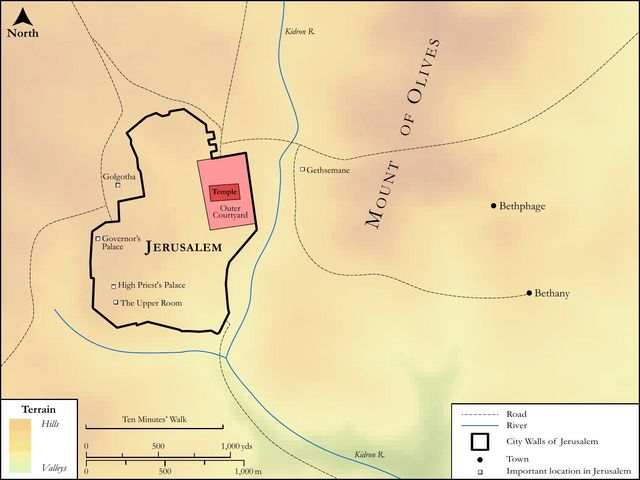
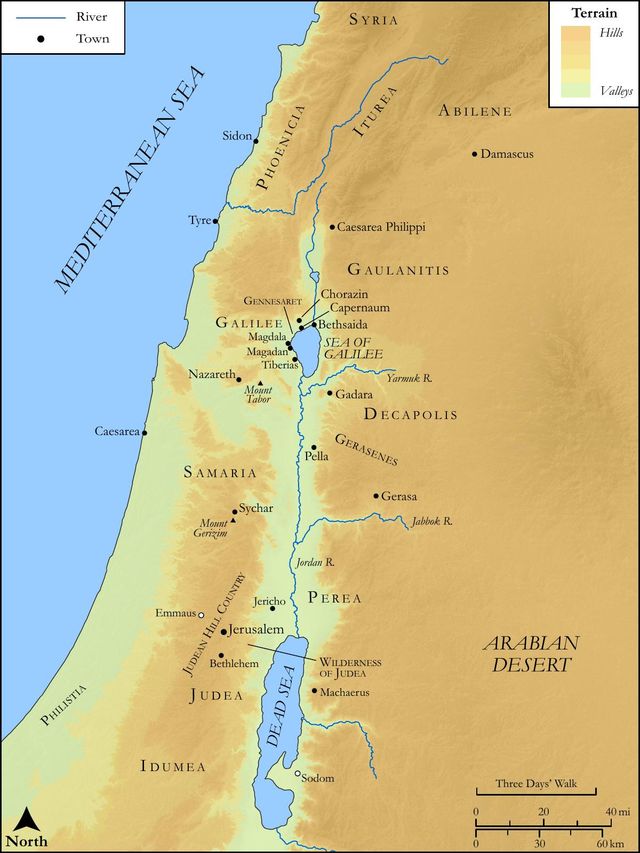
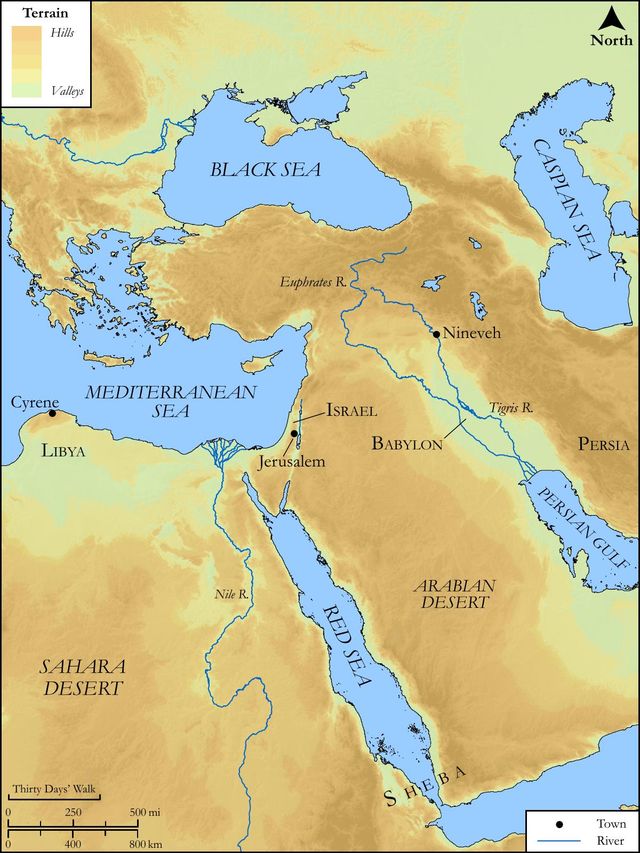
Study this verse
Public-domain commentary
Matthew Henry
From his Commentary on the Whole Bible. Henry comments on passages, not single verses — this entry covers Matthew 12:14–21. His four-level outline is real structure in the source text, so it is rendered as structure.
As in the midst of Christ's greatest humiliations, there were proofs of his dignity, so in the midst of his greatest honours, he gave proofs of his humility; and when the mighty works he did gave him an opportunity of making a figure, yet he made it appear that he emptied himself, and made himself of no reputation. Here we have,
I.The cursed malice of the Pharisees against Christ (Mat 12:14); being enraged at the convincing evidence of his miracles, they went out, and held a council against him, how they might destroy him. That which vexed them was, not only that by his miracles his honour eclipsed theirs, but that the doctrine he preached was directly opposite to their pride, and hypocrisy, and worldly interest; but they pretended to be displeased at his breaking the sabbath day, which was by the law a capital crime, Exo 35:2. Note, it is no new thing to see the vilest practices cloaked with the most specious pretences. Observe their policy; they took counsel about it, considered with themselves which way to do it effectually; they took counsel together in a close cabal about it, that they might both animate and assist one another. Observe their cruelty; they took counsel, not to imprison or banish him, but to destroy him, to be the death of him who came that we might have life. What an indignity was hereby put upon our Lord Jesus, to run him down as an outlaw (qui caput gerit lupinum - carries a wolf's head), and the plague of his country, who was the greatest blessing of it, the Glory of his people Israel!
II.Christ's absconding upon this occasion, and the privacy he chose, to decline, not his work, but his danger; because his hour was not yet come (Mat 12:15), he withdrew himself from thence. He could have secured himself by miracle, but chose to do it in the ordinary way of flight and retirement; because in this, as in other things, he would submit to the sinless infirmities of our nature. Herein he humbled himself, that he was driven to the common shift of those who are most helpless; thus also he would give an example to his own rule, When they persecute you in one city, flee to another. Christ had said and done enough to convince those Pharisees, if reason or miracles would have done it; but instead of yielding to the conviction, they were hardened and enraged, and therefore he left them as incurable, Jer 51:9.
Christ did not retire for his own ease, nor seek an excuse to leave off his work; no, his retirements were filled up with business, and he was even then doing good, when he was forced to flee for the same. Thus he gave an example to his ministers, to do what they can, when they cannot do what they would, and to continue teaching, even when they are removed into corners. When the Pharisees, the great dons and doctors of the nation, drove Christ from then, and forced him to withdraw himself, yet the common people crowded after him; great multitudes followed him and found him out. This some would turn to his reproach, and call him the ring-leader of the mob; but it was really his honour, that all who were unbiased and unprejudiced, and not blinded by the pomp of the world, were so hearty, so zealous for him, that they would follow him whithersoever he went, and whatever hazards they ran with him; as it was also the honour of his grace, that the poor were evangelized; that when they received him, he received them and healed them all. Christ came into the world to be a Physician-general, as the sun to the lower world, with healing under his wings. Though the Pharisees persecuted Christ for doing good, yet he went on in it, and did not let the people fare the worse for the wickedness of their rulers. Note, Though some are unkind to us, we must not on that account be unkind to others.
Christ studied to reconcile usefulness and privacy; he healed them all, and yet (Mat 12:16), charged them that they should not make him known; which may be looked upon, 1. As an act of prudence; it was not so much the miracles themselves, as the public discourse concerning them, that enraged the Pharisees (Mat 12:23, Mat 12:24); therefore Christ, though he would not omit doing good, yet would do it with as little noise as possible, to avoid offence to them and peril to himself. Note, Wise and good men, though they covet to do good, yet are far from coveting to have it talked of when it is done; because it is God's acceptance, not men's applause, that they aim at. And in suffering times, though we must boldly go on in the way of duty, yet we must contrive the circumstances of it so as not to exasperate, more than is necessary, those who seek occasion against us; Be ye wise as serpents, Mat 10:16. 2. It may be looked upon as an act of righteous judgment upon the Pharisees, who were unworthy to hear of any more of his miracles, having made so light of those they had seen. By shutting their eyes against the light, they had forfeited the benefit of it. 3. As an act of humility and self-denial. Though Christ's intention in his miracles was to prove himself the Messiah, and so to bring men to believe on him, in order to which it was requisite that they should be known, yet sometimes he charged the people to conceal them, to set us an example of humility, and to teach us not to proclaim our own goodness or usefulness, or to desire to have it proclaimed. Christ would have his disciples to be the reverse of those who did all their works to be seen of men.
III.The fulfilling of the scriptures in all this, Mat 12:17.
Christ retired into privacy and obscurity, that though he was eclipsed, the word of God might be fulfilled, and so illustrated and glorified, which was the thing his heart was upon. The scripture here said to be fulfilled is Isa 42:1-4, which is quoted at large, Mat 12:18-21. The scope of it is to show how mild and quiet, and yet how successful, our Lord Jesus should be in his undertaking; instances of both which we have in the foregoing passages. observe here,
1.The pleasure of the Father in Christ (Mat 12:18); Behold, my Servant whom I have chosen, my Beloved in whom my soul is well pleased. Hence we may learn,
(1.)That our Saviour was God's Servant in the great work of our redemption. He therein submitted himself to the Father's will (Heb 10:7), and set himself to serve the design of his grace and the interests of his glory, in repairing the breaches that had been made by man's apostasy. As a Servant, he had a great work appointed him, and a great trust reposed in him. This was a part of his humiliation, that though he thought it not robbery to be equal with God, yet that in the work of our salvation he took upon him the form of a servant, received a law, and came into bonds. Though he were a son, yet learned he this obedience, Heb 5:8. The motto of this Prince is, Ich dien - I serve.
(2.)That Jesus Christ was chosen of God, as the only fit and proper person for the management of the great work of our redemption. He is my Servant whom I have chosen, as par negotio - equal to the undertaking. None but he was able to do the Redeemer's work, or fit to wear the Redeemer's crown. He was one chosen out of the people (Psa 89:19), chosen by Infinite Wisdom to that post of service and honour, for which neither man nor angel was qualified; none but Christ, that he might in all things have the pre-eminence. Christ did not thrust himself upon this work, but was duly chosen into it; Christ was so God's Chosen as to be the head of election, and of all other the Elect, for we are chosen in him, Eph 1:4.
(3.)That Jesus Christ is God's Beloved, his beloved Son; as God, he lay from eternity in his bosom (Joh 1:18); he was daily his delight, (Pro 8:30). Between the Father and the Son there was before all time an eternal and inconceivable intercourse and interchanging of love, and thus the Lord possessed him in the beginning of his way, Pro 8:22. As Mediator, the Father loved him; then when it pleased the Lord to bruise him, and he submitted to it, therefore did the Father love him, Joh 10:17.
(4.)That Jesus Christ is one in whom the Father is well pleased, in whom his soul is pleased; which denotes the highest complacency imaginable. God declared, by a voice from heaven, that he was his beloved Son in whom he is well pleased; well pleased in him, because he was the ready and cheerful Undertaker of that work of wonder which God's heart was so much upon, and he is well pleased with us in him; for he had made us accepted in the Beloved, Eph 1:6. All the interest which fallen man has or can have in God is grounded upon and owing to God's well-pleasedness in Jesus Christ; for there is no coming to the Father but by him, Joh 14:6.
2.The promise of the Father to him in two things.
(1.)That he should be every way well qualified for his undertaking; I will put my Spirit upon him, as a Spirit of wisdom and counsel, Isa 11:2, Isa 11:3. Those whom God calls to any service, he will be sure to fit and qualify for it; and by that it will appear that he called them to it, as Moses, Exo 4:12. Christ, as God, was equal in power and glory with the Father; as Mediator, he received from the Father power and glory, and received that he might give: and all that the Father gave him, to qualify him for his undertaking, was summed up in this, he put his Spirit upon him: this was that oil of gladness with which he was anointed above his fellows, Heb 1:9. He received the Spirit, not by measure, but without measure, Joh 3:34. Note, Whoever they be that God has chosen, and in whim he is well pleased, he will be sure to put his Spirit upon them. Wherever he confers his love, he confers somewhat of his likeness.
(2.)That he should be abundantly successful in his understanding. Those whom God sends he will certainly own. It was long since secured by promise to our Lord Jesus, that the good pleasure of the Lord should prosper in his hand, Isa 53:10. And here we have an account of that prospering good pleasure.
[1.]He shall show judgment to the Gentiles. Christ in his own person preached to those who bordered upon the heathen nations (see Mar 3:6-8), and by his apostle showed his gospel, called here his judgment, to the Gentile world. The way and method of salvation, the judgment which is committed to the Son, is not only wrought out by him as our great High Priest, but showed and published by him as our great Prophet. The gospel, as it is a rule of practice and conversation, which has a direct tendency to the reforming and bettering of men's hearts and lives, shall be showed to the Gentiles. God's judgments had been the Jews' peculiar (Psa 147:19), but it was often foretold, by the Old Testament prophets, that they should be showed to the Gentiles, which therefore ought not to have been such a surprise as it was to the unbelieving Jews, much less a vexation.
[2.]In his name shall the Gentiles trust, Mat 12:21. He shall so show judgment to them, that they shall heed and observe what he shows them, and be influenced by it to depend upon him, to devote themselves to him, and conform to that judgment. Note, The great design of the gospel, is to bring people to trust in the name of Jesus Christ; his name Jesus, a Saviour, that precious name whereby he is called, and which is as ointment poured forth; The Lord our Righteousness. The evangelist here follows the Septuagint (or perhaps the latter editions of the Septuagint follow the evangelist); the Hebrew (Isa 42:4) is, The isles shall wait for his law. The isles of the Gentiles are spoken of (Gen 10:5), as peopled by the sons of Japhet, of whom it was said (Gen 9:27), God shall persuade Japhet to dwell in the tents of Shem; which was now to be fulfilled, when the isles (says the prophet), the Gentiles (says the evangelist), shall wait for his law, and trust in his name: compare these together, and observe, that they, and they only, can with confidence trust in Christ's name, that wait for his law with a resolution to be ruled by it. Observe also, that the law we wait for is the law of faith, the law of trusting in his name. This is now his great commandment, that we believe in Christ, Jo1 3:23.
3.The prediction concerning him, and his mild and quiet management of his undertaking, Mat 12:19, Mat 12:20. It is chiefly for the sake of this that it is here quoted, upon occasion of Christ's affected privacy and concealment.
(1.)That he should carry on his undertaking without noise or ostentation. He shall not strive, or make an outcry. Christ and his kingdom come not with observation, Luk 17:20, Luk 17:21. When the First-begotten was brought into the world, it was not with state and ceremony; he made no public entry, had no harbingers to proclaim him King. He was in the world and the world knew him not. Those were mistaken who fed themselves with hopes of a pompous Saviour. His voice was not heard in the streets; "Lo, here is Christ;" or, "Lo, he is there:" he spake in a still small voice, which was alluring to all, but terrifying to none; he did not affect to make a noise, but came down silently like the dew. What he spake and did was with the greatest possible humility and self-denial. His kingdom was spiritual, and therefore not to be advanced by force or violence, or by high pretensions. No, the kingdom of God is not in word, but in power.
(2.)That he should carry on his undertaking without severity and rigour (Mat 12:20). A bruised reed shall he not break. Some understand this of his patience in bearing with the wicked; he could as easily have broken these Pharisees as a bruised reed, and have quenched them as soon as smoking flax; but he will not do it till the judgment-day, when all his enemies shall be made his footstool. Others rather understand it of his power and grace in bearing up the weak. In general, the design of his gospel is to establish such a method of salvation as encourages sincerity, though there be much infirmity; it does not insist upon a sinless obedience, but accepts an upright, willing mind. As to particular persons, that follow Christ in meekness, and in fear, and in much trembling, observe,
[1.]How their case is here described - they are like a bruised reed, and smoking flax. Young beginners in religion are weak as a bruised reed, and their weakness offensive like smoking flax; some little life they have, but it is like that of a bruised reed; some little heat, but like that of smoking flax. Christ's disciples were as yet but weak, and many are so that have a place in his family. The grace and goodness in them are as a bruised reed, the corruption and badness in them are as smoking flax, as the wick of a candle when it is put out and is yet smoking.
[2.]What is the compassion of our Lord Jesus toward them? He will not discourage them, much less reject them or cast them off; the reed that is bruised shall not be broken and trodden down, but shall be supported, and made as strong as a cedar or flourishing palm-tree. The candle newly lighted, though it only smokes and does not flame, shall not be blown out, but blown up. The day of small things is the day of precious things, and therefore he will not despise it, but make it the day of great things, Zac 4:10. Note, Our Lord Jesus deals very tenderly with those who have true grace, though they be weak in it, Isa 40:11; Heb 5:2. He remembers not only that we are dust, but that we are flesh.
[3.]The good issue and success of this, intimated in that, till he send forth judgment unto victory. That judgment which he showed to the Gentiles shall be victorious, he will go on conquering and to conquer, Rev 6:2. Both the preaching of the gospel in the world, and the power of the gospel in the heart, shall prevail. Grace shall get the upper hand of corruption, and shall at length be perfected in glory. Christ's judgment will be brought forth to victory, for when he judges he will overcome. He shall bring forth judgment unto truth; so it is, Isa 42:3. Truth and victory are much the same, for great is the truth, and will prevail.
Historical interpretation
Nine Centuries of Reception
12 surviving comments on this verse. Each one is dated, so this reads as a timeline rather than a list.
Select a marker to jump to its quote. Markers stagger vertically where authors wrote within a few decades of each other.
But when the same prophet represents to us even nations sometimes estimated as "the small dust of the balance," and as "less than nothing, and vanity," and sometimes as about to hope and "trust in the name" and arm of the Lord, are we at all misled respecting the Gentile nations by the diversity of statement? Are some of them to turn believers, and are others accounted dust, from any difference of nature? Nay, rather Christ has shone as the true light on the nations within the ocean's limits, and from the heaven which is over us all.
He did not eagerly contend with the folly of the rulers, nor did he scream and provoke them to anger against himself. Rather, with gentleness Jesus withdrew slowly so that he might not, in confuting them, cause them to be destroyed while they were still weak in soul like “a bruised reed” or like “smoking flax,” that is, very close to being snuffed out. He bore with them patiently, so as not to reduce them to utter oblivion on account of their weakness, until he had fulfilled the purpose of his dispensation,that is, to bring judgment to a full end. By this dispensation all the nations would come to believe.
The Pharisees are moved with jealousy at what had been done; because beholding the outward body of a man, they did not recognize the God in His works; The Pharisees went out and sought counsel against him, how they might destroy him.
And He knowing their plots withdrew, that He might be far from the counsels of the evil hearted, as it follows, Jesus knowing it departed thence.
On those whom He healed He enjoined silence, whence it follows, And he charged them that they should not make him known. For his restored health was a witness to each man. And by commanding them to hold their peace, He avoids all ostentation of Himself, and at the same time notwithstanding affords a knowledge of Himself in that very admonition to hold their peace; for the observance of silence proceeds from that very thing which is to be kept silent.
Or, he means this bruised reed that is not broken, to show that the perishing and bruised bodies of the Gentiles, are not to be broken, but are rather reserved for salvation. He shall not quench a smoking flax, shows the feebleness of that spark which though not quenched, only moulders in the flax, and that among the remnants of that ancient grace, the Spirit is yet not quite taken away from Israel, but power still remains to them of resuming the whole flame thereof in a day of penitence.
Or, Until he shall send forth judgment to victory, that is, Until He shall take away the power of death, and bring in judgment and the return of His splendour.
But even amid this desire to keep silent about himself, the purpose of Jesus’ words was fulfilled through Isaiah. About his prophecy I now give you the following important reminder: Jesus was loved by God and was pleasing in his Father’s will. The Spirit of God was upon him. Judgment was made known to the Gentiles by him. The reed that was crushed was not broken, and the smoking wick was not extinguished. This means that the frail, shaken bodies of the Gentiles were not worn out but rather preserved to salvation. The meager flame only smoking now on the wick was not extinguished. The spirit of Israel was not removed from the rest of the ancient story of grace. The capability of restoring all the light exists in the time of repentance. But that was appointed within the statutes of a fixed time, “till he brings justice to victory.” When the power of death was removed, he would bring judgment at the return of his splendor to the Gentiles who would believe in his name through faith.
And that you may not be troubled at those things which are done, and at the incredible madness of the Pharisees, He introduces the Prophet's words. For such was the carefulness of the Prophets, that they had not omitted even this, but had noted all His ways and movements, and the meaning with which He did this; that you might learn that He spoke all things by the Holy Spirit, for if it be impossible to know the thoughts of men, much more to know the meaning of Christ, unless the Holy Spirit revealed it. Therefore it follows, That it might be fulfilled which was spoken by Esaias the Prophet, saying, Behold my servant whom I have chosen.
This the Prophet puts in the beginning, that you might learn that that which is here said was according to the counsel of the Father. For he that is beloved does according to his will who loveth him. And again, he that is chosen, does not as an enemy break the law, nor as one being an adversary of the legislator, but as one in agreement with Him. Because therefore He is beloved, I will put my Spirit upon him.
Further, to show His lowliness, He says, He shall not strive; and so He was offered up as the Father had willed, and gave Himself willingly into the hands of His persecutors. Neither shall he cry; so He was dumb as a lamb before his shearer. Nor shall any hear voice in the streets.
The Lord sought to heal the Jews by this mildness. But though they rejected Him, yet He did not resist them by destroying them; whence the Prophet, displaying His power and their weakness, says, A bruised reed he shall not break, and a smoking flax he shall not quench.
Or this, He shall not break a bruised reed, shows that it was as easy for Him to break them all, as to break a reed, and that a bruised reed. And, He shall not quench a smoking flax, shows that their rage was fired, and that the power of Christ was strong to quench such rage with all readiness; hence in this is shown the great mercy of Christ.
But one might say, What then, shall these things be always thus? Will He endure for ever those who thus lay snares, and are mad against Him? Far from it; when His own work shall be all complete, then shall He work these things also. And. this He signifies, saying, Until he shall send forth judgment to victory; as much as to say, When He shall have accomplished all things which are of Himself, then shall He bring in perfect vengeance; then shall they receive punishment when He has made his victory illustrious, that there be not left to them any irreverent opportunity of contradiction,
But the things of this dispensation will not rest in this only, that they who have not believed should be punished, but He will also draw the world to Him; whence it follows, And in his name shall the Gentiles hope.
Then, lest thou shouldest be confounded at what is going on, and at their strange frenzy, He introduces the prophet also, foretelling all this. For so great was the accuracy of the prophets, that they omit not even these things, but foretell His very journeyings, and changes of place, and the intent with which He acted therein; that thou mightest learn, how they spake all by the Spirit. For if the secrets of men cannot by any art be known, much more were it impossible to learn Christ's purpose, except the Spirit revealed it.
What then saith the prophet? Nay, it is subjoined: "That it might be fulfilled which was spoken by Esaias the Prophet, saying, Behold my servant, whom I have chosen; my beloved, in whom my soul is well pleased. I will put my Spirit upon Him, and He shall show judgment to the Gentiles. He shall not strive nor cry, neither shall any man hear His voice in the streets. A bruised reed shall He not break, and smoking flax shall He not quench, till He send forth judgment unto victory. And in His name shall the Gentiles trust."
The prophet celebrates His meekness, and His unspeakable power, and opens to the Gentiles "a great door and effectual;" he foretells also the ills that are to overtake the Jews, and signifies His unanimity with the Father. For "behold," saith He, "my servant, whom I have chosen, my beloved, in whom my soul is well pleased." Now if He chose Him, not as an adversary doth Christ set aside the law, nor as being an enemy of the lawgiver, but as having the same mind with Him, and the same objects.
Then proclaiming His meekness, he saith, "He shall not strive nor cry." For His desire indeed was to heal in their presence; but since they thrust Him away, not even against this did He contend.
And intimating both His might, and their weakness, he saith, "A bruised reed shall He not break." For indeed it was easy to break them all to pieces like a reed, and not a reed merely, but one already bruised.
"And smoking flax shall He not quench." Here he sets forth both their anger that is kindled, and His might that is able to put down their anger, and to quench it with all ease; whereby His great mildness is signified.
What then? Shall these things always be? And will He endure them perpetually, forming such frantic plots against Him? Far from it; but when He hath performed His part, then shall He execute the other purposes also. For this He declared by saying "Till He send forth judgment unto victory: and in His name shall the Gentiles trust." As Paul likewise saith, "Having in a readiness to revenge all disobedience, when your obedience is fulfilled."
But what is, "when He sends forth judgment unto victory?" When He hath fulfilled all His own part, then, we are told, He will bring down upon them His vengeance also, and that a perfect vengeance. Then shall they suffer His terrors, when His trophy is gloriously set up, and the ordinances that proceed from Him have prevailed, and He hath left them no plea of contradiction, however shameless. For He is wont to call righteousness, "judgment."
But not to this will His dispensation be confined, to the punishment of unbelievers only, but He will also win to Himself the whole world. Wherefore He added, "And in His name shall the Gentiles trust."
Then, to inform thee that this too is according to the purpose of the Father, in the beginning the prophet had assured us of this likewise, together with what had gone before; saying, "My well-beloved, in whom my soul is well pleased." For of the well-beloved it is quite evident that He did these things also according to the mind of the beloved.
(Verse 20, 21.) He will not break a bruised reed, and he will not extinguish smoking flax, until he brings forth judgment to victory. And in his name the Gentiles will hope. He who does not reach out his hand to the sinner, nor carries the burden of his brother, he breaks the bruised reed. And he who despises the small spark of faith in the little ones, he extinguishes smoking flax. Christ has done neither of these; for this is why he came, to save what was lost.
Knowing, that is, their designs against Him withdrew Himself, that He might remove from the Pharisees all opportunity of sin.
But the Holy Spirit is put, not on the Word of God, but on the Only-Begotten, who came forth from the bosom of the Father; on Him, that is, of whom it is said, Behold my servant. And what He will do by Him He adds, And he shall declare judgment to the Gentiles.
For the way is broad and wide which leads to destruction, and many walk in it; and being many, they will not hear the voice of the Saviour, because they are not in the narrow but in the broad way.
He that holds not out his hand to a sinner, nor bears his brother's burden, he breaks a bruised reed; and he who despises a weak spark of faith in a little one, he quenches a smoking flax.
(Ep. 121.2.) Or, the reverse, He calls the Jews a bruised reed, whom tossed by the wind and shaken from one another, the Lord did not immediately condemn, but patiently endured; and the smoking flax He calls the people gathered out of the Gentiles, who, having extinguished the light of the natural law, were involved in the wandering mazes of thick darkness of smoke, bitter and hurtful to the eyes; this He not only did not extinguish, by reducing them to ashes, but on the contrary from a small spark and one almost dead He raised a mighty flame.
(De Civ. Dei, xx. 30.) This last we now see fulfilled; and thus this which cannot be denied establishes the truth of that which some have denied through ignorance, the last judgment namely, which He will hold upon earth, when he Himself shall come from heaven. For who could have expected that the Gentiles would have hope in Christ's name, when He was in the hands of His enemies, when He was bound, scourged, set at nought, and crucified; when even His disciples had lost that hope which they had begun to have in Him? That which one thief hardly hoped on the cross, the nations scattered far and wide now hope. And that they may not die for ever, they are marked with that very cross on which he died. Let none then doubt that the last judgment will be by Christ Himself.
Or, He withdrew from thence as avoiding the designs of His own when they persecuted Him; or because that was not the time or place for Him to suffer, for It cannot he that a Prophet should perish out of Jerusalem, (Luke 13:33) as He Himself spake. The Lord also shunned those who persecuted Him through hatred, and went thither where He found many who were attached to Him from affection, whence it follows, And there followed him many. Him whom the Pharisees with one consent plotted against to destroy, the untaught multitude with one consent love and follow; whence they soon received the fulfilment of their desires, for it follows, And he healed them all.
And He also gives them command that they should not make Him known, that they might not by persecuting Him be put into a worse state.
The Lord Jesus Christ is called the servant of the Almighty Godb, not in respect of His divinity, but in respect of the dispensation of the flesh which He took upon Him, because by the cooperation of the Holy Spirit He took flesh of the Virgin without stain of sin. Some books have, Elect, whom I have chosen, for He was chosen by God the Father, that is, predestinated that He should be the Son of God, proper, not adopted.
That he says, My soul, is not to be understood as though God the Father had a soul, but by way of adaptation, showing how God is disposed towards Him. And it is no wonder that a soul is ascribed to God in this manner, seeing that all other members of the body are likewise.
Then also God the Father put His Spirit upon Him, when by the working of the Holy Spirit He took flesh of the Virgin; and as soon as He became man, He took the fulness of the Holy Spirit.
The Greek πλατεῖα, is in Latin called 'latitudo.' No one therefore has heard His voice in the streets, because He has not promised pleasant things in this world to those that love Him, but hardships.
And it should be known, that the meaning not only of this passage, but of many others also, is supported by this testimony from the Prophet. The words, Behold my servant, may be referred to the place in which the Father had said above, This is my Son. (Mat. 3:17.) The words, I will put my Spirit upon him, is referred to the descent of the Holy Spirit upon the Lord at His baptism; He shall declare judgment to the Gentiles, to that which He says below, When the Son of Man shall sit in the seat of his Majesty. (Mat. 25:31) What he adds, He shall not strive nor cry, refers to the Lord how He answered but little to the Chief Priests, and to Pilate, but to Herod nothing at all. He shall not break the bruised reed, refers to His shunning His persecutors that they might not be made worse; and that In his name shall the Gentiles hope, refers to what Himself says below, Go ye, and teach all nations. (Mat. 28:19)
Otherwise; The man who had the withered hand denotes the human race in its barrenness of good works dried up by the hand which was stretched out to the fruit; (Gen. 3:6.) this was healed by the stretching out of the innocent hand on the Cross. And well is this withered hand said to have been in the Synagogue, for where the gift of knowledge is greater, there is the greater danger of an irrecoverable infliction. The withered hand when it is to be healed is first bid to be stretched out, because the weakness of a barren mind is healed by no means better than by liberality of almsgiving. A man's right hand is affected when he is remiss in giving alms, his left whole when he is attentive to his own interests. But when the Lord comes, the right hand is restored whole as the left, because what he had got together greedily, that he distributes freely.
He says, went out because their mind was alien from the Lord. They took counsel how they might destroy life, not how themselves might find life.
In this also He instructs us, that when we have done any thing great we are not to seek praise abroad.
Whom I have chosen, he says, for a work which none else has done, that He should redeem the human race, and make peace between God and the world. It follows, My beloved, in whom my soul is well pleased, for He alone is the Lamb without spot of sin, of whom the Father speaks, This is my beloved Son, in whom I am well pleased. (Mat. 17:5)
Or, Until that judgment which was being done in Him should come forth to victory. For after that by His resurrection He had overcome death, and driven forth the prince of this world, He returned as conqueror to His kingdom to sit on the right hand of the Father, until He shall put all His enemies under His feet.
So that the Jews would have no excuse, Christ endured all things, so that later He might condemn and overcome those who could say nothing in their own defense. What did He not do to win them over? But the Jews were not willing; therefore the Gentiles shall hope in Him.
Continue studying Matthew 12:21 across the web’s major study libraries — every link below opens this exact verse, chapter, or book on the destination site.
Read & Compare
 BibleGatewayThis verse in more than 200 translations and 70 languages.
 Bible.comThe YouVersion reader — hundreds of translations, reading plans, and highlights.
 ESV.orgCrossway's official English Standard Version reader.
 NET BibleThe NET translation with 60,000+ translators' notes on every rendering decision.
 STEP BibleTyndale House's free study tool — original text, vocabulary, and scholarly resources.
 BibliaLogos Bible Software's free web reader.
 USCCBThe New American Bible (Revised Edition) with the U.S. bishops' study notes.
Commentaries
 BibleHub CommentariesDozens of classic commentaries on this verse, gathered on one page.
 StudyLightMore than 100 commentary sets — the largest collection on the web.
 BibleRefPlain-English commentary on what this verse means, verse by verse.
 Enduring WordDavid Guzik's free commentary on this chapter, widely used by Bible teachers.
 Bible Study ToolsVerse commentary alongside Greek and Hebrew study aids.
Original Language & Research
- BibleHub InterlinearThe verse word by word — original language, transliteration, and English.
- BibleHub LexiconEvery word's original-language definition and Strong's entry.
 Blue Letter BibleDeep-study tools — Strong's numbers, concordance, and word studies.
 CNTR CollationThe earliest Greek manuscripts of this verse, collated letter by letter.
Sermons, Hymns & Audio


TrulyRandomVerse is not affiliated with these sites and doesn’t control their content. They’re linked because they’re genuinely useful.
Summary
Matthew 12:21 concludes a significant Old Testament prophecy quoted by the evangelist, declaring that the Gentile nations will place their trust in the Messiah's name. This verse, drawn from Isaiah 42, serves as a profound theological statement affirming the universal scope of God's redemptive plan through Jesus, extending salvation beyond the boundaries of Israel to encompass all peoples. It underscores Jesus' identity as the promised Servant of the Lord, whose quiet, compassionate ministry would ultimately draw the entire world to himself in faith and hope.
Context
ShowHideLiterary Context
Matthew 12:21 is the concluding phrase of a lengthy quotation from Isaiah 42:1-4 that Matthew uses to interpret Jesus' ministry. This quotation follows a period of intense conflict between Jesus and the Pharisees concerning Sabbath observance and healing (Matthew 12:1-14). After Jesus heals a man with a withered hand on the Sabbath, the Pharisees conspire to destroy Him. In response, Jesus withdraws from that immediate confrontation, but large crowds follow Him, and He heals them all, strictly warning them not to make His identity known publicly. Matthew presents this quiet, compassionate, and unassuming approach—rather than a confrontational or politically charged one—as the fulfillment of Isaiah's prophecy concerning the Servant who "will not quarrel or cry out" (Matthew 12:19). Verse 21, specifically, highlights the global reach of this Servant's mission.
Historical & Cultural Context
In the first-century Jewish world, the concept of the Messiah was predominantly nationalistic, focused on the restoration and exaltation of Israel. While Old Testament prophecies hinted at the inclusion of Gentiles (e.g., Isaiah 2:2-4, Zechariah 8:20-23), these were often interpreted through an Israel-centric lens, with Gentiles coming to Jerusalem to worship the God of Israel. The idea of the Messiah's primary mission being to the Gentiles, or that Gentiles would directly "trust in his name" on equal footing with Israel, was revolutionary and often met with resistance, as seen later in the book of Acts. Matthew, writing to a Jewish-Christian audience, carefully demonstrates how Jesus' ministry, though initially focused on Israel, inherently carried a universal scope, fulfilling prophecies that even the Jewish people might have overlooked or misinterpreted regarding Gentile inclusion.
Key Themes
ShowHideThis verse powerfully contributes to several overarching themes in Matthew's Gospel and broader biblical theology. Firstly, it emphasizes the Fulfillment of Prophecy, showcasing Jesus as the ultimate realization of Old Testament expectations, particularly the Servant songs of Isaiah. Matthew consistently uses fulfillment formulas to demonstrate Jesus' messianic credentials (e.g., Matthew 1:22-23). Secondly, the verse highlights the Universal Scope of the Gospel, asserting that God's redemptive plan is not limited to Israel but extends to "the Gentiles." This theme culminates in the Great Commission, where Jesus commands His disciples to "make disciples of all nations" (Matthew 28:19). Thirdly, it points to the Identity of Jesus as the Servant, a figure characterized by humility, compassion, and a mission to bring justice and salvation to all. Finally, the phrase "in his name shall the Gentiles trust" underscores the theme of Faith and Trust in Jesus, indicating that salvation is found through personal reliance on who Jesus is and what He has accomplished.
Exposition and Analysis
ShowHideKey Word Analysis
ShowHideMeaning "a race (as of the same habit), i.e. a tribe; specially, a foreign (non-Jewish) one (usually, by implication, pagan)." In this context, it explicitly refers to all the non-Jewish peoples of the world, emphasizing the expansive, international reach of the Messiah's redemptive work. It contrasts with "Israel" and highlights the breaking down of ethnic barriers in the new covenant.
Meaning "a 'name' (literally or figuratively) (authority, character)." To trust "in his name" signifies far more than merely invoking a title. It encapsulates trusting in Jesus' entire person, His divine authority, His character, His mission, His saving work, and everything He represents. It is a comprehensive surrender to His Lordship and redemptive power.
Meaning "to expect or confide; (have, thing) hope(-d) (for), trust." This word denotes a confident expectation and a firm reliance. It implies not just intellectual assent but a deep-seated hope and confident dependence upon Jesus. For the Gentiles, it means placing their ultimate hope and salvation squarely in the Messiah.
Verse Breakdown
ShowHide"And in his name"
This phrase establishes the object and basis of faith. The "name" of the Messiah signifies His entire being, authority, character, and redemptive work. To trust "in His name" means to place one's complete reliance and hope in who Jesus is and what He has done, acknowledging His unique power and saving grace. It points to the singular source of salvation.
"shall the Gentiles trust"
This declares the universal scope of the Messiah's impact. "The Gentiles" (all non-Jewish nations) are explicitly included in the redemptive plan, signifying that the Messiah's saving work is not limited to Israel but extends to all humanity. The future tense "shall trust" indicates a prophetic certainty, a divine decree that will inevitably come to pass, drawing people from every tongue, tribe, and nation into faith.
Literary Devices
ShowHideMatthew's use of Prophetic Quotation is the primary literary device at play here. By quoting Isaiah 42:4 (or a combination of Isaiah 42:1-4), Matthew frames Jesus' quiet, compassionate ministry as the direct fulfillment of ancient prophecy. This technique, a hallmark of Matthew's Gospel, serves to validate Jesus' messianic identity and mission to a Jewish audience. Furthermore, the phrase "in his name" employs Symbolism, where "name" functions as a metonymy for the entire person, authority, and character of Jesus. It is not merely a label but a condensed representation of His divine essence and redemptive power, inviting a profound and comprehensive trust. The inclusion of "the Gentiles" also highlights Universal Reach as a core aspect of God's redemptive plan, contrasting with prevailing nationalistic expectations.
Theological and Thematic Connections
ShowHideMatthew 12:21 profoundly connects to the overarching biblical narrative of God's universal salvific purpose. From the call of Abraham, who was promised that "all peoples on earth will be blessed through you" (Genesis 12:3), to the New Testament's explicit declaration of the gospel for "everyone who believes, first for the Jew, then for the Gentile" (Romans 1:16), the inclusion of the nations is a consistent thread. This verse in Matthew directly links Jesus' ministry to this grand narrative, asserting that He is the one through whom this ancient promise finds its ultimate fulfillment. It underscores that God's love and redemptive grace are not confined by ethnic or national boundaries but are freely offered to all who would place their trust in His Son.
Reflection and Application
ShowHideMatthew 12:21 serves as a powerful reminder of the expansive nature of God's grace and the universal call to faith in Jesus. For believers today, this verse should ignite a passion for global missions, recognizing that the gospel is truly for "every tribe and language and people and nation" (Revelation 5:9). It challenges any ethnocentric or exclusive understanding of God's kingdom, urging us to embrace and celebrate the diversity of the global church. Personally, it calls us to deepen our own trust in Jesus' name, understanding that our hope and salvation are found solely in His person and work. Just as the Gentiles of old were prophesied to trust in Him, so too must we, regardless of our background, place our confident expectation in the Messiah. This trust empowers us to live out our faith boldly, sharing the good news with those around us, knowing that God desires all people to come to a saving knowledge of His Son.
Questions for Reflection
ShowHideFAQ
ShowHideWhy does Matthew quote Isaiah 42:1-4 here, and what is its significance?
ShowHideMatthew quotes Isaiah 42:1-4 to demonstrate that Jesus is the fulfillment of the Old Testament prophecy concerning the Servant of the Lord. This passage from Isaiah describes a humble, gentle, yet powerful figure who will bring justice to the nations without fanfare or public outcry. Matthew applies this to Jesus' ministry in Matthew 12, particularly after Jesus withdraws from the Pharisees' intense opposition and continues His healing ministry quietly, instructing those He heals not to publicize His identity. The significance lies in showing that Jesus' method of ministry—characterized by compassion, humility, and a focus on healing rather than political confrontation—was precisely what God had foretold for His Messiah. It also highlights the universal scope of His mission, culminating in the promise that "in his name shall the Gentiles trust."
Christ-Centered Fulfillment
ShowHideMatthew 12:21 finds its ultimate Christ-centered fulfillment in Jesus not only as the prophesied Servant of the Lord but as the very embodiment of God's universal love and redemptive purpose. The prophecy that "in his name shall the Gentiles trust" is realized through Christ's atoning work on the cross, which broke down the dividing wall between Jew and Gentile (Ephesians 2:14). His death and resurrection established a new covenant, making salvation accessible to all who believe, regardless of their ethnic origin (Galatians 3:28). The Great Commission, given by the resurrected Christ, explicitly commands His followers to "go and make disciples of all nations" (Matthew 28:19), directly fulfilling the spirit of Isaiah's prophecy. The book of Acts vividly chronicles the expansion of the gospel from Jerusalem to Judea, Samaria, and to the ends of the earth, as Gentiles indeed began to trust in Jesus' name (Acts 1:8). Ultimately, this verse points forward to the glorious vision of a multitude from "every nation, tribe, people and language, standing before the throne and before the Lamb" (Revelation 7:9-10), all of whom have placed their trust in the name of Jesus, the Messiah of all humanity.