


Luke 9:20
Bible text: King James Version (1769 Blayney text) · Public domain
Bible text: Berean Standard Bible · Public domain
Bible text: American Standard Version (1901) · Public domain
Bible text: World English Bible, Messianic edition · Public domain
Bible text: Geneva Bible (1599) · Public domain
Bible text: Young's Literal Translation · Public domain
- εἶπενeipenHe saidG2036V-2AAI-3SVerb 2nd Aorist Active Indicative 3rd Singular
- δὲdethenG1161CONJConjunction
- αὐτοῖς·autoisto themG846P-DPMPersonal pronoun Dative Plural Masculine
- ὑμεῖςhumeisYou yourselvesG4771P-2NPPersonal pronoun Nominative 2nd Plural
- δὲdehoweverG1161CONJConjunction
- τίναtinawhomG5101I-ASMInterrogative pronoun Accusative Singular Masculine
- μεmeMeG3165P-1ASPersonal pronoun Accusative 1st Singular
- λέγετεlegetedo pronounceG3004V-PAI-2PVerb Present Active Indicative 2nd Plural
- εἶναι;einaito be?G1511V-PANVerb Present Active Infinitive
- ὁho<the>G3588T-NSMDefinite article Nominative Singular Masculine
- ΠέτροςPetrosPeterG4074N-NSM-PNoun Nominative Singular Masculine Individual
- δὲdethenG1161CONJConjunction
- ἀποκριθεὶςapokritheisansweringG611V-AOP-NSMVerb Aorist Passive Deponent Participle Nominative Singular Masculine
- εἶπεν·eipensaidG2036V-2AAI-3SVerb 2nd Aorist Active Indicative 3rd Singular
- τὸνtonTheG3588T-ASMDefinite article Accusative Singular Masculine
- χριστὸνchristonChristG5547N-ASM-TNoun Accusative Singular Masculine Title
- τοῦtou<the>G3588T-GSMDefinite article Genitive Singular Masculine
- θεοῦtheouof GodG2316N-GSM-TNoun Genitive Singular Masculine Title
English is a literal word-by-word gloss of the Greek, not the KJV's wording. Why?
This is the original text the KJV's translators worked from — each Greek word with its own literal English meaning in this verse, prepared by scholars at Tyndale House, Cambridge. The KJV translates whole sentences, not word by word, so its wording differs: one Greek word can become several English words, and the KJV may choose “charity” where the gloss reads “love”. Both are faithful — they answer different questions. For the KJV's own rendering, switch to the KJV text.
Details
See on the biblical-era maps

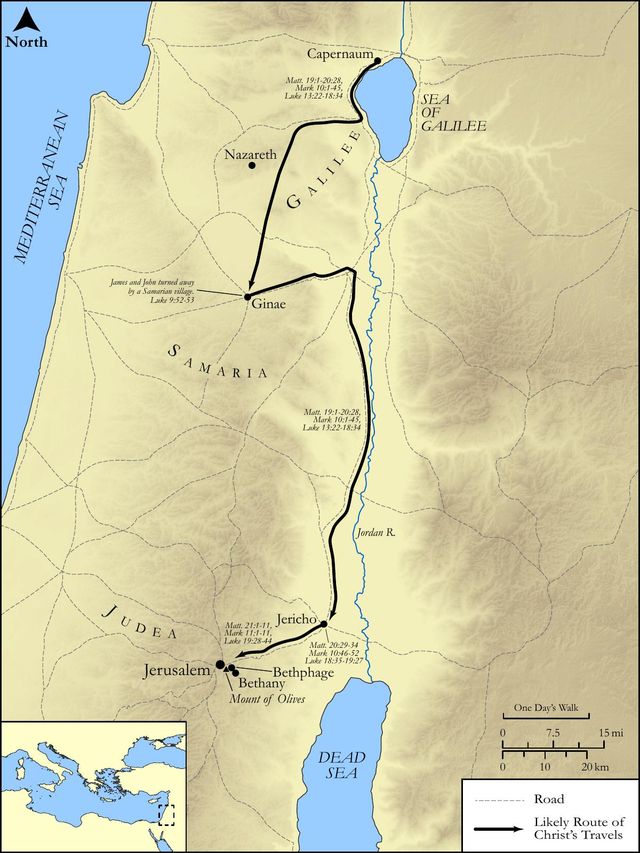
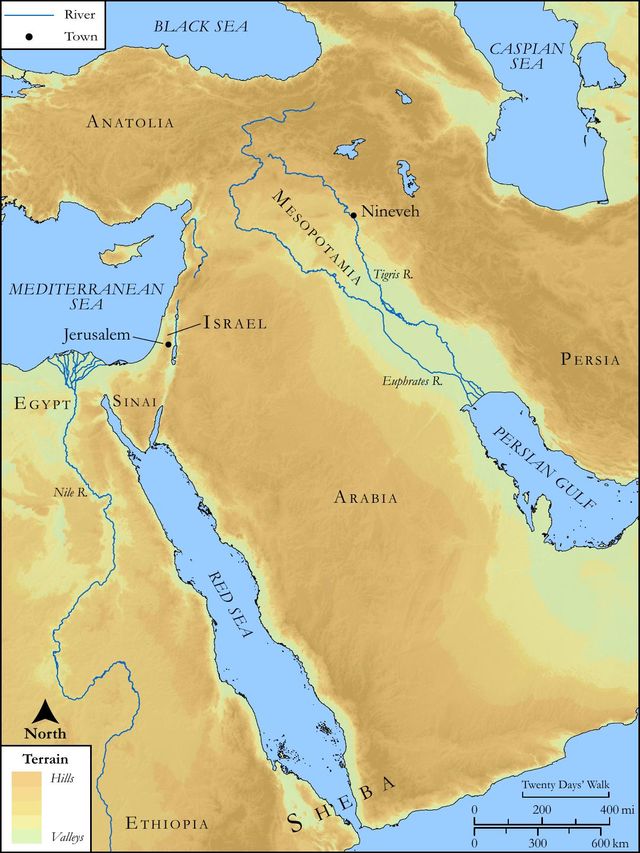
Study this verse
Public-domain commentary
Matthew Henry
From his Commentary on the Whole Bible. Henry comments on passages, not single verses — this entry covers Luke 9:18–27. His three-level outline is real structure in the source text, so it is rendered as structure.
In these verses, we have Christ discoursing with his disciples about the great things that pertained to the kingdom of God; and one circumstance of this discourse is taken notice of here which we had not in the other evangelists - that Christ was alone praying, and his disciples with him, when he entered into this discourse, Luk 9:18. Observe, 1. Though Christ had much public work to do, yet he found some time to be alone in private, for converse with himself, with his Father, and with his disciples. 2. When Christ was alone he was praying. It is good for us to improve our solitude for devotion, that, when we are alone, we may not be alone, but may have the Father with us. 3. When Christ was alone, praying, his disciples were with him, to join with him in his prayer; so that this was a family-prayer. Housekeepers ought to pray with their households, parents with their children, masters with their servants, teachers and tutors with their scholars and pupils. 4. Christ prayed with them before he examined them, that they might be directed and encouraged to answer him, by his prayers for them. Those we give instructions to we should put up prayers for and with. He discourses with them,
I.Concerning himself; and enquires,
1.What the people said of him: Who say the people that I am? Christ knew better than they did, but would have his disciples made sensible, by the mistakes of others concerning him, how happy they were that were led into the knowledge of him and of the truth concerning him. We should take notice of the ignorance and errors of others, that we may be the more thankful to him who has manifested himself to us, and not unto the world, and may pity them, and do what we can to help them and to teach them better. They tell him what conjectures concerning him they had heard in their converse with the common people. Ministers would know better how to suit their instructions, reproofs, and counsels, to the case of ordinary people, if they did but converse more frequently and familiarly with them; they would then be the better able to say what is proper to rectify their notions, correct their irregularities, and remove their prejudices. The more conversant the physician is with his patient, the better he knows what to do for him. Some said that he was John Baptist, who was beheaded but the other day; others Elias, or one of the old prophets; any thing but what he was.
2.What they said of him. "Now see what an advantage you have by your discipleship; you know better." "So we do," saith Peter, "thanks be to our Master for it; we know that thou art the Christ of God, the Anointed of God, the Messiah promised." It is matter of unspeakable comfort to us that our Lord Jesus is God's anointed, for then he has unquestionable authority and ability for his undertaking; for his being anointed signifies his being both appointed to it and qualified for it. Now one would have expected that Christ should have charged his disciples, who were so fully apprized and assured of this truth, to publish it to every one they met with; but no, he strictly charged them to tell no man that thing as yet, because there is a time for all things. After his resurrection, which completed the proof of it, Peter made the temple ring of it, that God had made this same Jesus both Lord and Christ (Act 2:36); but as yet the evidence was not ready to be summed up, and therefore it must be concealed; while it was so, we may conclude that the belief of it was not necessary to salvation.
II.Concerning his own sufferings and death, of which he had yet said little.
Now that his disciples were well established in the belief of his being the Christ, and able to bear it, he speaks of them expressly, and with great assurance, Luk 9:22. It comes in as a reason why they must not yet preach that he was the Christ, because the wonders that would attend his death and resurrection would be the most convincing proof of his being the Christ of God. It was by his exaltation to the right hand of the Father that he was fully declared to be the Christ, and by the sending of the Spirit thereupon (Act 2:33); and therefore wait till that is done.
III.Concerning their sufferings for him.
So far must they be from thinking how to prevent his sufferings that they must rather prepare for their own.
1.We must accustom ourselves to all instances of self-denial and patience, Luk 9:23. This is the best preparative for martyrdom. We must live a life of self-denial, mortification, and contempt of the world; we must not indulge our ease and appetite, for then it will be hard to bear toil, and weariness, and want, for Christ. We are daily subject to affliction, and we must accommodate ourselves to it, and acquiesce in the will of God in it, and must learn to endure hardship. We frequently meet with crosses in the way of duty; and, though we must not pull them upon our own heads, yet, when they are laid for us, we must take them up, carry them after Christ, and make the best of them.
2.We must prefer the salvation and happiness of our souls before any secular concern whatsoever. Reckon upon it,
(1.)That he who to preserve his liberty or estate, his power or preferment, nay, or to save his life, denies Christ and his truths, wilfully wrongs his conscience, and sins against God, will be, not only not a saver, but an unspeakable loser, in the issue, when profit and loss come to be balanced: He that will save his life upon these terms will lose it, will lose that which is of infinitely more value, his precious soul.
(2.)We must firmly believe also that, if we lose our life for cleaving to Christ and our religion, we shall save it to our unspeakable advantage; for we shall be abundantly recompensed in the resurrection of the just, when we shall have it again a new and an eternal life.
(3.)That the gain of all the world, if we should forsake Christ, and fall in with the interests of the world, would be so far from countervailing the eternal loss and ruin of the soul that it would bear no manner of proportion to it, Luk 9:25. If we could be supposed to gain all the wealth, honour, and pleasure, in the world, by denying Christ, yet when, by so doing, we lose ourselves to all eternity, and are cast away at last, what good will our worldly gain do us? Observe, In Matthew and Mark the dreadful issue is a man's losing his own soul, here it is losing himself, which plainly intimates that our souls are ourselves. Animus cujusque is est quisque - The soul is the man; and it is well or ill with us according as it is well or ill with our souls. If they perish for ever, under the weight of their own guilt and corruption, it is certain that we are undone. The body cannot be happy if the soul be miserable in the other world; but the soul may be happy though the body be greatly afflicted and oppressed in this world. If a man be himself cast away, ē zēmiōtheis - if he be damaged, - or if he be punished, si mulctetur - if he have a mulct put upon his soul by the righteous sentence of Christ, whose cause and interest he has treacherously deserted, - if it be adjudged a forfeiture of all his blessedness, and the forfeiture be taken, where is his gain? What is his hope?
3.We must therefore never be ashamed of Christ and his gospel, nor of any disgrace or reproach that we may undergo for our faithful adherence to him and it, Luk 9:26. For whosoever shall be ashamed of me and of my words, of him shall the Son of man be ashamed, and justly. When the service and honour of Christ called for his testimony and agency, he denied them, because the interest of Christ was a despised interest, and every where spoken against; and therefore he can expect no other than that in the great day, when his case calls for Christ's appearance on his behalf, Christ will be ashamed to own such a cowardly, worldly, sneaking spirit, and will say, "He is none of mine; he belongs not to me." As Christ had a state of humiliation and of exaltation, so likewise has his cause. They, and they only, that are willing to suffer with it when it suffers, shall reign with it when it reigns; but those that cannot find in their hearts to share with it in its disgrace, and to say, If this be to be vile, I will be yet more vile, shall certainly have no share with it in its triumphs. Observe here, How Christ, to support himself and his followers under present disgraces, speaks magnificently of the lustre of his second coming, in prospect of which he endured the cross, despising the shame.
(1.)He shall come in his own glory. This was not mentioned in Matthew and Mark. He shall come in the glory of the Mediator, all the glory which the Father restored to him, which he had with God before the worlds were, which he had deposited and put in pledge, as it were, for the accomplishing of his undertaking, and demanded again when he had gone through it. Now, O Father, glorify thou me, Joh 17:4, Joh 17:5. He shall come in all that glory which the Father conferred upon him when he set him at his own right hand, and gave him to be head over all things to the church; in all the glory that is due to him as the assertor of the glory of God, and the author of the glory of all the saints. This is his own glory.
(2.)He shall come in his Father's glory. The Father will judge the world by him, having committed all judgment to him; and therefore will publicly own him in the judgment as the brightness of his glory and the express image of his person.
(3.)He shall come in the glory of the holy angels. They shall all attend him, and minister to him, and add every thing they can to the lustre of his appearance. What a figure will the blessed Jesus make in that day! Did we believe it, we should never be ashamed of him or his words now.
Lastly, To encourage them in suffering for him, he assures them that the kingdom of God would now shortly be set up, notwithstanding the great opposition that was made to it, Luk 9:27. "Though the second coming of the Son of man is at a great distance, the kingdom of God shall come in its power in the present age, while some here present are alive." They saw the kingdom of God when the Spirit was poured out, when the gospel was preached to all the world and nations were brought to Christ by it; they saw the kingdom of God triumph over the Gentile nations in their conversion, and over the Jewish nation in its destruction.
Historical interpretation
Five Centuries of Reception
10 surviving comments on this verse. Each one is dated, so this reads as a timeline rather than a list.
Select a marker to jump to its quote. Markers stagger vertically where authors wrote within a few decades of each other.
For even Peter would not have been able to say, "Thou art the Christ," unless he had beforehand heard and believed Moses and the prophets, by whom alone Christ had been hitherto announced.
But it is no trifling opinion of the multitude which the disciples mention, when it is added, But they answering said, John the Baptist, (whom they knew to be beheaded;) but some say, Elias, (whom they thought would come,) but others say that one of the old Prophets is risen again. But to make this enquiry belongs to a different kind of wisdom from ours, for if it were enough for the Apostle Paul to know nothing but Christ Jesus, and Him crucified, what more can I desire to know than Christ? (1 Cor. 2:2.)
In this one name there is the expression both of His divinity and incarnation, and the belief of His passion. He has therefore comprehended every thing, having expressed both the nature and the name wherein is all virtue. (summa virtutum)
But our Lord Jesus Christ was at first unwilling to be preached, lest an uproar should arise; as it follows, And he straitly charged them, and commanded them to tell no man any thing. For many reasons He commands His disciples to be silent; to deceive the prince of this world, to reject boasting, to teach humility. Christ then would not boast and dost thou boast who art of ignoble birth? Likewise He did it to prevent rude and as yet imperfect disciples from being oppressed with the wonder of this awful announcement. They are then forbid to preach Him as the Son of God, that they might afterwards preach Him crucified.
Perhaps because the Lord knew that the disciples would believe even the difficult mystery of the Passion and Resurrection, He wished to be Himself the proclaimer of His own Passion and Resurrection.
Although the other apostles know, yet Peter answers for them all, “You are the Christ, the Son of the living God.” Thus he who manifested both the nature and the name, in whom is the sum of the virtues, encompassed all things. Do we also ask questions about the generation of God, when Paul has judged that he knows nothing, save Christ Jesus and him crucified, and Peter thought nothing else should be confessed, save that he is the Son of God? We also scrutinize when and how he was born and how great he is in the contemplation of human weakness. Paul knew that therein was a stumbling block of a question, rather than the increase of edification, and therefore he judged that he knew nothing but Christ Jesus. Peter knew that all things are in the Son of God, for the Father has given all things to the Son.
(Hom. 54. in Matt.) Timely also was our Lord's command that no one should tell that He was Christ, in order that when offences should be taken away and the sufferings of the cross completed, a proper opinion of Him might be firmly rooted in the minds of the hearers. For that which has once taken root and afterwards been torn up. when fresh planted will scarcely ever be preserved. But that which when once planted continues undisturbed, grows up securely. For if Peter was offended merely by what he heard, what would be the feelings of those many who, after they had heard that He was the Son of God, saw Him crucified, and spit upon?
You see the skillfulness of the question. He did not at once say, "Who do you say that I am?" He refers to the rumor of those that were outside their company. Then, having rejected it and shown it unsound, he might bring them back to the true opinion. It happened that way. When the disciples had said, "Some, John the Baptist, and others, Elijah, and others, that some prophet of those in old time has risen up," he said to them, "But you, who do you say that I am?" Oh! how full of meaning is that word you! He separates them from all others, that they may also avoid the opinions of others. In this way, they will not conceive an unworthy idea about him or entertain confused and wavering thoughts. Then they will not also imagine that John had risen again, or one of the prophets. "You," he says, "who have been chosen," who by my decree have been called to the apostleship, who are the witnesses of my miracles. Who do you say that I am?"
There are many who have been called Christ, from having in various ways been anointed by God. Some have been anointed as kings. Some have been anointed as prophets. They have been so called because they have been anointed. But he who is God the Father's Christ is One, and One only. Not as though we are christs, and not God's christs, belonging to some other person. There is only one Christ, because he and he alone has as his Father God who is in heaven. Since, therefore, most wise Peter, confessing the faith correctly and without error, said, "the Christ of God," it is plain that Peter referred to Jesus as God. For Peter confessed Jesus to be God's sole Christ, distinguishing him from those to whom the appellation generally belongs. For though he be by nature God and shone forth inexpressibly from God the Father as his only-begotten Word, yet he became flesh according to the Scripture.
But mark the subtle skill of the question. For he directs them first to the praises of strangers, that having overthrown these, He might beget in them the right opinion. So when the disciples had given the opinion of the people, He asks them their own opinion; as it is added, And He said unto them, Whom say ye that I am? How marked is ye! He excludes them from the other, that they may avoid their opinions; as if He said, Ye who by my decree are called to the Apostleship, the witnesses of my miracles, whom do ye say that I am? But Peter anticipated the rest, and becomes the mouthpiece of the whole company, and launching forth into the eloquence of divine love, utters the confession of faith, as it is added, Peter answering said, The Christ of God. He says not merely that He was Christ of God, but now He uses the article. Hence it is in the Greek, τὸν χριστόν. For many divinely accounted persons are in diverse ways called Christs, for some were anointed kings, some prophets. But we through Christ have been anointed by the holy Spirit, have obtained the name of Christ. But there is only one who is the Christ of God and the Father, He alone as it were having His own Father who is in heaven. And so Luke agrees indeed in the same opinion as Matthew, who relates Peter to have said, Thou art Christ, the Son of the living God, but speaking briefly Luke says that Peter answered, the Christ of God.
But we must observe, that Peter most wisely confessed Christ to be one, against those who presumed to divide Immanuel into two Christs. For Christ did not enquire of them, saying, Whom do men say the divine Word is? but the Son of man, whom Peter confessed to be the Son of God. Herein then is Peter to be admired, and thought worthy of such chief honour, seeing that Him whom he marvelled at in our form, he believed to be the Christ of the Father, that is to say, that the Word which proceeded of the Father's Substance was become man.
But you, who do you say that I am? For the disciples of Christ are not of the crowd, those who walk alone with the Lord, who are worthy to see him praying privately; but even if anyone from the crowd believes in Christ, he will no longer be of the crowd.
Now the disciples were with the Lord, but He alone prayed to the Father, since the saints may be joined to the Lord in the bond of faith and love, but the Son alone is able to penetrate the incomprehensible secrets of the Father's will. Every where then He prays alone, for human wishes comprehend not the counsel of God, nor can any one be a partaker with Christ of the deep things of God.
Rightly does our Lord, when about to enquire into the faith of the disciples, first inquire into the opinion of the multitudes, lest their confession should appear not to be determined by their knowledge, but to be formed by the opinion of the generality, and they should be considered not to believe from experience, but like Herod to be perplexed by different reports which they heard.
Simon Peter answered, Christ of God. Although the other apostles knew, Peter nonetheless responded before the others. Therefore, he encompassed everything, who both expressed the nature and the name, in which is the highest of virtues. Are we indeed asking questions about God's generation? When Paul judged that he knew nothing except Jesus Christ, and Him crucified (1 Cor. 2), Peter thought nothing more than to confess the Son of God, and when and how He was born, and how great He is. Shall we inquire out of human weakness? Therefore, the end of my faith is Christ, the end of my faith is the Son of God. I am not allowed to know the sequence of generation, however, I am not allowed to be ignorant of the faith of generation.
Continue studying Luke 9:20 across the web’s major study libraries — every link below opens this exact verse, chapter, or book on the destination site.
Read & Compare
 BibleGatewayThis verse in more than 200 translations and 70 languages.
 Bible.comThe YouVersion reader — hundreds of translations, reading plans, and highlights.
 ESV.orgCrossway's official English Standard Version reader.
 NET BibleThe NET translation with 60,000+ translators' notes on every rendering decision.
 STEP BibleTyndale House's free study tool — original text, vocabulary, and scholarly resources.
 BibliaLogos Bible Software's free web reader.
 USCCBThe New American Bible (Revised Edition) with the U.S. bishops' study notes.
Commentaries
 BibleHub CommentariesDozens of classic commentaries on this verse, gathered on one page.
 StudyLightMore than 100 commentary sets — the largest collection on the web.
 BibleRefPlain-English commentary on what this verse means, verse by verse.
 Enduring WordDavid Guzik's free commentary on this chapter, widely used by Bible teachers.
 Bible Study ToolsVerse commentary alongside Greek and Hebrew study aids.
Original Language & Research
- BibleHub InterlinearThe verse word by word — original language, transliteration, and English.
- BibleHub LexiconEvery word's original-language definition and Strong's entry.
 Blue Letter BibleDeep-study tools — Strong's numbers, concordance, and word studies.
 CNTR CollationThe earliest Greek manuscripts of this verse, collated letter by letter.
Sermons, Hymns & Audio


TrulyRandomVerse is not affiliated with these sites and doesn’t control their content. They’re linked because they’re genuinely useful.
Summary
Luke 9:20 captures a pivotal moment in Jesus' ministry where He redirects the conversation from public speculation about His identity to a direct, personal inquiry of His closest disciples: "But whom say ye that I am?" Peter, acting as the spokesperson for the group, delivers the profound and divinely inspired confession, "The Christ of God," thereby articulating the essential truth of Jesus' messianic identity as the divinely appointed Anointed One.
Context
ShowHideLiterary Context
This profound exchange immediately follows Jesus' inquiry about public opinion regarding His identity, where the disciples report various perceptions such as John the Baptist, Elijah, or one of the ancient prophets (Luke 9:18-19). The shift in verse 20 from "whom do the crowds say that I am?" to "whom say ye that I am?" marks a crucial transition from general knowledge to personal conviction, setting the stage for Jesus' subsequent teachings on His impending suffering, death, and resurrection, and the radical call to discipleship found in Luke 9:22-27. This confession is a theological cornerstone, paralleled in Matthew 16:13-20 and Mark 8:27-30.
Historical & Cultural Context
The title "Christ" (Greek for "Anointed One") was deeply significant within first-century Judaism, carrying rich messianic expectations. For centuries, the Jewish people had longed for the Messiah, a divinely chosen deliverer who would restore Israel's fortunes, establish God's kingdom, and fulfill the prophecies of the Old Testament. However, these expectations were often politically charged, envisioning a military or nationalistic leader who would overthrow Roman oppression. Peter's confession, "The Christ of God," while affirming Jesus' messianic role, would soon be recontextualized by Jesus Himself to include suffering and sacrifice, challenging the popular understanding of the Messiah's mission.
Key Themes
ShowHideThis verse contributes significantly to several major themes within Luke's Gospel and the broader biblical narrative. Firstly, it underscores the True Identity of Jesus, revealing Him as the long-awaited Messiah, the Anointed One sent by God. This is not a human insight but a divine revelation, as affirmed in the parallel account in Matthew 16:17. Secondly, it highlights the theme of Messianic Expectation vs. Reality, as Peter's confession sets up Jesus' immediate correction regarding the suffering nature of His messiahship (Luke 9:22). Finally, it lays the Foundation for Discipleship, as a correct understanding of Jesus' identity is prerequisite for following Him, particularly in light of His call to self-denial and cross-bearing found in Luke 9:23.
Exposition and Analysis
ShowHideKey Word Analysis
ShowHideThis title (G5547) is the Greek equivalent of the Hebrew "Messiah" (Mashiach), meaning "Anointed One." In ancient Israel, kings, priests, and sometimes prophets were anointed with oil as a sign of their divine appointment and empowerment. Peter's declaration identifies Jesus as the ultimate Anointed One, chosen by God to fulfill all the messianic prophecies and roles—King, Priest, and Prophet—and to establish God's eternal kingdom.
The term (G2316) refers to the supreme Divinity. The phrase "of God" in Peter's confession is crucial, emphasizing that Jesus' messianic identity and anointing are not of human origin or political aspiration, but are divinely ordained, empowered, and sanctioned by the Almighty Father. This underscores the unique and authoritative nature of Jesus' person and mission.
This verb (G3004) implies a systematic or set discourse, a deliberate articulation, rather than a casual utterance. When Jesus asks, "whom say ye," He is not seeking a mere opinion but a definitive, confessed understanding of His identity, requiring a profound and personal commitment from His disciples.
Verse Breakdown
ShowHide"He said unto them, 'But whom say ye that I am?'"
Jesus' question marks a profound shift from the general public's varied opinions to a direct, personal challenge to His disciples. The conjunction "But" (G1161, dé) highlights this contrast, demanding a deeper, more intimate understanding from those who had been with Him, witnessed His miracles, and heard His teachings. This question forces them to articulate their personal conviction, moving beyond hearsay to a confession of faith.
"Peter answering said,"
Peter, consistently portrayed as a prominent and often outspoken figure among the Twelve, steps forward to respond. His "answering" (G611, apokrínomai) indicates a decisive and perhaps Spirit-prompted reply to the weighty question posed by Jesus, serving as the voice for the disciples' emerging understanding.
"The Christ of God."
This is Peter's climactic confession. It is a concise yet profound theological statement, identifying Jesus as the divinely appointed Messiah, the Anointed One who originates from and is sanctioned by God Himself. This declaration is the bedrock upon which Christian understanding of Jesus' identity is built, acknowledging His unique role as Savior and Lord.
Literary Devices
ShowHideLuke 9:20 employs several significant literary devices. The primary device is Interrogation, as Jesus poses a direct, probing question that demands a personal and definitive response from His disciples, shifting the focus from external perception to internal conviction. This leads directly to Confession, as Peter articulates a foundational truth about Jesus' identity. There is also a strong element of Contrast between the public's diverse, often incomplete, understanding of Jesus (as a prophet or John the Baptist) and the disciples' Spirit-revealed recognition of Him as "The Christ of God." Furthermore, this moment serves as Foreshadowing, as Peter's confession of Jesus' messianic identity immediately precedes Jesus' first clear prediction of His suffering, death, and resurrection, setting up the paradox of a suffering Messiah that would challenge His disciples' preconceived notions.
Theological and Thematic Connections
ShowHidePeter's confession in Luke 9:20 is a theological watershed, foundational to the Christian understanding of Jesus' person and work. It affirms Jesus as the long-awaited Messiah, the Anointed One, whose authority and mission are divinely sanctioned. This confession moves beyond mere human observation to a Spirit-revealed truth, establishing the essential identity of Jesus as not just a great teacher or prophet, but the very Christ of God, the one chosen to redeem humanity. This understanding is the bedrock upon which all subsequent Christian doctrine and discipleship are built, emphasizing that true faith begins with a correct and personal identification of who Jesus truly is.
Reflection and Application
ShowHideLuke 9:20 challenges every believer to move beyond a superficial or inherited understanding of Jesus to a deeply personal, Spirit-revealed conviction of His true identity. Just as Jesus pressed His disciples for their personal confession, so too are we called to articulate whom we say He is. Do we see Him merely as a historical figure, a moral example, or a good teacher? Or do we, like Peter, recognize Him as "The Christ of God"—the divinely appointed Savior, Lord, and Anointed King? This personal confession is not merely intellectual assent but a transformative recognition that shapes our entire worldview, our priorities, and our willingness to follow Him, even when His path leads through suffering and self-denial. It calls us to align our lives with the one who is truly God's Anointed, trusting in His authority and embracing His mission for our lives.
Questions for Reflection
ShowHideFAQ
ShowHideWhy is Peter's confession, "The Christ of God," so significant?
ShowHidePeter's confession is profoundly significant because it marks a pivotal moment of divine revelation and human recognition in Jesus' ministry. It is the first explicit declaration by a disciple of Jesus' true identity as the Messiah (Christ), not merely a prophet or a good man. As the parallel account in Matthew 16:17 indicates, this understanding was not from human insight but from divine revelation ("flesh and blood has not revealed this to you, but my Father who is in heaven"). This confession forms the theological bedrock for understanding Jesus' subsequent teachings, His mission, and the very foundation of the Christian faith and the Church. It clarifies that Jesus is the divinely appointed Anointed One, sent by God to fulfill His redemptive purposes.
Christ-Centered Fulfillment
ShowHidePeter's confession, "The Christ of God," stands as a monumental declaration of Jesus' Christ-centered fulfillment of Old Testament prophecy and God's redemptive plan. Jesus is not merely a messiah, but the Christ of God, the unique Anointed One foretold by the prophets to be King, Priest, and Prophet. He is the one through whom God would establish His eternal kingdom, not through political might, but through self-sacrificial love. Peter's confession foreshadows the ultimate revelation of Jesus' identity through His death, resurrection, and ascension, confirming Him as both Lord and Christ (Acts 2:36). The New Testament continually unpacks this fulfillment, presenting Jesus as the one who perfectly embodies the divine anointing to accomplish salvation (Hebrews 1:1-3), to reign eternally (Revelation 11:15), and to intercede for His people (Hebrews 7:25). Thus, Peter's simple yet profound statement encapsulates the very essence of the Gospel: Jesus is the Christ, God's chosen deliverer, whose life, death, and resurrection bring about the fulfillment of all God's promises.