


Mark 9:1
- ΚαὶKaiAndG2532CONJConjunction
- ἔλεγενelegenHe was sayingG3004V-IAI-3SVerb Imperfect Active Indicative 3rd Singular
- αὐτοῖς·autoisto themG846P-DPMPersonal pronoun Dative Plural Masculine
- ἀμὴνamēnAmenG281INJ-HEBInterjection
- λέγωlegōI sayG3004V-PAI-1SVerb Present Active Indicative 1st Singular
- ὑμῖνhuminto youG4771P-2DPPersonal pronoun Dative 2nd Plural
- ὅτιhotithatG3754CONJConjunction
- εἰσίνeisinthere areG1510V-PAI-3PVerb Present Active Indicative 3rd Plural
- τινεςtinessomeG5100X-NPMIndefinite pronoun Nominative Plural Masculine
- ὧδεhōdehereG5602ADVAdverb
- τῶνtōnof thoseG3588T-GPMDefinite article Genitive Plural Masculine
- ἑστηκότωνhestēkotōnalready standingG2476V-RAP-GPMVerb Perfect Active Participle Genitive Plural Masculine
- οἵτινεςoitineswhoG3748R-NPMRelative pronoun Nominative Plural Masculine
- οὐoucertainlyG3756PRT-NNegative Particle Negative
- μὴmēnotG3361PRT-NNegative Particle Negative
- γεύσωνταιgeusōntaimay tasteG1089V-ADS-3PVerb Aorist Middle Deponent Subjunctive 3rd Plural
- θανάτουthanatouof deathG2288N-GSMNoun Genitive Singular Masculine
- ἕωςhe'ōsuntilG2193PREPPreposition
- ἂνanwhenG302PRTParticle or Disjunctive
- ἴδωσινidōsinthey may seeG1492V-2AAS-3PVerb 2nd Aorist Active Subjunctive 3rd Plural
- τὴνtēntheG3588T-ASFDefinite article Accusative Singular Feminine
- βασιλείανbasileiankingdomG932N-ASFNoun Accusative Singular Feminine
- τοῦtou<the>G3588T-GSMDefinite article Genitive Singular Masculine
- θεοῦtheouof GodG2316N-GSM-TNoun Genitive Singular Masculine Title
- ἐληλυθυῖανelēluthuianhaving comeG2064V-2RAP-ASFVerb 2nd Perfect Active Participle Accusative Singular Feminine
- ἐνenwithG1722PREPPreposition
- δυνάμειdunameipowerG1411N-DSFNoun Dative Singular Feminine
English is a literal word-by-word gloss of the Greek, not the KJV's wording. Why?
This is the original text the KJV's translators worked from — each Greek word with its own literal English meaning in this verse, prepared by scholars at Tyndale House, Cambridge. The KJV translates whole sentences, not word by word, so its wording differs: one Greek word can become several English words, and the KJV may choose “charity” where the gloss reads “love”. Both are faithful — they answer different questions. For the KJV's own rendering, switch to the KJV text.
Details
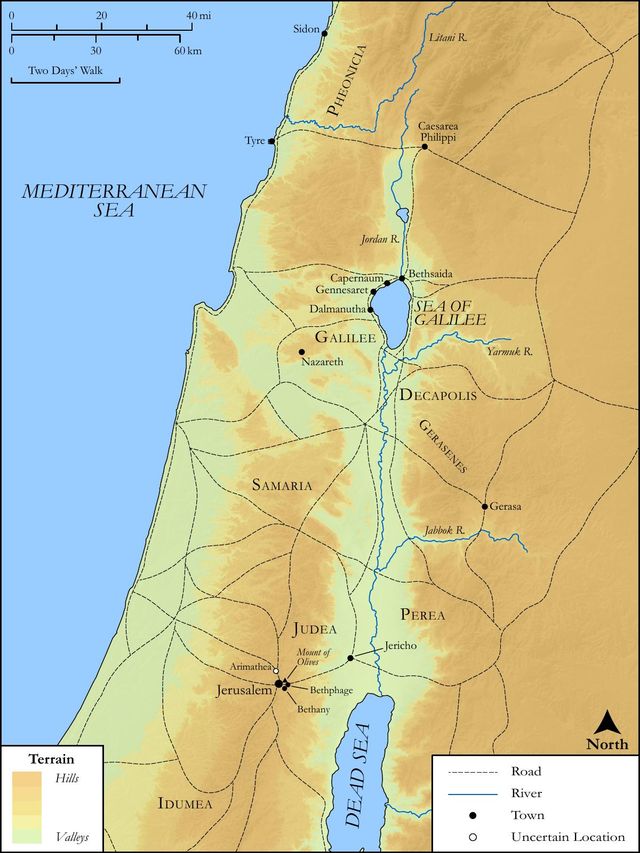
See on the biblical-era map
Study this verse
Public-domain commentary
Matthew Henry
From his Commentary on the Whole Bible. Henry comments on passages, not single verses — this entry covers Mark 9:1–13. His three-level outline is real structure in the source text, so it is rendered as structure.
Here is, I. A prediction of Christ's kingdom now near approaching, Mar 9:1. That which is foretold, is, 1. That the kingdom of God would come, and would come so as to be seen: the kingdom of the Messiah shall be set up in the world by the utter destruction of the Jewish polity, which stood in the way of it; this was the restoring of the kingdom of God among men, which had been in a manner lost by the woeful degeneracy both of Jews and Gentiles. 2. That it would come with power, so as to make its own way, and bear down the opposition that was given to it. It came with power, when vengeance was taken on the Jews for crucifying Christ, and when it conquered the idolatry of the Gentile world. 3. That it would come while some now present were alive; There are some standing here, that shall not taste of death, till they see it; this speaks the same with Mat 24:34, This generation shall not pass, till all these things be fulfilled. Those that were standing here with Christ, should see it, when the others could not discern it to be the kingdom of God, for it came not with observation.
II.A specimen of that kingdom in the transfiguration of Christ, six days after Christ spoke that prediction.
He had begun to give notice to his disciples of his death and sufferings; and, to prevent their offence at that, he gives them this glimpse of his glory, to show that his sufferings were voluntary, and what a virtue the dignity and glory of his person would put into them, and to prevent the offence of the cross.
1.It was on the top of a high mountain, like the converse Moses had with God, which was on the top of mount Sinai, and his prospect of Canaan from the top of mount Pisgah. Tradition saith, It was on the top of the mount Tabor that Christ was transfigured; and if so, the scripture was fulfilled, Tabor and Hermon shall rejoice in thy name, Psa 89:12. Dr. Lightfoot, observing that the last place where we find Christ was in the coasts of Caesarea-Philippi, which was far from mount Tabor, rather thinks it was a high mountain which Josephus speaks of, near Caesarea.
2.The witnesses of it were Peter, James, and John; these were the three that were to bear record on earth, answering to Moses, Elias, and the voice from heaven, the three that were to bear record from above. Christ did not take all the disciples with him, because the thing was to be kept very private. As there are distinguishing favours which are given to disciples and not to the world, so there are to some disciples and not to others. All the saints are a people near to Christ, but some lie in his bosom. James was the first of all the twelve that died for Christ, and John survived them all, to be the last eyewitness of this glory; he bore record (Joh 1:14); We saw his glory: and so did Peter, Pe2 1:16-18.
3.The manner of it; He was transfigured before them; he appeared in another manner than he used to do. This was a change of the accidents, the substance remaining the same, and it was a miracle. But transubstantiation, the change of the substance, all the accidents remaining the same, is not a miracle, but a fraud and imposture, such a work as Christ never wrought. See what a great change human bodies are capable of, when God is pleased to put an honour upon them, as he will upon the bodies of the saints, at the resurrection. He was transfigured before them; the change, it is probable, was gradual, from glory to glory, so that the disciples, who had their eye upon him all the while, had the clearest and most certain evidence they could have, that this glorious appearance was no other than the blessed Jesus himself, and there was no illusion in it. John seems to refer to this (Jo1 1:1), when he speaks of the word of life, as that which they had seen with their eyes, and looked upon. His raiment became shining; so that, though probably, it was sad-coloured, if not black, yet it was now exceeding white as snow, beyond what the fuller's art could do toward whitening it.
4.His companions in this glory were Moses and Elias (Mar 9:4); They appeared talking with him, not to teach him, but to testify to him, and to be taught by him; by which it appears that there are converse and intercourse between glorified saints, they have ways of talking one with another, which we understand not. Moses and Elias lived at a great distance of time one from another, but that breaks no squares in heaven, where the first shall be last, and the last first, that is, all one in Christ.
5.The great delight that the disciples took in seeing this sight, and hearing this discourse, is expressed by Peter, the mouth of the rest; He said, Master, it is good for us to be here, Mar 9:5. Though Christ was transfigured, and was in discourse with Moses and Elias, yet he gave Peter leave to speak to him, and to be as free with him as he used to be. Note, Our Lord Jesus, in his exaltation and glory, doth not at all abate of his condescending kindness to his people. Many, when they are in their greatness, oblige their friends to keep their distance; but even to the glorified Jesus true believers have access with boldness, and freedom of speech with him. Even in this heavenly discourse there was room for Peter to put in a word; and this is it, "Lord, it is good to be here, it is good for us to be here; here let us make tabernacles; let this be our rest for ever." Note, Gracious souls reckon it good to be in communion with Christ, good to be near him, good to be in the mount with him, though it be a cold and solitary place; it is good to be here retired from the world, and alone with Christ: and if it is good to be with Christ transfigured only upon a mountain with Moses and Elias, how good it will be to be with Christ glorified in heaven with all the saints! But observe, While Peter was for staying here, he forgot what need there was of the presence of Christ, and the preaching of his apostles, among the people. At this very time, the other disciples wanted them greatly, Mar 9:14. Note, When it is well with us, we are apt to be mindless of others, and in the fulness of our enjoyments to forget the necessities of our brethren; it was a weakness in Peter to prefer private communion with God before public usefulness. Paul is willing to abide in the flesh, rather than depart to the mountain of glory (though that be far better), when he sees it needful for the church, Phi 1:24, Phi 1:25. Peter talked of making three distinct tabernacles for Moses, Elias, and Christ, which was not well-contrived; for such a perfect harmony there is between the law, the prophets, and the gospel, that one tabernacle will hold them all; they dwell together in unity. But whatever was incongruous in what he said, he may be excused, for they were all sore afraid; and he, for his part, wist not what to say (Mar 9:6), not knowing what would be the end thereof.
6.The voice that came from heaven, was an attestation of Christ's mediatorship, Mar 9:7. There was a cloud that overshadowed them, and was a shelter to them. Peter had talked of making tabernacles for Christ and his friends; but while he yet spoke, see how his project was superseded; this cloud was unto them instead of tabernacles for their shelter (Isa 4:5); while he spoke of his tabernacles, God created his tabernacle not made with hands. Now out of this cloud (which was but a shade to the excellent glory Peter speaks of, whence this voice came) it was said, This is my beloved Son, hear him. God owns him, and accepts him, as his beloved Son, and is ready to accept of us in him; we must then own and accept him as our beloved Saviour, and must give up ourselves to be ruled by him.
7.The vision, being designed only to introduce the voice, when that was delivered, disappeared (Mar 9:8); Suddenly when they had looked round about, as men amazed to see where they were, all was gone, they saw no man any more. Elias and Moses were vanished out of sight, and Jesus only remained with them, and he not transfigured, but as he used to be. Note, Christ doth not leave the soul, when extraordinary joys and comforts leave it. Though more sensible and ravishing communications may be withdrawn, Christ's disciples have, and shall have, his ordinary presence with them always, even to the end of the world, and that is it we must depend upon. Let us thank God for daily bread and not expect a continual feast on this side of heaven.
8.We have here the discourse between Christ and his disciples, as they came down from the mount.
(1.)He charged them to keep this matter very private, till he was risen from the dead, which would complete the proof of his divine mission, and then this must be produced with the rest of the evidence, Mar 9:9. And besides, he, being now in a state of humiliation, would haves nothing publicly taken notice of, that might be seen disagreeable to such a state; for to that he would in every thing accommodate himself. This enjoining of silence to the disciples, would likewise be of use to them, to prevent their boasting of the intimacy they were admitted to, that they might not be puffed up with the abundance of the revelations. It is a mortification to a man, to be tied up from telling of his advancements, and may help to hide pride from him.
(2.)The disciples were at a loss what the rising from the dead should mean; they could not form any notion of the Messiah's dying (Luk 18:34), and therefore were willing to think that the rising he speaks of, was figurative, his rising from his present mean and low estate to the dignity and dominion they were in expectation of. But if so, here is another thing that embarrasses them (Mar 9:11); Why say the Scribes, that before the appearing of the Messiah in his glory, according to the order settled in the prophecies of the Old Testament, Elias must first come? But Elias was gone, and Moses too. Now that which raised this difficulty, was, the scribes taught them to expect the person of Elias, whereas the prophecy intended one in the spirit and power of Elias. Note, The misunderstanding of scripture is a great prejudice to the entertainment of truth.
(3.)Christ gave them a key to the prophecy concerning Elias (Mar 9:12, Mar 9:13); "It is indeed prophesied that Elias will come, and will restore all things, and set them to rights; and (though you will not understand it) it is also prophesied of the Son of man, that he must suffer many things, and be set at nought, must be a reproach of men, and despised of the people: and though the scribes do not tell you so, the scriptures do, and you have as much reason to expect that as the other, and should not make so strange of it; but as to Elias, I tell you he is come; and if you consider a little, you will understand whom I mean, it is one to whom they have done whatsoever they listed;" which was very applicable to the ill usage they had given John Baptist. Many of the ancients, and the Popish writers generally, think, that besides the coming of John Baptist in the spirit of Elias, himself in his own person is to be expected, with Enoch, before the second appearance of Christ, wherein the prophecy of Malachi will have a more full accomplishment than it had in John Baptist. But it is groundless fancy; the true Elias, as well as the true Messiah promised, is come, and we are to look for no other. These words as it is written of him, refer not to their doing to him whatever they listed (that comes in a parenthesis), but only to his coming. He is come, and hath been, and done, according as was written of him.
Historical interpretation
Nine Centuries of Reception
10 surviving comments on this verse. Each one is dated, so this reads as a timeline rather than a list.
Select a marker to jump to its quote. Markers stagger vertically where authors wrote within a few decades of each other.
After the consummation of the cross, the glory of the resurrection is shown, that they, who were to see with their own eyes the glory of the resurrection to come, might not fear the shame of the cross; wherefore it is said, And after six days Jesus taketh with him Peter, and James, and John, and led them up into an high mountain apart by themselves, and he was transfigured before them.
On the other hand, he whose "heart" was habitually found "lifted up" rather than fattened up, who in forty days and as many nights maintained a fast above the power of human nature, while spiritual faith subministered strength (to his body), both saw with his eyes God's glory, and heard with his ears God's voice, and understood with his heart God's law: while He taught him even then (by experience) that man liveth not upon bread alone, but upon every word of God; in that the People, though fatter than he, could not constantly contemplate even Moses himself, fed as he had been upon God, nor his leanness, sated as it had been with His glory! Deservedly, therefore, even while in the flesh, did the Lord show Himself to him, the colleague of His own fasts, no less than to Elijah. For Elijah withal had, by this fact primarily, that he had imprecated a famine, already sufficiently devoted himself to fasts: "The Lord liveth," he said, "before whom I am standing in His sight, if there shall be dew in these years, and rain-shower.
(Hom. in Matt. 65) Luke in saying, After eight days, does not contradict this; for he reckoned in both the day on which Christ had spoken what goes before, and the day on which he took them up. And the reason that he took them up after six days, was that they might be filled with a more eager desire during the space of these days, and with a watchful and anxious mind attend to what they saw.
(Hom. in Matt. 56) He brings Moses and Elias before them; first, indeed, because the multitudes said that Christ was Elias, and one of the Prophets, He shows Himself to the Apostles with them, that they might see the difference between the Lord, and His servants. And again because the Jews accused Christ of transgressing the law, and thought Him a blasphemer, as if He arrogated to Himself the glory of His Father, He brought before them those who shone conspicuous in both ways; for Moses gave the Law, and Elias was zealous for the glory of God; for which reason neither would have stood near Him, if He had been opposed to God and to His law. And that they might know that He holds the power of life and of death, He brings before them both Moses who was dead, and Elias who had not yet suffered death. Furthermore He signified by this that the doctrine of the Prophets was the schoolmaster to the doctrine of Christ. He also signified the junction of the New and Old Testament, and that the Apostles shall be joined in the resurrection with the Prophets, and both together shall go forth to meet their common King. It goes on, And Peter answered and said to Jesus, Master, it is good for us to be here; and let us make three tabernacles, one for thee, and one for Moses, and one for Elias.
CHRYSOSTOM.f Again, Peter neither comprehended that the Lord worked His transfiguration for the showing forth of His true glory, nor that He did this in order to teach men, nor that it was impossible for them to leave the multitude and dwell in the mountain. It goes on, For they were sore afraid. But this fear of theirs was one by which they were raised from their usual state of mind to one higher, and they recognised that those who appeared to them were Moses and Elias. The soul also was drawn on to a state of heavenly feeling, as though carried away from human sense by the heavenly vision.
(Hom. in Matt. 56) The voice proceeded from a cloud in which God is wont to appear, that they might believe that the voice was sent forth from God. But in that He says, This is my beloved Son, He declares that the will of the Father and the Son is one, and that, save in that He is the Son, He is in all things One with Him who begot Him.
Or else, white garments are the writings of Evangelists and Apostles, the like to which no interpreter can frame.
(Vict. Ant. e Cat. in Marc.) He does not however show His glory in a house, but He takes them up into a high mountain, for the loftiness of the mountain was adapted to showing forth the loftiness of His glory.
(Vict. Ant. e Cat. in Marc.) It is not therefore fitting that in the kingdom of God any change of feature should take place, either in the Saviour Himself, or in those who are to be made like unto him, but only an addition of brightness.
Or else, by the fuller are meant holy preachers and purifiers of the soul, none of whom in this life can so live as not to be stained with some spots of sin; but in the coming resurrection all the saints shall be purged from every stain of sin. Therefore the Lord will make them such as neither they themselves by taking vengeance on their own members, nor any preacher by his example and doctrine, can make.
(Mor. 32, 6) Because, in the height of the brightness of heaven above, they who shine in righteousness of life, will cling to Him; for by the name of garments, He means the just whom He joins to Himself. There follows, And there appeared unto them Elias with Moses, and they were talking with Jesus.
And he said to them: "Amen I say to you, there are some standing here who will not taste death until they see the kingdom of God coming in power." The kingdom of God, dearest brothers, is not always called the coming kingdom in sacred Scripture, but sometimes the present Church is so called. Hence it is written: "The Son of man will send his angels, and they will gather out of his kingdom all causes of scandal." In that kingdom, indeed, there will be no scandals, where certainly the reprobate are not admitted. By this example it is understood that in this passage the kingdom of God refers to the present Church. And because some of the disciples were going to live in the body long enough to see the Church of God built and raised up against the glory of this world, it is now said as a consoling promise: "There are some of those standing here who will not taste death until they see the kingdom of God." But when the Lord was giving such great precepts about the death that must be undergone, what need was there to come suddenly to this promise? If we consider carefully, we recognize with what great dispensation of love this is done. For to the inexperienced disciples something had to be promised even about the present life, so that they could be strengthened more firmly for the future. Thus to the Israelite people, about to be freed from the land of Egypt, the promised land was promised, and when they were to be called to heavenly gifts, they were persuaded by earthly promises. Why was this? So that while there was something they could receive nearby, they might then more faithfully believe what they could hear about from afar. For a carnal people, if they did not receive small things, would not believe in great things. Therefore Almighty God, by granting earthly things, persuades toward heavenly things, so that by receiving what they could see, they might learn to hope for what they could not see at all; and they would become all the more firm regarding invisible things, inasmuch as visible promises supported them toward certainty of hope.
And he said to them: Truly I say to you, that there are some standing here who will not taste death until, etc. The Kingdom of God in this place is called the present Church. And because some of the disciples were going to live in the body to the extent that they would see the Church of God constructed and raised up against the glory of this world, it is now said as a comforting promise: There are some standing here who will not taste death until they see the kingdom of God coming in power. But since the Lord was issuing commands about enduring the death so great, what was necessary that he suddenly came to this promise? If we attentively consider this, we shall recognize how great a dispensation of piety takes place. For something needed to be promised even to the unlearned disciples regarding the present life, so that they might be more strongly established for the future. Thus the Israelite people, being freed from the land of Egypt, are promised the land of promise, so that while they were to be called to heavenly gifts, they might be persuaded by earthly promises. Hence it is rightly said through the Psalmist: He gave them the regions of the Gentiles, and they possessed the labors of the peoples, so that they might keep his statutes and seek his law (Psalm 105). Thus, in this place, Truth speaking to the unlearned disciples promises that they will see the kingdom of God on earth, so that it might be more faithfully presumed by them in heaven. But if we wish to receive the Kingdom of God by this saying as the future beatitude in heaven, certain ones of those standing there saw it not many days later on the mountain. This indeed was done by pious foresight so that by the contemplation of the always enduring joy, even if grasped quickly and briefly, they might more strongly endure the present adversities of the passing world. With very fitting language, the saints are testified to taste death, for indeed the death of the body is tasted by them as if by sipping, while truly the life of the soul is possessed by holding.
(in Marc. 3, 37) Our Saviour then when transfigured did not lose the substance of real flesh, but showed forth the glory of His own or of our future resurrection; for such as He then appeared to the Apostles, He will after the judgment appear to all His elect. It goes on, And his raiment became shining.
(ubi sup.) If the transfigured humanity of Christ and the society of but two saints seen for a moment, could confer delight to such a degree that Peter would, even by serving them, stay their departure, how great a happiness will it be to enjoy the vision of Deity amidst choirs of Angels for ever? It goes on, For he wist not what to say; although, however, Peter from the stupor of human frailty knew not what to say, still he gives a proof of the feelings which were within him; for the cause of his not knowing what to say, was his forgetting that the kingdom was promised to the Saints by the Lord not in any earthly region, but in heaven; he did not remember that he and his fellow-Apostles were still hemmed in by mortal flesh and could not bear the state of immortal life, to which his soul had already carried him away, because in our Father's house in heaven, a house made with hands is not needed. But again even up to this time he is pointed at, as an ignorant man, who wishes to make three tabernacles for the Law, the Prophets, and the Gospel, since they in no way can be separated from each other.
(ubi sup.) Now because Peter sought for a material tabernacle, he was covered with the shadow of the cloud, that he might learn that in the resurrection they are to be protected not by the covering of houses, but by the glory of the Holy Ghost; wherefore it goes on, There was a cloud that overshadowed them. And the reason why they obtained no answer from the Lord was, that they asked unadvisedly; but the Father answered for the Son, wherefore there follows, And a voice came out of the cloud, saying, This is my beloved Son, in whom I am well pleased.
(ubi sup.) He then whose preaching, as Moses foretold, every soul that wished to be saved should hear when He came in the flesh, He now come in the flesh is proclaimed by God the Father to the disciples as the one whom they were to hear. There follows, And suddenly, when they had looked round about, they saw no man any more, save Jesus only with themselves; for as soon as the Son was proclaimed, at once the servants disappeared, lest the voice of the Father should seem to have been sent forth to them.
(ubi sup.) And by the garments of the Lord are meant His saints, who will shine with a new whiteness. By the fuller we must understand Him, to whom the Psalmist says, (Ps. 51) Wash me throughly from my wickedness, and cleanse me from my sin; for He cannot give to His faithful ones upon earth that glory which remains laid up for them in heaven.
(ubi. sup.) Moses and Elias, of whom one, as we read, died, the other was carried away to heaven, signify the coming glory of all the Saints, that is, of all who in the judgment-time are either to be found alive in the flesh, or to be raised up from that death of which they tasted, and who are all equally to reign with Him.
(ubi sup.) And we must observe, that, as when the Lord was baptized in Jordan, so on the mountain, covered with brightness, the whole mystery of the Holy Trinity is declared, because we shall see in the resurrection that glory of the Trinity which we believers confess in baptism, and shall praise it all together. Nor is it without reason that the Holy Ghost appeared here in a bright cloud, there in the form of a dove; because he who now with a simple heart keeps the faith which he hath embraced, shall then contemplate what he had believed with the brightness of open vision. But when the voice had been heard over the Son, He was found Himself alone, because when He shall have manifested Himself to His elect, God shall be all in all, yea Christ with His own, as the Head with the body, shall shine through all things. (1 Cor. 15:28).
And He takes with Him the three chiefs of the Apostles, Peter, as confessing and loving him, John, as the beloved one, James, as being sublime in speech and as a divine; for so displeasing was he to the Jews, that Herod wishing to please the Jews slew him.
And He took them apart, because He was about to reveal mysteries to them. We must also understand by transfiguration not the change of His features, but that, whilst His features remained as before, there was added unto Him a certain ineffable brightness.
Or else, Peter, fearing to come down from the mount because he had now a presentiment that Christ must be crucified, said, It is good for us to be here, and not to go down there, that is, in the midst of the Jews; but if they who are furious against Thee come hither, we have Moses who beat down the Egyptians, we have also Elias, who brought fire down from heaven and destroyed the five hundred.
Again mystically; after the end of this world, which was made in six days, Jesus will take us up (if we be His disciples) into an high mountain, that is, into heaven, where we shall see His exceeding glory.
Or else it means, that we are to see in glory both the Law and the Prophets speaking with Him, that is, we shall then find that all those things which were spoken of Him by Moses and the other prophets agree with the reality; then too we shall hear the voice of the Father, revealing to us the Son of the Father, and saying, This is my beloved Son, and the cloud, that is, the Holy Ghost, the fount of truth, will overshadow us.
Continue studying Mark 9:1 across the web’s major study libraries — every link below opens this exact verse, chapter, or book on the destination site.
Read & Compare
 BibleGatewayThis verse in more than 200 translations and 70 languages.
 Bible.comThe YouVersion reader — hundreds of translations, reading plans, and highlights.
 ESV.orgCrossway's official English Standard Version reader.
 NET BibleThe NET translation with 60,000+ translators' notes on every rendering decision.
 STEP BibleTyndale House's free study tool — original text, vocabulary, and scholarly resources.
 BibliaLogos Bible Software's free web reader.
 USCCBThe New American Bible (Revised Edition) with the U.S. bishops' study notes.
Commentaries
 BibleHub CommentariesDozens of classic commentaries on this verse, gathered on one page.
 StudyLightMore than 100 commentary sets — the largest collection on the web.
 BibleRefPlain-English commentary on what this verse means, verse by verse.
 Enduring WordDavid Guzik's free commentary on this chapter, widely used by Bible teachers.
 Bible Study ToolsVerse commentary alongside Greek and Hebrew study aids.
Original Language & Research
- BibleHub InterlinearThe verse word by word — original language, transliteration, and English.
- BibleHub LexiconEvery word's original-language definition and Strong's entry.
 Blue Letter BibleDeep-study tools — Strong's numbers, concordance, and word studies.
 CNTR CollationThe earliest Greek manuscripts of this verse, collated letter by letter.
Sermons, Hymns & Audio


TrulyRandomVerse is not affiliated with these sites and doesn’t control their content. They’re linked because they’re genuinely useful.
Summary
Mark 9:1 presents a profound and pivotal declaration by Jesus to His disciples, immediately preceding the transformative event of the Transfiguration. In this verse, Jesus assures His followers that some among them would not experience death before witnessing a powerful manifestation of God's kingdom. This prophecy serves as a crucial bridge, connecting Jesus' challenging teachings on the cost of discipleship and suffering with the imminent revelation of His divine glory and the tangible reality of His sovereign reign, thereby validating His claims and offering profound encouragement.
Context
ShowHideLiterary Context
Mark 9:1 functions as the climactic statement concluding a significant discourse on discipleship that began in Mark 8:34. Prior to this verse, Jesus has issued a stark call to self-denial, cross-bearing, and the potential loss of one's life for His sake and the gospel's. He also warned against being ashamed of Him or His words in a sinful generation, promising that the Son of Man would come in His Father's glory with the holy angels (Mark 8:38). Mark 9:1 then provides an immediate assurance, a tangible promise that some of those very disciples would witness a powerful display of God's kingdom before that ultimate eschatological coming. The immediate fulfillment of this promise is widely understood to be the Transfiguration, which directly follows in Mark 9:2-8, strongly suggesting that this event is the primary, though perhaps not exclusive, fulfillment of Jesus' prophecy.
Historical & Cultural Context
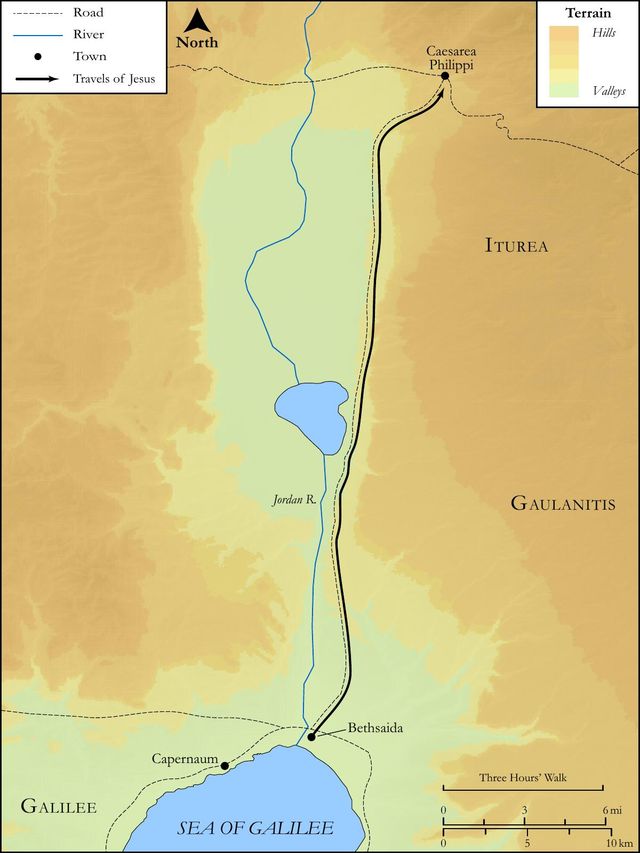
Jesus' ministry took place within a Jewish context deeply steeped in messianic expectation and the hope for the establishment of God's kingdom. Many Jews, including the disciples, anticipated a political, earthly kingdom that would overthrow Roman rule and restore Israel's sovereignty. Jesus, however, consistently taught about a kingdom that was both present (in His person and ministry) and future (in its full consummation). The disciples likely struggled to reconcile the suffering Messiah with their preconceived notions of a powerful, conquering king. Jesus' statement in Mark 9:1, therefore, served to reorient their understanding, promising a spiritual manifestation of power that would precede the ultimate physical kingdom. The geographical setting is likely near Caesarea Philippi, where Jesus had just asked about His identity (Mark 8:27), or on the road to Galilee. The mention of "standing here" implies a specific group of people present at that moment.
Key Themes
ShowHideThis verse contributes significantly to several key themes within Mark's Gospel. Firstly, it underscores the imminence and power of the Kingdom of God. While the kingdom is spiritual and already inaugurated, Jesus promises a visible, powerful display of its reality. Secondly, it highlights the divine authority and glory of Jesus. The "kingdom of God come with power" is intrinsically linked to Jesus' identity as the Son of God, a truth powerfully revealed at the Transfiguration (Mark 9:7). Thirdly, it serves as a theme of assurance and validation for the disciples. After the challenging call to suffering and self-denial in Mark 8:34-38, this promise offered a tangible encouragement, a foretaste of the ultimate victory and glory that awaited those who faithfully followed Him. This balance of suffering and glory is a pervasive theme throughout Mark, particularly in the journey to Jerusalem.
Exposition and Analysis
ShowHideKey Word Analysis
ShowHideOf Hebrew origin, this word means "firm," "trustworthy," or "surely." When Jesus uses it to begin a statement, often translated as "truly" or "amen," it functions as an emphatic declaration, underscoring the absolute truth and certainty of what He is about to say, demanding the full attention and belief of His hearers.
A primary verb meaning "to taste," or by implication, "to eat." Figuratively, as used here, it means "to experience (good or ill)." Thus, "shall not taste of death" means they shall not experience death.
A primary verb meaning "to see" (literally or figuratively). In this context, it implies a direct, personal observation or experience of the kingdom's manifestation.
This term refers to force, especially miraculous power, ability, or strength. In relation to the kingdom of God, it denotes God's inherent, sovereign, and often miraculous ability to act and manifest His rule.
Verse Breakdown
ShowHide"And he said unto them, Verily I say unto you"
This introductory phrase emphasizes the solemnity and absolute truth of Jesus' subsequent declaration. The "Verily" (Amen) signals a profound and certain statement, demanding the disciples' full attention and belief. It underscores Jesus' divine authority as the speaker of ultimate truth.
"That there be some of them that stand here"
This specifies that the prophecy applies to a subset of the people physically present with Jesus at that moment. It indicates a near-term fulfillment within the lifetime of some of His immediate followers, narrowing the scope from a distant, general eschatological event to a more immediate, observable manifestation.
"which shall not taste of death, till they have seen the kingdom of God come with power"
This is the core promise. "Shall not taste of death" is a Hebraism meaning "will not die." The phrase "till they have seen" indicates a specific event or period they would witness. The "kingdom of God come with power" refers to a tangible, undeniable demonstration of God's sovereign rule and inherent might. This "coming with power" is widely interpreted as referring to the Transfiguration, where Peter, James, and John witnessed Jesus' glory, and potentially also the outpouring of the Holy Spirit at Pentecost, which inaugurated the church with miraculous signs.
Literary Devices
ShowHideMark 9:1 employs several significant literary devices. The phrase "Verily I say unto you" is an example of Authoritative Declaration, a common rhetorical device used by Jesus throughout the Gospels to emphasize the truth and weight of His words, distinguishing His teaching from that of scribes and Pharisees. The statement "shall not taste of death" is a powerful Hebraism or Idiom, common in biblical literature, to mean "will not experience death." This vivid phrasing makes the promise more impactful. Furthermore, the verse functions as a Proleptic Statement or Foreshadowing, hinting at a future event (the kingdom coming with power) that will soon be revealed, building anticipation for the Transfiguration narrative that immediately follows. The entire verse also serves as a Bridge between Jesus' teaching on suffering and the revelation of His glory, connecting the themes of discipleship, the cross, and the kingdom's power.
Theological and Thematic Connections
ShowHideMark 9:1 offers a profound theological insight into the nature of the Kingdom of God, revealing it as both a present reality and a future hope. It is not merely a distant eschatological event, but a dynamic, powerful reign that can be witnessed and experienced in tangible ways within human history. The "coming with power" points to God's active, sovereign intervention, demonstrating His authority through Christ. This verse connects the suffering of discipleship with the promise of divine glory, assuring believers that their commitment to Christ, even unto death, is not in vain, but is part of a larger divine plan that culminates in the triumph of God's powerful kingdom. It also highlights the continuity between Jesus' earthly ministry and the subsequent outpouring of the Holy Spirit, which empowered the early church and continues to manifest the kingdom's power today.
Reflection and Application
ShowHideMark 9:1 challenges contemporary believers to consider the multifaceted nature of God's kingdom and our role within it. Just as the disciples were called to embrace self-denial and suffering, we too are summoned to a life of costly discipleship. Yet, this verse offers immense encouragement, reminding us that our commitment is not without divine validation and ultimate reward. We may not witness the Transfiguration, but we are called to discern and participate in the ongoing manifestation of God's kingdom "with power" in our world today—through the transformative work of the Holy Spirit, the growth of the church, acts of justice and mercy, and the proclamation of the Gospel. This verse encourages us to live with an eschatological hope, knowing that while the kingdom is not yet fully consummated, its power is already at work, inviting us to trust in Jesus' unfailing promises and to live in light of His sovereign reign.
Questions for Reflection
ShowHideFAQ
ShowHideWhat is the primary fulfillment of Jesus' prophecy in Mark 9:1?
ShowHideThe most widely accepted primary fulfillment of Jesus' prophecy in Mark 9:1 is the Transfiguration, which immediately follows in Mark 9:2-8. In this event, Peter, James, and John, who were present when Jesus spoke these words, witnessed Jesus glorified, His face shining like the sun, and His clothes becoming dazzling white. Moses and Elijah appeared with Him, and a voice from heaven declared, "This is my beloved Son; listen to him!" (Mark 9:7). This was a powerful, visible manifestation of Jesus' divine glory and a foretaste of the kingdom's power.
Are there other possible interpretations or fulfillments of "the kingdom of God come with power"?
ShowHideWhile the Transfiguration is the immediate and most direct fulfillment, some scholars also suggest broader interpretations. These include:
The immediate context, however, strongly favors the Transfiguration as the primary, direct fulfillment.
Christ-Centered Fulfillment
ShowHideMark 9:1, with its promise of seeing "the kingdom of God come with power," finds its ultimate Christ-centered fulfillment not merely in a single event, but in the entire trajectory of Jesus' redemptive work. The Transfiguration (Mark 9:2-8) serves as a powerful, immediate foretaste, revealing Jesus as the glorious Son of God, the King of the promised kingdom. This moment on the mountain was a preview of His inherent divine majesty, a glimpse behind the veil of His humanity, confirming His identity to His closest disciples. However, the true "coming with power" culminates in Jesus' victory over sin and death through His crucifixion, resurrection (Romans 1:4), and ascension to the right hand of the Father (Acts 2:33-36). It is from this position of ultimate authority that He pours out the Holy Spirit (Acts 2:1-4), empowering His church to continue manifesting the kingdom's power through the proclamation of the Gospel and miraculous signs (Acts 4:33). Thus, Mark 9:1 ultimately points to Jesus as the embodiment and inaugurator of God's powerful kingdom, whose reign began with His first advent and will be fully consummated at His glorious second coming (Revelation 11:15).